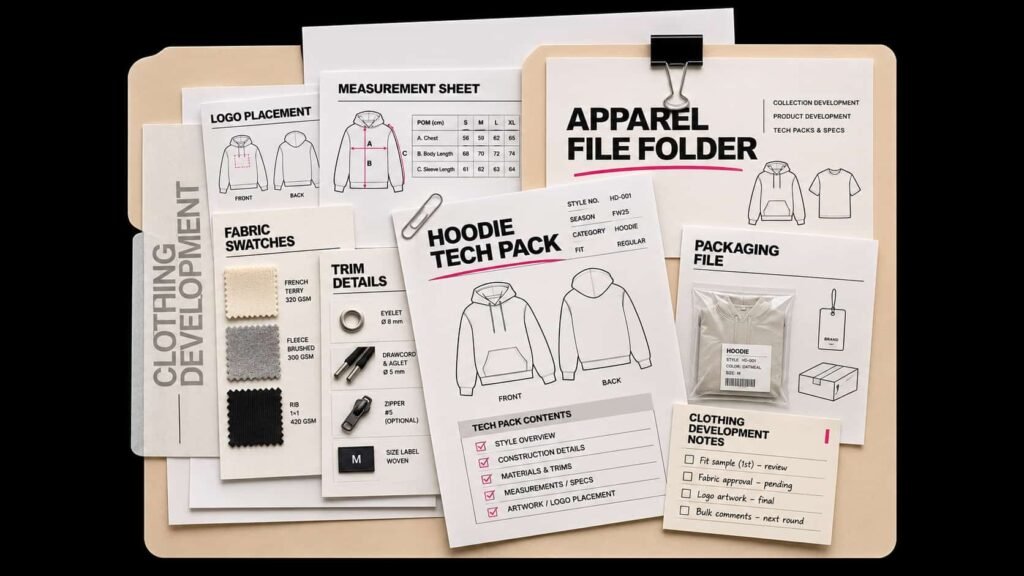
A sports bra can look almost identical to last season’s version and still be a different product to make. Change its support structure, switch to a fabric with different stretch and recovery, or redraw the back panels, and the old instructions may no longer describe the garment on the cutting table. Creating a separate tech pack for every adjustment can scatter information across files. Continuing to use an old pack for a substantially changed garment can leave the factory working from specifications nobody has approved.
An ODM sportswear project needs a new tech pack when its developed product requires an independent set of instructions that the existing pack can no longer describe clearly. A new style, substantially changed pattern or construction, or separately managed variation may cross that line. Changes within the same identifiable style generally call for a dated revision. Either way, the current file must agree with the approved sample and production materials.
The distinction often becomes clear only after sampling. Imagine approving leggings in one fabric, then asking for a new fabric, a higher waistband, and a different pocket construction. Each request sounds manageable on its own. Together, they may leave almost nothing in the original specification that a production team can safely assume still applies. The following questions help determine whether the project needs a new pack, a controlled revision, or more development work before either document can be final.
Is a Tech Pack Needed at the Start of an ODM Project?
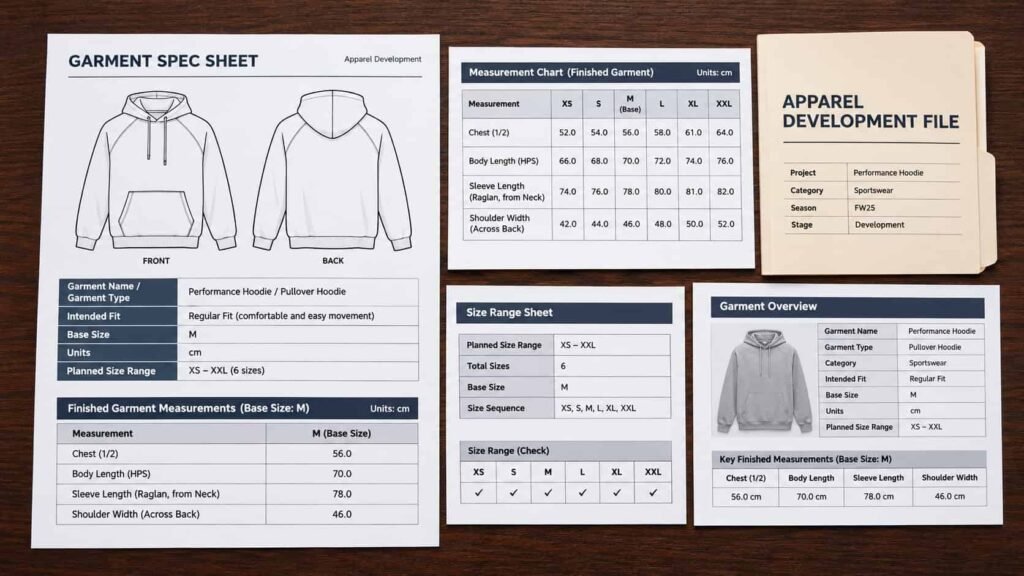
An ODM sportswear project can begin without a complete tech pack if the brand can explain what it wants to develop and provide useful references. The manufacturer can assess the concept, identify missing decisions, and plan a sample. Before production, those decisions need to become clear specifications that match the approved garment.
A brand with an approved design may arrive with drawings, measurements, a bill of materials, and artwork. Another may have a physical training top and a clear idea of how its own version should fit, but no technical drawings. Both projects can move forward, although the second requires more development decisions. The first discussion should establish what is known, what needs testing on a sample, and what cannot yet be quoted with confidence.
What Can a Brand Provide Without a Complete Tech Pack?
A useful starting brief describes the product in terms a development team can check. For leggings, that may mean front and back reference images, a target rise and inseam, a preferred fit, the intended activity, an initial size range, and a fabric sample or description. For a sports bra, support, coverage, strap arrangement, lining, and whether removable pads are required may be more useful than a polished mood board. Estimated order quantity, color count, target market, and launch timing help the manufacturer assess material availability and the likely development route. When a decision remains open, label it as open. “Fabric pending; sample to assess fit only” gives the next sample a clear purpose and prevents a temporary material from being mistaken for one approved for bulk production.
| Starting information | Useful level of detail | What the manufacturer can assess |
| Product reference | Front and back images or a physical sample | Silhouette, visible construction, and missing specifications |
| Intended use | Yoga, running, training, or everyday wear | Fit, coverage, support, and material questions |
| Size direction | Target size range and base size, if known | Initial measurement and grading work |
| Fabric direction | Composition, weight, stretch, hand feel, or reference swatch | Sourcing options and sampling limitations |
| Brand requirements | Logo, labels, packaging, and target market | Artwork, labeling, and order preparation needs |
| Order plan | Estimated quantity, color count, and timing | Initial feasibility and quotation discussion |
These inputs support an initial assessment; they are not a substitute for approving the finished specification. If fabric, pattern, and construction are still being chosen, an early price or timeline may need to remain conditional. Two sportswear garments that look alike in photographs can behave quite differently during movement, so references should be treated as the start of an engineering conversation rather than a complete set of production instructions.
Which Product Decisions Must Be Defined During Development?
The working pack should become more precise as samples answer questions. It may need technical views, points of measure, fabric and trim references, seam details, size grading, colorways, logo placement, labels, and packaging. The order of those decisions depends on the garment. A simple training top may be easier to define early than a sports bra whose support and fit depend on several interacting components. A sample made to review neckline shape does not necessarily approve its fabric, fit across sizes, or label placement. Shenzhen Leadshow Sports Technology Co., Ltd. can assess supplied concepts and technical materials and support pattern adjustment, sampling, and manufacturing review according to the project. The useful handoff is a record showing which choices have been approved and which still need another sample or written confirmation.
Image Brief: Project documentation composite. A real training top sample on the right with fabric swatches, blank garment sketches, and uncut paper patterns on the left, photographed overhead. Realistic product photography, professional industrial website style, clean background, natural lighting, 16:9 aspect ratio, 1920 × 1080 composition, high resolution, sharp product details, no text, no logo, no watermark. Negative prompt: text, logo, watermark, abstract concept image, fake 3D render, CGI look, wrong product structure, incorrect assembly, floating parts, distorted proportions, unrealistic materials, exaggerated lighting, low resolution, blurry details. Alt text: Training top sample beside fabric references, garment sketches, and paper patterns.
What Changes Require a New Tech Pack?
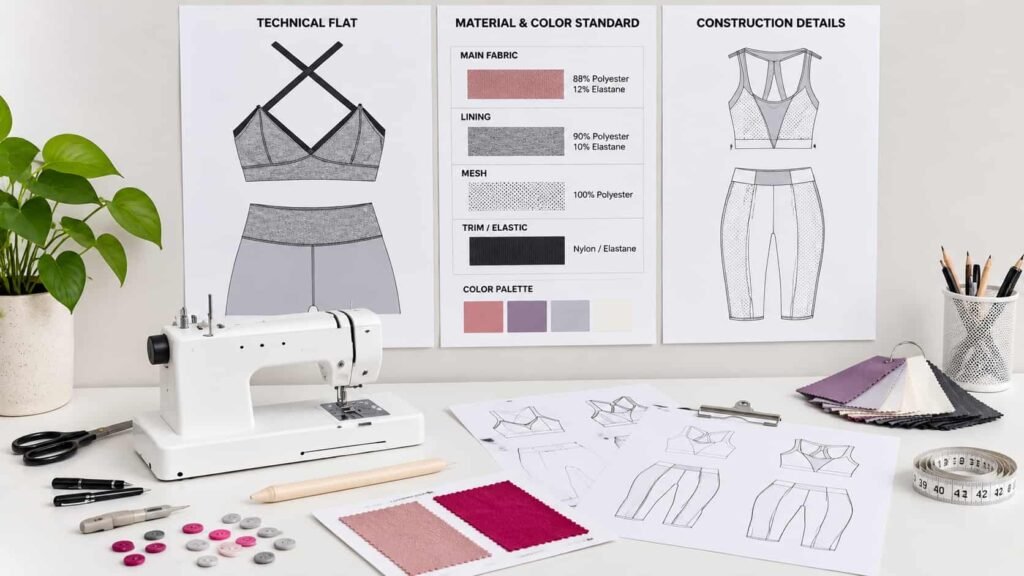
A project generally needs a new tech pack when a developed garment must be identified, approved, and produced as a distinct product. A substantially different pattern, construction, or material system may cross that line. A separate pack is also useful when two variations have different specifications or approval histories and could be ordered independently.
The decision concerns the instructions the factory must follow, not just the number of visible changes. One altered detail can reshape a garment; several small edits may leave the original style intact. Compare the proposed product with its approved sample and current pack. If production would require people to interpret numerous exceptions to the old instructions, a separate specification is likely to be clearer.
Is the Revised Product Still the Same Style?
A brand may keep a familiar product name while changing what the factory must make. Suppose a running short gains an internal compression liner, a redesigned waistband, and a concealed pocket. Its outside appearance may still suit the collection, but the pattern pieces, material list, sewing sequence, and inspection points have changed. Giving that version its own style identity and tech pack makes future orders easier to distinguish. The reverse can also happen: a seasonal color receives a new commercial code while keeping the same approved pattern and construction. Its documentation might be a separate pack or a clearly identified variant within the existing one. The practical test is whether someone receiving a purchase order can connect its style code to exactly one set of approved instructions.
Do Changes to the Pattern, Fit, or Construction Create a New Specification?
A fit correction within the approved design usually belongs in a revision. If a sample waistband needs a measured circumference adjustment, the pattern and measurement chart can be updated while retaining the style’s development history. Replacing a straight waistband with a contoured one is a larger change: pattern pieces, seam placement, grading, assembly, and how the garment feels across sizes may all be affected. The distinction is particularly useful for sports bras. Raising a neckline after a fit review may be a controlled edit; changing the strap system, lining arrangement, and underband construction can create a different support structure. The earlier sample may no longer be a reliable production reference, so the combined changes deserve a fresh assessment.
How Can a Fabric Change Affect the Product Design?
Fabric weight alone cannot tell a team whether a substitution is safe. As an illustration, replacing a 220 g/m² knit with a 260 g/m² knit changes a stated specification, but the fit question also depends on stretch, recovery, thickness, and hand feel. A legging may need a pattern adjustment; a sports bra may need its lining or elastic reviewed. These weights are examples, not recommended values for either garment. A new fabric does not automatically create a new style. If it meets the agreed product requirements and the sample is approved without changing the pattern or construction, a documented material revision may be enough. If it leads to a different fit, assembly method, or separately sold version, a new pack may be easier to manage.
| Proposed change | Check against the approved style | Possible documentation route |
| Correct one fit measurement | Does the construction remain the same? | Revise the current pack and assess a new sample |
| Redesign straps and support | Can the old sample still represent the product? | Consider a new pack and separate approval |
| Substitute an equivalent approved trim | Are fit, appearance, and construction unaffected? | Record the substitution in a revision |
| Change fabric and redraw the pattern | Will the versions have different production standards? | Consider a new pack |
| Add a new color | Are pattern, material specification, and construction shared? | Record a colorway or create a separate variant file |
These routes are decisions to assess, not automatic industry rules. A separately managed product can reuse approved components from an older pack, but the new document should identify exactly what carries over. That allows the team to benefit from earlier development without asking production staff to decide which old instructions still apply. Where rubbing or washing performance matters, the brand should agree on suitable tests and acceptance requirements for the actual material rather than assuming results from a previous fabric still apply.
Which Changes Need Only a Revision?
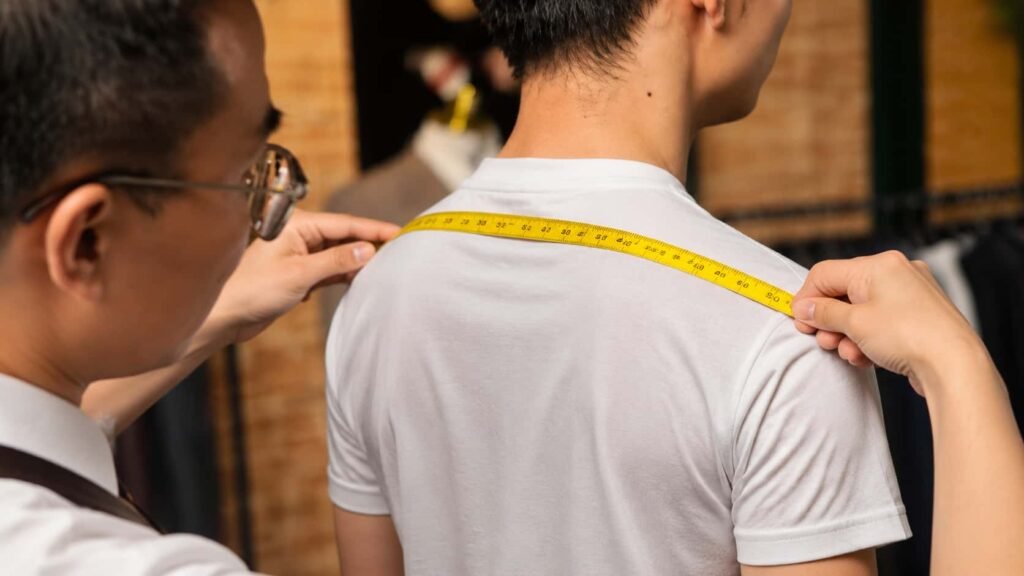
A revision is appropriate when the garment remains the same identifiable style and the changes can be traced within its existing development record. Fit corrections, clearer construction notes, updated artwork placement, and some material or color changes often fit this approach. The revised file still needs a version identifier, a record of changes, and a clear approval status.
“Only a revision” does not mean a change is minor to production. Moving a pocket can affect the pattern and sewing operation. Changing an elastic can affect fit even when its width looks similar. Keeping the style’s history together is useful, but a growing collection of variants and exceptions can eventually make one pack difficult to follow. At that point, separating the specifications may be safer.
How Should Measurement and Fit Adjustments Be Updated?
Fit feedback needs to become an instruction someone can measure or check. “Make the waistband more comfortable” describes an experience, but it does not say whether to adjust circumference, height, elastic, seam, or fabric. A development review should identify the likely cause, state the proposed change, and confirm which points of measure and pattern pieces it affects before the next sample is made. Suppose a base-size sample has a specified waist measurement of 70 cm and a proposed revision calls for 72 cm. Those figures are illustrative, not a sportswear standard or tolerance. The team must still define where to measure, whether the value describes the relaxed finished garment, and how the approved adjustment carries through the ordered size range.
Do New Colors, Logos, or Labels Require a Separate Pack?
A different color rarely changes a garment’s silhouette, but it may require a new fabric color reference, matching thread, elastic, lining, or zipper. Logo changes need approved artwork, dimensions, placement, and application method. Labels may differ by market or order. Recording those details within one pack can be efficient when the pattern and construction remain shared. Separate packs can be clearer when variations have their own materials, samples, or approval histories. A brand might approve a printed training top separately from a solid-color version if the print method affects fabric behavior or production checks. Either arrangement can work if the factory can identify the exact components for a particular order without searching old messages for exceptions.
When Can One Pack Cover Multiple Variations?
One pack works best when its common specification genuinely applies to every listed variation. Three tracksuit colors could share a pattern, size chart, fabric construction, and sewing method while having separate entries for shell color, rib, thread, zipper, and logo color. “Use matching trims” leaves a decision open that may matter to the brand. If variations acquire different patterns, size charts, or construction, the pack may become difficult to navigate. A long-sleeve training top and a short-sleeve version may share a body block but still require separate sleeve patterns and checks. Splitting the documentation can help when each version will be approved and reordered independently.
| Change within an existing style | Records to review | Caution before release |
| Fit correction | Points of measure, pattern, grading, fit sample | Confirm the change across affected sizes |
| Fabric substitution | Bill of materials, material reference, sample | Recheck fit and relevant performance |
| New colorway | Color standards and matching components | Identify the ordered color combination |
| Logo update | Artwork, size, placement, application | Approve its appearance on the garment |
| Packaging change | Packing instructions, labels, quantity breakdown | Match the destination order requirements |
A dated revision should say whether it replaces the previous version for all orders or applies only to a named sample, variant, or purchase order. Retaining the earlier file helps establish which order followed which instructions. When a correction exists only in a message and never reaches the current specification, two teams may believe they are making the same style while using different information.
How Should Sample Changes Be Recorded?

Sample feedback should identify the exact garment reviewed, the requested change, and the documents affected. The record needs the sample version, size, color, and material, followed by a decision about what happens next. Without that context, a useful fit observation can be applied to the wrong pattern or mistaken for approval of a different variation.
Photographs help people discuss visible details, but they cannot show every difference between samples. Two black leggings may use different fabrics or waistband patterns. A comment on opacity may apply to one fabric, while a comment on rise may apply to one size. Linking feedback to a named sample lets the development team investigate the right cause before changing its specification.
Which Sample Version Received the Feedback?
A fit comment should begin with the sample identity. If a brand has received samples in sizes M and L, or in two candidate fabrics, “the waist feels tight” is not yet enough to direct a pattern change. Recording the sample number, size, fabric, and fitting conditions makes the observation useful. Photographs can show the issue, while measurements and wear notes help explain it. The sample’s purpose should also be recorded. An early garment might be made to compare seam placement, with fit or branding still pending. Approval of the seam layout does not approve everything else on it. The next sample task should separate accepted details from requested changes.
Do the Pattern, Materials List, and Tech Pack Reflect the Approved Changes?
A sample alteration can affect several records. Moving a pocket may require an updated drawing, placement measurement, pattern, and sewing note. Changing the main fabric affects the bill of materials and can prompt another fit assessment. Adjusting a waistband can affect both a base-size pattern and grading. Before a change is considered complete, those connected records should describe the same garment. The reverse check matters too: a revised pack may show a detail that has not appeared on any approved physical sample. It should be marked pending rather than presented as an approved production detail. Distinguishing proposed, sampled, approved, and rejected decisions makes clear what the next sample is supposed to prove.
How Can Teams Identify the Current Version?
A workable version record identifies the style, revision, date, sample reference, and approval status. It should also say what changed and which earlier instructions have been replaced. A filename containing “FINAL” is weak evidence if an email thread holds a later adjustment. The people making patterns, ordering materials, sewing garments, and checking quality need access to the same current decisions. This does not require a particular software platform. A carefully maintained file and change log can establish the history if older versions are retained for reference and clearly separated from active instructions. Before a revised pack is sent for manufacturing, confirm that its recipient can identify both its version and the scope of the change.
| Example record field | Illustrative entry | Why it matters |
| Style and sample | Training legging TL-01, sample V2, size M | Identifies the garment reviewed |
| Material | Fabric candidate B | Separates feedback from candidate A |
| Requested change | Raise rear waistband by 1.5 cm | Gives the pattern team a defined task |
| Affected records | Pattern, drawing, measurements, grading review | Shows what else needs checking |
| Status | Proposed; revised sample not approved | Prevents premature production release |
The measurements and identifiers in this example describe a possible record, not a company standard. A change log earns its place when it prevents a real question: whether the garment being quoted, sampled, or produced matches the one the brand agreed to buy. Its entries should stay attached to the correct style and sample as a project moves toward production.
What Must Be Approved Before Production?
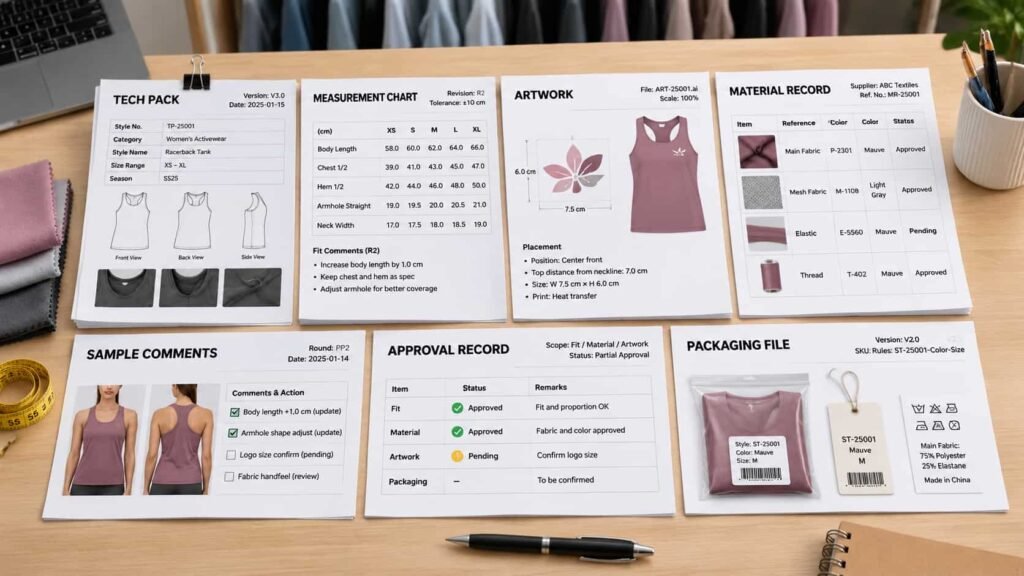
The production version should describe the same garment as the approved sample and the confirmed order. Patterns, measurements, materials, colorways, construction, branding, labels, and packaging need to agree. Any sample substitution or unresolved exception must be identified and settled by the responsible parties before it becomes an instruction to make bulk garments.
Sample approval has limits. A single base-size garment can demonstrate appearance and fit in that size, but it cannot show every graded size or all specifications of components that are not visible. A factory preparing bulk production needs an agreed reference for the complete order, including how to identify the correct materials and variation when cutting, sewing, packing, and checking finished goods.
Does the Tech Pack Match the Approved Sample?
Start with what can be compared directly. Check the sample’s silhouette, seams, straps, waistband, pockets, logo placement, and measurable dimensions against the current pack. If they disagree, determine whether the sample reflects an approved change missing from the file or whether the file contains a later change that still needs sampling. Production staff should not have to decide which reference overrides the other. Temporary components need explicit treatment. A prototype might use an available zipper color or substitute elastic to test construction. The brand may approve its general design while requiring a different approved component for production. Recording that exception keeps a useful physical sample from becoming an inaccurate specification for the order.
Are Materials, Size Grading, and Construction Details Confirmed?
The bill of materials should identify the agreed main fabric and components closely enough to distinguish them from alternatives. The size specification should define points of measure and the ordered size range. Construction instructions should cover details a photograph cannot reliably communicate, such as lining attachment, seam type, reinforcement, or a particular pocket assembly. Testing should follow material, product use, and agreed requirements. For example, ISO 6330 describes washing and drying procedures used in textile testing, while ISO 5077 addresses determination of dimensional change after an appropriate procedure. Neither standard by itself sets a universal acceptance limit for the brand’s garment. Agree on what will be tested, on which version, and against which requirement before treating a result as approval.
Which Version Should the Factory Use?
The factory needs one identifiable current production reference for each ordered style and variation. It should connect the pack to the approved sample, pattern, material specifications, colorway, and purchase order. If a late change is accepted, assess its effect on material already sourced, samples already approved, and work already started. Sending an attachment without stating its scope can create two competing versions of the same product. The brand should be able to answer concrete questions before release: Which fabric was used for the approved fit? Does the size chart cover every ordered size? Are logo placement and packaging confirmed for the destination? Does the current file identify substitutions? If an answer remains open, mark the affected work pending rather than relying on an assumption.
| Production check | Evidence to match | Release question |
| Design and fit | Current pack, approved sample, pattern, measurements | Do they describe the same garment? |
| Materials | Approved references and bill of materials | Are substitutions identified and approved? |
| Sizes and colors | Grading, ordered size range, colorway record | Does every ordered variation have instructions? |
| Branding and packaging | Artwork, labels, packing requirements | Do they match the order and destination? |
| Version status | Dated file, change record, approval | Can every team identify the current version? |
A new tech pack is useful when development has produced a separately defined garment. A revision is useful when the same style has changed and its history can remain clear in one file. Before either is released for production, ask whether someone who missed every sampling discussion could use the approved records to make and check the intended product correctly.
If you are deciding whether an updated sportswear design needs a new tech pack, send Leadshow the current file or reference sample, the changes you want, your target fit and materials, and the intended size range and quantity. Shenzhen Leadshow Sports Technology Co., Ltd. can review the available information, identify what still needs development, and discuss the sampling and custom manufacturing route for your project. For a product development or quotation inquiry, contact cody@leadshowfashion.com with the garment type and the references you have available.