
Activewear Fabric Supplier
Fabric sourcing, material evaluation and garment development for activewear brands moving from swatch selection to scalable production.
- Select materials around garment construction, fit, stretch, handfeel, color, performance goals, budget and order volume.
- Review supplier stock, standard ranges or project-specific custom options, then confirm with swatches, color samples and garment samples.
- Carry approved materials into pattern work, sampling, bulk manufacturing, quality checks, branded labels, packaging and export delivery. Approved material references support later bulk preparation and repeat-order review.
- Leadshow operates as an apparel development and manufacturing partner, not an independent fabric mill selling roll goods alone.
Is Our Fabric Sourcing Model Right for Your Project?
Leadshow supports activewear programs where fabric selection is connected to fit, sampling and finished-garment production. The best fit is a brand or sourcing team developing apparel, improving an existing style or preparing repeat production. It is built for commercial apparel projects where the chosen fabric must be proven in an actual garment before material purchasing and production are released.
Activewear Brand Development
A strong fit for brands developing sports bras, yoga leggings, running shorts, sports T-shirts, tank tops, tracksuits or related sportswear. Material selection can begin from a Tech Pack, reference garment, fabric swatch, target handfeel or performance brief. Leadshow coordinates suitable fabric options, reviews compatibility with garment construction and prepares samples before approved materials move into bulk apparel manufacturing. The review can also include color direction, garment size range, branding method and the timing needed to move from fabric approval into a working sample.
Material Replacement Programs
Useful when an existing style has a fabric issue, a preferred article becomes unavailable, or a brand needs another sourcing route for future orders. The review can compare composition, construction, weight, stretch, recovery, color, handfeel, process compatibility, MOQ and supplier availability. Any substitute still requires physical review and garment approval before it becomes an accepted bulk-production material. For repeat programs, the aim is to preserve the useful parts of the existing product while identifying material changes that could affect fit, appearance, cost or future supply.
Roll-Goods-Only Purchasing
Leadshow is not currently positioned as an independent fabric mill or a general roll-goods wholesaler. Projects are best aligned when fabric sourcing forms part of apparel development and manufacturing. If the requirement is only to purchase fabric by the meter or kilogram without garment sampling or production, the request should be evaluated first rather than assuming a pure textile-distribution service is available. Leadshow can still review whether the request connects to a garment-manufacturing project, but roll-goods-only supply should not be assumed from the Activewear Fabric Supplier search term alone.
Three Fabric Sourcing Routes for Activewear Development
Fabric availability, color, MOQ, price and timing depend on the selected sourcing route. Leadshow can evaluate supplier stock, standard supplier ranges or project-specific custom options according to garment needs and commercial conditions. The route also determines how much physical approval, supplier documentation and garment validation may be needed before bulk material is ordered.
Supplier Stock Options
Existing supplier inventory can shorten the material-selection stage when the available composition, construction, GSM, width, stretch, color and handfeel fit the product. Stock status must still be checked against the required quantity and production date because availability can change. A physical swatch or sample should be reviewed before the material is approved for an activewear style. When a stock option is chosen, the team should still record the supplier article and approved color so a later reorder can be checked against the same reference.
Standard Supplier Ranges
Many activewear projects can start from established supplier articles offered in recurring compositions, constructions and color ranges. The advantage is a clearer specification base and a known material reference for sampling. Leadshow can obtain relevant options, compare them with the product brief and confirm which article should move into garment sampling, subject to current supplier MOQ, price and lead time. Standard ranges are especially useful when a brand wants a repeatable reference rather than an unrecorded one-off material. Availability still needs to be reconfirmed for every order.
Roll-Goods-Only Purchasing
Custom color, weight, handfeel, finish or other material adjustments may be reviewed when standard articles do not meet the product direction. Custom development normally creates separate requirements for minimum quantity, color approval, supplier lead time and testing. No custom option should be treated as approved until the material specification, physical sample and finished-garment result have been reviewed for the intended program. Where the change affects stretch, surface, coating, bonding or another critical characteristic, a process or garment sample may be needed before the custom development is released.
Match Activewear Fabrics to the Garment You Are Developing
A fabric should be selected from the garment requirement backward. Movement, fit, coverage, seam structure, handfeel, branding and care expectations create different priorities across activewear categories. Leadshow reviews material direction together with the approved product design so the fabric supports the intended garment rather than becoming a separate sourcing decision.
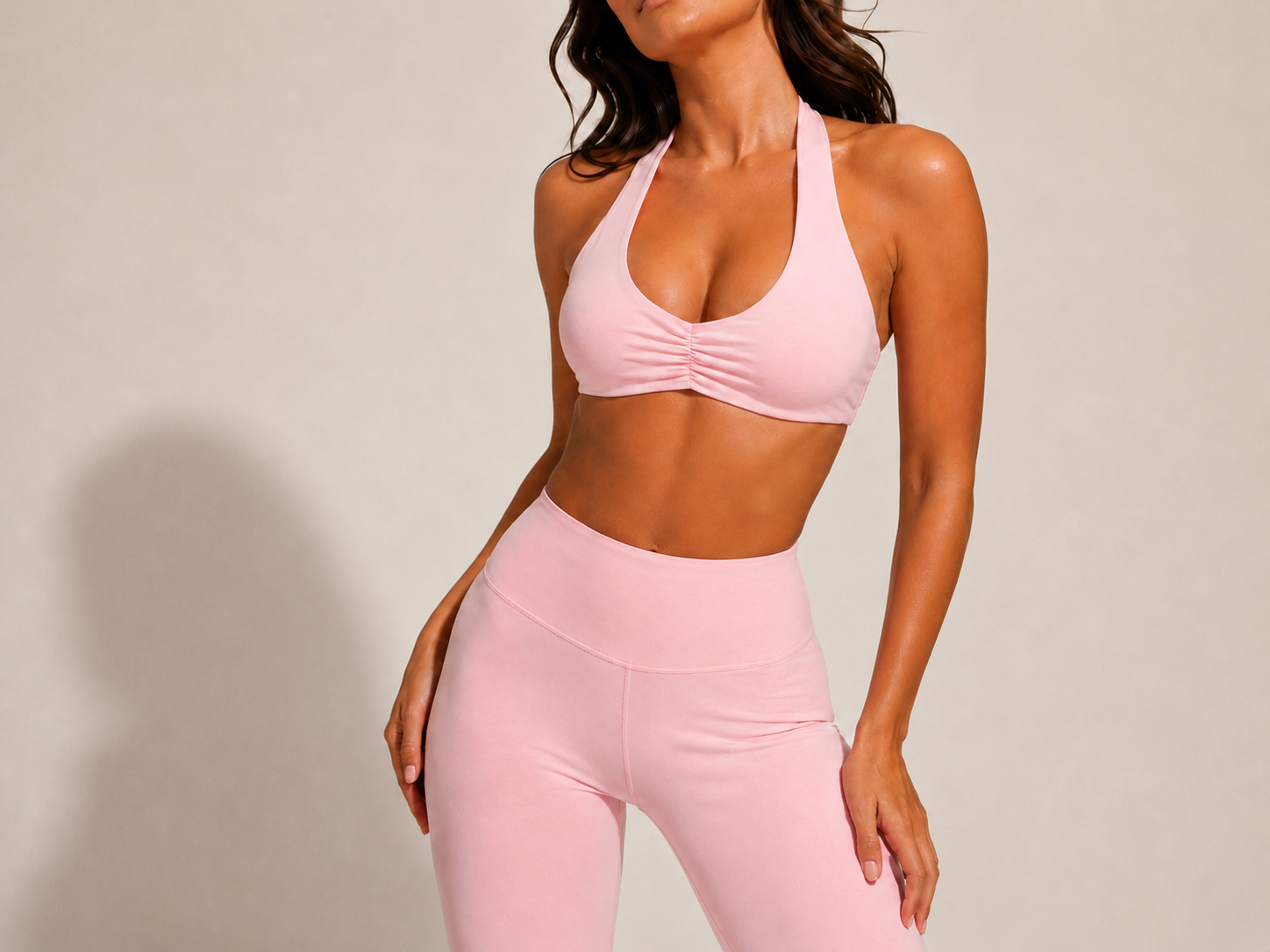
Sports Bras
Sports bra materials need to work with the cup or lining structure, bottom band, straps, skin-contact areas and intended support direction. Stretch alone is not enough. Recovery, handfeel, opacity, seam behavior, elastic compatibility and wash response should be reviewed in a real sample. Any claim such as high support or moisture management requires project-specific material and test evidence. If the style uses multiple layers or contrast fabrics, the stretch and recovery relationship between the main fabric, lining and elastic should also be checked.
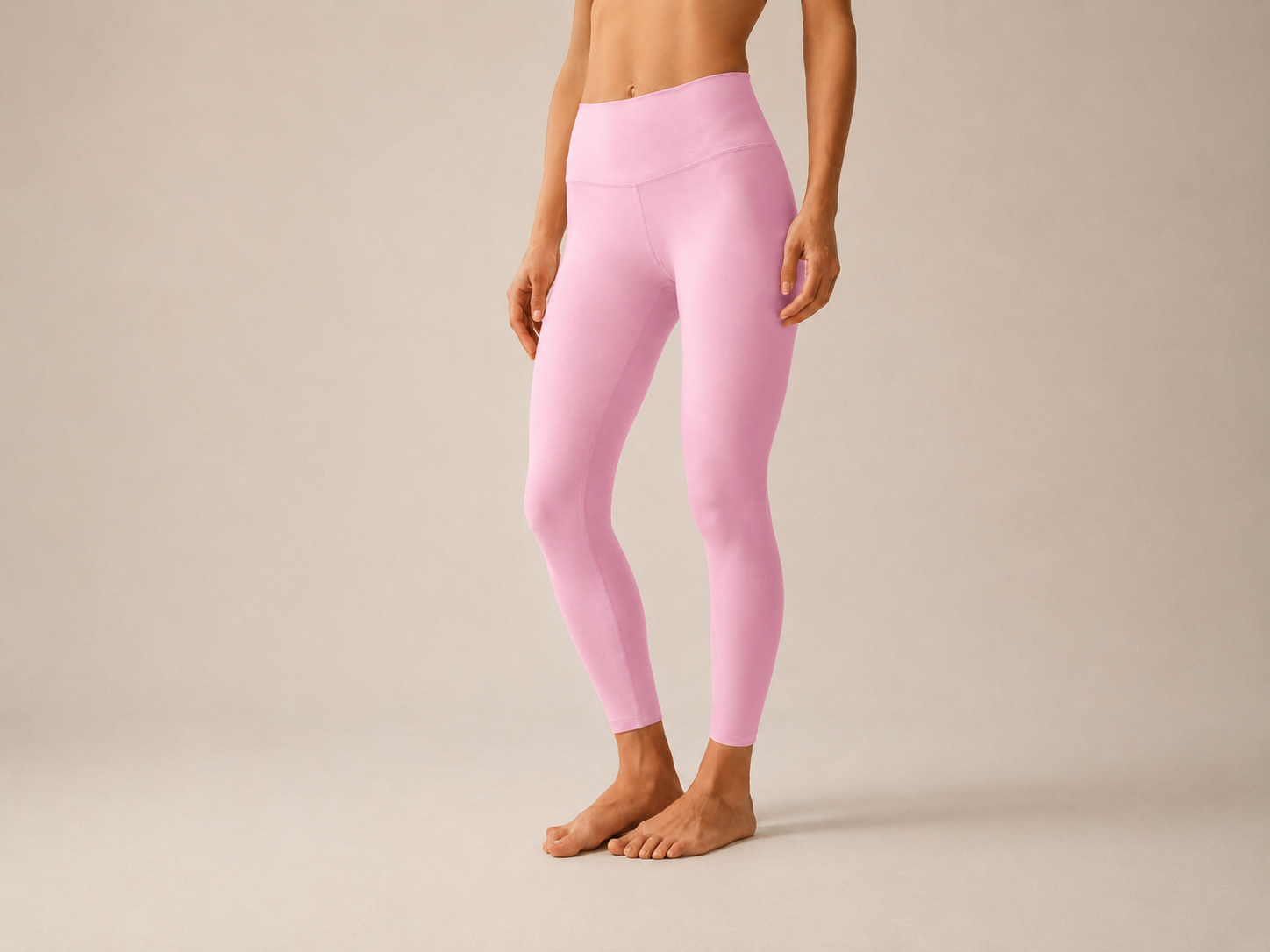
Yoga Leggings
Legging fabrics are usually judged under high stretch and repeated movement. Important checks include directional stretch, recovery, surface feel, opacity in the selected color, waistband behavior, pilling risk, seam compatibility and dimensional stability. A light color can perform differently from a dark color, so approval should reflect the actual color, fit and garment construction planned for production. Repeated wear and wash behavior matter because a legging that looks correct in a first fitting can still show relaxation, twisting or dimensional change later.
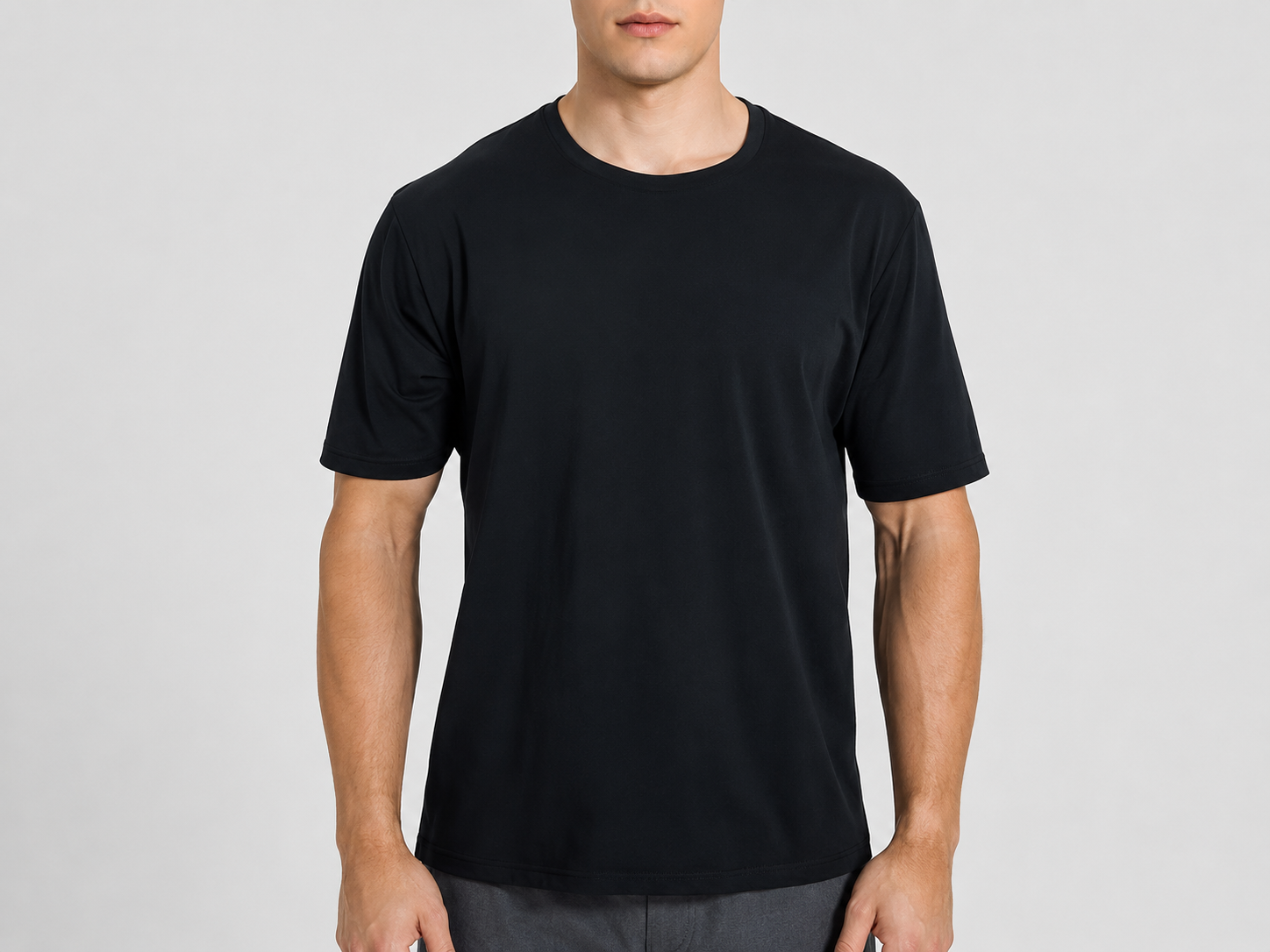
Sports T-Shirts
Sports T-shirt materials should be matched to silhouette, climate, activity level, printing or heat-transfer requirements and desired drape. Composition alone does not determine breathability or drying behavior. Construction, yarn, GSM and finishing also matter. Sampling helps confirm neckline stability, seam behavior, handfeel, surface appearance and whether the chosen fabric supports the intended fit after washing. If a performance claim such as moisture management is important, the material should be supported by the relevant supplier data or agreed testing rather than inferred from the fiber name.
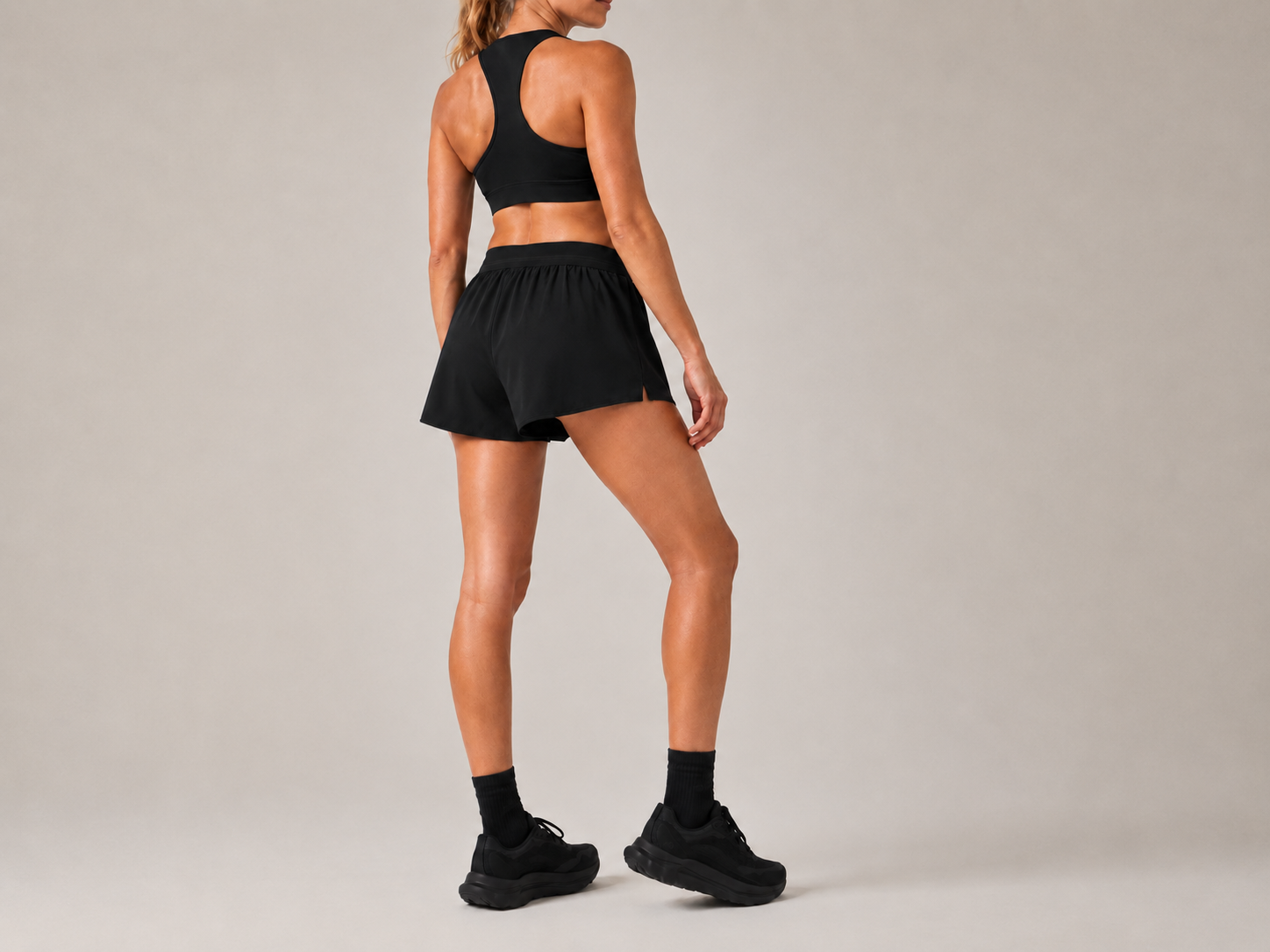
Running Shorts
Running shorts can combine outer fabric, lining or mesh, waistband elastic, pockets and high-motion seams. Material review should consider weight, mobility, abrasion areas, handfeel, drying expectations, colorfastness, pocket construction and elastic compatibility. Laser perforation or other special processes may be reviewed for suitable fabrics, but performance claims still require the correct material, structure and verification. If a lightweight outer is combined with mesh or another lining, the two materials should be reviewed together for movement, seam balance, drying direction and visual appearance.
Tank Tops
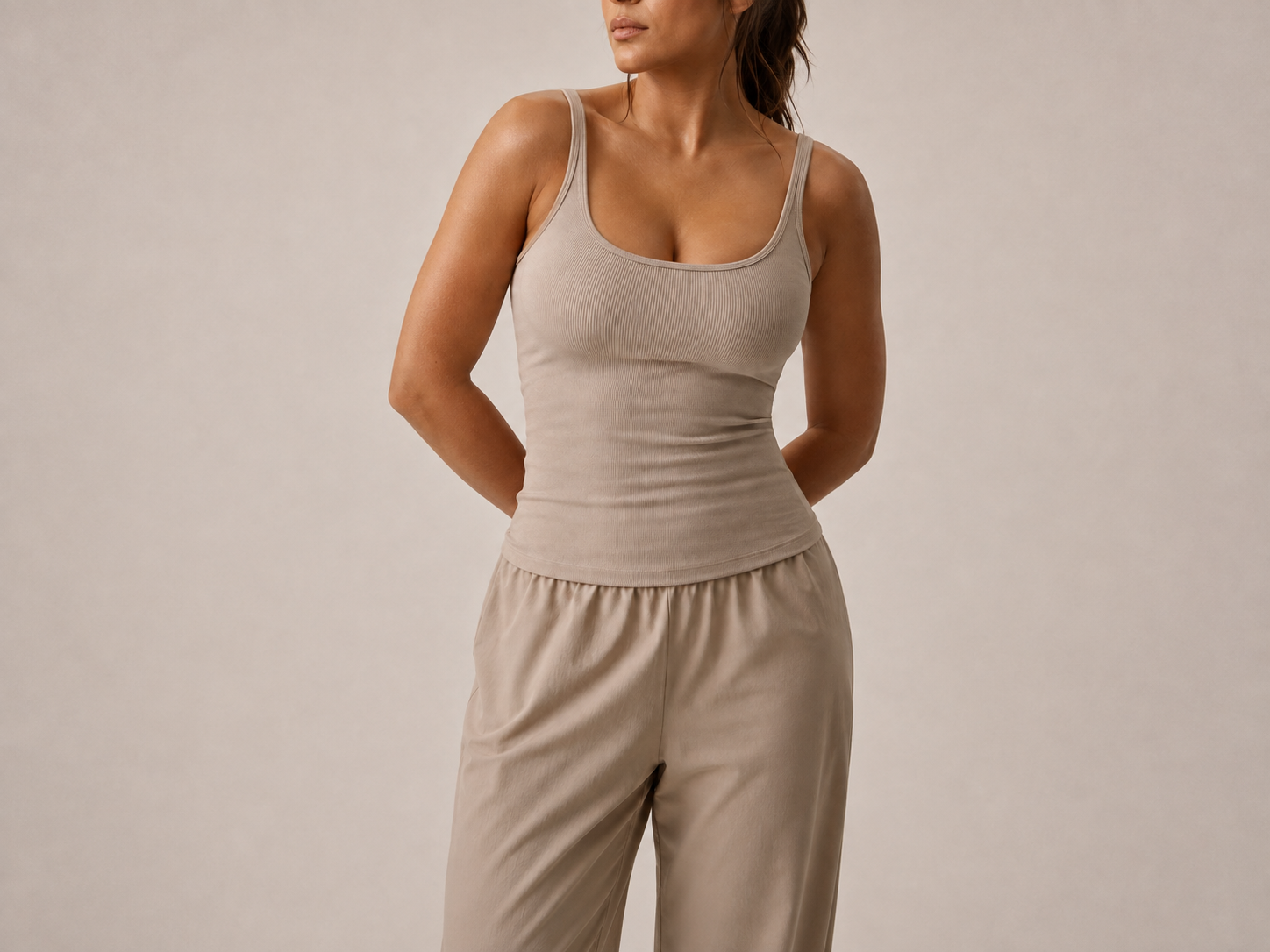
Tank tops often place material directly against the skin across the neckline, armholes and shoulder areas. The fabric should support the intended drape, stretch, recovery, breathability direction and edge finishing. For fitted styles, pattern ease and stretch behavior are closely linked. For looser training tops, weight, structure, opacity and how the material hangs during movement become more important. Armhole finishing, binding or self-fabric construction should be considered at the same time because edge treatment can change the comfort and recovery of a lightweight stretch fabric.
Tracksuits
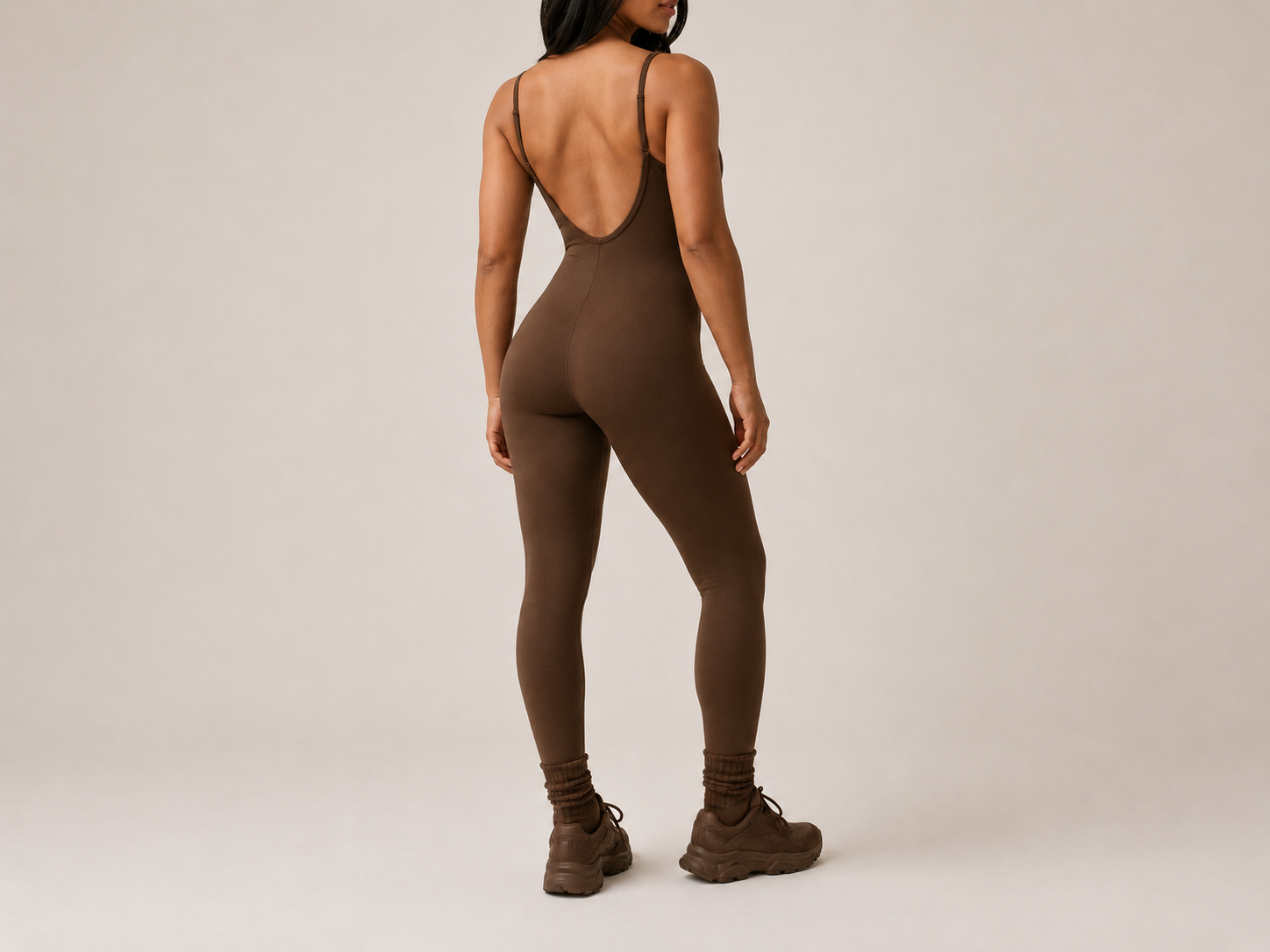
Tracksuits can use different fabric structures from close-fitting activewear and may include zippers, pockets, rib, linings or contrast panels. Material selection should consider silhouette, season, surface appearance, stability, seam construction, trim weight and branding method. When tops and bottoms form one set, color and handfeel should also be reviewed together so the finished range appears intentionally coordinated. If a set uses matching colors across different constructions, physical approval should account for how texture and fiber differences can change the shade even under the same color reference.
Key Specifications We Review Before Selecting Activewear Fabric
Accurate fabric selection requires more than a fiber name. The following specifications help translate a garment concept into a material requirement that can be compared, sampled and approved. Recording the selected values in the material and garment file helps align sourcing, sampling, quotation and production decisions across the project.
Fiber Composition
Composition identifies the fiber blend but does not predict the full garment result. Nylon, polyester, elastane and other blends can vary widely depending on yarn, construction and finishing. The percentage should be reviewed together with the product use, desired handfeel, stretch direction, care expectations and any performance claim that needs supporting documentation or testing. The approved composition should match the supplier record used for the final material rather than a preliminary assumption from a similar swatch.
Fabric Construction
Jersey, interlock, mesh, rib and other constructions create different surface, thickness, stretch, drape and sewing behavior even when fiber content is similar. Construction also affects edge curl, seam choice, opacity and how a logo or heat-applied detail sits on the surface. A close-up fabric sample is more useful than relying on composition alone. For activewear, the same construction can also behave differently when yarn size, density or finishing changes, so the physical article remains the final reference.
GSM and Width
GSM helps describe fabric weight, while usable width affects material consumption and marker planning. A higher GSM is not automatically better. Weight needs to suit the garment silhouette, season, coverage target, drape and processing method. The final value and allowable range should come from the selected supplier specification and approved production standard. Width should be confirmed as an actual supplier specification because it affects consumption, cutting efficiency and the commercial cost of the finished garment.
Stretch and Recovery
Stretch should be defined by direction and use, not only by elastane percentage. A material may stretch easily yet recover poorly after repeated movement. For leggings, sports bras and fitted tops, recovery can influence waist stability, shape retention and pattern ease. Actual values should reference a stated method, sample condition and project requirement when measured. Repeated stretch may also be relevant for high-motion zones, since one pull test does not describe how a garment will behave after repeated wear.
Handfeel and Appearance
Softness, smoothness, matte or shiny appearance, surface texture and drape strongly influence the perceived quality of activewear. Photographs do not capture those characteristics accurately enough for final approval. Physical swatches and garment samples help compare touch, visual depth, body, stretch appearance and how the material looks under normal lighting and movement. For premium collections, subtle differences in surface and drape can influence how a style photographs, layers and feels during movement, so approval should remain physical.
Color and Finish
Color must be reviewed on the actual material because fiber, construction, surface texture and stretch can alter visual appearance. Finishes may also affect handfeel, moisture behavior, heat sensitivity or wash performance. Supplier color cards, physical color samples or Lab Dips may be used where relevant, with final approval based on the project and material route. If a finish is used to create a functional effect, the function should be verified separately from the visual or tactile finish description before it is used in product claims.
Compare Common Activewear Fabric Material Routes
Material families can support different activewear directions, but no fiber blend should be selected by name alone. Construction, finishing, color, stretch, garment fit and actual sampling determine whether an option is suitable. The table below is a sourcing framework rather than a fixed specification, because every final article still requires supplier data and physical approval.
Material Route
Typical Direction
Review Before Approval
Common Watchpoints
Nylon + Elastane
Fitted activewear, leggings, sports bras and smooth handfeel directions can be evaluated with suitable nylon-elastane constructions.
Composition, construction, GSM, stretch direction, recovery, opacity, pilling or abrasion, color and heat-process compatibility.
Different nylon articles can vary in handfeel, dye behavior, heat sensitivity and recovery; no premium or performance claim should be assumed from fiber name alone.
Polyester + Elastane
Training tops, performance knits, printed programs and other sportswear can be evaluated with suitable polyester-elastane articles.
Construction, yarn, weight, stretch, surface, colorfastness, print or heat-transfer compatibility and any moisture-management requirement.
Breathability, handfeel and moisture behavior differ by yarn, structure and finishing; polyester does not automatically mean quick-dry or high-performance.
Synthetic or Blended Knits
Useful when the product needs a balance of handfeel, cost, durability, drape, stretch or maintenance characteristics.
Fiber percentages, construction, GSM, finish, stretch, wash behavior, color, sewing compatibility, supplier MOQ and repeat availability.
A blended composition can create trade-offs; the final result should be judged through physical fabric and garment sampling rather than a blend ratio alone.
Mesh and Lining Options
Can support ventilation zones, sports-bra linings, short linings, pocket bags or layered activewear constructions where suitable.
Hole size or structure, stretch, softness, opacity, abrasion, seam compatibility, color and interaction with the main fabric.
Main and secondary materials may react differently to stretch, wash and heat; compatibility needs to be checked together in the assembled garment.
Supplier-Specific Performance Articles
Can be reviewed when a program has a defined requirement such as moisture management, recycled content, UV, chlorine resistance or another documented property.
Supplier data, certification scope, test method, actual article number, color, MOQ, availability and whether the claim applies to the intended garment.
Supplier documentation does not automatically become a Leadshow corporate certification or a finished-garment certification; scope must be verified for the order.
Stretch and Recovery Matter More Than Elastane Percentage
Activewear must move with the body and return to shape. Stretch direction, recovery, repeated-load behavior, pattern ease and seam construction should be assessed together before a material is approved. The review should connect the material to actual garment movement, pattern measurements, seam structure and the approval standard used for production.
Define Stretch by Movement, Direction and Garment Zone
A percentage of elastane is only one part of the material story. For fitted activewear, the more useful question is how the fabric behaves in the directions and locations where the garment actually moves. A yoga legging may need controlled stretch across the hip, thigh, knee and waistband, while a sports bra places different demands on the body panels, bottom band and straps. A training top may need less compression but more freedom at the shoulder and armhole.
Leadshow can review the selected material in relation to product construction, pattern direction and intended movement. Horizontal, vertical and diagonal behavior may be checked where relevant, while the fabric grain, cutting direction and panel orientation should remain consistent with the approved sample. Stretch figures, when required, should always be linked to a defined test method, sample condition and direction rather than published as an isolated marketing number.
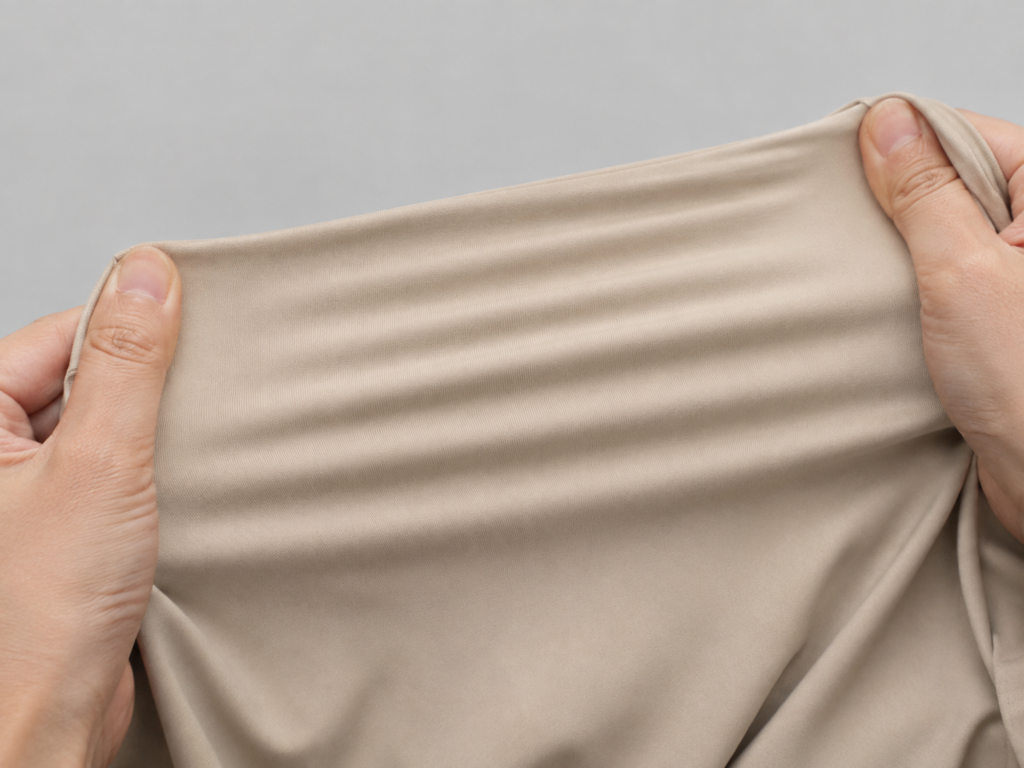
A strong development brief should state the intended fit, movement level, garment areas under tension and any known issue from an existing style. Reference fabric, a physical garment or a Tech Pack can help establish the target. The goal is not maximum stretch; it is enough controlled movement for the silhouette, support direction and expected wear of the finished product.
Evaluate Recovery, Pattern Ease and Long-Term Garment Stability
A fabric can stretch far and still perform poorly if it does not recover after repeated loading. Weak recovery may show up as knee bagging, seat relaxation, waistband slippage, shoulder distortion or a generally loose appearance after wear. Those issues are especially important in leggings, sports bras, fitted tank tops and other garments designed with negative ease.
Material recovery should therefore be considered alongside pattern measurements and seam construction. Pattern ease may need adjustment when a new article has a different stretch curve, thickness or recovery from the previous material. Waistbands, straps and other high-load zones should also be reviewed with their elastics, linings and stitches rather than tested as isolated fabric pieces only. Washing can introduce another change, so dimensional and recovery checks may need to be repeated after the approved care process.
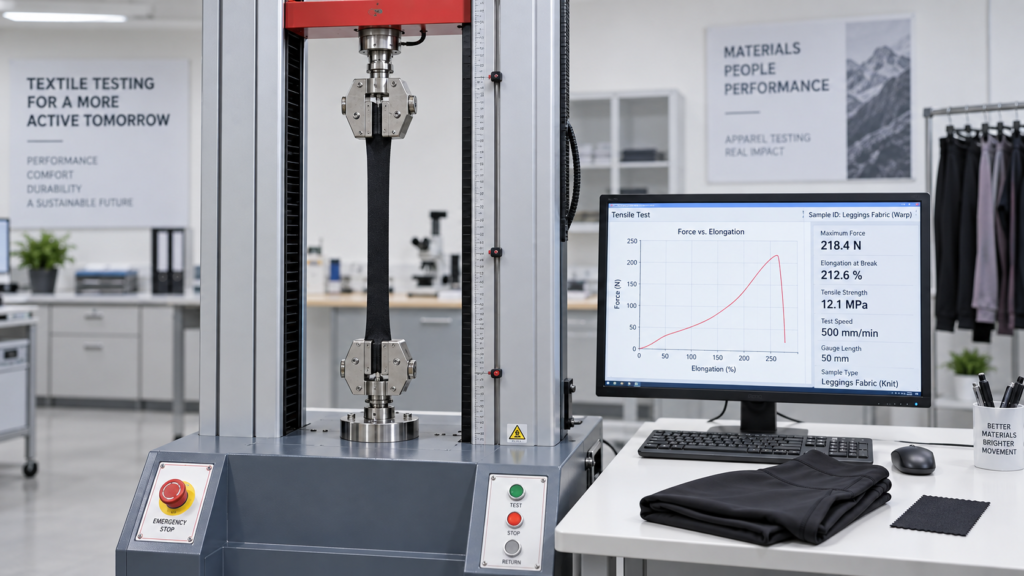
Leadshow can use sample development, fit review and production checks to connect material behavior with garment measurements. No material should be described as permanently shape-retaining or guaranteed never to relax without appropriate evidence. Final acceptance criteria can be defined around the actual program, approved sample and any required test method. A repeat program adds another consideration: the same article should be reconfirmed before a new production because supplier batches and availability can change. If a substitute is introduced, the pattern and fit reference should be reviewed again instead of copying the earlier approval unchanged.
Define Performance Requirements Before Choosing a Fabric
Performance words need a clear definition before sourcing begins. A garment brief should identify the use environment, movement level, test expectation and evidence required for each relevant material claim. The aim is to define what the garment must do and how the requirement will be verified, not to fill the specification with generic performance labels.
Moisture Management
Moisture management can involve fiber absorption, capillary movement, surface treatment and fabric construction. A moisture-wicking statement should not be assumed from polyester, nylon or a supplier description alone. When the feature matters to the product, define the expected function, request supporting supplier data where available and determine whether a sample or third-party test is needed. The final statement used for the garment should match the evidence actually available for the selected article and production lot.
Breathability
Breathability relates to air and vapor movement through the material and can be influenced by knit structure, density, thickness, finish and garment layering. A mesh panel and a dense interlock can behave very differently even at similar weights. The requirement should be connected to climate, activity intensity, wearing time and garment zones rather than used as a generic activewear label. Ventilation can also be created through garment structure, mesh placement or laser-perforated zones on suitable materials, so fabric and design should be considered together.
Opacity Under Stretch
Coverage can change when a material is stretched, especially in light colors and fitted leggings. Fiber content and GSM alone cannot guarantee opacity. The selected color, knit construction, stretch level, pattern ease and lighting all influence the result. A garment sample in the intended fit is a stronger approval reference than a flat fabric swatch viewed without tension. When opacity is commercially important, the acceptance method should be agreed in advance so design, sourcing and quality teams are reviewing the same condition.
Pilling and Abrasion
Surface durability matters in zones exposed to repeated friction from movement, equipment, bags or contact between garment panels. Risk depends on fiber, yarn, surface texture, finishing and end use. A material described as durable should be supported by the relevant specification, sample behavior or test requirement. No fixed abrasion grade should be stated without a defined method and result. If a test is requested, the material article, color and finishing state should match the item being evaluated as closely as the program requires.
Colorfastness and Shrinkage
Dyeing, fiber type, finish and wash conditions can influence colorfastness and dimensional change. Brand colors may also look different across separate material constructions. When color or shrinkage is critical, establish the approved color reference, care method and acceptance criteria before bulk production. Pre-treatment can reduce risk but should never be presented as a zero-shrinkage guarantee. Color and dimensional results should be interpreted against the agreed care instruction and end-use conditions rather than treated as universal material constants.
Special Claims
Recycled content, OEKO-TEX, GRS, UPF, chlorine resistance, antibacterial properties, cooling, waterproofing and similar claims require scope-specific evidence. Leadshow can review supplier documents and coordinate third-party testing when a project requires it, but a material supplier certificate does not automatically certify Leadshow or every finished garment. Certification scope and test conditions must be verified. If a brand plans to publish a quantified claim, the underlying method, sample and pass criteria should be confirmed before marketing copy is finalized.
Confirm Fabric Swatches, Color Cards and Lab Dips
Physical approval reduces uncertainty before pattern work and sampling. The exact route depends on whether the material comes from supplier stock, a standard range or a project-specific color and finish. A clear approval trail also helps distinguish standard supplier shades from custom color development and gives production a physical reference for later comparison.
Approve the Material in a Physical Form
A digital image can help narrow a search, but it cannot reliably communicate stretch, recovery, thickness, surface texture, drape or handfeel. Activewear material development should move toward a physical reference as early as possible. Depending on supplier availability and the project stage, that reference may be a swatch, hanger, color card, cutting, trial meterage or another sample format.
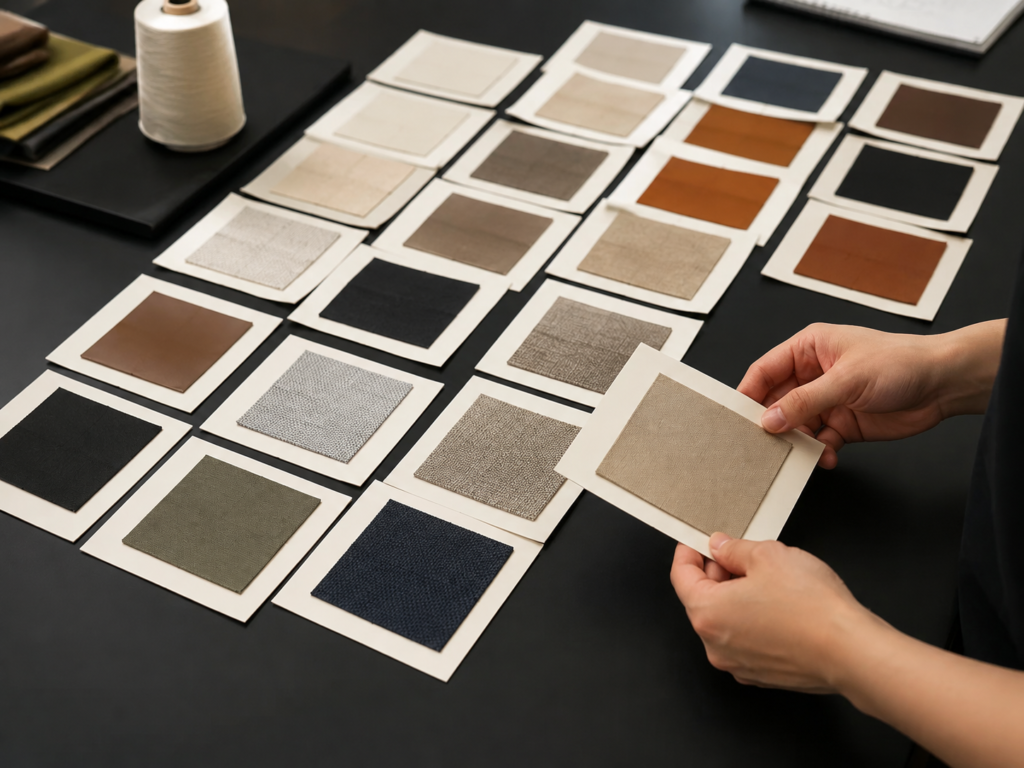
Leadshow can coordinate candidate fabrics according to garment construction, fit target, composition, GSM, color direction, budget, quantity and destination-market needs. Each candidate should be labeled clearly enough to connect the physical material to the supplier article or project record. When several options are compared, the review should focus on the differences that matter to the garment rather than creating an oversized fabric wall with unrelated choices.
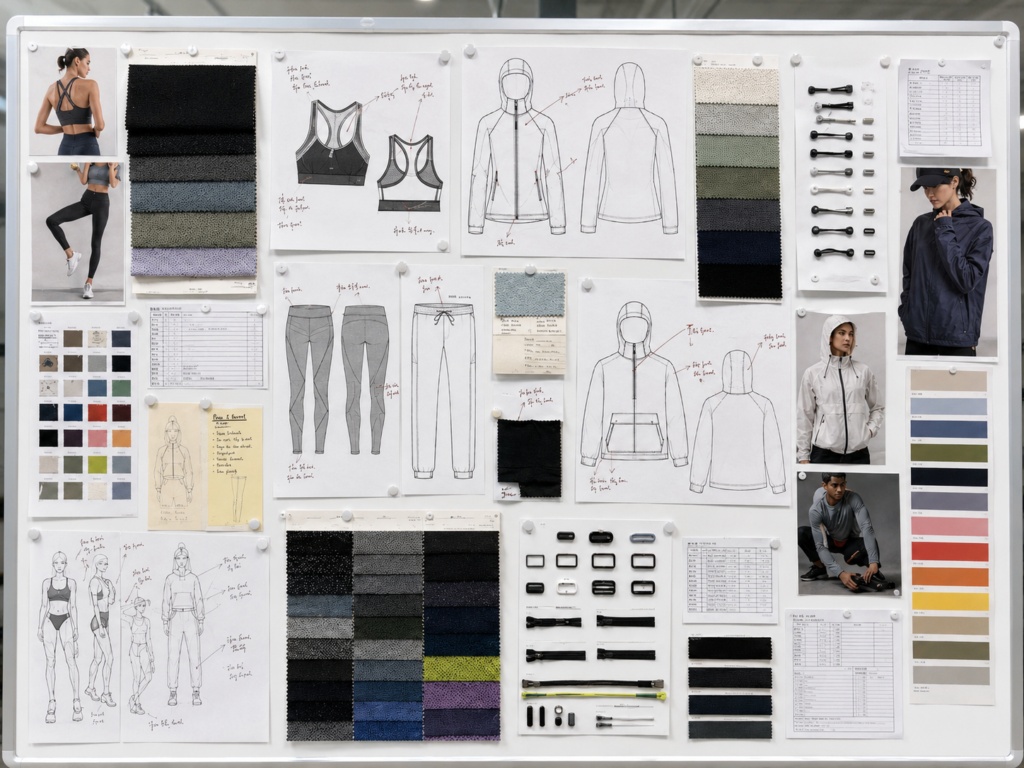
Sample availability, cost and timing depend on the selected supplier and material route. No universal free-swatch policy or fixed fabric-sample lead time has been confirmed. A useful request therefore includes the garment type, target material, approximate order quantity, color direction, desired handfeel and any required performance or certification. Those details help reduce irrelevant sourcing and make the next garment sample more meaningful. Once a preferred option is chosen, keep the physical reference tied to its article or sourcing record so the same material can be identified during garment sampling. A loose swatch without an article reference is difficult to manage when several suppliers, colors or similar constructions are being compared.
Control Color With the Right Approval Route
Color should be approved on the actual material whenever possible. Fiber composition, knit construction, surface texture, gloss, stretch and lighting can make the same digital color value appear different in fabric. A brand color may also require a different tolerance or approval process from a standard supplier shade.
For an available standard color, a supplier color card or physical cutting may be enough to begin evaluation. A project-specific color may require a Lab Dip or another supplier color-development step. Not every order needs the same sequence, and no fixed Lab Dip timing is published because timing depends on the supplier, material, color route and current availability. If the color is used across a coordinated set, secondary fabrics, linings, elastics and trims should also be reviewed for visual compatibility.
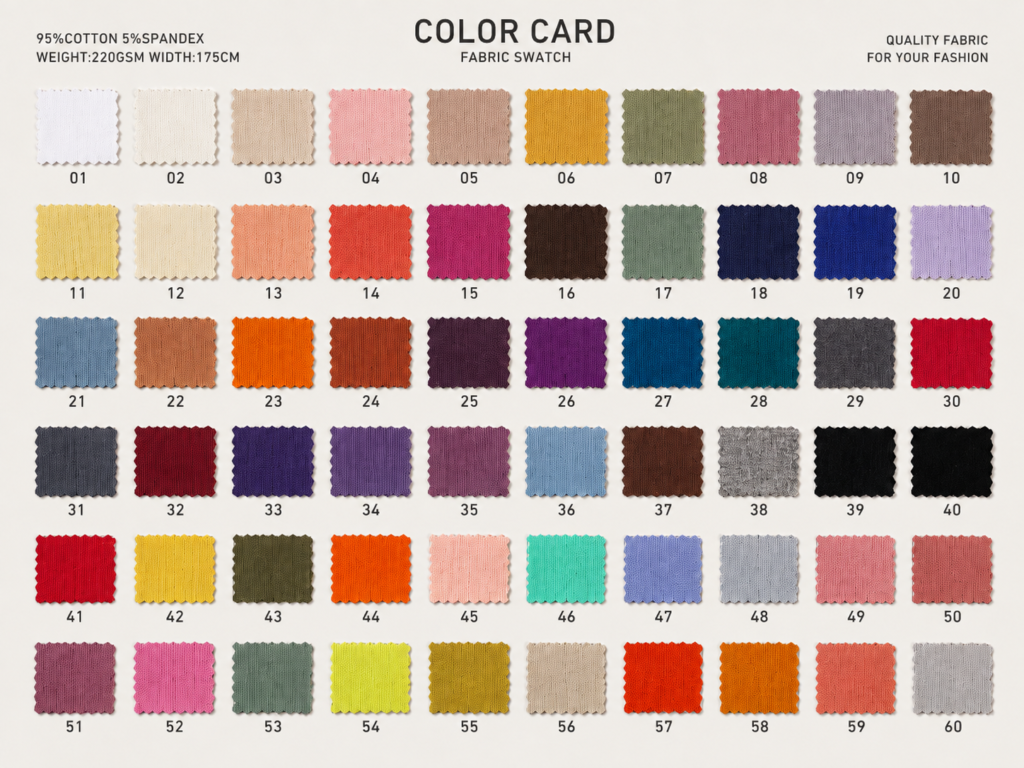
The approved reference should be identified clearly before bulk material is released. Later production can then be compared against the agreed color source and garment sample. Minor batch variation can occur in textile production, so the objective is a controlled approval standard and an agreed acceptance range rather than an unsupported promise of permanent, zero-variation color. Where the brand uses a master color standard, the material approval should state which physical standard governed the decision. That simple discipline is especially useful when several fabrics, trims or later production lots need to be aligned to the same collection color direction.
Validate Activewear Fabric in a Real Garment Sample
A swatch confirms material direction; a garment sample shows how the material behaves with pattern, seams, elastics, branding and movement. Bulk release should follow the approval route agreed for the program. The sample stage is where material assumptions become measurable garment results and where changes can be made before quantity, production and packing commitments increase.
Move From Fabric Approval to Garment Behavior
Once a candidate fabric looks suitable, the next question is whether it works in the intended garment. A material can feel excellent in hand yet create unexpected results after cutting and sewing. Stretch may alter pattern balance, edge curl may affect assembly, a heavy structure may change drape, a thin light color may reveal more under tension, and heat-applied branding may react differently on separate surface finishes.
Leadshow can use the selected material in a garment sample or local process sample to evaluate the elements that matter to the design. For leggings, the review may include waistband behavior, movement, coverage, seam appearance and overall fit. For sports bras, lining, elastic, straps, cup or pad construction and skin-contact feel may matter more. Running shorts can require a combined review of outer fabric, lining, waistband, pockets and high-motion areas.
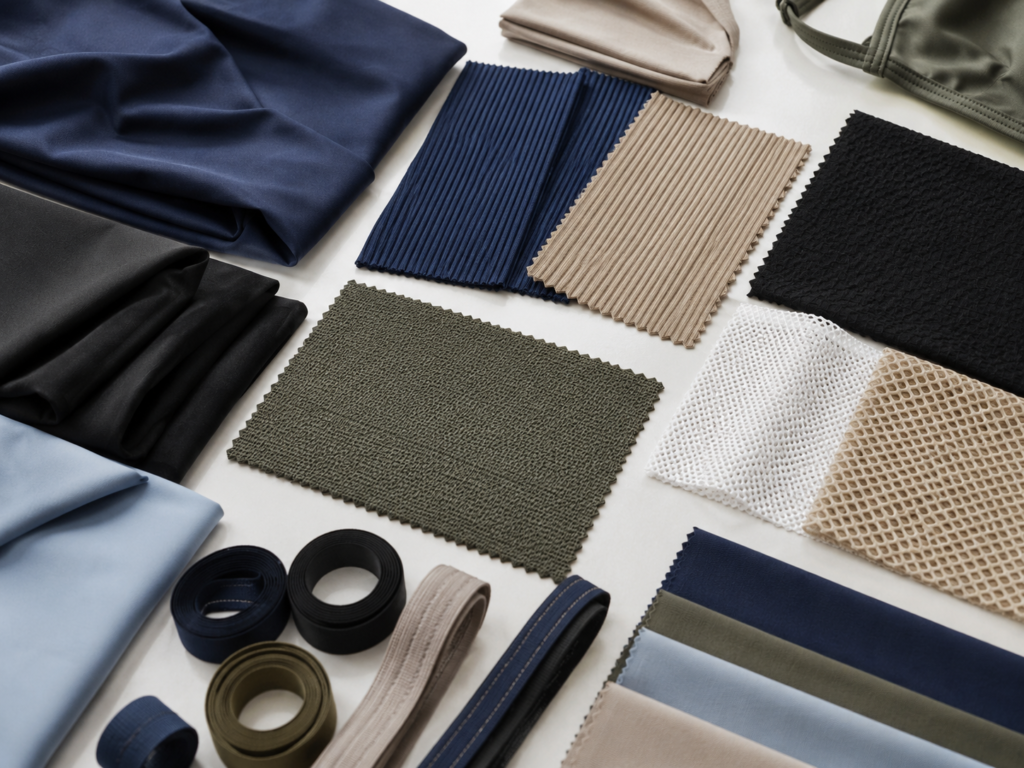
The sample type should match the development stage. A first development sample, Fit Sample, Size Set or pre-production sample may be relevant depending on the project, but not every style requires every sample category. Sample timing is confirmed after reviewing construction, material readiness, customization and revision requirements; Leadshow does not publish one fixed sample duration for all programs. If the fabric is being replaced on an existing style, the new sample should be compared with the old garment for the elements the brand wants to preserve, such as handfeel, recovery, opacity, drape, seam appearance and overall fit. Similar composition does not remove the need for that comparison.
Freeze an Approved Reference Before Bulk Production
Bulk production needs a clear transfer point from development to execution. Approval should identify the material article or specification, color reference, garment measurements, pattern or fit direction, critical seams, trims, logo method and packaging details that form the production baseline. When the material changes after an approved sample, the impact on fit, cost, timing, sewing and performance should be reviewed again rather than assuming the new article is interchangeable.
Leadshow’s standard workflow can move from material review to sampling, revision, approval, material preparation, bulk manufacturing, quality inspection, labeling, packaging and export coordination. Timing for each stage remains project-specific. Specification completeness, fabric and trim availability, pattern complexity, revision rounds, testing, order quantity, workmanship, packaging, approval timing, payment conditions and current production scheduling all affect the calendar.
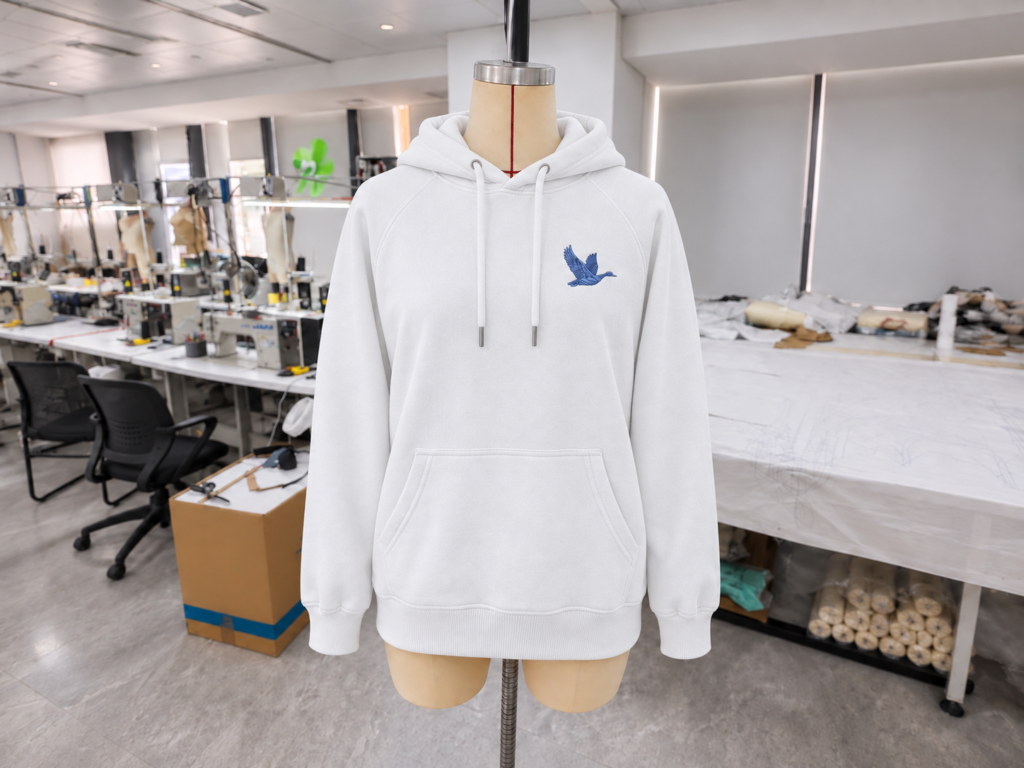
Goods-ready date, shipment date and final arrival are also separate milestones. The factory can confirm production timing after order release and material readiness, while carrier and customs timing remain outside a universal fixed promise. Clear milestone definitions help sourcing teams compare suppliers and manage launches without mixing sample, production and transit time into one vague lead-time number. For a sourcing team, separating those milestones also makes quotations and launch planning easier to audit. A date can then be attached to a defined output, such as sample completion, material readiness or goods-ready status, instead of relying on one ambiguous promise that mixes development, production and transportation.
Check Fabric Compatibility With Fit, Seams and Branding
Material performance only becomes useful when the fabric works with the garment structure. Pattern, stretch seams, elastics, linings, bonding, branding and washing should be considered before bulk release. Each compatibility check should use the selected article and the actual construction planned for production, especially when the fabric is highly elastic or heat sensitive.
Pattern and Ease
Fabric stretch, recovery, thickness and drape influence the amount of ease or negative ease needed in a fitted garment. Replacing one article with another of similar composition can still change fit. Pattern adjustments should therefore be based on the actual approved material, garment measurements and wear target rather than assuming equal fiber percentages create equal pattern behavior. The base size and size range should also be considered because the same material can place different stress on seams and fit points across the range.
Stretch Seams
Activewear seams need enough extensibility and stability for the movement of the fabric and garment. Leadshow has confirmed four-needle six-thread flatlock and other sewing resources for stretch garments, but the best stitch depends on construction and material. Four-needle six-thread should not be described as true seamless knitting, and no seam should be called unbreakable without testing. Seam selection should be validated on the actual thickness and elasticity because machine type alone does not determine seam comfort, extension or durability.
Elastics and Linings
Sports bras, leggings, shorts and swim-related products may combine main fabric with elastics, mesh, linings, pads or other secondary materials. Weight, stretch, recovery, shrinkage and skin-contact feel should work together. A mismatch can cause puckering, pulling, rolling or uneven fit, so high-risk combinations are best reviewed in a local process sample or complete garment sample. Color and surface differences between main and secondary materials should also be reviewed because the visual mismatch can be noticeable even when component colors share the same reference.
Heat Bonding
Leadshow has confirmed heat-bonding equipment for selected compatible structures. Bonding can be reviewed for local edges, overlays or reduced-seam details, but results depend on fabric, bonding film, heat, pressure, time, wash conditions and location. Heat bonding must not be presented as whole-garment seamless knitting, permanent adhesion or automatic waterproofing without specific supporting evidence. A local bonding test can be more useful than a generic supplier statement because edge geometry and garment movement affect the bonded area after assembly.
Heat Transfer Branding
Heat-transfer labels and heat-press graphics can create clean branding details on suitable activewear materials. The surface, dye, stretch, heat sensitivity and wash requirement should be checked before production. A logo that performs well on one fabric may not perform the same way on another. A process sample can confirm appearance, adhesion direction and whether heat changes the material surface. For highly elastic zones, the logo should be reviewed under stretch as well as in the relaxed state so distortion or edge lifting can be detected before bulk.
Wash and Stability
Fabric approval should consider the care process expected for the garment. Shrinkage, recovery, color, surface and bonded or heat-applied details can change after washing. Pre-treatment can help control some dimensional risk, but it does not guarantee zero shrinkage. The approved wash method and any required acceptance criteria should be stated clearly for sampling and production review. If the care instruction changes during development, material and branding checks may need to be repeated because the approved process conditions have changed.
How We Evaluate Fabric Sources for Activewear Programs
Price is only one part of source selection. A material source should be reviewed against the garment requirement, sample result, commercial conditions, documentation and ability to support approved production. The same checklist can be used when comparing a new source, a second source or a substitute for an existing material.
Evaluation Area
What We Review
Why It Matters
Product Match
Whether the article suits the garment type, fit, activity level, construction and intended market position.
Reduces the risk of choosing a technically available fabric that does not work in the final garment.
Specification Match
Composition, construction, GSM, width, stretch, recovery, color, handfeel and finish.
Creates a measurable baseline for comparison and approval.
Sample Performance
Physical swatch behavior and, where needed, garment or process-sample results.
Connects the supplier article with real sewing, fit, movement and branding behavior.
MOQ
Supplier minimums for stock, color, finish or custom development and how they relate to the garment order.
Prevents late material changes caused by unavailable quantities or separate material minimums.
Price
Material price under the current article, color, quantity, finish and sourcing conditions.
Supports an accurate garment quotation instead of a generic fabric-price assumption.
Lead Time
Current stock status, production timing, color-development timing and other supplier conditions.
Material readiness can directly affect sampling and bulk-production milestones.
Color
Standard color availability, color-card reference, Lab Dip route where applicable and batch considerations.
Protects brand color decisions and avoids relying on screen color only.
Documents
Supplier specification sheets, material declarations and other project-relevant records.
Helps verify claims and creates a clearer material file for the program.
Testing / Certification
Required test method, report scope, certificate holder, validity and whether the exact material/order is covered.
Prevents a supplier document from being misrepresented as a universal garment or factory certification.
Supply Stability
Current availability, repeat-order conditions, possible discontinuation, substitute route and batch-management needs.
Important for repeat programs and styles expected to remain in market.
Confidentiality
Whether supplier details, special developments, formulas or commercial information require restricted handling.
Protects sourcing information and project-specific developments.
Bulk Compatibility
Whether the approved article can be purchased and used under the planned quantity, production method and quality standard.
Confirms that a sample material can move into actual garment production rather than remaining a development-only option.
Fabric MOQ, Custom Color, Cost and Lead Time
Commercial terms depend on both the fabric source and the finished garment. Material minimums, color development and sourcing time should be separated from garment MOQ and production scheduling. Keeping those layers separate prevents a material condition from being mistaken for a finished-garment promise and makes quotations easier to compare.
Material MOQ
Fabric MOQ is set by the selected supplier article and sourcing route, not by a universal Leadshow rule.
- Stock, standard-color and custom-development routes can carry different minimums.
- Yarn, dyeing, finishing, width or special-process requirements may create additional supplier conditions.
- Lower quantities can be reviewed only after the actual material and program are known.
Leadshow’s standard garment MOQ generally starts from 100 pieces per color per design, subject to fabric, trims, construction and customization requirements. That garment MOQ must not be interpreted as a promise that every fabric or custom color is available at the same quantity.
Custom Color Development
A custom brand color can be evaluated when the selected material and supplier support it, but the route may introduce separate MOQ, color-development work and lead time.
- A supplier color card may be enough for a standard shade.
- A project-specific color may need a Lab Dip or another physical approval.
- Main fabric, lining, elastic and trims may require separate color references.
No universal low-MOQ custom-color promise is published. The final option depends on the material article, supplier availability, required quantity, color standard and production plan. If a custom shade is important to a launch, the requested approval date should be stated early so material development can be considered in the overall sample calendar.
Cost and Schedule
Material cost and timing should be confirmed only after the relevant specification is known.
- Composition, construction, GSM, width, finish and color affect material pricing.
- MOQ and quantity influence purchasing efficiency.
- Testing, certification, special branding and custom development can add cost or time.
- Long-lead materials can shift sample and bulk milestones.
Leadshow confirms sample and bulk timing by project. Specification completeness, material readiness, fit complexity, revisions, testing, quantity, workmanship, packaging, approvals, payment conditions and current scheduling all influence the final plan. Goods-ready, shipment and arrival dates should also be stated separately so material sourcing, factory production and transportation are not compressed into one undefined lead-time promise.
Verify Testing, Certification and Supporting Material Documents
Large apparel programs often need more than a fabric name and invoice. Document scope, test method, certificate holder, validity and article coverage should be checked before any marketing or compliance statement is used. For each requirement, the safest route is to identify the exact material article, the evidence needed and the wording the brand intends to use.
Supplier Documentation
Material files can include supplier specifications, composition information, article references, color data and other supporting records relevant to the order.
- The file should identify the material clearly enough to match the physical sample.
- Revision or replacement should trigger a document review.
- Supplier information may be subject to project confidentiality.
Leadshow can coordinate material documents according to project requirements, but no claim should be made that every supplier is factory-audited, ISO certified or fully traceable unless the corresponding evidence and scope are confirmed. Where a document is supplied by a third party, the issuing entity and document scope should remain visible in internal project records so the source is not accidentally misrepresented.
Performance Testing
Performance words should be tied to a defined requirement and evidence.
- Moisture management, quick dry, UPF, chlorine resistance, abrasion, colorfastness and similar claims can require a stated test method.
- Testing may be completed by a material supplier or qualified third party depending on the program.
- Sample condition and pass criteria should be agreed before interpreting results.
Leadshow can coordinate third-party testing requirements where needed, but does not treat equipment, fabric feel or supplier marketing language as a substitute for test evidence. Test timing is confirmed by the relevant laboratory or service provider, and it should be included in the project schedule when approval depends on the result.
Certification Scope
Certification must be read by scope rather than by logo.
- Confirm the certificate holder.
- Check validity dates and material or process coverage.
- Confirm whether the exact article, transaction or finished product is included.
- Recheck the file if the material, supplier or order changes.
A supplier certificate is not automatically a Leadshow corporate certificate, and neither automatically certifies every finished garment. OEKO-TEX, GRS, recycled-content and other statements should only be used when the relevant document covers the material and intended claim. If the brand needs a certification claim on a label, product listing or marketing asset, the intended wording should be checked against the verified scope before production files are frozen.
Control Approved Fabric Before Bulk Garment Production
Material approval should create a clear production reference. Article, color, key specifications, sample status and related trims need enough control to prevent unapproved substitutions during bulk manufacturing. Clear approved references also help development, sourcing, production and quality teams use the same material standard when multiple colors, sizes and SKUs enter production.
Freeze the Material Standard With the Approved Garment
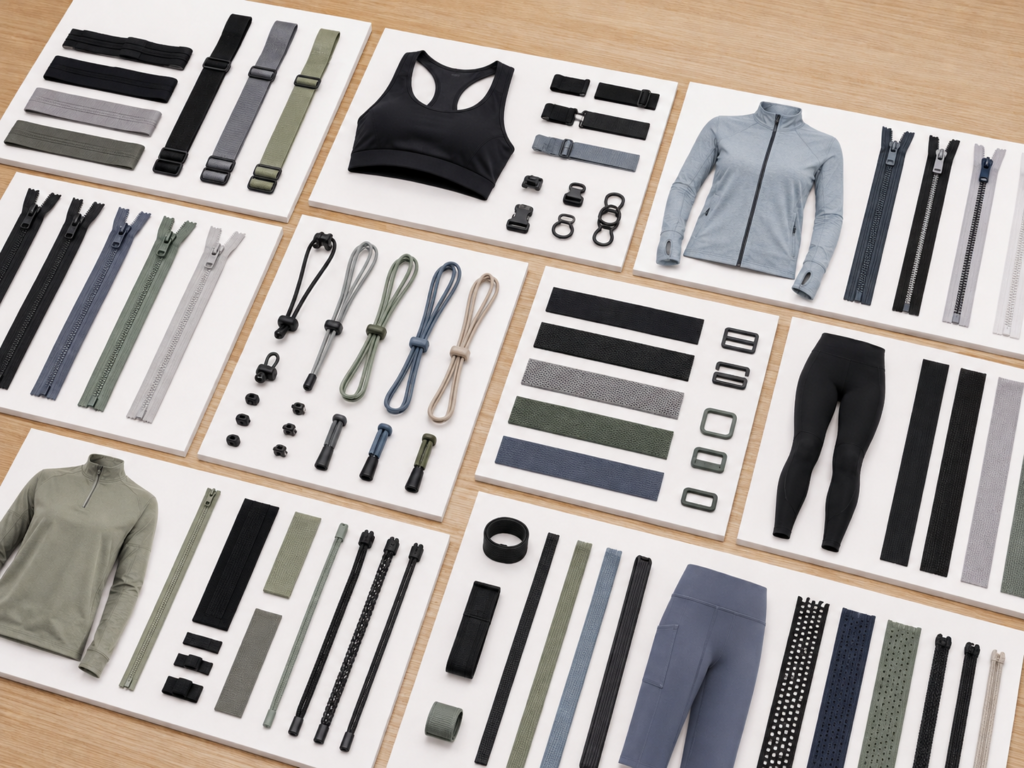
A development sample becomes much more useful when the approved material can be traced back to a clear project reference. The material file may include supplier article, composition, construction, GSM, width, color reference, handfeel direction, stretch information, approved swatch and any required supporting documents. The garment file can then connect those material details with the Tech Pack, BOM, measurements, pattern or fit direction, seam construction, branding and packaging requirements.
Leadshow can carry approved material information into bulk preparation through project records and the approved sample. When a fabric or trim is changed after approval, the impact should be reviewed before production release. Even an apparently similar substitute can change fit, stretch, recovery, color, sewing, heat-transfer behavior, cost or timing.
A useful approval record is specific enough for production and quality teams to know which material is expected, yet it does not pretend that every parameter can be guaranteed outside an agreed tolerance. Material specifications should reflect the supplier data and approved sample. Testing and certification requirements should remain linked to their actual scope. The aim is a controlled handover from development to bulk, not an unsupported promise that every production unit will be absolutely identical. For multi-color or multi-SKU programs, the material record should also identify which color and style combination uses the approved article. Clear allocation reduces the risk of visually similar fabrics being applied to the wrong SKU during material preparation.
Check Incoming Material Against the Approved Reference
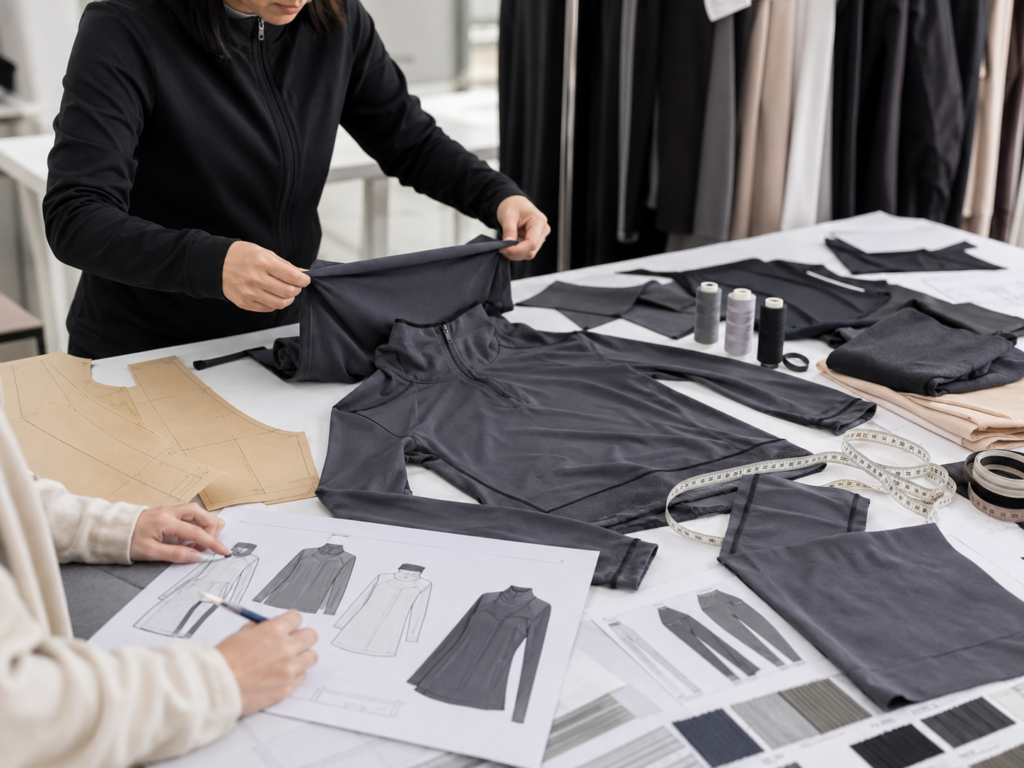
Bulk fabric should be checked against the approved project information before it is consumed in production. Relevant checks can include article identity, color, visible surface, handfeel, width, weight direction, stretch behavior and other agreed specifications. The exact inspection method and sampling level depend on the material, order and quality requirements; Leadshow does not publish a universal statement that every fabric parameter is 100% inspected on every order.
Material readiness also needs to be coordinated with cutting and production scheduling. A fabric should not be treated as ready merely because it has arrived at the facility. Color, batch, quantity, project allocation and any required approval or document status may still need confirmation. When multiple colors, sizes and SKUs are involved, keeping the material linked to the correct style and production batch becomes especially important.
The production team can then use the approved material with the agreed cutting, sewing and special-process conditions. Finished-garment inspection provides another check on appearance, measurements, seams, branding, labels and packaging. Material control therefore continues through the garment rather than ending at warehouse receipt. If an incoming lot differs materially from the approved reference, production should pause for evaluation of the affected requirement rather than relying on appearance alone. The resolution may involve supplier clarification, a new sample, a revised approval or a controlled replacement decision, depending on the issue.
Manage Fabric Batch Variation, Replacement and Repeat Orders
Long-running activewear styles need a material plan beyond the first production. Supply status, batch differences and substitute approvals should be reviewed again before repeat orders are released. Reorder control is especially important for core styles expected to stay in market, because sourcing conditions can change even when the garment design remains unchanged.
Reconfirm Material Supply Before Every Repeat Order
A successful first production does not guarantee that the same fabric article will remain permanently available under the same price, MOQ, color and lead time. Suppliers can change inventory, production plans, raw materials, minimums or delivery conditions. Seasonal articles may disappear, and even recurring articles can show reasonable batch differences in shade, handfeel, GSM or stretch.
For repeat activewear programs, the original material reference should therefore be checked again before the order is released. Useful records include supplier and article information, approved swatch, color reference, garment sample, composition, construction, weight and other project-specific details. The next order can then compare current availability and batch information with the approved program rather than starting from memory or a generic fabric name.
Leadshow can coordinate repeat-order material review as part of garment manufacturing. The timing also needs to be reconfirmed because material readiness, current scheduling, order quantity and any revised requirements affect the new production plan. A previous lead time should not be copied automatically into a future order. The same principle applies to price, supplier documentation and certification scope if any underlying material condition has changed. Keeping the approved garment and physical color or fabric references available for repeat review is especially useful when a style returns after several months, since names and composition alone may not capture the original feel and behavior.
Use a Formal Approval Route for Substitute Fabrics
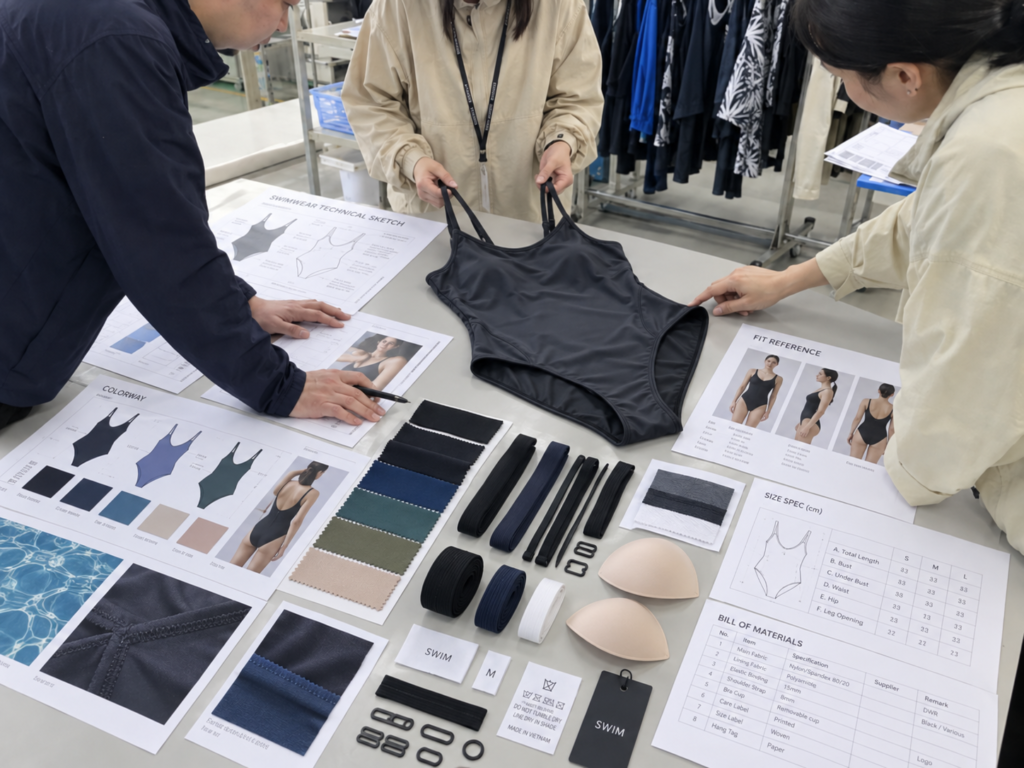
When the original article is unavailable or no longer commercially suitable, a substitute should be treated as a new material decision rather than a hidden purchasing change. Comparison should cover more than composition. Construction, GSM, width, color, handfeel, stretch, recovery, shrinkage, pilling or abrasion direction, logo compatibility, seam behavior, cost, MOQ and lead time may all affect the final garment.
The substitute can first be compared as a physical swatch. High-impact changes may then require a local process sample or a new garment sample so fit, movement and appearance can be reviewed. If the new material changes stretch or thickness, pattern measurements or seam settings may also need adjustment. Any required test or certification should be rechecked for the replacement article instead of assuming the original report applies.
Once approved, the material file, BOM and related production information should be updated. Bulk production should use the approved replacement under the revised commercial and technical conditions. No substitute should be described as permanently identical to the original, even when the fiber blend appears similar. The revised approval should also identify whether any old inventory can still be mixed with the new material. Uncontrolled mixing of batches or substitute articles can create visible or fit-related inconsistencies across the same shipment.
Manufacturing Capacity Behind Fabric-to-Garment Development
Fabric selection creates value only when the approved material can move into consistent garment development and production. Leadshow’s confirmed manufacturing facts support that transition without implying in-house yarn, knitting or dyeing ownership. The numbers below are company-wide manufacturing facts and are used to explain the garment-production foundation, not to claim textile-mill ownership or dedicated capacity for one style.
15 Years Experience
Leadshow has 15 years of apparel industry experience. The figure should be understood as development and manufacturing experience rather than a founded-year claim. For material projects, the value is the ability to discuss fabric together with pattern, fit, seams, sampling and bulk execution. Experience does not replace material testing, supplier documentation or the need to approve each new article. The experience figure should remain exactly 15 years unless Leadshow formally updates the approved fact base.
3 Manufacturing Bases
Leadshow operates three modern manufacturing bases as part of its overall apparel manufacturing system. The three-base figure should not be interpreted as three fabric mills or as proof that spinning, knitting and dyeing are owned in-house. The manufacturing base supports development, cutting, sewing, special processes, finishing and related garment-production work after materials are selected and approved. Product allocation and equipment distribution across the three bases are not published as fixed facts, so project placement remains subject to internal production planning.
20,000+ m² Combined
Leadshow’s three manufacturing bases provide more than 20,000 square meters of combined factory space. The figure represents the total manufacturing footprint, not the size of one plant and not a fabric warehouse area. For activewear programs, the combined space supports the broader production environment needed to move approved material through sampling, cutting, sewing, finishing, packaging and shipment preparation. The combined-area figure should not be divided into assumed per-factory sizes or presented as a single 20,000-square-meter activewear plant.
1,500+ Team
More than 1,500 employees form Leadshow’s overall team across business communication, development, manufacturing, quality, warehousing, logistics, administration and finance. The number should not be read as 1,500 fabric technicians or sewing operators. Its value for an activewear project is cross-functional coordination from material requirements and sample development through production checks, SKU handling and shipment preparation. Department headcounts are dynamic reference figures, so the 1,500+ total is the safer company-level statement for a general sourcing discussion.
304 Confirmed Machines
Leadshow has 304 confirmed production and finishing machines across multiple equipment categories. Confirmed resources include automated cutting, lockstitch, overlock, four-needle six-thread flatlock, elastic-related equipment, heat bonding, seam sealing, laser perforation, heat transfer, ironing, needle detection and folding or packaging equipment. Equipment availability supports garment execution but does not automatically prove a fabric performance claim. The 304 figure refers to confirmed production and finishing machines, not 304 production lines, 304 automated systems or 304 fabric-manufacturing machines.
Up to 120,000 Monthly
The three manufacturing bases provide combined monthly capacity of up to approximately 120,000 finished garments, subject to product construction, materials, processes, order mix and current production scheduling. The number is a company-wide reference and must not be presented as a dedicated capacity for one activewear style. It indicates a path from approved samples toward scalable garment manufacturing when the project conditions are confirmed. Actual available capacity is reviewed against the garment type, material readiness, order mix, quality standard and current schedule before a production commitment is made.
What to Send for an Activewear Fabric Review
Better inputs produce a faster and more relevant material review. A complete Tech Pack is helpful but not mandatory at the first discussion; reference images, an existing garment or a fabric swatch can also establish direction. Adding the commercial and timing information below also helps separate material review, sample planning and bulk-production decisions.
Project Input
What to Provide
Why It Matters
Garment Type
Sports bra, yoga leggings, running shorts, sports T-shirt, tank top, tracksuit or another confirmed Leadshow product direction.
Defines movement, structure, seam and material priorities.
Design / Tech Pack
Tech Pack, sketch, reference image, physical sample or current product link/reference information.
Shows construction, panels, branding and the intended silhouette.
Size and Fit
Base size, size range, measurement chart, fit reference and any negative-ease or compression direction.
Material stretch and recovery can change garment measurements and fit behavior.
Existing Fabric
Supplier article, swatch, composition, GSM, width, handfeel reference or an existing garment when available.
Creates a clearer benchmark for matching, improvement or replacement.
Material Target
Preferred fiber blend, construction, weight, stretch, recovery, opacity, handfeel, finish or other key attributes.
Allows sourcing to focus on measurable material requirements.
Color
Standard supplier color, Pantone or other brand reference, number of colors and any required physical color approval.
Color route can affect MOQ, development work and timing.
Order Quantity
Estimated pieces per design, color and size plus expected repeat-order direction.
Garment volume and material minimums must be evaluated together.
Performance / Testing
Any required moisture, UV, abrasion, colorfastness, shrinkage, recycled-content, certification or other test/document requirement.
Prevents unsupported claims and identifies whether supplier or third-party evidence is needed.
Branding and Trims
Logo method, heat transfer, labels, elastics, lining, mesh, zippers, pads, packaging or other related components.
Material must be compatible with the full garment system, not only the main body fabric.
Target Market
Destination market, retail channel and any known compliance or labeling requirements.
Material documents and testing can depend on market and program requirements.
Target Timing
Desired sample milestone, production goods-ready date and planned shipment or launch date.
Leadshow confirms sample, material and bulk timing by project; goods-ready, shipment and final arrival are separate milestones.
Known Problems
Opacity, pilling, shrinkage, color variation, waistband slippage, seam damage, handfeel or supply issues from an existing product.
Focuses the review on the problem the new material must solve.
Activewear Fabric Supplier Frequently Asked Questions
Common sourcing questions are answered below using Leadshow’s confirmed apparel-development scope. Material availability, performance, certification, MOQ and timing remain subject to the actual supplier article and project review.
Do you manufacture activewear fabric in-house?
Leadshow is not currently positioned as an independent fabric mill. We coordinate fabric sourcing, material evaluation, swatches, color samples and approval as part of sportswear and apparel development and manufacturing. Spinning, knitting and dyeing should not be represented as Leadshow-owned capabilities without separate confirmation.
Can you source nylon-spandex activewear fabrics?
Suitable nylon-elastane options can be evaluated for activewear projects based on garment type, handfeel, construction, GSM, stretch, recovery, color, MOQ, availability and process requirements. Final selection is confirmed through the actual supplier article, physical sample and garment development rather than fiber name alone.
Can you source polyester-spandex fabrics?
Polyester-elastane options can be reviewed when they suit the garment brief. Construction, yarn, GSM, stretch, surface, color, printing or heat-transfer compatibility and any performance requirement still need evaluation. Polyester should not be treated as automatically quick-dry or breathable without supporting material data or testing.
How do you evaluate fabric GSM for activewear?
GSM is reviewed together with composition, construction, density, drape, coverage, season, garment silhouette and processing method. A higher GSM is not automatically better. The selected supplier specification and approved garment sample provide the final reference for the project.
How do you evaluate stretch and recovery?
Stretch should be reviewed by direction and intended movement, while recovery shows how well the material returns after loading. For fitted activewear, the review can include pattern ease, waist or strap stability, repeated movement and wash behavior. Any numerical result should reference a defined method and sample condition.
Can I request fabric swatches before sampling?
Swatches, supplier color cards, cuttings or other physical material samples can be coordinated when available. Availability, sample format, cost and timing depend on the selected supplier and material route. A garment type, target composition, handfeel, color, quantity and performance brief helps narrow the options before sampling.
Can you develop custom fabric colors?
Custom color can be evaluated when the selected material and supplier support it. A standard shade may use a supplier color card, while a custom shade may require a Lab Dip or another approval step. Custom color MOQ, cost and lead time are confirmed after the material route is reviewed.
What determines fabric MOQ and lead time?
Material article, stock status, custom color, yarn or finish requirements, supplier minimums, required quantity and current supplier conditions can all affect fabric MOQ and material timing. Leadshow’s garment MOQ and production schedule are separate items and are confirmed only after the relevant project requirements are reviewed.
Can certified or recycled fabrics be reviewed?
Yes, relevant materials can be reviewed when supporting supplier documents are available. The certificate holder, validity, article coverage and order scope must be checked. A supplier certificate does not automatically become a Leadshow corporate certification or a finished-garment certification, so claims should stay within the verified scope.
How do you control fabric consistency for reorders?
Repeat orders are reviewed against the approved article, swatch, color reference, garment sample and current supplier conditions. Availability, batch, price, MOQ, timing and documents can change. If the original fabric is unavailable, a substitute should be compared, sampled and approved before bulk production.
Start Your Activewear Fabric and Garment Project
Send enough information for a focused material and manufacturing review. A Tech Pack is ideal, but an early-stage project can also begin with reference images, an existing garment, a fabric swatch or a clear product brief. Include the garment type, target fit, base size and size range, estimated quantity per color and design, preferred composition or fabric reference, GSM or handfeel direction, stretch and recovery expectations, color, performance or testing requirements, branding, trims, packaging and target market.
Leadshow can review material-sourcing routes, supplier availability, swatches, color samples, garment compatibility, fabric MOQ, commercial conditions and the development path into sampling and bulk apparel manufacturing. Standard garment MOQ generally starts from 100 pieces per color per design, subject to fabric, trims, construction and customization requirements. Sample timing, material lead time and bulk-production timing are confirmed after the relevant specifications, approvals and current scheduling are reviewed. Upload available files so the next discussion can focus on material fit, risks and the steps required to reach an approved garment sample.