
Swimwear Manufacturer
Custom swimwear development and scalable manufacturing support for established brands, product teams, importers and growing private-label programs.
- Develop swimwear from Tech Packs, reference samples, sketches or defined product concepts, with structure, fit, materials and manufacturability reviewed before sampling.
- Coordinate pattern development, sample construction, fit adjustment, material selection, branding details and production preparation within one manufacturing-focused workflow.
- Support OEM, ODM and Private Label programs from sample approval through bulk manufacturing, quality inspection, labeling, packaging and export coordination.
- Standard MOQ starts from 100 pieces per color per design, subject to fabric, trims, construction, branding and packaging requirements.
Built Around Different Swimwear Sourcing Programs
Different sourcing programs require different levels of development, manufacturing control and commercial flexibility. Leadshow evaluates the product stage, technical files, order structure, target market and launch requirements before recommending a development and production route.
Established Brand Programs
Established apparel and swim-focused brands often arrive with approved silhouettes, technical standards, seasonal calendars and existing quality expectations. The manufacturing task is less about creating a generic swimsuit and more about translating an established brand standard into a repeatable production program.
- Tech Pack and existing product review
- Fit continuity across new styles
- Material and trim consistency
- Sample revision records
- Multi-color and multi-size execution
- Packaging and SKU accuracy
- Production capacity assessment
- Reorder version control
Leadshow can review existing product information, reference samples and manufacturing requirements before a new development or supplier-transition program moves into sampling.
Retail and Import Programs
Importers, retailers and multi-channel apparel groups often manage larger assortments involving several designs, colors, sizes, labels and packing rules. A reliable swimwear program therefore depends on more than sewing capacity.
- Style and SKU matrix review
- Quantity allocation by size and color
- Material and trim mapping
- Branding-file control
- Inspection requirements
- Barcode and packing instructions
- Carton and shipment documentation
- Production scheduling
Leadshow evaluates order structure before production planning so manufacturing, inspection, labeling and packing requirements can be coordinated around the same approved specification set.
Growing Private Labels
Growing private-label brands may already know the intended market and visual direction but still require help turning a concept into a production-ready product. Development often begins with reference images, sketches, existing garments or an incomplete Tech Pack rather than a fully frozen specification.
- Product construction review
- Pattern and fit development
- Fabric and lining evaluation
- Elastic and trim selection
- Sampling and revision
- Private-label execution
- Bulk-production planning
The objective is to create a product specification that can be measured, approved and repeated instead of relying on informal visual references throughout production.
Eight Areas Worth Reviewing Before Supplier Approval
A serious apparel manufacturer should be evaluated beyond factory size or quoted unit price. Product development, approved standards, material control, manufacturing scale, quality checkpoints and order execution all influence whether a supplier fits a long-term sourcing program.
Evaluation Area
What to Review
Evidence Worth Requesting
Swimwear Experience
Whether swimwear is a defined manufacturing category rather than an occasional side product
Product-development records, samples, manufacturing images
Product Development
Ability to review concepts, sketches, Tech Packs or reference garments
Tech Pack review examples, development checklists
Pattern and Fit
How body proportions, negative ease, elasticity and grading are managed
Pattern records, measurement sheets, fit comments
Materials
How fabric, lining, elastic and trims are selected and confirmed
Swatches, specifications, supplier documents
Sampling
How first samples, revisions and approval versions are controlled
Sample comments, revision records, approved sample references
Bulk Conversion
How approved samples become production instructions
Final Tech Pack, BOM, production specification
Quality
How dimensions, workmanship, branding and packing are inspected
Inspection sheets, measurement records
Capacity
Whether manufacturing resources match order quantity and complexity
Factory scale, current capacity evaluation, production plan
Private Label
Ability to coordinate artwork, labels, hangtags and packaging
Approved branding files, packaging samples
Commercial Terms
MOQ, quotation assumptions and timing conditions
Specification-based quotation and written project terms
Delivery
How goods-ready, inspection, shipment and transport stages are distinguished
Shipment documents and delivery schedule
Swimwear Development Starts With Product Structure
Swimwear construction can vary significantly even before fabric, color or branding is selected. Development begins by defining how the garment fits, supports, stretches, opens, covers and recovers during wear.
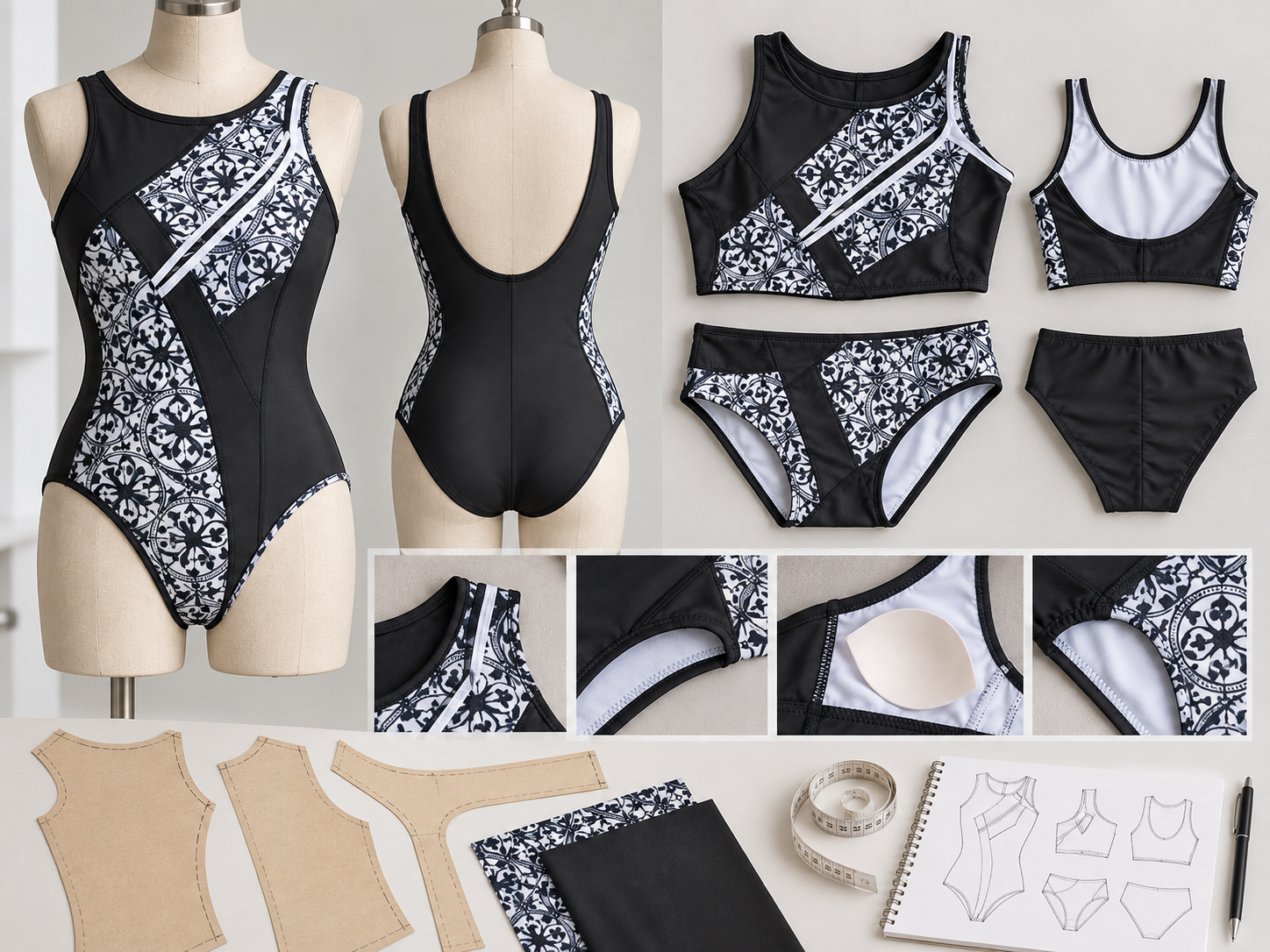
Garment Configuration
Swimwear projects may use single-piece, two-piece or other construction directions depending on the approved design. Construction review considers the number of panels, seam placement, body coverage, openings, lining arrangement and the interaction between stretch fabric and pattern shape.
- Main panel architecture
- Body coverage
- Seam placement
- Open-back or closed-back structure
- Lined and unlined sections
Final product categories are confirmed against project specifications rather than assumed from a generic swimwear catalogue.
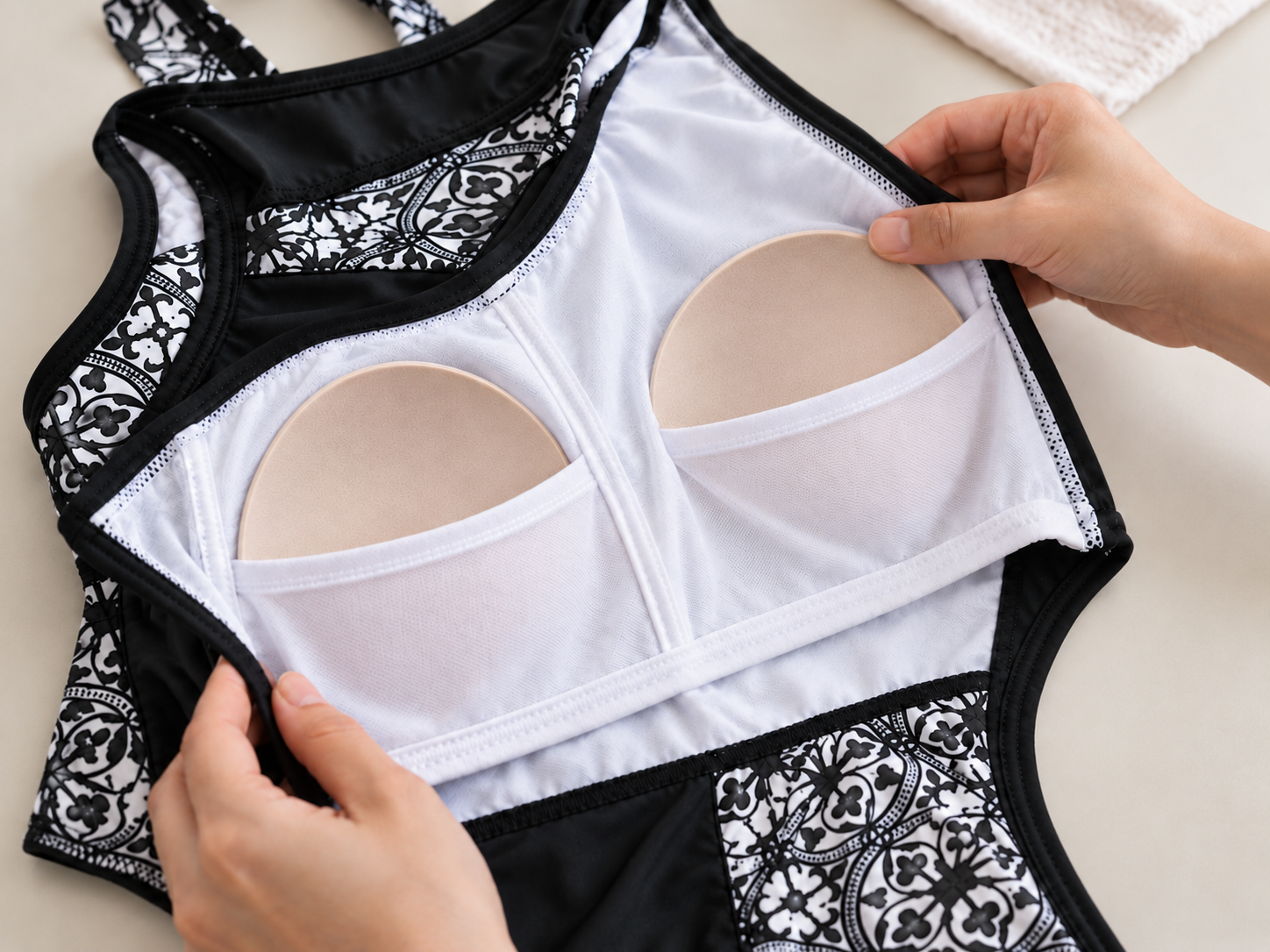
Support and Padding
Support requirements can change pattern shape, internal construction, lining and sewing methods. A development brief should clarify whether padding is removable, fixed, inserted through a pad pocket or not required.
- Pad shape and thickness
- Pad-pocket construction
- Bust coverage
- Internal support components
- Placement stability
- Material compatibility
Support must be evaluated together with fabric stretch and body measurements rather than added as a separate cosmetic feature after the main sample is complete.
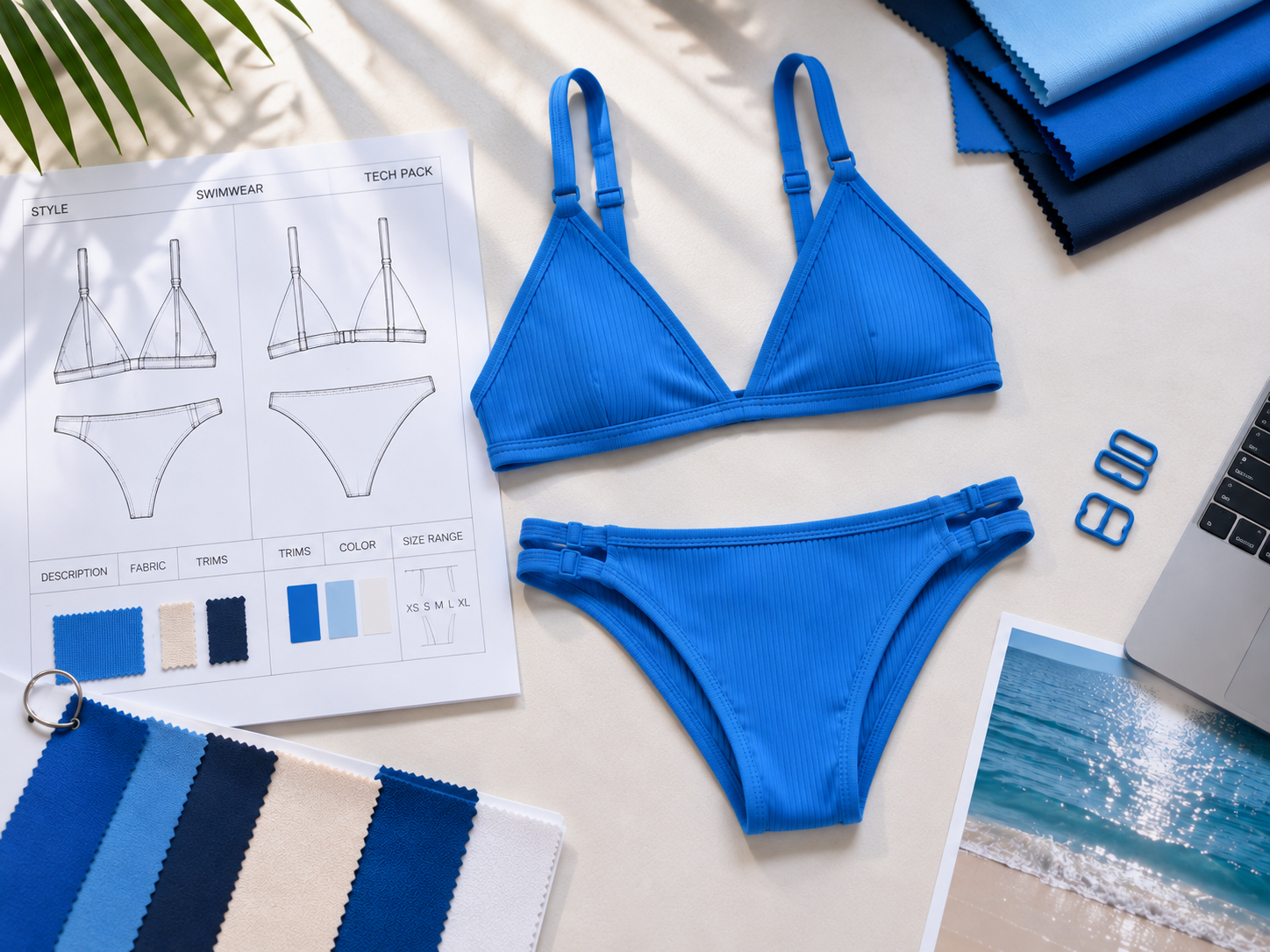
Strap Architecture
Straps affect fit, balance, support and pressure distribution. A strap can look correct on a flat sketch yet behave differently when combined with stretch fabric, elastic or hardware.
- Strap width
- Length and adjustment
- Front and back attachment
- Cross-back structures
- Neck or shoulder placement
- Elastic recovery
Sample fitting is used to confirm whether strap tension supports the intended silhouette without excessive pressure or unwanted movement.
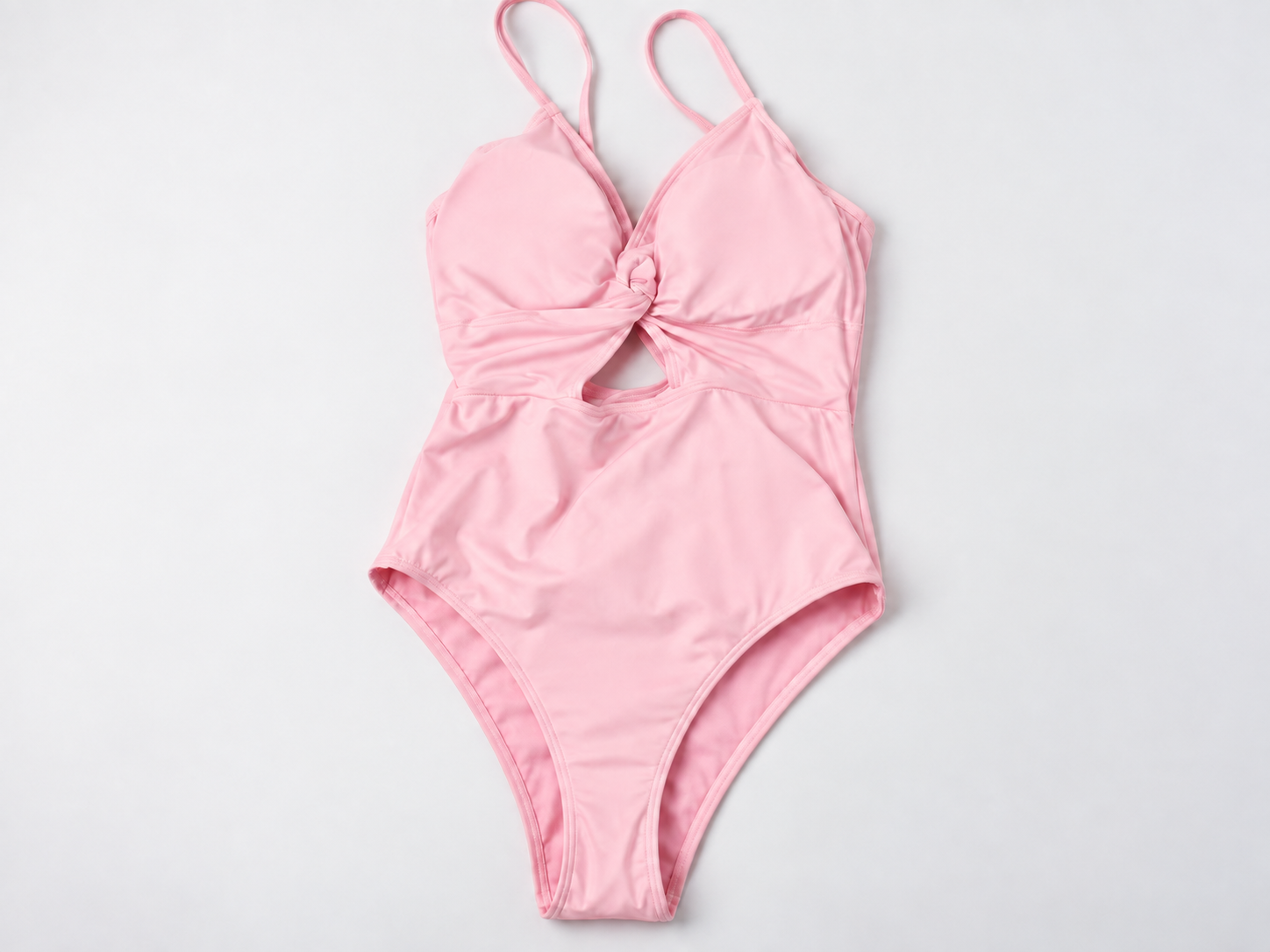
Lining Systems
Lining influences opacity, support, internal comfort, stretch behavior and overall garment weight. The main fabric and lining should be evaluated as a combined system rather than selected independently.
- Lining stretch direction
- Recovery
- Hand feel
- Color interaction
- Coverage
- Seam compatibility
A lining that stretches differently from the shell can change fit and edge tension, so final material approval should occur through physical sampling.
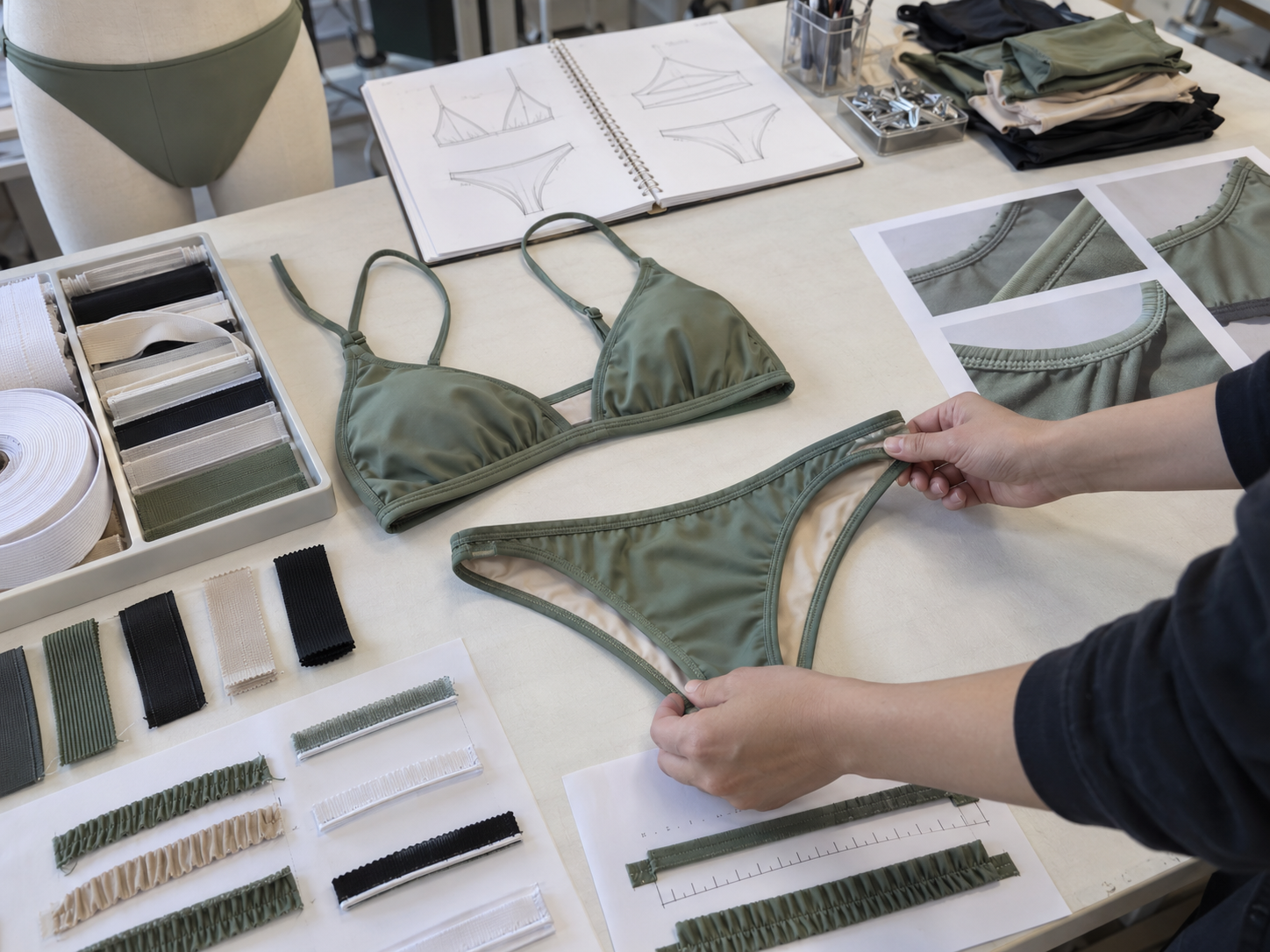
Elastic Edge Control
Leg openings, necklines and other stretch edges often depend on elastic length, width, recovery and installation tension. Small changes can affect coverage, comfort and visible puckering.
- Elastic specification
- Stretch ratio
- Leg-opening tension
- Neckline stability
- Sewing method
- Recovery after stretching
Leadshow has dedicated elastic-installation equipment for suitable swimwear edges, while the final setting remains dependent on fabric, elastic and pattern design.
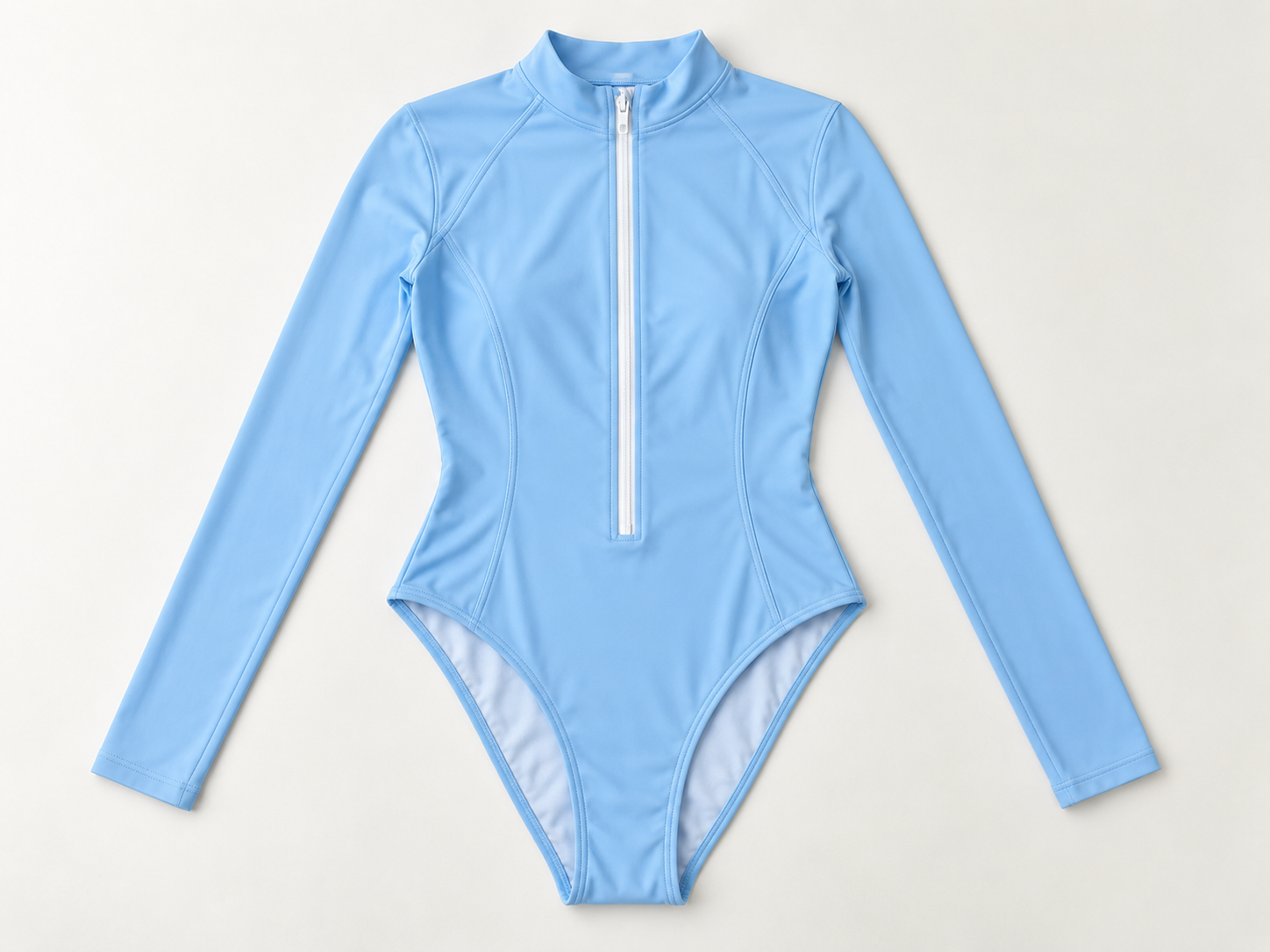
Openings and Bonded Details
Some designs may contain zippers, bonded edges, taped areas or other specialized details. Suitability depends on fabric composition, surface finish, stretch behavior, heat resistance, adhesive selection and the required appearance.
- Local bonding assessment
- Edge finishing
- Opening construction
- Seam-tape suitability
- Heat compatibility
- Process sampling
Special processes should be approved on the actual material combination before they become part of bulk-production instructions.
Fit Decisions That Matter in Swimwear Development
Fit cannot be reduced to a size label. Pattern dimensions, body proportions, fabric stretch, lining behavior, elastic tension and coverage all interact. Sample review should convert visual expectations into measurable construction standards.
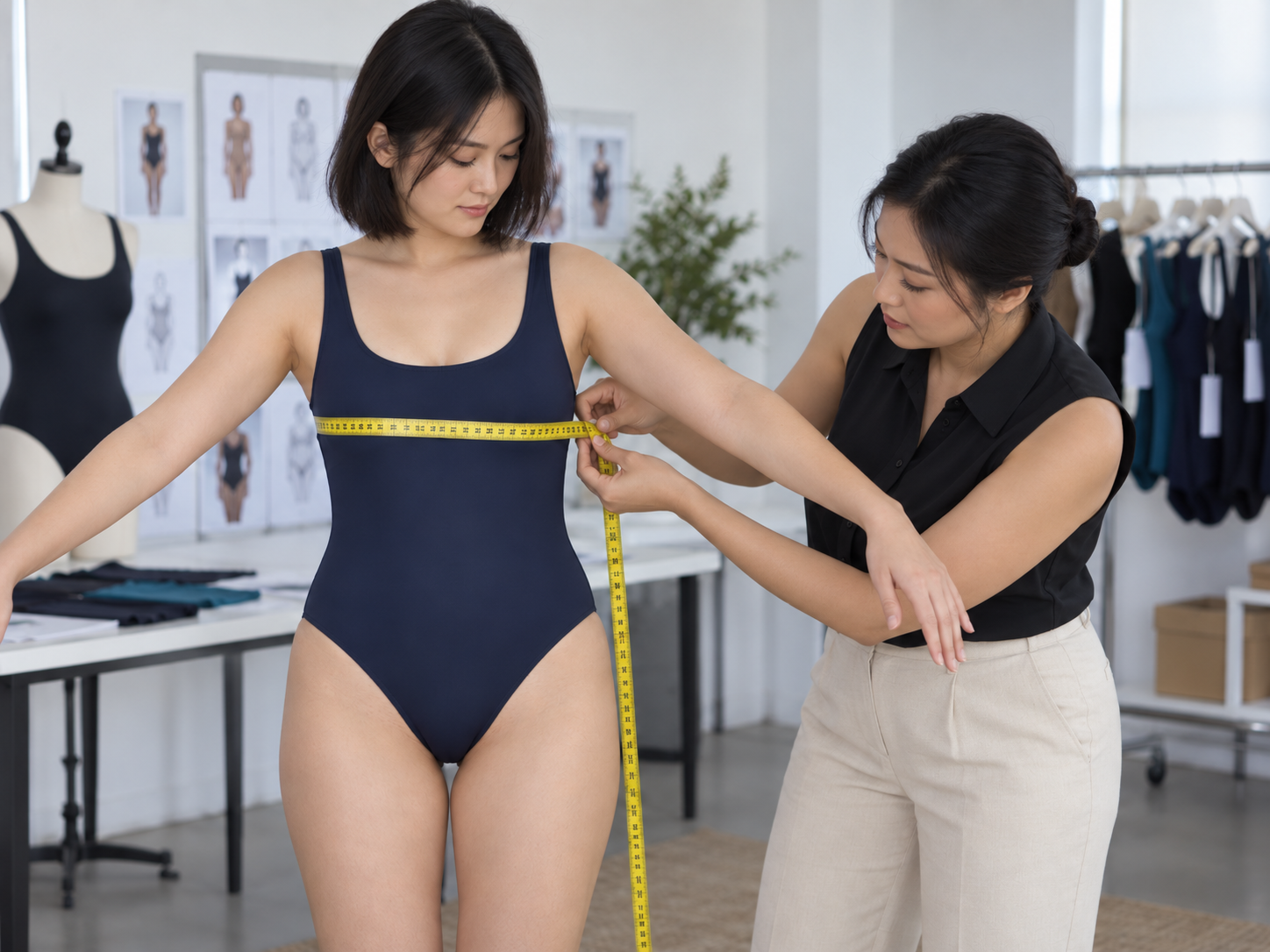
Torso and Body Proportion
A swimwear sample can match width measurements yet still feel too short, too long or unbalanced. Torso length and bust-waist-hip relationships affect vertical tension, neckline position, back opening, leg opening and overall coverage.
- Torso length
- Bust placement and coverage
- Waist position
- Hip relationship
- Leg-opening position
- Front and back balance
- Pattern ease or negative ease
For new markets, base-size and grading decisions should follow approved brand specifications and fitting data instead of assuming one universal body profile.
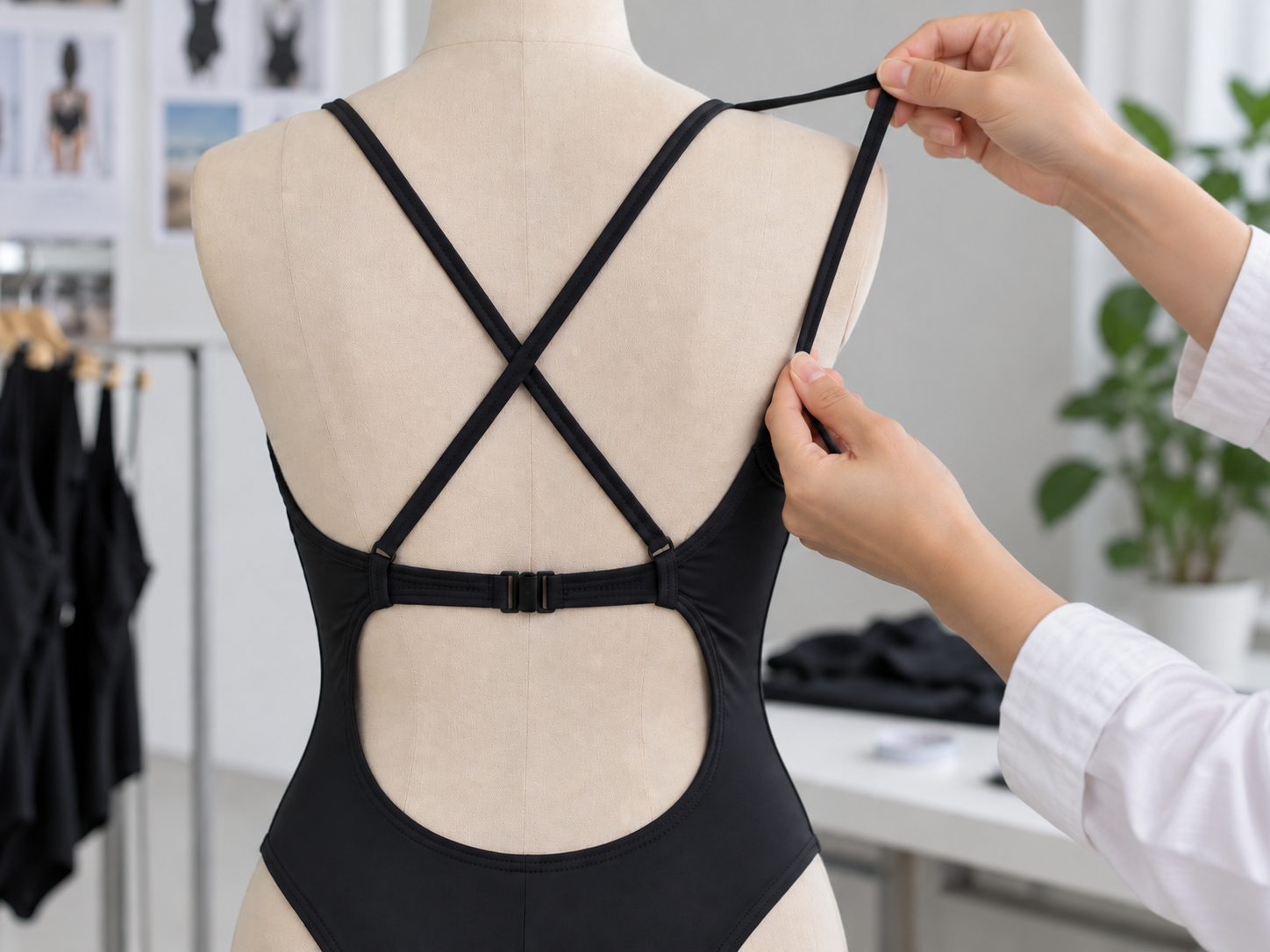
Strap and Elastic Tension
Strap and elastic tension can determine whether a style stays in position without creating excessive pressure. Stronger tension is not automatically better. Excess tension can distort openings, pull side seams or create discomfort, while insufficient tension may reduce stability.
- Strap length
- Shoulder pressure
- Elastic width
- Application ratio
- Leg-opening balance
- Neckline recovery
- Symmetry between left and right
Measurements and fitting comments should be recorded by sample version so later revisions can be traced before bulk specifications are frozen.
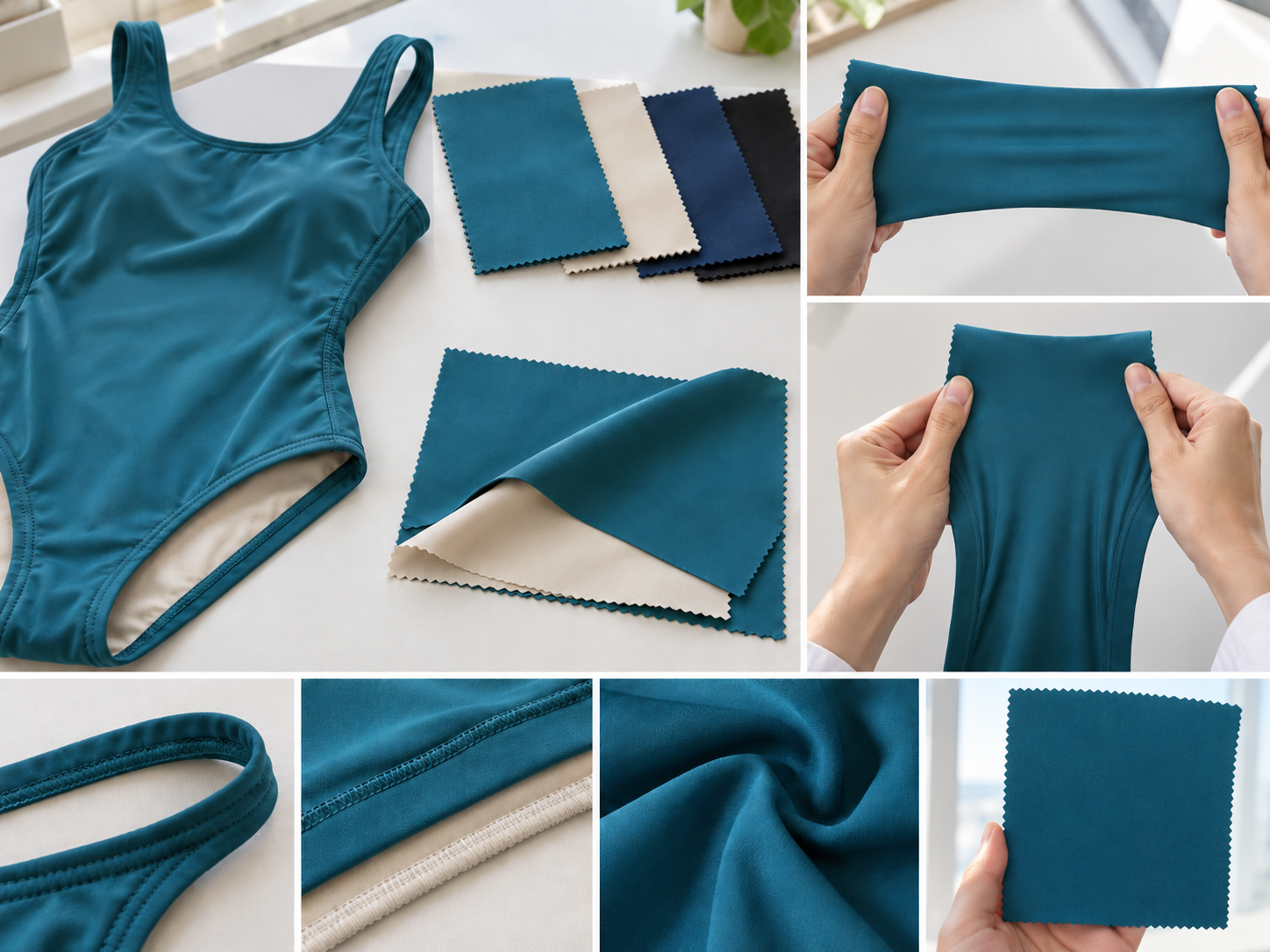
Stretch, Lining and Stability
Pattern fit depends on how the shell fabric and lining stretch and recover. Two materials with similar fiber composition may perform very differently because of knit structure, density, finishing and elastic recovery.
- Horizontal and vertical stretch
- Recovery after extension
- Lining compatibility
- Opacity
- Surface feel
- Edge stability
- Dimensional change after applicable testing
Any claims involving chlorine resistance, UV protection, seawater resistance, quick drying, shaping or opacity require applicable material or test evidence rather than being treated as default swimwear properties.
Choosing Fabrics for a Swimwear Collection
Material selection should connect brand positioning, fit, appearance, manufacturing method, required performance, cost and supply conditions. Fiber composition alone cannot determine how a finished swimwear product will look or behave.
Build the Material Direction Around the Product
Fabric selection begins with the intended silhouette and usage rather than a generic list of nylon, polyester or elastane blends. A fitted swimwear product can place continuous tension on seams, edges, straps and lining. A more covered style may create different requirements for weight, stretch, drying behavior and internal comfort. Printed projects also introduce color, artwork and heat-processing considerations.
Product requirements: Define the intended level of compression, coverage, support, surface appearance and hand feel before comparing fabric options. Material thickness should support the visual and wearing objective without creating unnecessary weight.
Stretch direction: The pattern should be evaluated against the actual stretch direction of the fabric. High stretch in one direction does not mean equivalent behavior in another direction.
Recovery: Recovery matters because the garment should return toward its intended shape after extension. A fabric with high extension but weak recovery can alter edge tension and fit.
Shell and lining relationship: Main fabric and lining must be treated as a material pair. Different stretch rates can change garment dimensions after assembly.
Manufacturing compatibility: Sewing, flatlock, elastic installation, bonding or heat-based processes require suitable fabric properties. A development sample is the correct place to confirm compatibility before bulk production.
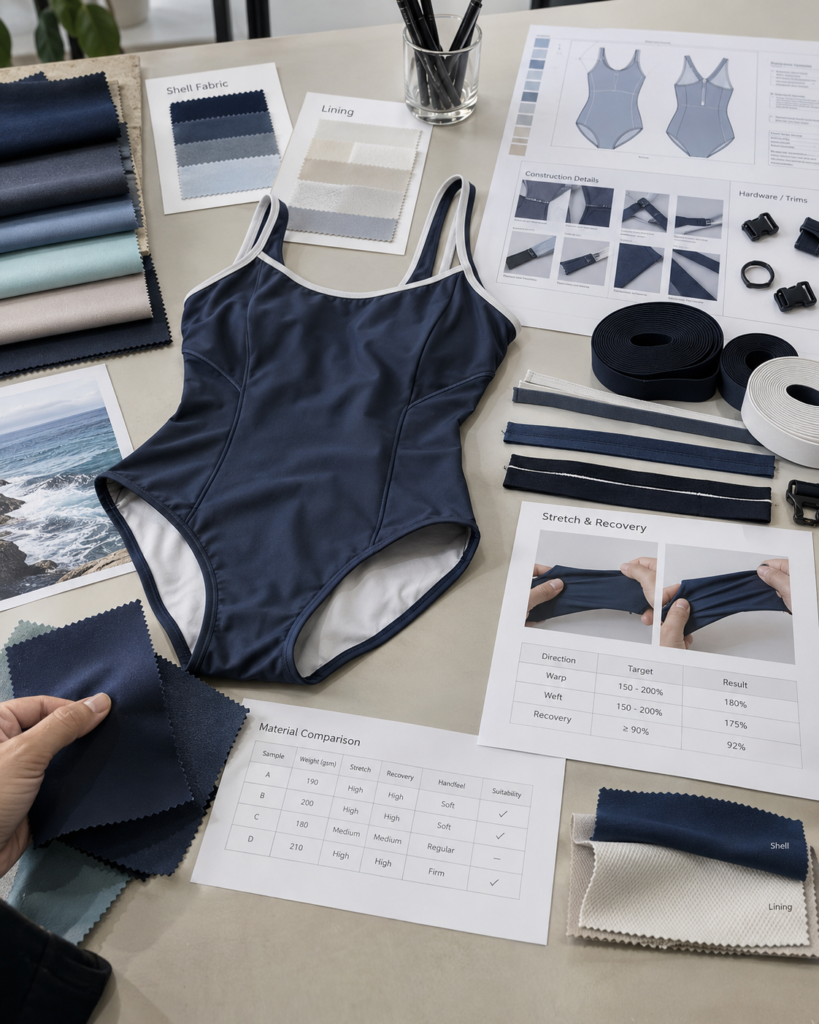
Evaluate Feel, Opacity, Stretch and Stability Together
Material selection becomes more reliable when several attributes are reviewed together instead of choosing a fabric because of one specification.
Hand feel: Softness, surface smoothness and perceived density affect product positioning and skin contact. Similar compositions can feel noticeably different after knitting and finishing.
Opacity: Coverage can change when a fabric stretches. Light colors, reduced thickness or unsupported panels may require additional review. Opacity should therefore be observed on the final construction rather than judged only from a relaxed swatch.
Stretch and recovery: Fit calculations depend on the working stretch of the selected fabric. Pattern negative ease should not be copied automatically from another material.
Dimensional behavior: Production planning should consider applicable shrinkage, relaxation and other changes that may affect measurements.
Color: Color approval should use an agreed physical reference where possible. Digital screens cannot fully replace fabric or lab-dip confirmation.
Performance claims: Requirements such as chlorine resistance, UPF, seawater resistance or other functions should be tied to verified material specifications or testing. Leadshow does not treat those properties as automatic characteristics of every swimwear fabric.
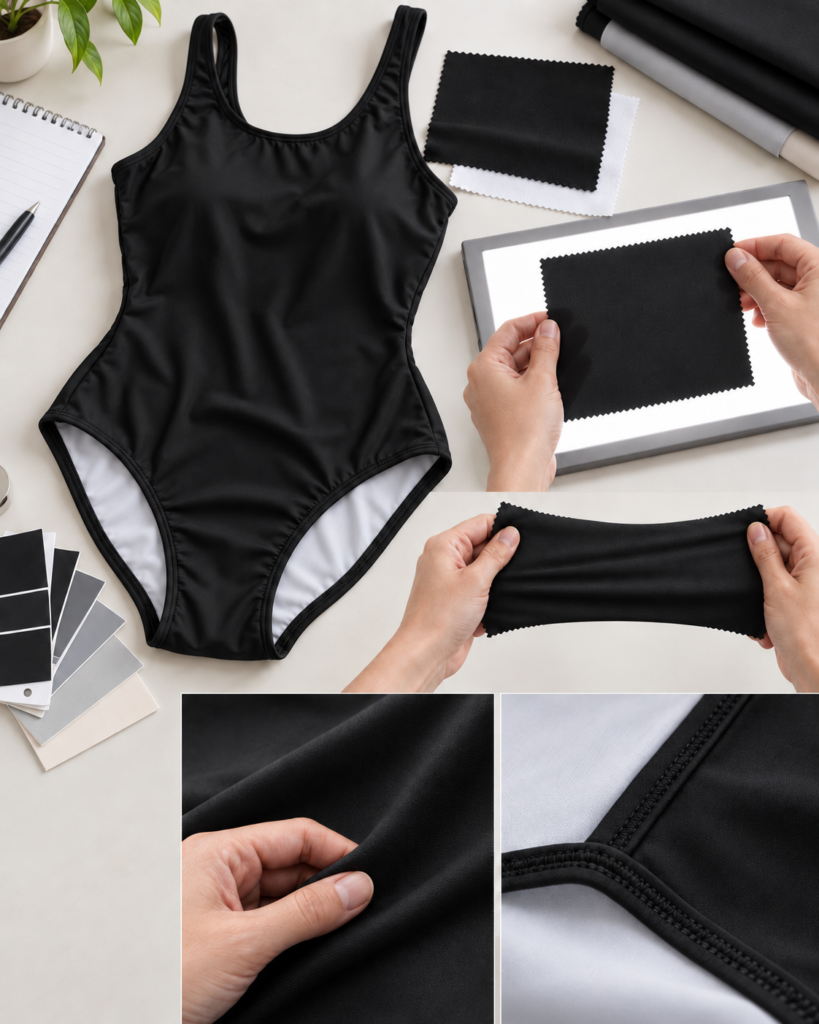
Balance Material Performance With Supply Conditions
A technically suitable fabric still needs to work commercially for the collection.
Minimums: Stock colors, custom colors and custom-developed materials can have different supplier minimums. Material minimums may affect the final garment MOQ.
Color planning: A large number of colors can divide volume into smaller fabric and production batches. Shared material platforms across multiple styles may simplify purchasing when the design allows.
Lead time: Material availability is one of the inputs used to confirm sample and production timing. Long-lead fabrics or trims can move the whole project schedule.
Branding compatibility: Heat-transfer, bonded details, printed graphics or other brand elements should be tested on the actual material rather than approved only from artwork.
Physical confirmation: Swatches can narrow the direction, but a garment sample provides stronger evidence because fabric, lining, seams, elastic and fit are evaluated together.
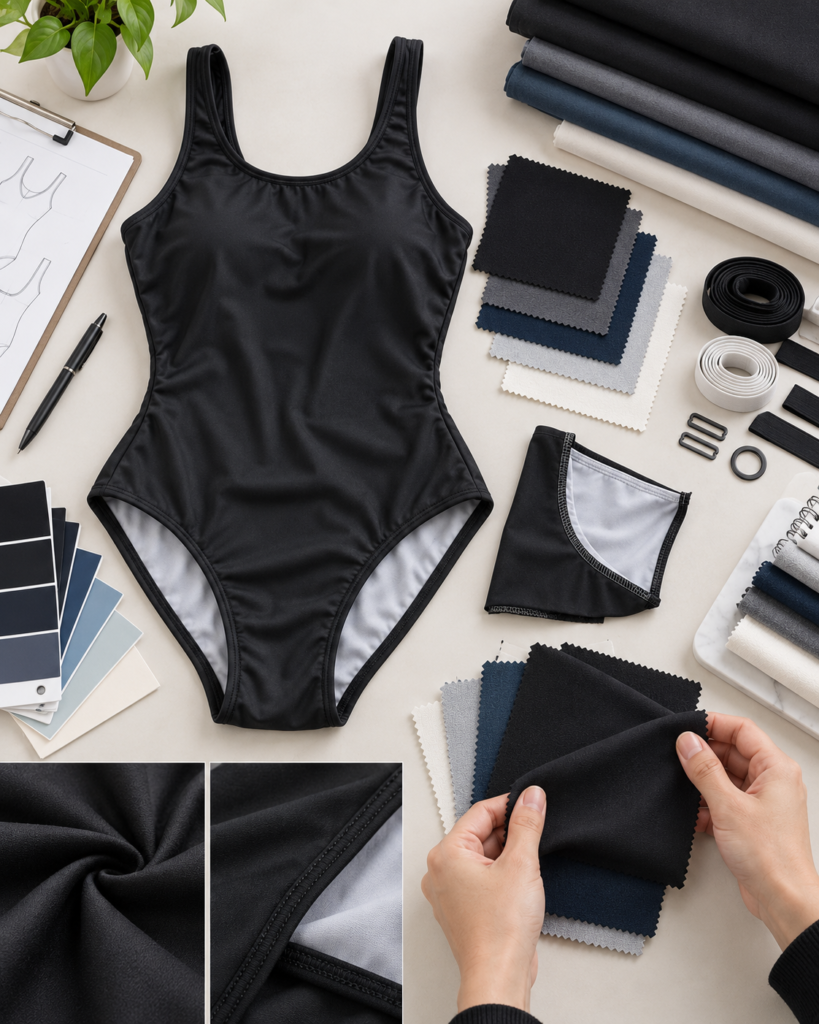
Start From the Product Information Already Available
A swimwear program can begin at different levels of specification maturity. Clearer inputs generally improve sample direction, quotation accuracy and production planning, while missing information can be identified and confirmed during development.
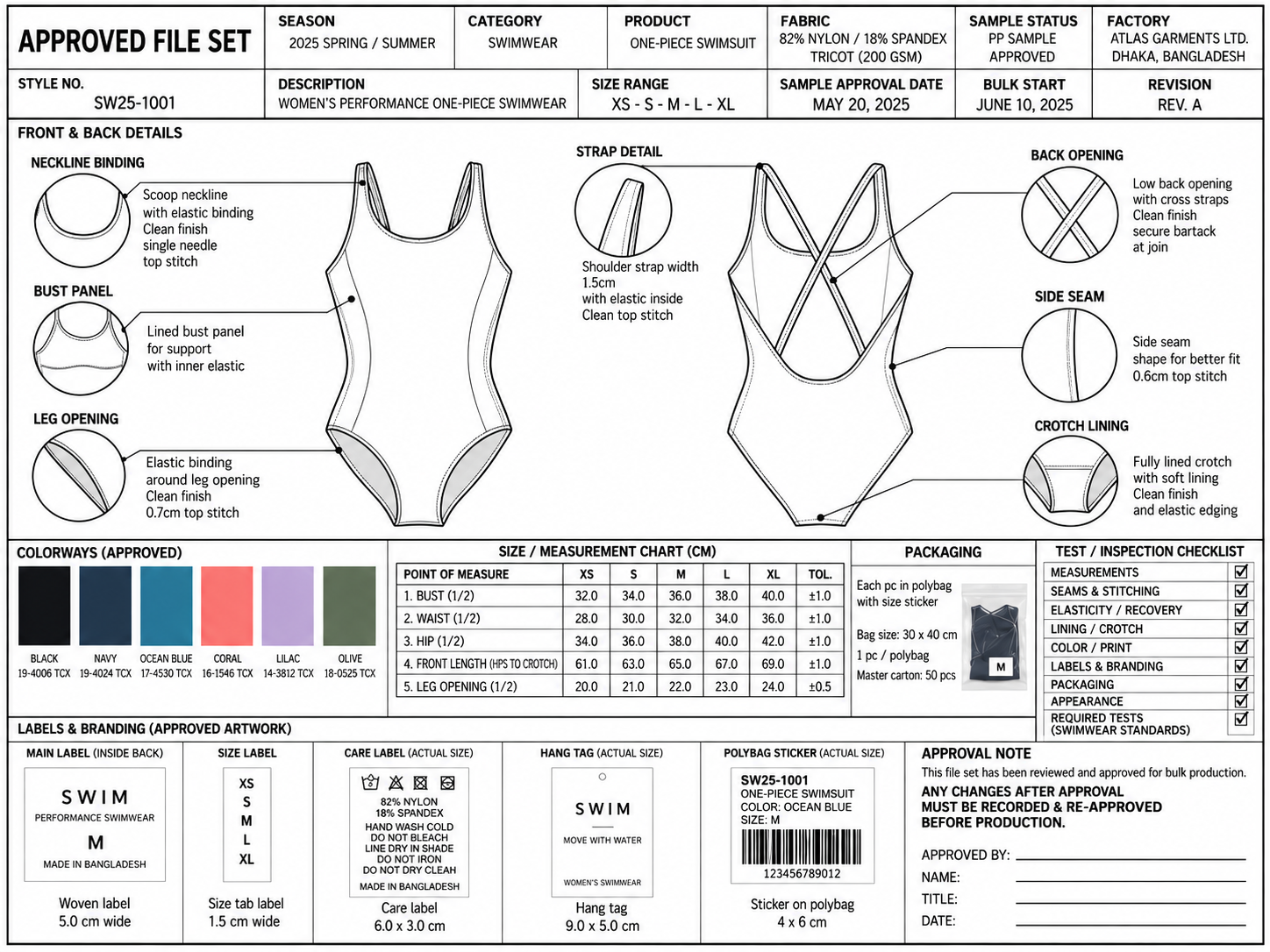
Complete Tech Pack
A detailed Tech Pack provides the strongest starting point for technical review. Leadshow can examine product views, measurements, construction notes, materials, trims, artwork, labeling, packing and quantity information before sampling.
- Product structure
- Measurement method
- Base size and grading
- Fabric and lining specifications
- Elastic and trim requirements
- Logo size and position
- Label and packaging files
- Quantity by color and size
- Required testing
- Target timeline
Open questions are recorded before the specification is treated as ready for sampling or quotation.
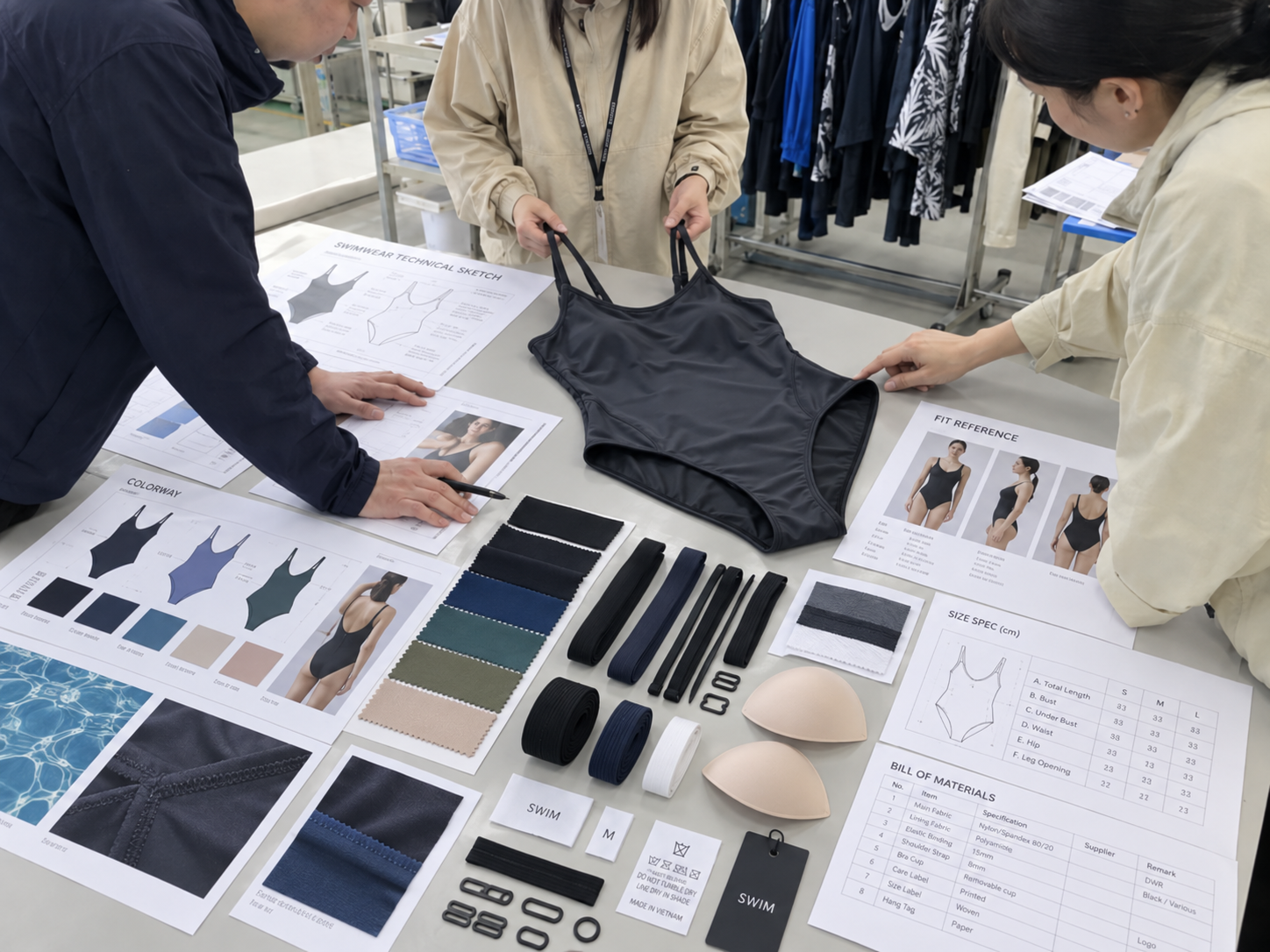
Physical Reference Sample
An existing garment can help explain construction, proportion, finishing and hand feel more clearly than a photograph alone. Reference development still requires a formal technical review rather than automatic duplication.
- Garment measurements
- Seam architecture
- Lining construction
- Elastic placement
- Trims and hardware
- Material direction
- Fit characteristics
- Improvement requests
A new sample can then be compared with the approved development target. Legal use of the garment, artwork, logos and protected design elements remains the responsibility of the submitting party.
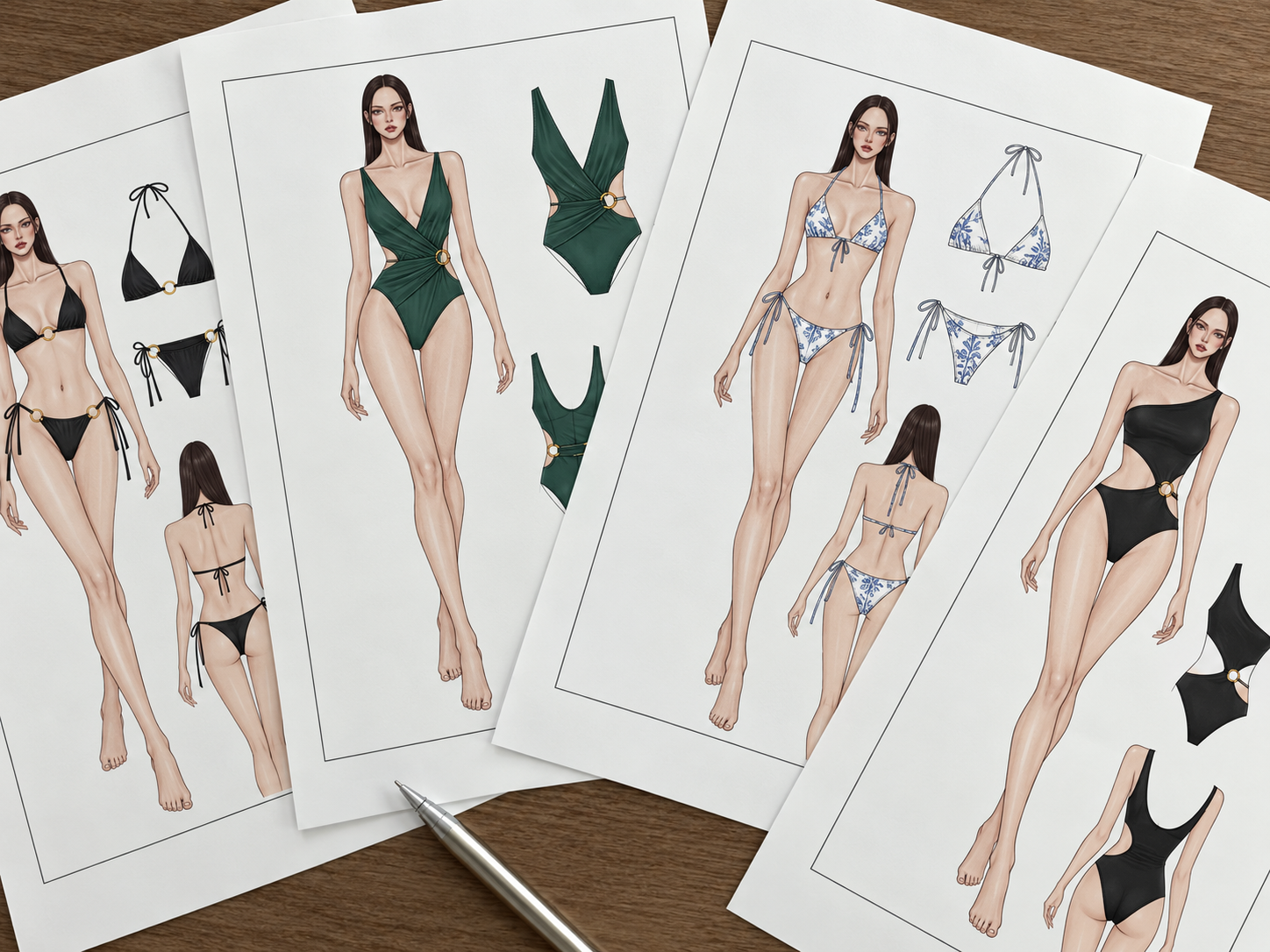
Images or Sketches
Reference images and sketches can support an early development discussion when a complete technical file is not available. Visual material helps identify silhouette, coverage, straps, openings and design details but does not define every production specification.
- Measurements
- Fit intent
- Fabric and lining
- Elastic type
- Construction method
- Colors
- Branding
- Order quantities
- Market requirements
Leadshow can identify the missing items and organize them into a development checklist for confirmation before the product moves deeper into sampling.
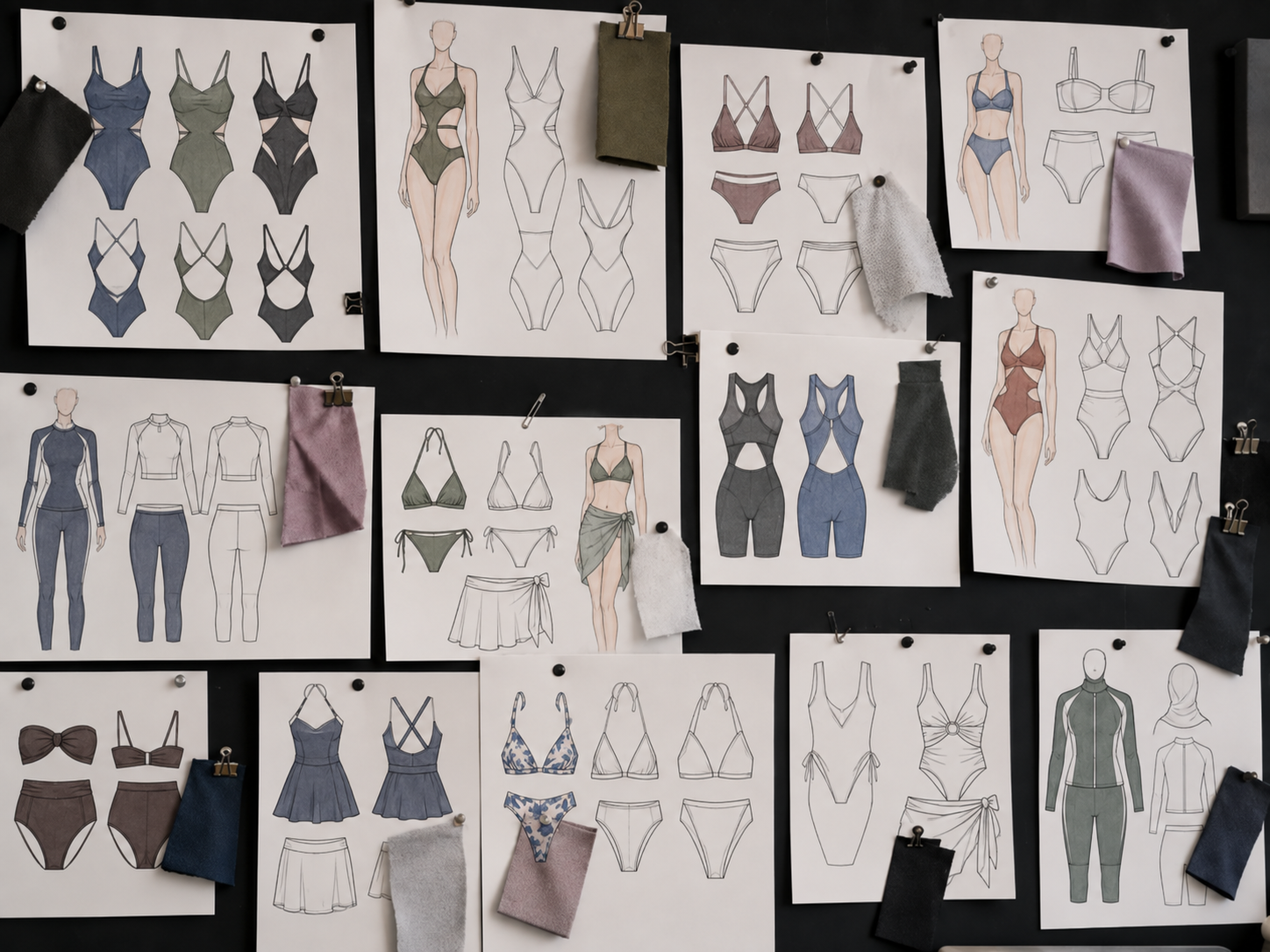
Early Product Concept
Early concepts can also be reviewed when the brand has a clear target market, price direction, intended use and visual objective but has not completed all product files.
- Intended wearer and market
- Product positioning
- Coverage and fit direction
- Construction priorities
- Material expectations
- Brand elements
- Estimated quantity
- Required launch window
Manufacturing-focused development can then move from broad concept to pattern, sample and measurable approval points without presenting unconfirmed assumptions as final product specifications.
From First Review to an Approved Swimwear Sample
Sampling is used to convert specifications into a garment that can be measured, fitted, revised and ultimately used as a reference for production. Sample timing is confirmed after reviewing construction, material readiness, customization and revision requirements.
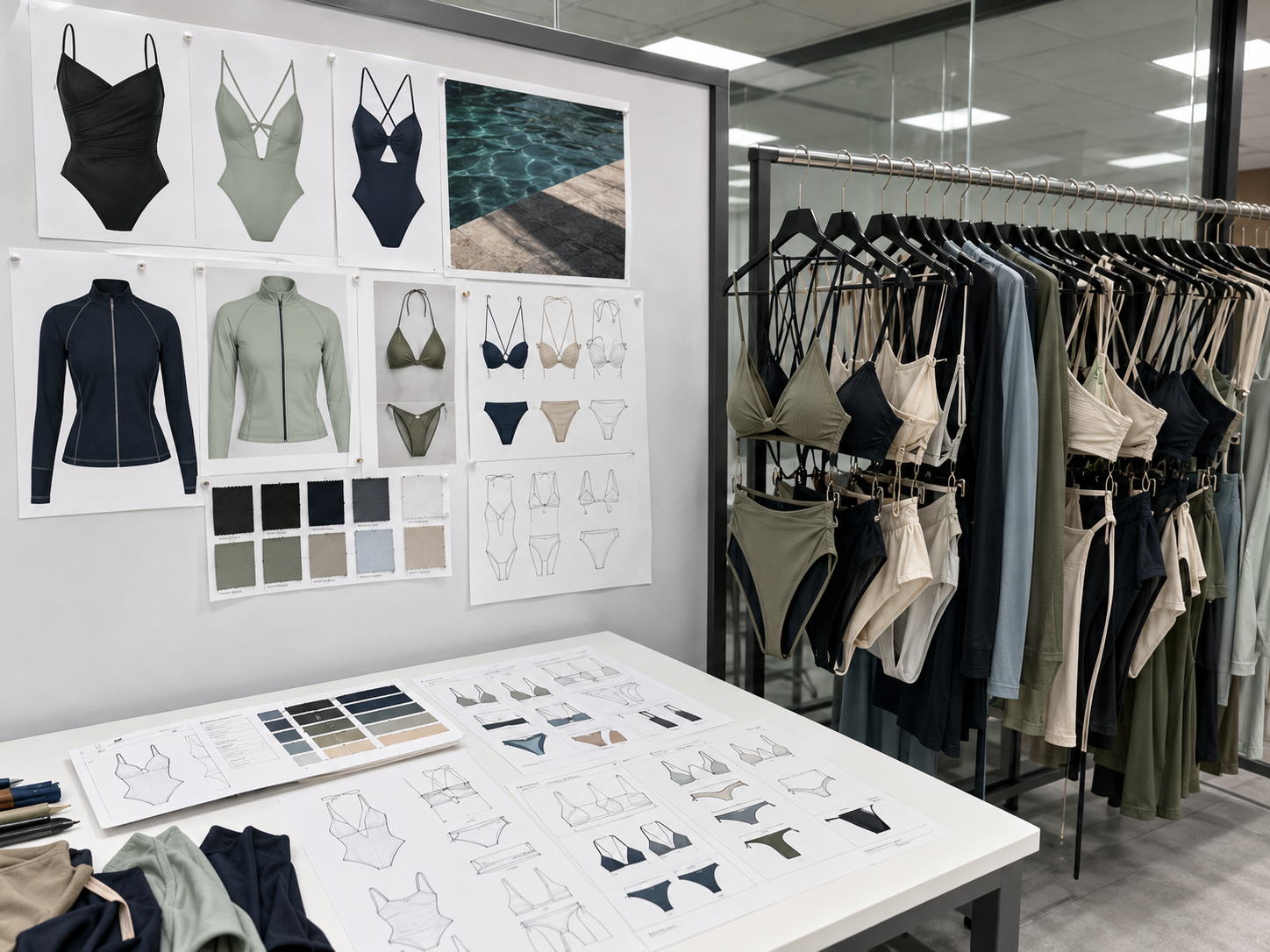
Requirement Review
Development begins by reviewing the available Tech Pack, reference garment, images, measurements, materials, branding details, quantities and intended market. Missing or conflicting information is separated from confirmed requirements.
- High-risk construction
- Material questions
- Fit assumptions
- Special-process needs
- Missing artwork
- Unclear measurement points
A cleaner input set reduces unnecessary sample changes later.
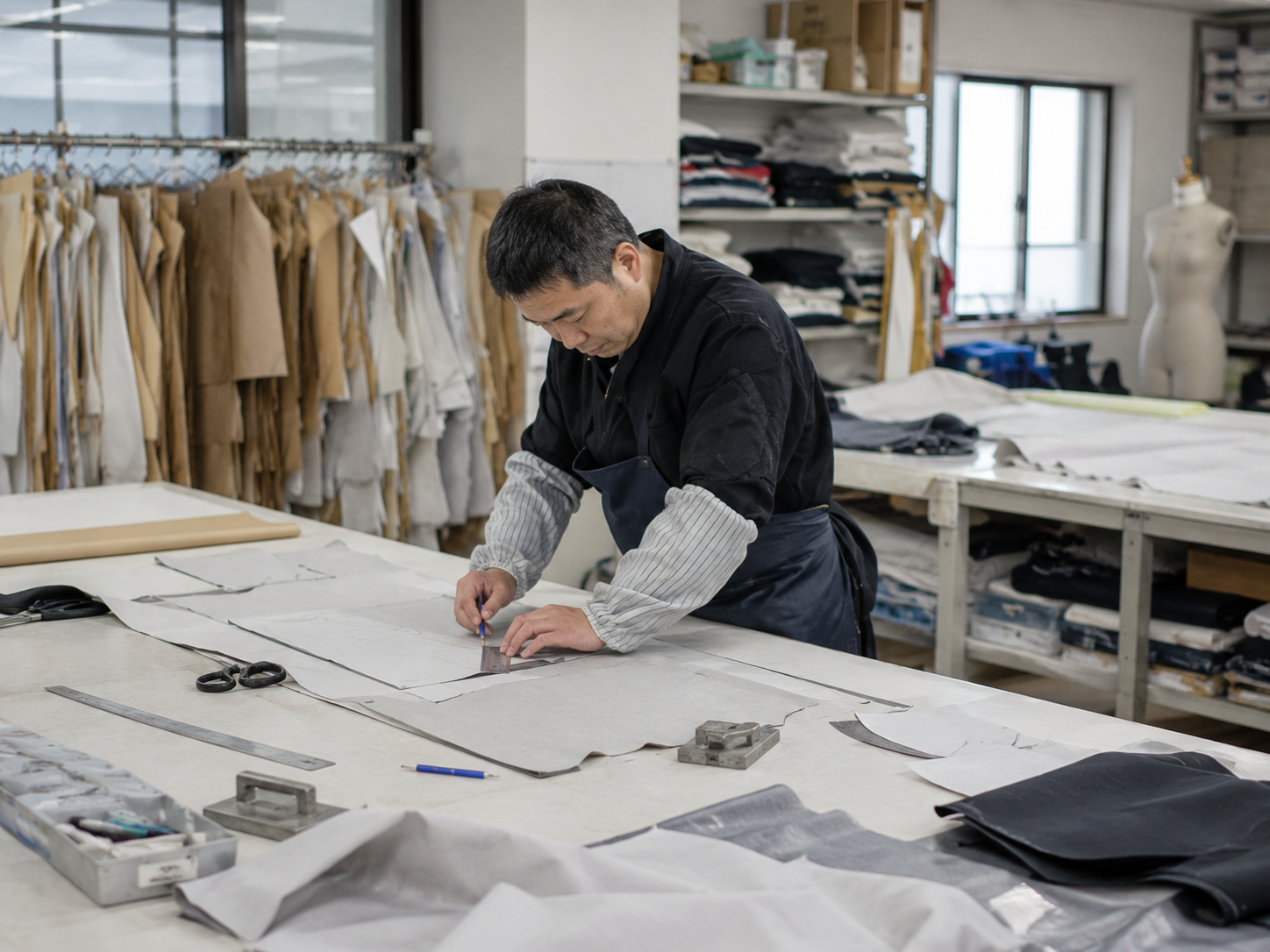
Pattern and Construction
Pattern and construction work translate the approved design direction into physical proportions and assembly methods. Swimwear development may require close attention to torso length, body proportions, negative ease, straps, lining and elastic.
- Pattern shape
- Key measurement points
- Seam positions
- Edge construction
- Elastic application
- Lining relationship
Pattern decisions remain linked to the selected material because changing fabric can require new fit adjustments.
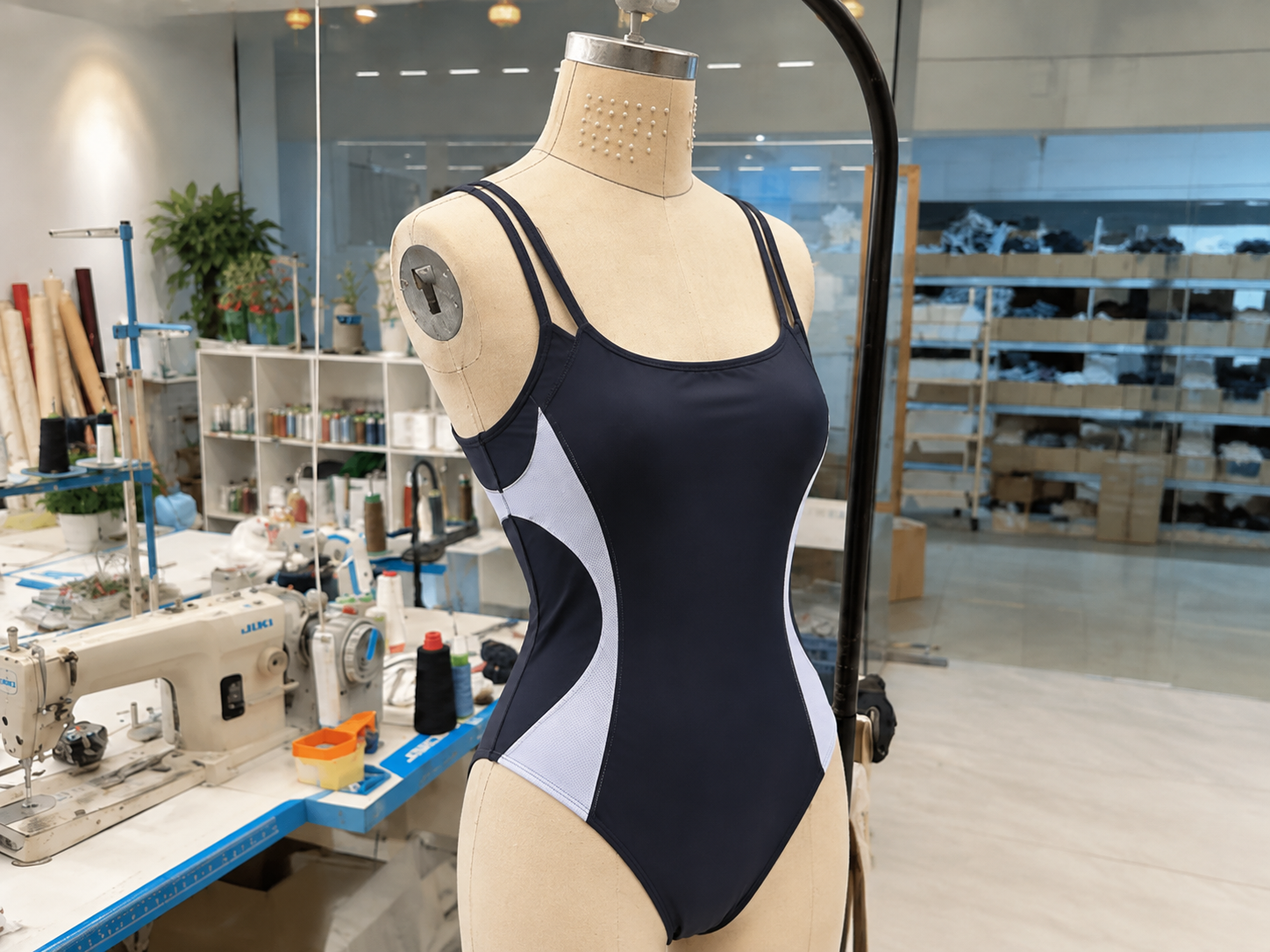
First Sample
The first sample is used to reveal differences between the design intent and a physical garment. It should not be treated as an automatic production approval.
- Overall silhouette
- Measurement results
- Coverage
- Strap position
- Elastic tension
- Lining behavior
- Seam appearance
- Branding placement
Any temporary or substitute material used for development should be identified so later approval is not based on an incorrect material assumption.
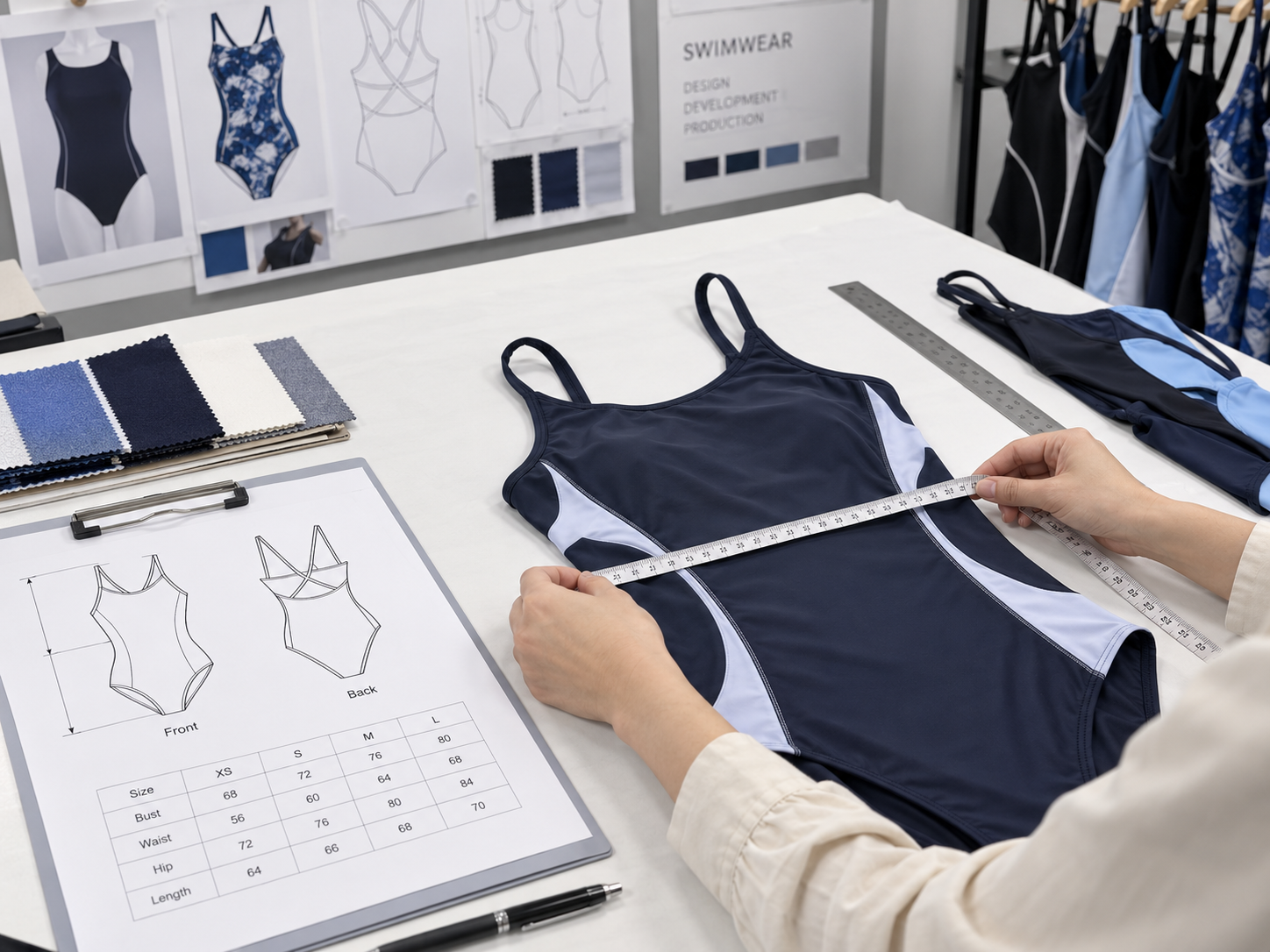
Fit and Measurement
Fit review combines measurement with physical wear assessment. A garment can meet a measurement chart while still showing tension or balance issues because stretch, body proportion and construction interact.
- Torso balance
- Bust and hip coverage
- Leg opening
- Strap tension
- Seam position
- Lining tension
- Symmetry
Comments should be specific enough to guide pattern revision instead of relying on broad instructions such as “make it fit better.”
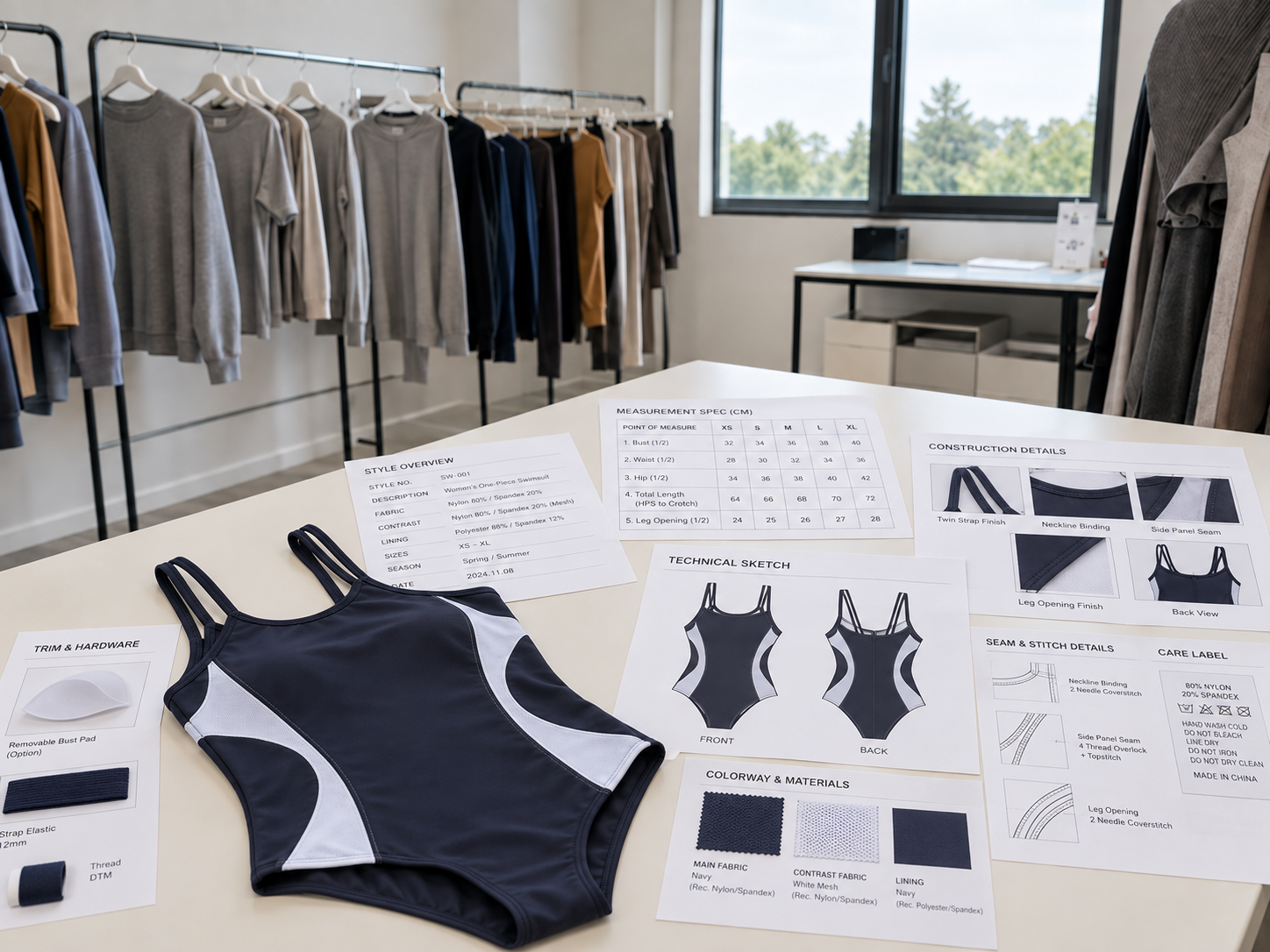
Revision Control
Every revision should clearly record what changed and why. Pattern, measurements, materials, trims and artwork can all change during development, and untracked changes can create confusion when a later sample is compared with an older file.
- Sample version
- File version
- Revision date
- Change request
- Updated measurement
- Material status
Consolidated feedback helps keep development focused and supports a cleaner transition into production.
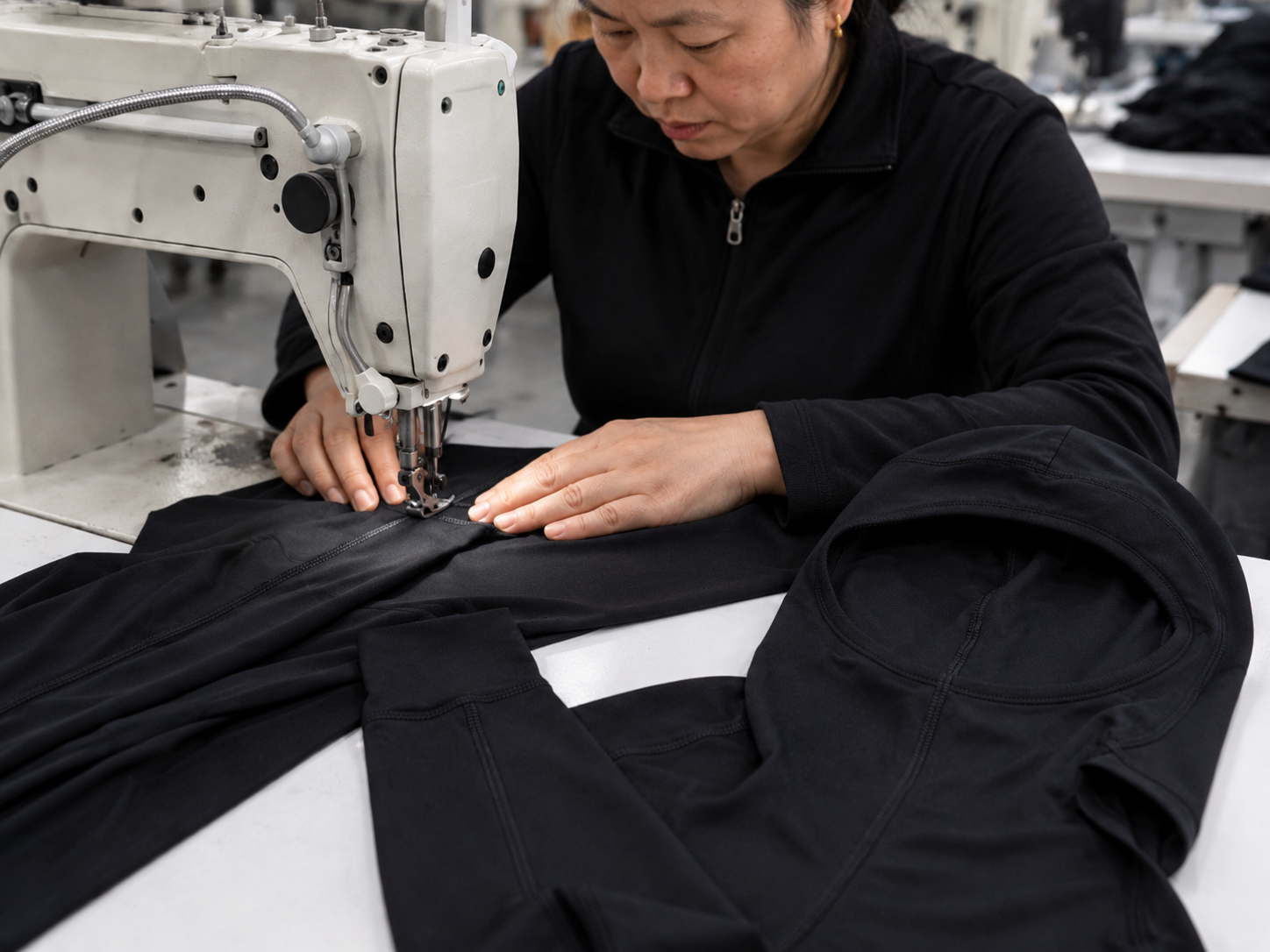
Approval for Bulk
A sample reaches production value when the approved state is clearly defined. Approval should establish which material, color, pattern, measurements, construction, branding and labeling conditions are frozen for bulk.
- Approved sample
- Final Tech Pack
- Measurement chart
- BOM
- Artwork files
- Packaging instructions
- Quality checkpoints
Approval creates a measurable production basis rather than relying on memory or informal visual comparison.
Keep Approved Swimwear Consistent Through Bulk Production
The central production challenge is not simply making a good sample. A stronger manufacturing process translates the approved sample into controlled files, materials, processes and inspection references that can be used repeatedly during bulk production.
Freeze the Correct Approved Product Version
One of the most common sources of production variation is an unclear approval state. A development sample may have passed fit review while still using a temporary fabric, unapproved color or preliminary branding detail. Before production preparation, the approved product should be reviewed as a complete set.
Material status: Confirm the correct shell fabric, lining, elastic, trims, color and any project-specific components. Substitute materials used during early sampling should not silently carry into production.
Pattern status: Confirm the final pattern and measurement chart. Older pattern versions should not remain in circulation without clear identification.
Construction status: Record seam types, elastic application, lining construction, openings, straps and other structural details that affect appearance or fit.
Branding status: Freeze artwork, logo size, placement, label files, hangtags and packaging information.
Approval status: Separate fully approved items from items still requiring final sign-off.
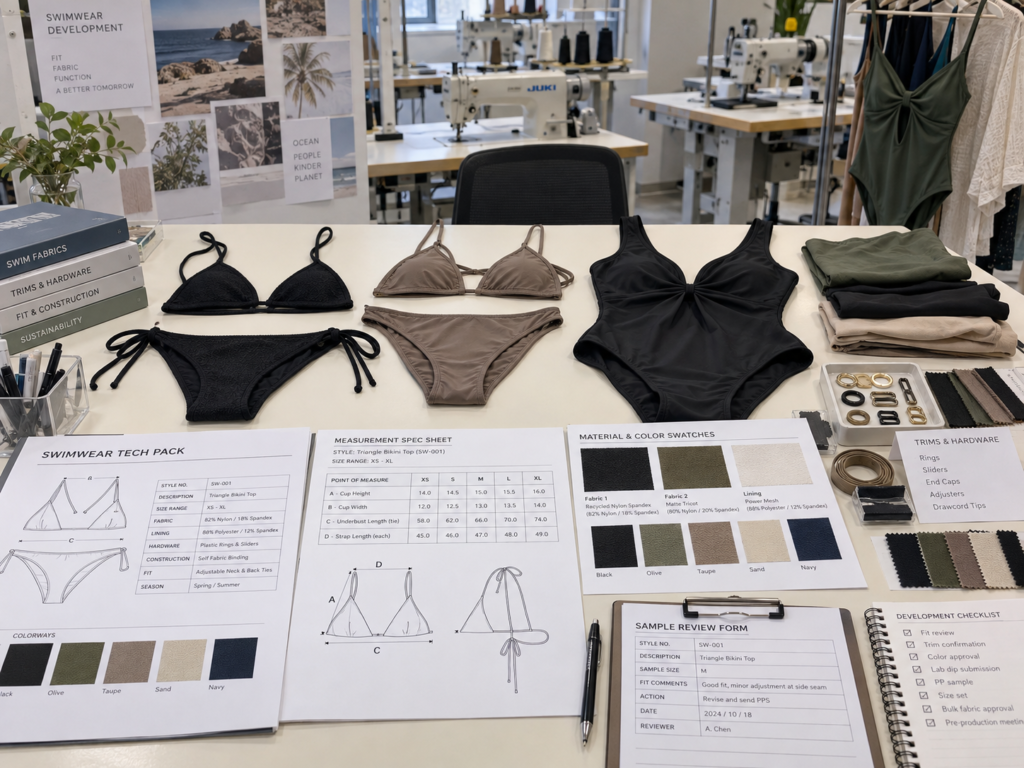
A swimwear sample should therefore enter production together with controlled documents, not as a stand-alone physical garment.
Convert Sample Details Into Production Instructions
A sample may be made by a small development team, while bulk production involves more people, repeated operations and multiple batches of materials. Production instructions must convert sample knowledge into repeatable steps.
BOM and material mapping: Each component should correspond to the approved product version and color.
Process definition: Sewing, elastic application, bonding or other applicable processes should be tied to suitable materials and construction requirements.
Measurement control: Critical measurement points and tolerances should be clearly defined before bulk inspection.
Workmanship criteria: Visual expectations for seams, symmetry, edge finish and branding should be understood by production and quality teams.
First-piece or pre-production review: Where required by the project, early production output can be reviewed against the approved basis before larger quantities progress.
Change control: Any material, construction or branding change after approval should trigger review rather than being treated as an informal factory substitution.

The objective is reproducibility, not a claim that every physical unit will be mathematically identical.
Inspect Bulk Against the Same Approved Basis
Inspection becomes more meaningful when production teams and inspectors work from the same product definition.
Material checks: Verify appropriate materials, color and visible appearance against approved requirements.
Measurement checks: Use agreed measurement points and tolerances instead of personal judgment.
Workmanship checks: Review seams, elastic application, symmetry, lining, attachments and brand elements according to the product specification.
In-process review: High-risk steps can be checked before defects accumulate through a larger production quantity.
Finished-garment review: Final product inspection can cover dimensions, appearance, workmanship, labeling and packing according to the order requirements.
Nonconformance handling: Detected issues should be isolated, assessed, corrected where possible and rechecked according to impact.
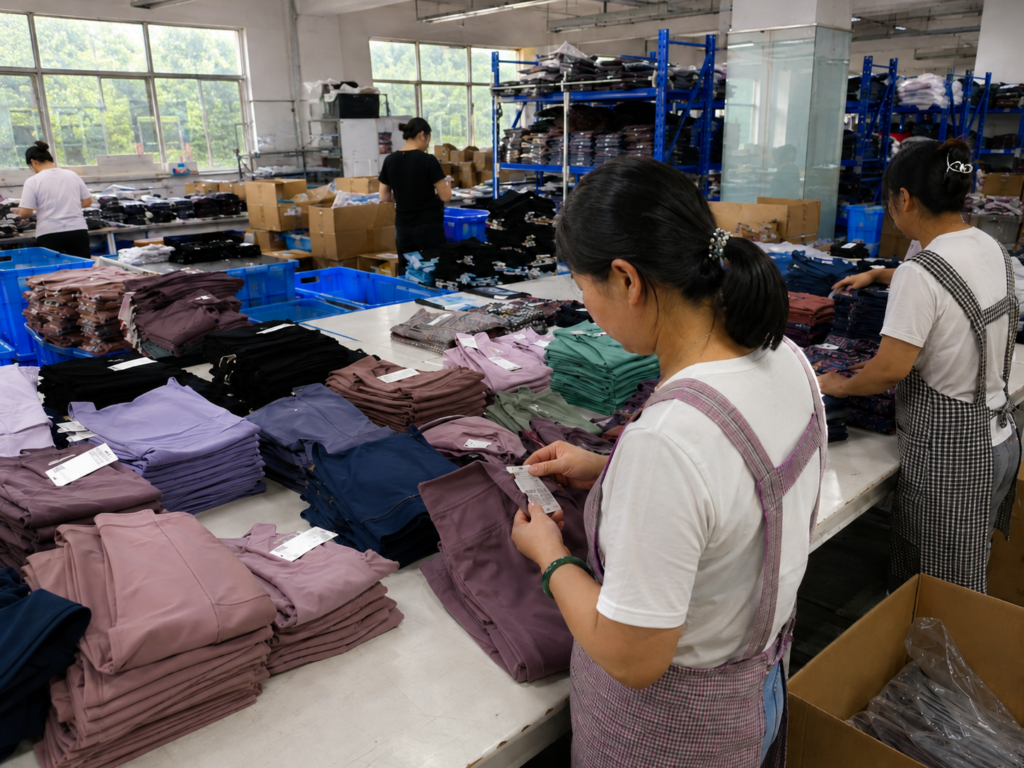
The approved sample remains useful, but the sample works best when paired with files, measurements and inspection standards.
Manufacturing Equipment Matched to Swimwear Construction
Equipment matters only when it supports a suitable product structure. Leadshow combines fabric preparation, cutting, multiple sewing methods, stretch-garment processes, specialized equipment, finishing and inspection across three manufacturing bases.
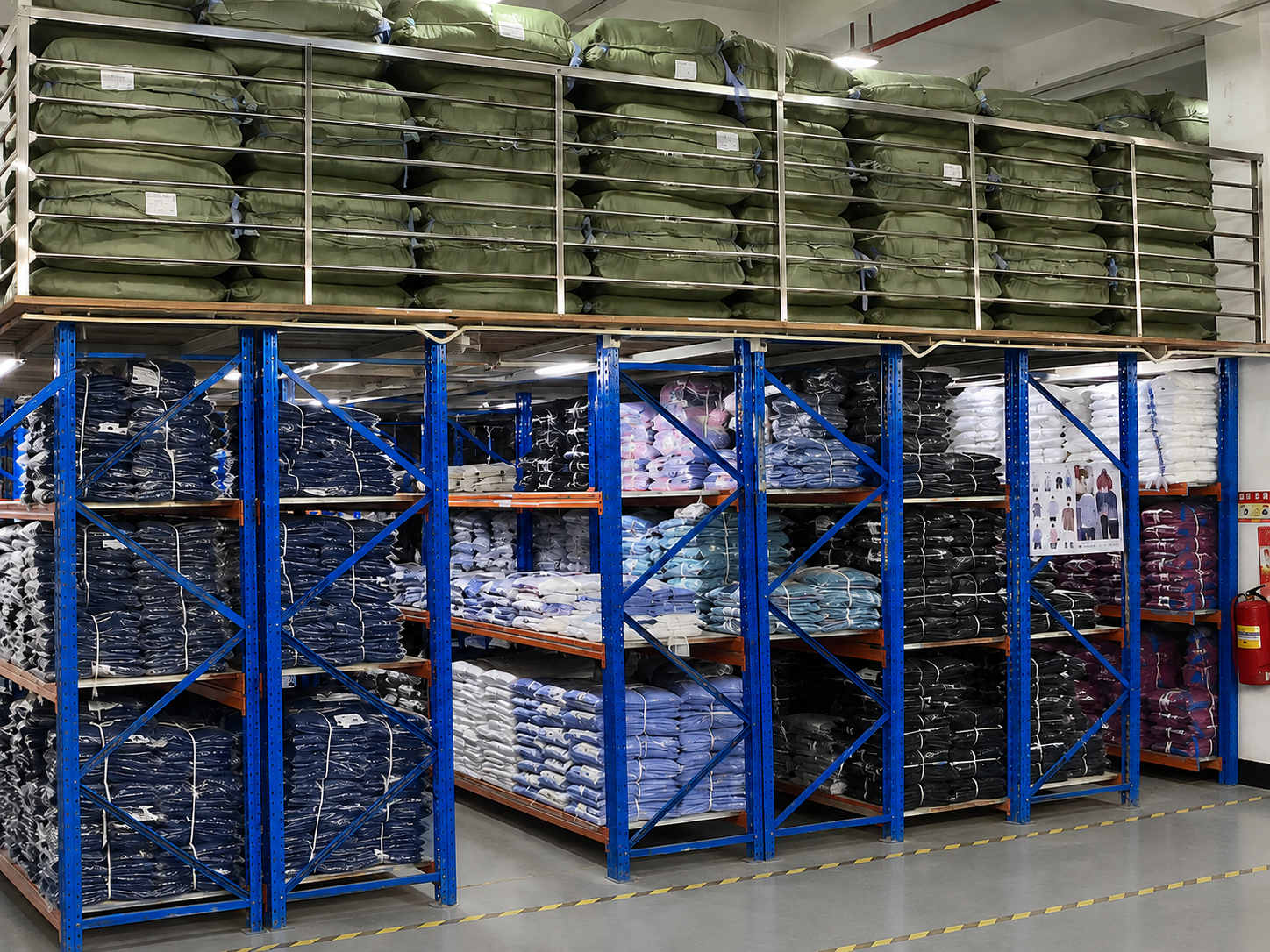
Material Preparation
Production begins with material preparation and verification before large quantities are cut. Fabric identity, color, roll condition and applicable specifications should correspond to the approved order.
- Batch organization
- Fabric identification
- Cutting readiness
- Color control
- Reduced material mix-up risk
Final handling methods depend on the fabric structure and project requirements rather than applying one preparation method to every swimwear program.
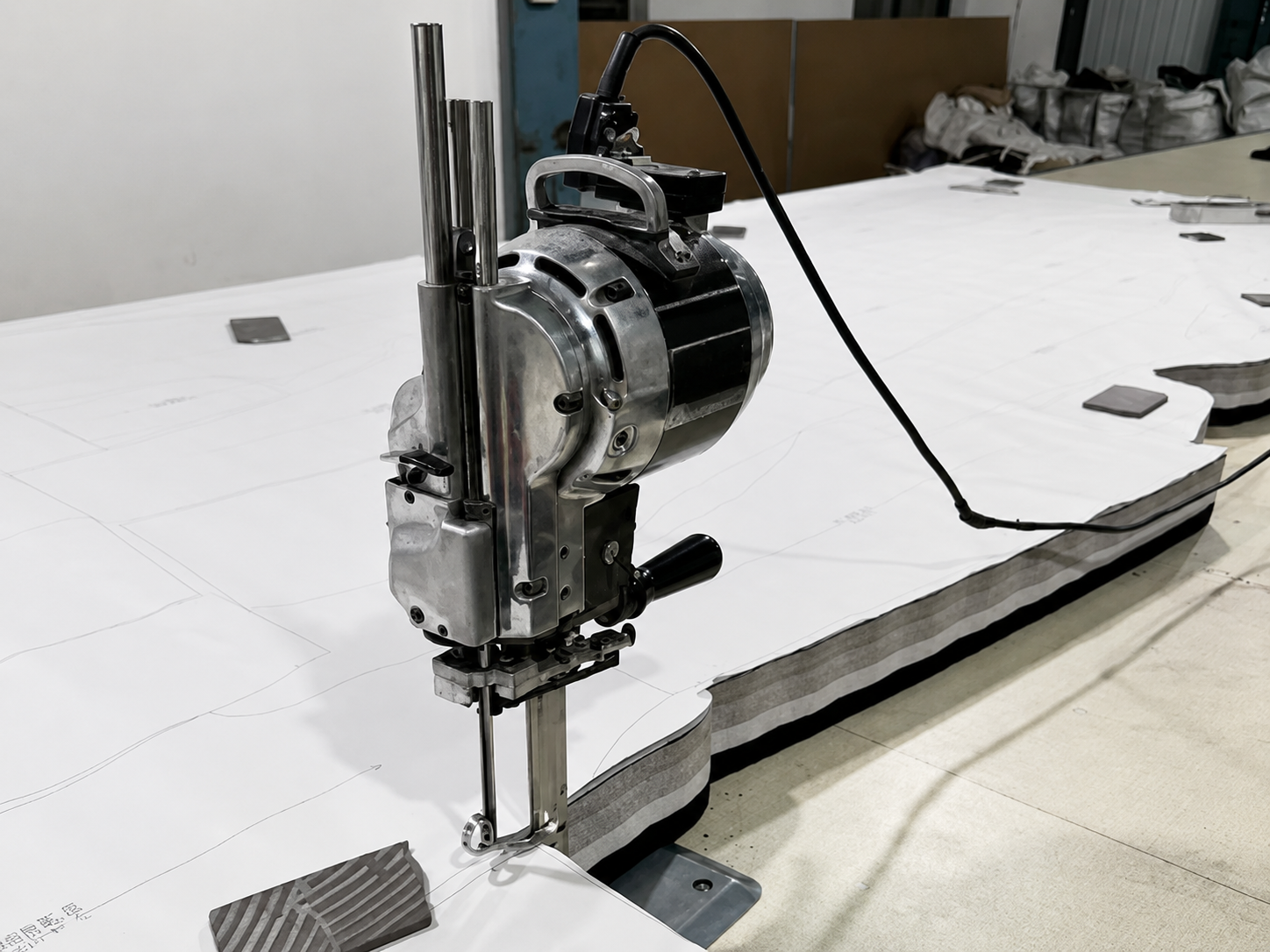
Cutting and Panel Control
Cutting accuracy influences seam matching, symmetry and finished measurements. Pattern version, fabric direction, stretch direction and panel identity should all be controlled before sewing.
- Approved pattern files
- Fabric spreading
- Panel orientation
- Size identification
- Batch separation
- Cutting review
Automated equipment can support consistency and efficiency, but cutting performance still depends on material behavior, file accuracy and operating controls.
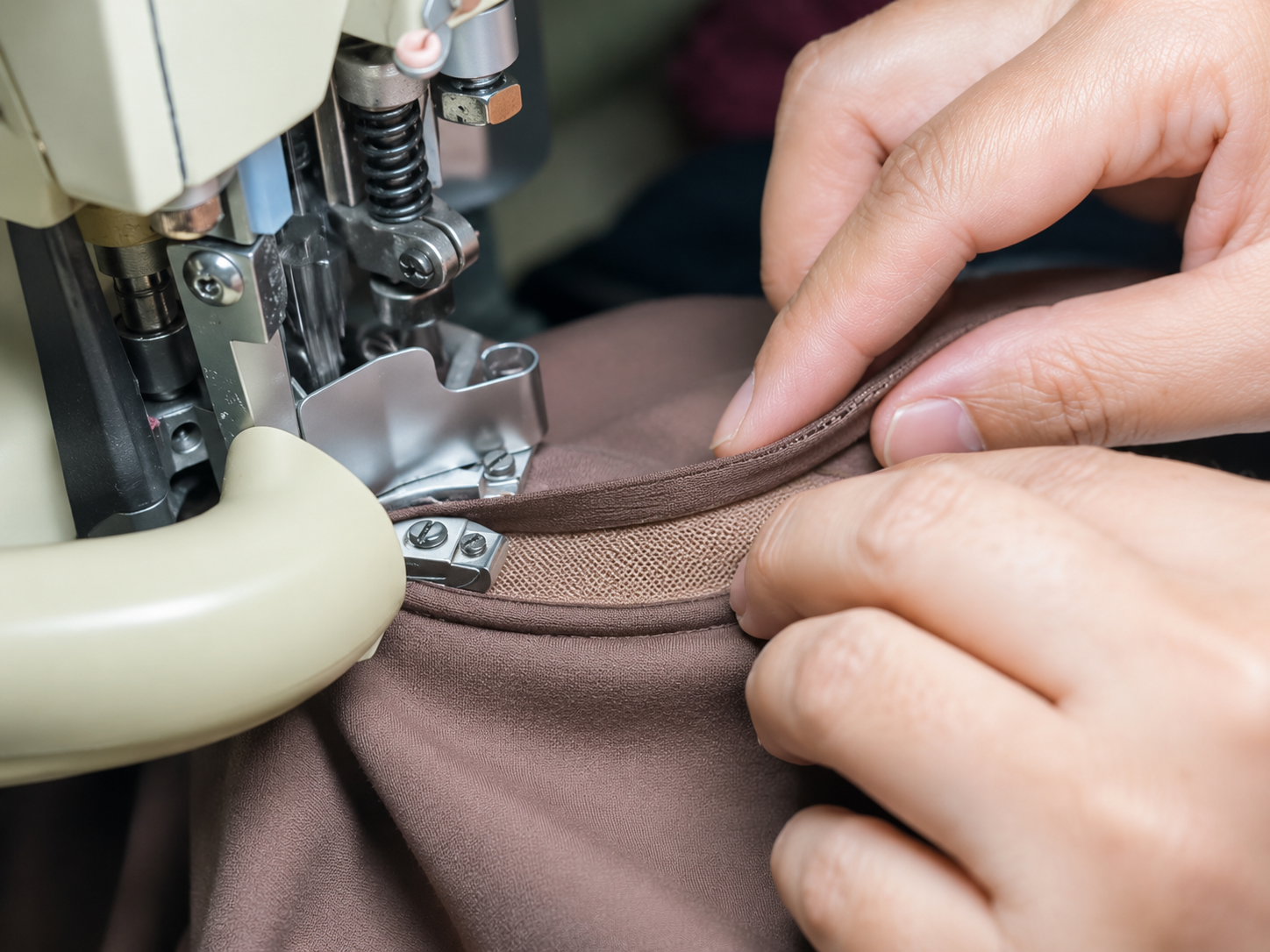
Stretch-Compatible Sewing
Leadshow has 35 four-needle six-thread flatlock machines alongside flat sewing, overlock, double-needle and other sewing equipment. Four-needle six-thread construction can support flatter, stretch-compatible seams for suitable fitted and elastic garments.
- Seam location
- Fabric stretch
- Required profile
- Wearing load
- Edge construction
- Design appearance
Four-needle six-thread sewing is not the same as seamless knitting and should not be marketed as a seam-free garment method.
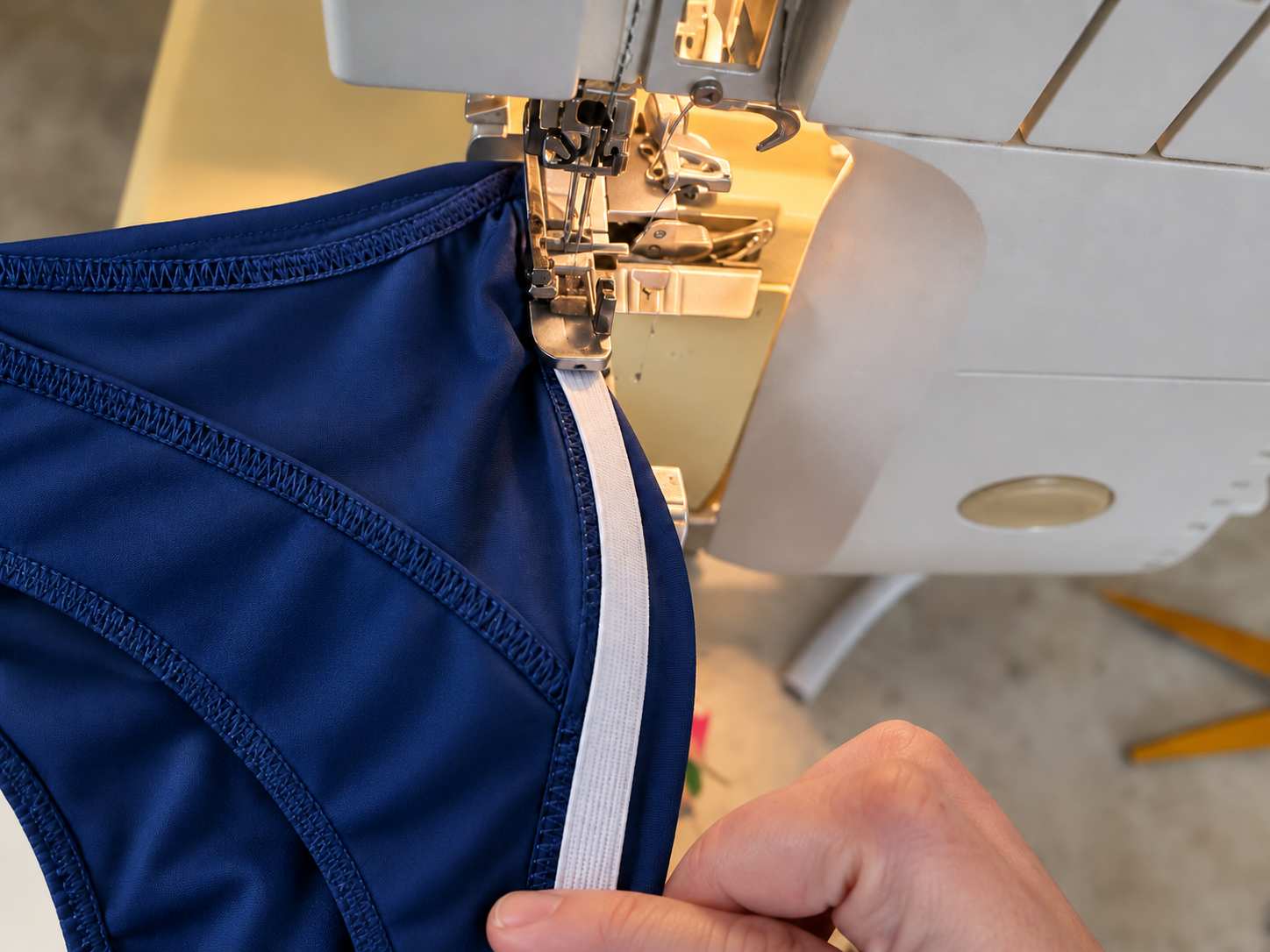
Elastic Installation
Leadshow has 12 elastic-installation or related specialized machines that can support suitable elastic areas including swimwear leg openings and structural edges.
- Elastic width
- Material composition
- Extension
- Application ratio
- Fabric recovery
- Sewing method
Equipment availability alone does not define the correct tension. Sample approval is used to establish a result suitable for the selected fabric and garment construction.
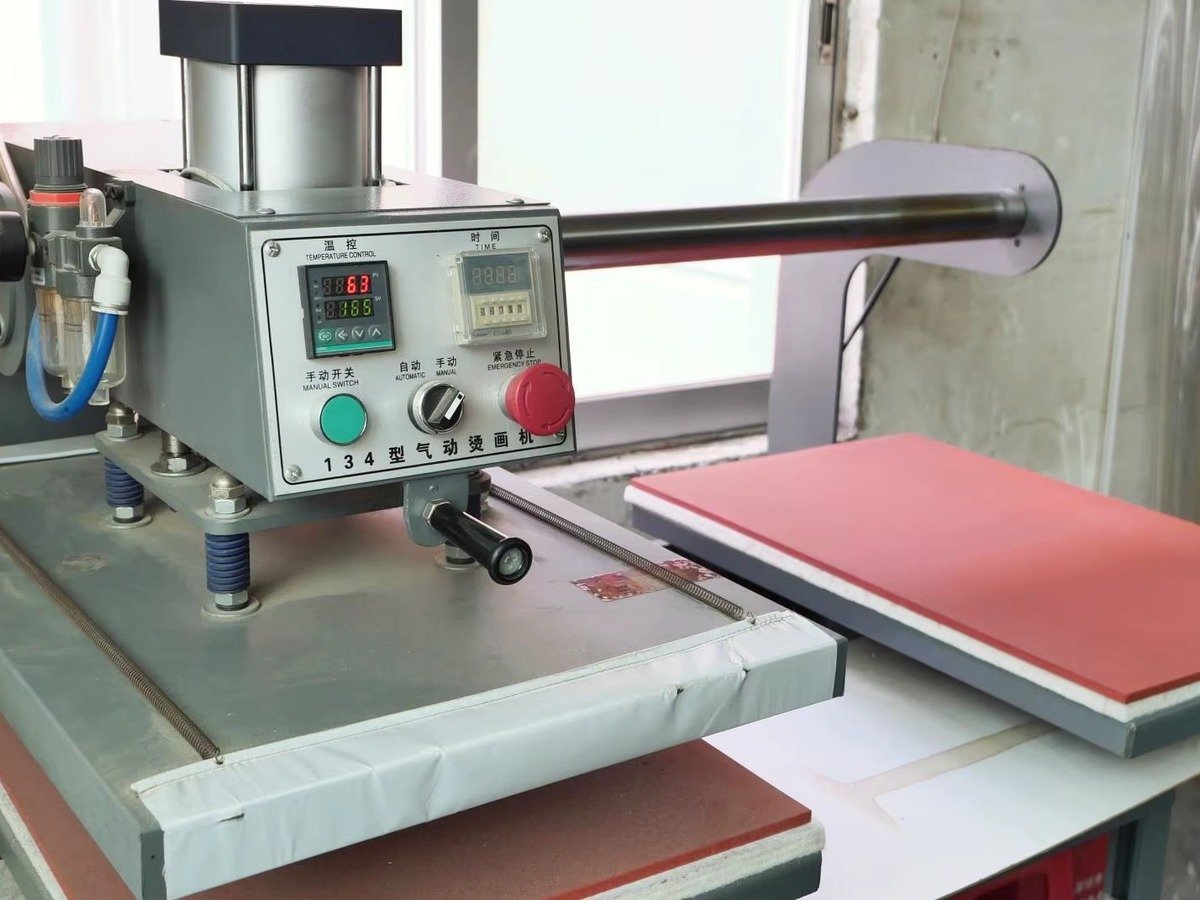
Specialized Process Support
Specialized-process equipment includes 8 bonding or laminating machines and 4 hot-air seam-taping machines, alongside additional heat-transfer and related equipment. Use depends on material compatibility, construction and the required visual or functional result.
- Bonded edges
- Bonded panels
- Local seam-tape application
- Reduced-stitch details
- Heat-transfer branding
Bonding does not guarantee permanent adhesion, and seam taping does not automatically make a garment waterproof.

Finishing and Inspection
Finishing prepares approved garments for final inspection and packing. Leadshow has steam-finishing capacity, 6 automatic needle detectors for applicable garments and 4 automatic folding and packing machines for suitable products.
- Appearance finishing
- Measurement review
- Needle detection where applicable
- Label verification
- Folding
- Packing preparation
Needle detection forms part of applicable safety checking but is not a complete product-safety certification or a substitute for other quality and compliance requirements.
Manufacturing Scale Behind Long-Term Apparel Programs
Manufacturing scale should support project execution rather than function as decoration. Leadshow’s confirmed company-level figures provide sourcing teams with a clearer view of experience, infrastructure, workforce and scalable production resources.
15 Years Experience
Leadshow has 15 years of apparel industry experience covering product development and manufacturing activities across its confirmed core apparel categories. The figure refers to industry experience and should not be converted into an assumed founding year. Experience supports a manufacturing approach built around product review, sampling, production preparation, quality inspection and commercial order execution rather than simple ready-stock selling.
3 Manufacturing Bases
Leadshow operates 3 modern manufacturing bases. The three-site structure provides a broader manufacturing foundation for product development, production scheduling and order execution across the company’s apparel programs. Production allocation remains dependent on product construction, required processes, quantities, materials and current scheduling. The number of bases should not be interpreted as three international locations or three swimwear-only factories.
20,000+ Square Meters
Combined manufacturing facilities exceed 20,000 square meters across the three bases. The space supports production, development, quality, finishing, warehousing and related manufacturing activities at company level. Facility area is a useful infrastructure indicator, but final project suitability still depends on the product, equipment match, material readiness, capacity allocation and required production calendar.
1,500+ Team
Leadshow’s overall team exceeds 1,500 people across business coordination, development, manufacturing, quality, warehousing, logistics and administrative functions. A larger team provides organizational depth for multi-stage projects, but staffing is not presented as 1,500 engineers or 1,500 sewing operators. Project teams are coordinated according to the stage and complexity of each program.
300+ Machines
Leadshow is equipped with more than 300 production, specialized-process and finishing machines across the three manufacturing bases. The equipment mix includes cutting and preparation, multiple sewing types, elastic-related equipment, four-needle six-thread machines, bonding, seam taping, heat processing, finishing, inspection and packing equipment. The total represents combined company infrastructure rather than swimwear-exclusive machinery.
Up to 120,000 Monthly
The three manufacturing bases provide a combined monthly capacity of up to approximately 120,000 finished garments, subject to product construction, materials, processes, order mix and current production scheduling. The figure is a company-wide conditional capacity reference and should not be interpreted as 120,000 swimwear pieces per month or as guaranteed capacity for every order.
Quality Control Built Around Approved Swimwear Specifications
Quality becomes easier to manage when expectations are measurable. Product files, approved samples, material references, measurements, branding standards and packing instructions create a common inspection basis across production stages.
Material Verification
Material inspection begins by confirming whether the shell, lining, elastic, trims and other components correspond to approved requirements.
- Material identity
- Color
- Visible condition
- Width or specification where applicable
- Trim type
- Component matching
Materials with specialized performance requirements may also require supplier documentation or project-specific testing. A material claim should not be accepted solely because a supplier uses a marketing description. Approved physical references and applicable documents provide stronger production evidence.
Measurement and Fit
Swimwear quality is closely tied to fit, so measurement inspection should follow agreed points and tolerances.
- Torso length
- Bust, waist and hip measurements
- Strap length
- Leg opening
- Edge dimensions
- Symmetry
- Size grading
Measurement does not replace fitting, but it creates an objective production control. Base size, grading and tolerance should be defined for the intended product rather than applying the same tolerance to every stretch garment.
Construction and Workmanship
Workmanship review focuses on whether the finished garment follows the approved construction and visual standard.
- Seam position
- Stitch appearance
- Elastic application
- Lining assembly
- Strap attachment
- Symmetry
- Trim installation
- Edge finish
- Bonded or taped areas where applicable
Specialized processes require suitable material and approved process conditions. Quality control reduces risk, but does not justify absolute statements such as “zero defects” or “permanent bonding.”
Color and Branding
Color, artwork and branding errors can make technically acceptable garments commercially unusable.
- Approved color reference
- Logo artwork version
- Logo placement
- Heat-transfer position
- Main label
- Size label
- Care label
- Hangtag
- Brand consistency
Color and branding standards should be frozen before bulk production. Any file revision after approval should be communicated through controlled project records instead of an informal message that may not reach production.
Packaging Accuracy
Packaging inspection connects finished garments with SKU, retail and warehouse requirements.
- Correct size label
- Correct care label
- Hangtag
- Barcode
- Polybag or other approved packaging
- Quantity per pack
- Size and color match
- Carton allocation
- Carton mark
- Packing-list consistency
Packaging materials may come from qualified external suppliers, so Leadshow’s role is to coordinate, verify and execute the approved packaging specification rather than claim every packaging component is made internally.
Final Inspection and Testing
Final inspection can review appearance, dimensions, workmanship, branding and packing against approved requirements. Approximately 45 quality-related team members may participate across material, in-process, finished-garment, packaging and inspection activities, with staffing figures treated as dynamic references.
- Material, process and finished-garment checks
- Measurement and visual review
- Packaging verification
- Third-party inspection where arranged
- Project-specific testing where required
Testing, inspection sampling and third-party inspection are agreed according to the product, destination market and order requirements. No universal AQL, fixed test package or blanket 100% inspection claim is applied to every project.
Control Multi-Style, Multi-Color and Multi-Size Swimwear Orders
Larger swimwear programs can contain many combinations of style, color, size, labels and packaging. A clear SKU structure helps connect commercial orders with materials, production, inspection and packing.
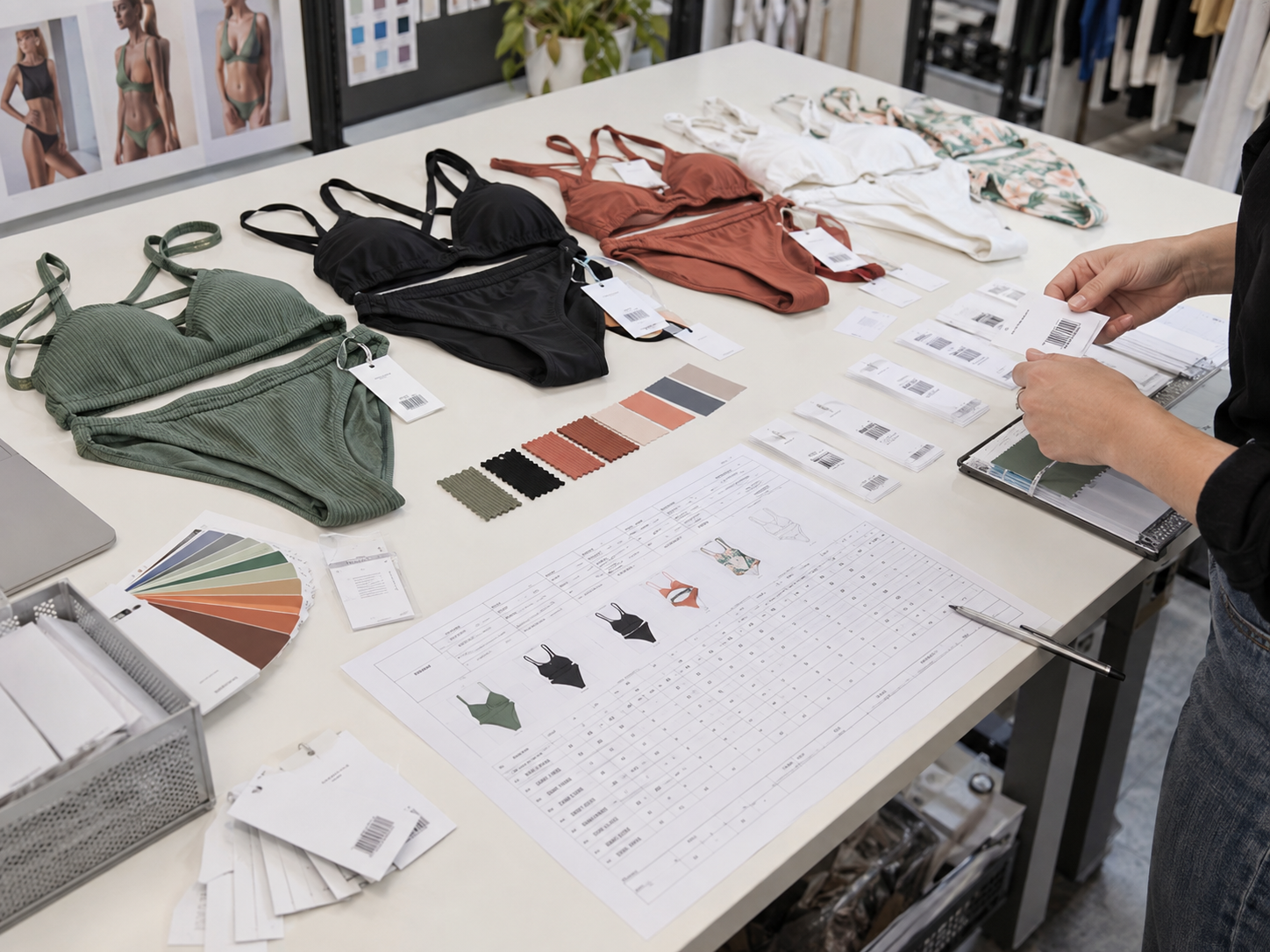
SKU Architecture
Each style, color and size combination should have a defined identity before production quantities are released. A SKU matrix helps reduce confusion when similar-looking swimwear products use different colors, linings, labels or pack instructions.
- Style number
- Color code
- Size
- Quantity
- Material version
- Label version
- Packaging type
- Barcode reference
- Carton allocation
A clean SKU structure also gives merchandising, manufacturing, quality and packing teams a common reference during order execution.

Material and Version Mapping
One design may use several colorways, linings or brand components. Materials should therefore map to the correct style and SKU rather than being managed only by generic material names.
- Shell fabric code
- Lining code
- Elastic specification
- Trim code
- Color reference
- Artwork version
- Label version
- Packaging version
When any component changes, the relevant SKU record should also change so production does not use an outdated material or branding specification.
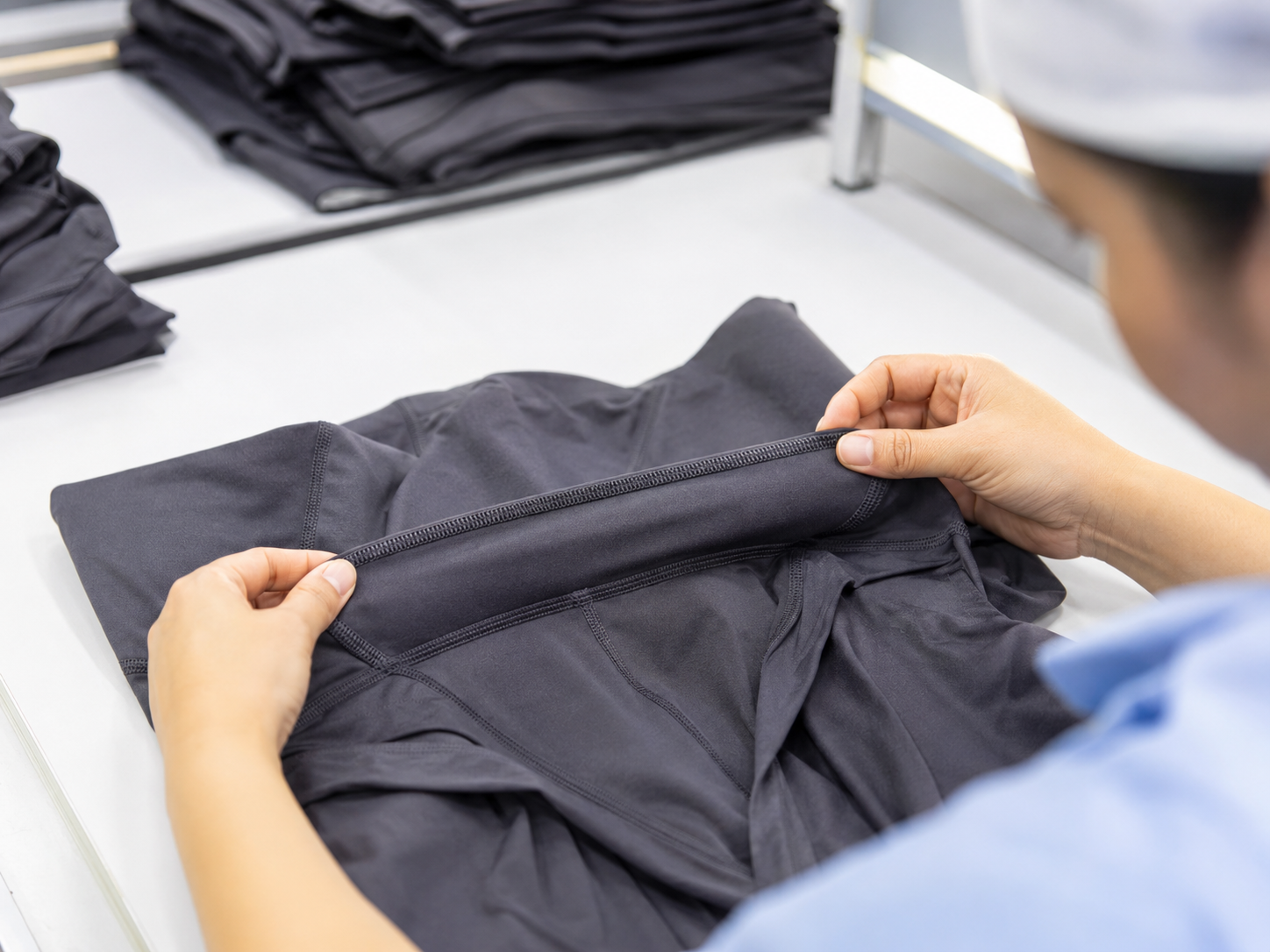
Production and QC Tracking
Production progress and quality review should stay connected to the same order breakdown used at purchasing stage.
- Style
- Color
- Size
- Production batch
- Inspection status
- Rework status
- Finished quantity
- Packed quantity
High-volume SKUs or technically sensitive products may require different attention from low-volume variations. The objective is not to treat every SKU identically, but to maintain traceable control over each approved order combination.

Packing Reconciliation
Packing creates the final link between manufactured garments and the commercial order. A wrong size label or barcode can create inventory problems even when the garment itself is correct.
- Product versus size label
- Product versus barcode
- Color versus SKU
- Packaging type
- Quantity per carton
- Carton number
- Carton mark
- Packing list
Reconciliation before shipment helps reduce wrong-color, wrong-size, wrong-label and missing-quantity risks in more complex programs.
Private Label Swimwear Beyond a Single Logo
Private-label execution connects the finished garment with brand identity, retail information, SKU control and packaging. Brand files should therefore be reviewed together with product specifications rather than handled as a final decorative step.
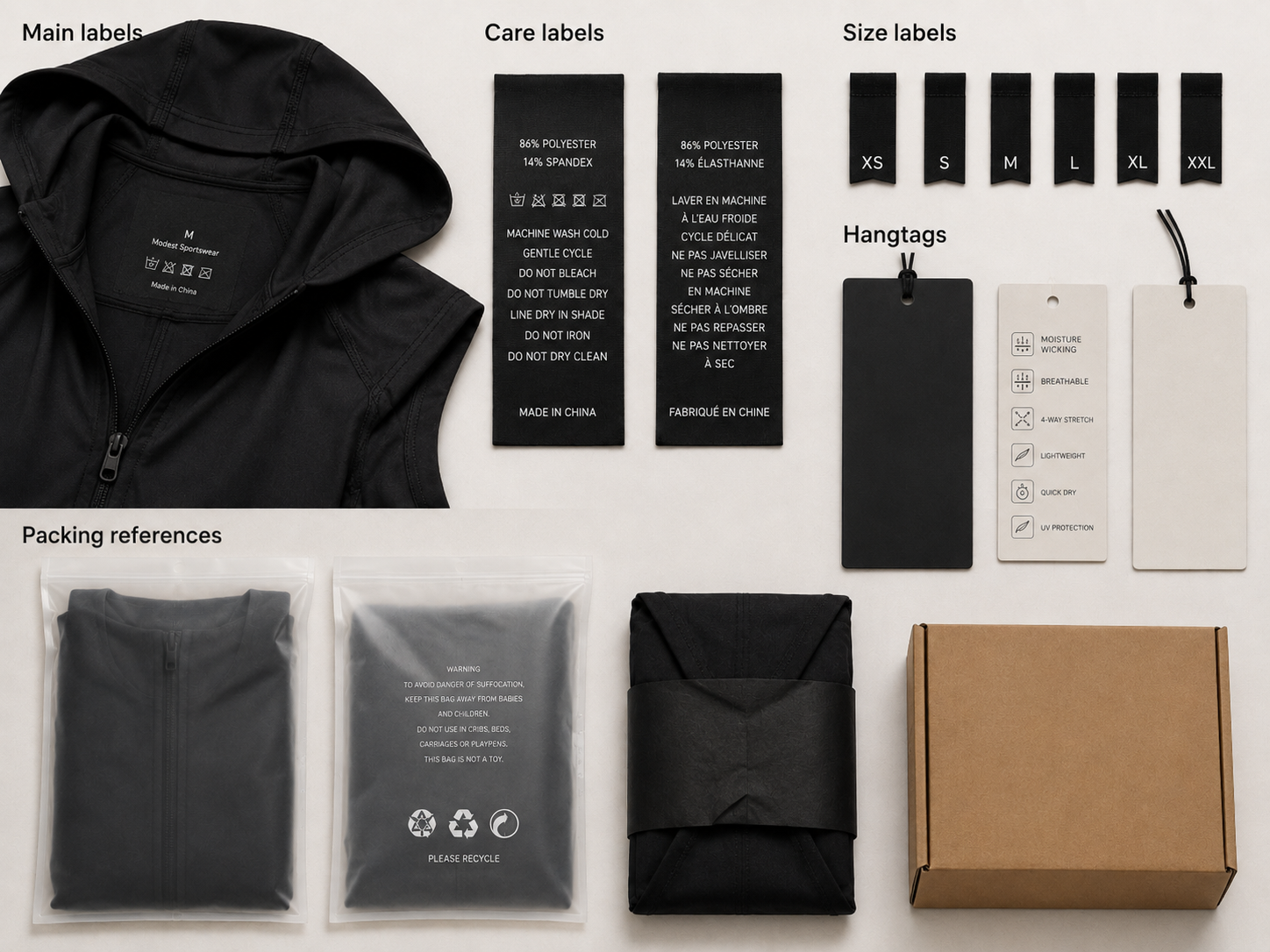
Logo Artwork
Logo execution begins with a clear artwork file, dimensions, placement and process requirement. Different materials and stretch levels can affect the appearance of the same artwork.
- Artwork version
- Size
- Position
- Color
- Process
- Orientation
- Material compatibility
A logo result should be tested on the relevant fabric or sample where necessary, especially when heat, stretch or surface texture can change appearance.
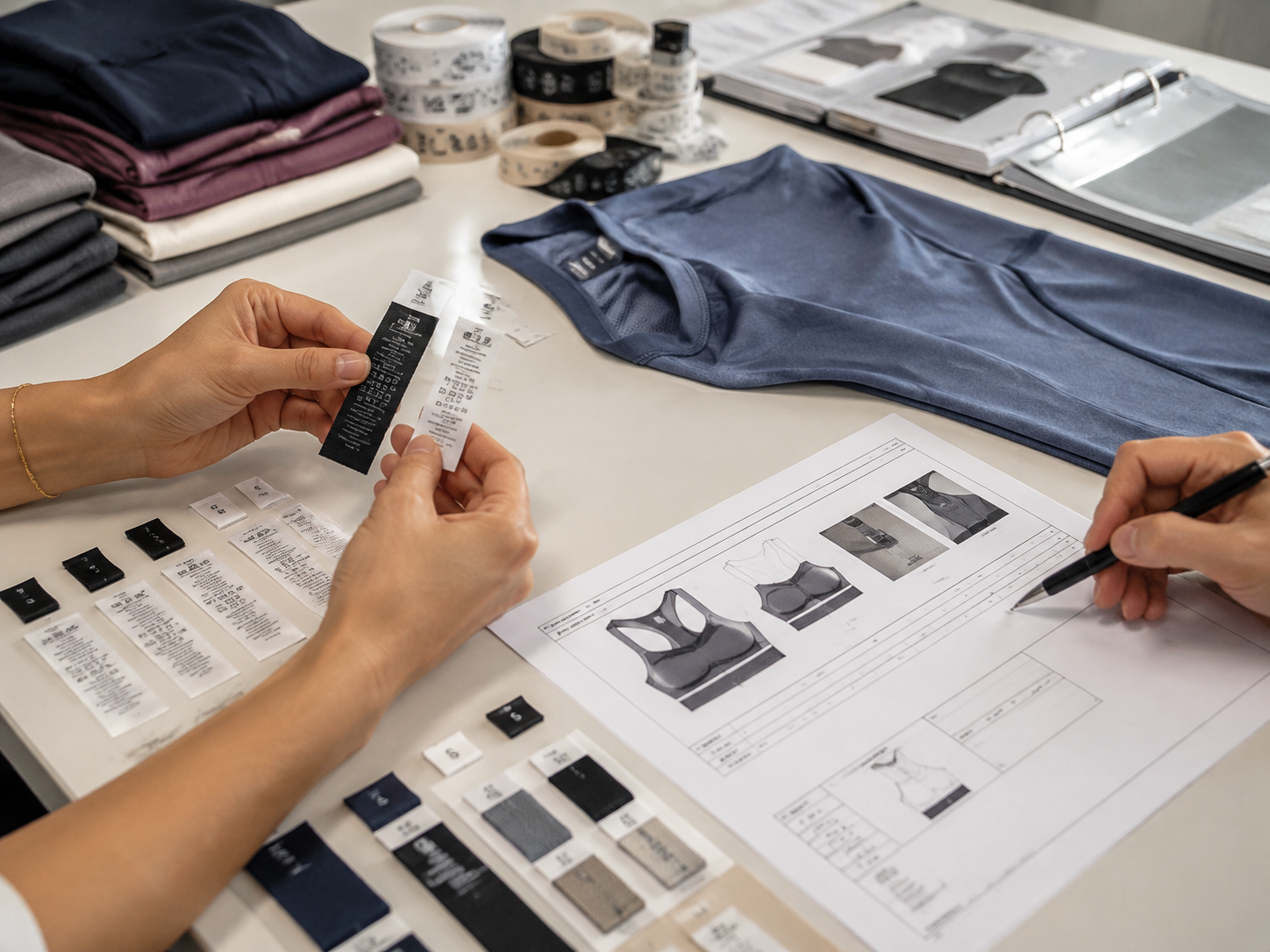
Main and Care Labels
Main labels, care labels and size labels provide identity and product information. Their wording, language, fiber details, origin information and other legally relevant content should be confirmed for the intended market.
- Label artwork
- Dimensions
- Material
- Fold type
- Position
- Language
- Size identification
- Care information
Manufacturing teams can support execution and obvious consistency checks, while final legal and market requirements remain subject to applicable brand and importer review.
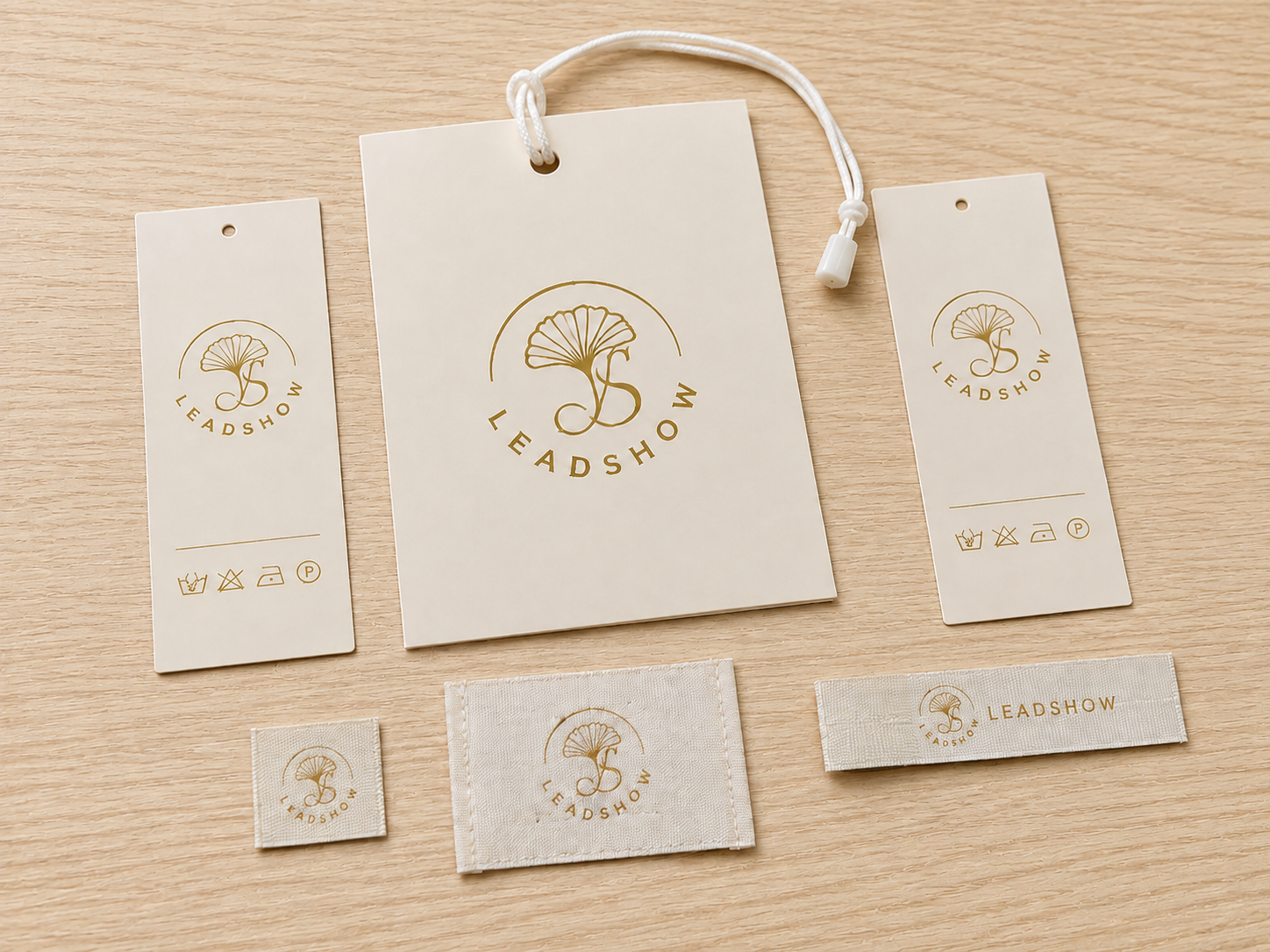
Hangtags
Hangtags may contain brand identity, product information, pricing fields, barcodes or retail instructions. The format should match the program rather than being chosen from a generic template without review.
- Artwork
- Material
- Size
- Hole position
- String or attachment
- Barcode
- SKU information
- Placement
Final hangtag samples or proofs should be approved before bulk procurement when the design, print quality or commercial information is important.
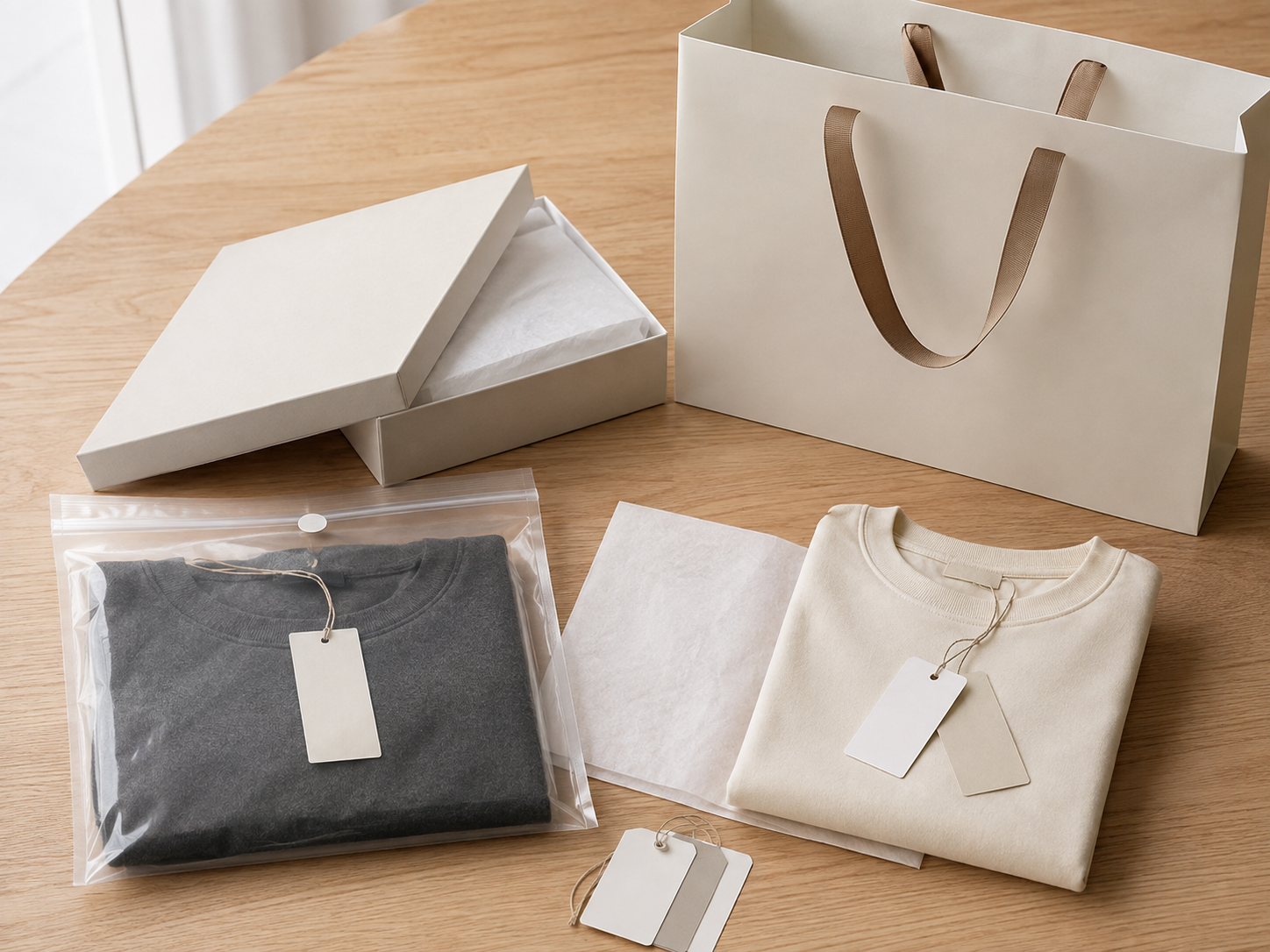
Individual Packaging
Individual packaging can range from basic approved bagging to more specific retail packaging. The correct format depends on storage, distribution, brand presentation and market requirements.
- Fold method
- Bag size
- Warning information
- Sticker
- Product orientation
- Quantity per pack
- Insert card
- Retail presentation
Leadshow coordinates packaging execution according to approved specifications; packaging capability does not mean every bag, box, card or label is manufactured internally.
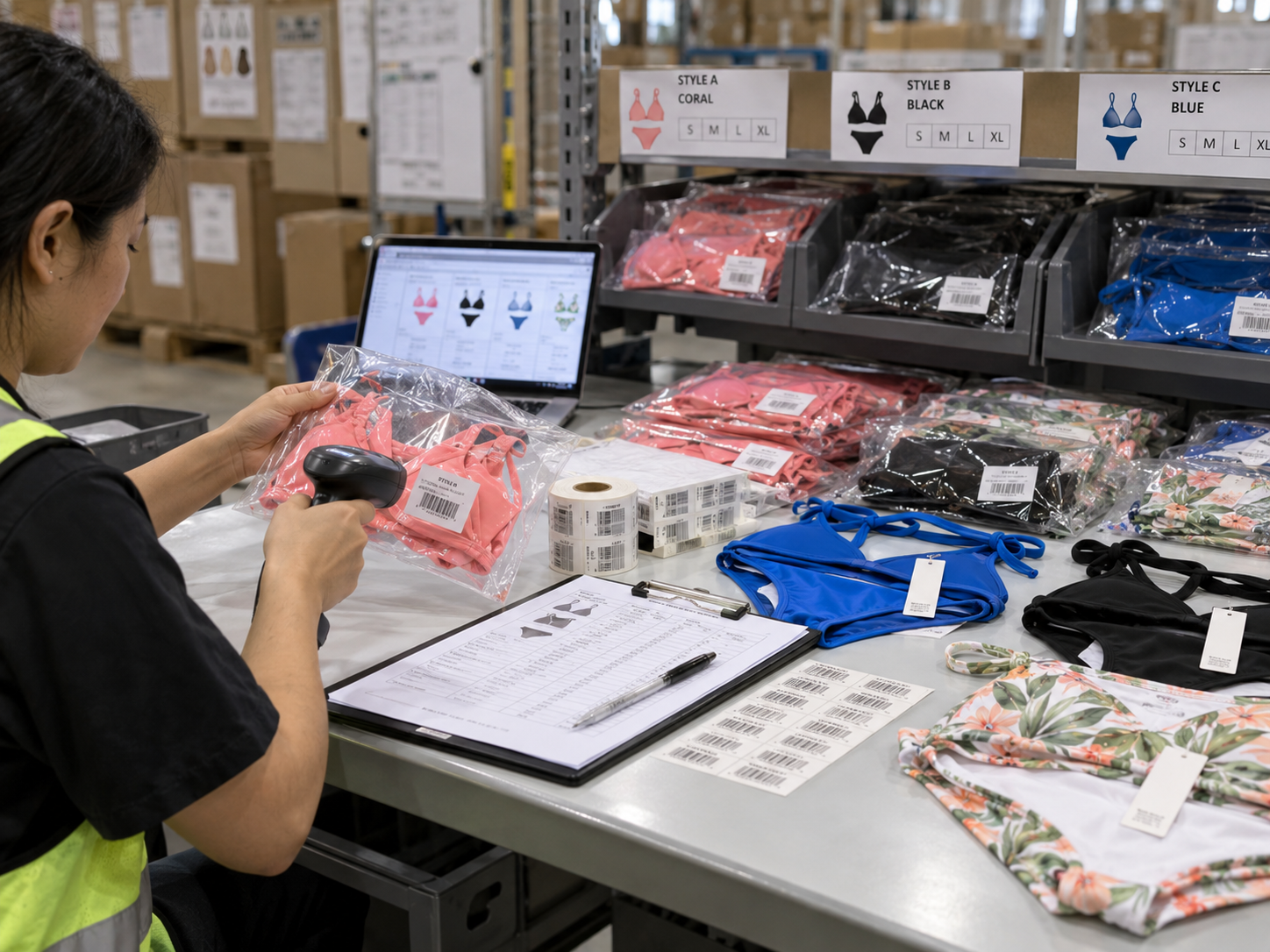
Barcode and SKU
Barcode and SKU accuracy connect manufacturing with inventory systems and retail channels.
- Style
- Color
- Size
- Barcode
- Sticker position
- SKU reference
- Packaging version
- Quantity
Barcode data should come from the approved commercial file. Manufacturing should not create or alter commercial coding without authorization because even a small code error can affect receiving and stock management.
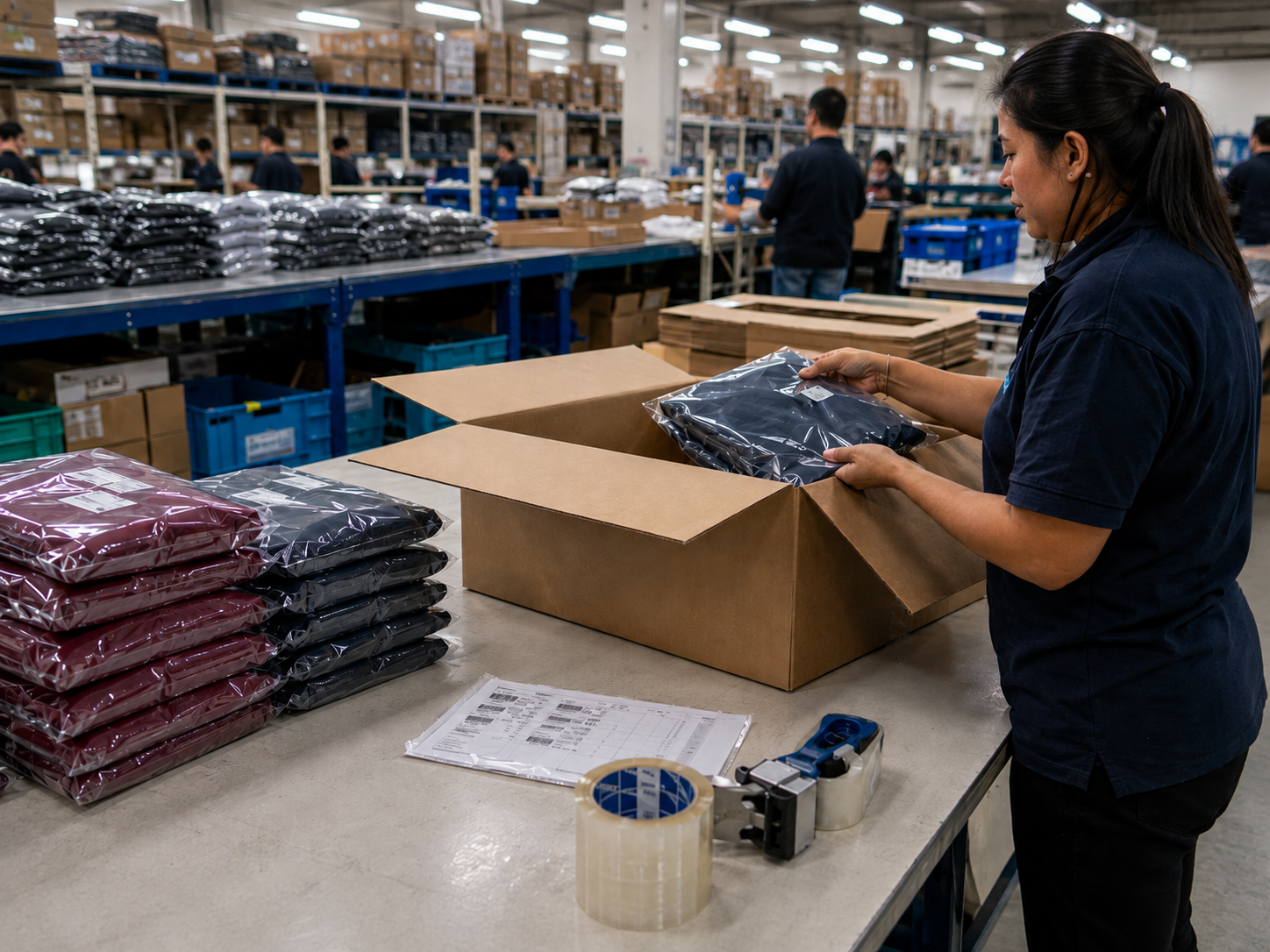
Carton and Reorder Files
Carton marks, carton quantities and packing records support warehouse receipt, export handling and later reorder reference.
- Carton number
- Style and SKU
- Quantity
- Size breakdown
- Gross and net weight where required
- Carton dimensions
- Shipping mark
- Packing list
Approved product, material, branding and packaging records can also support future reorder review, while materials, pricing, capacity and timing are reconfirmed for each new order.
MOQ and Quotation Based on Real Specifications
A useful manufacturing quote should state the product assumptions behind the price. MOQ, material selection, construction, branding, packaging, testing and order breakdown all influence commercial feasibility.
Commercial Item
Leadshow Reference
What Affects the Final Result
Standard MOQ
Starts from 100 pieces per color per design
Fabric, trims, construction, branding, packaging, supplier minimums
Style Quantity
Confirmed by project
Pattern, process, setup and production efficiency
Color Quantity
Confirmed by project
Stock color, custom color, dyeing or supplier requirements
Size Range
Defined from approved brand specification
Base size, grading, fabric stretch and market requirements
Fabric
Quoted from approved or specified
Composition, structure, weight, width, finish, color, availability
Lining
Confirmed by product construction
Stretch, opacity, support, compatibility
Elastic and Trims
Confirmed by specification
Width, material, color, hardware, supplier MOQ
Branding
Quoted from artwork and process
Logo size, technique, color, placement, quantity
Labels
Quoted from approved files
Main label, care label, size label, language
Packaging
Quoted from packing requirement
Bag, insert, barcode, hangtag, carton configuration
Testing
Added where required
Target market, material, product and specified standard
Sample Timing
Confirmed after project review
Construction, material readiness, customization, sample type, revision scope
Bulk Timing
Confirmed by project
Order conditions, approved sample, materials, quantity, process and scheduling
Trade Terms
Confirmed in commercial quotation
Delivery responsibility, freight, insurance and other agreed scope
Plan Sampling, Production and Delivery as Separate Stages
A launch schedule becomes clearer when sample making, approvals, materials, bulk production, goods readiness, inspection, shipment and transit are tracked separately. Leadshow confirms timing after reviewing the full project conditions.
Stage
Starts When
Timing Basis
Planning Status
Requirement Review
Project information is received
File completeness, product complexity, open questions
Confirmed after review
Pattern Development
Applicable construction and measurements are clear
Pattern complexity, reference quality, fit requirements
Project-specific
Sample Lead Time
Applicable sample requirements are complete
Construction, material readiness, customization, sample type
Project-confirmed
Sample Revision
Consolidated comments are received
Scope of pattern, material or construction changes
Revision-dependent
Material Lead Time
Approved material direction and order conditions are clear
Supplier availability, color, trims, special development
Supplier/project-confirmed
Bulk Production
Order conditions, approved references and materials are ready
Quantity, construction, process, quality requirements, schedule
Project-confirmed
Goods-Ready Date
Production and packing scope is completed
Production completion, finishing, packing
Scheduled by order
Inspection
Goods meet agreed inspection readiness
Inspection plan, internal or third-party requirement
Order-specific
Shipment Date
Release conditions are completed
Freight booking, documentation, handover
Confirmed with logistics
Transit Time
Shipment is handed to the selected transport route
Mode, route, carrier, port, destination
Estimated by logistics
Final Arrival
Transport, customs and local delivery are completed
Carrier, customs and destination conditions
Separate from factory production time
Prepare Swimwear for the Intended Sales Market
Export manufacturing requires product, labeling, testing, documentation and delivery requirements to be identified early. Leadshow has confirmed export business across Europe, North America, South America and Oceania, while individual market requirements remain project-specific.
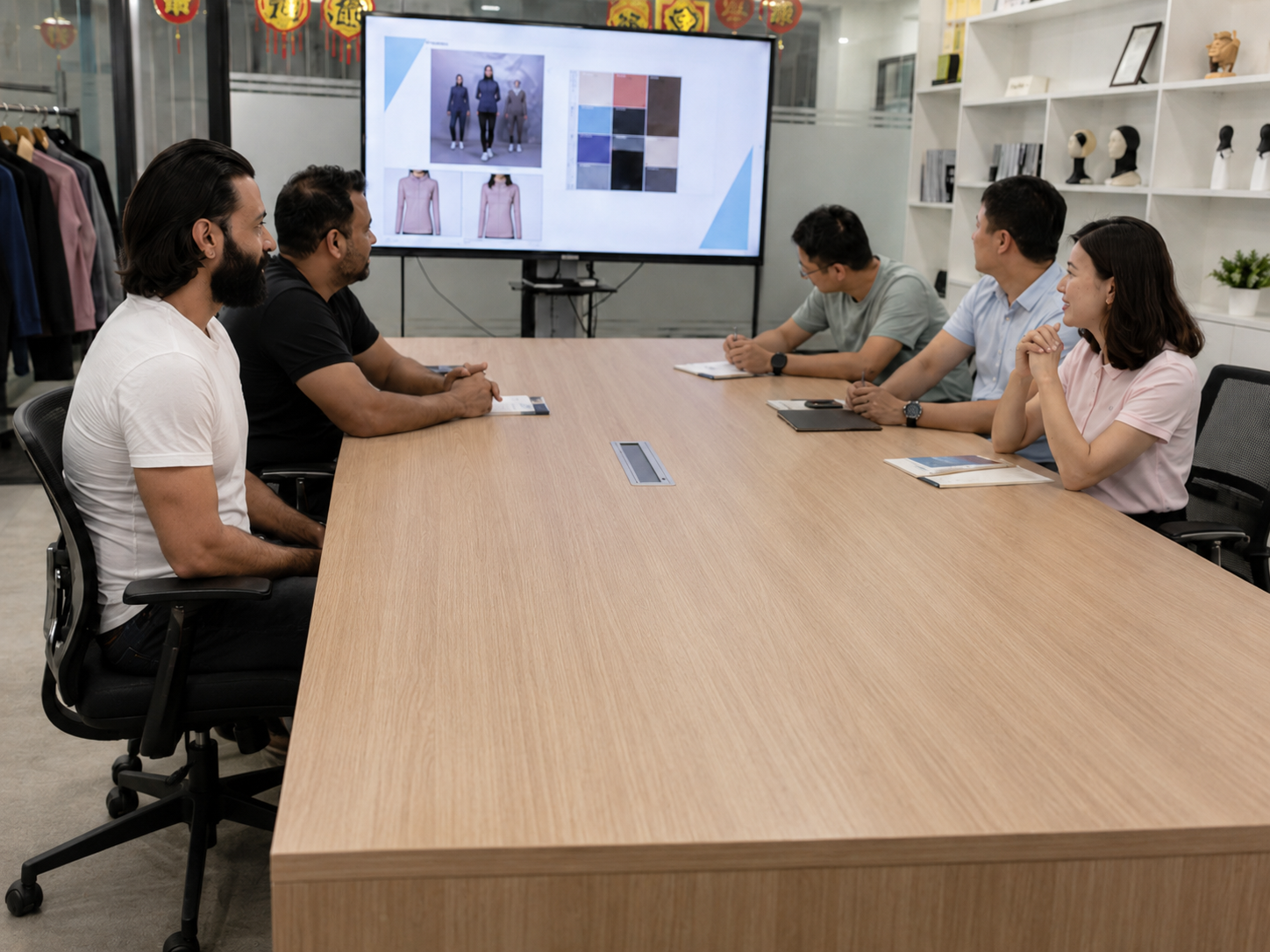
Market and Testing Requirements
A sourcing brief should identify where the finished swimwear will be sold before materials, labels and testing plans are finalized.
- Destination market
- Product classification
- Intended wearer
- Material composition
- Performance claims
- Required tests
- Label language
- Packaging warnings
- Brand-specific standards
Leadshow can review manufacturing implications and coordinate applicable information or third-party testing support where required. Final legal interpretation and market compliance responsibilities remain with the appropriate brand, importer and qualified parties.

Export Documents and Handover
Export delivery involves more than completing garment production. Packing information, cartons, quantities and logistics instructions need to connect with the agreed shipment scope.
- Packing list
- Commercial documents
- Carton information
- Shipping marks
- Quantity reconciliation
- Freight-forwarder instructions
- Pickup information
- Shipment handover
Required documentation varies by trade term, destination and product. Leadshow provides export coordination within the agreed scope rather than assuming responsibility for every destination-side procedure.

Delivery Responsibilities
Goods-ready, shipment and final delivery are different milestones. A sourcing calendar should separate factory completion from carrier transit and destination customs processing.
- Goods-ready status
- Inspection timing
- Freight handover
- Export documentation
- Shipment information
Carrier schedules, international transit, customs clearance and destination delivery depend on external parties and local requirements. Final arrival therefore should not be presented as a guaranteed extension of the factory production schedule.
Look for Evidence Behind Manufacturing Claims
A credible manufacturing review should connect each capability claim with a real process, file, sample, production activity or inspection record. Evidence is more useful than broad statements about quality or professionalism.
Development Evidence
Useful development evidence can include anonymized specification reviews, pattern work, material boards, sample comments and revision records. The purpose is not to expose confidential brand files. Instead, selected evidence can show how design information becomes measurable product requirements, how open questions are recorded and how structural decisions are confirmed before production. Real development evidence helps distinguish product engineering from generic product-image marketing.
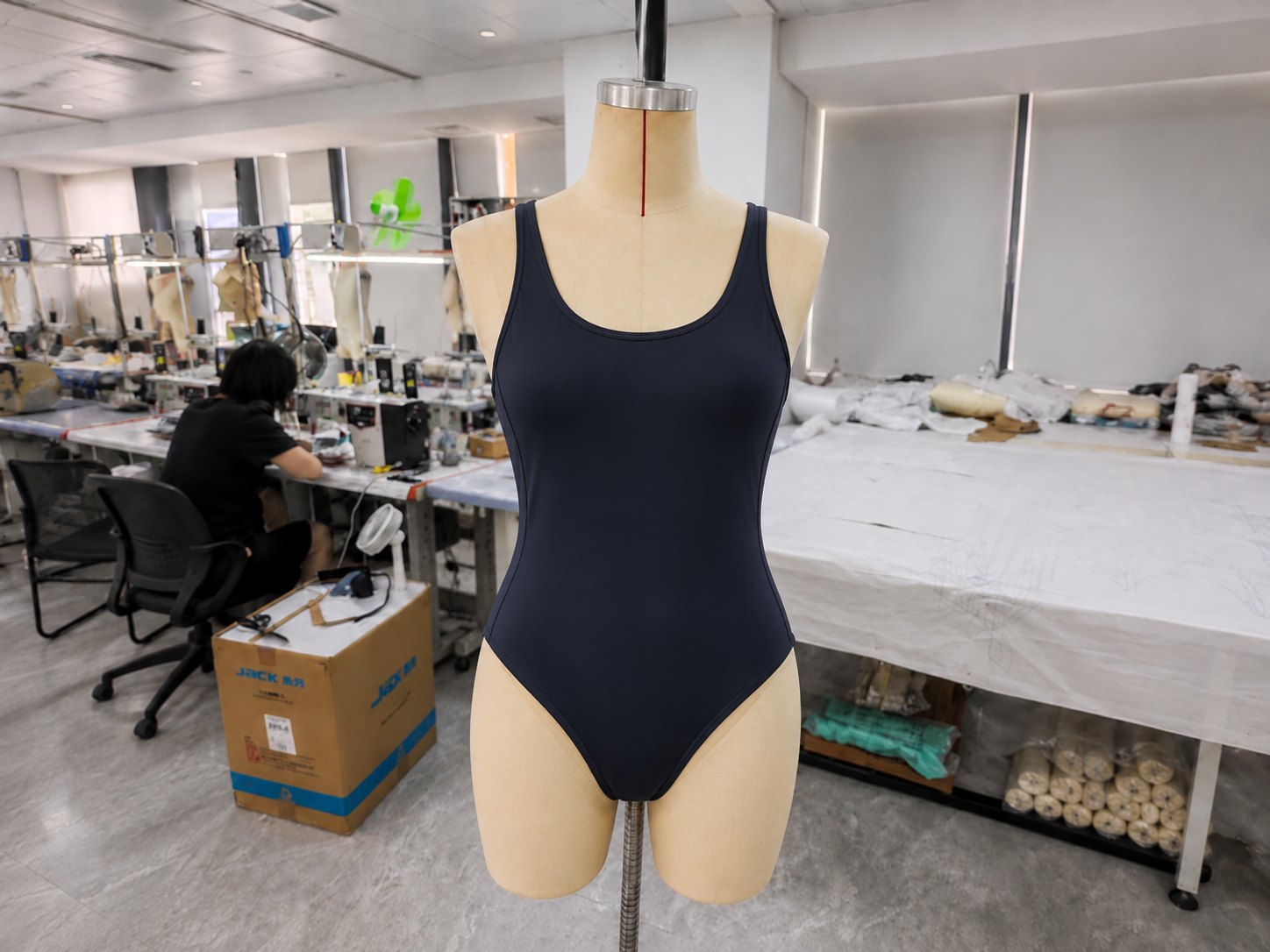
Sample and Fit Evidence
Sample evidence should show more than a finished garment hanging on a rack. Stronger examples may include sample measurements, front-back-detail views, pattern changes, fitting comments, material comparisons and revision notes. The sequence should demonstrate how an early sample developed toward an approved production reference. Any client-specific branding, design or technical information should be anonymized or displayed only with the required authorization.
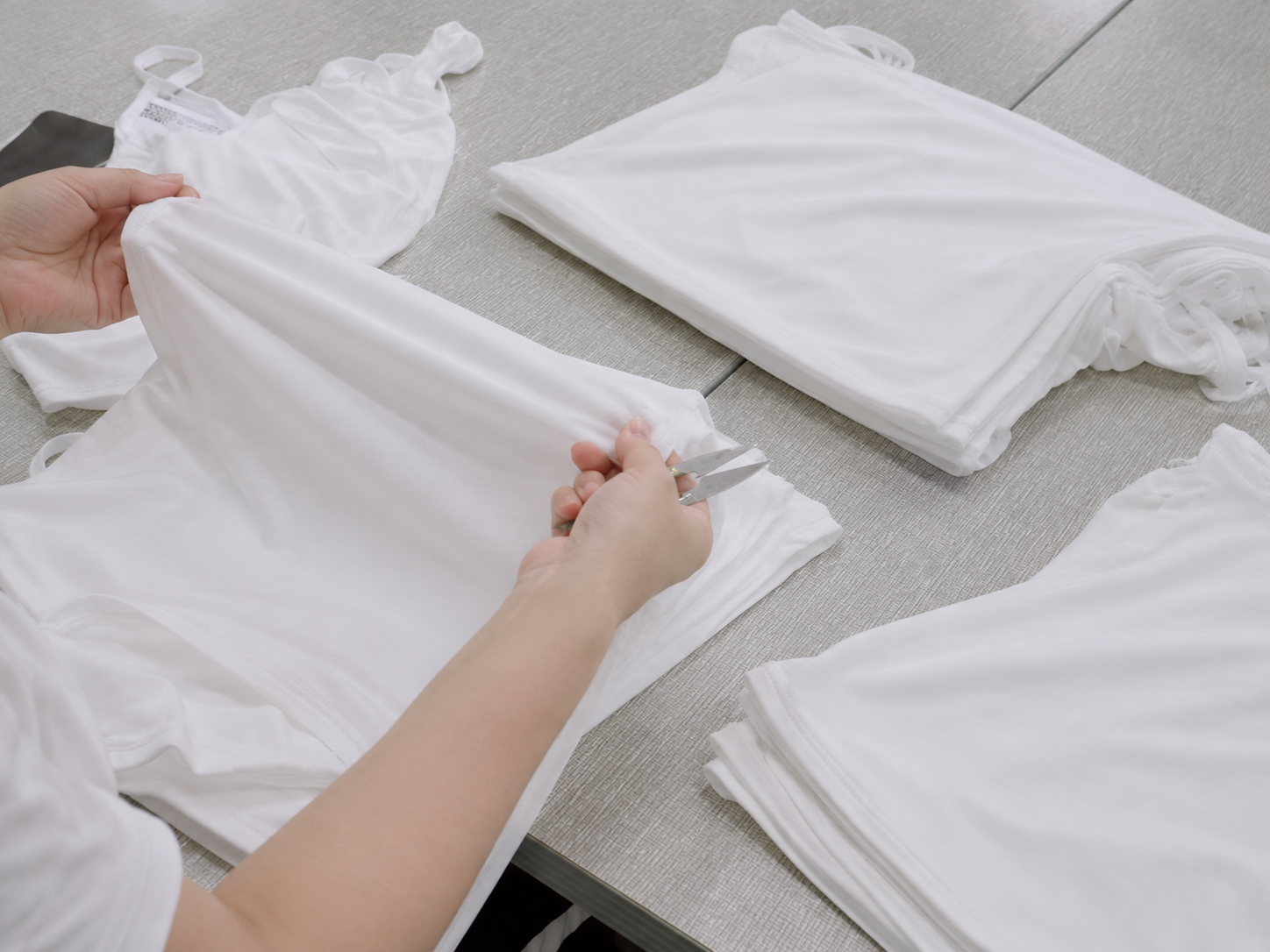
Production and QC Evidence
Factory and quality evidence can include cutting, sewing, elastic installation, applicable specialized processes, in-process inspection, measurement review and finished-garment checking. Images should show real operations connected with the product requirement rather than empty machinery. Inspection records can also demonstrate how measurements, workmanship, branding or packaging are verified against approved files. Evidence should represent actual capability without implying zero defects or guaranteed outcomes.
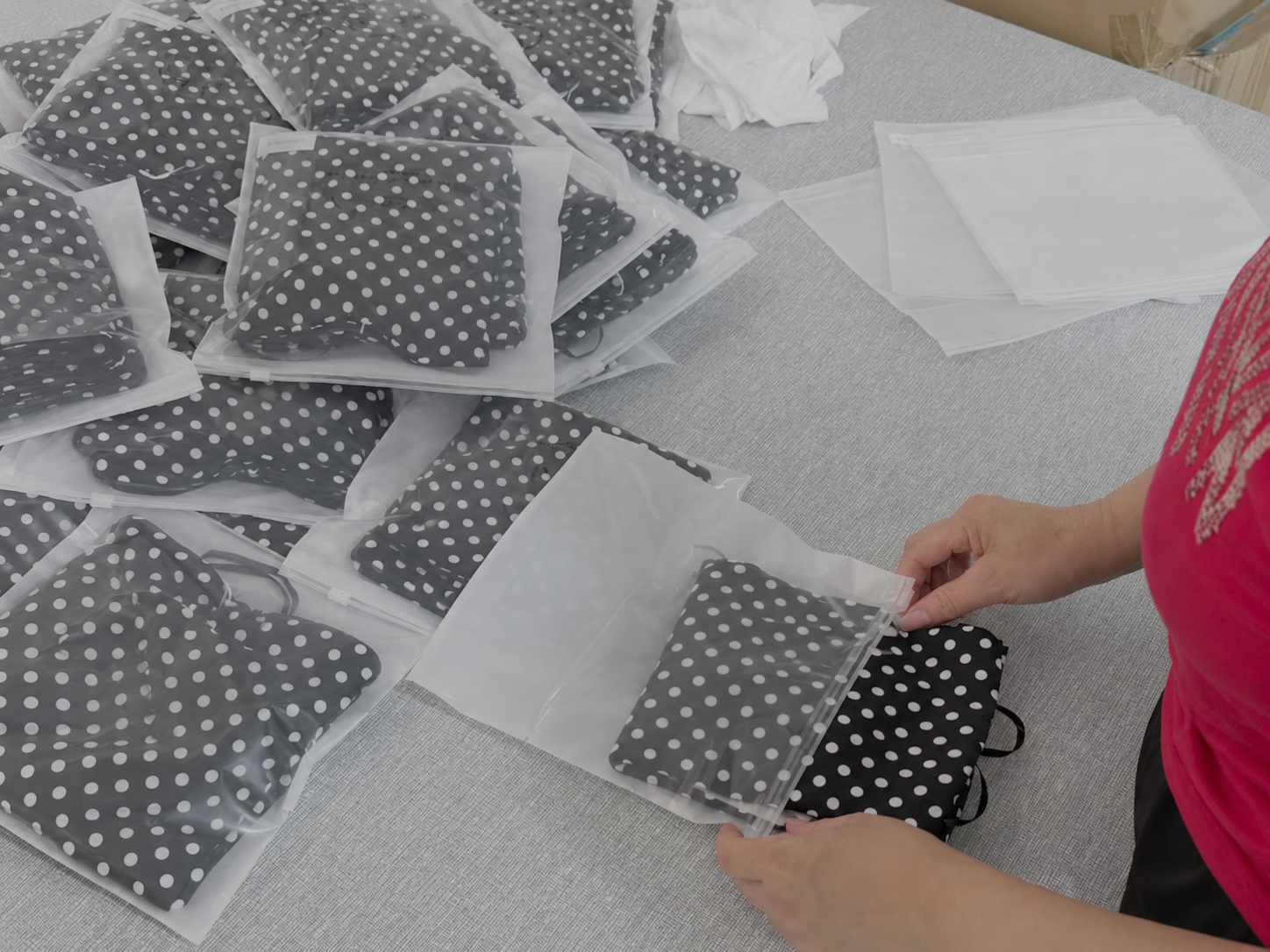
Packing and Delivery Evidence
Packing and shipment evidence can complete the sourcing story. Useful materials may include approved labels, packaging samples, SKU reconciliation, barcode checks, carton preparation, packing records and export-document preparation. The strongest case study follows the sequence from requirement to development, sample, production, quality, packaging and final delivery rather than using a client logo or a single testimonial as the main proof. All case material should be real, appropriately anonymized and authorized.
Swimwear Manufacturer Frequently Asked Questions
The answers below cover common questions about development inputs, MOQ, sampling, fit, materials, private labeling, bulk consistency, testing, timing and quotation preparation.
Can Leadshow manufacture custom swimwear?
Yes. Swimwear is one of Leadshow’s confirmed core apparel product lines. Services can cover swimwear development, manufacturing, OEM, ODM and Private Label programs. Specific subcategories, complex structures and specialized functions are reviewed against the actual design, materials and process requirements before acceptance.
Can we start without a complete Tech Pack?
Yes. Development can begin from a product concept, sketch, reference image, existing garment or incomplete technical file. Missing measurements, materials, construction details, branding files and commercial information are identified during review. Final specifications still require approval before a sample or bulk order becomes a controlled production reference.
What is Leadshow’s swimwear MOQ?
Standard MOQ starts from 100 pieces per color per design, subject to fabric, trims, construction, branding, packaging and supplier minimums. Custom colors, specialized fabrics, elastic, hardware or packaging may increase the final MOQ. Different designs or colors should not be assumed to combine freely toward one MOQ.
How is swimwear sample lead time determined?
Sample lead time is confirmed according to construction, material readiness, customization, sample type and revision requirements. The schedule can include file review, material sourcing, pattern development, sample making, shipping, fitting feedback and revisions. Sample-making time and the full development cycle should therefore be treated as separate planning concepts.
How does Leadshow review swimwear fit?
Fit review can combine garment measurements, pattern assessment, fabric stretch, torso proportion, bust-waist-hip balance, straps, leg openings, lining and elastic tension. Base size, grading and tolerance are confirmed from the intended product and brand requirements rather than assuming one universal swimwear fit standard.
Can Leadshow help evaluate swimwear fabrics?
Yes. Material direction can be reviewed against fit, stretch, recovery, hand feel, lining compatibility, opacity, construction, branding processes, cost, MOQ and supply conditions. Specialized performance claims such as chlorine resistance or UV protection require suitable material information or testing before being used as confirmed product claims.
Does Leadshow support Private Label swimwear?
Yes. Private Label support can include artwork coordination, logo execution, main labels, care labels, size labels, hangtags, packaging, barcodes, SKU references and carton requirements according to approved files. Packaging components may come from external suppliers, so material availability and minimums are reviewed as part of the project.
How is sample-to-bulk consistency controlled?
Approved samples are converted into controlled production references including specifications, patterns, measurements, materials, branding and packaging requirements. Material batches, file versions, production settings and inspection points are then managed against the approved basis. The goal is controlled repeatability rather than an unrealistic promise of absolute zero variation.
Can Leadshow support market-specific tests and compliance?
Requirements are reviewed according to the destination market, product, materials, claims and brand standards. Applicable supplier documents or third-party testing can be coordinated where required. Compliance is not treated as a blanket guarantee covering every product or country, and final importer or local legal responsibilities remain separate.
What should we send for an accurate quotation?
Send the latest Tech Pack or product reference, measurements, material direction, trims, branding files, quantity by design, color and size, packaging requirements, target market, testing requirements and expected schedule. Clearer specifications make MOQ, material sourcing, sample planning, production timing and quotation assumptions easier to evaluate accurately.
Send Your Swimwear Project for Manufacturing Review
A useful manufacturing review starts with the information already available. Send a Tech Pack, product sketch, reference image or information about an existing sample together with the intended product structure and market. Where available, include measurement charts, fabric and lining direction, elastic or trim requirements, logo artwork, labeling files, packaging specifications and estimated quantities by design, color and size. Leadshow can use the submitted information to review product manufacturability, missing specifications, material direction, pattern and sample requirements, likely MOQ conditions, quotation inputs, production-planning factors and key risks before the project advances. Standard MOQ starts from 100 pieces per color per design, subject to the actual fabric, trims, construction, branding and packaging requirements. Sample lead time and bulk-production timing are confirmed after the applicable product, material, approval and scheduling conditions are reviewed. Files do not need to be perfect before the first discussion. Clear reference information and an accurate explanation of the intended product are enough to begin a structured project review.