A brand can spend weeks filling out a measurement spreadsheet and still receive a quote that changes after the first sample. The problem is often less about the number of rows than about what the numbers mean. “Chest: 54 cm” leaves several questions unanswered. Does it describe the width of a garment laid flat, or a body measurement? Where does the tape start? Which size is being described? If the factory cannot tell, it must make assumptions before it can price the garment.
Before requesting a quotation, provide enough measurement detail to show the intended fit and the sizes being priced. For an initial estimate, a base-size chart with clearly defined key points, the planned size range, fit references, and any unusual construction may be sufficient. Confirm grading, measurement methods, and tolerances before treating the specification and production price as final.
The distinction matters in sportswear. A loose training top and a close-fitting sports bra need different patterns, materials, and fit checks even if their first reference is a photograph. Imagine two factories quoting the same hoodie: one assumes a regular fit and the other reads the image as deliberately oversized. The prices may appear comparable until the samples arrive. A useful chart makes that difference visible while there is still time to discuss it.
What Should a Measurement Chart Include Before Quotation?
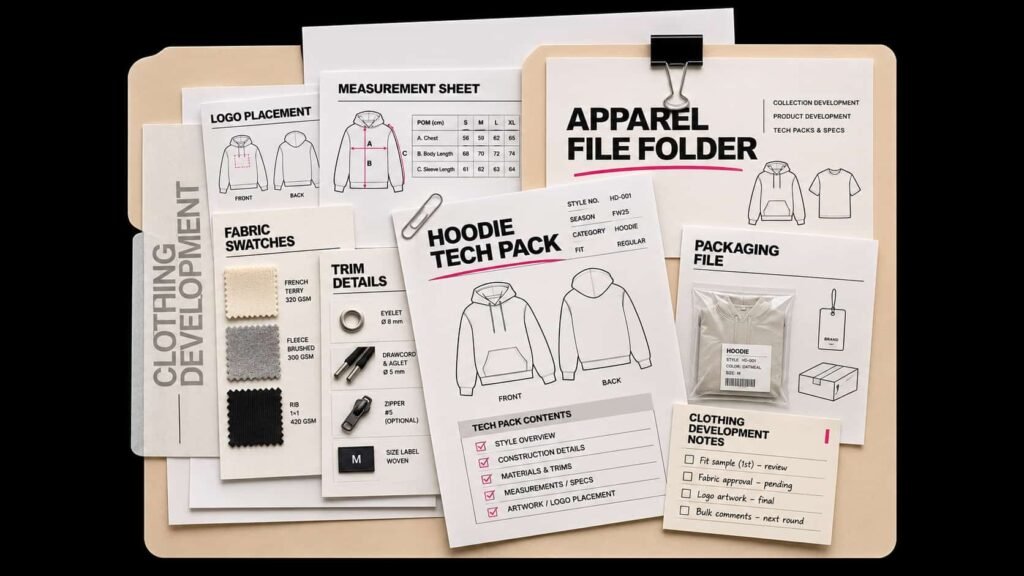
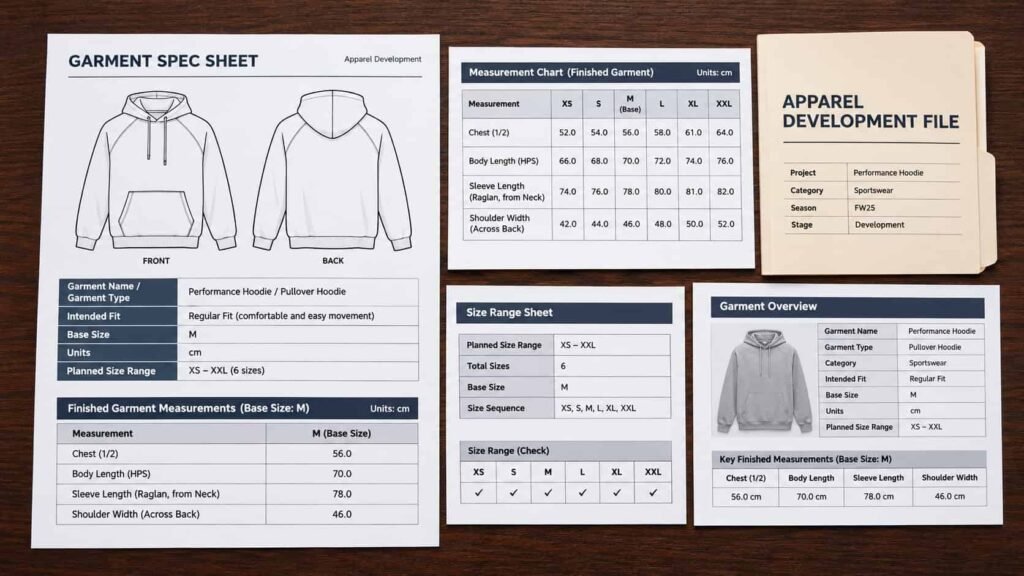
A quotation-stage chart should identify the garment, its intended fit, the base size, key finished-garment measurements, units, and planned size range. Add a marked sketch showing where important measurements are taken. Figures still under development can remain provisional if the factory knows what is confirmed and what assumptions it must use for the estimate.
Is a Retail Size Chart Enough for a Factory?
A retail size chart answers a shopper’s question: which size should I choose? It may list body dimensions, finished-garment dimensions, or a mixture of both. A factory needs to know what the finished garment should measure. A size intended for a particular body chest could describe a fitted training top or a generous sweatshirt. A body figure alone cannot tell a pattern maker which chest width to use. Label every reference as body or garment measurement before sending it to a factory.
An existing retail chart is still useful when the new style develops from a familiar product. Send the old chart with photographs or a sample, then identify what should remain and what should change. “Keep the chest width, shorten the body, and widen the sleeve opening” gives a development team a much better starting point than “same fit, but more relaxed.” The older chart remains a reference until the new targets have been tested and approved. A photo communicates the look, but camera angle, styling, and fabric drape make it an unreliable substitute for dimensions.
What Is the Minimum Base-Size Specification?
Start with a style identifier, revision date, garment description, and chosen sample size. State whether the chart uses centimeters or inches. Then list the finished-garment points that establish the intended silhouette. For a sports T-shirt, that might be chest width, body length, shoulder width, sleeve length, and hem width. A sports bra or legging calls for different points. The goal is to expose design choices, not to make a long table for its own sake.
Add a front and back drawing with numbered lines at points that could be interpreted differently. If a hoodie is intentionally boxy, the relationship between chest and hem width deserves attention. If a top is cropped, define the starting point for body length. Measurements also need a brief product description: material direction, special seams, decoration, labels, packaging, and approximate quantity may affect a quote without appearing in the measurement chart. Two garments can have identical flat dimensions and require very different materials and work.
Which Details Can Remain Open at First Contact?
An initial conversation need not wait for every measurement to be approved. A reference garment, small base-size chart, and defined product direction can support a preliminary estimate. Mark uncertain entries “provisional” or “to be confirmed during sampling” instead of supplying precise figures that appear final. Ask the factory which assumptions it used and which open decisions could change the estimate. This allows development to begin without giving a draft chart more authority than it deserves.
There is a limit to how much can stay open. If fit, fabric, construction, and size range could all change, a single unit price will rest on broad assumptions. Ask what product the factory has actually priced and when it will review the cost. If only the grading remains open, it may be possible to define that work separately. A short, honest brief often leads to a more useful discussion than a full chart filled with measurements nobody has checked.
Which Measurements Matter Most for Each Garment?
Prioritize measurements that control fit, affect pattern or material use, or define a distinctive feature. The appropriate points vary by garment. A hoodie, legging, and sports bra should not share an unchanged template. Give the factory the dimensions that distinguish the proposed product from a standard style, then develop the fuller chart through sampling.
Which Points Define Tops, Hoodies, and Jackets?
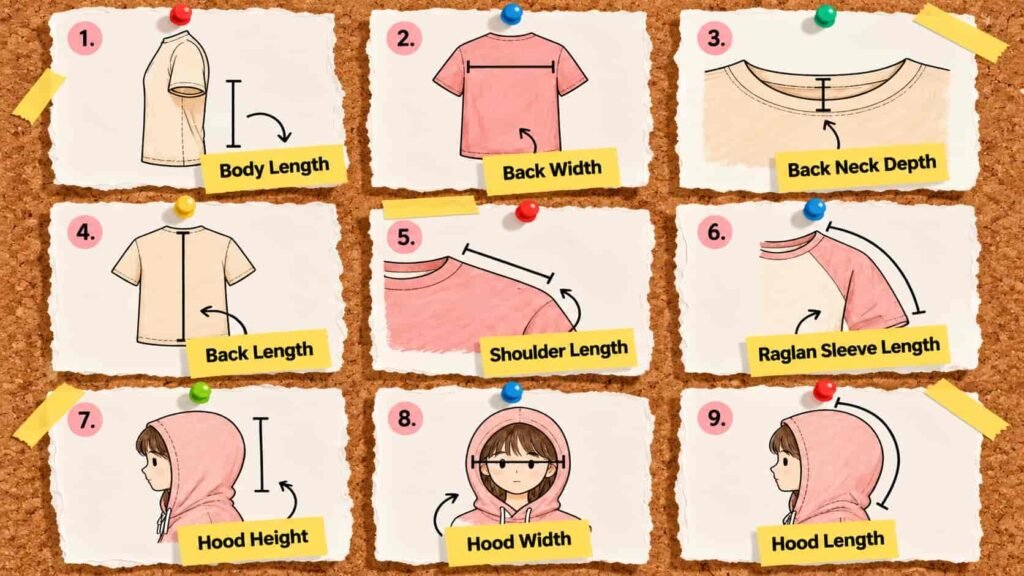
Chest width and body length give a factory a first picture of a top, but they rarely settle its fit. Shoulder width, sleeve length, sleeve opening, and hem width can distinguish a regular sports T-shirt from a boxy streetwear top. If the shoulder seam is intentionally dropped, show its position. Otherwise, one factory may estimate a conventional shoulder while another includes the pattern work needed for a more deliberate silhouette. The measurements should explain the design rather than merely describe its size label.
For a hoodie, look at the features that make the style recognizable: hood opening and shape, rib width, pocket position, and the relationship between body and hem. A standard pocket may need only a clear sketch at first quotation; an unusual pocket should be dimensioned. A jacket brings further choices around lining, zip, collar, or layered front construction. Show those details separately because a basic body chart cannot tell the factory how many components and sewing operations the garment requires.
Which Points Define Leggings and Swimwear?
Leggings need more than waist width and inseam. Waistband height, hip width at a defined position, front and back rise, thigh, knee, and leg opening may all contribute to the intended fit. Which points matter most depends on the pattern. A high-rise yoga legging with a shaped waistband raises different questions from a running short. State whether an elasticated point is measured relaxed; do not expect a factory to infer how much tension was applied to a sample.
Sports bras and swimwear require careful descriptions of coverage and openings. Underbust band, front coverage, strap placement, leg opening, and torso length may be critical on different styles. These flat targets cannot establish comfort, support, or appearance on the body by themselves. Review the chosen material and sample before approving the figures. A short quotation chart can still be useful if it clearly identifies the important features and openly states which fit decisions depend on a physical sample.
How Do Fit and Fabric Change the Priorities?
Words such as “oversized” and “compression” describe an intention, not a measurement method. An oversized hoodie might be wide at the chest but controlled at the hem. A close-fitting training top may rely on fabric stretch to achieve its intended fit. Supply a reference garment where possible and say which characteristics should carry over. If material selection is open, tell the factory which fit dimensions are provisional until the fabric has been sampled.
The link between a measurement and its cost also needs context. A wider body may alter fabric use; an added panel changes cutting and sewing; a different waistband may need new components. None of these effects can be priced reliably from one line in a chart alone. The factory should assess the pattern, material, and construction together. The chart’s job at quotation stage is to reveal meaningful decisions early enough that they can be reflected in the scope and price.
| Garment | Priority points to discuss | Question to resolve |
| Sports T-shirt | Chest, length, shoulder, sleeve, hem | Is the fit regular, close, or boxy? |
| Hoodie | Chest, length, shoulder, hood, rib, pocket | Which features create its silhouette? |
| Yoga leggings | Waistband, hip, rise, inseam, thigh, opening | Is an elasticated point measured relaxed? |
| Sports bra | Underbust band, front coverage, straps | Which targets need fit-sample confirmation? |
| Swimwear | Torso, coverage, openings, straps | Which targets depend on the chosen fabric? |
These are starting points for discussion, not mandatory measurements for every style. The finished chart should follow the actual product and the approved sample. A brand developing a training top with unusual panels might need additional widths and placements, while a simpler style may need fewer rows at the first quotation stage. Ask the factory which missing points could change its estimate.
How Should Each Measurement Point Be Defined?
Give every point a name, target, unit, and repeatable method. A numbered garment sketch should show where the tape begins and ends. State the measuring condition whenever it could affect the reading. Without these details, a chart can appear complete while two people obtain different measurements from the same sample.
Where Should the Factory Measure From?
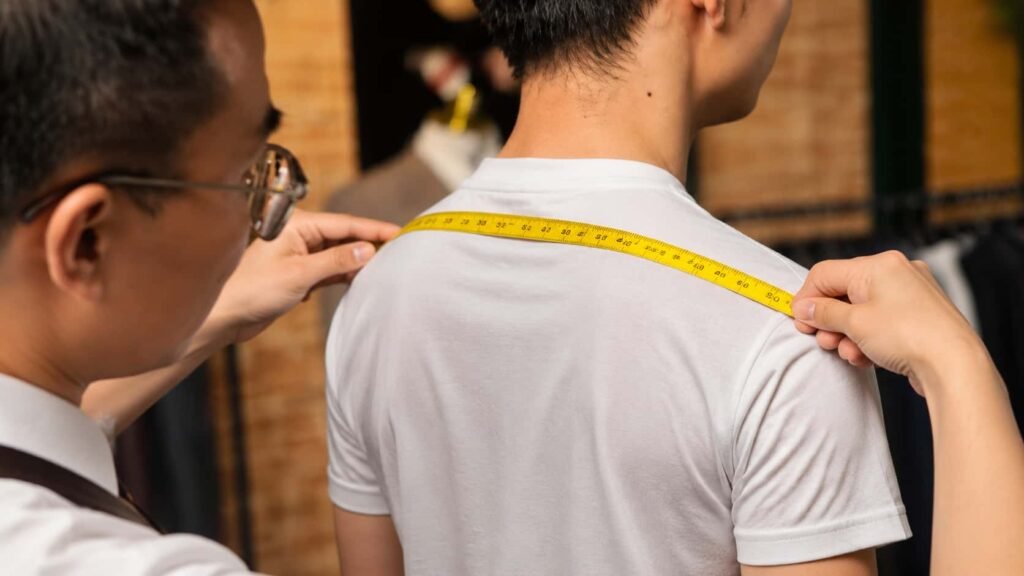
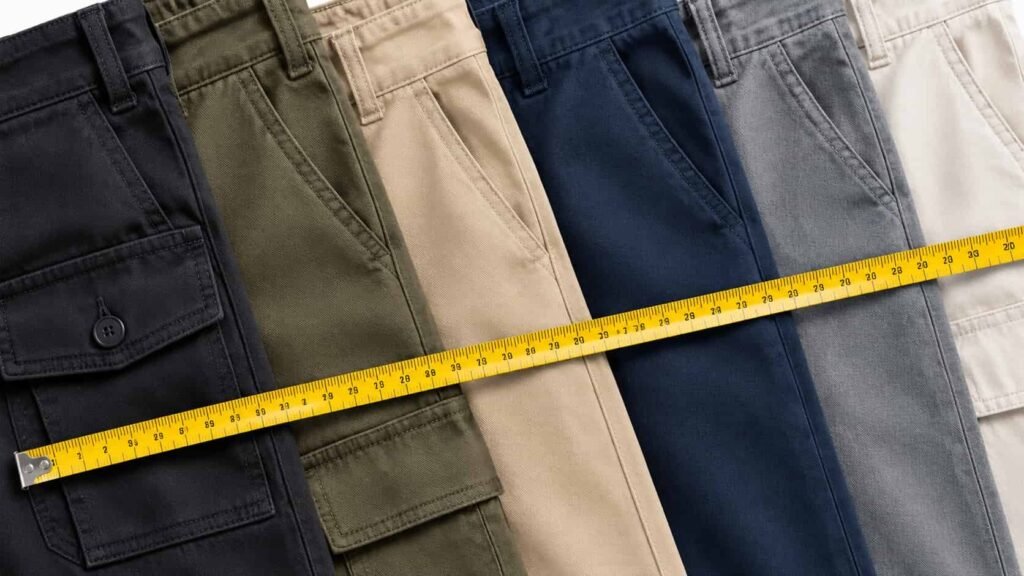
“Body length: 68 cm” looks precise until two people measure from different places. One may start at the highest shoulder point beside the neckline; another may measure from the center back. If the hem curves, they may choose different endpoints too. Write a short description and draw the line on the front or back sketch. A sample reviewer should be able to reproduce the measurement without asking the designer to explain it again.
Hip, chest, sleeve, and hood measurements present similar problems. A hip width needs a stated distance below the waistband or another stable landmark. Sleeve length needs a start point, particularly on a raglan or dropped-shoulder garment. Numbering the points makes later comments clearer. “POM 04 measures 1 cm above target” identifies a checkable result. “The sleeve feels long” may instead signal a fit preference or a pattern issue, so the team needs both the measurement record and the fit observation.
Is the Garment Measured Flat or Stretched?
A relaxed waistband width cannot be compared directly with one taken under tension. Describe how the garment should lie on the table and whether the fabric is smoothed without pulling. If a stretched value is necessary, agree on a reproducible method rather than asking two people to pull until the fabric “feels firm.” An apparently small difference in handling can turn into a large disagreement when the team reviews an elasticated garment.
The garment’s processing stage matters as well. A figure recorded from an unwashed prototype may differ from one taken after a specified wash or finishing process. Record which state the target describes. When fabric and processing are still being chosen, mark the figures as development targets. A sports bra can meet flat measurements and still fit badly because the band, straps, or material behave differently on the body. The chart controls agreed dimensions; fitting determines whether those targets were appropriate.
How Should Units and Reference Images Be Recorded?
Put “cm” or “in” in the header and keep the unit consistent throughout. Give the chart, sketch, and sample comments the same style and revision reference. When a target changes after fitting, update the current chart rather than relying on a detached email. An older sketch paired with newer numbers can create a disagreement even when both documents look complete in isolation.
Give each image a defined purpose. A flat sketch locates points and construction; a photograph shows silhouette and drape; a physical sample may establish the fit reference. Say whether a reference is approved, provisional, or provided for appearance only. The pattern, sample, production, and quality teams may review the garment at different times. Clear reference status helps all of them work from the same version and makes measurement differences easier to investigate.
| Point | Ambiguous entry | More useful entry |
| Chest | “Chest: 54” | “POM 01: flat width between marked underarm points; proposed base-size target 54 cm” |
| Body length | “Length: 68” | “POM 02: highest shoulder point to finished hem; proposed target 68 cm” |
| Waistband | “Waist: 34” | “POM 03: waistband laid flat and relaxed; proposed target 34 cm” |
| Reference | “Fit like photo” | “Photo A shows silhouette; sample B supplies the base-size fit reference” |
| Revision | No date or status | “Revision 02, provisional pending fit review” |
The figures illustrate how to document a point. They are not recommended sizes or approved specifications for any particular product. Before entering a real value, measure the intended reference garment or review the proposed target with the pattern and sample teams. If the sample changes, update the corresponding diagram and table together so the next quotation uses the same design revision.
Do All Sizes and Tolerances Need Approval Before Quotation?
An approved chart for every size is not always necessary for an initial estimate. The factory still needs to know the planned range and which figures remain provisional. Before production approval, confirm how targets change across sizes, how they will be measured, and what variation is acceptable at the controlled points.
Is a Base Size Enough for an Initial Estimate?
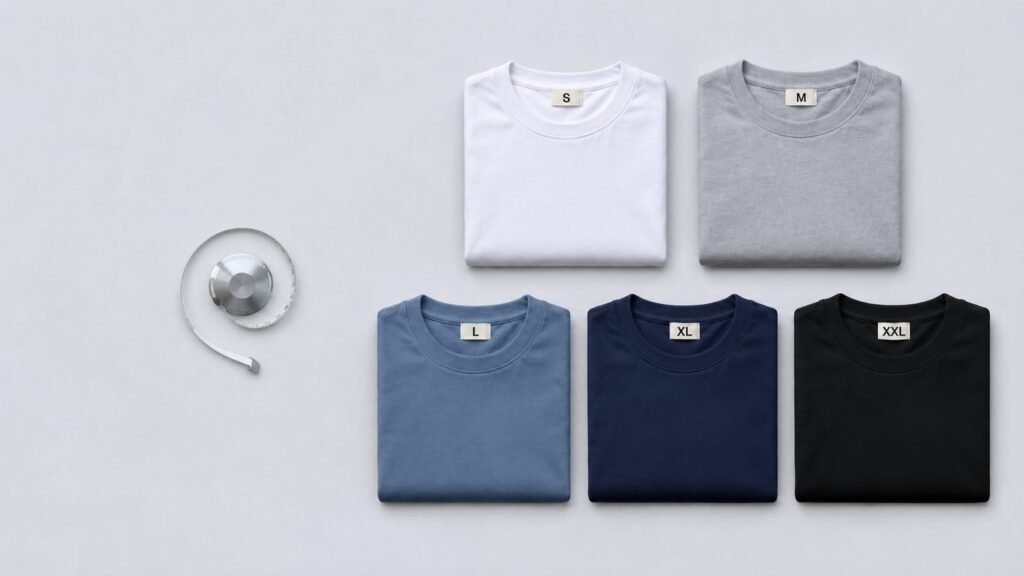
A base-size chart can provide a workable starting point when it is paired with a sketch, material direction, construction details, and planned quantities. It shows the intended proportions of a real garment instead of asking the factory to invent them from a photograph. If an existing sample supplies the fit reference, say whether the new style should copy it or change specific areas. The factory can then explain what it can estimate and what remains development work.
One size does not settle the rest of the range automatically. A medium sample might fit well while the smallest size is too short or the largest needs a different proportion. If a broad range is planned, identify who will develop the other sizes and how they will be checked. Ask whether the first quote includes grading and size review. One supplier may include that work; another may assume that the brand will supply a full, approved chart.
How Does the Planned Size Range Affect Costing?
List every intended size even when its measurements are unfinished. A request for 1,000 pieces across XS–XL tells a factory more than “1,000 assorted pieces,” though it still leaves the distribution open. If an estimated mix exists, send it and mark it provisional. The supplier can say whether the mix changes its material, cutting, or sourcing assumptions. A price based on a visible assumption is easier to revisit than one based on a distribution nobody recorded.
For illustration, a proposed run might be XS 10%, S 20%, M 30%, L 25%, and XL 15%. These percentages merely show how to communicate an estimate; they are not a recommended size mix. If the final order shifts strongly toward another part of the range, ask whether the original quote still applies. The range also defines a development task. A numerical increase across spreadsheet columns is not proof that the smallest and largest garments fit as intended.
When Should Grading and Tolerances Be Finalized?
Grading describes how targets change from one size to another. Tolerance describes acceptable variation around a target on a finished garment. The two should not be treated as the same number or copied down every row for convenience. A waistband, sleeve opening, and body length affect fit differently. The chosen material and construction also influence what a factory can make and measure consistently.
Share existing grade rules and unusually strict quality requirements when requesting the first quote. If the rules are still being developed, state who will propose them and when the price may need review. Before bulk production, compare the agreed specification against samples across the relevant size range and confirm the measuring methods. A garment that passes its numerical checks can still need a fit change. In that case, review the target and pattern instead of describing every concern as a tolerance failure.
How Do Missing Measurements Affect a Quote?
Missing measurements increase the assumptions behind a quotation. A factory may estimate from a reference garment, use a standard pattern, or leave development work out of its price. Ask what it has priced, which details remain open, and what would trigger a revised quote. Comparable offers should describe the same garment and include the same work.

Which Assumptions Should the Factory State?
Ask the factory how it interpreted the design. Did it use a physical reference sample or an existing pattern? Did it include the distinctive hood, waistband, straps, pockets, or lining shown in the images? Is grading included? Measurements are only one part of this conversation, but gaps in the chart often reveal different interpretations of the whole product. A unit price without its underlying assumptions can be difficult to compare with another supplier’s figure.
Separate an assumption from an approval. A factory may propose a chest width to begin a hoodie sample; the suggestion is useful, but it is not the brand’s approved fit standard until reviewed. Record who will decide each unresolved point and when. Material, trim, decoration, labels, and packing assumptions deserve the same treatment. Two factories can receive one measurement chart and price different garments if they fill those other gaps in different ways.
What Could Trigger a Revised Price?
Changing width, length, or the size range can prompt a review of pattern and material estimates. A new panel, lining, elastic, embroidery method, or packing requirement can change sourcing and sewing work. Some adjustments have little effect on the unit price; others alter the product substantially. No reliable rule assigns a fixed cost to every centimeter of change. Ask the factory to identify which decisions would require new costing rather than assuming all revisions have the same effect.
Imagine a sports bra first described with a simple underbust band. Fitting leads to a wider shaped band, revised straps, and additional construction. The revised quote should identify these changes against the earlier scope. The same applies when a hoodie gains a lined hood or uses a different fabric. Keep the chart and quotation dated so the teams can tell which sample and specification each price reflects. That record is useful when the style is reordered months later.
How Can Brands Compare Quotes on the Same Basis?
Send shortlisted suppliers the same revision of the chart, sketch, fabric direction, size range, estimated quantities, and packaging requirements. Ask each to list exclusions and alternatives. One supplier may be pricing an existing pattern while another includes new pattern work and sampling. The lower headline price is hard to interpret until those services are separated. Record differences beside the quoted figures instead of relying on a long email thread.
After sampling, update the shared specification and ask each relevant supplier to confirm whether the price changes. Leadshow can review available technical information and support pattern adjustment, sample development, and manufacturing assessment for projects within its product range. Brands requesting a review can send a current chart or reference sample, planned size range, fabric direction, and estimated quantities to cody@leadshowfashion.com. Unresolved measurements should be identified clearly so the development work and production quotation can be assessed together.
| Situation | Question to ask | Decision supported |
| Base chart is provisional | Which fit and pattern assumptions support the estimate? | Whether the price matches the intended silhouette |
| Full size chart is unfinished | Are grading and size review included? | Whether development work is covered |
| Fabric remains open | Which material is included in the price? | Whether supplier offers are comparable |
| Sample changes construction | Which changes affect the revised cost? | Whether repricing reflects changed scope |
| Quotes differ substantially | Are they based on the same revision and quantities? | Whether the figures can be compared fairly |
| Order is ready for approval | Which sample and chart will control production? | Whether one specification governs the order |