
Private Label Apparel Manufacturer
Turn brand concepts, tech packs and reference samples into approved garments, branded packaging and scalable production with Leadshow.
- Private label development for sportswear, swimwear, streetwear and modest sportswear.
- Support from technical review and sampling through bulk manufacturing, quality checks, labels, packaging and export coordination.
- Standard MOQ generally starts from 100 pieces per color per design, subject to fabric, trims, construction, branding and production conditions.
- Project timing is confirmed after specifications, materials, sample requirements, approvals and current production scheduling are reviewed.
Built for Apparel Brands with Real Production Plans
Private label programs vary widely in maturity, volume and technical readiness. Leadshow supports brands and commercial sourcing teams that need product development, sample approval and repeatable bulk manufacturing rather than ready-stock resale or one-piece customization.
Established Apparel Brands
Established brands usually arrive with detailed technical standards rather than a simple product photo. Existing inputs may include approved garments, Tech Packs, measurement charts, material references, workmanship requirements, packaging instructions and internal quality documents. Leadshow can review those inputs and help translate approved standards into an executable manufacturing program.
Key areas include:
- Existing Tech Pack and specification review
- Pattern and fit alignment
- Approved material and trim discussion
- Sample validation before bulk production
- Multi-color and multi-size order coordination
- Brand label and packaging execution
- Repeat-order specification reconfirmation
Projects involving a second supplier, added capacity or new product categories can be reviewed against existing brand standards before sampling begins.
Growing Apparel Brands
Growing brands often have proven products and clearer market direction but need stronger manufacturing support as assortment, quantities and SKU complexity increase. A single successful garment may expand into several colors, related styles or a broader seasonal range, creating new demands for material coordination, size management and production consistency.
Leadshow can support development from drawings, reference products, existing samples or technical files.
Typical requirements include:
- New style development
- Material and trim evaluation
- Pattern and fit adjustment
- Sample revisions
- Brand labels and packaging
- MOQ evaluation by style and color
- Transition from smaller initial runs toward larger production
- Product records for repeat orders
Manufacturing conditions are reviewed by product rather than applying one fixed formula across an entire collection.
Private Label Programs
Private label companies, retailers, importers and distribution programs often manage more than a logo. A finished branded garment may involve product specifications, colorways, size ranges, main labels, care labels, size labels, hangtags, barcodes, single-garment packaging, carton markings and SKU-specific packing instructions.
Leadshow can review these requirements as one coordinated manufacturing program.
Important inputs include:
- Garment category and construction
- Quantity per design and color
- Size breakdown
- Label artwork
- Hangtag requirements
- Barcode information
- Packaging specifications
- Destination-market requirements
- Required launch or delivery target
Final MOQ, price, sampling schedule and production timing are confirmed after product and material review.
Private Label Means More Than Adding a Logo
A serious private label program connects product development, fit, materials, branding, approved samples and manufacturing standards. Brand identity becomes part of the garment specification rather than an isolated decoration added after production.
Build the Garment Before Applying the Brand
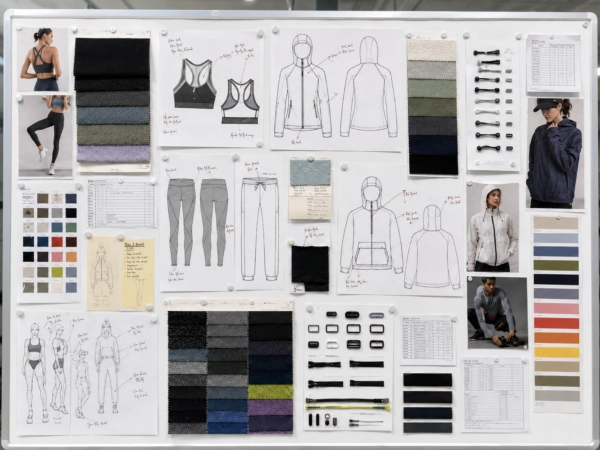
Private label manufacturing begins with the garment itself. A sports bra, legging, running short, sweatshirt or swimwear product must first reach an acceptable construction, fit and material direction before brand elements can be locked for production.
A product can begin from a complete Tech Pack, a measurement chart, a pattern, reference images or a physical sample. The starting material determines how much clarification and development work is needed.
Product review may cover:
- Construction: panel arrangement, seams, openings, waist structures, straps, pockets, linings or other garment components.
- Fit: base size, key measurements, ease, garment length, stretch relationship and intended silhouette.
- Materials: fabric composition direction, structure, weight, stretch, hand feel and compatibility with the garment.
- Trims: elastics, zippers, drawcords, tapes, labels and other required components.
- Workmanship: sewing method, flatlock, bonding, seam taping, heat transfer or other applicable processes.
- Commercial conditions: quantity, colorways, size breakdown, branding, packaging and target schedule.
Development becomes more reliable when design decisions are resolved before brand artwork and bulk-production files are frozen.
Turn Product Standards into Brand Standards
Private label development becomes complete when product and brand information work together. A garment may fit correctly yet still fail a retail program because care information, size identification, barcode data or carton markings are incorrect.
Brand implementation can therefore include several layers:
- Main label
- Size label
- Care label
- Heat-transfer label where suitable
- Hangtag
- Approved logo application
- Barcode
- Individual packaging
- Carton markings
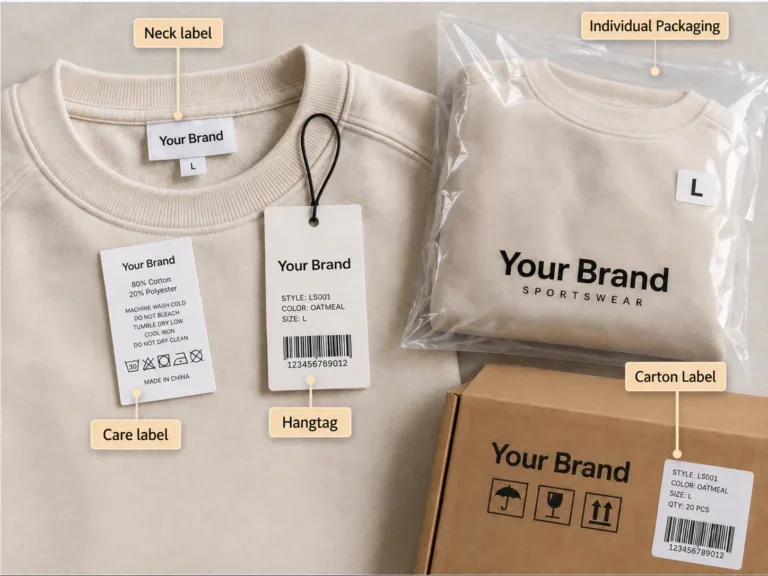
Leadshow coordinates approved brand information according to project requirements. Packaging materials, supplier MOQs, artwork versions and market-specific information are reviewed before bulk packing.
Private label manufacturing at Leadshow is not positioned as ready-stock white labeling or “add a logo and ship immediately.” Product development, sample approval and manufacturing feasibility remain part of the process where required.
A mature program ultimately creates one linked standard:
Approved Garment + Approved Materials + Approved Brand Files + Approved Packaging + Bulk Production Requirements
Focused Apparel Categories for Private Label Development
Leadshow concentrates manufacturing resources on sportswear, swimwear, streetwear and modest sportswear. A defined product scope allows development discussions to stay close to relevant fabrics, fit requirements, sewing structures and bulk-production conditions.
Sportswear Products with Development-to-Production Support
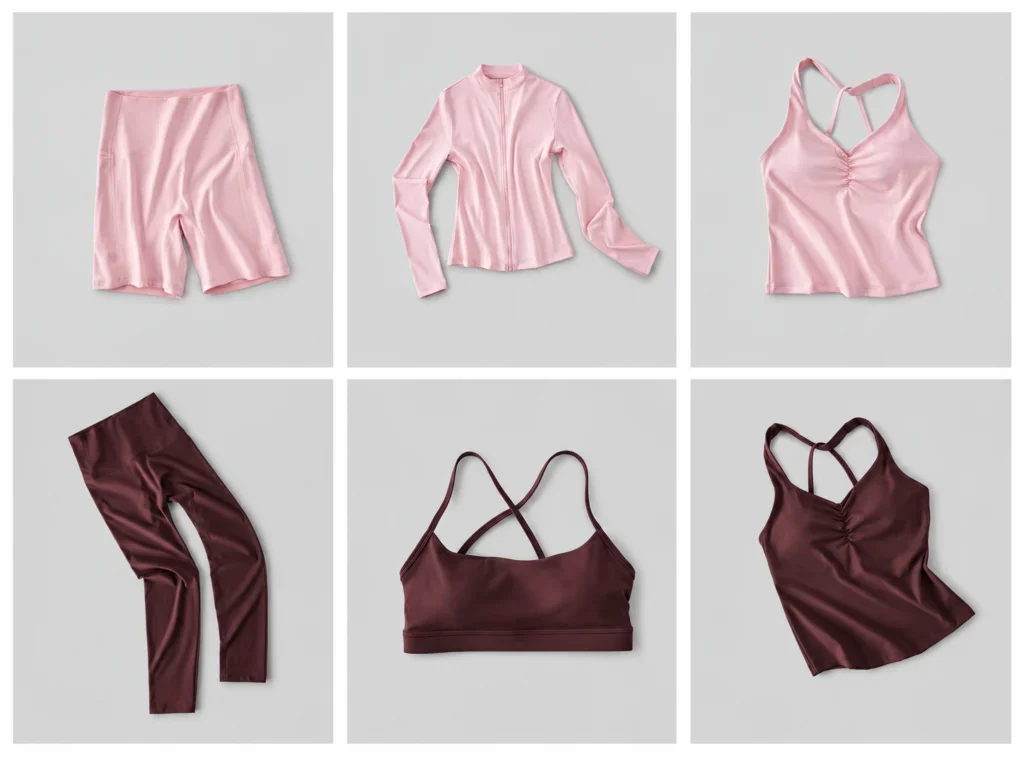
Confirmed sportswear products include sports bras, sports T-shirts, yoga leggings, tennis skirts, jumpsuits, running shorts, tank tops and tracksuits. Each category creates different manufacturing questions and should be reviewed individually.
For example:
- Sports bras may involve bottom bands, shoulder straps, pad structures, elastic application, supportive construction and stretch-compatible seams.
- Yoga leggings require close attention to waistband construction, crotch shape, stretch recovery, seam placement, garment measurements and fabric behavior.
- Running shorts may require waistband, pocket, slit, lining and local reinforcement decisions.
- Tennis skirts combine skirt shape, waistband, inner-short construction, pockets and movement requirements.
- Tracksuits may involve coordinated tops and bottoms, zippers, pockets, rib structures, color matching and multi-piece set management.
Confirmed manufacturing resources include automated spreading and cutting, lockstitch, overlock, double-needle sewing, bartacking, elastic-attaching equipment and four-needle six-thread construction. Process suitability still depends on the actual garment and material.
Swimwear, Streetwear and Modest Sportswear
Leadshow also focuses on swimwear, streetwear and modest sportswear projects. Individual subcategories should be reviewed against actual project requirements rather than assuming every possible garment type falls within the manufacturing scope.
Confirmed streetwear-relevant products include hoodies, sweatshirts, sports T-shirts, tracksuits and selected jumpsuit structures. Development may involve silhouette, heavier fabrics, rib components, pockets, branding details and garment finishing.
Swimwear projects may involve stretch fabrics, linings, elastics, flatlock-compatible seams, bonding or seam-taping evaluation where construction and materials are suitable. Equipment alone does not establish waterproof, chlorine-resistant or other performance claims; required performance must be supported by materials and testing.
Modest sportswear development focuses on suitable coverage, movement, comfort, layering and product structure. Specific styles are evaluated according to design direction and manufacturing feasibility.
Leadshow does not position itself as a manufacturer of every clothing category. A focused product matrix allows procurement teams to determine fit before development resources are committed.

Define the Product Before Private Label Production Begins
Private label development requires more than a logo file. Fabric, color, fit, size, construction, trims, branding and packaging are reviewed together because one specification change can affect sampling, MOQ, cost and production conditions.
Fabric Direction
Fabric selection starts with the intended garment, target wearing experience and construction rather than a generic list of available textiles. Composition, knit or woven structure, weight, stretch, recovery, hand feel, surface appearance and production compatibility can all affect the result.
- Intended product category
- Fabric construction
- Target weight or GSM
- Stretch direction
- Recovery requirement
- Hand feel
- Opacity or coverage needs
- Sewing and bonding compatibility
Material performance claims require suitable evidence or testing. Final material availability, minimums, colors and production timing depend on the selected source and specification.
Color Development
Color requirements can affect fabric sourcing, minimum quantities, sample preparation and final production planning. A project may use available material colors or require a more specific color direction depending on fabric conditions and sourcing options.
- Required colorways
- Color reference or approved standard
- Fabric type
- Quantity per color
- Branding color relationship
- Packaging color requirements
Colors should be approved in an appropriate physical form before bulk production where necessary. Different materials may reproduce the same visual color differently, especially when fiber composition, surface structure or finishing changes. Colorway count also affects MOQ allocation.
Pattern and Fit
Fit cannot be separated from material and garment structure. A fitted legging, sports bra, loose hoodie and long modest sportswear garment require very different pattern decisions even when nominal sizes appear similar.
- Base pattern
- Existing pattern or approved garment
- Measurement chart
- Fit direction
- Ease
- Stretch allowance
- Garment balance
- Critical body areas
- Target market
Fit is validated through samples and measurements rather than a universal “perfect fit” claim. Pattern adjustments made after sample review should also be reflected in the relevant technical files before production.
Size Range
Size development begins with the brand’s required size architecture. Leadshow does not apply one universal public size range to every project because size naming, grading and measurements vary across markets, brands and product categories.
- Base size
- Intended size range
- Measurement points
- Grade rules
- Garment tolerances
- Fabric stretch
- Shrinkage considerations
- Fit comments
Size sets may be developed according to project needs. Bulk-production measurements are reviewed against approved specifications and agreed tolerances. Larger or extended size ranges can also affect material usage, pattern development and production planning.
Garment Construction
Construction decisions determine how individual components become a repeatable garment. Panel count, seam placement, waistband design, pockets, linings, openings, straps, zippers, rib structures and reinforcement points may all affect cost and manufacturing difficulty.
- Product function
- Fabric behavior
- Sewing method
- Stretch requirements
- Appearance
- Ease of assembly
- Bulk-production repeatability
Applicable manufacturing resources include lockstitch, overlock, double-needle sewing, bartacking, four-needle six-thread sewing, elastic attachment, bonding, seam taping and laser perforation. Not every process applies to every material.
Trims and Components
Trims support fastening, adjustment, elasticity, reinforcement, identification or appearance. Incorrect trim selection can create sample revisions even when the main fabric and pattern are acceptable.
- Elastics
- Zippers
- Drawcords
- Tapes
- Hardware
- Rib components
- Linings
- Labels
- Other garment-specific parts
Dimensions, color, material, surface finish and installation method should be identified as early as possible. Supplier MOQ and development requirements may influence final garment MOQ, cost and schedule. Physical samples or clear references help reduce ambiguity.
Logo and Labels
Brand implementation is reviewed according to garment material, design position, artwork and production method. Leadshow has confirmed heat-transfer labeling and heat-press resources, while other logo methods must be evaluated according to the actual requirement and supply arrangement.
- Logo placement
- Main label
- Size label
- Care label
- Heat-transfer label
- Hangtag
- Barcode information
Artwork, dimensions, colors and content should be approved before bulk application. Brand elements should remain consistent across garments, labels and packaging rather than being handled as unrelated files.
Packaging System
Packaging becomes part of the product specification when an order contains multiple styles, colors, sizes or markets. The objective is not merely visual presentation; packaging must identify the correct garment and preserve the correct brand version through packing and shipment preparation.
- Folding method
- Individual garment bag
- Sticker or barcode
- Hangtag placement
- Retail packaging
- Paper card
- Carton marking
- SKU packing instruction
Packaging MOQ, artwork approval and market requirements are evaluated by project. Environmental or certification claims require supporting evidence.
Bulk Production and Multi-SKU Order Control
Wholesale sportswear programs become more complex as styles, colors, sizes, labels and packing combinations increase. A clear order structure helps production, quality and warehousing teams keep the approved version, quantity breakdown, SKU identity and carton rules aligned throughout manufacturing and shipment preparation.
Complete Tech Pack
A complete Tech Pack creates the clearest starting point for an OEM-style project. Useful information may include technical drawings, measurement charts, construction details, materials, trims, artwork, labels, packaging instructions and quantity requirements. Leadshow reviews the file against manufacturing conditions rather than treating every line as automatically production-ready.
- Construction feasibility
- Measurement consistency
- Material availability
- Trim specifications
- Sewing and special-process requirements
- Logo application
- Packaging
- Quantity per color
- Target market
- Required timing
Questions or conflicts should be clarified before sample development and quotation are finalized.
Reference Garment
A physical reference garment can provide useful information on proportion, fit, construction, workmanship, material direction and finish. Reference review is subject to intellectual-property requirements and does not mean an existing third-party product can be copied without authorization.
- Overall silhouette
- Key dimensions
- Seam construction
- Material hand feel
- Elastic behavior
- Pocket or closure design
- Brand-detail positioning
- Workmanship standard
A new project still requires clear decisions on materials, colors, branding, quantities and market requirements. Material or trim replacements may also change fit, appearance, price and production timing.
Reference Images
Reference images can support early development when enough visual and product information is available. Images alone rarely contain every specification needed for accurate manufacturing, especially for internal construction, measurements, material properties or hidden components.
- Intended product category
- Front and back references
- Desired fit
- Size range
- Fabric direction
- Key details
- Quantity
- Colorways
- Logo requirements
- Target market
Leadshow can identify missing inputs and determine whether pattern, material and sample development are needed before a firm commercial evaluation.
Product Concept
Early-stage brands may begin with a concept, sketch, market direction or selected reference details. Manufacturing-focused ODM development can help turn a defined concept into a sample-ready specification where the project fits Leadshow’s product scope.
- Product category
- Intended wearer
- Fit direction
- Target market
- Fabric expectation
- Main construction
- Brand positioning
- Quantity
- Cost target where available
- Launch target
Development scope, fees, revision rounds and timing are confirmed by project. Leadshow does not promise free full-brand design, unlimited revisions or guaranteed market outcomes.
Review Manufacturing Risks Before the First Sample
Technical review helps identify unclear specifications, difficult constructions, material conflicts and production risks before decisions are locked into samples or bulk orders.
Translate Design Intent into Executable Requirements
A good-looking drawing may still leave many manufacturing questions unanswered. Seam type, material behavior, stretch, trim dimensions, measurement points, tolerances, logo application and packaging all influence the final result.
Leadshow can review product information against available manufacturing resources and project conditions.
Typical review points include:
- Product construction: panel configuration, seam placement, pocket construction, waist design, opening methods, lining, reinforcement and special structures are checked for clarity.
- Material compatibility: fabric and trims need to work with the intended sewing or bonding method. A material change can alter fit, appearance, stretch, shrinkage and cost.
- Pattern and measurements: key dimensions, fit direction and grading logic should connect to the selected material and product category.
- Manufacturing process: potential use of four-needle six-thread stitching, bonding, seam taping, laser perforation or heat transfer is assessed according to garment and material suitability.
- Commercial implications: more colors, custom materials, special trims, complex packaging and low quantity per SKU can affect MOQ and unit cost.
The goal is not to remove every production risk, but to identify important variables early enough for controlled sampling and approval.

Define What Must Be Confirmed Before Bulk Production
Technical review should create a list of decisions rather than a vague “can make” response. Some items can be resolved immediately; others need material swatches, local process tests or garment samples.
Typical confirmation stages include:
- Product scope confirmed
- Missing technical details clarified
- Fabric and trim direction agreed
- Pattern or measurement information prepared
- First sample produced
- Measurements and workmanship reviewed
- Brand comments consolidated
- Required revisions completed
- Approved sample identified
- Final production files frozen
- Labels and packaging approved
- Bulk-production conditions reviewed
Changes after approval may affect price, MOQ, materials or schedule, so version control matters throughout development.
Leadshow uses project-based evaluation rather than assuming every design, material or requested function is automatically manufacturable.

Material and Trim Decisions Shape the Finished Garment
Material selection affects fit, feel, appearance, sewing behavior, branding, MOQ and cost. Leadshow reviews materials in relation to the garment rather than presenting one material list as suitable for every private label program.
Fabric Composition
Fiber composition influences touch, stretch, moisture behavior, weight, appearance, care requirements and sourcing conditions. Sportswear, swimwear, streetwear and modest sportswear can require very different combinations.
- Soft or structured
- Fitted or loose
- Lightweight or substantial
- High stretch or limited stretch
- Smooth or textured
- Single layer or lined
- Everyday wear or performance-oriented use
A composition alone does not prove a performance claim. Functional requirements should be tied to the actual fabric and relevant test evidence where required.
Fabric Structure
Knitted and woven structures behave differently during pattern development, sewing and wearing. Even fabrics with similar composition and GSM can produce different drape, stretch, recovery and surface appearance.
- Product silhouette
- Seam construction
- Stretch direction
- Opacity
- Edge behavior
- Surface friction
- Printing or heat-transfer requirements
- Intended washing conditions
A material suitable for a sweatshirt may not suit a fitted legging, and a stretch swimwear fabric may require different elastic and seam decisions from a standard sports T-shirt.
Fabric Weight
GSM is useful, but a higher number does not automatically mean better quality. Fabric weight works together with fiber type, knit structure, density, finishing and garment construction.
- Lightweight feel
- Medium body
- More substantial hand
- Reduced transparency
- Extra drape
- Greater coverage
- Specific seasonal positioning
GSM may also affect fabric consumption, packing weight, sewing behavior and final cost. Bulk specifications should define an acceptable range according to the selected fabric and quality standard rather than relying on an isolated marketing number.
Stretch and Recovery
Stretch-sensitive garments require careful coordination between fabric behavior, pattern dimensions, elastic structures and seam construction. Yoga leggings, sports bras, swimwear and fitted jumpsuits are particularly sensitive to changes in stretch and recovery.
- Stretch direction
- Recovery
- Waist or bottom-band structure
- Elastic length
- Seam elasticity
- Pattern negative ease
- Fit after repeated movement
- Sample measurement
The presence of four-needle six-thread or elastic-attaching equipment does not prove a specific compression or support level. Such performance depends on material, construction and validation.
Trims and Components
A garment may use multiple trims whose dimensions and material properties influence appearance and durability. Examples include elastics, zippers, drawcords, tapes, ribs, hardware, linings and labels.
- Type
- Material
- Width or dimensions
- Color
- Finish
- Installation position
- Brand detail
- Supplier requirement
Custom trims can introduce separate supplier MOQs and development schedules. When an exact item is unavailable, proposed alternatives should be reviewed through samples instead of being treated as automatically equivalent.
Material Approval
Bulk production should not begin from an undefined material direction. Material swatches, color references, trim samples, sample garments or other agreed approval formats can be used according to project needs.
- Approved fabric
- Approved color
- Approved trim
- Material version
- Product relationship
- Quantity requirement
- Special test requirement
- Replacement conditions
Material availability can change between development and repeat orders, so reorders may require reconfirmation of stock, batch, lead time and any proposed replacement.
Pattern, Fit and Size Become Measurable Specifications
Fit is managed through patterns, measurement charts, material behavior and sample validation. A universal sizing promise is less useful than a clear method for translating a brand’s size direction into measurable garments.
Build Fit Around the Intended Market and Fabric
Pattern development begins with product type, silhouette and material. A fitted sports bra or legging may use stretch and negative ease differently from a loose sweatshirt or long modest sportswear garment.
Useful fit inputs include:
- Target wearer
- Market
- Fit direction
- Base size
- Existing size chart
- Reference sample
- Key body or garment dimensions
- Fabric stretch
- Shrinkage considerations
- Intended movement
Leadshow can review existing patterns and measurement charts or support pattern and fit adjustment according to project scope.
A size name such as S, M or L has little value without the corresponding measurement definition. Critical measurement points should be clearly identified and measured consistently.
For example, a legging project may need waist, hip, front rise, back rise, inseam and leg opening points, while a sports bra may focus on body width, bottom band, strap length and neckline dimensions.

Use Samples to Confirm the Size System
Sampling converts size assumptions into measurable garments. Depending on project needs, development may include a development sample, fit sample, size set or PP sample.
The fit approval process can include:
- Confirm base size
- Build or review pattern
- Produce first sample
- Measure against specification
- Assess appearance and movement
- Collect brand feedback
- Revise pattern or measurements
- Update the technical file
- Confirm size grading
- Review size set where required
- Define bulk tolerances
Leadshow does not publish one fixed universal size range because apparel programs differ by product, market and brand.
For quotation and development, useful size data includes the required size range, quantity by size, base size, measurement chart and target market. More sizes or extended ranges may change pattern workload, material consumption and production planning.

Sampling Turns Specifications into an Approved Garment Standard
A sample should answer measurable product questions before bulk production. Sampling time is therefore evaluated by garment complexity, material readiness, workmanship, testing and the number of revisions required rather than published as one fixed number.
From First Sample to Approved Sample
Sample development may begin after the product structure, materials and major specifications are clear enough for physical development.
Depending on project needs, sampling can include:
- Development sample
- Fit sample
- Logo sample
- Color sample
- Size set
- PP sample
A first sample is used to evaluate product direction, not merely appearance. Internal and brand-side review may include:
- Measurements
- Silhouette
- Construction
- Fabric behavior
- Seam appearance
- Elastic application
- Pocket or closure details
- Logo position
- Labels
- Workmanship
- Movement or fit comments
Comments should be consolidated into a clear revision list. Pattern, material, measurement or process changes then need to be reflected in the next sample and relevant technical files.

Sampling Time Depends on Real Development Conditions
Leadshow does not use an unsupported fixed claim such as “every sample in 7 days.” Sampling timing is confirmed after the project is reviewed.
Main timing drivers include:
- Product complexity
- Fabric availability
- Custom fabric requirements
- Trim availability
- Pattern work
- Special-process evaluation
- Logo development
- Testing needs
- Number of revisions
- Shipping of physical references or approvals
Once the final sample and related specifications are approved, development records become the basis for bulk-production preparation.
Changes after sample approval may require a new review because material substitutions, pattern changes, additional colors or new branding can affect cost, MOQ and production timing.

Build Brand Identity into Every Garment Detail
A private label garment carries brand information through several physical elements. Artwork, placement, dimensions, material and version control should be agreed before bulk application, especially across several products, colors and markets.

Main Brand Label
A main label is one of the primary identity elements inside or on a garment. Its format depends on garment construction, wearing comfort, brand direction and sourcing conditions. Leadshow can coordinate brand labels according to approved artwork and project requirements. Woven labels may be arranged, while other label structures can be reviewed according to the product.
- Artwork
- Dimensions
- Material direction
- Color
- Placement
- Folding method
- Attachment method
- Quantity
Label production is subject to supplier conditions and should not be assumed to be entirely manufactured in-house.
Size Label
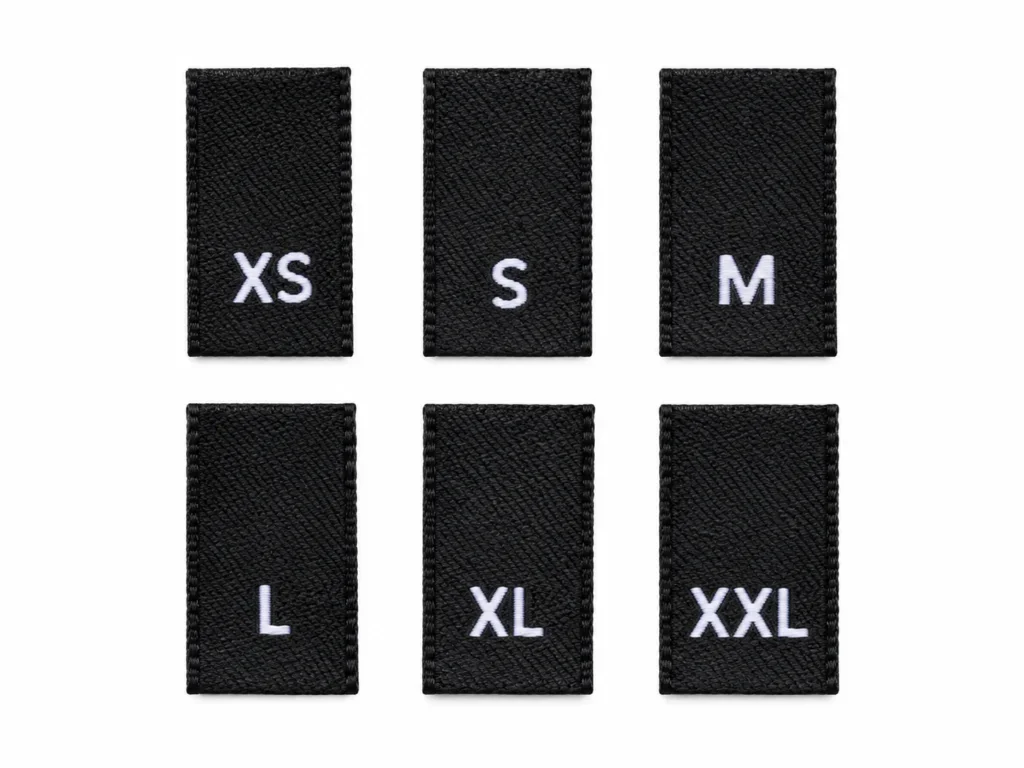
Size identification must correspond accurately with the actual garment and SKU. A size label can be separate from the main label or combined with another labeling method depending on the brand’s specification.
- Size naming system
- Market version
- Artwork
- Placement
- Label dimensions
- Garment SKU relationship
For multi-size orders, label accuracy becomes a production-control issue rather than only a graphic-design issue. The size label, garment measurement specification, packing label and carton information should all point to the same approved size version.

Care Label
Care and composition information must be supplied and approved according to the applicable product and market requirements. Leadshow can coordinate printed care labels and approved care instructions as part of a private label project.
- Fiber content
- Care instructions
- Size where required
- Country-of-origin information
- Brand information
- Required language versions
Final label content remains subject to brand, importer or appropriate regulatory review. Leadshow does not claim universal legal compliance for every market without project-specific verification.

Heat-Transfer Label
Heat-transfer labels can be evaluated for suitable fabrics and garment positions. Leadshow has confirmed heat-transfer labeling equipment, which can support selected main, care, size or internal brand markings.
- Fabric surface
- Stretch
- Heat sensitivity
- Placement
- Transfer material
- Wash requirement
- Artwork dimensions
Heat-transfer application should be validated for the selected material rather than described as permanently wash-proof across every product. A physical sample may be required before bulk approval.
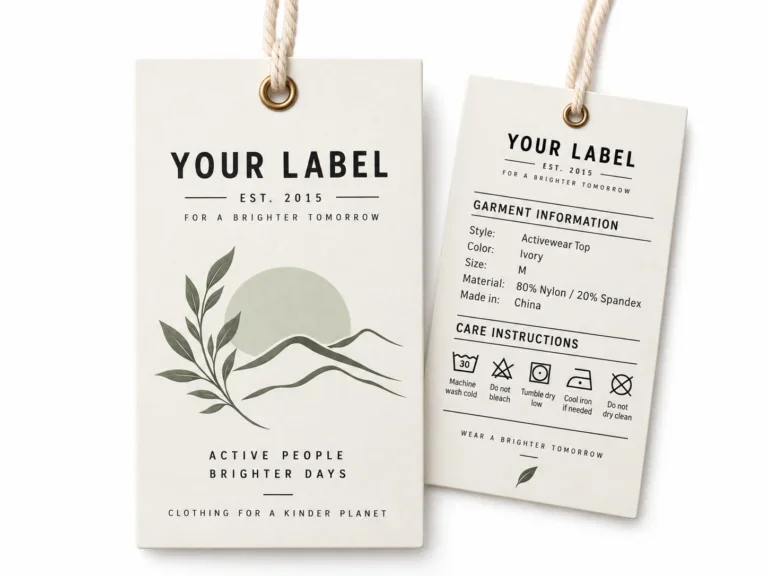
Hangtags and Cards
Hangtags connect garment information with the retail or brand presentation system. Brand programs may require a single hangtag, multiple cards, price tags, product information or market-specific versions.
- Artwork
- Dimensions
- Paper or material direction
- Hole position
- String or attachment
- Barcode
- Product information
- Market version
- Quantity
Hangtag development can be coordinated according to the approved brand files and supplier conditions. SKU relationship becomes especially important when several styles, colors and sizes share similar packaging.
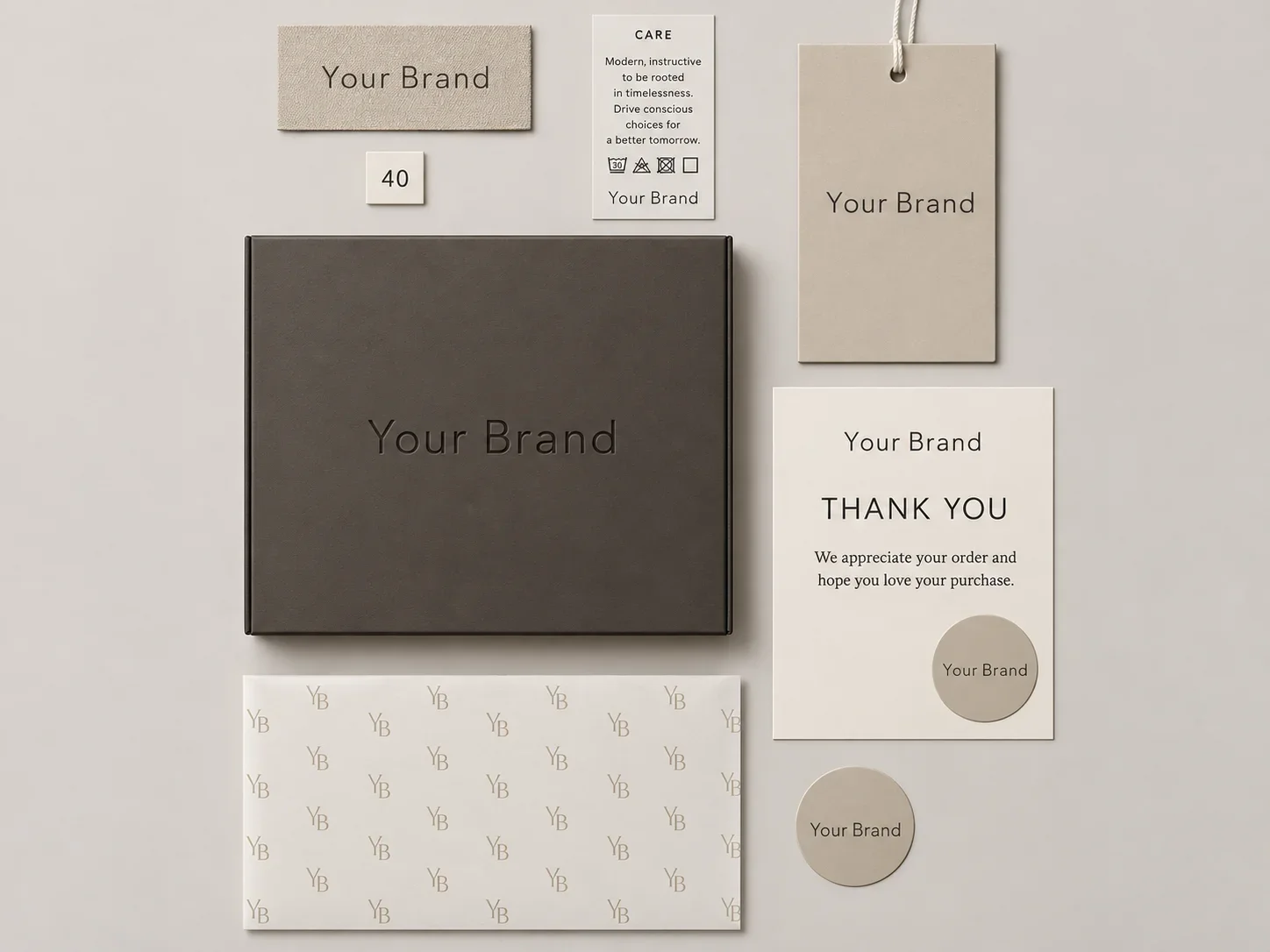
Logo Application
Logo execution should match fabric, position, design size and garment construction. Leadshow has confirmed heat-transfer and heat-press resources for suitable applications; other logo methods require project review and supply confirmation.
- Artwork
- Size
- Position
- Color
- Application method
- Garment version
- Approval sample
A logo should be evaluated together with the garment instead of approved only as an isolated graphic. Stretch, surface texture, seam location and wash conditions can all affect the final appearance.
Private Label Packaging Must Match Every SKU
Packaging carries product identity from finished garment to carton. Brand files, barcode data, garment size, SKU and market instructions should remain aligned through packaging approval and bulk packing.
From Brand Artwork to Approved Packaging Sample
Leadshow can coordinate approved brand labels, barcodes, individual packaging, retail packaging and carton markings according to project requirements.
Packaging development can begin from:
- Brand guidelines
- Logo artwork
- Label artwork
- Barcode data
- Hangtag files
- Folding instructions
- Packaging reference
- Carton requirements
- Market-specific instructions
A packaging system may include standard garment bags, custom polybag options, paper-based packaging, paper cards, folding cartons or other arrangements subject to supplier and project review.
Before bulk packing, artwork should be checked for size, text, color direction and version. A packaging sample can be prepared for approval where required.
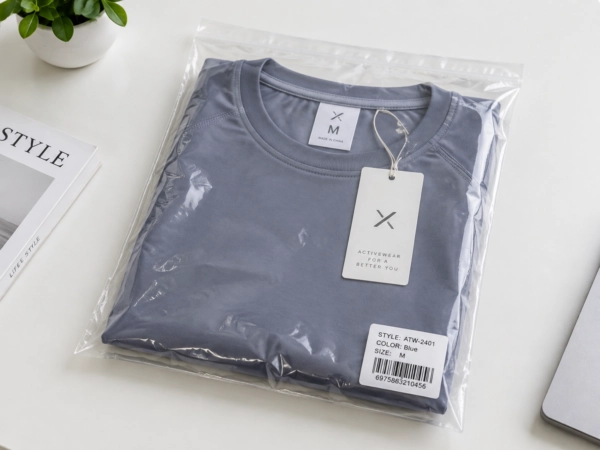
Environmental claims such as recycled, FSC-certified, biodegradable or plastic-free packaging must be supported by material evidence. They should never be added as generic marketing claims without documentation.
Control Packaging Across Multi-SKU Orders
Multi-style programs become more vulnerable to packing errors because a garment may have several color, size and market combinations.
A simple SKU relationship may look like:
Style → Color → Size → Label → Barcode → Individual Pack → Carton
Bulk packing should therefore reference approved files rather than visual memory.
Important controls can include:
- Correct garment version
- Correct size label
- Correct hangtag
- Correct barcode
- Correct individual packaging
- Correct pack quantity
- Correct carton marking
- Correct SKU packing instruction
For repeat orders, packaging artwork and market information should be reconfirmed before production because barcodes, care information, packaging materials or retail instructions may have changed.
Leadshow supports packaging coordination and export preparation but does not promise platform acceptance, destination customs clearance or logistics transit time.

MOQ, Quotation and Timing Depend on Product Specifications
Private label pricing and production planning become more accurate when product, material, quantity, branding and packaging details are reviewed together. Leadshow’s standard MOQ generally starts from 100 pieces per color per design, subject to project conditions.
Evaluation Item
Leadshow Working Basis
Main Factors to Confirm
Standard MOQ
Generally starts from 100 pieces per color per design
Fabric MOQ, trims, construction, colors, sizes, logo, packaging, testing and production conditions
Quantity
Evaluated by design and color
Total units, size breakdown, number of SKUs, repeat-order plan
Size Range
Based on approved brand size requirements
Base size, size range, grading, measurements, material stretch and tolerances
Fabric
Reviewed by product requirement
Composition, structure, GSM, stretch, color, sourcing condition
Trims
Reviewed separately where required
Elastic, zipper, drawcord, hardware, lining, supplier MOQ
Logo
Method reviewed by garment and material
Artwork, position, dimensions, color, process
Labels
Coordinated from approved brand information
Main label, size label, care label, heat-transfer label
Packaging
Standard or custom options reviewed by project
Bag, paper card, carton, barcode, SKU, artwork and supplier MOQ
Sample Types
May include development, fit, logo, color, size-set and PP samples
Actual sample sequence depends on project needs
Sample Time
Confirmed after project review
Product complexity, material readiness, workmanship, testing and revisions
Bulk Schedule
Confirmed after sample and material review
Approved sample, material availability, order mix, process complexity and current scheduling
Testing
Coordinated where required
Product claim, material, target market and applicable standard
Quotation Input
Product specifications reviewed before final pricing
Tech Pack/reference, quantity, color, size, materials, logo, packaging and timing
Export Preparation
Supported according to order requirements
Packaging, carton markings, documentation and freight coordination
For a more useful quotation, provide:
Product Category · Tech Pack or Reference Images · Quantity per Design per Color · Size Range · Fabric Requirements · Trim Requirements · Logo Method · Label Requirements · Packaging Requirements · Testing Requirements · Target Market · Target Date
Manufacturing Resources Behind Private Label Bulk Production
Leadshow combines development, production, quality and logistics resources across a focused apparel manufacturing system. Company-scale figures describe overall operating capacity and should be considered together with product complexity, material availability and current scheduling.
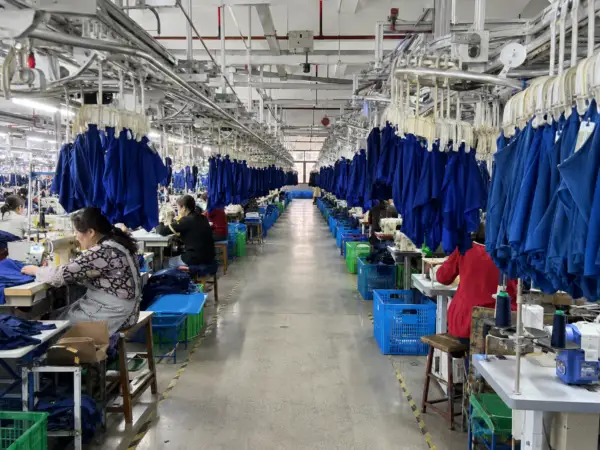
15 Years of Experience
Leadshow has more than 15 years of experience in apparel development and manufacturing. Our team supports sportswear projects from product development and sampling to production coordination and quality management, helping brands move from initial concepts to finished garments.
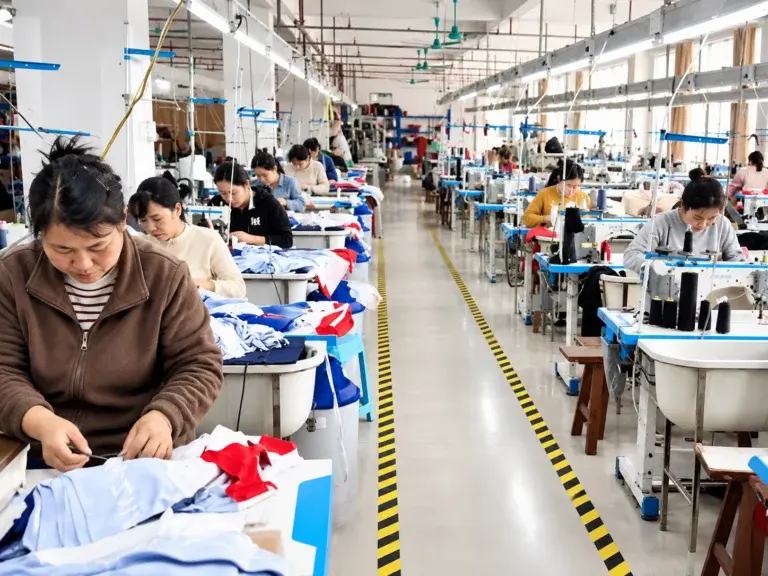
3 Manufacturing Bases
Leadshow operates three manufacturing bases supporting different stages of apparel production. This manufacturing network provides support for product development, sampling, production preparation, quality control, and bulk manufacturing across different sportswear programs.

20,000+ m²
Leadshow manages more than 20,000 square meters of combined manufacturing space across its production facilities. The space supports key operations including material preparation, cutting, sewing, finishing, quality inspection, warehousing, and packing.
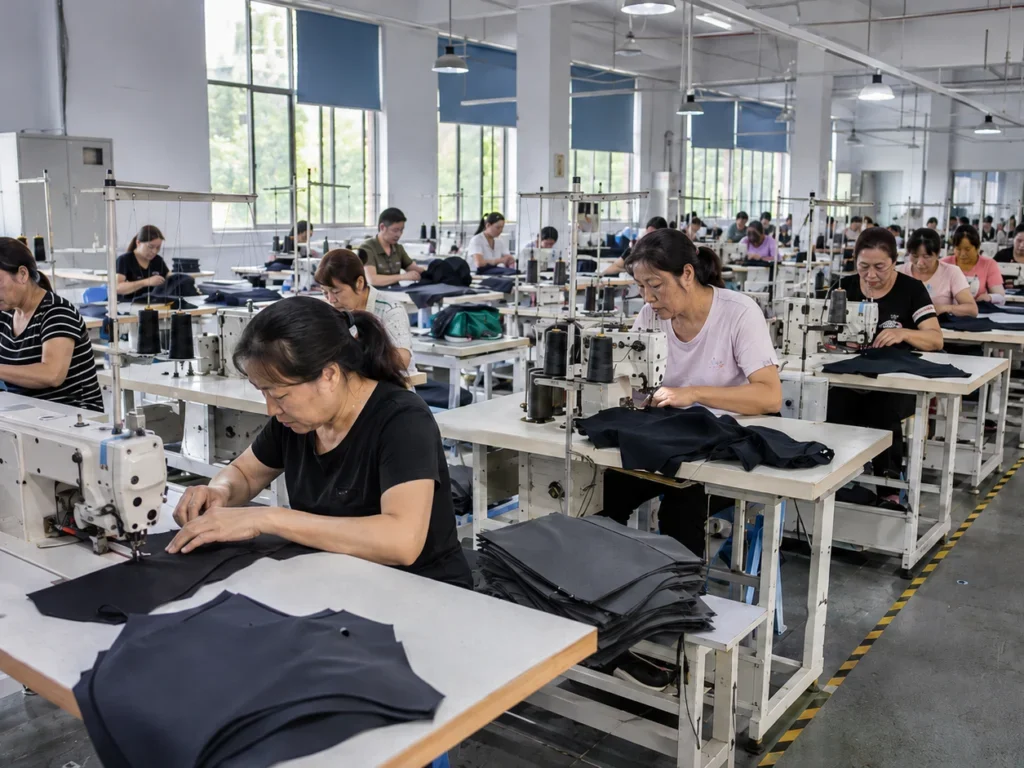
1,500+ Team Members
Leadshow’s team includes more than 1,500 members across product development, manufacturing, quality control, logistics, warehousing, administration, and customer communication. Different teams work together to support efficient project execution from sampling to shipment.
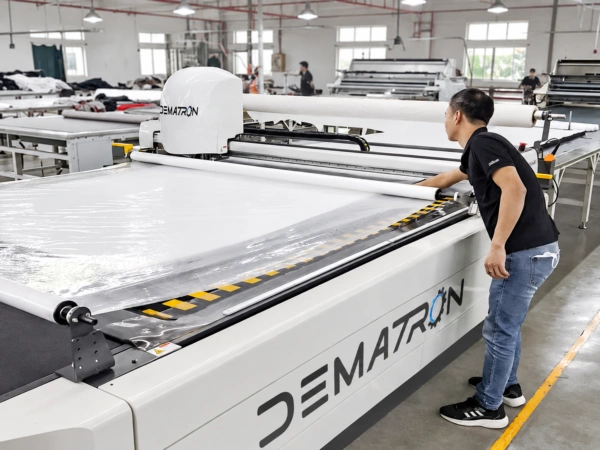
304 Machines and Workstations
Leadshow has more than 300 production and finishing machines supporting cutting, sewing, stretch-garment construction, bonding, seam taping, heat transfer, inspection, and packaging processes. Equipment is selected according to garment construction and material requirements.

Up to ~120,000 / Month
Leadshow’s monthly production capacity can reach approximately 120,000 finished garments depending on product type, material requirements, order mix, and production planning. Capacity is organized according to project needs to support quality standards and delivery schedules.
Move from Approved Sample to Controlled Bulk Production
Large private label programs depend on one critical transition: converting an approved sample and final files into repeatable production requirements.
Freeze the Right Standards Before Production
Bulk preparation should begin only after relevant product decisions have been confirmed.
Important production references can include:
- Approved sample
- Final Tech Pack
- Final measurement chart
- Approved pattern
- Approved fabric
- Approved trim
- Approved color
- Approved logo
- Approved labels
- Approved packaging
- SKU and quantity matrix

Material preparation then connects development with manufacturing. Bulk materials should correspond with approved specifications, while substitutions or new batches may require renewed review.
Leadshow’s manufacturing resources cover fabric preparation, spreading, automated and flexible cutting, lockstitch, overlock, double-needle sewing, bartacking, four-needle six-thread sewing, elastic installation, selected bonding, seam taping, laser perforation, heat transfer, pressing, needle detection and folding and packing.
Not every garment uses every process. Manufacturing routing is selected according to product construction and material suitability.
Control the Production Sequence Instead of Relying on Final Inspection
Bulk execution can follow a structured sequence:
Approved Sample → Final Files → Material Preparation → Cutting → Sewing and Applicable Processes → First-Piece Review → In-Process Checks → Finished-Garment Review → Label and Packaging Verification → Carton Preparation → Shipment Coordination
A first-piece or early-production comparison helps confirm whether approved specifications are being translated correctly before a larger volume is completed.
Production timing is not advertised as one fixed number. Schedule depends on material readiness, order quantity, color and size mix, process complexity and current production loading.
Leadshow’s combined monthly capacity reaches up to approximately 120,000 finished garments, subject to those conditions.
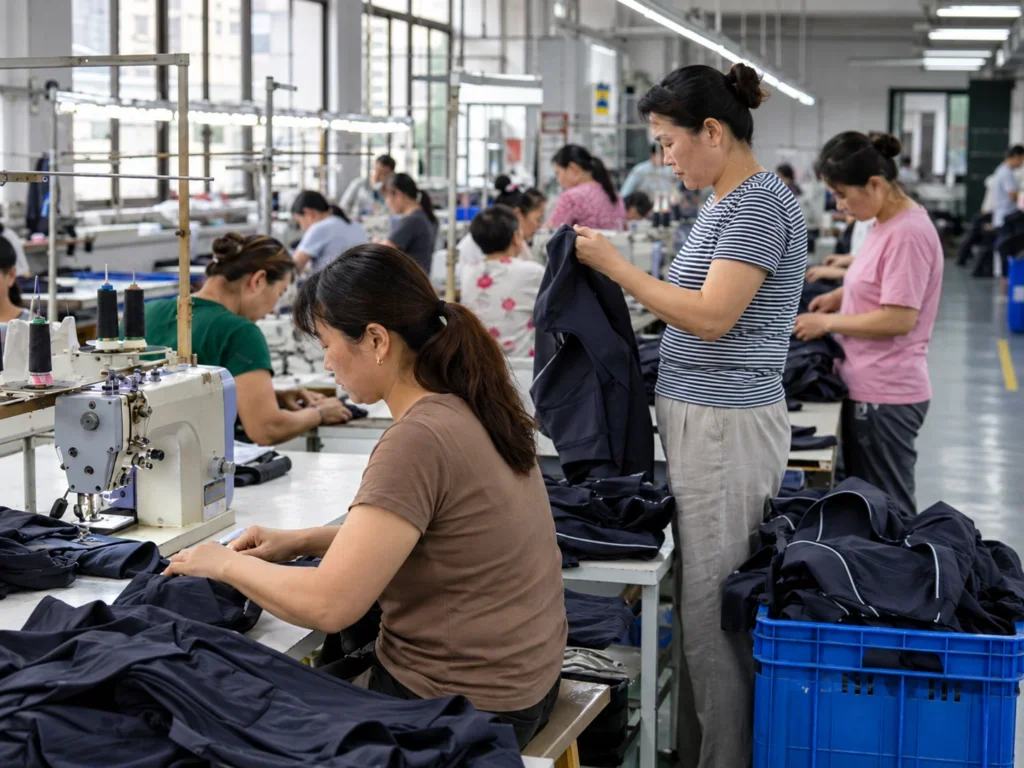
Quality Control Follows the Product Through Production
Quality is managed against approved specifications, measurements, materials, workmanship, logos, labels and packaging rather than an unsupported “zero defect” promise.
From Product Brief to Technical Development Direction
Quality review may cover several production stages according to project requirements.
Material and trim review
- Fabric color
- Fabric appearance
- GSM or other agreed material requirements
- Trim specification
- Trim color
- Quantity
- Material version
First-piece and early-production review
A first production garment can be compared against:
- Approved sample
- Construction
- Critical measurements
- Workmanship
- Logo position
- Material
- Selected trims
In-process review
Production checks may focus on:
- Seam construction
- Stitch appearance
- Key dimensions
- Pocket or closure position
- Elastic application
- Workmanship
- Garment appearance
Early identification allows affected pieces or processes to be reviewed before final packing.
Finished Garment and Packaging Are Part of the Same Quality Standard
Finished-product review may include measurements, appearance, workmanship and applicable functional components. Final inspection scope, sampling method, defect classification and acceptance criteria are confirmed according to the project rather than presented as one universal fixed AQL or “100% inspection for every order.”
Brand implementation also forms part of quality review.
- Main label
- Size label
- Care label
- Hangtag
- Logo position
- Barcode
- Folding
- Individual packaging
- SKU
- Carton marking
Leadshow has six automatic needle-detection machines available for applicable garment safety checks, but needle detection does not represent complete product safety certification or chemical testing.
Quality depends on coordinated product development, manufacturing and verification rather than final inspection alone.

Manage Multi-SKU Programs Without Losing Product Identity
Large apparel programs can contain many style, color and size combinations. Product files, labels, barcodes, packaging and cartons need a common identification structure so each finished garment reaches the correct SKU and market version.
Style Management
Each style should have a clear product identity linked to an approved specification and sample. Related products may share material or branding elements, but structural differences still need separate technical control.
- Style number
- Product category
- Final Tech Pack
- Approved sample
- Fabric
- Trims
- Colorways
- Logo
- Packaging
For collection development, shared materials may reduce unnecessary complexity, but each style’s final manufacturing conditions remain subject to its construction and quantity.
Color Management
Every additional color can affect fabric sourcing, MOQ, cutting preparation, label versions and SKU count. An order with four colors and five sizes already creates twenty color-size combinations before packaging variations are considered.
- Approved color
- Material
- Style
- Size
- Quantity
- Label information
- Barcode
- Packaging version
Different colors should not be assumed to share identical fabric availability or delivery conditions. Color approval and material availability remain important before final production planning.
Size Management
Size systems should connect product measurements with SKU and packaging information. A garment labeled M must correspond with the approved M measurement specification, barcode and outer packing record.
- Approved size range
- Size quantity
- Size labels
- Measurement chart
- Size grading
- Barcode data
- Packing quantity
Leadshow supports multi-size order coordination, but extended size ranges may affect pattern development, fabric usage and production planning.
Label and Barcode
Labels and barcodes provide a direct link between physical garments and SKU records. An incorrect label can turn a correctly manufactured garment into the wrong retail item.
- SKU
- Style
- Color
- Size
- Barcode
- Label artwork
- Hangtag
- Market version
Barcode data is provided and approved by the brand or responsible commercial party. Leadshow does not claim universal barcode-platform compliance without specific project requirements.
Packing Control
Packing instructions should define how individual garments move from finished product into bags and cartons. Multi-SKU packing creates additional risk when products look similar.
- Folding method
- Garment bag
- Sticker
- Hangtag
- Barcode
- Single-SKU carton
- Mixed-SKU carton
- Quantity per carton
- Carton marking
Packing requirements are reviewed before bulk execution. Custom packaging and supplier minimums may affect both commercial conditions and timing.
Repeat-Order Records
Repeat production works best when approved product and packaging information can be reconfirmed before a new order begins.
- Approved sample reference
- Pattern version
- Technical file
- Material specification
- Color reference
- Logo artwork
- Label artwork
- Packaging file
- SKU structure
A repeat order is not automatically identical to an earlier run because material batches, supplier availability, quantities and brand files may change. Reconfirmation helps identify changes before production.
Support Established Brands Beyond the First Production Run
Mature apparel programs often involve existing specifications, established quality expectations and supply-chain objectives. Leadshow can review projects involving new-category development, second-supplier qualification or repeat manufacturing against available product and manufacturing capabilities.
New Category Development
An established brand may already have clear fit language, material standards, quality requirements and branding rules but need a manufacturer for a new sportswear, swimwear, streetwear or modest sportswear product.
- Brand specification
- Existing Tech Pack
- Reference garment
- Size chart
- Material direction
- Brand artwork
- Packaging standard
- Quality requirements
Leadshow can review how existing brand standards translate into the proposed product category before sampling. New materials, structures or processes still require project-specific development and validation rather than assuming standards transfer automatically from one garment to another.
Second Supplier Review
A second-source program often focuses on supply-chain resilience, additional manufacturing capacity or improved execution rather than redesigning a successful product.
- Tech Pack
- Approved garment
- Pattern or measurement data
- Material references
- Workmanship requirements
- Quality specifications
- Labels
- Packaging
- Known production issues
A new source may create differences in material supply, equipment, process and commercial conditions. The objective is to identify gaps, develop an approved sample and establish a new manufacturing standard—not to promise perfect duplication without review.
Repeat Supply Programs
Long-term private label programs depend on consistent technical records, material reconfirmation and correct branding more than one successful shipment.
- Specification version
- Pattern version
- Material availability
- Material batch
- Color
- Label artwork
- Barcode
- Packaging version
- Quantity
- Current production schedule
Leadshow supports repeat-order and product-iteration coordination. Pricing, material availability and lead time are reconfirmed because commercial and supply conditions can change between orders. Product records support continuity, but no claim is made that materials or color will remain permanently unchanged.
Private Label Apparel Frequently Asked Questions
The answers below cover common questions about product development, MOQ, sampling, materials, branding, bulk production and quotation preparation before a private label apparel project begins.
What does private label apparel manufacturing include?
Private label manufacturing can include product review, material and trim evaluation, pattern and fit development, sampling, bulk production, logos, labels, hangtags and packaging. Scope depends on the product and project requirements. Leadshow focuses on sportswear, swimwear, streetwear and modest sportswear rather than ready-stock white labeling.
Can Leadshow work from an existing Tech Pack?
Yes. Tech Packs, measurement charts, patterns, reference images or physical samples can be reviewed. Leadshow evaluates product construction, materials, trims, processes, quantities, branding and manufacturing feasibility before finalizing sampling, MOQ, quotation and production conditions.
Can a project start from reference images?
Yes, where enough information is available. Reference images are useful for product direction, but additional details are normally required for measurements, materials, construction, colors, trims, branding and quantities. Missing specifications are identified before development proceeds.
What apparel categories does Leadshow manufacture?
Leadshow focuses on sportswear, swimwear, streetwear and modest sportswear. Confirmed products include sports bras, sports T-shirts, yoga leggings, tennis skirts, jumpsuits, running shorts, tank tops, tracksuits, hoodies and sweatshirts. Other products require scope confirmation before development.
What is the minimum order quantity?
Standard MOQ generally starts from 100 pieces per color per design. Final quantity depends on fabric and trim minimums, colorways, size breakdown, garment construction, logos, packaging, testing and production conditions. MOQ is reviewed after the product specification is understood.
How long does sample development take?
No universal fixed number is published. Sampling time depends on product complexity, material availability, workmanship, testing and revision requirements. Sample development may include development samples, fit samples, logo samples, color samples, size sets or PP samples according to project needs.
Can fabrics, colors, fit and sizes be customized?
Fabric, color, size, construction, logo, label and packaging requirements can be reviewed on a project-specific basis. Final options depend on material availability, supplier conditions, garment structure, MOQ and manufacturing feasibility. “Any fabric” or unlimited customization is not promised.
What private label packaging options are available?
Leadshow can coordinate approved labels, hangtags, barcodes, individual garment packaging, retail packaging and carton markings. Options may include polybags, paper-based packaging, cards or folding cartons according to project and supplier conditions. Artwork and SKU relationships should be approved before bulk packing.
How is bulk production compared with approved samples?
Bulk production is prepared from approved samples, final technical files, materials, measurements, branding and packaging requirements. First-piece, in-process, finished-garment and packaging reviews may be used according to project requirements. Reasonable production tolerances should be agreed rather than promising absolute zero variation.
What information is needed for a quotation?
Send the product category, Tech Pack or reference images, quantity per design and color, size range, fabric and trim requirements, logo method, label requirements, packaging, testing requirements, target market and required date. More complete specifications allow a more useful commercial evaluation.
Send Your Private Label Apparel Project for Review
Share the information already available, whether the project begins with a complete Tech Pack, measurement chart, reference garment, product images or an early concept. For a more useful review, include the apparel category, quantity per design and color, required size range, fabric and trim direction, logo method, labels, packaging, target market and desired timeline. Leadshow can review manufacturing feasibility, material and construction requirements, sampling direction, MOQ and bulk-production conditions for sportswear, swimwear, streetwear and modest sportswear projects.
Standard MOQ generally starts from 100 pieces per color per design, subject to materials, construction, colors, size breakdown, logos, packaging, testing and production conditions. Sampling time and bulk-production schedules are confirmed after product, material, approval and current production conditions are reviewed. Files may be uploaded with the inquiry so technical questions can be identified before quotation and sample planning.