A first sportswear order can look reassuring when the cartons arrive. The colors appear right, the packaging looks neat, and the garments resemble the approved sample. Then the team counts each size, measures production pieces, and tries a few garments during movement. A pair of leggings may turn too sheer when stretched; another may have a waistband that measures differently from the approved piece. An incorrect size mix can cause a stock shortage even when the overall quantity is exactly right. The first shipment deserves a closer look than a simple pass or fail.
After the first sportswear order, track inspected garment defects, fit and measurement consistency, agreed fabric and seam performance, production milestones, on-time and in-full shipment, packing accuracy, response to problems, and the cost of corrections. Compare each result with the approved sample, specifications, and purchase order. One shipment establishes a useful baseline, but it cannot prove long-term reliability.
Imagine receiving 1,000 training tops ahead of a planned launch. Production finished on the promised date, yet several cartons contain too many small sizes and too few mediums. The sewing line met its schedule; the brand still needs warehouse sorting and may miss sales in its most popular size. A useful supplier review captures both facts. It shows what happened, what it cost, how the issue was corrected, and what should be checked before the next purchase order. That is how first-order numbers become a sensible reorder decision.
Which KPIs Can One Order Measure?

A first order can measure outcomes from that order: defects in inspected garments, measurements against approved tolerances, missed production milestones, shipment completeness, packing errors, and how reported problems were handled. Keep counts, dates, and evidence alongside percentages. One shipment creates a starting record for future comparisons; it does not establish a dependable long-term delivery rate or prove that later production will remain consistent.
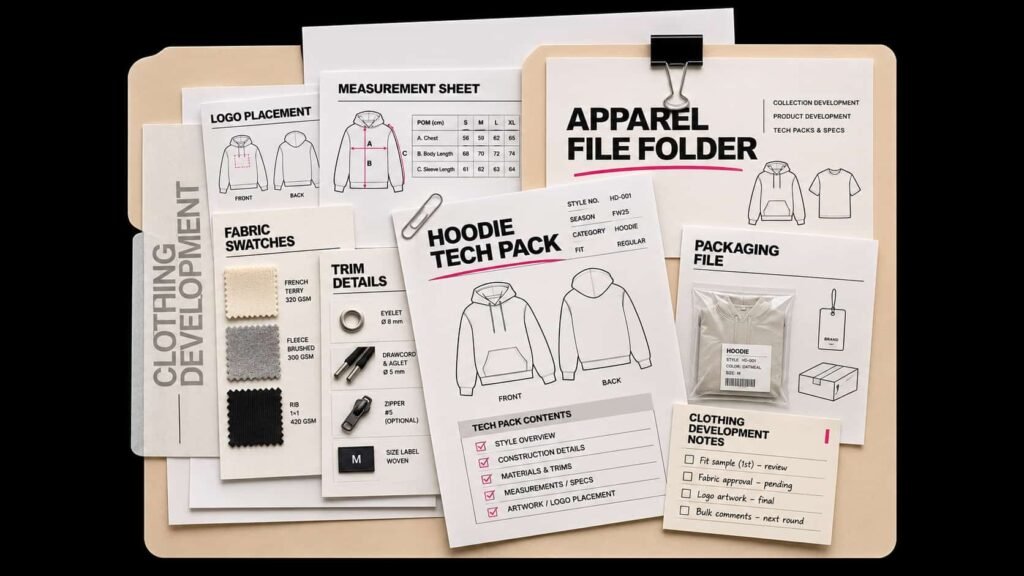
The baseline is the version of the product and order both parties approved. Bring together the final sample, graded measurement chart, fabric and trim references, artwork, purchase order, packing instructions, and committed dates. If the waistband measurement changed during development, keep the original version and the dated approval for the revision. Without version control, an inspector may reject garments against an outdated specification or miss a real production change. Each KPI should lead back to an agreed requirement rather than a preference introduced after delivery.
Choose the right unit of measurement. If 200 garments are examined, their observed defect rate can be calculated from that inspection sample. If there were five agreed milestones, the team can count how many were met. With only one shipment, however, shipment-level on-time performance is one event: it happened on time or it did not. Reporting one success as a proven 100% delivery track record makes the evidence sound stronger than it is. Show the original date, actual date, ordered quantity, and any agreed change.
Context matters as much as arithmetic. A fabric approval delayed by the brand, a sewing fault inside production, and a carrier delay after factory handover belong to different causes. Record when the issue arose, who controlled that stage, and whether the other party had enough warning to respond. The review should neither reward a supplier for quietly moving its promised date nor blame it automatically for a transport leg it did not control. Those distinctions make the scorecard usable in a real commercial conversation.
| First-order measure | Illustrative result | Useful conclusion | Limit of the evidence |
| Inspected-unit defects | 8 defective garments / 200 inspected = 4% | Defects observed in the sample | Not the exact rate in uninspected goods |
| Measurement conformity | 57 readings within tolerance / 60 checked = 95% | Compliance in checked sizes and points | Other sizes or lots remain untested |
| Milestone adherence | 4 of 5 agreed dates met | Which scheduled steps slipped | Does not establish a seasonal trend |
| Shipment result | One shipment handed over on its agreed date | What happened on this purchase order | Not a long-term delivery rate |
| Packing accuracy | 18 of 20 cartons checked correctly | Accuracy in cartons examined | Remaining cartons may differ |
These figures demonstrate calculations, not universal targets. A decorative placement error and a wrong care label can have very different consequences despite producing the same count of affected garments. Keep the product, defect severity, inspection method, and commercial effect beside the number. The result becomes more valuable on the next order, when the same definitions reveal whether a correction worked or a problem spread to additional sizes or materials.
What Should Be the Measurement Baseline?
Use the product and order documents approved before production. For training leggings, that may include waist and inseam measurements by size, an approved fabric and color, the seam construction, label placement, a size ratio, and carton quantities. If a requirement was never settled, record it as a specification gap for the next order instead of calling it a missed target. Keep one retained sample and a dated document version available to development, production, quality, and packing teams. A manufacturer cannot reliably reproduce a detail that appears only in someone’s memory of a call.
How Should One Shipment Be Scored?
Score the purchase order and its individual lines separately. Suppose ten style-color-size lines were due together and nine shipped in full by the agreed date. Line-level on-time-in-full performance for that order is 9 out of 10, or 90%; the purchase order as a whole was still incomplete on time. Show the denominator and the actual late quantity. If the brand approved a split shipment before the deadline, record the new commitment. If the supplier sent the missing size later without approval, retain the original miss in the first-order review.
Which Results Need More Orders to Confirm?
Repeatability needs another production run. The initial order might use one fabric lot and only two colors; the next might involve a darker shade, more sizes, and a busier production schedule. Compare them using the same measurement points, inspection definitions, and delivery handover point. Follow up especially on first-order corrections: if cartons contained the wrong size mix, inspect the revised packing check on the next order. A promise to add a check is useful only when later records and received goods show that it was carried out.
Which Quality KPIs Matter for Sportswear?

Prioritize defects in inspected garments, measurement conformity across sizes, and performance checks relevant to the garment’s intended use. A visually acceptable sportswear item can still fail during stretching, movement, or washing. Report sample sizes, methods, agreed limits, and where failures occurred. Keep the proportion of defective garments separate from the number of individual faults, and do not treat a sampled inspection pass as proof that every unit is flawless.
Start with the product’s actual use. Running shorts, training leggings, and sports bras place different demands on materials and construction. Opacity at an agreed stretch condition may be important for leggings; a sports bra may need closer attention to band measurements and seams under movement. The project specification should say which properties matter and how they will be assessed. Calling fabric high performance, without a defined property and a result, does little to help a team decide whether to release more production.
Count garments with faults and count individual faults separately. If 12 of 150 inspected pieces contain at least one defect, the observed inspected-unit defect rate is 8%. If those same pieces contain 19 distinct faults, the result is about 12.7 defects per hundred units inspected. The first figure shows how many garments were affected; the second suggests how much repair or investigation may be needed. Break the findings down by style, size, color, material lot, and defect category before deciding whether the problem is local or widespread.
A sampled lot inspection has a specific job. An agreed acceptance sampling plan can help decide whether to accept or reject a lot under its rules; it does not certify that every unexamined garment is fault-free. The lot definition, sample size, fault classifications, and acceptance criteria should be settled before inspection. ISO 2859-1 describes acceptance sampling schemes indexed by an acceptance quality limit for lot-by-lot inspection. It is a method for making a sampling decision, rather than a manufacturer’s blanket quality credential.
| Quality check | Record to retain | Project-level decision |
| Defective garments | Defective units / inspected units | Compare with the agreed inspection requirement |
| Defects per hundred units | Individual faults / inspected units × 100 | Estimate fault concentration and rework burden |
| Fit and measurements | Results by size and point of measure | Check against approved graded tolerances |
| Stretch or growth | Method, fabric lot, conditions, result | Judge against the intended garment use |
| Wash-related change | Before/after dimensions and wash conditions | Compare with the agreed product limit |
| Seam behavior | Construction and test or wear-check result | Investigate stress points and repeated faults |
The named property alone is not evidence of a pass. A test record should identify the fabric or garment lot, method, specimen preparation, conditions, result, and project acceptance criterion. AATCC TM150 addresses dimensional changes of garments after home laundering, while ASTM D2594/D2594M covers certain stretch properties of knitted fabrics within its stated scope. Neither reference implies that every style needs those tests, or that a particular Leadshow product has passed them. Select relevant checks during development and retain actual results for the order.
How Many Units Fail Inspection?
Ask how many garments were inspected, how many had faults, which fault types appeared, and what happened to the affected units. An open seam, a stain, a wrong label, and a loose thread do not carry the same commercial risk. Record whether units were repaired, replaced, removed from shipment, or accepted through a documented exception. Keep the original inspection result separate from the reinspection after repair. A clean final count may show successful containment, but it should not erase evidence of a process problem that could appear again.
Are Fit and Measurements Consistent?
Measure garments across the relevant size range and, where possible, across colors and lots using the same method. A medium-size approval sample cannot establish that every graded size fits as intended. On leggings, a shift in rise or waistband measurement may change comfort and opacity during wear. On sports bras, band and strap variation can alter fit while the fabric looks identical. If a point falls outside tolerance, investigate the pattern, cutting, fabric behavior, sewing, and measurement procedure before asking the factory to change production.
Do Fabric and Seams Meet Agreed Standards?
Review properties the product specification actually requires. Stretch behavior, wash-related size change, opacity under stated conditions, and seam integrity can matter differently from style to style. A seam that looks clean on a flat table may open when the garment moves; checking stitch construction, thread, fabric, and stress location is more useful than assuming a single machine caused it. If a correction changes a stitch type or fabric, check revised pieces before bulk production continues. Keep tested material and finished garments linked by lot so the evidence describes the goods ordered.
How Should Delivery and Accuracy Be Measured?

Compare agreed dates with actual production and shipment events, then check the styles, colors, sizes, quantities, labels, and cartons supplied. Keep milestone performance, shipment timing, and order accuracy as distinct results. A shipment can leave on the promised date with the wrong size mix; correctly packed goods can still miss the agreed handover. Define the delivery point and compare purchase-order lines, not only the total piece count.
Select milestones early enough for a missed date to trigger a useful response. Final material approval, production start, an in-process review, final inspection, and packing completion may all matter, but each date needs an owner and an agreed definition. A supplier’s update that production is on track provides little help if nobody knows whether fabric arrived or cutting has begun. Keep the original date, any approved revision, actual completion date, and reason for variance together rather than replacing an old promise in the schedule.
The total quantity can conceal a costly mix error. Consider a 1,000-piece order across five sizes: the supplier ships 1,000 pieces on time, but medium is short by 80 and extra-large has 80 extra. The order is complete only in aggregate. The brand may run out of a popular size while holding excess stock in another. Reconcile the purchase order, packing list, carton labels, and goods received at style-color-size line level. For private label orders, also check barcodes, care labels, folding, and branded packaging against the approvals.
Define what on time means. Goods ready for final inspection, cartons handed to the nominated carrier, and units received at the destination warehouse are different events. Production delays belong in the factory record; later international transport disruptions may have a different owner depending on purchase terms. For one order, report the committed date, actual event, days of variance, and affected quantity. That account is clearer than a standalone percentage and creates a consistent definition for measuring future shipments.
| Delivery or accuracy check | Illustrative record | What it reveals |
| Milestone variance | Final inspection ready 3 days late | When the production schedule slipped |
| Factory handover | 10 October promised; 10 October actual | Performance at the agreed handover point |
| Line completeness | 9 of 10 lines shipped in full | Shortages hidden by a total piece count |
| Size ratio | Medium short 80; extra-large over 80 | Impact on sellable stock by size |
| Packing accuracy | 2 cartons with wrong size labels | Warehouse work and a packing-control issue |
Capture evidence when a discrepancy appears. Photograph relevant carton labels and contents, retain the packing list, note which line items were affected, and document any warehouse recount or agreed split shipment. The exact cause can change what should be fixed: wrong artwork requires a document approval check, while a correctly approved label placed on the wrong size requires production or packing verification. The purpose is to preserve enough detail that the next order can be checked at the stage where the mistake originated.
Were Production Milestones Met?
Compare selected milestones with their original commitments and record the cause of every change. If material arrived late, establish when the supplier knew and whether work on unaffected styles could continue. If the brand approved an artwork change late, retain the approval date and the revised schedule. A useful milestone review asks whether a delay was reported while alternatives remained available, not just whether the calendar eventually moved. Five meaningful, documented checkpoints often tell more than a long schedule filled with dates that neither side agreed to manage.
Did the Order Ship On Time and In Full?
Record the due date and shipped quantity for each purchase-order line. If one of ten lines arrived a week after its agreed date, the purchase order was not complete on the original date even if most units shipped on time. Show split shipments separately and keep any written approval for a revised plan. Where transport is arranged by another party, report factory handover and final arrival as different events. After the first order, these are specific observations; later shipments can show whether timely and complete delivery is a repeatable pattern.
Were Sizes, Labels, and Cartons Correct?
Check a defined sample of carton contents against the approved size ratio and packaging instructions, and trace each discrepancy to affected units or lots. A correct garment with the wrong size label may cause returns; the right label on the wrong carton may slow receiving. Keep carton numbers, images, counts, and packing records. Then select the correction that matches the cause. If a label file itself was wrong, update the approved artwork. If labels were correct but applied to the wrong garments, strengthen checks at application and packing.
How Do Response and Cost Affect Performance?

Measure when an important issue was discovered, reported, contained, and verified as corrected. Then count documented costs of supplier-caused sorting, rework, replacement, or expedited shipment where applicable. A quick acknowledgment is useful but does not equal resolution. Judge whether the response protected sellable goods, gave the brand time to make a decision, and reduced the chance of the same fault returning on the next order.
Problems often start with a small observation: a fabric lot handles differently during cutting, early garments measure outside tolerance, or a label appears in the wrong place. A useful warning identifies affected styles or lots, the estimated quantity, the possible schedule impact, and when the next update will arrive. Routine questions and shipment-threatening issues should not be held to an identical response expectation. What matters is whether the brand had time to choose between containment, repair, replacement, an approved exception, or a revised schedule.
Corrective action takes more than a reassuring message. First separate potentially affected goods and determine the scope. Then investigate the cause, revise the relevant instruction or production condition, and check newly produced or reworked pieces. If cartons had the wrong size mix, the team should verify a revised carton check against the purchase order. If waist measurements drifted, the investigation may involve the pattern, cutting, fabric, or sewing method. Preserve the original finding and the verification result; a clean final inspection alone does not explain how much correction was required.
Put the commercial impact beside the quality finding. An order may meet its quoted unit price and still become expensive when warehouse staff open cartons, relabel garments, postpone stock release, or pay for rush freight. Assign a cost only when there is supporting evidence and a defensible cause. Freight chosen because the brand moved its launch date is different from freight required after a supplier-caused production delay. The purchase terms and written agreements govern who bears the charge; the record establishes what actually happened.
| Issue record | Capture | Reorder question |
| Notification | Discovery and reporting times; affected lot | Did warning arrive early enough to act? |
| Containment | Units held, repaired, replaced, or removed | Could faulty goods still enter shipment? |
| Root cause | Process evidence and responsibility | Was the cause identified beyond the symptom? |
| Verification | Recheck method, quantity, and result | Did the correction work on real garments? |
| Added cost | Supported charge and agreed responsibility | Did the error change the order economics? |
The supplier should also have a chance to challenge a finding with evidence. A carton may have been damaged after handover, or a measurement disagreement may come from different measuring methods. Resolve those points rather than dropping the KPI or assigning fault by assumption. Dated photographs, retained samples, affected-unit counts, rechecks, and agreed actions make the discussion specific. Across orders, this record will show whether faults are disappearing or merely being handled more politely.
How Quickly Were Problems Reported?
For a significant quality or schedule issue, compare discovery time with the first usable warning to the brand. A message saying only that there may be a small problem is incomplete if the supplier already knows a production lot could miss shipment. A useful update names the affected style, likely quantity, current containment, possible impact, and next decision required. The best response is not always the fastest one-line reply; it is timely information that lets people protect product quality or the launch while choices still exist.
Were Corrective Actions Verified?
Close a correction when the proposed change has been checked under relevant conditions. A revised measurement method should be applied to newly made garments in the affected sizes. A new packing procedure should be tested against carton contents and purchase-order lines. Some fixes can be confirmed only during the next production run; keep those open as explicit reorder checkpoints instead of marking them complete after a meeting. Record what changed, which goods were checked, who accepted the result, and whether any affected stock remains unresolved.
What Did Supplier-Caused Errors Cost?
Add supported costs such as warehouse sorting, relabeling, replacement garments, or an agreed rush shipment, and link each charge to a confirmed event. A size-mix error may have little effect on the garment itself yet create costly receiving work and a shortage in a popular size. Keep ordinary launch expenses and brand-requested changes outside a supplier-caused cost total. The resulting figure helps both teams choose which controls deserve attention. It is more informative than assuming that every mistake has the same financial effect.
Which KPI Results Support a Reorder?

A reorder is supported when the approved garment can be reproduced, significant first-order failures are resolved or controlled, and materials and scheduling suit the proposed quantity. Judge faults that affect use, sellable quantity, labeling, or delivery separately from routine improvements. If a correction has not yet been tested in another run, set a specific check for the next order or increase volume in stages.
Do not let one combined score hide a critical fault. A supplier can be responsive and competitively priced while failing an agreed seam requirement. Averaging those results into a high overall grade would not make the garment ready to sell. Identify a small number of requirements that must be satisfied before repeat production starts. These may include approved fit, required fabric results, correct labels, and a verified correction for a serious defect. Other findings can be carried into a controlled reorder with a written owner, check, and deadline.
Make the next production run easier to execute than the first. Retain the final pattern, graded measurement chart, approved sample, fabric and trim references, artwork, inspection findings, and record of changes made during production. If a sewing adjustment was introduced midway through the initial order, put it into the current technical instructions. A request to make the next batch like last time is weak when several versions of the garment existed. Clear records give development, production, quality, and packing teams the same reference.
Larger volume changes the conditions around the order. More colors, a wider size range, a new fabric lot, or another production slot may expose problems that did not appear in the initial run. Discuss the actual construction, available materials, inspection scope, and schedule rather than treating a general factory capacity figure as a promise for a specific date. A staged increase can help test an earlier correction while limiting exposure. Compare the new batch with the first using the same definitions so a change in results can be investigated rather than obscured.
| Reorder decision | Evidence needed | Next step |
| Repeat the approved style | No unresolved significant fault; current specifications | Confirm materials and schedule |
| Repeat after correction | Cause found; revised pieces checked and accepted | Update production documents |
| Controlled repeat run | Fix looks sound but lacks repeat-run evidence | Check the affected production stage |
| Revise before ordering | Fit or performance requirement unresolved | Develop and approve a new sample |
| Increase quantity | Stable standard and feasible material, mix, and slot | Monitor results across the expanded run |
The decision should remain open to improvement. One first-order failure can be manageable if its cause is understood, affected goods are contained, and the next run tests a verified fix. Conversely, a visually clean first order with incomplete records still leaves uncertainty about reproduction. The question is whether the manufacturer can deliver the approved product under the next order’s real conditions. Quality, delivery, accuracy, responsiveness, and documented correction costs together give a more reliable answer than price or a single attractive sample.
Which Problems Must Be Resolved First?
Resolve faults that could make garments unsellable, compromise agreed performance, create a material labeling issue, or disrupt a committed delivery before placing a routine reorder. Define the affected units and whether the remedy is rework, replacement, a new sample, or a specification revision. Smaller issues still need an owner and a check date. A concise decision record can distinguish ready to repeat, ready after verified correction, and further development required. Those distinctions make the next purchase order clearer for everyone involved.
Can the Approved Product Be Reproduced?
Check whether a new run can use the same approved pattern, size grading, material references, seam details, label files, and packing instructions. If the original fabric is unavailable, assess the replacement against the relevant fit, stretch, opacity, wash, and appearance requirements before treating it as equivalent. Reproduction means producing within agreed specifications and tolerances; it is not a claim that every piece will be perfectly identical. The most useful evidence is a current technical package and checked samples made under the materials and processes planned for the reorder.
When Is a Larger Order Justified?
Increase quantity when the product standard is settled, significant corrections have been verified, and the supplier has evaluated material availability and scheduling for the proposed style, color, and size mix. If a first-order problem can be tested only during production, consider a staged increase with a check at the affected step. Shenzhen Leadshow Sports Technology Co., Ltd. supports technical review, sampling, bulk manufacturing, quality control, custom labels, packaging, and export delivery for sportswear projects. Share your tech pack or reference sample, quantity by color and size, required checks, and delivery plan to request a project-specific quotation.