A sportswear quotation can look straightforward at first glance: style reference, quantity, unit price, perhaps a trade term, and a short line stating when the offer expires. In reality, that expiry line carries much more commercial weight than most people expect. The price has been calculated against a particular product version, material specification, quantity structure, supplier cost environment, packaging requirement, testing scope, production situation, and delivery basis. Once some of those conditions change, the number on the quotation may no longer describe the order that is actually going into production.
A sportswear quote validity period should account for the stability of the priced specification, fabric and trim costs, exchange rates, order quantity, SKU mix, packaging, testing requirements, freight conditions, trade terms, and production availability. It should also make clear that meaningful changes to the product or commercial scope can require re-quoting even before the stated expiry date is reached.
Consider a common development situation. A brand initially requests pricing for 1,000 leggings in two colors with standard packaging. Several weeks later, the final order contains five colors, a revised waistband, an added phone pocket, different logo placement, custom bags, and a different delivery arrangement. The quotation date may still look recent, yet the manufacturing assumptions are no longer the same. That is why quote validity works best when it is treated as a practical control over a defined project scope rather than a simple countdown on a PDF.
What Does Quote Validity Actually Cover?
Quote validity covers the commercial offer attached to a defined product and order scope. It is normally connected to the referenced specification, quantity, materials, trims, branding, packaging, testing, and delivery conditions used during costing. A quotation remaining within its stated date does not mean the price, production timing, or other conditions remain unchanged if the project itself has materially changed.
What Is Actually Being Held Valid?
When a quotation states that it remains valid for a certain period, the important question is not simply whether the number in the unit-price column remains available. A useful quotation represents a specific version of the product at a specific commercial scope. For sportswear, that can mean the chosen fabric composition, fabric weight, stretch characteristics, garment construction, trim specifications, logo method, quantity by color, size range, packaging method, testing requirements, and delivery basis. If several of those inputs are still provisional, the quotation itself should be understood as less stable than one based on a fully approved specification.
A pair of leggings provides a good example. One quotation may assume a 220 GSM stretch fabric, a standard waistband, one heat-transfer logo, XS–XL sizing, and basic folding into a polybag. Another quotation for what looks like a similar pair of leggings may use a heavier material, include a bonded pocket, cover a wider size range, add two branding positions, and require barcode-controlled retail packing. Comparing the two unit prices without comparing the scope would create a misleading conclusion. The validity period therefore belongs to a particular priced configuration, not to the general product name printed on the quotation.
Is a Valid Quote the Same as a Locked Price?
A quotation being valid does not always mean every underlying cost has been permanently locked. Some inputs may still depend on supplier availability, material reservation, final production release, or other agreed commercial milestones. For instance, a factory may prepare a current quotation using the latest price from a fabric supplier while the customer is still completing internal approval. If the fabric has not been reserved and the supplier later changes availability or purchasing conditions, the project may require confirmation before production can proceed on exactly the same basis.
Production timing should be treated separately as well. A current quotation does not necessarily reserve capacity for an indefinite period. Leadshow’s internal factual framework specifically treats capacity as time-sensitive and requires it to be reconfirmed when the order is ready for production release. For seasonal collections, retail programs, event merchandise, or launch-sensitive sportswear, procurement teams should therefore distinguish between price validity, material availability, and available production timing rather than assuming that one validity statement guarantees all three.
Which Conditions Must Stay Stable?
The closer the final production order remains to the configuration used during costing, the easier it is to keep the quotation commercially meaningful. Changes to materials, total quantity, quantity per color, size distribution, branding, packaging, or delivery responsibility can affect purchasing, cutting, sewing, special processes, quality checks, or logistics. Even relatively small-looking design decisions can introduce new supplier minimums or manufacturing steps once they are translated into production requirements.
Leadshow’s quotation framework explicitly states that a quotation should identify the applicable quantity, materials, conditions, and trade term, and that changes to the product, material, quantity, color, size, logo, packaging, or delivery scope may make the original quotation no longer applicable even before it has formally expired. This is an important distinction in custom manufacturing: time is one validity condition, but scope stability is another. A quotation that is twenty days old may still be dependable when nothing has changed, while a five-day-old quotation can already need review after a substantial specification revision.
How Should the Quote Basis Be Reviewed?
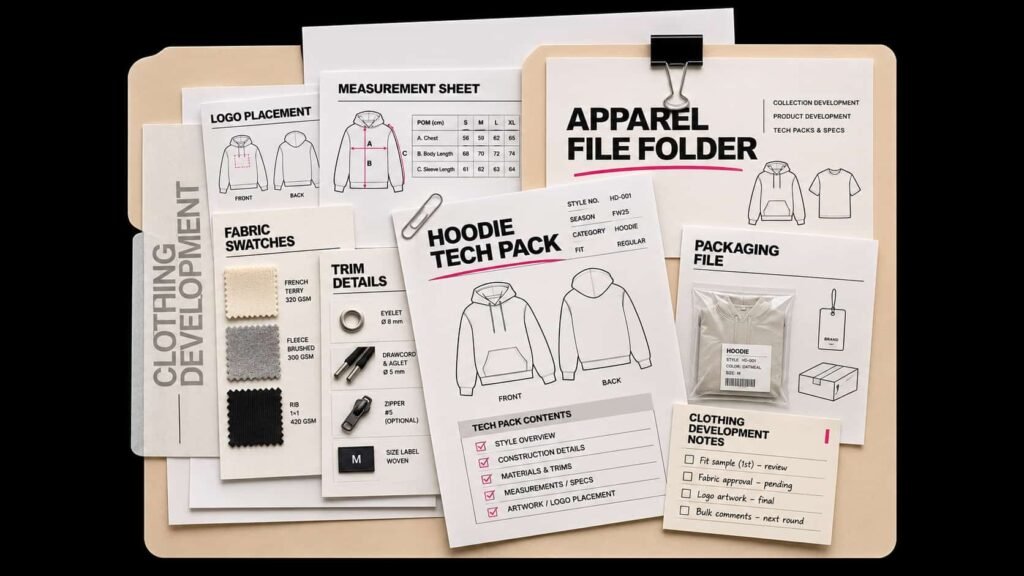
The most practical way to review a quotation is to connect it directly to the documents and samples that were used during costing. The quotation should be checked against the relevant Tech Pack revision, material reference, quantity matrix, logo requirement, packaging specification, testing scope, and delivery term. When the garment remains in early development, the commercial offer may reasonably carry more assumptions. Once the sample, material, packaging, and production version are approved, the pricing basis becomes much easier for both sides to understand and audit.
This discipline becomes particularly valuable when several departments are involved. Product development may focus on fit and construction, merchandising may control colors and assortment, procurement may negotiate quantity, while finance may review price. If a unit price is circulated internally without its underlying scope, later changes can easily be mistaken for unexplained supplier increases. Attaching the quotation to a controlled project version gives everyone the same reference point and reduces unnecessary disputes during the transition from sampling to bulk production.
| Quote Element | Example Costing Basis | What Should Remain Consistent | Common Review Trigger |
| Product version | Approved Tech Pack revision | Construction and measurements | Tech Pack revision |
| Fabric | 220 GSM stretch knit | Composition, GSM, finish, color | Fabric substitution |
| Quantity | 1,000 pieces | Total volume and color split | Order reduced materially |
| Size range | XS–XL | Size matrix and grading scope | Expanded size range |
| Branding | One heat-transfer logo | Method, size, placement | Added logo or new method |
| Packaging | Fold and polybag | Materials and packing method | Retail packaging added |
| Testing | Defined project test scope | Applicable test requirements | New compliance request |
| Trade scope | Agreed commercial term | Cost responsibility | Delivery term changed |
| Production timing | Current scheduling assumption | Release timing and approvals | Delayed order confirmation |

Which Costs Can Change During the Validity Period?
Sportswear pricing can move because several underlying inputs are purchased or calculated under changing conditions. Fabric, trims, dyeing, supplier minimums, packaging, testing, exchange rates, freight, and order structure can all change independently. A sensible validity period gives both sides a defined window in which those assumptions remain reasonably current and identifies when they should be checked again.
How Do Fabric and Trim Costs Move?
Fabric often represents one of the most important variables in activewear costing because the garment’s feel, stretch, recovery, appearance, and construction all depend heavily on material selection. A 220 GSM nylon-spandex fabric and a 250 GSM version may look similar in a photograph, but their price and consumption can differ. Brushing, dyeing, specialized finishing, certified inputs, special stretch structures, or bonding compatibility can introduce additional sourcing conditions that are not obvious from a simple product description.
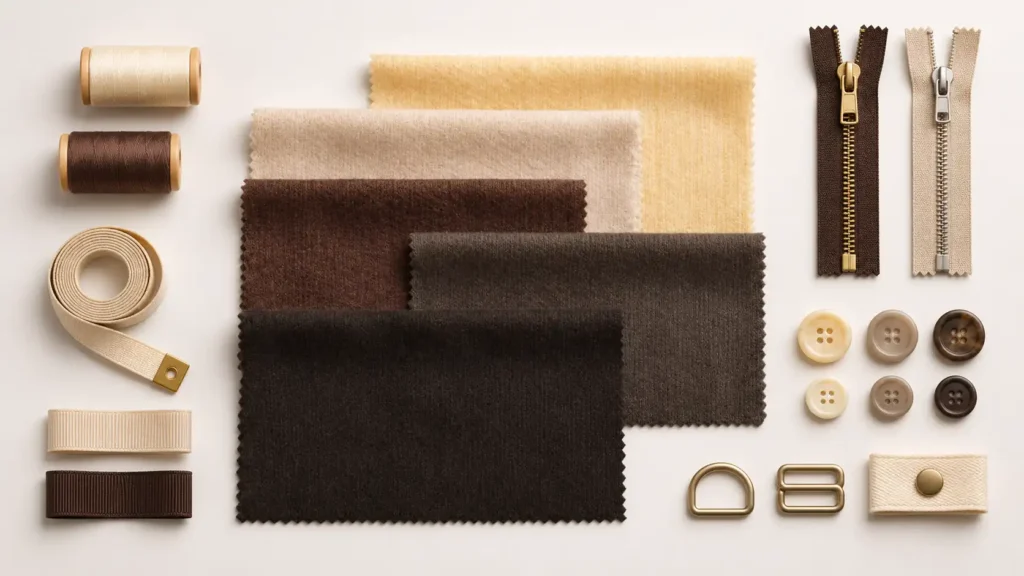
The same applies to trims. Elastics, molded cups, zippers, drawcords, tapes, heat-transfer labels, woven labels, packaging accessories, and similar components may come from separate suppliers. Each supplier can have its own MOQ, color minimum, production schedule, and price validity. Leadshow’s material framework notes that material pricing may be affected by raw materials, exchange rates, dyeing, energy, MOQ, supplier schedules, seasonality, transport, certification requirements, and order quantity. This is why historical material prices should be treated as a reference rather than a permanent entitlement.
How Can Quantity Change the Cost?
Order quantity affects more than the total amount of fabric purchased. It also affects how efficiently the order can be sourced, cut, scheduled, and packed. A 1,200-piece style split into two colors creates a different production structure from 1,200 pieces split across six colors. The total garment count is identical, yet the second order may require more dye lots, additional material minimums, more color approvals, smaller cutting batches, more SKU handling, and more complicated packing.
Material MOQ also deserves separate attention from garment MOQ. Leadshow’s factual framework distinguishes finished-garment MOQ from supplier material MOQ and notes that fabric dyeing, special stretch materials, custom elastic, zippers, labels, hangtags, and packaging can all carry independent minimums. A garment quantity that appears commercially workable may therefore create excess material purchasing when a customized component has a higher minimum. Stating quantity by style and color gives the factory a much stronger basis for evaluating the actual cost structure.
Do Packaging and Testing Matter?
Packaging decisions are often made relatively late in apparel development, yet they can materially change the commercial scope. An early quotation might assume standard folding and a basic polybag, while the production order eventually requires a printed bag, hangtag, barcode sticker, size label, tissue, insert, retail box, special carton assortment, or destination-specific markings. Every added component introduces material purchasing, supplier minimums, approval work, and packing operations that need to be reflected somewhere in the cost.
Testing requirements can evolve in a similar way. Depending on the product and destination, a project may require fabric composition checks, colorfastness testing, dimensional stability evaluation, seam-related testing, restricted-substance testing, or third-party inspection. The correct question is not whether testing or packaging is expensive in isolation. The important question is whether the final requirement was included when the original quotation was calculated. When a new requirement is introduced later, it should be treated as a scope change rather than hidden inside the previous unit-price assumption.
How Do Exchange Rates and Freight Affect Validity?
Cross-border apparel manufacturing often involves costs incurred in one currency and quotations issued in another. Exchange-rate movement can therefore change the relationship between the quoted selling currency and the actual purchasing or operating cost. Leadshow’s current fact library recognizes exchange-rate exposure as a legitimate commercial factor but does not establish a universal exchange-rate adjustment threshold or fixed mechanism. Any project-specific adjustment should therefore be confirmed rather than assumed.
Freight may be even more time-sensitive, particularly when the quotation includes transportation beyond the factory or export handover point. Carrier rates, fuel or other surcharges, routing, available space, packed volume, gross weight, and destination conditions can change. Leadshow’s logistics framework states that freight rates remain subject to validity and surcharges and that final freight conditions should be confirmed according to the actual shipment. Procurement teams should therefore separate garment-price validity from freight-price validity whenever transportation appears in the same commercial offer.
| Cost Driver | Typical Project Input | Why It Can Change | Practical Check |
| Fabric | 220 GSM nylon-spandex | Raw material, dyeing, MOQ, supplier price | Reconfirm material quotation |
| Elastic | Custom waistband elastic | Color, width, supplier minimum | Verify trim MOQ |
| Logo | Heat-transfer application | Size, process, artwork revision | Lock approved artwork |
| Packaging | Polybag and barcode | Retail requirement changes | Finalize packing specification |
| Testing | Fabric or garment test scope | Market or customer requirement | Confirm applicable test list |
| Exchange rate | Quotation in USD | Currency movement | Confirm quotation currency basis |
| Freight | Sea or air estimate | Rate, surcharge, volume, route | Reconfirm near shipping stage |
| Quantity | 1,000 pieces in two colors | Volume and assortment changes | Update quantity matrix |
How Do Scope Changes Affect an Existing Quote?
An existing quotation can lose accuracy before its expiry date when the product or order scope changes. Revised fabric, construction, colors, size range, quantities, branding, packaging, testing, or delivery requirements may alter material use, labor, supplier minimums, production handling, and quality-control needs. The correct response is to re-evaluate the affected items instead of assuming the original price remains suitable for the revised order.
Does a Product Revision Require Re-Quoting?
Not every design revision has the same commercial effect. Moving a decorative seam slightly may require little or no price change, while replacing a simple waistband with a double-layer structure, adding a bonded phone pocket, or introducing a more complex seam construction can affect fabric consumption, pattern pieces, cutting, sewing time, special processes, and inspection requirements. The key issue is whether the revision creates a measurable difference in the production method or material requirement.
Sportswear makes this especially important because fit, material, and construction often interact closely. A pattern designed for one stretch fabric may need adjustment when composition, weight, or recovery changes. The engineering review is therefore not limited to visible styling. Pattern makers and sample technicians may need to evaluate whether the revised material behaves differently under stitching, bonding, stretching, or repeated wear. Maintaining controlled versions of the Tech Pack and pattern helps ensure that the quotation, sample room, production team, and customer are all working from the same product definition.
How Do Color and Size Changes Affect Cost?
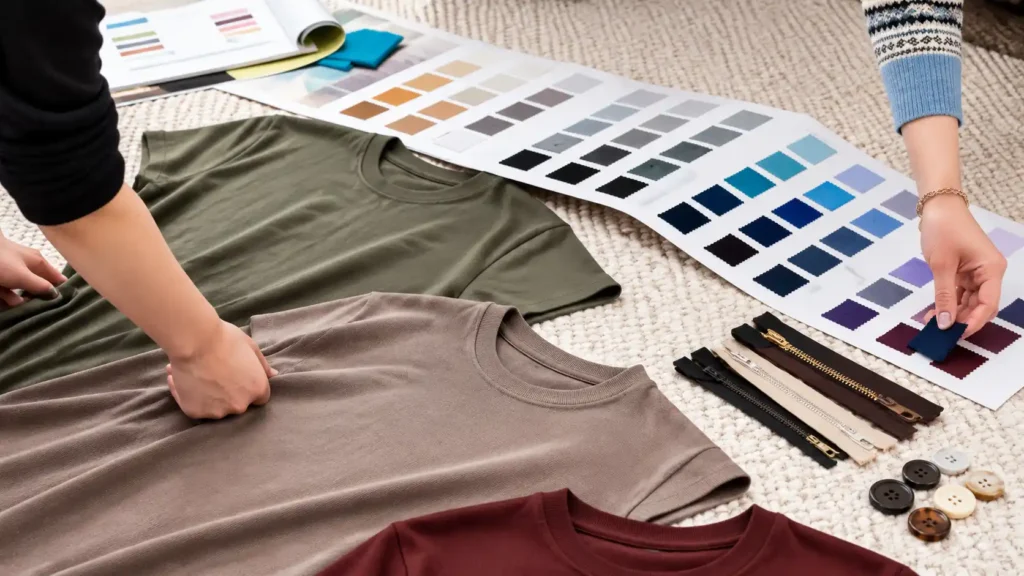
Color and size revisions frequently happen after an initial commercial estimate. A brand may begin with two colors and later expand the range to five after reviewing a collection, or it may extend the size range after receiving market feedback. These changes can look modest from a merchandising perspective but introduce real sourcing and manufacturing effects. More colors may mean more fabric lots, smaller quantities per color, more approval work, and more fragmented cutting and production batches.
Size expansion can influence grading scope, marker efficiency, consumption, packaging, and assortment management. Moving from XS–XL to XXS–3XL, for example, can change how fabric is consumed and how the final order is distributed across size ratios. A larger total size range does not automatically produce a major increase in unit cost, but it does mean the old costing assumptions need to be checked. The same principle applies when the overall order quantity remains unchanged but is divided into smaller, more complex color or size groups.
Can Sampling Change the Final Bulk Price?
Sampling often replaces assumptions with measurable production information. When an early quotation is prepared from reference photos or incomplete technical files, the factory may not yet know the exact pattern area, true fabric consumption, reinforcement requirements, number of sewing operations, trim construction, logo behavior, or final packaging dimensions. Once a physical sample is made, those factors become easier to evaluate with much greater accuracy.
Leadshow’s factual framework states that after sample development, actual material consumption, pattern construction, operations, trims, logos, labels, packaging, process difficulty, and testing needs may become clearer. It therefore does not treat a preliminary estimate as an automatic final bulk price. A price revision after sampling is not automatically evidence of unreliable pricing. The more useful test is whether the revised amount can be traced to a visible change, a newly confirmed requirement, or a production condition that was not available at the preliminary stage.
When Do Branding and Packaging Trigger a Review?
Branding requirements can alter process selection more than their visual simplicity suggests. A small heat-transfer mark may require one production route, while silicone, reflective transfer, multi-location branding, or another approved treatment may require different sourcing, setup, temperature control, handling, or inspection. Even when the application method stays the same, a change in artwork dimensions or placement can affect material usage and production sequence.
Packaging works the same way at scale. Moving from a standard polybag to printed bags, branded hangtags, barcode labels, size stickers, inserts, folding cards, or retail boxes can create small per-piece increases that become significant on large orders. An additional USD 0.08 component, for example, represents USD 1,600 across 20,000 pieces before any extra packing labor or carton effect is considered. That arithmetic does not prove a particular charge is correct; it simply illustrates why packaging decisions should be clearly defined before the final commercial comparison is made.
| Scope Change | Earlier Basis | Revised Requirement | Main Costing Area |
| Fabric weight | 220 GSM | 250 GSM | Material price and consumption |
| Color count | 2 colors | 5 colors | MOQ, dyeing and production split |
| Size range | XS–XL | XXS–3XL | Grading and material consumption |
| Pocket construction | No pocket | Bonded phone pocket | Pattern, bonding and labor |
| Branding | One standard transfer | Two reflective applications | Branding process and setup |
| Packaging | Basic polybag | Printed bag, hangtag and barcode | Materials and packing labor |
| Testing | Initial project scope | Additional market test | External testing cost |
| Delivery basis | Factory/export basis | Destination delivery basis | Freight and responsibility |
What Should Be Reconfirmed After a Quote Expires?
When a sportswear quotation expires, the manufacturer should review the current product version, fabric and trim prices, quantity, SKU mix, packaging, testing, exchange-rate exposure, production availability, and logistics basis instead of simply changing the expiry date. Historical pricing remains useful as a reference, but it should not be carried into a new order without checking whether the assumptions behind it still reflect current conditions.
Which Cost Inputs Need Rechecking First?
The most time-sensitive external inputs should normally be checked first. Fabric, elastics, zippers, cups, tapes, labels, packaging materials, and specialized trims can all be affected by supplier pricing, current MOQ, available colors, material lots, and production schedules. If the original quotation was prepared several weeks or months earlier, reconfirming these components helps determine whether the previous unit price still has a reliable material basis.
Leadshow’s quotation framework states that once a quotation expires, material prices, trim prices, exchange rates, quantity, capacity, packaging, testing, and transportation should be reconfirmed rather than treating historical pricing as permanently available. This does not mean every expired quotation requires a complete rebuild from zero. When the product and sourcing conditions remain unchanged, the review may be relatively straightforward. The important point is that the review actually takes place before the former commercial conditions are reused.
Should the Order Structure Be Reconfirmed?
Final quantity should always be compared against the quantity on which the previous quotation was calculated. Commercial planning often changes between initial enquiry and PO release. A program quoted at 2,000 pieces may eventually become 1,100 pieces, or the total may remain similar while the number of colors increases substantially. These shifts can affect supplier purchasing, cutting efficiency, production grouping, labeling, and packaging.
For a multi-SKU program, it is useful to reconfirm quantity by style, quantity by color, current size range, size ratio, packaging by SKU, and destination split where relevant. These details reveal whether the previous price tier still reflects the order that will actually be released. This is particularly important when volume is fragmented into many small combinations. Two projects with the same total piece count can require very different production management once style, color, size, and packing complexity are considered.
Does Capacity Need to Be Checked Again?
Capacity should be checked whenever meaningful time has passed between the original quotation and the planned production release. A factory may have had suitable capacity at quotation stage but a different scheduling position when materials, approvals, and payment are finally ready. The production requirement of one style can also differ substantially from another, especially when specialized seams, bonding, extensive branding, or complicated SKU handling are involved.
Leadshow’s three manufacturing bases have a combined monthly capacity of up to approximately 120,000 finished garments, but the company’s factual framework makes clear that this figure depends on product construction, materials, processes, order mix, and current scheduling rather than representing a fixed amount available for every order at every moment. This is the correct way to read capacity data: as manufacturing capability that must be evaluated against the actual order, not as a permanently reserved production slot attached to an earlier quote.
What Documents Should Be Updated?
Commercial reconfirmation works best when it is based on a controlled set of current project documents. The latest Tech Pack, BOM, measurement chart, approved material reference, logo artwork, packaging specification, quantity matrix, testing requirements, and delivery scope should be available when the quotation is renewed. If a sample or PP sample has already been approved, the approved physical reference and its associated revision should also be clearly identified.
Leadshow’s production-transition framework emphasizes that sample approval should be supported by current technical files, approved materials and colors, logo and packaging approvals, order quantities, SKU information, and production authorization. This matters because a physical sample alone cannot always communicate every commercial detail needed for production. When documents and samples are version-controlled together, the renewed quotation is less likely to be calculated from an outdated specification or an obsolete packaging requirement.
| Item to Reconfirm | What Should Be Checked | Useful Reference | Risk If Skipped |
| Product version | Latest construction and measurements | Current Tech Pack | Wrong product cost |
| Fabric | Current price and availability | Material confirmation | Material increase |
| Trims | Specification and supplier MOQ | Current BOM | Unexpected surcharge |
| Quantity | Final PO volume | Quantity matrix | Incorrect price tier |
| Color mix | Final number and allocation | Color breakdown | Dyeing MOQ issue |
| Packaging | Latest packing method | Packaging specification | Added packing cost |
| Testing | Current test scope | Project test requirement | Late testing expense |
| Capacity | Current production window | Scheduling review | Delivery risk |
| Freight | Route, volume and current rate | Packing and freight data | Landed-cost change |

How Can Buyers Judge a Reasonable Validity Period?
There is no single validity period that suits every sportswear quotation. A reasonable period depends on how stable the specification, material supply, quantity, packaging, currency exposure, freight, and production conditions are. A well-defined project can support a more dependable commercial offer, while a project with unresolved materials, quantities, or design changes needs more frequent review before the price is treated as reliable.
Is There a Universal Number of Days?
A fixed number such as 15, 30, or 60 days is not a useful quality benchmark by itself. A mature repeat style using an established material, fixed packaging, and a known quantity has a very different risk profile from a new performance garment whose fabric, fit, trims, and packaging are still under development. Giving both projects the same validity period does not make their commercial certainty equal.
Leadshow’s current quotation fact library does not establish a universal 7-day, 15-day, 30-day, or other fixed validity policy, so no such number should be presented as a permanent company rule. The better question is whether the validity window realistically reflects the stability of the inputs being priced. A shorter period supported by clear material and freight conditions can be more useful than a very long period that leaves critical assumptions unresolved or excludes them from the final price.
Which Projects Need More Frequent Review?
Projects with several unresolved variables generally deserve more frequent commercial review. Examples include styles using custom fabric that is still being developed, colors awaiting approval, uncertain final order quantities, many low-volume colorways, customized trims with supplier minimums, packaging still under design, testing requirements that are not finalized, or freight estimates prepared before final carton data is available.
Sportswear development can be especially sensitive because changes often cascade. A fabric change may alter stretch and recovery. That can affect pattern adjustment and fit. Pattern changes can alter material consumption, seam locations, and construction operations. Those changes can then affect costing and production planning. In such projects, a shorter review cycle is not necessarily inconvenient or suspicious. It can be a sensible way to avoid presenting an early estimate as if it were a permanent manufacturing price while the underlying product is still being defined.
Which Projects Can Support Greater Price Stability?
Projects become easier to quote consistently once the main variables are controlled. A stable program often has an approved Tech Pack, established fabric, confirmed trims, a clear quantity matrix, limited color variation, approved branding, finalized packaging, defined testing requirements, and a clear delivery scope. Fewer unresolved inputs mean fewer reasons for the commercial basis to change unexpectedly.
Repeat orders can also be more stable because the factory already understands the garment construction, pattern, process sequence, and previous production history. Even so, repeat orders should not automatically inherit the historical price. Leadshow’s framework states that reorder pricing should be reconfirmed against current materials, supplier conditions, quantity, colors, processes, packaging, exchange rates, production scheduling, and quotation date. The useful principle is simple: better project stability usually creates better quotation stability.
How Should Two Quotes Be Compared?
Supplier quotations should be compared on an equal product and commercial scope rather than by headline unit price alone. Start with the product specification and confirm that both quotations are based on equivalent fabric composition, weight, construction, trims, logo method, quantity, color count, size range, packaging, testing, and delivery responsibility. A price that appears lower may simply exclude a cost that another supplier has already included.
Commercial clarity is another useful comparison point. Check whether the quotation identifies the applicable product version, quantity tier, material basis, packaging assumption, freight responsibility, validity period, and conditions that would require re-quoting. A slightly lower unit price offers limited value when important cost components remain undefined and appear only after sampling or PO confirmation. For larger sourcing programs, a quotation that clearly explains its assumptions often gives the procurement and product teams a better basis for budgeting, approval, supplier comparison, and later production management.
| Project Condition | Typical Situation | Relative Quote Stability | Practical Action |
| Approved repeat style | Same construction and materials | Higher | Reconfirm current material prices |
| New custom fabric | Fabric still under development | Lower | Review price more frequently |
| Quantity fixed | Final volume and colors confirmed | Higher | Lock quantity matrix |
| Quantity uncertain | Wide forecast range | Lower | Request quantity tiers |
| Packaging approved | Final bag, labels and carton known | Higher | Include complete packing scope |
| Packaging open | Retail requirement pending | Lower | Treat packing as provisional |
| Freight quoted early | Carton data not final | Lower | Reconfirm before shipping |
| Sample approved | Production construction fixed | Higher | Quote from approved version |
| Major revisions ongoing | Fit or structure changing | Lower | Re-cost after approval |

A quote validity period is ultimately useful only when it helps answer a practical sourcing question: Does this quotation still describe the product and order that are actually ready to move forward? Extending an expiry date has little value when the material has changed, the quantity has been reorganized, packaging remains unfinished, or the requested production timing has moved. A more reliable approach is to keep the quotation tied to a visible project version and reconfirm the variables that are genuinely time-sensitive.
For brands, importers, distributors, and product-development teams preparing custom sportswear, the strongest quotation usually begins with a quote-ready project package. That package can include the latest Tech Pack or product reference, material direction, estimated quantity by style and color, size range, branding requirements, packaging specification, testing expectations, target timing, and preferred delivery scope. Complete inputs do not eliminate every possible cost change, but they reduce uncertainty and give both sides a much clearer basis for commercial approval.
Shenzhen Leadshow Sports Technology Co., Ltd. is an OEM and ODM apparel development and manufacturing partner specializing in sportswear, swimwear, streetwear, and modest sportswear. Its confirmed service scope includes product evaluation, sample development, small-batch trial production, bulk manufacturing, quality control, custom labels, packaging, and export-delivery support. For a custom sportswear project, sending the current technical files, reference samples or images, target materials, quantity structure, branding, and packaging requirements allows the manufacturing team to review the actual project conditions and prepare a quotation on a more realistic and traceable basis.