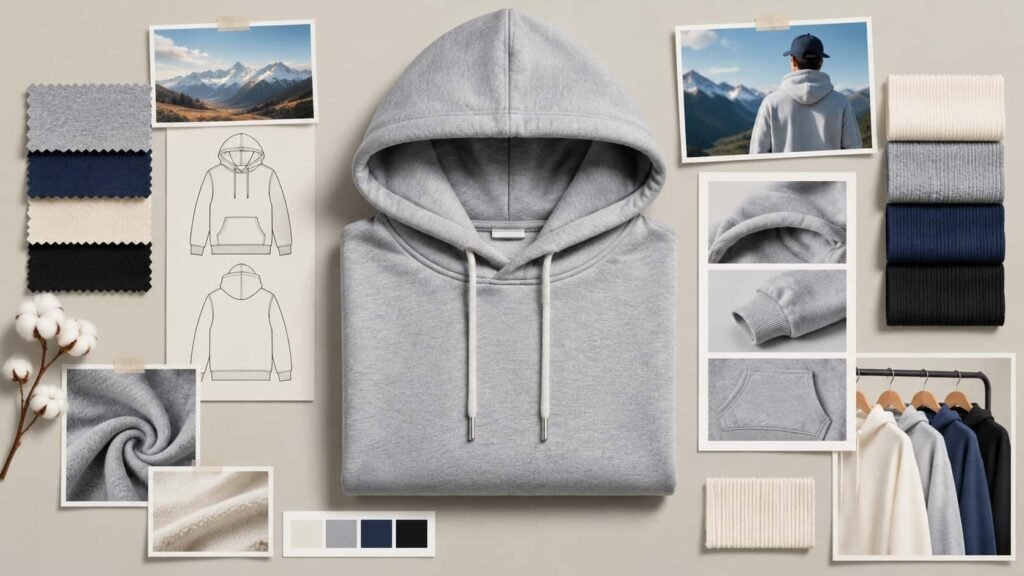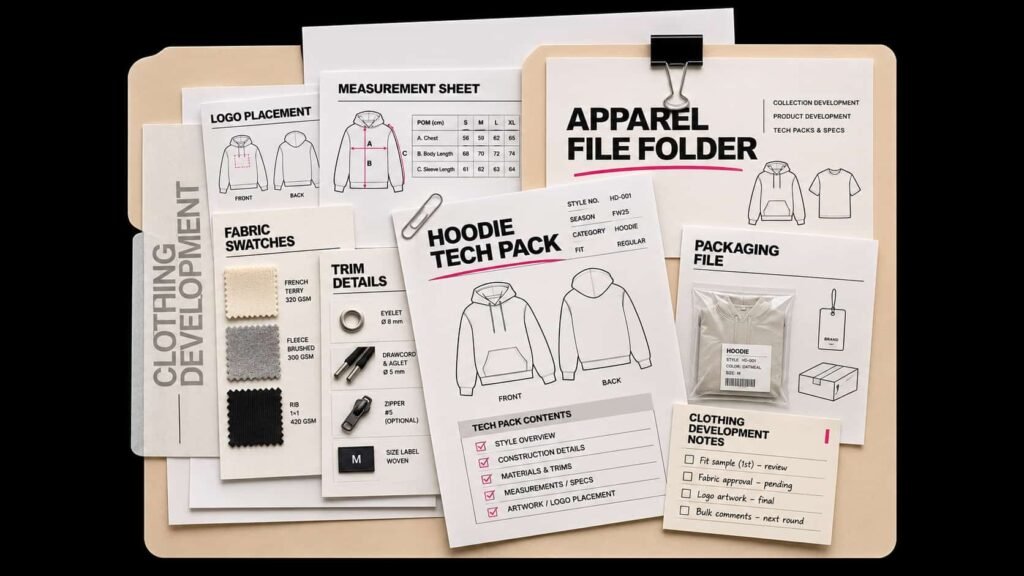
A reference garment can settle a technical conversation in minutes. A brand hands over a running jacket, points to the hood that stays put in the wind, and the pattern maker can immediately examine its shape and construction. The difficulty begins when “look at how this works” turns into “make us the same jacket.” A physical sample answers questions about stitching, fit and finishing. It does not, on its own, answer who owns the artwork, whether an appearance is protected, or where a similar product may be sold.
Intellectual property risks should be handled by recording the reference’s source and intended use, checking the rights in any elements proposed for reproduction, and keeping unresolved features out of sampling. The brand and manufacturer should agree in writing on supplied assets, development files, confidentiality, and approval responsibilities. Before bulk production, compare the final garment, branding, packaging, and sales markets with those decisions.
This approach still leaves plenty of room for useful product development. A sports bra may reveal a comfortable band construction; a pair of shorts may suggest a better way to secure a pocket. The team can turn those observations into its own size targets, material choices, fit trials and production instructions. Trouble often starts with a small omission: a print copied into the first mock-up, a label ordered from the photograph, or a sample approved by someone who never saw the rights question. Catching that moment early is far easier than sorting it out after the collection has been photographed and the trims have arrived.
What Rights Apply to a Reference Garment?
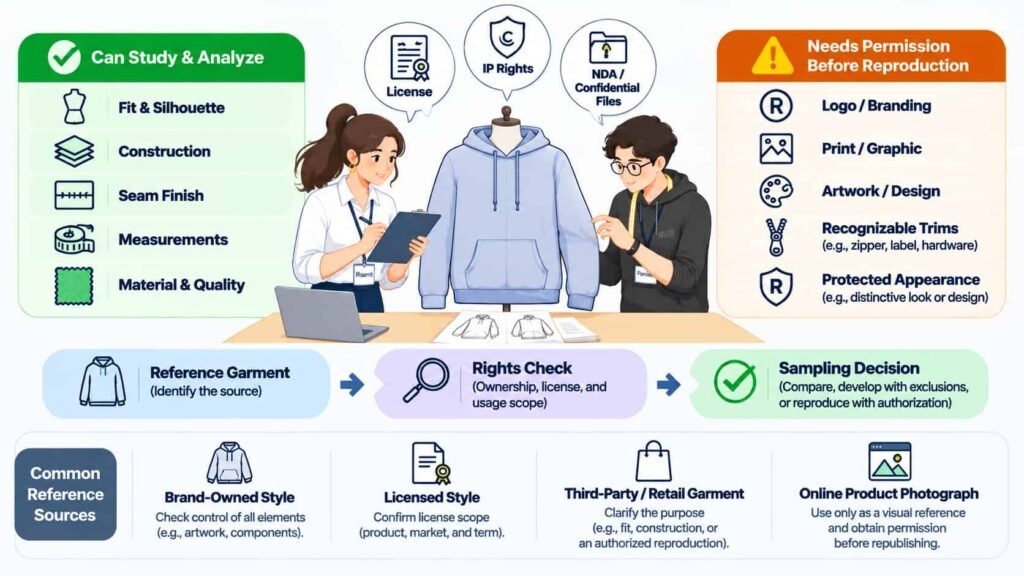
A reference garment can be studied for fit, quality and construction without assuming permission to reproduce all its features. Establish who supplied it, whether it belongs to the brand or a third party, and what use is authorized. Check artwork, branding, protected appearance, patterns and confidential files separately before asking a manufacturer to make a sample.
Ownership of the physical garment and rights in its contents are different questions. A purchasing team might buy a retail jacket for its fit meeting, then ship it to the sample room. The purchase shows how the team acquired that garment. It does not establish a right to apply the original logo or print to a new production run. Equally, a client’s own prior season style may contain artwork licensed for a limited collection, or files created under a separate development agreement. The label “our sample” is a useful starting description, not the end of the inquiry.
The next question concerns the instruction given to the factory. Measuring a hood opening to understand coverage, inspecting seam finishes, and studying a lining construction are specific technical tasks. Asking for an almost identical silhouette with the same print and recognizable trims is a different brief. Record the purpose beside the source of the reference. If a close reproduction is authorized, the brand should identify the permission and its scope; if the reference is for comparison, the development brief should name the features that are excluded from the new style.
| Reference source | Evidence to request | Question before sampling | Appropriate development use |
| Brand’s previous garment | Original files and applicable agreements | Does the brand control every element it wants to reuse? | Compare fit and construction, then confirm any reused assets. |
| Licensed style | License and approved artwork | Does permission cover the new product and market? | Produce only within the agreed license scope. |
| Competitor’s retail garment | Source and written purpose | Is it for comparison or close reproduction? | Study specified technical characteristics; review copied features. |
| Online product photograph | Link and image source | Is the image only a visual reference? | Discuss direction; obtain permission before republishing the photograph. |
Who owns the design and artwork?
Several contributors may have rights or contractual interests in one style. A brand may own its logo while a freelance illustrator owns a print that the brand licenses. A factory may develop a production pattern from an approved brief, while a separate studio supplies the original sketch. Ask which exact elements the new product will use and which records authorize them. For a printed sports bra, the team needs the approved artwork file and its production scope, not merely a photograph showing the print. These distinctions also matter on a reorder: permission for a limited collection may not automatically cover another season, product category or sales region.
Is the garment brand-owned, licensed, or from a third party?
The source determines which follow-up questions are useful. With a brand-owned prior style, confirm whether any artwork or specialist component came from outside the company. With a licensed collaboration, check product categories, territories and approval steps. With a third-party product, ask the brand what the sample is intended to demonstrate: fit, construction, material hand feel, finishing quality or a proposed authorized reproduction. A sample bought at retail can be valuable for engineering discussion without becoming a template for every visual detail. Writing its source in the project brief helps prevent a later team member from treating it as an approved design file.
Does owning a physical garment permit reproduction?
Owning a sample does not by itself transfer rights in a logo, original graphic or protected design. Under U.S. copyright guidance, clothing’s functional aspects and artistic features that can be identified separately are treated differently; design and trademark questions call for their own analysis. Laws and the strength of particular rights also vary by market. A factory should therefore ask about the proposed act rather than seek a single yes-or-no verdict on the garment: may it measure the item, copy a graphic, photograph the product for marketing, or make a close commercial reproduction? Where the answer is uncertain, a brand-side rights review should precede that step.
Which Garment Details Create IP Risk?
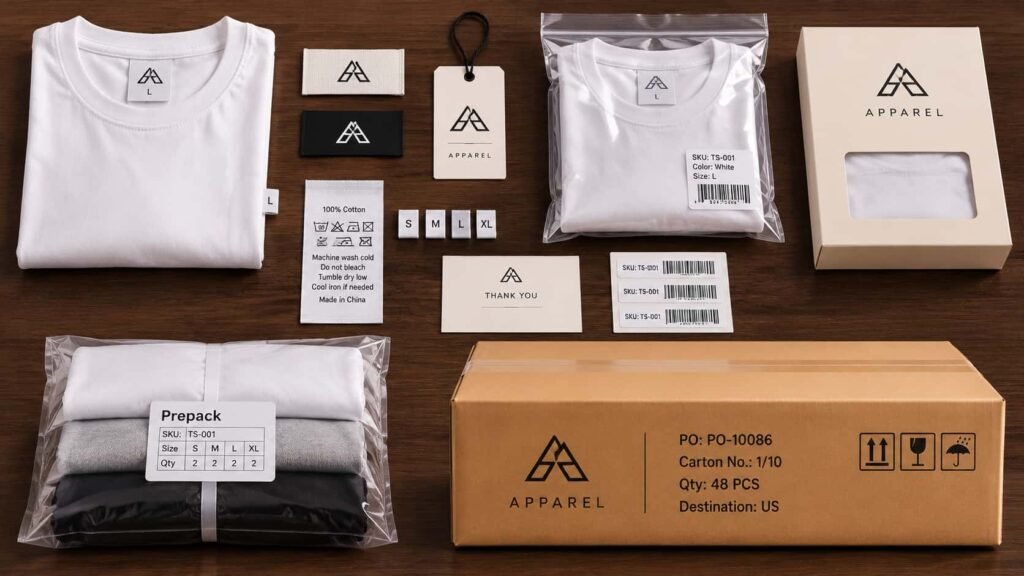
Review the elements that will actually appear in the proposed product and its marketing. Logos, labels, textile graphics, photographs, distinctive appearance and potentially protected technical features raise different questions. Removing a brand label can address one visible issue while leaving others unresolved, so each element needs its own source, permission and production decision.
A garment is a collection of decisions, not a single block of intellectual property. Consider printed leggings: the exterior graphic may come from an artist; the hangtag identifies a brand; the panel arrangement contributes to the garment’s visual appearance; and a supplied pattern could be covered by confidentiality terms. Looking only for a trademark misses much of the project. Conversely, describing an ordinary seam as automatically protected would stall useful development without establishing a real issue. The aim is to identify the particular feature that the new style would retain and the basis for using it.
Timing is important. The first prototype may use blank fabric, but later sales samples add branded elastic, a custom zipper pull or packaging supplied by an agency. The rights check needs to follow those additions. A product photograph deserves a separate review: permission to inspect a jacket pictured on a marketplace does not necessarily allow the brand to reuse the seller’s image in its own catalog. The production team should work from named, approved assets so an image grabbed for discussion does not quietly become print-ready artwork.
| Element | Visible example | Useful evidence or check | Decision point |
| Trademark or brand label | Chest mark, woven label | Approved asset and authorization for intended use | Before ordering branded trims |
| Original artwork | Print or embroidery | Creator, file source and licensed scope | Before sample printing |
| Product appearance | Recognizable ornamental panel layout | Relevant market and design-rights review | Before approving a close visual match |
| Technical feature | Unusual fastening construction | Identification of any relevant patent concern | Before relying on that feature |
| Product photograph | Reference listing image | Permission for the intended publication | Before catalog or website use |
| Pattern or tech pack | Supplied editable file | Contractual permission and access limits | Before sharing with another team |
Are logos, labels, prints, or photos protected?
Check each asset independently. A client may be entitled to place its own logo on a garment yet lack permission to reproduce a print visible on a competitor sample. A separate photographer may own rights in a campaign image, even when the brand controls the garment photographed. Production teams benefit from a simple file rule: identify the approved source file, its permitted use and its placement before printing, embroidery, labeling or packaging begins. A low-resolution screenshot from a reference image should never substitute for approved vector artwork. U.S. Copyright Office guidance expressly recognizes that original artwork applied to clothing can be considered separately from the useful garment itself.
Could the garment’s appearance be protected?
It can be, depending on the appearance, the claimed rights and the relevant market. Industrial design protection may address visual features of fashion products, while distinctive source-identifying features can raise trademark issues. A familiar product category such as a hoodie does not settle the status of one particular style. When a client asks for “the same look without the logo,” identify what creates that similarity: silhouette, panel geometry, ornamentation, trim placement or a combination. Changing a color or removing a label is not a dependable legal formula. If a close match is central to the proposed product, the brand should seek a rights assessment before treating the sample as cleared.
Are any features covered by a patent?
A visible ornamental feature may call for a design-patent or design-rights check; a functional mechanism may raise a different patent question. A sportswear team might value a closure because it solves a real wearing problem, but a factory’s ability to reproduce it says nothing about permission. Describe the feature, identify where the finished goods will be sold, and check any known patent information. If the record is unclear, ask an appropriate specialist to interpret it before making the feature central to the style. Switching fabric or moving the logo should not be described as a way to clear a patent concern when the disputed feature remains.
How Should a Factory Use the Reference?

Turn the reference into an independent, testable product brief. Identify the fit, construction, material or quality characteristic worth studying, then specify the brand’s target dimensions, approved materials and sample checks. Keep uncertain graphics, branding and distinctive features out of the prototype until their use is confirmed through the appropriate project review.
“Make these leggings” can mean several things. The waistband may stay flat during movement, the fabric may feel substantial without being heavy, or the pocket may hold a phone securely. A pattern maker needs to know which result matters. The factory can inspect seam placement and construction, then propose alternatives that satisfy the brand’s size chart, wearer profile and target use. The reference remains a source of observations; the approved new specification becomes the instruction for sampling and production.
A single sample rarely contains everything the factory needs. It represents one size, one material choice and one production example. A photograph hides the lining, seam allowance and internal finish entirely. The brand still has to confirm a size range, materials, trim specifications, fit expectations and the method for approving revisions. When different fabric is selected, stretch and recovery may change the fit even if the pattern measurements stay the same. Recording what was observed, proposed and tested helps the team avoid treating a copied measurement as a finished development decision.
The values below are illustrative measurements for a hypothetical size M sports bra. They describe one possible fit discussion, not standard specifications, recommended tolerances or a legally safe amount of design change. Actual targets would come from the brand’s size chart, selected material, wearer feedback and agreed method of measuring the finished sample.
| Development item | Reference observation | Draft brand target | Sample validation |
| Relaxed underband circumference | Physical sample measures 66 cm | 68 cm in a hypothetical brand size chart | Measure finished sample at agreed points of measure |
| Underband construction | Enclosed elastic feels stable | Brand-selected elastic and enclosure | Fit trial and internal construction review |
| Main fabric | Stretch feels suitable; composition unknown | Confirm composition and required recovery | Review supplier data and test selected fabric |
| Strap position | Comfortable on one wearer | Set through the brand’s fitting trial | Record fit feedback and pattern revision |
| Exterior graphic | Third-party print is present | No graphic pending approved artwork | Inspect sample against released assets |
What can the sample show about fit and construction?
A physical garment can reveal how a seam behaves under tension, how elastic is enclosed, where a lining ends and how a pocket is assembled. Those observations give a technical team useful questions for its first prototype. They do not prove that the same construction will fit another body shape or behave the same way in another fabric. Ask the sample team to record the size examined, the measured points, the material observed and anything it could not verify. A size M reference cannot stand in for a grading review across an entire collection. Fit and construction have to be checked again on the materials and size range selected for the new garment.
How can a new specification be developed?
Start with the intended wearer and activity, then describe the required outcome. A running short may need freedom at the hip, an inseam that does not ride up and a pocket that stays secure in motion. Those requirements inform the brand’s rise, length, fabric, lining and construction decisions. Record them in a tech pack or development sheet, identify the source of each measurement and give each sample revision a version. When a fit test reveals pulling at the side seam, the next version should show the pattern correction and the reason for it. The documented sequence helps both teams agree on the garment that bulk production must actually reproduce.
When should sampling stop for further review?
Pause the affected feature when a request includes another brand’s logo, an identical print, an unexplained third-party tech pack or a close reproduction whose rights position has not been established. Describe precisely what is on hold. Fabric sourcing or an unrelated fit discussion may continue, while printing the disputed artwork does not. Record who will obtain authorization or a rights opinion and which sample version must be reviewed afterward. The pause protects the project from a familiar handoff error: one team assumes a feature was cleared because the factory accepted a sample, while the factory assumes it was cleared because the client supplied it.
What Should Both Parties Agree in Writing?
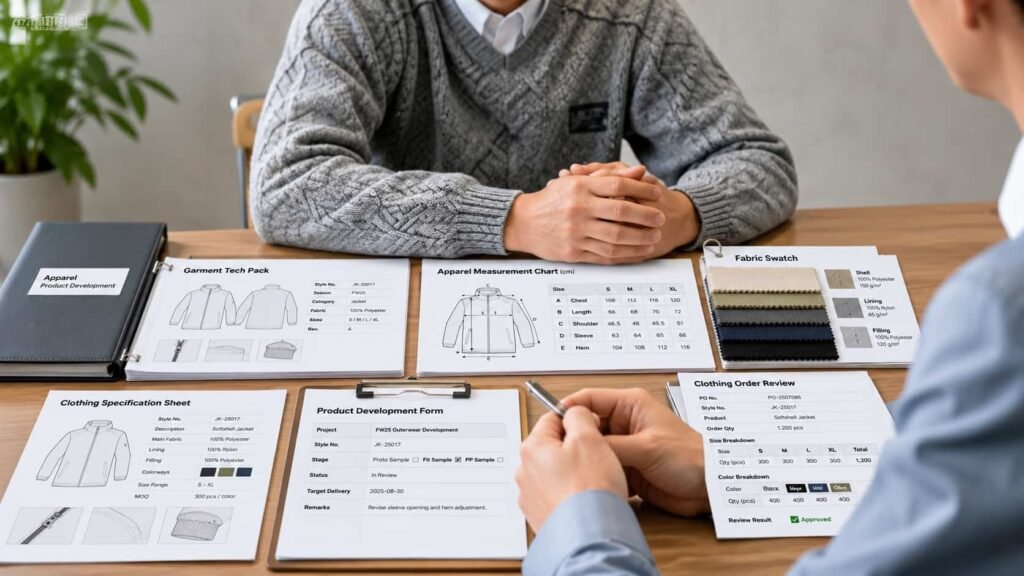
Before files circulate, record the allowed use of references and supplied assets, who approves branding, how confidential material is handled, and who may use or receive development files. Name the actual deliverables, including editable patterns and samples where relevant. Paying for sampling does not automatically answer every ownership, exclusivity or file-transfer question.
Apparel development produces several materials with different histories. A client might supply the logo, sketch and size chart; the manufacturer might prepare a new pattern, adjust it after fitting and create production instructions. A broad statement that “the design belongs to the client” may leave both parties unsure about the editable CAD file, a basic pattern block, a graded nest or a retained production record. Discuss these items while the quotation and development scope are being agreed, before a handoff or factory change makes the question urgent.
Confidentiality also has to work on a production floor. Development, sourcing, print suppliers, pattern makers and quality personnel may each need different parts of a project. An agreement can define permitted recipients, sample photography, public case studies, file retention and treatment of unused materials. A blanket promise that “everything stays private” does not tell a trim supplier whether it can receive a print file or tell a sales colleague whether an unreleased sample may be photographed. Precise terms protect the brand while allowing necessary manufacturing work to happen.
| Material or decision | Question to settle | Useful written record |
| Client tech pack | Who may access and use it? | Project purpose and permitted recipients |
| Logo and artwork | Which versions and placements are approved? | Named files and brand sign-off |
| Factory-developed pattern | Who may use, edit, retain or transfer it? | Ownership and usage terms |
| Editable grading files | Are source files a deliverable? | Formats, scope and any applicable fee |
| Physical samples | May they be retained, displayed or photographed? | Handling and disclosure permissions |
| Confidential project data | May it reach specialist suppliers? | Access conditions and agreed duration |
Who confirms the right to use supplied materials?
The brand should establish that it may use the marks, artwork, patterns, photographs and reference materials it instructs the manufacturer to incorporate. A license should be checked for the proposed product and destination, not reduced to a vague statement that permission exists. The factory needs the approved file and a usable production instruction, including what must be left off a sample. A visible conflict, such as a request to apply another brand’s logo without supporting permission, should be raised for clarification. Technical feasibility review is not a substitute for legal clearance, but the brand’s authorization record does not excuse an obvious warning sign.
Who may use the patterns and technical files?
Separate client-supplied files from new files developed during the project, then agree who can use, modify, keep and receive each type. “Pattern file” could mean a review PDF, physical paper pattern, editable CAD file or graded size nest. A brand planning future production may need particular deliverables; a manufacturer completing a current order may need an approved production copy. Neither side should assume that a sample payment transfers all of these rights. Leadshow’s company fact sheet calls for ownership, use, exclusivity, source-file delivery and retention to be addressed in the relevant quotation, order or agreement, rather than promised as automatic terms for every project.
How will samples and unreleased designs be kept confidential?
Identify what is sensitive and how it must move through the project. An unreleased swimwear style may be viewed by development and quality teams while its artwork is sent to a specialist printer. The brand may want to prevent showroom display, public photography or use of its sample in another client’s presentation. The agreed terms can identify authorized recipients, permitted uses and what happens to working files and samples after the job. Leadshow’s verified facts allow project-specific confidentiality discussions, but do not establish a universal NDA, fixed confidentiality term or automatic exclusivity policy. The parties should write down the controls the actual project needs.
How Should Risks Be Checked Before Production?
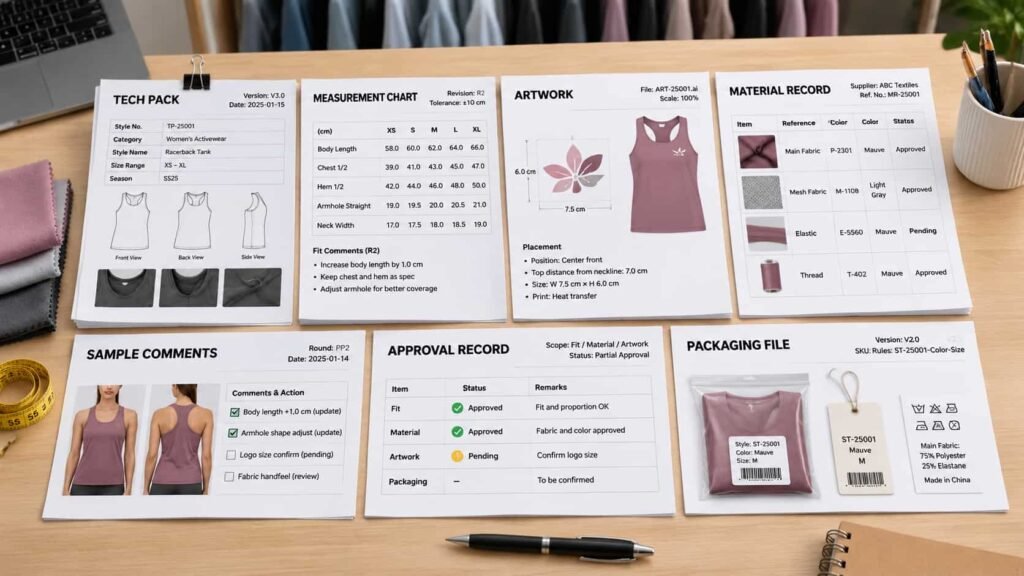
Compare the final sample, current tech pack, artwork, labels, trims, packaging and sales plan with the rights decisions made during development. Confirm the approved file versions and decision makers before buying or applying branded components. Reopen the relevant review if the product, asset, supplier or sales market changes after sample approval.
Fit approval does not clear every asset on a garment. A training top may pass its wear trial in blank fabric, then gain a printed elastic band and branded packaging before production. The band and packaging need their own approval. Likewise, a rights review of an early sketch should be checked against the final sample; design details sometimes change substantially during fitting and sourcing. Putting the final files side by side makes the handoff more reliable than relying on a single message marked “approved.”
The intended markets matter. A garment developed in one country may be imported and sold in several others, each with different registrations and legal rules. Record manufacturing, import and sales destinations when reviewing a close design match or a license. A new distributor or sales territory can change the question after sampling has ended. WIPO explains that industrial design rights are territorial, so a search or permission covering one market should not be presented as worldwide clearance.
| Pre-production gate | Record to verify | Proceed when | Hold for review when |
| Final garment | Approved sample and current tech pack | Construction and size specification match the released version | Later changes affect reviewed features |
| Artwork and labels | Named files, positions and approver | Assets are approved for their proposed use | Source or authorization is unclear |
| Materials and trims | Final bill of materials | Components match the approved selection | A substitution introduces a new mark or distinctive feature |
| Markets | Manufacturing, import and sales plan | Relevant rights questions have been considered | A new territory falls outside the review |
| Photography and packaging | Approved image and packaging assets | Public materials use authorized content | A reference photo or unapproved asset is added |
Which sales markets need to be considered?
Begin with where the garment will be made, imported, sold and promoted. The same style may face different rights records or license limits in the United States, the European Union and another destination. A manufacturer can ask for target markets when assessing labels, packaging and export requirements, while the responsible brand team or adviser handles the rights conclusions. This information should stay with the style record. If the brand later adds an online sales region, the project team can see that the original review did not necessarily cover it, rather than silently extending an earlier approval.
What needs approval before branding and bulk production?
Bring together the approved physical sample, measurement sheet, fabric and trim selection, artwork, labels, packaging and purchase order. A product developer may approve fit while a licensing team approves the use of a particular mark. Both decisions should be attached to the relevant file versions. A late fabric change may require another fit check, while a replacement zipper pull bearing a mark may require another rights check. The production release should identify the version the quality team will use for comparison. A sample approval without this handoff can leave sewing, printing and packing teams working from different drafts.
What happens if a rights concern appears later?
Identify and contain the affected work first. Determine whether the question concerns one graphic, a label, the garment’s appearance, a technical feature or a marketing photograph. Keep the reference source, file versions, approvals, supplier instructions and record of any goods already produced. The brand can then obtain a qualified assessment and decide whether authorization, revised artwork, redesign, withdrawal or another response is appropriate. Removing a logo or changing a measurement should not be treated as a universal remedy. Early escalation gives the project more options before additional trims are bought, goods are packed or shipment arrangements are made.
A good reference garment begins a specific development discussion: what should the new style do, what may be learned from the sample, and which assets are authorized for use? Shenzhen Leadshow Sports Technology Co., Ltd. can assess technical requirements and discuss pattern adjustment, sample development, small-batch trial production and bulk manufacturing for sportswear, swimwear, streetwear and modest sportswear projects. To request a product review and quotation, send the product category, reference images or tech pack, quantity per design and color, size range, materials, branding plan, target market and target date to cody@leadshowfashion.com. Include any license, confidentiality or file-ownership requirements at the outset so they can be addressed alongside the manufacturing brief.