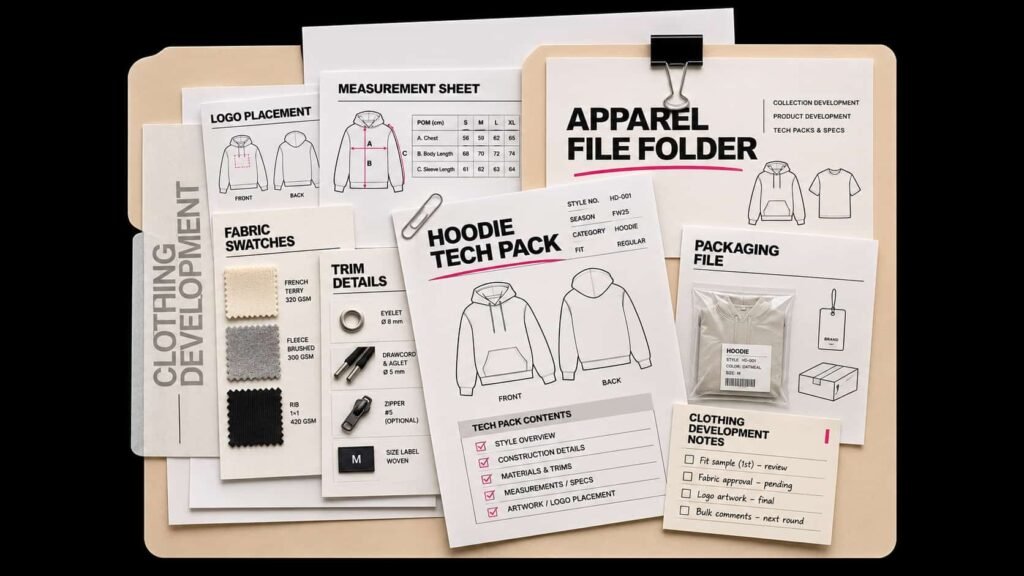
Three sportswear factories can receive what appears to be the same inquiry and return three very different prices. That does not automatically mean one supplier is expensive and another is competitive. One factory may calculate the requested fabric exactly, another may assume an available alternative, while a third may exclude custom labels, testing, special workmanship, or part of the packing requirement. The spreadsheet looks simple, but the commercial scope underneath it may be completely different.
Brands can compare sportswear quotations fairly only after every supplier is pricing the same technical and commercial scope. The product version, quantity per design and color, fabric, construction, trims, branding, packaging, testing requirements, quality expectations, trade terms, and delivery responsibility should be aligned first. Only then does the unit price become a meaningful basis for supplier comparison.
A difference of fifty cents per garment can attract immediate attention when a purchase involves thousands of pieces, yet that difference can disappear quickly if the lower quotation later adds a custom elastic, upgraded fabric, branded packaging, third-party testing, or a construction detail that another supplier already included. Strong sourcing decisions start with a less exciting question than “Who is cheaper?” They start with “What exactly is each factory pricing?”
What Does Equal Scope Mean in Sportswear Quotes?
Equal scope means each supplier is quoting the same product version and carrying the same defined responsibilities. The material, construction, order quantity, color and size structure, branding, packaging, quality requirements, testing scope, and delivery basis should match closely enough that price differences reflect real manufacturing economics rather than missing items, cheaper assumptions, or different interpretations of the product.
Specification Baseline
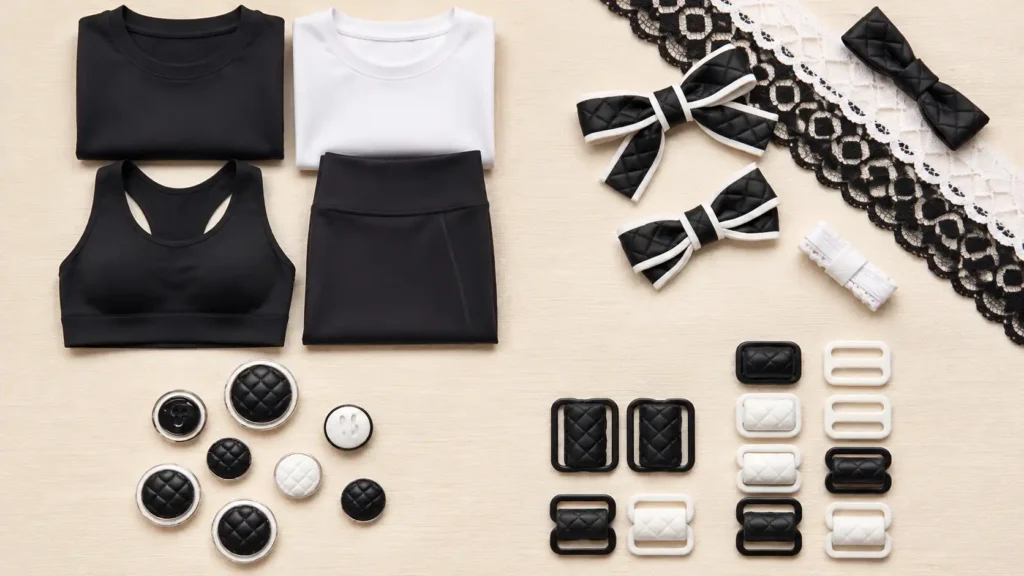
A fair comparison begins with a common product reference. “Black high-waist leggings” is not enough information for a dependable manufacturing quotation because the phrase leaves too many technical decisions open. A useful quotation basis should identify the current Tech Pack or reference version, fabric direction, target weight, waistband construction, seam structure, pocket configuration, size range, logo application, color plan, packing requirement, and any project-specific testing or compliance need.
The level of detail required depends on the stage of the project. A mature style may already have an approved Tech Pack, BOM, measurement chart, artwork placement, and physical sample. An earlier concept may have only sketches and reference images. Both can be reviewed, but quotations based on incomplete information should clearly state the assumptions behind them. The critical point is that every supplier should work from the same level of information rather than filling different gaps independently.
Sportswear makes this especially important because apparently small changes can alter manufacturing cost and garment behavior at the same time. A 180 GSM polyester-spandex fabric and a 220 GSM nylon-spandex fabric may create a similar silhouette in a product photograph, yet their cost, hand feel, opacity, recovery, cutting behavior, sewing settings, and intended performance can be different. Comparing prices before confirming the material basis can therefore create a false saving.
Hidden Assumptions
The most important part of a quotation is sometimes what is not clearly stated. A supplier may calculate an available stock fabric because the requested custom material has not been confirmed. Another may include a custom-dyed option. One factory may include woven labels, size labels, and an individual polybag, while another may calculate only the garment and consider branding or packing to be separate work.
These differences are not automatically warning signs. A quotation marked “based on available fabric,” “standard packaging,” “testing excluded,” or “logo cost subject to artwork” can actually be easier to manage because the assumptions are visible. The more difficult situation is a clean, low unit price that appears final but gives no indication of what was omitted, simplified, substituted, or left for later confirmation.
For projects that are still being developed, a conditional estimate is often more useful than artificial precision. A factory that identifies open material, construction, or packaging questions gives the sourcing team an opportunity to resolve them before supplier selection. That makes later revisions easier to explain and reduces arguments over whether a supplier “changed the price” or simply quoted a newly defined requirement.
Comparable Unit Price
A unit price becomes useful only after the commercial responsibility behind it is understood. Consider three quotations for the same running short: one at $7.80, one at $8.20, and one at $8.55. The first figure looks attractive until the sourcing team discovers that the custom waistband elastic, individual packaging, and one pocket detail were not included, while the other quotations already incorporated some or all of those requirements.
The practical solution is to build a normalized comparison rather than forcing factories to use identical quotation templates. Missing recurring costs can be added to the comparison sheet, one-time development fees can be separated, and technical differences can be flagged for correction. The objective is to calculate what each supplier would charge to produce the same approved garment under the same quantity and commercial conditions.
For mid-to-high-end sportswear, this discipline matters because a lower initial quotation can become more expensive after sampling if the material, workmanship, labeling, packaging, or inspection standard must be upgraded. Price competition is useful only after the underlying product is stable enough to make the numbers comparable.
Equal-Scope Check
Before ranking suppliers, a sourcing team should be able to trace each quotation back to the same product version, fabric requirement, order quantity, color distribution, size range, workmanship details, logo scope, packaging specification, testing expectation, and delivery term. If several of these items remain unknown, the quotations should still be treated as preliminary rather than placed into a final price ranking.
A simple comparison sheet is usually enough to expose the problem. It forces each technical and commercial variable into a visible row and makes mismatches easier to identify before negotiations begin. Once the mismatches have been corrected, the remaining price differences are far more meaningful because they reflect different sourcing routes, production efficiency, overhead structure, or commercial positioning rather than missing responsibility.
| Comparison Field | Supplier A | Supplier B | Equal-Scope Status | Action Before Comparison |
| Product version | Tech Pack V3 | Tech Pack V2 | Not aligned | Requote against V3 |
| Fabric | 75/25 nylon-spandex, 220 GSM | Polyester-spandex, 190 GSM | Not aligned | Confirm one material basis |
| Quantity | 500 pcs/color | 500 pcs/color | Aligned | Keep unchanged |
| Waistband | Double layer | Single layer | Not aligned | Confirm approved construction |
| Logo | Heat transfer included | Excluded | Not aligned | Add same branding scope |
| Packaging | Individual polybag | Basic bulk packing | Not aligned | Define one pack-out |
| Trade basis | FOB | EXW | Not aligned | Normalize delivery basis |
Which Cost Inputs Must Be Normalized?
The main variables that should be normalized are fabric, trims, garment construction, quantity per design and color, size distribution, branding, labels, packaging, testing, inspection, and delivery terms. Each variable can change manufacturing cost independently. A useful comparison therefore examines not only the final unit price but also the specification and commercial assumptions that produced it.
Fabric Cost Drivers
Fabric can create some of the largest differences between sportswear quotations because broad descriptions such as “premium stretch fabric” or “nylon-spandex” do not define enough technical detail. Composition, GSM, width, knitting structure, stretch direction, recovery, surface finish, color method, material availability, supplier minimums, and fabric usage can all influence cost as well as garment fit and production behavior.
For fitted leggings, sports bras, swimwear, and close-to-body tops, recovery and dimensional stability can be as important as composition because the fabric must work with the pattern and seam construction. For lightweight training tops or running garments, fabric weight, surface treatment, ventilation structure, and drying expectations may carry more importance. The quotation should therefore state whether it is based on the requested fabric, an approved equivalent, or a provisional alternative.
Alternatives can be useful when they are shown clearly. A supplier might provide one price using a requested 220 GSM nylon-spandex article and another using a 210 GSM available alternative. That gives the brand a real choice between cost, availability, hand feel, and technical behavior. Problems begin when the alternative silently replaces the original specification and the lower price is presented as if both suppliers quoted the same material.
Workmanship Scope
Construction cost in sportswear is better understood as a combination of operations rather than a single labor number. A basic overlock seam does not represent the same production route as four-needle six-thread stitching in defined areas, and a straightforward elastic waistband is different from one that requires custom elastic, controlled tension, additional topstitching, and multiple assembly stages.
Other processes can also affect cost, including bartacking, double-needle sewing, heat bonding, seam taping, laser perforation, zipper installation, pocket reinforcement, elastic application, and heat-transfer branding. A sourcing team does not need to become an expert in machine settings, but it should understand which visible and structural details are included in the quotation so that factories are not pricing different construction routes.
This becomes particularly relevant for leggings, sports bras, running shorts, jumpsuits, tennis skirts, and other products where stretch behavior, support zones, multi-panel construction, pockets, elastic components, or close-fitting seams influence both complexity and quality expectations. A technically simpler product may genuinely cost less, but it should not be presented as an equal quotation for a more complex approved design.
MOQ and SKU Mix
A total order quantity can hide a great deal of manufacturing complexity. One thousand pieces of a single style in one color creates a very different production situation from one thousand pieces divided across five designs and four colors. The total volume is identical, yet fabric minimums, cutting preparation, trim ordering, line changes, packaging, and SKU management can differ substantially.
For that reason, sourcing teams should compare quantity at several levels: total order volume, quantity per design, quantity per color, size distribution, shared fabric opportunities, and special trim minimums. Material suppliers may also have dyeing, printing, elastic, zipper, label, or packaging minimums that exceed the garment quantity and influence the final order structure even when the sewing factory is comfortable with a lower garment MOQ.
Leadshow’s standard MOQ generally starts from 100 pieces per color per design, while the final quantity remains subject to factors such as fabric, trims, construction, customization, labels, packaging, testing or certification requirements where applicable, supplier conditions, and current production conditions. That distinction matters because “100 pieces” and “100 pieces per color per design” describe very different purchasing commitments.
Branding, Packaging, and Testing
Brand identity elements should be included in the scope before supplier comparison rather than treated as small details to add after the garment price is settled. Main labels, care labels, size labels, woven labels, heat-transfer labels, hangtags, logo applications, polybags, barcode stickers, SKU labels, carton marks, and customer-specific packing instructions can each carry a separate MOQ, setup requirement, lead time, or handling cost.
Testing and inspection require the same clarity. A quotation with no formal testing should not be compared directly with one that includes a specified laboratory requirement or customer-appointed inspection. The same applies to inspection scope. Terms such as “quality check included” are too broad unless the project defines the items to be reviewed, the acceptance criteria, and whether any sampling plan or third-party inspection requirement applies.
Leadshow’s quality approach is based on customer-approved project requirements, and inspection stages, sampling ratios, AQL requirements, full-inspection items, customer inspections, and third-party inspections are confirmed according to the order rather than presented as one universal policy. That project-specific approach is useful when normalizing quotations because it keeps quality cost tied to the actual requirement.
| Cost Driver | Example Specification | Cost Impact | Equal-Scope Requirement |
| Fabric weight | 180 GSM vs 220 GSM | Material usage and handling can differ | Quote the same target GSM |
| Composition | Polyester-spandex vs nylon-spandex | Fiber and sourcing economics differ | Confirm composition |
| Seam method | Overlock vs four-needle six-thread | Machine time and process differ | Lock construction |
| None vs zip pocket | Adds trims and sewing operations | Define pocket structure | |
| Bonding | No bonding vs bonded edge | Adds material and process control | State bonded areas |
| Logo | One heat-transfer placement | Setup and application cost | Match size and position |
| Elastic | Standard vs custom jacquard | Supplier MOQ may change | Confirm elastic specification |
| Packaging | Basic polybag vs branded pack | Material and handling differ | Use one pack-out standard |
How Should Brands Normalize Supplier Quotes?
Brands can normalize supplier quotations by giving every factory the same RFQ package, separating recurring production costs from one-time development charges, identifying what is included or excluded, aligning trade terms, and controlling quotation versions. This turns several differently formatted supplier documents into one common commercial basis and makes the remaining price differences easier to understand and defend internally.
Standard RFQ
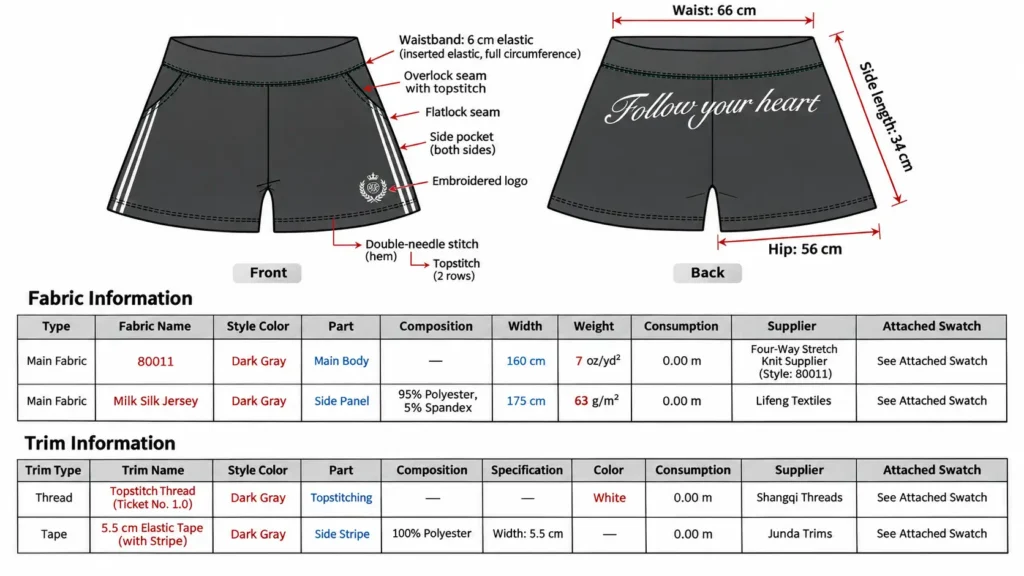
Quotation normalization begins before the suppliers calculate any prices. Every factory should receive the same controlled RFQ package so that the information entering each quotation is consistent. A practical package normally includes the product category, current Tech Pack or references, quantity per design and color, size range, fabric requirement, branding method, label details, packaging, applicable testing requirements, target market, and target timing.
Open items should remain visible rather than being left for each factory to solve independently. If the target material is still under review, a note such as “nylon-spandex, target 210–230 GSM, final article pending” creates a controlled assumption. It gives suppliers a reasonable basis for preliminary pricing while making it clear that the material has not yet been frozen.
A shared RFQ also reduces communication drift. When different suppliers receive specifications through separate email chains, instant messages, meeting notes, and spreadsheets, it becomes easy for one factory to work from an older instruction. Updating one controlled RFQ version and requesting revised quotations against that version creates a much cleaner sourcing record and makes later commercial discussions more productive.
| RFQ Field | Weak Input | Stronger Input | Practical Value |
| Quantity | About 1,000 pcs | 2 styles × 2 colors × 250 pcs | Clarifies SKU economics |
| Fabric | Premium stretch fabric | 75/25 nylon-spandex, target 220 GSM | Reduces material assumptions |
| Logo | Custom logo | Heat transfer, 60 × 25 mm, left hip | Aligns application cost |
| Sizes | XS–XL | XS 10%, S 20%, M 30%, L 25%, XL 15% | Supports planning |
| Packaging | Normal packing | 1 pc/polybag + size sticker + carton mark | Aligns handling scope |
| Testing | Must pass tests | Specify target test requirement | Prevents undefined test cost |
| Delivery | Ship overseas | State agreed trade basis and destination | Aligns responsibility |
| Version | No reference | Tech Pack V4 with RFQ date | Prevents quote drift |
One-Time Costs
Development charges should be separated from recurring production cost because the two behave differently as volume increases. One supplier may charge separately for pattern development and sampling but offer a lower recurring garment price, while another may absorb part of the development work into its production quotation. Looking only at the unit price can make these commercial structures difficult to compare.
A useful evaluation therefore considers at least two scenarios: the first production order and a repeat order based on an already approved product. A $300 development cost has a noticeable effect on a 300-piece launch, but its importance becomes much smaller when the same style is reordered in several thousand units without major redevelopment.
Depending on the project, one-time or semi-one-time costs may include sample development, pattern work, grading, molds, artwork setup, special fixtures, logo setup, or required testing. Not every project needs every item, and these costs should not be invented or bundled automatically. They are most useful when they are identified clearly enough for the sourcing team to understand whether they recur.
Inclusions and Exclusions
A practical quotation should make three conditions easy to recognize: included, excluded, and still to be confirmed. The third condition is important because many later disputes begin when silence is interpreted differently by each side. A brand may assume that an unmentioned item is part of the price, while the factory may have considered it outside the original request.
Packaging is a common example. “Standard packing included” might mean one transparent polybag and an export carton in one factory, while another supplier may use the same phrase for simpler bulk packing. Similar ambiguity can appear around hangtags, barcode labels, inspection, testing, export documentation, freight, special workmanship, or sample revisions.
A transparent “to be confirmed” note should not automatically be treated as weakness. It can be a sign that the supplier is unwilling to invent a cost before receiving the required information. Normalization works best when important open items are visible, resolved, and then incorporated into a revised quotation before the final supplier decision.
Trade Terms and Version Control
EXW, FOB, CIF, DAP, and other delivery terms do not carry the same commercial responsibility, so they should not be compared as if they were simply different labels on the same price. Factory collection, origin transport, export handling, main freight, insurance, destination charges, customs responsibility, and duties can sit in different places depending on the agreed term and route.
The sourcing team can either request all suppliers to quote the same commercial basis or normalize the additional costs separately. The goal is not to force one permanent trade term on every supplier but to ensure that the cost comparison is made at the same point in the logistics chain.
Version control is equally important. Each quotation should identify the style reference, Tech Pack version, sample status, material basis, quantity structure, packaging version, quotation date, validity, and unresolved assumptions. Without those references, a team can accidentally compare one supplier’s older product version against another supplier’s updated version and interpret a design change as a price difference.
How Do Brands Compare Cost, Time, and Risk?
Brands should compare normalized cost, development evidence, scheduling realism, quality control, and execution risk together rather than allowing one visible unit price to dominate the decision. A low quotation may offer poor value if it relies on incomplete specifications, high inventory commitments, unresolved sampling, weak quality definitions, or an unrealistic production schedule that becomes difficult to maintain after order confirmation.

True Comparable Cost
The most useful cost figure is the normalized cost of delivering the same garment under the same agreed conditions. That can include the recurring garment price, recurring branding, packaging, applicable inspection or testing charges, one-time development cost, and the logistics responsibility associated with the selected commercial term. Keeping these items visible prevents a low garment number from hiding additional cost elsewhere.
Inventory exposure should also be considered because a lower unit price can depend on a larger order commitment. Suppose one supplier offers $8.20 at 1,000 pieces per color while another offers $8.70 at 300 pieces per color. A growing brand that needs only 300 pieces may spend far more cash and carry substantially more inventory to access the lower unit price.
This is especially relevant when launching new styles or multiple colors. A slightly higher garment price combined with a workable color split can reduce excess stock and give the brand more room to test demand. The commercial question is therefore broader than “Which unit cost is lowest?” It is “Which offer creates the most workable total purchase for this specific program?”
| Supplier Factor | Supplier A | Supplier B | Supplier C | Interpretation |
| Unit price | $8.20 | $8.60 | $8.90 | A appears lowest |
| MOQ per color | 1,000 | 500 | 300 | C requires less inventory |
| Development fee | $150 | $300 | $250 | A has lower setup cost |
| Custom packaging | Excluded | Included | Included | A requires normalization |
| Testing | Separate | Separate | Separate | Comparable after definition |
| Timing basis | After material receipt | After PP approval | After release | Start point differs |
| Quality scope | Undefined | Approved-spec basis | Approved-spec basis | A needs clarification |
The figures above are illustrative and are used only to show comparison logic, not as market quotations.
Sample and Bulk Alignment
Sample development provides evidence that cannot be found in a quotation spreadsheet. During sampling, the factory demonstrates how it interprets construction, fit, material behavior, measurements, branding positions, elastic tension, seam details, and revision comments. A slightly higher quotation may become more understandable when one supplier shows stronger technical alignment and fewer unresolved questions during development.
The opposite can also happen. A low preliminary quote may lose its advantage when repeated sampling exposes misunderstandings about the fabric, pattern, seam type, pocket structure, or required finish. In that situation, the sourcing team is no longer comparing the same product originally described in the first quotation.
Leadshow can develop sportswear, swimwear, streetwear, and modest sportswear samples from customer concepts, Tech Packs, sketches, reference images, patterns, or physical garments. Its development process can include technical review, pattern work, fit adjustment, material and workmanship evaluation, and production conversion according to the project. Approval should still be specific: a substitute-material sample, photo approval, or one base size does not automatically confirm the full bulk-production version.
Lead-Time Milestones
A single lead-time number can be misleading because different suppliers may start and stop the clock at different points. “Thirty days” might mean thirty days after deposit, after material arrival, after sample approval, or after formal production release. Those definitions can create major differences even when the number printed on the quotation is identical.
A sportswear program may pass through material confirmation, sampling, revision, customer approval, applicable pre-production confirmation, material readiness, cutting, sewing, special workmanship, finishing, packing, inspection, goods-ready confirmation, forwarder handover, shipment, and final arrival. These stages should not be collapsed into one undefined promise when timing is important to the project.
A better comparison identifies the same start milestone and the same end milestone for each supplier. It also separates factory production from international transportation. Goods-ready date, shipment date, and final arrival are different events, and carrier schedules, customs conditions, and destination arrangements remain separate from the factory’s production performance.
Quality and Execution Risk
“Good quality” is too broad to support a supplier decision. Quality becomes useful when it is translated into approved references and acceptance criteria. Sourcing teams should know which Tech Pack, pattern, measurement chart, BOM, sample, workmanship reference, logo standard, label requirement, and packaging instruction will be used to review production.
The team should also understand what happens when a deviation is found. Useful questions include whether the issue is isolated, whether the affected quantity is reviewed, whether rework is possible, how the result is rechecked, and which customer standard controls acceptance. These details are more informative than broad claims such as “perfect quality” or “zero defects.”
Leadshow’s quality-related team can review materials, cutting, sewing, specialized workmanship, measurements, appearance, branding, labels, packaging, and quantities at applicable stages according to approved project references. Specific inspection stages, sampling ratios, AQL requirements, full-inspection items, customer inspections, and third-party inspections remain subject to the order and should be confirmed rather than assumed.
| Decision Factor | Example Weight | Evidence to Review | Concern to Clarify |
| Normalized cost | 30% | Same-scope pricing | Missing cost lines |
| Technical fit | 20% | Construction and material review | Repeated assumption errors |
| Sample performance | 15% | Fit, workmanship, revision control | Unresolved sample issues |
| Quality control | 15% | Approved standard and inspection scope | Vague quality claims |
| Timing realism | 10% | Milestone-based schedule | Undefined start point |
| Communication | 5% | Clear records and revisions | Conflicting instructions |
| Commercial flexibility | 5% | MOQ and SKU structure | Unworkable quantity split |
The weighting above is an example framework rather than an industry standard. Each brand can adjust it according to product complexity, volume, launch risk, inventory strategy, and internal priorities.
What Should Brands Confirm Before Supplier Selection?
Before selecting a sportswear supplier, the brand should confirm the current product version, material basis, sample approval status, quantity split, branding, packaging, quality requirements, trade term, delivery milestones, quotation validity, and the conditions that would require a new quotation. The final commercial decision is stronger when it is tied to a controlled production reference rather than a vague price promise.
Frozen Product Scope
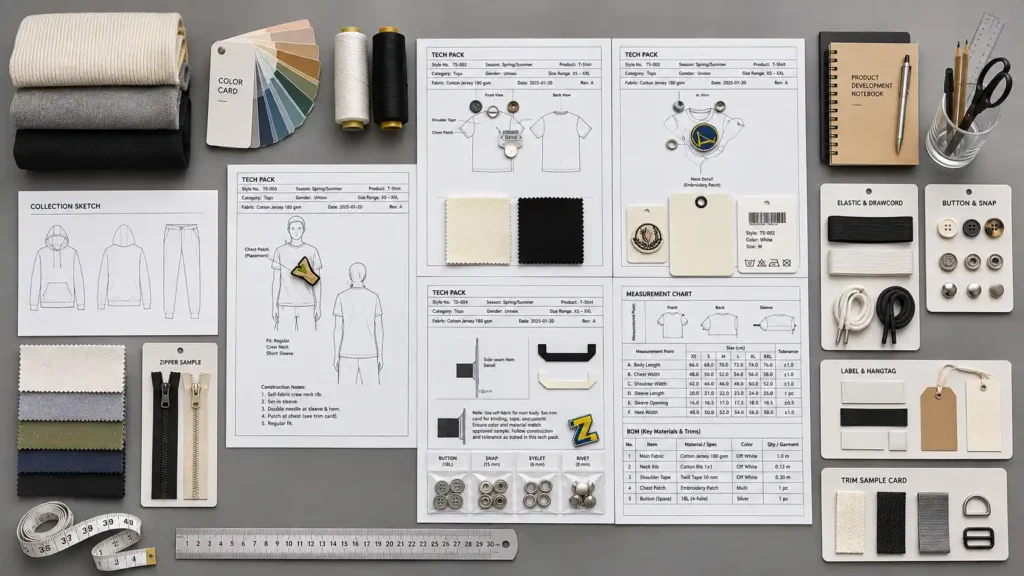
A final quotation should be connected to a clearly identifiable product version. “Frozen” does not mean the design can never change; it means everyone can see what the current price is based on. The latest measurements, fabric, color, construction, trims, logo method, size range, label package, packing requirement, testing condition, and quantity structure should be recorded before the final commercial comparison.
This protects both sides when development continues. Suppose a brand selects a supplier using a $9.20 quotation and then changes the fabric, replaces a standard elastic with custom jacquard elastic, adds a zip pocket, and upgrades the packaging. If the revised quotation becomes $10.40, the increase may reflect the new product rather than inconsistent pricing.
Version control makes that distinction visible. It allows the sourcing team to compare the old and new requirements line by line instead of arguing over a number without context. It also helps internal product, purchasing, and production teams work from the same approved reference when the style moves from development to bulk manufacturing.
| Final Confirmation Item | Record Before Selection | Commercial Importance | Requote Risk |
| Tech Pack | Version and date | Controls construction | High |
| Fabric | Approved article or specification | Controls material cost | High |
| Quantity | Per design, color, and size | Controls production economics | High |
| Logo | Process, size, and position | Controls setup and application | Medium–High |
| Labels | Type and quantity | Controls trim scope | Medium |
| Packaging | Complete pack-out | Controls materials and handling | Medium |
| Testing | Defined requirement where applicable | Controls time and laboratory cost | Medium–High |
| Trade term | Agreed commercial basis | Controls logistics responsibility | High |
| Quote validity | Expiry date | Controls price basis | Medium |
| Open items | Written unresolved list | Prevents assumption disputes | High |
Approved Materials and Samples
Supplier selection becomes more dependable as the quotation moves from assumptions to approved evidence. Early pricing may reasonably use reference photographs, estimated construction, provisional materials, or approximate quantities. Those figures are useful for initial screening, but they should not be mistaken for a production-ready commercial commitment.
As development progresses, the quotation should be tied to stronger references such as the approved Tech Pack, selected fabric, trim details, fit comments, current sample version, logo application, label package, packing requirement, and confirmed order quantity. The practical sourcing question is simple: “What exact version and material basis does this price apply to?”
The phrase “same as sample” is not specific enough when several samples exist. A development sample made in substitute fabric may not represent the bulk material. A base-size approval may not confirm the full size range, and a photograph may not capture every workmanship or measurement detail. Identifying the approved reference precisely reduces the chance that commercial and production teams are working from different assumptions.
MOQ and Quantity Split
MOQ should be confirmed again before supplier selection because development decisions can change the quantity economics. New colors, custom dyeing, special trims, labels, packaging, or certified materials can introduce supplier minimums that were not present in the earliest estimate. The final garment quantity therefore needs to be reviewed alongside the minimums of the materials and components required to produce it.
Leadshow’s standard MOQ generally starts from 100 pieces per color per design, subject to the actual fabric, trims, construction, customization, labels, packaging, testing or certification requirements where applicable, supplier conditions, and current production situation. A total order of 100 pieces across several colors should therefore not be assumed to satisfy a 100-piece-per-color-per-design starting point.
Sourcing teams should also distinguish garment MOQ from material MOQ. A sewing factory may be willing to produce a relatively modest quantity while a custom-dyed fabric, zipper, elastic, label, or packaging supplier requires a larger minimum. In that case, the commercial challenge is not simply garment production; it is how unused materials, repeat orders, color planning, or alternative components affect the project.
Requote Triggers
A professional quotation process defines the conditions that can change the price before the order is released. Common triggers include a new Tech Pack version, fabric change, quantity change, additional colorway, different logo process, new packaging requirement, extra testing, revised trade term, or a substantial change in the delivery scope.
External conditions can also matter during long development cycles. Supplier material prices, exchange rates, required certification or testing, and logistics conditions may change between the first estimate and the final order. Quotation validity should therefore be treated as an active commercial field rather than a footer that receives no attention.
A revised quotation is not automatically a negative signal. The more useful question is whether the supplier can explain the change clearly. If the material changed, the material basis should be visible. If the quantity fell, the new production economics should be understandable. If the packaging became more complex, the added scope should be identifiable. A controlled requote is usually safer than an unexplained promise that the price can never change.
For brands comparing custom sportswear manufacturers, the strongest supplier decision rarely comes from sorting a spreadsheet from lowest to highest price. The product, quantity, materials, workmanship, branding, packaging, quality requirements, trade terms, and delivery responsibility should first be brought onto the same basis. Once that work is done, the remaining differences in cost, development support, timing, and manufacturing risk become much easier to evaluate.
Shenzhen Leadshow Sports Technology Co., Ltd. is an OEM and ODM apparel development and manufacturing partner focused on sportswear, swimwear, streetwear, and modest sportswear. Leadshow has 15 years of industry experience, three manufacturing bases, more than 20,000 m² of combined facilities, a team of more than 1,500 people, and 304 production and finishing machines. Combined monthly capacity can reach up to approximately 120,000 finished garments, subject to product complexity, materials, order mix, and current production scheduling.
If your team is already comparing several sportswear quotations, a useful next step is not simply to ask another factory for a lower number. Share the project scope you actually want compared, including the Tech Pack or reference images, quantity per design and color, size range, material requirements, logo details, labels, packaging, applicable testing requirements, target market, and target timing. Leadshow can review the technical and commercial conditions and prepare a project-specific quotation based on the information available.
A well-structured quotation should make it easier to see what has been included, what remains conditional, and which project changes could affect price or timing later. That gives your team a stronger basis for comparing suppliers and helps move an approved product from sampling into repeatable bulk production with fewer hidden assumptions. If you are preparing a new custom sportswear program, you can send your Tech Pack, reference sample information, product images, and target quantities to Leadshow for project review and quotation.