A second order can look like the easy one. The design is approved, the first shipment arrived, and the sales team wants the same leggings or training tops again. Then the new stock reaches the warehouse. One color looks warmer, the waistband feels firmer, and a size medium measures differently from the one customers have been buying. Everyone remembers approving the style, but nobody can tell which pattern revision, fabric reference, or sample the second run followed.
Quality records support sportswear reorders by preserving the approved product standard and showing what happened in the previous run. The current pattern, measurements, material and color references, inspection findings, and approved changes give both teams a basis for checking new production. They also reveal which inputs have changed and which decisions need fresh approval before the next order is released.
Those records are most useful when they can be matched to a particular style, version, color, and production run. An old inspection report does not certify new garments, and a photo of a successful sample cannot settle a measurement dispute on its own. The real test comes when someone asks an ordinary question: “Are we making the same product we approved last time?” If the answer requires searching old email threads, the reorder has already inherited a problem that paperwork alone could have prevented.
What Records Define the Approved Style?
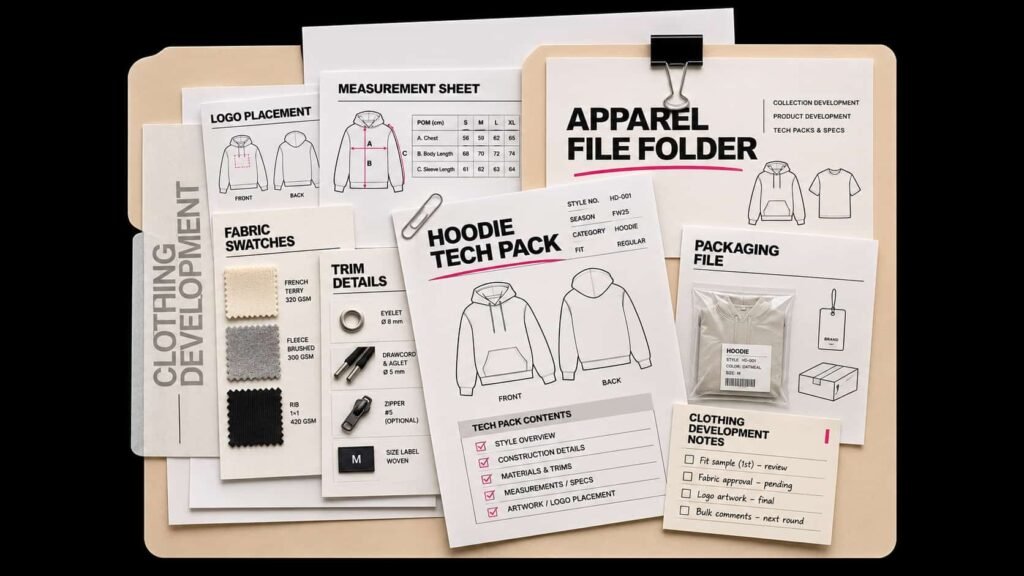
The approved style is defined by a matched set of records: the accepted sample, current tech pack, pattern version, measurement chart, bill of materials, artwork, and order-specific instructions. Each file should identify the style and revision it applies to. Previous inspection findings add context, but they do not override a later approved change.

Which Sample and Tech Pack Were Approved?
“Use last time’s sample” sounds clear until there are three samples in the cupboard: the first prototype, a corrected fit sample, and a preproduction sample with revised elastic. The useful reference is the one whose approval can be identified, along with the date, style code, color, size, and outstanding comments. If a sample is retained, its label should point to the same specification version used for production. Where a physical sample is unavailable, approved images and measurements help, but they may miss handfeel, stretch, seam tension, and other details that appear only when the garment is handled.
A tech pack also needs a clear status. A file sent for quotation may differ from the version released after sampling. Compare its revision with the accepted sample and the final production notes, especially if changes were agreed in email or a call. A newer file is not automatically the approved one; what matters is whether the change was reviewed and accepted for the style being reordered.
Are the Pattern and Size Files Current?
Patterns and grading files turn an approved fit into pieces that can be cut again. For sports bras, the relationship between the underband, cup area, and straps affects support and comfort. For leggings, the rise, crotch curve, inseam, and waistband all influence how a familiar size feels. A measurement chart should therefore name its pattern revision and explain where and how each point is measured. If a tolerance was approved for the first run, carry the actual approved range forward rather than inventing one for the reorder.
Some discrepancies are really document conflicts. A sample may contain a sleeve correction while the stored pattern remains older; a size chart may show a new inseam but the grading file has not been updated. Before cutting, the teams need to resolve which source governs the new run and record the answer. Preserving every old file is useful for history, but production needs one current set of instructions.
How Should Files Travel Between Teams?
The person who developed the first sample may not be the person arranging the reorder. A useful handover connects the product code and previous order to one approved set of files, then names any changes intended for the new run. Development can confirm the pattern and construction, purchasing can check material availability, and production can see the instructions that actually apply. Quality staff need the same references when they measure finished garments or review a disputed detail.
Ask where the controlling files are held and how updates reach each team. A physical sample in a cabinet is of limited use if no one can establish its revision, and a correct tech pack cannot guide cutting if an older version is still on the work floor. The record should be easy for authorized staff to find without making customer-owned patterns and artwork available beyond the project.
| Record | What it establishes | Reorder question |
| Approved sample and comments | Accepted fit, finish, and remaining conditions | Is the reference the final approved version? |
| Tech pack and BOM | Construction, components, branding, and packing | Do file versions agree with the sample? |
| Pattern and measurement chart | Shape, grading, measurement points, and agreed tolerances | Were approved corrections transferred into the files? |
| Previous inspection report | Findings from a specific earlier run | Which points deserve attention this time? |
A compact cover record can list those four references beside the style code and previous order number. It does not replace the source files; it tells development, production, and quality staff which ones to open. When a disagreement appears, the team can trace the decision back to an actual approval rather than arguing from memory. It also makes a supplier handover more realistic if the people managing the reorder are different from those who developed the original style.
Access matters as much as filing. A design team might hold the last accepted sample, while production has only a draft tech pack and purchasing has a separate bill of materials. Ask who maintains the approved set, how a new revision is communicated, and whether the factory can retrieve it when the reorder begins. Customer-owned files and confidential designs should be shared only with the people who need them for the project; easy retrieval does not require making the whole product history public.
How Do Records Protect Fit and Fabric Consistency?
Measurement and material records make “same fit and fabric” something the next run can check. Compare current garments with the approved measurement method and size chart, then review the actual fabric and color references for the new lot. The earlier result is a baseline; current materials and finished garments still need their own checks.

What Do Measurement Reports Show?
A useful measurement report names the garment style, size, color or lot where relevant, points of measure, method, results, and approved tolerance. A number without a method can mislead: a relaxed waistband and a stretched waistband are different measurements, and a curved seam measured flat can produce a different result from one measured along its edge. The report should also show which sizes were reviewed. A passing sample in medium does not establish that the grading is correct in extra small and extra large.
Compare the new results with the approved specification, then use the previous run to spot a pattern. If a measurement sat near its tolerance limit last time, ask whether the next run is drifting in the same direction. This does not mean an old batch should become the standard merely because it shipped. An accepted deviation may have applied to one shipment only; any permanent change belongs in the current approved chart and pattern.
Are Fabric and Color References Still Valid?
Fabric names are poor identifiers. Two rolls described as black stretch jersey can differ in weight, surface, recovery, or shade. Retain the approved fabric specification, supplier or material reference where available, color approval, and the results of any tests required for the product. Then identify what is actually available for the reorder. The previous lot’s results describe that lot; they do not prove that a fresh dye or knitting batch behaves the same way.
The checks should follow the garment’s use. For example, a legging may need scrutiny of opacity in movement, recovery after stretch, and wash behavior if those characteristics were part of its approved requirements. A training top may place greater emphasis on drape, moisture handling, or print compatibility. Formal performance claims need suitable current testing when required; a visual inspection of finished garments cannot establish them. If a proposed fabric substitution changes fit or feel, treat it as a product decision, even if its fiber composition looks similar on paper.
Which Sizes and Colors Need Rechecking?
The current assortment can expose risks the earlier order never tested well. A reorder concentrated in extra small and extra large should not rely solely on a medium-sized reference garment. A new dark color may deserve a closer look at opacity, shade and logo appearance than a lighter color carried over unchanged. The review need not apply the same checks blindly to every combination; it should explain which sizes, colors and material lots are being represented by each result.
Keep product requirements separate from convenient averages. A fabric-weight figure may describe the material received, while a measurement report describes garments cut and sewn from it. If a particular size drifts or one color lot feels different, those records help narrow the question. They do not establish the cause without a comparison using the agreed method and the actual units affected.
| Comparison point | Previous approved reference | Current run evidence | Decision if different |
| Key measurements | Approved chart and stated measuring method | New size measurements | Investigate pattern, cutting, or sewing variation |
| Fabric | Approved specification and physical reference, if available | Current material identity and required checks | Review substitution or lot differences |
| Color | Approved color standard | New lot review under agreed conditions | Confirm shade acceptance or request correction |
| Wear-related properties | Product-specific approved test requirements | Current test results where needed | Hold the claim or approval until supported |
Numbers become useful only when the comparison is fair. Keep the unit of measurement, point of measure, garment condition, and test method together with the result. A previous shrinkage figure from a different wash procedure, for instance, cannot settle a dispute about the current material. This discipline protects the brand from silent fit changes while giving the factory a specific issue to investigate instead of an instruction to “make it feel like last season.”
The size and color mix also matters. A reorder with more extended sizes or a new dark color may expose construction or shade questions that were barely visible in the first order. Decide which sizes and colors need checking from the actual assortment and the product’s risk points. Neither a single approved sample nor a large pile of undated test results substitutes for evidence connected to the garments being made now. The aim is a comparison someone else can repeat and understand.
Which Changes Need Fresh Approval?
Fresh approval is needed when a change could affect fit, appearance, function, labeling, or delivery requirements beyond the scope already accepted. Review material and trim substitutions, pattern revisions, artwork, labels, and packaging against the prior approved record. The required evidence depends on the change: a document update may be enough for one item, while another calls for a swatch, sample, or test.

Have Materials or Trims Changed?
Even when the style code stays the same, the same materials may no longer be available. A different dye lot may require color review; a replacement elastic may change waistband pressure; a new zipper can alter how a jacket lies when closed. Record the old specification, the proposed alternative, the reason for substitution, and the product risk. Ask whether the alternative can be reviewed on a component alone or needs to be tried on the garment. An item that looks interchangeable on a purchase sheet may behave differently after washing or during movement.
Avoid treating every lot change as a complete redesign. A new lot of an approved material can be reviewed against the agreed specification and acceptance criteria. A changed construction, stretch behavior, or fit may call for a garment sample or revised approval. The question is what the old evidence actually covers, not whether the purchase order happens to say “repeat.”
Do Logos, Labels, or Packaging Differ?
Brand details are easy to underestimate because they sit outside the pattern. A changed logo size or heat-transfer film can affect appearance and durability on stretch fabric. A revised care label may need a fresh review of its wording and placement. A new destination can change carton marks, barcode data, size grouping, or other receiving instructions while the garment itself remains unchanged. Keep the current artwork, label copy, placement measurements, and packing requirements tied to the new order rather than silently carrying old files forward.
Approval should identify its scope. Accepting a new logo placement on a sample does not automatically approve a fabric substitution or a revised fit. Likewise, approving a changed carton label does not reopen every product decision. A short change log gives both teams a way to see what is unchanged, what is approved, and what remains open. Once a decision is made, update the production reference so that a corrected sample and an outdated instruction sheet do not point in opposite directions.
How Is Approval Scope Recorded?
Each approval should say what was reviewed and where it applies. A photograph of one sports bra can confirm the position of a new logo on that fabric, but it may not show how the artwork looks across all colors or prove that a changed underband performs acceptably. If a carton proof is approved, it should identify the shipment, size allocation and destination it covers. This makes the evidence useful when several changes arrive in the same order.
The timing belongs in the record as well. A trim substitution found before sampling can be assessed on the product without affecting completed work. If the difference is discovered after cutting, the team must first identify which units used the trim before deciding how to proceed. A change log that records status, affected styles, decision date and approving party gives production an answer it can follow.
| Change | Possible effect | Evidence to discuss before production |
| New fabric lot or supplier | Shade, handfeel, stretch, or wash result | Material and color comparison; relevant tests if required |
| Different elastic or trim | Fit, function, or construction | Component review and garment sample when needed |
| Pattern or grading revision | Fit across sizes | Updated pattern, chart, and fit approval |
| Revised logo, label, or packing | Appearance, information, or receiving accuracy | Current artwork, approved placement, and packing proof |
This record is especially valuable when several teams touch the order. Development may approve a substitute, purchasing may order it, and quality may inspect the finished garment weeks later. If the decision has no version, owner, or date, each group can reasonably believe it is following the right instruction while looking at a different file. Change control is simply the means of making their decisions visible to one another.
Timing changes the cost of a decision. A new elastic identified before the sample review can be assessed alongside the intended waistband; the same substitution discovered after cutting may affect units already in progress. Record when the difference was found and which work is affected before agreeing to proceed. This is especially important when a reorder includes both unchanged stock colors and one revised colorway: approval for one combination should not quietly be applied to all of them.
How Can Past Defects Guide the Next Run?
Previous defect records tell the team where a reorder needs closer attention. Review what was found, how many units or which lots were affected, what was corrected, and whether the correction was checked. Turn a recurring issue into a specific inspection point for the new run, while still checking the rest of the garment against its approved requirements.

What Went Wrong Last Time?
A complaint such as “the leggings were too small” is a starting point, not a diagnosis. Were the affected garments all one size or color? Was the issue measured against the approved chart? Did the waistband lose stretch after washing, or did the cut pieces start smaller? The defect record should carry the style, order or lot, size, quantity affected, photos or measurements, inspection findings, and the approved reference used in the comparison. It should also distinguish a confirmed manufacturing difference from an unresolved report.
Look at earlier in-process findings as well as customer complaints. If a sewing line corrected twisted side seams during the first run, a clean final inspection may hide how much rework was needed. That history can point to an early checkpoint on the next run. On the other hand, one isolated defect should not be inflated into proof of a systematic failure. The evidence should shape the response, not the most dramatic description of the problem.
Were the Corrections Verified?
“Fixed” is not a complete record. A correction may apply to units already made, a machine setting, an operator instruction, a pattern, or a material choice; each has a different effect on a later order. Identify the affected scope, the action taken, and the recheck result. If the first run had a print placement issue, the next run might need a first-output comparison with the approved placement before volume printing begins. If the issue involved a disputed shade, the next dye lot needs its own review.
Keep accepted exceptions separate from permanent revisions. A brand might accept a small variation to ship a time-sensitive order without wanting it repeated. Labeling that decision as a one-order concession protects the next run from using it as the new normal. When the cause remained uncertain, say so in the record and agree on a sensible additional check instead of inventing a neat explanation after the event.
What Counts as a Useful Defect Trend?
Counts need a denominator and a defined scope. Twelve measurement failures among 200 garments checked from one size tell a different story from twelve complaints collected across an entire season of sales. Record whether the figure covers inspected pieces, shipped pieces or returned pieces, then look at the affected sizes, colors and lots. A cluster may justify a focused early check, but the count alone does not explain whether the pattern, material or sewing process caused it.
Some issues disappear from a final report because the factory corrected them before packing. Retain the original finding and recheck result so the next production team knows where setup was fragile. Equally, do not promote a single isolated defect into a permanent diagnosis. The useful history names what happened, the evidence available and the specific point that should be verified in the next run.
| Previous finding | Record to reopen | Useful check on the new run |
| Inconsistent waistband width | Measurements, pattern revision, correction note | Compare first output and selected sizes with current chart |
| Logo placed too low | Approved artwork and placement measurements | Check the first decorated garment before continuing |
| Shade difference between lots | Color reference and prior lot findings | Review current lot against the approved standard |
| Incorrect carton size mix | Packing instruction and shipment discrepancy | Verify current size allocation and packed cartons |
An inspection plan should never become only a list of last season’s mistakes. New materials, a different size mix, or revised branding can introduce risks that did not exist before. Past records are a way to spend attention intelligently, not permission to ignore current specifications. The strongest review connects three things: the original requirement, the last run’s actual finding, and the evidence collected during the new run.
Returns and wear complaints need the same care. A customer may report fading after washing or a seam opening during exercise, but the order record alone cannot establish the cause. The teams may need the garment, care history, material reference, and any agreed testing before drawing a conclusion. Record what is known, what is still uncertain, and which check would help. That keeps a useful signal from being dismissed while avoiding an unsupported promise that a different production setting will solve it.
What Evidence Should Confirm a Reorder?
A reorder should be confirmed against the current approved reference using evidence from the new run. Relevant records may include material reviews, measurements, in-process findings, finished-garment inspection, packing checks, and approved changes. The final decision should show what was checked, which issues remain open, and who authorized the next production or shipment step.

Do New Inspections Match the Approved Standard?
Start by checking the identity on every record: style, order, version, color, size, and the batch or lot where applicable. An inspection photo can be persuasive but nearly useless if nobody knows which run it shows. The report should state the applicable acceptance criteria and the actual result. If a measurement fails, the team needs the measured value, the approved range, the quantity or scope affected, and the outcome after correction. A generic “QC passed” statement does not show how a particular concern was resolved.
Inspection points should match the product and order. Material review, early production checks, finished-garment review, and packing checks answer different questions; the scope and sampling arrangements should be agreed for the project. A sampled final inspection is evidence about the inspected sample and the lot assessed under those terms, not proof that every garment is flawless. Performance, chemical, and regulatory requirements need their own appropriate evidence where applicable.
Who Approves Changes and Production Release?
A useful release record identifies the current files, unresolved questions, accepted deviations, and the person authorized to decide each one. Some decisions belong to the brand because they alter the accepted product; others require a production or quality decision on how to contain and recheck affected units. Set those responsibilities for the order rather than assume a familiar supplier relationship has answered them. If a concession is approved, note the exact style, quantity, lot, and shipment it covers.
Before placing the next order, ask the factory to walk through one style from its approved sample to its latest inspection report and a proposed new material lot. The exercise reveals whether versions line up and whether earlier corrections reached the production instructions. It also makes the commercial conversation clearer: quantity, colors, size allocation, materials, timing, and price still require a current review. Good records make those discussions faster to resolve; they do not guarantee that every input remains available.
What Should Travel With the Shipment?
The brand and manufacturer should agree which records the brand will receive: perhaps a current approval summary, relevant inspection results, change decisions and packing evidence. The working file may contain much more, but the shared records must be sufficient to identify the order, understand any accepted deviation and answer a question after delivery. A report marked “pass” without the style, inspection scope or revision is difficult to use once several shipments have arrived.
Receiving requirements deserve their own check. A tracksuit can meet its garment measurements while cartons carry an outdated size mix or incorrect destination mark. Compare the actual packed quantities, size and color identification, labels and carton details with the current order. The final record should let both sides determine which product was approved, what was checked and which goods left the factory.
| Decision point | Evidence to identify | Question before moving on |
| Reorder brief | Prior style, approved revisions, new quantities | Does everyone mean the same product and scope? |
| Change approval | Change log and relevant sample or document | Has the affected product detail been accepted? |
| Production check | Current inspection results and issue follow-up | Were differences contained and rechecked? |
| Shipment release | Finished-garment and packing evidence as agreed | Are open issues and release authority clear? |
For brands managing several seasons or suppliers, a clean handover matters as much as the individual report. Keep the approved standard, previous findings, current changes, and new inspection results connected by style and order identifiers. That connection lets a new team member see the history without treating an old document as current approval. It also gives both sides a fairer basis for discussing a complaint, an improvement, or the next reorder after this one ships.
The paperwork should reach beyond the cutting room when the order requires it. A measurement report will not prevent a warehouse from receiving the wrong size ratio or cartons marked for another destination. Compare packed quantities, size and color identification, labels, and carton details with the current purchase order. Keep receiving requirements distinct from garment quality criteria, and close both sets of questions before shipment. Agree which records the brand will receive, who may view them, and how questions will be raised if the new run differs from the reference. Record availability and approval authority belong in the order discussion, rather than being assumed after a problem appears.
If you are planning a sports bra, legging, training top, tracksuit, or other custom sportswear reorder, Shenzhen Leadshow Sports Technology Co., Ltd. can review your approved sample, tech pack, measurement chart, material references, prior quality findings, and proposed changes with the relevant development and production teams. Share the style, intended quantities by color and size, and the delivery window when you request a quotation. Leadshow can then assess the current materials, required approvals, quality checks, production schedule, and pricing for your specific project, so the next run begins with a clear standard rather than an assumption about the last one.
If your previous supplier’s file is incomplete, send what you have: a sample, product photographs, measurements, a fabric reference, and a description of any complaints or corrections. Mark which details must stay the same and which you want to change. That distinction gives the team a starting point for deciding whether the style can be repeated from existing information or needs additional development and approval. A useful quotation starts with the garment and its actual requirements, including any testing, labels, and packaging needed for the intended market.