Changing the factory behind a successful sportswear style sounds easier than developing a new product. The garment already exists, the fit has been tested, and customers may already be buying it. In practice, however, an established style can be harder to transfer accurately because important production knowledge often sits outside the formal specification. A waistband may have been tightened during a late fit round, a fabric may be known only by an old supplier code, or a sewing operator may have learned the correct elastic tension without that setting ever being added to the Tech Pack. When a new factory receives only the garment and an outdated file set, it is being asked to reconstruct years of decisions from incomplete evidence.
A brand should transfer an existing sportswear style by creating one controlled production baseline: the latest Tech Pack, approved physical sample, measurements and tolerances, pattern information where available, BOM, material references, artwork, branding, packaging instructions and confirmed revision history. The new factory should audit those references, requalify materials and fit, approve the new production version and validate bulk execution before significant volume is moved.
The commercial risk is easy to picture. A repeat customer orders the same leggings six months apart. The label is unchanged and the color looks familiar, yet the waistband feels softer, the rise sits differently and the fabric becomes slightly transparent under stretch. To that customer, the factory did not change; the brand did. A disciplined transfer is designed to prevent exactly that moment by turning hidden production knowledge into portable, reviewable and testable instructions.
What Should a Brand Transfer to the New Factory?
A brand should transfer one controlled production package: the latest Tech Pack, approved garment, measurements and tolerances, pattern information, BOM, fabric and trim references, artwork, labels, packaging instructions and confirmed revision history. The goal is not to give the new factory more information, but to give it one clear, current version of what the product is supposed to be.
The biggest mistake in an existing-style transfer is assuming that a familiar garment is already fully documented. Commercially successful styles often accumulate quiet changes over several seasons. A waistband may have been reduced after a fit review, a logo may have moved several millimeters after the first production run, or an elastic may have changed supplier without the original BOM being updated. Before development starts, the brand should identify the current production version and make sure the Tech Pack, measurement chart, BOM, artwork and packaging instructions all point to that same version. Old records can remain archived, but they should be marked as superseded rather than left beside current files where a merchandiser, pattern maker or sample technician could use them by mistake.
Measurement information deserves special attention because a number without a measurement method can be misleading. The new factory needs the agreed point of measure, the way that point is taken, the finished-garment target and the applicable tolerance. A note such as “waist 68 cm” is less useful than a controlled POM showing whether the garment is measured relaxed, stretched, flat, around the circumference or across one-half of the garment. The same principle applies to grading. If only the base size is available, the new pattern team may need to rebuild grade rules for the rest of the range. That is manageable, but it should be recognized as redevelopment rather than treated as a simple handover.
| Transfer Item | Minimum Useful Information | Practical Control Point | Main Risk If Unclear |
| Tech Pack | Current revision, construction, POMs and workmanship | One approved version number | Different teams use different instructions |
| Measurement Chart | Base size, graded sizes, tolerance and POM method | Typical apparel tolerances may vary by POM and garment; define them per project | Fit changes despite similar appearance |
| Pattern | Current pattern or confirmed reconstruction basis | Match pattern revision to sample revision | Shape and balance must be rebuilt |
| BOM | Fabric, trims, labels and component references | Supplier/article reference where available | Unplanned substitutions |
| Artwork | Vector file, dimensions, placement and color reference | Measure from a fixed garment landmark | Logo size or position changes |
| Packaging | Fold, bag, SKU, label and carton requirements | Approved packing reference | Retail or warehouse inconsistency |
| Revision Record | Confirmed changes and approval status | Current / superseded / pending | Old corrections reappear |
Approved Sample
A physical approved garment remains one of the most useful transfer references because it captures details that are difficult to express in text: drape, seam appearance, waistband feel, fabric surface, logo finish, garment balance and overall proportion. However, the sample should not silently override the written specification when the two disagree. If a medium legging measures 66.5 cm at the waist while the latest chart says 64 cm with an agreed tolerance, the discrepancy needs a decision before the new pattern is finalized. The sample should also be identified by style number, size, color and approval status so that a development sample made in substitute fabric is not accidentally treated as proof of the final bulk standard.
Missing Files
Missing source files are common when brands switch manufacturers. The original factory may hold the pattern, historical adjustments may exist only in emails, or the brand may own finished garments but not the latest graded pattern. A new sportswear factory can still evaluate the style, but the project changes from transfer to partial reconstruction. A physical garment can help rebuild pattern shape, seam placement and construction logic, while several adjacent sizes can provide useful evidence for grading. Fabric and trim analysis may also be required if supplier references are unavailable. Brands should allow more validation time in this situation and make clear which elements are being transferred directly and which are being recreated.
Pattern and Asset Control
A factory transfer often exposes an issue that was ignored during the original development phase: who controls the technical assets? The brand should establish whether it possesses the current pattern files, graded patterns, artwork masters, custom molds, special trim specifications and other product-specific assets. A finished garment does not automatically prove ownership of every file or manufacturing tool used to create it. For commercially important styles, maintaining an internal transfer folder with the current Tech Pack, measurement chart, BOM, artwork, approval records and the technical files the brand is entitled to retain makes later second-sourcing much easier. Confidentiality, permitted use and file-retention terms should also be handled through the applicable commercial arrangements.
How Should the New Factory Audit the Style?
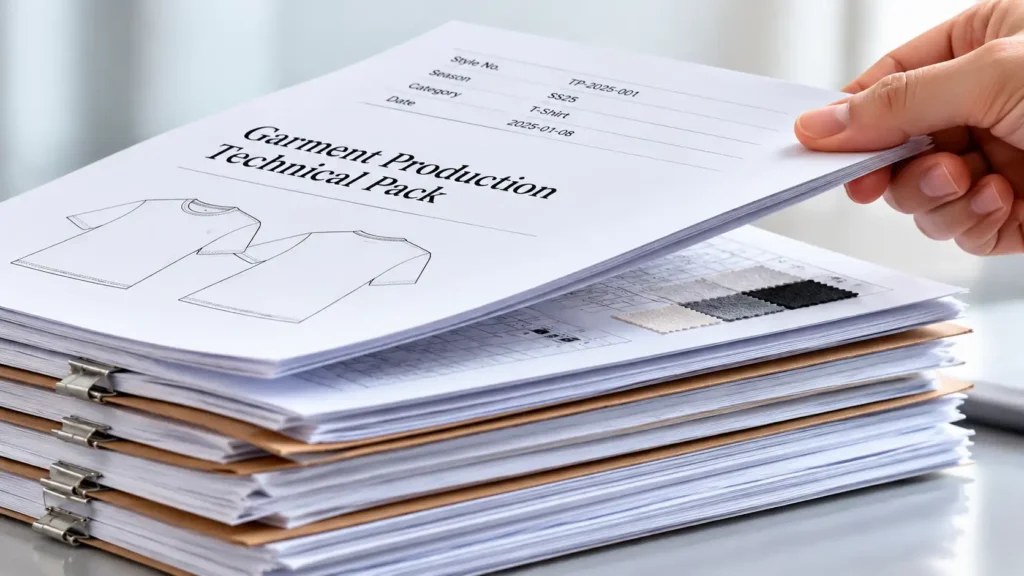
The new factory should audit the style by comparing the approved garment with the current Tech Pack, measurements, pattern, BOM, fabric and trim references, branding files and production history. The audit should identify confirmed requirements, missing information and conflicting instructions before sampling. A strong audit prevents the factory from reproducing old mistakes or inventing solutions where specifications are unclear.
A strong transfer audit is not an attempt to criticize the previous supplier. Its purpose is to determine how much of the existing product is actually transferable and how much still depends on undocumented knowledge. Some styles arrive with current files and a clearly identified approved sample, so the new factory mainly needs to verify manufacturing feasibility. Others look complete until the sample room discovers that the garment, pattern and size chart represent different historical versions. That distinction matters because a quotation, sampling plan and transfer timeline should reflect the amount of reconstruction required rather than assuming every repeat style is production-ready on day one.
This is also where a brand can learn a great deal about a prospective supplier. A factory that immediately says “no problem” after seeing two product photographs has not necessarily demonstrated flexibility; it may simply not have identified the technical questions yet. Thoughtful questions about POMs, tolerances, elastic behavior, material availability, artwork versions and sample status are often more useful than instant agreement. The audit should separate confirmed requirements, physical references, open development items and conflicts. When those categories are clear, the factory can quote and sample against known assumptions instead of burying uncertainty inside the unit price or discovering it after bulk has begun.
| Audit Area | What to Compare | Example Decision Standard | What the Result Tells the Brand |
| Waist | Sample vs specification vs pattern | Use the agreed POM and project tolerance | Whether the fit baseline is consistent |
| Rise | Front/back sample measurement vs chart | Check front and back separately by size | Whether garment balance has shifted |
| Inseam | Pattern and finished garment | Use the same measurement method across references | Whether length difference is real |
| Gusset | Shape, width and seam placement | Compare pattern geometry and sample position | Whether mobility or comfort may change |
| Underband | Measurement plus elastic behavior | Check relaxed dimension and wearing response | Whether sports-bra support may change |
| Logo Position | Artwork coordinates vs garment | Measure from a fixed garment landmark | Whether branding placement is controlled |
| Seam Type | Sample vs construction page | Match approved function and appearance | Whether an alternative process is acceptable |
Fit and Measurement Audit
Fit is not simply a list of finished-garment measurements. It is the combined result of pattern shape, grading, fabric behavior, construction and the intended body fit. The factory should measure the reference garment using the same POM method described in the specification, with particular attention to high-risk sportswear areas such as waist, front and back rise, inseam, gusset width, thigh, leg opening, underband, strap length, armhole and torso length. Any measurement outside the agreed tolerance should be flagged, but even an in-tolerance garment can feel different if the material stretches more easily or if pattern distribution has changed. Differences should therefore be classified as specification error, sample variation, pattern difference, material effect or new design request before the next sample is made.
Construction Audit
Construction review should focus on how the garment achieves its intended shape, durability and appearance. The sample room should identify seam types, stitch applications, elastic attachment, reinforcement, hems, gussets, pockets, closures, bonding, taping, padding and other style-specific structures. A new factory may not use exactly the same sewing sequence as the previous one, and that is not automatically a problem. The relevant question is whether the proposed method preserves the approved result. Changing the assembly sequence of a hidden pocket may have little commercial effect, while changing how elastic is attached to a sports-bra underband can materially affect tension and wearing feel. Process alternatives should therefore be judged by product outcome rather than by machinery labels alone.
Specification Conflicts
Conflicts between files are more common than many sourcing teams expect. A Tech Pack may show one logo position while the approved garment shows another; a measurement chart may have been updated while the pattern still reflects the previous value; a BOM may list one elastic while the current garment uses another. These conflicts should be closed before development continues. A useful issue register records the two conflicting sources, the final approved decision, the owner of that decision and the document that needs updating. For example, if an email says “shorten straps by 1 cm” but the latest Tech Pack still contains the previous length, the factory should not guess whether the comment was already applied. Converting informal history into one controlled instruction prevents known problems from being reproduced.
Reproduction Limits
Brands should be cautious when a supplier promises an exact copy before materials, patterns and production methods have been reviewed. The original mill may no longer produce the fabric, a zipper may be discontinued, a custom elastic may carry an impractical supplier MOQ, or a heat-transfer film may require different settings at the new factory. The professional response is to identify which details can be matched directly, which can be matched functionally and which require a new approval. This distinction protects the parts of the style that customers actually experience. A hidden assembly sequence may change without consequence, but a weaker waistband, shifted logo or visibly different fabric surface can change the perceived product even if the silhouette looks similar on a hanger.

How Should Materials and Fit Be Requalified?
Materials and fit should be requalified together because sportswear fit is heavily influenced by fabric stretch, recovery, weight, thickness and elastic behavior. The replacement material should be compared with the approved reference using measurable characteristics and physical wear evaluation. If the material behaves differently, the pattern or construction may also need adjustment before the transferred style can be considered equivalent.
Material substitution is one of the most underestimated risks in a factory transfer. Two fabrics can share the same headline composition and similar GSM yet behave very differently when stretched, washed or worn. Knitting structure, yarn selection, finishing, dyeing, mechanical stretch, recovery and surface treatment all influence how the product feels and how the pattern behaves on the body. For sports bras, leggings, fitted tops and jumpsuits, this relationship is especially sensitive. A softer fabric can make the garment feel larger even when flat measurements pass inspection, while a higher-recovery fabric can make the same waistband feel significantly tighter. Material selection is therefore part of fit engineering rather than a purchasing decision that can be separated from pattern development.
The brand should define which characteristics are essential to preserve. Some are visual, such as matte appearance, color depth or surface texture. Others are tactile, including softness and handfeel. Others can be measured, such as composition, fabric weight, shrinkage, stretch and recovery. Performance claims may require an applicable material or garment test rather than being inferred from appearance. When the original mill and article remain available, current-lot confirmation is still useful because historical supplier codes do not guarantee that every production lot behaves identically forever. When the original source is unavailable, the new factory should evaluate alternatives against the intended product result instead of treating a similar fabric name as proof of equivalence.
| Property | Reference Method | Practical Example | Why It Matters |
| Composition | Supplier specification or test report | Example: 75% nylon / 25% elastane | Influences feel, stretch and performance |
| Fabric Weight | GSM measurement | Example evaluation band: 220-260 GSM for a specific legging project, not a universal standard | Affects coverage, warmth and structure |
| Stretch | Defined direction and test method | Compare warp/weft or course/wale under the same method | Affects mobility and pattern fit |
| Recovery | Measure after controlled extension | Compare residual growth after the agreed recovery period | Affects bagging and compression |
| Shrinkage | Wash test under agreed conditions | A project may target about +/-3% or another agreed limit | Affects finished measurements |
| Opacity | Stretch and lighting evaluation | Review light and dark colors separately | Important for fitted bottoms |
| Handfeel | Approved swatch or garment reference | Side-by-side comparative approval | Influences perceived product quality |
| Color | Swatch, lab dip or approved material lot | Visual and/or instrument review as specified | Reduces shade disputes |
Fabric Comparison
Fabric names are not specifications. Two fabrics can both be described as nylon-spandex activewear fabric while behaving very differently when extended or washed. For an existing style, the first question is whether the original supplier and article remain commercially available. If they do, the factory should still confirm the current lot and intended finish rather than assume that an old fabric code guarantees the same result indefinitely. If the original source is unavailable, alternatives should be evaluated against the characteristics that matter to the style: stretch direction, recovery, shrinkage, opacity, surface, handfeel, width, color and any project-specific performance requirement. For highly fitted garments, the next fit sample should use the intended production material whenever practical because fabric behavior can materially change the wearing result.
Stretch and Recovery
Stretch is especially important in leggings, sports bras, fitted tops, jumpsuits and compression-oriented products. A fabric can reach the same extension as the reference yet require much less force to get there, making the garment feel softer, looser or less supportive. Recovery is equally important because a fabric that stretches comfortably but does not return close enough to its original state can lead to knee bagging, waistband relaxation or shape loss during wear. This is why a fit sample made from substitute fabric should be approved with a clearly limited scope. A pattern that performs well in the original high-recovery fabric may not create the same outcome in a softer alternative, even if the flat measurements remain unchanged.
Trims and Elastic
Trims should be evaluated as functional components, not decorative afterthoughts. Waistband elastic affects support and rolling in leggings; underband elastic and strap materials influence sports-bra stability; drawcords, zippers, mesh, pads, buckles and binding can alter comfort, weight and appearance. A trim review should consider dimensions, material, stretch, recovery, surface feel, color, attachment method and wash behavior where relevant. Branded components may also introduce supplier MOQ, tooling or custom-color requirements. Matching width alone is rarely enough. Two 30 mm elastics can have very different resistance and recovery, so a replacement should be approved against the intended wearing function rather than accepted simply because it looks similar on the table.
Material-Driven Fit
The objective is to preserve the intended fit, not necessarily to freeze the original pattern at all costs. If the original legging fabric is firm and the replacement is noticeably softer, using the existing pattern unchanged may create a looser wearing result even when the flat garment matches the measurement chart. A modest pattern adjustment may be necessary. The reverse can also happen: a firmer replacement fabric can create excessive compression or seam stress if the old pattern is copied without review. For established sportswear styles, material changes should therefore be treated as product-engineering changes with fit implications, not as silent sourcing substitutions. The material decision should happen early enough to influence the sample plan and final pattern confirmation.
Which Samples Should Be Approved Before Bulk?
The required sample sequence depends on transfer risk. A fit sample may confirm the reconstructed pattern, a size set may verify grading, and a pre-production sample may lock the intended bulk version. The key is approval scope: approving one size, one color or substitute material should not automatically be treated as approval of every size, color, material and production detail.
Brands sometimes resist resampling because the product is already proven, but the distinction is important: the product may be proven while the new production system is not. A sample from the former supplier proves that the former supplier could make the garment; it does not prove that the new factory’s pattern, material route, sewing method, machinery setup or quality interpretation will create the same commercial result. The new sampling cycle should therefore be treated as qualification rather than redesign. Its purpose is to verify that the transferred specifications produce the intended garment inside the new manufacturing environment and to expose any gaps before they become expensive bulk problems.
Sample approval also needs a defined scope. Approving a black medium-size legging does not automatically prove that an extra-large size grades correctly, that a pale color has sufficient opacity, or that a second fabric lot behaves identically. Likewise, approving a sample made in substitute fabric proves only the elements that the brand and factory have agreed can be judged from that sample. The simplest way to avoid confusion is to record sample type, version, size, color, material status and approval status together. That gives merchandising, development and production teams a common reference and prevents a photograph, base-size fit sample or substitute-material prototype from being treated as a complete production approval by accident.
| Sample Type | Main Purpose | Best Used When | Typical Approval Focus |
| Development / Proto | Rebuild or verify basic construction | Documentation is incomplete | Pattern shape and construction |
| Fit Sample | Validate wearing result | Pattern or material is new to the factory | Fit, measurements and balance |
| Material Sample | Approve fabric or trim | Original source changes | Handfeel, color, stretch and recovery |
| Logo Sample | Validate branding process | Logo method or supplier changes | Size, position, appearance and adhesion as applicable |
| Size Set | Check grading | Broad size range or rebuilt grading | Proportion and key POMs |
| PP Sample | Lock production-intended version | Before bulk release | Material, fit, construction, branding and labels |
| Pilot Run | Test production repeatability | Higher-risk transfer | Process stability, QC and packing |
Fit Sample
A fit sample gives the new factory its first practical test of whether the transferred information has been interpreted correctly. It should be reviewed against the approved reference, current measurement chart and intended fit. For fitted sportswear, the evaluation should consider not only flat measurements but also garment balance, stretch, recovery, waistband or underband behavior, mobility and seam positioning. Comments should be actionable. “Too tight” is difficult for a pattern maker to translate consistently; a comment that identifies the affected area, relevant measurement and desired wearing change is much more useful. Brands should also distinguish supplier correction from design change. If the factory followed the approved specification and the brand now wants a different fit, that is a new development decision rather than evidence that the transfer itself failed.
Size Set
A base-size sample does not prove that the entire size range will behave correctly. A size set becomes particularly valuable when the original graded pattern is unavailable, the product has a broad size range or the style contains areas that do not grade in a simple linear way. Sports bras, fitted leggings and jumpsuits are common examples because torso proportions, straps, rises and circumference relationships can become more complex across sizes. The brand does not necessarily need to sample every size for every project; a risk-based plan can use selected sizes across the range to validate grading logic. The important point is to verify enough relevant sizes to expose problems before bulk production, especially at POMs whose growth affects function and proportion.
PP Sample
The pre-production sample is most useful when it represents the version that production is actually expected to follow. Ideally, it should use the intended bulk fabric, relevant trims, approved branding and current pattern. Where a project-specific substitute remains necessary, that limitation should be stated clearly so everyone knows what has and has not been validated. The PP review should close open production questions about dimensions, fabric, seam types, logo placement, labels and packaging. If major issues remain unresolved after approval, the approval is not doing its job. Bulk production should not depend on assumptions that the line will correct incomplete instructions later. The physical sample and controlled documents should tell the same story before production release.
Version Control
Sample management becomes much more reliable when every important sample has a clear version. A practical naming structure can include style number, sample type, revision, size and date; the exact format matters less than consistency. When a new version is approved, the related documents should be updated as well. A fit change may require a pattern and measurement-chart revision, a fabric change may require a BOM update, and a branding change may require revised artwork or placement instructions. This prevents a common transfer failure in which the physical sample is correct but the production file remains old. A factory can only execute consistently when the approved sample, pattern and documents describe the same product version.

How Can a Brand Transfer Bulk Production Safely?
Bulk production should move only after the new factory has demonstrated that it can execute the approved style under realistic production conditions. For higher-risk transfers, a controlled pilot or first order can validate materials, cutting, sewing, measurements, branding, QC and packing before larger volumes are moved. The transition should be based on evidence rather than confidence alone.
The first bulk order with a new factory should not be treated exactly like the twentieth reorder with an established supplier. The product may be mature, but the working relationship is new. Merchandising communication, material ordering, cutting control, line interpretation, quality escalation and packing execution have not yet been proven together. This does not mean every transfer needs unnecessary bureaucracy. The amount of validation should reflect risk. A basic sports T-shirt using familiar materials may need fewer controls than a multi-panel sports bra with elastic-tension requirements, bonded components and several branding processes. A smaller repeat order also presents a different commercial exposure from moving a large ongoing program, so production controls should be proportional rather than ceremonial.
Before bulk cutting, the team should close requirements that become expensive to discover later: material, color, measurements, pattern revision, grading, major trims, construction, branding and packaging. During production, inspection should happen early enough that corrective action remains practical. Finding an incorrect logo position after ten garments is fundamentally different from discovering it after several thousand. The safest transfer uses decision gates that progressively convert development evidence into production evidence. Material approval demonstrates that the intended inputs are acceptable; fit and PP approval demonstrate that the intended product has been interpreted correctly; early production and in-process checks demonstrate that the line can repeat the result; final inspection then confirms that the finished order and packing meet the agreed criteria.
| Production Gate | Evidence Needed | Release Question | Typical Risk Controlled |
| Technical Review | Current Tech Pack, BOM and reference sample | Is the product sufficiently defined? | Specification conflict |
| Material Approval | Approved fabric and trim references | Are production materials acceptable? | Uncontrolled substitution |
| Fit Approval | Approved fit sample | Is the intended fit reproduced? | Pattern or fit error |
| PP Approval | Production-intended sample | Is the bulk version locked? | Wrong construction or branding |
| Initial Production Check | Early line output | Is the line following approved standards? | Repeated process error |
| In-Process QC | Measurements and workmanship checks | Is variation remaining controlled? | Defects multiplying through bulk |
| Final Inspection | Finished garments and packing | Does the shipment meet agreed criteria? | Nonconforming shipment |
| Reorder Review | Final records and approved corrections | What becomes the next-order baseline? | Same issue recurring |
Pilot Production
A pilot run can reveal problems that never appear in a single sample. A development or PP sample may be sewn by an experienced sample technician using carefully prepared pieces, while bulk production introduces fabric spreading, layered cutting, line balancing, multiple operators, material lots and repeated handling. Pilot production is therefore most valuable for styles with complex paneling, bonded details, demanding elastic control, new materials, specialized processes or tight measurement requirements. The quantity should be determined by the project rather than treated as a universal number. The objective is to create enough repeated production to expose process variation and confirm how cutting, sewing, measurement control, branding, QC and packing work together before the brand commits significantly more volume.
QC Priorities
Factory-transfer QC should focus on features most likely to change when production moves. For leggings, that may include waistband measurement, rise, inseam, seam flatness, opacity and logo placement. For sports bras, underband circumference, strap length, pad position and elastic attachment may deserve greater attention. For running shorts, waist, pocket position, liner attachment and opening dimensions can become the critical points. Quality standards also need objective definitions. “Good sewing” is subjective, while instructions such as no skipped stitches in critical seams, bartacks present at specified locations and key measurements within agreed tolerances are easier to inspect consistently. Inspection frequency and sampling should reflect order size, product complexity, previous defect history and the customer’s own acceptance requirements.
Supplier Overlap
Switching factories does not always require an immediate, complete exit from the previous supplier. For commercially important styles, overlapping the qualification phase can reduce supply-chain risk. The established factory may continue supplying while the new factory completes material matching, fit approval and an initial production run. This can be useful for repeat bestsellers or wholesale programs where a stockout would be more damaging than the temporary cost of maintaining two sources. It also gives the brand real comparison data on communication, lead-time reliability, material sourcing, product consistency and corrective-action responsiveness using the same style. The goal is not indefinite duplication, but to separate supplier qualification from full-volume migration so that allocation decisions are made after the second source has produced evidence.
Transfer Completion
A factory transfer should be considered complete when the new manufacturer has a controlled production baseline that can support repeat orders, not simply when the first purchase order ships. That baseline should include the approved product version, current pattern, measurement chart, material and trim references, BOM, branding instructions, packaging requirements, QC criteria and lessons learned from the first production. This final step is easy to overlook because teams often move directly to the next style after a successful shipment. Months later, another merchandiser handles the reorder and several transfer decisions are no longer remembered. A well-documented first production becomes part of the product specification itself, allowing future orders to start from a stable reference instead of rediscovering the same answers.
Final Takeaway and Project Inquiry
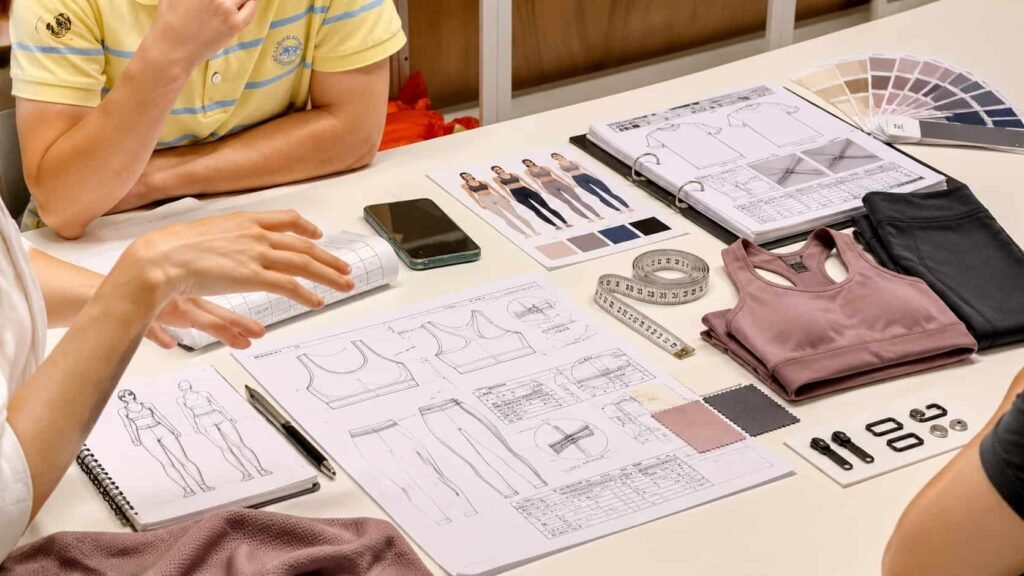
A successful sportswear factory transfer is less about copying a garment than preserving product knowledge. The old manufacturing route may hold years of decisions in patterns, samples, operator habits and supplier relationships, while the brand may only have part of that history in its formal files. The safest transfer turns those decisions into controlled evidence before relying on a new production system. That means one current product baseline, clear material and fit requirements, defined sample-approval scope and bulk production that begins from an approved reference rather than from memory. When the process is handled this way, the brand can judge a prospective factory by its ability to identify gaps, resolve conflicts and reproduce the commercial intent of the style rather than by how quickly it promises that everything is possible.
Shenzhen Leadshow Sports Technology Co., Ltd. supports sportswear OEM and ODM projects through technical review, pattern and fit adjustment, sample development, material and workmanship evaluation, small-batch trial production where appropriate, bulk manufacturing, quality control, labels, packaging and export-delivery support. If you are considering moving an existing legging, sports bra, running short, sports T-shirt, tank top, tracksuit or another applicable sportswear style, send the latest Tech Pack, reference garment, measurement chart, BOM, material information, target quantity, colorways and any known production concerns. The project can then be reviewed to determine which elements are already production-ready, which specifications need to be reconciled and which areas should be revalidated before quotation, sampling or bulk production.