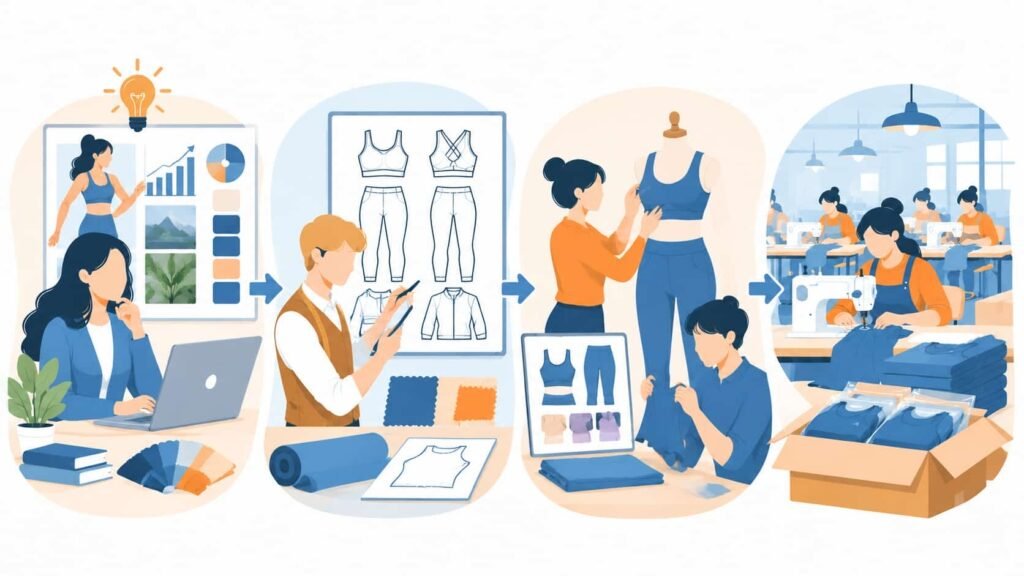
Two activewear products can arrive in identical-looking polybags, carry different brand labels, and still come from very different development models. That difference affects far more than the name printed on a quotation. It can determine whether you are choosing an existing garment or controlling your own fit, whether the factory can change the fabric and construction, how much sampling is needed, which supplier minimums influence the order, and whether another company can purchase a similar product. For a growing activewear brand, those decisions shape cash flow, launch timing, product consistency, and how easily a successful style can be repeated.
Private label activewear generally gives a brand more control over branding and product specifications, while white label activewear usually starts with a supplier-developed product that multiple companies may sell under their own names. The terms are not standardized, so the real difference should be judged by what can be changed, who controls the approved specification, what development work is required, and what is contractually exclusive.
The confusion often appears only after sampling starts. A brand may think ‘private label’ means a unique legging, then discover that the factory meant an existing style with a new logo and hangtag. Another supplier may use the same phrase for a project involving new patterns, materials, fit corrections, and custom packaging. Before comparing quotations, it pays to understand the manufacturing scope behind the terminology.
What Is the Difference Between Private Label and White Label Activewear?
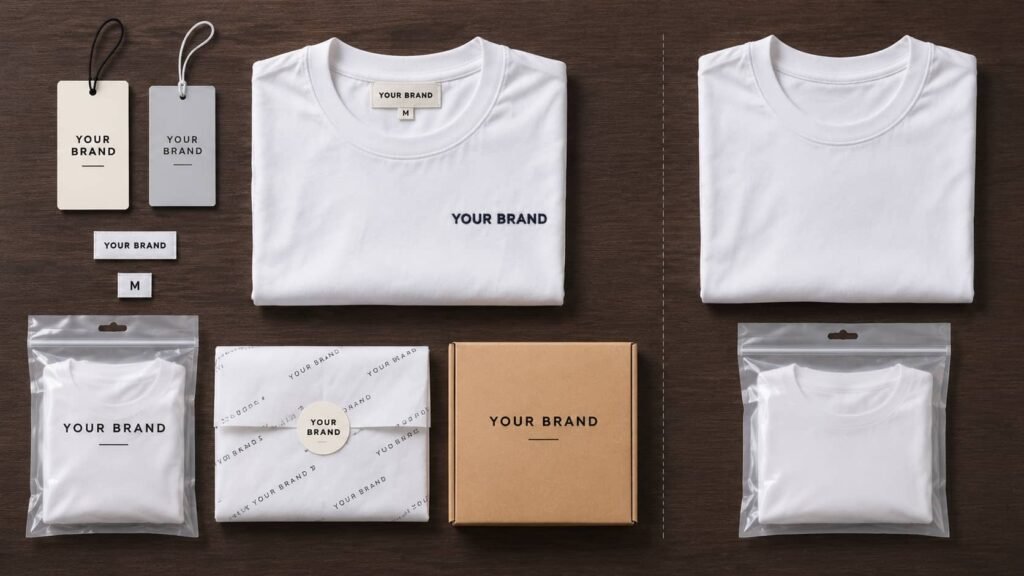
White label activewear usually starts with a supplier-developed garment that several brands can sell under their own branding. Private label generally allows greater control over specifications, fit, materials, construction, and presentation. Because manufacturers use these terms differently, the safest comparison is the written scope: what can change, who controls the specifications, and whether any element is actually exclusive.
| Decision Area | White Label Activewear | Private Label Activewear | What to Confirm |
| Starting point | Existing supplier style | Existing base with deeper changes or newly developed style | Whether the pattern already exists |
| Fit control | Usually limited | Moderate to extensive | Which measurements and grading rules can change |
| Fabric choice | Established or available options | Wider project-specific sourcing | Composition, GSM, stretch, color and finish |
| Construction | Usually restricted | More commonly reviewed | Waistband, pockets, panels, seams, straps and elastic |
| Branding | Logo, labels and packaging often available | Logo, labels and packaging integrated into project | Method, placement, artwork and supplier minimums |
| Sampling | Often simpler | Usually more development stages | Which sample and file version becomes the bulk reference |
| Exclusivity | Normally not implied | Still not automatic | What is exclusive, where, and for how long |
| Pattern ownership | Commonly supplier-controlled | Project-dependent | Who owns, stores, updates, or may reuse the pattern |
What White Label Usually Means
A white label program commonly begins with a garment the manufacturer has already developed. The supplier may have the pattern, sewing sequence, size range, fabric options, and production method in regular use. A brand then selects an appropriate style and adds approved branding such as a heat-transfer logo, main label, care label, hangtag, or packaging. For a new leggings launch, this could mean choosing an existing high-rise pattern and an available nylon-elastane fabric rather than developing the fit and material combination from the beginning.
That shorter path can reduce development work, but it should not be confused with product ownership. If the underlying fit and construction remain part of a supplier’s standard range, other companies may be able to purchase a very similar garment. White label is therefore most useful when speed and demand validation matter more than proprietary product architecture. The brand still needs to review the garment itself, because an established style can be commercially wrong for a particular market even when it is technically easy to manufacture.
What Private Label Usually Means
Private label places the finished garment under the customer’s brand, but the manufacturing depth behind the term varies widely. One supplier may use it for an existing style with custom labels and packaging, while another may use it for a project involving pattern adjustment, fabric sourcing, custom color development, construction changes, multiple fit samples, and an approved technical file set. A serious comparison therefore asks what the factory will actually develop rather than whether it offers a service carrying a particular label.
For activewear, the useful questions are specific: Can the rise, inseam, waistband depth, pocket position, strap geometry, or elastic tension change? Can the fabric composition, weight, finish, or color be selected to a defined requirement? Can seam construction or bonding be evaluated? The answers reveal how much control the brand will have over the physical product. Deeper control generally creates more development work, but it can also make repeat orders more consistent because the approved specification becomes clearer and more brand-specific.
How OEM and ODM Fit
OEM and ODM describe overlapping but different parts of the development relationship. An OEM project generally begins with customer-controlled technical information such as a Tech Pack, BOM, measurement chart, approved sample, or detailed specification. An ODM project may begin earlier, with a concept, sketch, reference image, or product direction, and require more support to convert that idea into a manufacturable product. Either route can ultimately produce merchandise sold under the customer’s own brand.
This distinction matters when comparing quotations. A factory pricing a finished Tech Pack is not quoting the same workload as a factory expected to interpret reference photos, propose materials, adjust a pattern, and develop several samples. Private label can sit on top of either workflow. To keep discussions practical, define the input files, development responsibilities, approval stages, and final production reference. Those deliverables are easier to compare across suppliers than broad service labels that may be used differently from one company to another.
What Exclusivity Really Covers
A garment carrying your logo is not automatically an exclusive garment. The trademark, artwork, packaging design, and other brand assets may belong to your company while the underlying product remains based on a supplier’s standard pattern. Even a customized product can contain common sewing methods, existing blocks, commercially available fabrics, or standard trims that are not proprietary. If exclusivity matters, it should be described in terms that can be checked rather than assumed from the phrase ‘private label.’
Useful agreements identify exactly what is restricted: a full pattern, a distinctive construction detail, a custom print, a specific fabric-color combination, a proprietary trim, a territory, a customer category, or a defined period. Pattern ownership is another separate issue. Paying a development or sample charge does not by itself establish ownership of every file, block, or manufacturing tool involved. As a style becomes commercially important, these details become more valuable because repeat fit and recognizable construction can become part of the product identity customers return for.
Which Activewear Details Can You Customize?
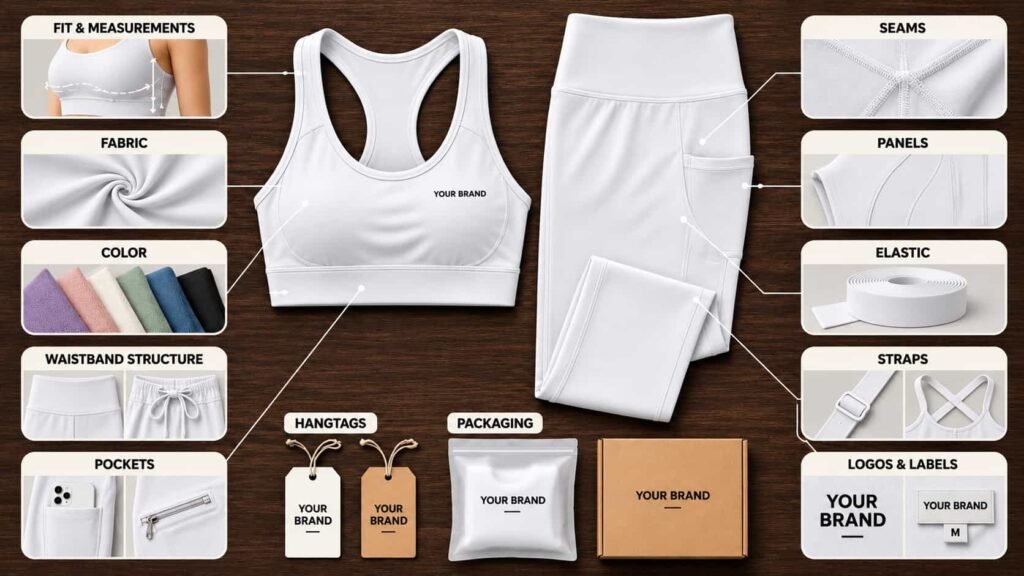
Activewear customization can include fit, measurements, fabric, color, waistband structure, pockets, seams, panels, elastic, straps, logos, labels, hangtags, and packaging. The practical limit depends on the original pattern, material behavior, available processes, supplier minimums, and order volume. The more technical the change, the more important it becomes to confirm feasibility through specifications and samples before bulk production.
| Customization Area | Useful Specification | Common Project Reference | Manufacturing Focus |
| Fabric | Composition, GSM, stretch direction, recovery, handfeel, color | Legging knits often fall around 180-250 GSM, but style needs vary | Opacity, recovery, shrinkage and seam behavior |
| Waistband | Finished height, circumference, layers, elastic, seam position | High-rise bands are often developed within roughly 8-15 cm | Rolling, tension, comfort and waist-to-hip balance |
| Legging length | Inseam and total length by size | 7/8 and full-length fits require different grading decisions | Consistent proportion across sizes |
| Sports bra | Underbust, strap width, neckline, armhole, pad construction | Support feel changes with both pattern and elastic tension | Fit balance, comfort and recovery |
| Seams | Overlock, coverstitch, flat seaming, bonding where suitable | Process chosen around fabric and load area | Stretch, durability, bulk and appearance |
| Pockets | Position, opening, depth, reinforcement | Phone, key or card storage | Opening stability and panel distortion |
| Branding | Artwork, dimensions, placement, application method | Heat transfer, woven label, printed solution or other approved method | Adhesion, stretch compatibility and wash durability |
| Packaging | Bag, barcode, insert, carton assortment and marks | Defined by retail, warehouse or distribution needs | Supplier MOQ, accuracy and SKU control |
Fit and Measurement Control
Fit is one of the clearest differences between superficial branding and genuine product development. Two black leggings can look almost identical in a product photograph yet feel completely different because of front rise, back rise, waistband circumference, hip allowance, crotch curve, inseam, leg opening, elastic tension, and fabric recovery. Sports bras are similarly sensitive to underbust width, neckline depth, armhole shape, strap length, bottom-band construction, and the way lining or pads interact with the outer shell.
The practical way to manage those variables is to turn subjective feedback into measurable revisions. ‘Make the waist tighter’ can be interpreted several ways; a revised measurement chart that changes specific points of measure is much clearer. Fit also cannot be separated from material. A pattern developed in a firm, high-recovery knit may behave differently in a softer fabric with greater stretch. Whenever possible, fit approval should therefore use the approved or representative production material so the pattern and fabric are being judged as one system.
Fabric and Performance Requirements
Activewear fabrics are often described with consumer language such as buttery-soft, compressive, breathable, or quick-dry. Those descriptions may communicate an intended experience, but they are not complete manufacturing specifications. A useful fabric brief identifies composition, approximate weight, knit structure where relevant, stretch direction, recovery expectation, surface feel, color, finish, and any performance requirement that genuinely matters to the product. For many leggings, 180-250 GSM is a common reference range, but suitable weight depends on construction, target opacity, season, use case, and desired handfeel.
Performance claims should be tied to evidence rather than adjectives. Dimensional change may be evaluated using methods such as AATCC 135 or ISO 5077, while colorfastness to laundering may be specified through AATCC 61 or ISO 105-C06 when appropriate to the customer’s program. The exact method should be selected for the destination market and product requirement, and testing can be arranged through suitable internal checks or qualified third parties depending on the project. A heavier fabric is not automatically better, and a technical-sounding material name does not by itself prove a performance claim.
Construction and Technical Features
Construction changes often have consequences beyond appearance. A deeper waistband, concealed pocket, curved back seam, bonded edge, laser-perforated ventilation zone, internal drawcord, adjustable strap, or flat seam can change the pattern, seam allowance, material consumption, machine selection, and sewing sequence. Adding a phone pocket to leggings, for example, introduces questions about opening stability, pocket depth, panel stretch, reinforcement, and whether the extra seam changes how the garment sits on the body during movement.
The same discipline applies to specialized processes. Bonding can create a clean edge or reduce selected stitched areas, but the fabric, adhesive film, temperature, pressure, wash requirement, and structural location all need to work together. Four-needle six-thread flat seaming can support flatter stretch-compatible seams on fitted products, but it should not be described as seamless knitting. A strong development process asks what a feature is intended to improve, then checks whether the proposed construction can deliver that result repeatedly at production scale.
Branding, Labels, and Packaging
Branding is usually easier to change than fit or construction, but it still benefits from technical control. A logo should have an approved artwork file, dimensions, placement, application method, and color reference. A heat-transfer mark on a high-stretch waistband needs different consideration from a mark on a stable sweatshirt panel because the substrate stretches, recovers, and experiences repeated washing. The application method should be evaluated against the actual fabric rather than selected only because it looks attractive on a presentation sample.
Internal labels and packaging deserve the same attention. Main labels, size information, care labels, composition details, hangtags, barcode stickers, bags, inserts, carton marks, and size-color assortment all become part of the product record. Some fitted garments may use heat-transfer internal labels to reduce bulk, while others use woven labels. Packaging can also carry its own supplier minimums, especially when printing or special materials are involved. A correctly made garment placed in the wrong bag or carton can still create receiving, warehouse, and retail problems on a multi-SKU order.
How Do MOQ, Cost, Sampling, and Lead Time Compare?
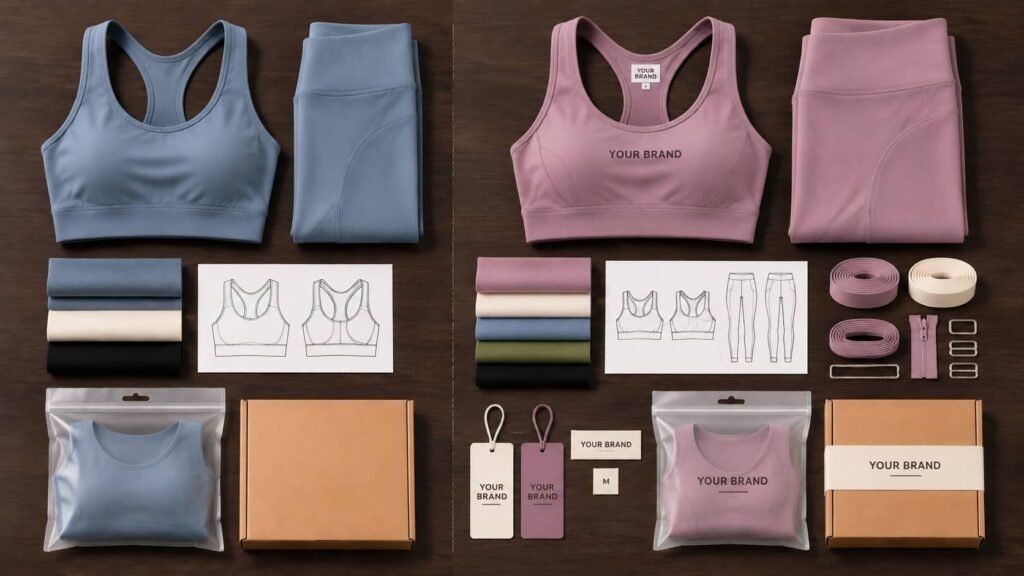
White label projects often reduce development work because the pattern, materials, and construction already exist. Private label projects may require pattern work, new fabric sourcing, fit revisions, and custom trims, increasing initial cost and timing. Neither model has one universal MOQ or lead time: final conditions depend on materials, colors, construction, branding, packaging, approvals, quantities, and current production scheduling.
| Commercial Variable | Simpler White Label Project | Deeper Private Label Project | Main Driver |
| Pattern work | Usually existing | Revision or new development may be required | Fit and construction complexity |
| Fabric | Stock or established option | Existing, sourced, custom-dyed or specially developed | Mill MOQ, color MOQ and availability |
| Fit samples | Often fewer | Usually more iterations | Number and significance of revisions |
| Custom trims | Limited | More common | Supplier MOQ, tooling and development |
| Branding | Usually available | Integrated with broader customization | Artwork method, substrate and approval |
| Packaging | Standard or custom | Standard or custom | Printing MOQ and distribution requirements |
| Production setup | Established route | May need process validation | New construction or special process |
| Reorder stability | Depends on continued material availability | Can improve with controlled specifications | Version control and component continuity |
How MOQ Really Works
MOQ is often presented as one number, but an activewear order can contain several overlapping minimums. The garment factory may have a sewing minimum, while the fabric mill applies a separate dyeing or knitting minimum. Custom elastic, zippers, hardware, printed packaging, woven labels, and other components can each come from suppliers with their own requirements. A factory may therefore be technically able to sew a small quantity while one custom component makes that quantity commercially difficult or pushes material purchases above the finished-garment order.
Color splitting creates another common constraint. Six hundred leggings in one color are not operationally equivalent to six hundred pieces divided among six colors. Each color can require separate material preparation, cutting control, sewing tracking, finishing, packing, and inspection. Leadshow’s standard MOQ generally starts from 100 pieces per color per design, subject to fabric, trims, construction, branding, labels, packaging, certification requirements, and production conditions. Lower-quantity feasibility may sometimes improve when projects use available fabrics, standard colors, standard trims, or simpler packaging, but it should be confirmed against the actual style.
How Cost Changes with Customization
Unit price is only one part of the cost comparison. A standard white label legging may require little new development because the pattern, fabric, sewing route, and base construction are already established. A private label version might add a revised waistband, different material, custom color, bonded pocket, proprietary elastic, extra sampling, new labels, and branded packaging. Comparing the two unit prices without accounting for those added inputs can make a deeper development project appear artificially expensive or a simpler project appear more capable than it really is.
A practical costing discussion separates development-related expenses from recurring production cost and order-specific setup. Development may include pattern work and sampling; recurring cost includes fabric, trims, sewing, finishing, quality activities, and packaging; setup can include artwork preparation, printing screens, molds, special tooling, or custom trim development where relevant. The commercial test is whether the extra cost creates a feature customers can feel, see, or value. A better-fitting waistband may justify the investment; a complicated trim with little effect on the product experience may simply add risk.
Sampling and Approval Stages
White label does not mean sampling can be skipped. Even when the garment already exists, a brand should review the actual product for fit, fabric feel, stitching, color, measurements, branding location, labels, and packaging before bulk production. The process may involve fewer development rounds, but the product still needs an agreed reference. A deeper private label project commonly requires more structured sample development because changes to fit, fabric, construction, or special processes can interact and need to be checked together.
Not every style needs the same number or name of samples. A basic sports T-shirt and a complex sports bra should not be forced through identical workflows. What matters is version control. If a later sample has the correct waistband while the measurement chart still contains an earlier version, the approval is incomplete. Before bulk manufacturing, the physical sample, measurements, fabric reference, trims, artwork, labels, and packaging should all point to the same approved version so the production team is not choosing between conflicting instructions.
What Determines Lead Time
Lead time is a chain of dependencies rather than one factory calendar number. An approved stock fabric in a standard color may move into cutting relatively quickly once the order is released. A custom-dyed fabric can require greige availability, color development, bulk dyeing, finishing, inspection, and transport before garment production begins. Special elastic, hardware, bonded structures, or unique packaging can add other approval and supply steps, even when the garment sewing itself is straightforward.
Production complexity also changes timing. A basic tank top does not move through cutting and sewing at the same rate as a multi-panel sports bra with lining, elastic installation, pads, and several finishing operations. A useful schedule separates material confirmation, sample approval, bulk material preparation, cutting, sewing, special processes, inspection, packing, and export preparation. Fixed sampling or production promises should therefore be treated cautiously until the style, materials, quantities, and current schedule are known. The most useful question is which approvals and materials must be complete before production timing can be confirmed.
Which Model Fits Your Brand Stage?

White label often suits brands that need to test demand with lower development complexity, while private label becomes more valuable when fit, materials, construction, consistency, and product identity need tighter control. Many growing brands use both. The right choice depends on the role of each product, expected reorder volume, available development resources, and how much differentiation customers will actually notice and value.
| Brand Situation | Useful Starting Model | Reason | Main Risk to Manage |
| First market test | White label or light customization | Faster category and price validation | Weak differentiation or unsuitable base fit |
| Small first collection | White label / limited private label | Controls development workload | Too many colors and low quantity per SKU |
| Fit-led activewear brand | Private label | Fit becomes part of product value | More sampling and material dependency |
| Technical hero style | Deeper private label or OEM development | More specification control | Higher development complexity |
| Growing repeat-order range | Private label with controlled specs | Consistency becomes more important | Version and material change management |
| Seasonal fashion addition | Existing or adapted base style | Shorter development cycle | Shared styles in the market |
| Core leggings or sports bra | Deeper development | Repeat fit can justify investment | Fabric and fit interaction |
| Basic branded tank or tee | Either model | Simple construction may not need heavy development | Overengineering the product |
Testing a New Market
A new brand rarely has perfect information about what customers will buy. A founder may expect a five-color leggings launch to perform evenly, then discover that black carries most of the early demand. A fitness studio may believe sports bras will be the strongest merchandise category but find that training tops generate more repeat orders. When the commercial question is still basic – which category, price point, fit direction, or color will sell – an established product can reduce the amount of technical development required before that question is answered.
Market testing still needs a minimum quality threshold. A fast-to-launch style is not useful if the base fit, fabric, or workmanship is wrong for the intended customer and produces misleading feedback. Early assortments also benefit from restraint. A focused range with fewer styles and colors often provides clearer sales information and avoids spreading a small order across too many SKUs. Once real sales and wear feedback identify the strongest products, deeper development can concentrate on the features customers have demonstrated they care about rather than on assumptions made before launch.
Building Product Differentiation
Private label becomes more valuable when the garment itself carries the brand promise. A yoga brand may discover that customers repeatedly mention a waistband that stays flat, a softer handfeel, fewer front seams, or a particular ankle length. A running brand may care more about pocket stability, lightweight construction, ventilation, internal drawcord design, or a specific fabric surface. Those needs are difficult to build through a logo change alone because they depend on the physical interaction between pattern, material, construction, and intended use.
The goal is not to customize every component. That can create cost and supply complexity without improving the customer experience. Strong product development often focuses on two or three attributes that really matter. For leggings, that might be waistband fit and fabric recovery; for sports bras, underbust structure and strap configuration; for running shorts, pocket design and material weight. Focused differentiation is easier to sample, test, manufacture, explain, and repeat. It also gives the factory a clearer target than a long list of decorative changes that are not tied to product value.
Managing a Growing Product Range
As a brand grows, the sourcing problem changes from ‘Can we launch this?’ to ‘Can we reproduce it consistently?’ Repeat customers can notice differences that first-time customers may miss. A waistband that becomes shorter, a fabric that feels shinier, a leg opening that tightens, or a logo that moves can create complaints even when the garment remains broadly recognizable. Product control therefore becomes less about creating the first attractive sample and more about keeping approved details stable across reorder cycles.
Growing ranges benefit from controlled measurement charts, fabric codes, approved color references, trim information, artwork, packaging instructions, and clear revision history. Multi-SKU execution also becomes more demanding as one purchase order combines several styles, colors, sizes, labels, and packing configurations. Clear SKU-level instructions reduce sorting and packing errors later in the process. At this stage, coordination between development, manufacturing, quality, labeling, packing, and shipment preparation can matter as much as sewing capacity because the commercial risk increasingly sits in consistency and order accuracy.
Using Both Models Together
Many brands do not need one sourcing model for every SKU. A mixed strategy can be more efficient because products play different roles in a collection. A company might invest deeply in core leggings and sports bras because those items drive repeat purchases and define fit identity, while using an established tank top or sweatshirt base where differentiation comes mainly from fabric color, graphics, or branding. That allows technical resources to concentrate on products where additional development has a clear commercial return.
The same logic applies to seasonal decisions. A short-lived fashion color may not justify custom fabric development if a suitable standard shade already exists. A permanent core black legging, however, may justify tighter control over fabric, pattern, measurements, and repeat-order references because it could remain in the range for years. Product managers can evaluate each SKU by expected volume, lifespan, customer sensitivity, development complexity, and differentiation value. The objective is not maximum customization; it is the right level of control for the job each product needs to perform.
What Should You Verify Before Choosing a Manufacturer?

Before choosing an activewear manufacturer, verify the real development scope, pattern status, materials, fit process, sample approval method, MOQ conditions, branding options, quality controls, packaging requirements, production capacity, and reorder process. A dependable comparison is based on documented capabilities and project conditions rather than broad service labels, a low headline price, or promises that do not explain how the product will actually be made.
| Verification Area | Question to Ask | Useful Evidence | Warning Sign |
| Product scope | Is this an existing or newly developed style? | Pattern and development explanation | Vague claim that everything is fully custom |
| Measurements | Can measurements and grading be changed? | Controlled measurement chart | No agreed size specification |
| Fabric | What material will actually be used? | Swatch, code, composition, weight and color reference | Only marketing descriptions |
| Construction | Which seams and processes are planned? | Sample plus construction notes | Supplier cannot explain the production route |
| Sample approval | What becomes the bulk reference? | Approved sample and matched file set | Approval only through informal chat |
| MOQ | Does MOQ apply by design, color, fabric or component? | Written quotation conditions | One universal MOQ for every project |
| Quality | What is checked against the approved specification? | Measurement and workmanship criteria | Promises of perfect or zero-defect production |
| Packaging | Can SKU-level packing be controlled? | Packing specification and assortment | Packaging decided only after production |
| Reorders | How are previous specifications reconfirmed? | Versioned product records | Unapproved substitutions or undocumented changes |
Define the Manufacturing Scope
A useful supplier discussion should make the manufacturing model understandable without relying on marketing terminology. Ask whether the proposed style comes from an existing pattern and, if it does, which elements are fixed. Can the factory revise waist circumference, body length, rise, inseam, strap length, pocket dimensions, or other measurements? Can a different fabric be substituted without rebuilding the fit? Can construction details be changed? Those answers determine whether the project is mainly branding, adaptation, or full product development.
If the project begins from a Tech Pack, the conversation should focus on manufacturability, missing information, and areas that need clarification. If it begins from a reference image or physical sample, more interpretation may be required because a photograph cannot define seam allowance, elastic tension, fabric weight, internal construction, or exact measurements. It is also useful to understand which processes are handled in-house and which may be coordinated with qualified external specialists when necessary. The objective is not to demand that every process sit under one roof, but to understand who is responsible for approval and quality.
Control Specifications and Samples
The approved sample is valuable, but it should not stand alone. Physical samples can be lost, damaged, interpreted differently, or become outdated while revisions continue. A stronger production reference combines the approved garment with controlled technical information such as measurements and tolerances, fabric references, colors, trims, construction notes, artwork, logo placement, labels, packaging, and the size-color quantity breakdown. That combination allows information to move from development teams to production teams without relying on memory or informal chat history.
Version control is particularly important when several rounds of sampling occur. If the first sample uses one waistband height, the second changes the dimension, and the final fitting changes it again, all documents need to point to the approved value. Artwork should follow the same rule. A file sent early in development should not remain active if logo dimensions or placement later change. Bulk production is safest when one identifiable sample and one matching file set clearly define the current product version and superseded instructions have been removed from day-to-day use.
Verify Quality and Reorder Conditions
‘High quality’ is not a measurable production requirement. Quality becomes useful when it is translated into criteria that can be inspected. Measurement control needs defined points of measure and agreed tolerances. Appearance review may cover seam alignment, skipped stitches, puckering, logo position, color consistency, finishing, label placement, and packaging accuracy. Functional requirements should be handled separately and linked to suitable test methods when the product claim, destination market, or customer standard requires evidence. Not every garment needs the same testing program, but the required checks should be known before bulk goods are finished.
Reorders need their own review because materials and supplier conditions can change. A fabric bought a year earlier may no longer be available in the same lot, minimum quantity, finish, or commercial condition. Zippers, elastics, packaging, and other components can change as well. For important repeat styles, the factory should compare the new order against the latest approved product record and identify substitutions before production. Reliable manufacturing is not only the ability to make a successful first order; it is the ability to understand what needs to remain controlled when the product comes back for another season.
How Can Leadshow Review Your Project?
Shenzhen Leadshow Sports Technology Co., Ltd. focuses on sportswear, swimwear, streetwear, and modest sportswear development and manufacturing. Its confirmed capabilities cover project evaluation, product development, pattern and fit adjustment, sample development, small-batch trial production where applicable, bulk manufacturing, quality control, custom labels, custom packaging, and export delivery support. The manufacturing system includes three modern manufacturing bases, more than 20,000 square meters of combined facilities, a team of more than 1,500 people, and more than 300 production, specialized-process, and finishing machines. Combined monthly capacity can reach up to approximately 120,000 finished garments, subject to product construction, materials, order mix, quality requirements, and current production scheduling.
For a useful project review, send the clearest information you already have: a Tech Pack, reference sample, product images, target fabric, expected quantity, color plan, size range, logo artwork, label requirements, packaging expectations, and destination or compliance requirements that affect production. If the goal is to place your branding on an established product, say so clearly. If you need changes to fit, fabric, construction, or technical details, identify those priorities at the beginning. Leadshow can then review the appropriate private label, OEM, ODM, or custom manufacturing route, confirm applicable MOQ and sampling needs, and prepare a quotation based on the actual project rather than a generic service label.