
The difference between OEM, ODM, and private label sportswear sounds simple until an actual product reaches a factory. One company may say it needs OEM while sending only two reference photos. Another may request private label production but expect a completely original pattern, proprietary fabric, custom support structure, and exclusive construction. The terminology matters, but the more useful sourcing question is practical: what has already been developed, what still needs to be developed, and who is responsible for each decision before bulk production begins?
OEM generally fits projects with relatively defined specifications and stronger brand-side product control. ODM is more appropriate when the product direction exists but additional development support is still needed. Private label works when selling under your own brand is central and the product can follow an agreed customization scope. The right choice depends on readiness, control, development workload, MOQ, budget, timing, and approval responsibility.
That distinction can save a project from weeks of unnecessary revisions. Imagine two sports-bra inquiries that look almost identical at first glance. One arrives with a graded measurement chart, BOM, construction callouts, artwork, and an approved fabric specification. The other arrives with three inspiration images and the instruction, “We want something similar, but cleaner and more supportive.” They may eventually reach comparable-looking garments, but they should not enter development through the same route.
What Is the Difference Between OEM, ODM, and Private Label Sportswear?
OEM usually begins with a more developed customer specification, ODM involves greater manufacturer participation in product development, and private label focuses on selling garments under the customer’s brand with an agreed customization scope. The terms can overlap, so the practical difference is not the acronym itself but who controls design, materials, patterns, approvals, branding, and production decisions.
OEM Starts With More Defined Specifications
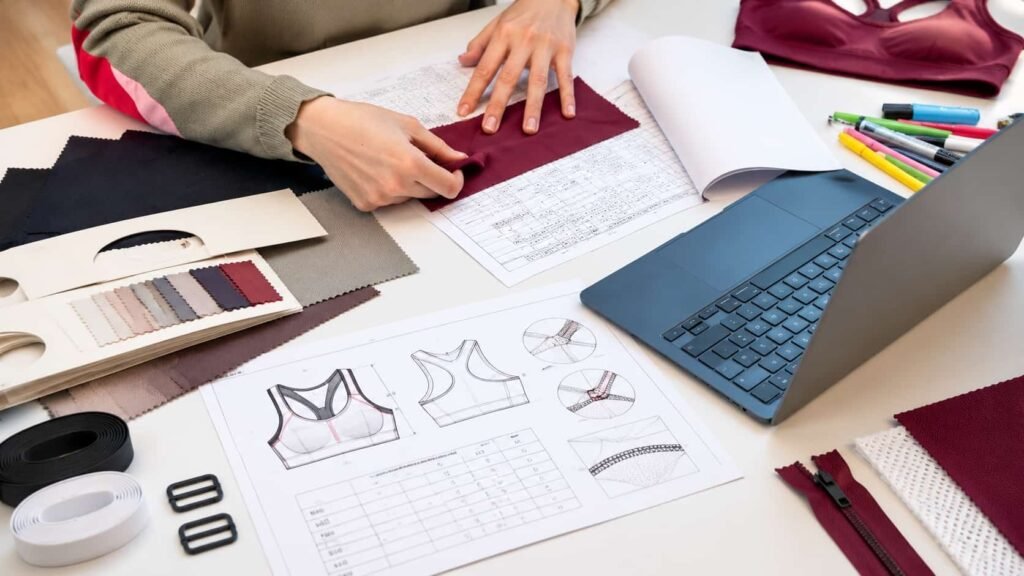
In a typical OEM sportswear project, the customer has already completed a meaningful part of the product-definition work. The project may arrive with a Tech Pack, measurement chart, BOM, approved sample, fabric specification, artwork files, construction callouts, grading information, or several of these together. The manufacturer then reviews whether those instructions can be reproduced consistently, identifies missing information, and checks whether the specified materials and construction are realistic for the intended garment before sampling begins.
A detailed file is not automatically a production-ready file. A leggings Tech Pack may specify a high waistband, hidden pocket, flat seams, logo placement, and target fabric while leaving unanswered questions about seam allowance, elastic tension, pocket reinforcement, stretch direction, or tolerances. Professional OEM work therefore includes engineering review rather than blindly following drawings. For Leadshow, OEM projects can be evaluated from customer-provided Tech Packs, samples, BOMs, measurement charts, or approved specifications, with feasibility checked before commitments are made.
ODM Adds More Development Responsibility
ODM is usually the better description when the customer understands the product direction but has not completed all the technical development. The starting point may be a sketch, reference photo, competitor product, mood board, target silhouette, intended activity, or price position. The manufacturer may then contribute to material selection, pattern development, construction decisions, sample creation, and manufacturability review, while the customer continues to approve the commercial and visual direction at meaningful stages.
Consider a running-short project described as lightweight, supportive, suitable for training, with a secure phone pocket and a clean exterior. That is enough to understand the intention, but not enough to release production. Someone still has to decide whether the pocket sits in the liner or shell, how the waistband is stabilized, where bartacks are required, and how the shell and liner should stretch together. ODM support turns those open questions into testable decisions instead of hiding them inside a vague quotation.
Private Label Focuses on Brand Ownership and Customization
Private label is often treated as a third manufacturing method that sits neatly beside OEM and ODM, but in practice it more often describes how a product is sold. The garment carries the customer’s brand identity rather than the manufacturer’s. The production route underneath that branded garment may still contain OEM-style or ODM-style work, depending on whether the base product is already established or still requires meaningful material, fit, pattern, or construction development.
A relatively simple private-label project might use an established garment construction and change the logo, main label, care label, hangtag, packaging, color selection, and selected measurements. A more involved program could use private-label branding while also requiring new fabric, pattern changes, logo trials, or custom packaging engineering. Leadshow can review customer logos, labels, hangtags, and packaging as part of private-label projects, but that should not be confused with guaranteed ready-stock relabeling or immediate shipment after a logo is added.
Quality Depends on the Specification, Not the Acronym
OEM is not automatically higher quality than ODM, and private label is not automatically lower quality. These terms describe responsibility and development structure, not the final performance level of the garment. A carefully controlled private-label sports T-shirt can have stable measurements, clean seams, accurate labels, consistent packaging, and reliable repeat production, while a poorly controlled OEM leggings project can still fail if its Tech Pack contains contradictions or an important material change is never reapproved.
For sportswear, quality is normally determined by a combination of fabric properties, pattern balance, fit, seam construction, elastic recovery, workmanship, dimensional stability, branding application, inspection criteria, and sample-to-bulk control. Those factors need to be defined regardless of which commercial model appears on the quotation. When teams compare manufacturing models, the more useful question is therefore not which acronym sounds more premium, but which process gives the project enough clarity, technical support, and approval discipline to reach repeatable bulk production.
| Comparison Point | OEM | ODM | Private Label |
| Typical starting input | Tech Pack, BOM, measurement chart, approved sample | Concept, sketch, reference image, product direction | Agreed product base plus branding requirements |
| Customer technical readiness | Usually higher | Can be partial | Varies by project |
| Manufacturer development input | Feasibility, sampling, pattern/production alignment | Higher involvement in materials, construction, pattern and sampling | Depends on customization depth |
| Product differentiation potential | High when specifications are proprietary | High when development is sufficiently customized | Moderate to high depending on permitted changes |
| Branding | Common | Common | Central requirement |
| Pattern work | Based on specification or approved reference | Often a major part of development | May be limited or substantial |
| Best use case | Mature product specification | Product idea needing technical development | Brand launch or range expansion using an agreed base |
| Main risk | Incomplete or conflicting specifications | Vague development expectations | Assuming private label means ready stock or unlimited customization |

Which Model Fits Your Product Development Stage?
The best starting model usually follows product readiness. OEM is more suitable when specifications are mature, ODM when the concept is clear but technical development remains, and private label when an established product direction can meet the commercial need with controlled branding or modifications. The more unresolved decisions a project contains, the more development support it normally requires before bulk production.
Measure What Is Approved, Directional, and Unknown
One of the simplest ways to classify a sportswear project is to divide its information into three groups: approved, directional, and unknown. Approved information is something the factory should reproduce or follow unless a feasibility issue is identified. Examples include a confirmed measurement chart, approved fabric code, final color reference, logo dimensions, finished sample, or packaging specification. Directional information expresses intent but still leaves room for engineering decisions, while unknown information covers anything neither side has yet resolved.
This exercise turns a vague sourcing conversation into a useful readiness check. A project with twenty approved technical inputs and two minor unknowns is very different from a project with three reference photos and a target retail price. Calling both projects OEM does not make their development workload equal. If measurements, materials, construction, artwork, trims, and packaging are largely fixed, the conversation can focus on manufacturability. If half of those areas remain open, the first stage should be treated as development rather than immediate bulk pricing.
Match the Model to Your Internal Technical Capability
Company size is not a reliable indicator of development readiness. A small activewear label with an experienced technical designer may be able to manage a sophisticated OEM project, while a much larger retailer entering performance apparel for the first time may need substantial manufacturer input. What matters is whether the internal team can confidently approve measurements, fit balance, material behavior, seam construction, artwork positioning, packaging requirements, and the consequences of changes made during development.
A useful internal test is to ask who will make the decision when the first sample reveals a trade-off. If the selected fabric gives the desired hand feel but reduces waistband recovery, can the team decide whether to change fabric, pattern, elastic, or fit target? If not, the sourcing model should include enough development support to close that gap. The goal is not to choose the label that sounds more professional; it is to choose a process in which each meaningful decision has a competent owner.
Use Product Complexity as a Second Filter
Product readiness should also be considered alongside garment complexity. A basic training T-shirt and a structured sports bra can both begin from reference images, yet they do not create the same engineering burden. Sports bras can require decisions around underband tension, strap configuration, cup or pad positioning, lining, neckline stability, seam elasticity, and fit across multiple sizes. Leggings introduce different concerns, including waistband construction, rise balance, crotch shape, opacity, stretch direction, seam placement, and pocket stability.
The more interacting components a garment contains, the less useful vague instructions become. Running shorts may combine a shell, liner, waistband, drawcord, pocket construction, bartacks, and ventilation details. A modest sportswear style may add coverage, drape, layering, and movement requirements. Even if a project starts from an existing reference, substantial changes can push what first looked like a straightforward private-label program into a meaningful product-development exercise that needs fit samples and manufacturing review.
Plan the Sample Path Before Bulk Production
The right model should make the sample route easier to understand, not harder. A mature OEM project may move from technical review into a development or fit sample, followed by correction and an approved pre-production reference. An ODM project may need more exploratory rounds because material, pattern, construction, or styling decisions are still being resolved. A private-label style based on an established construction may require fewer structural changes but still needs approval of colors, logos, labels, packaging, and any project-specific modifications.
Leadshow’s confirmed service range can include technical requirement review, pattern and fit adjustment, sample development, small-batch trial production, bulk manufacturing, quality control, custom labels, packaging, and export delivery support. The exact sequence is project-specific rather than fixed for every style. For sourcing teams, that flexibility is useful only when the approval path is clearly documented: each sample should have a purpose, each revision should close defined issues, and the final production reference should be identifiable before materials and capacity are committed.
| Project Readiness Indicator | OEM Fit | ODM Fit | Private Label Fit | Procurement Meaning |
| Final Tech Pack available | Strong | Possible | Possible | Most product decisions already controlled |
| Approved physical sample | Strong | Possible | Possible | Useful manufacturing and workmanship reference |
| Measurement chart complete | Strong | Moderate | Moderate | Fit responsibility is more clearly defined |
| BOM confirmed | Strong | Moderate | Moderate | Material and trim sourcing can be reviewed precisely |
| Only sketches/reference photos | Weak to moderate | Strong | Possible | Development decisions remain open |
| Fabric not selected | Moderate | Strong | Moderate | Material evaluation is still required |
| Pattern not available | Moderate | Strong | Moderate | Pattern development becomes part of the project |
| Existing base style is acceptable | Possible | Possible | Strong | Less structural development may be needed |
| Custom labels and packaging are primary changes | Possible | Possible | Strong | Branding is the main customization focus |
| Major fit and construction changes required | Strong if fully specified | Strong if still developing | Weak as simple relabeling | Development scope must be defined before quotation |
| Mixed collection with different readiness levels | Strong for mature styles | Strong for new styles | Strong for simpler styles | A mixed-model collection may be more efficient |
How Do OEM, ODM, and Private Label Compare on Cost, MOQ, Time, and Control?
OEM generally offers greater specification control when the customer provides mature technical requirements, while ODM shifts more development work toward the manufacturer. Private label may reduce some development steps when an existing product platform fits the project. Actual cost, MOQ, and timing, however, are driven heavily by fabric, trims, construction, colors, revisions, branding, order mix, and production scheduling.
Separate Development Cost From Unit Price
A lower unit quotation does not necessarily mean a lower project cost. Before production begins, a sportswear program may involve pattern development, grading, sample construction, fabric sourcing, color approval, trim sourcing, artwork preparation, logo trials, packaging samples, testing, and repeated fit reviews. OEM can still carry substantial early development work because a supplied Tech Pack must be validated against real materials and production methods, while ODM may require additional technical exploration because more decisions are still being created.
For a growing brand, it is useful to think in terms of cost per approved commercial style rather than only cost per garment. Spending more time developing a core legging that can be reordered for several seasons may create more value than launching several low-cost styles that require corrections after bulk production. The practical question is not how to eliminate development cost entirely, but which development activities protect fit, quality, repeatability, and product differentiation, and which complexities are being added without a clear commercial reason.
Understand What Really Sets the MOQ
MOQ is frequently discussed as though it belongs to a manufacturing model, but it usually comes from several overlapping constraints. The garment factory has a practical production minimum, while the fabric mill may have a separate dyeing minimum. Custom elastic, zipper pulls, molded accessories, printed packaging, special labels, or specialized logo processes can introduce their own minimum quantities. A garment order that is workable for cutting and sewing does not automatically make every custom component commercially available at the same quantity.
Leadshow’s standard MOQ generally starts from 100 pieces per color per design, subject to fabric, trims, construction, and customization requirements. That wording matters because it should not be interpreted as 100 pieces total across unlimited styles and colors, or as a universal minimum for every fabric and accessory. When comparing quotations, ask which item is actually setting the MOQ. If the garment can be manufactured at the requested volume but a custom-dyed fabric cannot, the sourcing problem is material procurement rather than sewing capacity.
Treat Lead Time as a Chain of Dependencies
Lead time is easier to manage when it is broken into stages instead of treated as one fixed number. A project may include specification review, sourcing, fabric approval, sample production, sample shipping, fitting, revision, pre-production confirmation, material booking, cutting, sewing, finishing, inspection, packaging, and export preparation. A delay in one approval can move the rest of the schedule, especially when materials or trims cannot be booked until the customer has confirmed the final specification.
An OEM project can move efficiently when the Tech Pack is clear, materials are available, and approvals are decisive. It can also become slow when specifications conflict or custom materials need development. ODM may require more time early because open decisions have to be resolved, but organized development can reduce later changes. Private label may shorten some early steps when the base product is suitable, yet branding, packaging, new colors, or material substitutions can still add time. The better timing question is which unresolved items sit on the critical path.
Decide How Much Product Control Is Worth Paying For
Control has commercial value, but it also creates work. OEM typically gives the customer stronger control over measurements, materials, fit, construction, colors, logo positioning, and workmanship standards. That can protect differentiation for signature leggings, sports bras, or technical styles, but every controlled variable must be defined, approved, and maintained. ODM transfers more development responsibility to the manufacturer, which can be valuable when market knowledge is strong but internal garment-engineering resources are limited.
Private label can simplify the project further when the brand is comfortable working from an established construction direction. The right balance depends on where differentiation actually matters. A company may invest heavily in proprietary fit for a core legging while using a simpler private-label route for promotional T-shirts or secondary styles. Applying the same development model to every SKU can increase sampling, sourcing, and approval workload without increasing customer value, so control should be concentrated where the final wearer can genuinely notice the difference.
| Cost or Timing Driver | Typical Effect | What to Confirm Before Ordering |
| Readily available fabric | Can reduce material-development time | Composition, GSM where relevant, stretch, color availability, quantity |
| Custom-dyed fabric | Can increase MOQ and approval time | Lab-dip process, mill minimum, color standard |
| Custom-developed fabric | Higher development burden | Performance target, construction, test needs, minimum quantity |
| New pattern | Adds development and fitting work | Base size, measurement chart, fit reference |
| Multiple sample revisions | Extends approval cycle | Revision owner, consolidated comments, approval deadline |
| Custom elastic or trims | May create separate supplier MOQ | Width, tension, material, color, minimum order |
| Complex logo application | Can require trials | Artwork format, dimensions, position, wash requirements |
| Multiple colors | Increases material and SKU coordination | Quantity per color and supplier minimums |
| Broad size range | Adds grading and fit-control complexity | Size chart, grade rules, fit approval process |
| Custom packaging | Can create another sourcing lead time | Bag, box, insert, barcode, carton and print specifications |
| Mixed-SKU order | Requires more planning and sorting | Quantity by style, color and size |
| Current production schedule | Affects bulk slot availability | Planned release date and confirmed production window |
| Leadshow standard MOQ | Generally starts from 100 pcs/color/design | Subject to fabric, trims, construction and customization |

What Should You Confirm Before Choosing a Manufacturing Model?
Before choosing OEM, ODM, or private label, confirm the product files, design rights, customization limits, approved materials, fit standard, sample reference, testing requirements, MOQ conditions, branding details, packaging, and change-control process. A manufacturing model is useful only when both sides understand who makes each decision and which approved specification will control bulk production.
Define the Production Reference
One of the most important questions in apparel manufacturing is surprisingly simple: what exactly is the factory supposed to reproduce? The answer may be a signed physical sample, a dated Tech Pack, a measurement table, a BOM, approved fabric swatches, artwork files, or a controlled combination of these references. Problems arise when those sources disagree. A sample may show one waistband height while the revised measurement chart shows another, or a later artwork email may contain a different logo size than the current Tech Pack.
Projects become safer when each key document has a version, date, owner, and approval status. When something changes, affected documents should be updated rather than relying on chat messages scattered across different platforms. This discipline matters even more for repeat orders because a reorder should not depend on someone remembering what happened six months earlier. The approved style, material, color, measurements, labels, packaging, and permitted deviations should be recoverable from controlled records so the factory can distinguish intentional updates from accidental inconsistency.
Clarify Customization Boundaries Early
Custom sportswear can mean anything from changing a logo to developing an entirely new garment, so the word customizable is too broad for accurate quotation. A useful customization review separates the product into fabric, color, size, measurements, construction, seams, trims, elastic, prints, logos, labels, hangtags, packaging, and carton requirements. Each item can then be marked as confirmed, selectable, modifiable, newly developed, or subject to technical and sourcing review.
Leadshow can evaluate fabric, color, size, construction, logo, label, and packaging requirements on a project-specific basis, but real feasibility still depends on material behavior, process compatibility, supplier minimums, and the garment itself. This is more useful than a generic promise of unlimited customization because it shows what actually changes the quotation, sample route, MOQ, and production plan. It also helps the customer decide which modifications create visible commercial value and which ones introduce cost or risk without materially improving the product.
Protect Design and Intellectual Property
Reference garments and online images are common development inputs, but they are not automatic permission to reproduce every design element. A project can contain customer-created artwork, third-party graphics, patented functional elements, supplier-developed fabric, manufacturer-developed patterns, purchased market references, and brand-owned Tech Packs. The commercial and intellectual-property status of each asset can be different, so the safest development process identifies ownership or authorization before files are treated as production instructions.
Reference samples can still be extremely useful for discussing fit, construction, workmanship, material hand feel, seam position, or finishing expectations without assuming a right to copy protected elements. Customers should identify which assets they own, which they are licensed to use, and which are provided only for general reference. Manufacturers should also avoid promising unauthorized exact reproduction. Clear IP handling is not separate from good sourcing practice; it protects future reorders, prevents disputes over developed files, and reduces the chance that a project becomes commercially unusable after sampling has already consumed time and money.
Connect Performance Claims to Evidence
Sportswear marketing often uses terms such as supportive, breathable, squat-proof, quick-dry, waterproof, compression, durable, or chlorine-resistant. Some descriptions can be assessed through fit and appearance, while others require defined test methods and acceptance criteria. A factory owning a particular machine does not prove that a finished garment meets a particular performance claim. Equipment shows what processes may be evaluated; test evidence shows what can responsibly be stated about the finished product.
Leadshow’s confirmed manufacturing resources include fabric preparation, cutting, lockstitch, overlock, double-needle sewing, bartacking, four-needle six-thread sewing, bonding, seam taping, laser perforation, heat transfer, pressing, needle detection, folding, and packing. Their applicability depends on the fabric, construction, and product requirements. Four-needle six-thread stitching, for example, can support flatter stretch-compatible seams but is not the same as whole-garment seamless knitting. Likewise, seam taping can cover suitable seams without proving that an entire garment is waterproof unless the material, openings, construction, and relevant testing support that claim.
| Approval Item | Minimum Information to Control | Common Risk if Unclear |
| Tech Pack | Version, date, drawings, construction notes | Factory follows an outdated revision |
| Measurement chart | POM definitions, base size, tolerances, grade rules where applicable | Fit differs across sizes |
| Approved sample | Sample type, approval date, permitted deviations | Approved means different things to each side |
| Fabric | Composition, weight/GSM where relevant, stretch direction, color, supplier/reference | Fit and appearance change after substitution |
| Elastic | Width, material, tension or elongation requirement, placement | Waistband or underband fit becomes unstable |
| Logos | Vector artwork, dimensions, position, technique, color | Incorrect scale, technique or placement |
| Labels | Type, content, dimensions, placement | Retail or compliance information becomes inconsistent |
| Packaging | Bag, folding, barcode, carton marks, inserts | Finished goods do not fit the distribution workflow |
| Quality criteria | Measurement, workmanship, appearance, inspection requirements | Disputes are judged subjectively |
| Performance claims | Test method and acceptance requirement where applicable | Marketing claim exceeds available evidence |
| IP status | Ownership or authorization of artwork and design assets | Unauthorized reproduction risk |
| Change control | Who approves and how changes replace previous files | Bulk follows conflicting instructions |

Which Manufacturing Model Should You Choose for Your Sportswear Project?
Choose OEM when your product specification is mature and you want strong control over execution; choose ODM when your product direction is clear but additional material, pattern, fit, construction, or sampling support is needed; choose private label when an agreed product base already fits the commercial need and branding or selected customization is the main priority. Many collections benefit from using more than one model.
Choose OEM for Controlled, Repeatable Specifications
OEM is usually the strongest fit when the competitive value of the product already exists in the customer’s specification. This is common with established leggings, sports bras, running shorts, or other core products where fit and construction have already been validated in the market. The brand may have an approved base size, grade rules, preferred fabric, seam configuration, logo position, labeling system, packaging standard, and known tolerance expectations that should remain stable across future production.
OEM is also useful when transferring an existing style to a new manufacturer. A strong transfer package can include the latest Tech Pack, approved production sample, measurement history, BOM, material references, artwork, label files, packaging information, and notes on previous production issues. The manufacturer’s task is not merely to copy a garment. It is to understand the approved product standard, identify anything that cannot be reproduced under the new supply conditions, develop a controlled sample, and establish a production route capable of repeating the approved result.
Choose ODM When the Idea Is Clear but the Garment Is Not
ODM works well when the customer can explain what the product should achieve but still needs technical help deciding how the garment should be built. A fitness label might know it wants a medium-to-high-coverage sports bra with a clean front, removable pads, a stable underband, minimal bulk under the arm, and a specific visual language. Those instructions are commercially useful, but they do not yet define pattern geometry, lining construction, strap length, underband tension, seam type, fabric pairing, pad-pocket design, or grading behavior.
ODM development allows those questions to be worked through with physical samples and measurable revisions. The process is strongest when feedback is specific. “Make it better” gives the development team little direction, while “reduce neckline gaping, increase underband stability, and keep the outer silhouette unchanged” creates an actionable revision. For companies without a full internal technical department, this collaborative route can bridge the gap between product concept and a manufacturing specification without forcing the customer to pretend that unresolved engineering decisions are already final.
Choose Private Label When the Product Base Already Works
Private label is often commercially sensible when a company does not need to reinvent the garment. A gym chain may need branded training tops, a retailer may want to test an activewear category before investing in proprietary patterns, or a distributor may need coordinated colors, labels, hangtags, and packaging for a proven product type. In those cases, starting from an existing or previously developed construction can reduce unnecessary work and keep the project focused on the elements that actually matter to the intended market.
The important question is whether the existing base truly meets the target requirement. If the garment needs a completely different fit, new fabric construction, multiple structural changes, custom components, and extensive performance development, the project is no longer a simple branding exercise. Private label should be selected because the product platform is already close to the desired result, not merely because the term sounds faster or cheaper. Branding still needs approval, packaging may create its own supplier minimums, and even modest fit changes can require another sample.
Use a Hybrid Model for Mixed Collections
Real collections rarely arrive at a factory with every SKU at the same level of maturity. A company may have a bestselling legging with a mature Tech Pack, making OEM the logical route. Its new sports bra may exist only as a concept and reference board, making ODM more appropriate. A promotional T-shirt may require only established construction, colors, logos, labels, and packaging, which can fit a private-label route. Classifying styles individually often makes more sense than forcing the whole range into one category.
Leadshow’s verified scope supports this kind of project-based evaluation across sportswear development, sampling, trial production, bulk manufacturing, quality review, custom labels, packaging, and export delivery. The company has 15 years of apparel industry experience, three manufacturing bases, more than 20,000 square meters of combined facilities, and a team of more than 1,500 people. Combined monthly capacity can reach up to approximately 120,000 finished garments, subject to style complexity, material availability, order mix, production scheduling, and quality requirements rather than being treated as fixed output for every order.
| Project Situation | Best Starting Model | Why It Fits | What to Send for Review |
| Mature style with full Tech Pack | OEM | Product is already technically defined | Tech Pack, BOM, measurement chart, artwork |
| Existing bestseller transferred from another supplier | OEM | Main goal is controlled reproduction of an approved standard | Approved sample, latest specifications, material references |
| New activewear concept with sketches | ODM | Construction and pattern still need development | Sketches, references, target use, quantity, price position |
| Reference garment requiring meaningful redesign | ODM | Development goes beyond simple reproduction | Reference sample, required changes, fit direction |
| Existing garment base with own logo and labels | Private Label | Product structure already meets the need | Logo artwork, label files, quantities, colors |
| Existing base with new fabric and moderate fit changes | Private Label + development support | Branding route remains useful but technical validation is needed | Base sample, material direction, measurement changes |
| Signature legging with proprietary fit | OEM | Specification control creates differentiation | Complete technical package and approved sample |
| New sports bra with unresolved support construction | ODM | Multiple interacting design and fit decisions remain open | Concept, support target, reference styles, material direction |
| Promotional sports T-shirt | Private Label | Limited structural differentiation may be needed | Color, logo, label, size mix, packaging |
| Collection containing mature and new styles | Hybrid | Different SKUs have different development readiness | Style-by-style project matrix |
| Project with custom fabric, trims and complex branding | OEM or ODM depending on readiness | Component development matters more than the label | Detailed material, trim, artwork and quantity requirements |
| Reorder of previously approved style | OEM-style controlled production | Repeatability is the priority | Approved revision, quantity, color/size breakdown, confirmed changes |

Before asking a manufacturer which model is best, send enough information for the project to be diagnosed rather than guessed. Useful inputs include the product category, Tech Pack or reference materials, target quantity, color and size plan, fabric direction, required construction, logos, labels, packaging, testing expectations, target market, and intended delivery window. The more complete that first package is, the easier it becomes to identify whether the real need is specification execution, product development, branding customization, or a combination of all three.
For projects being evaluated by Shenzhen Leadshow Sports Technology Co., Ltd., the standard MOQ generally starts from 100 pieces per color per design, subject to fabric, trims, construction, and customization requirements. A quotation therefore begins with feasibility rather than a generic price promise. If you are preparing a new sportswear collection, transferring an existing style, or building a private-label range, send your current files and project requirements for review. The next useful step is not choosing an acronym; it is turning the available information into a clear sampling, approval, and bulk-production route.


