
A supplier website can look convincing long before the factory behind it has been properly verified. Professional photographs, capacity figures, factory videos, certificates, sustainability language, client references, equipment lists, quality promises, and phrases such as “strict QC” or “advanced production” all help a manufacturer present itself. None of these things is automatically false. The problem is that presentation and proof are not the same thing, and the difference becomes expensive when a serious apparel order moves from sourcing discussion into sampling, material booking, bulk production, and shipment.
An importer separates marketing claims from manufacturing evidence by defining the exact claim, checking what evidence supports it, confirming whether that evidence is current and traceable, and verifying that it applies to the factory, product, material, process, and order under review. Strong sourcing decisions rely on several matching forms of evidence rather than one certificate, photo, sample, sales statement, or audit report.
Consider two sportswear suppliers that both say they can manufacture a new collection at scale. One sends an attractive factory presentation. The other can show which machines match the construction, how the approved sample becomes a controlled production specification, which processes are internal or external, what conditions affect available capacity, and what records can be checked. The difference is not who sounds more confident. It is how far the importer can travel from a sentence on a screen to a fact that still makes sense when production starts.
What Counts as Manufacturing Evidence?
Manufacturing evidence is information that can be traced to a specific factory, product, process, material, document, test, or production event and used to support a defined supplier claim. Strong evidence is current, relevant, identifiable, and proportionate to the claim. A factory photo, certificate, sample, or sales statement may be useful, but none should automatically be treated as proof beyond its actual scope.
Claims and Evidence
Importers often receive information in polished commercial language: “large capacity,” “strict quality control,” “sustainable fabrics,” “advanced machinery,” “fast sampling,” or “premium workmanship.” These phrases can be reasonable descriptions of a supplier’s business, but they remain claims until the importer can connect them to something observable or verifiable. The practical way to test a claim is to narrow it. If a supplier says it has strong sportswear capability, ask which products, constructions, machines, processes, materials, and quality controls support that statement. If it says it has large capacity, ask what product mix the figure represents and how current line loading affects the capacity available for this project.
Evidence becomes more useful when the wording and the proof describe the same thing. A photograph of a flatlock machine can support the statement that the factory has that equipment. It cannot prove that every stretch garment uses flatlock construction, that every seam reaches a particular strength, or that bulk production will automatically match the approved sample. The same reasoning applies throughout garment sourcing: proof should never be asked to carry more meaning than it can reasonably support, and a careful importer should be suspicious of any claim that expands faster than the evidence behind it.
Evidence Quality
Not all proof deserves equal weight. A supplier-created brochure is useful for understanding what the company wants to communicate, but it is still controlled by the supplier. A dated internal production record is more specific. A current third-party test report, audit, or certificate may add independent verification, although its scope still needs to be checked carefully. Evidence quality can be judged through five practical dimensions: identity, relevance, timing, traceability, and independence. The more important the commercial decision, the more of these dimensions should be visible before the importer relies on the claim.
Identity asks whether the evidence clearly identifies the company, factory, material, product, sample, or order. Relevance asks whether it addresses the exact claim under review. Timing asks whether it is current enough to describe the present situation. Traceability asks whether it can be linked to a specification, batch, site, approval, or production event. Independence considers whether the evidence comes only from the supplier or has external verification. Internal records can still be highly valuable because manufacturing necessarily creates internal documents; what matters is whether several sources tell the same story instead of contradicting one another.
| Supplier Statement | Possible Evidence | Evidence Strength | What It Can Support | What It Does Not Prove |
| “We manufacture apparel” | Production-site records, active lines, work-in-progress, equipment | High when traceable | Physical manufacturing activity | Capability for every apparel category |
| “We have specialized equipment” | Equipment inventory, dated photos, live review | Medium to high | Existence of relevant machinery | Tested product performance |
| “We have strict QC” | Inspection procedures, completed records, defect handling | High when records are consistent | A defined control process | Zero defects |
| “This fabric is certified” | Current supplier or material certificate | High within valid scope | Covered material or article | Certification of all factory output |
| “We can produce at scale” | Production history, schedules, line resources | Medium to high | Relevant manufacturing scale | Immediate capacity for a new order |
| “This product performs well” | Applicable test report | High for the tested sample | Tested performance under stated method | Permanent performance across all batches |
Product-Level Proof
Apparel sourcing becomes more reliable when evidence moves from company-level claims to product-level proof. A genuine factory may still be unsuitable for a particular garment. A facility that handles conventional knitted T-shirts well does not automatically have the same process control for bonded activewear, highly elastic sports bras, technical swimwear, or complex multi-panel leggings. For a stretch garment project, the importer may need to review cutting preparation, stretch-compatible seam construction, elastic installation, fit development, measurement control, branding application, finishing, and relevant testing rather than relying on a general statement such as “we manufacture activewear.”
The useful connection is machine to process, process to construction, and construction to the project requirement. A four-needle six-thread machine, for example, becomes relevant when the style requires flatter stretch-compatible seams and the factory can demonstrate how that operation is controlled on the intended fabric. An automatic cutting system becomes relevant when the importer needs repeatable panels across multiple sizes and fabric behavior has been considered. Product-level evidence therefore does more than prove that a factory exists; it helps show whether the production system is suitable for the garment the importer is actually planning to buy.
Evidence Boundaries
Good manufacturers are often careful about boundaries because manufacturing performance depends on conditions. Equipment existence does not automatically guarantee finished-garment performance. A material certificate does not automatically certify the final garment. A successful sample does not automatically guarantee bulk consistency. A monthly capacity figure does not mean every style can be produced at the same rate. These boundaries are not signs of weakness; they are signs that the supplier understands how production variables affect outcomes and is willing to separate what is already known from what still needs sampling, testing, scheduling, or confirmation.
The same logic applies to specialized processes such as bonding, laser perforation, seam sealing, elastic installation, and heat transfer. A seam-sealing machine can support seam-tape application on suitable fabrics and constructions, but waterproof performance may also depend on fabric properties, seam design, tape coverage, openings, zippers, workmanship, and a defined test method. A supplier that explains those conditions is giving the importer more useful manufacturing evidence than one that converts equipment ownership into an absolute performance promise.

Which Factory Claims Should Importers Verify?
Importers should prioritize claims that could materially affect product quality, compliance, cost, capacity, or delivery. These normally include factory identity, manufacturing location, relevant machinery, production capacity, process ownership, quality controls, testing, certifications, material sourcing, and subcontracting. The more serious the consequence of a wrong assumption, the more specific and independently verifiable the supporting evidence should become.
Factory Identity
“Are you a manufacturer?” is only the beginning of the verification process. Apparel supply chains can involve a sales entity, manufacturing entity, export entity, material supplier, subcontract processor, and payment beneficiary. These roles may legitimately belong to different companies. Instead of forcing every supplier into a simple factory-or-trader label, an importer should map the commercial and manufacturing roles: who signs the order, who receives payment, where the garment is cut and sewn, which company operates the production site, and who manages specialized processes when those operations are external.
Different entities are not automatically a problem; unexplained relationships are. The same caution applies to addresses. A headquarters, showroom, registered office, warehouse, and manufacturing site may be different locations. If a company presentation shows one address while an audit or certificate shows another, the importer should ask what each address represents before drawing a conclusion. Clear role mapping is especially important before a large deposit or repeat program because contractual responsibility, production control, compliance evidence, and shipment documentation can otherwise point to different organizations without the purchasing team realizing it.
Relevant Equipment
Factories sometimes present long machine lists as proof of broad manufacturing competence. Equipment matters, but relevance matters more than quantity. For a leggings project, the importer may care about controlled cutting, overlock or flatlock construction, waistband handling, elastic installation, bonding, laser perforation, heat-transfer labeling, and suitable finishing. For a hoodie or streetwear project, several of those processes may be irrelevant while zipper installation, reinforcement, rib control, pressing, decoration, or heavy-fabric handling matter more. The machine list should therefore be read against the style rather than admired as a standalone number.
A useful equipment review asks three questions: Is the machine physically available? Is it suitable for the intended material and construction? Can the factory demonstrate how it is used within a controlled production process? This prevents a common sourcing error in which machine ownership is turned into a product-performance guarantee. A flatlock machine does not make a garment seamless-knitted, and a hot-air seam-sealing machine does not automatically make an entire garment waterproof. Process capability becomes convincing when the supplier can show how equipment, sample development, operator skill, settings, inspections, and product requirements connect in practice.
| Capability Claim | Evidence to Review | Stronger Verification Question | Project Impact |
| Stretch-garment sewing | Flatlock/overlock capability, sample seams | Does the seam suit fabric stretch and recovery? | Fit, comfort, seam durability |
| Bonded construction | Bonding equipment, process trial, wash test | Is the adhesive system suitable for fabric and wash requirements? | Appearance, durability |
| Seam sealing | Seam-sealing equipment, taped-seam sample | Does the finished construction meet the required water-resistance test? | Functional performance |
| Laser perforation | Equipment, sample perforation | Does the fabric tolerate hole size, spacing and heat exposure? | Appearance, ventilation design |
| Automated cutting | Cutting equipment, marker/pattern workflow | Can the process control multiple sizes and fabric behavior? | Panel consistency |
| Heat-transfer branding | Heat-transfer process, wash evaluation | Are temperature, pressure and transfer material suitable? | Logo durability |
Capacity Claims
Capacity is one of the most important claims to verify because an optimistic number can affect launch dates, material commitments, freight bookings, inventory planning, and cash flow. A monthly capacity figure should be treated as a reference rather than an unconditional promise. Actual capacity depends on product construction, order quantity, size and color mix, fabric readiness, trim availability, specialized processes, current line loading, quality requirements, and the requested delivery window. A factory producing a high volume of basic tops will not necessarily achieve the same throughput for bonded activewear or complex multi-panel garments.
The more useful question is not simply “What is your monthly capacity?” but “What capacity is realistically available for this style during the period we need?” That question forces the discussion toward product-specific production planning. When several manufacturing bases are involved, aggregated figures should also remain aggregated unless site-level data has been separately confirmed. For example, Leadshow’s confirmed company data describes combined monthly capacity of up to approximately 120,000 finished garments across three manufacturing bases, with actual output dependent on construction, materials, processes, order mix, and current scheduling; it should not be interpreted as fixed output for one factory or one style.
Quality and Process Ownership
“Strict quality control” sounds reassuring, but importers need to know what it means operationally. Quality control in an apparel project may include incoming-material verification, shade and lot review, cutting checks, measurement control, workmanship inspection, in-process checks, finished-garment inspection, packing review, and project-specific safety steps. The useful question is not whether a quality department exists, but whether the factory can explain how checks are tied to the current specification and what happens when results fall outside tolerance. Completed records are more informative than a wall poster describing a generic quality philosophy.
The same principle applies to process ownership. Not every garment operation must be completed inside one facility. Specialized printing, embroidery, fabric treatment, laboratory testing, accessories, or other processes may involve external partners. Outsourcing becomes risky when it is hidden, poorly specified, or weakly controlled. A transparent supplier should distinguish internal operations from external ones and explain how external work is approved, received, inspected, and traced back to the order. That transparency is usually more valuable than an unsupported claim that every process is vertically integrated under one roof.
How Should Importers Verify Documents?
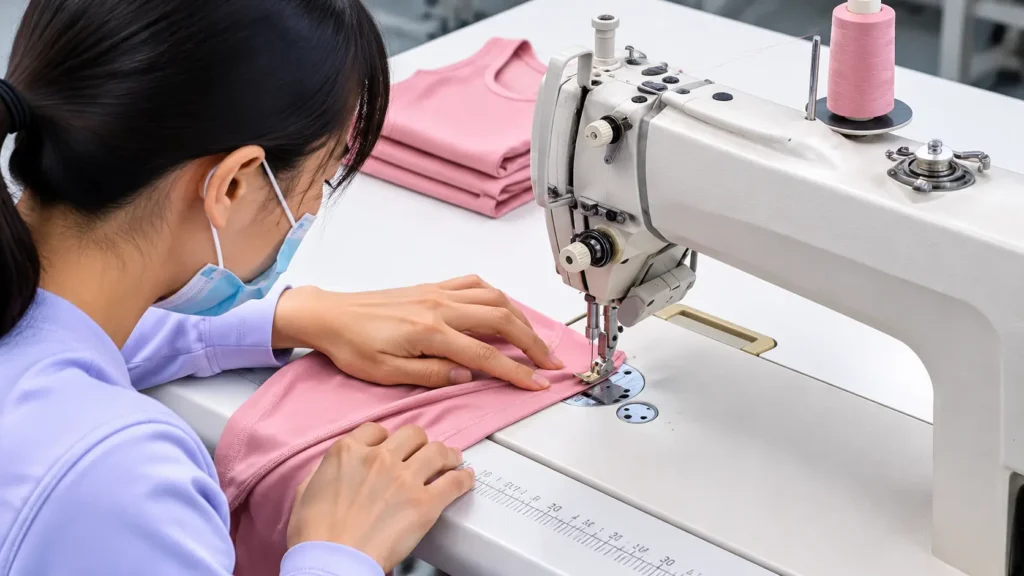
Importers should verify documents by checking who issued them, who holds them, which site or product they cover, when they were issued, when they expire, and whether they apply to the current order. Authenticity alone is not enough. A genuine certificate, test report, audit, or QC record may still be irrelevant if its scope does not match the factory, material, product, batch, or market being evaluated.
Certificate Scope
A certificate should answer more than “does this document exist?” The importer should identify the certificate holder, covered production site where relevant, certification body, reference number, issue date, validity period, and defined scope. Depending on the scheme, the scope may apply to a management system, facility, product group, raw material, processing stage, or transaction. This matters because certifications are often generalized beyond their actual coverage, especially when a material supplier, factory, and finished-garment seller are different companies within the supply chain.
The safest purchasing approach is to keep certification language inside the document’s verified boundary. If a certificate belongs to a fabric supplier, it may support a statement about the covered fabric or material program, but it should not automatically become proof that the garment manufacturer itself holds the same certification. If one production site is covered, another site should not be assumed to share that status. When a certification can be checked through an issuing organization or official database, the importer should use that route rather than relying only on a PDF or screenshot supplied during sales communication.
Test Reports
Performance claims deserve careful review because brands may use those claims in product descriptions, hangtags, retailer submissions, or compliance files. A test report should be read from the identity section outward, not only from the pass or fail result. Which sample was tested? What material composition was declared? Which color was tested? Was the report for fabric or finished garment? Which test method was applied? Was a batch or article identified? Has the material or construction changed since the report was issued? These questions determine whether the report is actually relevant to the purchase.
This is particularly important for dimensional stability, colorfastness, pilling, abrasion, stretch and recovery, seam performance, logo wash durability, moisture management, UPF, chlorine resistance, water repellency, hydrostatic resistance, or restricted-substance testing. If a fabric mill, finish, coating, dye, bonding film, print chemistry, or garment construction changes, an earlier report may not automatically remain applicable. Strong suppliers therefore treat performance claims as evidence tied to a tested sample and method, and they recognize that retesting may be appropriate when meaningful variables change.
| Document Field | What to Check | Why It Matters | Warning Sign |
| Holder | Legal company name | Confirms who owns the certification or report | Different company with no explanation |
| Site | Covered factory address | Connects evidence to production location | Office address used as factory proof |
| Scope | Product, material, process or system | Defines what the document actually covers | Broad marketing language beyond scope |
| Validity | Issue and expiry dates | Confirms current status | Expired or undated document |
| Issuer | Certification body or laboratory | Helps verify authenticity | Unclear issuing organization |
| Reference number | Certificate or report ID | Enables cross-checking | Missing or unreadable number |
| Order relevance | Material, product, batch or transaction | Connects evidence to the purchase | Evidence from unrelated goods |
Quality Records
A quality procedure tells the importer what the factory intends to do. A completed quality record helps show what actually happened. Relevant records may include incoming-material checks, shade or lot reviews, measurement records, in-line inspection findings, defect classifications, corrective-action records, final inspection reports, packing verification, and needle-detection records where applicable. The value is not the amount of paperwork. The value is whether records reflect the actual specification, production stage, and acceptance criteria for the current order.
Consistency is especially important. If the measurement specification defines particular points of measure, the inspection record should use the same measurement logic. If packaging instructions define SKU, color, size, label position, folding method, and carton quantity, the final packing check should reflect those requirements rather than a generic checklist. Importers should also examine how nonconforming results are handled. A factory that can explain rework, segregation, escalation, replacement, and customer approval for exceptions often provides stronger evidence than one that simply claims defects never occur.
Version and Validity
Documents are time-sensitive. Evidence that was accurate last season may no longer describe the current product or manufacturing route. A repeat order may use a different fabric lot, trim supplier, production site, measurement revision, artwork file, or external processor. Certificates expire, test standards may be updated, and specifications change during development. Without version control, a perfectly authentic old document can be applied to the wrong new situation and create a false sense of security.
Important manufacturing documents should therefore carry identifiable dates, references, or revisions where practical. The importer should know which Tech Pack, measurement chart, artwork, BOM, material approval, sample, test report, and packaging specification is currently authoritative. Change history should be especially clear before bulk cutting begins, because that is the point where mistakes become expensive to reverse. A disciplined manufacturer will withdraw or revise conditional claims when the supporting evidence expires or changes instead of letting outdated proof continue circulating as if nothing has changed.

How Can Evidence Be Matched to the Order?
Evidence becomes commercially useful when it is connected to the exact order through controlled specifications, approved materials, samples, manufacturing processes, testing, quality records, and revision history. A factory may be genuine and capable while still being unsuitable for a particular garment. Order-level verification asks whether proven resources and controls are actually being applied to the style, quantity, materials, branding, quality requirements, and delivery plan under review.
Sample to Bulk
Sample approval is a major milestone, but it is not the end of manufacturing verification. A sample proves that one garment or a small number of garments could be produced under development conditions. Bulk production introduces different variables: larger fabric lots, more operators, multiple sizes, repeated operations, bulk cutting, line balancing, packaging quantities, and greater scheduling pressure. The importer should therefore identify what has to remain constant between the approved sample and production instead of treating the sample as a guarantee that scale will take care of itself.
The controlled baseline may include fabric identity, construction, measurements, seam type, elastic specification, branding method, label placement, trim quality, color, finishing, and packing. A manufacturer that supports both development and bulk manufacturing should be able to explain how those approvals move from the sampling team into production documents. The goal is not microscopic uniformity, because apparel manufacturing works within defined tolerances. The goal is to ensure that normal variation stays inside approved limits rather than being caused by the production team following a different material, version, construction, or instruction.
Controlled Specifications
Many apparel disputes are easier to prevent when project information is consolidated before production. A useful technical package may include style drawings, measurements, tolerances, material descriptions, BOM information, construction details, artwork files, branding dimensions, label requirements, color references, sample comments, and packing instructions. Not every project begins with a complete Tech Pack, especially during ODM-style development, but the critical information still needs to become controlled before bulk manufacturing starts so that purchasing, development, production, quality, and packing teams are all working from the same baseline.
This matters because development often happens across several communication channels. A measurement may be changed by email, a logo size approved in a messaging app, and a new trim selected during a sample review. Unless those decisions are consolidated into the production reference, different teams can follow different instructions without anyone deliberately ignoring the customer. Before cutting or bulk assembly begins, the importer should know which revision is authoritative and whether important approvals have been incorporated into the files actually used by the manufacturing team.
| Order Element | Approval Evidence | Bulk Control Question | Risk If Uncontrolled |
| Fabric | Approved swatch, sample or specification | Is bulk fabric the approved quality and construction? | Hand feel, stretch, shade or shrinkage change |
| Measurements | Approved size specification | Are measurements checked against the current revision? | Fit inconsistency |
| Construction | Approved sample or Tech Pack | Is bulk using the same seam and assembly method? | Appearance or durability difference |
| Logo | Artwork and application approval | Are size, position and process unchanged? | Branding inconsistency |
| Trim | Approved zipper, elastic, label or hardware | Is bulk trim equivalent to the approval? | Functional or visual variation |
| Packaging | Approved packing instruction | Are SKU, size, color and carton rules followed? | Distribution errors |
| Testing | Applicable report or requirement | Does current material or process remain within test scope? | Unsupported performance claim |
Change Control
Material and process changes are normal in product development. What matters is whether they are visible and controlled. Imagine an approved sports bra uses one elastic supplier, but availability changes before bulk production. Even if the replacement looks similar, width, thickness, stretch, recovery, surface texture, dye behavior, and sewing response can differ. A seemingly small substitution may affect fit, comfort, appearance, testing, or consistency, which means a change that looks commercial to the sourcing team may be technical to the manufacturing team.
A practical change review asks what changed, why it changed, whether the substitute meets the original specification, and whether the change affects fit, appearance, performance, compliance, testing, cost, or lead time. The same logic applies to fabric, trim, thread, bonding film, padding, zippers, printing material, care labels, packaging, and production processes. The stronger the impact, the less appropriate it is to treat the substitution as an informal factory decision. Significant changes may require a revised sample, updated documentation, new testing, or renewed customer approval before production continues.
In-House and External Processes
A finished garment can pass through several manufacturing partners even when final assembly happens at one factory. Depending on the project and supplier setup, certain printing, embroidery, material treatment, accessories, laboratory testing, washing, or specialized finishing may be handled by external resources. The sourcing question is not whether every operation sits inside one building. The question is whether the manufacturing route is transparent and whether specifications, approvals, incoming checks, and supporting documents remain controlled when work moves outside the main facility.
Manufacturers should also avoid implying that ownership of one type of equipment means every related technique is performed internally. Heat-transfer label equipment, for example, does not prove in-house sublimation, screen printing, embroidery, digital printing, or every other decoration method. Clear boundaries make production planning more reliable because they allow the importer to identify process dependencies, approval points, and potential lead-time constraints before orders are committed. A specialized external processor may be the technically correct choice; hidden external processing is what makes verification difficult.
What Red Flags Show a Claim Is Unproven?
A claim is unproven when the available evidence is too broad, outdated, inconsistent, untraceable, or unrelated to the statement being made. Common warning signs include unexplained entity mismatches, certificates outside their scope, undated factory media, vague capacity promises, performance claims without testing, hidden subcontracting, and resistance to reasonable verification. A red flag is a reason to investigate further, not automatic proof of misconduct.
Evidence Too Narrow
One of the simplest verification habits is to compare the breadth of the wording with the breadth of the proof. If one fabric has been tested for UPF performance, the evidence supports a statement about that tested fabric under the stated method; it does not automatically support “all our garments are UPF 50+.” If a factory operates seam-sealing machines, the evidence supports a process capability on suitable constructions; it does not automatically prove that every product is waterproof. If one shipment arrived on time, that shipment is delivery evidence, not proof of a permanent 100 percent on-time delivery rate.
This comparison protects importers from a very common sourcing error: accepting a true narrow fact and unconsciously expanding it into a much larger conclusion. A successful sample becomes “bulk will be identical,” one certificate becomes “everything is certified,” one large customer order becomes “we currently manufacture for major brands,” and an equipment photo becomes “advanced automated production.” The practical rule is simple: the claim should fit inside the evidence, not the other way around. When the statement is broader, the importer should ask what additional proof closes the gap.
Document Mismatches
Different company names, addresses, applicants, account beneficiaries, and certificate holders deserve explanation because legitimate supply chains normally leave matching traces. There can be reasonable reasons for differences: a manufacturer may use a separate export company, a material certificate may belong to the fabric mill, an external processor may perform one operation, or a corporate group may use several legal entities. The importer should not immediately treat a mismatch as proof of misconduct. The right response is to ask the supplier to map the relationship and show how the entities connect to the current order.
Concern increases when the supplier cannot explain why the legal entity on the quotation differs from the payment beneficiary, why a certificate belongs to a different facility, or why an audit covers an address unrelated to the stated production site. The important issue is traceability. Different entities can form a legitimate manufacturing chain; unexplained entities create procurement risk. The same discipline should be applied to headquarters and factory locations, because an office address should not be copied into manufacturing evidence unless production at that location has actually been confirmed.
| Evidence Available | Reasonable Claim | Overstated Claim | Importer Response |
| One material test | “This tested material achieved the reported result.” | “All our fabrics have this performance.” | Check sample identity and test scope |
| One certification | “Certification applies within the listed scope.” | “Everything we manufacture is certified.” | Verify holder, site and scope |
| Equipment photo | “This equipment is available.” | “Every product receives this process.” | Ask how it applies to the style |
| Successful sample | “The sample has been developed and approved.” | “Bulk will be identical without variation.” | Review bulk controls and tolerances |
| Aggregate capacity data | “Combined capacity can support scalable production.” | “This order can start immediately.” | Check live scheduling and allocation |
| Historic customer order | “The supplier has relevant experience.” | “We currently manufacture for this brand.” | Verify relationship and authorization |
Missing Context
Some evidence looks convincing because people focus on what is visible rather than what is absent. A photograph may show workers, machines, and garments but no date or location. A test report may show passing results but identify a different product. A factory presentation may show a large facility without explaining whether it is the site planned for the order. A certificate may be genuine but expired. In each case, the evidence has informational value, but its purchasing value is weaker because the importer cannot confidently connect it to the decision being made.
A useful habit is to ask the same questions whenever important proof appears: Who does this refer to? Where? When? Which product? Which material? Which batch? Which process? Which order? Which revision? If those questions cannot be answered, the information should be treated as incomplete rather than automatically accepted or rejected. Visual materials deserve particular caution. Real, dated manufacturing images can support capability explanations, while stock photography or AI-generated factory scenes should never be treated as proof that a specific machine, production line, facility, worker group, or process actually exists.
Independent Verification
Not every project needs the same level of due diligence. For early sampling, technical discussion, current documentation, a live factory walkthrough, and sample evaluation may provide enough information to decide whether development should continue. For a large commercial program, new manufacturing relationship, technically demanding garment, compliance-sensitive market, substantial deposit, or critical launch, the consequence of a wrong assumption becomes much higher. At that point, independent company checks, certificate validation, laboratory testing, factory audits, production inspection, or pre-shipment inspection may be appropriate.
These tools answer different questions and should not be treated as interchangeable. A factory audit helps assess organization, capability, equipment, workflow, and control systems. A laboratory test evaluates defined material or product characteristics under a specified method. A product inspection checks actual goods against agreed requirements. The goal is not to collect the largest possible stack of documents. It is to reduce the uncertainties that matter to the purchasing decision until the importer can clearly distinguish what is verified, what is conditional, what remains supplier-reported, and what still needs evidence before production or payment moves forward.
The strongest supplier decision is rarely the one with the largest folder of documents. It is the one in which the important claims are linked to evidence that is relevant to the actual product and current order. A manufacturer can be a real operating factory and still be the wrong choice for a particular garment, production window, test requirement, or compliance need. Conversely, a supplier that gives careful conditional answers may be more dependable than one that promises everything immediately, because manufacturing is full of variables that should be checked before commitments are made.
A practical decision process is to separate factory evidence from order evidence. Factory evidence asks whether the manufacturer has suitable facilities, equipment, people, processes, quality controls, and documented operating capability. Order evidence asks whether those resources are being applied to the approved fabric, construction, measurements, trims, branding, testing, packing, quantity, and delivery plan for this style. When both layers are visible, sourcing becomes less dependent on presentation and more dependent on traceable decisions that can survive the move from sample room to bulk production.
Shenzhen Leadshow Sports Technology Co., Ltd. supports OEM and ODM apparel development and manufacturing for sportswear, swimwear, streetwear, and modest sportswear projects. Its confirmed manufacturing profile includes 15 years of apparel industry experience, three manufacturing bases, more than 20,000 square meters of combined factory area, a team of more than 1,500 people, and combined monthly capacity of up to approximately 120,000 finished garments, subject to product construction, materials, process requirements, order mix, and current scheduling. These figures are useful manufacturing context, but they do not replace project-specific review.
If you are evaluating a custom apparel project, send the available Tech Pack, reference sample or images, target quantity, material direction, branding requirements, testing or compliance requirements, packaging expectations, and requested delivery window. The project can then be reviewed through technical requirement confirmation, material and process evaluation, sample development, production planning, quality control, label and packaging preparation, and export delivery support. That approach gives both sides a clearer basis for quotation and manufacturing decisions than relying on broad marketing claims alone.
Project Inquiry
For a project review, prepare the current Tech Pack or reference materials, target quantity, material direction, branding requirements, packaging expectations, testing or compliance requirements, and requested delivery window. The more complete the input, the easier it is to separate assumptions from confirmed manufacturing requirements before sampling, quotation, and bulk production.