
A target cost can keep a new apparel style commercially realistic, but it can also send development in the wrong direction when the number becomes more important than the product itself. A brand may intend to develop leggings with a dense stretch fabric, a stable waistband, flat seams, secure storage and carefully controlled fit, yet the conversation can quickly narrow to a single question: “Can the factory make it for this price?” Once that happens, fabric weight, trims, construction or finishing may start changing before anyone has agreed that those changes are acceptable.
Brands should state target cost as a commercial boundary rather than a substitute for the product specification. The cost basis, quantity, material direction, essential construction, quality expectations and acceptable trade-offs should be clear. The manufacturer should assess the intended product first, identify any gap between actual cost and target, and present cost-reduction alternatives separately so that every material or construction change remains visible and subject to approval.
The difference becomes obvious when two apparently similar samples arrive at nearly the same price. One may preserve the fabric feel, fit and details the brand intended, while the other reaches the target through a lighter fabric, simpler pocket, different elastic or reduced finishing. Both suppliers may claim to have “met the price,” yet they are no longer quoting the same garment. A productive target-cost discussion therefore begins with a better question: what exactly must remain true about the product when the cost changes?
What Is a Target Cost?
A target cost is the commercial cost level a brand wants a product to support under defined pricing, margin, quantity and sales assumptions. It is not the same as the manufacturer’s calculated quotation and should not replace technical requirements. Used properly, it gives development a financial boundary while keeping materials, fit, construction, workmanship, branding and quality visible as separate product decisions.

Budget vs Specification
A specification explains what the garment is expected to become, while target cost explains the commercial boundary within which the brand hopes to sell it profitably. Those two inputs belong in the same development conversation, but they should never be treated as interchangeable. Fabric composition, GSM, stretch direction, measurements, seam construction, trims, artwork, packaging and performance requirements describe the product. A target price does not define any of those details unless the brand explicitly agrees that they can change.
Consider a performance legging with a double-layer waistband, side pocket, smooth stretch fabric and flat seam construction. If the only clear instruction sent to the supplier is “target FOB USD 12,” the factory may reasonably begin solving for USD 12 rather than protecting every part of the original design. A lighter material, simpler pocket or conventional seam may make the number easier to reach, yet each adjustment changes what the brand is actually purchasing. The target should guide evaluation, not silently rewrite the garment.
Target Cost vs Factory Quote
A brand normally builds its target cost from commercial planning, while a manufacturer builds a quotation from the garment that must physically be produced. The factory may need to consider fabric consumption, material price, trim sourcing, cutting, sewing operations, special processes, labels, packaging, quantity, color split, approval requirements and other project conditions. The two numbers may eventually meet, but there is no technical reason they must be identical at the beginning of development.
If a brand targets USD 15.00 and the current specification costs USD 17.20 to manufacture, the USD 2.20 difference should be treated as a diagnostic signal rather than an immediate negotiation problem. The main fabric may account for most of the gap, or a specialized pocket, custom trim, bonding operation or packaging component may be contributing more than expected. Once the cause becomes visible, the team can decide what is worth protecting and what can be reconsidered. Without that diagnosis, asking for another USD 2.20 reduction simply encourages someone to find savings without showing where they came from.
Cost Basis
A target number only becomes useful when its commercial basis is clear. “Our target is USD 14” leaves important questions unanswered: Is the figure ex-factory or FOB? Is individual packaging included? Are testing, tooling, nominated materials or destination freight outside the number? Does the target assume 2,000 pieces in total, or 2,000 pieces per color? Even a small misunderstanding in these assumptions can make two quotations look comparable when they are built on completely different conditions.
A stronger statement gives the supplier enough information to reproduce the commercial logic behind the target. For example, a brand could state that the preferred target is USD 14.50 FOB per piece, based on 2,000 pieces per color, the current construction, approved fabric direction, individual polybag and export carton, with third-party testing and destination charges excluded. The exact format will vary by project, but the principle is consistent: a number should always travel with the assumptions that make the number meaningful.
Cost Layers
Several different cost layers appear during product development, and mixing them creates unnecessary confusion. The target cost comes from the brand’s commercial model, an early estimate may come from incomplete product information, a formal supplier quotation is based on a defined manufacturing scope, and landed cost includes additional expenses that may occur after the garment leaves the factory. Each figure answers a different question, so sourcing teams should know which one they are discussing at any given point.
| Cost Layer | Typical Basis | Main Inputs | Practical Use | Main Risk |
| Target cost | Brand commercial model | Planned selling price, margin, channel assumptions | Sets desired cost boundary | May not match technical reality |
| Preliminary estimate | Early development assumptions | Initial fabric, trims, construction, quantity | Screens feasibility | Built on incomplete specifications |
| Factory quotation | Defined project scope | Materials, workmanship, quantity, packaging, commercial conditions | Supports supplier review | Misleading if scope differs |
| Landed cost | Import-side cost structure | Product cost, freight, duty and related charges | Margin planning | Often confused with FOB |
| Bulk production cost | Approved production scope | Final materials, construction, quantity and packaging | Purchase decision | Can change when approved scope changes |
The table also shows why the lowest quoted number cannot be evaluated in isolation. If one supplier assumes a lighter fabric, another excludes custom packaging and a third prices twice the quantity, their totals do not represent equivalent offers. The first objective should therefore be scope alignment. Once the inputs are comparable, price becomes a useful decision variable rather than a misleading headline.
What Should Brands State Upfront?
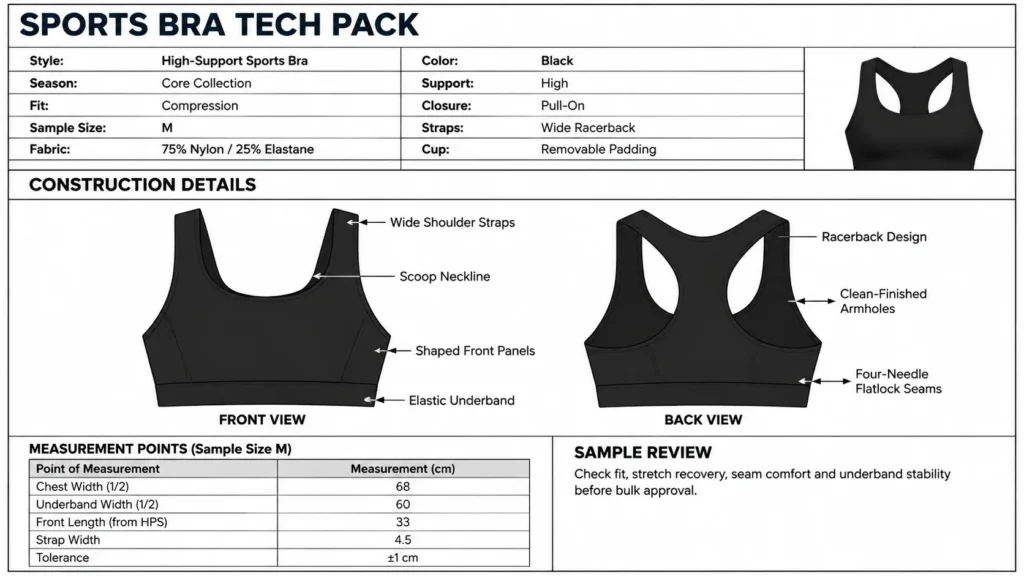
Brands should state target cost together with the commercial and technical conditions that make the number meaningful. Cost basis, quantity, color and size structure, material direction, key construction, branding, packaging, target market and non-negotiable product features should be visible. The manufacturer can then evaluate whether the target fits the intended product rather than guessing which requirements may be changed to reach it.
Target Cost Range
A target range can be more useful than a single rigid number during early product development because many important inputs are still being confirmed. The brand might have a preferred FOB target of USD 14.50, a workable development range of USD 14.50–15.50 and a commercial ceiling that requires separate approval. These figures are project examples rather than industry benchmarks, but the structure helps the factory understand which part of the cost discussion is an objective and which part is a hard limit.
A single fixed target becomes more realistic when a style is mature, the fabric and trims are already approved, the construction is stable and the quantity pattern is known from previous orders. During earlier development, false precision can encourage unnecessary shortcuts. A range gives the manufacturer room to show what the original concept really costs before changing it. It also creates a more useful conversation around the difference between preferred cost, technically realistic cost and the highest cost the business model can still support.
Non-Negotiable Requirements
Every apparel project has a small number of elements that define the product more strongly than the rest. Those elements should be identified before cost reduction begins. For leggings, they may include fabric opacity, recovery, waistband construction and seam placement. For a sports bra, support structure, bottom-band behavior, strap configuration and cup arrangement may be critical. For a hoodie, fabric weight, silhouette, rib quality, hood construction or zipper specification may carry most of the perceived value.
The supplier does not need every small detail marked as untouchable, because doing so would eliminate legitimate engineering options. The goal is to distinguish critical product requirements from details that are open to discussion. If the fabric must stay within a particular GSM range, state that condition. If packaging is flexible but the waistband is not, make that difference visible. This simple classification prevents a factory from reducing something the brand considers essential simply because nobody explained that it was essential.
Commercial Assumptions
Quantity is more complex than the total unit count written on a purchase plan. A 4,000-piece order concentrated in one style and two colors can be very different from 4,000 pieces divided across multiple styles, colors and sizes. Smaller material lots may increase MOQ pressure, while more patterns, approvals, labels and packing combinations add coordination work. The unit count therefore needs to be understood together with the order structure.
Packaging, custom colors, nominated components, testing requirements, size range and launch timing can also influence feasibility. A custom-dyed fabric may have its own material MOQ, while a branded elastic or specialized zipper can create another purchasing threshold. A compressed launch schedule may reduce the number of practical sourcing options even when the target price itself is reasonable. Brands do not need to predict every manufacturing consequence, but they should expose the assumptions behind the commercial plan so that the factory can calculate against the correct scenario.
Starting Information
A complete Tech Pack gives a manufacturer the clearest starting point, but early ODM development can still move forward when information is incomplete if the available inputs are organized. Reference photos, physical samples, sketches, target consumer, fabric direction, quantity, size range, functional objectives, branding and packaging can provide enough context for an initial feasibility review. Unknown items should be described as open decisions rather than left blank and assumed.
| Input | Useful Detail to Provide | Costing Value | Risk if Missing |
| Product type | Leggings, hoodie, running shorts, sports bra | Defines likely construction and process needs | Supplier may assume a simpler product |
| Quantity | Total and quantity per color/design | Affects material MOQ and production planning | Quote may use unrealistic volume |
| Size range | Example: XS–XL | Supports grading and consumption assumptions | Size structure may be underestimated |
| Fabric direction | Composition, GSM, stretch, hand feel | Helps define material level | Cheapest workable fabric may be assumed |
| Construction | Pockets, panels, lining, seam type, bonding | Reveals operation complexity | Important labor may be omitted |
| Branding | Label, print, heat transfer, embroidery direction | Adds material and application processes | Branding added later at extra cost |
| Packaging | Polybag, carton, barcode, inserts | Supports comparable quotation | Different suppliers include different scopes |
| Cost basis | FOB, ex-factory and major inclusions | Creates common commercial reference | Numbers may not represent the same basis |
| Timing | Target sample, approval and delivery window | Supports sourcing and scheduling review | Feasible materials may differ by timing |
| Performance goal | Stretch, opacity, support, water resistance, other requirement | Guides material and testing discussion | Functional claims may be assumed without validation |
An incomplete brief does not automatically mean the project is unworkable. The important distinction is between information that has not yet been decided and information that has simply been forgotten. A note such as “fabric open for recommendation; target 230–250 GSM with soft hand and stretch suitable for fitted activewear” gives the manufacturer a controlled development window. A blank material field gives no such guidance and can produce quotations that are impossible to compare.
How Do Brands Prevent Design Distortion?
Brands prevent design distortion by keeping the intended product specification separate from every cost-reduction proposal. The original garment should remain the baseline. If actual manufacturing cost exceeds target, alternatives should identify the proposed change, expected cost effect and product consequence. Fabric, trims, fit, construction, branding or packaging should not change silently simply because the supplier is trying to reach the requested number.
Product Intent
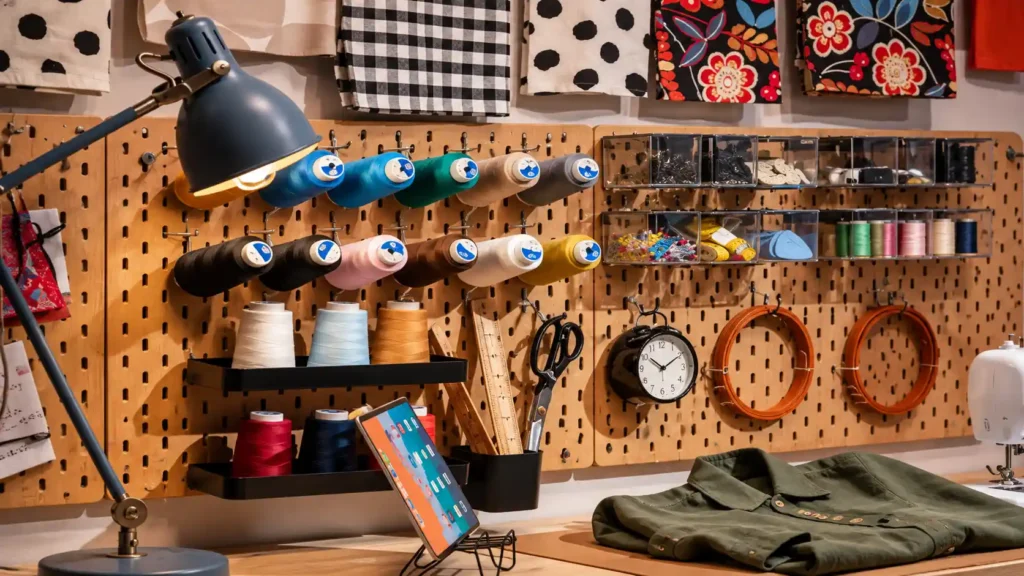
Product intent should be clear before the team begins cost engineering. This does not require every stitch, component supplier or finishing detail to be permanently fixed, but the brand should know which characteristics create the product’s value. A premium running short, for example, may depend on low bulk, secure storage, freedom of movement, stable waistband behavior and a clean visual finish. There can be several manufacturing methods for achieving those outcomes without changing what the user experiences.
This distinction creates room for useful engineering rather than uncontrolled simplification. A pocket construction might be revised if the new approach preserves function and appearance while reducing unnecessary operations. The same change becomes unacceptable if secure storage is weakened or the revised pocket alters the design language that makes the garment recognizable. Cost engineering should therefore ask whether the same product objective can be achieved more efficiently, not simply which elements can be removed until the target price appears on the quotation.
Controlled Changes
Any change that can alter fit, performance, durability, appearance, hand feel, labeling or presentation should remain visible during development. A reduction from a 250 GSM fabric to a 220 GSM option may seem like a straightforward cost decision, yet the lighter material may affect opacity, compression feel, drape, recovery, garment consumption and sewing behavior. Similar consequences can follow a change in elastic, zipper, seam type or bonding process.
A useful supplier proposal explains both sides of the change. Instead of writing “cheaper fabric available,” the proposal can identify an alternative 230 GSM material, note the expected cost direction and state that hand feel, recovery and opacity require sample confirmation. The brand can then evaluate the saving against the product impact. The aim is not to make product development bureaucratic; it is to keep commercial decisions connected to the physical garment so that the team knows exactly what it is approving.
Silent Substitution
Silent substitutions create long-term problems because they damage the reliability of the development baseline. If a fit sample uses a different elastic from the material described in the Tech Pack, the brand may approve the waistband without realizing that the recovery behavior belongs to another component. Later, purchasing may return to the original elastic and the bulk garment can behave differently even though everyone believes the approved sample is being repeated.
Fabric, pocket lining, zippers, thread, rib, glue film, labels and packaging can create the same problem. Once an undocumented substitution enters the sample process, later revisions are compared against a reference that no longer matches the written specification. Cost control should therefore be connected to version control. Each approved sample should correspond to an identifiable material and construction status, and any alternative introduced to reach target cost should have an approval trail before it becomes part of the active specification.
Option Control
A baseline-and-option comparison gives product teams a practical way to evaluate cost reduction without losing control of the garment. The factory can show where savings may exist, while the brand can decide which proposals are acceptable and which features deserve to remain unchanged. Cost effects should be treated as directional until actual material prices, consumption, production quantity and process conditions are confirmed.
| Item | Baseline | Cost Option | Expected Cost Effect | Product Impact | Approval |
| Main fabric | 250 GSM stretch knit | 230 GSM alternative | Medium | Hand feel, opacity and recovery may change | Sample approval |
| Side pocket | Multi-panel zipped pocket | Simplified pocket | Low–medium | Function and appearance may change | Design approval |
| Bonded hem | Full bonded finish | Stitched hem | Medium | Surface finish and seam bulk change | Sample approval |
| Elastic | Custom branded elastic | Available standard elastic | Low | Branding and recovery need review | Trim approval |
| Logo | Multi-color application | Simplified application | Low | Visual identity changes | Artwork approval |
| Packaging | Custom presentation | Standard packaging | Low–medium | Retail presentation changes | Commercial approval |
| Color plan | Six colors | Three colors | Indirect | Assortment becomes narrower | Merchandising approval |
The table also prevents a common sourcing mistake: combining several small changes into one new quotation without showing how the product got there. A brand might accept standard packaging and a simpler hidden pocket while rejecting the lighter fabric because material feel is central to positioning. Another project may make the opposite decision. The manufacturer contributes engineering options, but product priorities remain visible instead of being buried inside a lower total price.
Which Cost Trade-Offs Are Valid?
A valid cost trade-off either protects the product’s essential performance and identity or clearly identifies the compromise before approval. Fabric, trims, construction, special-process scope, quantity, SKU structure, branding and packaging can all affect cost. The most useful saving is not automatically the largest one; it is the option that removes relatively little customer value while meaningfully improving commercial feasibility.
Material Changes
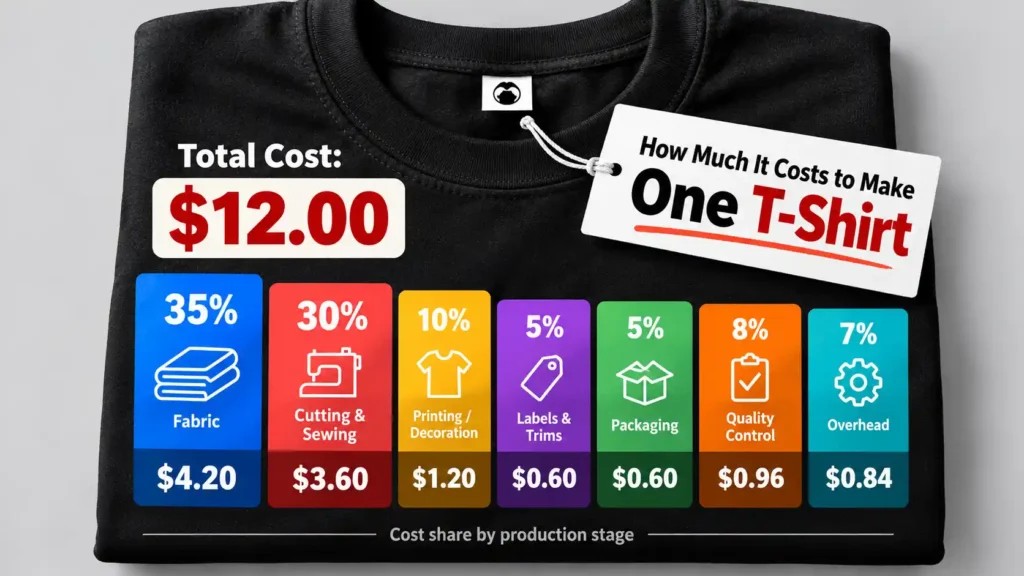
Fabric and trim alternatives are often considered first because material cost is repeated across every garment in the order, but “similar fabric” is not a sufficient technical description. Two knitted fabrics with the same nominal composition can differ noticeably in GSM, usable width, knitting structure, stretch, recovery, opacity, surface finish, hand feel and shrinkage behavior. Those differences can affect the consumer experience as well as cutting, sewing and actual consumption.
The lower price per kilogram is also not automatically the lower garment cost. A material with different usable width can change marker efficiency, while higher expected shrinkage may require different cutting or consumption assumptions. Trim alternatives deserve the same scrutiny. A less expensive zipper or elastic may look close enough in a photograph but behave differently during repeated use. Material optimization is therefore strongest when the factory presents measurable specifications, physical swatches or sample garments and explains which characteristics remain comparable and which still require validation.
Construction Changes
Construction cost is influenced by the number, sequence and difficulty of manufacturing operations. Additional panels, curved seams, bindings, pockets, zippers, topstitching, reinforcement, layered areas, bonding, seam taping and decorative details all create material or handling requirements. Simplifying a few low-value operations can sometimes improve cost without changing the main fabric or overall fit, which makes construction review especially useful when the design has accumulated details during development.
The important distinction is whether a feature carries product value. Removing a decorative internal component with no structural role may be reasonable. Removing reinforcement from a high-stress pocket opening may reduce manufacturing time while creating a durability concern. A manufacturer should therefore connect each proposed simplification to its function and visual consequence. The decision becomes much easier when the team can see that a particular operation is expensive but contributes little to what the wearer notices, rather than assuming that every additional sewing operation deserves to remain.
Quantity and SKU Structure
Order architecture can influence manufacturing economics without physically changing the garment. A project with one style and two colors may allow larger material lots and simpler production planning than the same total number of units spread across several designs and many colorways. More styles create additional patterns and approvals, while more colors can produce smaller dye lots, trim variations, label combinations and packing requirements. Total volume therefore needs to be evaluated together with fragmentation.
| Program | Total Units | Styles | Colors per Style | Approx. Units per Style/Color | Relative Cost Pressure | Main Consideration |
| A | 4,000 | 1 | 2 | 2,000 | Lower | Larger material and production lots |
| B | 4,000 | 4 | 2 | 500 | Moderate | More patterns and smaller lots |
| C | 4,000 | 4 | 5 | 200 | Higher | Greater color and SKU fragmentation |
| D | 4,000 | 8 | 5 | 100 | Highest in this example | Many small material and production lots |
These figures illustrate project structure rather than fixed apparel-industry pricing rules. Actual results depend on fabric MOQ, trim MOQ, color development, construction, production scheduling and supplier conditions. Even so, the comparison shows a useful principle: a brand that reduces its launch from eight colors to four may improve feasibility without reducing fabric quality or changing the garment. For a first order, assortment discipline can sometimes create more value than repeatedly negotiating a few cents from sewing operations.
Branding and Packaging
Labels, logos, hangtags and packaging can appear small compared with the garment itself, yet several custom components can introduce separate MOQs, artwork approvals, application operations and supplier lead times. A garment may include a main label, size label, care label, heat-transfer mark, hangtag, barcode sticker, individual bag, insert and export-carton requirements. None of these items is automatically expensive, but together they form a meaningful part of the commercial scope.
The useful question is whether each element contributes enough customer or channel value to justify its complexity. Premium presentation may be essential for a direct retail experience, while the same packaging may add little value when a distributor will unpack and repack the goods locally. Logo methods should be reviewed in the same way. A simplified application can be appropriate when it preserves brand appearance, but changing a key visual detail solely to save a small amount can weaken the product more than the saving is worth.
A practical trade-off matrix helps teams compare financial benefit with product impact rather than choosing the largest theoretical reduction.
| Trade-Off | Potential Cost Effect | Product Impact | Suitable Situation | Key Check |
| Higher order quantity | Medium–high on some projects | No direct garment change | Proven demand or repeat style | Inventory exposure |
| Fewer colorways | Medium indirect benefit | Assortment changes | MOQ pressure or first order | Sales plan |
| Available fabric | Medium | Material may differ | Flexible development | Material approval |
| Alternative trim | Low–medium | Component dependent | Non-nominated trims | Appearance and durability |
| Simplified hidden construction | Low–medium | Often limited | Low-value internal details | Structural role |
| Remove key functional feature | Variable | High | Rarely appropriate | Product promise |
| Lower critical fabric level | Potentially high | High | Deliberate repositioning only | Performance and market positioning |
| Simplify packaging | Low–medium | No direct garment change | Packaging not central to channel | Retail requirements |
A saving should always be evaluated against the part of the product being surrendered. Reducing a small packaging component may have almost no effect on the garment, while changing a waistband elastic by the same dollar amount could alter fit and recovery. Cost engineering works best when commercial importance and product importance are reviewed together rather than assuming that every cent carries the same value.
How Should Brands Review a Cost Gap?
When a factory quotation exceeds target cost, the first step is to confirm that both figures refer to the same product, quantity and commercial scope. The team should then identify the main cost drivers, evaluate controlled alternatives and compare revised versions on equal assumptions. If responsible optimization still leaves a gap, the target, product specification, quantity structure or commercial model should be reconsidered openly.

Diagnose the Gap
A cost gap should be treated as information rather than immediate proof that the factory price is wrong. Suppose a brand has a target of USD 15.00 FOB and the current specification is quoted at USD 17.20. The USD 2.20 difference, approximately 14.7% above target, tells the team that some part of the commercial plan and the current technical product are not aligned. It does not yet explain which one should change.
The next discussion should identify the components creating most of the difference. The selected fabric may be responsible for a large portion, while bonding, a complex pocket, custom elastic or packaging may account for smaller amounts. Once those drivers are visible, the brand can decide which parts carry enough product value to protect. A supplier that simply types USD 15.00 into the next quotation without explaining how the difference disappeared has not solved the development problem; it has only hidden the mechanism.
Review Cost Drivers
Cost drivers are most useful when ranked by both financial contribution and product importance. A relatively expensive element with little consumer value may be a strong optimization candidate, while an equally expensive element that defines fit, function or appearance requires more caution. The main fabric on a performance sports bra, for example, may be one of the largest cost lines and still be the wrong place to begin cutting because support, recovery and hand feel depend heavily on it.
Manufacturing review can reveal less obvious opportunities in the construction itself. Extra panels, overlapping seam operations, difficult pocket access, specialized trims, inefficient material combinations or unnecessary handling steps may contribute cost without creating equivalent customer value. Packaging and color fragmentation can also create commercial pressure without affecting the physical garment. A useful cost review therefore looks beyond the biggest number and asks whether each cost driver contributes enough to the product, channel or customer experience to justify remaining unchanged.
Compare Revised Options
Every revised option needs to be compared with the same baseline. When one quotation uses a different fabric, another assumes standard packaging and a third is based on twice the quantity, comparing only the final price creates a false sense of precision. A structured option table lets the team see what has changed and which saving corresponds to each compromise.
| Option | Main Fabric | Construction | Packaging | Quantity Basis | Illustrative Cost* | Main Trade-Off |
| Original | Original specification | Full specification | Custom | 2,000/color | $17.20 | Closest match to original product |
| A | Approved alternative | Full specification | Custom | 2,000/color | $16.50 | Fabric feel and recovery need approval |
| B | Original | Simplified pocket | Custom | 2,000/color | $16.90 | Pocket appearance changes |
| C | Original | Reduced bonding scope | Custom | 2,000/color | $16.75 | Surface finish changes |
| D | Original | Full specification | Standard packaging | 2,000/color | $17.00 | Presentation changes |
| E | Original | Full specification | Custom | 4,000/color | $16.30 | Higher inventory commitment |
| Combined example | Approved alternatives | Selected simplification | Revised packaging | 2,000/color | $15.30 | Several approvals required |
*Illustrative figures only. Actual pricing depends on material quotations, consumption, construction, quantity, packaging, commercial terms and production conditions.
This comparison changes the nature of the negotiation. The brand might decide that the original fabric and bonding are central to the product but that packaging and pocket construction can be simplified. The revised cost may then remain above the original target, yet everyone understands the remaining difference. A transparent USD 15.80 garment can be a much better commercial decision than a mysterious USD 15.00 garment that no longer matches the intended specification.
Decide What Must Change
Sometimes responsible cost engineering shows that the current target simply does not fit the intended product. That outcome is useful because it gives the brand a real commercial decision. The business can accept a higher manufacturing cost, reconsider margin, review retail pricing, increase order quantity, reduce color fragmentation, revise materials, simplify construction, change branding or rethink packaging. More than one variable can move, but the movement should be deliberate rather than hidden.
Before the next development or bulk-production stage, the active specification should be brought back into alignment with the commercial decision. Materials, construction, quantity, color and size mix, branding, packaging and current cost basis need to describe the same version of the garment. This becomes increasingly important as a style moves from prototype through fit review, revisions, pre-production confirmation and bulk manufacturing, because an approved commercial change that never reaches the technical file can create the same practical problem as an unapproved factory substitution.
| Review Item | Confirmation Before Bulk | Practical Value |
| Specification version | Current approved revision | Prevents production from using outdated construction |
| Main fabric | Approved quality and color | Controls appearance, fit and consumption assumptions |
| Trims | Approved type and relevant specification | Reduces uncontrolled substitution |
| Measurements | Approved chart and tolerances | Supports size consistency |
| Construction | Approved seam and workmanship details | Aligns samples with bulk production |
| Branding | Artwork, size, placement and process | Reduces visual execution errors |
| Packaging | Approved components and labeling | Supports packing and shipment preparation |
| Quantity/SKU | Final style-color-size breakdown | Supports purchasing and production planning |
| Testing requirements | Defined tests where applicable | Connects claims to actual validation |
| Cost basis | Final agreed scope and commercial conditions | Reduces later price disputes |
The purpose of this review is not to force every style back to its original target. It is to make sure that commercial decisions and technical decisions describe the same garment. When the cost rises, the brand should know what created the increase. When the product changes, everyone should know what was approved. That clarity is one of the strongest protections against margin surprises, sample-to-bulk drift and supplier quotations that look comparable only because their underlying specifications are different.
A useful target-cost inquiry therefore contains more than a number. Share the current Tech Pack, reference garment or development materials, expected quantity, color and size structure, target-cost basis, material direction, key performance or quality requirements, branding and packaging needs, and the product details that should not be changed without discussion. Then ask the manufacturer to assess the intended product before proposing alternatives.
For brands developing sportswear, swimwear, streetwear or modest sportswear, Leadshow can review projects from product information and development inputs through sampling, manufacturing, quality control, labels, packaging and export-delivery support, subject to the requirements of the individual project. The company’s documented positioning also emphasizes product development, materials, workmanship, quality and scalable manufacturing rather than competing only on the lowest price.
If your team already has a target cost, send Shenzhen Leadshow the specification or reference materials together with the quantity assumptions and the requirements you want protected. A useful project review should answer two practical questions: what does the current product realistically cost under the stated conditions, and which controlled changes could close any remaining gap without quietly turning the garment into a different product? Leadshow’s standard MOQ starts from 100 pieces per color per design, subject to fabric, trims, construction and customization requirements.
A target cost should make development more disciplined, not less transparent. The strongest sourcing outcome is not a quotation that reaches the desired number at any cost. It is a product, specification and commercial model that still agree with one another when the style moves from development sample to approved bulk production.


