
A manufacturer can look impressive on paper and still be the wrong development partner. Factory size, machinery, MOQ, price, and production capacity matter, but they do not tell you what happens when a neckline does not sit correctly, a new fabric changes the fit, a trim becomes unavailable, or three sample comments conflict with the original Tech Pack. Those moments reveal whether a supplier simply executes instructions or can help turn a product idea into a controlled, production-ready specification. For established brands, that difference affects more than sampling convenience: it can influence launch timing, product consistency, margin protection, and the amount of technical work that must remain inside the brand team.
Brands should compare manufacturer development support by reviewing how each supplier interprets product inputs, identifies technical risks, develops patterns and samples, evaluates materials, controls revisions, documents approvals, explains cost and timing changes, and transfers the final approved version into bulk production. The strongest evidence comes from the manufacturer’s actual development process, questions, records, and sample decisions rather than broad claims such as “full OEM/ODM service” or “professional R&D.”
Imagine two factories receiving the same sports bra specification. Both reply quickly, both offer similar prices, and both say they can make it. One begins sampling immediately. The other notices that the bottom-band stretch, cup construction, and recovery characteristics of the proposed fabric have not been defined clearly enough to establish a reliable production reference. The second supplier may look slower on day one, but that question could prevent several rounds of rework later. This article explains how to compare that kind of development support before the purchase order makes the decision expensive to reverse.
What Does Manufacturer Development Support Include?
Manufacturer development support covers the technical and operational work needed to turn a concept, Tech Pack, reference garment, sketch, or specification into an approved, manufacturable production version. It can include requirement review, construction evaluation, pattern and fit development, material and trim assessment, sampling, revision control, workmanship review, approval management, and transfer of confirmed requirements into bulk production.
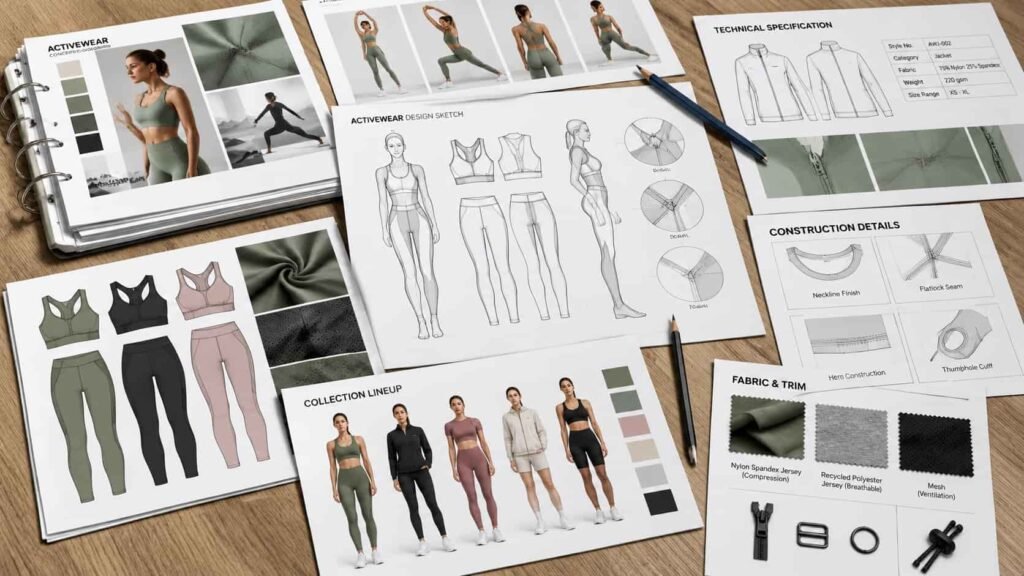
The useful comparison starts by separating development from ordinary order handling. A factory may be excellent at cutting and sewing garments from a complete production pack while offering limited support when the product is still unresolved. Another manufacturer may be able to review incomplete information, identify conflicts, develop patterns, evaluate material options, build samples, revise construction, and help establish the production reference before bulk manufacturing begins. Neither model is automatically better; the right fit depends on how much technical work your brand has already completed and how much remains open.
A mature brand may arrive with a graded pattern, approved fabric, BOM, artwork, packaging instructions, fit standards, and a locked Tech Pack. In that case, development support may mainly involve manufacturability review, confirmation sampling, material verification, and controlled transfer into production. A new style or ODM project may need much more work because the silhouette, structure, fit, trims, and cost architecture are still being tested. Comparing suppliers without recognizing this difference often creates false expectations about what is included in a sample fee or unit quotation.
The term “development support” also needs boundaries. Manufacturing-focused development is not the same as full creative design, trend research, brand strategy, or marketing. A manufacturer can be highly capable at interpreting references, adjusting construction, developing patterns, assessing fabrics, controlling samples, and preparing a repeatable production version without providing every creative service around the brand. Clear boundaries are a sign of professional project management because they show which decisions the factory can support, which remain with the customer, and which require third-party testing or specialist suppliers.
For Leadshow projects, the verified scope can include Tech Pack or reference review, material and trim evaluation, pattern and fit adjustment, sample development, workmanship assessment, small-batch trial production where applicable, bulk manufacturing, quality control, labels, packaging, and export-delivery support. The value is not that every project follows every step. The value is that the route can be matched to the product’s actual level of readiness instead of forcing a finished-specification process onto an unresolved development project.
| Development Area | What to Confirm | Practical Evidence | Pre-Order Value |
| Project input | Tech Pack, reference, measurements, BOM, pattern, concept | Gaps and conflicts identified before sampling | Reduces hidden assumptions |
| Construction | Seams, panels, reinforcement, openings, bonding, elastic | Technical questions tied to the actual garment | Shows product understanding |
| Pattern and fit | Base pattern, measurements, balance, stretch allowance | Updated pattern or measurement record after fit comments | Turns subjective fit into controlled changes |
| Materials | Fabric, elastic, zipper, labels, packaging | Bulk vs substitute status and supplier constraints | Prevents sample materials being mistaken for final materials |
| Sampling | Purpose of proto, fit, size-set, or PP sample where applicable | Defined sample objective and approval scope | Clarifies what each sample proves |
| Revision control | Changes to measurements, construction, artwork, materials | Version/date/open-point record | Prevents mixed instructions |
| Production transfer | Approved spec, material, artwork, labels, packaging | Clear production reference before release | Connects development to bulk execution |
What Inputs Can the Manufacturer Review?
The first sign of useful development support is how accurately the supplier reads what has actually been provided. One project may include a complete Tech Pack with measurements, construction notes, BOM, fabric specifications, artwork, labels, and packaging instructions. Another may arrive as a physical reference garment, three photographs, a target fit description, and a request such as “make the waistband firmer without adding bulk.” Those projects demand different levels of technical interpretation, so the manufacturer should explain which inputs can be reviewed and what still needs clarification before sampling begins.
Brands should pay attention to how conflicts are handled. If the reference garment shows one seam structure but the Tech Pack specifies another, the factory should not quietly choose whichever is easier. If a photo shows a bonded edge but the written specification calls for stitching, the discrepancy should be raised. If final fabric is not available, the supplier should distinguish what can be evaluated with a substitute from what must be reconfirmed later. That behavior protects the project from assumptions becoming hidden production instructions.
Which Technical Areas Can It Develop?
Technical development becomes valuable when the manufacturer can connect design intent with manufacturing consequences. Depending on the garment, this may involve pattern shape, seam placement, neckline stability, elastic tension, panel geometry, reinforcement points, pocket construction, bonded areas, openings, stretch allowance, or grading considerations. A sports bra with a revised bottom-band elastic, for example, may require changes to pattern dimensions, seam method, and fit expectations rather than a simple component swap. The same applies to leggings when a new fabric changes stretch and recovery behavior.
The manufacturer should be able to explain which variables interact and which changes require another sample or technical confirmation. That does not mean the factory should redesign the garment without approval. It means the development team understands that a product is a system: fabric, pattern, trims, construction, and process choices influence one another. When a supplier can identify these relationships before production, it is providing more than sample execution; it is helping reduce the risk of solving one issue while creating another.
How Are Materials and Trims Evaluated?
Material sourcing answers whether a fabric or trim can be purchased; material development asks whether it suits the intended product, construction, order quantity, appearance, and production route. For each important material, the brand should know whether the sample uses the intended bulk material or a substitute, whether custom color development is required, whether a trim has its own supplier MOQ, and whether the material creates any limitations for sewing, bonding, heat transfer, or other processes. Those details are commercial as well as technical because they can change cost and timing.
Small and medium custom orders make this particularly visible. A factory may accept the finished-garment quantity while a fabric mill, elastic supplier, zipper supplier, or packaging vendor requires a larger upstream purchase. The right response is not to hide the difference; it is to explain the options. Available colors, standard trims, adjusted branding, or a different material route may reduce the commitment. A well-managed project records which materials are approved, which are provisional, and which still need customer confirmation before the sample is treated as production-representative.
Does Support Continue Into Bulk Production?
Development loses much of its value if the approved result cannot be transferred into bulk manufacturing. Before production release, the team should be able to identify the current specification version, approved material, color direction, artwork, size information, labels, packaging requirements, and any remaining conditions. “Same as sample” is rarely sufficient unless the sample itself has a clear ID and the scope of approval is known. A visually approved sample can still contain substitute fabric, temporary trims, or unresolved grading information.
The handoff should connect development decisions with purchasing, cutting, sewing, specialized workmanship, quality review, finishing, packing, and shipment preparation. That connection is what turns a successful sample into a repeatable product. A manufacturer that can explain how approved information moves through those functions gives the brand better evidence of production readiness than one that treats sample approval as an informal signal to start bulk.
Which Evidence Shows Real Development Capability?
Real development capability is shown through technical questions, controlled sample records, clear approval boundaries, qualified development resources, and a traceable route from customer requirements to production. Factory size and equipment are useful supporting evidence, but they become meaningful only when the supplier can show how those resources are used to resolve product risks and control development decisions.

The easiest claims to make are often the least useful during supplier selection. “Professional R&D team,” “one-stop service,” and “strong development ability” can appear on almost any factory profile. A stronger assessment looks for evidence that is harder to imitate: what happens when a specification is incomplete, how a construction conflict is handled, whether sample comments are tied to a current version, whether material substitutions are labeled clearly, and how the approved result becomes a production reference. These behaviors reveal the operating system behind the marketing language.
One practical method is to follow a single style through the supplier’s proposed workflow. Start with the initial project review, then ask what happens during pattern development, material confirmation, first sampling, fit comments, revision, approval, and production handoff. The process does not need to be complicated, and more steps do not automatically mean better control. The important point is that each stage has a purpose, each critical change has an owner, and the current version can be identified without relying on memory or scattered messages.
Resources still matter because development requires people and tools. A dedicated sampling function, pattern-making capability, suitable sewing and specialized-process equipment, quality staff, and scalable production resources make it easier to support complex garments. But capacity figures do not replace project evidence. A large factory can still be a poor fit for a highly technical style, while a smaller specialist operation may understand that category extremely well. The relevant question is how the available resources connect to the product, workmanship, quantity, and risk profile of the actual order.
Leadshow has a verified approximately 28-person R&D engineering team supporting technical review, pattern development, sample coordination, fit adjustment, material and workmanship evaluation, and production conversion. Its documented sampling resources include sample sewing equipment, four-needle six-thread equipment, pattern-making computers, and plotting equipment. Those facts establish real development infrastructure while still leaving project-specific performance, timing, and outcome to be confirmed against the garment under review.
| Evidence Type | Basic Evidence | Stronger Evidence | What It Tells Procurement |
| Initial review | “We can make it” | Specific questions about missing dimensions, materials, construction, or approvals | Shows whether technical risk is reviewed early |
| Pattern development | Pattern capability claimed | Pattern changes linked to measurements and fit comments | Shows controlled development rather than blind iteration |
| Sample records | Photos only | Sample ID, version, material status, measurements, comments | Makes approval and comparison traceable |
| Material review | Swatches offered | Suitability, availability, MOQ, substitute status documented | Reveals technical and commercial dependencies |
| Revision control | Chat messages | Consolidated revision record with current version | Reduces mixed instructions |
| Manufacturing resources | Factory photos | Verified equipment tied to specific processes | Supports capability claims with physical resources |
| Production conversion | “We can do bulk” | Approved production reference and release conditions | Shows development is connected to manufacturing |
Does the Manufacturer Ask Technical Questions?
A good supplier does not need to challenge every instruction, but it should recognize when important information is missing or contradictory. Suppose a brand requests leggings with a high-compression feel, a soft hand, a particular fabric weight, a low target cost, and a small custom quantity. Those requirements may pull the development route in different directions. The manufacturer should clarify which characteristics are essential, what can be adjusted, and what must be validated by material selection or sampling before it commits to a final specification.
The same principle applies to measurements, branding, and workmanship. If the waistband dimensions in the measurement chart differ from the physical reference, the inconsistency should be raised. If the artwork cannot reproduce the requested detail at the intended logo size, the limitation should be explained before the decoration method is locked. Fast communication is useful, but relevant technical questions are better evidence of development quality because they show that the supplier is looking for failure points before they become finished samples or bulk inventory.
Can It Show a Defined Development Process?
A defined process does not mean every garment needs the same number of samples, forms, or approvals. It means the manufacturer can explain what must be resolved before moving forward. A repeat hoodie based on an existing block may require current material verification, artwork confirmation, and an approved production reference. A new sports bra may need construction review, pattern development, elastic evaluation, fit sampling, material confirmation, and more detailed approval. The workflow should expand or contract according to the technical risk of the style.
Ask what triggers each stage. When does pattern development begin? What must be ready before the first sample is cut? How are fit comments converted into revised dimensions? When can bulk materials be purchased? What releases the style to production? Answers to those questions show whether the supplier has a repeatable decision process or simply reacts to problems as they appear. The strongest development systems are usually practical rather than bureaucratic: they make the current status easy to understand and the next decision easy to identify.
Are Revisions and Approvals Documented?
Revision control becomes more important as the number of variables increases. A style may accumulate changes to pattern shape, dimensions, fabric, seam construction, logo position, trim, labels, and packaging over several rounds. If those decisions remain spread across chat messages, spreadsheets, marked photographs, and video calls, different people can easily work from different assumptions. A usable revision record should identify the sample or specification version, date, requested change, implementation status, and any item still waiting for customer approval.
The purpose is not paperwork for its own sake. It is to make sure the brand, sample team, pattern team, production team, and quality staff can all answer the same question: what exactly are we making now? Leadshow’s verified sample-development terminology includes version-controlled sample development, customer fit comments, customer-approved samples, approval scope, and customer-approved production references. Those controls are particularly valuable when a product uses substitute materials during early sampling or when approval is granted in stages rather than all at once.
Are Team and Manufacturing Resources Verifiable?
Manufacturing infrastructure becomes more meaningful when it is linked to the garment being developed. Leadshow’s verified company data includes 15 years of industry experience, three manufacturing bases, more than 20,000 square meters of combined facilities, more than 1,500 team members, and 304 production and finishing machines. Combined monthly capacity can reach up to approximately 120,000 finished garments, subject to style complexity, materials, order mix, and current production scheduling. Those figures describe scale, but scale should never be treated as a substitute for technical fit.
The available resources include equipment for cutting, lockstitch, overlock, double-needle sewing, four-needle six-thread flatlock, bonding, seam taping, laser perforation, heat transfer, pressing, needle detection, and folding or packing. Their relevance depends on the specific product and material. A brand sourcing performance leggings should care about stretch-compatible seam capability and fit control; a streetwear hoodie program may care more about fabric handling, structure, graphics, finishing, and packaging. Verified resources are strongest when the supplier can explain exactly how they apply to the current style.
How Should Brands Compare Sampling and Revisions?
Brands should compare sampling by examining what each sample is intended to validate, which materials and specifications apply, how fit comments become controlled technical changes, and what approval actually authorizes. The best sample process is not necessarily the fastest or the one with the fewest rounds; it is the one that exposes unresolved risks early and leaves a clear production reference.

A sample is not simply a miniature bulk order. It is a decision-making tool, and its value depends on what the team expects it to prove. An early development sample may focus on silhouette, basic construction, or manufacturability even if final material is not available. A fit sample may focus on balance, measurements, ease, and pattern behavior. A size set may be used where grading needs additional verification. A pre-production sample, when required by the project, may represent a much more complete combination of approved material, workmanship, branding, and measurements.
Problems appear when these stages are treated as interchangeable. A brand may approve the shape of a sample made in substitute fabric and later assume the same approval covers final fit in the bulk fabric. It may approve one base size and assume the entire size range is automatically verified. It may approve a photograph of label placement while the final label material is still pending. The result is not necessarily a factory error or a brand error; it is usually an approval-scope error that could have been prevented by defining what each sample was meant to validate.
Revision rounds should also be judged by complexity rather than by a fixed promise. Moving a logo is not equivalent to replacing the fabric, changing the waistband structure, altering the pattern, and modifying a trim in the same round. When a supplier explains that a major change resets part of the development process, that is not automatically inefficiency. It may be a sign that the team understands which earlier decisions are no longer valid and needs to reconfirm them before production.
The cost of weak revision control rises rapidly with order scale. During sampling, a misunderstanding may affect one garment. Once cutting or material commitment begins, the same misunderstanding can affect hundreds or thousands of pieces. That is why established sourcing teams treat sample approvals and revision records as production-control documents rather than casual correspondence. A simple, well-maintained record can prevent more risk than a highly polished sample presentation with no clear version history.
| Sample Stage or Record | Typical Purpose | What Should Be Confirmed | Common Misinterpretation |
| Proto / development sample | Construction and initial shape | Main structure, workmanship direction, obvious feasibility issues | Assuming final fit and material are already approved |
| Fit sample | Pattern balance and measurements | Base-size measurements, ease, key fit points, relevant material behavior | Treating appearance alone as fit evidence |
| Substitute-material sample | Early construction or fit check | Which properties differ from intended bulk fabric | Assuming final fabric will perform identically |
| Size set | Grading and size progression | Selected sizes, measurement tolerances, pattern progression | Assuming one base size validates all sizes |
| Pre-production sample | Final or near-final production reference where required | Material, construction, artwork, labels, measurements, approval scope | Assuming every order automatically includes a PP sample |
| Revision record | Change control | Version, requested changes, implemented changes, open points | Mixing comments from different versions |
| Approval record | Authorization to move forward | Exactly what is approved and what remains conditional | Treating “OK” as approval of every component |
Which Sample Stages Are Required?
There is no universal number of sample stages that proves a manufacturer is professional. The right sequence depends on product risk, the quality of the starting information, the maturity of the pattern, and whether the material and trims are already known. A basic repeat style developed from an established block may move efficiently through confirmation. A fitted jumpsuit, high-support sports bra, or product using bonded components may need more verification because more variables interact and a small construction change can alter fit or manufacturing behavior.
Ask the supplier to explain the purpose of each proposed sample rather than simply naming it. If the first version uses substitute fabric, what can reasonably be approved from it? If a size set is proposed, which sizes require physical review and what grading questions are being checked? If a pre-production sample is requested, which production materials, branding, and measurements should it represent? Those answers make the sample route easier to compare and help prevent unnecessary rounds without sacrificing control.
How Is Fit Feedback Managed?
Fit comments are useful only when they can be translated into technical action. Statements such as “the waistband feels loose,” “the armhole feels tight,” or “the body is too short” describe an experience, not the engineering cause. The correction may involve pattern dimensions, elastic length, seam allowance, fabric recovery, stretch direction, or another construction variable. A capable development team should compare the comment with actual measurements, pattern shape, and material behavior before deciding what to change.
This becomes especially important in stretch garments. Two fabrics with similar composition and weight can still behave differently because knit structure, finishing, stretch, and recovery vary. A fit correction developed in one material may therefore need reconfirmation if the final bulk fabric changes. Brands should look for a process that links fit comments to measurable changes and then checks the new sample against the updated target. That is much more reliable than repeated trial-and-error alterations based only on visual impressions.
How Are Sample Revisions Controlled?
Revision control should be simple enough that both sides use it consistently. At minimum, the current sample should be linked to the current measurement chart, material status, artwork, branding, and customer comments. If the brand changes the waistband, logo position, pocket shape, and color during the same round, those instructions should be consolidated before the next sample begins. Otherwise, separate messages can reach different people at different times and create a hybrid version that nobody actually approved.
A practical record can use a sample ID or date, a current measurement-file reference, a material-status field, an artwork-status field, numbered customer comments, a factory action column, and an open-issues column. The best system is not necessarily software-based. A disciplined spreadsheet or controlled comment sheet may be more effective than a sophisticated platform that nobody follows. What matters is that the brand can identify the current version and see which changes were implemented, rejected, or still waiting for a decision.
What Does Sample Approval Actually Cover?
Sample approval should always have a defined scope. A brand may approve fit while final color remains pending, approve workmanship while the fabric is still a substitute, approve one size without confirming grading, or approve logo placement without approving the final logo material. These are valid partial approvals as long as everyone understands the limits. The risk appears when a general “OK” is later interpreted as approval of every component and every production condition.
Leadshow’s verified sample guidance specifically states that a substitute-material sample, photo approval, or base-size approval does not automatically mean that formal materials, all sizes, or the complete bulk-production version have been approved. Before production begins, the brand should ask a precise question: which elements of this version are approved for production, and which elements remain conditional? That single clarification can prevent many disputes that otherwise emerge only after materials have been committed or bulk garments are already in process.
How Do Cost, MOQ, and Timing Affect Development Support?
Cost, MOQ, and timing are inseparable from development scope because materials, construction, color development, trims, branding, revisions, testing, packaging, and production scheduling can change all three. Brands should compare suppliers using the same technical and commercial assumptions rather than treating unit price, minimum quantity, and sample lead time as fixed numbers that exist independently of the product.

A quotation is only comparable when the underlying product is comparable. If one factory prices a stock nylon-spandex fabric and another assumes a custom-colored material, the difference is not simply price competitiveness. If one supplier assumes standard elastic while another includes branded jacquard elastic, the commercial scope is different. If one quotation includes retail packaging and another assumes a plain polybag, the unit prices cannot be evaluated fairly until those differences are normalized. Development support matters because many of these assumptions are still being decided during sampling.
The same issue appears in sample cost. Instead of asking only “How much is the sample?”, ask what the sample price covers. Does it include pattern development? Is the intended fabric available, or will a substitute be used? Are special trims included? Does a construction change require another pattern or process setup? What happens if the customer changes the fabric after fit approval? These questions make it easier to distinguish an inexpensive first sample from a complete development route and help prevent later charges from feeling unexpected.
MOQ should be broken into components. The finished-garment MOQ and the minimum purchase quantity imposed by a fabric mill, zipper supplier, elastic supplier, label producer, or packaging vendor are different constraints. A factory can accept the garment order while still needing to manage a larger upstream purchase. That extra commitment may be handled through standard materials, available colors, alternative trims, adjusted quantities, or excess-material arrangements, but it should be discussed before the order economics are treated as final.
Lead time should also be separated into milestones. Requirement clarification, material sourcing, pattern work, sample construction, customer review, revision, testing where required, bulk-material readiness, production scheduling, goods-ready date, shipment, and final arrival are not one clock. A fixed “sample in five days” promise can be meaningless if material availability and specification readiness are not included. A manufacturer that explains the dependencies may sound more cautious, but it gives the brand a more realistic basis for planning a launch or replenishment program.
| Commercial Variable | Example Project Condition | Possible Effect | What to Compare |
| Garment MOQ | Standard style using available materials | May stay near the factory starting quantity | MOQ per design and per color |
| Custom fabric | Custom dye, special knit, certified material | Supplier MOQ may exceed garment MOQ | Required purchase quantity and excess-material treatment |
| Custom trim | Branded zipper, jacquard elastic, molded component | Separate tooling or supplier minimum may apply | Trim MOQ, tooling, development cost |
| Branding | Heat transfer, custom label, hangtag | Artwork, material, color, and process affect cost | What is included in sample and bulk quotation |
| Complex construction | Bonding, seam taping, additional panels | More process validation may be needed | Labor, equipment, testing, revision effect |
| Revision | Minor artwork move vs major material/fit change | Different cost and timing impact | Which changes trigger re-sampling or re-costing |
| Testing | Performance or compliance claim | Method and laboratory scope may add time/cost | Who arranges testing and which standard applies |
| Packaging | Standard polybag vs custom printed packaging | Packaging MOQ and supplier lead time may change economics | Unit cost, minimum order, artwork approval |
| Production timing | Material ready vs custom material pending | Development and bulk timing differ | What event actually starts each milestone |
Is the Development Scope Included in the Quote?
Before comparing prices, normalize the scope. Ask each manufacturer which version of the specification was quoted, which fabric is assumed, whether trims are standard or custom, whether labels and packaging are included, and whether sampling, specialized processes, testing, or tooling require separate charges. A low quotation can be completely legitimate if the scope is simpler. The problem appears when the brand assumes that two unit prices represent the same product even though the underlying construction, materials, or services are different.
Cost optimization should be visible rather than silent. Replacing a bonded edge with conventional stitching may reduce cost; using an available color instead of a custom-dyed fabric may reduce MOQ and development time. Those can be sensible manufacturing options if they preserve the product priorities and the brand approves them. The strongest quotation is therefore not necessarily the longest or the lowest. It is the one that makes important assumptions clear enough for procurement, product, and finance teams to understand what will change if the specification changes.
How Do Materials Affect MOQ?
Finished-garment MOQ is only one layer of the minimum-order structure. A style may meet the factory’s standard starting quantity while a custom-dyed fabric, jacquard elastic, branded zipper, molded accessory, or printed packaging supplier requires a larger order. Leadshow’s standard MOQ generally starts from 100 pieces per color per design, but the final requirement is project-specific and can be affected by fabric, trims, construction, colors, branding, labels, packaging, testing, and supplier conditions. That is a more useful way to discuss MOQ than a blanket “low MOQ” claim.
For each custom component, ask what the upstream minimum is, whether excess material must be purchased, whether available alternatives can reduce the commitment, and whether remaining material can realistically support a reorder. A larger fabric purchase may be acceptable for a recurring core style but unattractive for a one-time seasonal color. The commercial value of development support is partly the ability to identify those dependencies early enough for the brand to change the product or quantity before the costs are locked in.
Which Changes Affect Development Cost?
Not every revision has the same technical or commercial consequence. Moving a heat-transfer logo may require relatively little additional work if the artwork, method, and garment structure remain unchanged. Replacing the fabric can be much more significant because it may affect fit, pattern behavior, consumption, shrinkage, stitching, color development, and the validity of earlier sample approvals. Changing from a sewn edge to a bonded construction may alter materials, equipment, pattern allowance, process settings, and wash-performance expectations.
When a manufacturer says that a change requires re-costing or another sample, the useful question is which previous assumptions are no longer valid. This keeps the discussion connected to the actual work rather than turning every change into a generic fee dispute. It also helps the brand decide whether the improvement is commercially worthwhile. A strong development partner should be able to explain the cost consequence of major decisions without pretending that every variable can change while price, MOQ, and timing remain fixed.
How Is Development Timing Confirmed?
Development timing should be built from milestones rather than one headline number. Specifications may need clarification, materials may need sourcing, a custom trim may require development, pattern work may precede sample cutting, and every revision depends on the size of the requested change and the speed of customer feedback. Leadshow’s verified timing guidance confirms sample and bulk timing according to specifications, materials, revision rounds, workmanship, quantity, approvals, payment conditions, and current production scheduling rather than applying one fixed sample cycle to every product.
For planning purposes, brands should separate sample-ready date, customer review time, revised-sample timing, material readiness, production release, goods-ready date, shipment date, and estimated arrival. Those milestones belong to different parties and can move for different reasons. A conditional but well-defined schedule gives the team something it can actually manage. An aggressive promise given before specifications and materials are ready may sound attractive in a supplier comparison, but it is weak evidence of real development control.
How Can Brands Make the Final Comparison?
Brands should make the final comparison by giving shortlisted manufacturers the same product brief and scoring them on technical review, materials, pattern and fit, sampling, revision control, approval discipline, commercial clarity, manufacturing fit, production transfer, and communication. The strongest development partner is the supplier whose process best controls the unresolved risks in the actual product rather than the one with the most impressive general claims.

By the final shortlist, supplier evaluation should move away from general impressions and toward a controlled comparison. Give each manufacturer substantially the same style version, target quantity, colorways, size range, material direction, construction requirements, branding, packaging expectations, and target-market information. If Factory A receives a complete Tech Pack while Factory B receives only reference photos, the responses are not directly comparable. The same applies to quotations: different assumptions about fabric, workmanship, packaging, or testing can make one price look better even when the scope is not equivalent.
The scoring model should also reflect the product’s risk profile. A brand sourcing a repeat hoodie from an established block may put more weight on production consistency, material availability, packaging accuracy, and reorder control. A team developing a new sports bra may place more weight on pattern, fit, elastic behavior, material recovery, sample discipline, and construction review. A multi-SKU retail launch may give more weight to version control, labeling, packing, and capacity coordination. There is no universal weighting that makes one factory the best for every program.
A useful final decision separates three questions. Can the manufacturer physically make the product? Can it develop the unresolved parts of the product? Can it reproduce the approved result at the required order scale and under the agreed commercial conditions? Those are related capabilities, but they are not identical. A supplier may be technically strong but unsuitable for the order size; another may have scale but limited development depth; a third may be excellent for a mature OEM program but less suitable when the specification is still evolving.
Leadshow positions itself as a mid-to-high-end OEM and ODM apparel development and manufacturing partner focused on sportswear, swimwear, streetwear, and modest sportswear. Verified resources include three manufacturing bases, more than 20,000 square meters of combined facilities, more than 1,500 team members, 304 production and finishing machines, and combined monthly capacity of up to approximately 120,000 finished garments subject to product complexity, materials, order mix, and current scheduling. Those resources support scale, but final suitability still needs to be judged style by style against the actual development brief.
| Comparison Criterion | Suggested Weight* | 0-1: Weak Evidence | 2: Acceptable Evidence | 3: Strong Evidence |
| Technical review | 15% | Generic acceptance, few questions | Basic specification review | Identifies technical gaps, conflicts, dependencies |
| Pattern and fit | 15% | Responsibility unclear | Pattern/fit support available | Changes linked to measurements, fit comments, sample version |
| Material evaluation | 10% | Sourcing only | Basic suitability discussion | Material status, alternatives, MOQ, construction implications explained |
| Sampling | 15% | Undefined sample purpose | Sample stages broadly identified | Purpose, materials, measurements, approval scope controlled |
| Revision control | 10% | Comments scattered | Revision list available | Current version, completed changes, open points traceable |
| Commercial clarity | 10% | Unit price with limited scope | Main assumptions visible | Cost, MOQ, and change implications separated |
| Production transfer | 15% | “Same as sample” only | Approved reference available | Production version tied to material, specs, artwork, labels, packaging |
| Communication | 10% | Fast but generic | Clear and responsive | Technical, conditional, traceable communication |
Can Manufacturers Be Compared on the Same Brief?
A meaningful comparison begins with controlled input. Give each shortlisted supplier the same product version, approximate quantity, number of colorways, size range, material direction, construction details, branding requirements, packaging expectations, and target-market information. Clearly mark which requirements are fixed and which are open to recommendation. If one supplier is free to use available stock fabric while another is required to quote a custom-dyed material, their cost and timing cannot be compared as though the scope were identical.
Once the inputs are aligned, compare the questions that come back. One manufacturer may identify a missing measurement, another may flag a fabric risk, another may explain that a trim changes MOQ, and another may simply return a price. The goal is not to reward the factory with the longest email. It is to see whether the response demonstrates useful understanding of the product and whether the assumptions behind the quotation are visible enough for the brand to make a fair decision.
Which Criteria Should Be Scored?
Score the factors that can realistically create cost, quality, timing, or execution problems in the program. For technical sportswear, pattern and fit, stretch-compatible construction, material behavior, and sample control may deserve more weight. For streetwear, fabric hand feel, wash or surface treatment, trims, graphics, finishing, and packaging may be more important. For modest sportswear, coverage, movement, opacity, layered construction, and fit balance can shape the assessment. The criteria should follow the garment rather than a generic supplier checklist.
Operational factors become more important as the order grows. Capacity, quality-control planning, documentation, packaging accuracy, shipment preparation, and communication across multiple SKUs may matter as much as the first sample. Leadshow’s documented supplier-selection guidance similarly treats product fit, technical review, sampling, materials, equipment, quality requirements, capacity, packaging, compliance, communication, and delivery conditions as separate evaluation dimensions. The value of a scorecard is not mathematical precision; it is forcing the team to explain what matters and compare suppliers on the same basis.
What Are the Main Red Flags?
No single warning sign automatically disqualifies a manufacturer, but several patterns deserve closer investigation. Be cautious when a supplier gives unconditional “yes” answers to technically incomplete requests, when sample approval has no defined scope, when material substitutions are not clearly identified, when nobody can name the current version, or when an important construction change produces no discussion of cost or timing. Fixed promises made before specifications, materials, and production conditions are known should also be treated as assumptions rather than evidence.
Broad claims such as “any fabric,” “any quantity,” “perfect fit,” “all processes in-house,” “every sample approved in one round,” or “bulk will be 100% identical to the sample” may sound reassuring but ignore the variables that exist in real apparel manufacturing. Materials have tolerances, suppliers have MOQs, approvals can be partial, and production schedules change. Professional caution often sounds less impressive than absolute confidence, yet it usually gives procurement teams better information because it separates verified capability from project-specific conditions.
Which Manufacturer Is the Better Development Partner?
The better partner is the manufacturer whose strengths match what your product still needs. If your team already owns complete patterns, graded specifications, approved fabrics, and detailed production standards, disciplined execution may be more valuable than broad development input. If the concept is strong but technical specifications are incomplete, you may need deeper support in construction, materials, pattern, fit, sampling, and production conversion. A supplier should therefore be selected for fit with the program, not for the broadest claim of capability.
Before ordering, the decisive question is not “Which factory is biggest?” or “Which quotation is cheapest?” It is whether the manufacturer has shown that it understands the garment, identifies unresolved risks, controls changes, documents approvals, and can carry the approved specification into repeatable production. Brands developing sportswear, swimwear, streetwear, or modest sportswear can send Leadshow a Tech Pack, reference images, physical sample information, target quantity, colorways, size range, material direction, and branding requirements for project-based feasibility review before the applicable MOQ, development scope, quotation, and timing are confirmed.
Choosing a development partner before ordering is ultimately a risk-management decision. The strongest supplier is not the one that promises the most services in the shortest time; it is the one that makes the product, assumptions, revisions, approvals, and production conditions visible enough for both sides to manage them. If your next sportswear, swimwear, streetwear, or modest sportswear project needs structured technical review, sample development, manufacturing evaluation, custom labels or packaging, and scalable production planning, you can send Shenzhen Leadshow Sports Technology Co., Ltd. your current Tech Pack, reference images, sample details, quantities, colorways, size range, material direction, and branding requirements. The project can then be reviewed against the actual product conditions before MOQ, development scope, quotation, and timing are confirmed.