
“Free design” sounds attractive when a brand is comparing clothing manufacturers, but the phrase can hide very different levels of work. One supplier may use it for changing a logo on a digital mockup, while another may prepare a technical flat or clarify a few specifications before sampling. A development-oriented manufacturer may go much further, working through construction, materials, patterns, fit, sample revisions, and production feasibility. Those offers should not be treated as equivalent simply because they all use the word design.
Product development support is the technical work that turns a product idea or incomplete specification into a garment that can be sampled, evaluated, corrected, approved, and prepared for manufacturing. Free design usually describes a limited design-related service, so it should not be assumed to include patterns, tech packs, materials, fit development, sampling, revisions, source files, or production engineering.
The difference becomes expensive only when it is discovered too late. Imagine approving an attractive leggings mockup, paying for a sample, and then learning that nobody has yet resolved the waistband construction, stretch direction, fabric weight, pattern measurements, seam type, pocket position, or grading logic. The picture was finished, but the product was not. Understanding where design assistance ends and product development begins helps sourcing and product teams ask better questions before the first sample is made, compare supplier scopes more fairly, and reduce avoidable changes after materials and production resources have already been committed.
What Is Product Development Support?
Product development support connects a clothing concept with manufacturing. It can include construction review, material and trim evaluation, pattern development, measurements, fit, workmanship, sampling, revisions, and manufacturability review. The goal is not simply to make a garment look attractive on screen; it is to establish enough technical information and physical evidence for the product to move toward controlled bulk production.
What Does Product Development Cover?
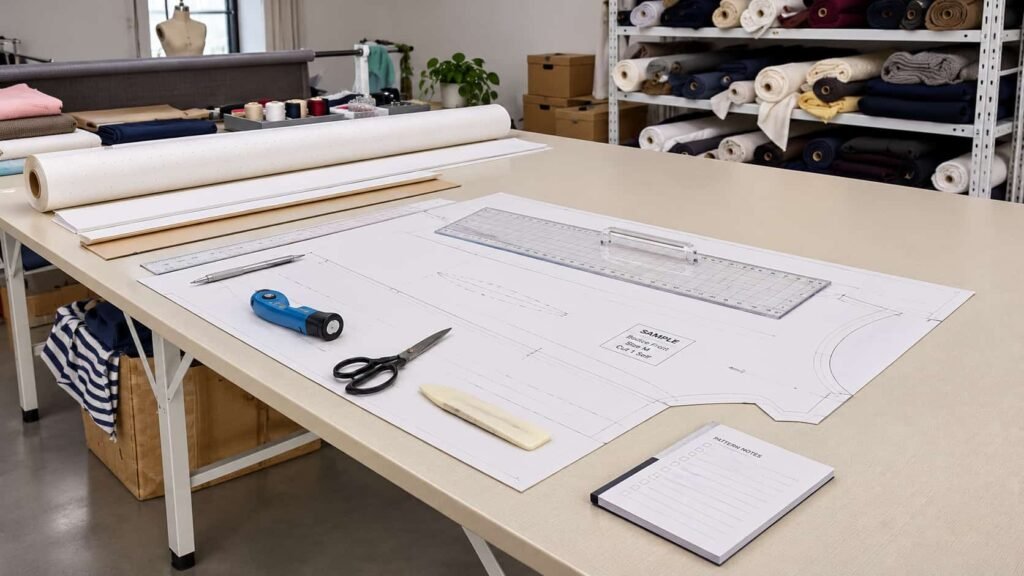
In apparel, a product is a network of connected decisions rather than a drawing with a price attached. A pair of leggings may look straightforward in a sketch, yet manufacturing requires decisions about fabric stretch and recovery, weight, opacity, waistband construction, gusset shape, pocket geometry, seam type, elastic tension, measurements, tolerances, branding, and size progression. Each decision can affect another. Changing the fabric can require a pattern adjustment, changing the waistband can alter elastic consumption and sewing operations, and moving a logo can require a different application method if the new area stretches more during wear.
Useful development therefore starts by separating what is already controlled from what still needs evidence. Construction notes may need to be checked against the selected fabric; material choices may need to be compared for handfeel, recovery, shrinkage, or process compatibility; a pattern may need to be developed or corrected; and a physical sample may need to prove whether the intended fit and workmanship actually work together. The objective is not to make every project more complicated. It is to prevent unresolved assumptions from traveling into sampling and then multiplying during bulk production.
Which Files Can Start Development?
Not every project begins at the same level of maturity. An established brand may submit a complete tech pack with technical drawings, measurements, a BOM, artwork, labels, construction requirements, and nominated materials. Another may have an existing garment and a controlled change list. A growing label may have a sketch, several reference images, and a clear fit direction but no production-ready pattern. These projects should not be forced through the same workflow because the technical gaps are different, even when the final product category looks similar.
A reference photograph can communicate silhouette, styling, color blocking, and general proportions, but it cannot reliably define internal seam construction, seam allowance, fabric specifications, exact measurements, grading, or tolerance. A physical garment provides more evidence, yet it still does not automatically establish the original material specification, production method, or legal right to reproduce protected design elements. A manufacturer should identify which inputs are authoritative, which are references only, and which decisions still need to be confirmed before the sample is treated as meaningful evidence.
| Development Area | Typical Input | Technical Question | Useful Output | Production Value |
| Product construction | Sketch, reference garment, tech pack | How should panels, seams, openings, and functional areas be built? | Construction notes or revised specification | Reduces interpretation during sewing |
| Materials | Fabric direction, swatch, target handfeel | Does the material suit stretch, recovery, drape, opacity, or bonding needs? | Confirmed or alternative material | Aligns pattern and workmanship with fabric behavior |
| Pattern | Measurements, reference fit, sample | How should 2D pattern pieces create the intended 3D fit? | Development pattern | Establishes garment geometry |
| Fit | Fit sample, comments, measurements | Where is the garment too tight, loose, short, long, or unbalanced? | Pattern and measurement revisions | Improves consistency before grading |
| Workmanship | Construction request, material combination | Can the intended seam or bonding method work on the selected material? | Workmanship decision or trial | Reduces bulk-production risk |
| Sampling | Current specifications and materials | Does the physical result match the intended product? | Development or fit sample | Provides evidence for approval |
| Production conversion | Approved sample and current files | Is the approved version sufficiently controlled for bulk? | Production reference package | Creates a clearer sample-to-bulk handoff |
How Does Development Lead to Sampling?
Sampling is the point where digital information and verbal expectations meet physical reality. A specification can appear logical until the selected material is cut, sewn, stretched, worn, washed, or compared against target measurements. This is especially important for close-fitting sportswear, swimwear, bonded garments, products with several stretch materials, or styles with complex panel lines. The first sample may be intended to check construction, basic fit, material behavior, styling, or workmanship, so its purpose should be stated before anyone treats it as a final production reference.
A strong workflow also treats revisions as controlled changes rather than a stream of informal chat messages. If a neckline changes after the first fitting, the current pattern and measurement file should reflect that change. If a fabric substitution is approved later, the team should consider whether fit, seam behavior, shade, handfeel, or testing also needs to be revisited. The goal is not simply to get one acceptable sample; it is to establish a clearly identified version that later production teams can understand and reproduce.
What Makes Development Manufacturing-Focused?
The simplest test is to look at what happens after the design discussion. If the next actions concern pattern dimensions, material availability, seam construction, sample evaluation, fit comments, cost implications, testing requirements, or production references, the work is product development. If the output stops at an attractive image with no controlled technical information behind it, the service is mainly visual design assistance. Neither service is automatically better; the important question is whether the level of support matches the amount of unresolved manufacturing work in the project.
For Leadshow, the documented ODM model is manufacturing-focused rather than a blanket promise of free original design. Projects may begin from concepts, sketches, reference images, tech packs, or physical samples and then move through project-specific construction, material, pattern, sampling, fit, and manufacturability review. The development function is intended to help convert approved requirements into a production-ready direction, while design ownership, revision scope, timing, and charges remain subject to the actual project rather than being treated as unlimited services.
What Does “Free Design” Usually Include?
“Free design” has no universal technical meaning in apparel manufacturing. It may refer to a logo mockup, colorway, simple flat drawing, artwork adjustment, or another limited pre-order service. Before treating it as product development, confirm the exact deliverables, revision limits, file formats, ownership terms, order conditions, and whether patterns, samples, materials, technical specifications, or source files are actually included.

Is a Free Mockup Product Development?
A mockup can solve a real communication problem. It can show whether a logo looks balanced on a chest panel, how several colorways compare, whether a graphic feels oversized, or how an early product direction may look before money is spent on a physical sample. For straightforward branding questions, this can be useful work. The limitation is that visual accuracy and manufacturing accuracy are different. A digital rendering may show the intended appearance without defining the measurements, material behavior, seam allowances, internal construction, elastic tension, or process parameters needed to create the physical garment.
Consider a sports bra displayed with a clean neckline and wide underbust band. The image may communicate the intended proportion, yet it does not prove strap stretch, cup geometry, underbust tension, lining structure, seam placement, or support behavior. A leggings rendering may show a side pocket but reveal nothing about pocket opening reinforcement, stretch direction, panel balance, or whether the selected seam type can tolerate repeated extension. The right question is therefore not whether the mockup looks professional, but which manufacturing decisions remain unresolved after the mockup is approved.
Is a Free Tech Pack the Same as Free Design?
A tech pack sits much closer to manufacturing than a normal design mockup, but the phrase “free tech pack” still needs a scope definition. One document may contain little more than front and back flats, colors, and basic callouts, while another may include measurements, tolerances, BOM information, construction notes, artwork dimensions, label placement, packaging instructions, and revision history. Calling both files a tech pack does not make them technically equivalent, so the contents should be reviewed section by section rather than judged by the filename alone.
Responsibility for accuracy matters as much as completeness. If the supplier prepares a measurement chart, the brand should know whether those measurements come from an approved reference garment, a supplied size standard, an internal block, or an assumption. If a material is listed, it should be clear whether it is merely suggested, physically sourced, sampled, or formally approved. A useful tech pack should also stay aligned with the current sample and pattern after revisions; otherwise a polished document can become an outdated source of production confusion.
| Service or Deliverable | Main Purpose | Technical Depth | Can Support Sampling? | Scope Must Be Confirmed? |
| Logo placement mockup | Visual positioning | Low | Indirectly | Yes |
| Colorway visualization | Compare appearance | Low | Indirectly | Yes |
| Simple front/back flat | Communicate silhouette | Low to medium | Sometimes | Yes |
| Detailed technical flat | Clarify construction | Medium | Yes, with other specifications | Yes |
| Measurement chart | Control dimensions | High | Yes | Yes |
| BOM | Define materials and trims | High | Yes | Yes |
| Pattern | Define garment geometry | High | Yes | Yes |
| Fit sample | Validate physical result | High | Directly | Yes |
| Approved production reference | Control bulk execution | High | Production basis | Yes |
Are Revisions and Source Files Included?
The word “free” describes a commercial arrangement, not what happens when the project changes. A first mockup may be included, yet a later request to change the neckline, fabric, sleeve construction, color blocking, and logo method can affect artwork, material sourcing, pattern work, sample construction, and costing. A manufacturer may reasonably treat that change as a new development scope rather than a minor visual revision. For that reason, revision limits should define what counts as a revision, which stages are included, and what happens when the requested change alters technical work already completed.
Source files create a separate issue. Receiving a PDF drawing does not automatically mean the editable source file is transferred. Receiving a sample does not automatically transfer the digital pattern. A supplier may have used an internal base block, a third-party trim template, or other pre-existing development assets. Ownership of patterns, source files, exclusivity, and retention should therefore be stated in the development agreement, especially if the brand may move production later or stop the project before bulk manufacturing.
When Is “Free” Still Useful?
Limited free assistance can be genuinely useful when its purpose is clear. A factory may prepare a quick color mockup before quoting a private-label tracksuit, adjust a logo position before heat-transfer sampling, or clarify a simple flat drawing before the sample request is released. These tasks can improve communication and reduce small misunderstandings without turning every inquiry into a full development project. The risk appears only when a promotional service label is used as a substitute for a technical scope and the brand assumes that unmentioned work is automatically included.
A practical check is to ask for five items in writing before relying on a free service: the exact deliverable, the number and type of revisions, what is excluded, whether editable files or patterns are transferred, and what event ends the included service. Once those points are clear, the offer can be evaluated fairly. The objective is not to reject free support; it is to avoid confusing a useful preliminary service with the more extensive engineering and validation work required for a garment that is still far from production-ready.
What Is the Difference in Scope and Deliverables?
Free design usually produces a defined design-related output, while product development creates and validates the technical information needed to manufacture a garment. The practical comparison is therefore not simply free versus paid; it is visual output versus technical deliverables, assumptions versus validated specifications, and concept communication versus a controlled path through materials, patterns, fit, sampling, approval, and production release.

Which Deliverables Are Visual or Technical?
Two suppliers can use almost identical marketing language while performing very different amounts of work. One may provide a polished mockup and then expect a complete production-ready tech pack from the brand. Another may review construction, propose material options, develop or adjust a pattern, make a sample, revise the fit, and update production specifications. If those services are compared only by a headline development fee or sample charge, the scope difference disappears and the more technically complete offer can look artificially expensive.
A better comparison breaks the service into physical and documentary outputs. Ask what exists at the end of each stage: a picture, a technical drawing, a measurement chart, a selected fabric, a pattern, a sample, a fit-approved version, a graded size set, or an approved production reference. The more concrete the deliverables, the easier it is to understand which technical risks have actually been addressed and which responsibilities still remain with the brand before the project can move into bulk production.
How Do Pattern, Fit, and Materials Change the Product?
Pattern, fit, and material are tightly connected, particularly in sportswear and other stretch garments. Two fabrics with the same nominal fiber composition can still differ in knit construction, weight, stretch percentage, recovery, width, surface finish, opacity, shrinkage, heat sensitivity, and compression feel. A pattern developed around one material may not produce the same fit when cut in another. A heavier jersey can create more seam bulk, while a softer or more elastic knit can alter drape, support, and negative ease even when the garment measurements appear unchanged on paper.
Pattern changes can have equally wide effects. A small adjustment at a side seam changes circumference, while moving a panel seam can alter stretch distribution, pocket placement, and logo position. A rise adjustment affects waist position and crotch balance at the same time. These relationships explain why material substitutions and pattern revisions should be evaluated as product-development decisions rather than isolated purchasing or styling changes. A good development process does not try to eliminate all variation; it identifies the variables that matter and controls them to an agreed level before production.
| Comparison Dimension | Limited Design Assistance | Product Development Support | Procurement Value |
| Primary objective | Communicate appearance | Establish a manufacturable product | Clarifies what the supplier is actually solving |
| Main output | Mockup, colorway, basic drawing | Controlled technical and physical development | Makes quotes easier to normalize |
| Material responsibility | Usually limited | Evaluated by project | Shows whether material risk is included |
| Construction review | Often minimal | Core activity | Reduces sewing and assembly ambiguity |
| Measurement control | Not necessarily included | Usually required before bulk | Supports fit and inspection criteria |
| Pattern work | Usually separate | Often part of development | Defines garment geometry |
| Fit evaluation | Usually separate | Common development stage | Validates physical wear and balance |
| Physical sampling | Not implied | Central validation method | Creates approval evidence |
| Production handoff | Limited | Intended outcome | Supports sample-to-bulk alignment |
| IP/source files | Must be clarified | Must still be clarified | Avoids ownership assumptions |
What Must Be Approved Before Bulk Production?
Bulk production should begin from a clearly identified production version rather than a vague statement that “the sample is approved.” A sample approval should state what it actually covers. Was the garment made in the final bulk fabric or a substitute? Was only the base size reviewed? Were the logo, label, and packaging final? Was the color a production-approved shade? A photograph of one corrected detail is not equivalent to approval of the entire garment, and a fit approval does not automatically approve all materials or every size in the range.
A controlled bulk handoff can include the approved sample, latest pattern, measurement chart, BOM, fabric, trims, color references, logo files, label specifications, packaging requirements, workmanship details, quality standards, and SKU quantities. Which items are required depends on the product, but the status of each important item should be visible. Sample completion also does not automatically reserve capacity; material readiness, order conditions, payment, approvals, and current scheduling still influence when a production release can responsibly occur.
How Does Development Reduce Production Interpretation?
Many production problems start not because someone intentionally ignores the specification, but because two sources tell the team different things. If the sample uses one elastic while the BOM lists another, which version controls? If the brand approves appearance but not measurements, is the fit approved? If a logo position changes through an email message but the artwork file is never updated, which location reaches the production floor? Every unresolved contradiction creates room for interpretation, and interpretation becomes more expensive as quantities increase.
Product development reduces that ambiguity by creating a version-controlled trail from idea to approved reference. The final goal is not a thicker document package. It is a simpler production decision: the current version is identifiable, materials have an approval status, measurements and tolerances are known, branding and packaging are defined, and any remaining conditional items are visible. That is the operational difference between a design that looks finished and a product that is sufficiently controlled to move into manufacturing.
How Should Brands Evaluate Development Support?
Evaluate development support by evidence rather than marketing language. Ask what the manufacturer reviews, who handles patterns and samples, how materials and fit are evaluated, how revisions are controlled, which files become production references, what costs are excluded, and how intellectual-property terms are handled. A capable supplier should be able to explain the workflow and its boundaries before asking you to rely on it.

What Evidence Should a Manufacturer Show?
You do not need another brand’s confidential tech pack to verify that a manufacturer understands product development. In fact, casually exposing unreleased customer files can be a warning sign. Better evidence comes from the supplier’s own process. Ask how incoming requirements are reviewed, how measurement conflicts are handled, how the current pattern version is identified after a fitting correction, how a substitute-material sample is distinguished from a final-material sample, and how the production team knows which sample and specification are current after several rounds of change.
The answers reveal more than a generic statement about an experienced design team. Leadshow documents an approximately 28-person R&D engineering function that can support technical review, pattern development, sample coordination, fit adjustment, material and workmanship evaluation, and production conversion. The exact sample type, material, size, color, branding, and approval scope remain project-specific. This distinction matters because a credible development system should define where certainty ends instead of presenting every sample or technical activity as automatically complete.
Which Questions Should You Ask Before Sampling?
Start with the sample itself. What is this sample intended to approve? Will it use final bulk fabric or an available substitute? Which size will be made? Are branding and trims final? Is the purpose to check silhouette, measurements, workmanship, materials, or a combination of these? What remains provisional after the sample is completed? These questions establish the approval scope before the physical sample creates false confidence simply because it looks close to the target product.
Then ask how changes are controlled. How should comments be submitted? What happens when one change affects both the pattern and the tech pack? Does a material change trigger another fit review? How are old versions prevented from returning to the workflow? Commercial questions should also be raised before sampling begins because pattern development, grading, custom trims, molds, specialized workmanship, laboratory testing, packaging development, or additional sample rounds may sit outside a basic sample fee. A clear exclusion is often more useful than a broad promise that everything is included.
| Evaluation Point | Stronger Evidence | Weak Signal | What It Helps You Judge |
| Requirement review | Supplier identifies missing or conflicting specifications | “Send anything, we can make it” | Technical discipline |
| Pattern capability | Clear pattern-development and revision process | Only visual drawings are discussed | Fit-development capability |
| Material evaluation | Fabric suitability and alternatives are explained | Fabric selected only from a photograph | Material understanding |
| Sample purpose | Sample type and approval scope are defined | Every sample is treated as final | Development control |
| Fit revisions | Comments are linked to pattern/spec changes | Changes handled only in chat | Version control |
| Workmanship | Process choice is tied to fabric and structure | One process promoted for every style | Manufacturing knowledge |
| Production handoff | Approved sample and current files become the reference | “The factory remembers the changes” | Scale-up reliability |
| IP handling | Ownership and confidentiality are discussed explicitly | Automatic ownership assumptions | Commercial risk |
| Cost boundary | Development, sample, grading, and testing costs are separated where relevant | Everything is called “free” | Quote comparability |
How Are Fees, IP, and Revisions Defined?
Development cost should follow the amount of uncertainty that has to be removed. A standard T-shirt based on a complete tech pack and nominated fabric may need limited clarification before sampling. A multi-material sports bra with custom elastic, removable cups, bonded panels, specialized branding, and an undeveloped size range can require substantially more pattern work, supplier coordination, trials, and sample revisions. Comparing only a single development charge ignores those differences and can make a narrow service look cheaper than a broader one even when the final production risk is not comparable.
The same separation is needed for intellectual property. Paying a development or sample fee does not automatically establish ownership of every digital pattern, source file, supplier-developed component, or pre-existing block. Likewise, a manufacturer that helps develop a garment does not automatically receive permission to publicize the design or reuse a customer’s branding. The cleaner approach is to define deliverables, revisions, source-file transfer, confidentiality, exclusivity where required, and project termination terms in writing before either party builds assumptions around the commercial relationship.
How Can You Compare Two Suppliers Fairly?
A low development quote can be excellent value when the brand already owns complete specifications and only needs disciplined execution. The same quote can be inadequate when the style still requires fabric development, a new pattern, repeated fit work, grading, testing, and production engineering. To compare suppliers fairly, normalize the scope first. Give each supplier the same product information, ask them to identify assumptions and exclusions, and separate pre-sample development, sample making, revisions, grading, custom materials, branding trials, testing, and bulk production rather than allowing all of those activities to disappear inside one headline number.
This method also improves negotiation because the conversation becomes specific. Instead of asking a factory to make everything cheaper, the brand can decide which development work genuinely adds value, which files it can supply itself, which testing is actually required, and which uncertainties must be resolved before bulk. That makes it easier to compare not only price but also responsibility. In long-term sourcing, clarity around responsibility is often more valuable than a vague promise because it tells both sides what must happen before the next milestone is released.
Which Support Does Your Project Need?
The right level of support depends on how production-ready the project already is. A complete tech-pack project may mainly need feasibility review, sampling, and manufacturing execution, while a sketch or reference garment may require construction, material, pattern, and fit development. Instead of asking whether a factory offers free design, identify which technical decisions remain unresolved before the garment can be sampled and produced.
Do You Already Have a Tech Pack?
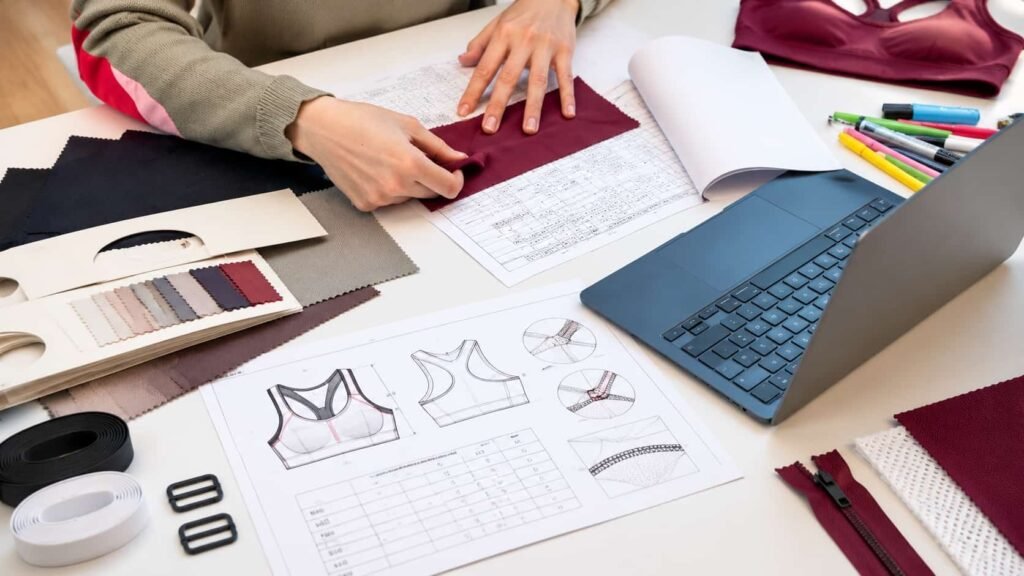
A complete tech pack can shorten the development path, but it should still be reviewed rather than accepted blindly. Specifications can conflict. A measurement table may not match the drawing, a seam instruction may be unsuitable for the nominated fabric, a custom trim may have a supplier MOQ that does not match the planned order, or artwork dimensions may not suit the production area. A reference garment may also contradict the written measurement chart. In these situations, the manufacturer’s value comes from identifying conflicts before material ordering or sampling rather than from redesigning a product the brand already controls.
Projects with mature specifications are often closer to OEM execution, while projects that begin from concepts, sketches, references, or incomplete technical data need more ODM-style development. The boundary is not always absolute. A brand may have a detailed tech pack but still need material substitution review, pattern correction, or fit development after changing factories. The useful question is therefore which information can be treated as approved and which items still need manufacturing evidence before the sample is released.
Is Your Project Still at Concept Stage?
Concept-stage projects benefit from a structured development conversation before detailed pricing. Suppose the target product is a women’s running short with an inner brief, secure phone pocket, laser-cut ventilation, elastic waistband, and heat-transfer branding. Before the factory can define a meaningful production cost, several questions must be answered: which fabric is intended for the shell and liner, how the pocket should be accessed, whether the ventilation pattern suits that material, what waistband construction is required, where the logo will sit, and how many colors and sizes the order will contain.
Pricing too early creates a false sense of precision because the quoted product may change as those decisions are resolved. If the final version later needs a different fabric, custom elastic, extra panels, specialized workmanship, or testing, the initial number no longer describes the same garment. The goal at concept stage is therefore not to delay quotation unnecessarily; it is to define enough of the product that the estimate has a clear technical basis and the first sample can test meaningful decisions instead of a collection of unspoken assumptions.
| Starting Point | Information Maturity | Likely Support Needed | Main Risk to Resolve |
| Complete tech pack + approved materials | High | Feasibility review, sampling, manufacturing | Hidden specification conflicts |
| Tech pack with open items | Medium-high | Technical clarification, material confirmation, sampling | Assumptions entering sample stage |
| Existing garment + change list | Medium | Reference-sample review, measurement, pattern adjustment | Copying unintended features or missing changes |
| Pattern + basic specifications | Medium | Material/workmanship review and sampling | Pattern-material mismatch |
| Sketch + measurements | Medium-low | Construction, pattern, material, sample development | Missing manufacturing detail |
| Reference images + concept | Low | Broader product-development support | Appearance confused with specification |
| Logo + general product idea | Very low | Product definition before meaningful costing | Quote based mainly on assumptions |
How Can a Factory Review Feasibility?
Manufacturing feasibility is broader than asking whether a factory owns a machine capable of sewing the garment. A project may be technically possible but inefficient at the requested quantity. A material may perform well but have a supplier MOQ far above the launch plan. A bonding process may work on one fabric but require trials on another. A complex multi-SKU order can also need a different cutting, scheduling, and packaging approach from one high-volume style. Feasibility review should therefore consider construction, materials, trims, pattern complexity, size range, branding, quantity, color mix, quality requirements, packaging, testing, and current scheduling together.
Leadshow’s current verified manufacturing profile includes three manufacturing bases, more than 20,000 square meters of combined facilities, more than 1,500 team members, and 304 documented production and finishing machines. Combined monthly capacity can reach up to approximately 120,000 finished garments, subject to style complexity, material availability, order mix, and production scheduling. Standard MOQ generally starts from 100 pieces per color per design. These figures are useful only when paired with project conditions; factory scale does not mean that every material, quantity, process, or delivery target automatically fits the same production model.
What Should You Send to Get Started?
Send the most concrete information you already have rather than waiting for a perfect file set. Useful inputs can include a tech pack, sketches, reference images, physical sample, measurement chart, target size range, fabric direction, preferred composition or handfeel, logo artwork, label requirements, packaging expectations, target quantity, target fit, and performance requirements that genuinely matter to the product. If some items are still unknown, mark them as open so that the supplier does not mistake an assumption for an approval or build a quote around information that the brand later considers provisional.
For a transfer project, identify which parts of the existing product must remain unchanged and which can be improved. For a new development, distinguish inspiration from mandatory specification. Before bulk production, the current product version, approved materials, pattern and measurement status, logo, labels, packaging, quantities, and color/size breakdown should all be identifiable. Complex structures, new materials, or new processes may also justify first-piece review, size-set evaluation, a pre-production sample, or pilot production, depending on the risk rather than as an automatic requirement for every order.
Choosing Development Support by What You Actually Need
The practical difference between product development support and free design becomes much clearer once service labels are replaced by deliverables. A brand that only needs a color mockup may gain real value from a limited design service and need nothing more. A brand with complete specifications may need technical review, a sample, and disciplined manufacturing execution rather than broad creative development. A project that begins from references, sketches, a physical garment, or incomplete technical information usually needs more work around materials, construction, patterns, fit, and sampling before it can become a controlled production version.
For sourcing teams, the most useful questions are therefore concrete: What will be delivered before sampling? Which technical decisions will the manufacturer develop or review? Which inputs remain the brand’s responsibility? How will sample changes be recorded? What exactly must be approved before bulk production? Which development, sample, pattern, grading, testing, branding, or packaging costs may apply? Who owns the patterns and source files if the project stops? Clear answers to these questions are more valuable than a broad promise of free design because they reveal whether the supplier’s service matches the actual maturity and risk of the project.
Shenzhen Leadshow Sports Technology Co., Ltd. supports manufacturing-focused OEM and ODM projects for sportswear, swimwear, streetwear, and modest sportswear. Depending on project maturity, the team can review customer concepts, reference materials, tech packs, or physical samples and support technical review, pattern and fit development, material evaluation, sampling, and conversion toward an approved production version. If you are developing a new custom style, transferring an existing product to a new factory, or determining whether your current files are ready for sampling, send your available tech pack, sketch, reference images, or reference sample together with the target quantity and customization requirements so the project scope can be reviewed before sampling and bulk manufacturing.


