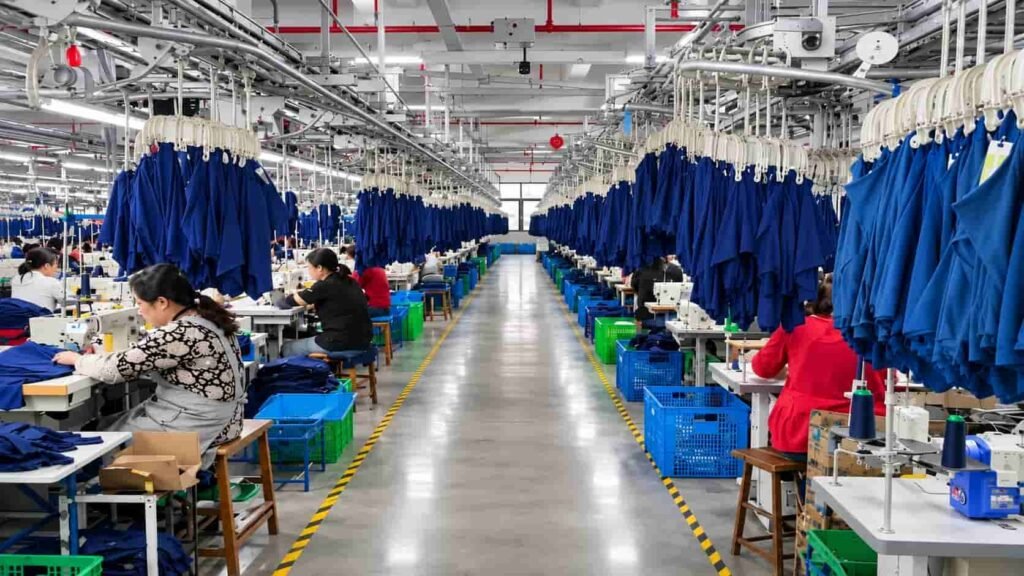
A polished supplier website can make a trading office look like a large sportswear factory, while a capable manufacturer may have a surprisingly ordinary sales presentation. That is why the question “Are you a manufacturer or a trading company?” is too weak to protect a serious sourcing decision. A salesperson can forward technical questions to another factory, factory photographs can be reused out of context, and a sample can prove only that one sample was made somewhere. For a brand preparing custom leggings, sports bras, running shorts, tracksuits or other performance apparel, the better task is to verify the operating chain behind the quotation: who develops the pattern, who approves material changes, where the garment will be cut and sewn, which processes are external, who controls quality, and which entity is commercially responsible when production does not match the approved specification.
To distinguish a sportswear manufacturer from a trading company, verify the legal entity, actual production site, relevant equipment, technical and sampling teams, outsourced processes, quality responsibility, payment entity and order-specific capacity. The goal is not to prove that one business model is always better, but to confirm who really controls your product and whether that control matches your sourcing risk.
The difference becomes much easier to see once a project starts moving. A supplier may look equally convincing during quotation, yet the real structure is exposed when a fabric must be substituted, a waistband measurement changes after fitting, a Logo sample fails, or a production defect requires immediate containment. At that moment, a brand needs more than fast replies. It needs a clear line from the approved specification to the people who can change tooling, adjust patterns, stop production, isolate nonconforming goods, or authorize rework. The sections below use that practical lens, so the comparison stays close to what procurement, product development and quality teams actually need before they commit money, materials and launch dates.
What Is the Difference Between a Manufacturer and a Trading Company?
A manufacturer directly controls meaningful parts of garment development or production, while a trading company mainly coordinates purchasing through external factories. For sportswear brands, the useful distinction is not the label itself but who controls patterns, sampling, technical changes, production scheduling, quality decisions, subcontracting and corrective action when the approved specification is not followed.
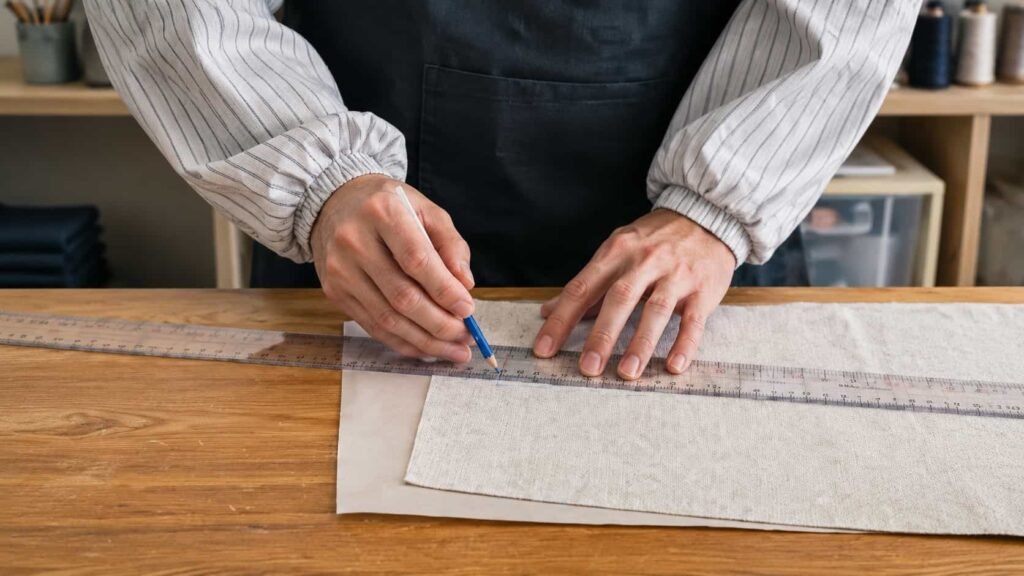
The textbook distinction sounds simple: a manufacturer owns or operates production resources, while a trading company buys from factories and resells. Real apparel supply chains are less tidy. A genuine garment manufacturer still depends on fabric mills, elastic suppliers, packaging vendors and sometimes specialist decoration or finishing partners. At the same time, an experienced trading company may employ merchandisers and quality staff who coordinate several competent factories better than a small single-site supplier could. That is why “manufacturer” and “trader” should be treated as operating models rather than shortcuts for “good” and “bad.” The practical sourcing question is whether the company can explain the path from your specification to the finished garment without hiding who makes the important decisions.
Sportswear makes this distinction especially important because fabric behavior and construction are closely linked. Changing the stretch or recovery of a legging fabric can change fit. Changing elastic width or tension can alter the support and comfort of a sports bra. A different bonding film may require different temperature, pressure and wash-validation conditions. If each technical change must pass through several commercial layers before it reaches the pattern maker or production supervisor, the risk of delay and version error increases. A direct manufacturer can shorten that path, but only when its actual equipment, people and capacity fit the project. A trading company can still be a good choice when its role is transparent and the coordination it provides solves a real sourcing problem.
Who Actually Makes the Garments?
Do not stop at asking whether the supplier “has a factory.” Ask where your specific style will be developed, cut, sewn, finished and packed, because different products may follow different production routes. A factory that is strong in heavyweight hoodies may not be equally capable of producing high-stretch leggings or bonded sports bras. If the product requires four-needle six-thread construction, elastic installation, laser perforation or heat bonding, the supplier should be able to connect those requirements to real equipment and operators. The strongest evidence links the commercial company, the production site, the technical team and the actual operations required by your garment. A photograph of a sewing floor is useful, but it does not by itself prove that your order will run there.
Who Controls Sampling and Production?
Control becomes visible during development. A supplier that genuinely understands sportswear manufacturing should be able to explain how Tech Pack comments, fit revisions, fabric changes and workmanship decisions reach the people responsible for patterns and samples. The salesperson does not need to be a pattern engineer, but there should be a dependable technical path between commercial communication and manufacturing execution. At Leadshow, project review can involve business, R&D engineering, sampling, production, quality and logistics functions, with final pricing, timing and production conditions tied to approved specifications and project requirements. That type of cross-functional connection matters because a fast answer that has not been technically checked can create more risk than a slightly slower answer that correctly defines the production consequence.
How Do Cost, MOQ, and Communication Differ?
Direct manufacturing can remove one commercial layer, but it does not guarantee the lowest useful cost. A factory still has to account for fabric, trims, labor, machine time, process complexity, wastage, packing and order efficiency. A trading company may add a coordination margin, yet it can also create value when several categories or specialist factories have to be managed together. MOQ should be read the same way. A credible minimum depends on material availability, custom colors, trims, Logo processes, size breakdown and packaging. Leadshow’s standard MOQ generally starts from 100 pieces per color per design, but the final requirement remains project-specific. Clear conditions are usually a stronger sign than a universal promise that every product starts at exactly the same quantity.
Is a Trading Company Always a Poor Choice?
No. A transparent trading company can be useful when a collection spans several specialist categories, when shipment consolidation matters, or when a brand does not want to manage multiple factories itself. The risk appears when the commercial layer is hidden or adds no real control. A trader that openly explains which factory handles each product, how samples are approved and who manages corrective action may be easier to work with than a company that claims every process is internal without evidence. The same discipline applies to manufacturers: direct production is useful only when the manufacturer’s specialization, equipment, technical team, scheduling and quality controls fit the product. The strongest sourcing decision therefore compares transparency and operating control, not labels.
| Verification Point | Direct Manufacturer | Trading Company | What the Brand Should Confirm |
| Garment assembly | Usually controlled at owned or managed production facilities | Usually placed with external factories | Exact production site for the order |
| Pattern and fit work | May be handled by internal R&D or sampling staff | Often handled by a partner factory | Who receives and applies fit comments |
| Technical decisions | Potentially closer to production | May pass through another layer | Who can approve construction changes |
| Production equipment | Can be matched to internal operations | Depends on selected factory | Machines relevant to the garment |
| Outsourcing | Still common for selected materials or processes | Usually central to the model | Which operations are external and controlled |
| Corrective action | Can be direct when authority is clear | Depends on trader authority | Who can stop, rework or reject production |
How Can You Verify a Real Sportswear Manufacturer?
Verify a sportswear manufacturer through several matching evidence layers: legal identity, production-site evidence, relevant machinery, technical personnel, current production activity, sample capability and consistent commercial documents. No single business license, factory photograph, video or certificate proves the full manufacturing relationship. Strong verification comes from independent signals that describe the same operating reality.

Supplier verification works best as a chain rather than a checklist of disconnected documents. Start with the legal entity and commercial paperwork, then connect that entity to a physical production site, technical people, relevant machines and an order-specific development process. Finally, test the relationship with a real product task: ask the supplier to review a Tech Pack, explain a difficult construction, identify missing specifications or discuss how a material change would affect fit and production. Each layer should reinforce the others. A business license can confirm that a company exists but cannot prove current production capacity. A video can show a sewing floor but not automatically prove ownership. A sample can prove that one version was made, but not that bulk production will follow the same control path.
The level of verification should rise with commercial exposure. A first development sample for a small project may justify a lighter process, while a high-value seasonal program, custom-dyed materials, retailer deadlines or a large deposit may justify a third-party factory audit. The important point is proportionality: verification is not about collecting as many files as possible, but about reducing the uncertainty that matters to the order. A good supplier should also be willing to explain what cannot be proven by a particular document. That restraint is useful evidence in itself because reliable manufacturers usually distinguish between company identity, facility capability, material certification, product testing and order-specific production conditions instead of treating them as interchangeable.
Which Company Documents Should You Check?
Begin with the legal company name and compare it across business-registration information, quotations, contracts, invoices and payment instructions. Different entities are not automatically suspicious, particularly when manufacturing and export functions are separated, but the relationship should be understandable before funds are released. Certificates should be reviewed just as carefully. Check the holder, facility address, scope, validity period and applicable material or product. A fabric mill’s certificate does not automatically become a garment-factory certification, and a certificate for one site does not automatically cover every production location. For significant programs, keep a supplier file that connects legal information, facility evidence, audit information where applicable, technical contacts and approved commercial documents.
How Do You Match the Company, Factory, and Payment Entity?
Create a simple entity map before payment: who sells, who signs, who manufactures, who invoices and who receives the money. If several companies appear, ask for the relationship in writing and verify payment details through authorized documentation and an established communication channel. This is particularly important when bank information changes unexpectedly or when the sales entity and manufacturing site use different names. Order release should also be treated as a separate control point. Leadshow’s documented project flow distinguishes quotation, sample development, purchase-order review, payment confirmation and formal production release. That separation helps prevent a purchase order, sample approval or payment screenshot from being mistaken for final authorization to start bulk production.
Do Factory Photos and Videos Prove Manufacturing?
Factory images provide useful evidence, but their scope is limited. A photograph can show that a machine, sample room or sewing floor existed when the image was taken; it cannot automatically prove ownership, current capacity or that your order will run there. A live video walkthrough is stronger because the supplier can respond to unscripted requests. Ask to see the sampling area, cutting section, relevant sewing machine, finishing area or packing operation connected to your product. Look for consistency between the garments in production, the equipment being shown and the technical explanation you receive. Leadshow’s own evidence rules apply the same narrow logic: an equipment image proves equipment existence, while a sample image does not prove bulk consistency or future production performance.
When Is a Factory Audit Worth It?
A factory audit becomes more valuable when the cost of supplier failure rises. Multi-SKU programs, custom materials, large deposits, retailer commitments, demanding compliance requirements or long-term capacity planning can justify an independent assessment before full commitment. The audit should match the risk: a capability review may examine equipment, staffing, workflow and production organization, while a quality audit focuses more on document control, inspection, nonconforming-product handling and corrective action. The result should not be treated as a permanent badge. It is evidence from a defined time, facility and scope. The practical value comes from using that evidence together with product-specific sampling, commercial documents and ongoing production performance.
| Evidence | What It Can Help Confirm | What It Does Not Prove Alone | Useful Cross-Check |
| Business registration | Legal entity identity | Current sportswear capability | Match company name and commercial documents |
| Factory address | Claimed production location | Ownership or order allocation | Visit, live walkthrough or audit |
| Live production video | Current operating activity | Long-term capacity | Ask for unscripted process views |
| Equipment records | Availability of machinery | Product performance | Match machine to garment construction |
| Technical discussion | Depth of product knowledge | Legal accountability | Use a real Tech Pack or sample problem |
| Sample development | Ability to make one approved version | Bulk consistency | Link to controlled production references |
| Factory audit | Facility and system capability | Quality of every future shipment | Combine with order-specific inspection |
Which Sportswear Capabilities Should You Verify?
Verify capabilities that directly affect your garment: pattern and fit development, stretch-fabric handling, relevant sewing methods, elastic installation, bonding, seam taping, cutting, branding, finishing and order-specific capacity. A long equipment list has limited value unless the supplier can explain which machines, operators and processes will be used for the construction you actually intend to manufacture.

Sportswear capability should always be evaluated from the product backward. Start with the garment construction, materials and expected performance, then identify which operations are critical to achieving the approved result. A factory may be excellent at cotton hoodies and still lack enough suitable flat-seaming capacity for a large fitted-activewear order. Another supplier may own bonding equipment but have limited experience with the exact stretch fabric and adhesive film specified by the project. Equipment is therefore useful evidence of manufacturing infrastructure, but it does not prove universal capability or product performance. The supplier should be able to explain how fabric behavior, seam type, machine selection, operator skill and production volume interact.
Leadshow’s verified manufacturing resources illustrate this product-to-process approach. The company has 15 years of industry experience, three manufacturing bases, more than 20,000 square meters of combined facilities, a team of more than 1,500 people and 304 production and finishing machines. The manufacturing resource set includes fabric preparation, spreading, cutting, lockstitch, overlock, double-needle sewing, bartacking, four-needle six-thread sewing, bonding, seam taping, laser perforation, heat transfer, pressing, needle detection and folding and packing. Combined monthly capacity can reach up to approximately 120,000 finished garments, but the actual usable capacity depends on style complexity, materials, order mix and current scheduling. Those conditions are part of the capability claim, not optional footnotes.
Does the Supplier Handle Pattern Making and Sampling?
A custom sportswear supplier should be able to explain how a concept or Tech Pack becomes a manufacturable sample rather than simply producing something that looks similar to a reference photo. Fit, fabric stretch, recovery, seam placement, waistband tension and garment balance interact with one another, so development may require technical review, pattern work, material evaluation, fitting and controlled revisions. Leadshow’s documented sample-development capability includes concepts, Tech Packs, sketches, reference images, patterns and physical garments, supported by an approximately 28-person R&D engineering team. Sample approval should also be scoped carefully: approving a substitute-material sample, a photograph or a base size should not automatically approve formal bulk material, every size or the full production version.
Which Production Processes Are In-House?
Do not ask only whether “everything is in-house.” Instead, list the operations your garment actually needs and ask which ones are performed internally, which are coordinated through specialist partners and which depend on material suppliers. For leggings, that list might include fabric preparation, spreading, cutting, overlock or four-needle six-thread sewing, waistband construction, Logo application, pressing and packing. For a bonded sports bra, bonding and elastic operations may become more important. Apparel supply chains commonly use external mills, dyehouses, print houses, embroidery suppliers and packaging vendors, so outsourcing itself is not evidence of weakness. The meaningful issue is whether the boundary is visible and the approval and quality responsibility remain controlled.
How Do You Verify Sportswear-Specific Equipment?
Begin with the construction, not the machine list. If the design needs flatter stretch-compatible seams, verify the intended stitch type and the equipment used to make it. If the product requires bonded edges, verify bonding equipment together with fabric, adhesive-film and wash requirements. If the design uses seam tape, check compatibility without assuming the entire garment becomes waterproof. Leadshow has 35 four-needle six-thread flatlock machines for stretch-compatible seams, but its technical terminology explicitly distinguishes this construction from true seamless knitting. That kind of precision is useful because capable manufacturers usually understand where a process is appropriate, what its limitations are and which claims require testing.
Does Capacity Match Your Order Mix?
A headline monthly capacity number is only a screening signal. The more useful question is whether suitable capacity exists for your exact mix of products, colors, sizes, fabrics and special processes during the requested production window. Ten thousand pieces of one stable T-shirt create a different workload from ten thousand pieces split across sports bras, leggings, running shorts and hoodies with multiple colors and custom trims. Line changeovers, material readiness, specialist operations, inspection workload and packing complexity all affect usable capacity. That is why Leadshow states capacity as up to approximately 120,000 finished garments per month across its three manufacturing bases, subject to product structure, materials, order mix and scheduling rather than as a guaranteed fixed output.
| Sportswear Requirement | Capability to Verify | Evidence to Request | Common Sourcing Risk |
| Stretch leggings | Flat seams, elastic sewing, pattern control | Relevant machines, seam sample, fit-development path | Puckering, poor recovery or incorrect rise |
| Sports bras | Elastic installation, fitted construction, sample development | Elastic samples, relevant sewing operations, fit comments | Support and tension inconsistency |
| Running shorts | Cutting, bartacks, waistband and pocket construction | Operation sequence, reinforcement sample | Weak stress points or pocket distortion |
| Bonded details | Heat bonding | Bonding equipment and material compatibility review | Delamination or stiffness |
| Seam-taped construction | Hot-air seam sealing | Tape and fabric compatibility, seam coverage | Assuming taped seams make the whole garment waterproof |
| Private-label application | Heat transfer or label process | Artwork approval and application sample | Wrong placement, size or adhesion |
| Multi-SKU packing | Version and packing control | Approved packing instructions and SKU mapping | Color-size-label mismatch |
How Should You Verify Outsourcing and Quality Control?
Verify outsourcing by identifying which operations leave the primary production facility, who performs them and how approvals are controlled. Verify quality through approved specifications, material and in-process checks, measurements, appearance, labeling, packaging and corrective action. The key question is not whether defects can ever occur, but whether responsibility remains clear and problems can be contained, assessed and corrected.
Outsourcing is often treated as proof that a supplier is not a “real” manufacturer, but that is too simplistic for apparel. Fabric production, custom dyeing, specialist printing, embroidery, coatings, labels and packaging components may come from external partners even when garment assembly is managed by a genuine manufacturer. The sourcing risk begins when the external step is hidden, the approval path is unclear or nobody can explain who has authority when the result is wrong. A sportswear brand should therefore map critical processes and ask how each one is approved, inspected and released. If a Logo application is external, for example, the questions should cover artwork version, color, placement, adhesion requirements and responsibility for nonconforming pieces rather than simply asking whether printing is “in-house.”
Quality control should be examined with the same practical mindset. “We have QC” provides very little information until the supplier explains what is checked, against which reference, at what stage and what happens after a nonconformity is found. For custom sportswear, the quality chain often begins with approved specifications and samples, then continues through material review, in-process checks, measurements, appearance, labeling, packaging and project-specific final inspection. Leadshow’s documented quality language deliberately avoids blanket claims such as zero defects, universal AQL values or unconditional 100% inspection. Instead, the company can discuss approved-specification review, material and in-process inspection, measurement and appearance review, label and packaging checks, needle detection where applicable, and customer or third-party inspection according to the project.
Which Processes Are Outsourced?
Ask suppliers to classify the operations that matter to your product. A useful map can distinguish internal garment manufacturing, approved external processing, supplier-provided materials and customer-nominated resources. This is particularly important for printing, embroidery, silicone applications, special coatings and custom materials. The external supplier name may not always need to be disclosed publicly, but the brand should understand the control structure. For a Logo process, confirm who checks the artwork version, who approves the pre-production sample, how placement and color are verified and who owns corrective action if the result fails. Leadshow’s process rules follow this same logic by distinguishing company-owned equipment, project coordination, third-party suppliers, customer approval and testing requirements rather than claiming every decoration process is internal.
Who Approves Materials and Samples?
Approval should define both the item and the scope. “Sample approved” is too vague when a product includes fabric, elastic, pads, zippers, Logo materials, labels, dimensions and packaging. A fit sample made from substitute fabric can be valid for evaluating pattern shape while still leaving the bulk fabric unapproved. A photograph may confirm Logo position while being insufficient for hand feel, stretch, bonding or true color. A base-size approval may not mean every graded size has been evaluated. Leadshow’s sample-development rules preserve these boundaries, so project teams can distinguish approvals for fit, material, branding or production reference. That simple discipline reduces the risk of different teams believing that the same approval covers different things.
How Is Sample-to-Bulk Consistency Controlled?
Consistency depends on controlled information more than on expecting every garment to become a literal clone of one sample. The approved sample should be linked to the latest Tech Pack, measurement chart, material references, trims, workmanship instructions, branding files and packaging requirements. Version control becomes especially important after several sample rounds, because an outdated comment or old pattern can re-enter production if files are not clearly released. For higher-risk styles, a controlled pilot run can be used to verify materials, measurements, workmanship and production-conversion conditions before the full quantity is released. Leadshow can evaluate pilot production by project, while correctly treating it as a risk-reduction step rather than a guarantee that bulk production will contain no variation or defects.
Who Owns Defects and Corrective Action?
A quality system becomes meaningful when the supplier can explain what happens after a defect is found. The process should cover isolation of affected goods, review of the likely scope, cause analysis, correction and communication. If waistband elastic is installed at the wrong tension, removing a few visibly defective pieces may not be enough. The team may need to identify which production period, operators, elastic lot or settings were involved before deciding how much product is affected. Leadshow’s documented approach allows identified problems to be isolated, reviewed and corrected with customer communication where necessary, while avoiding unrealistic claims that every issue will always be found before shipment. That is the kind of accountability that should be verified before problems occur.
Which Certifications Actually Apply?
Treat every certification or test report as scoped evidence. Check the holder, facility, address, product or material coverage, validity period and whether the document applies to the current order. A certified fabric does not automatically certify the finished garment, and a facility audit at one site does not automatically cover another site. The same distinction applies to recycled-content documentation, chemical test reports and social-compliance audits. Leadshow’s approved compliance language requires facility credentials, material certificates, test reports, labeling and related documents to be reviewed by project. This creates a safer procurement rule: instead of asking “Are you certified?” ask which document applies, who holds it, what it covers and whether the evidence remains valid for the intended production.
| Control Point | What the Brand Should Define | What the Supplier Should Demonstrate | Main Risk if Unclear |
| Material | Composition, weight, color, performance needs | Approved reference and incoming review | Substitution or lot variation |
| Sample | Measurements, construction, appearance | Controlled approved version | Different teams using different references |
| Bulk setup | Latest released files and comments | Correct production version | Outdated pattern or artwork |
| Branding | Artwork, size, color and placement | Approved application sample | Wrong Logo version or location |
| In-process quality | Critical workmanship and dimensions | Defined review or inspection method | Defects spreading before detection |
| Packaging | Labels, fold, polybag, barcode and carton mark | Approved packing instructions | SKU or retail-compliance errors |
| Nonconformity | Acceptance and escalation rules | Isolation, scope review and corrective action | Unclear responsibility and delayed decisions |
| Certification | Required scope and destination-market need | Current document matching holder and scope | Using irrelevant or expired evidence |
Which Supplier Model Fits Your Brand?
Choose the supplier model that gives your project the right balance of development capability, manufacturing control, sourcing breadth, communication efficiency, transparency and accountability. A direct manufacturer often suits technically customized repeat products, while a capable trading company can add value when several categories or specialist factories must be coordinated. Compare total sourcing risk rather than choosing by label or unit price alone.

The right choice starts with the way your brand works. A growing activewear label that spends several rounds refining fit, fabric and construction has different needs from an importer assembling a broad seasonal catalogue across multiple product categories. Direct manufacturing becomes more valuable when technical knowledge accumulates over time because patterns, fit comments, materials, Logo specifications, approved construction and repeat-order changes can move through a shorter chain. A trading company can be valuable when the main challenge is coordination across several specialist factories, especially when one facility cannot realistically cover every category. Neither model should be chosen because it sounds more professional. The decision should be based on which structure can maintain clear responsibility from development through shipment.
Total sourcing cost is more useful than unit price as a decision lens. A small price advantage can disappear if the project requires additional sample rounds, if a material substitution is not controlled, if packing errors create retail problems, or if a missed production window forces expensive freight. Medium and large customers often benefit from scoring suppliers across product-development capability, manufacturing fit, quality control, commercial transparency, capacity, communication and compliance rather than allowing the lowest quotation to dominate the decision. The weighting should change with the project. A technical activewear program may emphasize development and manufacturing fit, while a replenishment program may emphasize capacity, repeatability and version control. A retailer program may assign more weight to labeling, packaging and compliance documentation.
When Is a Direct Manufacturer the Better Fit?
Direct manufacturing is often attractive when the product requires continuing technical interaction and repeated production. Sports bras may need adjustments to elastic tension, strap construction, cup position and fit, while leggings may require repeated work on rise, gusset, waistband and seam placement. When the development team is closely connected to the production resources, those decisions can move into bulk production with fewer handoffs and clearer accountability. Leadshow operates in this manufacturing role for sportswear, swimwear, streetwear and modest sportswear OEM and ODM projects, with capabilities that cover technical review, sampling, bulk manufacturing, quality control, custom labels, packaging and export-delivery coordination. As with any supplier, those resources still need to be matched to the specific product, quantity and project conditions before commitment.
When Can a Trading Company Add Value?
A trading company can make sense when the sourcing problem is broader than one factory’s specialization. A seasonal program might include performance apparel, lifestyle garments and other categories that require different production partners. A capable trader can create value through supplier selection, quotation consolidation, order coordination, inspection arrangements, export administration and shipment consolidation. The added layer should produce a clear benefit. If the company simply forwards emails and adds margin without improving technical communication or supplier control, the brand may be taking on extra risk for little value. If the trader openly explains which factories are involved, how approvals work and who is responsible for quality, the operating model can be commercially sound.
How Should You Compare Cost, Control, and Risk?
Compare suppliers with a scoring model that reflects the consequences of failure, not just the price on the quotation. Product-development capability, manufacturing fit, quality control, commercial transparency, capacity, communication, landed sourcing cost and compliance all influence whether a supplier can support the project. For a technical sportswear program, development and manufacturing capability may deserve more weight than a small unit-price difference. For a repeat program, capacity and specification continuity may become more important. The purpose of scoring is not to produce a universal formula but to force the sourcing team to discuss trade-offs explicitly. A supplier that is slightly more expensive can still be the lower-cost choice if it reduces avoidable revisions, quality disputes and schedule disruption.
What Should You Verify Before Paying a Deposit?
Before releasing a meaningful deposit, confirm the legal and payment entities, manufacturing arrangement, product version, quantities, colorways, size range, material basis, Logo method, labeling, packaging, testing requirements, quality expectations and target timing. You should also know which important processes remain external and which approvals are still outstanding. Leadshow evaluates suitable projects through product, quantity, MOQ, specification, material, workmanship, destination-market, timing, packaging, testing, certification and intellectual-property conditions before progressing through technical review, quotation, sampling and formal order documentation. A useful final question for any supplier is simple: if fabric, Logo, quantity, timing or construction changes tomorrow, who has authority to evaluate the change, document it and release the correct version to production?
| Evaluation Dimension | Example Weight* | What to Examine | When It Matters Most |
| Product-development capability | 20% | Pattern, fit, sampling and technical communication | Custom or frequently revised activewear |
| Manufacturing fit | 20% | Relevant machinery, workmanship and product specialization | Technical garments and repeat production |
| Quality-control capability | 15% | Inspection scope, containment and corrective action | Retailer, performance or high-value orders |
| Commercial transparency | 10% | Entity relationships, quotation scope and exclusions | New supplier onboarding |
| Capacity and scheduling | 10% | Order-specific capacity, material readiness and SKU complexity | Seasonal launches and replenishment |
| Communication effectiveness | 10% | Accuracy, escalation path and version control | Complex development programs |
| Total sourcing cost | 10% | Unit price plus testing, packing, freight and rework risk | Margin-sensitive programs |
| Compliance/documentation fit | 5% | Required certificates, tests, labels and export documents | Regulated or retailer-driven markets |
*Example weighting for a technical sportswear program; it is not an industry standard and should be adjusted to the project.
Ready to Verify Your Next Sportswear Project?
Supplier verification should leave a brand with fewer assumptions, not simply more documents. By the time a custom sportswear project is ready for quotation or deposit, the team should understand who the commercial counterparty is, where the relevant production will occur, which technical capabilities match the garment, which processes are external, how approvals are controlled, how quality issues are handled and what conditions still affect MOQ, capacity and timing. That is the practical difference between buying a convincing story and qualifying a manufacturing partner. Shenzhen Leadshow Sports Technology Co., Ltd. can review suitable OEM and ODM projects from a Tech Pack, reference images or a physical sample and evaluate product construction, materials, sampling, production, labels, packaging and delivery requirements on a project basis. Leadshow has 15 years of industry experience, three manufacturing bases, more than 20,000 m² of combined facilities, a team of over 1,500 people and 304 production and finishing machines, with combined monthly capacity of up to approximately 120,000 finished garments subject to product complexity, materials, order mix and scheduling. Standard MOQ generally starts from 100 pieces per color per design. Brands preparing a new sportswear program can share their product brief, expected quantity, colorways, sizes, material direction, Logo requirements, packaging needs and target timing to request a project-based feasibility review and quotation.