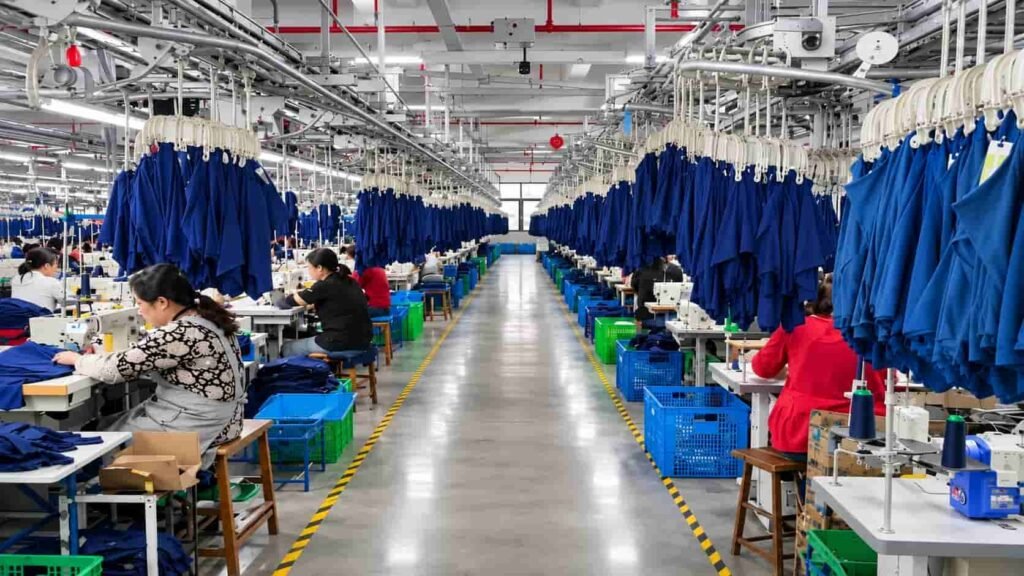
A factory can answer an email in ten minutes and still create weeks of development trouble. The problem is not usually the number of messages exchanged; it is whether those messages turn an idea into controlled manufacturing information. A supplier may reply quickly, quote confidently, and agree with every request while never asking which fabric specification controls the sample, whether the measurement chart is final, how the artwork should be positioned, or which details remain provisional. That kind of communication feels easy at the beginning, yet it can shift unresolved decisions into the sample room, where every assumption starts costing time, materials, and revision effort.
| Brands should evaluate communication quality before sampling by checking whether a manufacturer gives specific answers, understands technical requirements, identifies missing information, questions risky assumptions, documents decisions, controls file versions, explains project conditions, and makes the next action clear. Response speed matters, but useful communication is measured by how much uncertainty it removes before development begins. |
A simple comparison makes the difference visible. Send the same sports bra tech pack to two factories. One replies, “No problem, we can make it,” and asks for the sample payment. The other asks about stretch direction, underband construction, cup treatment, seam type, artwork placement, and the purpose of the first sample. The first conversation may feel smoother, but the second has already uncovered decisions that could otherwise become sample defects. Before sampling, the goal is not to find the most agreeable contact. It is to find a manufacturing team that can understand the product, expose uncertainty early, and keep technical information under control as the project moves forward.
What Does Good Manufacturer Communication Look Like?
| Good manufacturer communication is specific, traceable, technically relevant, and connected to a clear next action. Before sampling, a reliable supplier should confirm what is understood, identify missing information, separate assumptions from approved requirements, explain conditions that may affect development, and make responsibilities clear. Fast replies are useful, but information quality matters more than speed alone. |
Is Fast Response Time Enough?
A quick reply is useful when teams work across time zones, but response time by itself is a weak supplier metric. A manufacturer can answer within minutes and still leave the most important development questions unresolved. Consider a sports bra inquiry that includes a sketch, target quantity, and a request for a high-stretch fabric. A superficial reply may simply confirm that production is possible. A more valuable reply asks about composition, target weight, stretch direction, support structure, underband construction, cup treatment, logo method, and the purpose of the first sample. That second response may take longer because the project has actually been reviewed. Brands should therefore separate response speed from response relevance and completeness. Technical questions may require input from pattern, material, sampling, or production teams, so a short verification delay can be safer than an instant answer based on guesswork.
Are Answers Specific and Complete?
Specific communication usually contains a direct answer, the condition behind the answer, and the information still required. If a brand asks whether a waistband can be bonded instead of stitched, “yes” is not enough. A useful response should connect feasibility to fabric composition, surface treatment, bonding film, stretch requirement, temperature tolerance, seam area, and expected wash conditions. The same discipline applies to MOQ, quotation, labels, packaging, and timing. If a supplier gives a quantity, the brand should understand whether it applies per design, per color, or across the order, and whether custom fabric or trims carry separate minimums. Numbered questions are useful during early sourcing because they expose skipped answers quickly. Repeatedly avoiding difficult questions can indicate limited technical access, weak internal coordination, or a tendency to preserve sales momentum at the expense of project clarity.
Does the Manufacturer Clarify Ambiguity?
One of the strongest pre-sampling signals is the ability to find ambiguity before it becomes a physical defect. A tech pack may contain a missing tolerance, conflicting measurement values, an undefined seam, artwork without scale, or a material description that is too broad to source accurately. A reference image may look obvious to the brand while leaving the factory uncertain about lining, seam allowance, elastic width, pocket construction, or internal finishing. A capable manufacturer should not quietly fill those gaps. Questions are often evidence that the supplier is reading carefully. A practical test is to send the same development package to several shortlisted factories and compare the questions they ask. If one supplier identifies a mismatch between the measurement table and illustration while another simply says everything is clear, the first response may demonstrate stronger technical attention and lower assumption risk.
Is the Next Step Clear?
Productive communication moves the project toward a decision rather than creating an endless conversation. After an important exchange, the brand should know what information remains missing, who is responsible for providing it, what is still under review, and what must happen before sampling can begin. That may include confirming a fabric reference, submitting vector artwork, approving a provisional construction method, defining quantities by color, or agreeing on the purpose of the first sample. Good communication does not require heavy bureaucracy, but it does require closure. When discussions repeatedly end with vague phrases such as “send more details” or “we will check” without a specific owner and action, the project can stall even while message volume remains high. The test is simple: after each meaningful exchange, the specification should be more defined than it was before.
| Communication Factor | Strong Signal | Weak Signal | Procurement Value |
| Response speed | Reasonable for project complexity | Fast but superficial | Useful, but secondary |
| Answer completeness | Major questions addressed | Important points skipped | High |
| Technical clarity | Conditions and limits explained | Generic yes/no answers | Very high |
| Ambiguity handling | Missing details identified | Silent assumptions | Very high |
| Written confirmation | Key decisions summarized | Decisions stay in chat only | High |
| Next action | Owner and action are clear | Open-ended conversation | High |
| Internal consistency | Commercial and technical answers align | Teams contradict each other | Very high |

Which Questions Reveal Technical Understanding?
| The most revealing questions force a supplier to connect design intent with material behavior, construction, measurements, trims, branding, and manufacturability. Brands should ask what information is missing, which details create development risk, what could change the quotation, and what must be validated in the sample. Strong answers show technical reasoning rather than simple agreement. |
Does the Supplier Review the Tech Pack?
A tech pack should function as a working manufacturing document, not merely as an attachment that proves the brand is organized. Before sampling, ask the supplier to identify anything that is missing, contradictory, unclear, or likely to affect development. A thorough review may cover the bill of materials, measurement table, points of measure, construction callouts, stitching, colorways, artwork, labels, packaging instructions, tolerances, and sample scope. Small inconsistencies can materially affect the first sample. A leggings specification may list finished waistband height while omitting elastic width; a tennis skirt sketch may show a pocket that the construction page never mentions; a sports bra may specify removable cups without defining the opening or internal lining. Leadshow’s verified development scope includes Tech Pack review, construction evaluation, pattern preparation, fit adjustment, material and trim evaluation, sample development, and manufacturability review, supported by an approximately 28-person R&D and engineering team.
Can the Supplier Explain Material Choices?
Material discussion quickly reveals whether a supplier understands the product or is only responding to category names. A request for nylon-spandex activewear fabric still leaves many variables open because the same fiber composition can produce very different results depending on yarn, knit structure, fabric weight, stretch ratio, recovery, finish, opacity, and surface texture. For fitted activewear, sourcing teams may review weight in grams per square meter, stretch in length and width, recovery after extension, shrinkage after washing, opacity, seam distortion, and compatibility with printing or bonding. The exact target values vary by garment and should be validated against project requirements rather than treated as universal specifications. When a replacement fabric is proposed, the brand should ask what is actually being matched, because similar composition does not automatically mean similar hand feel, appearance, stretch, opacity, or recovery.
Does the Supplier Question Construction Risks?
A technically engaged manufacturer should be able to identify where the garment is most sensitive before the first sample is cut. For sports bras, the discussion may involve underband structure, elastic installation, cup handling, straps, lining, and stretch seams. For leggings, the focus may shift to waistband construction, crotch geometry, seam stretch, opacity, and pocket loading. Swimwear may introduce questions about elastic edges, lining behavior, fabric recovery, and seam durability. A useful question is, “Which part of this design would you verify first in sampling?” The answer often reveals more than a generic capability statement. Specialized processes such as bonding, seam sealing, heat transfer, laser perforation, or elastic application should also be evaluated against the actual fabric and construction. Equipment availability alone does not prove that a process will deliver the intended appearance, durability, or functional result.
Are MOQ, Cost and Timing Conditions Explained?
Commercial numbers are more credible when the supplier explains what controls them. MOQ may change with custom-dyed fabric, trim supplier minimums, color quantities, decoration methods, labels, packaging, and production setup. Cost may change when material, construction, artwork, stitching, packaging, testing, or order quantity changes. Sample timing can depend on material readiness, pattern development, revision scope, special workmanship, and approval speed. Leadshow evaluates inquiries on a project basis using product, quantity, specifications, materials, workmanship, timing, packaging, testing, compliance, and commercial conditions before suitable projects move through technical review, costing, quotation, sampling, and revisions. This conditional approach is useful because a number without its assumptions can be technically correct for a specification that has not yet been fully defined. A professional answer should make those assumptions visible rather than hiding them behind a fixed figure.
| Technical Question | What It Tests | Strong Response | Warning Sign |
| What information is missing? | Review depth | Specific gaps identified | Everything is clear without review |
| Which area creates the most sample risk? | Engineering judgment | Construction-specific explanation | No risk identified |
| What material property matters most? | Fabric knowledge | Weight, stretch, recovery, shrinkage, etc. | Composition only |
| What could change the quotation? | Cost transparency | Clear cost drivers | Price treated as unconditional |
| What must be approved before sampling? | Process control | Defined decision points | Sampling starts with open essentials |
| Which details need physical testing? | Validation discipline | Specific materials or processes identified | Performance guaranteed without testing |
| What could affect MOQ? | Sourcing knowledge | Fabric, trims, color and customization explained | One universal MOQ for everything |
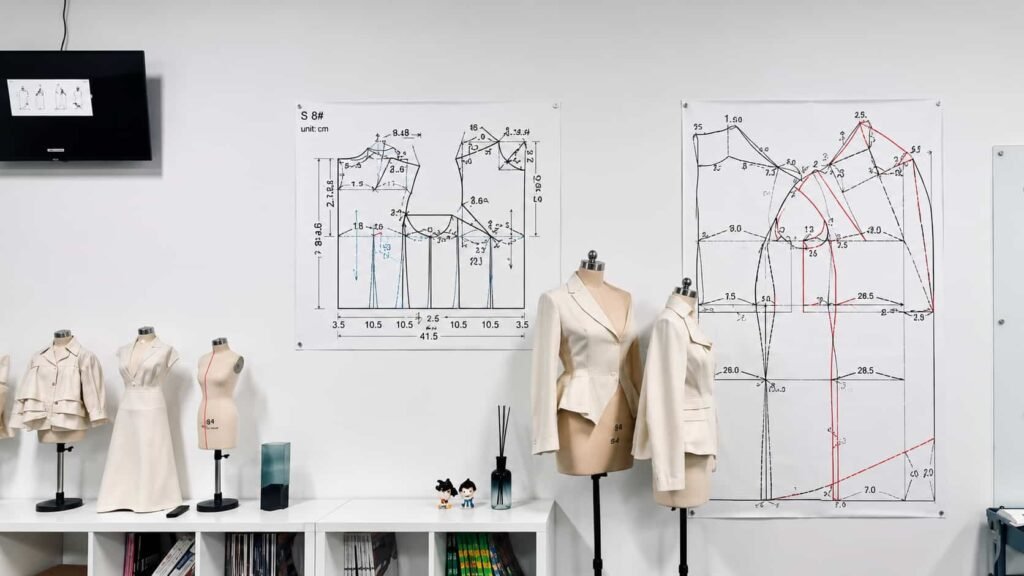
How Should Brands Test Documentation Discipline?
| Brands should test whether the manufacturer can turn conversations into controlled project records. Before sampling, confirm how technical files, material decisions, artwork, measurements, revisions, and approvals are recorded. Strong documentation discipline allows commercial, development, sampling, production, and quality teams to work from the same current information instead of depending on memory or scattered messages. |
Are Decisions Confirmed in Writing?
Important garment decisions should not remain only in calls or messaging threads. A video meeting may be the fastest way to resolve a fit, construction, or material question, but any decision that changes the physical product should eventually appear in a controlled record. That includes changes to inseam length, fabric substitutions, logo position, seam type, elastic width, trims, packaging, tolerances, or provisional sample materials. The written confirmation does not need to become a complicated report. A short summary can identify the original requirement, accepted change, unresolved item, and next action. This becomes especially important when several functions are involved, because sales, pattern, sampling, sourcing, production, and quality teams all need the same interpretation. The goal is not paperwork for its own sake; it is to prevent different teams from manufacturing different versions of the same instruction.
How Are Revisions Version-Controlled?
Version control can be tested before a single sample is made. Ask which tech pack, measurement file, artwork file, and comment sheet currently control the project. The answer should be unambiguous. A simple system can combine a style code, document type, revision number, and date, while a revision record explains what changed and what file was superseded. The exact naming format matters less than the discipline behind it. The familiar pattern of “final,” “final revised,” “latest final,” and “final latest 2” creates avoidable risk because a correct document can still be used at the wrong time. Version control matters even more after the first sample, when fit comments may change measurements, construction, materials, or artwork. If the controlled specification is not updated before the next round, the team can repeat a previously corrected error even though the right information exists somewhere in the project history.
Is Sample Approval Clearly Defined?
The phrase “sample approved” should always have a scope. A fit sample may confirm measurements and silhouette while using substitute fabric. A development sample may validate construction while final color remains pending. A photo approval may confirm logo placement but cannot confirm hand feel or physical fit, and base-size approval does not automatically validate grading across the full range. Brands should therefore identify exactly what each sample closes: fit, measurements, fabric, color, construction, workmanship, branding, trims, size set, packaging, or production reference. Leadshow’s documented sampling framework explicitly distinguishes these approval boundaries and states that substitute-material samples, photo approval, or base-size approval do not automatically mean that formal materials, every size, or the complete bulk-production version has been approved. That distinction reduces the chance that a partial decision is mistakenly treated as a full production release.
Can Information Transfer Across Teams?
A polished sales conversation does not automatically prove that project information can survive internal handoffs. Brands should understand who reviews technical files, who coordinates the sample, who records comments, who confirms materials, and how approved information reaches production and quality teams. The strongest signal is not that one person knows everything; it is that the organization knows where each decision belongs and which record controls it. Leadshow’s verified project framework describes coordination across business, R&D, sampling, production, quality, and logistics functions when evaluating construction, materials, samples, MOQ, manufacturing, labeling, packaging, and export delivery. A practical test is to repeat one approved technical decision with different contacts. Wording may vary, but the underlying specification should remain consistent. If every critical decision exists only inside one salesperson’s chat history, the project becomes vulnerable as soon as it moves downstream.
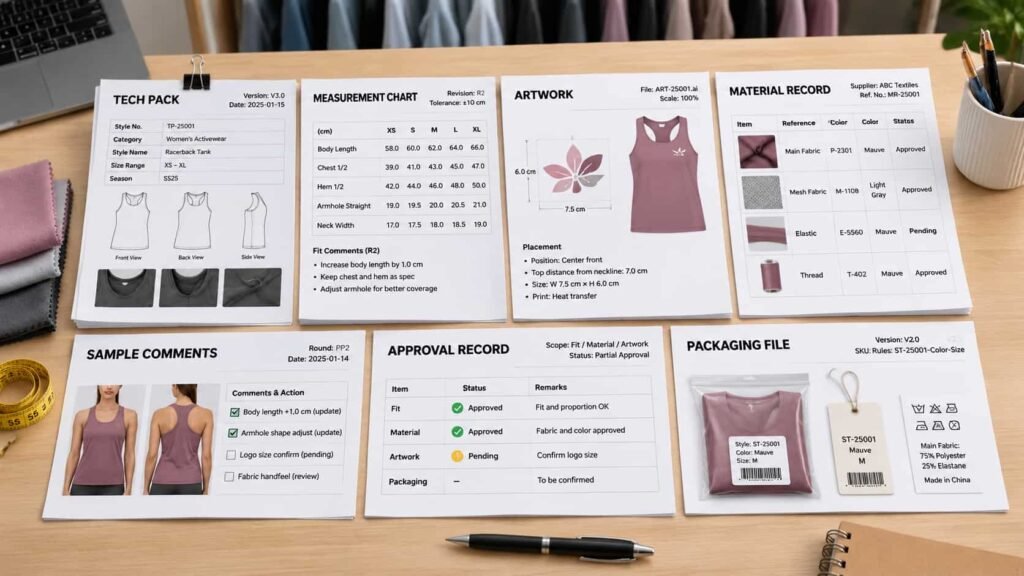
| Documentation Item | Minimum Useful Control | Typical Risk if Missing | Sampling Impact |
| Tech Pack | Version number + date | Old construction used | Wrong sample execution |
| Measurement Chart | Revision number + tolerance | Fit comments applied to wrong spec | Repeated fit corrections |
| Artwork | File name + scale + placement | Wrong logo size or location | Decoration remake |
| Material Record | Supplier/reference + status | Substitute treated as final | Sample/bulk mismatch |
| Sample Comments | Round + date + action | Previous comments lost | Revision repeated |
| Approval Record | Scope + status | Partial approval treated as complete | Premature production reference |
| Packaging File | Current version + SKU rules | Wrong labels or cartons | Repacking risk |
What Communication Red Flags Matter Before Sampling?
| Important pre-sampling red flags include unconditional agreement, vague technical answers, inconsistent information, skipped questions, unsupported promises, and poor control of files or assumptions. One isolated mistake does not automatically disqualify a manufacturer, but repeated patterns suggest that unresolved information may become more expensive once fabrics, patterns, samples, production capacity, and commercial commitments are involved. |
Does the Supplier Say Yes to Everything?
“Sure, no problem” can sound helpful until the design reaches the sample room. Many apparel requirements are conditional. A fabric may not tolerate the requested bonding temperature, a print method may perform poorly on a textured surface, a special trim may carry a supplier MOQ, and a requested deadline may depend on material arrival. A very high-stretch construction may also require a different seam from the one shown in a reference image. A manufacturer that agrees to every request without identifying any dependency may be protecting sales momentum rather than development accuracy. The more technical the garment, the more useful it is to hear qualified language such as “subject to testing,” “depending on material,” or “we need to confirm this before sampling.” That wording may sound less exciting, but it often demonstrates that the supplier understands the difference between possibility, feasibility, and validation.
Are Answers Vague or Inconsistent?
Inconsistency is useful to monitor because it can be checked over time. Suppose an initial quotation says custom packaging is included, while a later discussion treats packaging as an additional cost. That does not automatically mean the supplier is unreliable, because the specification may have changed. The real test is whether the team can explain the difference. A controlled response might clarify that the first quotation assumed a standard polybag, while the updated requirement now includes custom printed packaging and carton labels, so the cost basis has changed. An uncontrolled response simply presents a new number without identifying the change. The same principle applies to MOQ, material, sampling, delivery, and construction. When different contacts give conflicting technical answers, the brand should pause until the supplier identifies which answer is current, what evidence supports it, and whether any document needs to be updated.
Are Important Questions Being Avoided?
Some suppliers respond frequently but still avoid the questions that carry the most technical or commercial risk. Common examples include unclear material identity, certification scope, sample fee terms, testing responsibility, artwork ownership, production capacity, packaging conditions, or the basis of an unusually low quotation. A supplier does not need to have every answer immediately. “We need to verify this with the fabric mill” is a valid status, and “timing cannot be confirmed until material availability is checked” is also a valid status. The red flag is repeated avoidance without closure. Brands can manage this by keeping a short open-question register with three statuses: answered, pending verification, and unresolved. That simple record reveals whether communication is actually reducing uncertainty or merely generating additional messages around the same unanswered point.
Are Promises Unsupported by Conditions?
The more absolute a promise sounds, the more evidence a sourcing team should request. Statements such as “one sample will be enough,” “bulk will be exactly identical,” “every order can be produced quickly,” or “this process works on all fabrics” ignore normal variables in material supply, pattern adjustment, workmanship, production scheduling, and quality control. Leadshow’s verified documentation deliberately avoids universal promises such as guaranteed sample approval, unlimited revisions, fixed sample timing for every product, or automatic production release after sample approval. Its timing approach instead treats sampling and bulk schedules as dependent on specifications, materials, revision scope, workmanship, quantity, approvals, payment, and current scheduling. Qualified language is not weaker when it reflects the real operating conditions of apparel manufacturing. In many cases, it is the clearest sign that the supplier is willing to expose uncertainty before the project becomes expensive.
| Red Flag | Possible Meaning | What to Verify | Recommended Action |
| Everything is possible | Limited feasibility review | Material and construction constraints | Request technical confirmation |
| Fixed timing before review | Hidden schedule assumptions | Material and sample readiness | Ask for dependencies |
| Different MOQ answers | Scope not controlled | Design/color/material basis | Reconfirm quotation scope |
| Technical questions unanswered | Limited internal access | Engineering review capability | Escalate before sampling |
| No file version control | Weak documentation | Current controlling files | Pause until clarified |
| Sample equals bulk | Approval scope misunderstood | Production reference requirements | Define approval scope |
| Unsupported performance claim | No validation evidence | Test method and material basis | Require validation |
| Repeated contradiction | Handoff or ownership issue | Current approved answer | Resolve before payment |

How Can Brands Score Communication Before Sampling?
| Brands can compare communication more objectively by giving shortlisted manufacturers equivalent project information and scoring the resulting behavior. The strongest criteria are technical understanding, clarification quality, answer specificity, documentation, risk transparency, consistency, ownership, and relevant response speed. A scorecard supports judgment rather than replacing it because different garments and development stages carry different communication risks. |
Which Criteria Should a Scorecard Include?
A useful scorecard should measure whether the supplier makes the project easier to control. Technical understanding deserves substantial weight because misunderstanding construction can lead directly to sample failure. Clarification quality matters because incomplete information is normal during early development, while documentation matters because even correct decisions can be lost if they are not recorded. Response speed should usually carry less weight than response relevance. An illustrative 100-point model can assign 20 points to technical understanding, 15 to clarification quality, 15 to answer specificity, 15 to documentation and version control, 10 to risk transparency, 10 to consistency, 10 to ownership and next-step clarity, and 5 to response relevance. These weights are not an industry standard. A complex bonded garment may justify more weight on engineering discussion, while a repeat-order basic product may place more weight on documentation and delivery coordination.
How Should Brands Compare Different Suppliers?
Fair comparison requires equivalent input. Factory A should not receive a complete tech pack while Factory B receives only three reference images, because the resulting communication cannot be compared on equal terms. Brands should send the same current specification package, target quantity, material direction, artwork, packaging requirements, and key questions to each shortlisted manufacturer. Then record not only what each supplier answers, but what each supplier notices. One factory may quote quickly while overlooking missing measurements. Another may ask for fabric confirmation before final costing. A third may identify that the requested logo method conflicts with the selected surface. Those differences reveal different levels of project understanding rather than mere communication style. Leadshow’s supplier-evaluation framework likewise treats product fit, technical review, sampling, materials, equipment, quality, capacity, packaging, compliance, communication, and delivery conditions as connected comparison dimensions rather than relying on price or speed alone.
What Evidence Supports a Proceed Decision?
A sample order should be supported by observable evidence rather than a positive impression of the sales conversation. Before proceeding, the brand should know that the project has been reviewed, critical missing information has been identified, sample materials are defined or clearly marked as provisional, construction risks have been discussed, the quotation basis is understandable, current files can be identified, sample purpose is defined, and open assumptions are visible. A useful internal rule is that the first sample should answer defined development questions. If nobody can state what the sample is intended to validate, the project may not yet be ready. A short delay to close essential measurements, material identity, artwork, or quotation scope is often cheaper than an additional revision round. Sampling should begin because the team is ready to learn something specific from the physical garment, not simply because the conversation has reached a payment step.
When Is a Manufacturer Ready for Sampling?
A manufacturer is ready for sampling when both sides share a sufficiently clear understanding of what will be developed, what the sample is supposed to validate, which requirements are already approved, which details remain provisional, and which files control the next step. That does not mean every bulk-production variable must already be final. Early samples often exist specifically to answer open questions about fit, material, construction, or workmanship. The important distinction is visibility: good projects contain known unknowns, while poorly controlled projects contain hidden unknowns. Before paying for the first sample, ask the supplier, “What could still cause this sample to differ from our current expectation?” A technically mature response may mention material substitution, unfinished measurements, pending trims, construction uncertainty, color limitations, or artwork approval. That answer provides a realistic map of development risk and makes the next sample more useful.
| Evaluation Area | Suggested Weight | Strong Signal | Pause Signal |
| Technical understanding | 20 | Product risks explained clearly | Generic capability claims |
| Clarification quality | 15 | Missing information identified | Silent assumptions |
| Answer specificity | 15 | Questions answered individually | Vague sales language |
| Documentation | 15 | Current files and approvals controlled | Multiple uncontrolled versions |
| Risk transparency | 10 | Limitations stated early | Everything guaranteed |
| Consistency | 10 | Teams give aligned answers | Repeated contradictions |
| Ownership | 10 | Responsible person and action clear | No clear project owner |
| Response relevance | 5 | Timely and useful | Fast but incomplete |
| Total | 100 | Evidence supports sampling | Further review needed |

Final Procurement Takeaway
Communication quality is not a substitute for sample inspection, factory assessment, material verification, quality control, capacity review, or compliance checks. It is valuable because it can be tested before much physical investment is committed. A supplier’s early responses show whether the team can receive information, interpret requirements, expose limitations, preserve decisions, and connect commercial discussion with actual manufacturing work. Those same behaviors become more important once the project moves into revisions, material approval, bulk production, labeling, packaging, and export delivery. The strongest sourcing decision therefore combines communication evidence with real manufacturing evidence rather than relying on a smooth sales experience alone.
For custom sportswear, swimwear, streetwear, or modest sportswear projects, Shenzhen Leadshow Sports Technology Co., Ltd. can review current Tech Packs, reference images, physical samples, target quantities, material direction, branding requirements, and other project information before sampling. Leadshow’s standard MOQ generally starts from 100 pieces per color per design, subject to fabric, trims, construction, and customization requirements, and project timing, pricing, and development scope are confirmed according to the actual specification. Brands that want to test communication quality in a practical way can send the current project file set and ask the team to identify missing information, technical risks, sample scope, and the next decisions required before development begins. A useful sampling relationship starts when both sides understand not only what they want to make, but also what still needs to be verified.