
Sports T-shirt Manufacturer
Custom sports T-shirt development and manufacturing for brands needing controlled fit, materials, sampling, private labels and scalable bulk production.
- Shenzhen Leadshow Sports Technology Co., Ltd. (Leadshow) develops sports T-shirts from tech packs, measurement charts, reference images, patterns or physical garments.
- Fabric, fit, construction, logo, labeling and packing requirements are reviewed before sampling so production decisions start from a defined product specification.
- Approved samples and controlled production references guide bulk manufacturing, quality checks and multi-SKU packing for brand programs and repeat orders.
- Standard MOQ generally starts from 100 pieces per color per design, subject to materials, trims, colorways, sizes, branding, packaging, testing and production conditions.
Sports T-shirt Manufacturing for Different Brand Programs
Sports T-shirt sourcing requirements change with brand maturity, sales model, order structure and internal approval standards. Leadshow supports projects where product specifications, samples, production references and packing instructions need to be translated into controlled manufacturing steps.
Established Sportswear Brands
Mature sportswear teams often arrive with detailed tech packs, measurement charts, approved fabrics, brand manuals and quality requirements. Leadshow can review existing specifications, identify manufacturing questions, coordinate fit and sample development, and prepare an executable production reference. The focus is not replacing established standards with factory defaults; the goal is to understand the brand’s current product language, validate manufacturability and support stable multi-color, multi-size bulk programs and repeat production.
Growing Activewear Labels
Growing labels usually need more than sewing capacity. Product teams may be expanding a proven T-shirt into new colors, fits, materials or price levels while keeping the original product identity. Leadshow can evaluate construction, fabric direction, pattern changes, sampling scope, MOQ influences and bulk readiness. A project can begin from a tech pack, an approved garment, reference images or an existing style requiring improvement, with each revision documented before production release.
Private Label Programs
Private label programs need product execution and brand execution to move together. Sports T-shirt development can include garment structure, fit, color, heat-transfer branding, main labels, size labels, care information and project-specific packing. Leadshow reviews branding files alongside fabric and construction because logo size, placement and application method can change according to material behavior. MOQ, packaging quantities and production timing are then confirmed against the final specification rather than a generic T-shirt template.
Importers and Distributors
Importers and distributors often manage several styles, colors and size breaks at the same time. Their risk sits in order accuracy as much as product quality. Leadshow can support product review, sampling, bulk production, SKU separation, label checks, packing and shipment coordination according to agreed order files. Products are already exported to Europe, North America, South America and Oceania, while destination-specific testing, documents and shipping arrangements remain subject to the individual program.
Retail Groups
Retail programs require controlled specifications, clear product tiers, consistent labeling and accurate pack-out across many selling units. Leadshow can review fabric, fit, construction, sizes, branding and packing instructions before bulk release, then coordinate relevant production and quality checks against approved references. For seasonal or multi-SKU sports T-shirt programs, the most useful early inputs are the assortment plan, color and size breakdown, packaging rules, target market and required delivery milestones.
Buying Offices
Buying offices and sourcing teams need evidence that a supplier can translate brand requirements into repeatable manufacturing instructions. Leadshow can provide verified company information, manufacturing capability data, sample-development support, product and process review, and factory evidence for supplier evaluation. Technical, quality, MOQ, timing and packaging questions are handled as project conditions rather than blanket promises. Factory visits, video review or document review may be arranged where production, confidentiality and scheduling conditions allow.
Sports T-shirt Structures Available for Project Evaluation
Sports T-shirts are not limited to one neckline, sleeve or silhouette. Leadshow can evaluate multiple confirmed construction directions, while final fabric, fit, branding and functional claims remain linked to the approved specification and project evidence.
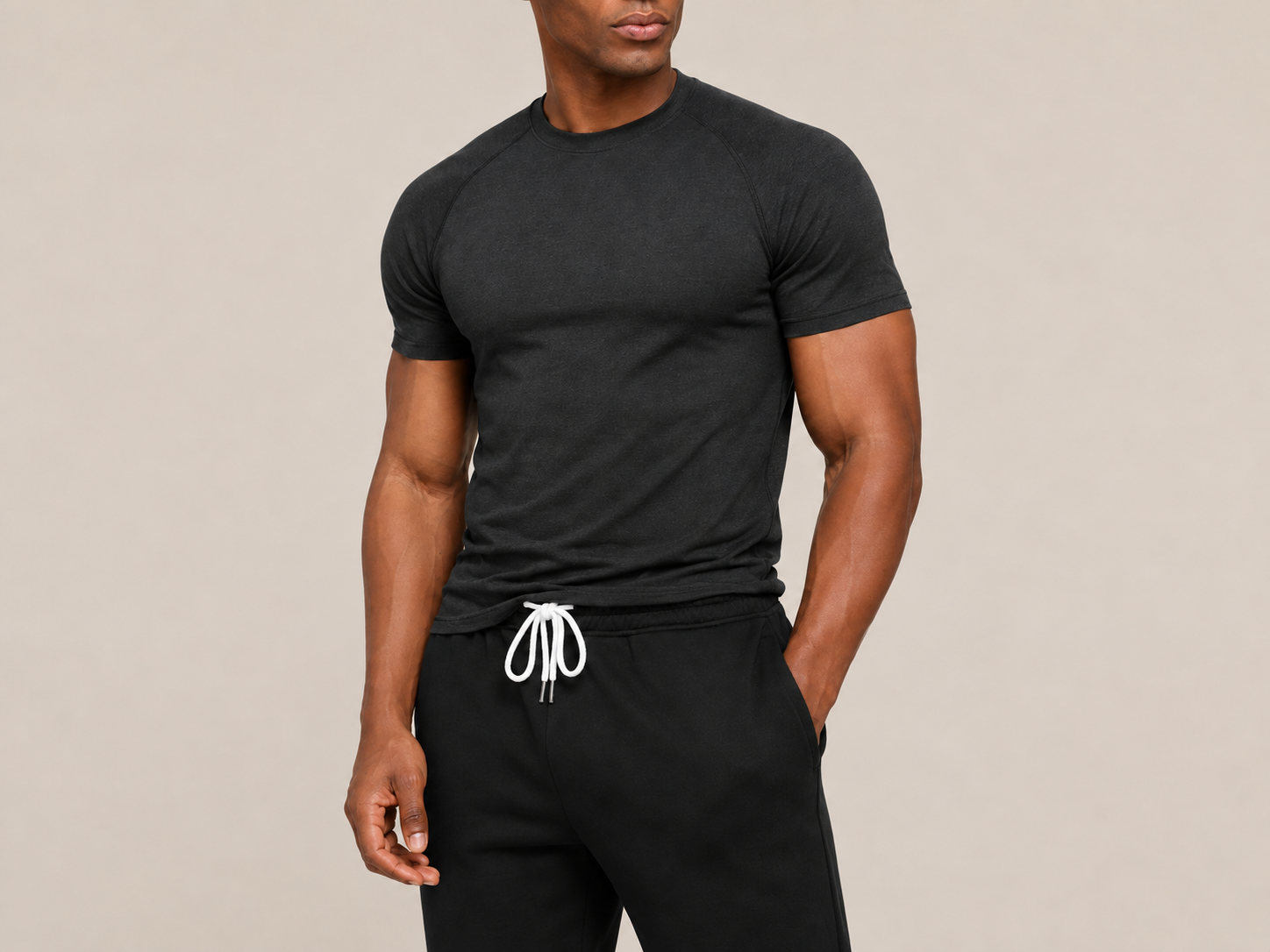
Crew-Neck Training Tee
A crew-neck sports T-shirt can be developed as a clean training staple or as a more technical performance-led top, depending on the approved fabric and construction. Development typically focuses on neck opening stability, shoulder width, chest ease, sleeve shape, armhole mobility, body length and hem behavior. Short sleeves, regular shoulders and several fit directions can be evaluated. Final performance claims such as quick-dry or moisture management depend on the selected fabric specification and supporting test evidence.
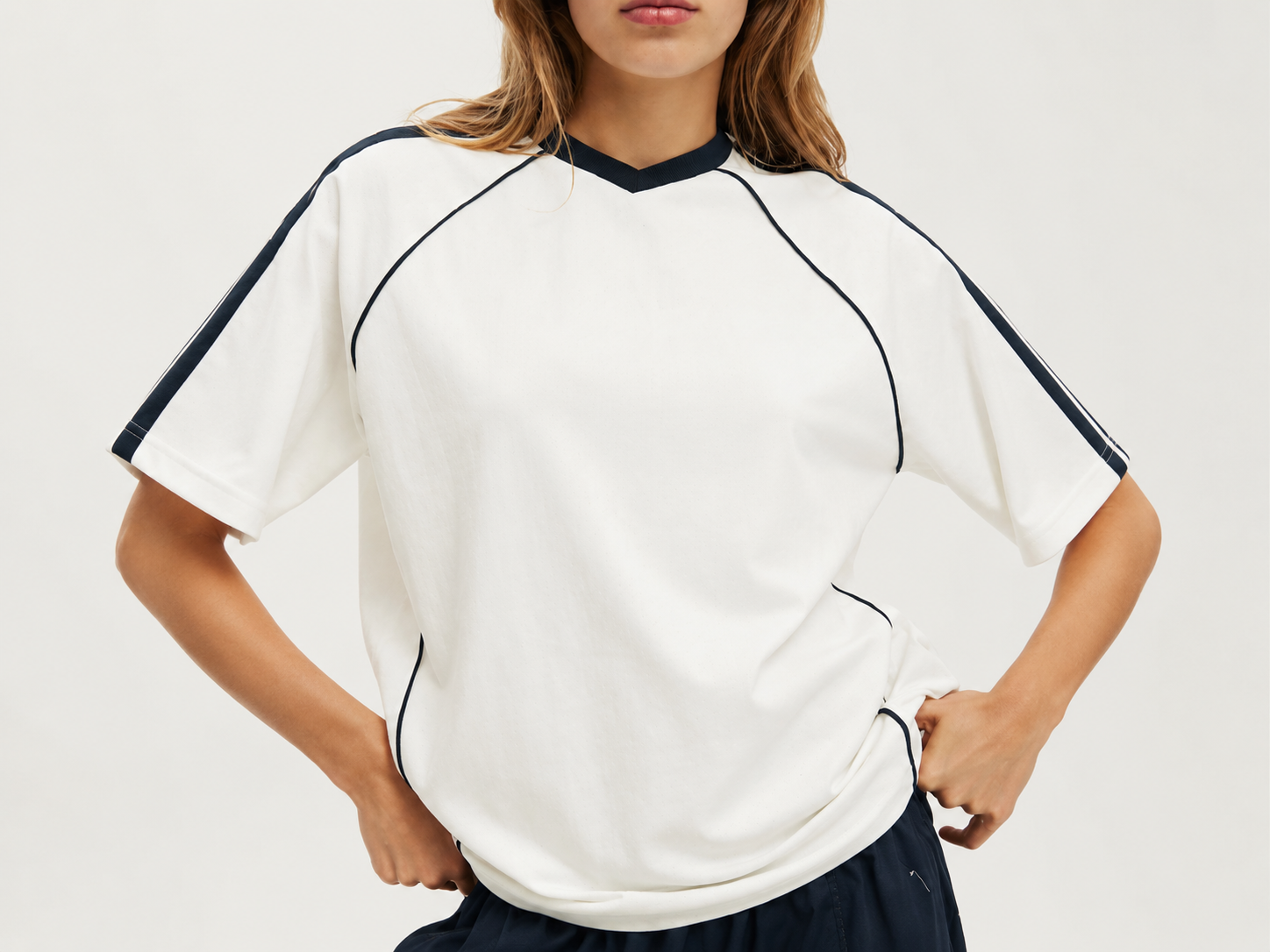
Raglan Sports Tee
Raglan construction changes the relationship between neckline, shoulder, sleeve and upper-body movement. A raglan sports T-shirt can suit training or movement-oriented collections when the sleeve seam position supports the intended fit and visual language. Pattern review should consider neck opening, sleeve angle, chest width, underarm shaping and fabric stretch. Logo placement also needs review because shoulder and sleeve panels may change the available branding area. Material and seam choices are confirmed during sampling rather than assumed from the style name.
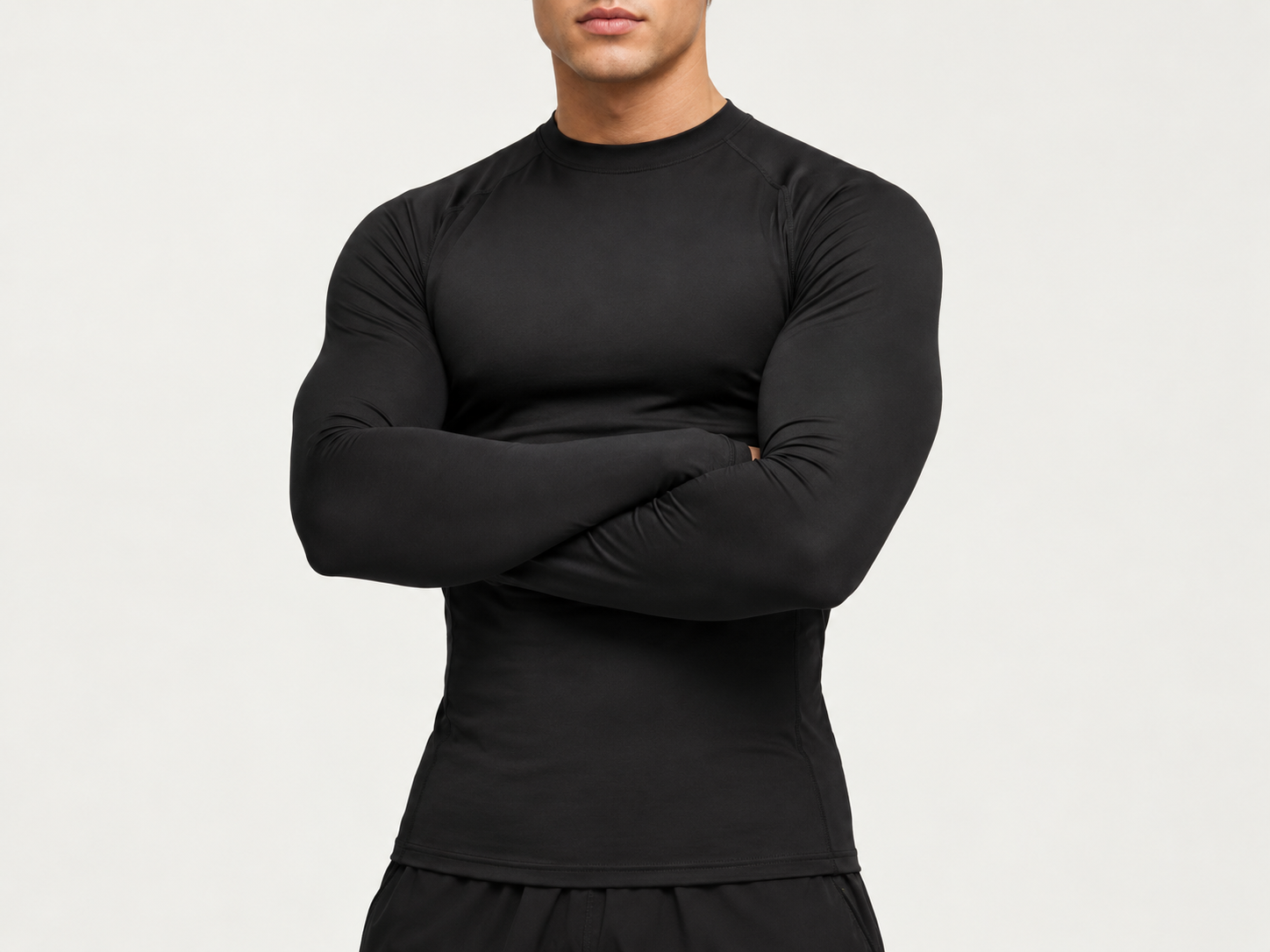
Long-Sleeve Training Tee
Long-sleeve sports T-shirts add sleeve length, cuff or hem behavior, arm mobility and thermal comfort to the standard T-shirt specification. The garment can be developed for training, layering or sports-lifestyle use, but fabric weight and performance must match the intended environment. Fit review should include shoulder movement, elbow flexion, sleeve twisting and total body length. Logo application, seam type and any paneling need to remain compatible with stretch, washing and the approved fabric.
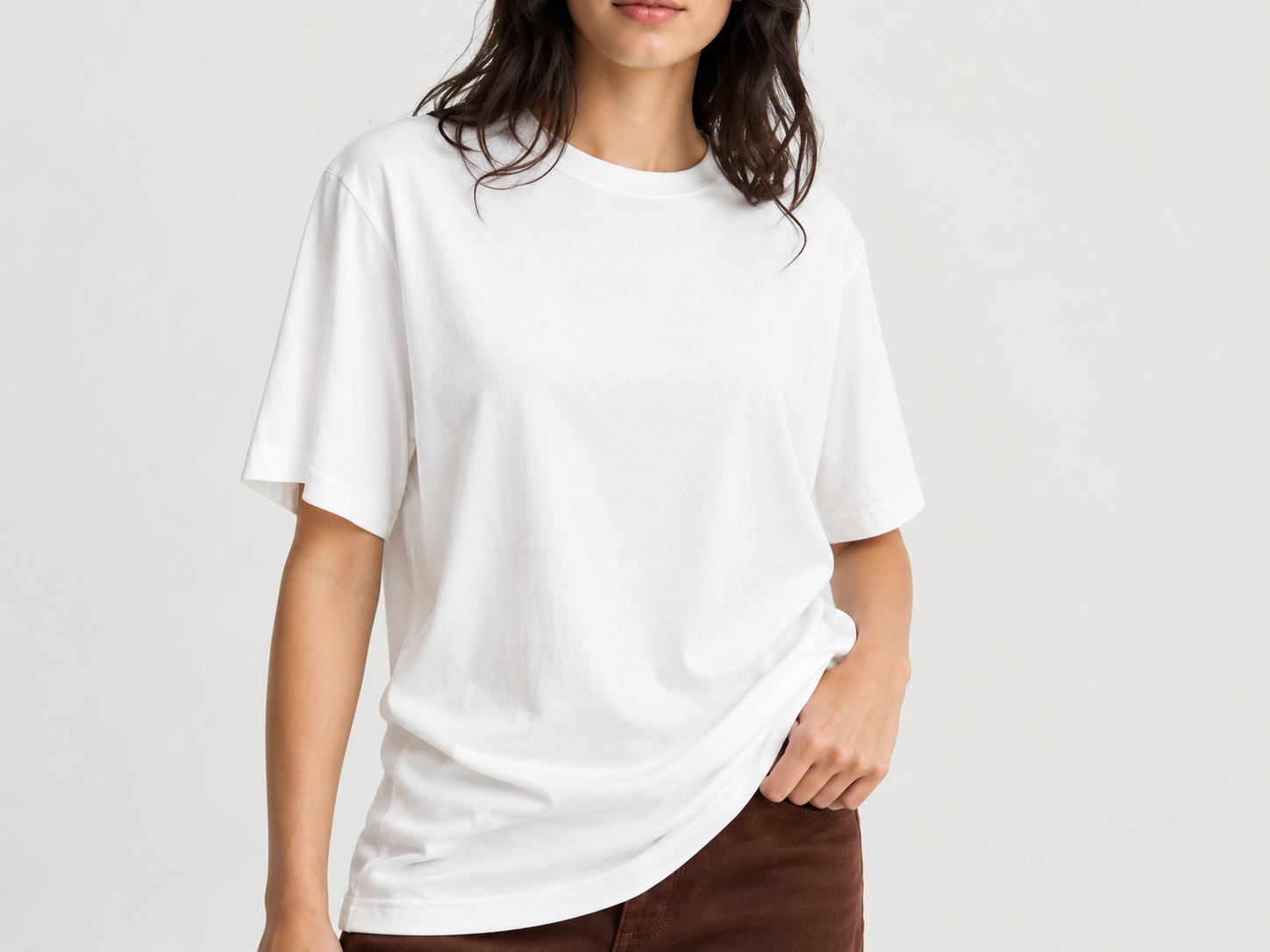
Relaxed Sports Lifestyle Tee
A relaxed or oversized sports T-shirt can bridge training-inspired styling and streetwear presentation. Development focuses on shoulder drop, chest volume, sleeve proportion, neckline balance, hem shape and fabric drape rather than simply grading a regular T-shirt larger. Fabric weight, surface and recovery influence whether the garment hangs cleanly or becomes heavy and unstable. Leadshow can evaluate regular, loose and oversized directions, then refine the pattern through approved samples before bulk production.
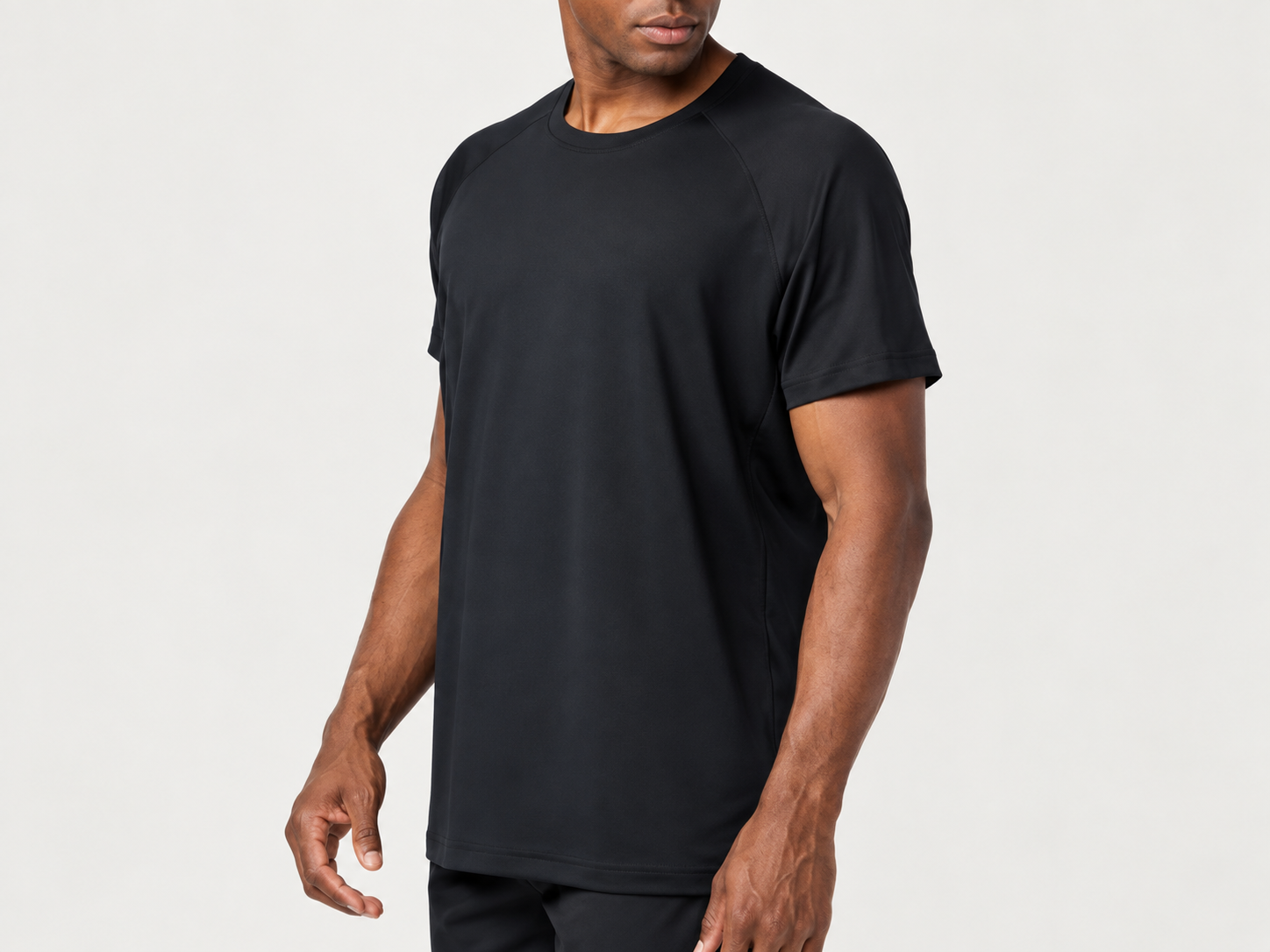
Ventilation-Panel Sports Tee
Sports T-shirts can be evaluated with contrast panels, mesh zones or laser-perforated areas when the material and construction are suitable. Ventilation details should start from the activity requirement and garment structure, not from a decorative airflow claim. Panel shape can affect stretch, seam bulk, appearance and logo position. Laser perforation is available as a manufacturing process for compatible materials, yet breathability improvement cannot be expressed as a fixed performance result without product-specific testing.
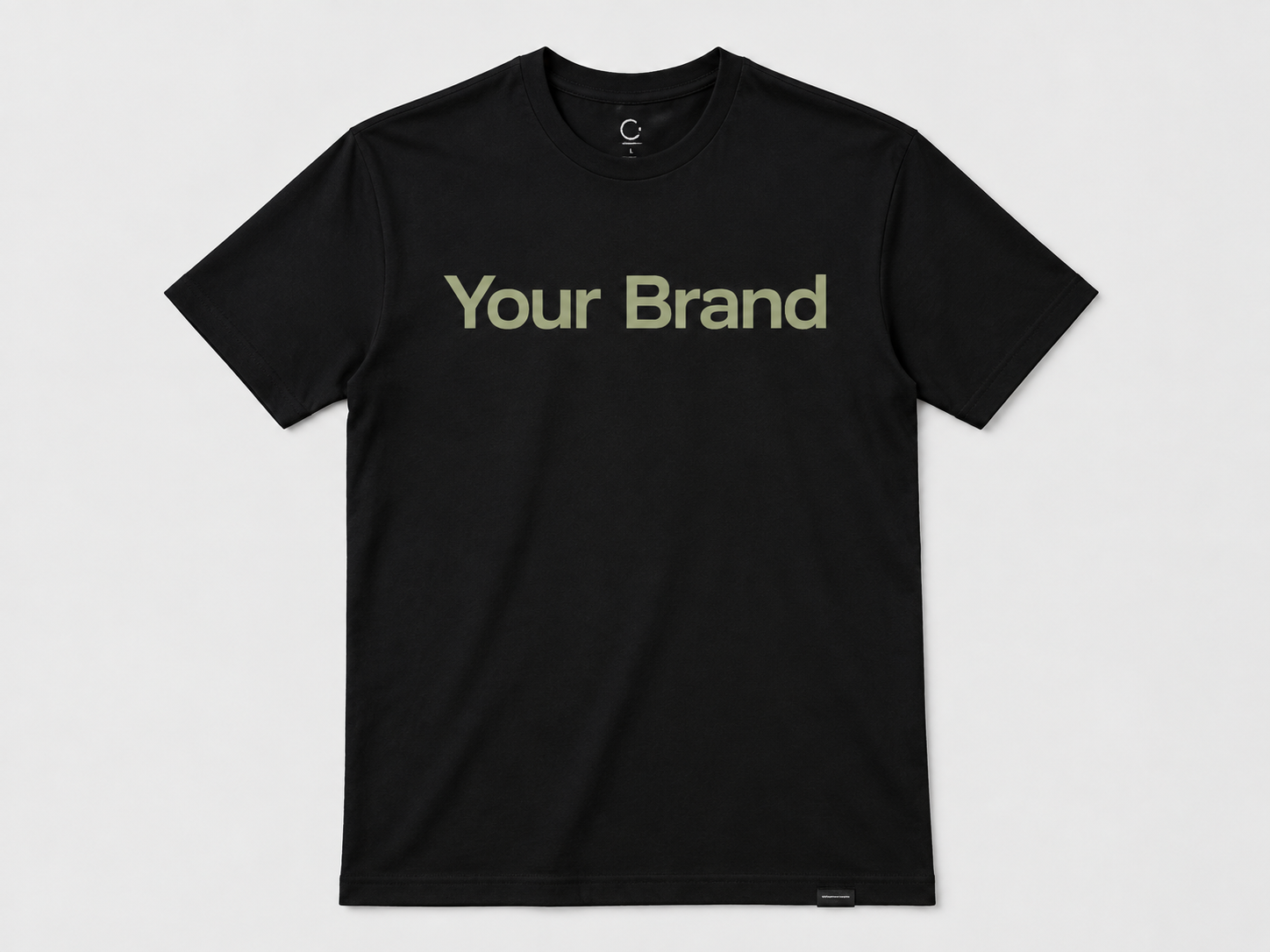
Branded Core Sports Tee
A core sports T-shirt can be kept structurally simple while carrying a clear brand identity through fit, color, fabric handfeel, heat-transfer artwork, labels and packing. Such styles are often important for repeat orders because small specification changes can affect perceived consistency. Leadshow can review the approved garment or tech pack, clarify measurements and branding details, create the required sample type, and build a production reference for future bulk runs. Final MOQ and timing remain linked to the chosen materials and order matrix.
Match Sports T-shirt Specifications to Real Wearing Conditions
Running, gym training, team programs and sports-lifestyle collections create different fit, material, movement and branding requirements. Product development starts with the intended use so the specification can be built around measurable manufacturing decisions.

Running
Running-oriented T-shirts need enough movement through the shoulder and armhole while managing heat, sweat exposure and repeated motion. A useful development review starts with running intensity, climate, session length, desired fit and the areas most likely to rub or retain moisture. Fabric claims must be supported by the chosen material and testing rather than by the word ‘running’ alone.
- Review: shoulder mobility, chest ease, sleeve angle, body length.
- Consider: lightweight handfeel, ventilation zones and low-bulk seams where suitable.
- Validate: movement, wet-state comfort, logo compatibility and measurement stability through samples. The approved version should record any activity-specific construction notes before grading or bulk release.
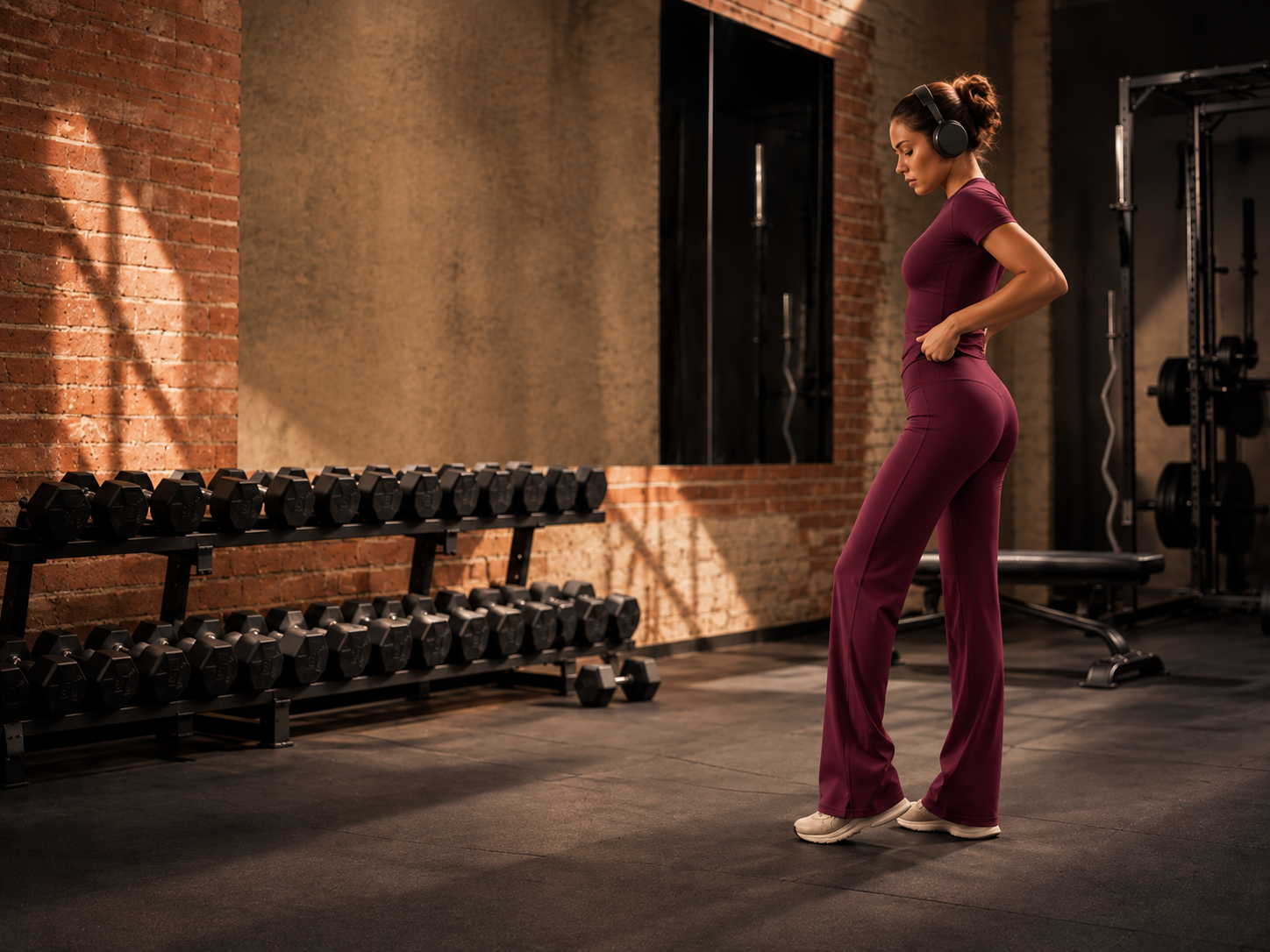
Gym and Training
Gym and training T-shirts may face overhead movement, pressing, pulling, repeated stretching and direct contact with equipment. A fitted style and a relaxed training tee therefore require different ease, fabric recovery and seam placement. Leadshow can review product construction against the intended training routine, then confirm the required sample and fit checks before bulk release.
- Review: arm raise, shoulder rotation, chest and hem movement.
- Consider: stretch, recovery, opacity, sweat exposure and logo position.
- Validate: fit comments, measurements, workmanship and fabric behavior before production. A final training specification should separate required product performance from optional marketing language.

Team and Club
Team and club programs often combine consistent visual identity with a broad size breakdown and repeated ordering. The manufacturing challenge is not only making one approved sample; color, logo placement, labels, size information and pack-out need to remain aligned across the order matrix. Leadshow can evaluate team-oriented sports T-shirt projects where branding and size control are defined in the project files.
- Review: colorways, size breakdown, branding positions and packaging.
- Consider: shared materials and repeat-order references.
- Validate: approved artwork, measurements, labels and carton instructions before release. Repeat programs should also identify which approved files remain valid for the next order and which items require reconfirmation.
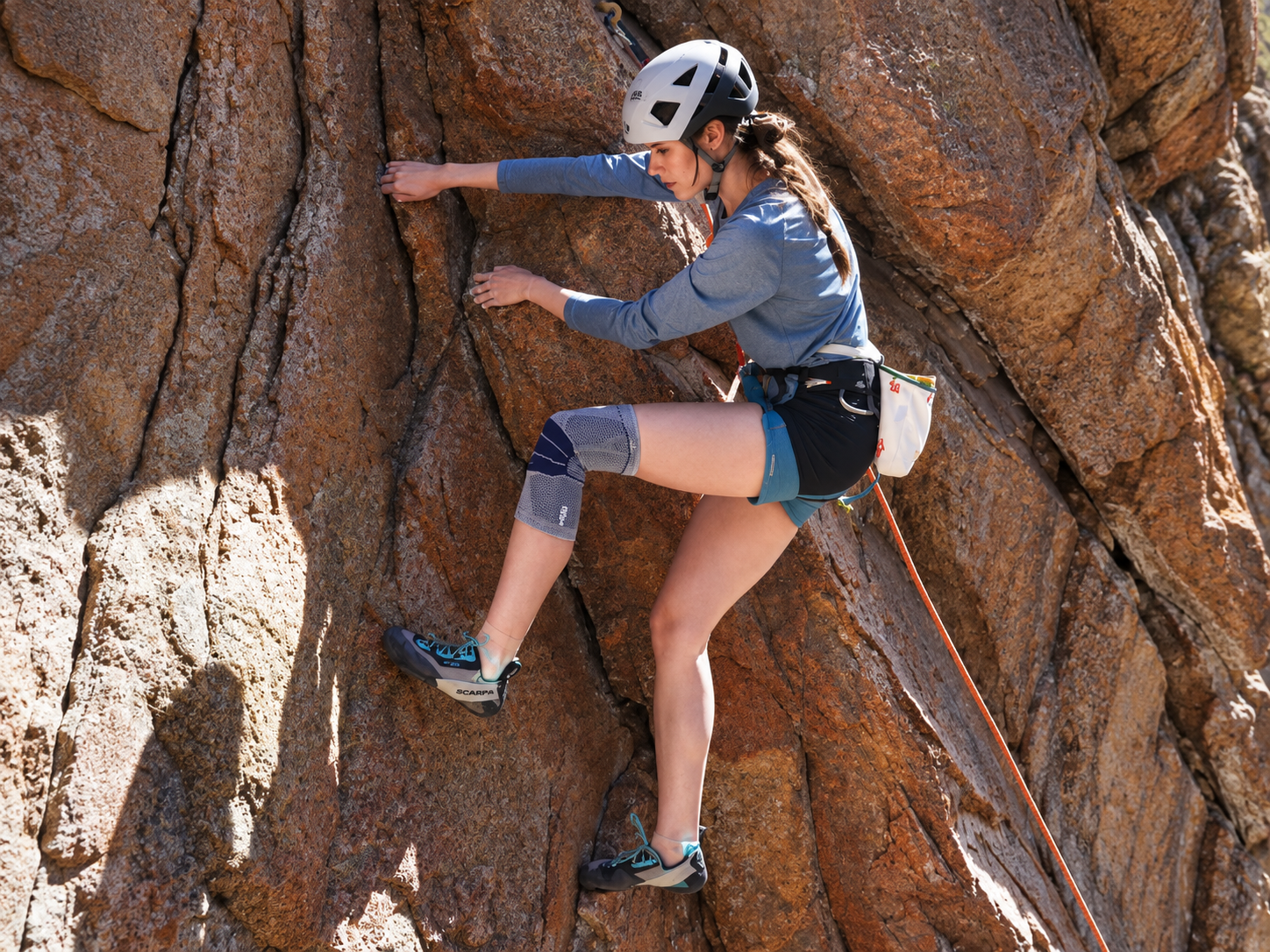
Sports Lifestyle
Sports-lifestyle T-shirts place more emphasis on silhouette, fabric surface, drape and brand details while retaining an athletic reference. Regular, relaxed, drop-shoulder and oversized directions can be evaluated, but the pattern should be developed around an intentional fit rather than a generic size increase. Fabric weight and construction also influence whether the garment reads as light activewear or heavier street-influenced sportswear.
- Review: silhouette, shoulder drop, sleeve proportion and hem shape.
- Consider: handfeel, structure, branding and color.
- Validate: approved fit, material and bulk reference before repeat production. Seasonal color or fabric changes should be reviewed as product changes rather than treated as simple purchasing substitutions.
Choose Sports T-shirt Fabric by Use and Construction
Material decisions influence fit, comfort, branding, sewing, cost and bulk stability. Leadshow reviews composition, structure, weight, stretch, handfeel and required performance evidence together so fabric choices remain tied to the garment specification.
Start With Use, Not Fiber Names
A sports T-shirt fabric should be chosen from the wearing condition, target fit and product position before a fiber name is treated as the answer. Polyester, blended constructions and other materials can behave very differently when yarn, knit structure, weight, stretch, recovery and finishing change. A fabric described only as ‘polyester’ does not tell a product team enough about handfeel, opacity, drape, drying behavior or printing compatibility.
For a structured material review, Leadshow can work from the target activity, climate, price position, reference garment and required touch. The useful technical fields include composition, fabric construction, GSM, width, stretch direction, recovery, surface, color, shrinkage, pilling, colorfastness, material MOQ and material lead time. A sample card or garment sample then gives the product team a physical reference before bulk material is released.
Sports T-shirts also place material demands on the pattern. A more elastic fabric may require a different ease or seam choice than a stable jersey. A lighter fabric may change opacity, logo application and neckline stability. A heavier fabric may create a cleaner street-sports silhouette but can also alter heat retention, drape and shipping weight. Material selection is therefore treated as part of product engineering rather than a separate purchasing step. Final material use remains subject to supplier availability, construction compatibility and the approved project specification.
Control Weight, Structure, Stretch and Handfeel
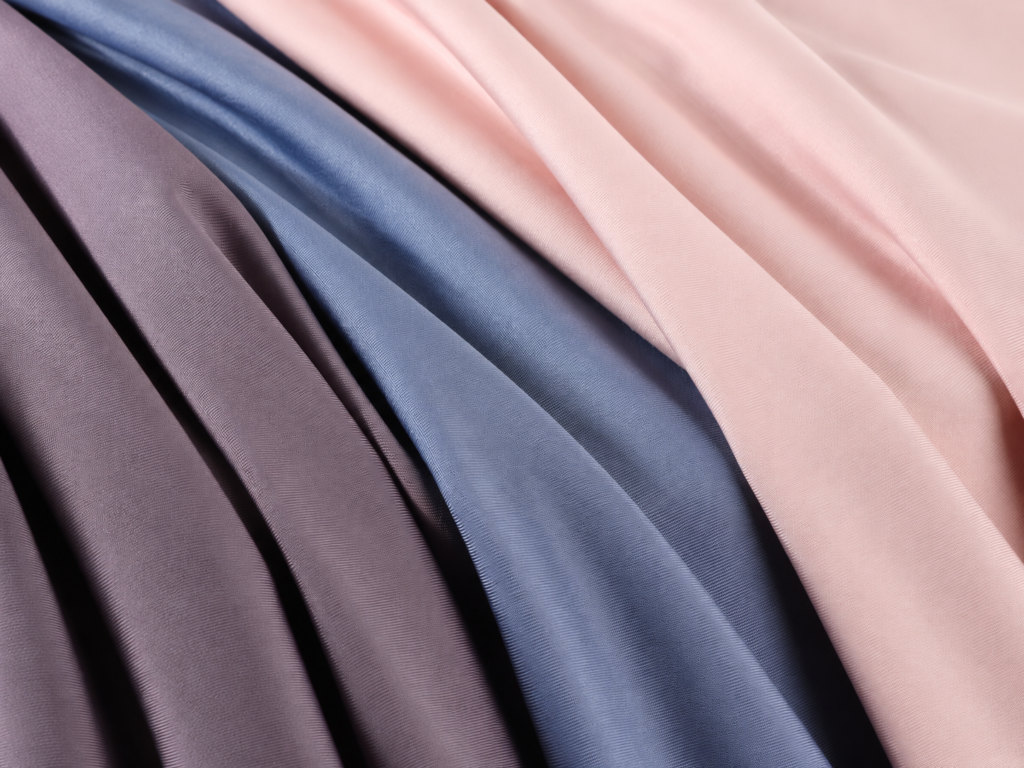
GSM is a useful numeric control point, but no universal ‘best GSM’ applies to every sports T-shirt. The same weight can feel very different in jersey, mesh, interlock or another knit construction, and the same construction can change when fiber, yarn and finishing change. A good specification records the number while also describing how the fabric should behave in the garment.
A development team should look at four linked areas. First, fabric structure influences thickness, airflow, surface appearance, stretch and sewing response. Second, GSM influences drape, opacity, thermal feel, material usage and cost. Third, stretch and recovery influence fit, neckline stability, arm movement and long-term shape. Fourth, handfeel affects the perceived quality of a core style even when the technical specification is otherwise correct.
For sports T-shirts, those factors should be checked against the intended silhouette. A fitted training tee may need a different balance of stretch and recovery from an oversized sports-lifestyle tee. A mesh or perforated area may support ventilation goals, but its seam construction and visual integration need to be evaluated. A fabric replacement during sampling should trigger another fit and workmanship review because a similar composition can still change measurements and garment behavior. Bulk material should then be compared with the approved reference using the project-specific quality standard.
Performance Claims Need Material and Test Evidence
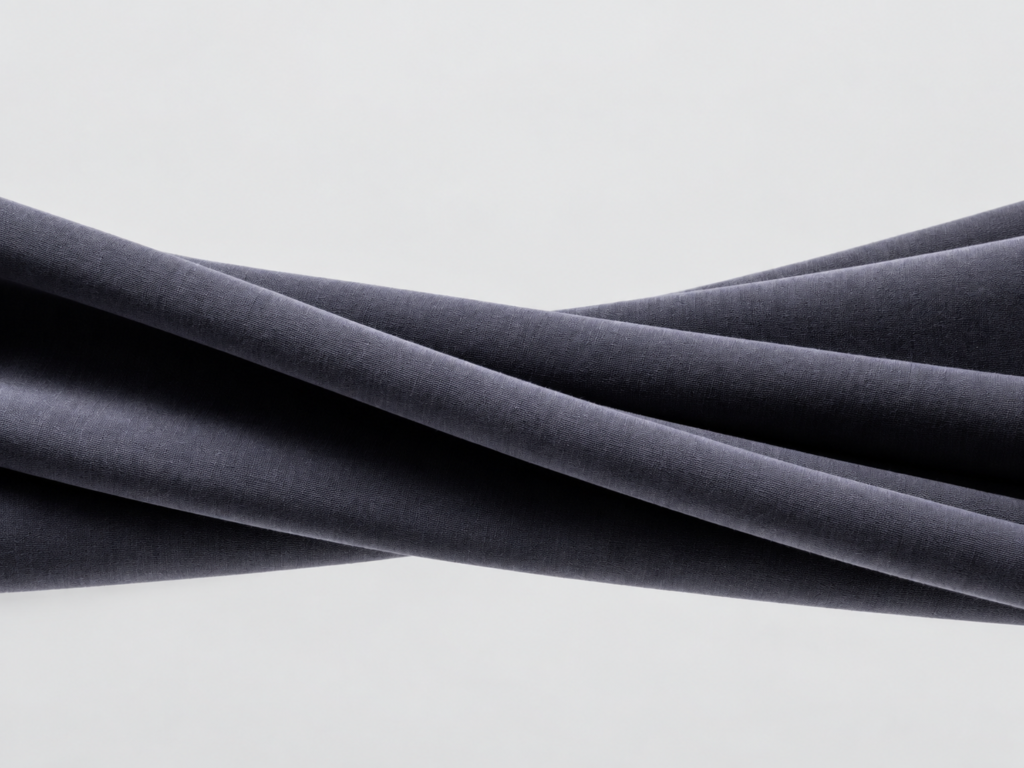
Terms such as moisture-wicking, quick-dry, UPF, cooling, antibacterial or other performance language can influence a sports T-shirt program, but those claims cannot be assigned to every Leadshow product by default. Manufacturing equipment, sewing skill or polyester content alone does not prove a performance level. The relevant material specification, finishing, garment construction and test method need to support the claim.
A safer development route begins by stating the performance target in the tech pack or project brief. Leadshow can then review material direction, construction compatibility and any required third-party testing or certification with the destination market in mind. If a functional fabric is nominated by the brand, the supplied documents, scope and validity should be checked against the final material used for production. If performance needs to be developed, testing may be required after a suitable material and construction are selected.
Brand language should stay aligned with evidence. A sports T-shirt may be designed for running or training without automatically being described as quick-dry. A perforated panel may support airflow design without a fixed percentage improvement. A seam-taped area does not make the whole garment waterproof. Clear boundaries improve specification accuracy and reduce later disputes between marketing language, approved samples and bulk production.
Develop Fit and Size Rules Before Bulk Production
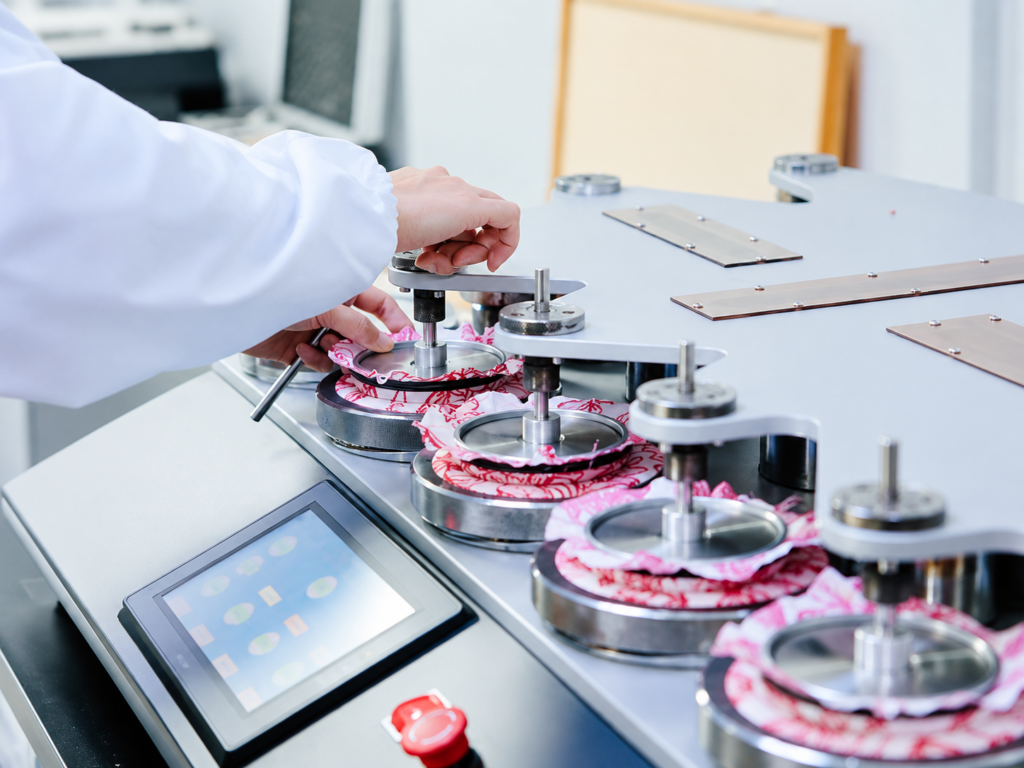
Sports T-shirt fit depends on measurements, pattern shape, fabric behavior and movement. Leadshow can review base size, grading, points of measure, tolerances and sample comments so approved fit decisions become usable production references.
Build the Size System From Measurements
A size label such as S, M or L is only a name. Bulk consistency depends on the measurement chart, points of measure, base size, grade rule, measurement method and agreed tolerance behind the label. Sports T-shirts need particular attention around shoulder width, chest, armhole, sleeve length, body length and neckline stability because small changes can alter both appearance and movement.
Leadshow can work from a brand’s existing measurement chart, approved garment, pattern or fit comments. When specifications are incomplete, the development discussion should clarify target market, intended silhouette, fabric stretch and desired ease before a pattern direction is approved. Regular, slim, loose and oversized fits can be evaluated, as can regular shoulder, drop shoulder or raglan construction. A base-size approval does not automatically approve every graded size, so the required size-set scope should be defined according to the program.
Useful size-control data includes the base size, each POM, measurement method, grade increment, tolerance, garment wash or relaxation condition where relevant, and sample approval status. The final size range should come from the project specification rather than a universal Leadshow size chart. Changes in fabric, shrinkage behavior or construction can require another pattern review because the same numeric measurements may not produce the same worn result after material behavior changes.

Validate Fit Before Grading and Bulk
Fit approval is more reliable when the sports T-shirt is reviewed both statically and during the movements expected in use. A training tee may need overhead arm movement and shoulder rotation checks; a relaxed sports-lifestyle tee may be judged more heavily on balance, sleeve proportion and drape. The goal is not a claim of ‘perfect fit’ but a documented fit direction that can be translated into pattern and production requirements.
A typical review can cover neckline position, shoulder line, chest ease, sleeve angle, armhole shape, hem level and total garment length. Fit comments should identify the exact area, requested change and priority. After pattern revision, measurements and visual balance can be checked again. If several sizes are important to the program, a size set may be used where required to confirm grading behavior rather than relying on one approved base size.
Production release should reference the latest approved pattern, measurement chart, fit comments and sample version. Any later change in fabric, wash behavior, logo construction or trim can affect the garment and should be evaluated before being treated as a simple administrative update. Fit is therefore managed as a version-controlled technical decision connected to material and construction, not as a subjective comment added after production has started.
Sports T-shirt Construction Supported by Verified Equipment
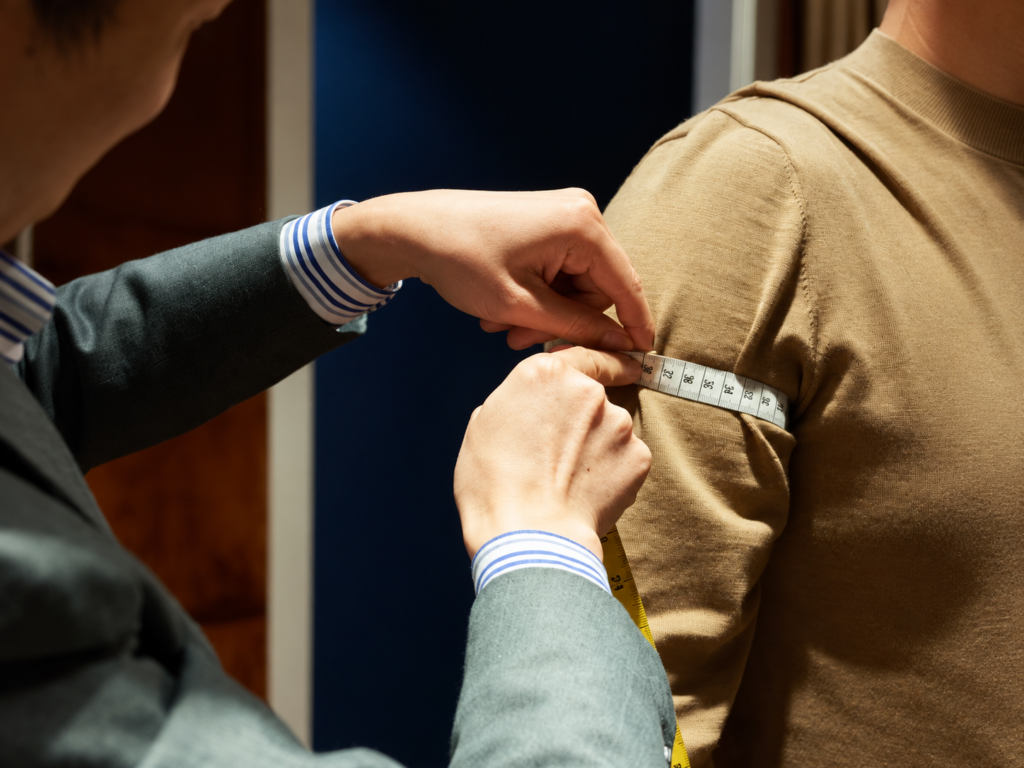
Sewing and cutting choices should match the approved fabric, fit and seam function. Leadshow combines automated and flexible cutting, knit sewing, flatlock and heat-transfer resources, with each process selected according to the product specification.
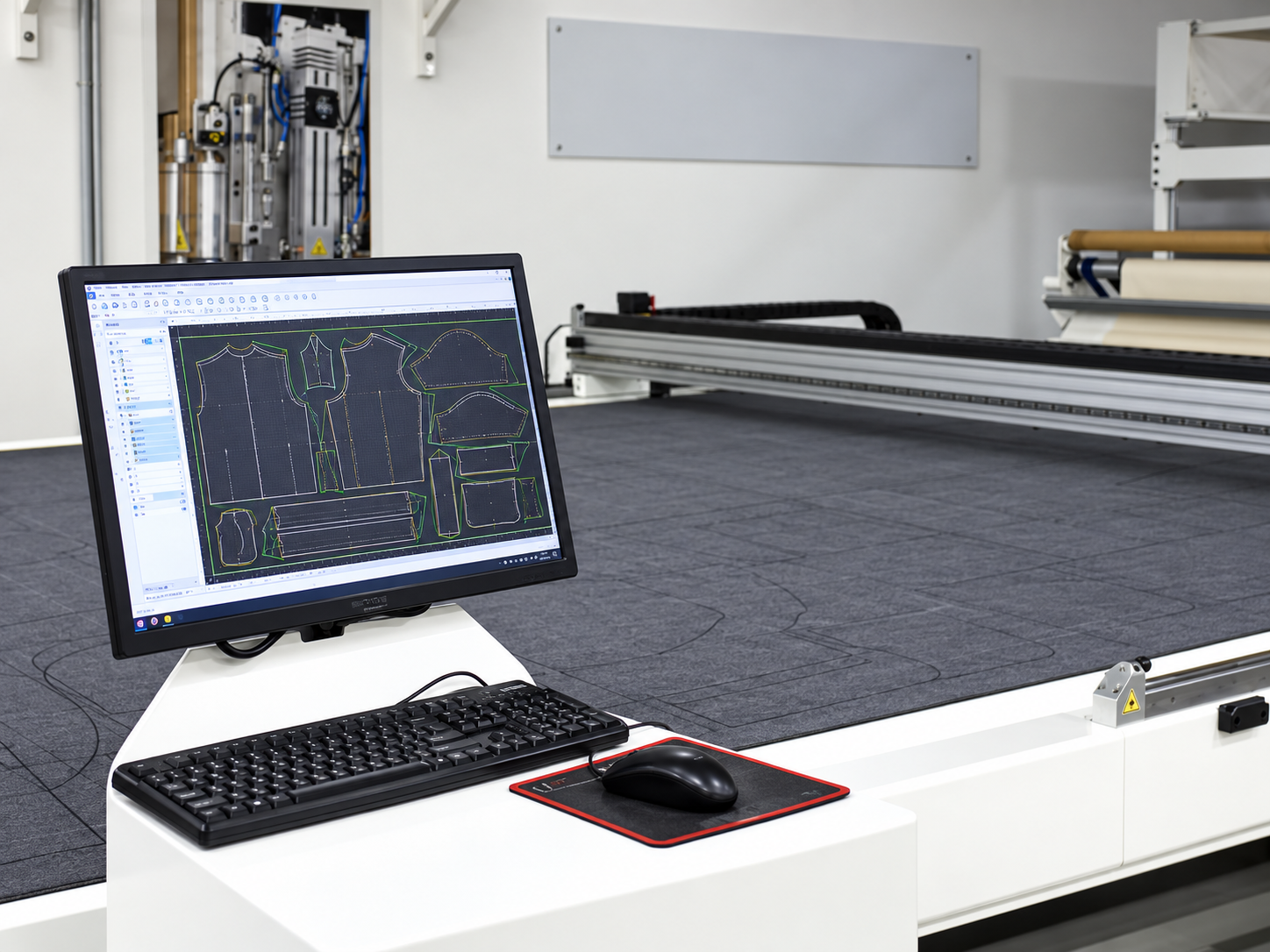
Automated Fabric Cutting
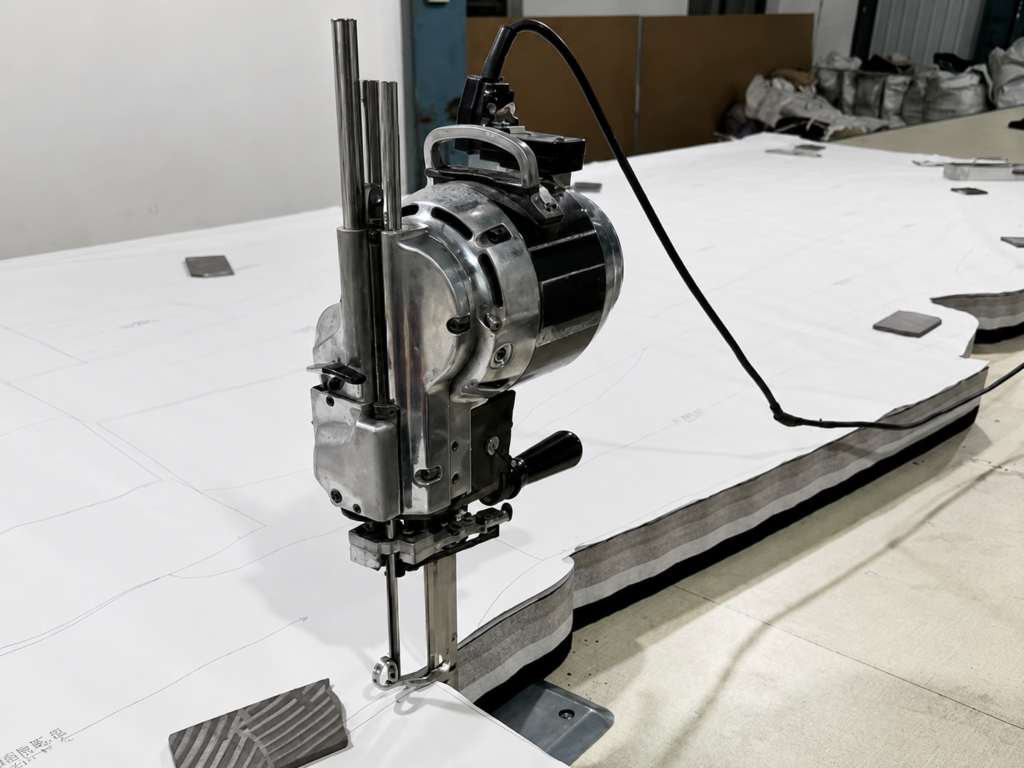
Across Leadshow’s manufacturing system, confirmed cutting resources include 3 automated computer cutting machines, supported by spreading and flexible cutting equipment. Automated cutting can help improve repeated panel preparation for multi-size orders when the fabric and layout are suitable. For sports T-shirts, pattern pieces, grain direction, stretch direction and panel matching still need to be defined before cutting.
- Useful for: repeatable panel preparation and multi-size production.
- Review first: fabric behavior, marker plan and approved pattern.
- Boundary: automated cutting does not mean zero cutting error or zero fabric waste. Production planning still depends on the approved marker, size ratio and actual material condition for the order.
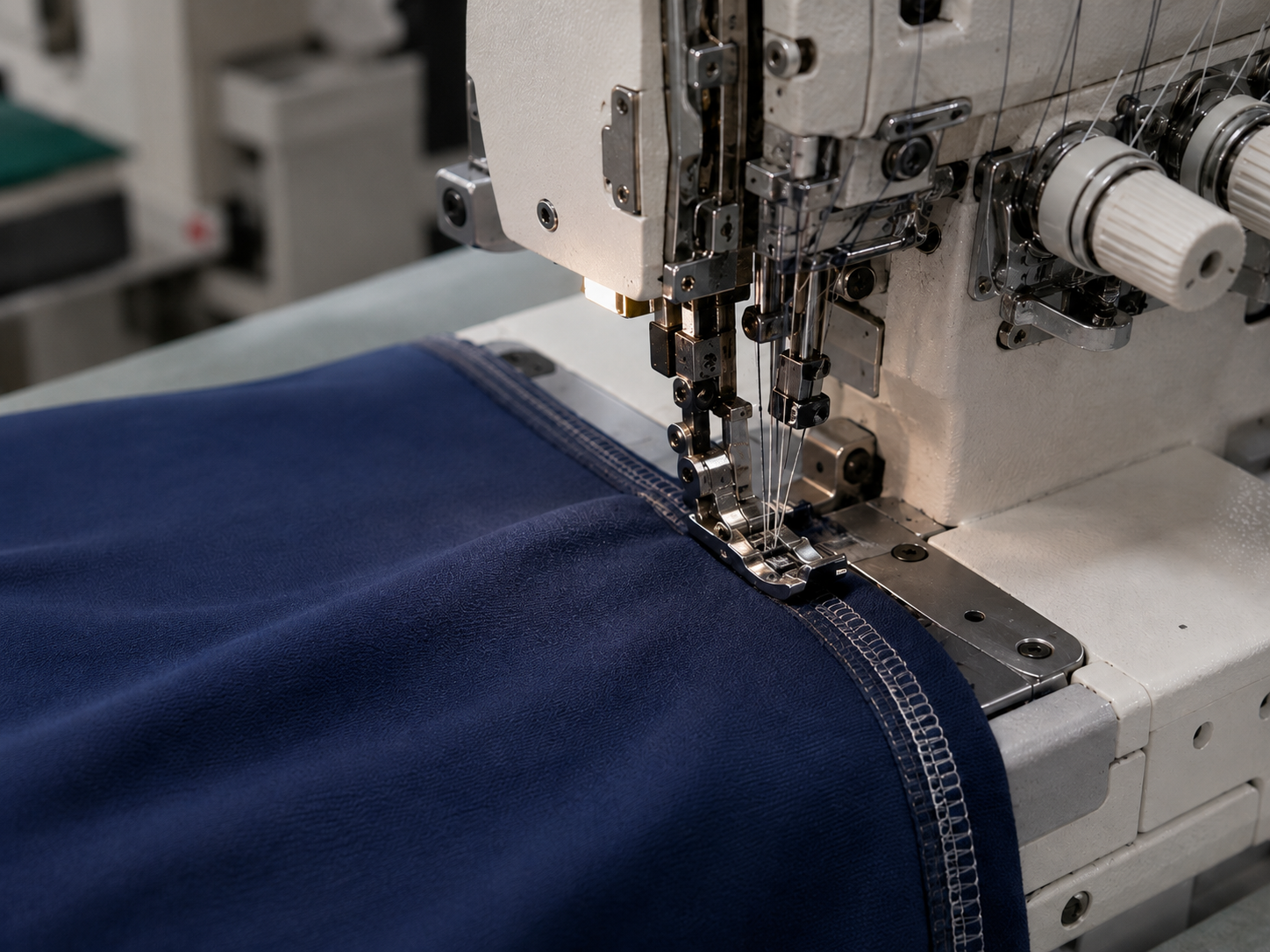
Lockstitch Assembly
Leadshow has 80 computerized direct-drive lockstitch machines across the confirmed manufacturing equipment base. Lockstitch supports straight seams, topstitching, label attachment and many construction details used in sports T-shirts. The correct use depends on the panel, seam load and fabric behavior rather than machine count alone.
- Useful for: controlled straight stitching and structural assembly.
- Review first: stitch type, seam allowance, thread and fabric stretch.
- Boundary: lockstitch equipment does not prove a fixed stitch strength or production speed without project data. Stitch appearance and seam performance are checked against the approved garment requirement rather than machine specifications alone.
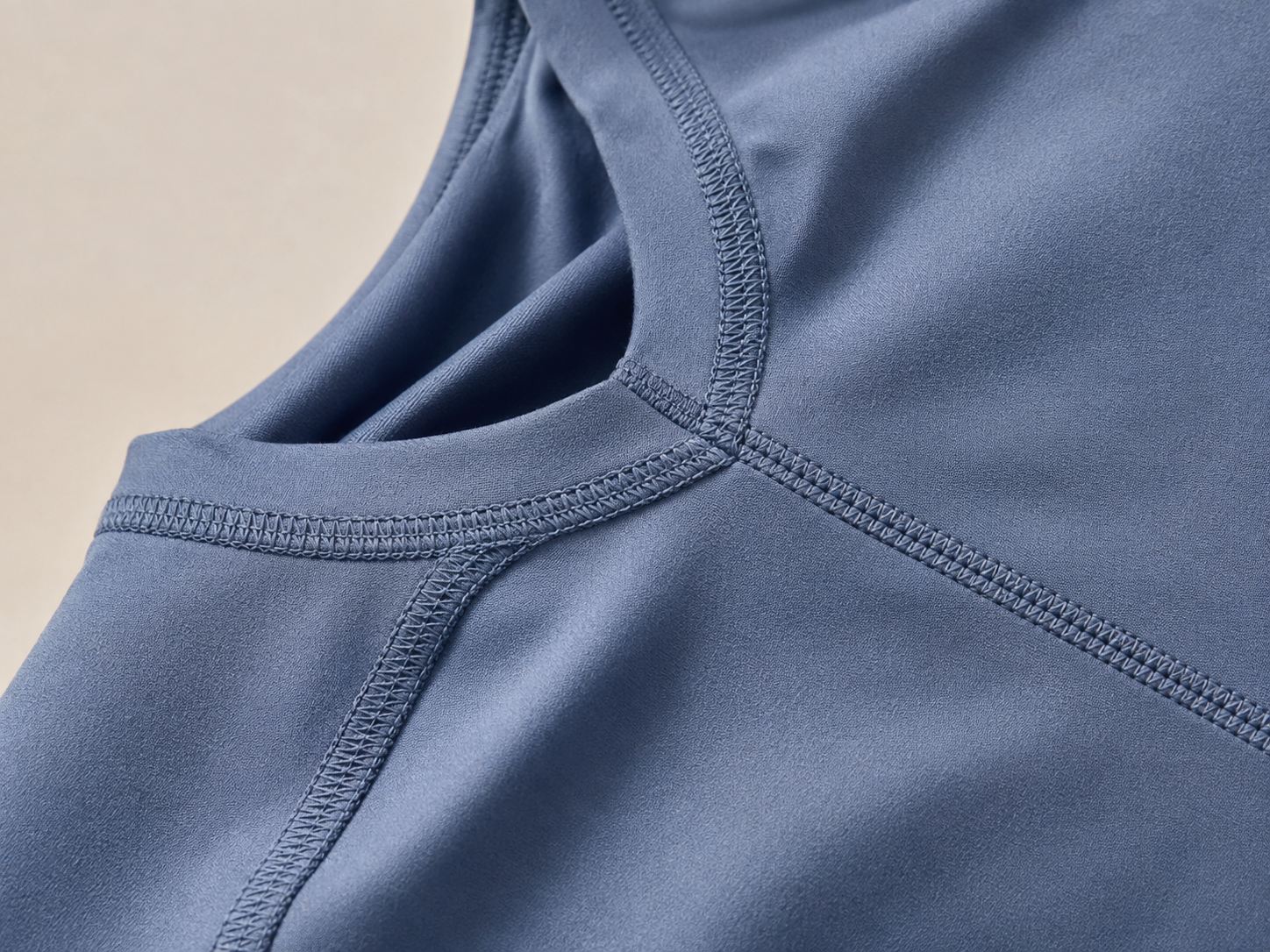
Overlock Construction
Confirmed equipment includes 25 four-thread high-speed overlock machines and 40 five-thread overlock machines across Leadshow’s manufacturing system. Overlock construction is widely relevant to knit garments, including sports T-shirts, because it can finish edges and join suitable panels while accommodating fabric behavior. The exact four-thread or five-thread choice should follow the garment structure.
- Useful for: knit panel joining and edge finishing.
- Review first: fabric stretch, seam position and workmanship requirement.
- Boundary: equipment availability does not mean every seam uses the same overlock construction. Thread, seam allowance, stitch density and panel behavior must also match the approved sports T-shirt specification.
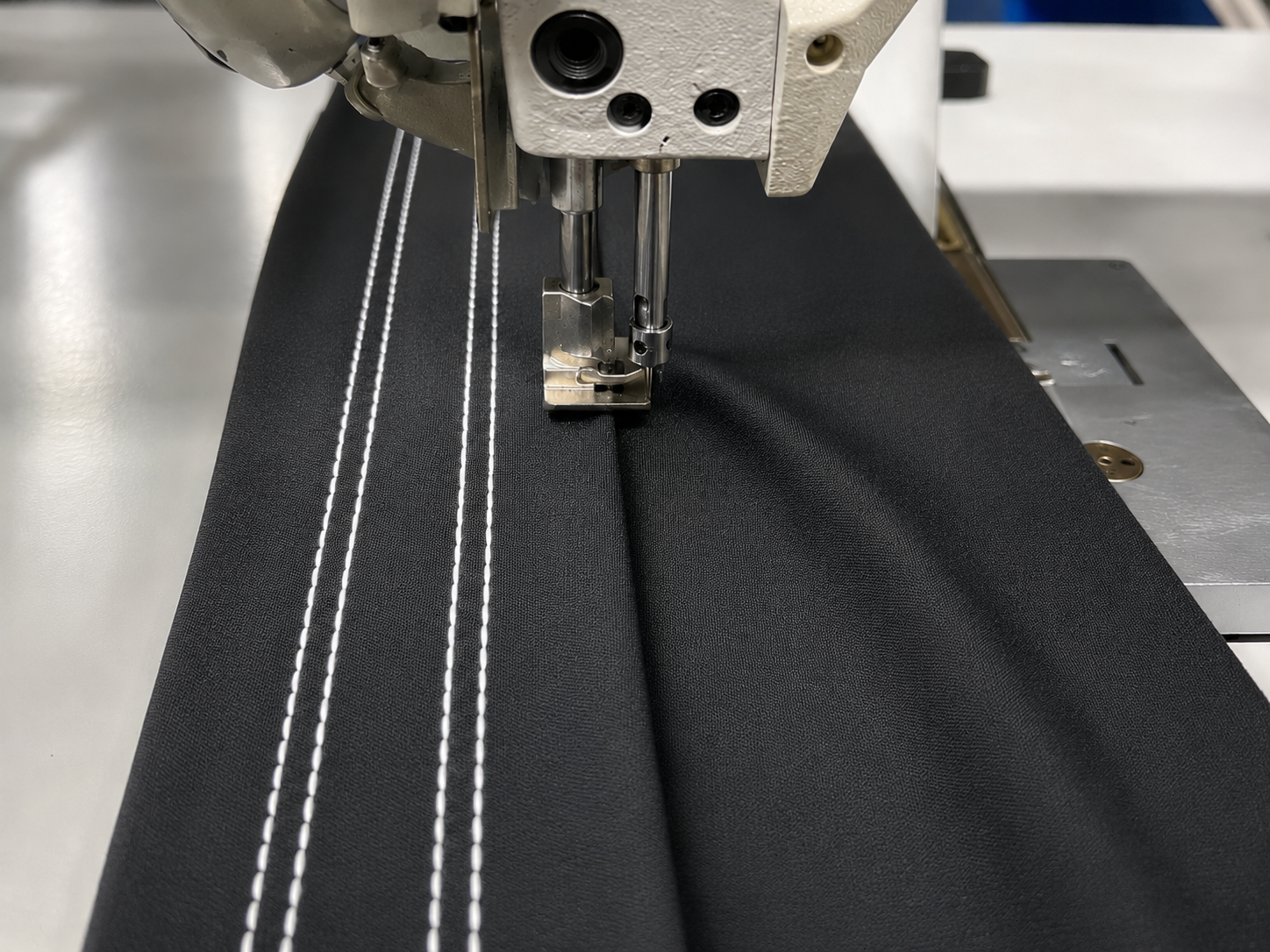
Double-Needle Finishing
Leadshow’s confirmed equipment base includes 15 double-needle sewing machines. Double-needle construction can support parallel stitching, selected hems, reinforcement and visual finishing on sports T-shirts when the fabric and design require it. A clean double line still depends on feeding, thread tension, stretch and seam preparation.
- Useful for: selected hems and parallel stitch details.
- Review first: fabric elasticity, needle spacing, thread and hem construction.
- Boundary: double-needle stitching should not be confused with four-needle six-thread flatlock. The final hem or topstitch selection should be approved on the real fabric because elasticity can change the appearance after sewing and washing.
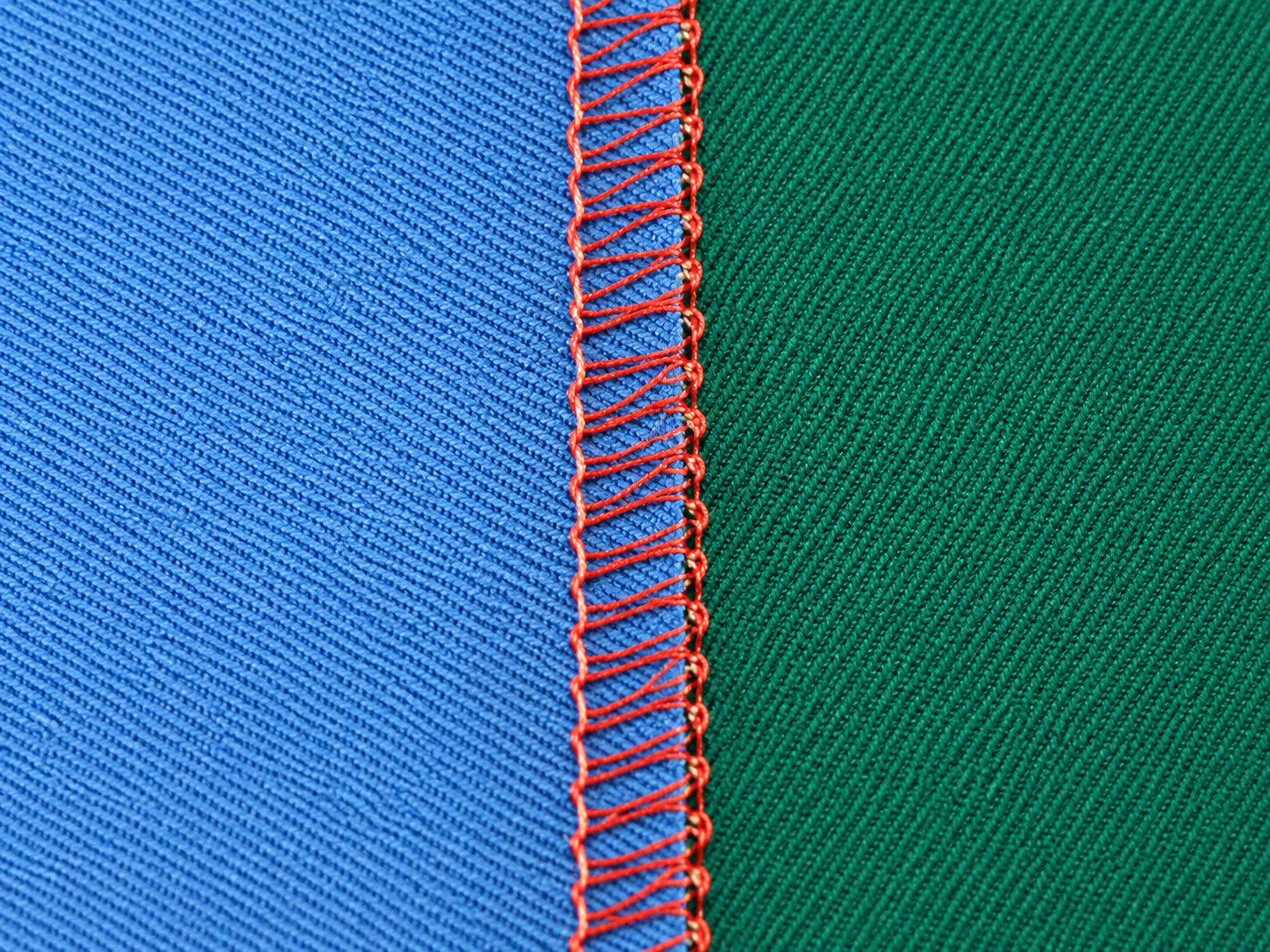
Flatlock Where Applicable
Leadshow has 35 four-needle six-thread flatlock machines within the confirmed equipment system. Flatlock can support flatter, stretch-compatible seams for suitable fitted activewear and selected sports T-shirt constructions. It is an option to evaluate, not a mandatory feature for every T-shirt.
- Useful for: selected low-bulk or stretch-compatible seam applications.
- Review first: fabric, seam position, stretch and comfort target.
- Boundary: four-needle six-thread flatlock is not true seamless knitting and should never be described as whole-garment seamless production. Where used, the seam should be sampled and reviewed for stretch, thickness, appearance and position on the garment.
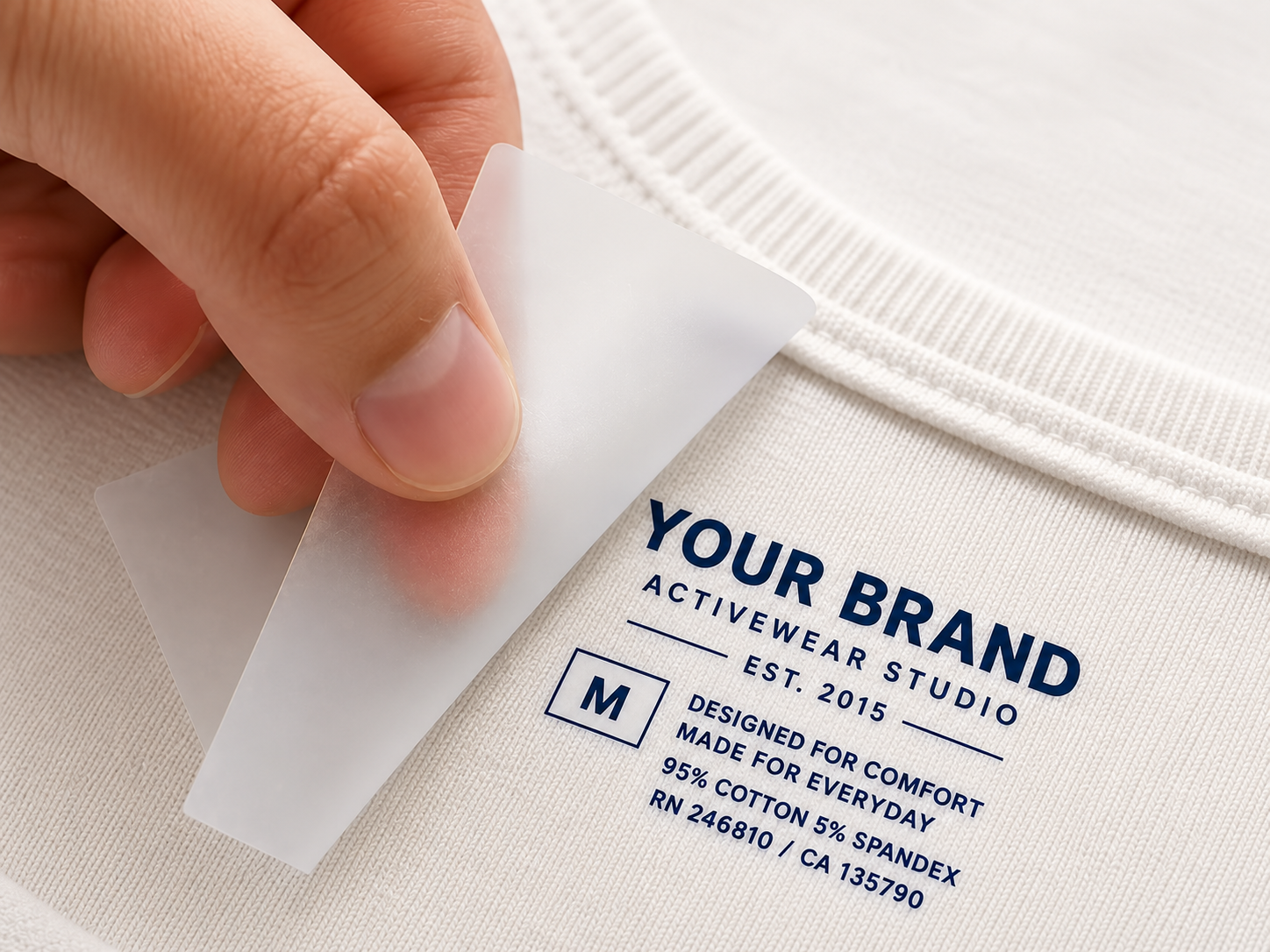
Heat Transfer Branding
Leadshow has confirmed heat-transfer labeling and heat-press equipment that can support selected garment logos, graphics, internal labels and brand details. Sports T-shirt branding needs to be reviewed together with fabric surface, stretch, heat sensitivity, artwork size and washing expectations.
- Useful for: heat-transfer logos, selected graphics and internal label applications.
- Review first: artwork, placement, material compatibility and approval sample.
- Boundary: the presence of heat-press equipment does not mean every printing, embroidery or decoration method is produced in-house. Branding approval should include the actual garment or a representative application whenever fabric sensitivity or stretch may affect the result.
Build Sports T-shirt Branding Into the Production Specification
Logo, internal labels, hangtags and packing should be approved alongside garment specifications. Leadshow reviews brand files with material and order data so artwork, identification and pack-out remain aligned with the final bulk version.
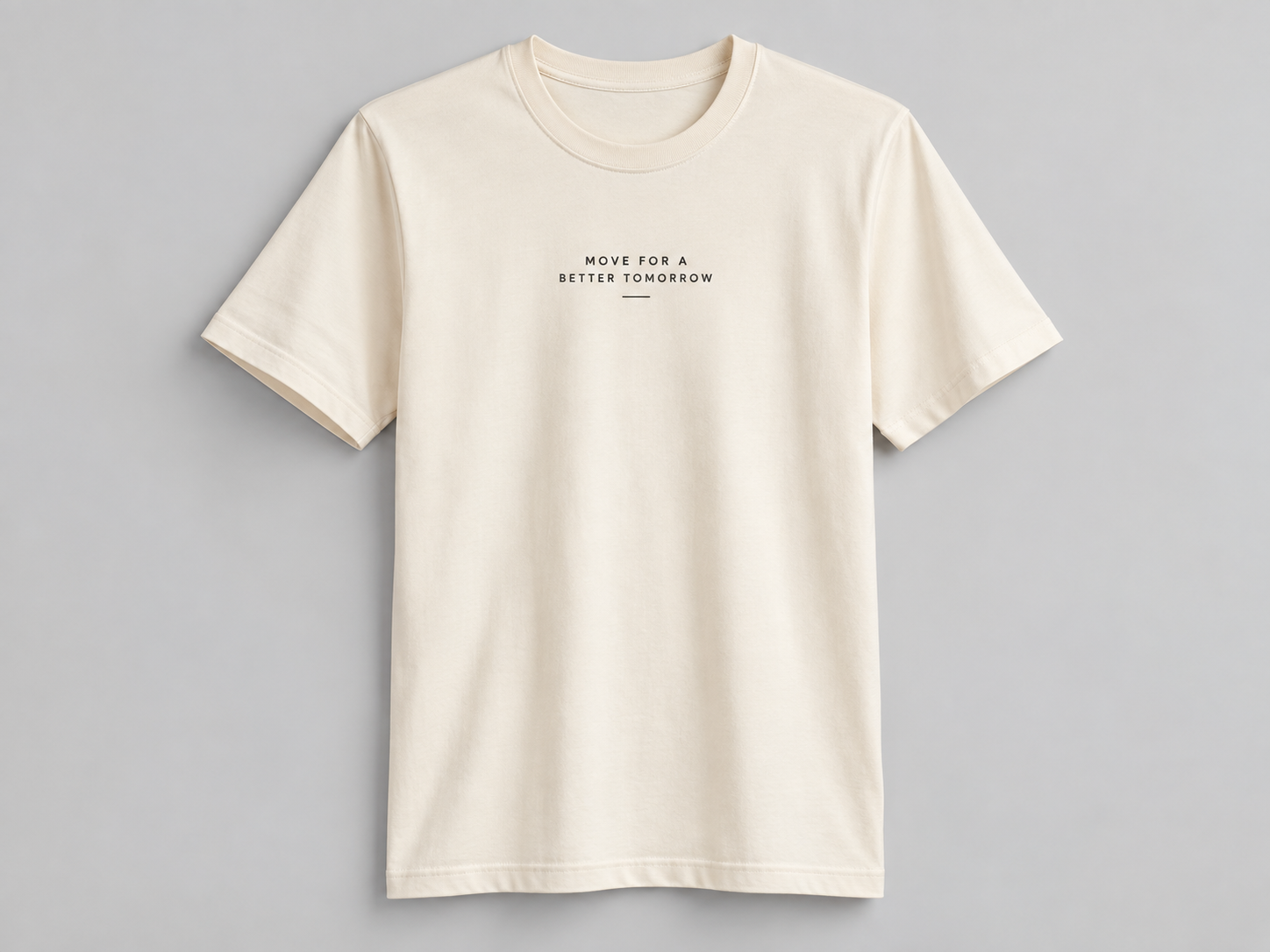
Garment Logo
A sports T-shirt logo should be reviewed as part of the garment construction rather than added at the end. Fabric stretch, surface texture, heat sensitivity, logo size, placement and color can affect the suitable application method. Leadshow has confirmed heat-transfer and heat-press equipment for selected logo and graphic work.
- Provide: vector artwork or the brand’s approved production file.
- Confirm: dimensions, location, color reference and application method.
- Approve: logo sample or garment sample where required.
- Avoid: assuming every decoration method is available internally without project confirmation. Final branding should be checked on the approved fabric because heat, pressure and stretch can change edge quality, color and adhesion.
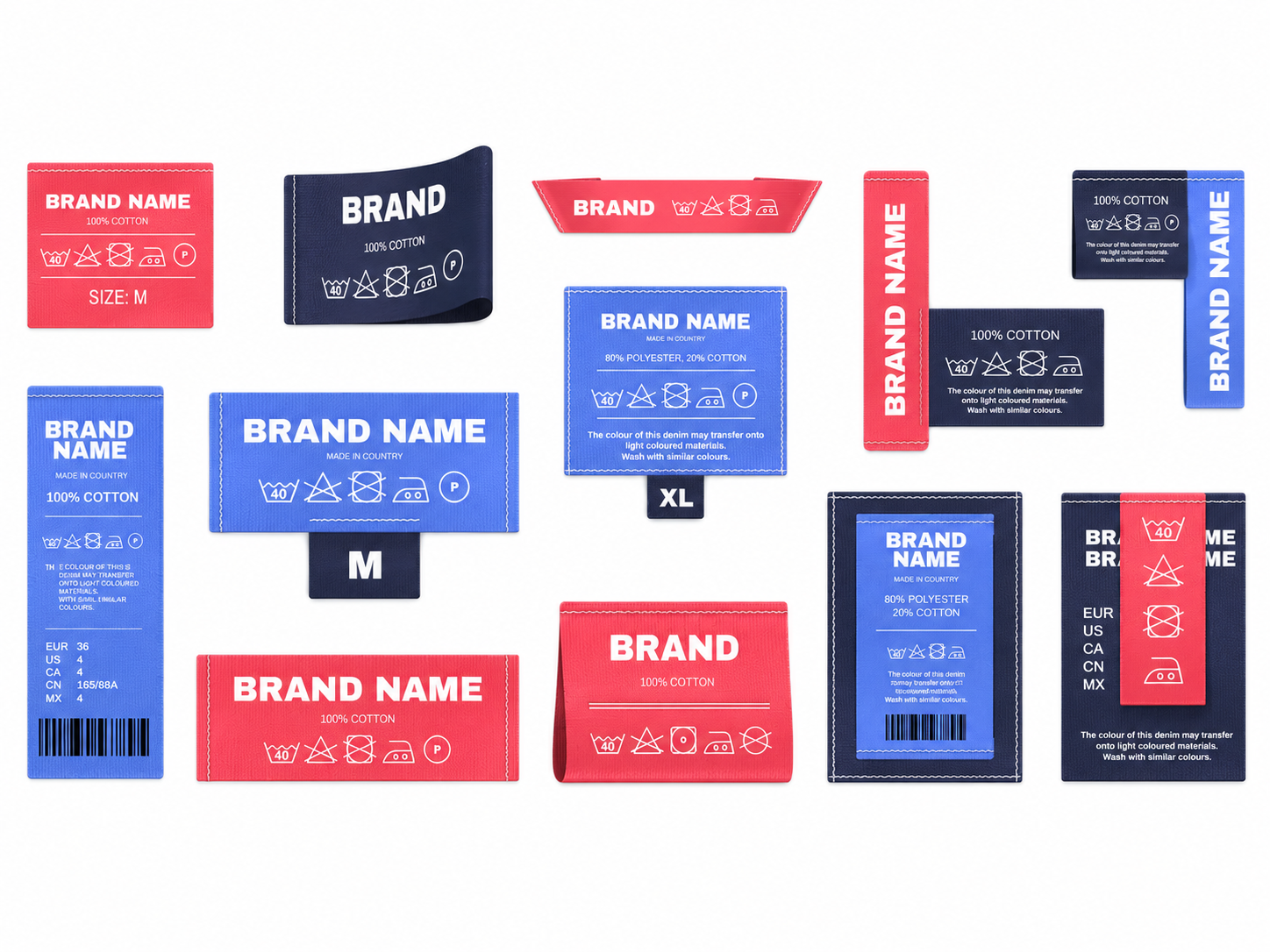
Main and Size Labels
Brand identity often continues inside the garment through the main label, size information and care content. Leadshow can coordinate custom labels and heat-transfer label applications according to the project specification. Label construction must suit the sports T-shirt fabric and wearing position, especially for lightweight or close-to-skin products.
- Provide: label artwork, wording, size matrix and placement.
- Confirm: label method, dimensions, color and attachment position.
- Approve: final production reference before bulk.
- Check: brand spelling, size designation and care information during packing-stage verification. A label file should carry a clear version so obsolete artwork is not mixed into later production or repeat orders.
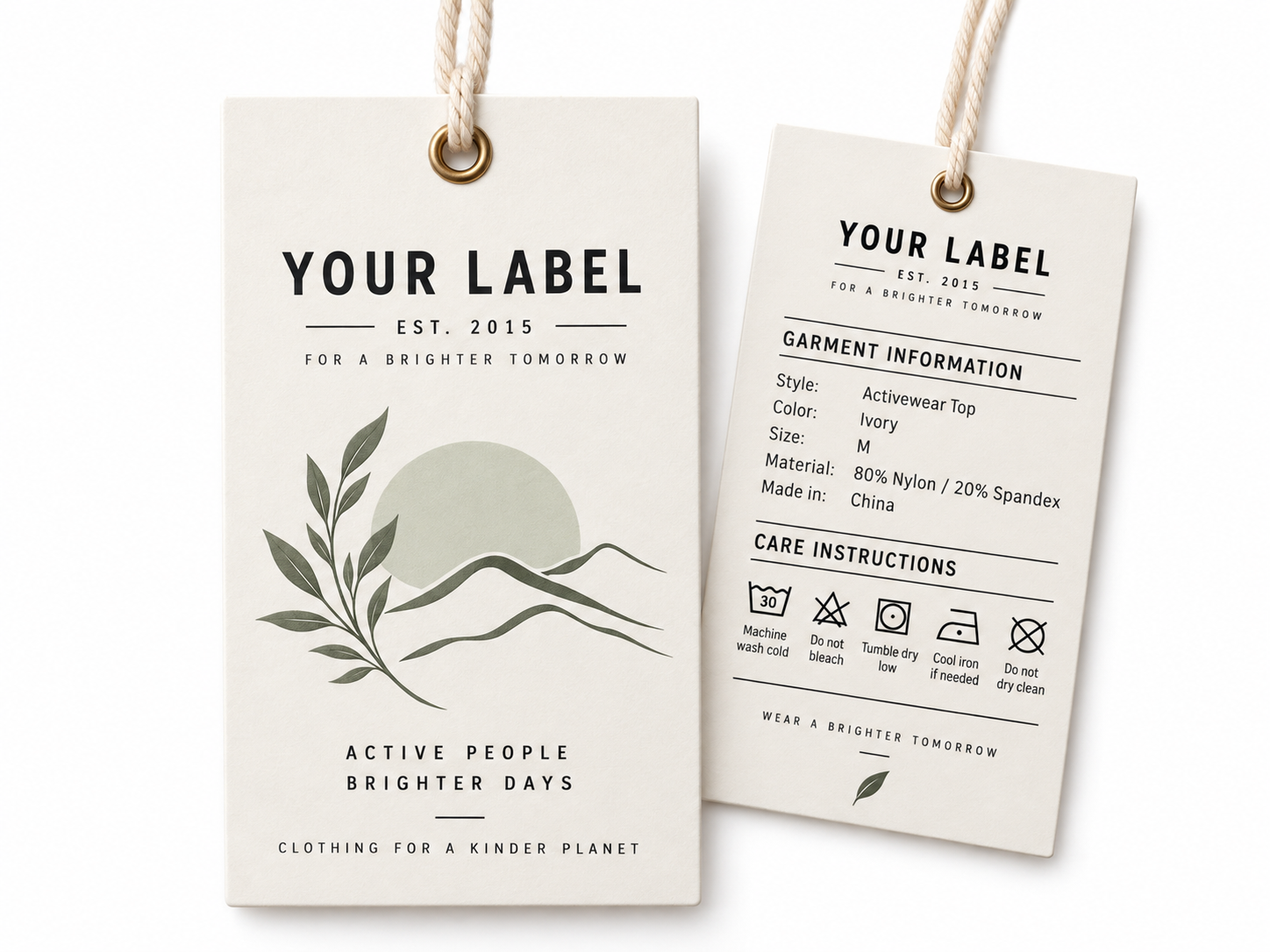
Hangtags and Identification
Hangtags and other retail identification items should follow the same version control as the garment. A change in style code, color, size naming or selling market can create pack-out errors even when the T-shirt itself is correct. Leadshow can coordinate brand hangtags and project-specific identification as part of the packing requirement.
- Provide: final artwork, style names, SKU references and attachment instructions.
- Confirm: tag version and quantity against the order matrix.
- Approve: final physical or production reference where needed.
- Check: correct tag-to-style and tag-to-size relationship before shipment preparation. Where several markets or channels use different tags, each version should be linked to the relevant SKU in the approved order file.
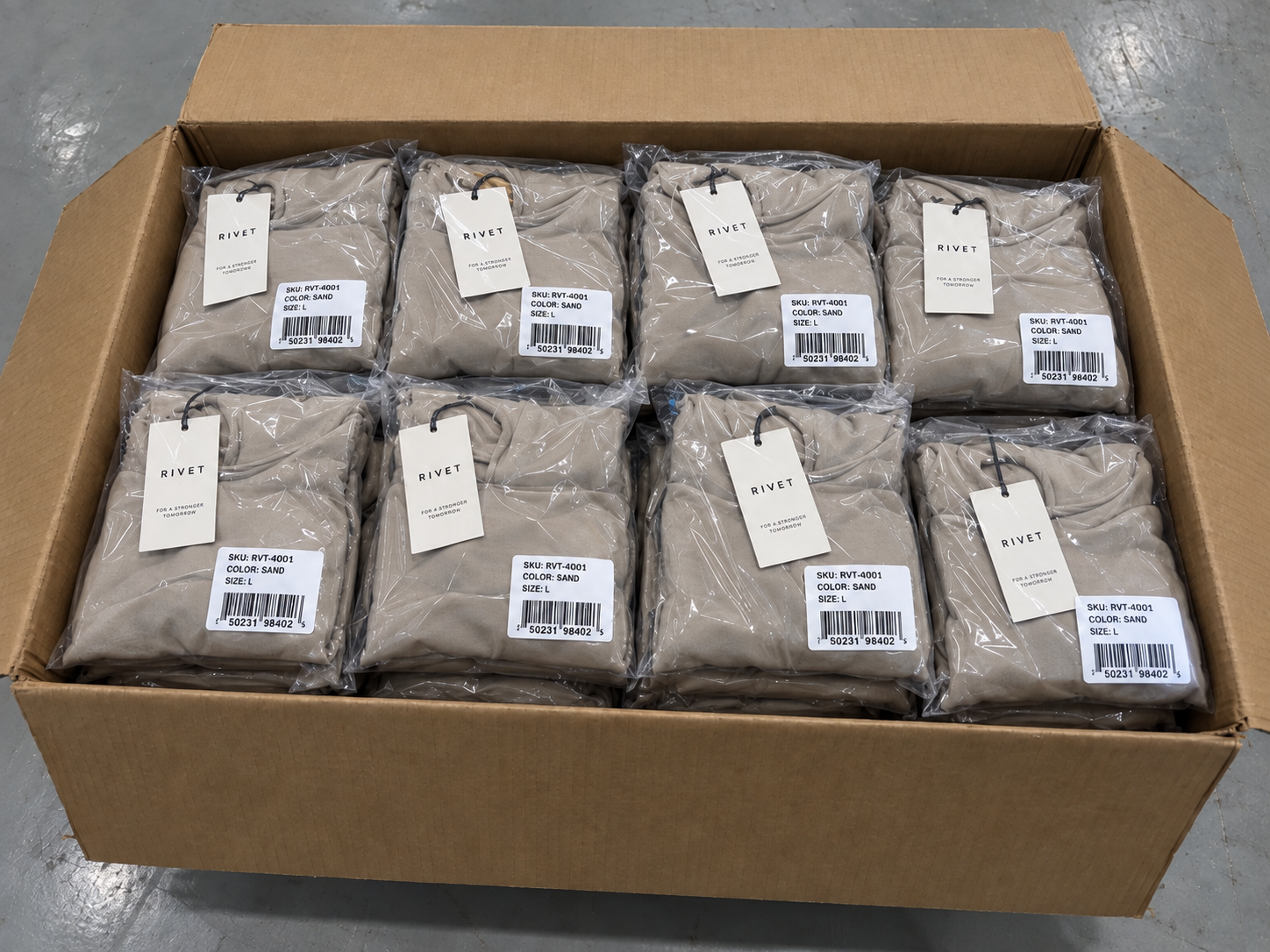
Individual and Carton Packing
Private label sports T-shirt programs often need individual folding, bagging, size identification, carton marks and an agreed carton assortment. Leadshow has confirmed folding and packing resources and a warehousing/logistics function supporting SKU sorting, labeling, carton preparation and shipment coordination.
- Provide: single-piece packing standard, carton mark, SKU data and packing ratio.
- Confirm: packaging material and supplier MOQ before production planning.
- Approve: packing reference where required.
- Boundary: no claim is made for universal marketplace, warehouse or FBA compliance without the relevant project requirement. Packing instructions should be approved before bulk packing begins because changes can affect materials, labels, carton count and completion timing.
Turn a Tech Pack Into an Executable Sports T-shirt
Clear product inputs reduce quotation gaps, sample revisions and bulk ambiguity. Leadshow can start from tech packs, measurements, patterns, reference images or physical garments, then clarify the specification required for development and production.
Start From the Most Reliable Product Input
Sports T-shirt development can begin from different levels of information. A mature brand may provide a full tech pack, measurement chart, pattern, BOM and approved material. Another project may begin with reference images or a physical garment that needs a new fit, material or brand treatment. Leadshow can review tech packs, measurement charts, patterns, reference images and physical samples, but each input has a different level of certainty.
A tech pack gives the clearest route when it identifies product construction, measurements, materials, trims, artwork, labels, packing and approval requirements. A reference garment can provide useful information about silhouette and construction, yet it does not automatically reveal the original material specification, grade rule, tolerance or production method. Reference products also need to be used with proper intellectual-property authorization; a third-party product should not be treated as permission for unauthorized copying.
For an efficient first review, the most useful project data is: product category, target market, design or reference, quantity per design and color, size range, fabric requirement, trim requirement, logo method, label requirement, packaging requirement, testing requirement and target date. Missing information can be identified during review rather than hidden behind a premature fixed quote. The aim is to convert the available input into a controlled development brief that can support pattern, material and sample decisions.
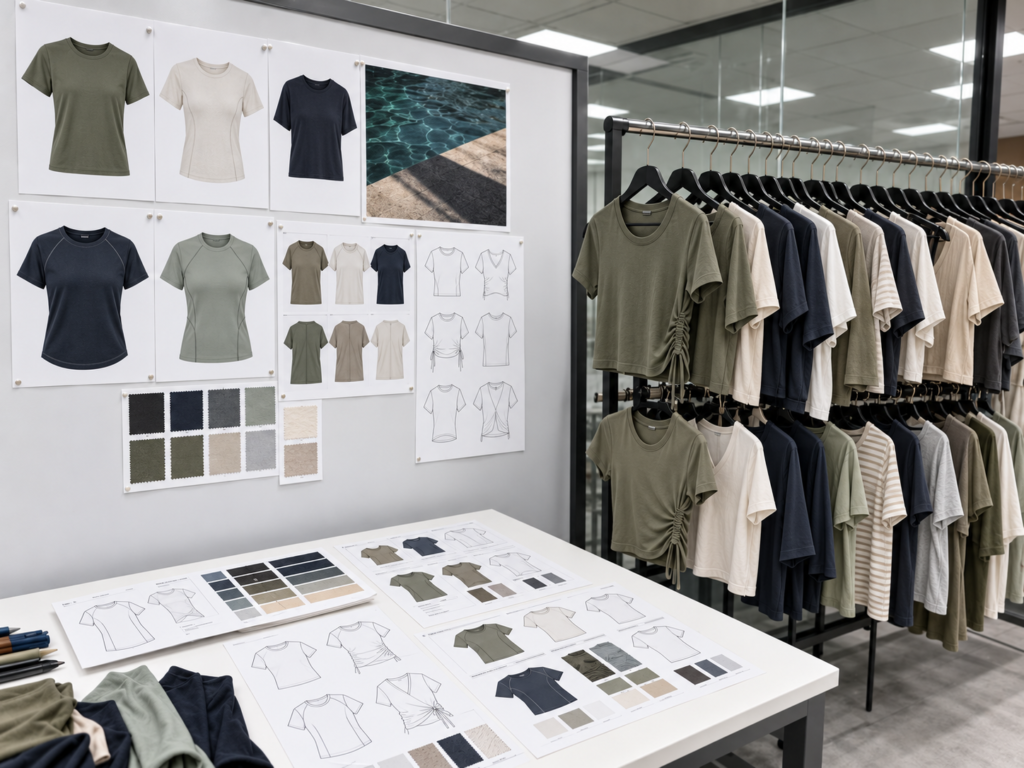
Review Manufacturability Before the First Sample
The first sample becomes more useful when the product team and manufacturing team have already clarified the main risk points. For sports T-shirts, those questions can include neckline construction, shoulder type, sleeve type, fit direction, hem shape, paneling, fabric stretch, shrinkage, logo compatibility and expected movement. If the program includes special materials or functional language, the required evidence and testing route should also be discussed early.
Leadshow’s approximately 28-person R&D engineering function supports technical review, pattern development, fit adjustment, sample coordination, material and workmanship evaluation and production conversion. The exact scope depends on the project. A complete ODM design service, fixed number of revisions or universal free tech-pack development is not assumed. Manufacturing-focused development starts from the brand’s product direction and turns confirmed decisions into sample and production references.
Before production release, the latest approved sample, tech pack, measurement chart, material approval, color approval, logo approval, label approval, packaging approval and order matrix should identify the final bulk version. If the sample used substitute material or temporary branding, the differences need to be recorded before production. Version control matters because an approved base-size sample, a color sample or a photo approval may each cover only part of the final specification.
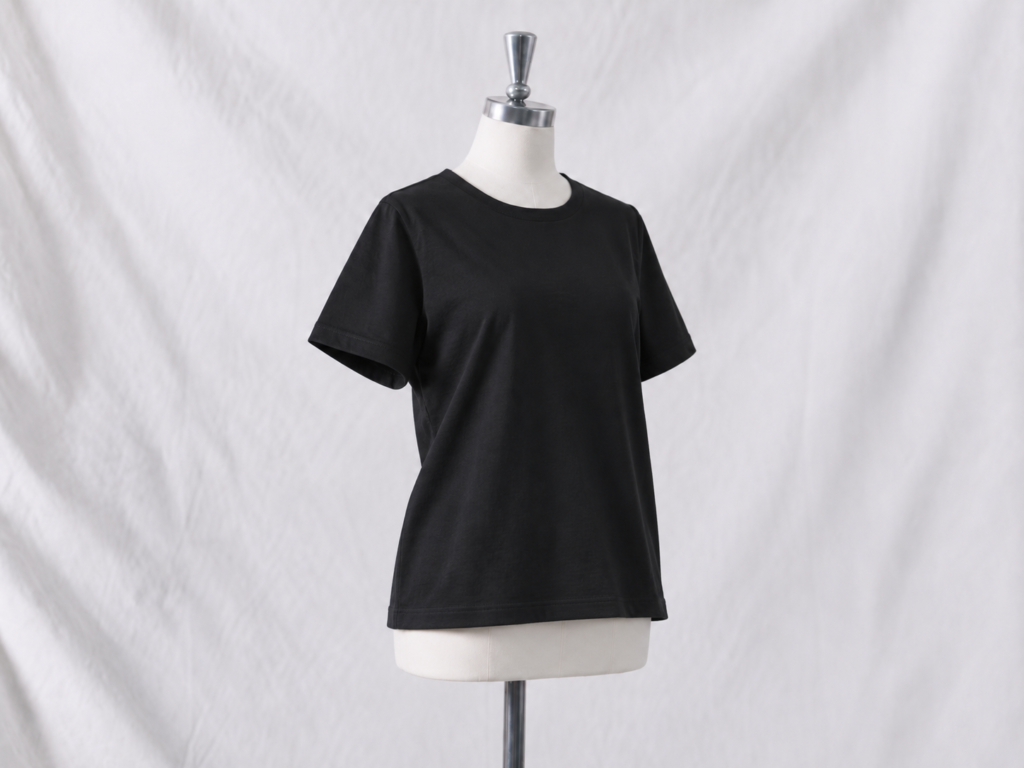
Control Sports T-shirt Sampling With Clear Approval Stages
A sample is useful only when its approval scope is clear. Leadshow can coordinate development samples, fit samples, logo or color references, size sets and PP samples where needed, with timing confirmed by project conditions.
Requirement Review
Sampling starts with the information needed to define what is being tested. The review can cover construction, fit, measurement chart, fabric, trims, branding, size range, quantity, target market, testing and expected timing. Missing items are listed before work is treated as fully released.
- Output: clarified development scope.
- Timing: begins after the applicable requirements are complete.
- Key risk controlled: making a sample before the intended product is defined.
- Note: a reference image alone may support discussion but does not automatically provide every technical specification. A review record should identify which items are confirmed, provisional or still open before sample making starts.
Material Direction
Material confirmation can include composition, knit construction, GSM, stretch, recovery, handfeel, color, shrinkage and branding compatibility. When a substitute material is used for early development, its status should be recorded so it is not mistaken for the bulk material.
- Output: approved or conditionally approved material direction.
- Timing: depends on material availability and supplier review.
- Key risk controlled: approving fit or performance against a material that will not be used in bulk.
- Note: functional claims require relevant material evidence and testing where required. Material status should also distinguish a development substitute from the intended bulk fabric so approvals are not misunderstood later.
Pattern and First Sample
Pattern work translates the intended fit, measurements, shoulder construction, sleeve shape, neckline, body length and panel design into a sewable garment. A development or proto sample can then reveal issues that are difficult to judge from a drawing alone.
- Output: first physical garment and measurement review.
- Timing: confirmed by product complexity, pattern scope, material and workmanship.
- Key risk controlled: discovering structural problems only after the order is released.
- Note: first-sample completion does not mean final fit, all sizes or bulk materials are approved. Any provisional construction or substitute trim should be listed on the sample review before the next version is made.
Fit and Construction Review
The sample is reviewed against the intended silhouette, measurements, movement, workmanship and branding. Fit comments should identify the location and requested correction instead of relying on general phrases. Sports T-shirts may be reviewed during arm raise, rotation or other relevant movement.
- Output: fit comments, measurement comments and construction actions.
- Timing: includes review and brand approval time, not only factory sewing time.
- Key risk controlled: repeating the same unclear fit issue across revisions.
- Note: ‘perfect fit’ is not treated as a universal measurable claim. Approval should state the accepted silhouette, measurements and any remaining comments so the production reference is clear.
Revision Control
Revisions should be linked to a version, comment sheet and approval scope. A change to fabric, neckline, sleeve, logo, size or packaging can affect more than one part of the product, so revisions are evaluated according to change scope.
- Output: updated sample or approved-with-comments status.
- Timing: depends on the number and depth of requested changes.
- Key risk controlled: sample room, production team and brand working from different instructions.
- Note: unlimited free revisions and one-round approval are not standard promises. Each revision should have a reason, version number and decision path so the development process remains controlled and auditable.
Production Approval
The final development stage may include a fit sample, logo sample, color sample, size set or PP sample according to project needs. Production release should identify which physical sample and which files are the approved bulk reference.
- Output: production reference and remaining open-item list.
- Timing: confirmed after the required approvals and order conditions are completed.
- Key risk controlled: moving into bulk with partial approvals.
- Note: sample approval does not by itself replace PO, quantity, price, material, packing, payment or production authorization. Bulk release should occur only after all applicable commercial and technical conditions are aligned.
Keep Approved Sports T-shirt Details Aligned in Bulk
Bulk consistency comes from approved references, version control and checks at relevant production stages. Leadshow uses project-approved specifications, samples, measurements, branding and packing requirements as the basis for applicable quality review.
Approved Reference
Bulk Control
Release Check
Risk Reduced
Final Tech Pack
Latest construction and workmanship instructions
Correct version issued
Conflicting production instructions
Measurement Chart
POM method, base size, grade rule and tolerance
Production chart approved
Size drift across bulk
Approved Fabric
Composition, construction, weight, color and relevant properties
Bulk material compared with reference
Material substitution or batch mismatch
Approved Sample
Fit, balance, seam positions and visible details
Production reference identified
Sample and bulk interpretation gap
Approved Logo
Artwork, size, color, placement and application method
Production artwork locked
Wrong logo size or position
Approved Labels
Main, size, care and identification
Style and size mapping checked
Wrong label or size information
Approved Packing
Fold, bag, SKU, carton mark and packing ratio
Pack-out reference approved
Wrong SKU or carton execution
Manufacture Sports T-shirts From Approved Inputs to Packed Goods
Production accuracy depends on the handoff from approved files into materials, cutting, sewing, branding, finishing and packing. Leadshow combines confirmed equipment and cross-functional coordination while keeping process selection tied to each product specification.
Prepare Material and Cutting Against the Approved Version
Bulk production should start from material readiness and the latest approved product files rather than from an old sample or preliminary estimate. Sports T-shirt preparation can include incoming material review, color and batch separation, fabric spreading, marker planning and cutting according to the approved pattern. Leadshow’s confirmed manufacturing resources include 5 automatic spreading machines, 3 automated computer cutting machines, flexible cutting equipment and fabric pre-treatment equipment for selected materials.
Automated equipment supports repeatability, but material characteristics still matter. Stretch, roll edge, surface friction, print direction, width and order quantity can change spreading and cutting methods. High-stretch or lightweight materials may need adjusted handling instead of being forced into a standard automated route. Cutting control should therefore connect fabric behavior, grain or stretch direction, marker layout and size ratio to the actual order matrix.
After cutting, pieces need to remain organized by style, color and size before sewing. Leadshow can support multi-SKU production, yet no claim is made for a universal RFID, MES or fully automated cut-part tracking system. The reliable control is the approved production file, accurate separation and project-specific checking. A cutting stage is successful when the next process receives the correct pieces in the correct version, not when the factory simply demonstrates a large machine.
Sew, Brand, Finish and Pack the Approved Product
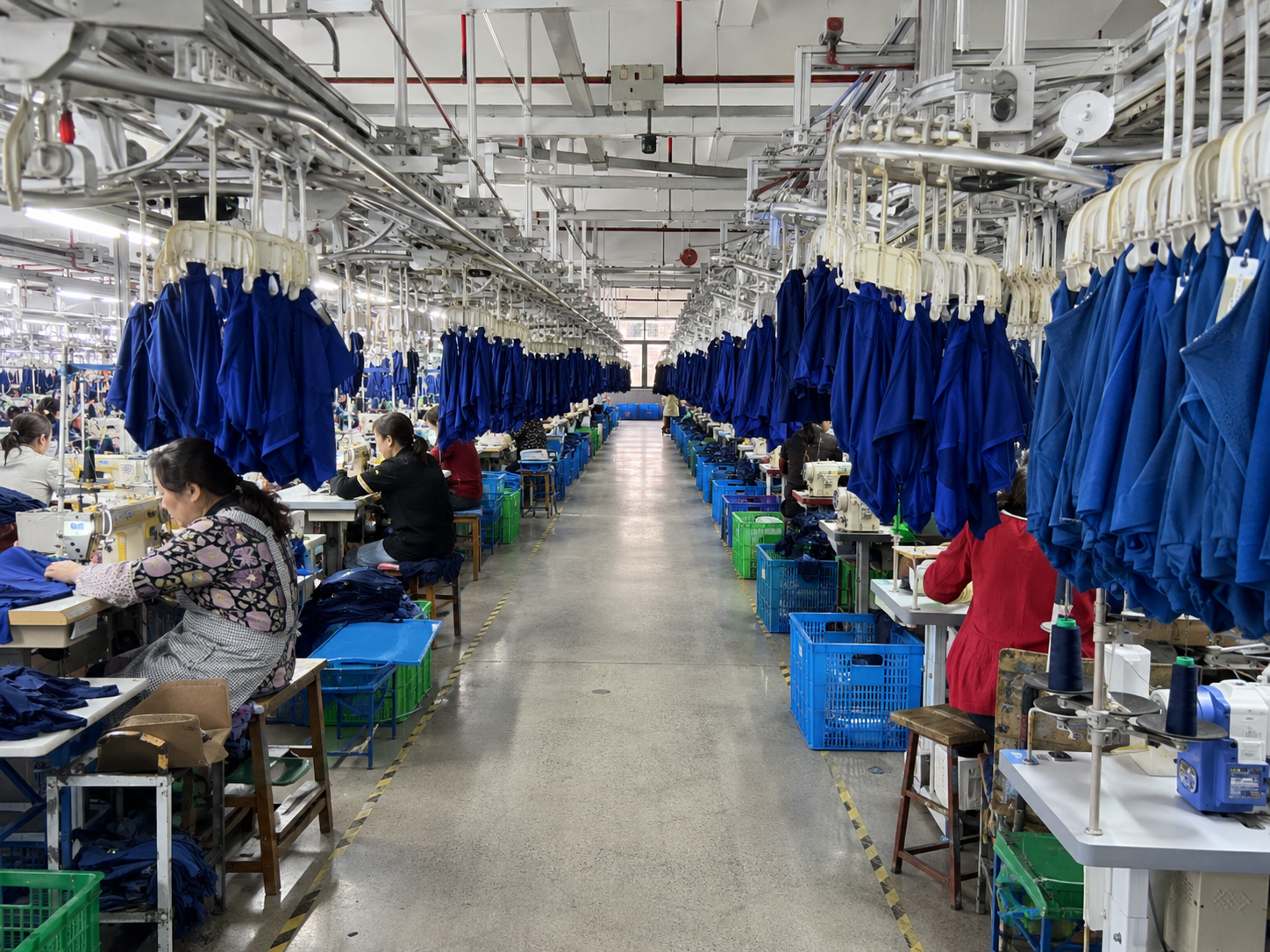
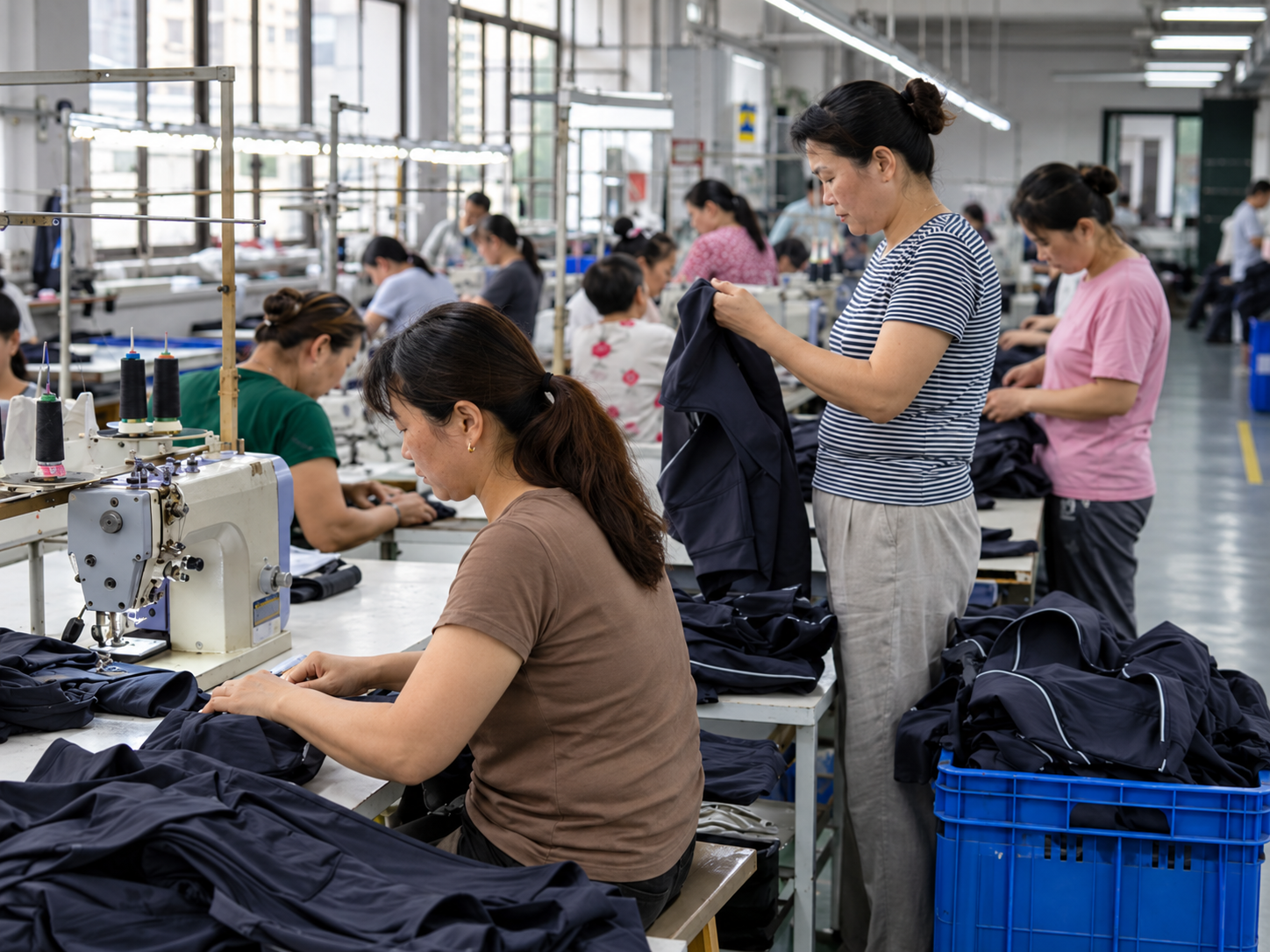
Sports T-shirt sewing may combine overlock, lockstitch, double-needle and, where appropriate, four-needle six-thread flatlock depending on the product construction. Leadshow’s equipment base includes 80 computerized direct-drive lockstitch machines, 25 four-thread overlock machines, 40 five-thread overlock machines, 15 double-needle machines and 35 four-needle six-thread flatlock machines. Those are company-wide confirmed resources, not dedicated capacity reserved for one Sports T-shirt program.
Branding follows the approved artwork and material compatibility. Confirmed heat-transfer and heat-press equipment can support selected logos, graphics and internal label applications. Special processes such as laser perforation can be evaluated for suitable fabrics and constructions, while the existence of equipment does not prove a fixed ventilation benefit. Sewing and branding checkpoints should focus on seam position, stitch appearance, neckline stability, logo size, placement, color and visible damage to the fabric.
Finishing can include pressing, appearance review, applicable needle detection, folding, labeling, bagging and carton preparation. Leadshow has 20 steam-ironing workstations, 6 automatic needle-detection machines and 4 automatic folding and packing systems in the confirmed equipment base. Complex products or special packing may still require different handling. Production ends only when the approved product and packing requirements have been completed, inspected as specified and prepared for shipment under the agreed order conditions.
Verified Manufacturing Data Behind Leadshow Sports T-shirt Projects
Company scale should answer sourcing questions, not replace product evidence. Leadshow’s confirmed figures describe experience, facilities, people, equipment and combined capacity, while every sports T-shirt program still requires a project-specific capacity and scheduling review.
15 Years Experience
Leadshow has 15 years of apparel industry experience. The figure is used as an experience statement, not as a basis for inventing a company founding year. For sports T-shirt projects, experience is relevant when a team must interpret product specifications, compare sample revisions, discuss material and fit risks, and translate an approved garment into bulk requirements. The value comes from accumulated development and manufacturing work rather than from the number alone. Sports T-shirt teams can use that experience alongside current samples, specifications and factory evidence when judging project fit.
3 Manufacturing Bases
Leadshow operates three modern manufacturing bases as part of its combined manufacturing system. The confirmed fact supports scalable apparel production and multi-project capacity planning, but the three locations are not described as three overseas factories or as three identical sites. For a sports T-shirt program, manufacturing-base scale matters when repeat orders, multiple SKUs or order growth need to move beyond sample-room capability into scheduled bulk production. Available space and production scheduling are still reviewed against the actual style, material and order plan before capacity is committed.
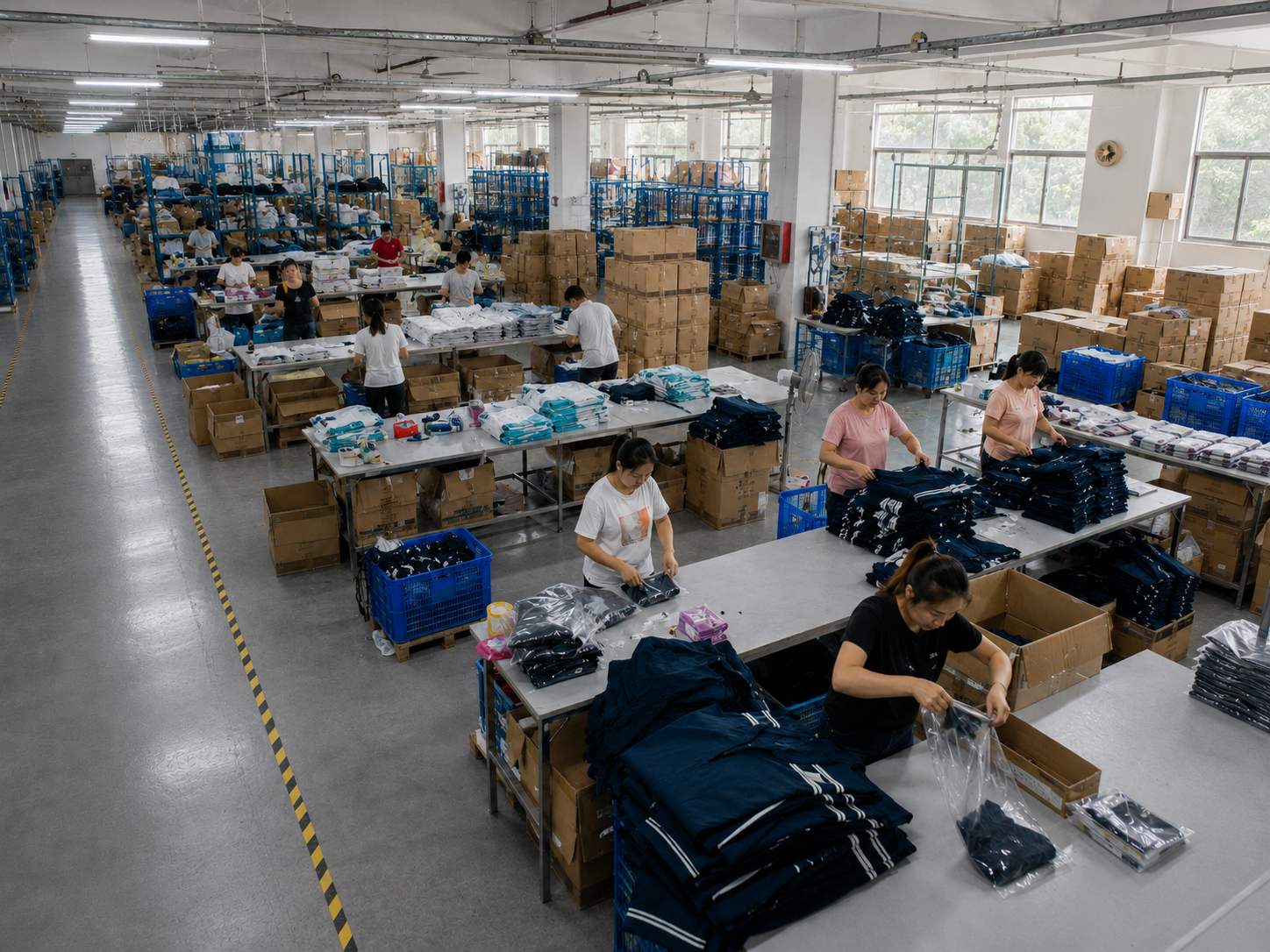
20,000+ Square Meters
The three manufacturing bases provide more than 20,000 square meters of combined factory space. The number is an overall facilities figure, not the size of one factory or one sports T-shirt workshop. Combined space supports the broader functions needed for apparel production, including sampling, fabric preparation, cutting, sewing, specialized processes, finishing, packing and warehousing. Procurement teams should therefore read the figure as manufacturing infrastructure, not as a direct promise of capacity for a specific style.
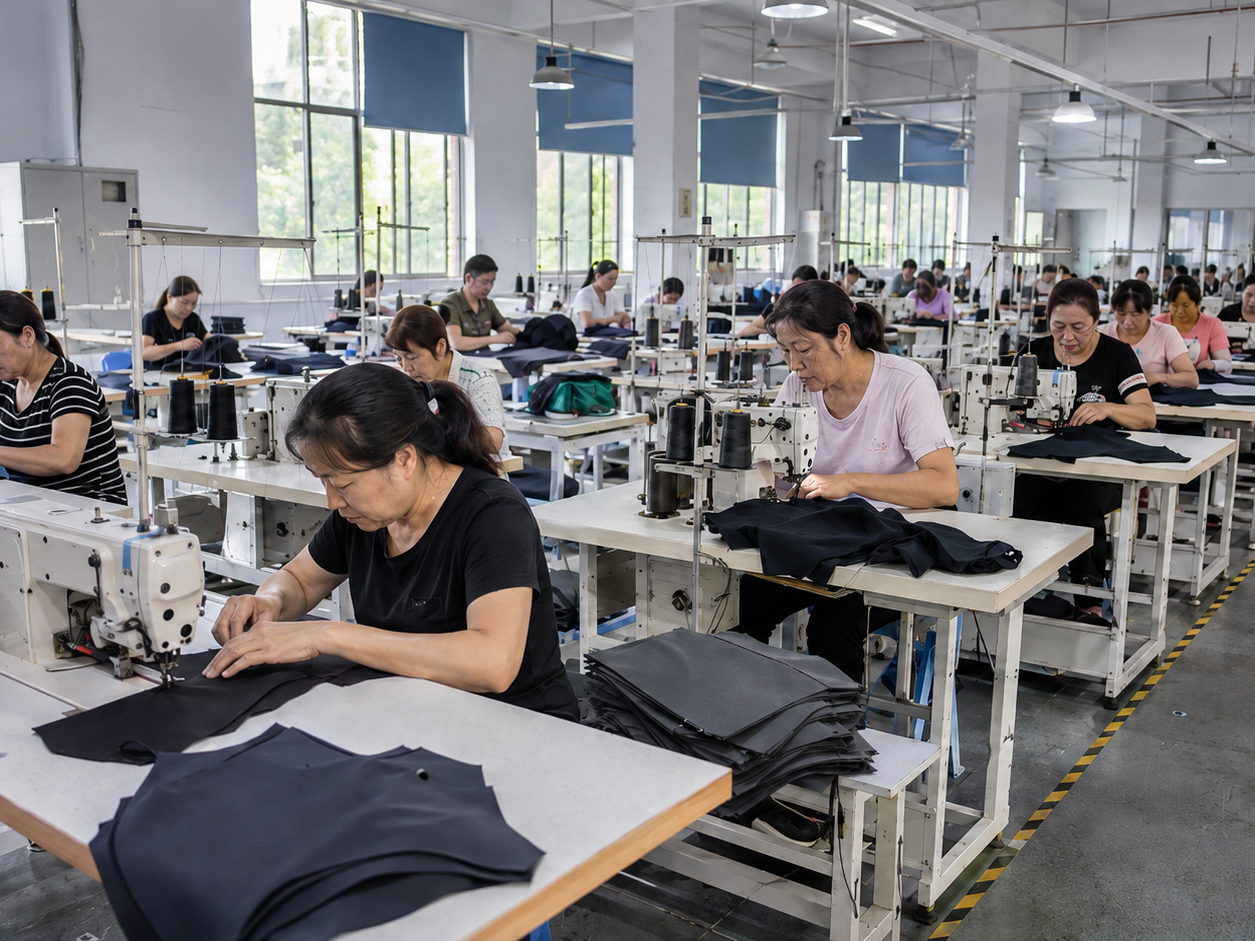
1,500+ Team Members
Leadshow has more than 1,500 team members across business communication, product development, manufacturing, quality, warehousing, logistics and support functions. Team size is dynamic and should not be interpreted as 1,500 sewing operators or 1,500 engineers. Sports T-shirt programs benefit from cross-functional coordination because the final result depends on more than sewing: tech-pack clarification, pattern and fit, material, sample comments, production, quality, labels, packing and shipment preparation all need aligned information.
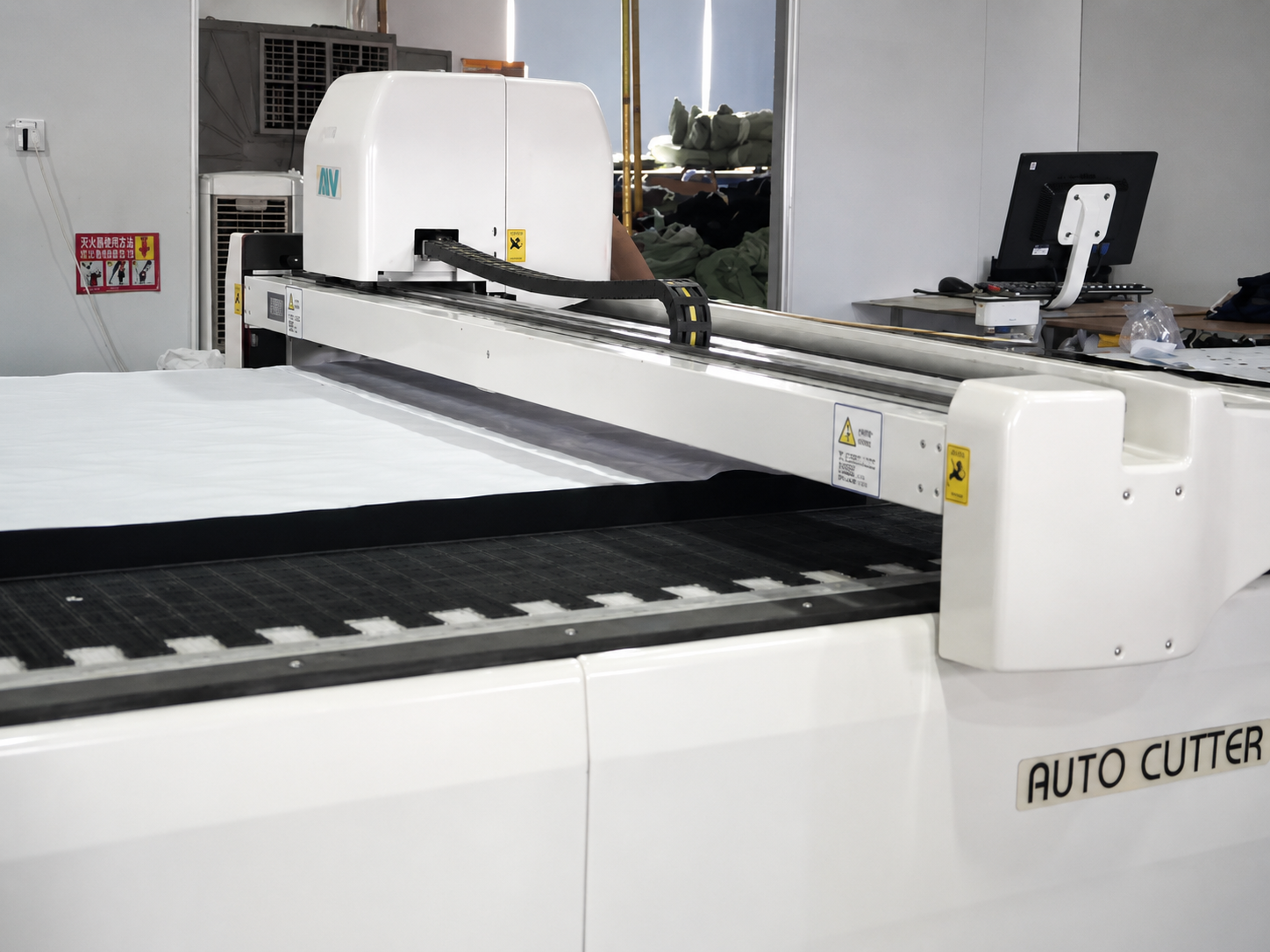
304 Confirmed Machines
Leadshow has 304 confirmed production and finishing machines, with the actual equipment total higher where some categories have not been given fixed quantities. Confirmed resources cover fabric preparation, automated and flexible cutting, lockstitch, overlock, double-needle sewing, four-needle six-thread flatlock, bonding, seam taping, laser perforation, heat transfer, pressing, needle detection and folding or packing. Equipment availability supports manufacturing choices, while suitability still depends on the specific sports T-shirt construction. The equipment count is a company-wide manufacturing fact and should not be interpreted as dedicated machinery reserved for one program, colorway or order.
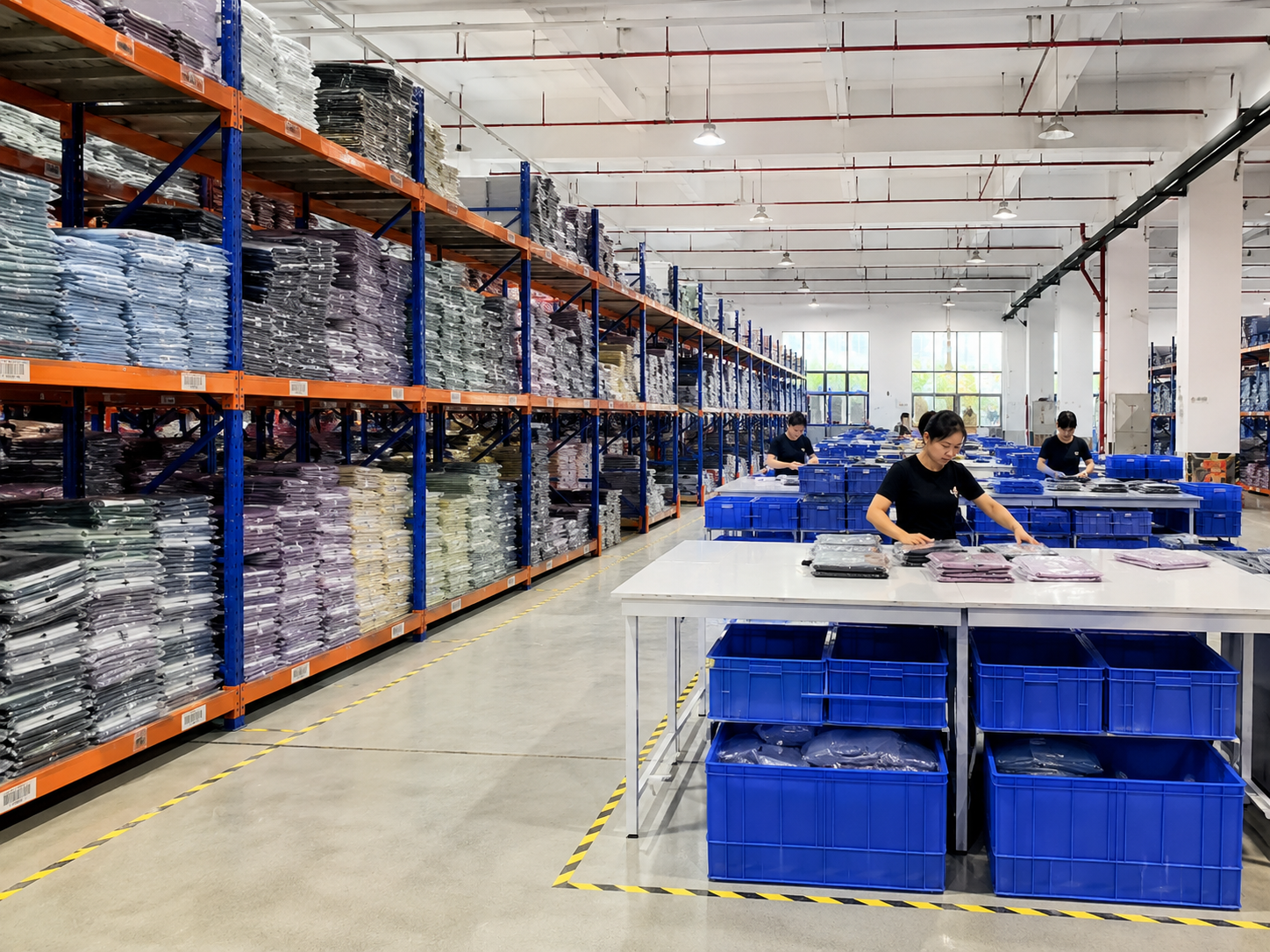
Up to Approx. 120,000
The combined monthly capacity of Leadshow’s three manufacturing bases can reach up to approximately 120,000 finished garments, subject to style complexity, materials, workmanship, order mix, quality requirements and current production scheduling. The figure is not a dedicated Sports T-shirt capacity and is not guaranteed for every month or every program. Its value is to demonstrate a manufacturing base capable of supporting growth beyond sampling when the project specification and production plan are confirmed.
Verify Sports T-shirt Manufacturing Through Real Production Evidence
Factory credibility is strongest when each capability is paired with real product, process and inspection evidence. Leadshow’s manufacturing story should follow the sports T-shirt from development and material preparation through sewing, quality and packing.
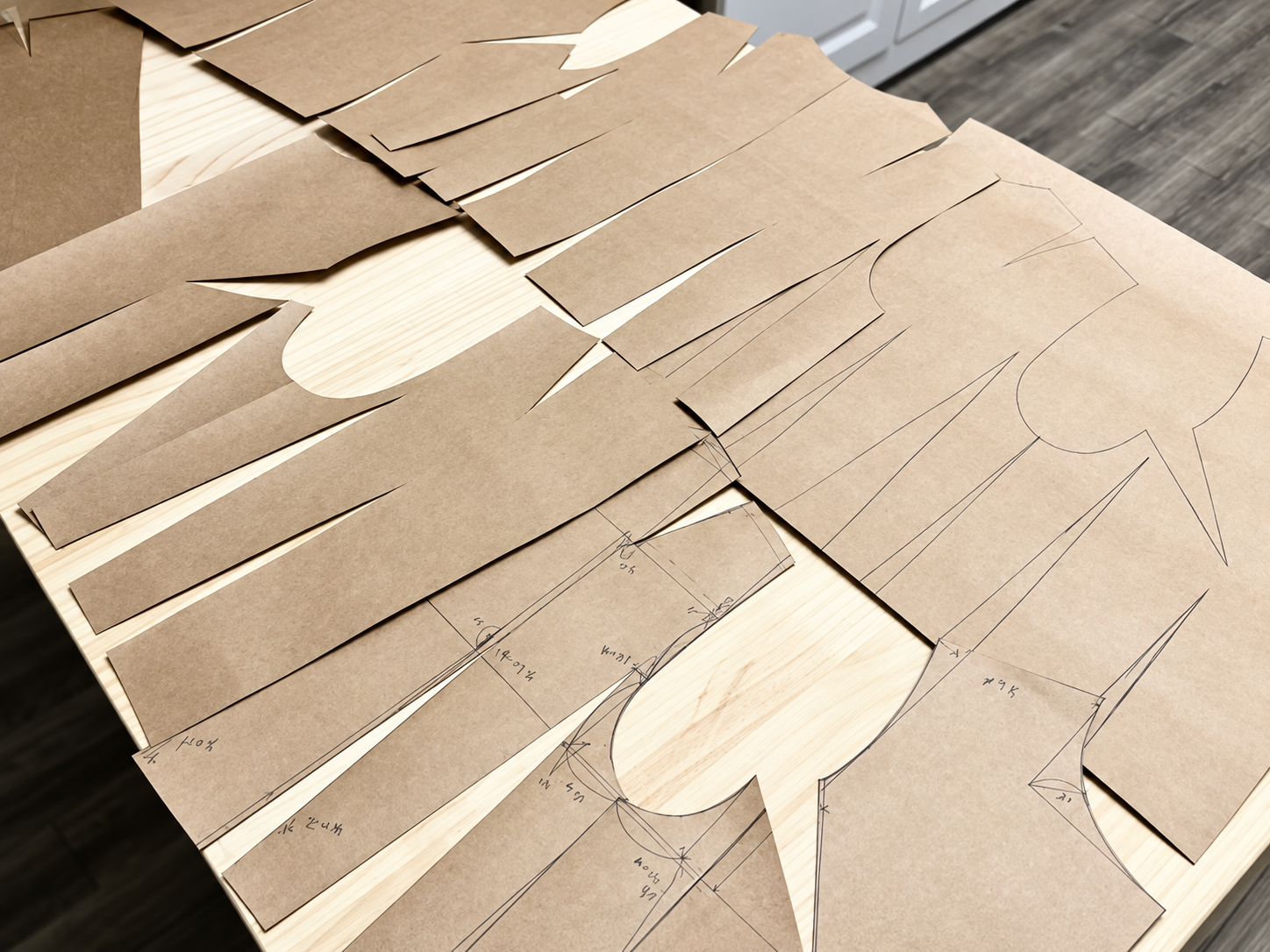
R&D and Sampling
An independent R&D and sampling workshop supports technical review, pattern preparation, sample making, fit adjustment and production conversion. For a Sports T-shirt project, imagery should show real pattern work, sample garments, measurement review or development activity rather than generic design sketches. The evidence matters because sportswear sourcing teams need to see how specifications move from files into a physical sample before any bulk claim is meaningful. Sample scope remains linked to product complexity and approval requirements.
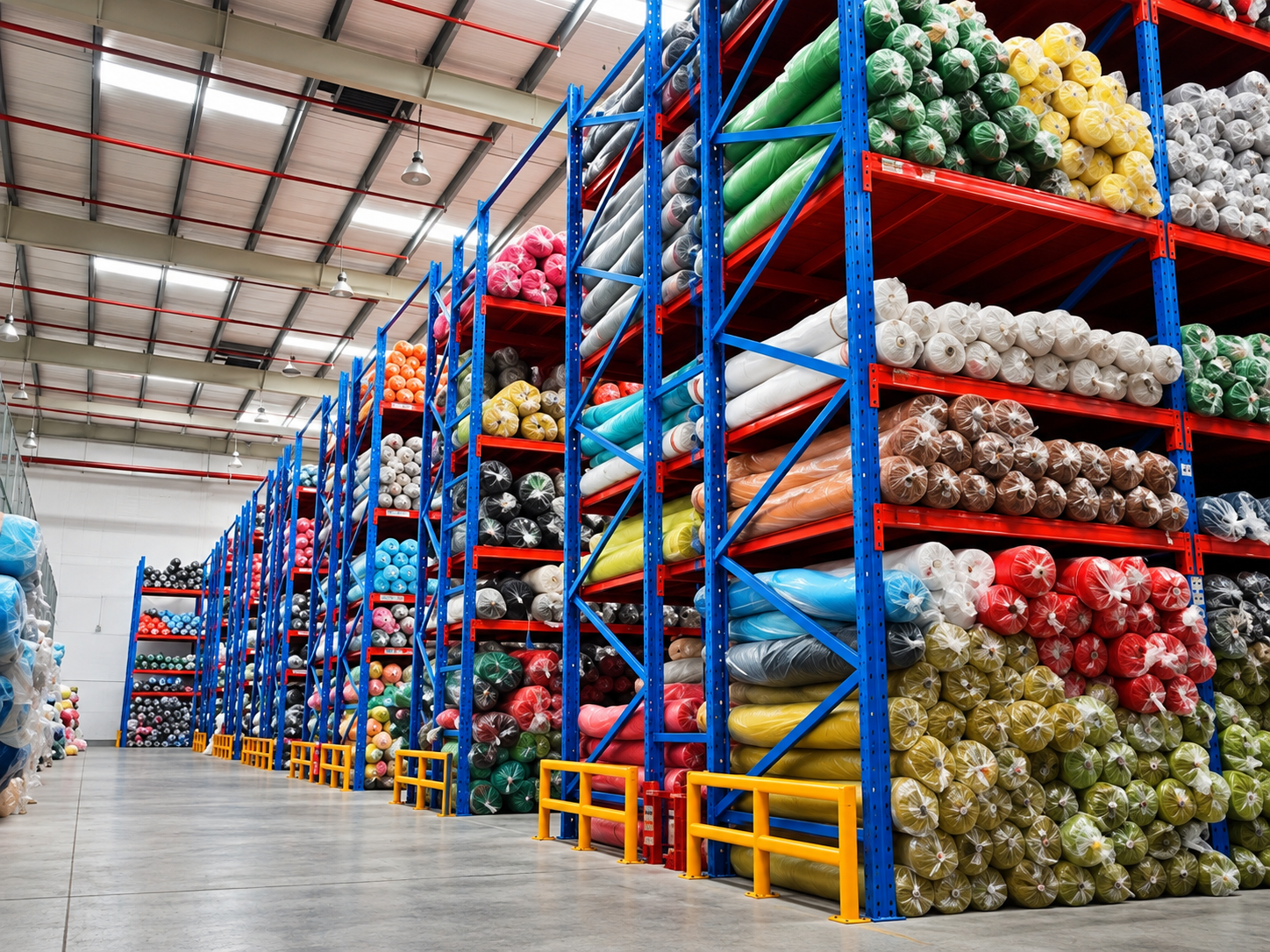
Fabric Preparation
Fabric preparation evidence should show the real handling that happens before cutting, such as spreading, batch organization or project-specific pre-treatment where applicable. Leadshow has confirmed automatic spreading and selected fabric preparation equipment, but not every fabric follows the same automated route. Sports T-shirt materials can react differently according to stretch, weight and surface. Real manufacturing evidence should therefore connect the material to the preparation method rather than using machinery as a decorative factory image.

Cutting
Leadshow’s cutting resources include automated computer cutting machines plus flexible cutting equipment. Sports T-shirt cutting evidence should show approved patterns, organized size runs and material handling rather than a generic machine-only photograph. Cutting accuracy depends on the marker, fabric behavior, stretch direction and approved pattern. Images or short video can help a sourcing team verify that Leadshow has real cutting capability while written content explains the operating boundary: automated cutting does not equal zero error or zero waste.
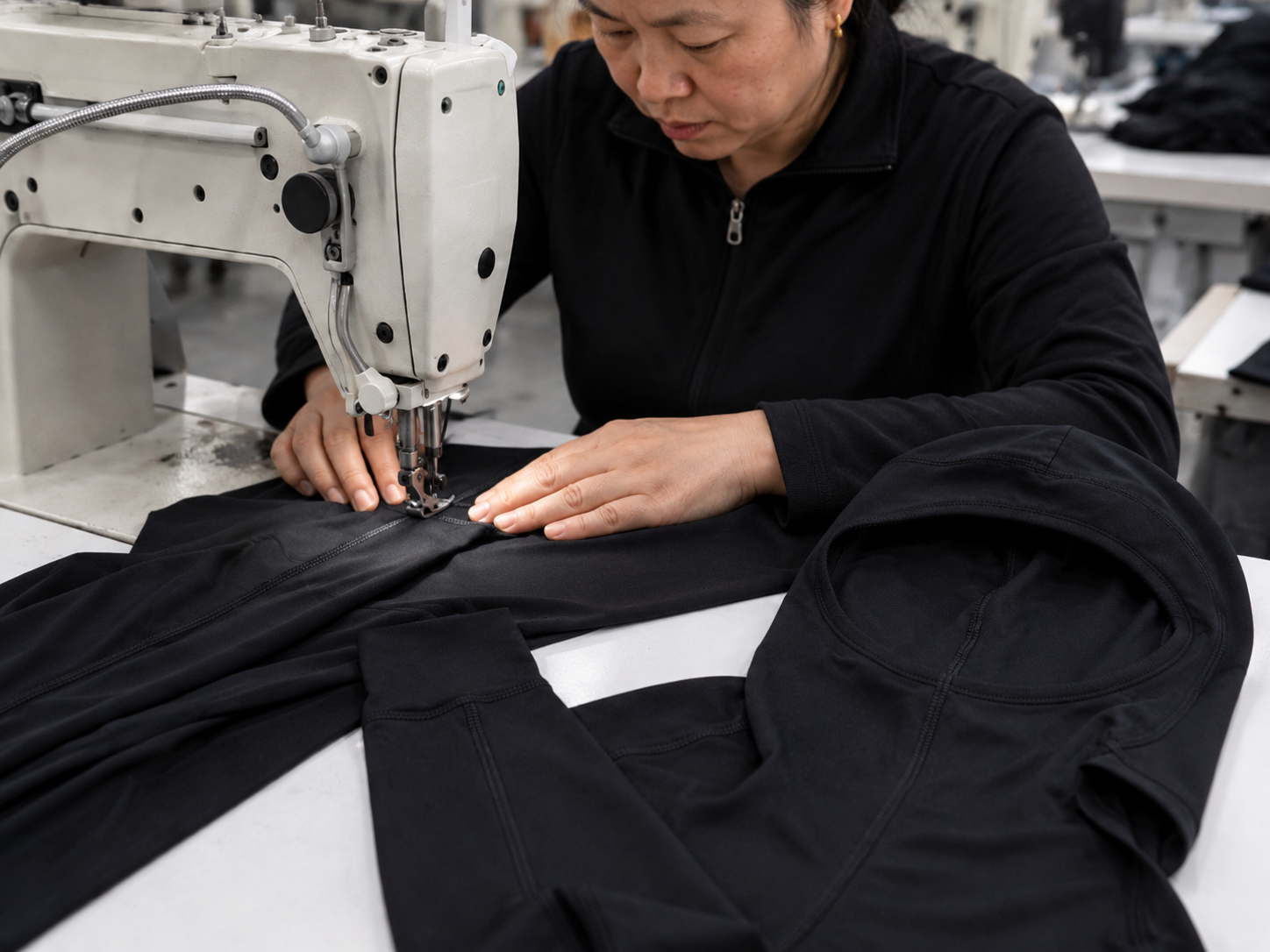
Sports T-shirt Sewing
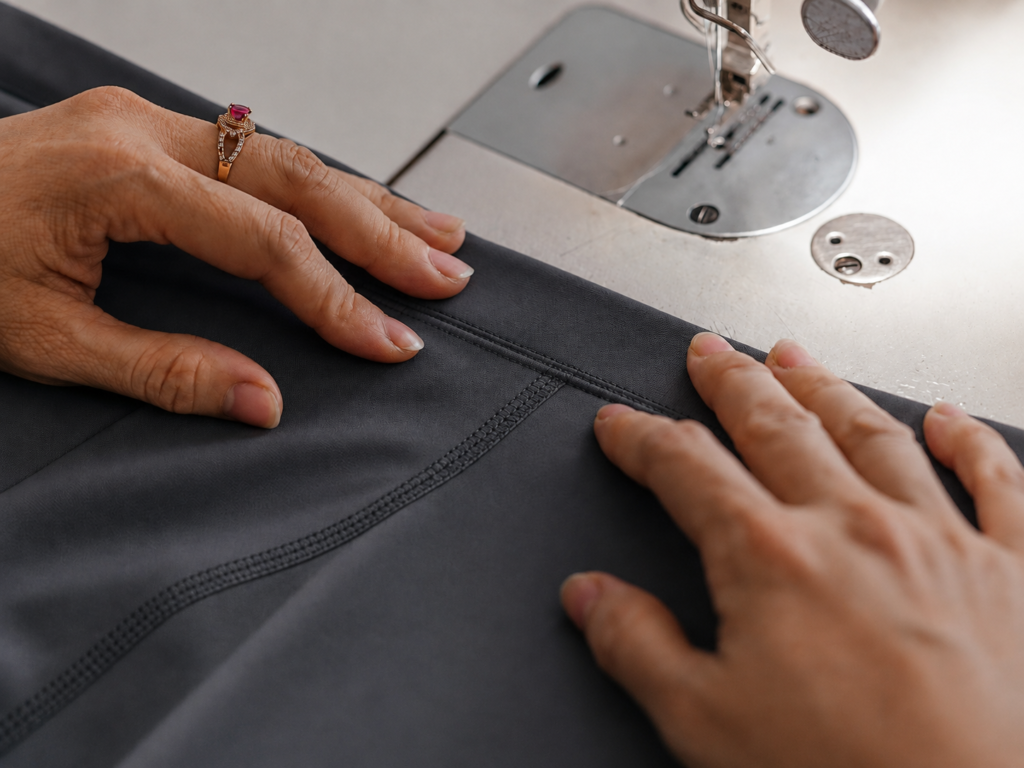
Real sewing evidence should focus on the constructions most relevant to approved Sports T-shirt samples: knit joining, neckline assembly, sleeve attachment, hem finishing, topstitching and any project-specific flatlock application. Leadshow’s confirmed equipment base includes lockstitch, overlock, double-needle and four-needle six-thread machines. A strong factory image is one where the viewer can connect the stitch and garment area to a manufacturing purpose, instead of seeing an undifferentiated row of sewing machines.
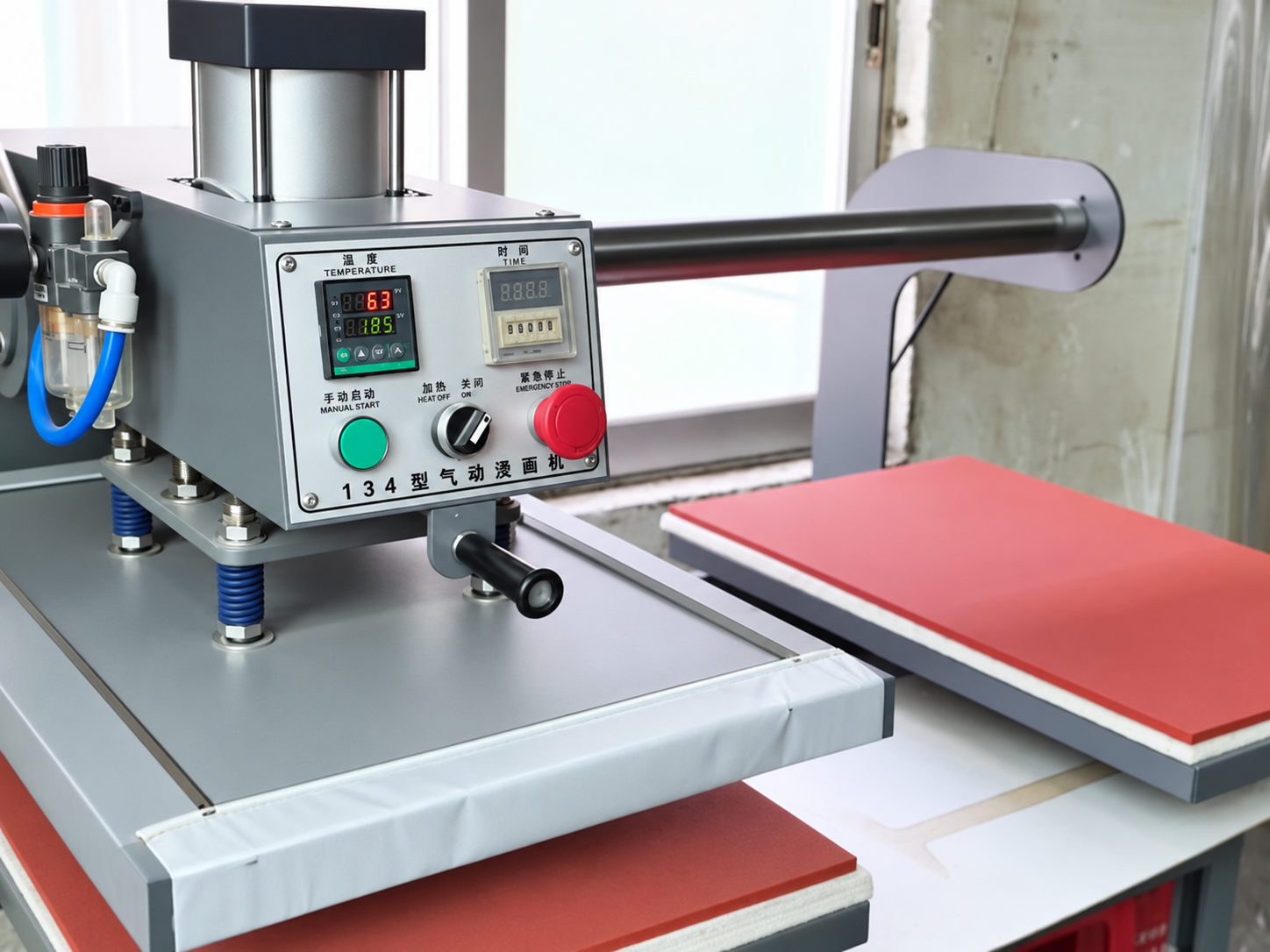
Specialized Processes
Leadshow has confirmed heat bonding, hot-air seam taping, laser perforation, heat-transfer labeling and heat-press resources. For Sports T-shirts, only processes that match the real product should be shown. A perforated panel, heat-transfer logo or selected bonded detail can demonstrate manufacturing range when the sample actually uses it. Process evidence must not be converted into unsupported performance claims: seam taping does not prove a waterproof garment, and laser perforation does not prove a fixed breathability improvement.
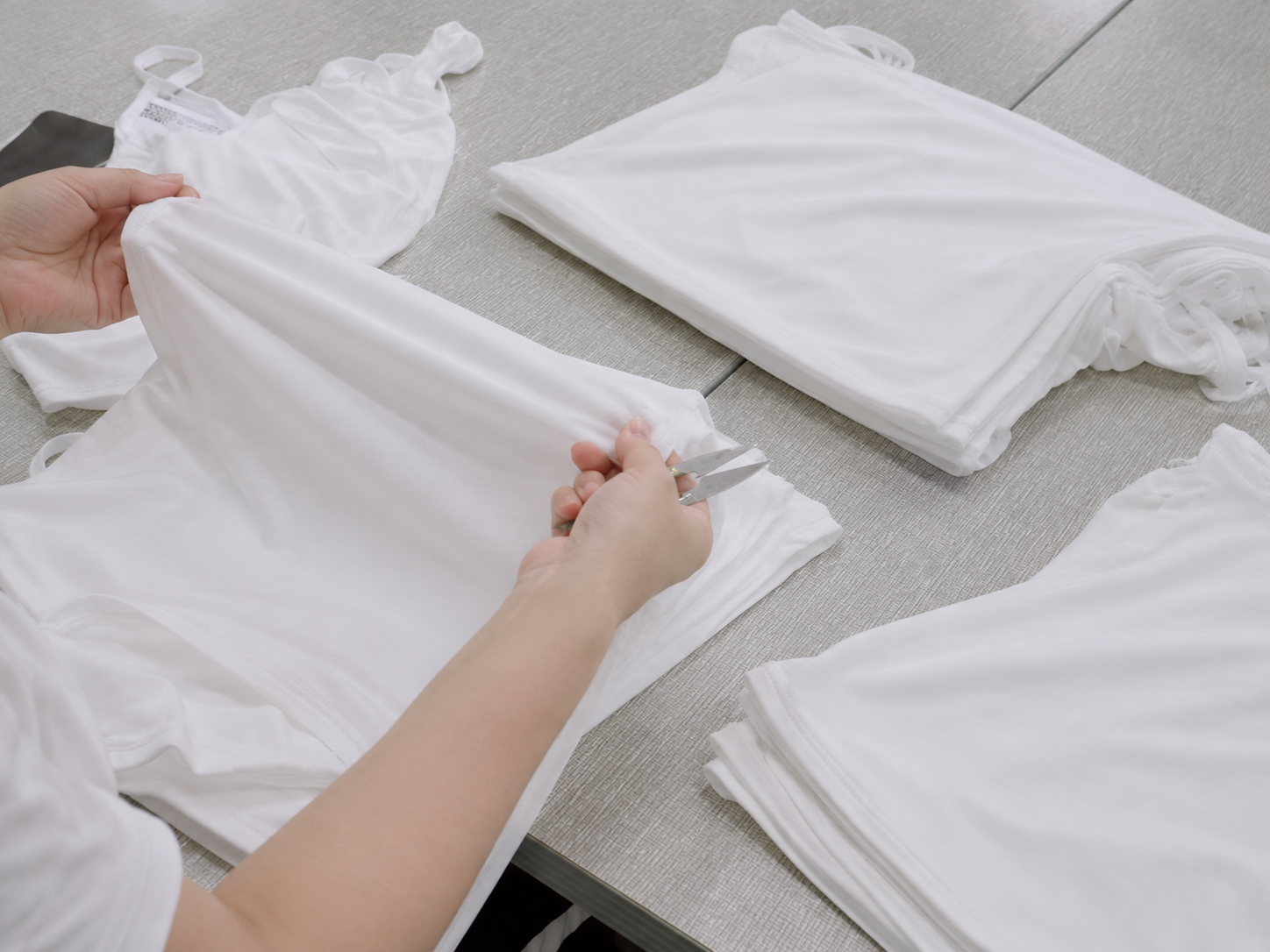
Quality Checks
Factory evidence should include real measurement, workmanship, label or packing checks performed against approved specifications. Leadshow has an approximately 45-person quality team supporting material, in-process, finished-garment and packaging inspections according to project requirements. A photo of a measuring tape is more useful when the caption identifies the approved POM or stage being checked. The aim is to show that quality review is tied to product references rather than relying on broad claims such as zero defects or universal 100 percent inspection.
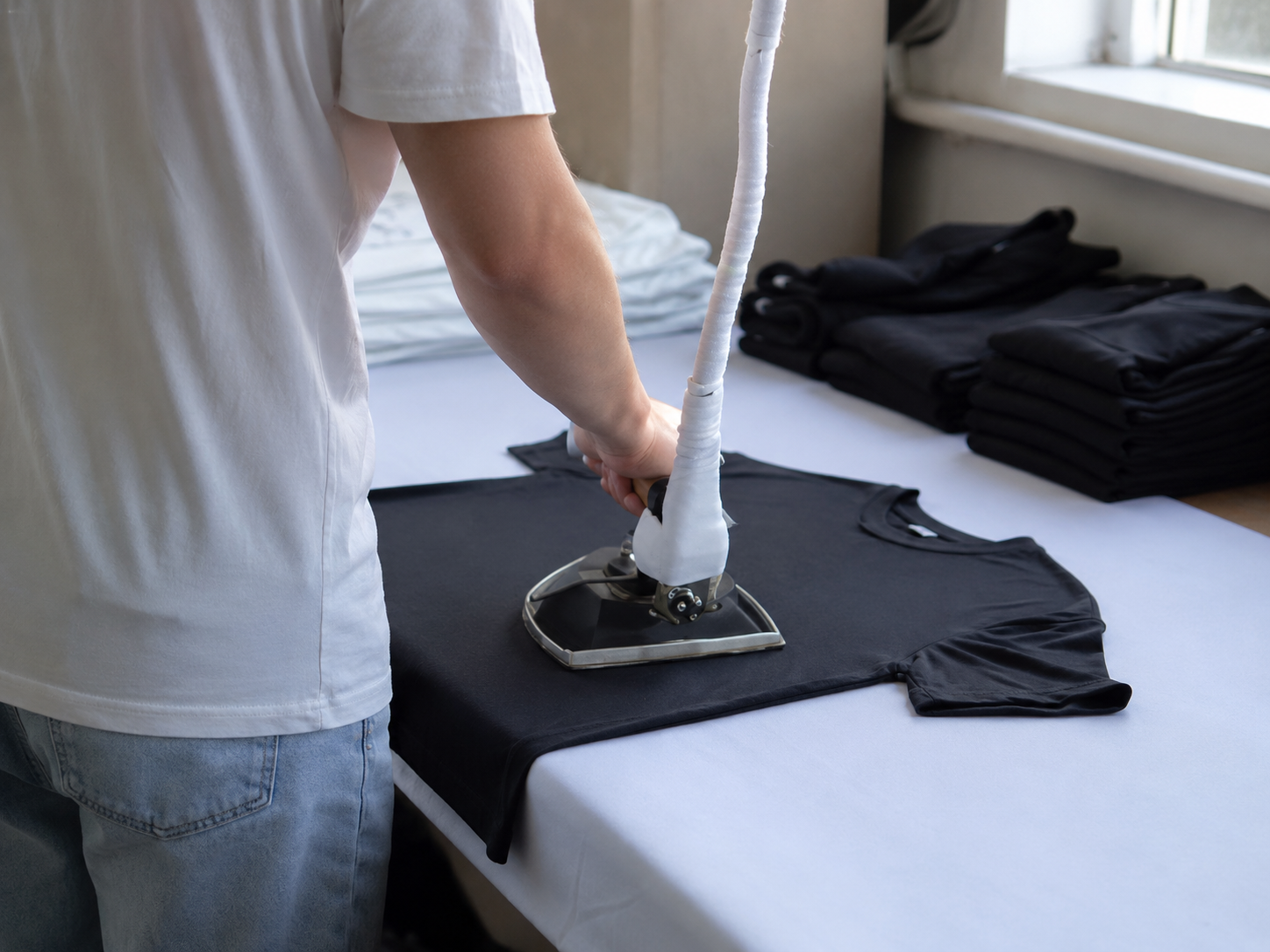
Finishing
Finishing evidence can show pressing, appearance review, needle detection where applicable and preparation before packing. Leadshow’s confirmed resources include 20 steam-ironing workstations and 6 automatic needle-detection machines. Those processes support final presentation and selected safety checks, but they do not replace correct pattern, sewing or formal product testing. Sports T-shirt finishing should be presented as the final manufacturing stage where appearance, relevant measurements and condition are reviewed before packing under the approved order instructions.
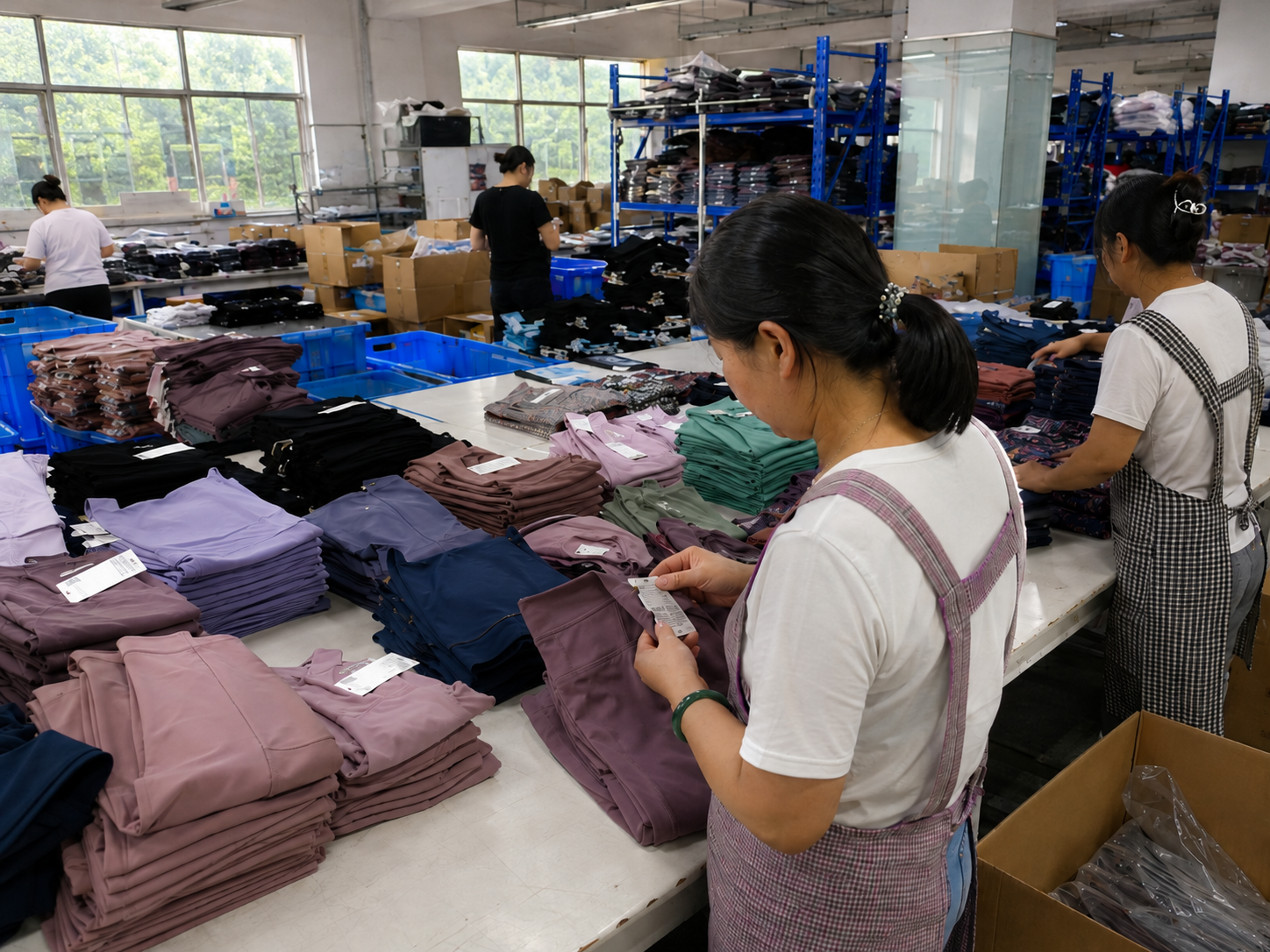
Packing and Shipment Prep
Packing evidence should show size and color separation, labels, folding, bagging, carton preparation and shipment coordination. Leadshow has 4 automatic folding and packing systems plus warehousing and logistics functions supporting SKU sorting and carton preparation. Not every garment or packing format is suitable for automation, so real project instructions remain the controlling reference. Sports T-shirt programs with many colors and sizes benefit when product identification and packing rules are treated as manufacturing requirements rather than warehouse details added after production.
Control Sports T-shirt Quality Against Approved Project References
Leadshow’s approximately 45-person quality function can support material, in-process, finished-garment and packing checks according to project requirements. Inspection scope, sampling method, defect classification and acceptance criteria are confirmed for the order.
Material Review
Quality control begins before sewing. Sports T-shirt material should be checked against the approved project reference for relevant specifications such as color, visible surface, composition documentation, construction and other agreed properties. The exact inspection scope depends on the order and material risk. Matching fiber wording alone is not enough when the approved fabric also depends on construction, color, surface, handfeel or other project specifications.
- Basis: approved material and order requirements.
- Check: identity, appearance, batch or color information and applicable specifications.
- Action: isolate or clarify material that does not match the approved reference.
- Boundary: material review is not the same as universal laboratory certification for every fabric.
Pre-Production Reference
Production teams need a clear reference before bulk sewing begins. The latest tech pack, approved sample, measurement chart, artwork, label and packing instructions should identify the version to follow. Any sample substitution or remaining comment needs to be visible before release.
- Basis: latest approved production documents and physical reference.
- Check: construction, measurements, branding and open items.
- Action: clarify contradictions before the style is treated as production-ready.
- Risk controlled: different teams using different sample or file versions. A simple release checklist can also record remaining comments, responsible functions and the date the production reference became effective.
In-Process Workmanship
Sports T-shirt workmanship can be reviewed during production rather than waiting for finished goods. Relevant points may include neckline shape, shoulder or raglan seam, sleeve attachment, overlock quality, hem execution, flatlock application where used, and logo placement.
- Basis: approved sample and workmanship instructions.
- Check: seam appearance, stitch execution, visible defects and key construction positions.
- Action: feed deviations back for correction and recheck.
- Boundary: no universal defect rate or inspection percentage is claimed without the project’s quality plan. Early process checks are especially useful when a new fabric, seam, logo method or revised construction enters production for the first time.
Measurement Control
Measurement checks help keep the approved fit translated into bulk. Sports T-shirt control should use the agreed POM definitions, measurement method, tolerance and size chart instead of relying only on the size label.
- Basis: approved measurement chart.
- Check: key measurements such as shoulder, chest, sleeve, armhole, body length and other specified POMs.
- Action: record deviations, isolate affected goods where required and recheck after correction.
- Boundary: not every measurement point is claimed to be checked on every garment unless the project specifies such coverage. Measurement frequency and sampling should follow the agreed risk level and quality requirement for the order.
Finished Garment Review
Finished sports T-shirts can be reviewed for appearance, workmanship, measurements and approved branding before packing. The exact inspection scope, sampling method, defect classification and acceptance criteria are confirmed by project rather than imposed as one universal standard.
- Basis: final approved product references.
- Check: visible appearance, seam condition, shape, logo, stains, damage and relevant measurements.
- Action: separate nonconforming pieces for correction, recheck or disposition.
- Boundary: quality review does not support claims of zero defects or guaranteed identical pieces. Acceptance criteria should define how identified defects, rework and reinspection are handled before goods are released for packing.
Labels and Packing
A correct garment can still fail an order when the wrong size label, hangtag, SKU or carton instruction is applied. Packing-stage checks should therefore compare the finished garment with the order matrix and approved packing files.
- Basis: label files, SKU matrix and packing instructions.
- Check: style, color, size, label, bag, carton mark and packing ratio where applicable.
- Action: correct mismatches before shipment preparation.
- Value: supports multi-SKU order accuracy and reduces errors that can reach retail or distribution channels. Carton and label checks become more important as the number of colors, sizes and market-specific versions increases.
Build Sports T-shirt MOQ and Pricing From Real Specifications
Standard MOQ generally starts from 100 pieces per color per design. Final quantity and quotation depend on materials, construction, colorways, size mix, branding, packaging, testing and production conditions, so a clear RFQ produces a more useful commercial answer.
Factor
What It Changes
Information Needed
Standard MOQ
Generally starts from 100 pieces per color per design
Design count, color count and quantity by color
Fabric
Supplier MOQ, availability, cost and material lead time
Composition, construction, GSM, color and performance needs
Colorways
Splits production quantity across separate colors
Quantity per color and color reference
Size Breakdown
Creates the SKU mix and affects cutting or packing complexity
Quantity per size for each color
Construction
Changes sewing operations, workmanship and production efficiency
Tech pack, reference or detailed construction
Logo and Branding
May add artwork, setup, material or process requirements
Artwork, size, placement, color and method
Labels and Packaging
May carry separate supplier MOQs and pack-out work
Label files, bag, carton and SKU requirements
Testing
May add project-specific time and cost
Destination market and required standards
Scheduling
Available capacity depends on current production and material readiness
Target goods-ready date and order release plan
Plan Sample, Bulk and Delivery Timing by Milestone
Leadshow has no universal sample or bulk-production duration for every project. Timing is confirmed from specifications, materials, revision rounds, quantity, approvals, payment and current scheduling, with goods-ready, shipment and arrival dates stated separately.
Project Stage
Timing Starts After
Timing Is Driven By
Date to Track
Requirement Review
Applicable project inputs are received
Specification completeness and clarification scope
Review completion
Material Review
Material direction is defined
Supplier availability, sampling and approvals
Material-ready estimate
Pattern Development
Fit and measurement direction is clear
Pattern complexity and construction
Pattern review date
Sample Making
Required materials and instructions are ready
Sample type, workmanship and complexity
Sample-ready date
Sample Revision
Fit or product comments are received
Change scope and material impact
Revised sample date
Testing
Test sample and method are confirmed
Laboratory schedule and test scope
Test result date
Bulk Preparation
Order release conditions are completed
Materials, trims, approvals and payment conditions
Production-ready date
Bulk Production
Materials are ready and scheduling is confirmed
Quantity, style complexity and current capacity
Estimated goods-ready date
Packing and Inspection
Production is completed
Packing format and inspection requirement
Goods-ready / inspection date
Shipment
Goods and documents are released
Trade term, carrier, route and customs conditions
Pickup, ETD and ETA
Manage Multi-SKU Sports T-shirt Orders Beyond Sewing
Large programs need accurate color, size, label and packing execution as well as garment quality. Leadshow can coordinate multi-SKU requirements through approved order files, brand identification, pack-out instructions and repeat-order product references.
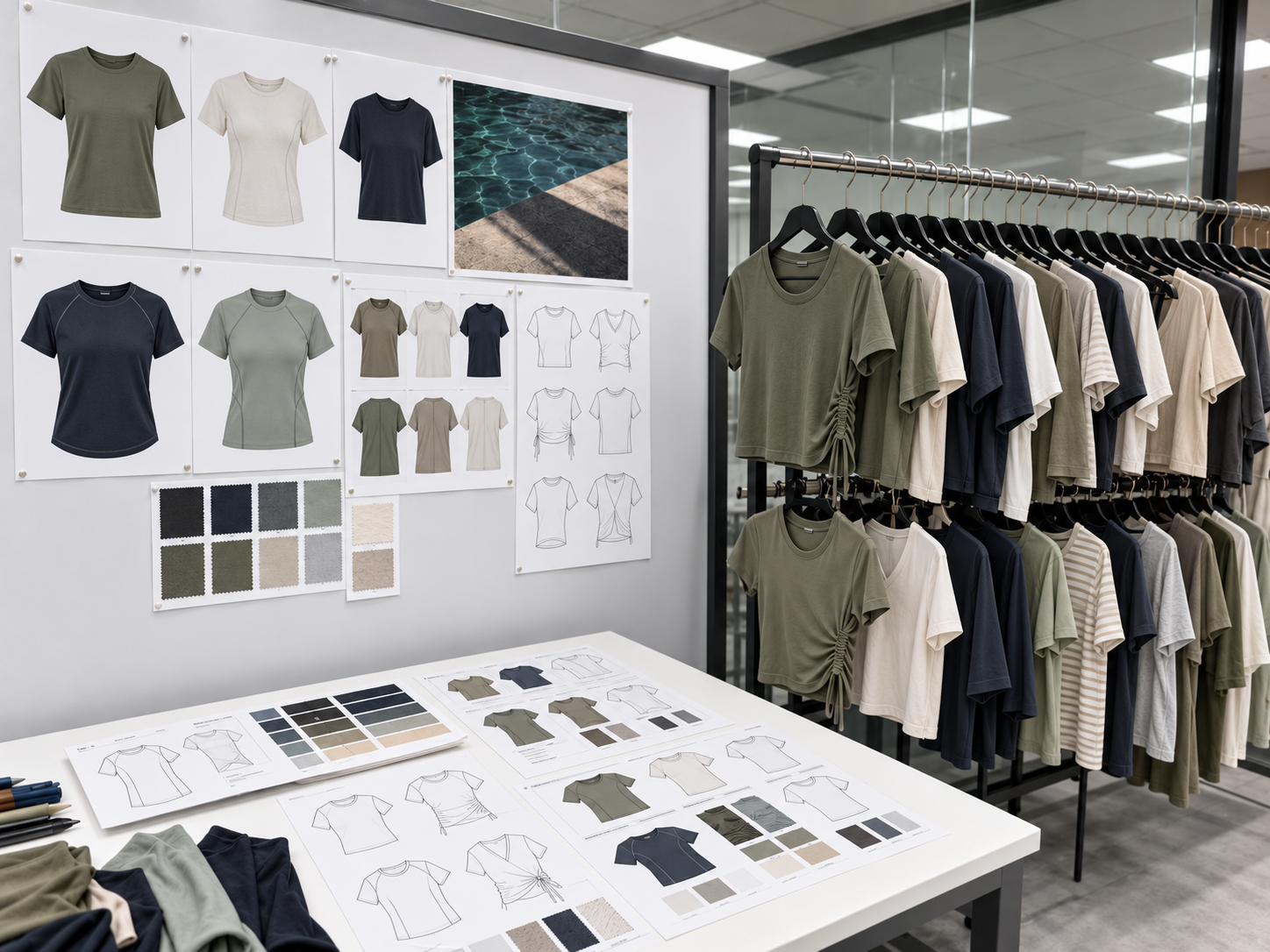
Color and Size Matrix
Multi-SKU sports T-shirt programs need a clear matrix showing each style, color, size and quantity. A simple order total cannot replace the breakdown because material use, cutting ratios, labels and packing all depend on the actual SKU structure. Leadshow can coordinate multi-color and multi-size production using approved order files.
- Provide: quantity per design, per color and per size.
- Freeze: final color and size naming before pack-out files are created.
- Check: SKU totals against the PO and packing plan.
- Avoid: late SKU changes without reviewing material, timing and packing impact. A frozen order matrix gives production, quality and packing teams one consistent reference for quantity reconciliation.
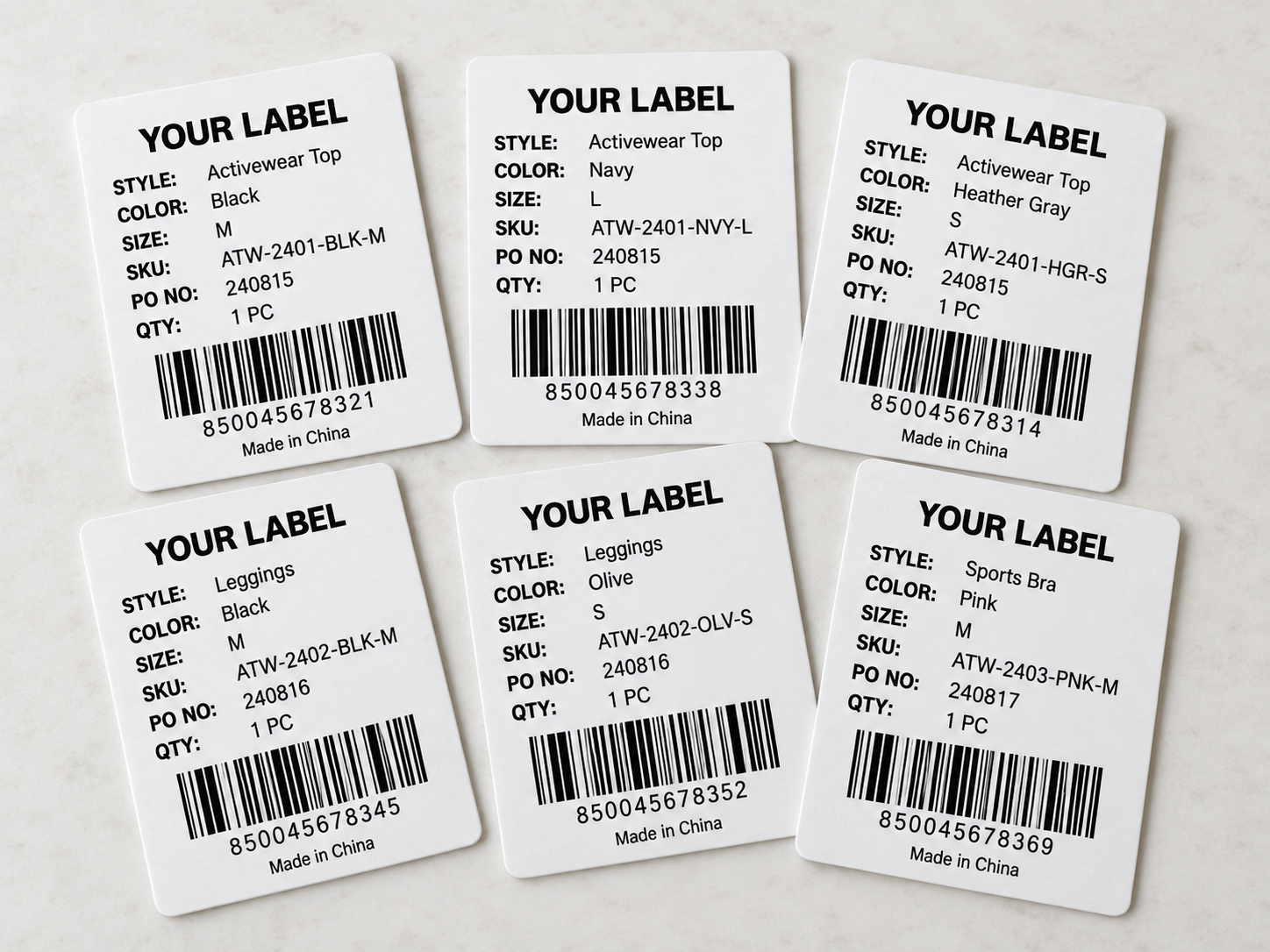
Brand Identification
Main labels, size labels, care information, hangtags and other brand identifiers need to match the style and SKU matrix. Brand teams should provide final artwork and naming conventions instead of relying on informal file names. Leadshow can coordinate custom labels and project-specific identification during production and packing.
- Provide: final label and tag artwork.
- Map: label versions to the correct style, color and size.
- Approve: production reference before large-volume application.
- Check: spelling, size designation and brand information during relevant quality or packing review. Repeat orders should reconfirm whether the same label version remains valid for the new market, season or product revision.
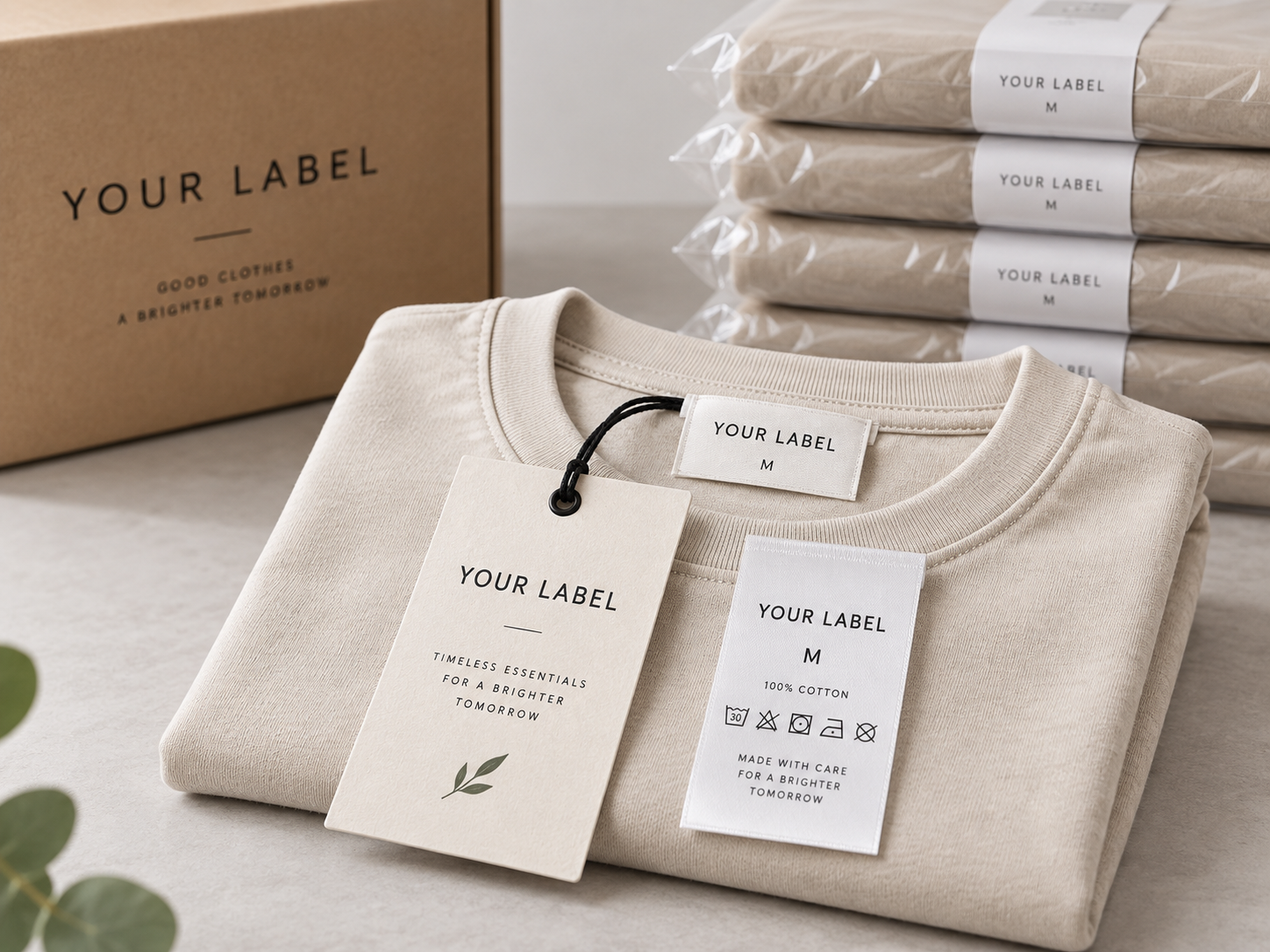
Packing and Carton Control
Packing rules become more important as the number of SKUs increases. Leadshow can support folding, bagging, label application, carton preparation and shipment coordination according to approved packing instructions. Automated folding and packing equipment is available for suitable products, while complex garments or special packaging may need a different route.
- Provide: fold standard, bag requirement, carton mark and assortment ratio.
- Confirm: packaging MOQ and material before bulk scheduling.
- Check: carton contents against SKU and quantity requirements.
- Boundary: no universal marketplace or destination-warehouse compliance is assumed without project specifications. Pack-out approval should also state whether cartons are mixed by size, color or SKU and how the quantities are reconciled.

Repeat-Order Reference
Repeat orders are easier to control when the approved product version is retained as a complete reference rather than as a single old garment. The useful record includes the latest tech pack, pattern, measurement chart, approved sample, material reference, logo, labels, packing and any approved deviations. Leadshow can support repeat-order review and product iteration using authorized project records.
- Reconfirm: materials, colors, quantities and current supplier availability.
- Compare: new order with the last approved production version.
- Review: any requested change before quoting or scheduling.
- Benefit: protects product continuity while recognizing that materials and production conditions can change over time.
How to Evaluate a Sports T-shirt Manufacturing Partner
Strong supplier selection compares evidence across product, material, sampling, manufacturing, quality and commercial execution. A sourcing team can use the framework below to compare candidates on the same requirements instead of ranking factories by marketing claims alone.
Evaluation Area
Evidence to Request
Useful Question
Product Fit
Relevant sports T-shirt samples and construction evidence
Does the supplier understand the exact T-shirt type and use?
Tech Pack Review
Clarification process, development notes or sample comments
Can the team identify missing or conflicting specifications?
Fabric Capability
Material specifications, swatches and approval process
How are composition, GSM, structure, stretch and claims verified?
Pattern and Fit
Measurement chart, fit comments, pattern or size-set process
How does an approved base size become a controlled size range?
Sampling
Sample types, version control and revision workflow
What exactly is approved at each sample stage?
Sample-to-Bulk
Approved sample and production-reference controls
How are sample decisions carried into bulk?
Manufacturing
Real factory, equipment and process evidence
Which operations are confirmed and which are project-specific?
Quality
Inspection stages, acceptance criteria and records
What is checked, against which reference, and at what stage?
MOQ and Quote
Written assumptions for fabric, colors, sizes and packaging
Is the quote tied to the same specification being compared?
Capacity and Timing
Current schedule review and goods-ready milestones
Is capacity confirmed for the order rather than stated only as a company total?
Multi-SKU Packing
SKU matrix, labels, packing and carton controls
Can the supplier manage product identification after sewing?
Long-Term Supply
Repeat-order version and change-review process
Can the supplier preserve approved standards while rechecking changed conditions?
Sports T-shirt Manufacturer Frequently Asked Questions
Answers below cover the questions most often needed before a sports T-shirt RFQ, from MOQ and product inputs to fabric, fit, sampling, production timing, quality and branding.
What is Leadshow's MOQ for custom sports T-shirts?
Standard MOQ generally starts from 100 pieces per color per design. Final quantity depends on fabric and trim MOQs, colorways, size breakdown, logo, packaging, testing and production conditions. Different designs or colors should not be assumed to combine freely toward one MOQ without project review.
Can Leadshow manufacture from our Tech Pack?
Yes. Leadshow can review tech packs, measurement charts, patterns, reference images or physical garments. Product construction, materials, trims, processes, quantities, destination market and branding are evaluated before sampling and bulk planning. Missing or conflicting information is clarified as part of the project review.
Can development start from a reference garment?
Yes, provided the brand has the right to use the design and reference. A physical garment can support fit, construction and workmanship review, but it does not automatically reveal every original material specification, grade rule or production method. The final Leadshow version should be defined through approved project files and samples.
Which Sports T-shirt fits can be evaluated?
Confirmed development directions include slim, regular, loose and oversized fits, together with regular shoulder, drop shoulder or raglan options. Final measurements and size range are not taken from a universal chart; they are defined from the approved project measurement chart, pattern, material behavior and fit comments.
How is Sports T-shirt fabric selected?
Fabric selection can consider composition, knit construction, GSM, stretch, recovery, handfeel, color, shrinkage, pilling, colorfastness, material MOQ and lead time. The intended activity, fit and branding method help narrow the choice. Final material should be confirmed through the project approval process rather than by fiber name alone.
Are quick-dry or moisture-wicking claims guaranteed?
No universal performance claim is applied to every Sports T-shirt. Quick-dry, moisture management, UPF, cooling and similar claims require suitable material specifications and relevant test evidence. Product construction and finishing can also affect the final result, so functional language is confirmed on a product-specific basis.
Which logo methods are supported?
Leadshow has confirmed heat-transfer labeling and heat-press equipment for selected logos, graphics and internal label applications. The suitable method depends on artwork, fabric surface, stretch, heat sensitivity, size, placement and washing requirements. Other decoration methods should not be assumed to be available internally unless confirmed for the project.
How long do samples and bulk production take?
No universal number of days is confirmed for every project. Sample and bulk timing depends on specification completeness, materials, pattern and fit complexity, revision rounds, testing, quantity, workmanship, packaging, approvals, payment conditions and current scheduling. Goods-ready, shipment and arrival dates should be tracked as separate milestones.
How is sample-to-bulk consistency controlled?
Bulk production uses the approved tech pack, measurement chart, material references, sample, logo, labels and packing requirements as applicable production references. Quality review can cover materials, measurements, construction, workmanship, appearance and packing according to project requirements. Reasonable tolerances and acceptance criteria are agreed for the order rather than promising zero variation.
What should we send for an accurate quotation?
Send the product category, tech pack or reference images, quantity per design and color, size range, fabric and trim requirements, logo method, label and packaging requirements, testing needs, target market and target date. More complete inputs reduce quotation assumptions and make MOQ, sampling and production planning more accurate.
Send Your Sports T-shirt Project for Review
Send the product information already available, even if the development package is not complete. A useful review normally starts with the Sports T-shirt type, tech pack or reference images, quantity per design and color, size range, fabric direction, trim details, logo artwork, label requirements, packing instructions, target market and target date. Leadshow can then review manufacturing feasibility, clarify missing specifications and identify the material, fit, sampling, MOQ, quality and production questions that need resolution before a formal bulk plan is confirmed. Final pricing, sample timing, MOQ and production schedule are confirmed after the relevant product and commercial information has been reviewed. Files containing third-party designs should be submitted only when the sender has the right to use them. Project information can be coordinated through the primary business contact and relevant internal development, production, quality and logistics functions according to the project stage. Sending a complete color-size quantity matrix and the latest artwork versions at the beginning can reduce later clarification and keep the review focused on real manufacturing decisions.