
How to Choose an Apparel Manufacturer
Evaluate product fit, development, sampling, quality, capacity, commercial terms, and manufacturing evidence before committing your brand to bulk production.
- Start with product-category fit, not factory size alone. A capable partner should understand the garment structure, materials, fit direction, order profile, and target market.
- Use sampling to verify interpretation, pattern, measurements, workmanship, trims, branding details, and the path from an approved sample into controlled bulk production.
- Compare MOQ, quotation scope, capacity, quality checkpoints, communication, packaging, and factory evidence under the same product specifications before approving a supplier.
What Makes the Right Apparel Manufacturer?
A strong manufacturer should fit the product, repeat approved standards at scale, and provide evidence for major claims. The best choice is rarely the largest factory or the lowest quote; it is the operation whose capabilities match the project.
Product Fit
Product fit comes first because garment categories use different materials, machines, pattern logic, tolerances, and production controls. A factory experienced with heavyweight hoodies may not be the right choice for high-stretch sports bras or swimwear. Review similar constructions, fabric behavior, trim complexity, fit requirements, order size, and market expectations. Relevant experience reduces interpretation gaps and gives the development team a stronger starting point before sampling begins.
Repeatable Production
A beautiful prototype proves only part of the manufacturing capability. The stronger question is whether approved measurements, materials, workmanship, Logo placement, labels, packaging, and tolerance standards can be translated into bulk-production instructions and checked during production. Look for a documented handoff from approved sample to final files, first-piece checks, in-process inspection, finished-garment inspection, and packing verification. Repeatability matters more than a one-off sample made under unusually controlled conditions.
Verifiable Capability
Professional claims should be supported by observable evidence. Ask to see the development environment, sample process, cutting, sewing, specialized processes, finishing, inspection, packaging, and the records used to control versions. Factory scale, equipment, team size, certifications, and capacity can help, but only when the figures are current, relevant, and properly qualified. Evidence makes supplier comparison more objective and reduces dependence on generic words such as professional, premium, fast, or high quality.
Apparel Manufacturer Evaluation Checklist
Use one evaluation structure for every shortlisted supplier. Comparing each manufacturer against the same questions and evidence requirements makes internal review easier and keeps decisions focused on project fit rather than presentation style or isolated price points.
Evaluation Area
What to Check
Evidence to Request
Product fit
Experience with the target garment, construction, materials, fit direction, and order profile
Relevant samples, product records, process examples
Development
Tech Pack review, DFM, pattern and fit adjustment, specification clarification
Review workflow, marked files, sample records
Materials
Fabric, trims, color, handfeel, performance requirements, sourcing constraints
Swatches, specifications, supplier information where appropriate
Sampling
First sample, measurements, fit feedback, revision control, approval stage
Sample comments, revision history, approved sample standard
Bulk transfer
How approved information becomes production instructions
Final Tech Pack, material approvals, first-piece control
Quality
Incoming, in-process, finished-garment, label, and packing checks
Inspection records, measurement sheets, checklists
Capacity
Order-scale fit, current schedule, SKU complexity, material readiness
Factory data, conditional capacity statement, schedule review
Packaging
Labels, barcodes, SKU identification, individual packs, cartons
Packing samples, label proofs, packing specification
Communication
Written confirmations, version control, approval points, issue escalation
Project communication workflow, revision records
Confidentiality
Handling of designs, samples, artwork, files, and unreleased products
Policy, access limits, agreement where applicable
Long-term supply
Reorder records, version continuity, material change control
Archived approved specifications and reorder process
Start With Product and Category Fit
Product-category alignment is the first screening step. Similar factory sizes can hide very different strengths in fabrics, sewing methods, pattern development, special processes, order complexity, and quality expectations. Match capability to the actual garment before comparing price.
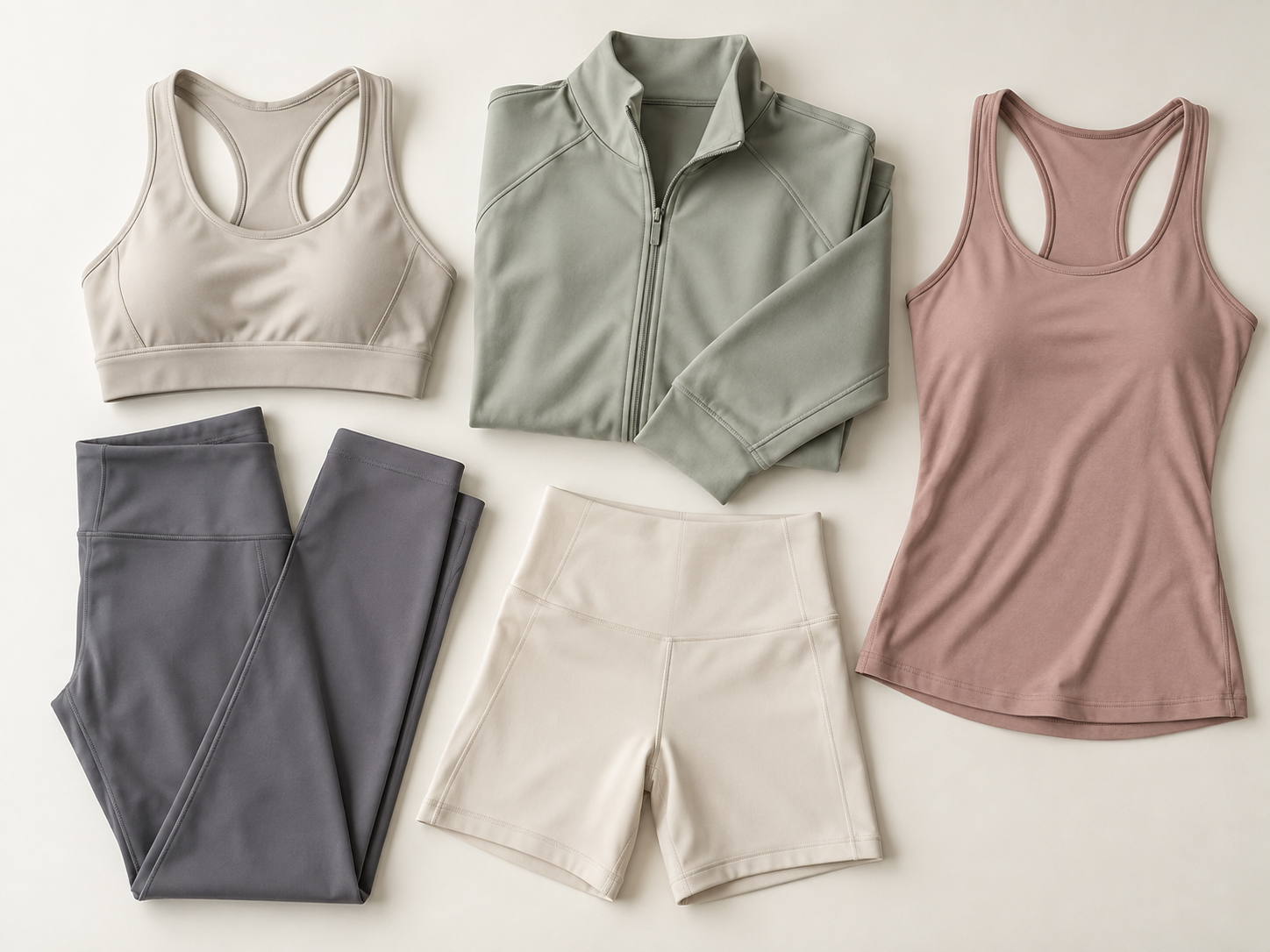
Product Category
Define the exact garment family before supplier outreach. Sports bras, yoga leggings, swimwear, hoodies, sweatshirts, tracksuits, running shorts, and fashion basics place different demands on pattern engineering, elastic recovery, seam construction, trims, finishing, and inspection. Ask for evidence from products with comparable construction rather than broad statements such as “we make sportswear.” A narrower match normally provides better technical discussion during Tech Pack review and fewer surprises during the first sample.
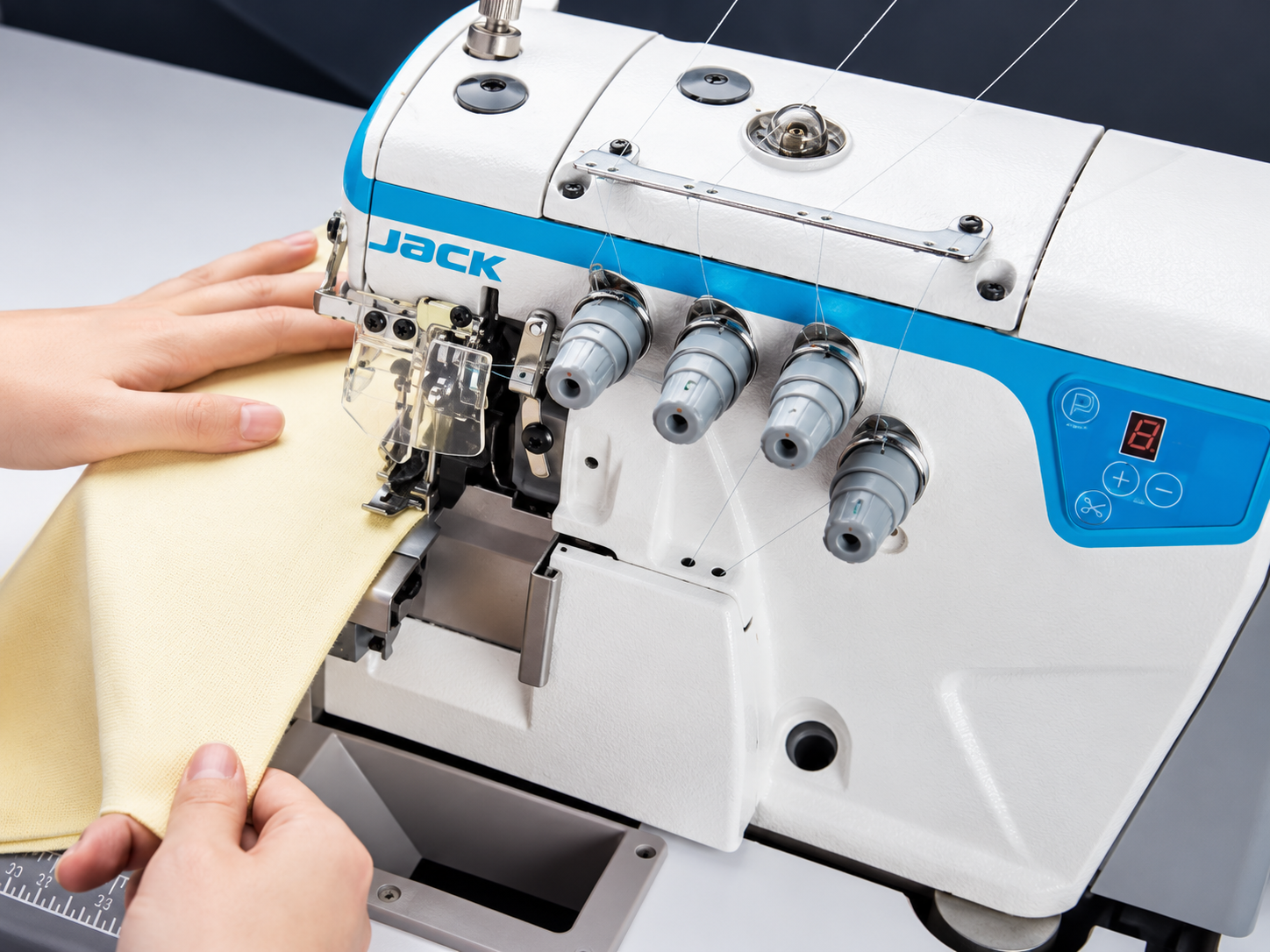
Construction Complexity
Count the elements that make the garment difficult to repeat: panel count, stretch direction, bonded areas, elastic application, lining, padding, pockets, zippers, drawcords, openings, topstitching, bartacks, label positions, and Logo processes. Complexity influences labor, equipment choice, inspection points, MOQ, sampling effort, and production time. A suitable factory should identify construction risks before bulk production instead of discovering them after material has already been cut.
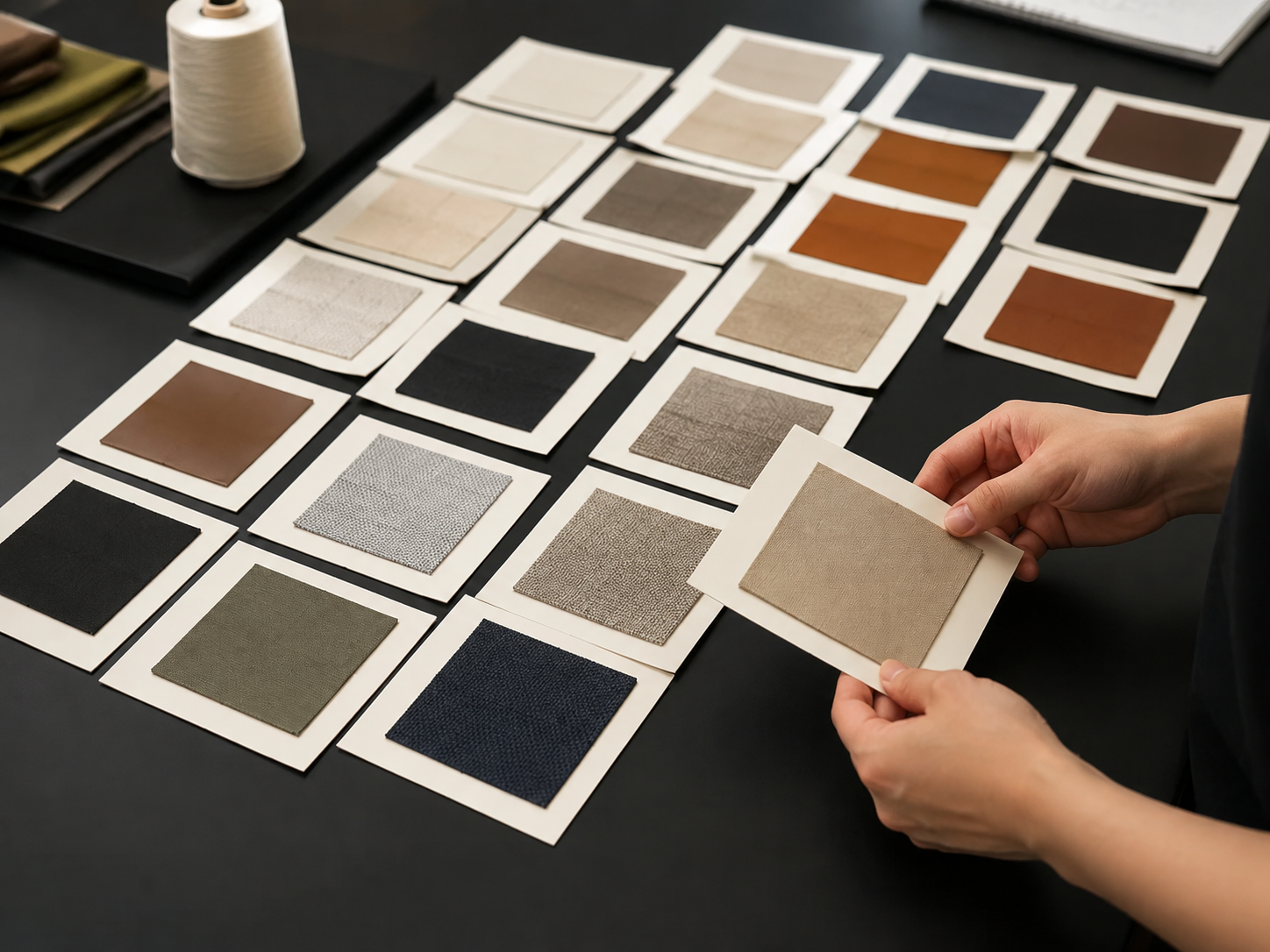
Material Behavior
Fabric behavior changes pattern, sewing, shrinkage control, handling, and final measurements. High-stretch knits, lightweight materials, heavy fleece, swim fabrics, linings, and bonded constructions require different preparation. Ask how the manufacturer evaluates stretch, recovery, thickness, surface condition, shrinkage, color variation, heat sensitivity, and compatibility with trims or heat-applied details. Material competence should be discussed alongside garment construction, not treated as a separate purchasing step.
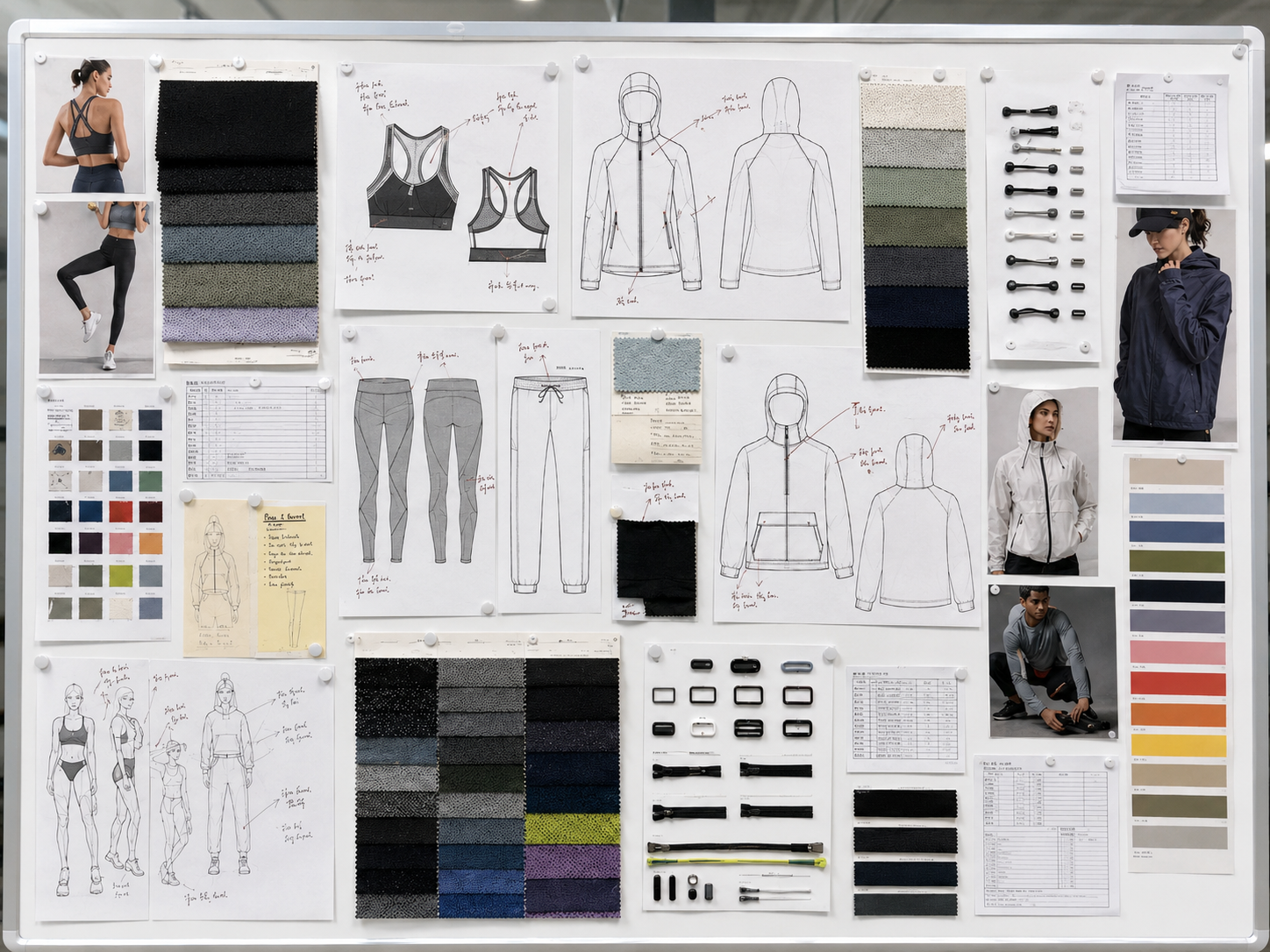
Order Profile
A factory may be technically capable yet poorly matched to the commercial structure of the order. Review expected quantity per design and color, number of colors, size range, SKU count, packaging versions, launch schedule, repeat-order expectations, and any trial-production stage. Multi-SKU programs create more planning and identification work than a single-color order of the same total quantity. Order fit should be evaluated before capacity or lead-time commitments are accepted.
Evaluate Product Development Before Production
Strong manufacturing starts before fabric is cut. A capable development team should convert design intent into clear construction, pattern, material, measurement, and process requirements while identifying issues that could create repeated sampling or unstable bulk production.
Review the Technical Input Before Quotation and Sampling
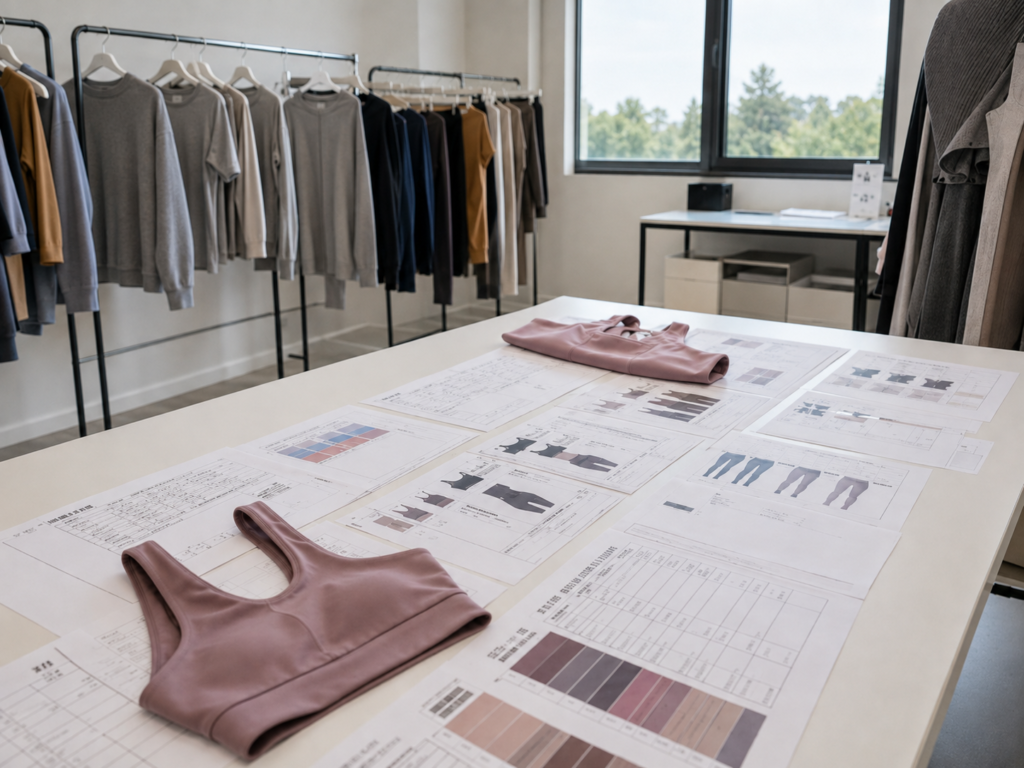
A serious evaluation begins with the information available: Tech Pack, reference images, physical samples, measurement charts, construction notes, fabric direction, branding requirements, target market, quantity, and schedule. Complete files are helpful, but incomplete concepts can still be reviewed when expectations are clearly separated from confirmed specifications. The manufacturer should identify missing dimensions, unclear measurement methods, incompatible details, material questions, and production risks before treating the design as ready for sampling.
For mature programs, technical review should confirm construction, seam type, pattern references, points of measure, base size, grading direction, trim specifications, artwork placement, care-label information, packaging, and approval responsibilities. For earlier concepts, the first goal is narrower: establish what must be decided before a meaningful sample can be produced. A useful development partner asks specific questions instead of replying with a blanket “yes.”
Leadshow’s confirmed scope includes technical requirement review, pattern and fit adjustment, sample development, product development, and manufacturing-feasibility support. Those capabilities should be described as project-based rather than as free design, unlimited revision, or guaranteed first-sample approval.
Translate Design Intent Into Manufacturable Product Standards
Manufacturing feasibility is the bridge between a visual idea and a garment that can be repeated. Review panel geometry, seam access, elastic tension, reinforcement points, heat-applied details, trim installation, material compatibility, and the order in which operations must occur. A detail that works on one sample may become inefficient or unstable at scale if it relies on manual handling that cannot be controlled consistently.
Pattern and fit also need a defined approval process. Measurements should use agreed points of measure, the base size should be clear, and any size grading should be reviewed before a full range is produced. No fixed size range should be assumed for every project. Size availability depends on the agreed product specification, pattern development, target market, and grading requirements.
When changes are proposed, separate design changes from manufacturing changes. A useful recommendation explains the reason, the expected effect on fit or production, and what must be re-approved. The objective is not to redesign the brand’s concept; it is to make the approved concept clear enough for sampling and, later, bulk execution.
Check Material and Trim Capability
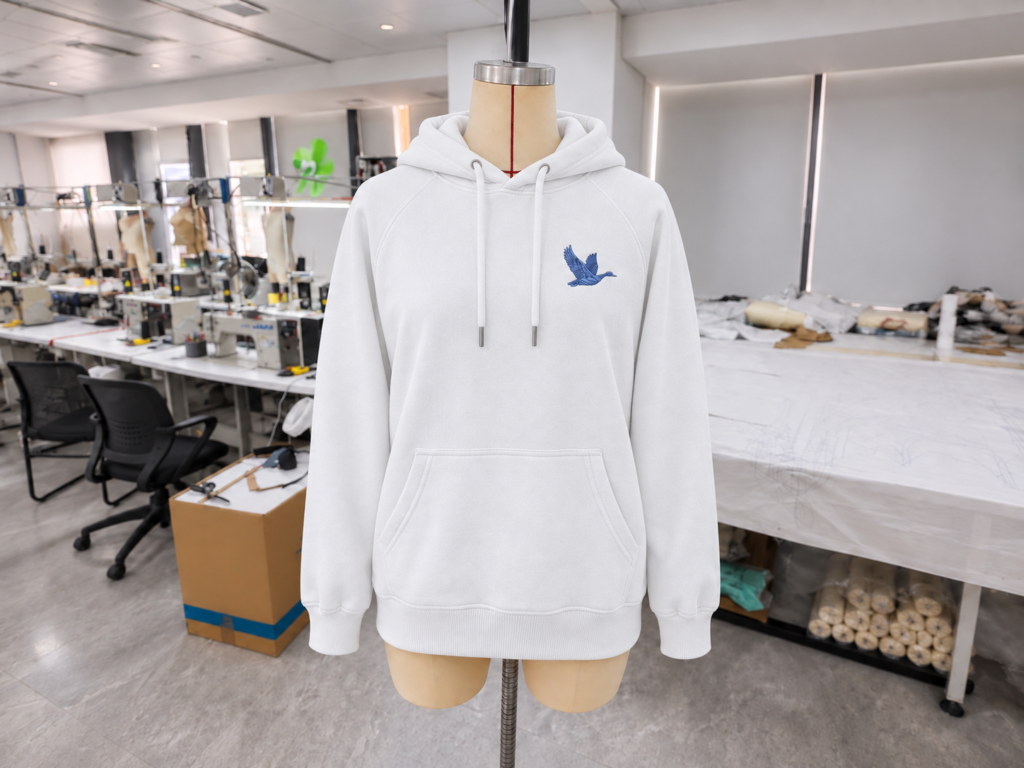
Material selection affects fit, handfeel, appearance, durability, process choice, MOQ, and cost. Evaluate whether a manufacturer can discuss fabric and trims in relation to the garment instead of offering a generic material list disconnected from construction and market requirements.
Fabric Direction
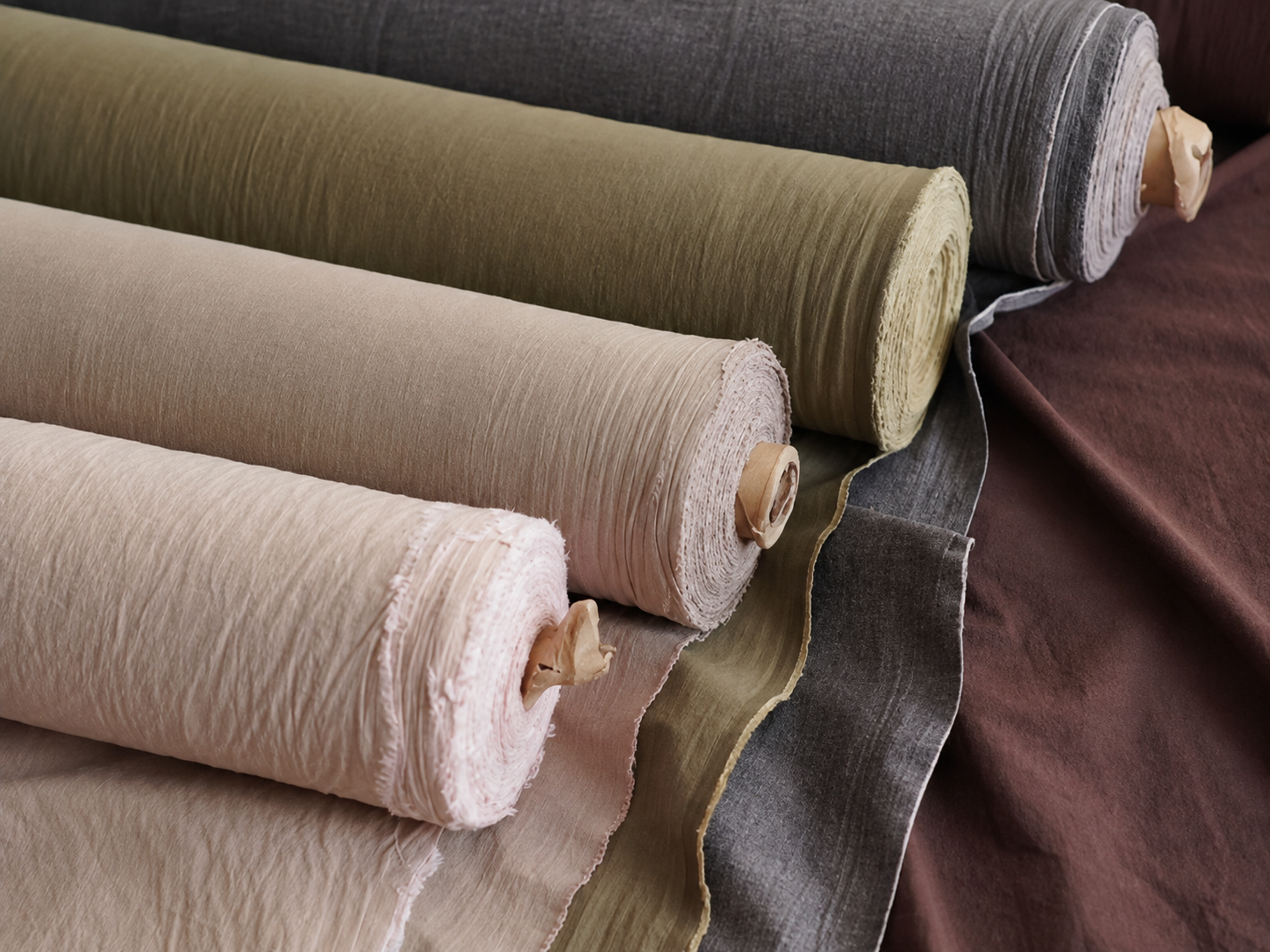
Start with the performance expected from the garment, then define the material direction. Composition alone is not enough; knit structure, weight, stretch, recovery, thickness, surface, handfeel, opacity, drape, shrinkage, and color requirements can change fit and production behavior. Leadshow can coordinate fabrics according to project needs, but no universal composition, GSM, or functional claim should be assumed without an approved material specification.
- Confirm fabric type, color route, handfeel, and key physical requirements.
- Use swatches, lab dips, or approved physical references when subjective terms may be interpreted differently.
- Keep performance claims conditional until materials and testing requirements are confirmed.
Trims and Components
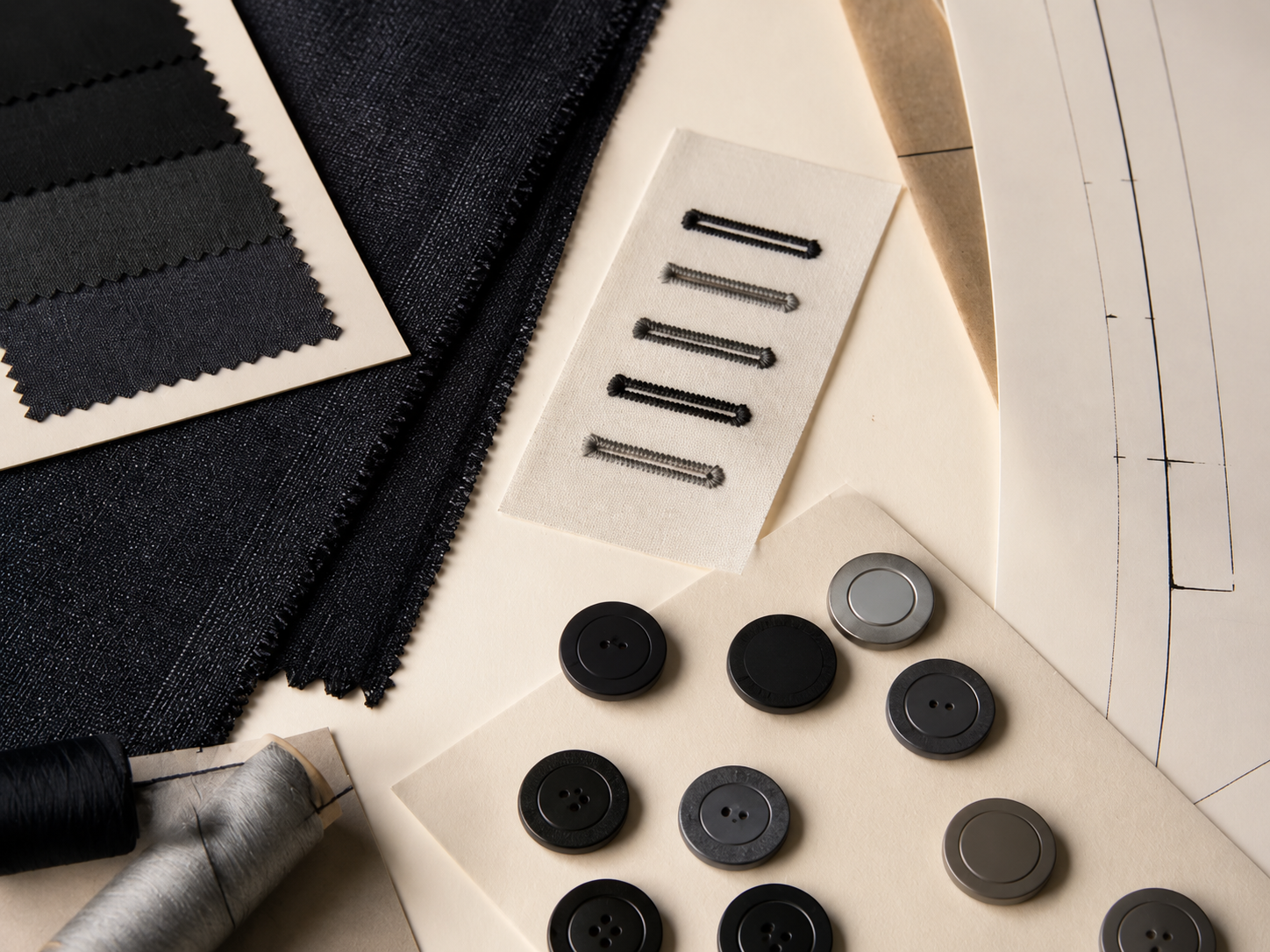
Trims can create separate MOQ, lead-time, and quality risks. Elastic, zippers, rib, buttons, snaps, drawcords, padding, lining, thread, tapes, and other components need dimensional and color specifications that match the product. Even a small trim change can affect fit, assembly sequence, cost, and bulk consistency. Review material compatibility and installation method during development rather than treating trims as a late purchasing detail.
- Confirm type, size, color, material, placement, and installation method.
- Identify any supplier MOQ or custom-tooling requirement before quotation is finalized.
- Approve substitutions in writing when the original component cannot be maintained.
Logo and Branding
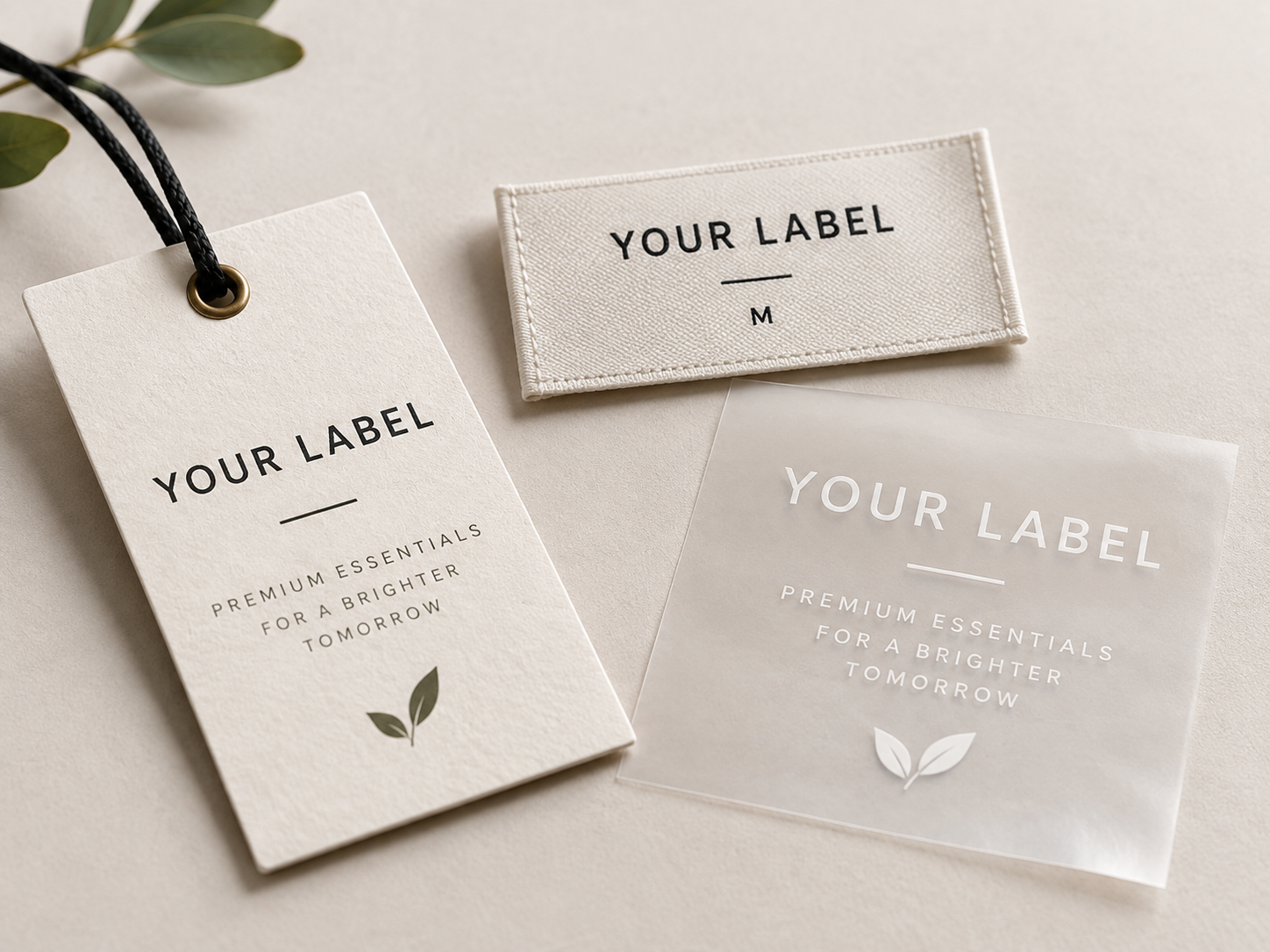
Branding details should be evaluated against fabric and construction. Heat-applied Logos, labels, care information, size marks, hangtags, and packaging each have different material and process requirements. Leadshow has confirmed heat-transfer labeling and heat-press capability for selected applications, while other decoration methods should not be presented as in-house unless separately confirmed. Use approved artwork, dimensions, color references, placement, and sample checks before bulk production.
- Confirm artwork version, dimensions, color, location, and orientation.
- Check compatibility between branding process and the selected fabric.
- Approve the physical result, not only a digital mockup.
Material Evidence
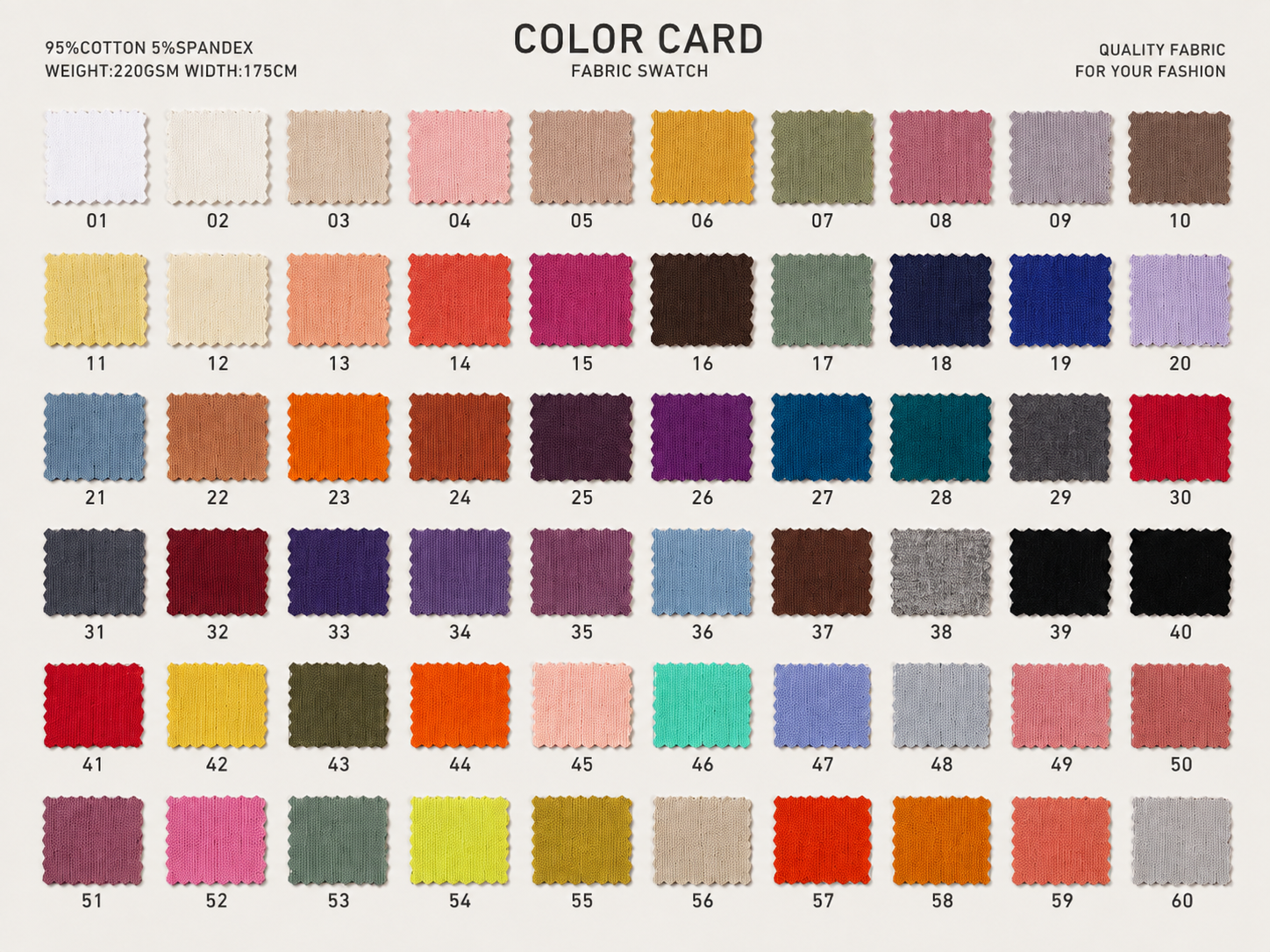
Ask for evidence that links the proposed material to the product. A useful discussion may include swatches, trim samples, reference garments, construction trials, or records from the sample stage. Avoid accepting performance or sustainability claims simply because a similar material is commonly marketed that way. Certified, recycled, waterproof, chlorine-resistant, or other functional descriptions require corresponding project evidence before they become product claims.
- Request the source and specification relevant to the final material choice.
- Separate supplier declarations from verified product performance.
- Confirm any testing or certification requirement for the intended market.
Use Sampling to Verify the Manufacturer
Sampling should test interpretation, fit, construction, materials, workmanship, branding, and manufacturability. Treat each round as a controlled decision point. A sample is useful when comments are recorded, changes are versioned, and approval defines what moves forward.

Input Review
The sampling process begins by confirming the files and references being used. Tech Pack, images, physical sample, measurements, fabric direction, trims, artwork, quantity, market, and schedule should be separated into confirmed inputs and open questions. The goal is to prevent a sample from being built around assumptions that were never approved. When information is incomplete, record the temporary assumptions and the items that still need final confirmation.
Pattern Preparation
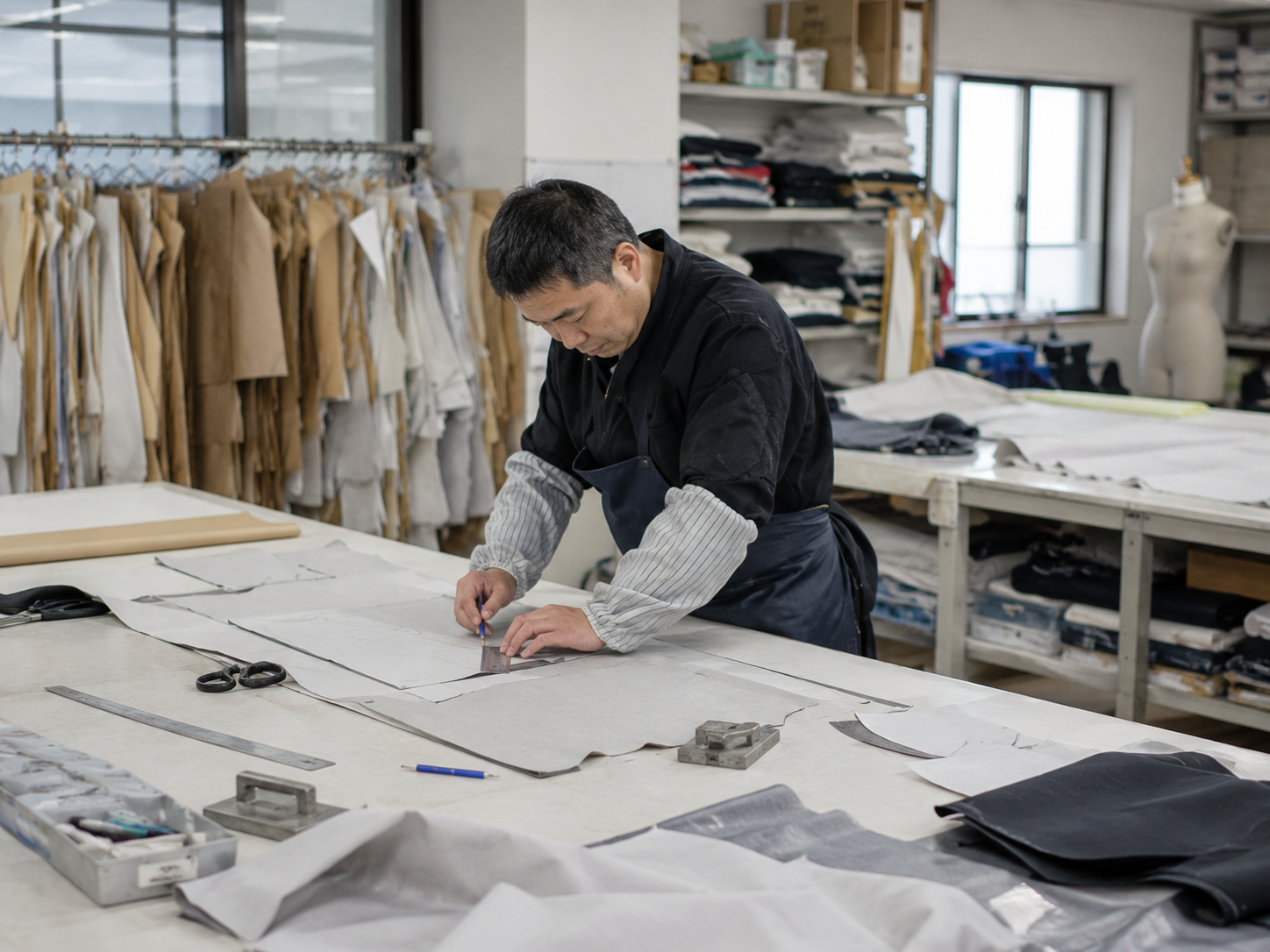
Pattern work converts measurements and style lines into cuttable pieces. Base size, points of measure, seam allowance, stretch direction, construction method, and any existing pattern reference should be reviewed. No universal size scale should be imposed on every program. Size range and grading depend on the intended market, agreed measurement chart, fit direction, and approved pattern. Pattern changes should be version-controlled so later revisions are not mixed.
First Sample
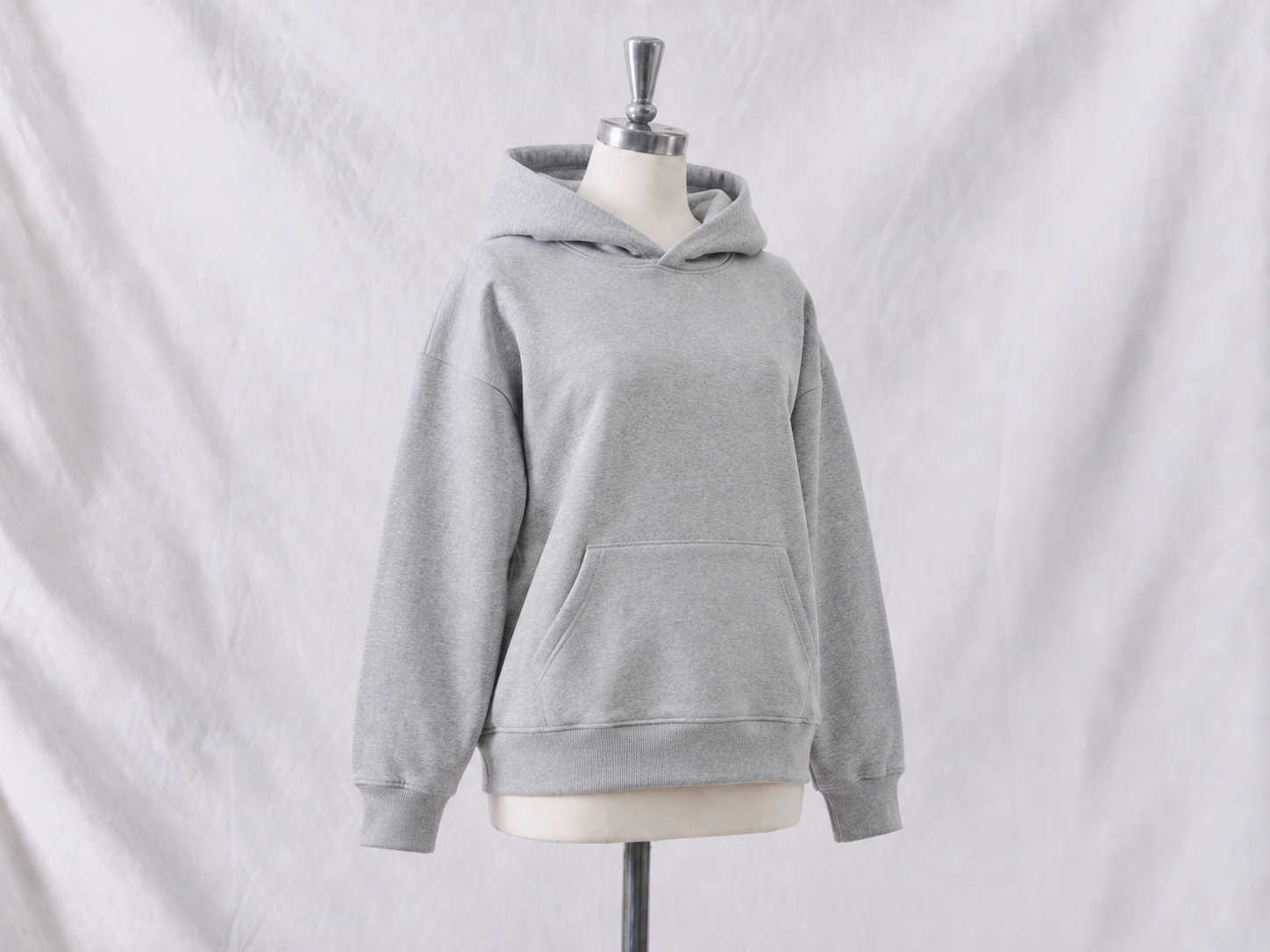
The first sample tests the overall interpretation of the design. Review silhouette, proportion, garment length, key measurements, seam construction, material behavior, trims, Logo placement, and wearability. A first sample is not expected to prove every bulk-production condition, especially when final materials or colors are not yet approved. It should reveal whether the development direction is correct and which decisions must be closed before the next round.
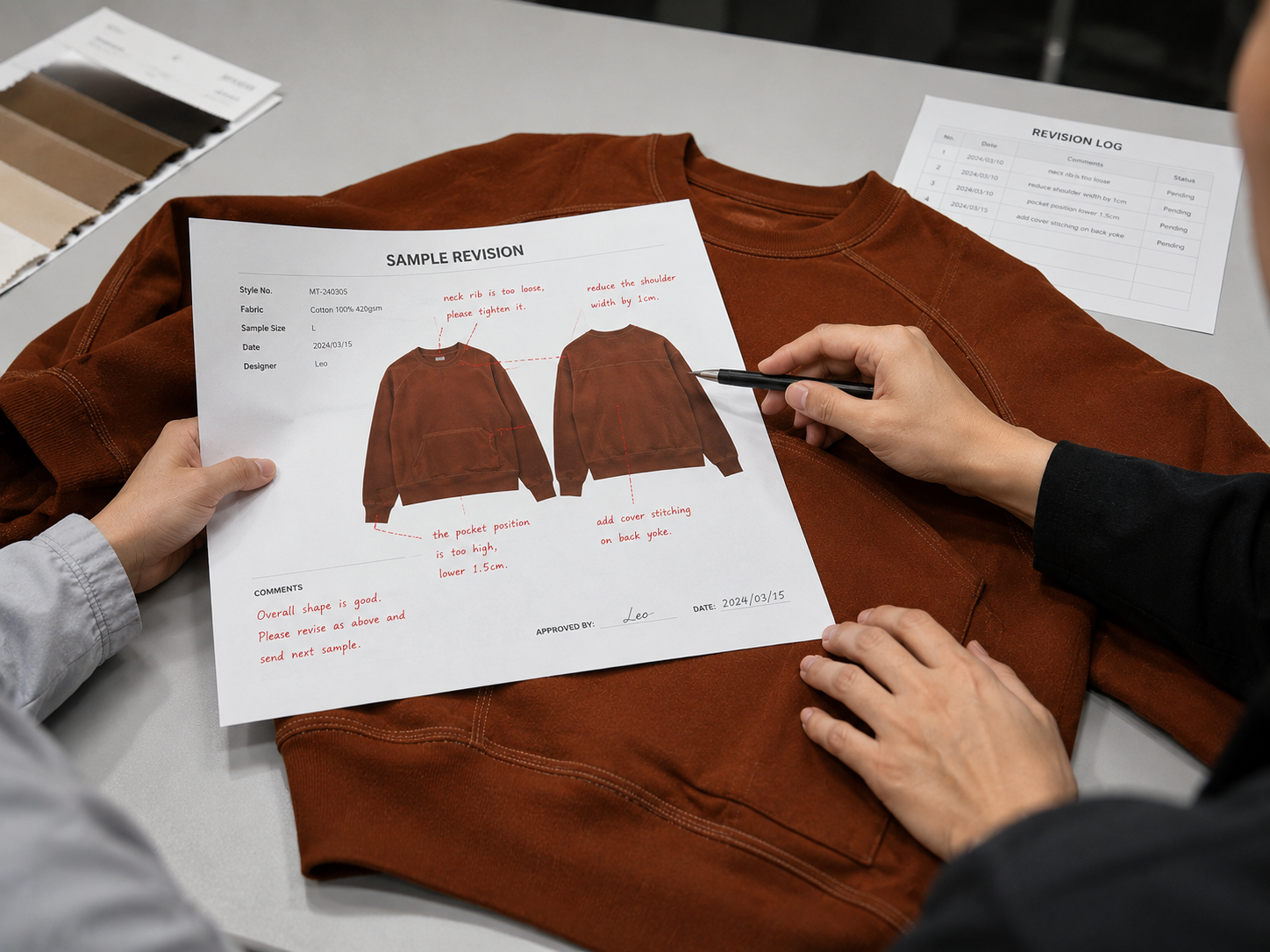
Internal Review
Before a sample is presented, inspect measurements, construction, visible workmanship, key trims, Logo placement, and obvious deviations from the latest files. Internal review helps prevent avoidable comments from reaching the brand team and creates a record of what the factory already identified. The value is not a promise of a flawless sample; it is a controlled process that makes each sample round more informative and reduces repeated misunderstandings.
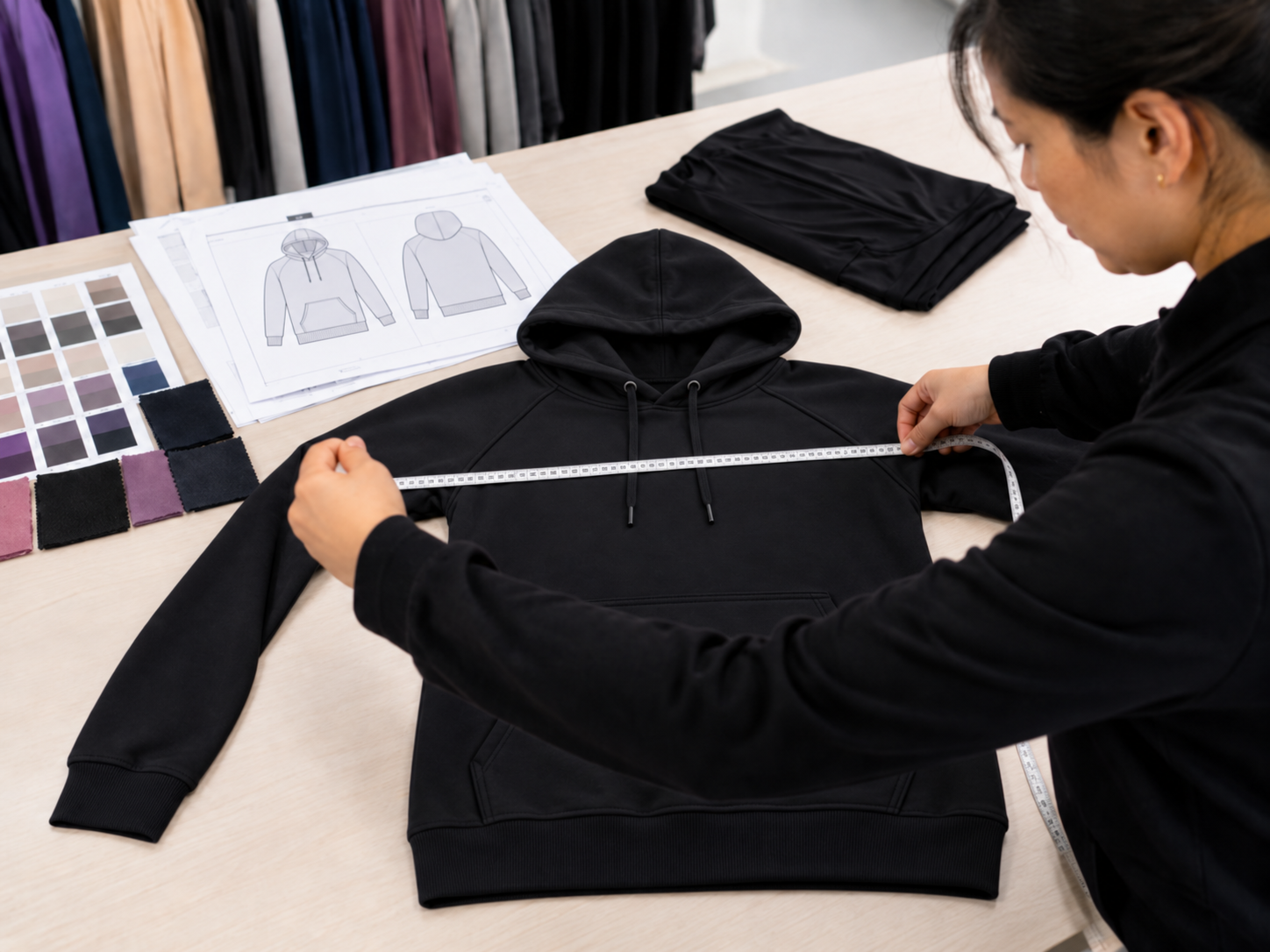
Revision Control
Feedback should be consolidated into one clear revision set. Separate fit comments, measurement changes, material changes, construction changes, Logo adjustments, and packaging notes. Update the Tech Pack or marked file, assign a version, and identify which changes require another physical sample. Conflicting comments from different departments should be resolved before production instructions are released. Version control is a core manufacturing discipline, not an administrative formality.
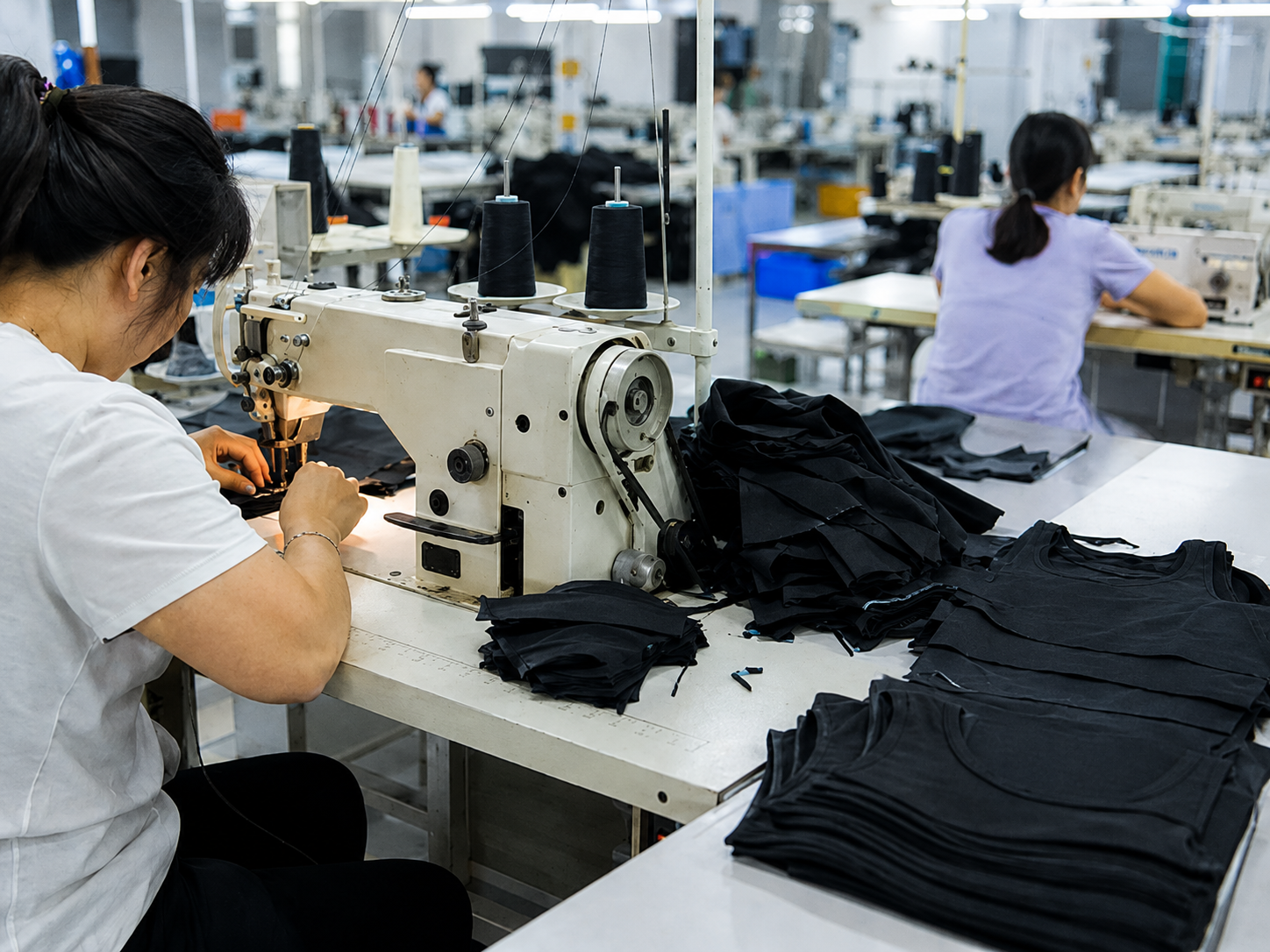
Approved Standard
Approval should define what has actually been accepted: sample version, measurements, pattern, fabric, trims, color, Logo, labels, packaging, and any remaining tolerances or open conditions. Sample timing should not be presented as one fixed number for every garment; the schedule depends on material readiness, construction, revision count, and approval requirements. Once approved, the confirmed standard becomes the basis for production preparation and quality checks.
Verify Sample-to-Bulk Production Control
Approved samples are only useful when their standards are transferred into production. Review how final files, approved materials, first-piece checks, process inspection, finished-garment inspection, and packing verification work together before bulk approval.
Freeze the Approved Standard Before Material Is Released
Bulk production should not begin from scattered emails, an outdated drawing, or a sample with unresolved comments. Finalize the latest Tech Pack, measurement chart, pattern version, approved material, trim specifications, color references, artwork, labels, packaging, and any agreed tolerances. A physical approved sample can serve as a visual reference, but it must be supported by written specifications because a single garment cannot communicate every measurement, process, and packaging requirement.
Material readiness is part of the same control chain. Confirm whether the bulk fabric, elastic, trims, labels, and packaging match the approved references and whether any substitutions have been accepted. For applicable materials, production preparation may include batch separation, pre-treatment, shrinkage review, or other checks depending on the project.
Leadshow’s standard service chain can cover technical review, material confirmation, pattern and sample development, sample revision and approval, trial or pre-production confirmation, bulk manufacturing, quality checks, labels, packaging, and export delivery support. The exact sequence remains project-dependent. No universal promise should be made that every program follows identical stages or identical timing.

Control Production Through Multiple Checkpoints, Not Final Inspection Alone
Once production starts, compare early output against the approved standard before a large quantity moves through the line. First-piece or early-production review can identify measurement, construction, seam, trim, Logo, or handling issues while corrective action is still manageable. In-process checks then focus on key operations that can drift during repeated production, followed by finished-garment measurement and appearance inspection. Labels, SKU identification, packaging, and carton information should also be checked before shipment preparation.
Consistency should be defined as manufacturing within approved specifications and agreed tolerances, not as every garment being absolutely identical. Fabric batches, elastic materials, washing behavior, and manual sewing can create normal production variation that must be controlled through measurable standards.
Ask every shortlisted supplier how problems are isolated, corrected, rechecked, and recorded. A strong answer should describe the sequence from approved files to production checks. A weak answer relies only on “we have strict QC” without naming checkpoints, standards, responsible functions, or what happens when output moves outside the accepted range.
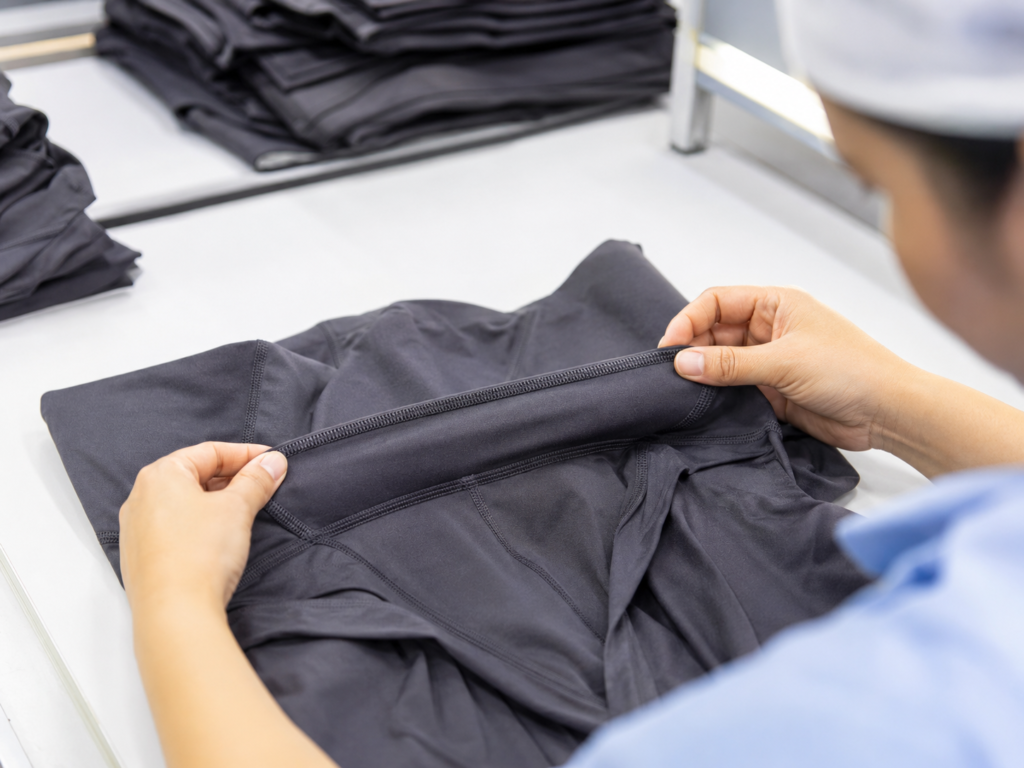
Match Manufacturing Capacity to Your Order
Capacity matters only when it is relevant to the product, SKU structure, material readiness, and current production schedule. Ask for conditional capacity information and then test whether the available resources fit the actual order rather than relying on one headline number.
Capacity Question
Why It Matters
Leadshow Confirmed Reference
How many manufacturing bases support the operation?
Multiple facilities can provide broader manufacturing resources, but allocation still depends on product and schedule.
3 modern manufacturing bases
What is the combined factory area?
Facility scale helps indicate available manufacturing and support space; it should not be treated as a single-factory figure.
20,000+ m² combined factory area
How large is the total team?
Team scale supports development, manufacturing, quality, warehousing, and business coordination; roles are not interchangeable.
1,500+ employees
What equipment base is confirmed?
Equipment should be matched to the actual garment and process rather than counted as production lines.
300+ production, specialized-process and finishing machines
What monthly capacity can be discussed?
A capacity figure is useful only with product, material, order-mix, and scheduling conditions attached.
Up to approximately 120,000 finished garments per month, combined
How many styles, colors, sizes, and SKUs are in the order?
Complex SKU structures consume planning, cutting, identification, quality, and packing resources.
Evaluated by project
What is the delivery target?
Production timing depends on material readiness, sample approval, complexity, order quantity, and current schedule.
Confirmed after project evaluation
Is repeat-order growth expected?
Scaling should be reviewed against the approved product standard and available capacity at the time of reorder.
Long-term reorder support available by project
Verify the Factory Behind the Claims
Factory verification should show how a garment moves from technical review to finished packing. Real images, process evidence, records, and appropriately arranged audits are more useful than stock photography, decorative factory shots, or unsupported claims about automation.
R&D and Sampling
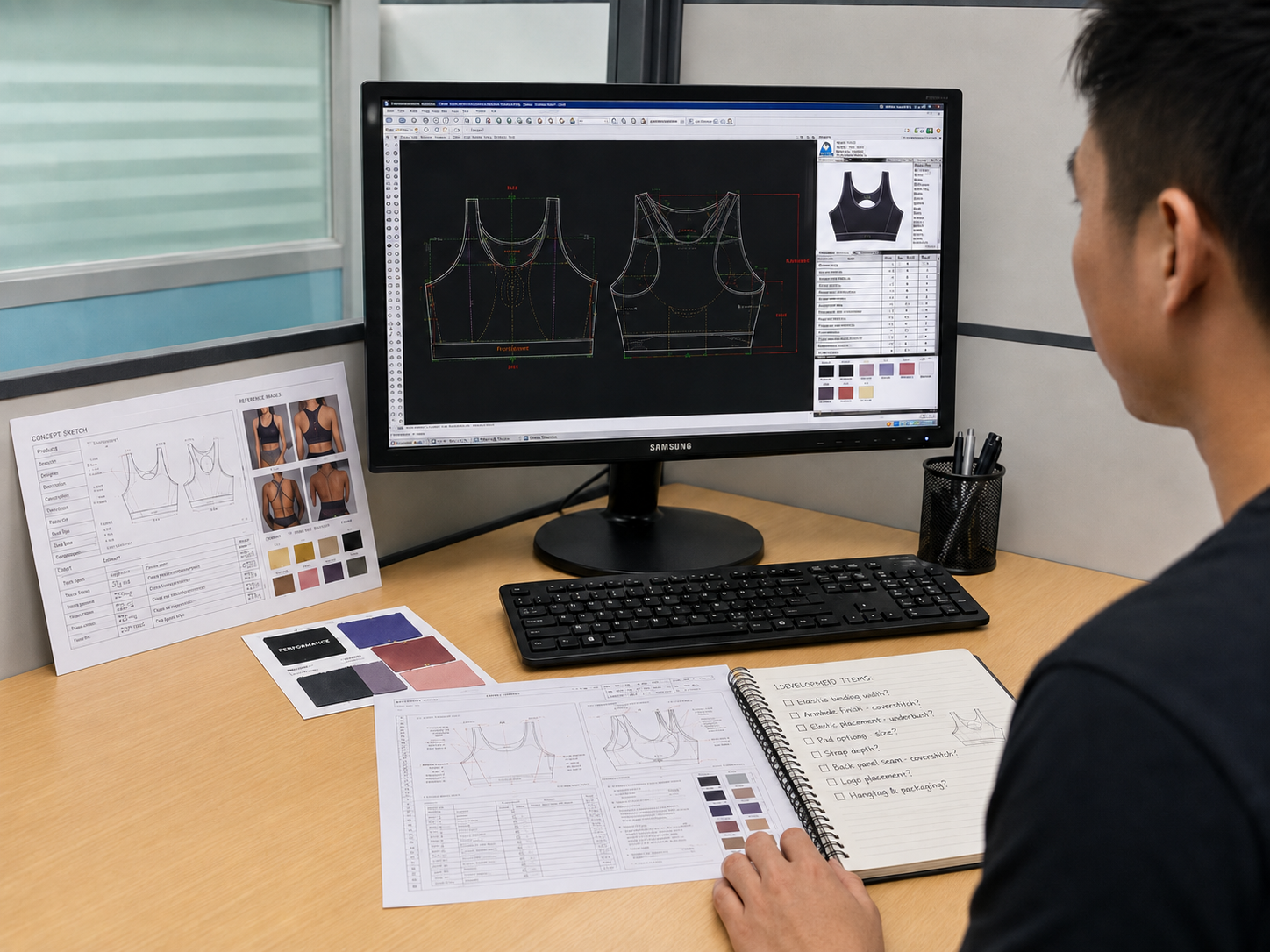
Look for an actual development environment where technical files, patterns, sample garments, measurements, and process trials are handled. Leadshow has an independent R&D and sampling workshop with confirmed pattern-computer, plotter, sample lockstitch, and sample four-needle six-thread resources. The value is the connection between development and production, not a claim that every style is created by an international design team or a 3D virtual-sampling system.
Fabric Preparation
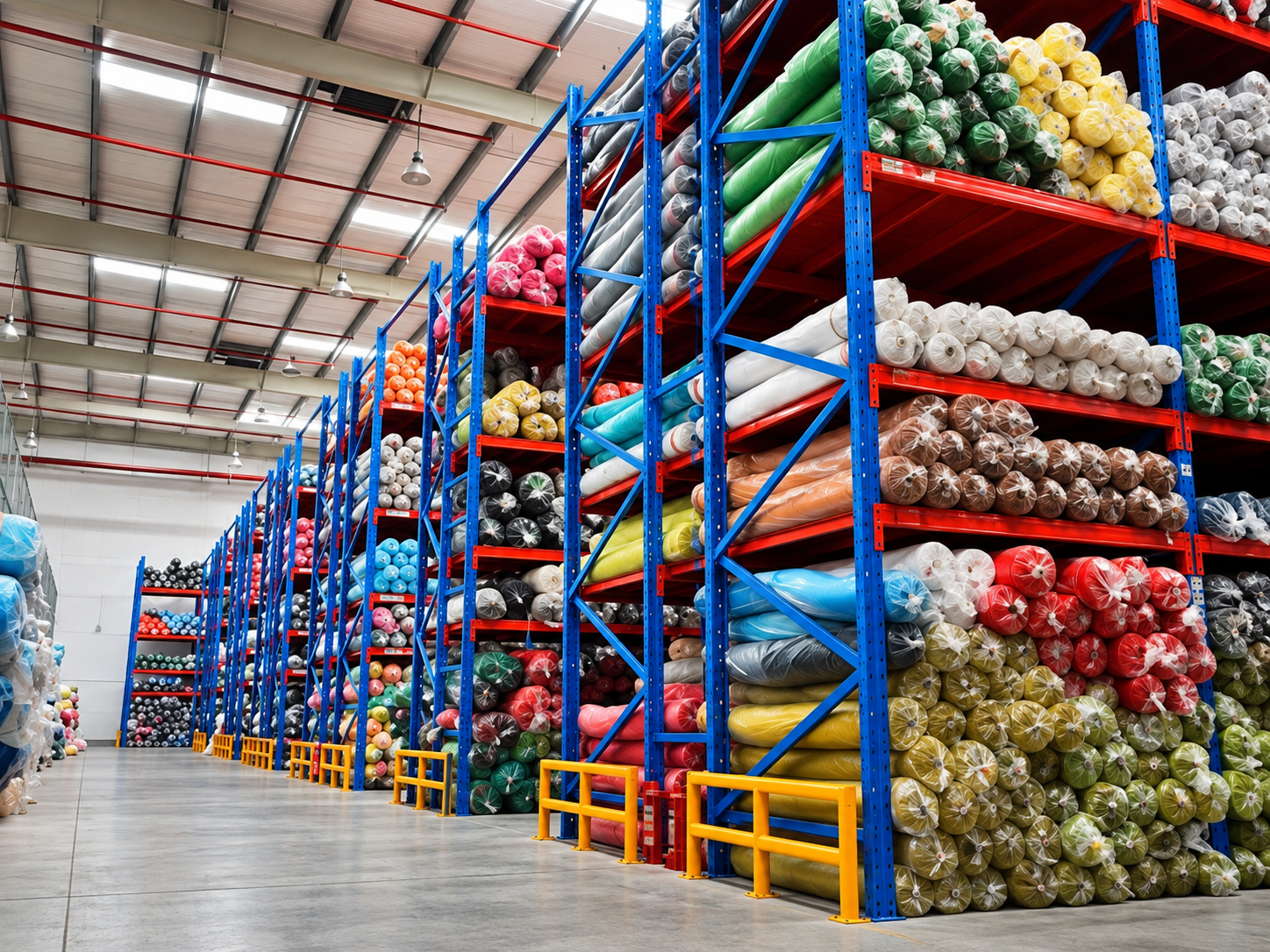
Review how materials are received, prepared, spread, and made ready for cutting. Leadshow has confirmed automatic spreading, fabric pre-treatment or preshrinking equipment, and multiple cutting methods. Material handling still depends on stretch, thickness, surface, direction, print, width, and order requirements. Automated equipment should not be presented as suitable for every fabric or as proof of zero tension, zero shrinkage, or zero cutting variation.
Cutting Capability
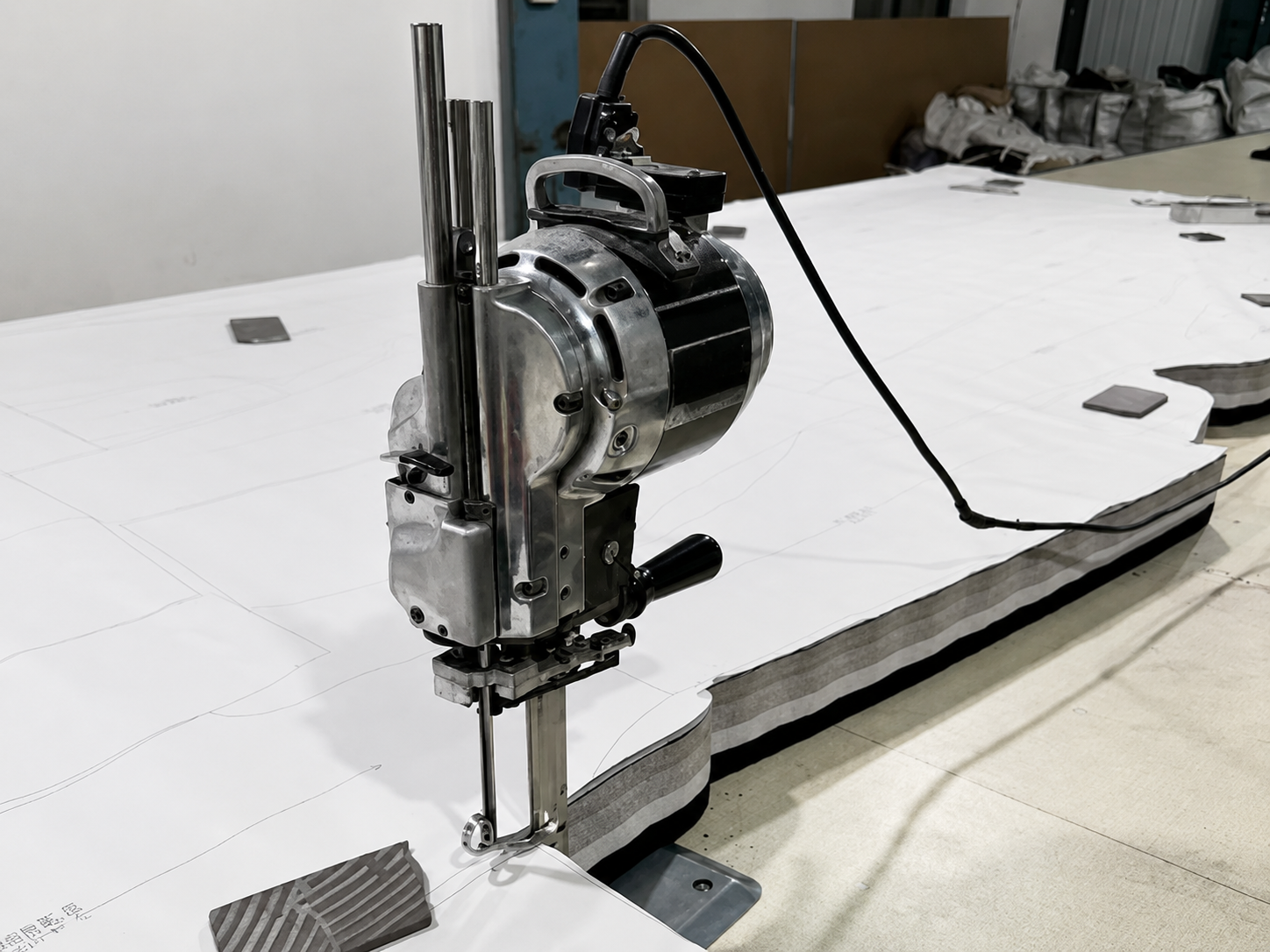
Cutting evidence should show both standardized and flexible methods. Leadshow has 3 automatic cutting machines, 8 vertical cutting machines, 6 round-knife cutters, and 3 laser perforation machines. Those resources support different product and order conditions; they do not mean every garment is laser cut or fully automated. Ask how cut pieces are identified and separated across style, color, size, and production requirements before sewing begins.
Sewing Resources
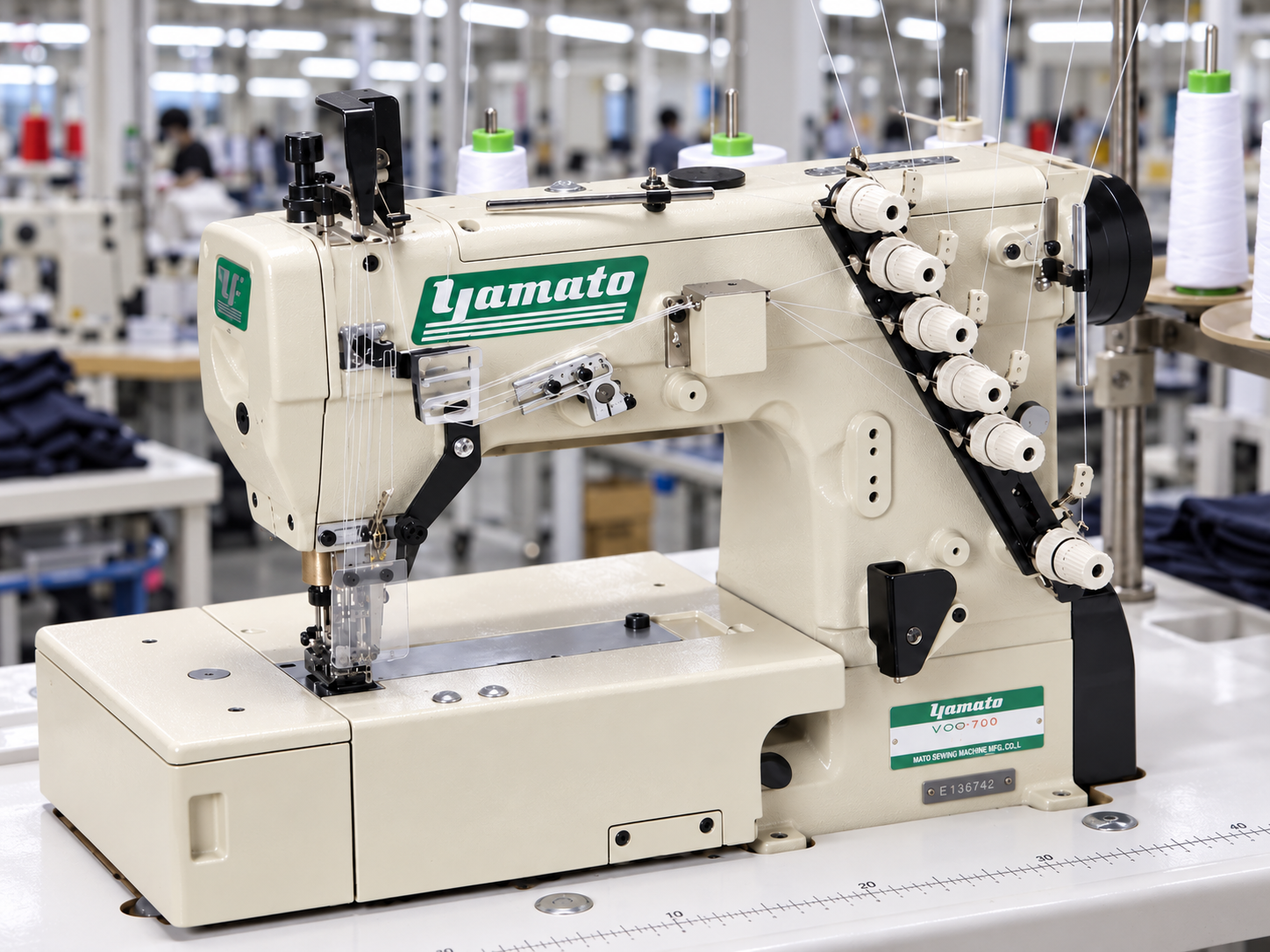
Sewing capability should match the garment. Leadshow has confirmed direct-drive lockstitch, four-thread and five-thread overlock, double-needle, elastic-attaching, bartacking, buttonhole, snap-installation, and 35 four-needle six-thread flatlock machines. Flatlock equipment is useful for selected stretch garments, including leggings and sports bras, but it must not be described as whole-garment seamless knitting. Process choice depends on approved construction.
Special Processes
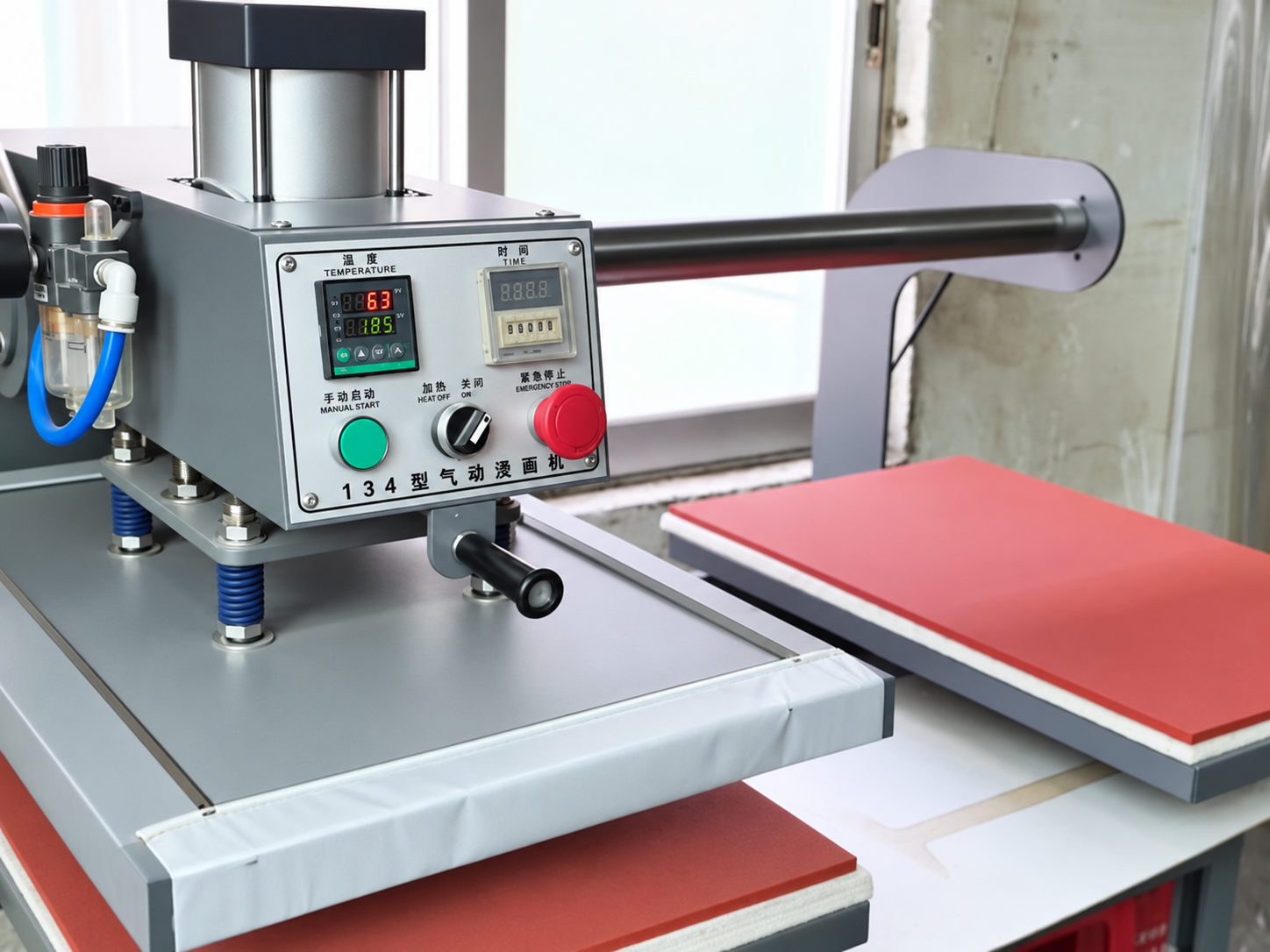
Specialized-process equipment can expand construction options when materials are compatible. Leadshow has confirmed heat bonding, hot-air seam sealing, ultrasonic elastic cutting, laser perforation, heat-transfer labeling, and heat-press resources. Each process requires technical evaluation. Bonding does not automatically mean permanent adhesion, seam sealing does not prove a complete garment is waterproof, and perforation does not justify a fixed breathability improvement without testing.

Finishing and Packing
Final manufacturing evidence should include finishing, needle detection where applicable, folding, labeling, packing, and shipment preparation. Leadshow has 20 steam-ironing stations, 6 automatic needle-detection machines, and 4 automatic folding and packing systems, along with packaging and label-printing functions. These resources support final preparation but do not mean every garment is automatically packed, every product undergoes identical needle detection, or all packaging formats use the same process.
Look Beyond High Quality Claims
Quality becomes meaningful when the checks are specific. Define what is inspected, when the check occurs, what specification is used, and how nonconforming output is handled. Generic quality language is not a substitute for measurable production controls.
Material Checks
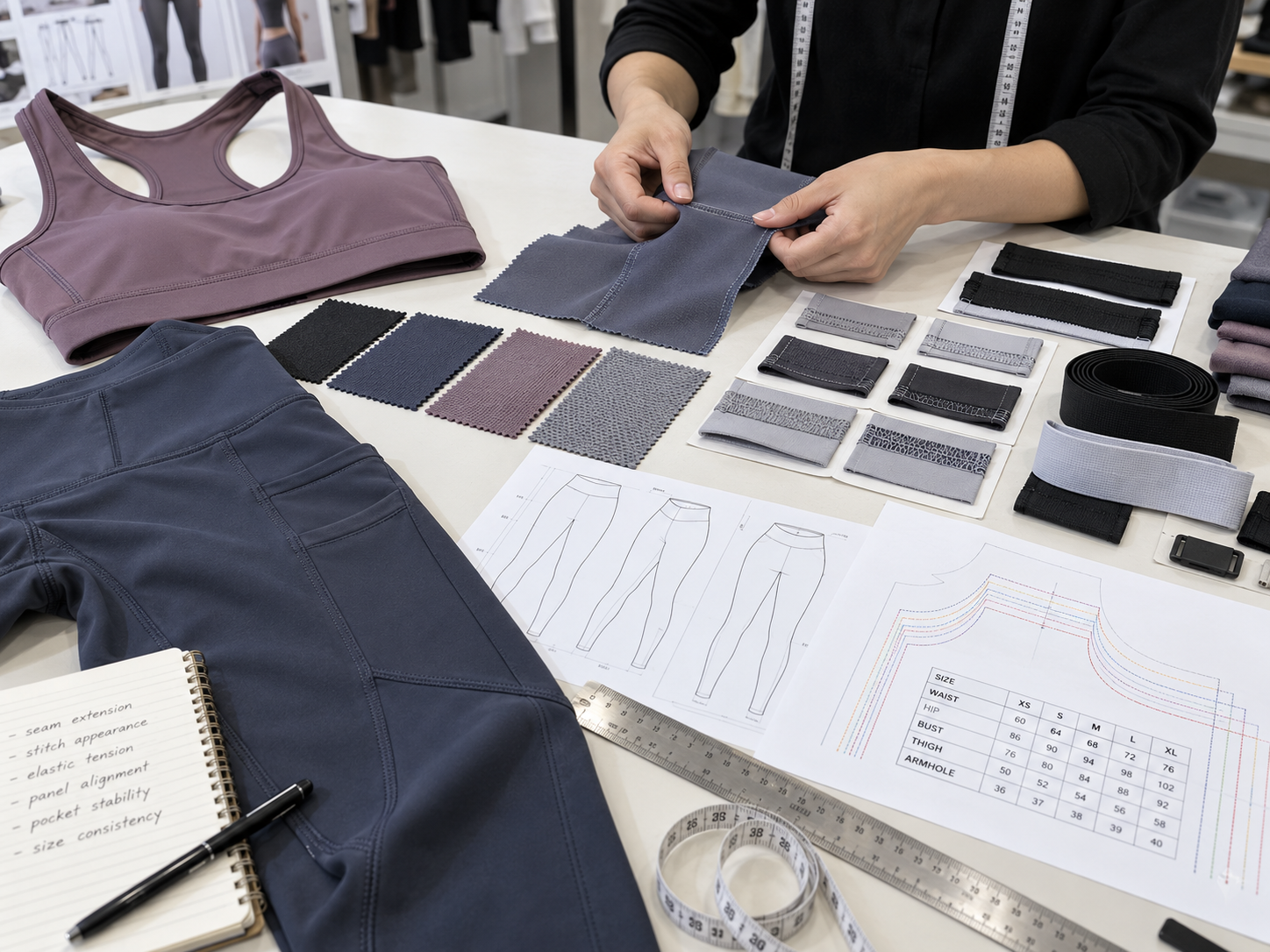
Incoming materials influence every later stage, so inspection begins before cutting. Depending on the program, review fabric color and appearance, relevant width or weight information, batch consistency, trims, quantity, and the approved material reference. Some projects may require shrinkage, stability, or other testing, but the test scope should be confirmed rather than assumed. Material inspection is most useful when results are connected to the approved sample and final product specification.
- Compare received fabric and trims with approved references.
- Separate batches or color lots when the project requires it.
- Record material changes before production release.
In-Process Checks
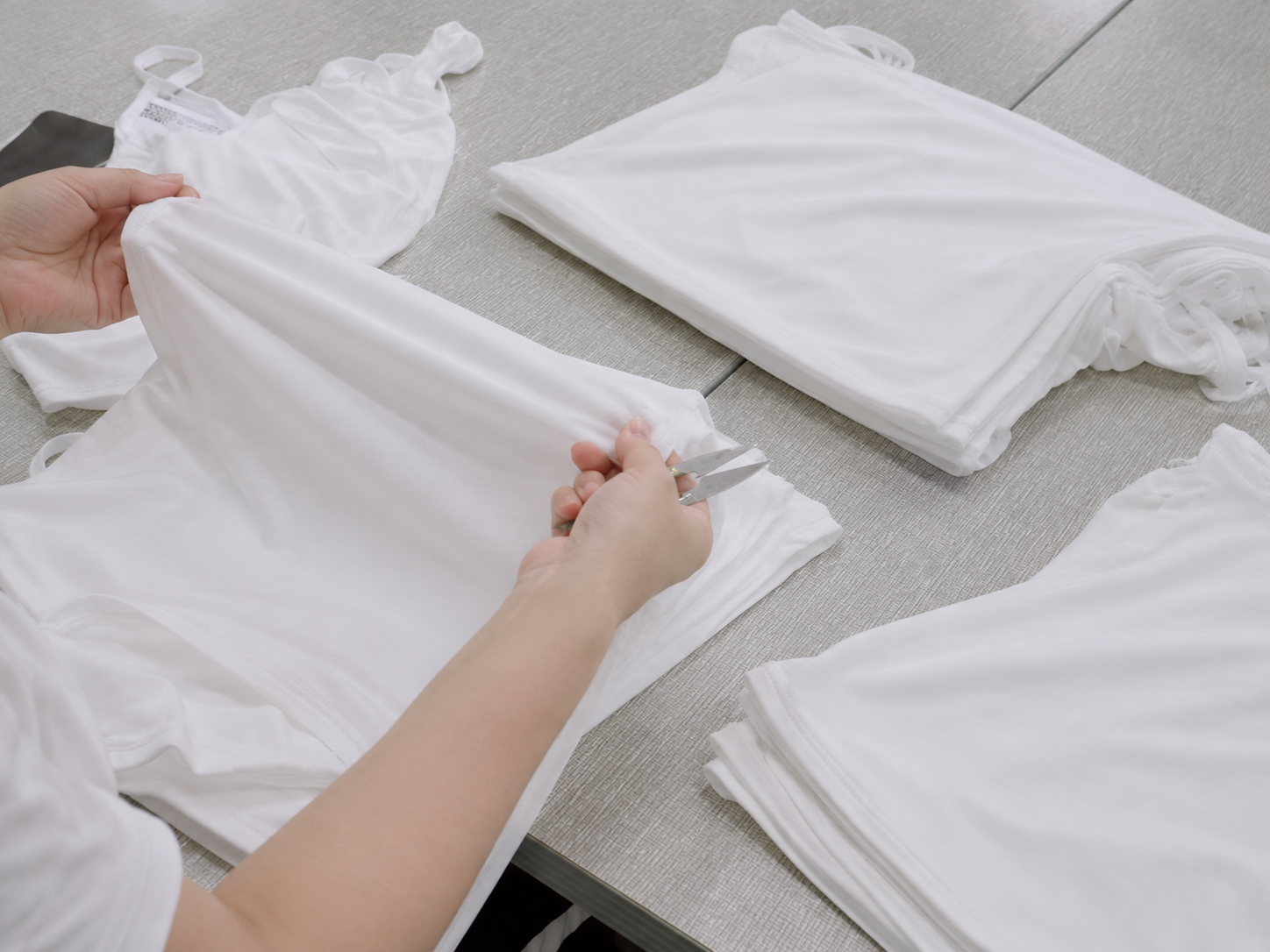
Process inspection focuses on points where repeated production can drift. Cutting direction, panel dimensions, seam construction, elastic installation, bartacks, zippers, Logo placement, stitch appearance, and early garment measurements may require checks depending on the style. Leadshow’s approximately 45-person quality team can support material, in-process, finished-garment, and packing inspection by project, but no universal claim should be made that every order uses the same sampling rate or fixed AQL.
- Check early output against approved construction and measurements.
- Focus on operations with higher fit, appearance, or durability risk.
- Isolate and recheck corrected pieces when deviations occur.
Finished Garments
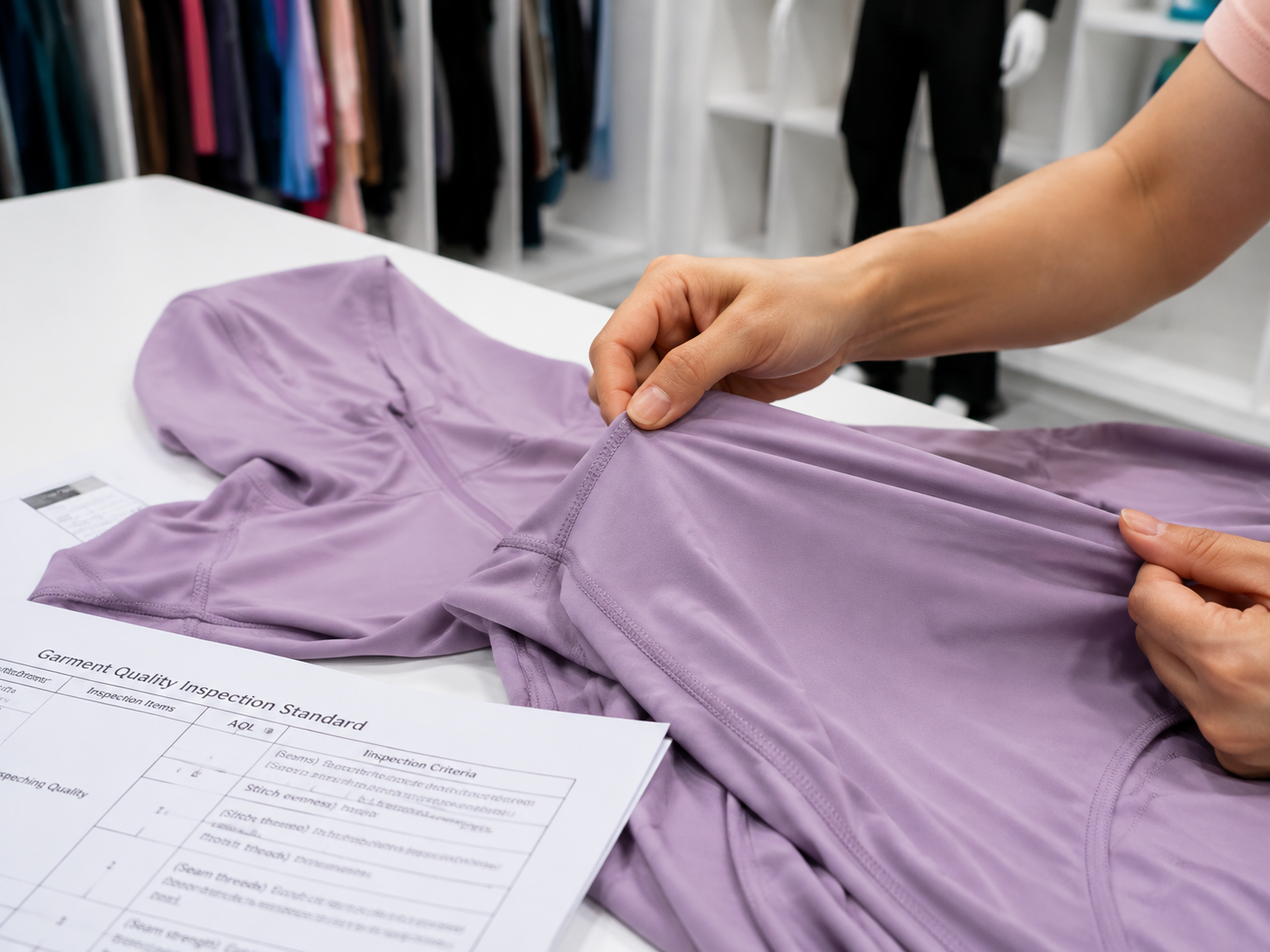
Finished-garment inspection verifies the parts of the standard that can be assessed after sewing and finishing: dimensions, appearance, workmanship, key components, Logo, labels, and other agreed characteristics. Tolerances should come from the approved specification, not from an assumed universal factory standard. A good inspection plan also distinguishes visual issues from measurement issues and identifies which items require correction, rework, or additional review before packing.
- Confirm points of measure and allowed tolerances.
- Check visible workmanship and agreed functional components.
- Record exceptions and disposition before release to packing.
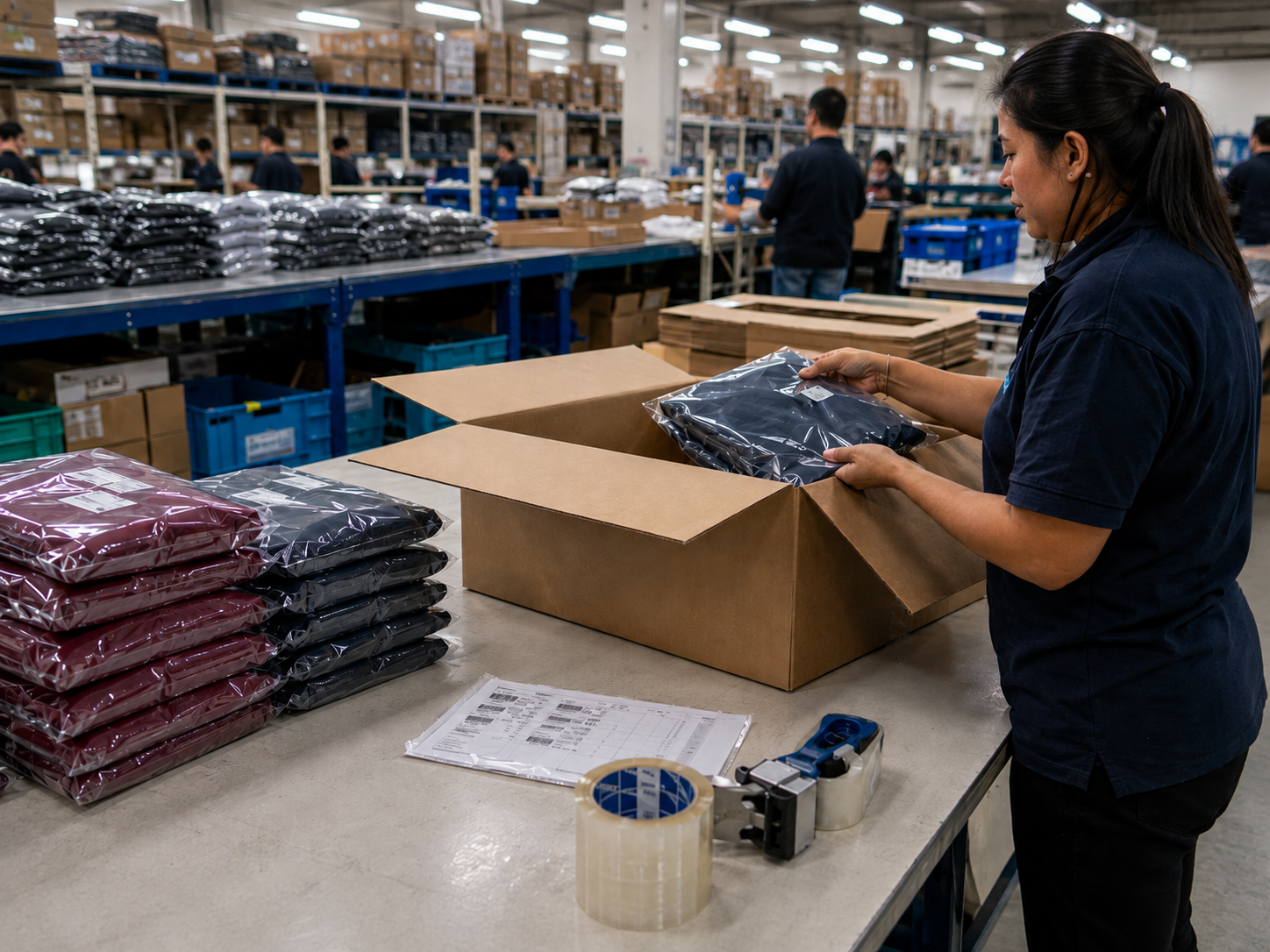
Packing Verification
Quality control continues after the garment is sewn. Wrong size labels, mixed colors, incorrect SKU labels, missing hangtags, incorrect poly bags, or wrong carton marks can create costly distribution problems even when the garment itself is acceptable. Verify product, size, color, label, SKU, individual pack, carton quantity, and packing list according to the approved requirements. Packing checks should be treated as part of product quality and order accuracy.
- Match garment, size, color, and SKU information.
- Check label and packaging version before carton sealing.
- Use final carton and document review before handover.
Understand MOQ Before Comparing Suppliers
MOQ is shaped by materials, colors, trims, processes, SKU structure, and production preparation. Compare suppliers only after understanding how each MOQ is calculated and which conditions could increase the required quantity or unit cost.
MOQ Factor
How It Affects the Order
Evaluation Question
Design and color
Production quantity is normally evaluated by design and color rather than only by total purchase volume.
What is the minimum per design and per color?
Fabric
Stock fabric and custom-dyed or custom-developed fabric may carry different supplier minimums.
Is the proposed fabric available, or does it require a new production lot?
Trims
Elastic, rib, zippers, buttons, special tapes, padding, or custom components may have independent minimums.
Which trims create separate MOQ requirements?
Logo process
Printing, heat application, artwork setup, or other decoration can add setup conditions.
What quantity and setup assumptions are included?
Colors and sizes
More colors split the order into smaller production lots; more sizes add cutting and identification complexity.
How are color and size combinations distributed?
Labels and packaging
Custom labels, hangtags, boxes, and special packs may have supplier minimums.
Are branding and packaging minimums included in the quote?
Leadshow reference
Regular MOQ starts from 100 pieces per color per design, subject to fabric, trims, construction, and customization requirements.
Does the project fit the regular MOQ conditions?
Compare Quotes on the Same Specifications
Unit prices are only comparable when the underlying product, quantities, services, and delivery responsibilities are aligned. Use one RFQ format for every shortlisted manufacturer so price differences can be traced to materials, construction, scope, or commercial conditions.
Comparison Item
Confirm Before Comparing
Common Source of Misreading
Fabric
Composition, structure, weight or agreed specification, color route, finish
Different materials quoted under the same generic fabric name
Trims
Type, size, material, color, brand/specification where required
Low quote excludes custom or higher-spec components
Pattern and sizing
Base size, measurement chart, grading, size range, tolerances
One quote includes pattern work while another assumes files are production-ready
Construction
Seams, panels, reinforcement, bonding, lining, pockets, closures
Complex operations are simplified in one quotation
Logo and branding
Process, artwork, size, color, placement, labels, hangtags
Branding setup or labels excluded from unit price
Sampling
Sample type, included revisions, material status, freight
Sampling cost is separated or hidden outside unit price
Testing and inspection
Required tests, third-party inspection, quality documentation
One supplier includes external costs and another does not
Packaging
Individual pack, inserts, SKU labels, barcode, carton requirements
Basic poly bag compared with retail-ready pack
Quantity
Same quantity per design, color, size, and total program
Total order volume looks equal but individual color lots differ
Delivery scope
Trade terms, handover point, freight responsibilities
Prices are compared across different delivery responsibilities
Timing
Material readiness, sample approval, production schedule, shipment plan
A shorter lead time assumes fewer approvals or different materials
Evaluate Communication as a Manufacturing Capability
Reliable communication is measured by clarity, version control, approval discipline, and issue handling rather than message volume. Apparel development involves design, sourcing, technical, quality, production, and logistics decisions, so written records need to keep every function aligned.
Written Specifications
Verbal descriptions such as “soft,” “tight,” “dark,” or “premium” can mean different things to different teams. Convert important requirements into written product specifications, measurement charts, reference samples, color standards, material swatches, artwork, and annotated images. A manufacturer should identify which details are objective and which still depend on physical approval.
- Use agreed product and construction terminology.
- Confirm subjective requirements with physical or visual references.
- Keep critical decisions in written records.
Single File Version
Every sample and production decision should point to one active file version. When measurement charts, artwork, packaging, and comments circulate separately, old instructions can re-enter the project. Assign version names or dates, archive superseded files, and define which document controls each decision. Version discipline becomes more important as more departments join the program.
- Mark the current Tech Pack and measurement version.
- Archive replaced documents instead of editing them invisibly.
- Confirm the final version before bulk release.
Sample Feedback
Sample comments should be consolidated before a revision starts. Separate fit, measurement, fabric, construction, Logo, trim, and appearance comments, then identify which changes require a new sample or updated file. Conflicting comments from different internal stakeholders should be resolved before the manufacturer acts, otherwise the next round may solve one request while reintroducing another.
- Use one consolidated comment set per round.
- Identify approved items and open items separately.
- Update files after each accepted change.
Approval Points
Define which decisions require formal approval: material, color, sample, artwork, size set, pre-production reference, labels, packaging, or other project-specific milestones. Approval is valuable because it creates a stable production reference, not because it transfers all risk to one party. Each approval should state what is accepted and what remains conditional.
- Name the responsible approver for key decisions.
- Record the approved reference and date.
- Reopen evaluation if specifications materially change.
Issue Communication
Problems should be reported with facts, impact, options, and the decision needed. A useful update explains what happened, which quantity or stage is affected, whether the approved standard is at risk, what corrective paths are available, and how timing may change. Silence or vague reassurance often creates larger problems than an early, specific escalation.
- Describe the issue and affected scope.
- Provide correction options and trade-offs.
- Record the selected action and revised requirement.
Primary Contact
A single commercial contact can simplify communication while internal functions contribute technical, production, quality, and logistics input. Leadshow can use a primary business contact to coordinate relevant functions according to the project stage. The role should not be exaggerated into a dedicated project manager for every account unless formally confirmed.
- Use one main communication window for consolidated updates.
- Route technical decisions to the relevant internal function.
- Confirm business terms through formal quotations and order documents.
Check Multi-SKU and Packaging Execution
Large apparel programs often fail in identification and packing rather than sewing. Review how style, color, size, labels, barcodes, individual packs, cartons, and documents are kept aligned so finished goods reach the correct channel in the correct version.
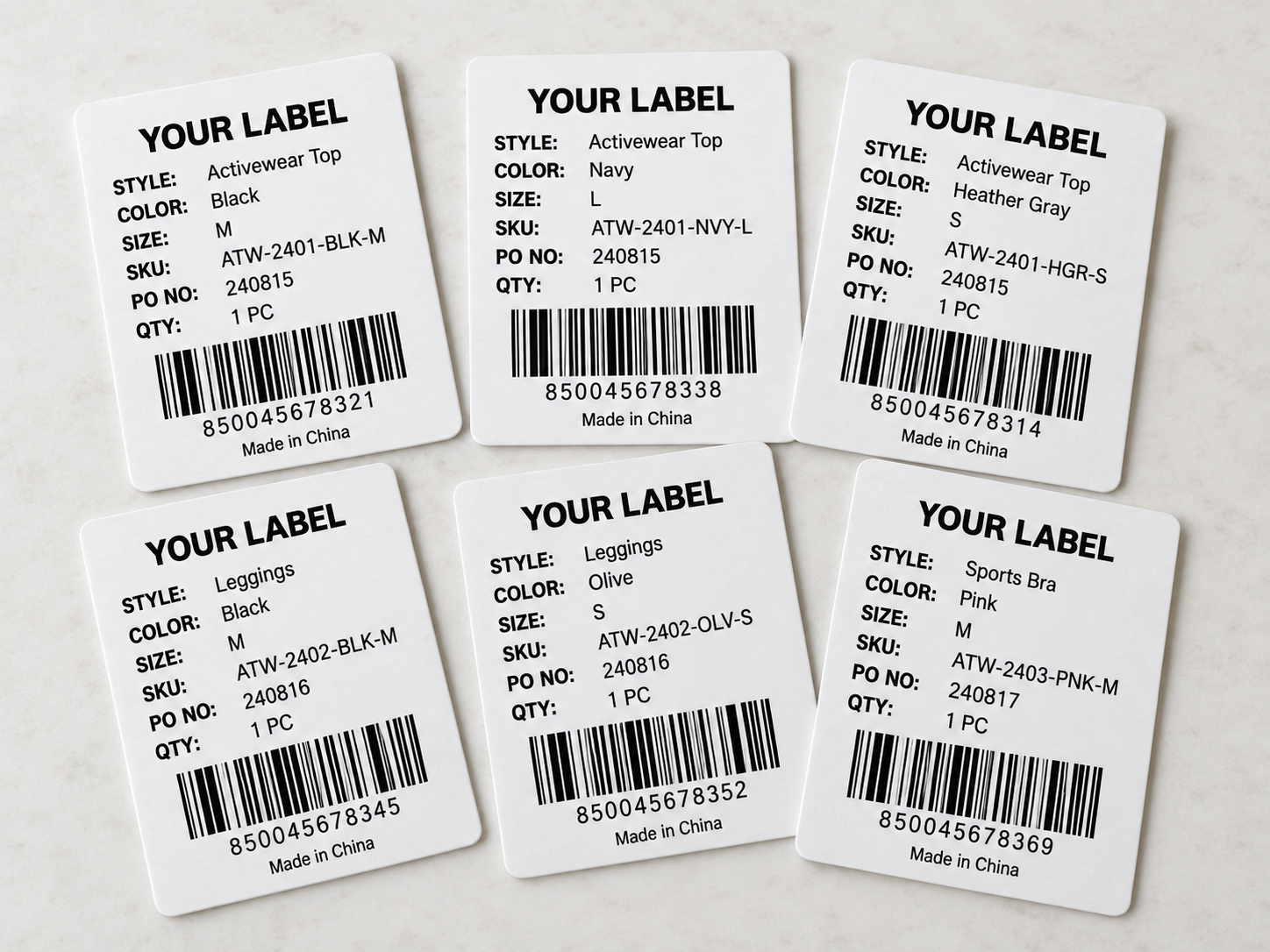
SKU Matrix
Create a master SKU matrix that links style number, product name, color, size, quantity, label version, packaging version, and market or channel where needed. Similar garments are easy to mix once they are folded or bagged. A clear SKU structure helps cutting, production, inspection, packing, warehousing, and reorder teams refer to the same identity instead of relying on appearance alone.
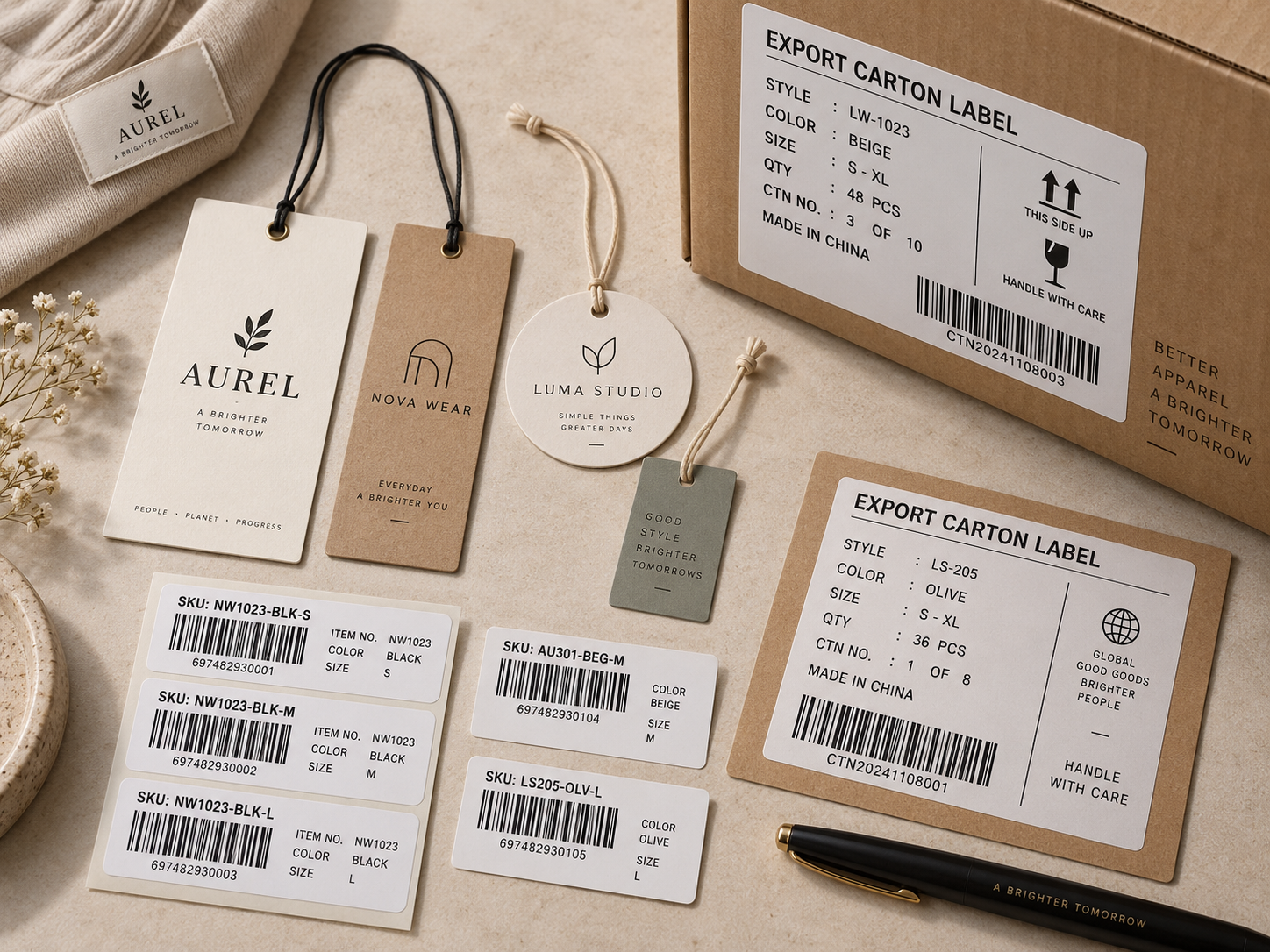
Labels and Barcodes
Main labels, care labels, size labels, hangtags, SKU labels, and barcodes should match the approved artwork and product matrix. Confirm wording, size, material, placement, language, code ownership, and channel requirements before bulk packing. The manufacturer should execute approved information rather than invent barcode or regulatory content. Final inspection should verify that product identity and label identity match before the garment is packed.
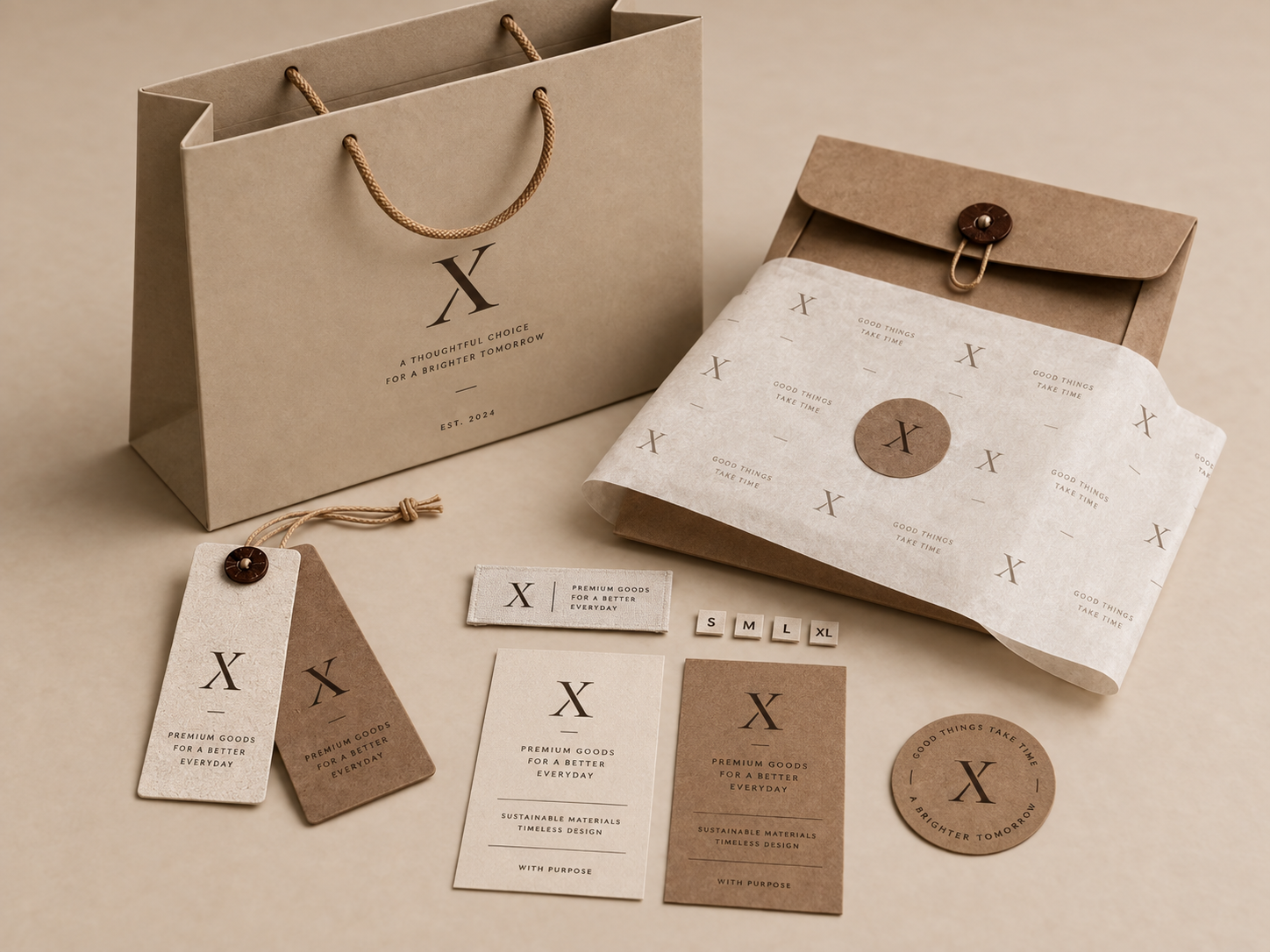
Individual Packaging
Packaging should reflect distribution needs, not just visual presentation. Confirm fold method, poly bag or box, insert cards, warning text, size stickers, SKU labels, sets, accessories, and any market-specific version. Complex packaging can influence cost, MOQ, packing time, and error risk. A packaging sample should be tested with the actual garment before production, especially for thick, structured, or multi-piece products.
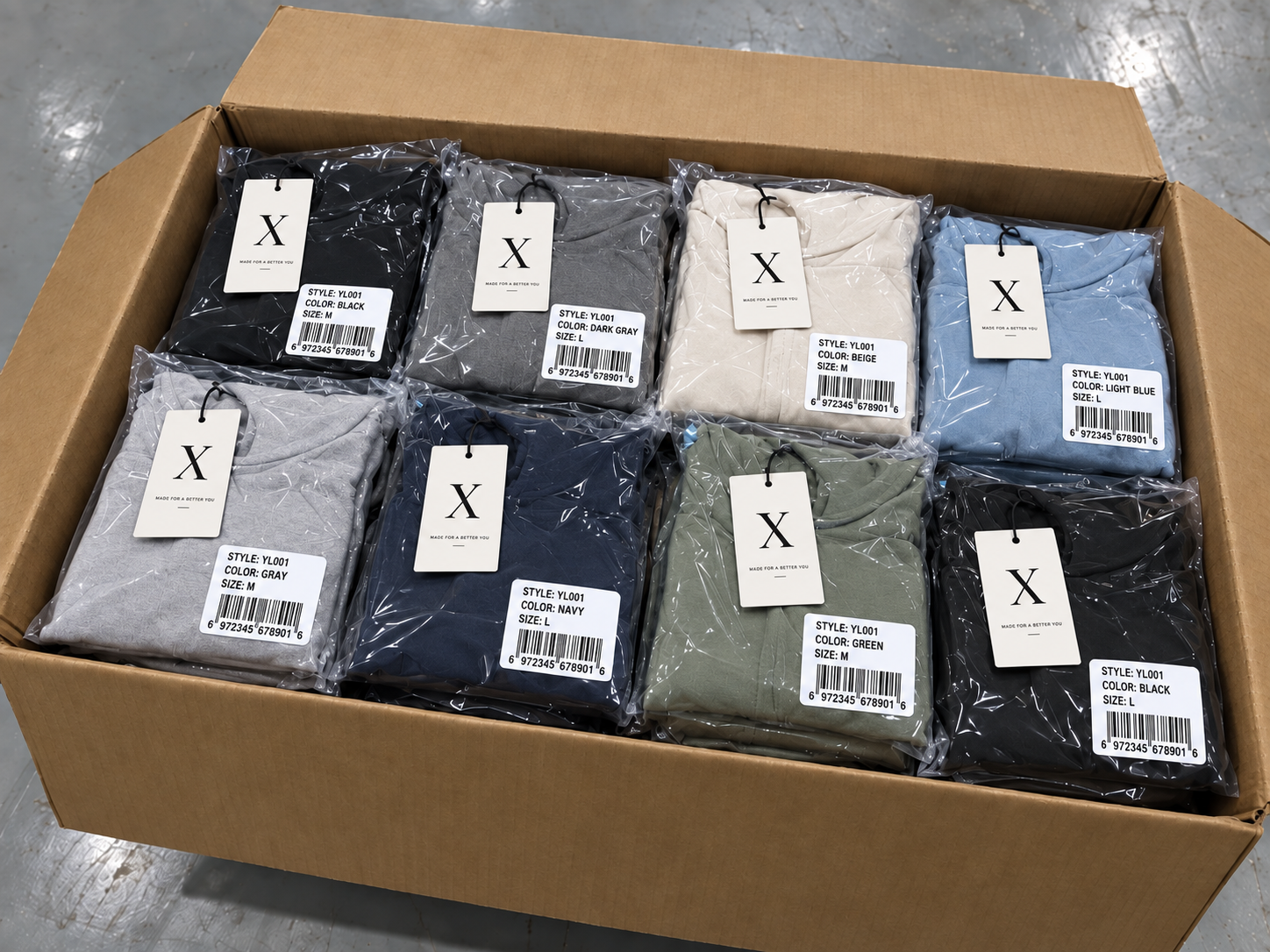
Cartons and Handover
Carton quantity, mixed or single SKU rules, carton marks, box numbers, packing list, dimensions, gross and net weight, and handover instructions should follow the approved shipping requirement. Leadshow can support labeling, packing, carton preparation, and shipment coordination. Customs clearance, platform acceptance, and destination delivery results should remain outside the manufacturing guarantee unless separately defined by contract.
Protect Designs Before Sharing Production Files
Unreleased garments, Tech Packs, artwork, samples, material plans, and launch schedules can carry commercial value. A manufacturer should explain how project information is used, who needs access, what may be shared with external suppliers, and when public display requires permission.
Limit Project Information to the Work Required for Development
Before sending sensitive information, define what each file is for and who needs access. Technical teams may require patterns, measurements, construction, materials, and artwork; sourcing functions may need fabric or trim specifications; external material or process suppliers may need only the information required to produce their component. Sharing should follow the minimum necessary scope rather than circulating complete brand files without purpose.
Use style numbers and file versions to reduce confusion, and mark obsolete documents clearly. Physical samples, failed samples, excess branded materials, and prototypes may also contain sensitive information, so handling should be agreed when the project involves unreleased products. Public use is a separate decision. Factory photos, case studies, sample-wall images, social content, or portfolio references should not reveal a brand name, Logo, design, or production details without authorization.
Leadshow’s content rules explicitly prohibit using unapproved brand Logos, client names, case information, or testimonials. Any NDA or legal confidentiality obligation should be confirmed in the formal agreement rather than treated as an automatic website promise.

Confirm Design Rights and Approval Boundaries on Both Sides
Confidentiality also depends on the rights attached to the materials being submitted. A brand or sourcing organization should confirm that it has the right to use and manufacture the Logo, artwork, pattern, sample, print, or third-party design it provides. A manufacturer can review common market references and general product structures, but it should not knowingly reproduce protected branding or unique artwork without authorization.
For reference-based development, separate the functional requirement from the protected expression. Instead of asking for an exact copy, define the fit goal, coverage, material direction, construction logic, pocket function, opening method, Logo location, or other design purpose that needs to be achieved. Develop an approved solution around those requirements.
The same discipline protects later production. Final files should show which design and branding elements have been authorized, and any change should be approved before bulk use. Formal legal terms, ownership, destruction or retention of project files, and post-project obligations remain subject to the signed agreement and applicable law.

Red Flags When Choosing an Apparel Manufacturer
Warning signs often appear before sampling begins. The issue is not an ambitious supplier; it is a promise made without enough information to support it. Look for condition-based answers, clear evidence, and willingness to explain limits before committing to bulk production.
Instant Lowest Price
A supplier that promises the lowest price before reviewing fabric, trims, construction, quantity, color count, size range, Logo, packaging, testing, and delivery scope is not comparing the same product. Early pricing can be useful as a range, but a firm quotation should explain its assumptions. Otherwise, later material changes, excluded services, or extra process costs can make the initial number meaningless.
Guaranteed Rush Timing
Extremely short lead times offered before material availability, sample approval, order quantity, production complexity, and current scheduling are reviewed deserve caution. Apparel timing is a chain of dependent stages. A credible manufacturer identifies which parts can be accelerated, which approvals cannot be skipped, and how material or shipping choices affect the schedule instead of guaranteeing one universal delivery time.
Any Design Accepted
“We can make any design” sounds flexible but may hide weak technical screening. Every factory has boundaries in product category, material compatibility, equipment, skill, MOQ, quality requirements, and schedule. A stronger response identifies the construction, material, and process points that need evaluation and explains where a prototype or technical trial is required before production confidence is established.
No Sample Discipline
Bulk production should not be the first full test of a new design. Warning signs include pressure to order before a sample is reviewed, unclear revision history, no measurement record, no approved material reference, or a sample that is treated only as a sales demonstration. Sampling should close decisions and create an executable production standard, even when the exact sample sequence varies by project.
Vague Quality Claims
Statements such as “strict QC,” “premium quality,” or “zero defects” are not enough. Ask what is checked at material, cutting, early production, in-process, finished-garment, label, and packing stages. A manufacturer should be able to name the relevant checkpoints and how nonconforming output is handled. Fixed claims of zero defects or universal 100% inspection require evidence and should not be assumed.
No Factory Evidence
A professional website alone does not prove manufacturing depth. Ask for real production evidence that connects development, sampling, cutting, sewing, special processes, quality, finishing, and packing. Where appropriate, use a video review, document audit, or planned onsite visit. Avoid confusing an office address, showroom, warehouse, or stock-photo factory with the actual facilities responsible for the project.
Universal Certifications
Be cautious when every material, product, or market is described as certified or compliant without naming the standard, scope, test report, certificate owner, or applicable product. Market requirements vary by destination, product type, material, age group, performance claim, and channel. Testing and compliance should be reviewed against the specific project rather than converted into a blanket marketing promise.
Unlimited Free Commitments
Free samples for every project, unlimited revisions, guaranteed delivery, guaranteed customs clearance, or guaranteed market results can sound attractive but ignore the conditions of apparel development. Costs, revisions, timing, and logistics responsibilities depend on project details. A stronger manufacturer explains which services are included, which require approval or cost, and where external suppliers, testing agencies, or logistics providers are involved.
Evaluate Leadshow Against the Same Criteria
Leadshow should be assessed with the same evidence-based standards used for any shortlisted manufacturer. The references below separate confirmed capability from project-dependent conditions so procurement teams can decide whether the operation fits a specific apparel program.
Selection Criterion
Leadshow Evidence
Important Boundary
Company position
Mid-to-high-end OEM and ODM apparel development and manufacturing partner
Not a general trader, stock wholesaler, one-piece custom studio, or all-category apparel group
Core product focus
Sportswear, Swimwear, Streetwear, Modest Sportswear
Individual subcategories outside confirmed product scope require evaluation
Confirmed key products
Sports Bras, Sports T-Shirts, Yoga Leggings, Tennis Skirts, Jumpsuits, Running Shorts, Tank Tops, Tracksuits, Hoodies, Sweatshirts
No assumption that every apparel type is available
Industry experience
15 years of apparel industry experience
Does not establish a specific founding year
Manufacturing footprint
3 modern manufacturing bases
Individual base locations, areas, and capacity are not publicly confirmed in the current fact set
Combined factory area
20,000+ square meters
Combined figure, not a single-factory area
Team
1,500+ employees
Not all employees are designers, engineers, or sewing operators
Equipment
300+ confirmed production, specialized-process, and finishing machines
Equipment availability does not mean every process applies to every garment
Development support
Technical review, pattern and fit adjustment, sample development, product development
Project-based; no universal free design or unlimited revision promise
Sampling environment
Independent R&D and sampling workshop
No fixed sample-time promise for all products
Bulk capacity
Up to approximately 120,000 finished garments per month, combined
Subject to construction, materials, processes, order mix, quality requirements, and current scheduling
MOQ
Starts from 100 pieces per color per design
Subject to fabric, trims, construction, Logo, packaging, and customization requirements
Quality support
Approx. 45-person quality team supports material, in-process, finished-garment, and packing inspections
No universal fixed AQL or 100% inspection claim
Packaging and logistics
Approx. 32-person warehousing and logistics team; labels, packing, carton preparation, shipment coordination
No guarantee of customs clearance, platform acceptance, or destination delivery
Export regions
Europe, North America, South America, Oceania
Specific countries and market shares are not inferred from regional data
Prepare These Details for Supplier Evaluation
Comparable supplier decisions require comparable inputs. Send the same core product, commercial, and manufacturing information to each shortlisted factory. Complete files improve quotation accuracy, while early-stage projects can still begin with a smaller set of clearly labeled assumptions.
Product Files
Share the most current information that defines the garment. A mature program may include a Tech Pack, construction drawing, measurement chart, pattern reference, artwork, BOM, packaging specification, and approved sample. Earlier projects can begin with clear reference images, a physical sample, or concept notes. Mark each file with a version so suppliers evaluate the same product instead of interpreting mixed documents.
- Latest Tech Pack or design file
- Reference image or physical sample
- Measurement chart and intended size range when available
- Artwork and branding references
Commercial Requirements
Manufacturers need the commercial structure to judge MOQ, capacity, cost, and timing. State the expected quantity by design and color, color count, size distribution or range if known, intended market, target launch or handover window, and whether the first order is a test or part of a larger repeat program. A delivery date should be treated as a target until material, sampling, production schedule, and shipment responsibilities are reviewed.
- Quantity per design and color
- Color and size structure
- Target market and sales channel
- Expected timing and reorder outlook
Manufacturing Requirements
Define the product conditions that can materially change feasibility and quotation. Include fabric direction, trims, Logo, special construction, performance requirements, quality standards, testing, labels, packaging, carton instructions, and any supplier audit requirement. When a requirement is still open, say so rather than presenting an assumption as final. Leadshow can begin an initial discussion from reference materials, quantity, and target market when a full Tech Pack is not yet available.
- Fabric, trims, and process requirements
- Logo, labels, and packaging
- Quality and testing expectations
- Audit, confidentiality, and delivery requirements
Frequently Asked Questions About Choosing an Apparel Manufacturer
Use the answers below to screen potential suppliers before committing to sampling or bulk production. Final MOQ, timing, quality standards, material specifications, testing, commercial terms, and delivery responsibilities should still be confirmed for the individual project.
What should I look for in an apparel manufacturer?
Start with product-category fit, development capability, materials, sampling, sample-to-bulk control, quality checkpoints, capacity, MOQ logic, quotation transparency, communication, packaging, and factory evidence. The best manufacturer is the operation whose verified capability matches the garment, order profile, market, and production risk—not automatically the largest or lowest-priced supplier.
How do I verify a clothing factory?
Request real evidence from development, sampling, cutting, sewing, specialized processes, inspection, finishing, and packing. Review factory data, relevant product samples, process records, and quality documents. When needed, arrange a video review, document audit, or onsite visit under agreed production and confidentiality conditions.
Should I choose the lowest MOQ?
No. MOQ should fit the commercial plan and the manufacturing reality. Fabric, custom colors, trims, Logo processes, packaging, number of colors, size structure, and setup effort can all affect minimum quantities. Compare the assumptions behind each MOQ and how the supplier plans to scale if the program grows.
How should I compare manufacturer quotations?
Use the same RFQ and compare the same fabric, trims, pattern scope, construction, sizes, Logo, sampling, testing, packaging, quantity, delivery responsibility, and timing assumptions. A lower unit price is not meaningful when one quotation excludes work or uses a different specification.
What should an apparel sample prove?
A sample should verify interpretation, fit, measurements, construction, material direction, trims, workmanship, branding, and the manufacturing path. Each round should produce recorded comments and a clear version. Final approval should identify which elements are accepted before production preparation begins.
How do I check sample-to-bulk consistency?
Ask how the approved sample, final Tech Pack, measurements, approved materials, first-piece checks, in-process inspection, finished-garment inspection, and packing checks are connected. Consistency means production within approved specifications and agreed tolerances, not a promise that every garment will be absolutely identical.
What factory documents should I request?
The exact document set depends on the project and audit requirements. Useful evidence may include company information, current capability data, equipment references, sample and production records, inspection documents, material approvals, packing specifications, and relevant certifications or audit reports where they actually apply.
How important is product-category experience?
Very important. Different garments require different pattern logic, materials, seams, equipment, process controls, and inspection. Ask for evidence from products with comparable construction and risk. Broad experience in apparel does not automatically prove expertise in every garment category.
What should I send before requesting a quote?
Send the latest Tech Pack or reference, garment type, expected quantity per design and color, colors, size range if known, fabric and trim direction, Logo, packaging, target market, quality or testing requirements, and expected timing. Early concepts can start with reference images, quantity, and market information.
When should I approve a supplier for bulk production?
Approve bulk production only after the product specification, sample status, material direction, commercial terms, production capacity, quality plan, packaging, and major risks have been reviewed. New or complex programs may also require additional samples, size checks, a pre-production reference, or a small trial depending on the project.
Evaluate Leadshow for Your Apparel Project
A supplier shortlist becomes meaningful when the same project information is reviewed by each factory. Send Leadshow your current product files and commercial requirements for an initial manufacturing-fit discussion. Useful inputs include the garment category, Tech Pack or reference image, expected quantity per design and color, intended size range, fabric and trim direction, Logo requirements, target market, quality or testing expectations, packaging, and desired schedule.
Leadshow can review projects across its confirmed focus areas in sportswear, swimwear, streetwear, and modest sportswear, with development, sampling, bulk manufacturing, quality, label, packaging, and export-delivery support evaluated according to the project. Regular MOQ starts from 100 pieces per color per design, subject to fabric, trims, construction, and customization requirements. Sample timing and bulk delivery timing are confirmed only after material readiness, product complexity, approval steps, quantity, and current production scheduling are reviewed. If a complete Tech Pack is not available, begin with a reference image, product type, estimated quantity, and target market.