
Hoodie Embroidery Manufacturing
Custom hoodie development, embroidery planning, bulk manufacturing, branded details and export support for apparel labels and sourcing teams.
- Build hoodies from a Tech Pack, reference garment, artwork file or defined concept.
- Review fabric weight, fit, embroidery position, backing, stitch coverage and garment construction before sampling.
- Move through sample approval, trial production, bulk manufacturing, quality inspection, private labels, packaging and export preparation.
- MOQ starts from 100 pieces per color per design, subject to fabric, trims, construction and customization requirements.
- Confirm the embroidery route, physical approval standard, production schedule and final responsibilities in writing before order release.
Full-Package Custom Embroidered Hoodie Manufacturing
Leadshow supports hoodie programs requiring original garment development, controlled decoration, repeatable bulk production and branded finishing—not only a logo added to a stock blank. Fabric, fit, construction and embroidery are reviewed as one finished product.
From Garment Specification To Finished Embroidered Hoodie
Hoodie embroidery manufacturing combines two linked development tasks: building the garment and engineering the decoration. Fabric weight, surface texture, stretch, shrinkage, panel shape and seam location influence how an embroidered logo sits after sewing and washing. Artwork also affects backing, needle selection, thread density, color registration, production time and unit cost. Reviewing both parts together reduces puckering, distortion, bulky reverse surfaces and placement variation.
Leadshow can begin with a complete Tech Pack, reference sample, measurement chart, artwork package or a structured design brief. The initial review covers silhouette, fabric direction, hood construction, pocket type, rib specification, sewing method, label position, packaging needs and expected order scale. Embroidery requirements are then evaluated against the garment construction and production route.
- Development scope:Pattern and fit adjustment, material matching, sample development, revision support and production feasibility review.
- Decoration scope:Artwork suitability, proposed embroidery effect, size, location, color count, backing direction and approval method.
- Manufacturing scope:Trial production or pre-production confirmation, bulk sewing, coordinated embroidery execution, quality inspection, labels, packaging and export preparation.
- Commercial scope:MOQ, cost drivers, sample plan, material lead time, bulk schedule and delivery terms confirmed by quotation.
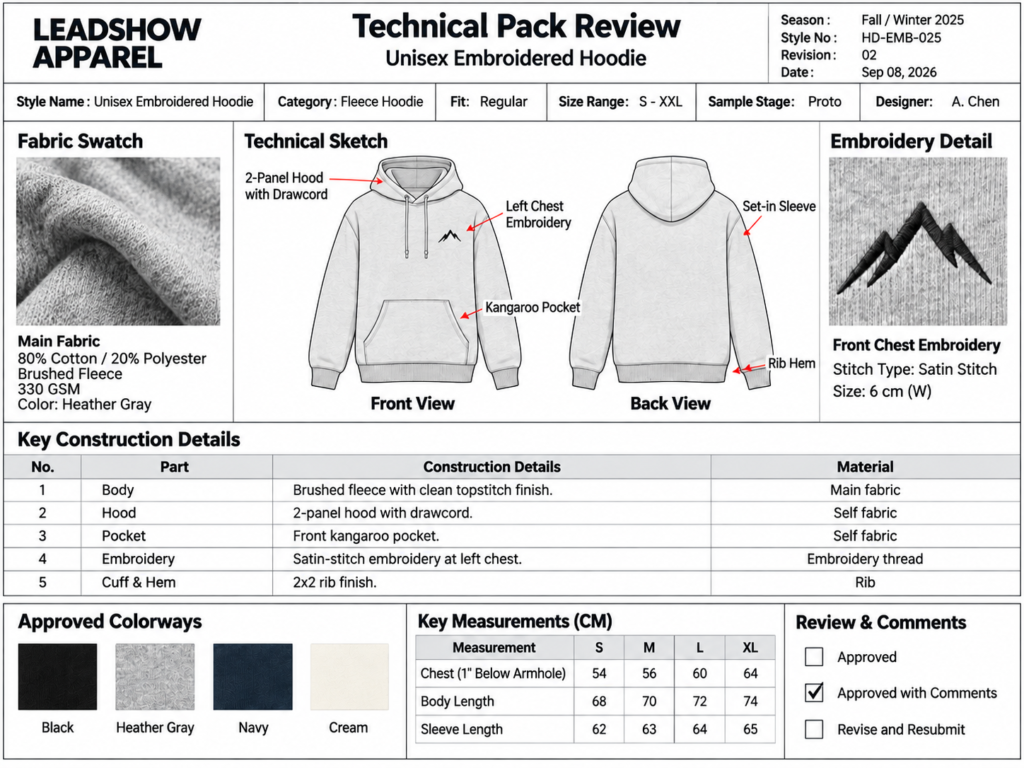
Embroidery execution is arranged according to project requirements and confirmed production resources. Equipment ownership, production location, responsible quality team and approval sequence should be recorded before an order is released. Clear responsibility matters more than an unverified claim of universal in-house capability.
Hoodie Programs Built For Growing Apparel Operations
Development depth, approval records and production controls are adjusted to the operating needs of established labels, expanding collections and volume-driven distribution programs. Each route accounts for launch cadence, product complexity, SKU structure and repeat-order expectations.
Established Apparel Brands
Seasonal collections need reliable fit, fabric continuity, controlled color, approved decoration and repeatable workmanship across purchase orders. Leadshow supports technical review, sample revisions, pre-production confirmation, bulk inspection and branded packing. Teams can submit approved measurement standards, workmanship manuals, restricted substance requirements and inspection criteria for evaluation before costing and scheduling begin. Order forecasts, target margins and launch calendars also help align material reservations, sampling priorities and capacity planning with the commercial program.
Streetwear And Lifestyle Labels
Heavyweight fleece, oversized silhouettes, dropped shoulders, dense chest graphics, sleeve placements, appliqué concepts and custom trims often define the product. Development focuses on proportion, fabric hand feel, hood volume, rib recovery and embroidery behavior. Brand labels, hangtags, folding methods and individual packing can be included after specifications and supplier minimums are confirmed. Color drops and limited releases can be planned around material availability, decoration complexity and realistic replenishment requirements.
Importers And Retail Programs
Multi-SKU orders require disciplined color, size, carton and labeling control. Leadshow can review order breakdowns, barcode needs, assortment ratios, packing instructions and shipping marks alongside garment specifications. Production and packing records help reduce mixed sizes, incorrect labels, missing units and carton discrepancies before export handover. Repeat-order files can retain approved references while fabric lots, thread shades, measurement results and packaging changes are checked again for each purchase order.
Three Ways To Start A Hoodie Project
Development can begin from detailed production files, an existing garment or an early concept. The starting point determines review depth, sample rounds and quotation accuracy. Better source information allows material, construction and embroidery risks to be closed earlier.
Complete Tech Pack
A developed specification usually provides the fastest route to an accurate quotation. Submit graded measurements, construction drawings, bill of materials, stitch and seam requirements, Pantone references, embroidery artwork, labels and packaging instructions.
- File formats: PDF, AI, EPS, SVG or other agreed production files
- Include artwork dimensions and placement measurements
- Mark tolerance, testing and inspection requirements
- Identify target quantity by color and size
Missing or conflicting details are listed for confirmation before sampling.
Approved file naming and revision dates should be visible on every release document. A costing based on complete specifications can separate confirmed materials from optional alternatives and makes later price changes easier to trace.
Reference Garment
A physical sample can communicate fit, fabric hand feel, hood shape, pocket construction and finishing standards more clearly than images alone. The garment is reviewed together with requested changes rather than copied without assessment.
- State which details must remain unchanged
- Mark fit, fabric, color and decoration changes
- Supply brand artwork and ownership authorization
- Confirm whether the sample may be opened for construction analysis
Measurements and materials still require written approval before bulk production.
The sample should arrive clean, labeled and accompanied by handling instructions. When only selected components are being referenced, photographs or tags should identify the exact hood, pocket, seam, rib, embroidery or fit feature under review.
Defined Design Brief
A structured brief can be developed when production files are not yet complete. Useful inputs include target silhouette, intended use, reference images, fabric weight range, logo concept, sales market, order quantity, size range and launch date.
- Leadshow reviews manufacturability and missing decisions
- Pattern, material and trim directions are proposed for approval
- Sample fees and development timing are quoted before work begins
- Final bulk specifications are created from approved results
Open-ended free design, unlimited revisions and one-piece development are not included.
A decision owner should consolidate feedback after each sample round. Structured comments covering measurements, fit, construction, material, color and decoration reduce contradictory revisions and keep development history usable for later bulk approval.
Custom Hoodie Silhouettes And Construction Options
Select a garment platform before refining fabric, embroidery and trims. Every silhouette changes measurement balance, decoration space, sewing difficulty and final cost. Reference images should be paired with measurements, intended fit and functional requirements.
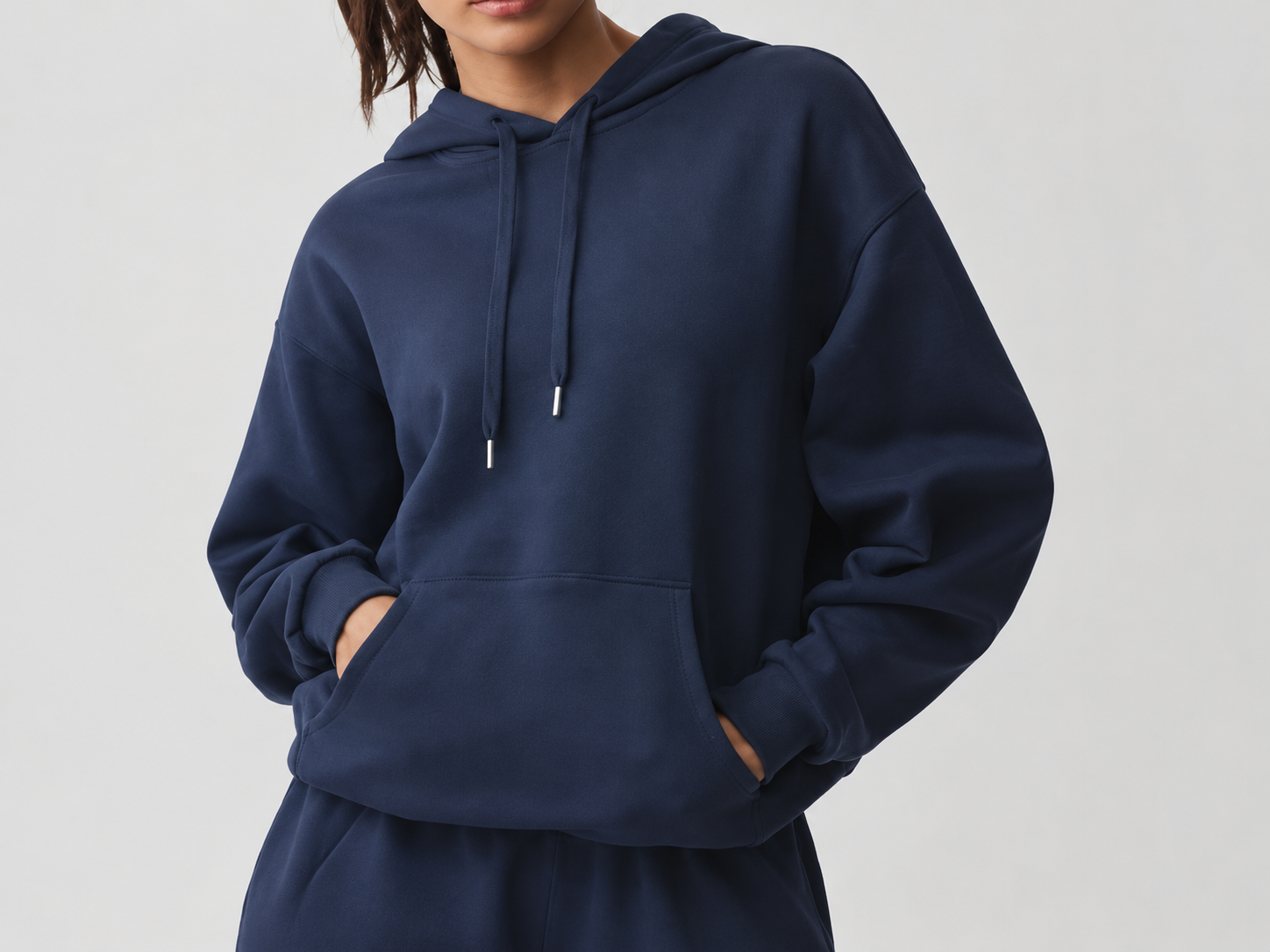
Pullover Hoodie
A classic pullover supports chest, back, sleeve and hood decoration. Development choices include regular or oversized fit, single- or double-layer hood, kangaroo pocket, rib width, drawcord system and interior finish. Embroidery placement is checked against pocket height, neckline shape and seam allowance to prevent crowding or distortion. Shoulder slope, hood opening, drawcord length and pocket access are reviewed on the approved base size. Fabric shrinkage and rib recovery are then reflected in the finished measurement specification.
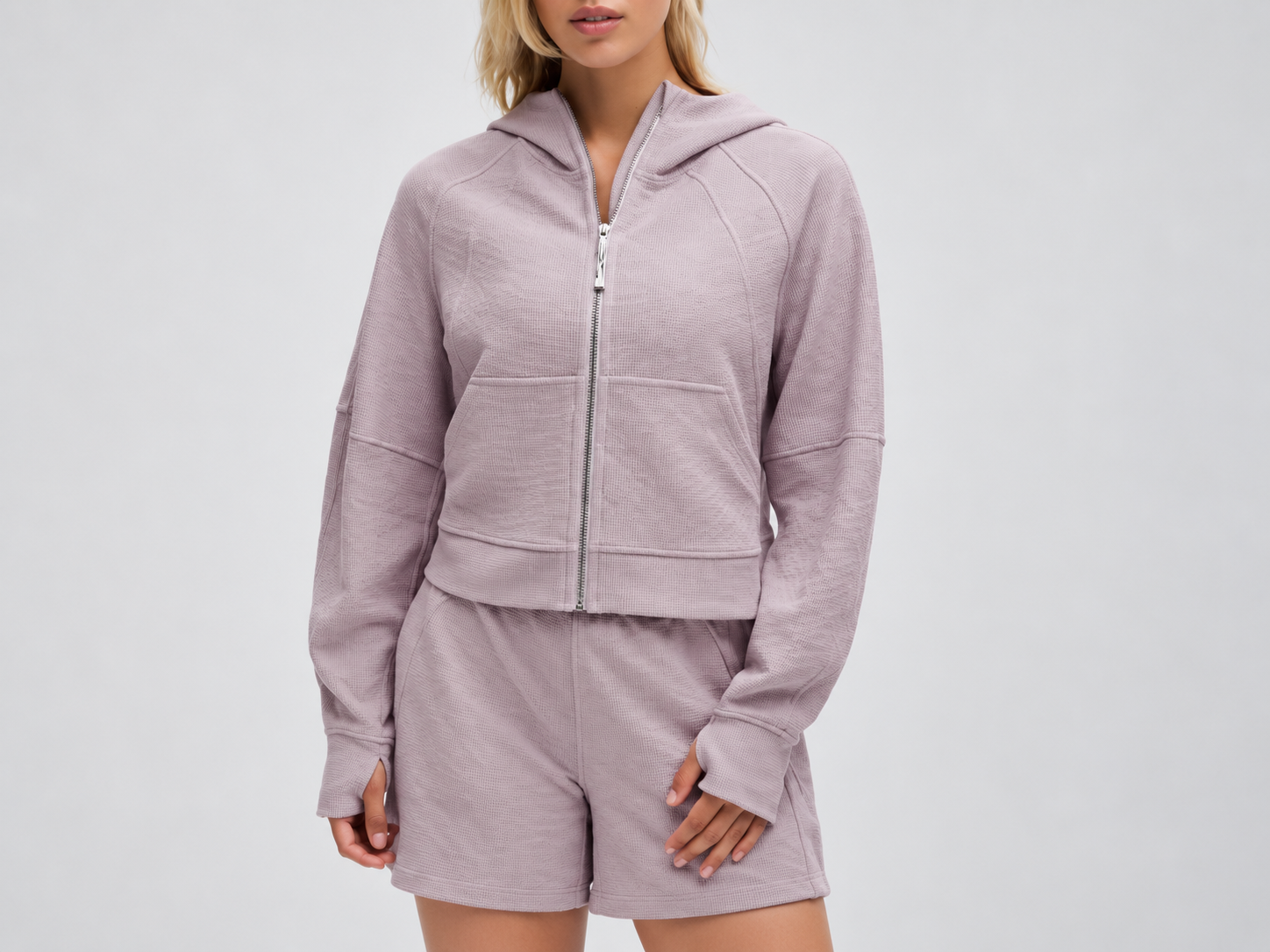
Zip-Up Hoodie
Full-zip construction requires accurate front balance, zipper length, placket alignment and pocket symmetry. A center-front graphic may need splitting or repositioning. Zipper type, puller, tape color and top-stop finish are specified before sampling. Embroidery should not interfere with zipper operation, facing layers or seam bulk. Matching across the zipper is assessed on the closed garment, while chest placement is measured from stable shoulder and center-front points. Pocket openings and inner facings should remain flat after decoration.
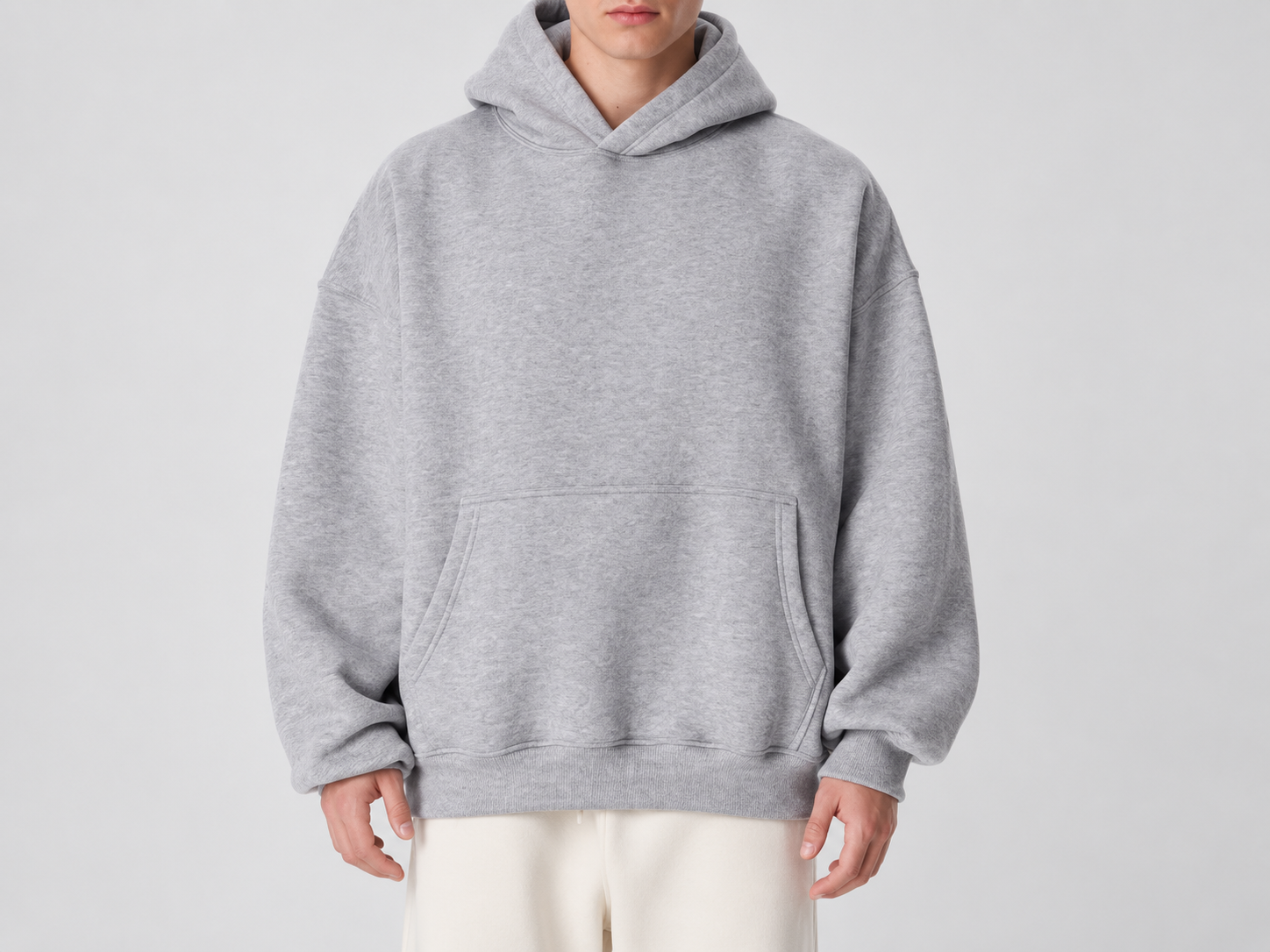
Oversized Hoodie
Dropped shoulders, wider body measurements, longer sleeves and a larger hood create a streetwear proportion. Fabric weight and rib recovery must support the silhouette without excessive collapse. Large embroidery can add stiffness, so artwork coverage, backing and position are evaluated against the desired drape and comfort. Grade rules should protect the intended proportion instead of enlarging every point equally. A size-set review can verify shoulder drop, sleeve length, body width and artwork balance beyond the base size.
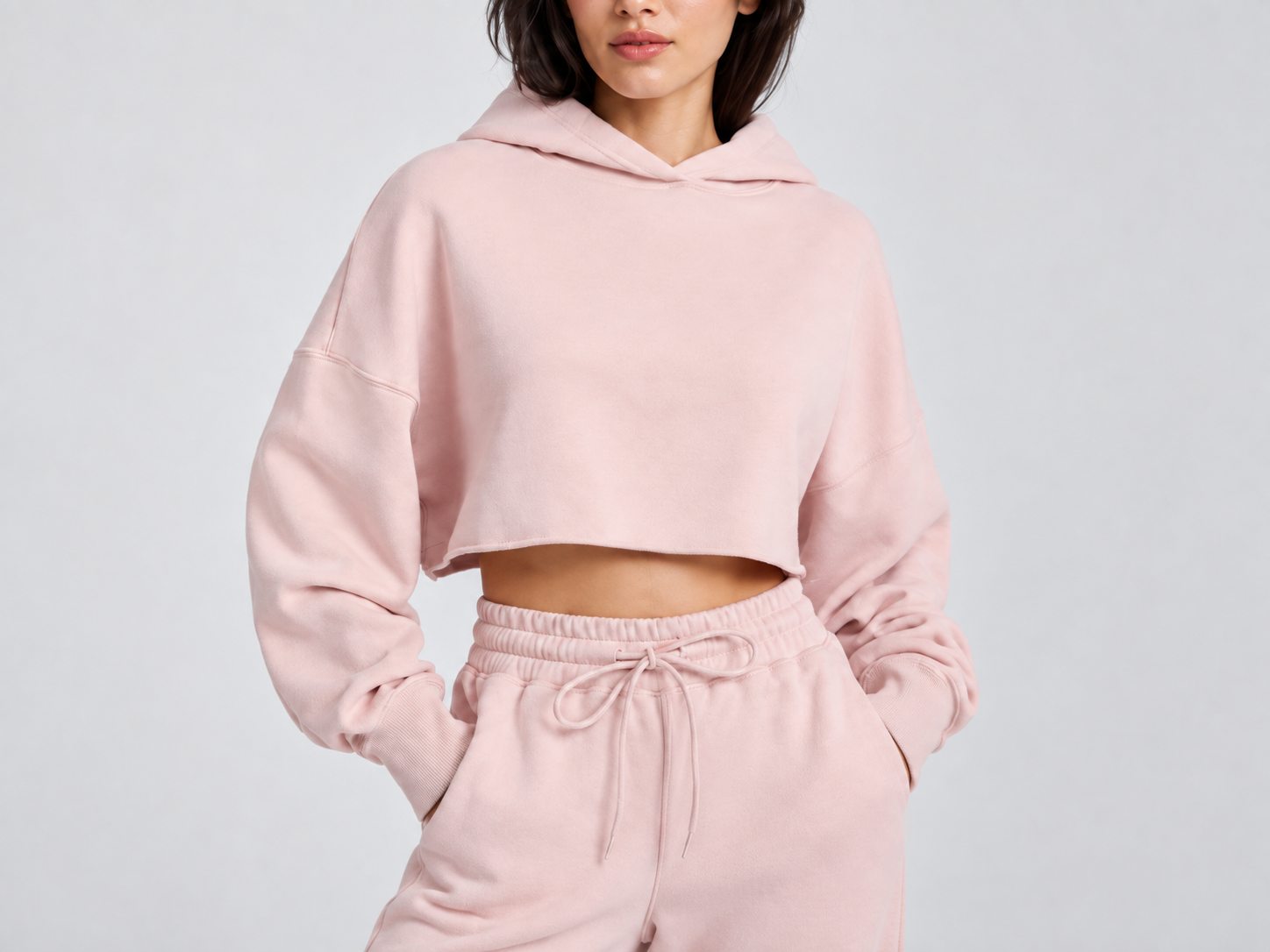
Cropped Hoodie
Cropped bodies require careful length balance, hem construction and pocket placement. Options include rib hem, raw-look finish, elastic casing or shaped waistband. Chest and back embroidery dimensions are scaled to the shorter body so the logo remains balanced across the full size range. Front length, back length and finished hem level should be measured using one documented method. Try-on feedback should also consider arm lift, layering and hood weight because each can change how the body sits.
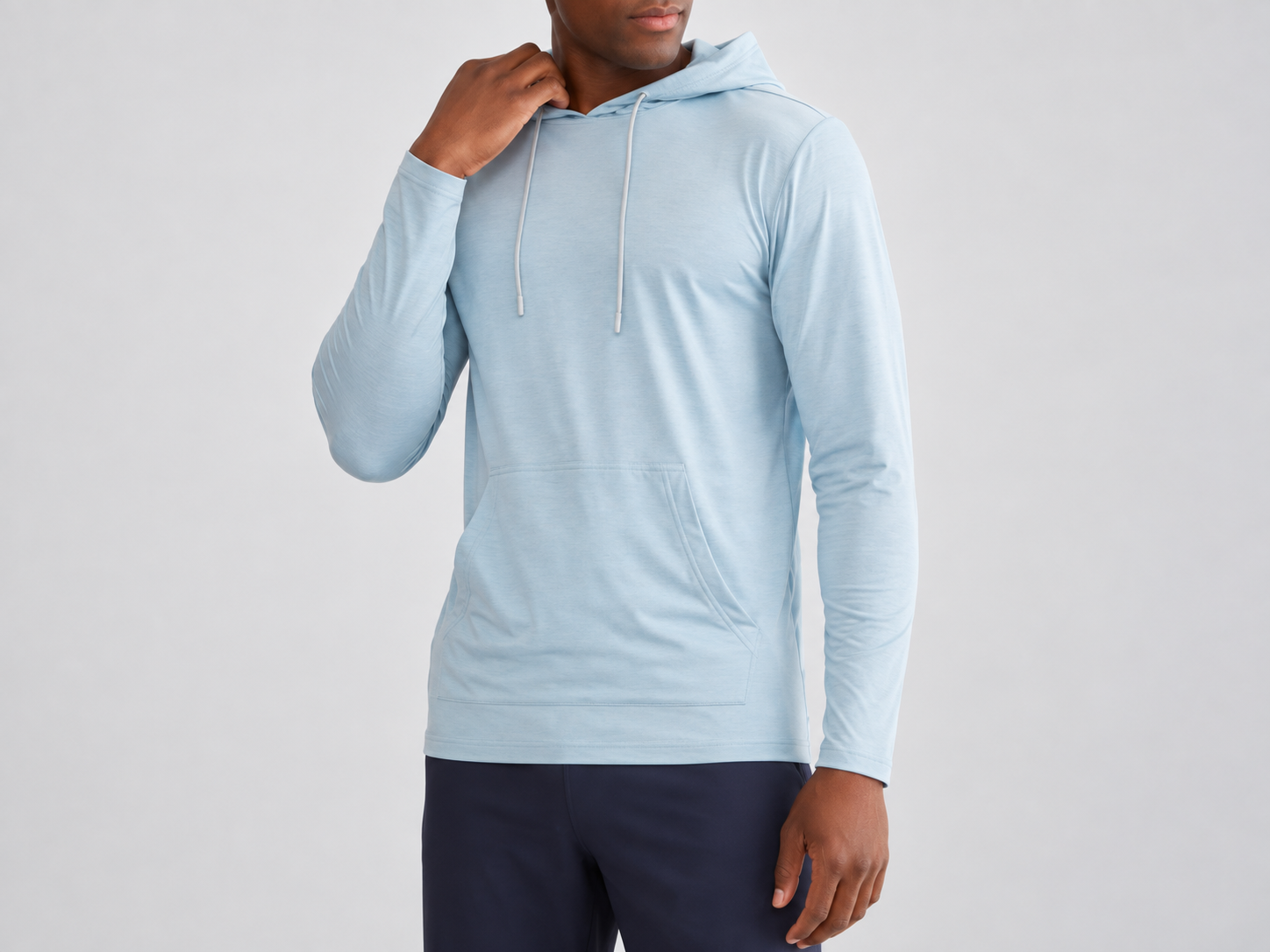
Performance Hoodie
Training and travel styles may use stretch knit, brushed technical fabric, lightweight fleece or panelled construction. Decoration must allow movement and avoid high-friction zones. Moisture management, ventilation, bonded details or reflective trims can be reviewed as separate project requirements; performance claims require appropriate material and test evidence. Seams, pocket security and hood fit are evaluated for the intended activity. Stretch loss around embroidery should be checked during movement and after the specified care cycle.
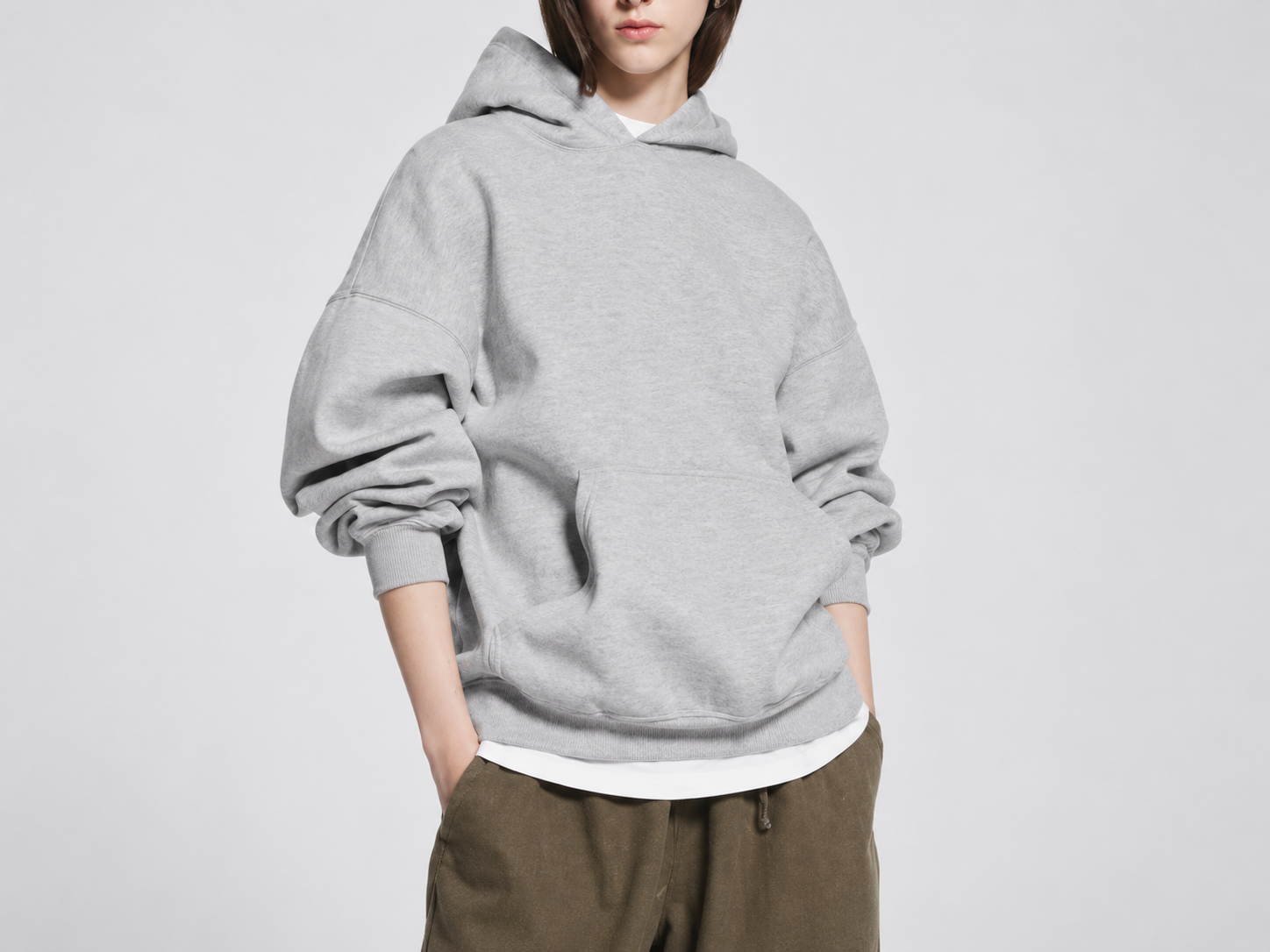
Heavyweight Hoodie
Dense fleece and structured jersey create a substantial hand feel suited to premium streetwear. Needle penetration, seam thickness, hood weight, shrinkage and drying behavior need attention. The embroidery setup is matched to fabric thickness and artwork density so the face remains clean without unnecessary stiffness. Cutting and sewing methods must control bulky intersections at hood, pocket and rib seams. Finished samples should be assessed after relaxation because heavy knits can settle differently from lighter fabrics.
Embroidery Effects Evaluated For Each Hoodie Design
Decoration methods are selected after artwork, fabric, placement, order quantity and production resources are reviewed. Availability and limits are confirmed for every program. A physical test establishes appearance more reliably than an on-screen rendering.
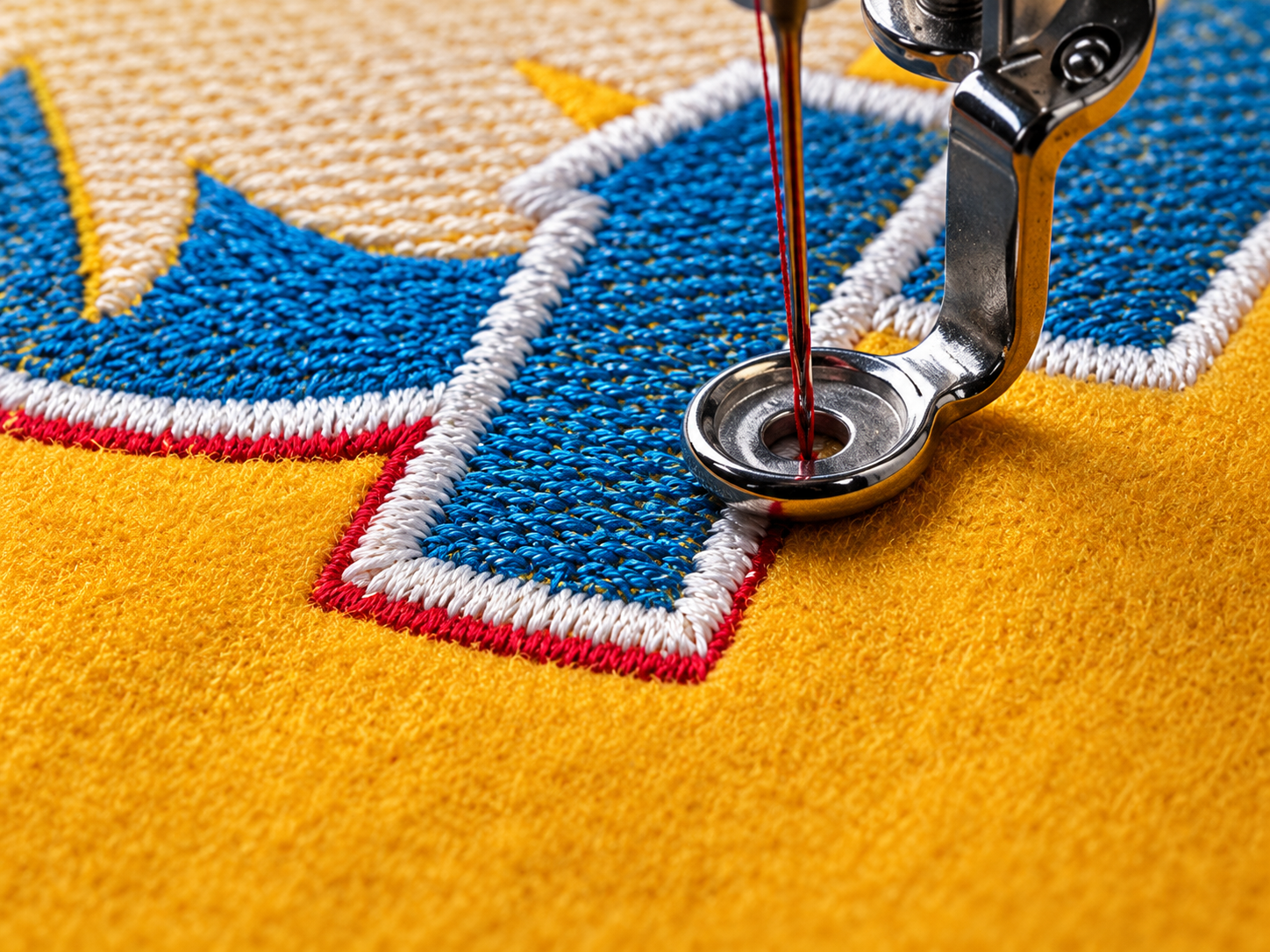
Flat Embroidery
Flat stitching is commonly considered for wordmarks, crests, symbols and detailed chest graphics. Clean results depend on digitizing, stitch direction, underlay, density, thread color and stable fabric support.
- Suitable for many chest, sleeve and back positions
- Fine lettering requires a size and stitch test
- Dense areas may need artwork simplification
- A strike-off or finished sample establishes the approval standard
Final suitability is confirmed after fabric and artwork review.
For bulk control, the approved reference should show acceptable edge definition, letter clarity and overall flatness. A changed logo scale requires fresh evaluation because stitch type and density may no longer behave in the same way.
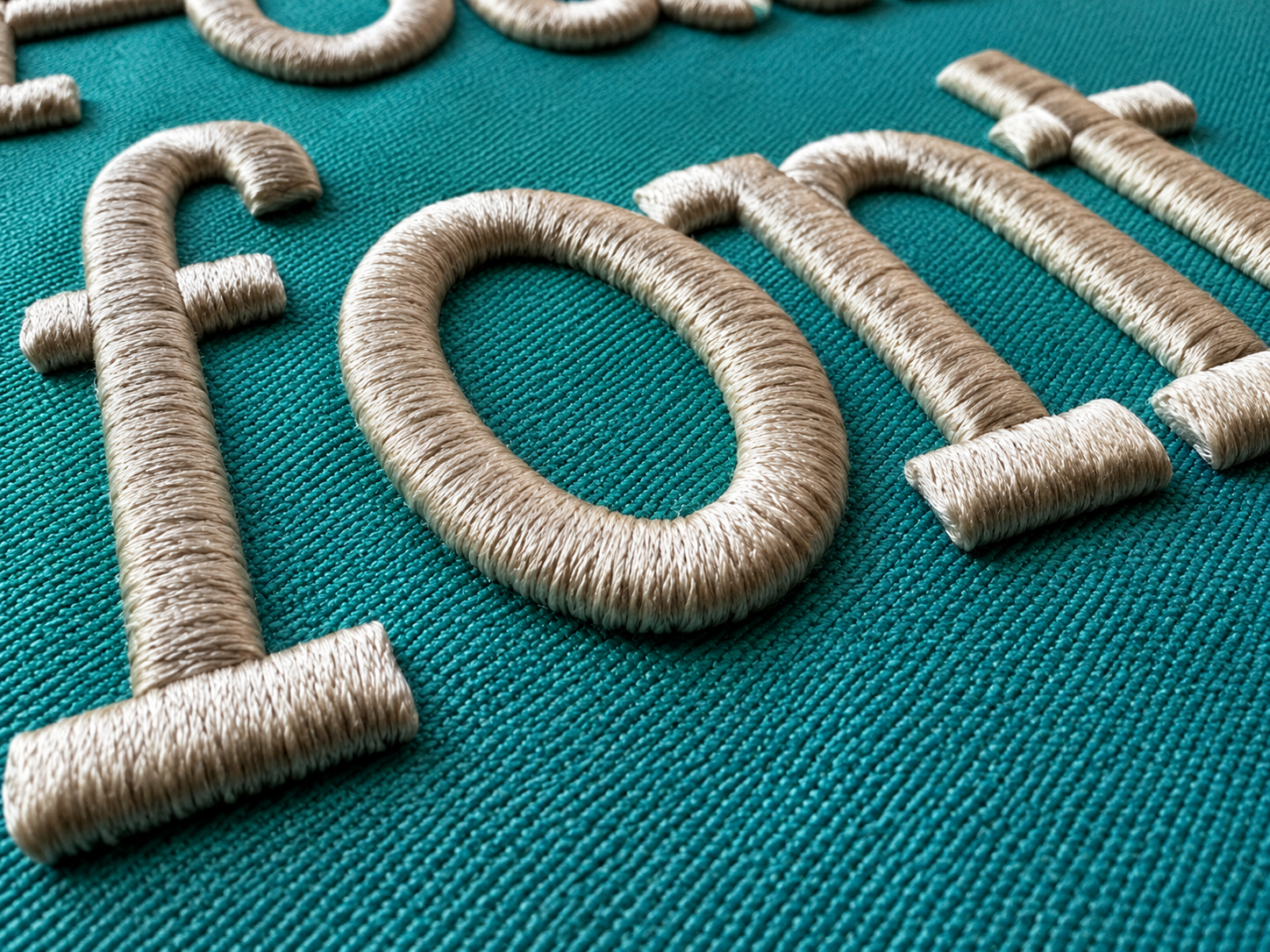
3D Puff Embroidery
Raised foam can create bold lettering or simplified marks with visible depth. Small gaps, sharp corners and very fine lines may not hold a clean edge. Hoodie fabric thickness and backing also influence the result.
- Best assessed on solid, adequately sized shapes
- Edge coverage and foam exposure require close inspection
- Finished height should be consistent across the approved area
- Wash testing may be requested according to end-use requirements
Production access is confirmed during technical review.
Puff thickness, thread coverage and maximum raised area should be stated in the sample comments. Operators and inspectors also need a clear rule for damaged foam, uneven height, crushed areas and exposed edges.
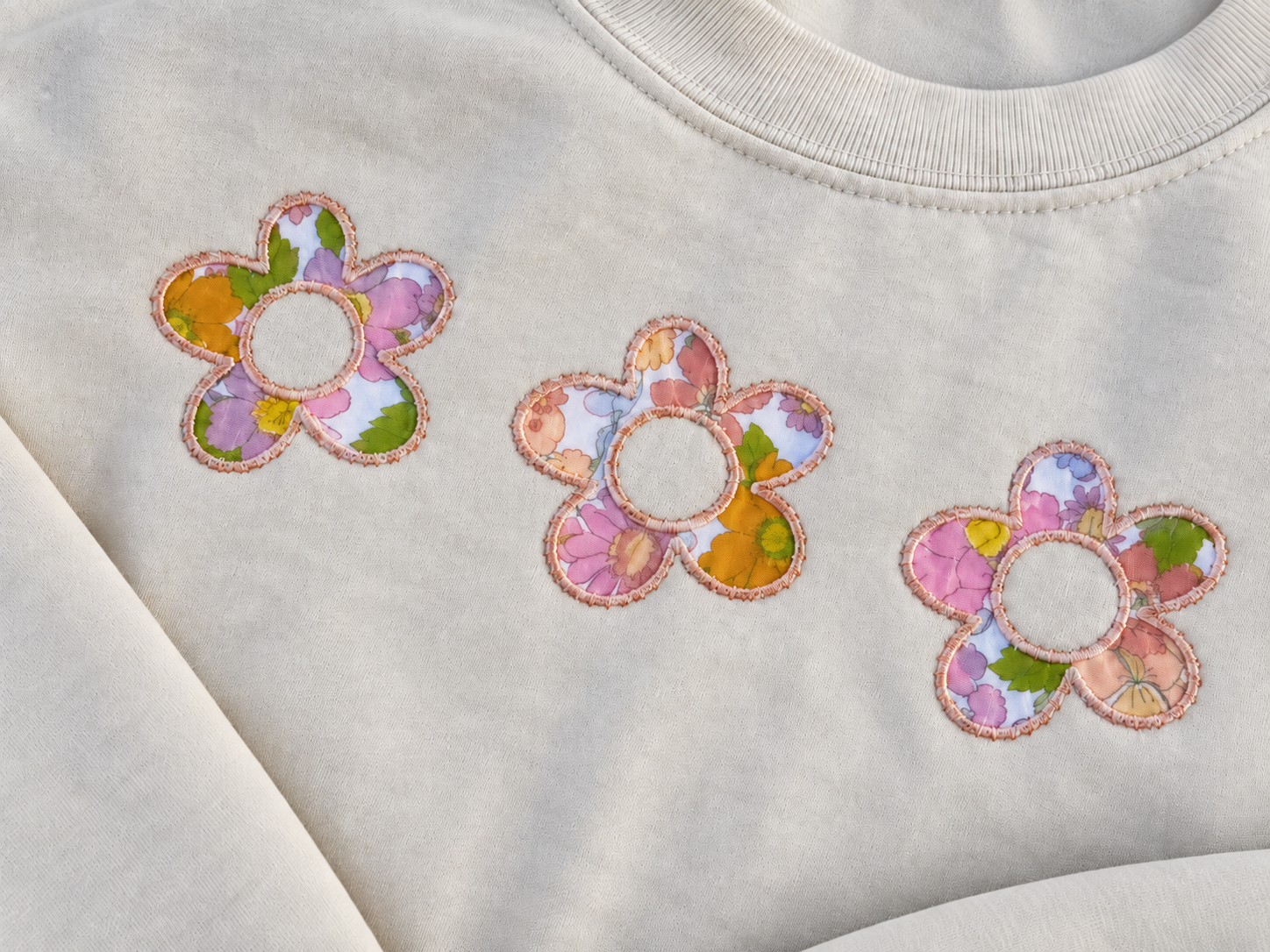
Appliqué Embroidery
Appliqué combines a cut fabric layer with embroidered edges, reducing full stitch coverage on larger artwork while adding material contrast. Felt, twill or another compatible fabric may be considered after wash behavior is reviewed.
- Confirm appliqué material, thickness and colorfastness
- Approve cut edge, border width and stitch type
- Evaluate fraying risk and registration accuracy
- Record placement measurements from stable garment points
Complex multi-layer artwork can affect MOQ and lead time.
The approved sample should define appliqué grain direction, surface orientation and any permitted fraying character. Cutting accuracy and secure attachment are checked before excess backing or loose edge material is trimmed.
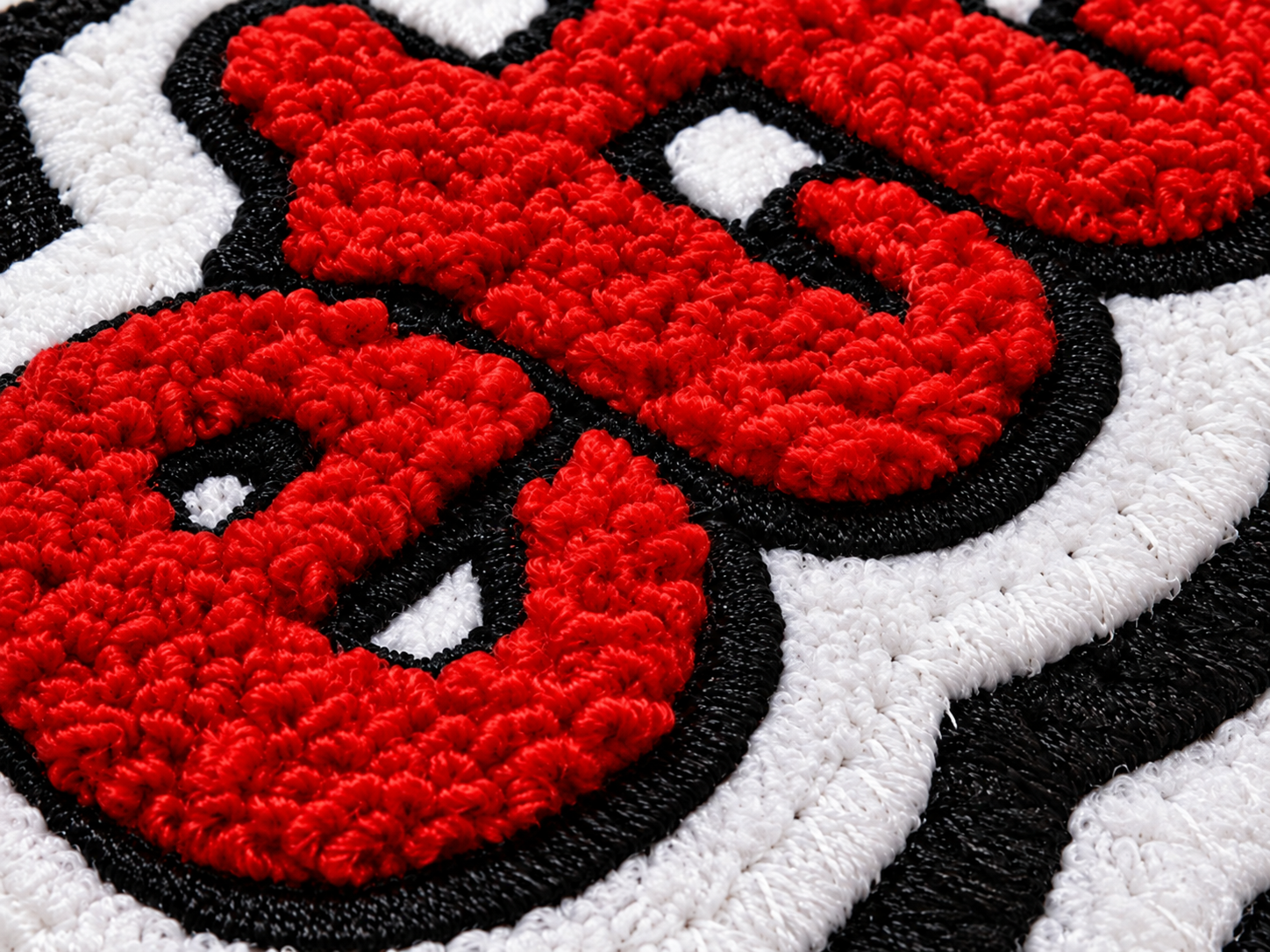
Chenille Effect
Chenille-style decoration creates a soft, dimensional collegiate or varsity appearance. It is often considered for initials, numbers and simplified emblems. Small internal spaces and fine details may be unsuitable.
- Artwork may require wider strokes and open spacing
- Base material and edge finishing need approval
- Pile direction and surface consistency are inspection points
- Production route, minimum quantity and color limits are project-specific
A physical strike-off should be approved before bulk release.
The review should cover pile height, missing loops, border coverage, internal spacing and surface direction. Packaging may need enough room to avoid crushing a dimensional emblem during transit or long storage.
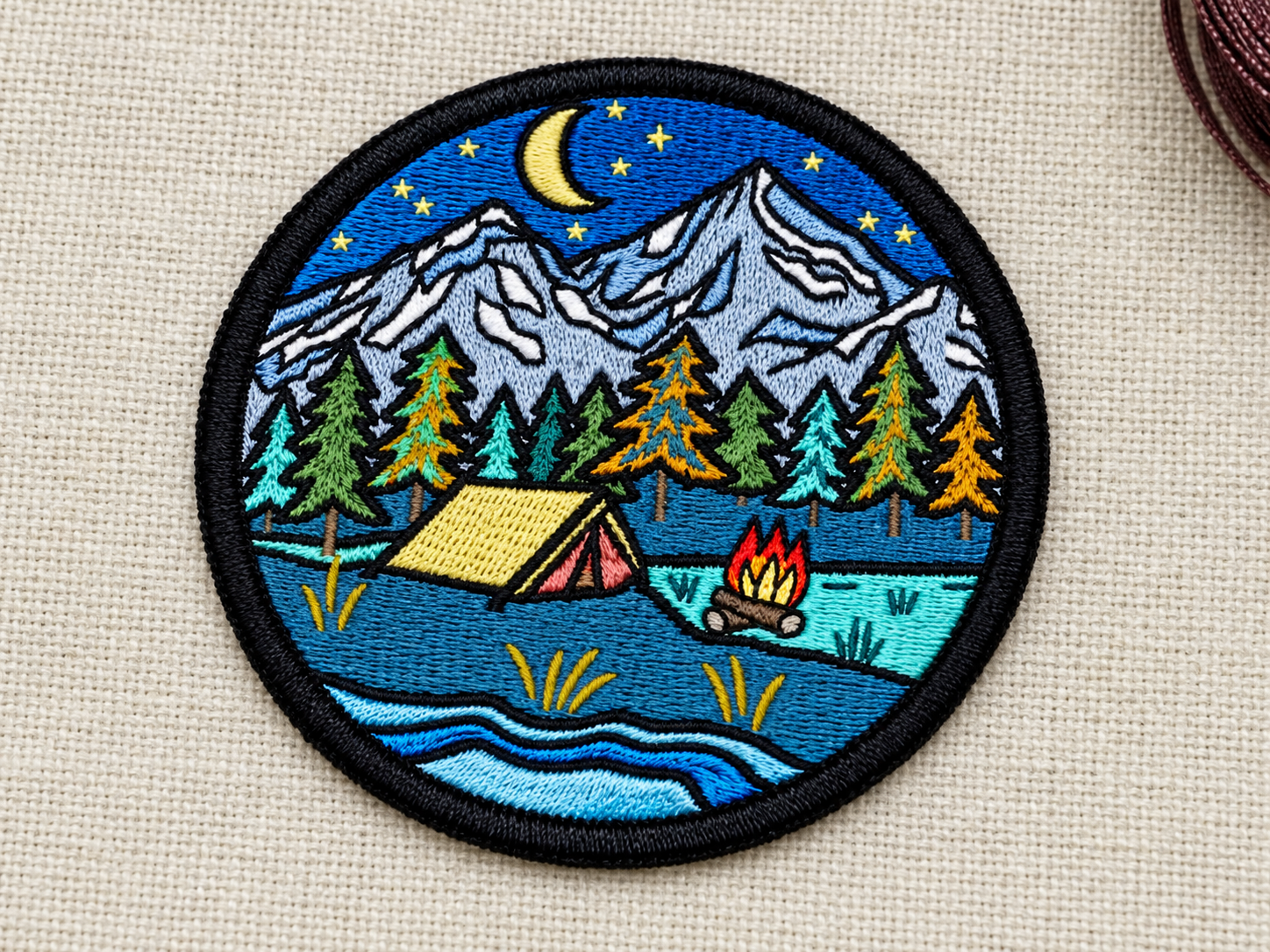
Embroidered Patches
Separate patches allow controlled emblem production before attachment to the hoodie. Options may include embroidered, woven or mixed-construction patches, subject to resource availability and design review.
- Confirm patch shape, border and backing
- Select sewing, heat-assisted or combined attachment method
- Check edge lifting, placement and wash durability
- Approve patch and attached garment, not only a digital mockup
Attachment method must match the fabric and intended use.
Patch production and garment attachment should carry separate approval references when different resources are involved. Final inspection covers patch dimensions, orientation, edge condition, attachment security and consistency across the ordered size range.
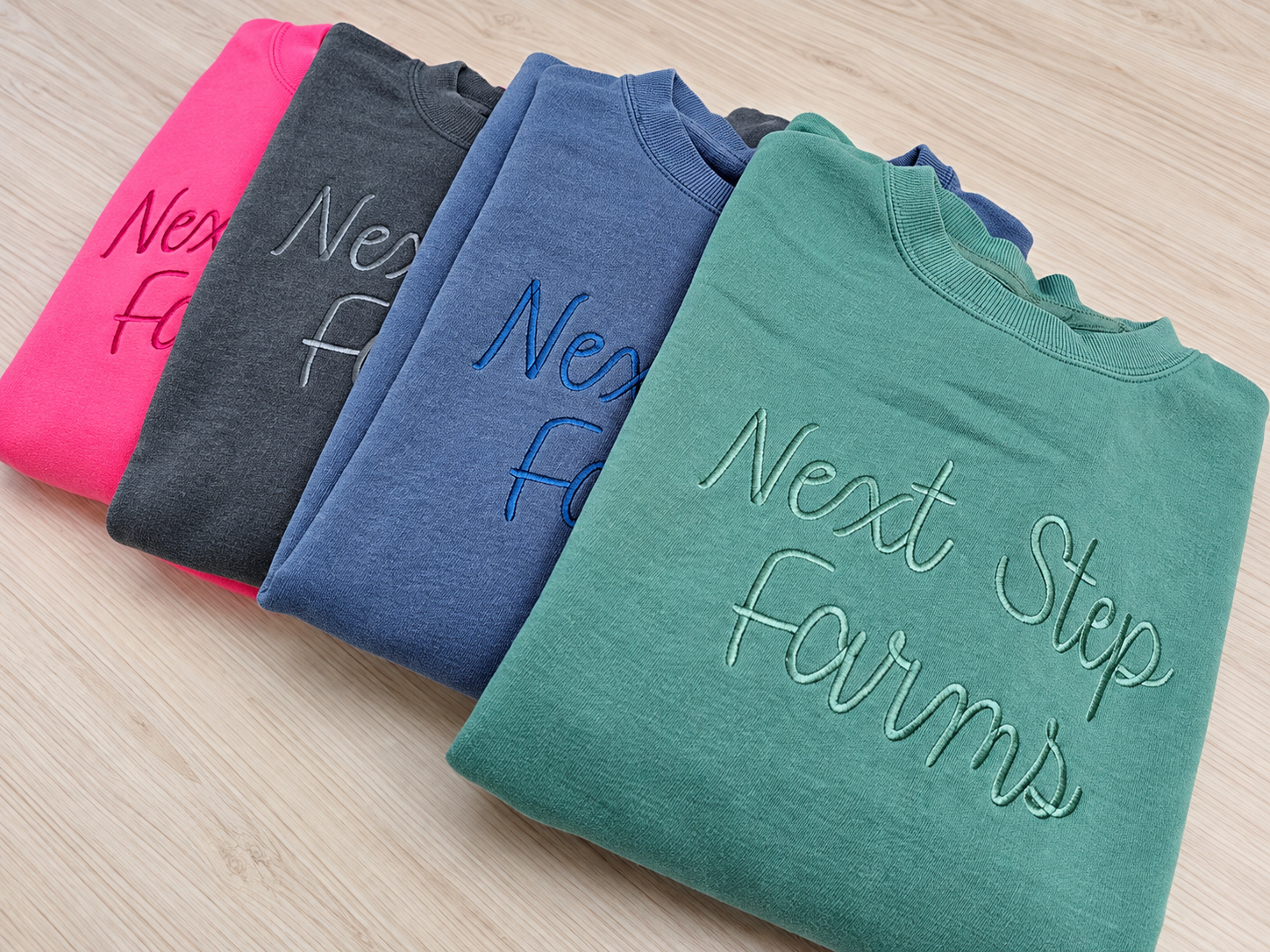
Tonal Embroidery
Tonal decoration uses thread colors close to the garment shade for a restrained premium effect. Small color differences remain visible under changing light, so thread selection should be approved against actual bulk fabric.
- Compare thread and fabric under agreed lighting
- Record the approved thread reference
- Review sheen, stitch direction and shadow effects
- Reconfirm when bulk fabric shade differs from the sample lot
Color matching is controlled through physical approval, not screen appearance alone.
For understated branding, even slight contrast or inconsistent sheen becomes noticeable. Production review should compare angle, surface coverage and thread-lot appearance across several units rather than judging one garment in isolation.
Information Needed For Accurate Hoodie Costing
Complete inputs shorten clarification time and expose cost, feasibility and schedule risks before sampling. Unknown items can be marked for recommendation rather than guessed. Quantity, materials, artwork and delivery requirements deserve equal attention during RFQ preparation.
RFQ item
Information to provide
Why it affects the program
Product Specialization
Relevant apparel categories, construction experience and manufacturing fit
Product familiarity lowers avoidable development and production risk
Quantity
Units by color, design and size
Determines material minimums, production route and unit cost
Size range
Requested sizes and measurement chart
Affects grading, consumption and embroidery scaling decisions
Fabric
Composition, construction, GSM, finish, color and preferred source
Controls hand feel, shrinkage, stability, price and lead time
Embroidery artwork
Vector file, dimensions, placement, thread colors and target effect
Drives digitizing, stitch count, machine time and approval needs
Trims
Rib, zipper, drawcord, eyelets, labels, hangtags and patches
Supplier minimums and custom tooling may apply
Quality standard
Measurement tolerances, AQL or inspection protocol, test requests
Sets control points, inspection workload and acceptance criteria
Packaging
Folding, polybag, barcode, size sticker, carton ratio and shipping marks
Influences labor, materials, SKU control and carton planning
Delivery request
Required ship date, destination, Incoterm and transport mode
Supports backward planning and capacity review
Reference files
Tech Pack, original sample, photos or workmanship manual
Improves quotation accuracy and reduces assumption risk
Fabric Weight And Surface Shape Embroidery Results
Fabric selection is reviewed for silhouette, comfort, shrinkage, stability and decoration behavior. GSM is one parameter—not a complete measure of quality. Fiber blend, knit structure, finish, recovery and color process also shape performance.
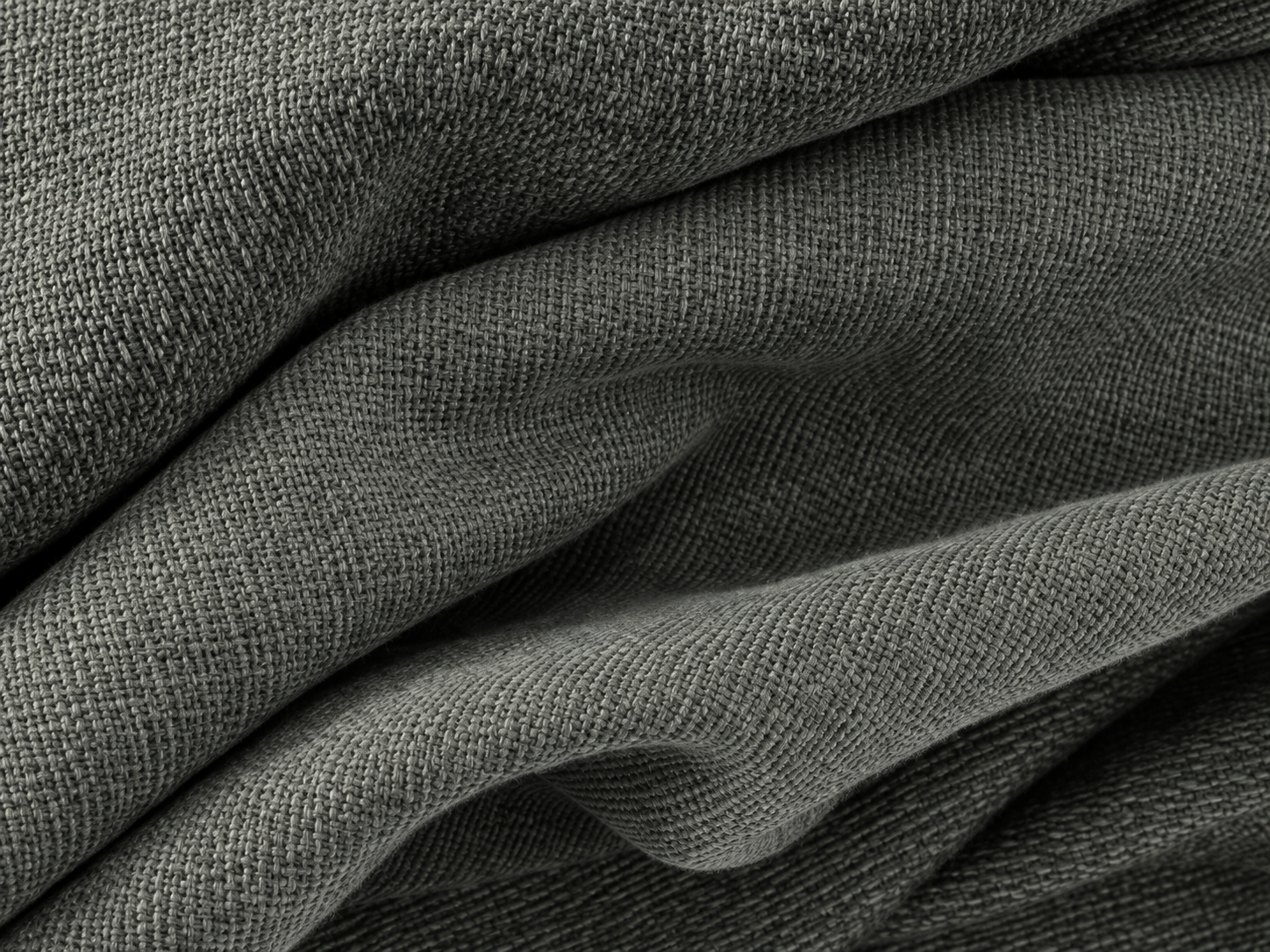
Midweight French Terry
French terry can support year-round hoodies with a looped interior and cleaner moisture release than heavily brushed fleece. Common development briefs may begin around 280–360 GSM, but composition, knitting density and finish alter the result. Embroidery trials should check face puckering, loop snagging and backing comfort before approval. Cotton-rich blends, polyester blends and elastane content behave differently during washing and stitching. Approve composition, finished GSM, shrinkage and hand feel as a complete quality rather than selecting weight alone.
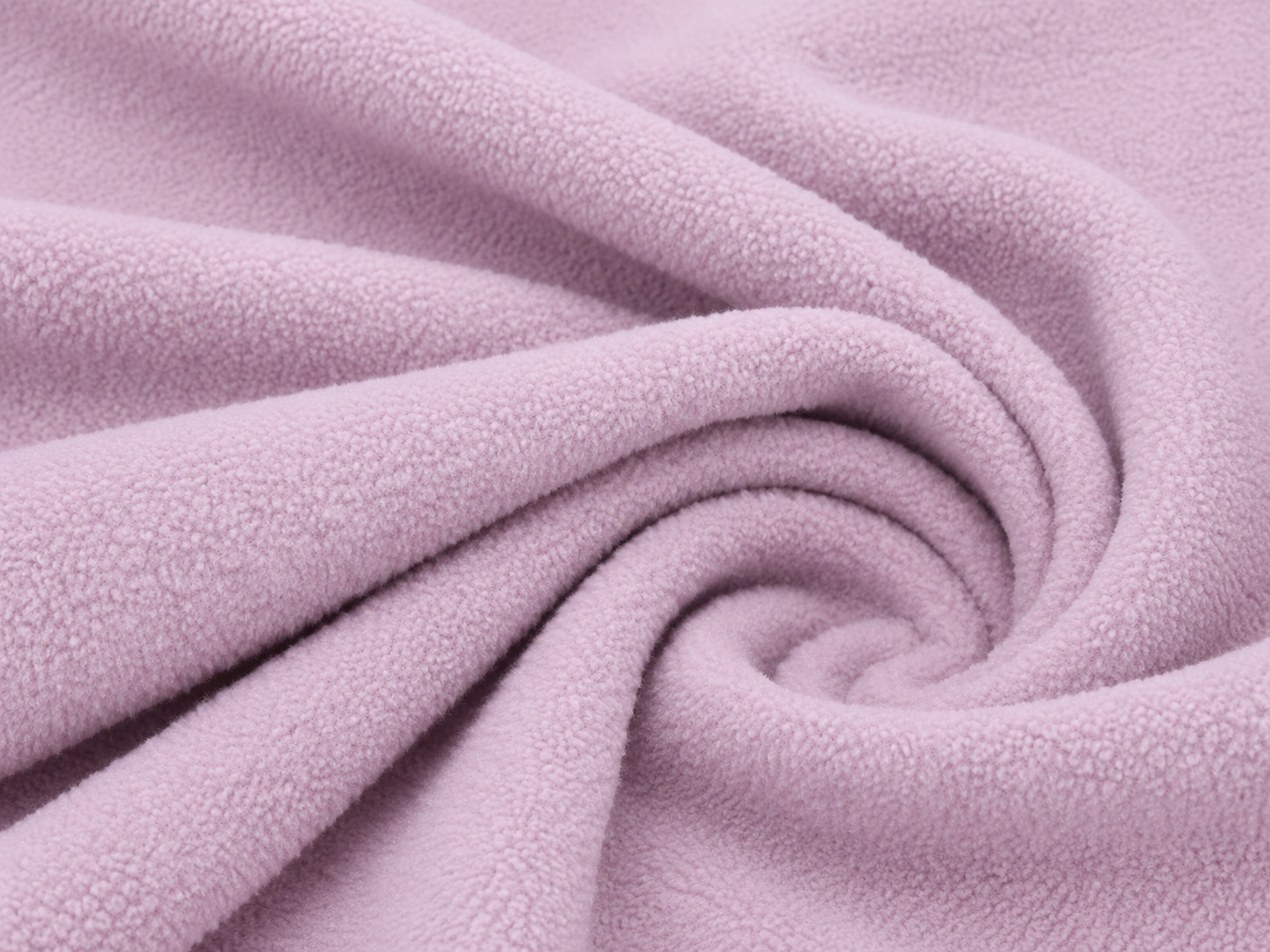
Brushed Fleece
Brushed fleece provides warmth and a soft interior for casual and streetwear programs. Development briefs often explore approximately 300–450 GSM. Shrinkage, pilling, colorfastness and surface stability need review. Dense embroidery may compress the fabric, so stitch coverage and hooping direction should be tested on the nominated quality. Brushing level changes warmth, loft and fiber release, while compacting or silicone finishes can change touch. Bulk fabric approval should reference both the face and interior surfaces.
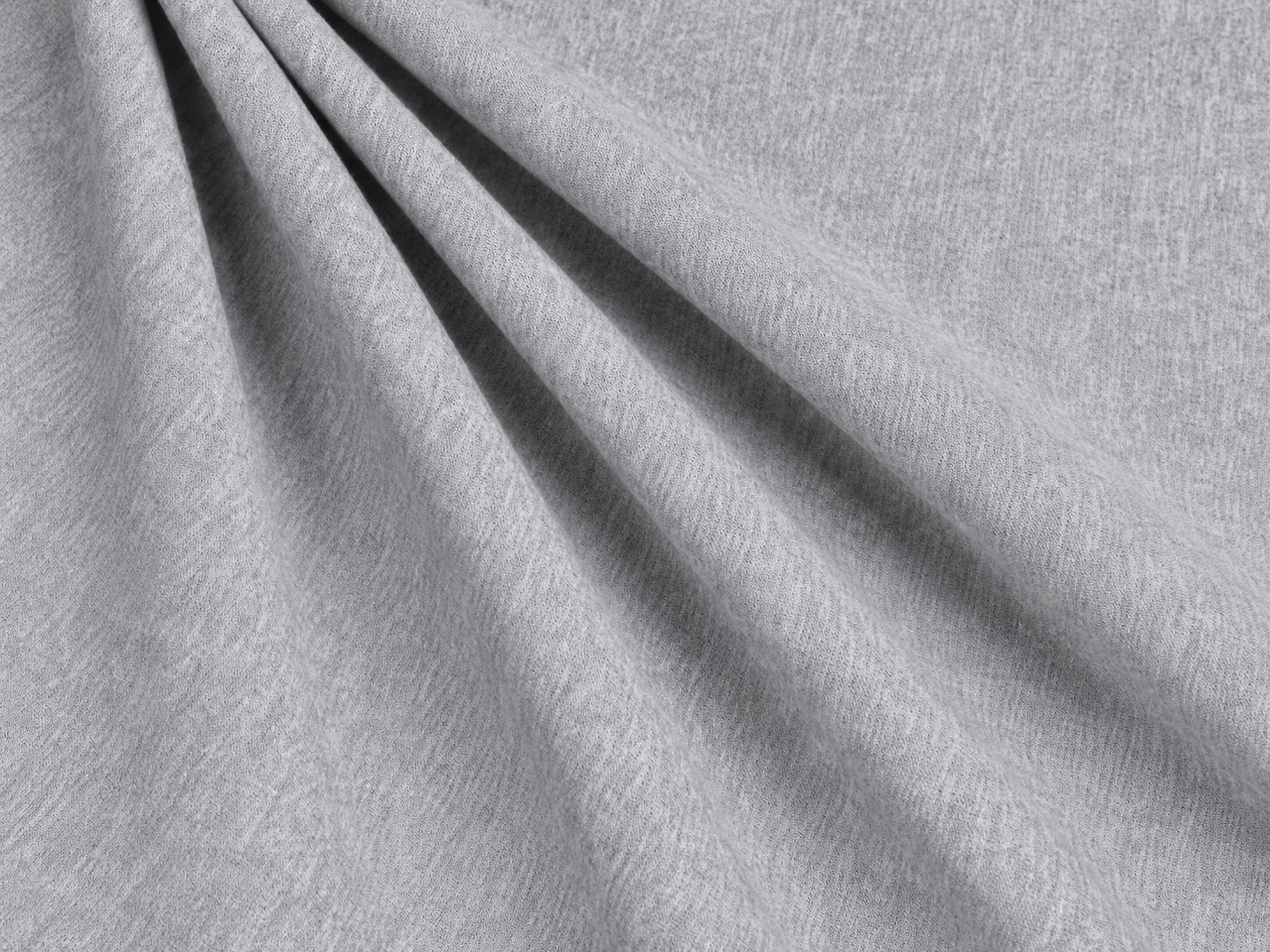
Heavyweight Jersey
Structured jersey or loopback qualities above roughly 400 GSM may suit premium oversized silhouettes. High weight alone does not guarantee recovery or durability. Pattern balance, hood weight, seam bulk and drying behavior are checked alongside decoration. Needle penetration and backing choice should preserve a flat, clean surface. Fabric width and usable yield can materially affect cost. Sampling should also examine curling, cutting accuracy, press marks and thickness where several panels meet.

Stretch Performance Knit
Polyester-rich or blended stretch fabric can support travel, training and lightweight hoodie designs. Embroidery restricts local stretch, making placement and artwork size especially important. A test should assess distortion during wear, recovery after washing, reverse-side comfort and possible show-through. Performance statements require material documentation or agreed laboratory testing. Heat sensitivity also matters when transfer labels, pressing or bonded components are involved. Pattern construction can distribute stretch away from dense decoration and high-movement zones.
Artwork, Digitizing And Placement Engineering
Strong embroidery begins before production. Artwork is translated into stitches, tested on the nominated fabric and positioned from repeatable garment reference points. Version control connects the approved visual, stitch file, thread and placement rule.
Convert Brand Artwork Into A Controlled Stitch File
Vector artwork shows appearance, but it does not define how a machine builds the logo. Digitizing assigns stitch types, directions, underlay, density, sequencing, trims and color changes. The file must account for fabric movement, thread coverage and the visual priority of each element. Auto-conversion without fabric testing can produce heavy fills, unreadable text, uneven outlines or excessive production time.
- Artwork review:Confirm finished width and height, minimum line thickness, smallest text, open spaces, number of colors and required effect.
- Color control:Match thread references to approved Pantone guidance or physical standards. Metallic, fluorescent or specialty threads require separate feasibility checks.
- Stitch planning:Balance satin, fill and running stitches according to shape and scale. High stitch counts increase machine time, weight and possible stiffness.
- Backing and topping:Select support according to fabric stability, interior comfort and surface texture. Reverse-side finish should be reviewed on the worn garment.
- Approval record:Keep a dated strike-off or finished sample, approved artwork dimensions, thread references and production file version under one approval record.
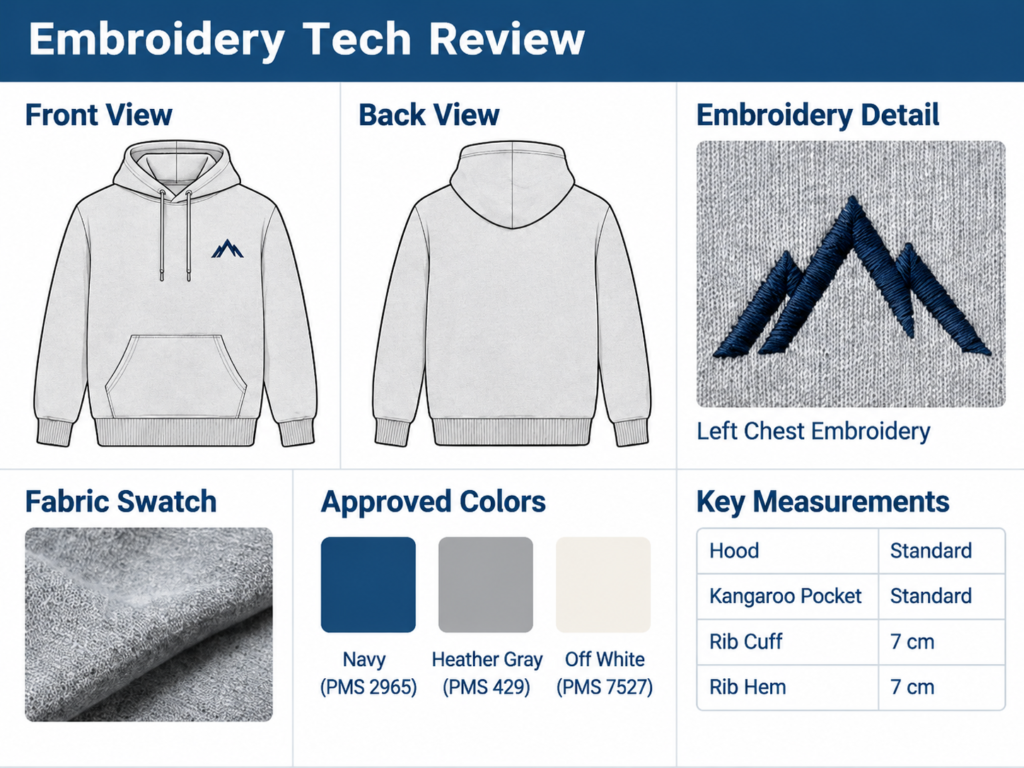
Artwork should be supplied by the brand or authorized representative. Leadshow does not claim ownership of supplied marks and may request confirmation of usage rights for protected logos. Material changes, size changes or a new placement can require a new test because stitch behavior may differ from the earlier approval.
Position Embroidery From Stable Garment Reference Points
Logo placement should be measurable and repeatable across sizes. Instructions such as “upper left chest” leave too much room for interpretation. A specification should identify the embroidery center or edges from stable points such as the high point shoulder, center front, armhole seam, pocket edge or cuff seam. Graded garments also need a rule: fixed placement across all sizes or proportional movement by size.
- Left chest:Check neckline curve, armhole distance and kangaroo pocket height. Large marks may look crowded on smaller sizes.
- Center chest:Align with center front and account for hood overlap when worn. Zip-up styles may require a split design or offset placement.
- Back body:Review hood coverage, yoke seams and artwork height. A hanging hood can hide upper-back graphics.
- Sleeve:Confirm orientation while the arm is relaxed, distance from shoulder or cuff and interaction with sleeve seams.
- Hood:Evaluate visibility, curved panels, seam allowance and thick multi-layer construction before choosing the hooping method.
- Pocket or rib:High-stretch or multi-layer zones may distort, restrict movement or produce a bulky interior; use only after testing.
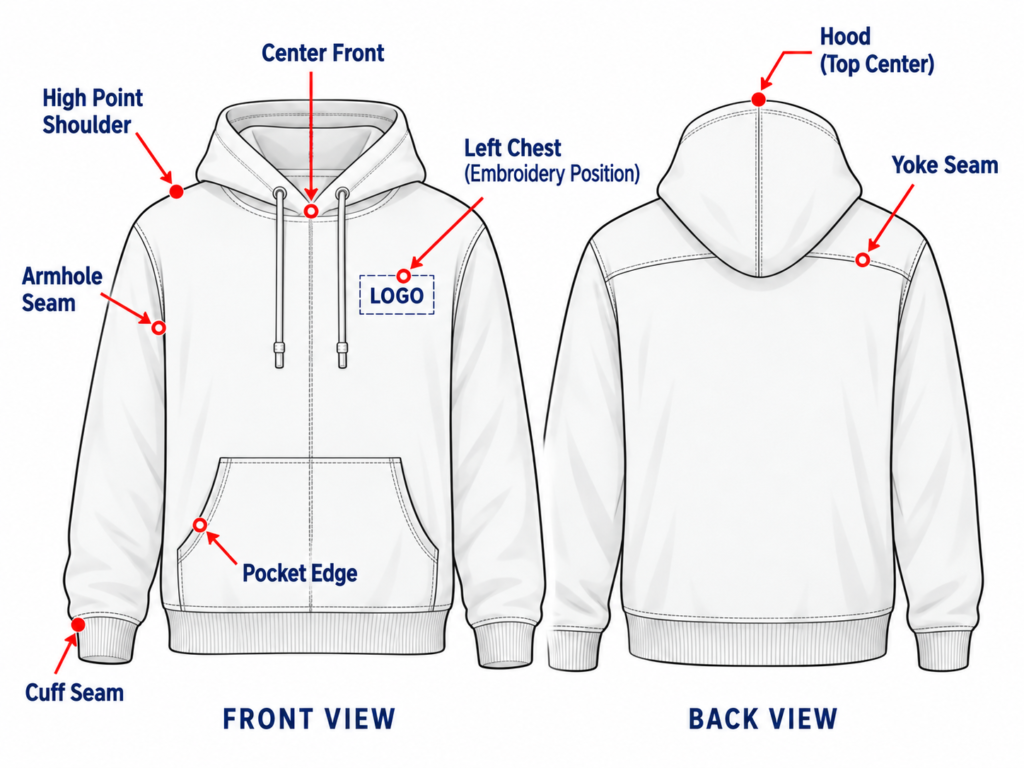
The approved placement record should include a dimensioned diagram and a physical sample. Production checks then compare location, level, orientation and symmetry against the standard rather than relying on visual memory.
Samples Establish The Production Standard
Digital mockups guide placement and proportion, while physical samples reveal fabric behavior, fit, stitch quality, comfort and wash response before bulk release. Every submission should state which materials and details are final or provisional.
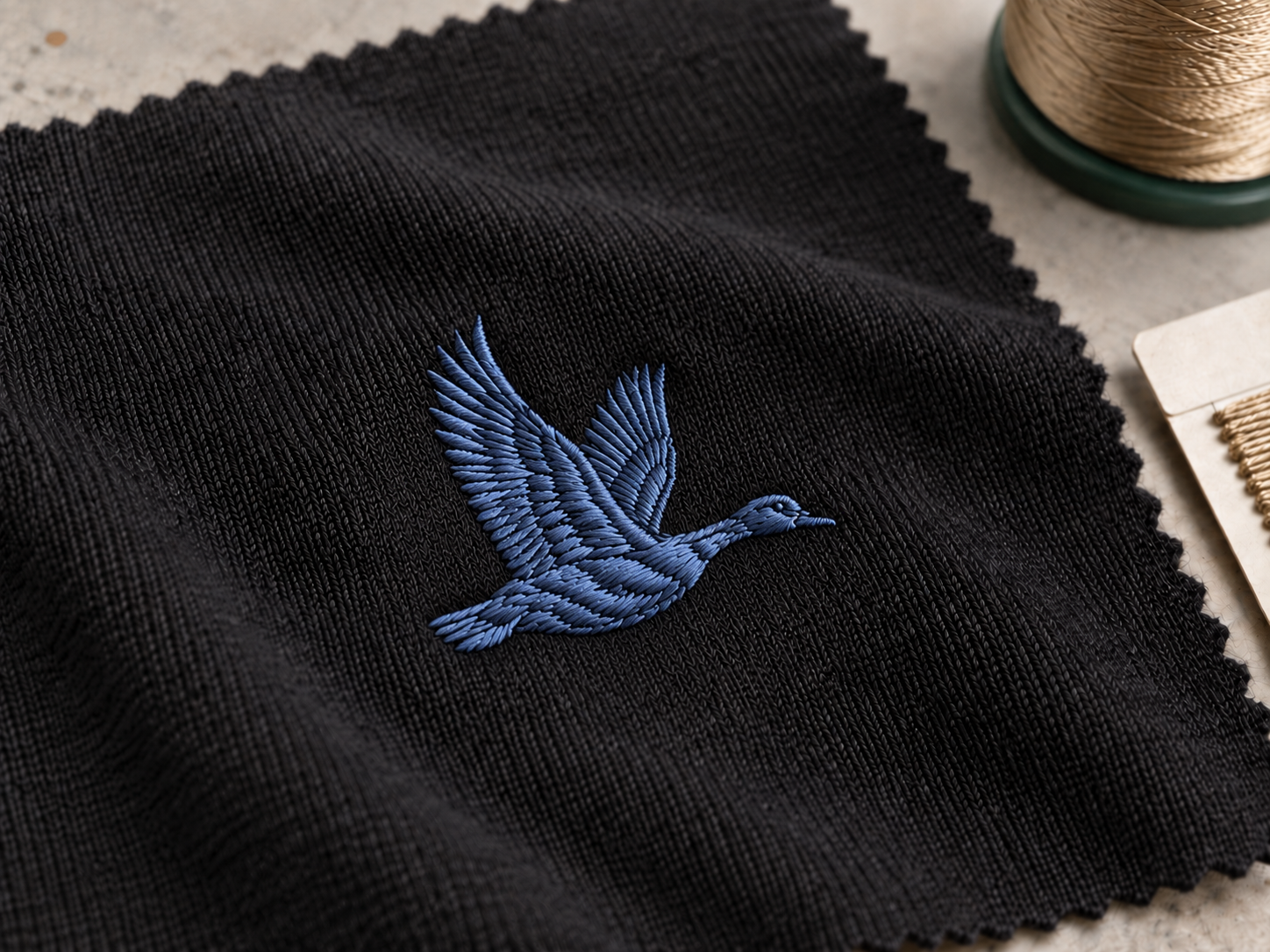
Embroidery Strike-Off
A strike-off isolates the decoration for review on the nominated or closest available fabric. It is used to check dimensions, thread colors, stitch direction, density, outline registration, edge quality and reverse-side support.
- Compare against the signed artwork version
- Record finished width and height
- Review small lettering and open areas
- Check puckering, looping and exposed backing
- Approve by dated photo plus retained physical standard when required
A strike-off does not replace a complete hoodie sample because garment seams, layers and positioning can change the result.
When color or fabric remains provisional, the submission must state which properties are representative and which require renewed approval.
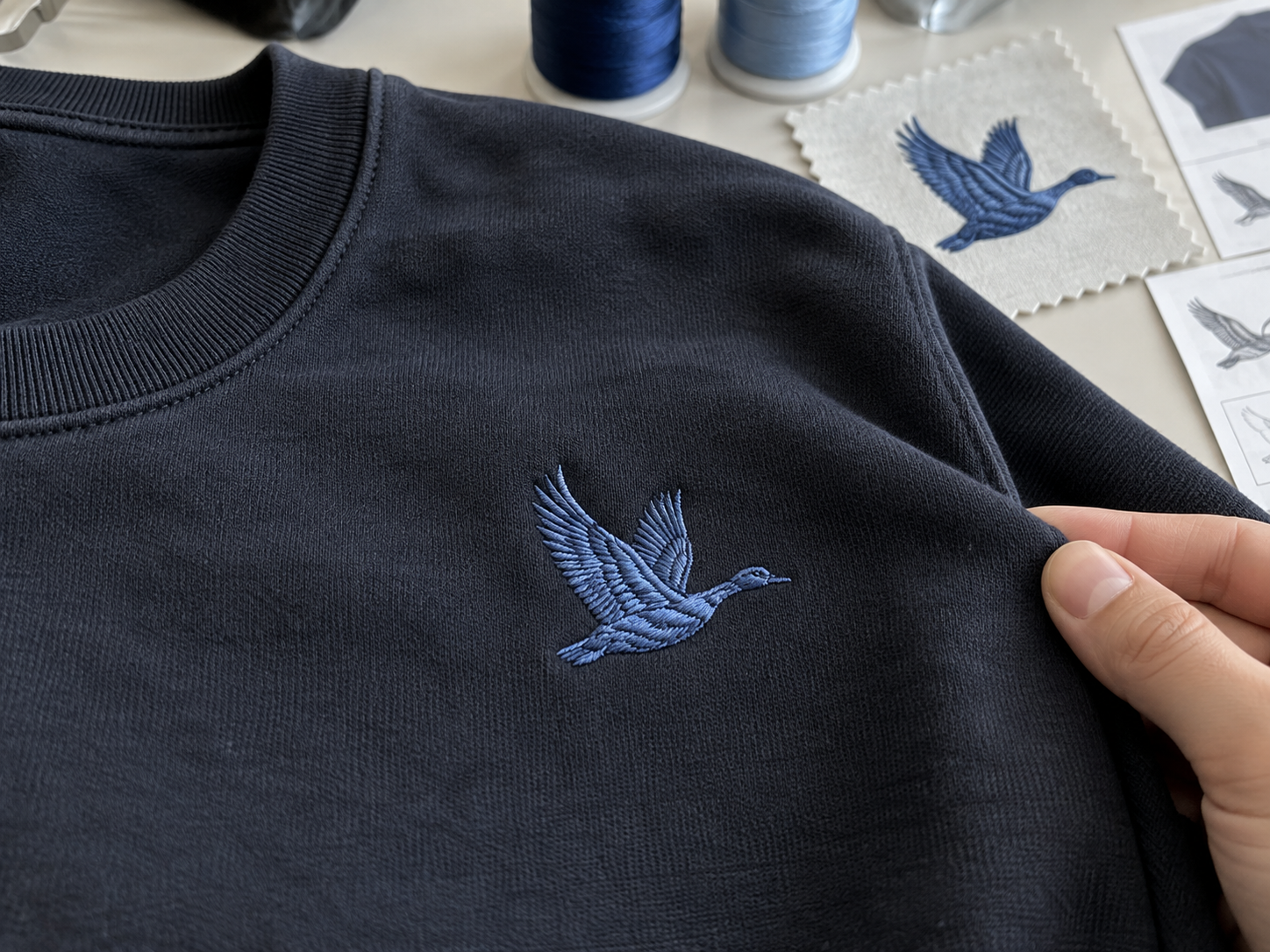
Development Sample
The development sample brings silhouette, measurements, fabric, construction, trims and embroidery together. It is measured and reviewed against the current specification rather than judged only by appearance.
- Check fit on the defined base size
- Confirm hood, pocket, rib and zipper construction
- Review embroidery scale and placement on body
- Record material substitutions used during development
- Issue one consolidated correction list for the next round
Revisions are costed and scheduled according to the number and complexity of changes.
The returned comments should identify approval, rejection or correction for every open point so unresolved items do not disappear between rounds.
Pre-Production Sample
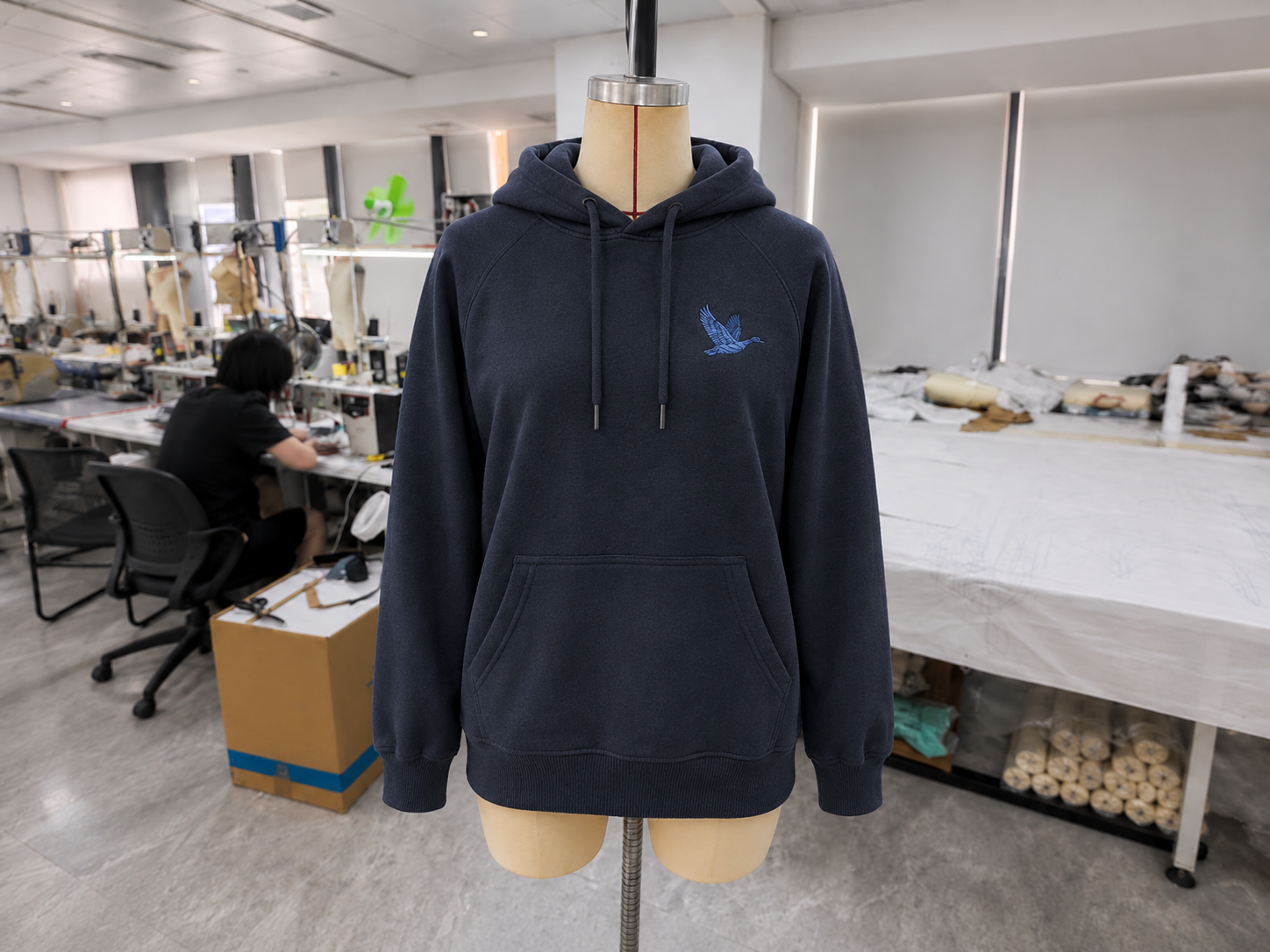
The pre-production sample should represent approved bulk materials, colors, trims, labels, decoration and workmanship as closely as possible. It becomes a release gate for production.
- Confirm final measurement specification and tolerance
- Approve bulk fabric shade and thread reference
- Verify labels, hangtags and packaging content
- Close all earlier comments in writing
- Identify any permitted exception before production starts
Bulk cutting or final release should wait for written approval and completion of agreed commercial conditions.
One sealed sample can remain with production and another with the approving team when the inspection protocol requires matched references.
From Technical Review To Export-Ready Hoodies
A defined sequence connects design intent with repeatable production. Each stage closes specific risks before more materials, labor and capacity are committed. Written approvals and controlled files keep technical decisions aligned through handover.

Technical Review
The team reviews the Tech Pack, reference garment, measurement chart, artwork, quantity, quality criteria and delivery request. Missing information, construction conflicts and decoration concerns are listed. A preliminary production route is proposed before final sampling cost and timing are confirmed. The review also identifies brand-supplied items, nominated suppliers, required tests and approval owners. One clarification list gives design, sourcing and factory teams a shared record of open decisions.
High-risk decisions receive target closure dates before development advances.
Material Confirmation
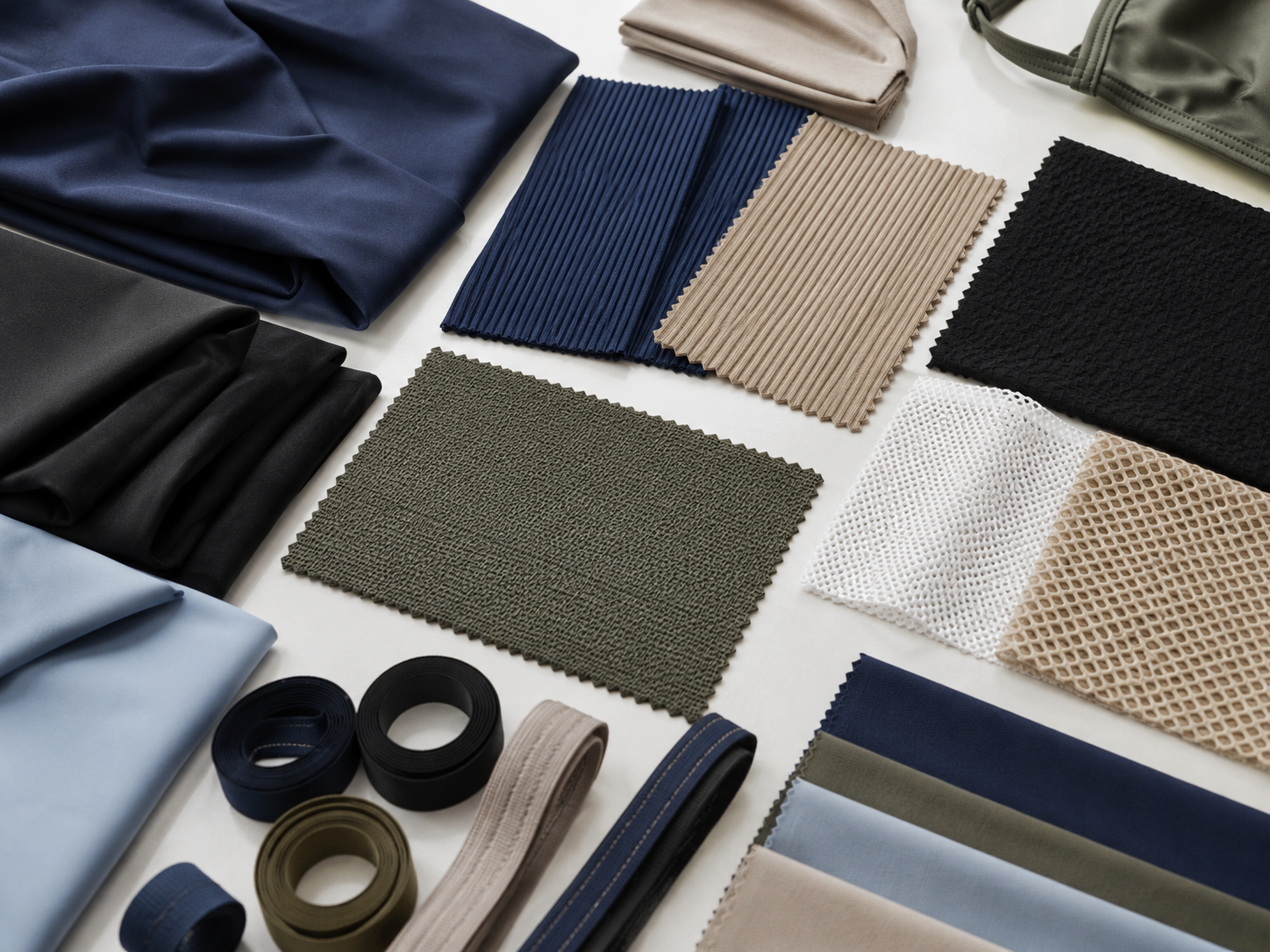
Fabric, rib, thread, zipper, drawcord, labels and packaging materials are sourced or nominated. Composition, GSM, color, hand feel, shrinkage and supplier minimums are checked as relevant. Lab dips, quality swatches or trim submissions are approved according to project needs. Quotation records distinguish approved qualities from temporary sampling substitutions. Material lead times and excess custom-trim quantities are reviewed before the delivery plan is accepted.
Bulk purchasing begins only under the agreed commercial and approval process.
Pattern Development
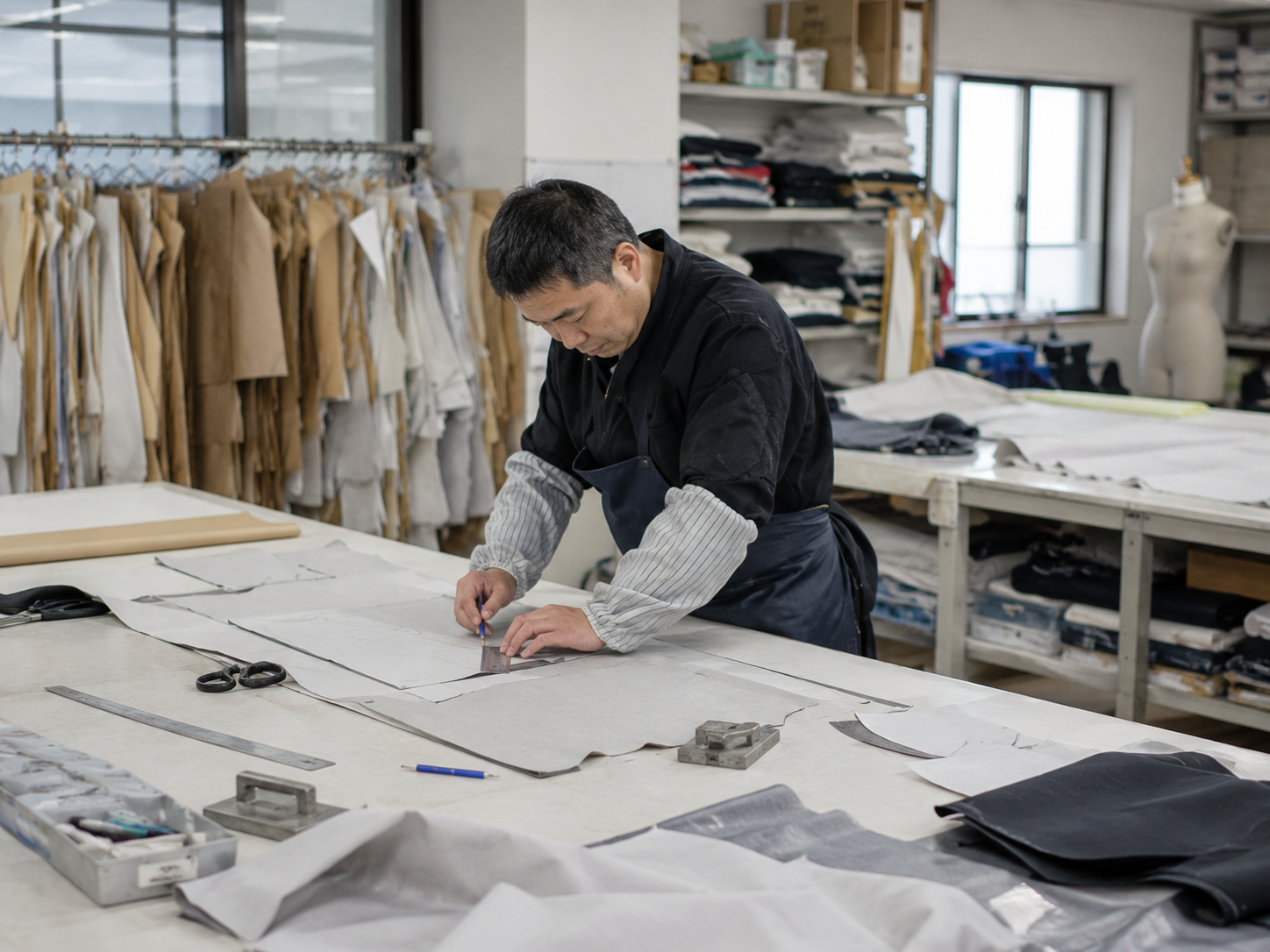
Patterns translate measurements and silhouette into garment components. Hood balance, shoulder shape, sleeve pitch, pocket position, rib allowance and embroidery area are reviewed. Grading follows an approved base size and size rules rather than proportional enlargement alone. Shrinkage allowances are linked to tested or approved fabric behavior. Pattern updates carry revision control so the cut files match the measurement specification released for sampling.
Placement guides are updated whenever pattern geometry affects the logo position.
Sample Production
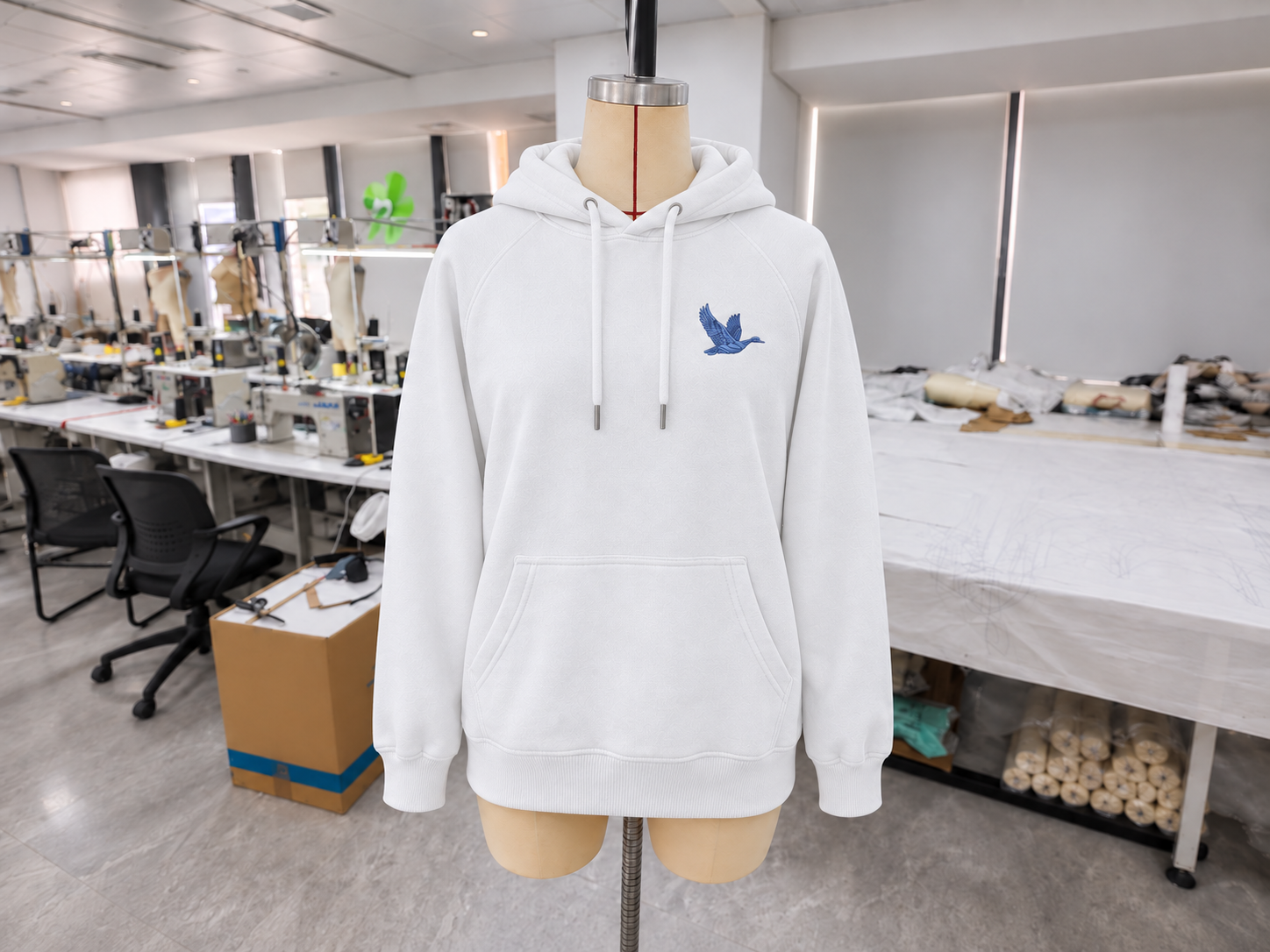
The development sample combines pattern, materials, workmanship and decoration. Measurements and construction are checked before dispatch. Any temporary material or trim substitution is disclosed so approval comments remain tied to the correct production assumptions. Internal review can flag visible defects, missing operations and specification conflicts before courier dispatch. Sample tags identify style, color, size, round and completion date.
Review photographs and measured results can accompany the sample when requested. Courier tracking and receipt confirmation keep approval timing visible to both teams.
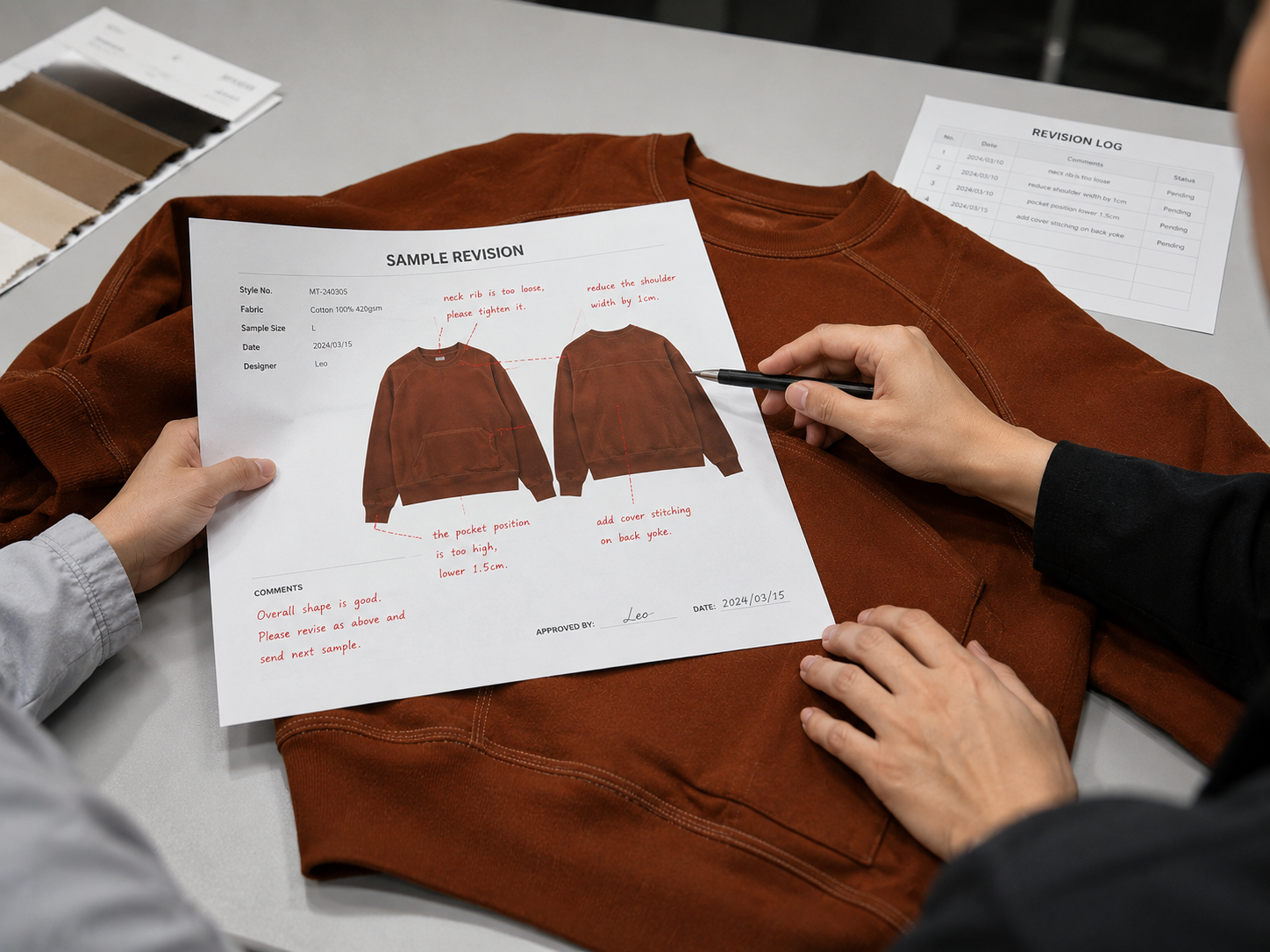
Sample Revision
Fit comments, measurement corrections, artwork changes and workmanship notes are consolidated into a revised specification. Changes affecting cost, MOQ or timing are identified before another sample begins. Version control prevents old artwork or obsolete measurements from returning to production. Photographs should point to the exact area being corrected, while numeric changes belong in the measurement chart. One authorized comment set avoids conflicting instructions from different reviewers.
Accepted points remain locked unless a later change is formally requested.
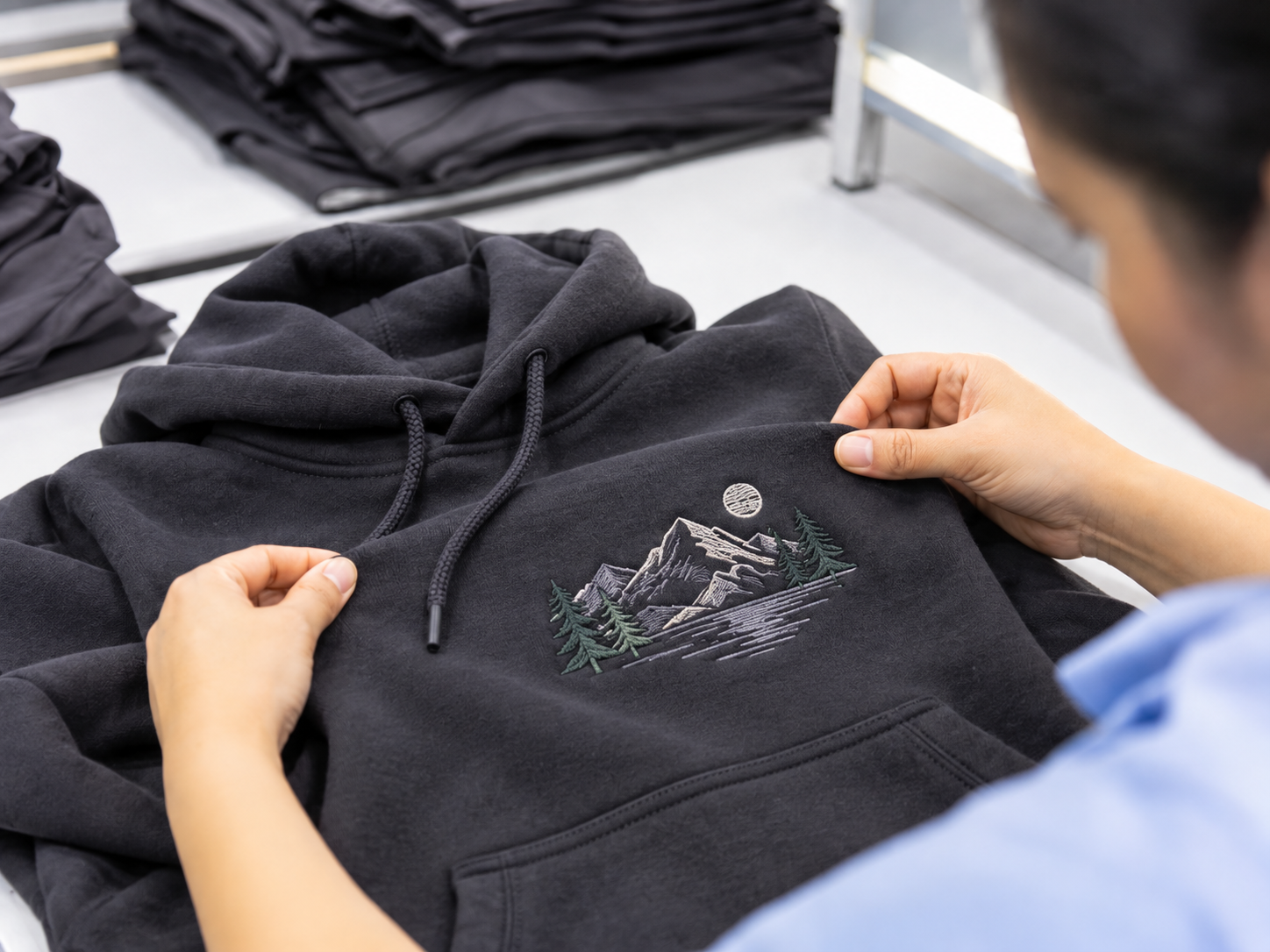
Production Approval
Approved bulk materials, pre-production sample, embroidery standard, labels, packaging, order breakdown and delivery plan form the release package. Open exceptions are documented with responsible owners. Production starts after approval and agreed commercial requirements are complete. The release check also confirms current purchase-order quantities and artwork versions. Late changes are assessed for material loss, rework, cost and schedule impact before acceptance.
No verbal update should replace the controlled release record.
All stakeholders should receive the same released version.

Bulk Manufacturing
Material spreading, cutting, sewing, coordinated embroidery, finishing and in-line checks follow the approved route. Workmanship and measurements are monitored during production, allowing corrective action before the entire quantity reaches final inspection. Bundle identification and controlled handover help protect color, size and artwork accuracy. First output is compared with the sealed standard before production volume increases.
Production records trace identified issues, repair decisions and follow-up verification. Line checks focus on high-risk operations established during sample review.
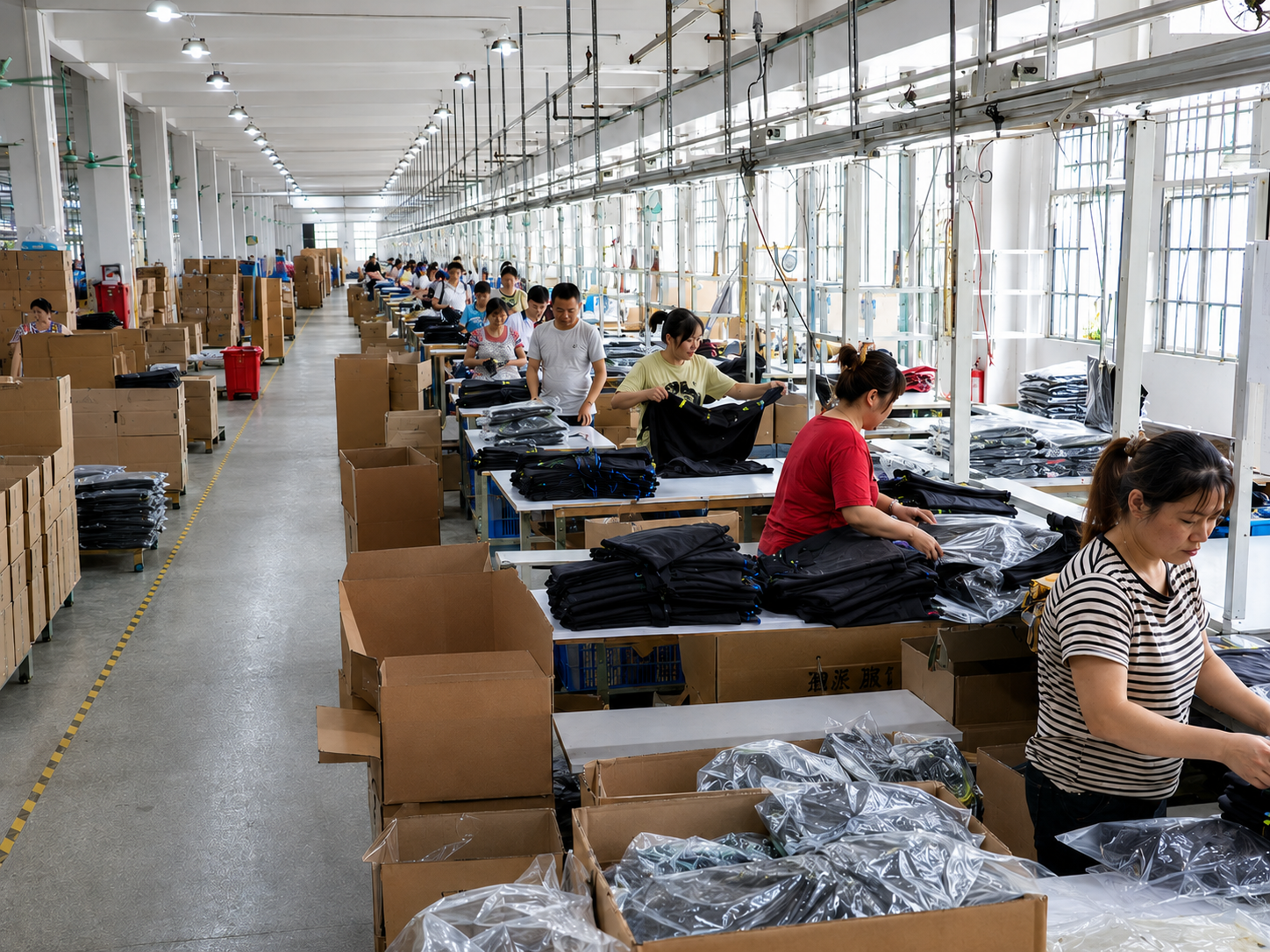
Packing And Handover
Finished garments are inspected, needle-detected where applicable, folded, labeled, packed and counted against the order breakdown. Carton marks and packing lists are checked before export handover under the agreed Incoterm and shipping instructions. Hold, repair and rejected units remain separated from approved packs. Final quantities and carton details support booking and shipping-document preparation.
Photos or inspection reports can document release status according to the agreed protocol. Shipment samples are retained or dispatched when the purchase order requires them.
Six Approval Gates Protect Bulk Consistency
Bulk consistency comes from measurable standards and closed approvals. Each gate prevents an unresolved decision from moving into a more expensive production stage. Clear release authority protects both quality and delivery planning.
Specification Gate
Style code, revision number, measurements, tolerance, construction, artwork, materials, labels and packaging are checked as one release set. Contradictory notes are resolved before sampling or bulk production uses the wrong instruction.
The file set also names the base size, grading rule, color references and approval owner. Superseded documents are removed from active use, while approved changes carry a date and clear revision history.
Material Gate
Fabric and rib quality, color, composition, weight and shrinkage are compared with approved submissions. Thread, zipper, drawcord and label references are confirmed. Substitutions require written review because they can alter fit, appearance and embroidery behavior.
Bulk-lot differences are assessed before cutting. When a substitute is unavoidable, the effect on price, hand feel, test status, shade and delivery must be accepted by the authorized project contact.
Embroidery Gate
Artwork version, stitch file, dimensions, placement, thread colors, backing and approved strike-off are linked. The standard identifies acceptable appearance and known limits, giving production and inspection teams a common reference.
First output is checked against the retained approval before quantity work continues. Any redigitizing, thread replacement or scale change receives a new revision reference and, when needed, renewed physical approval.
Fit Gate
Base-size measurements, balance, mobility, hood position, sleeve length and body proportion are approved before grading. Size-set review may be requested for critical programs, especially oversized, cropped or extended-size silhouettes.
Fit comments should separate measurement corrections from subjective styling preferences. A graded measurement chart records how chest, body length, shoulder, sleeve and openings move across the intended size range.
Artwork balance is reviewed alongside garment grading.
Pre-Production Gate
The pre-production sample, order breakdown, packing instructions and quality checkpoints are signed off. Any deviation from bulk materials or final packaging is recorded with a closure date and responsible team member.
Production readiness also covers available quantities, cutting plan, approved color lots, label copy and scheduled inspection. Unclosed risks are escalated instead of being hidden inside a general approval message.
Shipment Gate
Final inspection results, quantity, labels, barcodes, assortment, carton marks and shipping documents are checked before handover. Release follows the agreed inspection and commercial terms rather than shipment-date pressure alone.
Rejected or pending units stay outside approved cartons. Final packing records should reconcile order quantities, packed quantities, allowed shortages or overages and any separately shipped samples or replacement components.
Release authority is recorded before handover.
Embroidery And Hoodie Quality Risks Under Control
Inspection standards should name visible defects, measurement methods and acceptance limits. Clear criteria support faster decisions during production and final review. Approved samples and defect photographs give inspectors consistent visual references.
Fabric Puckering
Puckering forms ripples around an embroidered area when stitch density, tension, stabilization or hooping does not suit the fabric.
- Review underlay, density and stitch direction
- Match backing to fabric weight and stretch
- Keep hooping tension consistent
- Compare the garment relaxed, not stretched flat
- Recheck after washing when required
The approved sample defines the expected flatness and any accepted surface character.
Operators should not attempt to hide rippling through heavy pressing, because appearance may return after relaxation or washing. Corrective action must address the embroidery setup and garment handling rather than only the final finish.
Logo Distortion
Circles, lettering and borders can become uneven when fabric moves during stitching or digitizing fails to compensate for push and pull.
- Measure finished artwork width and height
- Check outlines against filled areas
- Compare letter spacing and curve shape
- Use the nominated fabric for approval
- Lock the approved production file version
Visual comparison and dimensional checks work together; neither is sufficient alone.
Scale variation becomes especially visible in repeated retail displays or matching sets. Inspect several units from different production intervals and compare both overall shape and high-risk details before accepting the run.
Placement Variation
Embroidery may appear crooked or inconsistent when operators follow general visual instructions rather than fixed reference points.
- Define center or edge measurements
- State measurement origin clearly
- Establish size-specific placement rules
- Use templates where appropriate
- Inspect level, orientation and left-right symmetry
Tolerance should be agreed for each location because sleeve, hood and body placements behave differently.
Measurement checks should use the garment relaxed on a flat surface and follow one diagram. If placement grades by size, inspection documents must list the rule instead of applying the base-size dimension everywhere.
Thread Defects
Loose loops, broken threads, skipped areas, poor trimming and visible tie-offs reduce appearance and may weaken the decoration.
- Inspect the face and reverse sides
- Remove loose thread without damaging stitches
- Check thread tension and coverage
- Watch high-density corners and small lettering
- Separate repairable defects from rejected work
Specialty thread may require adjusted standards and handling.
Repairs should be rechecked for damaged fabric, duplicate needle holes, cut base yarns or visible knots. A clean front surface cannot compensate for an insecure or uncomfortable reverse side.
Color Mismatch
Thread color can look different from a screen rendering or Pantone guide because sheen, light and surrounding fabric alter perception.
- Approve physical thread against bulk fabric
- Record supplier color reference
- Review under agreed lighting
- Control unauthorized substitutions
- Reconfirm after material shade changes
Color decisions should be documented before quantity production begins.
Thread-lot changes may create subtle variation even under the same color number. When appearance is highly sensitive, retain approved thread and fabric standards together and define how shade variation will be judged.
Backing Discomfort
Heavy or sharp reverse surfaces can irritate skin, especially on lightweight hoodies or locations worn close to the body.
- Review backing type and cutaway area
- Control rough edges and excess material
- Consider a cover layer when specified
- Test movement and contact at wear points
- Keep comfort requirements in the specification
Decoration appearance must not be approved without checking the inside finish.
Care labels, cover layers and seam allowances must not trap a stiff backing edge in a high-contact area. Wear trials on the intended base layer can reveal discomfort missed during flat inspection.
Measurement Drift
Heat, pressing, fabric relaxation, embroidery and sewing variation can move garment measurements outside tolerance.
- Measure after the defined conditioning period
- Use one documented method
- Monitor key points during production
- Separate pattern issues from handling issues
- Apply corrective action before final inspection
Critical points commonly include chest, body length, sleeve length, shoulder and hood opening.
Measurement reports should sample units across sizes, colors and production intervals according to the agreed plan. Results near a limit deserve monitoring even when individual garments remain technically within tolerance.
Packing Errors
Correct garments can still fail a retail program through mixed sizes, wrong labels, unreadable barcodes or incorrect carton ratios.
- Match garment, care label and size sticker
- Scan barcodes when required
- Count assortments before sealing cartons
- Verify carton marks against packing lists
- Isolate reworked goods from approved packs
SKU control continues through the final carton, not only the sewing line.
Verification can include scan checks, packed-weight comparison and random carton opening when required. Any repacking activity should restore count, sticker, assortment and carton-mark accuracy before shipment release.
Eight Areas Worth Reviewing Before Supplier Approval
A serious apparel manufacturer should be evaluated beyond factory size or quoted unit price. Product development, approved standards, material control, manufacturing scale, quality checkpoints and order execution all influence whether a supplier fits a long-term sourcing program.
Review or test
Main purpose
When to consider it
Evidence or decision required
Fiber composition
Confirms declared material content
New fabric quality or regulated labeling program
Supplier document or laboratory report as specified
Fabric weight
Checks GSM against agreed range
Every nominated quality where weight affects hand feel or cost
Conditioned test result and approved tolerance
Dimensional stability
Measures shrinkage or growth after care
Cotton-rich fleece, terry and fit-critical styles
Agreed wash method and result limits
Colorfastness
Reviews color transfer or fading
Dark colors, contrast panels, bright thread and printed trims
Test method and acceptance grade
Pilling resistance
Assesses surface change during wear
Brushed fleece and abrasion-prone materials
Required cycle count and grade
Seam performance
Reviews seam strength or stretch
Performance knits, tight fits and stress points
Construction standard and test requirement
Embroidery wash review
Checks puckering, thread stability, color and attachment
New artwork, specialty effect or new fabric
Approved method and post-wash appearance standard
Needle detection
Reduces metal contamination risk
When product, market or brand protocol requires it
Defined process, machine check and records
Chemical compliance
Addresses restricted substances for the destination
Brand RSL/MRSL program or regulated market
Current requirement, responsible test party and valid report
Labeling review
Confirms fiber, care, origin and other required information
Before bulk label production
Brand-approved legal copy; market-specific advice when needed
Eight Areas Worth Reviewing Before Supplier Approval
A serious apparel manufacturer should be evaluated beyond factory size or quoted unit price. Product development, approved standards, material control, manufacturing scale, quality checkpoints and order execution all influence whether a supplier fits a long-term sourcing program.
Planning item
Reference or cost driver
Commercial note
Standard MOQ
Starts from 100 pieces per color per design
Subject to fabric, trims, construction and customization requirements; colors or styles cannot automatically be combined
Size range
Common briefs may cover XS–3XL; extended sizing is reviewed separately
Final range follows approved grading, consumption, fit review and decoration placement rules
First development sample
Planning reference: often 7–15 working days after materials and specifications are ready
Exact timing is confirmed in quotation; custom fabric, trims or complex embroidery can extend the schedule
First development sample
Planning reference: often 7–15 working days after materials and specifications are ready
Exact timing is confirmed in quotation; custom fabric, trims or complex embroidery can extend the schedule
Revised sample
Planning reference: often 5–10 working days after consolidated comments and available materials
Major pattern, material or artwork changes may require a new development cycle
Pre-production sample
Scheduled after bulk materials, final artwork and trims are available
Approval should precede bulk release unless a written exception is agreed
Bulk manufacturing
Planning reference: often 25–45 days after approvals, material readiness and agreed commercial conditions
Quantity, colors, size mix, stitch count, testing, packing and current capacity affect timing
Transport
Excluded from manufacturing range
Transit depends on destination, Incoterm, booking availability, mode and customs process
Embroidery cost
Stitch count, size, coverage, thread colors, effect, placement and quantity
A small dense logo may cost more than a larger open design
Garment cost
Fabric consumption, composition, GSM, dye route, construction, trims and order scale
Final quotation follows material and workmanship confirmation
Development charges
Pattern, sample, digitizing, strike-off, courier and testing as applicable
Charges and refund or credit terms, if any, are written in the quotation
Leadshow Manufacturing Capacity Behind Every Program
Company-wide development, manufacturing and quality resources support custom apparel programs from specification review through scalable production and export preparation. Figures below describe the combined Leadshow operation, not one line or facility.
15 Years Experience
Leadshow brings 15 years of apparel development and manufacturing experience across sportswear, swimwear, streetwear and modest sportswear. The operating focus is mid-to-high-end custom production requiring product development support, manufacturing consistency, branded details and repeatable delivery.
Experience supports technical discussion and risk recognition, but every new hoodie still requires its own fabric, construction, decoration, quantity and schedule evaluation before commercial confirmation.
3 Manufacturing Bases
Three modern manufacturing bases provide a combined factory area of more than 20,000 square meters. The figures represent the complete Leadshow manufacturing system and should not be assigned to a single factory, building or production line.
Production allocation follows garment type, process needs, order mix and current loading. Facility-specific details can be supplied during qualification when required and available for disclosure.
1,500 Plus Team
A company-wide team of more than 1,500 people supports development, production, quality, project communication and related operations. Staffing is allocated according to product construction, order mix, quality requirements and active manufacturing schedules.
The figure represents the combined organization, not a dedicated hoodie or embroidery workforce. Project responsibility and day-to-day contacts are defined during onboarding and order execution.
Staff allocation varies by season and workload.
300 Plus Machines
The combined equipment base exceeds 300 machines. Confirmed resources include 35 four-needle six-thread flatlock machines, 8 heat-bonding machines, 4 hot-air seam-sealing machines, 3 laser-perforation machines and supporting sewing, inspection, pressing and packing equipment. Embroidery machinery is not included in the confirmed equipment list.
Additional verified equipment includes 6 needle detectors and 4 folding and packing machines. Machine counts are company-wide totals and do not represent guaranteed availability for one order.
Scalable Monthly Output
The three manufacturing bases provide a combined monthly capacity of up to approximately 120,000 finished garments, subject to product construction, materials, processes, order mix and current production scheduling. Capacity for a specific hoodie program is confirmed after technical and calendar review.
Complex stitch work, color count, testing, packaging and split deliveries can change line efficiency. Forecast sharing supports earlier material and capacity planning for seasonal or replenishment programs.
OEM ODM Support
Services can cover project evaluation, pattern and sample development, trial production, bulk manufacturing, quality control, custom labels, packaging and export delivery. Scope is defined for each order; third-party materials, trims, decoration or testing remain subject to nominated resource and project approval.
Programs can start from Tech Packs, reference garments, images or structured briefs. Deliverables, charges, revision limits and responsible parties are written into the commercial process rather than assumed.
Clear Responsibility For Every Embroidery Order
Embroidery quality depends on controlled files, approved standards and named responsibility. Production location and execution route are confirmed before commercial release. Transparent attribution prevents specialist resources from being mistaken for owned universal capacity.
Confirm The Embroidery Route Before Order Placement
Leadshow evaluates embroidery as part of the finished hoodie program. The fact base currently confirms apparel development, sampling, bulk garment manufacturing and a broad set of sewing and finishing equipment, but it does not confirm a fixed inventory of owned embroidery machinery. For accurate communication, each quotation should identify whether embroidery is completed through available internal resources or a qualified specialist production resource coordinated for the program.
The route does not change the need for one accountable garment program. Required controls include:
- Named execution location:Record where the strike-off and bulk decoration will be produced.
- Technical ownership:Identify who creates and controls the digitized stitch file, including revision approval.
- Material control:Confirm thread, backing, appliqué or patch materials and approved references.
- Sample control:Define strike-off, development sample and pre-production approval requirements.
- Bulk control:Establish first-piece review, in-process checks, defect handling and final inspection responsibility.
- Confidentiality:Apply project confidentiality and artwork-use requirements to every approved production resource.
- Exception handling:Stop or isolate production when bulk results move outside the signed standard.
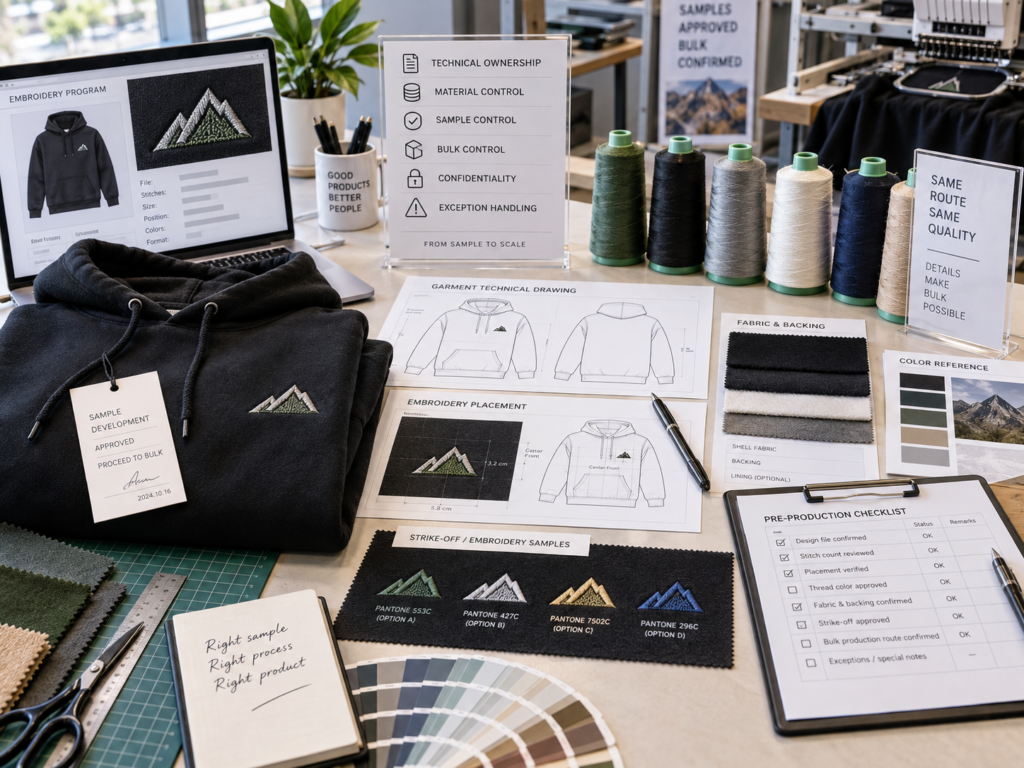
Production should not begin from a visual mockup alone. A physical result on the nominated fabric, or on the finished hoodie when construction affects placement, provides the manufacturing standard. Any change in fabric, logo size, thread, backing, placement or effect is reviewed before the existing approval is reused.
One Program Record Connects Garment And Decoration
Separating hoodie sewing and embroidery records creates avoidable version risk. The order package should connect style code, color, size breakdown, fabric lot, artwork version, digitizing file, thread reference, placement diagram, approval sample, packaging instruction and inspection criteria. Teams working at different stages then follow the same released information.
Leadshow remains responsible for the scope written in the order agreement and quotation. Specialist suppliers, nominated materials or outside laboratories do not become Leadshow corporate certifications, owned facilities or universal capabilities. Transparent attribution helps sourcing teams evaluate the production route with fewer assumptions and provides a stronger basis for repeat orders.
Before confirmation, request written answers to four questions:
- Which facility will complete bulk embroidery?
- Which signed sample or strike-off controls appearance?
- Who approves the stitch file and thread references?
- Who owns corrective action when a bulk defect appears?
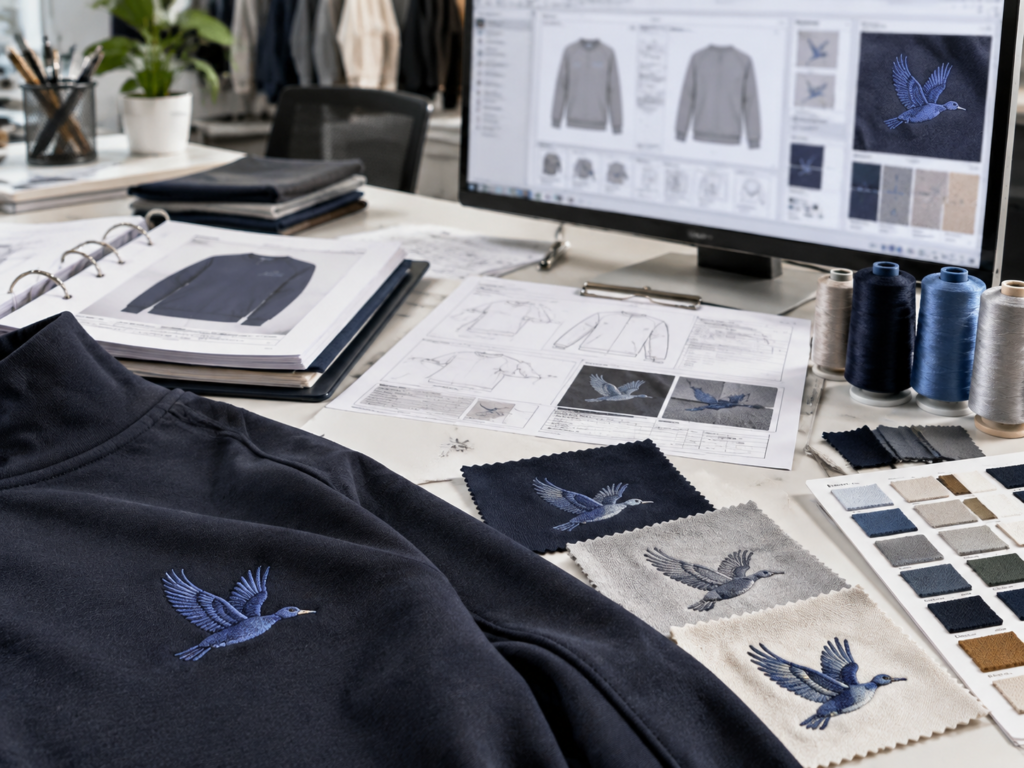
Clear answers turn decoration from a decorative add-on into a controlled manufacturing process.
Brand Finishing, SKU Control And Export Packing
Labels and cartons carry the same operational importance as fabric and sewing. Specifications connect every finished hoodie to the correct size, color and order line. Approval before production protects launch dates from late artwork and packing corrections.
Build Branded Details Into The Approved Specification
Private-label presentation can include main labels, size labels, care labels, heat-transfer labels, hangtags, drawcords, zipper pullers, patches, size stickers and other approved trims. Each item needs artwork, material, dimensions, color, placement and attachment instructions. Legal content remains the brand’s responsibility and should be reviewed for the intended sales market before bulk label production.
- Main and size labels:Confirm fold type, finished dimensions, edge finish, sewing position and size mapping.
- Care labels:Supply approved fiber content, care symbols, country-of-origin wording and required languages.
- Hangtags:Define paper, finish, string or fastener, barcode area and attachment point.
- Heat-transfer labels:Check adhesion, stretch, surface compatibility and wash behavior on the nominated fabric.
- Custom trims:Review tooling, supplier MOQ, color approval and replacement risk before final costing.
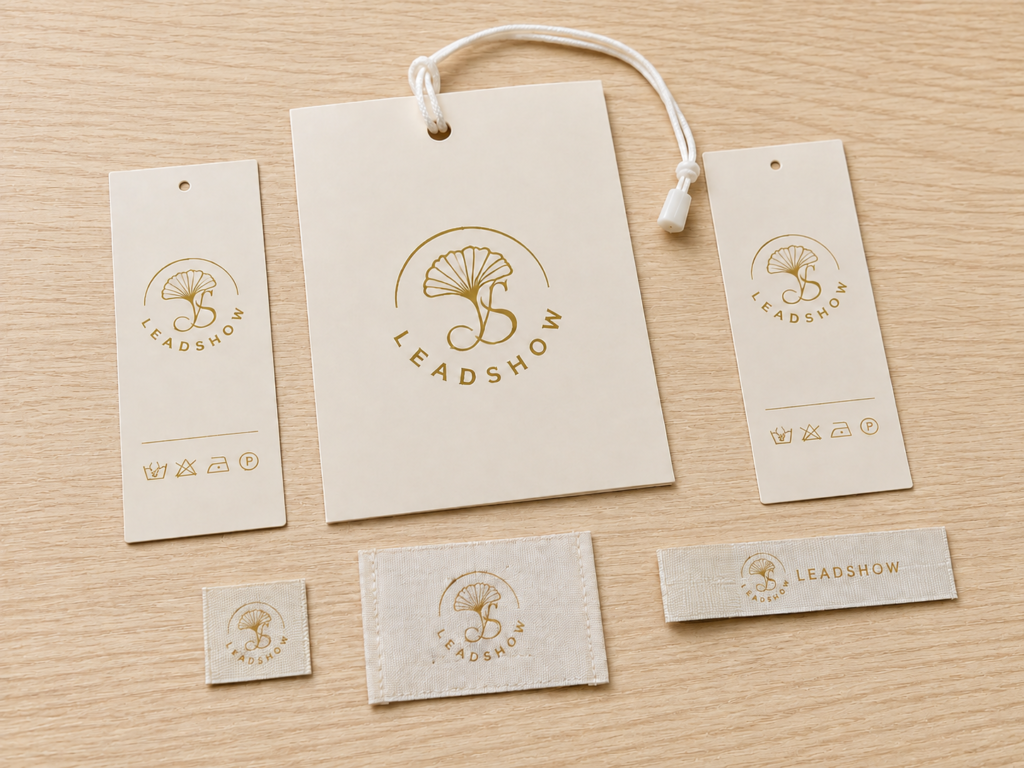
Trim approval should use physical submissions when texture, shade or attachment matters. Digital artwork alone cannot show stiffness, edge feel, surface reflection or wash performance. Order quantities for custom labels may exceed garment MOQ, so ownership and storage or disposal of excess materials should be agreed before purchasing.
Protect Size And Color Accuracy Through Final Packing
Packing instructions should define how every unit moves from final inspection into the correct polybag and carton. A clean specification includes folding method, individual bag type, warning text, ventilation holes if required, size sticker position, barcode format, hangtag location, carton assortment, gross-weight limits, shipping marks and packing-list format.
- Unit identity:Match style, color and size on garment labels, stickers and barcode records.
- Assortment control:Pack solid-size or pre-packed ratios according to the purchase order.
- Carton control:Verify carton number, quantity, destination mark and dimensions before sealing.
- Needle detection:Apply when agreed for the product or market and retain relevant records.
- Export handover:Prepare the packing information required under the agreed Incoterm and shipping arrangement.
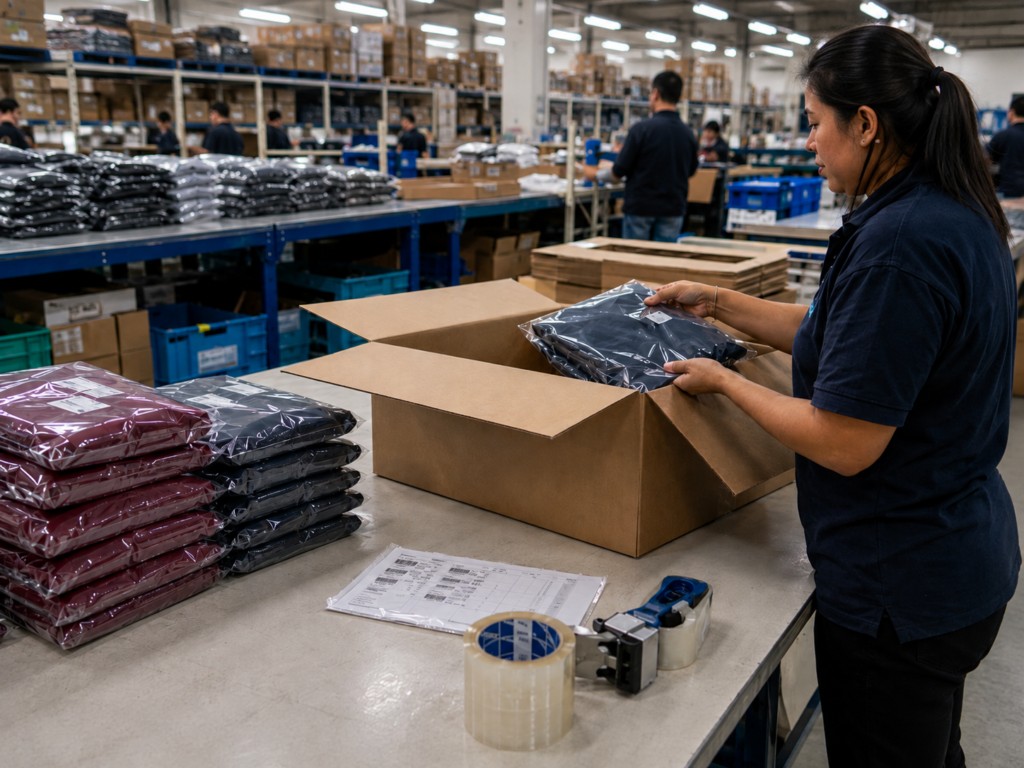
Leadshow can support custom packaging and export delivery preparation within the confirmed project scope. Freight booking, import clearance, duties, final-mile delivery or destination warehousing are not assumed unless written into the commercial agreement. Early packing approval prevents late label corrections and helps preserve the production schedule.
Evidence To Review Before Factory Selection
Real facilities, records, samples and inspection activity provide stronger sourcing evidence than broad promises. Use dated, attributable visuals throughout the final build. Captions should distinguish owned assets, coordinated resources and project-specific approvals.
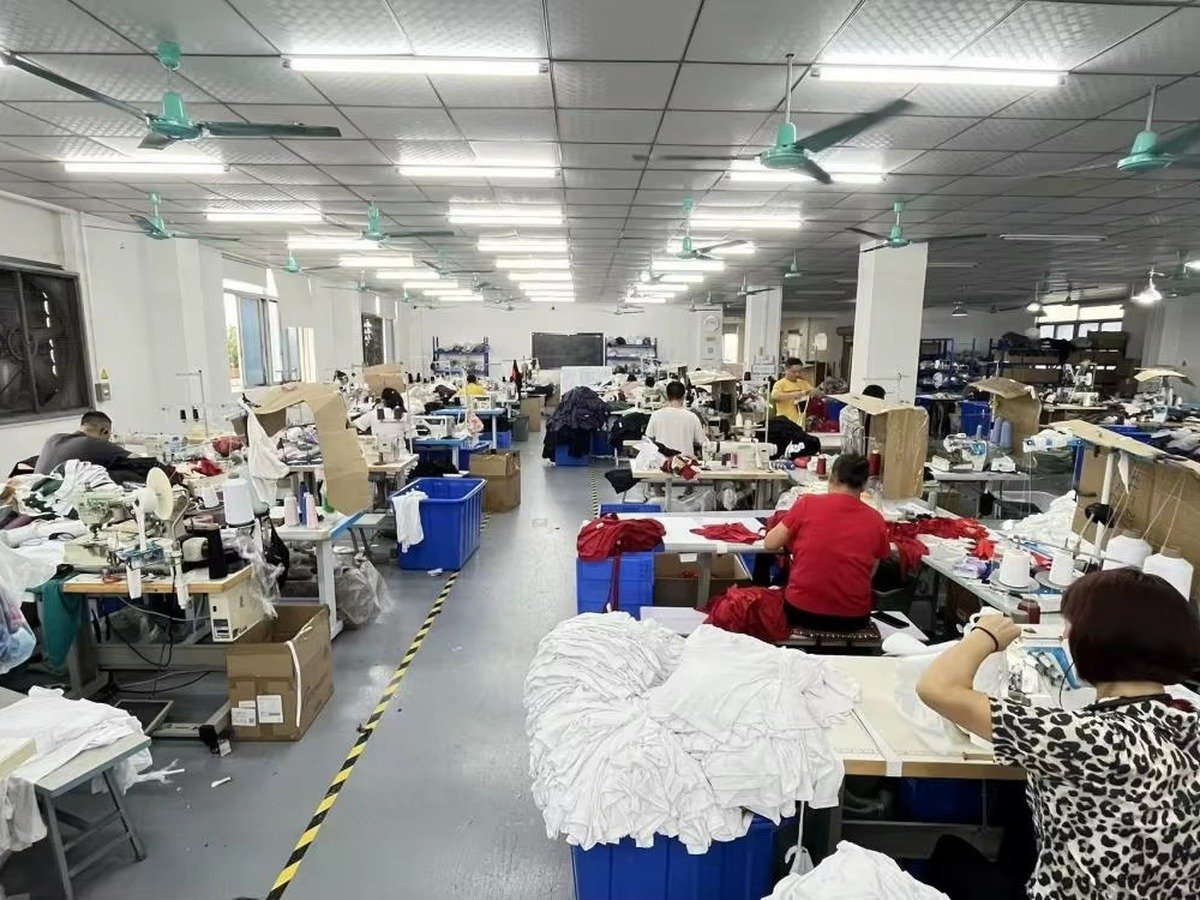
Manufacturing Bases
Verified facilities supporting activewear development and bulk production.
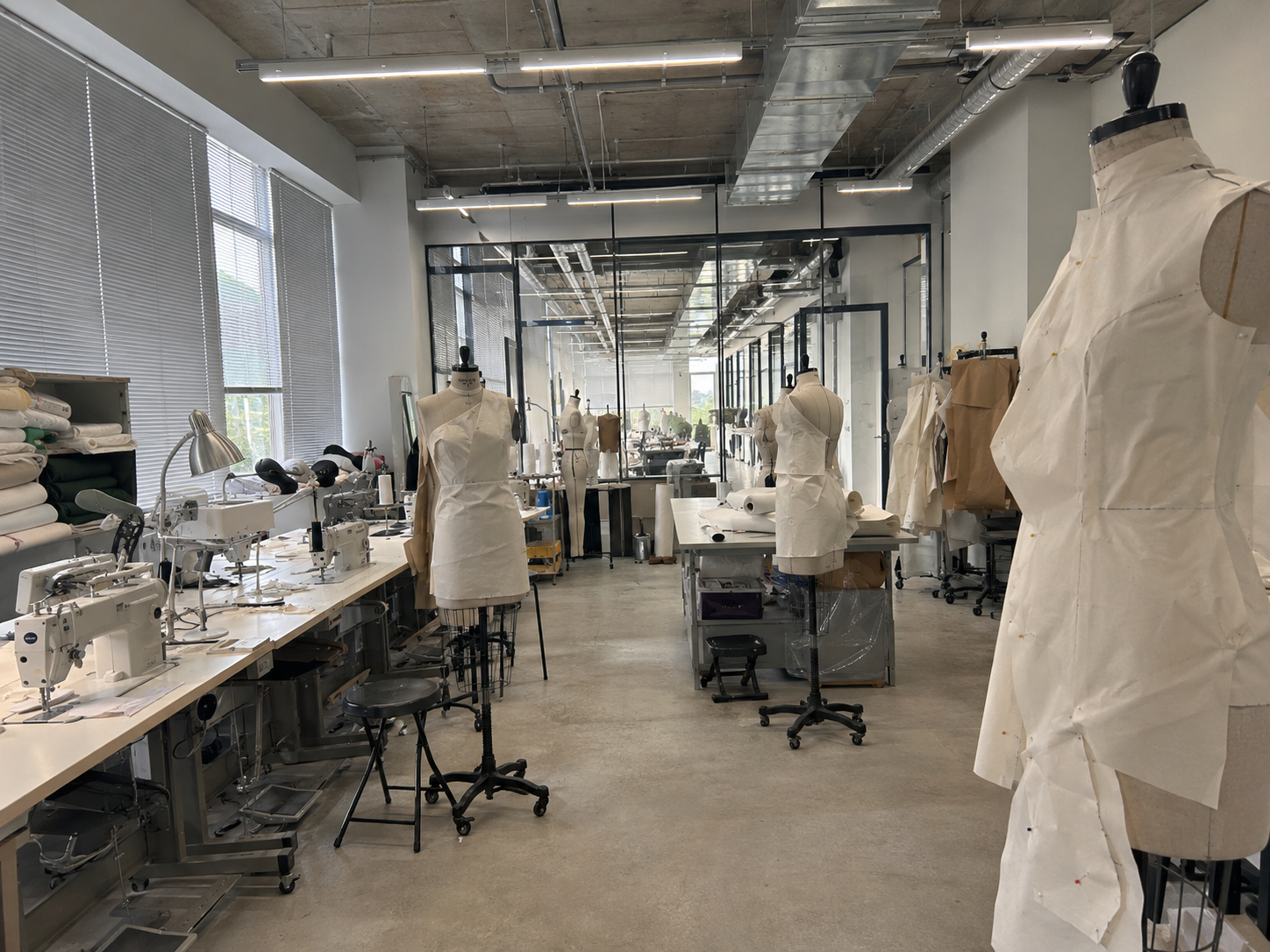
Development Workshop
Tech Pack review, sampling and fitting improvements through a structured workflow.
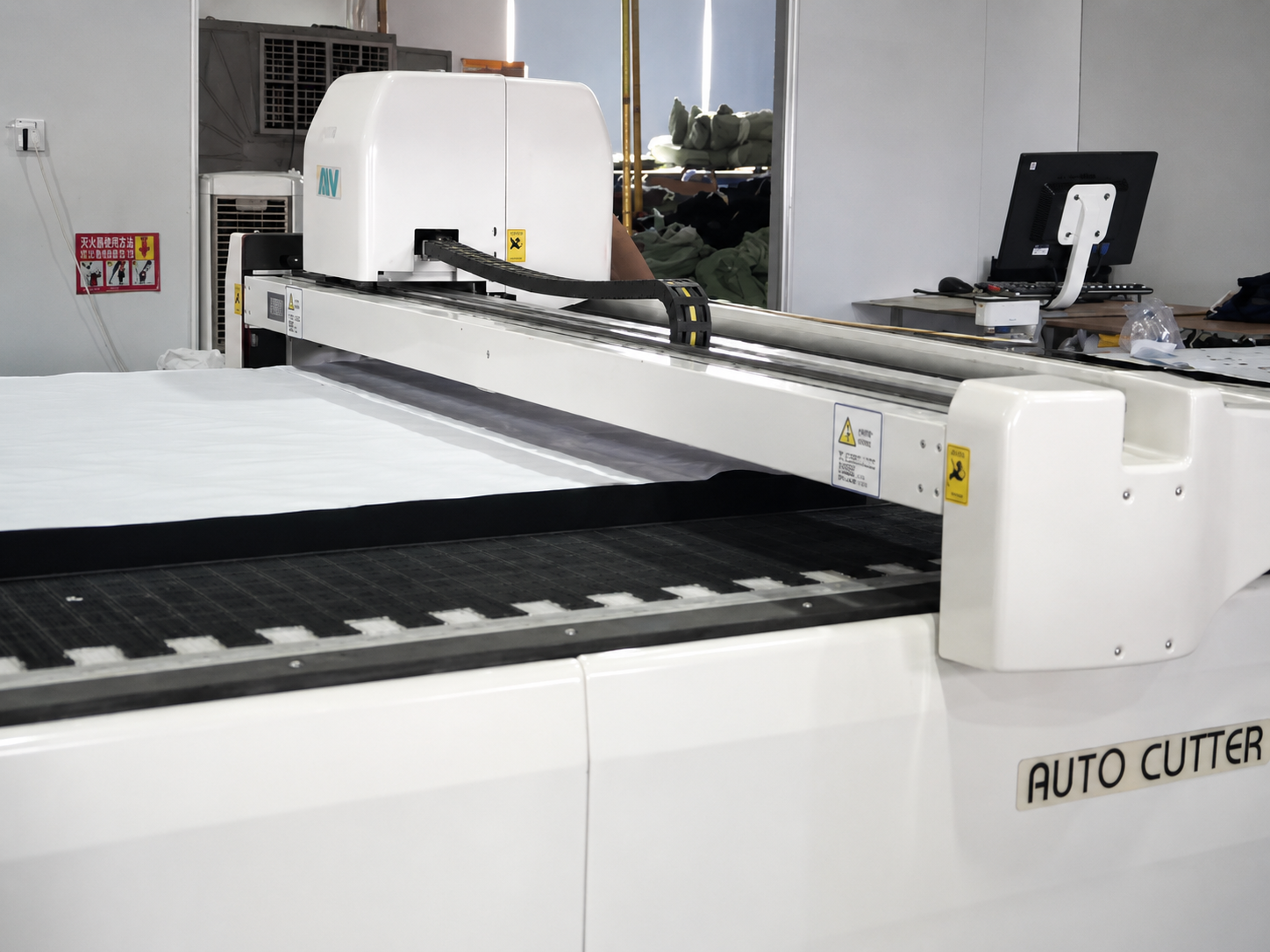
Confirmed Equipment
Reliable sewing, bonding, inspection and finishing resources for production needs.
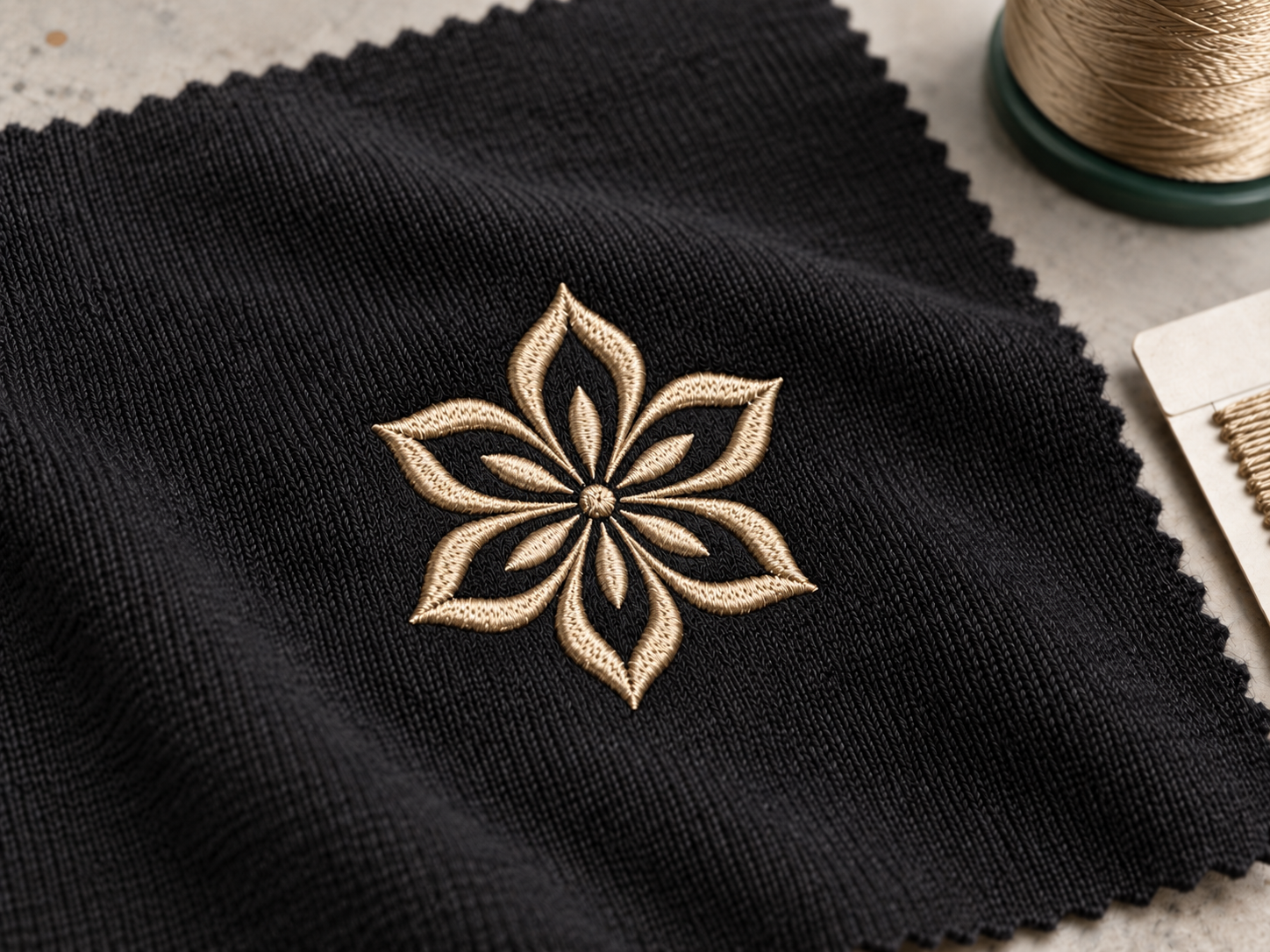
Embroidery Standards
Controlled embroidery placement, backing and approval for consistent results.
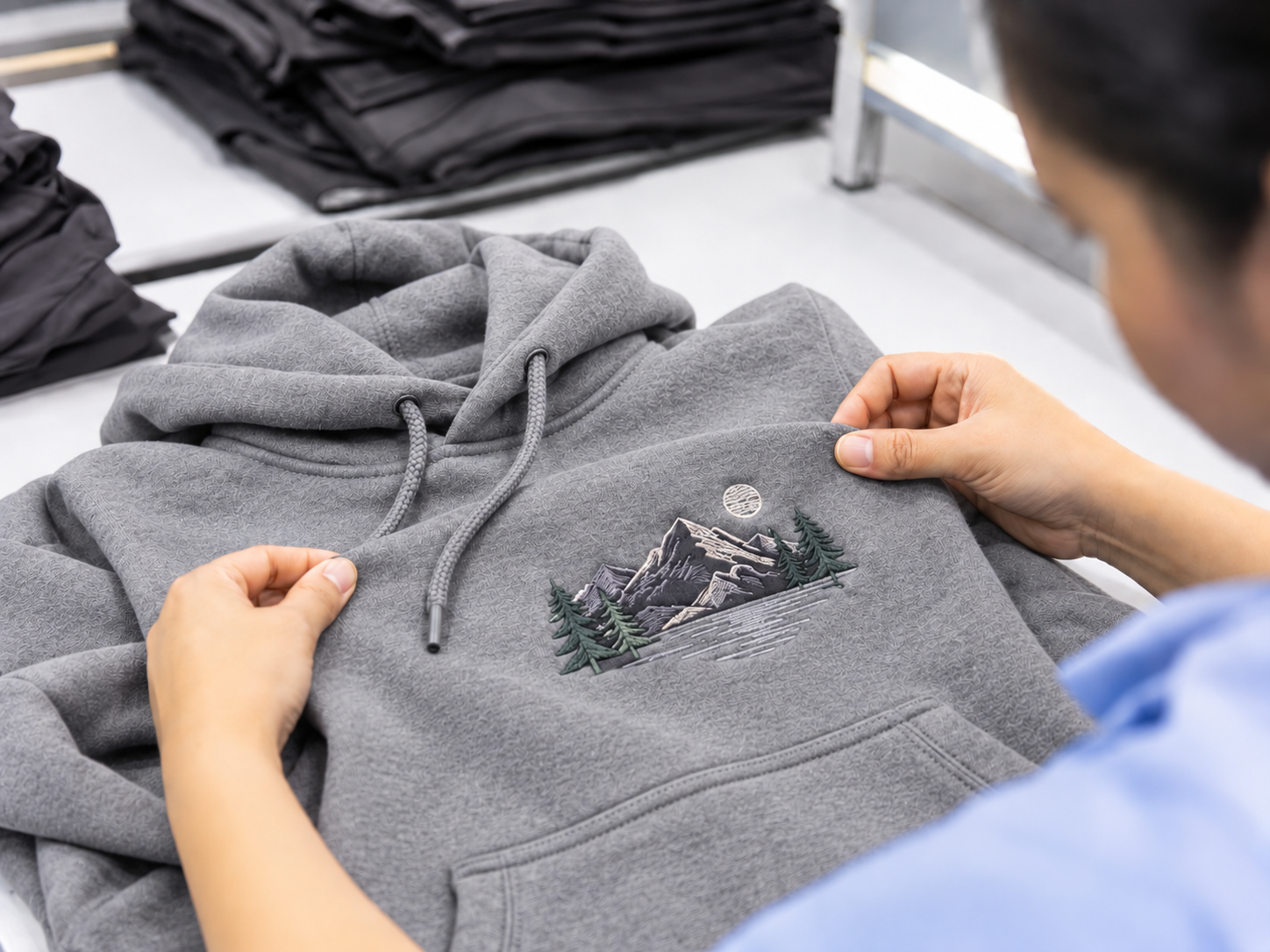
Quality Inspection
Measurement, workmanship and packing checks based on approved standards.
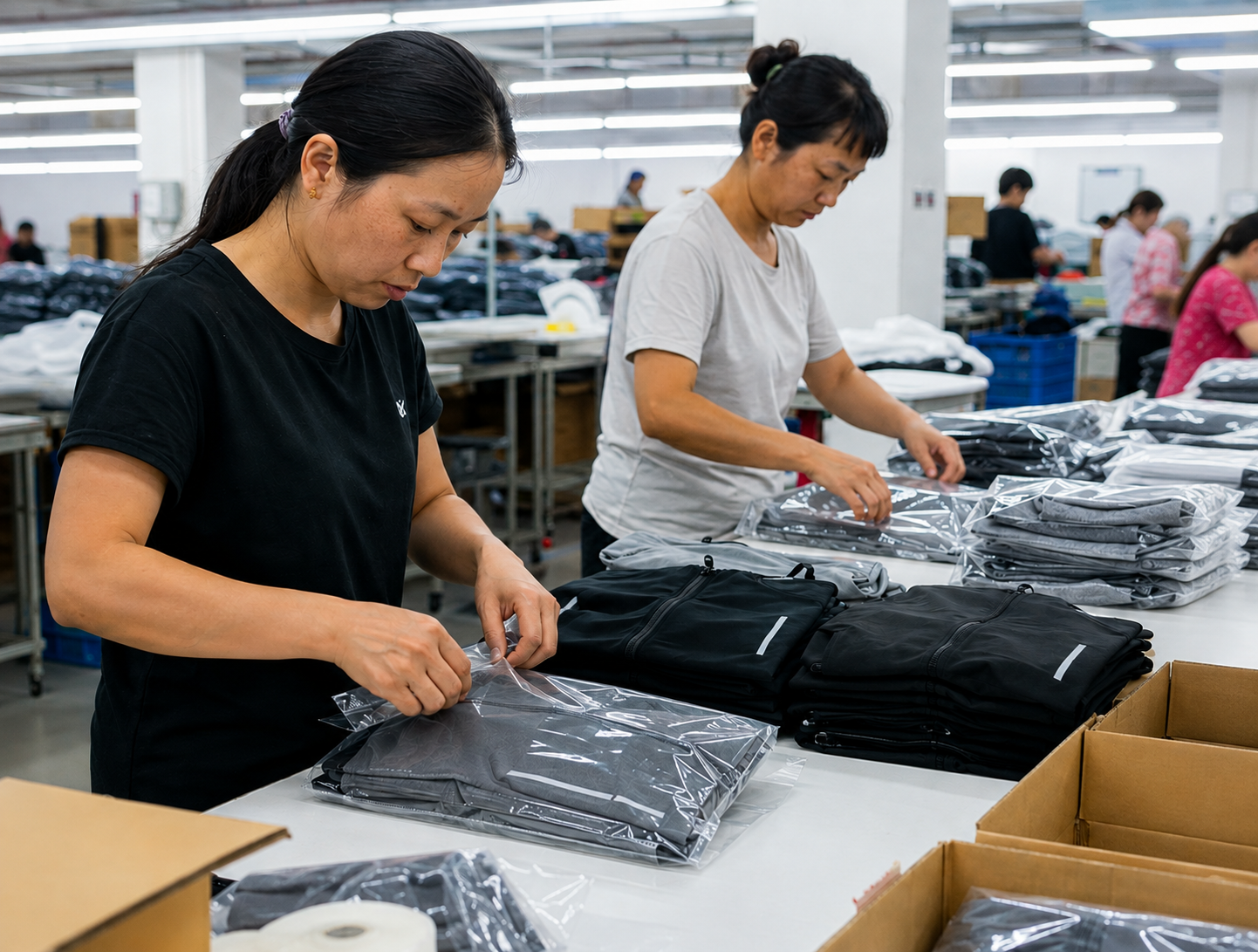
Packed Shipment
Organized packing and export preparation following order requirements.
Hoodie Embroidery Frequently Asked Questions
Review common questions about minimums, artwork, sampling, production, quality, sizing, packaging and embroidery responsibility before sending project files. Final terms follow technical review and written quotation.
What is the MOQ for embroidered hoodies?
MOQ starts from 100 pieces per color per design, subject to fabric, trims, construction and customization requirements. Custom-dyed fabric, special rib, zippers, thread effects, patches, labels or packaging may carry higher supplier minimums. Different colors or designs cannot automatically be combined to reach the starting quantity. Send the intended breakdown for a project-specific review.
Do you manufacture hoodies or decorate blanks?
Leadshow focuses on custom garment development and bulk manufacturing rather than only adding a logo to an off-the-shelf blank. Programs can cover pattern and sample development, fabric and trim review, garment production, coordinated embroidery, labels, packaging and export preparation. A stock-blank route is considered only when explicitly requested and commercially suitable.
Is embroidery completed inside your factories?
The production route is confirmed for each order. Leadshow’s verified equipment list does not currently establish universal owned embroidery capacity. A quotation should state whether embroidery uses available internal resources or a qualified specialist production resource, along with production location, sample approval, file control, inspection responsibility and corrective-action ownership.
Which embroidery techniques can be evaluated?
Project review may consider flat embroidery, 3D puff, appliqué, chenille-style decoration, embroidered patches or tonal work. Availability depends on artwork, fabric, placement, quantity, required quality and confirmed production resources. No technique is guaranteed before feasibility review and physical sampling. Specialty effects may change minimums, cost and schedule.
Which artwork files should we send?
Yes. A Tech Pack can be reviewed together with measurement charts, patterns, materials, trims, artwork and other product information. Leadshow evaluates construction and manufacturing feasibility before sample development, revision and bulk production planning.
Can products be developed from images or physical samples?
Vector AI, EPS, SVG or print-ready PDF files are preferred, with finished dimensions, placement, thread colors and effect identified. Include Pantone guidance when color matching matters. Small lettering, fine outlines and gradients may need adaptation for stitching. Supply confirmation that the brand is authorized to use protected logos or artwork.
How long does sample development take?
An early planning range may be 7–15 working days for a first development sample after specifications and suitable materials are ready. Revisions may require around 5–10 working days. Exact timing is written in the quotation because custom fabric, trims, complex embroidery, testing, courier transit and consolidated comments affect the schedule.
Can you produce oversized heavyweight hoodies?
Oversized and heavyweight styles can be evaluated from measurements, reference garments or a Tech Pack. Development covers body proportion, dropped shoulder, hood volume, sleeve balance, rib recovery, fabric structure and embroidery behavior. Heavy weight alone does not define quality. Final fabric, fit, construction, MOQ, price and timing follow sample and material approval.
Can labels and retail packaging be customized?
Main labels, size labels, care labels, hangtags, size stickers, barcodes and individual packaging can be included according to confirmed specifications and supplier minimums. Submit artwork, dimensions, materials, placement, legal copy, assortment ratios and carton marks. Market-specific labeling remains subject to brand approval and applicable professional advice.
How is embroidery quality approved?
Approval normally uses artwork review, a digitized stitch file, thread reference, strike-off and finished sample as required. Checks cover dimensions, placement, registration, edge quality, loose thread, puckering, backing and wash response when specified. Bulk inspection compares production with the signed standard and agreed tolerances. Material or artwork changes may require renewed approval.
Send Your Hoodie Embroidery Project For Review
Share enough information for a focused technical and commercial review. Upload a Tech Pack, measurement chart, reference photos or garment, embroidery artwork and brand-trim files. Include hoodie style, target fabric composition and GSM, intended fit, quantity by color and design, size range, decoration dimensions and placement, thread-color guidance, packaging requirements, sales market, requested ship date, destination and preferred Incoterm. Mark any mandatory testing, restricted-substance, inspection or labeling standards.
If some specifications remain open, identify the decisions requiring development support. Leadshow will review garment construction, material route, embroidery feasibility, sample needs, minimum quantities, cost drivers and production timing. MOQ starts from 100 pieces per color per design, subject to fabric, trims, construction and customization requirements. Exact sample timing, bulk schedule and embroidery execution route are confirmed in the quotation. Protected artwork should be supplied only by an authorized party. Clear files and one consolidated contact person help move the program from review to sample approval with fewer delays.