
Gym Wear Manufacturer in China
OEM and ODM gym wear development, sampling and bulk manufacturing for established and growing sportswear brands sourcing from China.
Leadshow supports gym wear projects from technical review through approved samples, production, quality review and packing preparation.
- OEM, ODM and Private Label support
- Sports bras, leggings, tops, shorts and athleisure categories
- Pattern, fit and sample development
- Custom labels, branding and packaging
- Bulk manufacturing with project-based production planning
Manufacturing Support Built Around Different Sourcing Programs
Gym wear programs vary widely in product maturity, technical documentation, SKU count and development workload. Leadshow supports different sourcing models by reviewing what is already confirmed, what still requires development and which manufacturing decisions must be resolved before bulk production.
Established Sportswear Brands
Established sportswear brands commonly arrive with detailed Tech Packs, approved material directions, measurement charts, artwork files and defined quality requirements. Manufacturing work therefore depends on disciplined execution rather than basic product ideation. Leadshow reviews garment construction, material specifications, size information, branding details, packaging requirements and production feasibility before sampling. The process is designed to identify missing or conflicting information early, keep approved references aligned with bulk production and support multi-style programs without treating every SKU as an isolated project.
Growing Apparel Brands
Growing brands may have a clear product direction but still require support converting sketches, reference garments or partial specification files into manufacturing-ready instructions. Leadshow can review available information, clarify construction details, evaluate fabric and trim requirements, develop samples and incorporate fit comments before approval. The goal is to create a clearer technical reference for production while giving the brand visibility into decisions involving fabric, pattern, workmanship, branding and packaging. Development scope depends on how complete the original information is and how much customization the style requires.
Private Label Programs
Private label programs often require coordination beyond the garment itself. Product development may involve main labels, care labels, size labels, heat-transfer branding, hangtags, SKU information, barcode requirements and individual packaging. Leadshow reviews these items alongside garment specifications so product and packaging versions remain aligned. This approach is useful for retailers, distributors, e-commerce brands and private label companies managing different colors, sizes or packaging variations under one collection. Final execution remains subject to approved artwork, material availability, order quantities and project-specific manufacturing requirements.
Core Gym Wear Categories Available for Custom Development
Leadshow’s confirmed product scope covers key gym, yoga, training and athleisure categories. Each category has different construction, material, fit and finishing requirements, so development decisions are reviewed according to the garment rather than applying one specification across an entire collection.
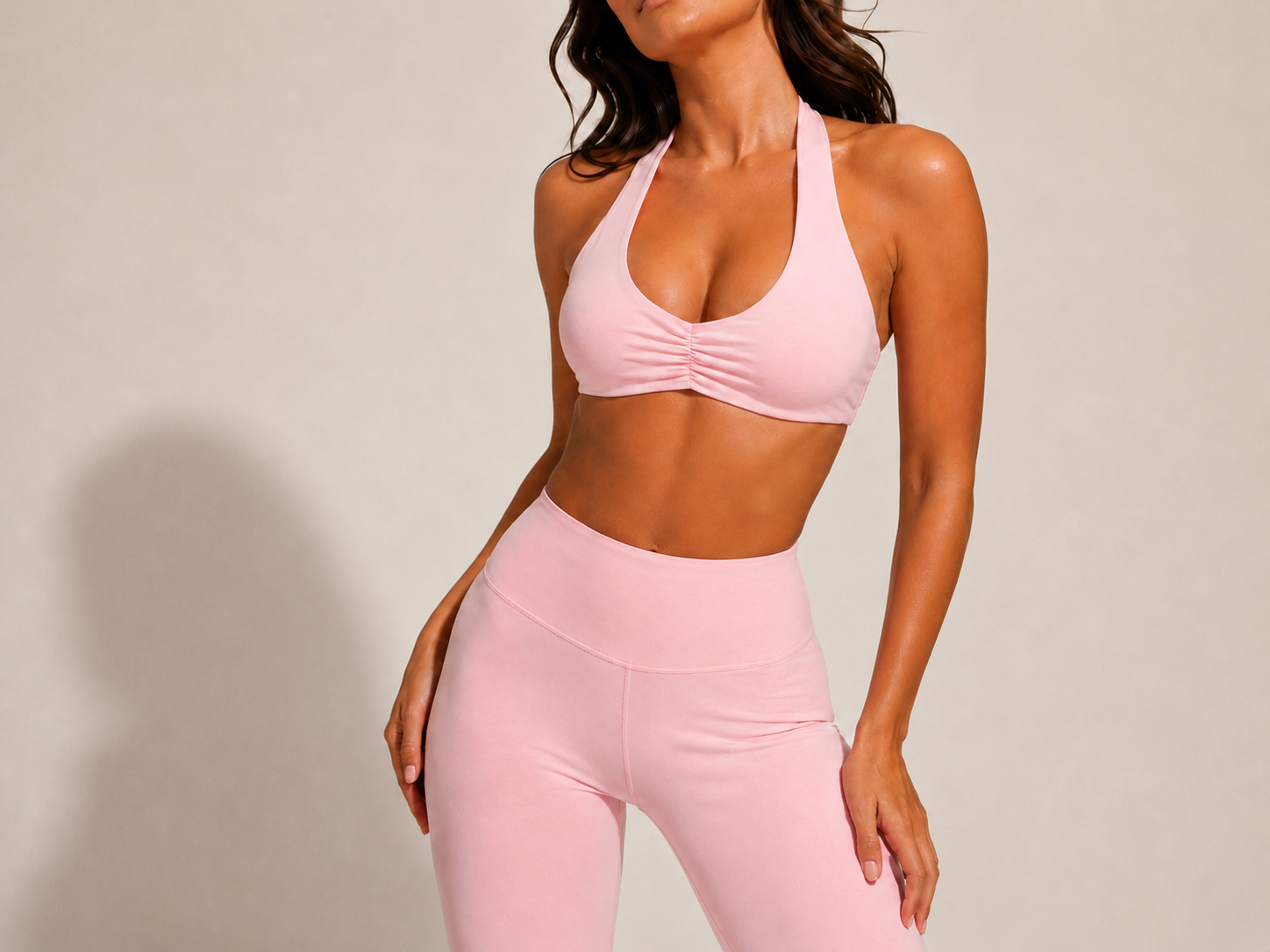
Sports Bras
Sports bra development requires close coordination between fabric stretch, elastic selection, strap construction, neckline shape, underbust structure, seam placement and pattern balance. A design may appear simple in a sketch while requiring several technical decisions during sampling. Leadshow reviews the intended silhouette, measurement information, fabric direction, elastic application, lining or panel structure, branding position and workmanship requirements before approval. Fit comments from samples can then be translated into pattern revisions before the final production reference is confirmed.
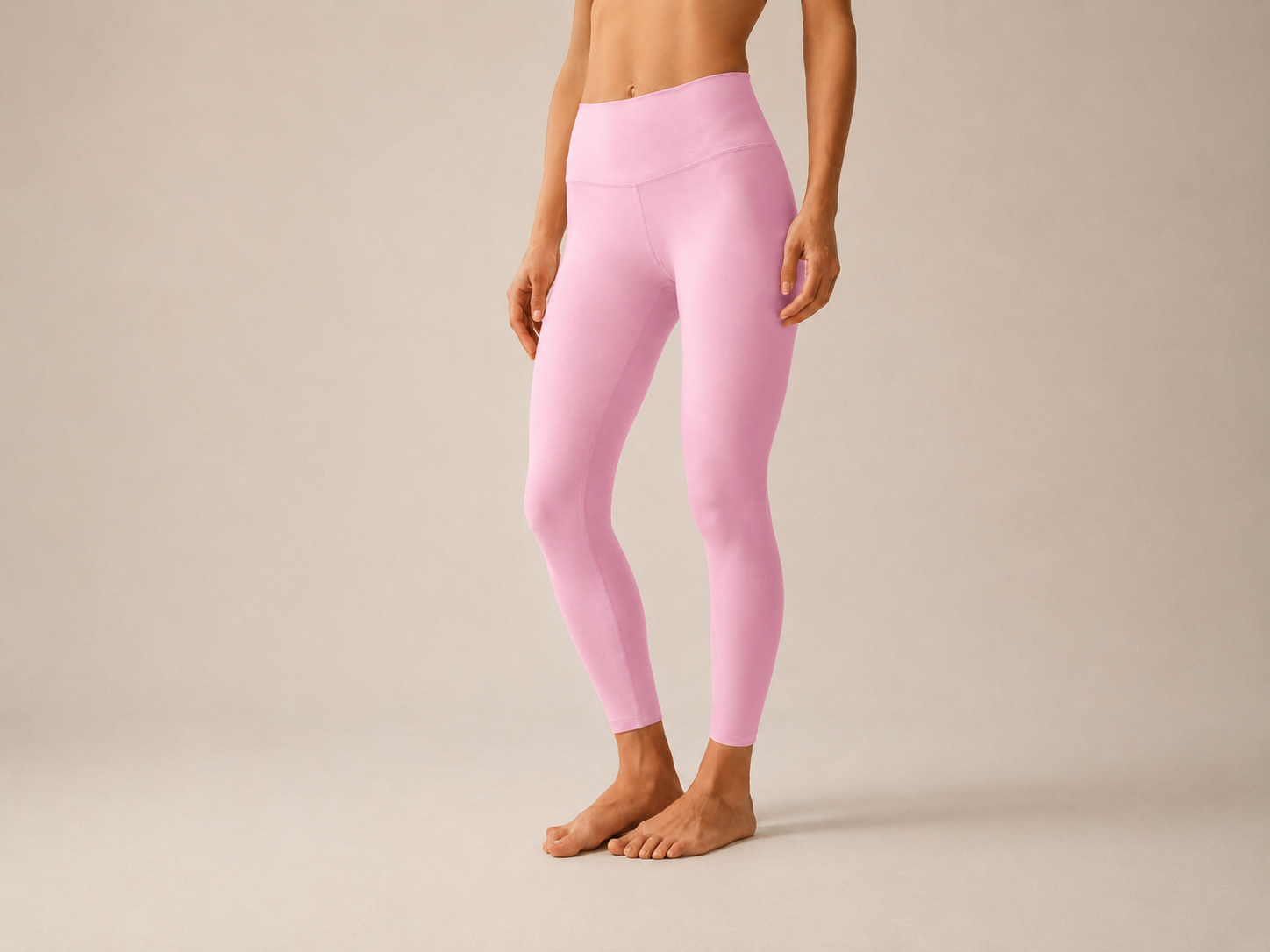
Yoga Leggings
Yoga leggings depend heavily on fabric behavior and pattern balance. Waistband height, rise, inseam, crotch construction, side seams, panel shapes and hem finishing all influence the final fit. Leadshow reviews stretch direction, recovery, GSM, handfeel, measurement charts and approved styling details together rather than evaluating each element separately. Sample review can focus on waistband stability, overall proportions, seam placement and movement-related fit observations. Functional claims such as squat-proof performance are not assumed from fabric composition and require appropriate testing if specified.
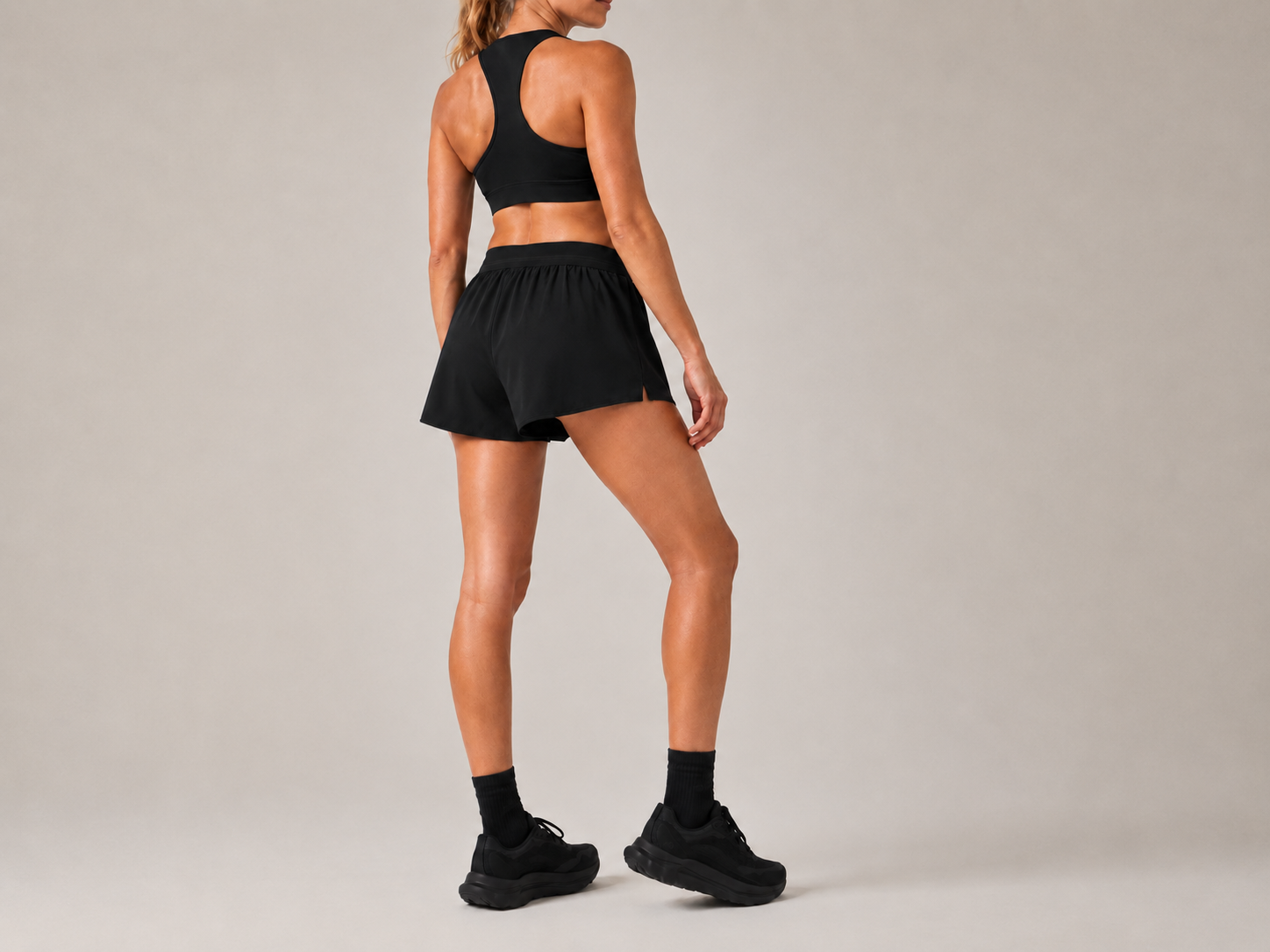
Running Shorts
Running shorts may vary by length, waistband construction, pocket configuration, panel design, lining requirement and fabric choice. Development begins with the intended style structure and technical information provided for the project. Leadshow reviews measurements, waistband details, seam construction, pocket placement, trim requirements and branding positions before sampling. Where multiple colors or sizes are planned, approved construction and measurement references help keep later versions aligned. Final specifications depend on the brand’s design, material choice and required finishing rather than a universal shorts standard.
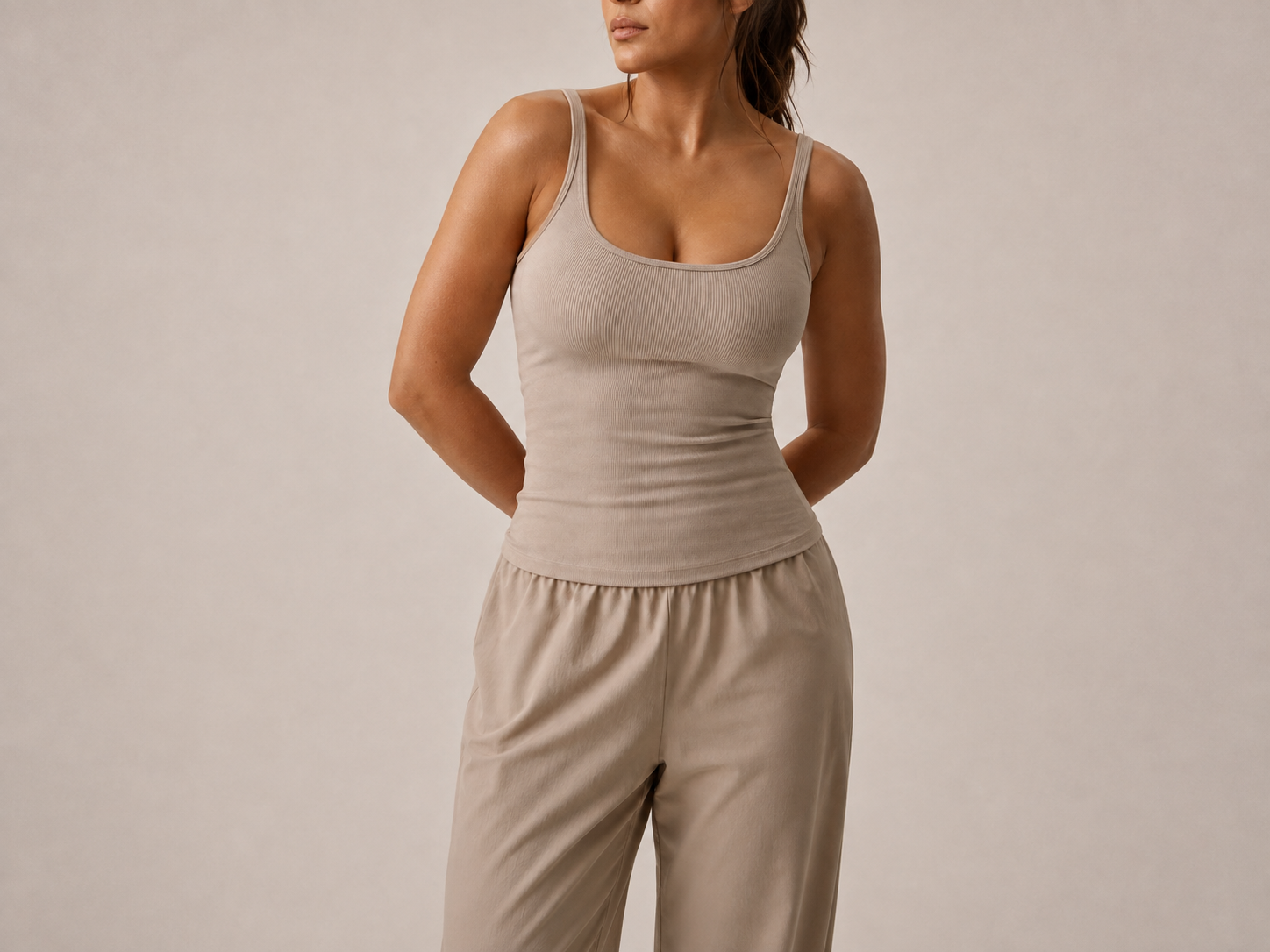
Tank Tops
Tank tops appear visually simple but require accurate control of neckline shape, shoulder width, armhole depth, body length, side seam balance and fabric behavior. Leadshow reviews these details together with measurement charts and reference samples where available. Fabric structure also affects drape and fit, especially where a style uses lightweight stretch materials or a closer body fit. Sampling can be used to confirm proportions, seam finishing, logo placement and overall silhouette before bulk production details are released.
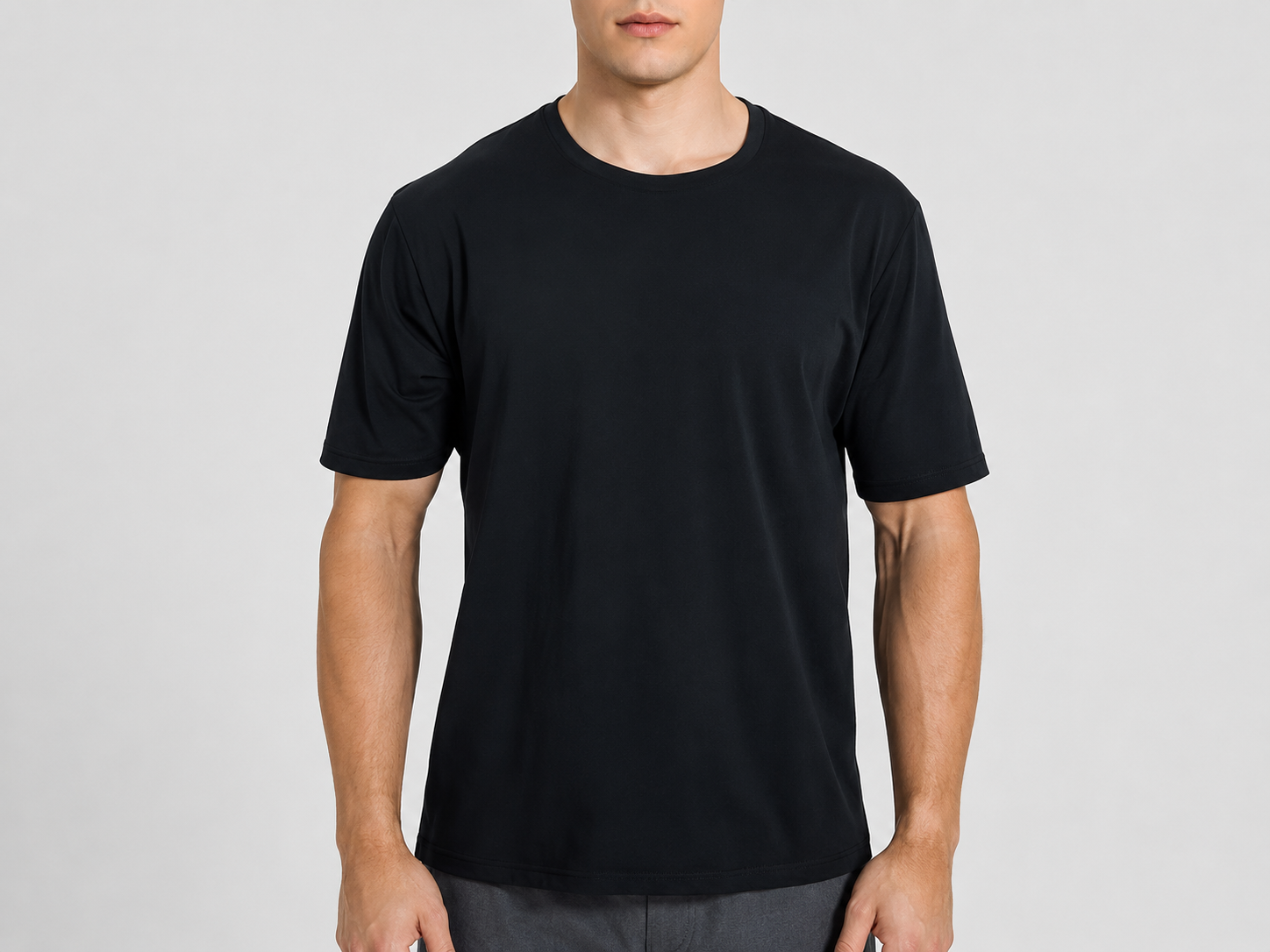
Sports T-Shirts
Sports T-shirts can be developed in different fits, sleeve structures, neck finishes and fabric types according to the intended collection. Leadshow reviews body measurements, sleeve dimensions, shoulder structure, neckline construction, fabric GSM, stretch characteristics and branding requirements before sampling. Heat-transfer graphics or other decoration methods are evaluated in relation to the selected fabric and placement. Approved samples, measurement specifications and artwork references are then used to support consistency during bulk manufacturing and finishing.
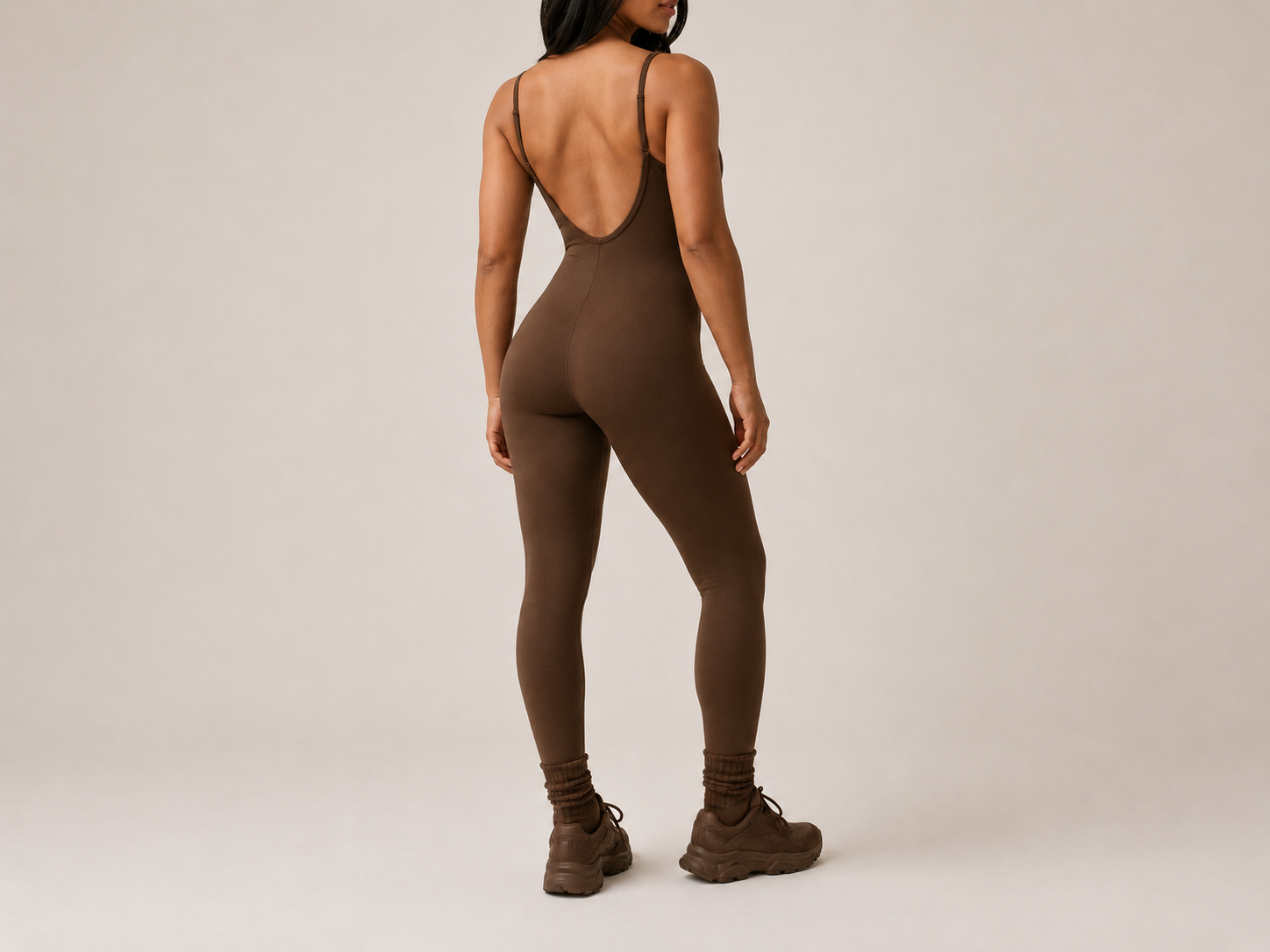
Tracksuits
Tracksuit development requires coordinated control between jacket and trouser components. Zippers, pockets, panels, rib or elastic structures, waistbands, drawcords, cuffs, color combinations and branding details may all need to match across the set. Leadshow reviews the two garments as one product program while maintaining separate technical specifications where required. Sampling is used to confirm construction, proportions, trim application and visual consistency before production. Material and scheduling conditions remain dependent on the confirmed design and order mix.
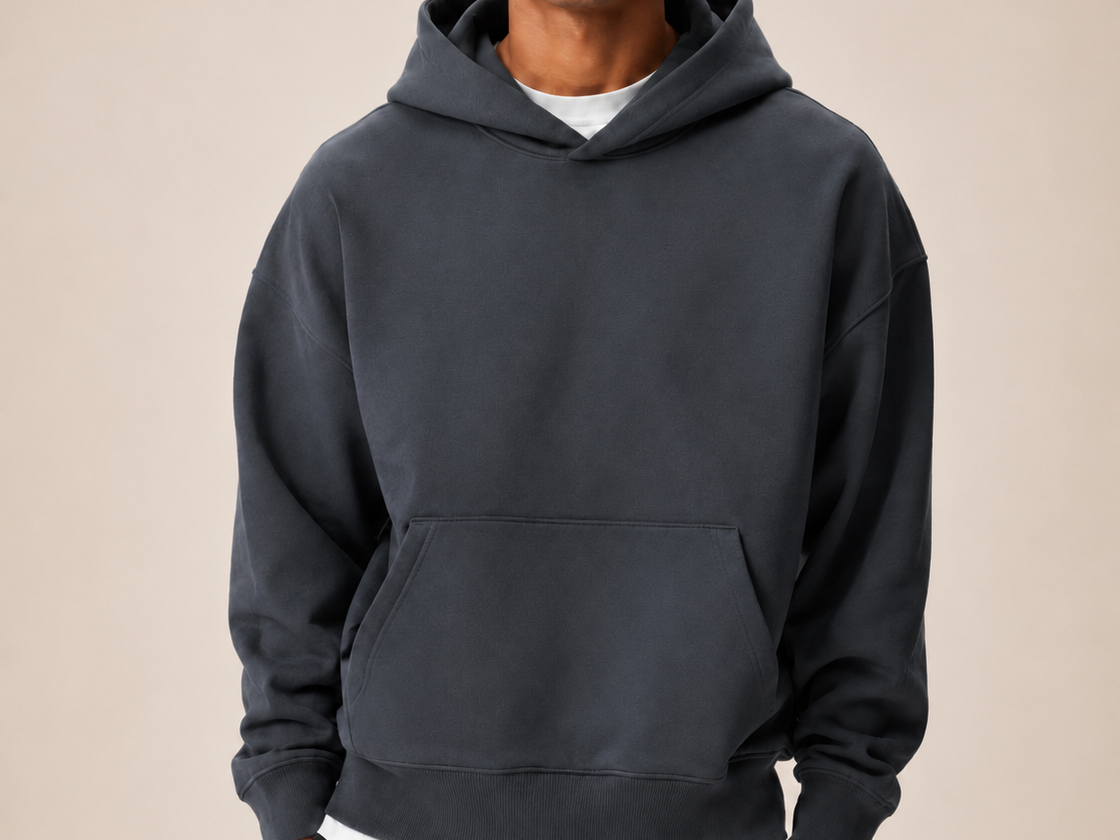
Hoodies
Custom hoodies can vary significantly in hood shape, body fit, pocket structure, rib specification, drawcord arrangement, zipper use, fabric weight and decoration method. Leadshow reviews these details against the Tech Pack, reference sample or available design files. Fabric selection is considered together with the intended structure because weight, handfeel and stretch can influence garment appearance and sewing behavior. Sampling supports confirmation of measurements, hood construction, rib application, branding position and overall workmanship before bulk production.
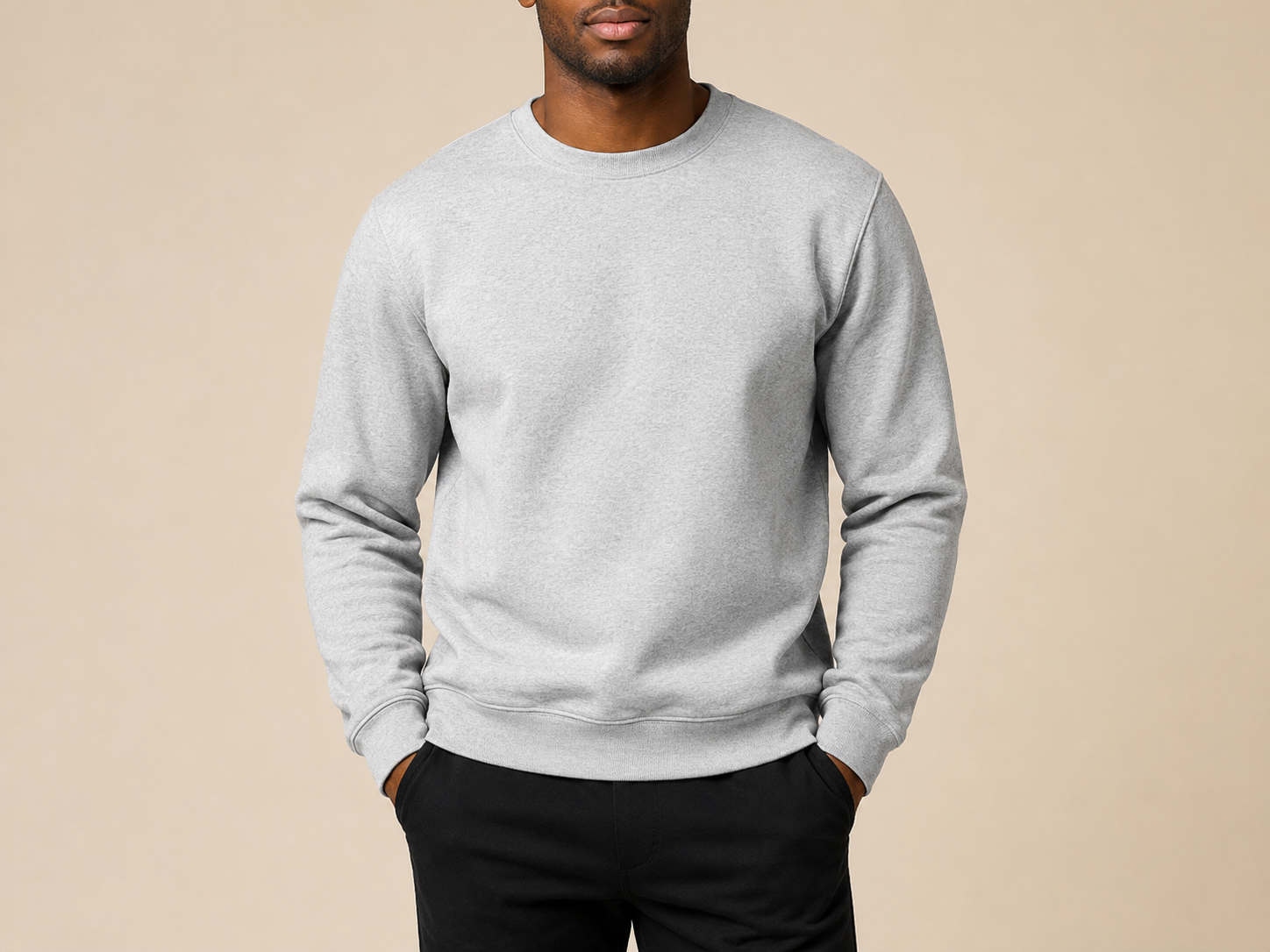
Sweatshirts
Sweatshirts are commonly used across gym, training and athleisure collections, but manufacturing requirements differ according to fit, neckline, rib structure, panel design, fabric weight and branding. Leadshow reviews measurement charts, seam details, cuff and hem construction, artwork placement and material requirements before sample approval. Where a collection includes coordinating hoodies, tracksuits or bottoms, common fabrics, colors and trims can be reviewed across the program to reduce unnecessary variation while preserving each style’s approved construction.
How to Evaluate a Gym Wear Manufacturer in China
A sourcing decision should go beyond factory photos and product catalogs. Development capability, production discipline, material understanding, quality controls and project communication determine whether a manufacturer can support the requirements behind a gym wear collection.
Evaluation Factor
What Brands Usually Check
Leadshow Manufacturing Approach
Project Impact
Product Category Fit
Whether the supplier has relevant garment experience
Confirmed scope includes sports bras, yoga leggings, running shorts, tank tops, sports T-shirts, tracksuits, hoodies and sweatshirts
Helps align manufacturing experience with the planned collection
Technical Review
Ability to read and question product specifications
Tech Pack, construction, measurements, trims, branding and packaging details are reviewed before production decisions
Reduces avoidable ambiguity before sampling
Fabric Review
GSM, stretch, recovery, handfeel and compatibility
Material characteristics are reviewed in relation to garment structure and required processes
Supports more suitable material-to-product decisions
Fit Development
Pattern accuracy and sample revision discipline
Measurement charts, pattern balance and sample feedback are reviewed before approval
Creates a clearer approved reference for bulk
Sampling
Whether the supplier can support different sample purposes
Development, fit, logo, color, size-set and pre-production sample requirements can be reviewed as applicable
Helps separate development decisions from production approval
Manufacturing Processes
Availability of relevant sewing and finishing methods
Cutting, lockstitch, overlock, double-needle, bartacking, four-needle six-thread, bonding, seam taping, laser perforation, heat transfer and finishing are available where applicable
Supports different garment constructions without claiming every process is used on every style
Quality Review
Control points before and during bulk production
Material, first-piece, in-process, measurement, workmanship, label and packing checks can be incorporated according to project requirements
Helps identify deviations earlier
MOQ Conditions
Whether order structure matches the manufacturing model
Standard MOQ generally starts from 100 pieces per color per design, subject to materials, trims, processes and customization
Allows early assessment of project feasibility
Capacity
Whether the factory can handle planned volumes
Combined monthly capacity is up to approximately 120,000 finished garments, subject to style complexity, materials, order mix and scheduling
Provides a realistic basis for production planning
Packaging & SKU Control
Ability to manage size, color and packaging versions
Labels, hangtags, SKU information, barcodes and packing instructions can be reviewed with garment specifications
Supports more controlled multi-SKU execution
Export Preparation
Ability to prepare commercial shipment information
Commercial invoice, packing list and applicable export information can be coordinated according to the shipment arrangement
Supports forwarder handover and export documentation preparation
Technical Review Before Gym Wear Sampling Begins
A strong sample starts with a clear manufacturing brief. Before fabric is cut, technical information needs to show what the garment should look like, how it should be constructed, how it should fit and which details must remain controlled through bulk production.
From Design Information to Manufacturing Instructions
Gym wear projects can arrive in different forms. Some brands provide complete Tech Packs with technical drawings, graded measurement charts, fabric specifications, trim details, artwork files and packaging instructions. Others may begin with reference photos, an existing garment, sketches or partial specifications. Leadshow reviews the information available and identifies which decisions are already confirmed and which items still require clarification.
The review can include garment structure, seam locations, panels, pockets, waistband or elastic construction, neckline and armhole details, zipper specifications, drawcords, labels, artwork placement, packaging requirements and any process that could influence manufacturing feasibility. Measurements are considered alongside the intended fit rather than treated as a disconnected table of numbers.
Missing information is not automatically filled with assumptions. Where a construction detail, material specification, artwork dimension or measurement is unclear, the relevant item should be confirmed before it becomes part of the production reference. This is particularly important for stretch garments because fabric behavior, pattern ease and seam construction can affect the final fit together.
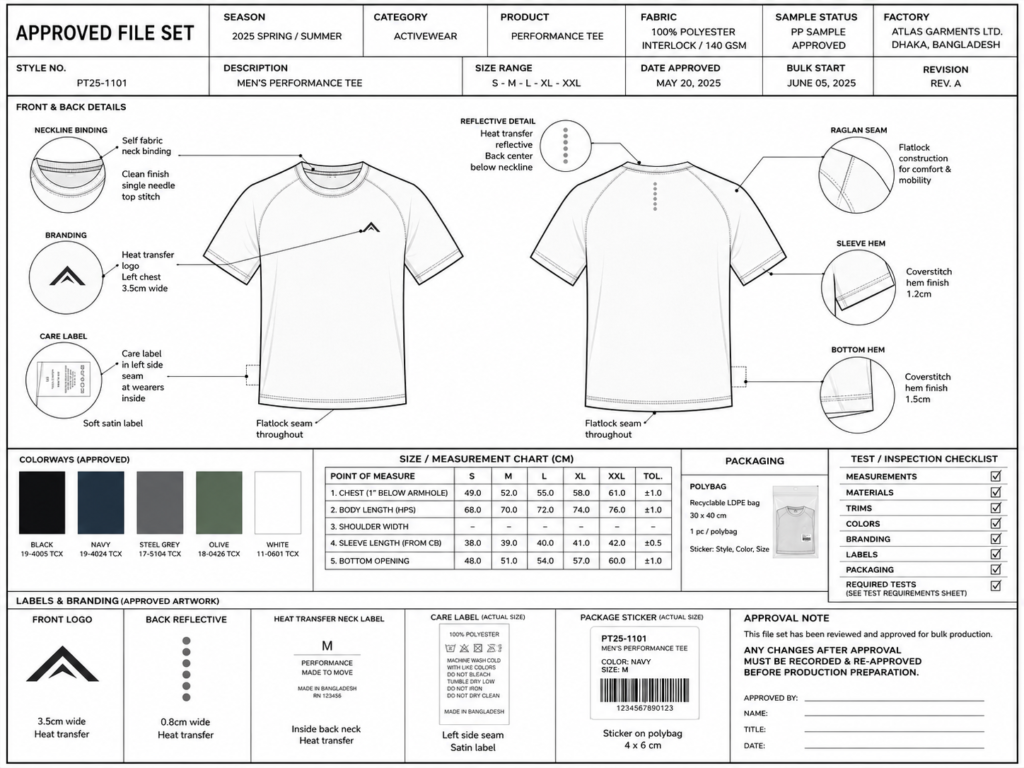
The purpose of the technical review is not to add unnecessary paperwork. It creates a common reference between the brand, development team and production team. Once the required information is sufficiently defined, sampling can begin with fewer unresolved variables.
Reviewing Construction Before Material Commitment
Construction decisions affect which fabrics, trims and manufacturing processes are suitable for a style. A sports bra using elastic binding, a legging using four-needle six-thread seams, a hoodie with rib and drawcord details and a tracksuit with zippers and panels each create different production requirements.
Leadshow reviews the proposed construction against available manufacturing methods before the style moves further into development. Where bonding, seam taping, laser perforation, heat transfer or other specialized processes are requested, applicability is evaluated according to the garment design and selected materials. Availability of equipment does not automatically mean a process is suitable for every fabric or product.
The same principle applies to decoration. Logo size, placement, material and application method need to work together. A heat-transfer graphic placed across a high-stretch area, for example, may require different consideration from branding placed on a more stable fabric zone. Testing requirements should be defined when a specific performance result must be verified.
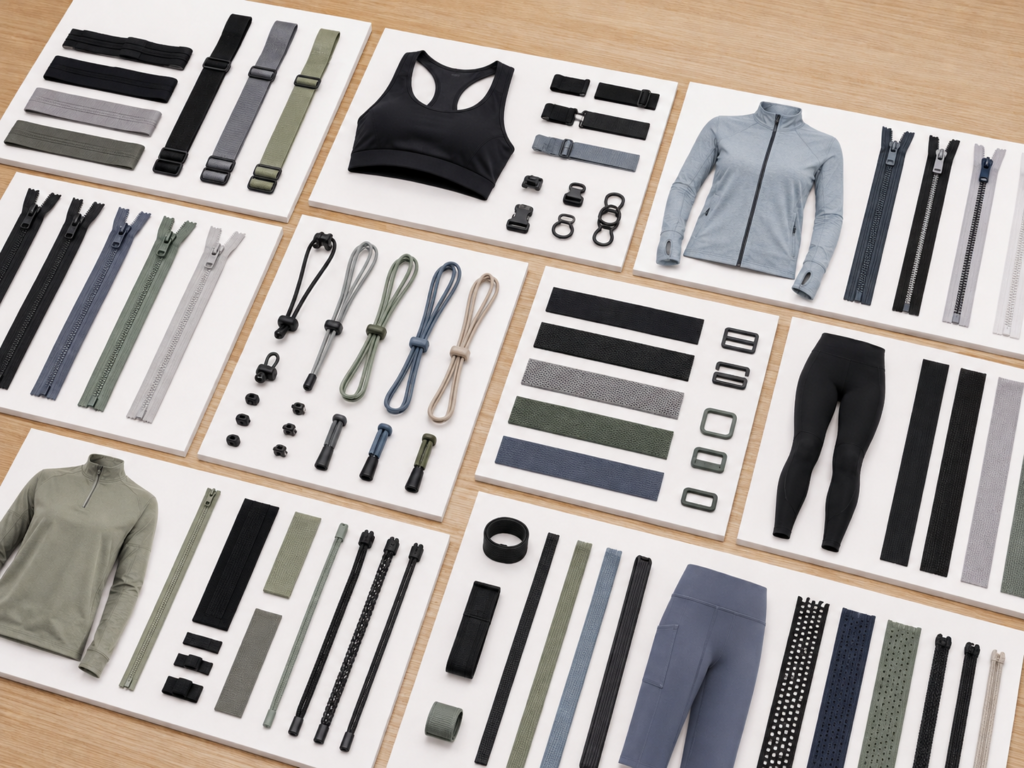
Technical review also considers how the product will be handled after sewing. Main labels, care labels, size labels, hangtags, SKU information and packaging can introduce version-control requirements when one style has multiple colors and sizes.
Resolving these details before bulk production creates a cleaner path from design intent to manufacturing execution and gives the approved sample a stronger role as the physical production reference.
Gym Wear Fabric Selection Beyond Fiber Composition
Fabric choice influences fit, drape, coverage, sewing behavior, branding compatibility and the overall feel of gym wear. A material should therefore be reviewed as part of the garment system rather than selected only by fiber name.
Reviewing GSM, Structure, Stretch and Recovery
Two fabrics with similar fiber content can perform differently because knit structure, yarn, finishing, weight and stretch characteristics vary. For gym wear development, Leadshow can review GSM, fabric construction, stretch direction, recovery, handfeel, color requirements and the relationship between material behavior and the intended garment.
Stretch direction is particularly important in leggings, sports bras and close-fitting tops. The pattern needs to work with the material rather than against it. A change in stretch or recovery can alter how a waistband feels, how a garment sits on the body and how measurements translate from a flat specification to a worn product.
GSM also needs context. A heavier fabric is not automatically better, and a lighter fabric is not automatically more breathable. The appropriate range depends on the product design, desired handfeel, opacity requirements, construction and target positioning. Where coverage, moisture management, antibacterial properties or other performance claims are important, they should be supported by relevant material information or testing rather than inferred from composition alone.
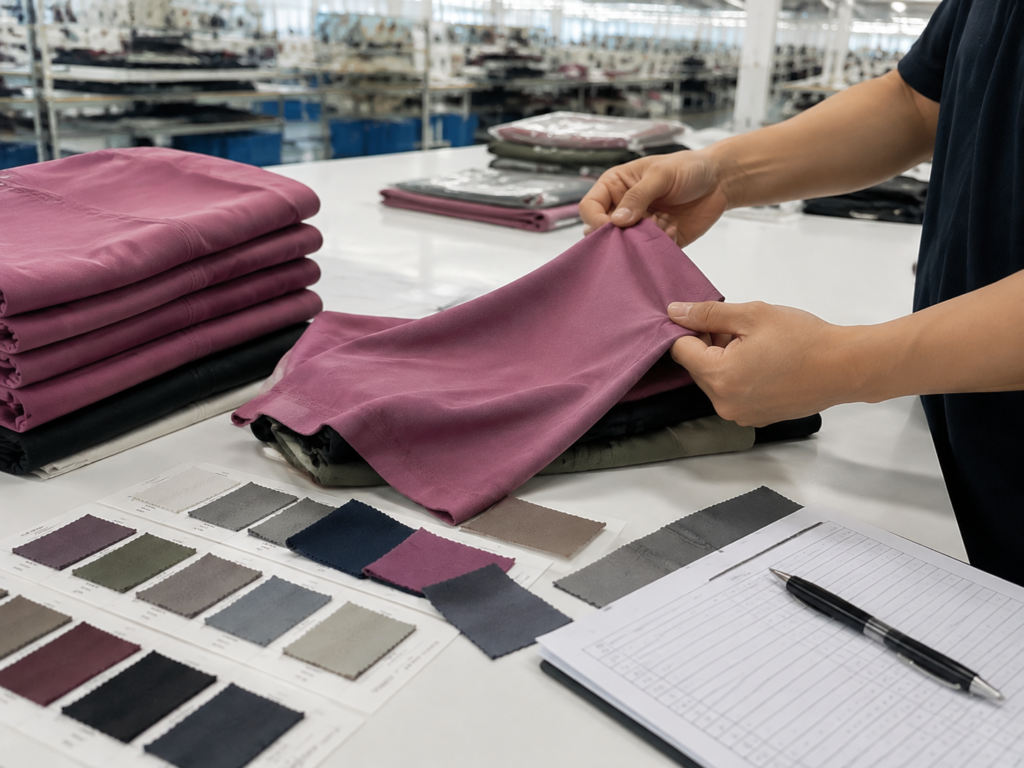
Fabric review before sampling gives the development team an opportunity to compare material direction with the garment’s construction and fit objectives before a final material is approved.
Matching Material to Construction and Branding
The selected fabric also needs to work with seams, trims, elastic, zippers, printing or transfer methods and any specialized process requested for the product. A material that works well for a basic T-shirt may not be suitable for bonding, a high-stretch waistband or a tightly fitted sports bra.
Leadshow reviews material compatibility in relation to the intended manufacturing method. Where four-needle six-thread construction is planned, fabric behavior and seam appearance should be evaluated together. Where heat transfer is used, artwork, temperature requirements and fabric response need to be considered. Bonding and seam taping also require compatibility review rather than being treated as universal upgrades.
Color introduces another layer of control. A collection may use the same color direction across several different fabric structures, but identical visual results cannot be assumed across all materials. Shade expectations, trim matching and approved references should therefore be established before bulk execution.
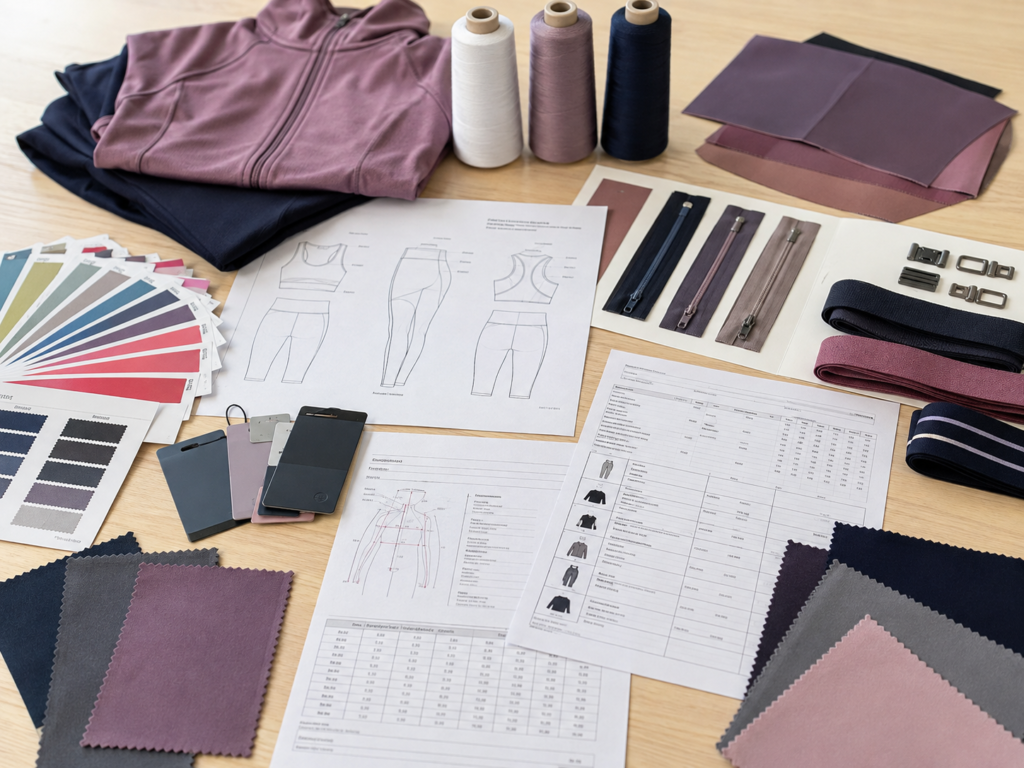
For multi-style programs, material consolidation may be considered where it supports the design and commercial requirements, but it should not override product-specific needs. The objective is to create an approved material direction that can be traced into sampling and bulk production without making unsupported performance claims.
Pattern, Fit and Movement Development for Gym Wear
Gym wear is evaluated on the body, not only on a flat measurement table. Pattern balance, fabric stretch, ease, garment length and construction all influence how a style feels and looks during movement.
Building the Pattern Around Product Intent
Pattern development begins with the intended silhouette and measurement system. A close-fitting sports bra, high-rise legging, relaxed sports T-shirt and oversized hoodie require different approaches even when several garments are included in the same collection.
Leadshow reviews available measurement charts, size references, sketches and physical samples to understand the intended proportions. The team can work with customer-defined size systems, including alpha sizes such as XS–XXL, numeric systems or market-specific labels, but no universal size range is assumed for every project. Final size coverage and grading requirements must be defined by the brand.
For stretch garments, pattern ease needs to be evaluated together with material stretch and recovery. A measurement cannot be interpreted independently from the fabric that will be used. Waistband dimensions, rise, crotch shape, underbust structure, strap length, armholes and neck openings are examples of areas where small pattern changes can materially affect fit.
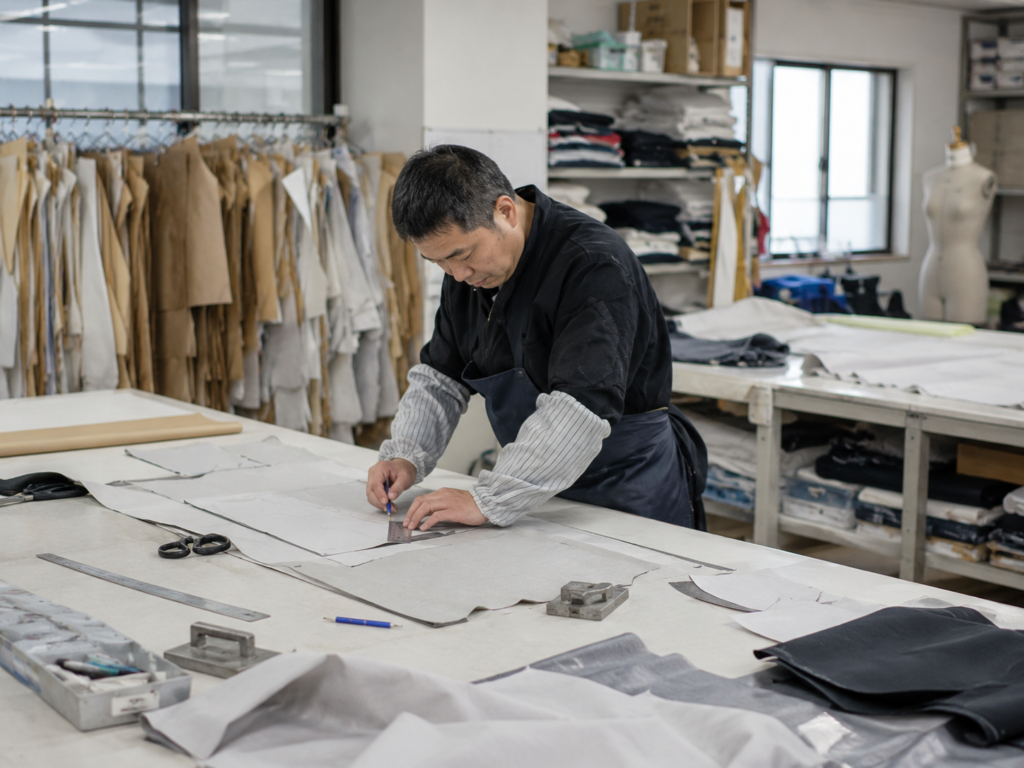
Sample comments should be specific enough to translate into pattern action. Instead of a general comment such as “make it fit better,” feedback can identify the exact area, desired change and reference measurement. Clear revision records make it easier to compare sample versions and prevent already-approved details from being altered unintentionally.
Using Samples to Confirm Fit Before Bulk
Fit samples provide a physical reference for evaluating proportions, measurements and construction together. Review may include standing fit, seated position, arm movement, waistband stability, garment length, seam placement and other observations relevant to the design.
Movement review does not replace laboratory or product-performance testing. It is a development step used to observe whether the garment construction and pattern behave as intended during normal fitting conditions. Claims such as compression level, squat-proof performance or moisture management require appropriate evidence if they are part of the product specification.
Once comments are received, pattern and measurement revisions can be documented for the next sample stage. Major construction changes may require additional confirmation because they can influence sewing methods, material use and later production planning.

When the fit and construction are approved, the final measurement chart, pattern version, approved sample and related technical files should align. These references form part of the standard used by production and quality teams during bulk manufacturing. Maintaining that alignment is more valuable than relying on a single sample without clear supporting specifications.
Sample Stages for Controlled Gym Wear Development
Different samples answer different questions. Not every project requires every sample type, so the required stages are confirmed according to product complexity, development status, material availability and approval requirements.
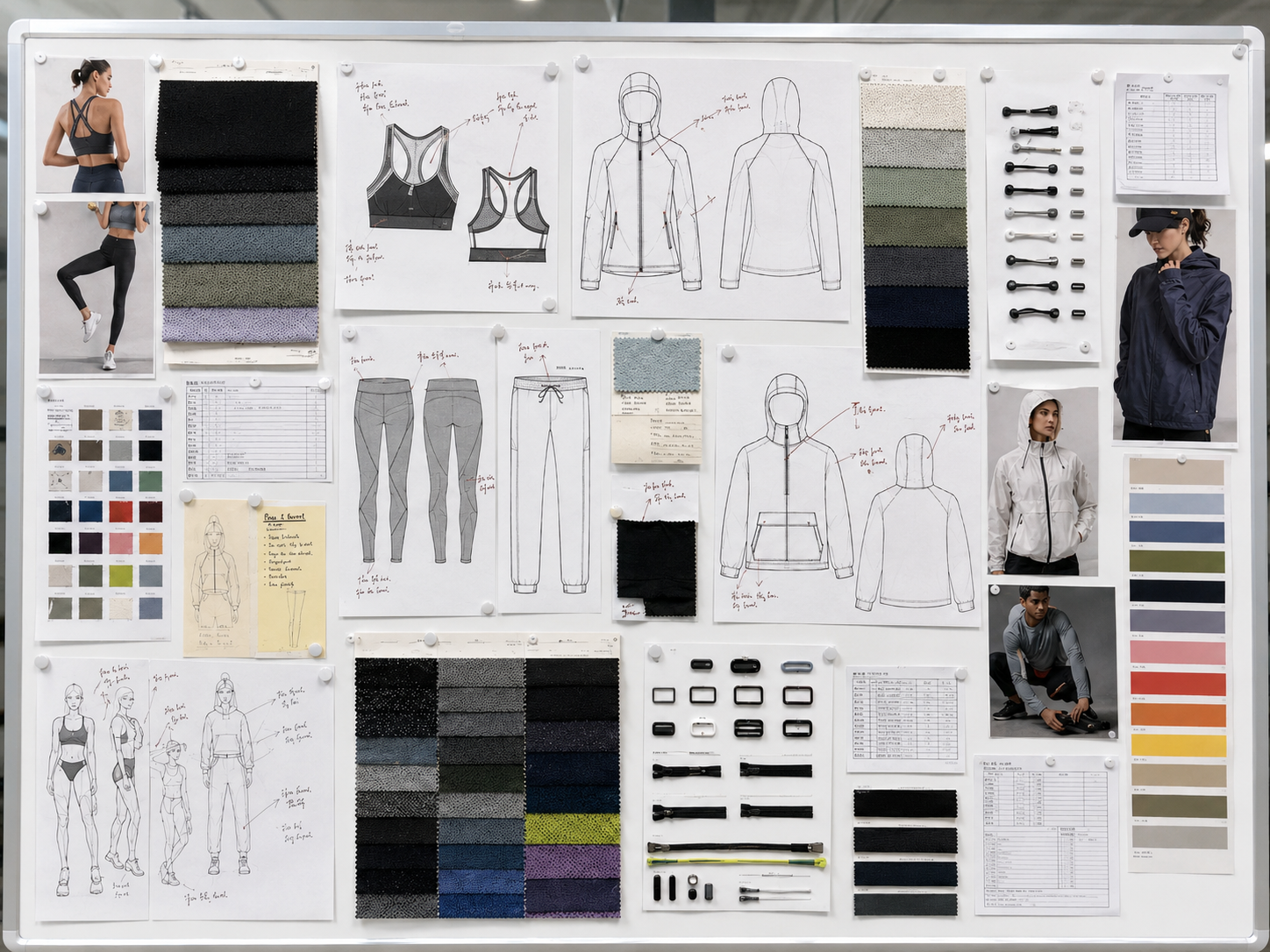
Development Sample
A development sample is used to turn an early concept, Tech Pack or reference product into a physical garment. It can help confirm basic construction, proportions, materials and key design details before more specific approvals begin. Comments from this stage may result in pattern, measurement, construction or trim revisions. Development sampling is especially useful when the original brief is incomplete or when a new structure has not yet been manufactured under the proposed specifications.
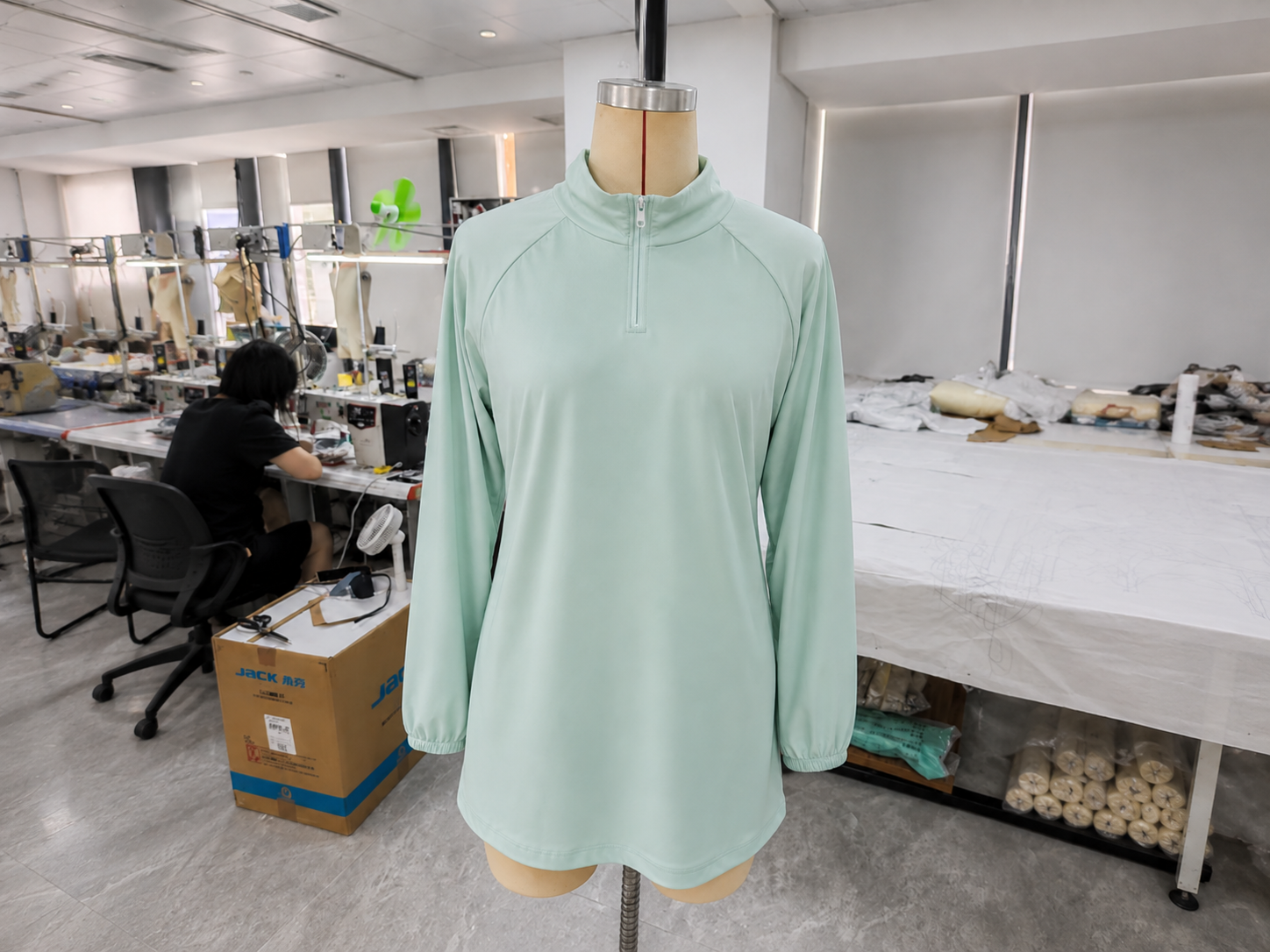
Fit Sample
A fit sample focuses on measurements, pattern balance and how the garment sits on the intended body form. Review can cover garment length, width, waistband stability, rise, strap length, armhole position, sleeve proportions and other fit-critical areas. Stretch fabric characteristics are considered together with measurements because the same pattern can behave differently when material properties change. Fit comments should be translated into documented revisions before the next approval stage.
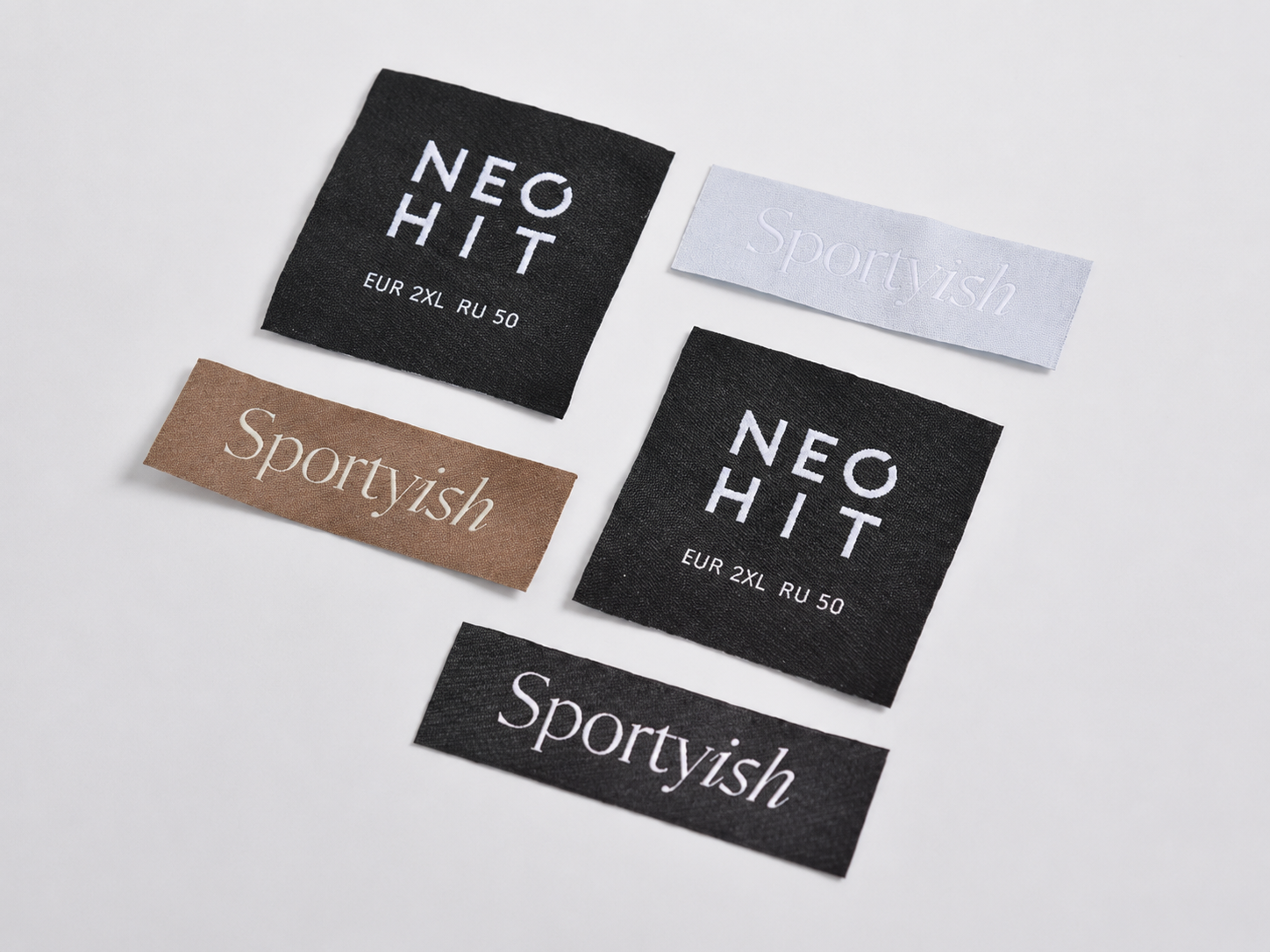
Logo Sample
A logo sample can be used where branding size, placement, color or application method needs to be confirmed separately from the main garment. Heat transfer or another decoration method should be reviewed in relation to the selected fabric and location. The purpose is to create an approved branding reference before full production. Any requirement for wash, adhesion or other performance testing needs to be defined separately and should not be assumed from visual approval alone.
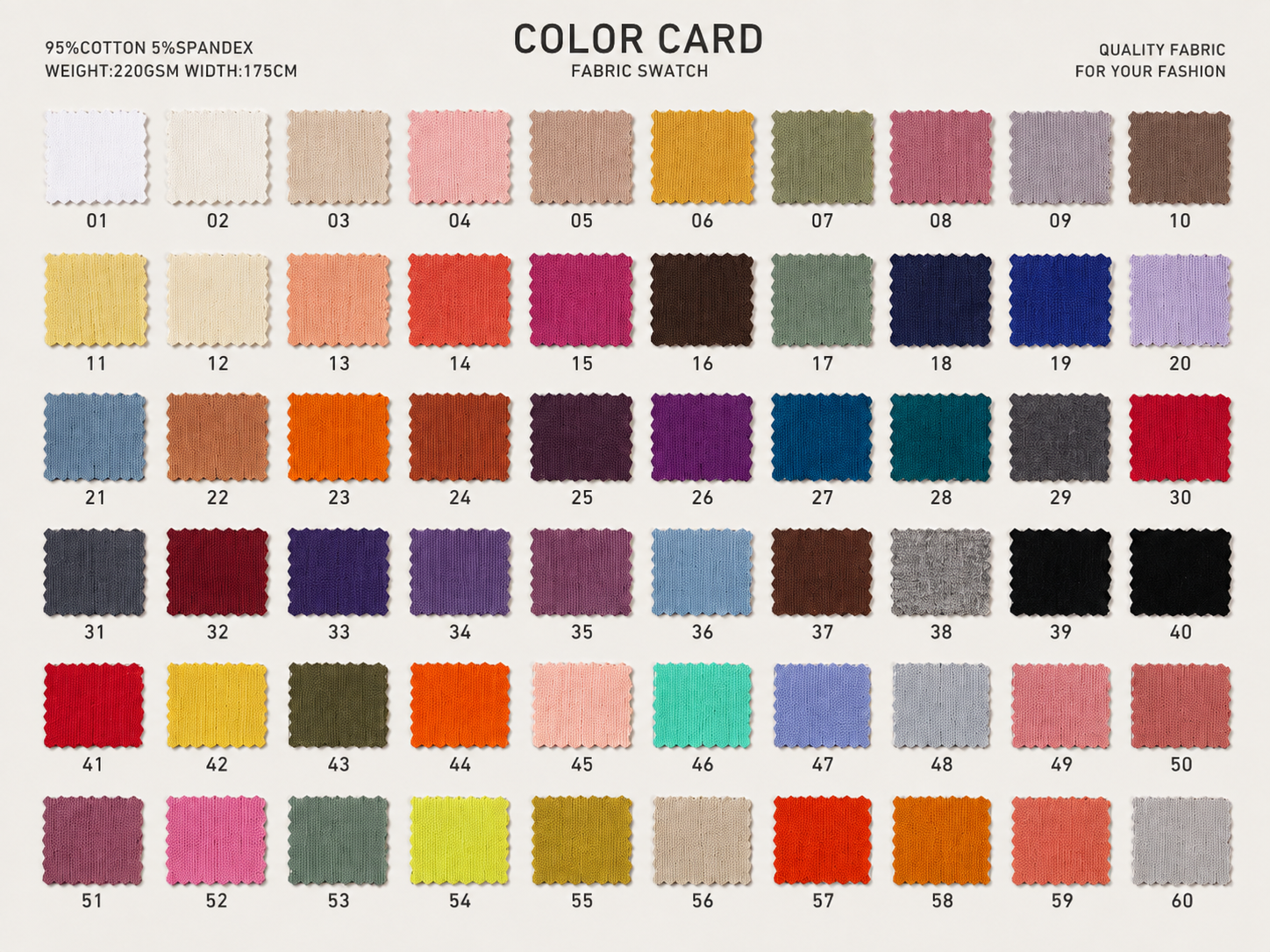
Color Sample
Color approval may be required when a program introduces new fabric colors, trims or branding combinations. A physical color reference helps align expectations before bulk material is committed. Differences can occur between fabric constructions, dye lots, trims and printed elements, so a single digital color value may not be sufficient for every component. Approved references should clearly identify the material and product version to which they apply.
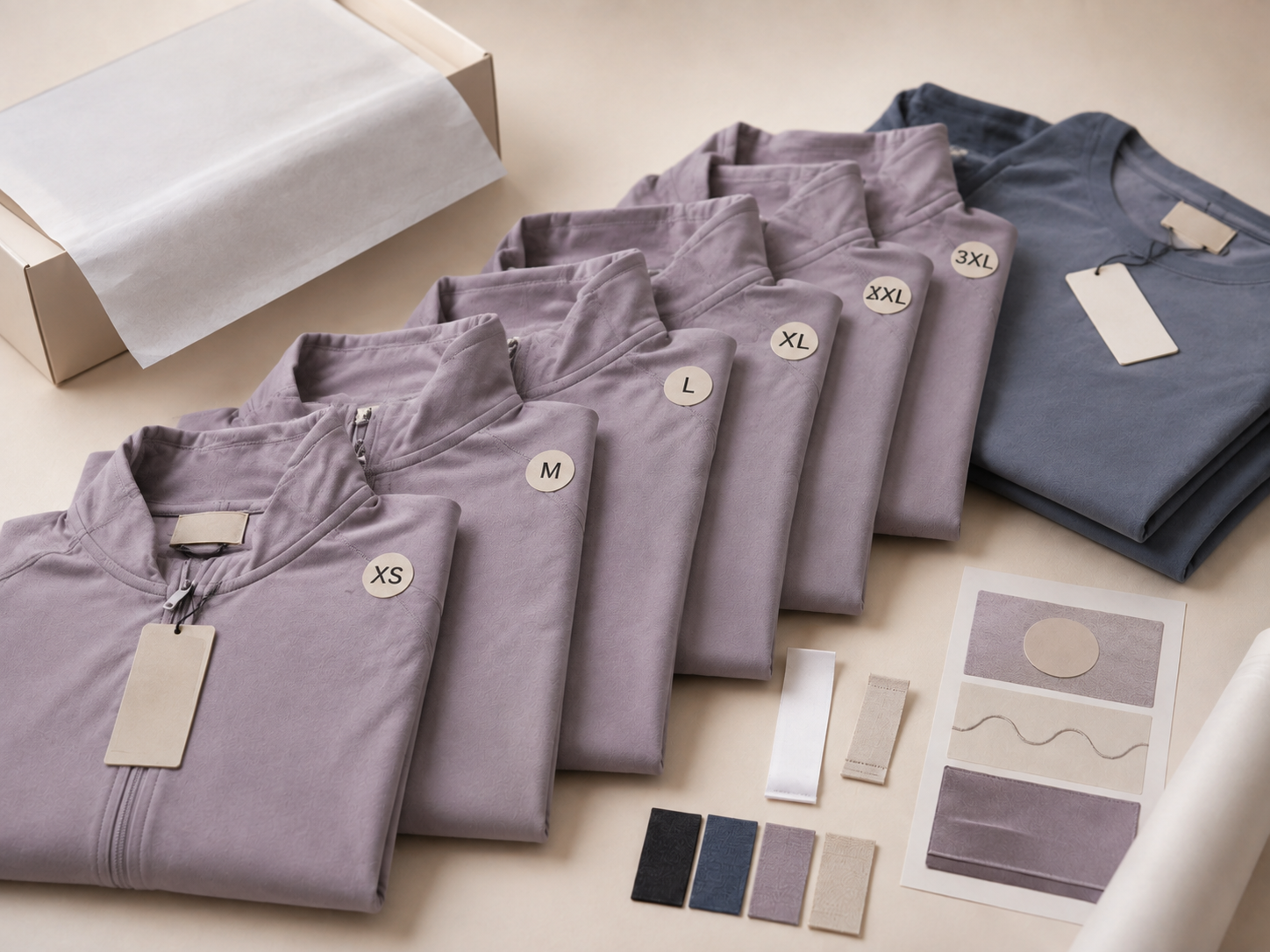
Size Set Sample
A size set can be used to evaluate how an approved base pattern translates across the planned size range. The objective is to review grading relationships, key measurements and overall proportions rather than simply producing more units of the same sample. Size labels and measurement charts need to match the approved grading structure. The required sizes for review are project-specific and should be confirmed according to the brand’s size system and risk priorities.
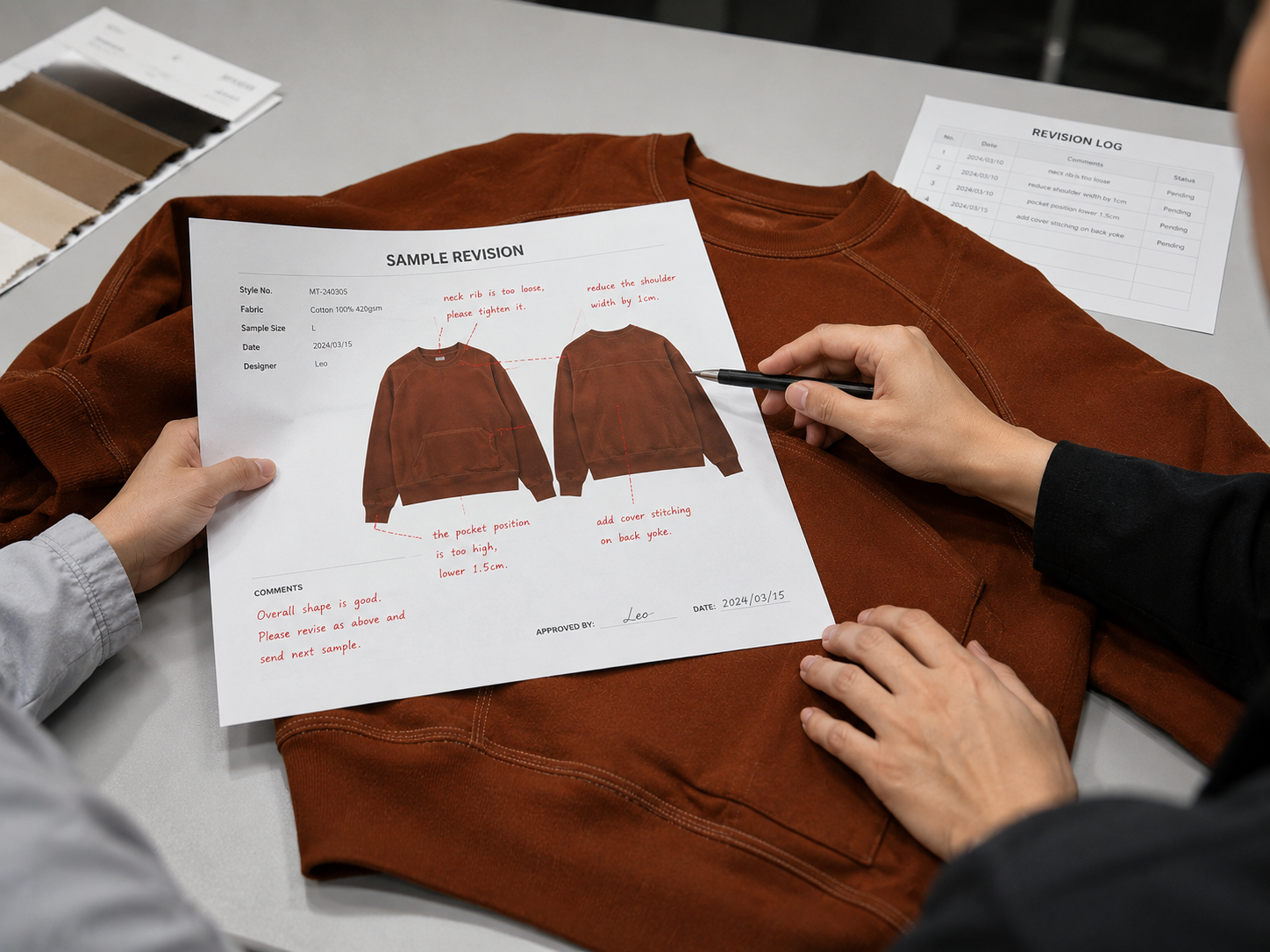
Pre-Production Sample
A pre-production sample can serve as the final physical reference before bulk manufacturing where the project requires one. Ideally, approved fabric, trims, branding, construction and measurements are represented as closely as possible. Any differences between the sample and planned bulk materials should be documented. Bulk-production timing is confirmed only after order conditions, approved references, materials and scheduling requirements are sufficiently resolved.
OEM, ODM and Private Label Development Routes
Leadshow supports several cooperation models. The appropriate route depends on how much product information already exists and which development decisions still need manufacturing input.
OEM Manufacturing
OEM projects normally begin with a defined product specification. The brand may provide a Tech Pack, measurement chart, fabric requirements, artwork and approved construction details. Leadshow reviews the files for manufacturability, clarifies open points, develops samples and prepares for bulk production after approval. OEM is appropriate when the brand wants to retain control over the design and technical direction while using Leadshow for development execution, production, quality review, labels, packing and related manufacturing coordination.
ODM Development
ODM projects may begin with a product idea, reference image, reference garment or less complete technical specification. Leadshow can support the conversion of the available direction into a clearer manufacturing specification through material review, construction discussion, pattern development and sampling. The amount of development work depends on the information provided and the complexity of the garment. ODM does not mean that missing technical or commercial decisions are automatically assumed; key details still require confirmation before bulk manufacturing.
Private Label Programs
Private label projects combine garment manufacturing with brand-specific identification and packaging. Leadshow can coordinate main labels, care labels, size labels, hangtags, logo applications, SKU information, barcodes and individual packaging according to approved files. Requirements may differ by market, retailer, warehouse or internal inventory system, so packaging and labeling details should be supplied as part of the project brief rather than added at the end of production.
Branding, SKU and Packaging Control Across Gym Wear Collections
Brand execution does not end when the garment is sewn. Labels, artwork, SKU information and packaging often create just as many versions as the product itself, especially when one collection includes several colors and sizes.
Controlling Branding and Label Versions
A gym wear style can include a main label, size label, care label, heat-transfer logo, external branding, hangtag and other identification elements. Each item needs an approved artwork file, location, size and application method where applicable.
Leadshow reviews branding requirements together with the garment specification so they are linked to the correct style and material. Logo application should be evaluated in relation to fabric characteristics and placement. A decoration positioned over a high-stretch area, seam or textured fabric may require different consideration from one placed on a stable panel.
Label content is normally supplied or approved by the brand. Fiber composition, care instructions, country-of-origin wording, size information and market-specific legal requirements should not be guessed by the manufacturer. Where applicable, Leadshow can manufacture or coordinate label application according to approved information.
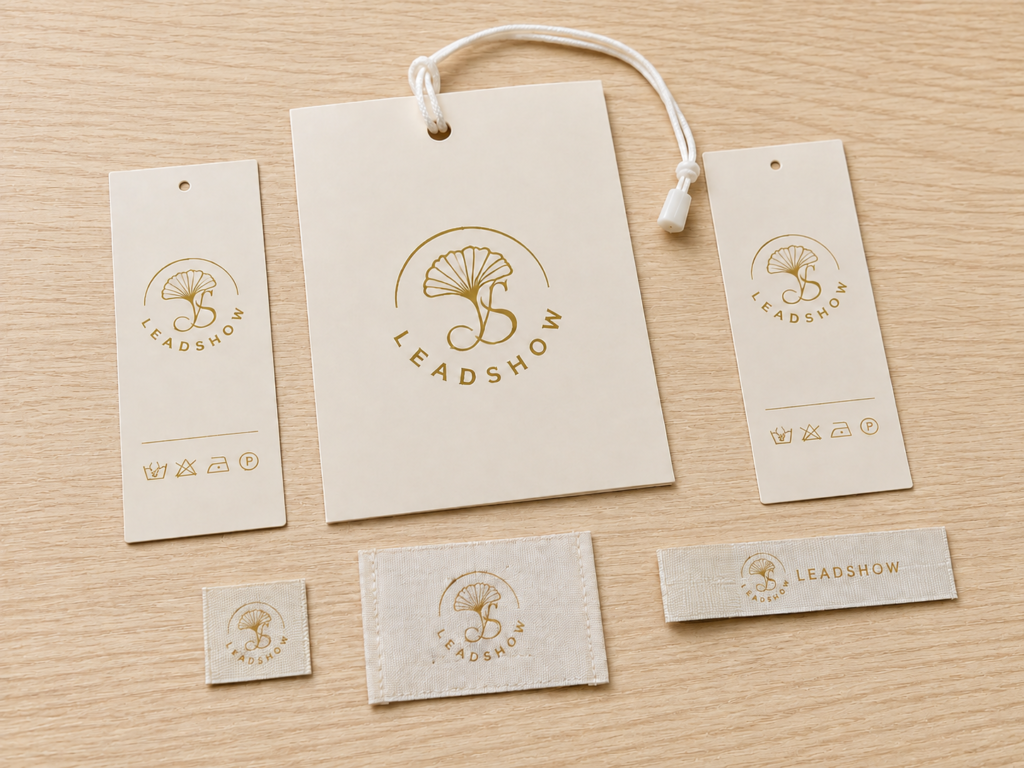
Version control becomes important when different colors use different logo colors, when sizes require distinct labels or when multiple markets use separate packaging instructions. Keeping an approved file set helps prevent one revised detail from being applied to the wrong SKU.
Managing SKU, Barcode and Packing Instructions
A simple order can quickly become complex. For example, 2 styles × 3 colors × 5 sizes creates 30 style-color-size combinations before packaging variations are added. This is an illustration of SKU complexity, not a fixed Leadshow size range.
Leadshow can review SKU lists, barcode information, size and color sorting instructions, individual packing requirements and carton identification according to the approved order plan. Barcode numbers and SKU structures remain customer-provided information unless a specific arrangement is agreed.
Packaging may include individual polybags or other agreed packing methods, hangtags and outer-carton identification. Leadshow does not apply a universal carton specification to every order because product dimensions, quantities, packaging requirements and shipping arrangements differ.
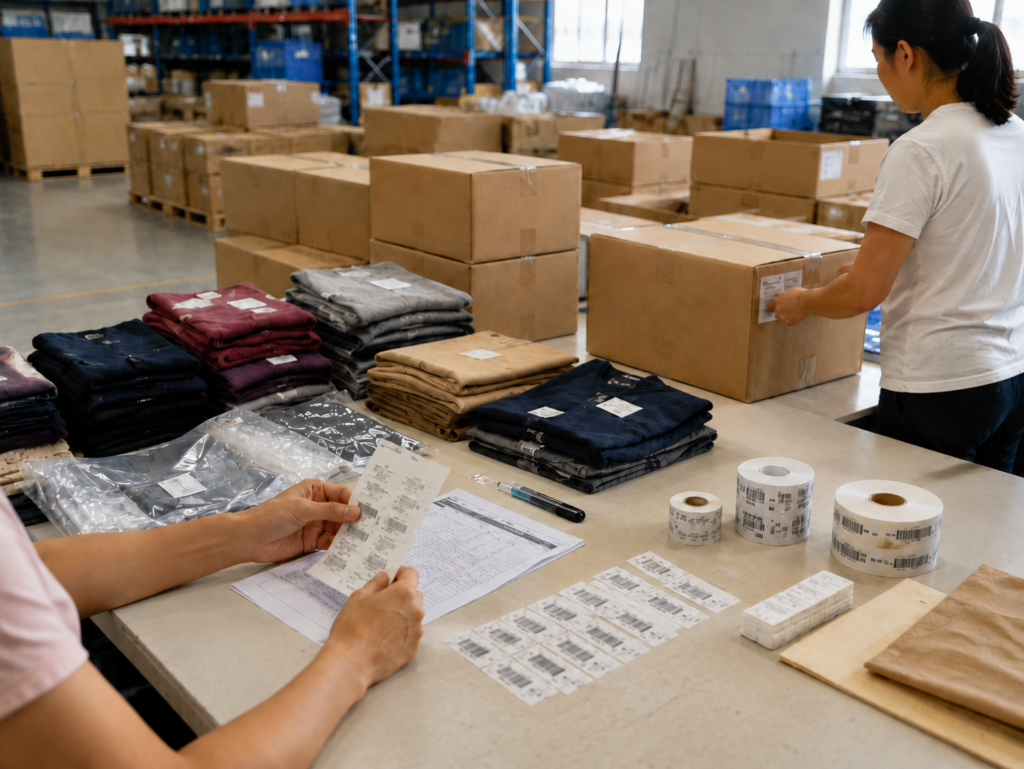
Packing preparation is therefore treated as part of production control rather than a final cosmetic step. Aligning garment versions, label versions, barcodes and packing instructions before shipment reduces avoidable sorting and identification errors.
Gym Wear Manufacturing Processes Used Where Applicable
Different products require different combinations of cutting, sewing, specialized workmanship and finishing. Process selection is based on the approved construction rather than applying every available technique to every garment.
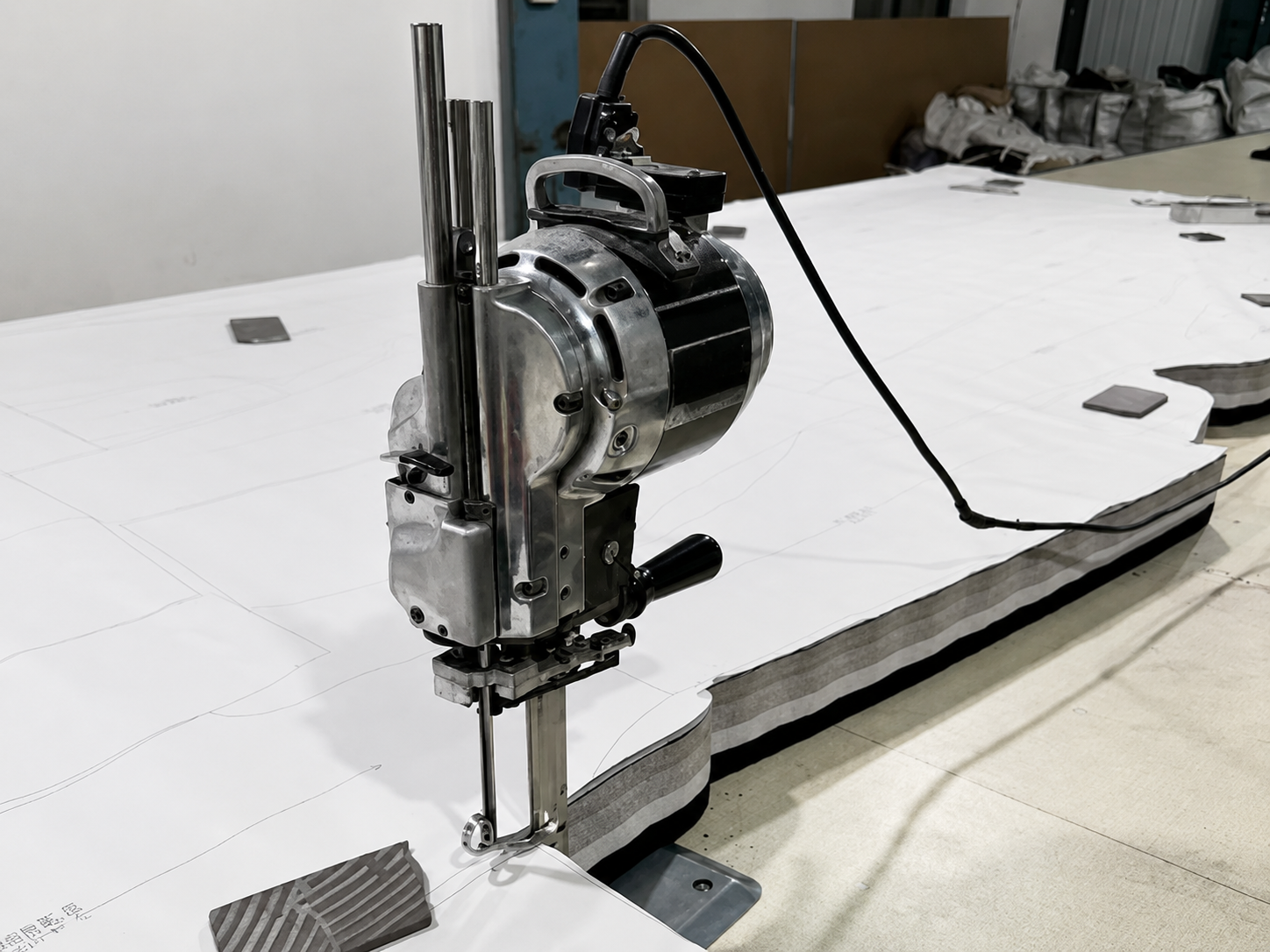
Fabric Preparation and Cutting
Fabric preparation, spreading and computerized cutting establish the physical components used in sewing. Pattern versions, fabric direction and lay planning need to correspond with the approved production information. Stretch fabrics require particular attention to direction and material behavior. Cutting accuracy supports later seam alignment and measurement control, but it does not replace pattern approval or fabric inspection. The process is therefore linked to the approved material, marker and pattern references for the specific order.
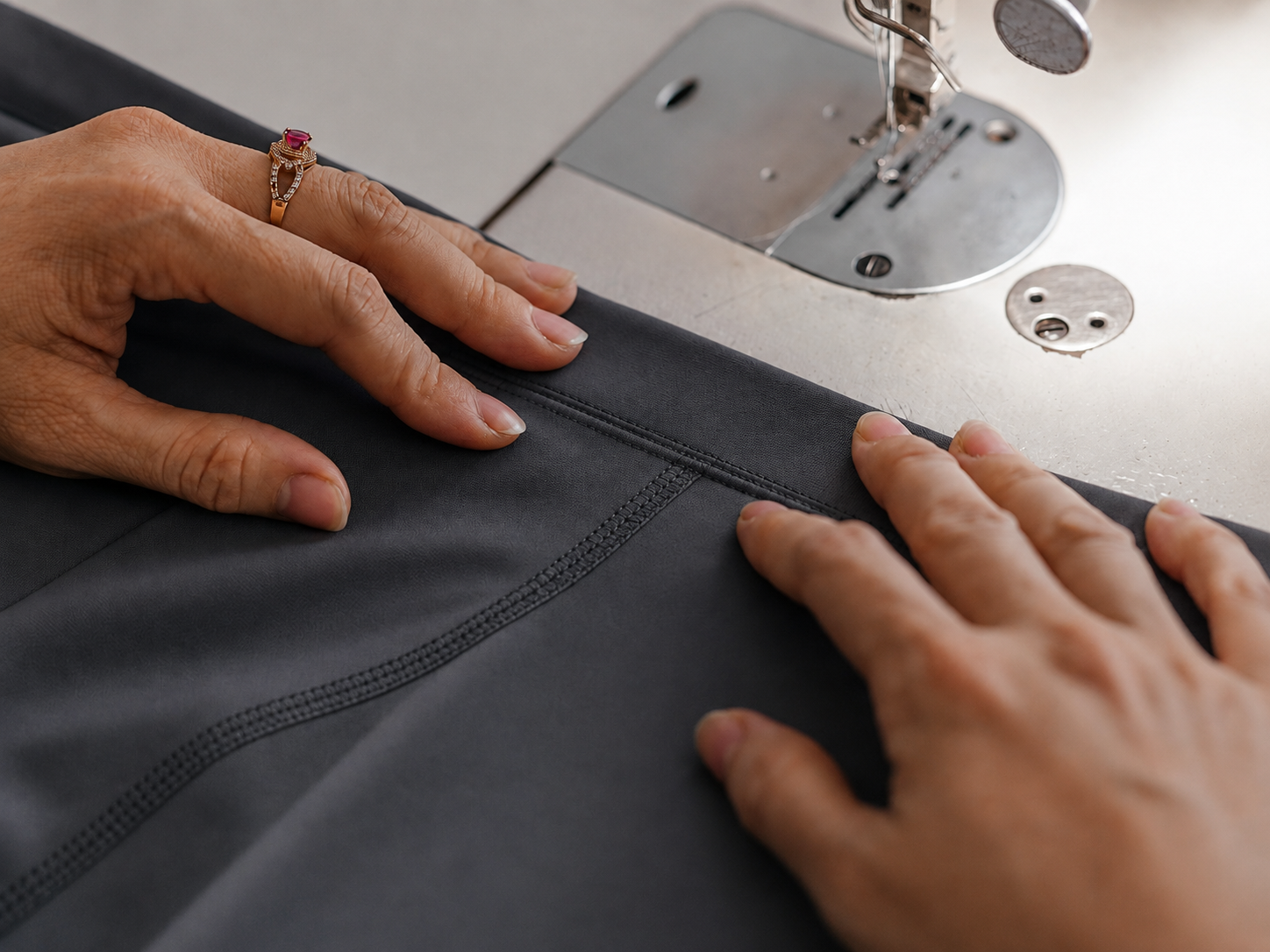
Lockstitch Sewing
Lockstitch is used across many apparel constructions for seams, topstitching and component assembly where appropriate. Stitch type, seam allowance, thread selection and location depend on the garment specification. A sports T-shirt, hoodie or tracksuit may use lockstitch in different areas and for different purposes. Sewing method is confirmed according to the approved sample and construction details rather than selected only by product category.
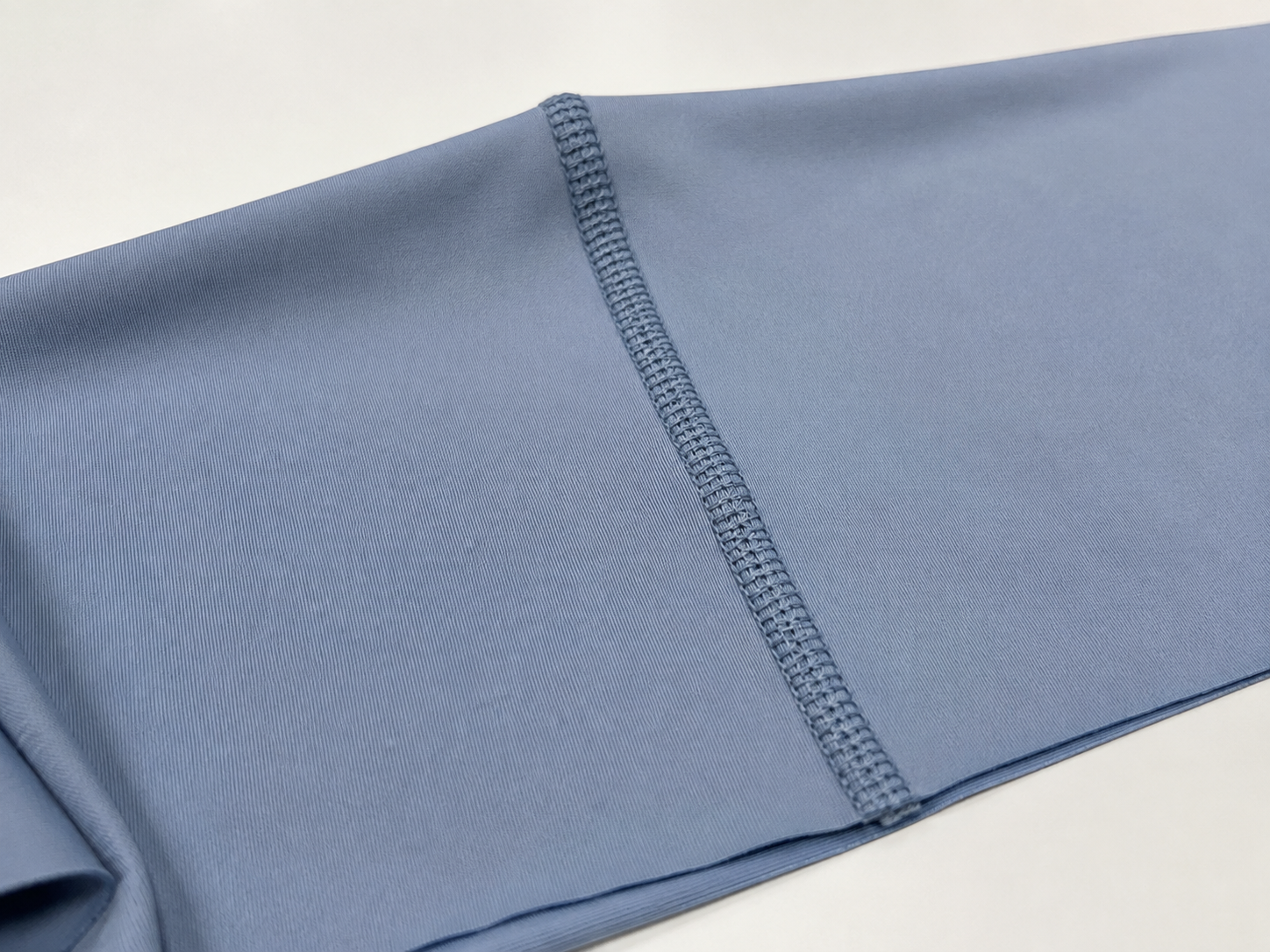
Overlock Construction
Four-thread or five-thread overlock construction can be used for joining and finishing seams on various knit garments. The required thread configuration depends on material, seam location and construction standard. Overlock quality is reviewed for seam security, appearance and consistency. Where the garment uses stretch fabric, seam behavior needs to remain compatible with the fabric rather than restricting movement or producing distortion.
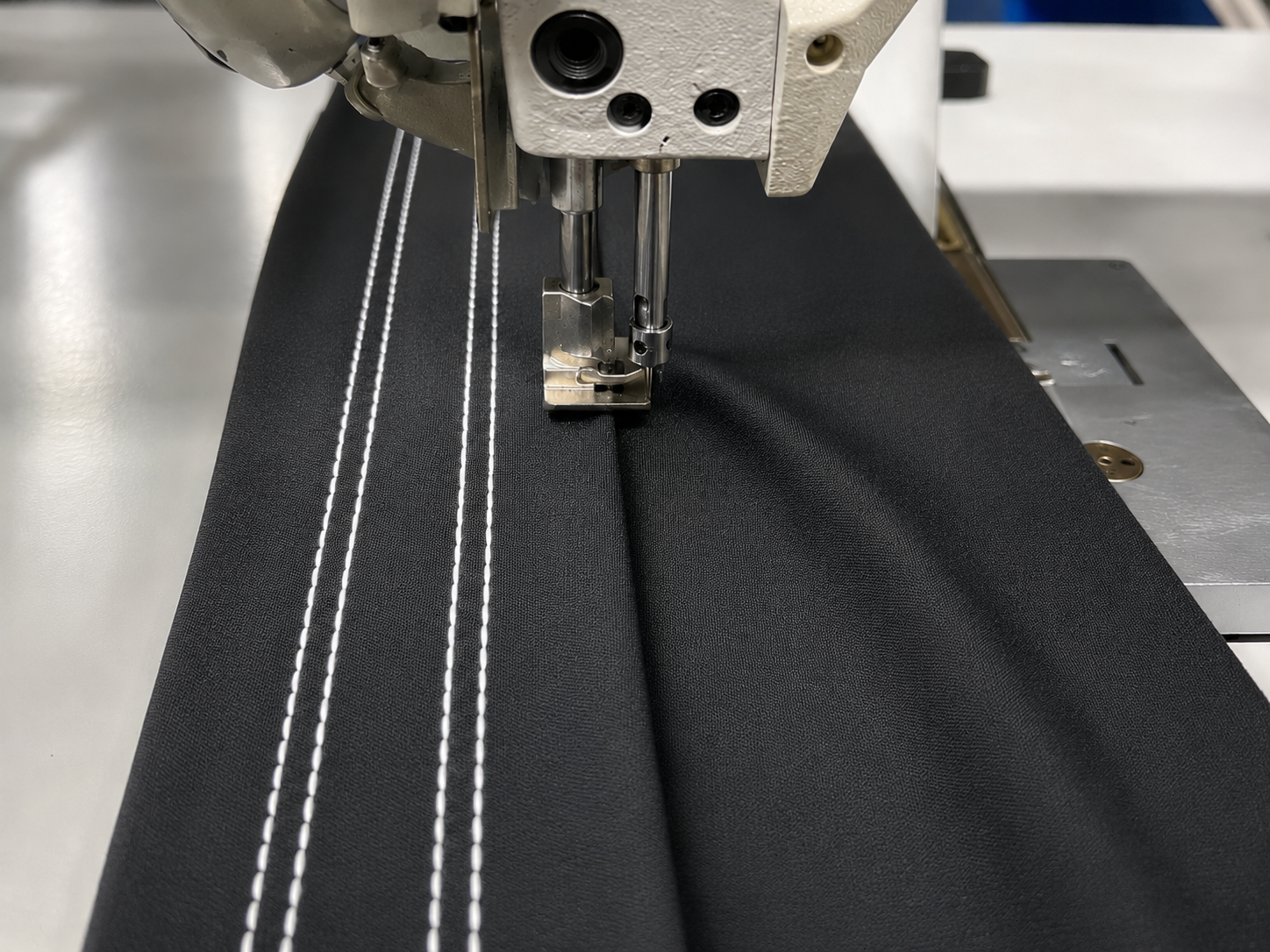
Double-Needle and Bartacking
Double-needle stitching can be used for selected hems, topstitching or structural details, while bartacking can reinforce specified stress points such as pockets or openings. These processes are applied where the design requires them. Reinforcement should be linked to the actual garment construction rather than advertised as a universal quality feature. Stitch density, placement and appearance should follow the approved production reference.
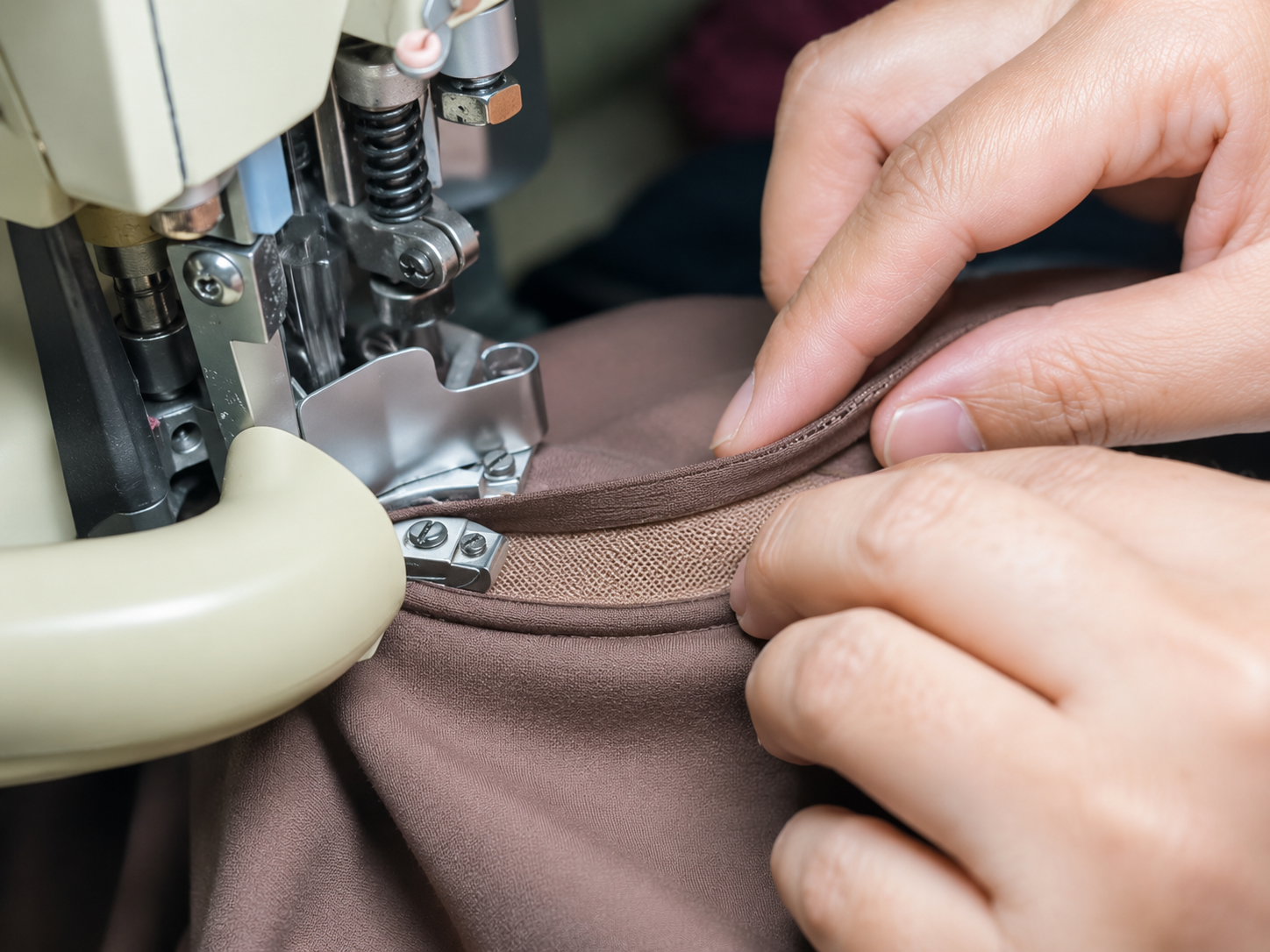
Four-Needle Six-Thread
Four-needle six-thread construction is available for applicable sportswear seams. It can create a flatter seam structure and is often considered for stretch garments, but its use depends on fabric, design and seam location. Availability of the machine does not mean every leggings or activewear style requires the process. The selected seam should be confirmed during development and represented correctly in the approved sample.
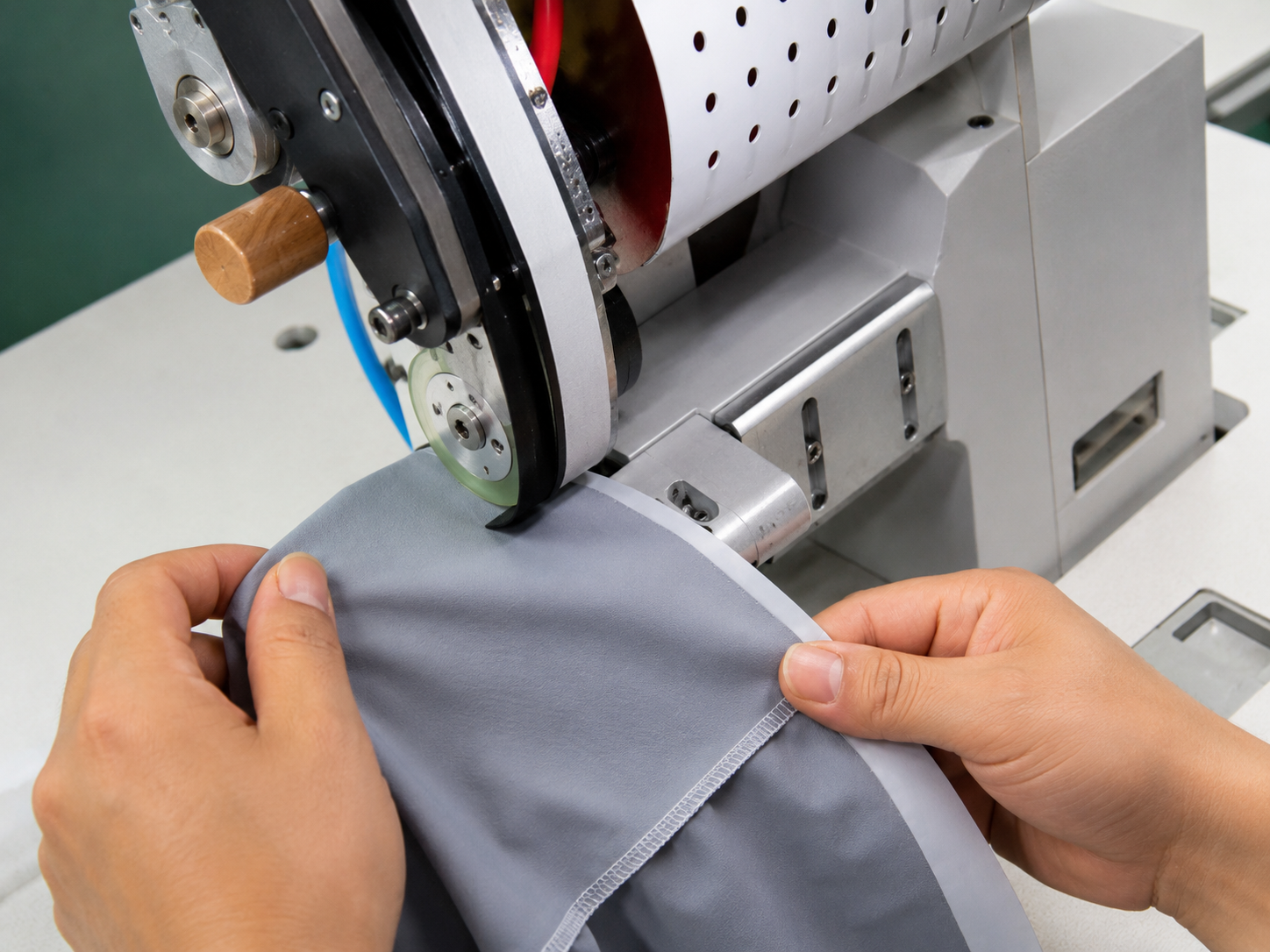
Bonding and Seam Taping
Bonding and seam taping are available for styles where the material and construction support these methods. Bonding can reduce or replace selected sewn seams in certain applications, while seam taping covers specific seam areas. Neither process automatically makes a garment “true seamless” or waterproof. Material compatibility, adhesion requirements, seam location and any requested testing need to be reviewed separately before production.
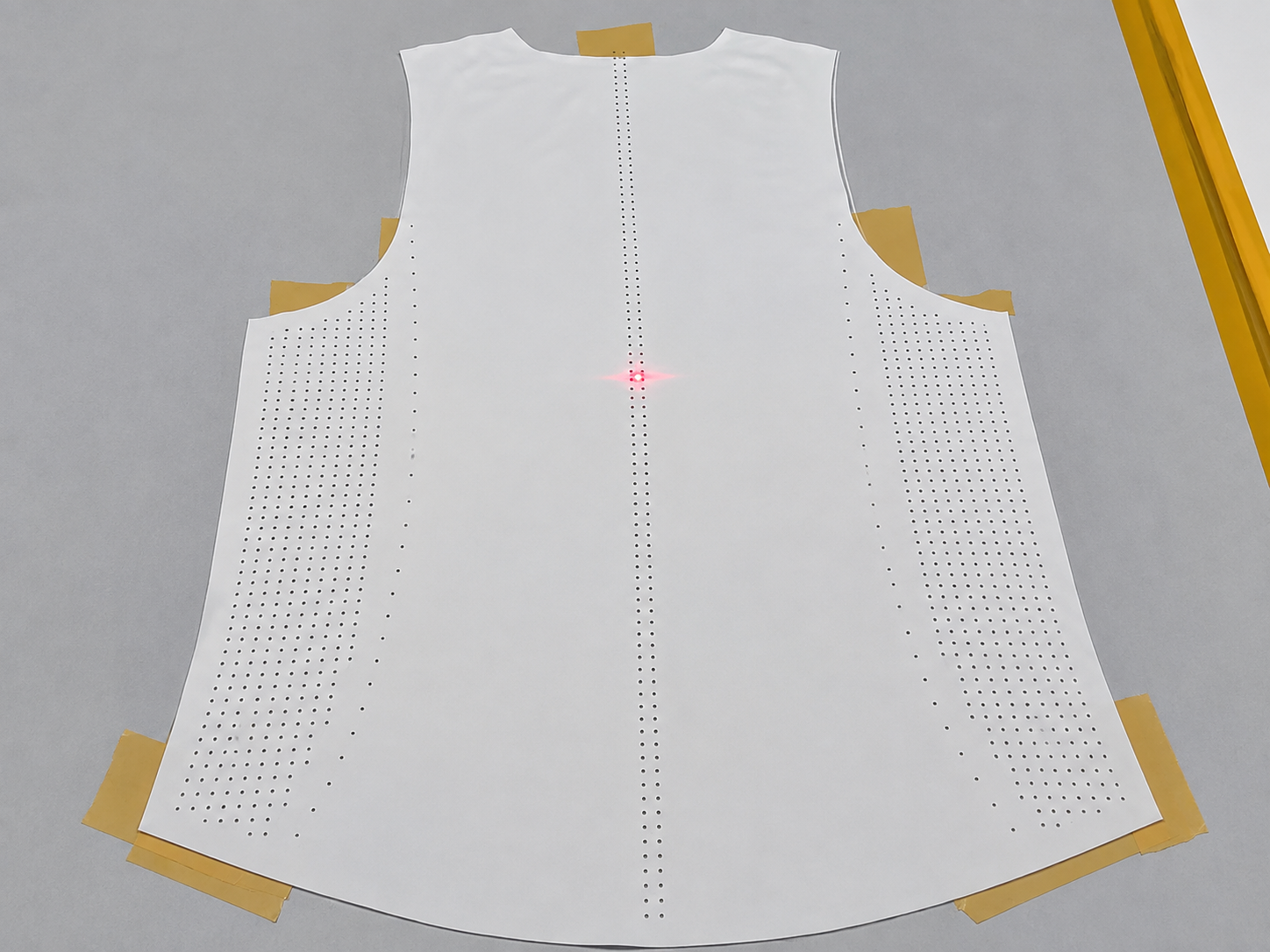
Laser Perforation and Heat Transfer
Laser perforation may be used for controlled cut openings or design details where the selected material is suitable. Heat transfer can be used for logos, graphics or selected branding applications. Both processes require review of artwork, placement and material compatibility. Where durability or performance standards are required, the corresponding test method and acceptance criteria need to be defined rather than assumed from visual appearance.
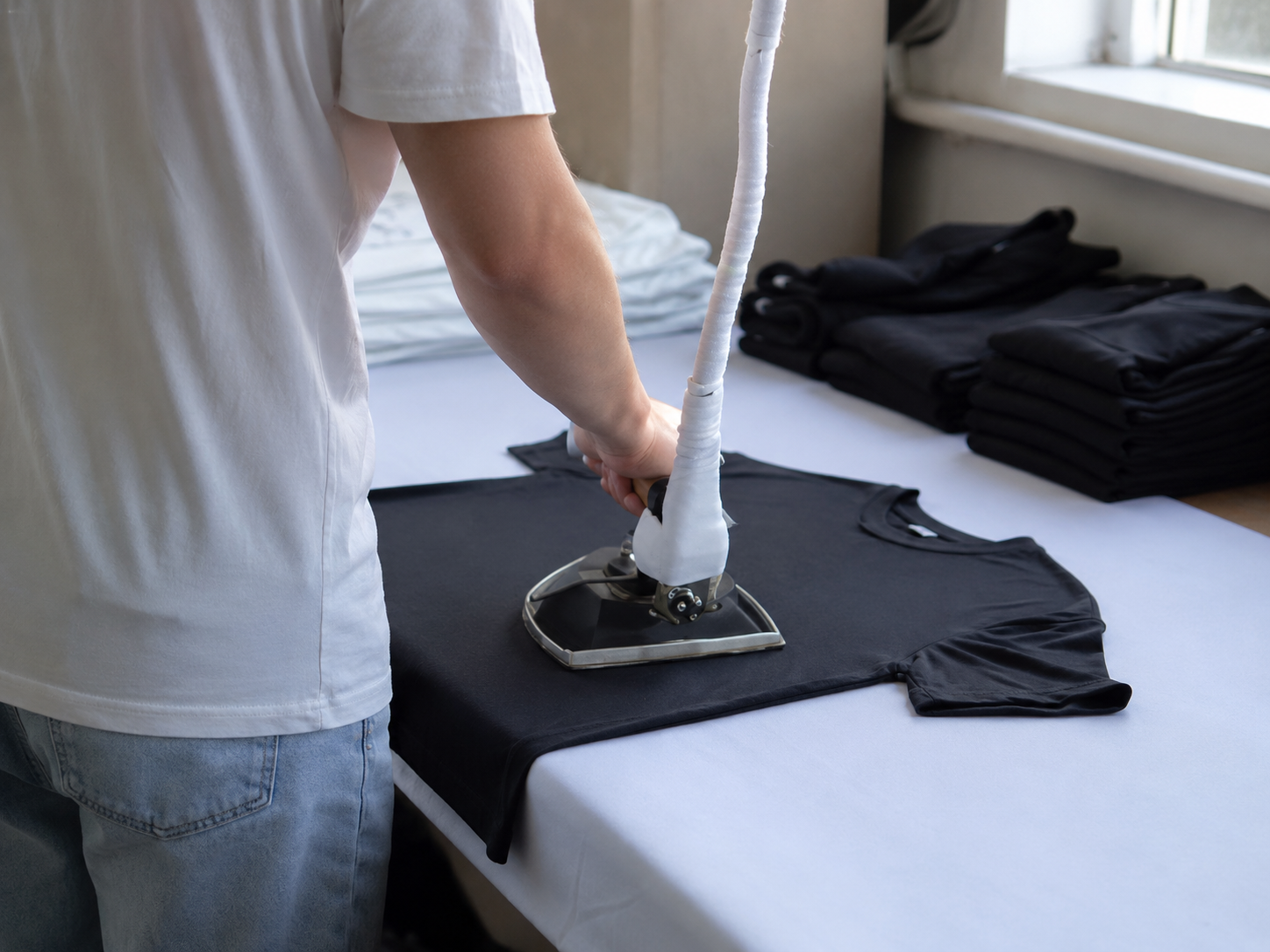
Pressing, Needle Detection and Packing
Finishing can include pressing, appearance review, needle detection where applicable, folding and packing according to the project instructions. These steps prepare the garment for final quality review and shipment preparation. Labels, hangtags, SKU information and packaging need to match the approved product version. Final packing is therefore connected to quality and version control rather than treated as an independent warehouse activity.
Keeping Approved Samples Aligned With Bulk Production
A common manufacturing risk appears when the approved sample, production files and bulk materials no longer represent the same product version. Sample-to-bulk control is therefore built around reference alignment.
Creating a Clear Approved Production Reference
Approval should identify more than one physical garment. The production reference can include the approved sample, measurement chart, pattern version, fabric and trim specifications, artwork, construction notes, labels and packaging instructions.
When a sample revision changes one element, related documents may also need updating. A waistband change can alter pattern dimensions and measurements. A logo adjustment can require a revised artwork file. A fabric substitution can influence fit, seam appearance or color matching. If these dependencies are not reflected in the approved file set, the production team can receive conflicting instructions.
Leadshow reviews the confirmed specifications before bulk production planning. Any remaining differences between approved samples and intended bulk materials should be identified rather than silently treated as equivalent.
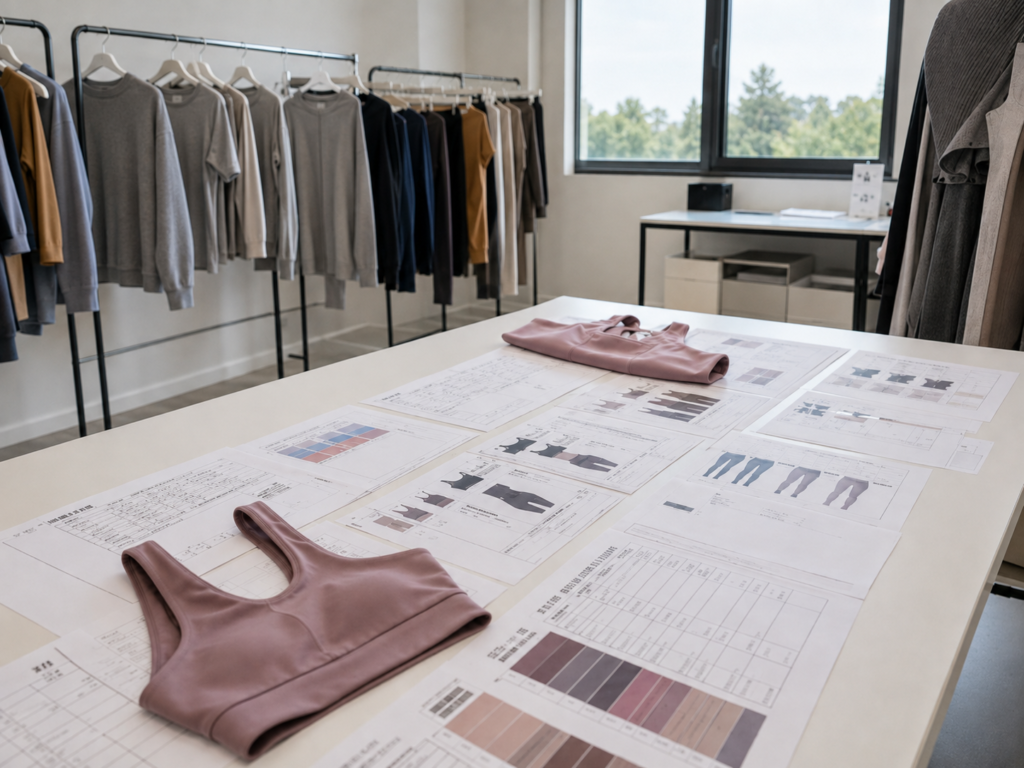
Production timing is therefore not defined by a universal number of days. Bulk-production timing is confirmed after order conditions, payment, approved samples, materials, production specifications and scheduling conditions are completed. Style complexity and the order mix also influence the final production plan.
Monitoring Key References During Production
Once bulk production begins, control points can compare actual output with the approved references. Material review verifies the received or prepared material against the confirmed requirement. First-piece review provides an early opportunity to evaluate construction, measurements and workmanship before larger quantities move forward.
In-process checks can focus on sewing quality, seam construction, measurements, component placement and visible deviations. Final inspection can review workmanship, measurements, appearance, labels and packaging according to the agreed project requirements.
The approved sample remains useful throughout this process because it provides a physical reference, but it should not replace documented specifications. A physical sample alone may not communicate tolerances, grading rules, barcode assignments or packaging versions.
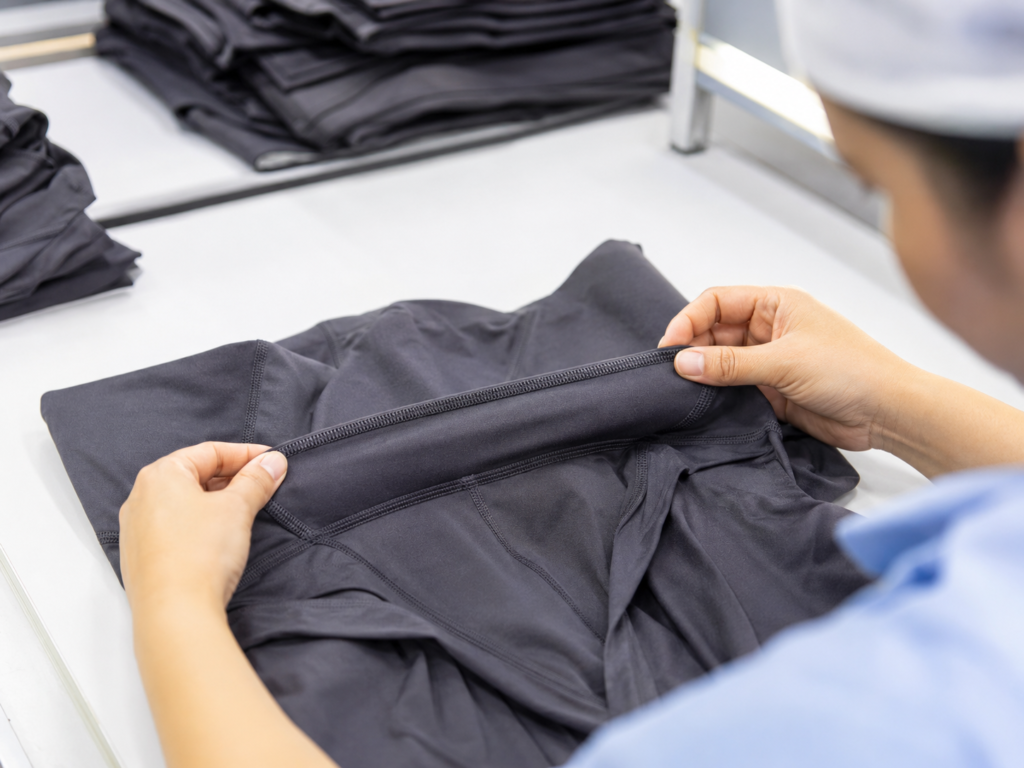
Sample-to-bulk consistency is therefore managed through a combination of approved physical and written references. The objective is not to claim that variation can be eliminated completely, but to create a controlled process for identifying and managing deviations before shipment.
Quality Review Across Materials, Production and Packing
Quality control is more effective when checks are distributed across the manufacturing process rather than concentrated only at the end. The required inspection scope depends on the product, specifications and agreed quality requirements.
Material Review
Material review can include fabric identity, color reference, basic appearance, trims and other incoming components against the approved project information. Where specific performance properties are required, appropriate test methods and evidence need to be defined separately. A material composition or supplier specification should not automatically be interpreted as proof of finished-garment performance. Early material review helps identify obvious mismatches before they become embedded in production.
First-Piece Review
The first completed or partially completed production pieces provide an early checkpoint for construction, workmanship and measurements. Comparing the first piece with the approved sample and technical files can reveal sewing, positioning or specification issues before larger quantities are produced. Where a deviation is found, corrective action can be discussed before continuing the affected process. First-piece approval does not eliminate the need for later in-process and final quality checks.
In-Process Inspection
In-process inspection focuses on manufacturing stages while garments are still moving through production. Review can include seam quality, stitch consistency, component placement, construction method, visible workmanship and selected measurements. The purpose is to identify recurring issues while correction is still possible. Inspection points are chosen according to the risk areas of the style rather than applying one identical checklist to every product category.
Measurement Review
Measurement control compares finished or in-process garments with the approved specification and applicable tolerance requirements supplied for the project. Critical points vary between categories. A sports bra may prioritize underbust, strap and body measurements, while leggings may focus on waistband, rise, inseam and hip dimensions. Size charts and tolerances need to be confirmed before production because no universal gym wear measurement standard applies to every brand.
Workmanship Review
Workmanship review can include seam appearance, skipped stitches, loose threads, panel alignment, pocket placement, zipper application, branding position and other visible construction details relevant to the style. The approved sample and technical specifications provide the reference. Requirements should distinguish between appearance standards and measurable product-performance claims, especially where specialized materials or bonding processes are involved.
Labels and Packaging
Final quality review extends beyond garment sewing. Main labels, care labels, size labels, hangtags, SKU information, barcodes and individual packaging need to correspond with the correct style, color and size version. Packing instructions are checked against the approved order information before shipment preparation. This is especially important for multi-SKU programs where product quality can be acceptable while labeling or sorting errors still create commercial problems.
Leadshow Manufacturing Facts Behind Production Planning
Leadshow’s manufacturing profile is presented through verifiable operating facts rather than unsupported scale claims. Each number provides context for evaluating whether the organization fits a planned sourcing program.
15 Years Experience
Leadshow has 15 years of apparel industry experience covering product development and manufacturing. Experience supports communication around patterns, fabrics, garment construction, sampling, production execution and quality review, but it does not replace project-specific technical evaluation. New styles are still reviewed according to their actual design, materials and manufacturing requirements.
3 Manufacturing Bases
Leadshow operates three modern manufacturing bases. Multiple bases provide a broader operational foundation for development and production planning, while allocation remains subject to product category, process requirements, order mix and current scheduling. The existence of several facilities is not used to promise unlimited or immediate production availability.
20,000+ m² Facilities
Combined manufacturing facilities cover more than 20,000 square meters. Production space supports cutting, sewing, finishing and related manufacturing activities across the organization. Facility size gives context to the operating footprint but should be evaluated together with equipment, workforce, product complexity and project scheduling.
1,500+ Team Members
Leadshow has a team of more than 1,500 people across its operations. Apparel manufacturing depends on coordination between development, production, quality, finishing, packing and supporting functions. Team size is therefore relevant to operational capacity, while the exact resources allocated to a project depend on the required process and schedule.
304 Machines and Workstations
Leadshow has 304 production and finishing machines/workstations. Available capabilities include standard sewing and selected specialized processes such as four-needle six-thread construction, bonding, seam taping, laser perforation, heat transfer, pressing, needle detection and packing operations where applicable. Equipment availability does not mean every style uses every process.
Up to 120,000 Monthly
Combined monthly production capacity is up to approximately 120,000 finished garments. Actual output depends on style complexity, materials, order mix, process requirements and current production scheduling. Capacity should therefore be treated as a planning reference rather than a fixed monthly commitment for every project or every manufacturing base.
Real Manufacturing Evidence to Show on the Page
Factory imagery should demonstrate actual manufacturing stages instead of relying on generic handshake or warehouse stock photos. Each visual should use verified Leadshow photography corresponding to the process described.

Development and Sampling
From product concepts to approved samples, development focuses on fit, materials, construction and production readiness.
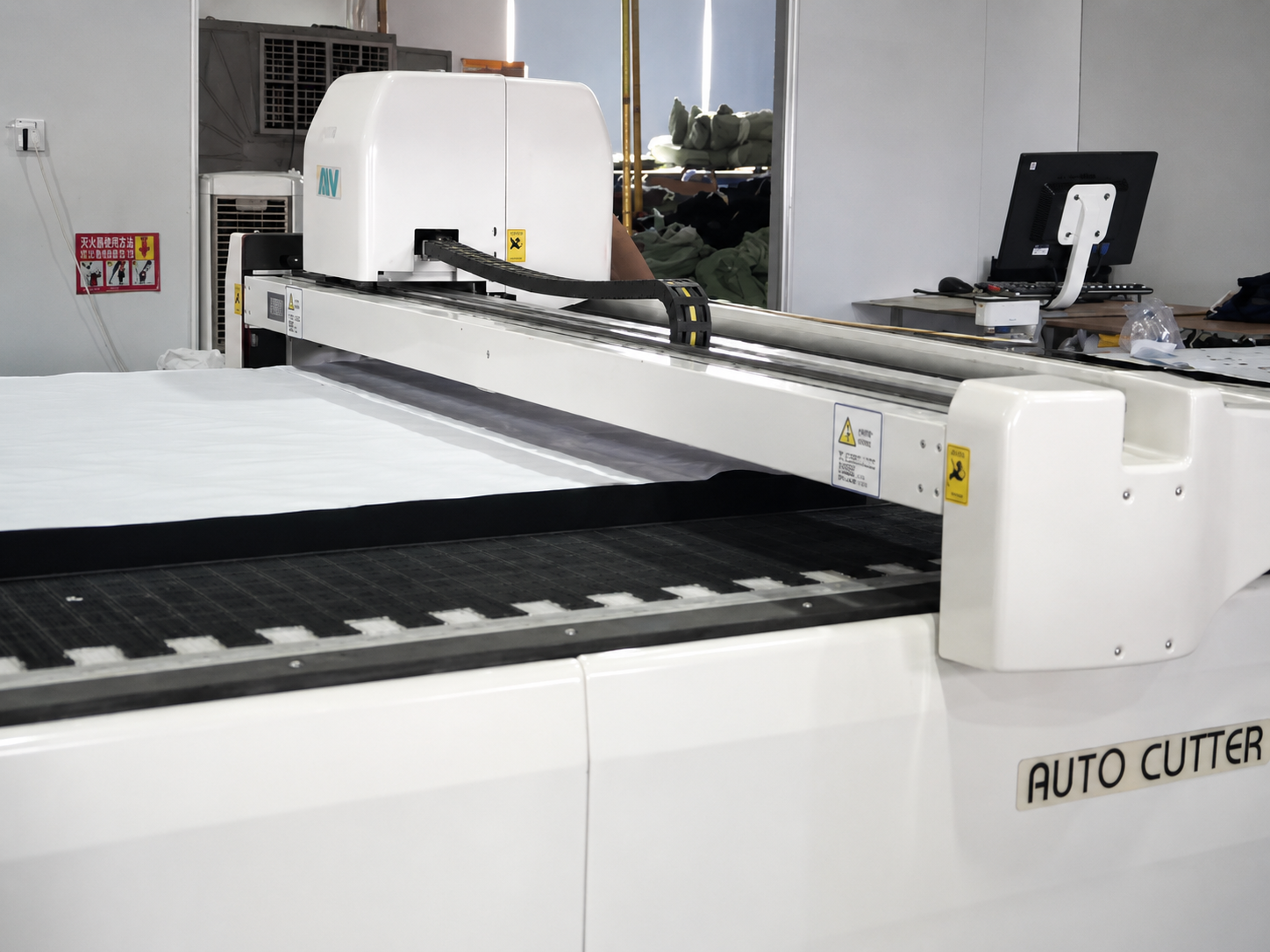
Fabric Preparation and Cutting
Fabric preparation and precise cutting create a consistent foundation for garment production.
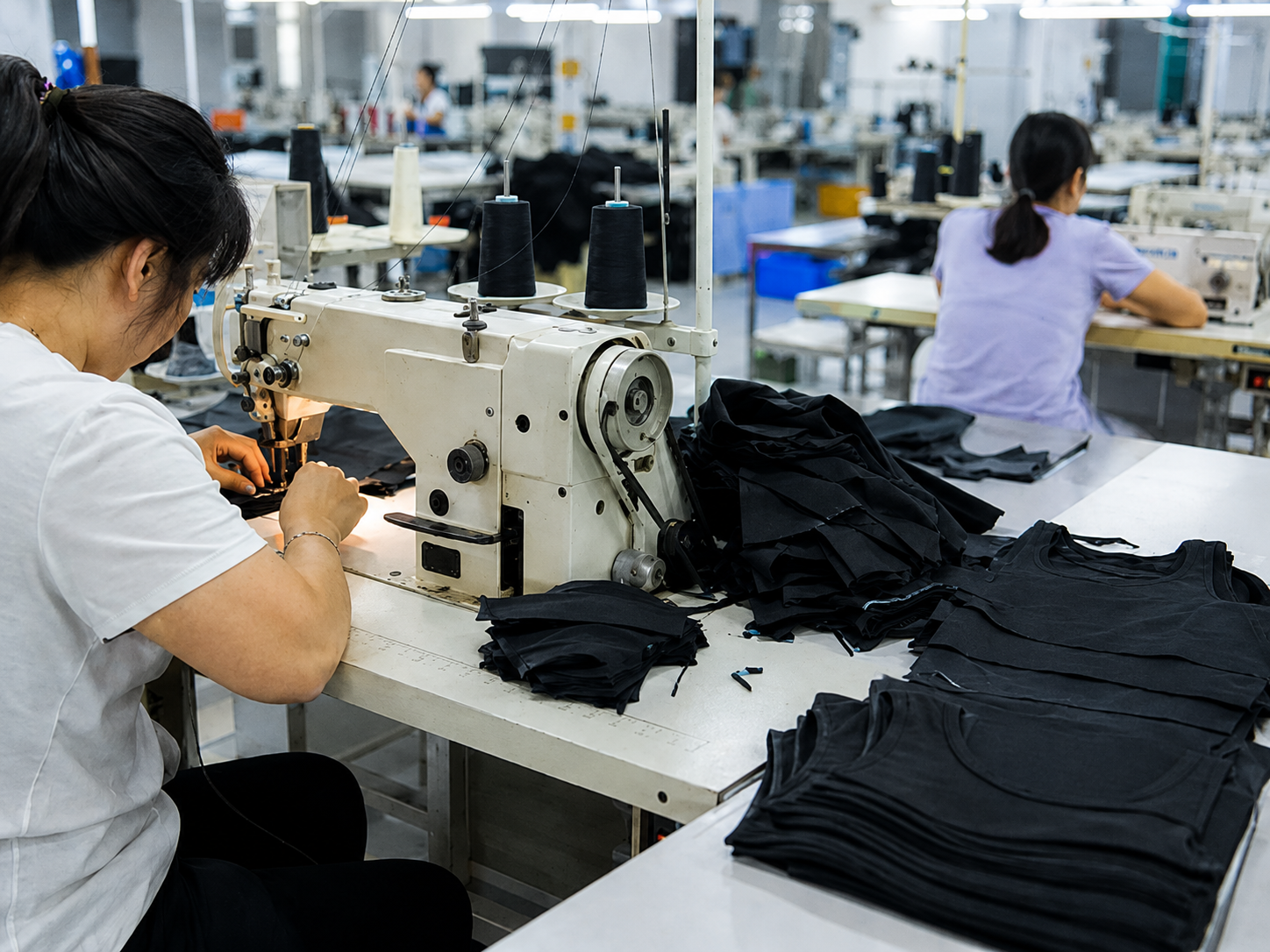
Sewing Production
Garments are assembled according to approved specifications, construction and workmanship requirements.
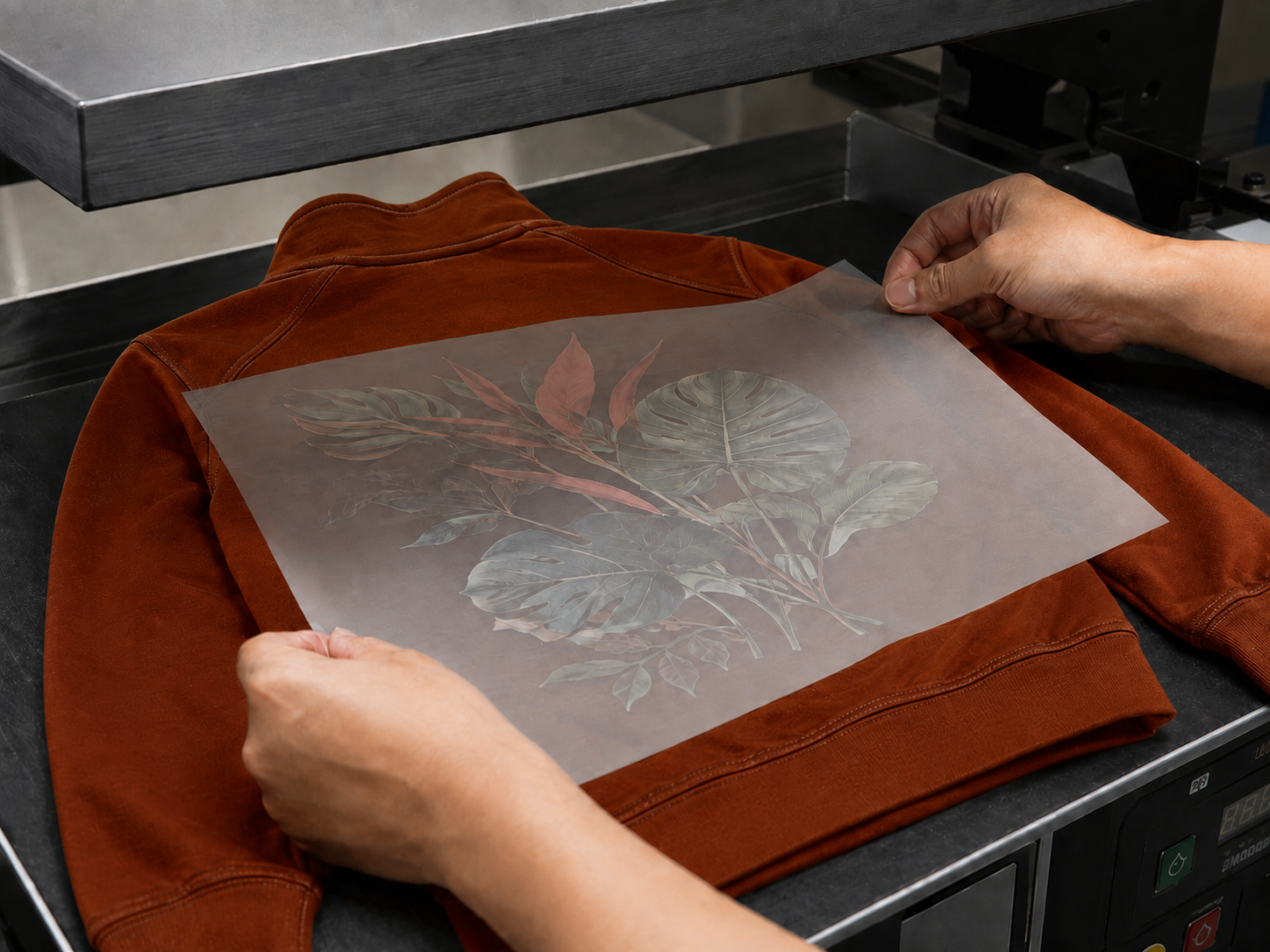
Specialized Workmanship
Specialized processes support selected performance, construction and finishing requirements.
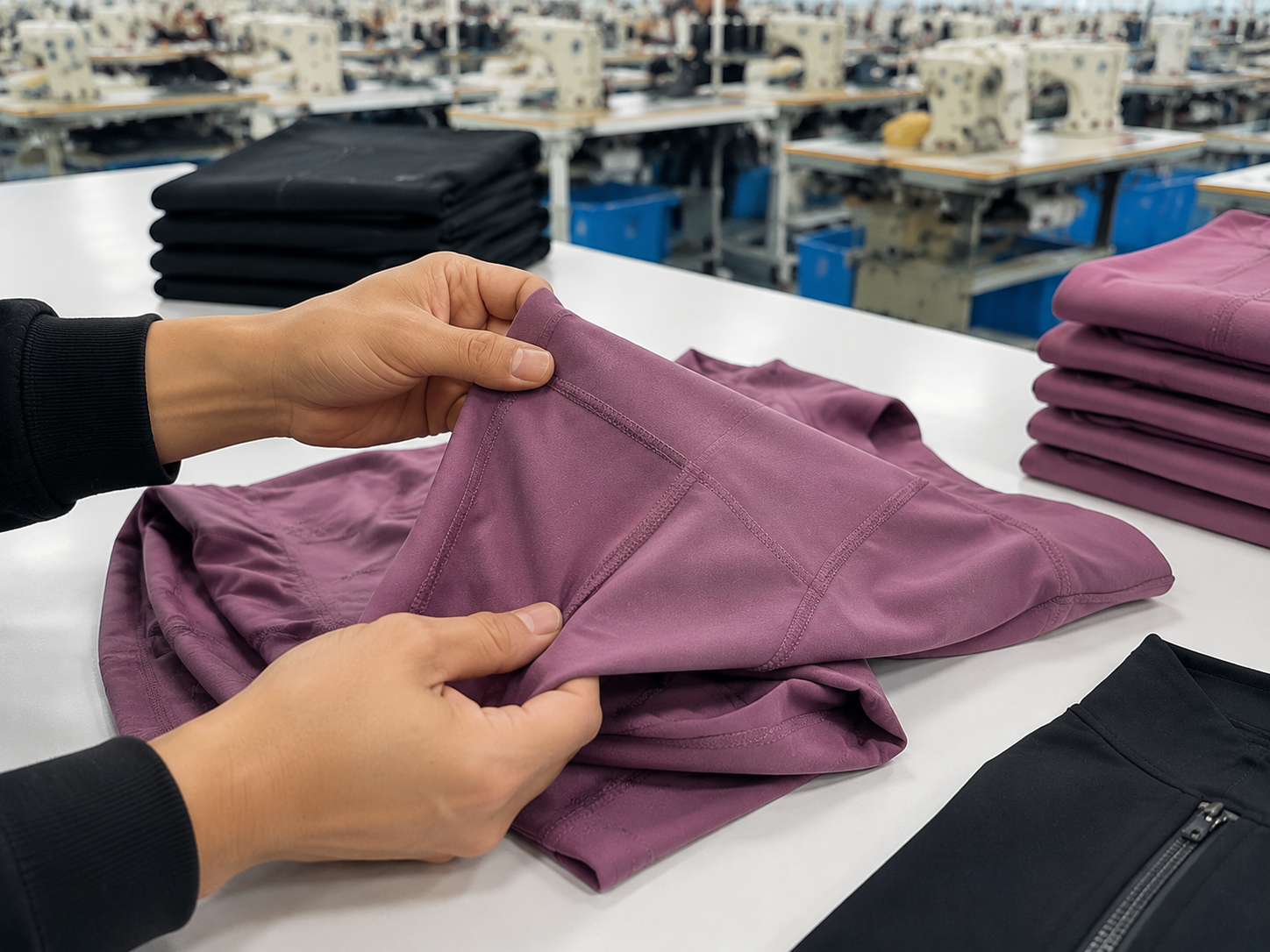
Quality Review
Key measurements, workmanship and appearance are checked against confirmed product requirements.
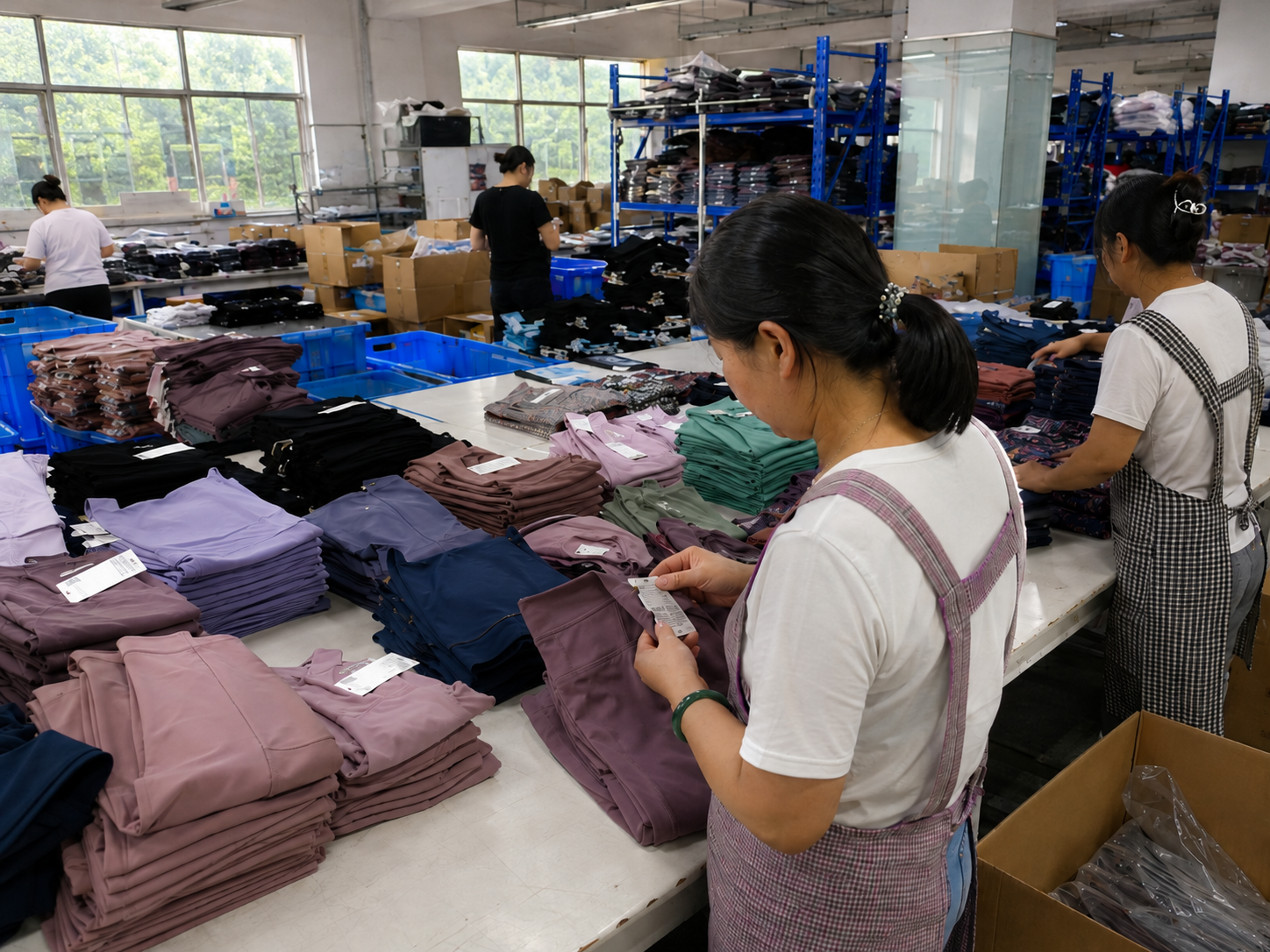
Packing Preparation
Finished garments are labeled, folded and packed according to approved order and packaging details.
MOQ, Capacity and Production Conditions to Confirm Early
Order feasibility depends on more than total piece count. Colors, sizes, material minimums, trims, specialized processes, packaging versions and production scheduling all influence how an order should be planned.
Planning Item
Leadshow Reference
Variables That Can Change the Requirement
Standard MOQ
Standard MOQ
Generally starts from 100 pieces per color per design
Fabric MOQ, trim MOQ, construction, branding and packaging
Style count, colors, quantity by color and design
Size Range
Customer-defined according to the project
Pattern development, grading, market system and product fit
Base size, full size range, grading rule and measurement chart
Sample Timing
Confirmed after technical review
Tech Pack completeness, material availability, trims, pattern complexity, branding and sample type
Required sample type, material status and approval priority
Bulk Timing
Confirmed after production conditions are resolved
Order mix, approved sample, materials, processes and scheduling
Order details, payment, approvals, material readiness and required production window
Monthly Capacity
Up to approximately 120,000 finished garments combined
Style complexity, materials, order mix and current schedule
Planned volume, SKU mix and required shipping window
Fabric Procurement
Project-specific
Material source, color, quantity and supplier minimums
Composition, structure, GSM, color and required material evidence
Branding
Project-specific
Artwork, application method, placement and material compatibility
Logo file, dimensions, colors and approved method
Packaging
Project-specific
SKU structure, hangtags, labels, barcode and individual packing
Packaging artwork, barcode data and sorting instructions
Quality Requirements
Project-specific
Product category, measurements, workmanship and testing requirements
Inspection criteria, tolerances and any required third-party testing
Delivery Arrangement
Confirmed according to agreed shipping plan
Trade term, forwarder, destination and export documentation
Agreed trade term, forwarder instructions and shipment documents
Information Needed for a More Accurate Gym Wear Quote
A quotation is more useful when the manufacturer receives enough information to understand the garment, materials, quantities, customization and expected production scope. Incomplete information can lead to assumptions that later change cost or feasibility.
Product Information
Provide the product category, sketches, reference photos, existing samples or Tech Pack available for the style. Identify whether the product is a sports bra, legging, running short, tank top, sports T-shirt, tracksuit, hoodie or sweatshirt. If an existing sample is the reference, explain which elements should remain unchanged and which elements need development. Clear product definition helps separate confirmed specifications from items that still require technical review.
Technical Specifications
Include technical drawings, measurement charts, grading information, tolerances, seam or construction notes and any important fit requirements. Where information is missing, identify the areas that still require development rather than leaving them open to assumption. For stretch garments, measurements should be reviewed together with fabric properties and target fit. Updated file versions should be clearly marked so obsolete specifications do not remain in the production reference.
Material Requirements
Provide known fabric composition, construction, GSM, stretch direction, handfeel, color references and trim requirements. If the material has not been selected, describe the intended product direction and any measurable requirements that need to be verified. Performance claims such as moisture management, antibacterial properties or specific coverage should be supported by defined material or testing requirements instead of being assumed from common activewear fabrics.
Order Quantity
Provide quantity by style, color and size rather than only a total order number. A style with several colors and sizes creates multiple production and packaging combinations. Standard MOQ generally starts from 100 pieces per color per design, subject to material, trims, construction, branding and packaging requirements. Clear quantity distribution helps evaluate material minimums, production planning and SKU handling more accurately.
Branding and Packaging
Send logo artwork, placement, dimensions, label files, hangtag information, barcode data, SKU lists and packaging requirements where available. Identify whether different colors or markets use different branding or packaging versions. These details can affect tooling, material preparation and production handling, so they should be reviewed during quotation rather than introduced only after garment pricing is agreed.
Quality and Delivery
State any defined measurement tolerances, workmanship criteria, testing, inspection, target market, required shipping window and trade-term expectations. Leadshow can prepare and coordinate commercial invoice, packing list and applicable export information according to the shipping arrangement. Delivery timing is confirmed according to production readiness and the agreed shipping plan rather than promised as a universal fixed number of days.
From Project Brief to Production-Ready Gym Wear
Without a verified public customer case, the most accurate way to show Leadshow’s working method is through the typical project flow used to move specifications from initial review toward production.
Requirement Review and Development Planning
A project can begin with a complete Tech Pack, partial specification files, reference images or a physical sample. Leadshow first reviews what information is available and which decisions still need confirmation. The review covers garment category, construction, measurements, material direction, trims, branding, quantity, packaging and quality requirements.
The objective is to avoid starting sampling while critical information remains ambiguous. For example, a legging cannot be developed accurately from a front-and-back drawing alone if waistband construction, rise, fabric stretch and measurement points are undefined. A sports bra may require confirmation of elastic structure, straps, lining, panels and branding location before a useful sample can be produced.
Once the development scope is understood, suitable sample stages can be planned. Not every project requires every sample type. The sample requirement depends on how mature the design is, how many technical questions remain and what needs formal approval before bulk production.
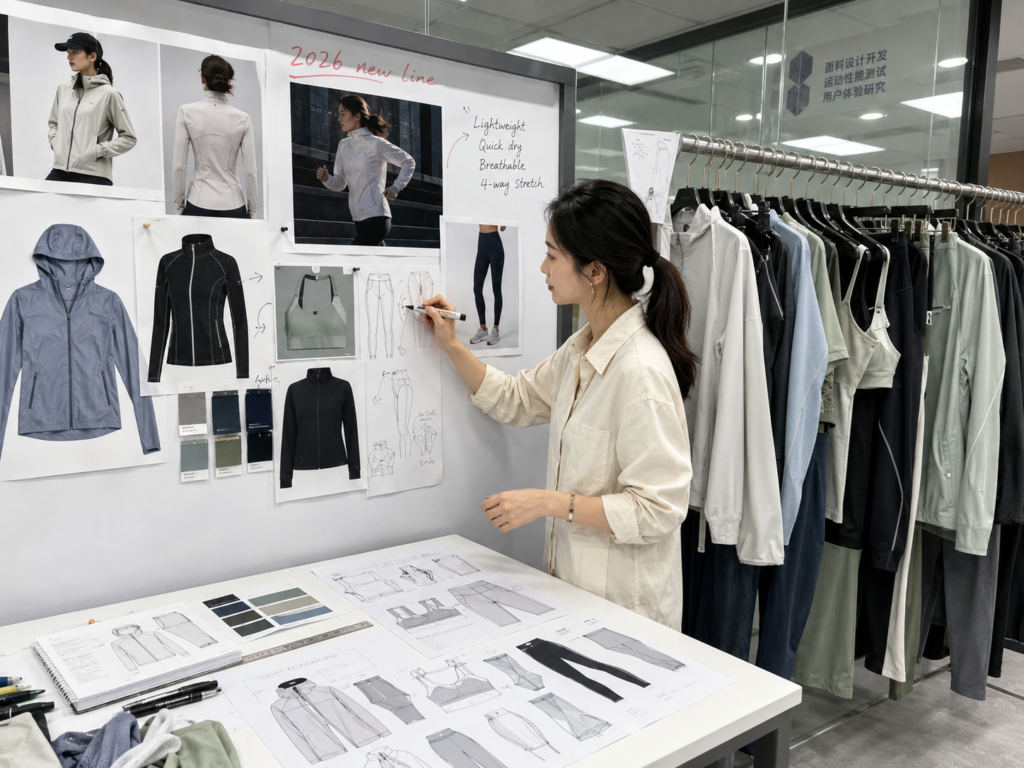
Timing is therefore confirmed after the technical review rather than advertised as a fixed sampling promise.
Sample Revision and Production Approval
The first sample creates a physical basis for reviewing the design, measurements, fit, construction and materials together. Comments are documented and translated into specific revisions where required.
Changes should be controlled carefully. A request to raise a waistband, reduce body width or move a logo can affect patterns, measurements, artwork files or production methods. Updated references should therefore replace outdated versions so the final sample, Tech Pack and production information remain aligned.
A size-set or pre-production sample may be used where appropriate to confirm grading or final manufacturing details. The exact approval path is defined according to project requirements.
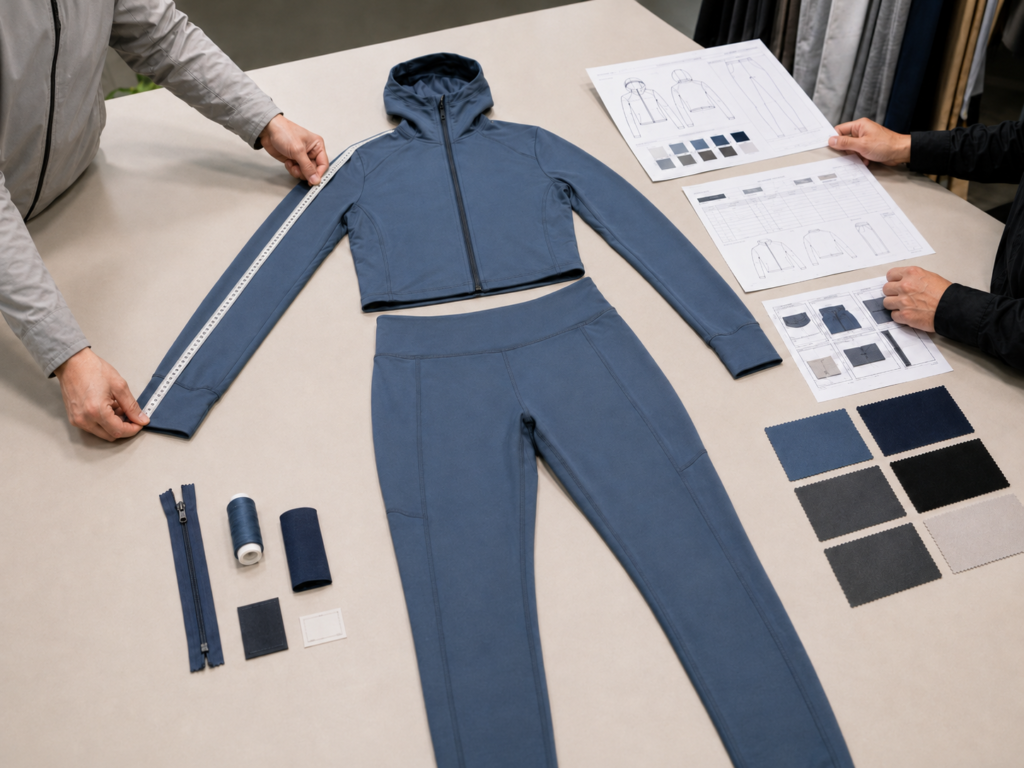
When the necessary approvals are complete, production planning can move forward based on the confirmed sample, material, trims, artwork, labels, packaging and order structure. Bulk timing is confirmed only after these conditions and current scheduling are reviewed.
Bulk Production, Quality Review and Packing
Bulk production translates approved development references into repeated manufacturing operations. Cutting, sewing, specialized processes, finishing and packing are selected according to the garment construction.
Quality review can include material checks, first-piece review, in-process inspection, measurements, workmanship and final label or packaging verification. The exact scope should reflect the product and agreed quality requirements.
For multi-SKU programs, version control remains important through finishing and packing. Sizes, colors, labels, hangtags, SKU information and barcodes need to correspond to the correct garment version.
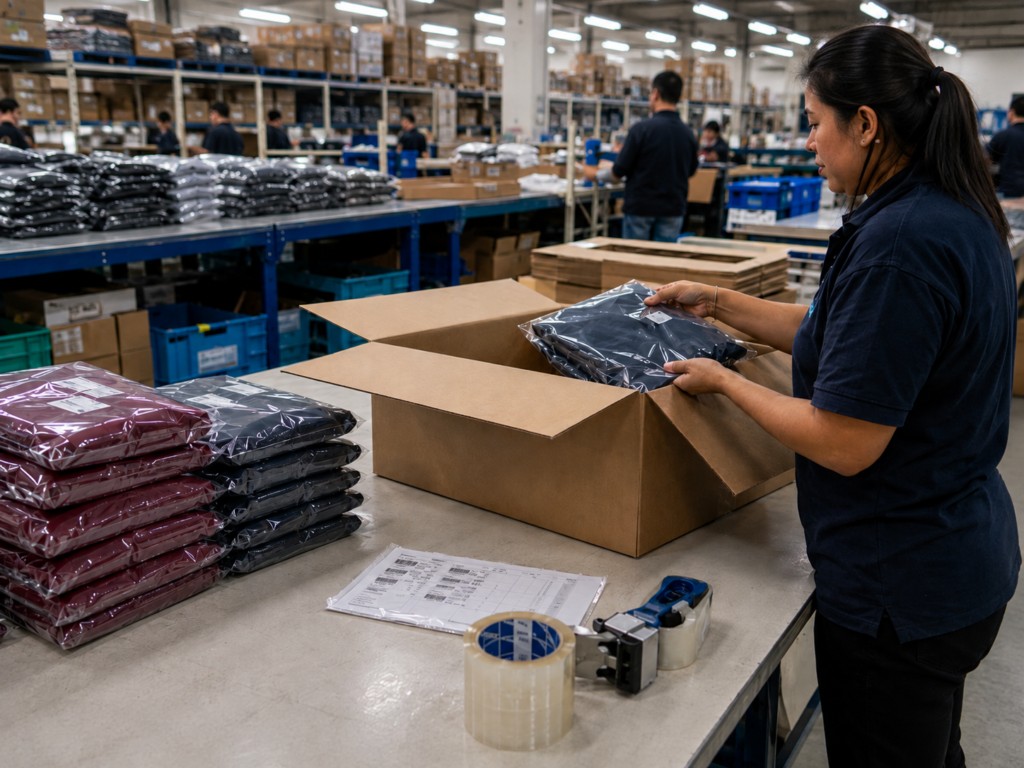
Shipment preparation can include the commercial invoice, packing list, product descriptions, quantities, weights, country-of-origin information and other applicable export data. Leadshow can support export declaration coordination and forwarder handover according to the agreed arrangement. Customs clearance, import duties and destination-country obligations remain subject to the selected trade and logistics structure.
Gym Wear Manufacturer Frequently Asked Questions
These answers address common sourcing questions about gym wear development, MOQ, sampling, manufacturing, quality control, packaging and production planning.
What gym wear products can Leadshow manufacture?
Leadshow’s confirmed product scope includes sports bras, sports T-shirts, yoga leggings, running shorts, tank tops, tracksuits, hoodies and sweatshirts. Each style is reviewed according to its material, construction, fit, branding and order requirements before production feasibility is confirmed.
What is your MOQ for custom gym wear?
Standard MOQ generally starts from 100 pieces per color per design. The final requirement can change according to fabric minimums, trims, construction, logo applications, labels, packaging and other customization requirements.
Do you support OEM gym wear manufacturing?
Yes. OEM projects can be developed from customer-provided Tech Packs, measurement charts, material specifications, artwork and construction information. Leadshow reviews manufacturability, develops samples and supports bulk production after the required approvals are completed.
Can you develop gym wear without a complete Tech Pack?
Yes, depending on the information available. Projects may begin with reference images, physical samples, sketches or partial specifications. Missing construction, measurement, material and branding details still need to be reviewed and confirmed before bulk manufacturing.
How long does gym wear sampling take?
Sample timing is confirmed after reviewing the Tech Pack, material availability, trim requirements, pattern complexity, branding and the required sample type. Leadshow does not apply one fixed sampling time to every product.
How long does bulk production take?
Bulk-production timing is confirmed after the order, payment, approved sample, materials, production specifications and scheduling conditions are completed. Style complexity, processes, order mix and current manufacturing schedule can affect the production plan.
Can you add private labels and custom packaging?
Yes. Leadshow can support main labels, care labels, size labels, hangtags, logo applications, SKU information, barcodes and custom packaging according to approved artwork and project requirements.
How do you control gym wear quality?
Quality review can include material checks, first-piece review, in-process inspection, measurement review, workmanship checks and final label or packaging verification. Inspection requirements are confirmed according to the product and agreed specifications.
What information should I send for a quotation?
Send the product category, Tech Pack or reference, measurement chart, material requirements, quantities by style and color, size range, logo details, labels, packaging, quality requirements and required delivery plan where available.
Can Leadshow support export shipment preparation?
Yes. Leadshow can prepare or coordinate commercial invoice, packing list, product descriptions, quantities, weights, country-of-origin information and applicable export data, and support export declaration and forwarder handover according to the agreed arrangement.
Send Your Gym Wear Project for Manufacturing Review
A useful quotation starts with enough information to understand the product, development workload and planned order structure. Send your Tech Pack, reference images, existing sample information or technical drawings together with the product category, expected quantities, colors, size range, fabric direction and branding requirements.
If your specifications are still under development, indicate which details are confirmed and which areas require manufacturing input. Leadshow can review garment construction, material direction, pattern and fit requirements, sample needs, branding, labels, packaging and production conditions before the project moves forward.
For quantity planning, provide units by design and color whenever possible. Standard MOQ generally starts from 100 pieces per color per design, subject to material, trim, process and customization requirements.
Sampling and bulk-production timing are confirmed after the relevant specifications, materials, approvals and scheduling conditions are reviewed.