
Custom Clothing Packaging for Brands
Brand packaging coordinated with garment production, SKU identification and export packing for sportswear, swimwear, streetwear and modest sportswear programs.
- Coordinate approved labels, hangtags, individual garment packaging, retail packaging and carton markings.
- Link packaging versions to style, color, size, SKU, barcode and destination-market requirements.
- Review artwork and packaging samples before bulk packing to reduce avoidable reprints and packing errors.
- Packaging materials, structure, MOQ, cost, environmental claims and timing are confirmed by project.
Packaging Programs for Different Apparel Brands
Packaging priorities change with the sales channel, product range and order structure. Leadshow coordinates packaging around the garment program so labels, SKU identification, individual packing and export cartons can follow the approved product and brand files.
DTC & E-Commerce Brands
Direct-to-consumer apparel programs need packaging that works before and after the unboxing moment. The single-garment pack must suit the folded product, identify the correct style, color and size, and fit the warehouse or fulfillment workflow defined by the brand. Artwork, inserts, labels and exterior identification are reviewed together with the garment. Packaging dimensions and structure are finalized after the actual product and packaging sample are evaluated, rather than selected only from an empty-bag or empty-box visual.
Retail & Private Label Brands
Retail programs place more emphasis on shelf or rack presentation, product information, scannable identification and accurate pack-out. Main labels, size labels, care labels, hangtags, retail boxes or paper-based formats can be coordinated according to approved brand files. The key task is not adding more decoration; it is making sure the garment, label, barcode, packaging version and outer-carton information remain aligned so the finished SKU can be received, stocked and sold under the brand’s own rules.
Established Multi-SKU Brands
Large collections create packaging complexity long before final packing begins. One style may appear in several colors and sizes, while the same collection may use different packaging versions for different markets or channels. Leadshow can manage project-based identification and packing references by style, color, size, SKU, packaging version and destination. Artwork version control, representative packaging samples and pre-bulk checks help keep approved brand information connected to the correct garments across repeat and expanded orders.
Importers & Omnichannel Programs
Import and omnichannel programs often need one manufacturing order to support several receiving, retail or distribution requirements. Individual packaging, carton marks, packing lists and market-specific versions must therefore be planned as one information chain. Leadshow can coordinate carton preparation and shipment documentation support according to approved instructions, while trade terms, transport responsibilities, platform requirements and customs outcomes remain subject to the specific order and the responsible logistics or compliance parties.
Clothing Packaging Options We Can Coordinate
The most useful packaging format is the one that fits the garment, sales channel, identification needs and packing workflow. Leadshow can coordinate standard and custom options by project, with final materials, dimensions, supplier MOQ and timing confirmed after review.
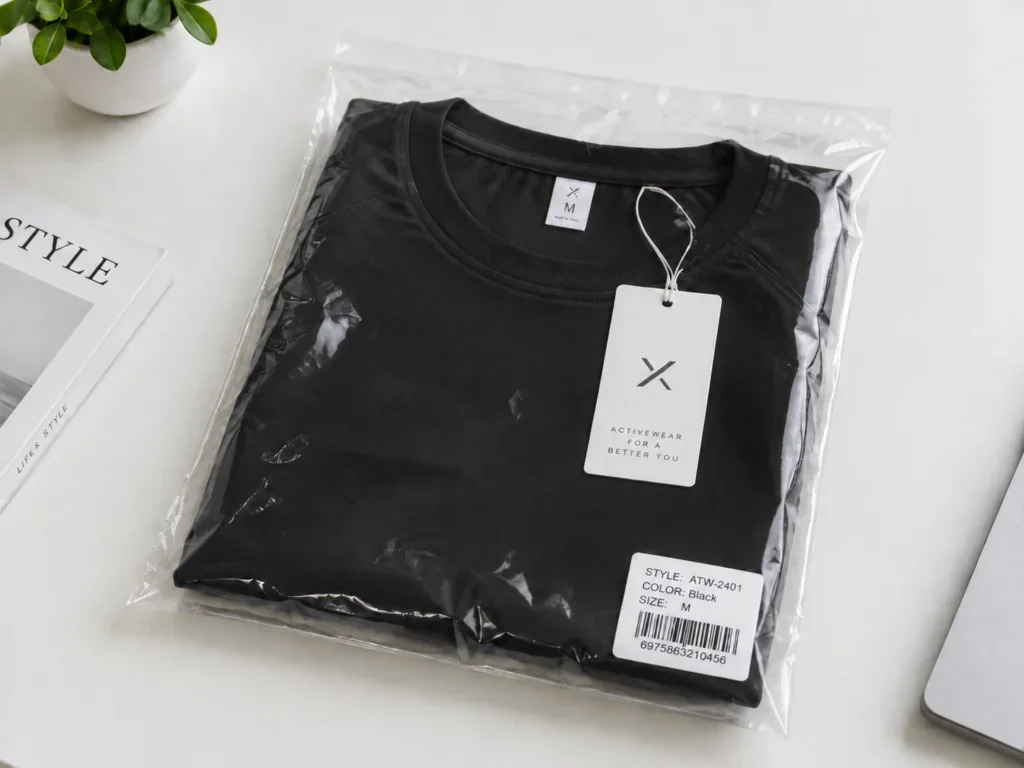
Individual Garment Packaging
Single-garment packaging can protect folded apparel, keep products separated by SKU and support packing into export cartons. The final bag or pack size should follow the approved folding method and the actual garment volume. Brand teams can specify artwork, transparency, closure, warning information or external labels where relevant. Material choice, thickness, printing and environmental claims are reviewed by project rather than assumed to be standard across every order.

Custom Polybag Options
Polybag formats can be evaluated for sports bras, leggings, tops, shorts, hoodies and other suitable garments when the program needs straightforward individual protection and identification. The review should cover folded dimensions, bag structure, closure, printed or applied information, SKU position and carton efficiency. A packaging sample using an actual or representative garment is the preferred approval step because bag dimensions that look acceptable on a drawing may perform differently once the garment is folded and inserted.
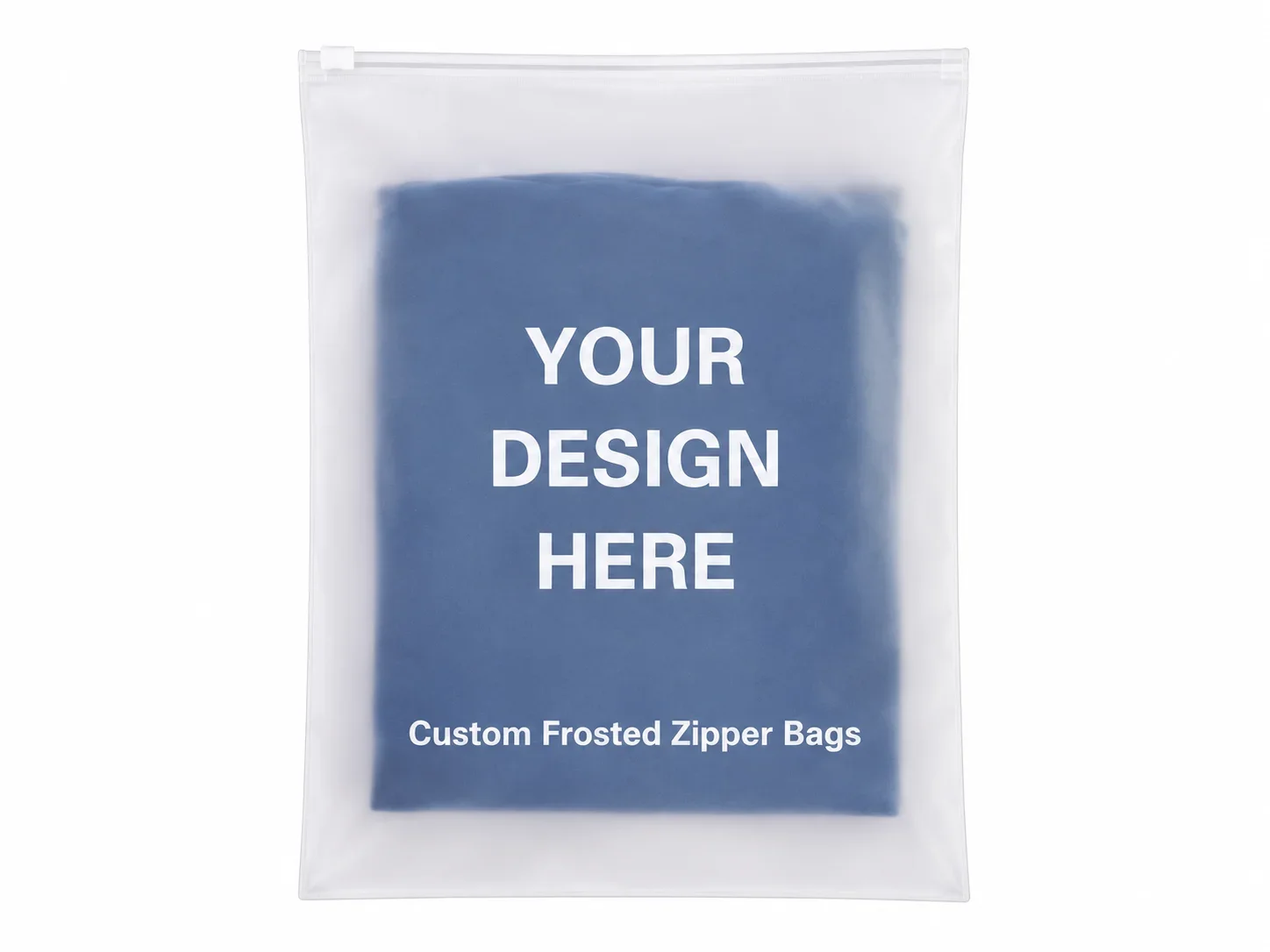
Reusable or Zip Bag Options
A reusable or zip-style bag can be considered when the brand wants repeated opening, product storage, sample presentation or a higher-touch pack-out. The format is not automatically the right choice for every garment and should not automatically be described as sustainable. Size, material, closure, printing, label position and durability expectations need project review. The sample should be opened, closed and packed with the intended garment before bulk supply is approved.

Paper-Based Packaging
Paper bands, cards, sleeves and related paper-based options can support brand communication or retail presentation where the garment and channel suit the format. Paper-based does not automatically mean plastic-free, recyclable or certified. Material composition, coating, printing, structural use and any environmental claim need supporting evidence from the relevant packaging supplier or certification scope. Brand artwork and product information should also be checked for legibility at the final physical size.
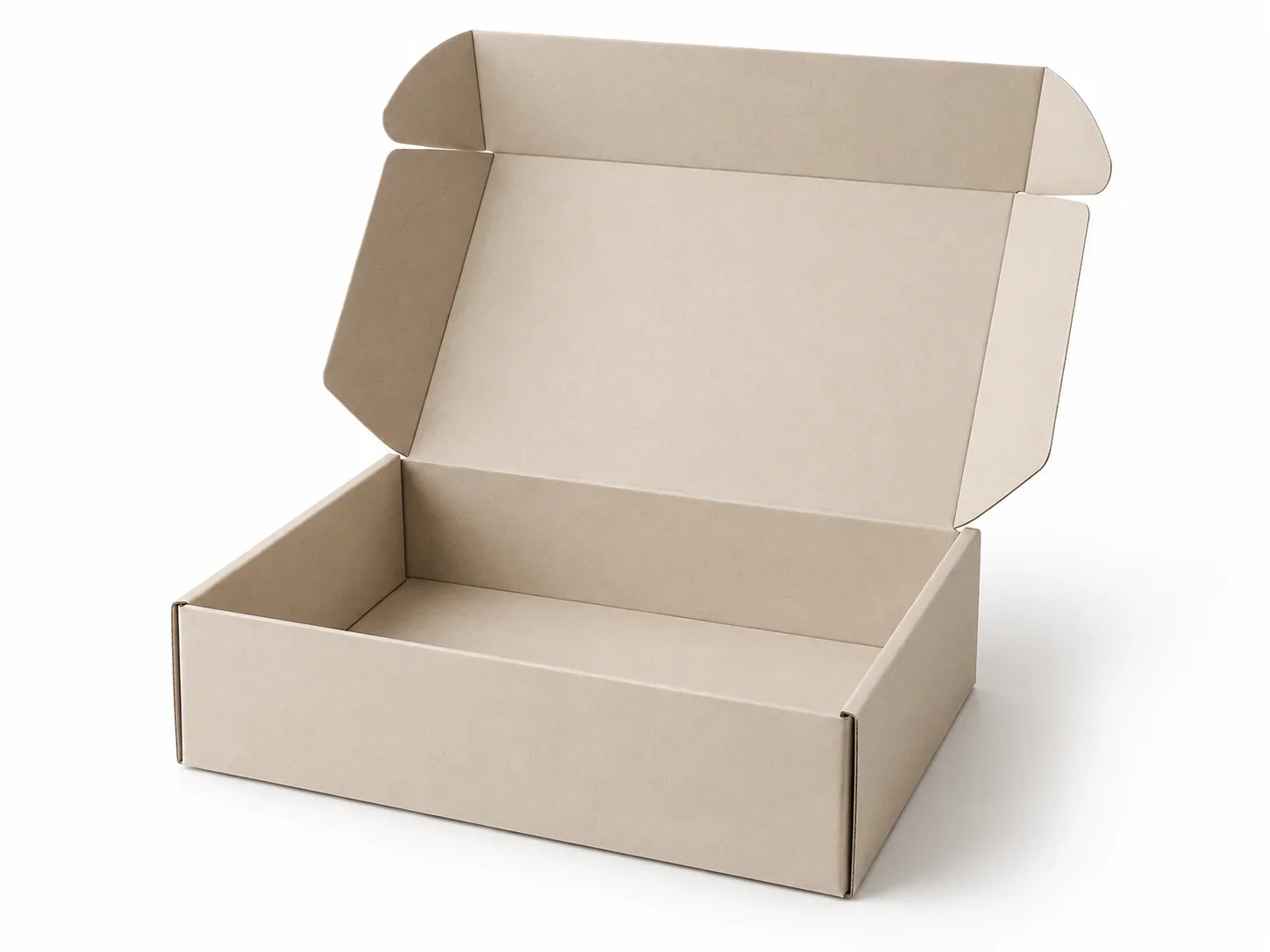
Custom Folding Cartons
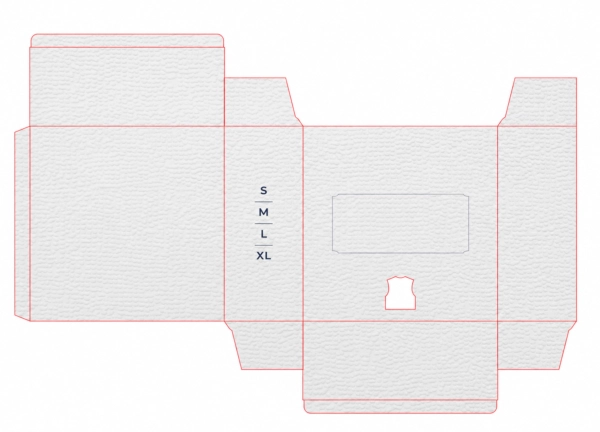
Folding cartons can be reviewed for products that need stronger retail presentation, a defined box shape or additional room for product information and inserts. Box dimensions should be developed around the folded garment, not a generic apparel size. Artwork, fold lines, cut lines, barcode space and carton packing efficiency need to be checked before bulk printing. Paper stock, printing method, finish, supplier MOQ, cost and production timing are confirmed after the box specification is reviewed.

Gift-Box Options by Arrangement
Gift-style or presentation boxes may be suitable for selected premium sets, special launches or products where the presentation supports the sales format. Leadshow can coordinate such options by arrangement, but the box should not be treated as a universal packaging upgrade. Product weight, folded size, insert requirements, artwork, shipping volume, carton utilization, supplier MOQ and schedule all affect feasibility. A complete physical packaging sample should be approved before a large packaging commitment is placed.
Which Packaging Fits Your Sales Channel?
Channel needs should guide the packaging brief before materials or decoration are selected. The table below helps brand teams decide what the pack must accomplish and which information should be supplied for project review.
Sales Channel
Primary Packaging Goal
Typical Direction to Review
Key Identification Needs
What to Confirm
DTC / E-Commerce
Protect the folded garment, support warehouse picking and preserve brand presentation.
Individual bag or selected box format; inserts or brand cards by project.
Style, color, size, SKU, barcode, market version.
Fulfillment method, folded product size, return/repack needs, artwork, SKU file.
Retail Store
Present a sale-ready SKU while keeping product information and barcode placement clear.
Bag, paper band/sleeve, retail carton or other approved format.
Hangtag, size, price/SKU label, barcode, market text.
Display method, retailer instructions, barcode data, packaging artwork.
Wholesale / Import
Keep products correctly identified through carton packing and receiving.
Individual garment pack plus export carton and carton marking.
SKU, size/color identification, carton number, carton mark.
Packing ratio, solid or mixed SKU rules, carton specification, packing list fields.
Premium / Gift
Create a controlled presentation without compromising pack-out efficiency.
Selected retail or gift-box option by arrangement.
Product version, insert content, brand artwork, barcode if required.
Product dimensions, box structure, material, finish, supplier MOQ, shipping volume.
From Brand Files to Finished Packaging
A strong private-label packaging program connects approved brand files to the actual garment, not to a standalone packaging purchase. Leadshow can coordinate the sequence below as part of the apparel manufacturing program.
Brand Files and Packaging Brief
The process starts with the information that controls the brand presentation: logo artwork, fonts, brand colors, label layouts, hangtag files, product names, care information approved by the responsible party, barcode data, SKU lists, market versions and reference packaging. The apparel product and sales channel should be identified at the same time because a leggings program, sports-bra program, hoodie program and swimwear program can have very different folded dimensions and pack-out requirements. Incomplete or conflicting files are clarified before bulk packaging materials are ordered.
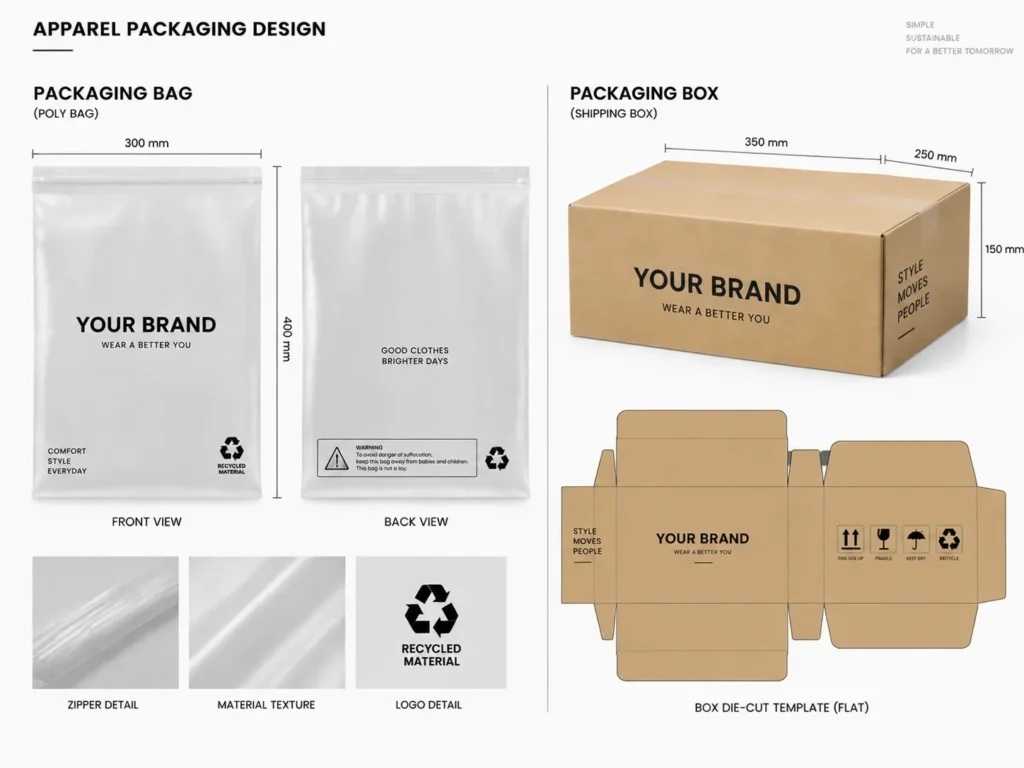
Packaging Structure and Artwork Review
The next step is to translate the brand brief into a workable packaging specification. Individual packaging, paper cards, folding cartons, stickers or gift-box options are reviewed according to the garment and the selected channel. Artwork is checked against the actual packaging dimensions, print area, fold or cut lines, barcode location, SKU reference and market version. The manufacturing team can flag obvious execution conflicts, but legal wording, translations, barcode ownership and market-specific regulatory content remain subject to approval by the brand, importer or responsible specialist.
Packaging Sample and Garment Fit
Packaging approval should include the real product. A full-size packaging sample is used with the actual or representative garment to check folding, product fit, presentation surface, label placement, barcode visibility, inserts and the relationship between individual packaging and the master carton. Multi-SKU programs can use representative or higher-risk versions for focused review. When garment dimensions, materials or folding methods change after packaging approval, the packaging specification should be reviewed again before bulk packing proceeds.

Bulk Packing and Delivery Files
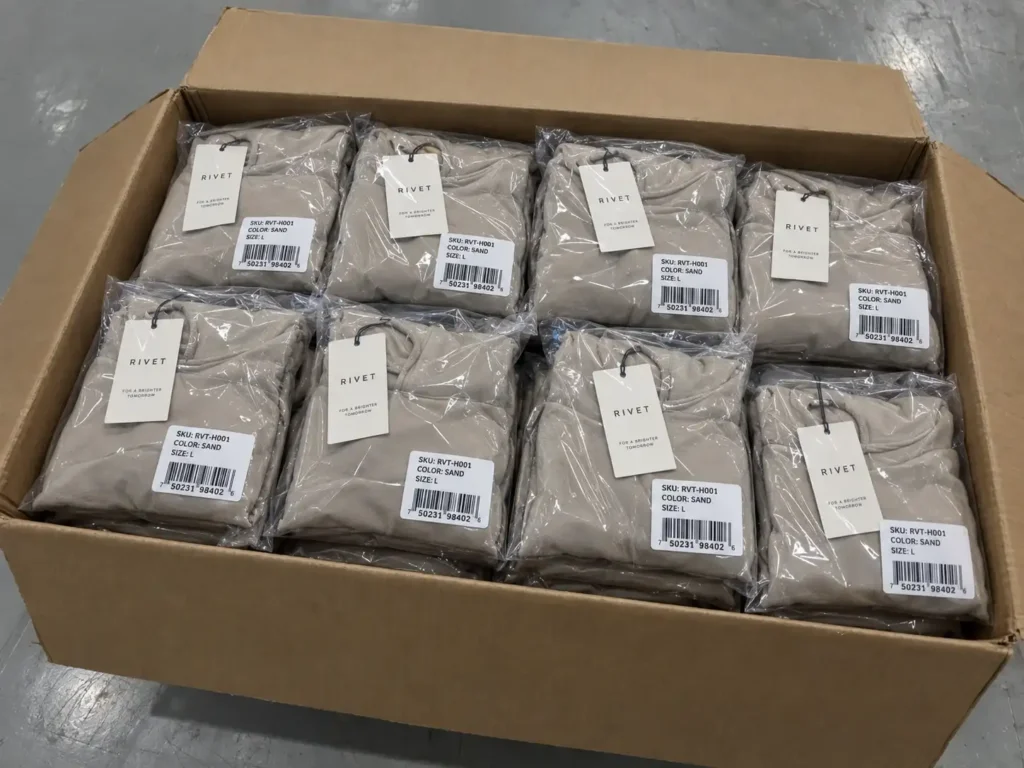
After the packaging files and sample are approved, bulk packing follows the frozen references for style, color, size, SKU, labels, barcode and packaging version. The packing sequence can include garment folding, hangtag and label application, individual packing, SKU verification, carton packing, carton-mark checks and packing-list reconciliation. Repeat orders should not assume older packaging files remain valid forever; brand artwork, market text, barcode data, price information and supplier packaging conditions should be reconfirmed before the next run.
Labels, Hangtags and Brand Identification
Labels and packaging work as one identification system. Each element should have a defined role, approved content and a clear connection to the correct garment SKU.

Main / Woven Label
Main-label options can be coordinated according to approved brand artwork and the garment construction. Woven labels may be arranged when suitable, while the final material, dimensions, fold type, color and attachment method are confirmed by project. The brand remains responsible for its trademark and artwork rights. Label placement should also be checked on the garment sample so the final application supports the product design without creating an avoidable fit, comfort or construction conflict.
Size Label
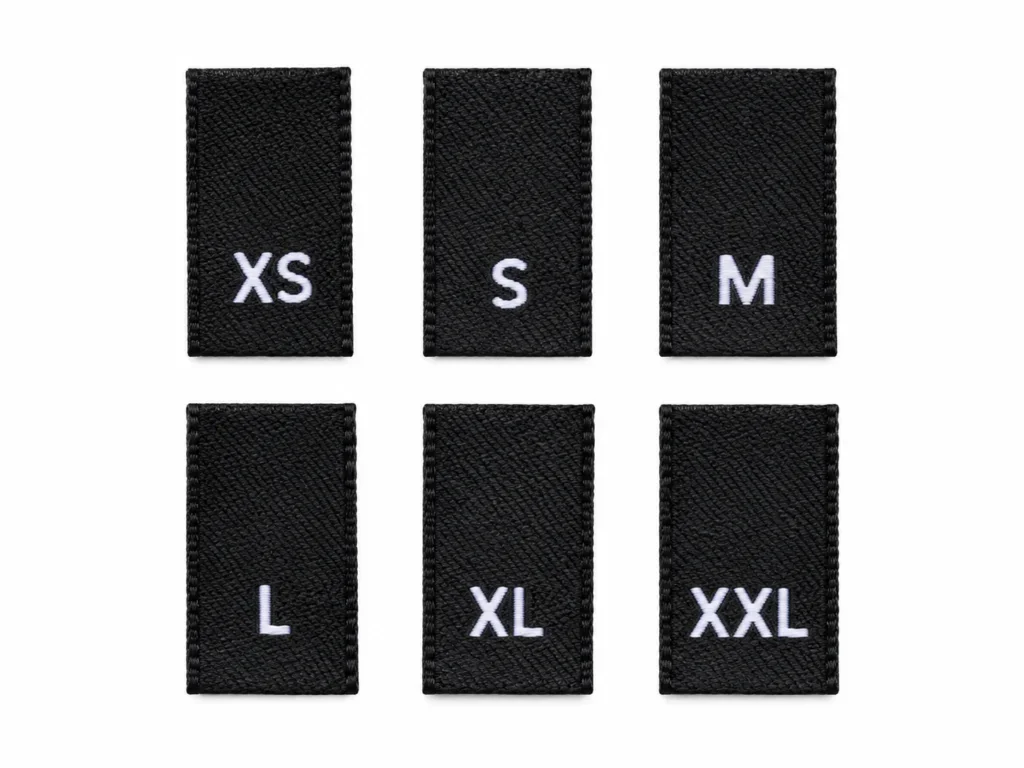
Size labels should remain easy to identify and must match the approved size designation for the garment. A multi-size program can become difficult to pack correctly if product size, SKU label and outer packaging use different naming conventions. Leadshow can coordinate custom size labels and link them to style, color, size and packaging references. The final format, content and location should be included in the approved product and packaging files before bulk production begins.

Care Label
Printed care labels can be coordinated using information approved by the brand, importer or other responsible party. Fiber content, care symbols, language and country-of-origin information should be based on the final product facts and the applicable market requirements. Leadshow can help apply the approved files but should not be treated as the legal authority for every destination market. Any language or content revision must be reflected in the correct product and packaging version before bulk packing.

Heat-Transfer Label
Heat-transfer labels are available where suitable for the fabric and product construction. The final effect depends on the transfer material, temperature, pressure, garment fabric and wash requirements, so permanence or unlimited wash resistance should not be promised without supporting evidence. A sample allows the brand to review appearance, position and compatibility before the bulk run. The approved label version then needs to stay connected to the correct garment style, color, size and market version.
Hangtag
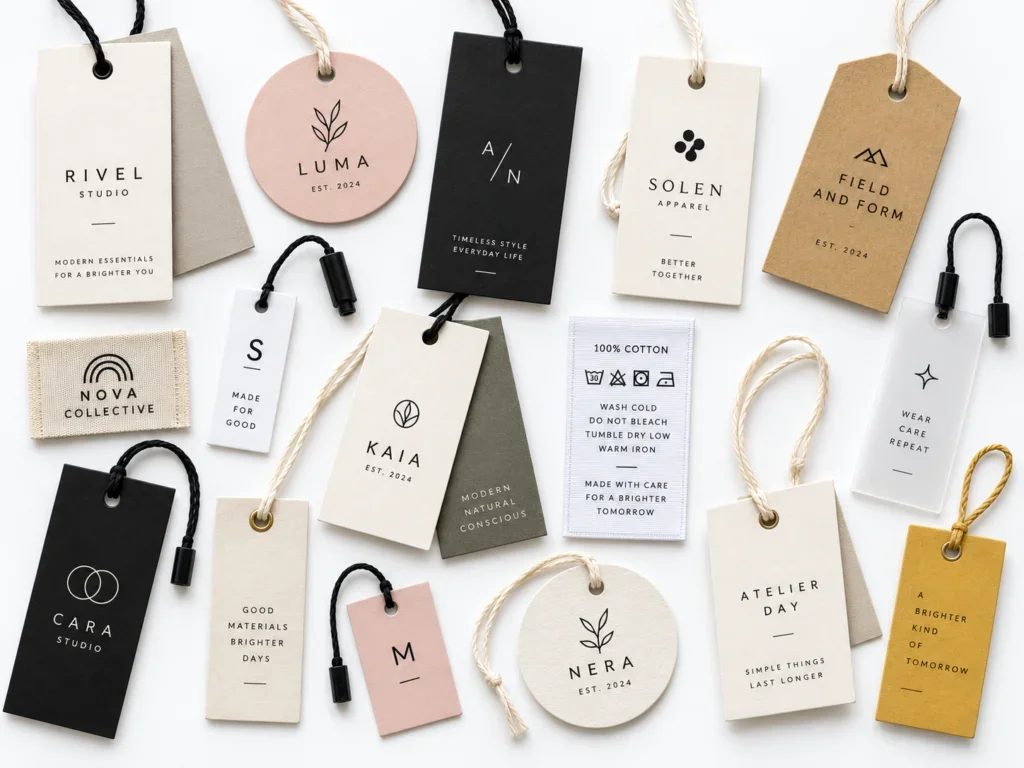
Hangtags can carry brand presentation, product information, price references or channel-specific identification according to the approved project files. The review should cover tag dimensions, paper or other material, print content, hole and string arrangement, barcode or SKU information, and attachment position on the garment. When a collection has many similar styles, the hangtag and SKU system should help the receiving or retail team identify the correct product without opening every individual package.
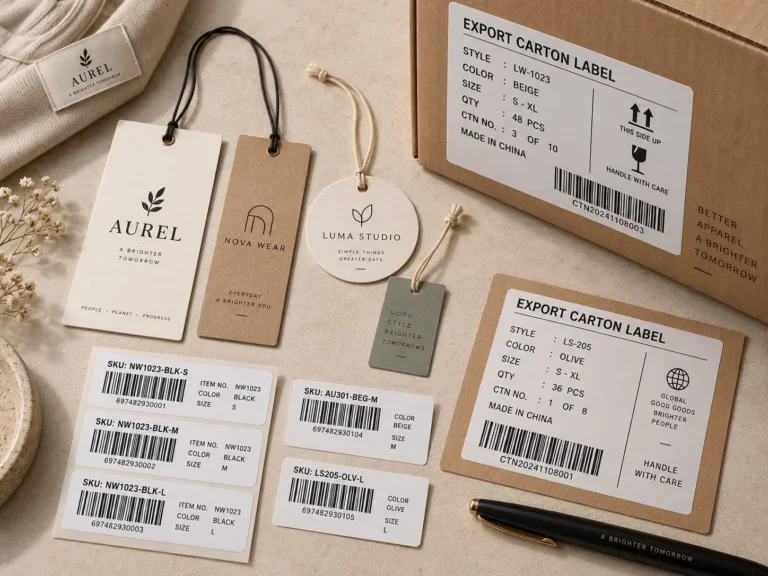
Packaging / SKU Label
External packaging labels connect the garment to the warehouse and carton workflow. A label may include style, color, size, SKU, barcode or other approved identifiers depending on the program. The barcode data should be provided or approved by the brand. Label position, print direction and readability are checked during the packaging sample stage, while bulk packing includes checks for wrong labels, missing labels, duplicate placement or damage according to the agreed project process.
Packaging Artwork Review Before Production
Artwork problems are much cheaper to correct before packaging materials are printed. Leadshow can review packaging files for manufacturing execution and obvious conflicts while final brand, legal and market content remains subject to the responsible party’s approval.
Dimensions, Dielines and Print Areas
Packaging artwork should match the physical structure that will actually be produced. The review checks whether the artwork dimensions correspond to the bag, card or carton; whether important content sits inside the usable print area; and whether fold lines, cut lines or structural areas interfere with logos or text. A packaging format may need to change when the actual garment fold is thicker or larger than the original assumption, so physical dimensions are not frozen from the design file alone.
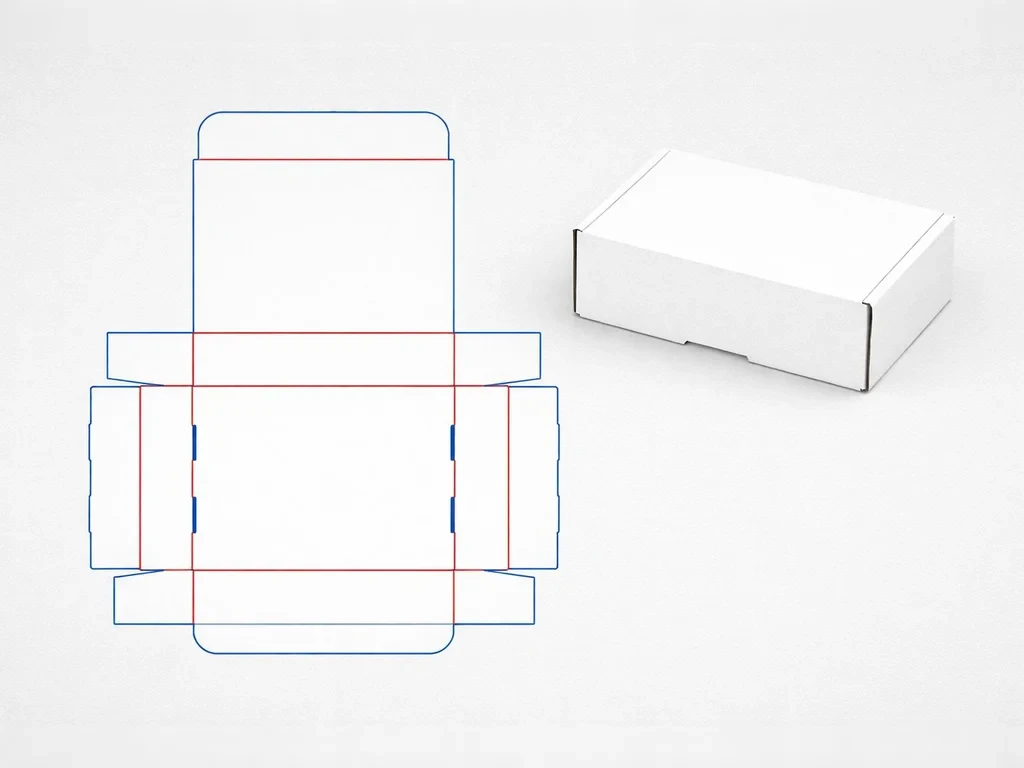

Brand Color, Typography and Version Control
Logo files, fonts, colors and other visual elements are checked against the approved brand references. The same brand color can appear different on plastic film, paper, fabric and other substrates, so the final physical sample remains the key approval point. Every revision should carry a clear version reference. When several markets or channels use similar artwork, the file name, version, language and SKU mapping should make it difficult to confuse one packaging version with another during purchasing and bulk packing.
Product Text, Barcode and SKU Mapping
Product names, size references, barcode files, SKU codes and other packaging text need to match the correct garment. The manufacturing side can compare provided files and flag visible conflicts, but barcode ownership, legal label wording and translation accuracy remain the responsibility of the brand, importer or designated expert. A barcode or SKU change should trigger an update to the related packaging file and carton references so outdated information does not continue into the bulk run.


Written Approval Before Bulk Supply
After revisions are resolved, the final packaging artwork and sample should be approved before bulk printing or purchasing. The approved version becomes the reference for incoming packaging checks, first-pack review and bulk packing. If the garment dimensions, folding method, label content, barcode, market version or packaging structure changes later, the relevant packaging approval should be reopened rather than assuming the earlier file remains valid. Clear approval points reduce the risk of reprints, repacking and schedule disruption.
Approve Packaging with the Actual Garment
A packaging drawing can confirm graphics, but it cannot fully confirm how a finished garment will fold, fit and present inside the pack. Physical approval closes that gap before bulk packing.
Use the Intended Garment and Fold
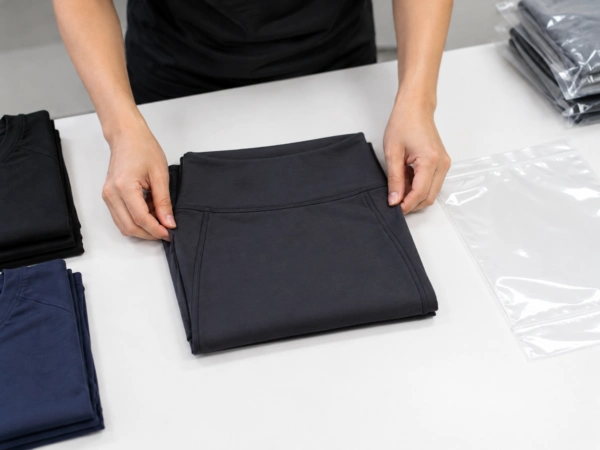
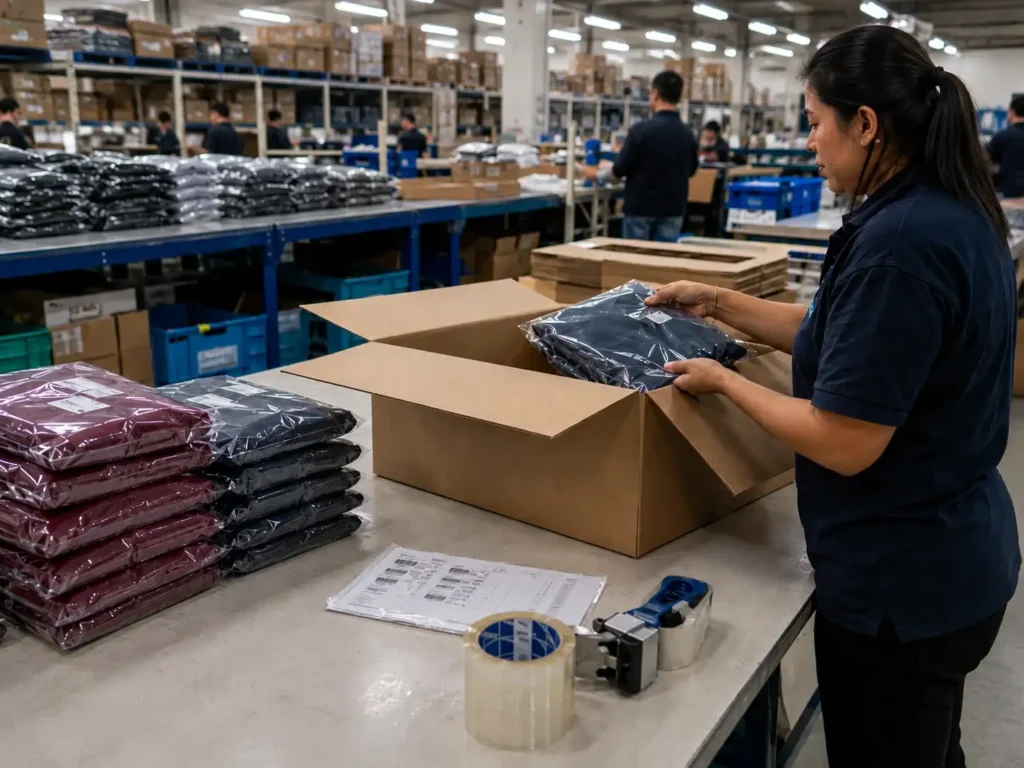
The review starts with the actual product or a representative sample in the approved construction. The garment is folded according to the planned packing method and placed into the intended bag, carton or other format. The team checks whether the product fits without unnecessary compression, whether the main presentation surface looks controlled, and whether the packaging leaves an appropriate amount of space for handling. Final packaging dimensions should be confirmed from this physical review rather than copied from a generic apparel size.
Check Labels, Barcode and Inserts in Position
The packaging sample is also the right time to verify the placement of hangtags, external SKU labels, barcode labels, cards or other approved contents. A barcode may be clear on a flat artwork file but awkward to scan after the pack is folded or sealed. Inserts can also shift, cover the garment presentation or increase pack thickness. Each element should be viewed in the same arrangement that the warehouse, retailer or consumer will actually receive.
Evaluate Carton Packing Efficiency
Individual packaging cannot be approved in isolation when the order ships in master cartons. The packed garment should be checked against the planned carton arrangement so oversized bags or boxes do not create avoidable empty space or force an impractical pack ratio. Multi-SKU orders also need clear solid-size, solid-color or mixed-SKU instructions where applicable. Carton structure, quantity per carton and final shipping data are confirmed according to the approved project and actual packed dimensions.

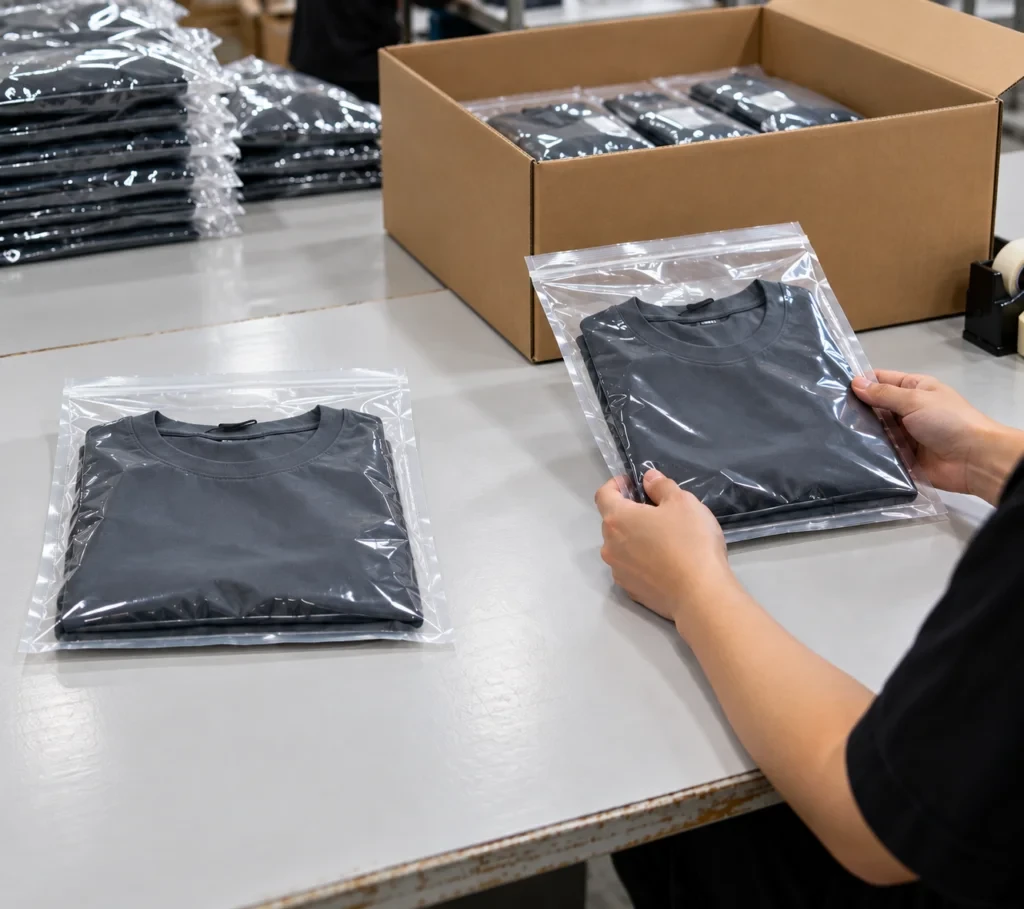
Freeze the Approved Packaging Reference
The approved packaging sample, artwork version and packing instructions become the working reference for bulk packing. Before the run starts, the first packed unit can be compared with those references so the team verifies garment fold, label position, SKU, barcode, inserts and packaging appearance. When a product or packaging specification changes after approval, the affected references should be updated and reviewed again. The goal is controlled execution, not a claim of zero variation or zero packing error.
Multi-SKU Packaging and Barcode Control
A packaging system becomes more difficult as styles, colors, sizes, markets and packaging versions multiply. A clear SKU matrix keeps the garment, label, barcode, individual pack and carton information connected.
Style
Color
Size
SKU Reference
Barcode File
Packaging Version
Carton Rule
Yoga Leggings
Black
S
YL-BLK-S
Brand-approved file
DTC Pack A
According to approved size/SKU pack plan
Yoga Leggings
Black
M
YL-BLK-M
Brand-approved file
DTC Pack A
According to approved size/SKU pack plan
Sports Bra
Navy
M
SB-NVY-M
Brand-approved file
Retail Pack B
According to approved retail pack plan
Hoodie
Grey
L
HD-GRY-L
Brand-approved file
Retail / Wholesale C
According to approved carton instructions
Illustrative SKU codes above show the control logic only. Live commercial barcodes and confidential SKU data should not be displayed publicly. Final barcode data is provided or approved by the brand, and any platform-specific barcode or receiving requirement is reviewed as a project condition.
E-Commerce vs Retail Clothing Packaging
The same garment can need a different packaging approach depending on how it is picked, transported, displayed and sold. Two channel paths below help define the packaging brief before artwork and materials are finalized.
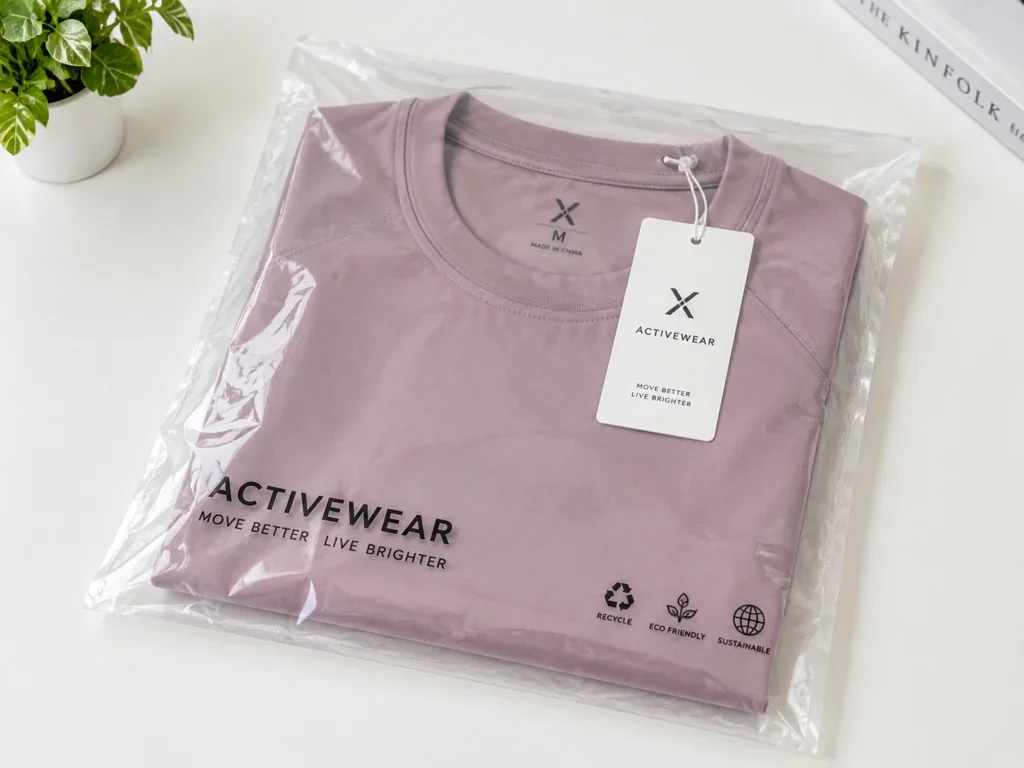
E-Commerce / DTC
E-commerce packaging must work for the warehouse as well as the unboxing experience. A good brief starts with the folded garment, fulfillment method, style-color-size identification and return or repack needs. Individual packaging should help operators identify the correct SKU without unnecessary opening and should not create excessive volume inside the shipping carton or mailer. Brand cards, stickers or presentation elements can be added by project when they serve a clear purpose rather than increasing complexity without operational value.
- Confirm folded product dimensions and individual pack format.
- Keep style, color, size, SKU and barcode references aligned.
- Review multi-market language or packaging versions separately.
- Evaluate pack-out with the actual garment before bulk approval.

Retail / Private Label
Retail packaging needs to turn the finished garment into a controlled sale-ready SKU. The pack may need hangtags, price or SKU identification, a scannable barcode, size information, a paper band, individual bag or selected retail carton, depending on the retailer’s instructions. Product display and pack re-closing requirements can also matter. The supplier should work from the brand or retailer’s approved packaging and barcode files instead of assuming one universal retail specification applies across every store, platform or market.
- Confirm display method: hanging, folded, bagged or boxed.
- Align hangtag, size label, SKU and barcode with the garment.
- Check retail pack dimensions and product insertion with a sample.
- Follow retailer-specific packaging and carton instructions by project.
What Determines Packaging MOQ and Cost?
Packaging cost is driven by the specification and the number of versions, not only by the number of garments. Leadshow reviews garment quantity and packaging requirements together, while packaging supplier MOQ, sample timing and bulk timing are confirmed after artwork, material and structure review.
Cost / MOQ Factor
What Changes
Why It Matters
What Changes
Bag, card, folding carton, gift-box or other approved format.
Different structures use different materials, tooling, printing and packing labor.
Final dimensions
Based on the folded garment and approved packing method.
Oversized packaging can increase material use and carton volume; undersized packaging can distort the garment.
Material and finish
Film, paper, board, coating, printing or other project-approved materials.
Supplier MOQ, price and timing can vary substantially by material and finish.
Artwork versions
Different colors, languages, markets or campaign designs.
More versions increase file control, sample approval, purchasing splits and packing complexity.
SKU / barcode labels
Label type, data, placement and number of SKU variants.
More identifiers increase printing, checking and pack-out control requirements.
Insert cards / hangtags
Material, print, size, string, barcode or other approved details.
Each component can have a separate supplier MOQ and additional assembly work.
Packaging sample
Physical sample using the intended garment.
Sample timing is confirmed after the structure, artwork, material and supplier path are reviewed.
Bulk schedule
Packaging supply, garment completion and packing sequence.
Final packing and delivery timing depends on approved files, material readiness and the current production schedule.
Leadshow’s standard garment MOQ generally starts from 100 pieces per color per design, subject to fabric, trims, construction and customization requirements. Custom packaging can carry separate supplier MOQs, so packaging feasibility and cost must be reviewed alongside the garment order rather than assumed to follow the garment MOQ automatically.
Sustainable Packaging Requests Need Evidence
Many brands now include environmental requirements in the packaging brief. The strongest approach is to define the requested claim first, then verify the material, supplier evidence and applicable scope before the wording is used on packaging or marketing.
Define the Requirement
Start with the exact brand objective rather than a broad “eco-friendly packaging” request. The project may be trying to reduce plastic, use recycled content, evaluate paper-based alternatives or source packaging with a particular certification. Each target leads to different materials and evidence requirements. A paper format is not automatically plastic-free or recyclable, and a reusable bag is not automatically sustainable. The requested claim should therefore be written clearly in the packaging brief before sourcing begins.
- Specify the intended environmental claim.
- Identify the relevant product, market and channel.
- Separate material preference from marketing language.
Verify Material Evidence
Environmental claims should be supported by the packaging material and the relevant supplier or certification documents. A certificate held by one supplier does not automatically apply to every packaging type, every order or the Leadshow factory itself. Scope, certificate holder, validity and material reference need to match the project. Where the evidence is incomplete, the safer wording is that an option can be evaluated subject to supplier and project review rather than presenting the claim as a confirmed company-wide capability.
- Check supplier and material scope.
- Confirm validity before public use.
- Do not convert material evidence into a factory certification.
Approve the Final Claim
The approved packaging sample should match the material and construction described in the brand’s final claim. If the substrate, coating, film, adhesive or supplier changes, the environmental wording may need to be reviewed again. Final sustainability language should remain consistent across artwork, product information and brand communications. Leadshow can coordinate the sourcing and application process, while formal environmental, legal or certification claims require the appropriate supporting evidence and responsible-party approval.
- Keep claims tied to the final material.
- Reconfirm after supplier or material changes.
- Use only evidence-backed wording.
Packaging Execution Supported by Real Resources
Packaging is handled inside a wider apparel manufacturing system rather than treated as a last-minute add-on. Leadshow’s confirmed resources support folding, identification, quality checks, carton preparation and shipment coordination for suitable projects.
Folding & Packaging Equipment
Leadshow has four automatic folding and packaging systems that can support standardized folding, product organization and packaging for suitable garments. Complex structures, heavy hoodies, layered swimwear, jumpsuits or special presentation packaging may still require a different handling method. The equipment should therefore be presented as a production resource, not a claim that every garment is automatically packed. Packaging setup remains dependent on the approved garment, fold, packaging structure and project instructions.
- 4 automatic folding and packaging systems.
- Suitable products can use standardized folding support.
- Not every garment or packaging format is automated.
Warehousing & Logistics Team
An approximately 32-person warehousing and logistics-related team supports material handling, SKU sorting, labeling, packaging, carton preparation and shipment coordination. The team can work with order, style, color, size, packaging version, market and destination references according to the project. No specific WMS, RFID platform, automated warehouse or real-time customer inventory portal is presented as an established capability, so project records and approved packing instructions remain the basis for execution.
- Approximately 32 people as a dynamic reference.
- Supports SKU sorting, packing, cartons and outbound coordination.
- System and warehousing details are confirmed by project.
Quality Team Support
Leadshow’s approximately 45-person quality team can support material, in-process, finished-garment and packaging inspections according to project requirements. Packaging-related checks can include approved labels, SKU identification, packaging content, carton information and pre-shipment review. The team size is a dynamic reference and does not mean every member is a laboratory engineer or that every item receives the same inspection plan. Sampling method, acceptance criteria and testing remain specific to the product and order.
- Approximately 45 people as a dynamic reference.
- Packaging checks are part of the project quality process.
- Inspection method and acceptance criteria are project-specific.
Prevent Packaging Errors Before Shipment
Packaging risk is best controlled before the cartons are closed. Each risk below is linked to a specific prevention action so the team can reduce rework without claiming zero-error packing.
Wrong SKU
Garments with similar colors or silhouettes can be difficult to identify after folding. A controlled SKU matrix links the style, color, size, barcode, packaging version and carton rule before packing starts. The approved files should use the same identifiers throughout the process so one team does not work from style names while another works from unrelated shorthand. First-pack review and carton reconciliation provide additional checkpoints before shipment.
- Use one approved SKU matrix.
- Link product, label and carton references.
- Reconcile packed quantities before release.
Wrong Label
A correct garment can still become an incorrect retail SKU when the size label, hangtag, barcode or external packaging label is wrong. Label files should therefore be approved and mapped to the correct product version before bulk application. The first packed units are checked against the approved references, and bulk packing can include process checks for missing, duplicated, damaged or incorrect labels according to the agreed inspection plan.
- Freeze approved label versions.
- Map labels to the garment SKU.
- Check application during pack-out.
Incorrect Pack Size
A bag or box that is too small can compress or distort a folded garment, while an oversized format can reduce carton efficiency and create unnecessary material use. Final dimensions should be reviewed with the actual or representative garment, approved folding method and intended inserts. When the garment construction, fabric thickness or fold changes, the packaging size should be re-evaluated instead of relying on an earlier empty-pack sample.
- Fit the package to the folded garment.
- Review product and pack together.
- Recheck after garment or fold changes.
Missing Components
Sets, inserts and multi-component packs introduce a different failure risk: the package can look correct while one required item is missing. The packing instruction should define the full contents, and the first pack should confirm every component and its position. Where a program contains sets or inserts, process checks can be added before sealing or carton packing. The exact control method depends on the project rather than a blanket promise that every pack is checked in the same way.
- Define pack contents clearly.
- Use a first-pack reference.
- Add checks for sets and inserts where needed.
Wrong Market Version
Similar artwork in different languages or markets can be mixed if files are not clearly separated. Market or language codes, version numbers and SKU references should be visible in the packaging documentation before printing and packing. The brand or responsible party supplies and approves the final translations and legal content. Leadshow can coordinate the approved versions, but one market’s label or packaging file should never be assumed to be valid for another market without review.
- Use market and language version codes.
- Keep files linked to the correct SKU.
- Obtain final content approval from the responsible party.
Carton / File Mismatch
The last layer of control is making sure the physical carton matches the packing information. Carton number, quantity, SKU mix, carton marking and packing-list data should follow the approved order instructions. Before shipment, carton counts and related information can be reviewed against the project records. Freight, insurance, customs and destination acceptance remain subject to the order terms and responsible logistics parties, so packaging accuracy should not be presented as a guarantee of customs or platform acceptance.
- Match carton marks to the packed goods.
- Reconcile carton count and packing list.
- Keep logistics promises within the agreed responsibility.
See How Clothing Packaging Is Executed
Real packing evidence is more useful than stock images of empty boxes. The visual set for this section should show anonymized or authorized apparel moving through the actual folding, identification, packing and carton process.

Garment Folding
Show a finished garment being folded according to the approved packing method, with enough of the product visible to identify the category without exposing confidential brand information. The image should demonstrate how the final fold controls the package dimensions and presentation. A short sequence can compare the garment before folding, the approved folded shape and the product immediately before insertion into the individual pack.
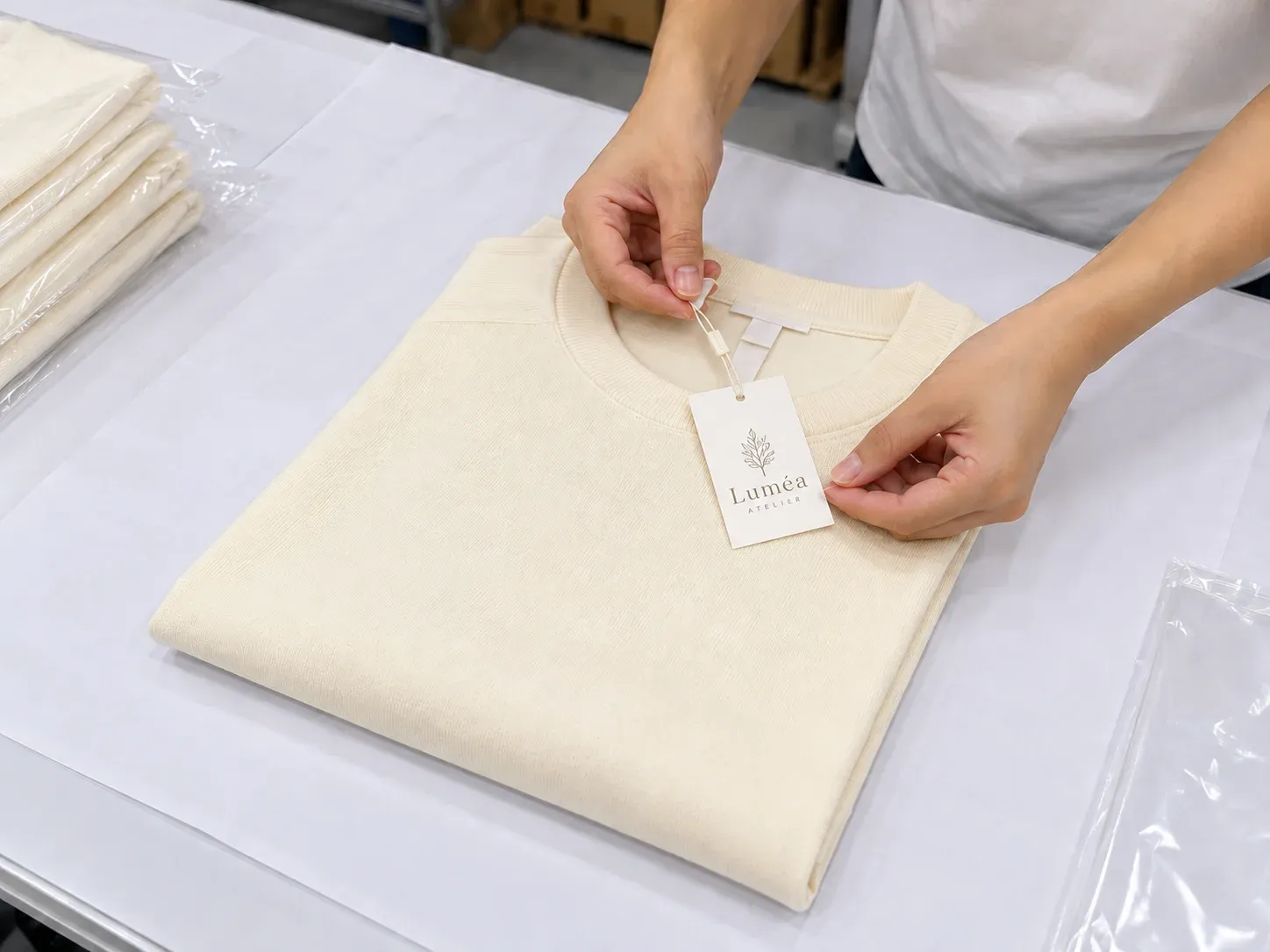
Hangtag & Label Application
Use close-up images of approved or anonymized hangtag, size-label and packaging-label placement. The purpose is to prove controlled application rather than display a brand logo. Position, attachment method and relationship to the garment should be visible. Any commercial barcode, confidential price information or unauthorized brand artwork should be replaced with non-live demonstration data or cropped from the public image.
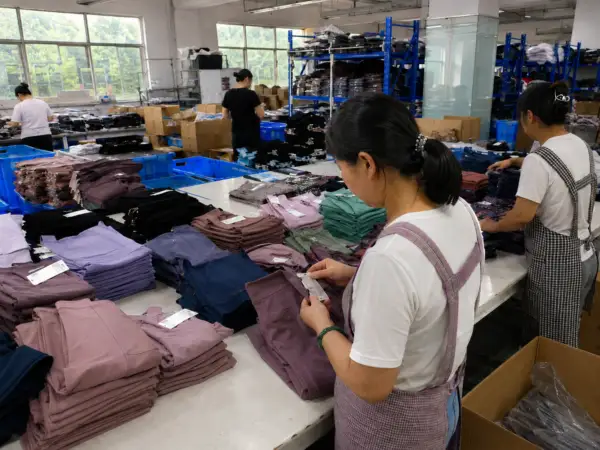
SKU / Barcode Check
Show how style, color, size and SKU references are checked against the packaging label or barcode file before sealing. The evidence can include a neutral demonstration label, a printed SKU matrix or a non-live barcode sample. The visual should make the information chain easy to understand: garment identity, individual pack identification and carton identification should refer to the same approved project data.
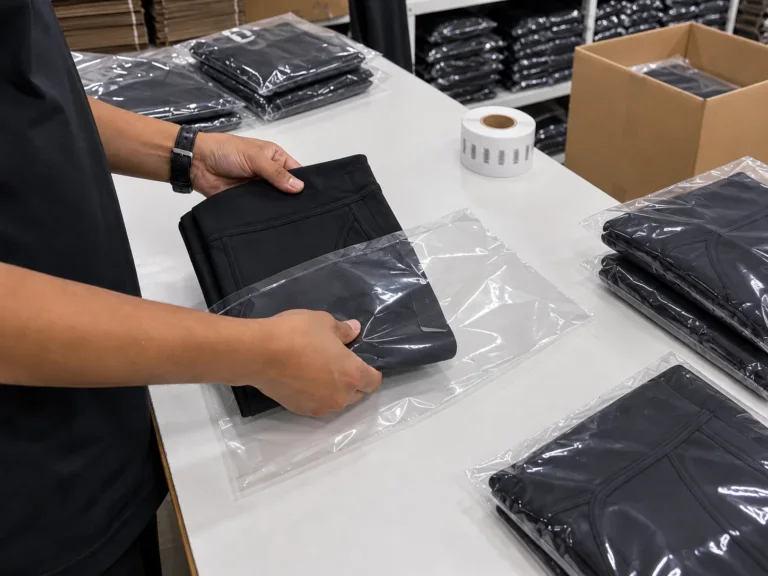
Individual Bag / Box Packing
Show the actual garment being placed into the selected bag, carton or paper-based format. Empty packaging alone cannot prove fit or execution. The image should show product insertion, final presentation and enough of the packaging structure to understand why the selected format suits the garment. For a box project, include the folded product inside the box rather than only a closed exterior hero shot.

Carton Packing
Show individually packed garments being arranged into the master carton according to the approved packing rule. The evidence should illustrate solid-size, solid-color or mixed-SKU organization only when the project uses such a rule. Carton information can be anonymized while still showing the relationship between product packs, carton labels and pack-out organization. Avoid unrelated port, aircraft or warehouse-stock photography.
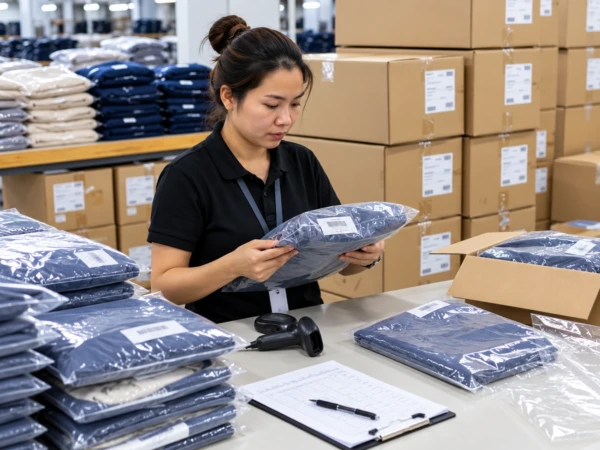
Final Packaging Verification
Show a packaging or pre-shipment review with product, individual pack, carton and relevant approved references visible in the same working scene. The objective is to show how a packaging program is checked before handover, not to claim zero errors. A short video can move from folded garment to individual pack, carton and final review, giving procurement teams a clear view of the execution sequence.
Carton Packing and Export Handover
Brand packaging continues beyond the individual garment. Carton rules, carton marks, packing information and forwarder handover need the same version control as the product and labels.
Individual Pack to Carton Rule
The approved individual packaging should feed into a clear master-carton instruction. The order may use solid-size cartons, solid-color cartons, assorted-size packs or mixed-SKU cartons according to the brand’s requirements. Each carton rule should state the product references and quantities that belong inside the carton. Packaging dimensions and pack-out efficiency are reviewed against the actual packed product so an attractive individual box or bag does not unintentionally create an inefficient export carton.

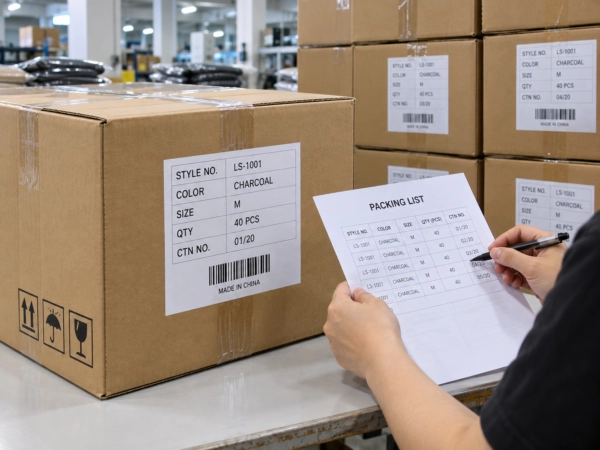
Carton Marks and Packing Information
Carton marks can include the fields required by the approved project, such as carton number, style or SKU reference, quantity, size or color information, and other receiving details. The physical carton and the packing-list information should use the same approved references. Confidential addresses, purchase-order numbers and live commercial information should not appear in public examples. The objective is to demonstrate information control, not expose a brand’s shipment data.
Pre-Shipment Packaging Review
Before handover, the packing process can include carton count verification, carton-mark review, packing information checks and selected packaging inspection according to the agreed project plan. The applicable quality method and acceptance criteria depend on the order. Packaging review does not replace freight, insurance, customs or platform receiving requirements, and it should not be described as a guarantee of clearance, warehouse acceptance or delivery timing.

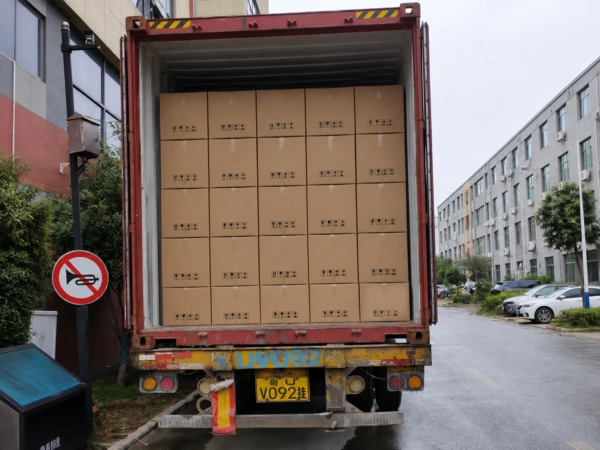
Forwarder Handover Support
Leadshow’s warehousing and logistics-related team can coordinate shipment preparation and communicate with the brand’s appointed forwarder according to the order arrangement. Relevant support can include carton information, counts, dimensions, packing data and pickup coordination. Trade terms, transport responsibility, insurance, customs and destination delivery remain governed by the specific commercial arrangement. The manufacturing role is to prepare the approved goods and documentation accurately within the agreed scope.
Packaging Standards for Repeat Orders
Repeat orders should preserve the approved brand presentation while recognizing that artwork, barcode data, packaging suppliers and market requirements can change. Reconfirmation protects the brand from using outdated packaging references.
Approved Files
Keep the final packaging artwork, label files, SKU references, barcode data and carton instructions connected to the approved product version. A repeat order should start by confirming which files are still current instead of automatically releasing an old version. Any change in logo artwork, pricing, product text, market language, barcode, SKU or packaging structure should be reflected in the new project file set before packaging materials are purchased.
Approved Packaging Sample
The approved packaging sample provides a physical reference for dimensions, fold, label placement, product fit and presentation. It is especially valuable when a packaging supplier changes or when the garment fabric, construction or folded volume changes between seasons. The sample is a working control point rather than a promise of absolute visual identity across all material batches; reasonable material and process variation still needs to be managed within the agreed specification.
Reconfirmation Before Reorder
Before a repeat run, the team should reconfirm packaging availability, supplier MOQ, current cost, material or print changes, barcode data, market versions and delivery requirements. Packaging materials and branded items can have their own supplier constraints, so the previous order’s terms may not automatically remain available. Reconfirmation keeps the repeat order aligned with the latest brand files and avoids producing large quantities of obsolete labels or packaging.
What We Need to Review Your Packaging Project
A useful packaging review starts with the garment, brand files and order structure. Complete information speeds up evaluation, but an early-stage brand can still begin with reference packaging, product images and a preliminary SKU plan.
Information
Required / Helpful
How It Is Used
Garment category
Required
Defines the product type, fold, packaging purpose and manufacturing context.
Product image or approved sample reference
Required
Helps assess product shape, thickness, presentation and packing method.
Expected garment quantity
Required
Supports packaging supplier MOQ and cost review alongside the garment order.
Style / color / size / SKU list
Required for multi-SKU programs
Builds the packaging and barcode version matrix.
Folded size or planned folding method
Helpful; confirmed by physical sample
Supports individual packaging and carton-size review.
Logo / packaging artwork
Required for branded packaging
Used to review dimensions, print area, version and brand application.
Label and hangtag files
Required where applicable
Links main labels, care labels, size labels and hangtags to the correct garment.
Barcode / SKU data
Required where applicable
Provided or approved by the brand and mapped to the relevant product version.
Reference packaging
Helpful
Clarifies structure, materials, presentation and channel expectations.
Sales channel / destination market
Required
Guides retail, e-commerce, language, labeling and carton requirements.
Carton packing rule
Required for bulk delivery
Defines solid or mixed SKU packing, carton marks and packing information.
Target timing
Required
Packaging sample and bulk timing are confirmed after artwork, material, supplier and production review.
Custom Packaging Frequently Asked Questions
Answers below cover the questions apparel brands most often raise before packaging review, sampling and bulk packing.
Can Leadshow add my logo to clothing packaging?
Yes, approved brand artwork can be coordinated for suitable packaging, labels, hangtags, stickers, paper cards, folding cartons or other project-approved formats. Final print method, material, color, dimensions, supplier MOQ and timing depend on the packaging specification. Brand files and logo rights must be supplied or approved by the brand.
What clothing packaging options can Leadshow coordinate?
Options can include individual garment packaging, custom polybag formats, paper-based packaging, custom paper cards, folding cartons, stickers, retail-ready packaging by project and gift-box options by arrangement. The final choice depends on the garment, sales channel, folded size, SKU requirements, material availability and packaging supplier conditions.
What is the MOQ for custom clothing packaging?
There is no universal packaging MOQ published for every format. Packaging supplier MOQ is confirmed after artwork, material, structure and quantity review. Leadshow’s standard garment MOQ generally starts from 100 pieces per color per design, subject to fabric, trims, construction and customization requirements; packaging MOQ may be different.
Can packaging include SKU and barcode labels?
Yes, packaging can be coordinated with SKU and brand-approved barcode identification where applicable. Barcode data should be provided or approved by the brand. Style, color, size, SKU, packaging version and carton information should be mapped before bulk packing so the identification system remains consistent.
What artwork should we provide?
Provide editable or print-ready logo and packaging files where available, plus brand colors, fonts, product text, label files, hangtag files, SKU references, barcode data and market versions. Leadshow can review manufacturing execution and obvious conflicts, while legal wording, translations and market-specific compliance remain subject to responsible-party approval.
Can we approve a packaging sample before bulk packing?
Yes. A physical packaging sample is recommended for branded, sized or structurally complex packaging. The sample should be reviewed with the actual or representative garment to confirm folding, fit, label and barcode position, inserts, presentation and carton compatibility before bulk packaging materials are released.
Should retail and e-commerce packaging be different?
They can be. E-commerce packaging often emphasizes warehouse identification, shipment volume, product protection and repack needs, while retail packaging can place more emphasis on presentation, hangtags, barcode visibility and retailer instructions. The right solution depends on the brand’s actual sales and fulfillment model.
Can you provide sustainable or recycled packaging?
Environmental options can be evaluated subject to supplier and project review. Recycled, FSC-certified, recyclable, biodegradable, plastic-free or similar claims require material and certification evidence that matches the specific packaging. A generic paper or reusable format should not automatically be marketed as sustainable without supporting documentation.
Can you manage packaging for several markets?
Leadshow can coordinate different language, label, packaging and SKU versions by project. The brand, importer or responsible specialist should provide and approve the final translations, legal content and market requirements. Each version should have a clear file and SKU reference so similar market packs are not mixed.
Do you guarantee platform acceptance or customs clearance?
No. Leadshow can coordinate garment packing, labels, carton marks, packing information and shipment preparation according to approved project instructions. Platform receiving rules, customs clearance, transport timing, insurance and destination delivery depend on the applicable market, platform, trade terms and responsible logistics or compliance parties.
Send Your Clothing Packaging Requirements
Share the garment, brand and packing information already available. A packaging review can begin with a complete brand manual and packaging artwork, or with simpler references such as product images, a garment sample, packaging inspiration and an initial quantity plan. The most useful files include the garment category, expected quantity, style-color-size or SKU list, logo artwork, label and hangtag files, barcode data, preferred packaging format, sales channel, destination market, carton instructions and target timing. Leadshow will review the requested packaging together with the apparel program and identify the next items that need confirmation. Packaging material, structure, supplier MOQ, cost, sample timing, bulk timing, environmental claims and market-specific requirements remain subject to project review and approval. Brand files and commercial data are handled as project information and should only be displayed publicly with proper authorization.