
Custom Apparel Packaging for Brands
Coordinate brand packaging with garment production, SKU control, labeling, sampling, packing and export-carton execution.
- Brand-approved labels, hangtags, barcodes, polybags, paper cards, retail boxes and carton markings can be coordinated within apparel projects.
- Packaging artwork, size, structure, SKU mapping and market-specific versions are reviewed before bulk packing.
- Packaging samples can be checked with actual or representative garments before final approval.
- Materials, packaging MOQ, cost, timing, environmental claims and regulatory content are confirmed according to project requirements.
Packaging Built Into Apparel Manufacturing
Leadshow coordinates brand packaging as part of apparel development and bulk production, linking approved garments, brand files, SKU data, packing instructions and export-carton requirements in one manufacturing workflow.
From Approved Garment to Branded Pack
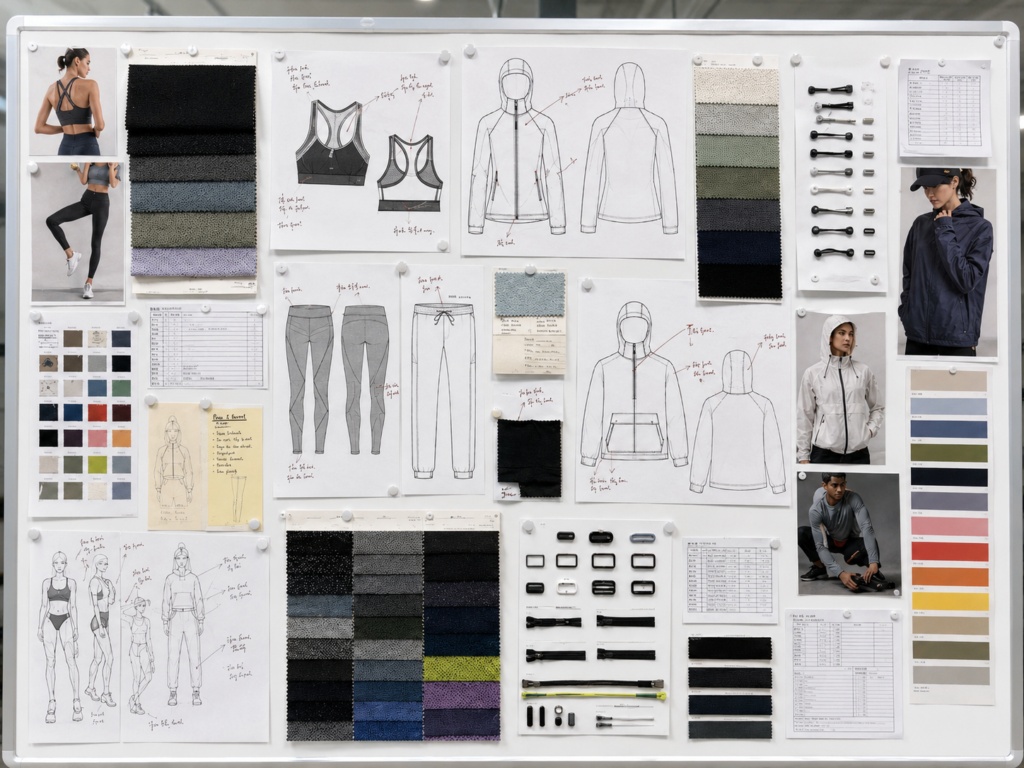
A strong packaging program starts with the garment rather than an empty bag or box. Folded dimensions, garment thickness, trims, hangtag position, product presentation and sales channel all affect packaging structure. Leadshow can coordinate packaging after the garment specification is clear enough to review size, artwork and packing requirements together.
Brand files may include logo artwork, label files, care information, SKU lists, barcode data, packaging artwork and carton-mark templates. Packaging materials can then be sourced or arranged according to the approved direction. The finished garment is folded, labeled, packed and grouped according to the approved SKU and carton rules. Final packing follows project documents rather than a generic one-size-fits-all format.
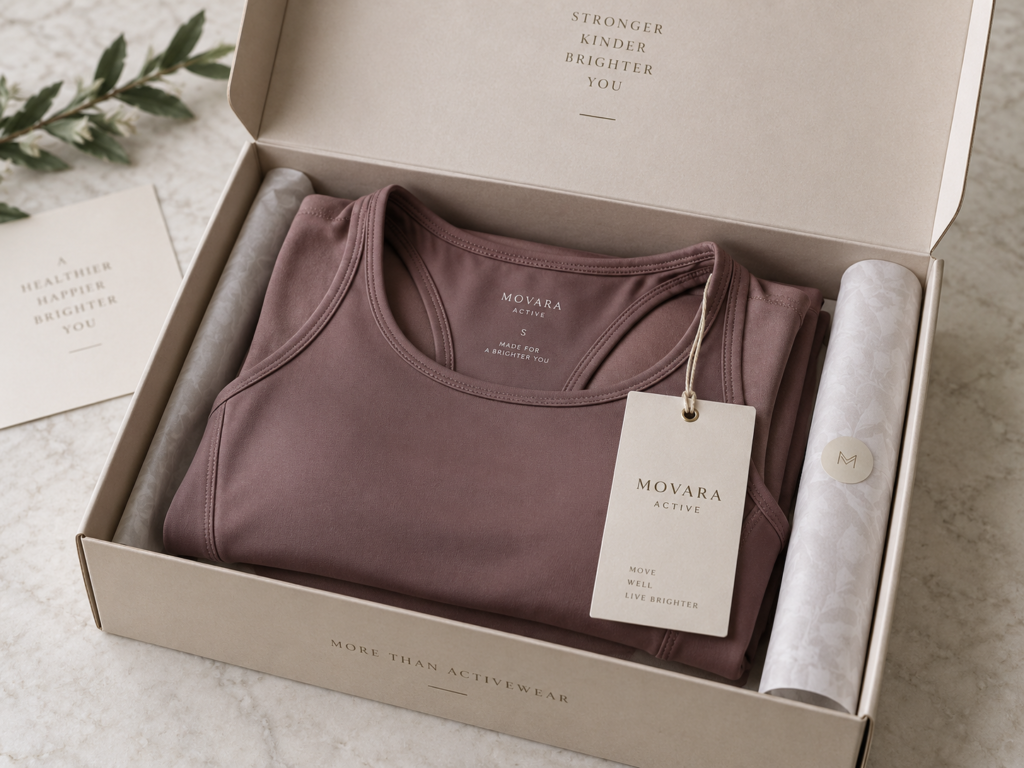
The role is apparel manufacturing coordination, not standalone packaging-material manufacturing. Leadshow does not claim to produce every bag, box, woven label or printed component internally. Packaging suppliers, material sources and special printing processes are reviewed according to project needs, while garment production, application, packing and verification are coordinated around the approved specification.
One Project, Fewer Packaging Disconnects
Separating garment production and packaging into unrelated projects can create avoidable problems. A size change may make the bag too small. A new colorway can introduce a new SKU or barcode. A revised care label may no longer match the old artwork version. A thicker hoodie can reduce units per carton. Handling these details inside the apparel project makes each change easier to trace back to the product specification.
Leadshow can coordinate main labels, size labels, care labels, heat-transfer labels where suitable, hangtags, stickers, individual garment packaging, paper cards, retail boxes and carton markings according to approved files. Version control remains important from sampling through repeat orders. Brand, legal and market information still requires approval from the brand, importer or responsible party before bulk execution.
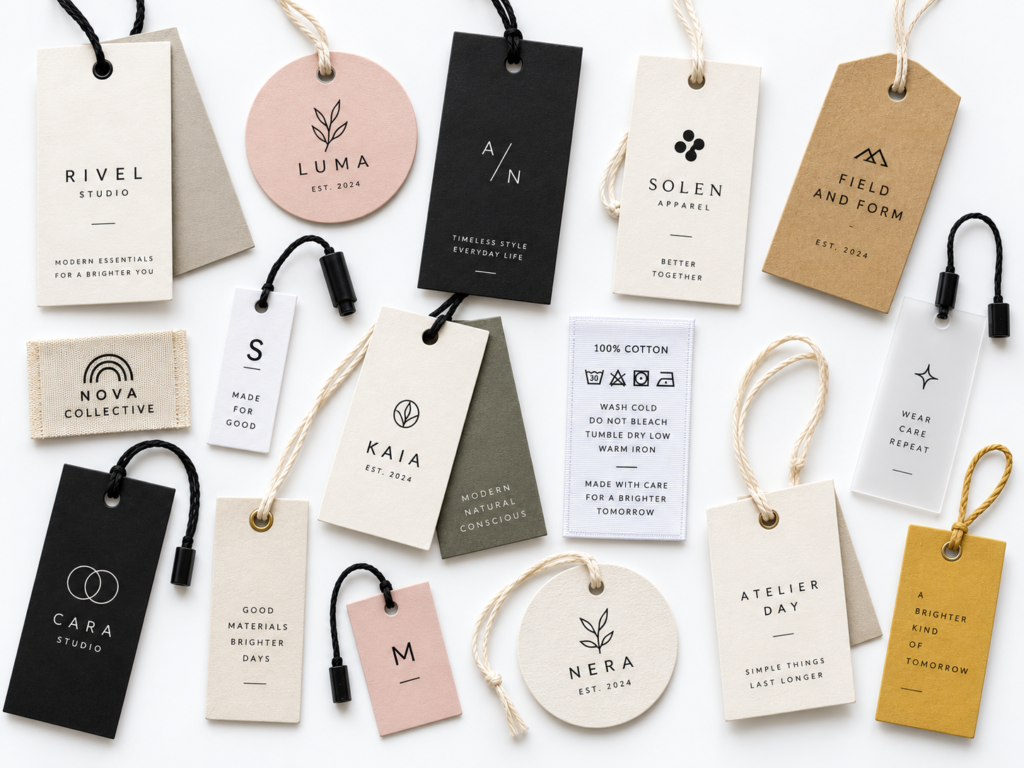
A packaging requirement becomes useful to production only when it is connected with the garment, SKU, quantity, market and delivery plan. That connection is the main value of integrating packaging with apparel manufacturing.
Packaging Support for Different Brand Programs
Different apparel programs need different packaging priorities. Brand maturity, sales channel, product range, SKU count and distribution method determine how labels, individual packs and cartons should be planned.
Established Brands
Established brands often arrive with approved packaging manuals, label standards, barcode rules and existing reference products. Leadshow can review those inputs alongside garment specifications, identify gaps before sampling, coordinate packaging samples and maintain approved versions through bulk packing and repeat orders. The main goal is to transfer an existing standard into production without losing alignment between garment, label, packaging and carton information.
Growing Brands
Growing brands frequently add colors, sizes, collections and new channels faster than their original packaging system was designed to handle. Packaging support should therefore organize SKU logic, brand files, reusable packaging elements and market-specific differences before the order expands. Leadshow can coordinate packaging around the product matrix so added volume does not automatically create uncontrolled artwork versions, mislabeled packs or unnecessary packaging complexity.
Private Label Programs
Private label work extends far beyond adding a logo. Main labels, care labels, size labels, hangtags, barcode placement, individual packaging, retail presentation and carton identification often need to work together. Leadshow can coordinate those elements against approved brand artwork and product data, helping a finished garment leave production as a clearly identified branded SKU rather than an unbranded garment with disconnected accessories.
DTC and E-commerce
DTC and e-commerce programs often need individual protection, readable SKU identification, efficient parcel dimensions and a coherent unboxing presentation. Packaging choices should be matched to garment type, folded size and fulfillment method. Leadshow can coordinate packaging files, labels and packing instructions within apparel production, while specific platform rules, fulfillment requirements and environmental claims remain subject to project review and brand approval.
Retail Programs
Retail programs often place more weight on product identification, hangtags, size visibility, barcode accuracy, retail-ready presentation and carton documentation. Packaging should support store or warehouse handling without creating conflicts between visual branding and operational identification. Leadshow can coordinate the approved product, packaging and carton information so style, color, size, SKU and market versions remain distinguishable through packing and shipment preparation.
Import and Distribution
Importers and distributors may manage multiple styles, colors, sizes and destinations in one program. Their packaging priorities often include clear carton marks, packing-list alignment, SKU separation and market-specific files. Leadshow can coordinate individual packing and export-carton instructions with the apparel order. Freight, customs clearance, destination acceptance and local regulatory decisions remain governed by the agreed trade and project requirements.
Choose Packaging by Sales Channel
Packaging works best when product protection, brand presentation, identification and distribution needs are considered together. The same garment may require a different pack for e-commerce, retail, wholesale or premium presentation.
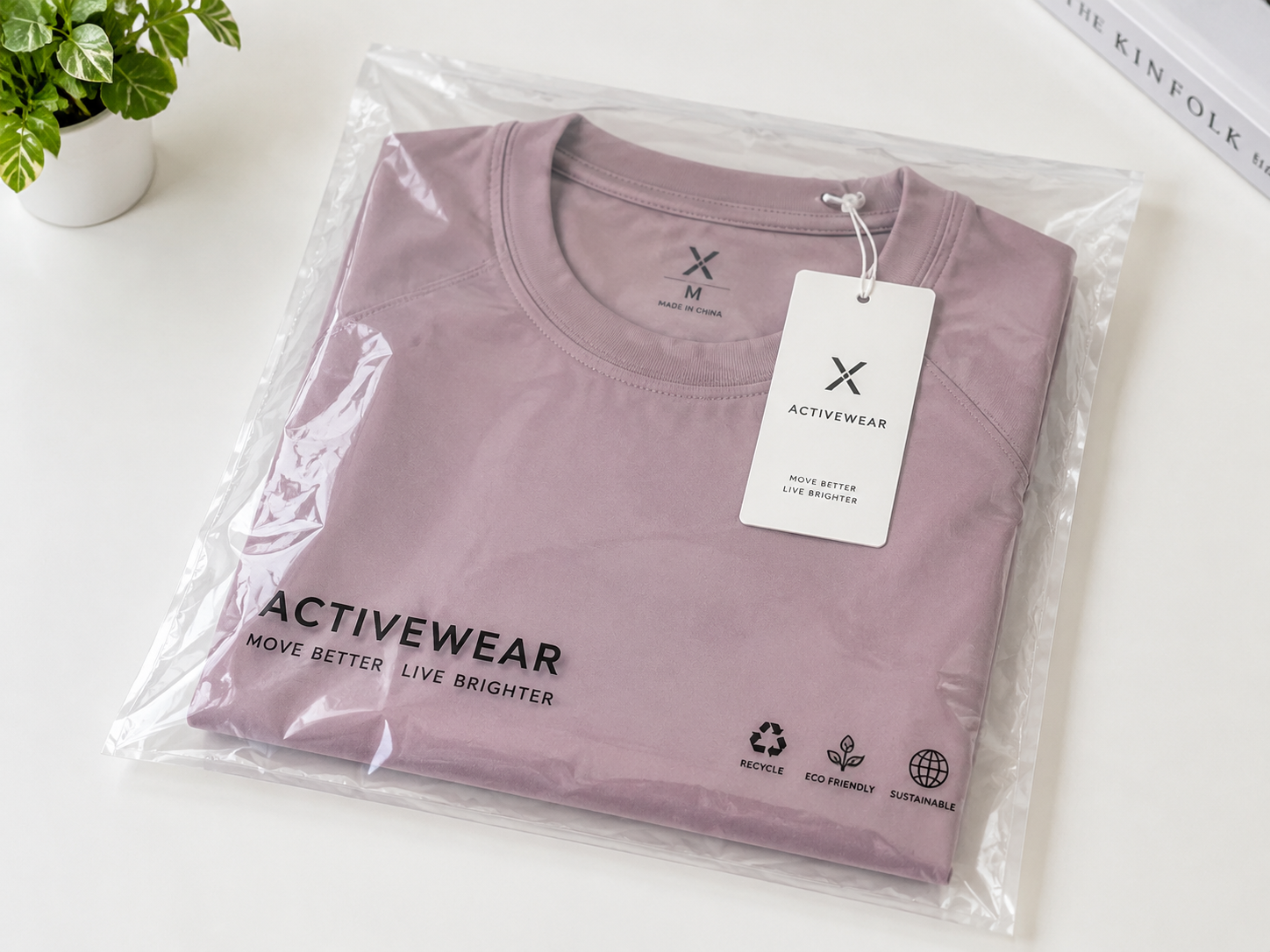
DTC / E-commerce
Individual protection, efficient pack size, readable SKU information and a clear brand presentation usually matter more than heavy retail display structures. Polybags, paper-based options, inserts or branded outer packaging can be evaluated according to product size and fulfillment needs. Platform-specific acceptance, FNSKU, warehouse rules or direct-to-consumer shipping requirements should be reviewed from the brand’s current documentation rather than assumed as universal standards.

Retail Stores
Store programs may require hangtags, size visibility, barcode placement, retail boxes, folding rules or other ready-for-shelf details. Packaging must support both presentation and inventory identification. Garment dimensions, display method and replenishment process influence the right format. Retailer-specific labeling, ticketing and carton rules should be supplied or approved before bulk packing so the finished SKU matches the intended channel.
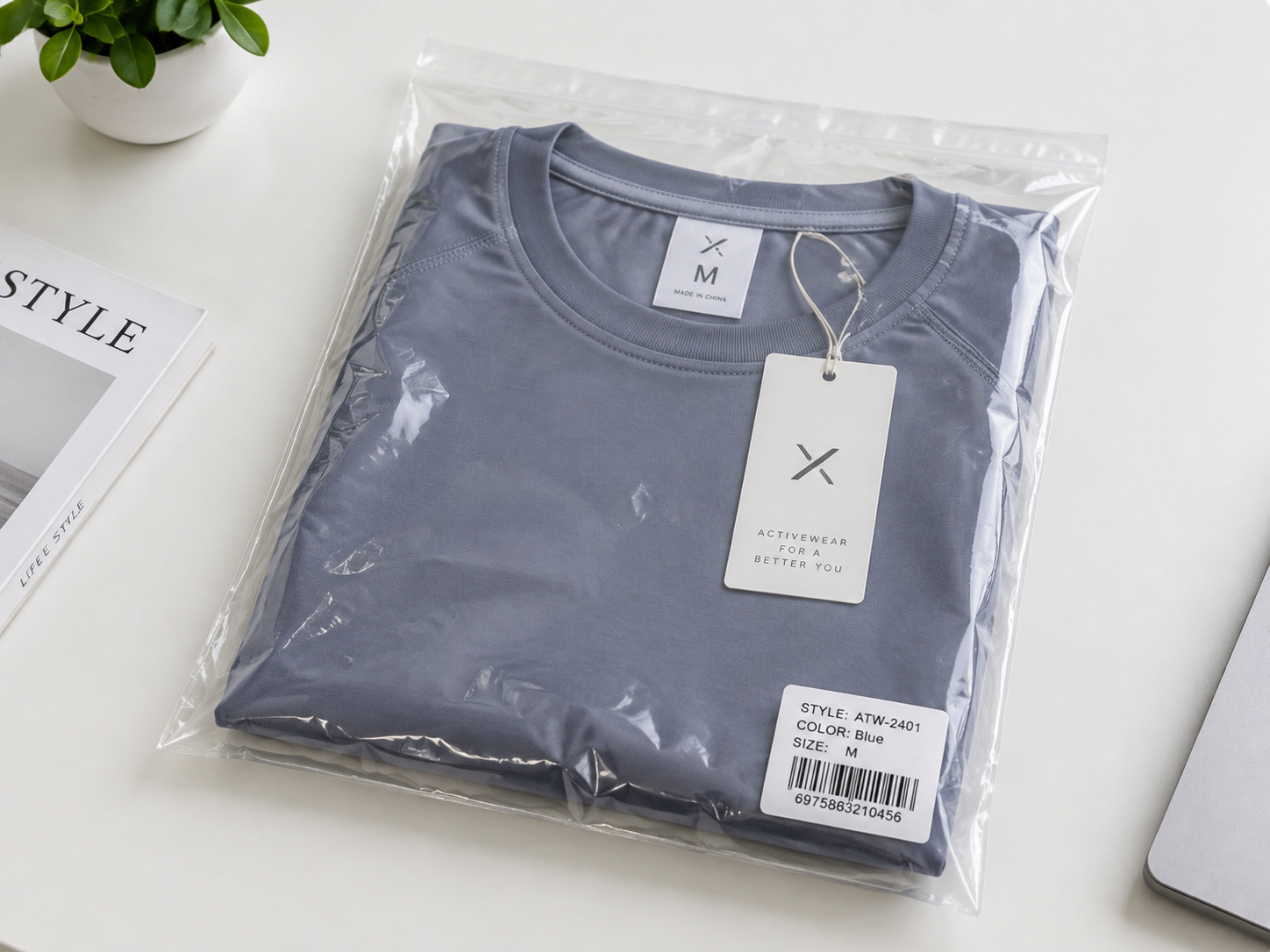
Wholesale / Distribution
Wholesale programs often prioritize protection, pack efficiency, clear style-color-size identification and dependable carton information. Individual polybags, SKU labels, mixed or single-SKU cartons and carton marks may all be relevant. Packaging complexity should match the distribution model; elaborate consumer presentation is not automatically the best choice when products will be unpacked, redistributed or relabeled downstream.

Premium / Special Projects
Gift boxes, special folding cartons, paper cards, tissue elements or presentation-focused packs can be evaluated for selected products and launches. Premium appearance should still be checked against garment thickness, packing labor, carton efficiency, supplier MOQ and total project cost. Specialty materials, finishes, environmental claims and performance requirements need supplier evidence and sample approval before being positioned as confirmed project features.
Apparel Packaging Formats Available by Project
Leadshow can review standard and custom packaging directions according to the garment, brand artwork, SKU structure, destination market and sales channel. Final availability, supplier MOQ, material and timing are confirmed by project.
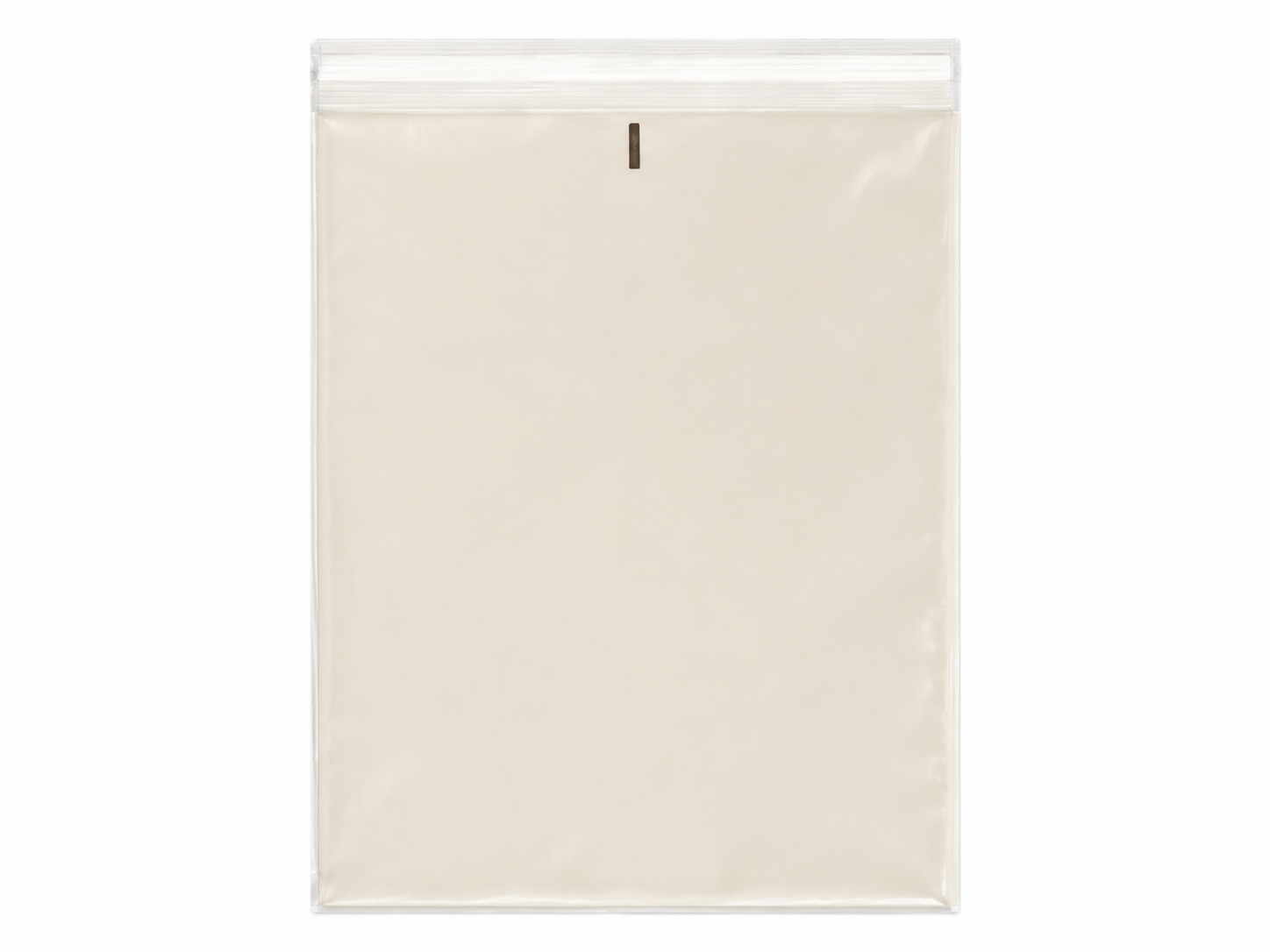
Custom Polybags
Polybags are widely used for individual garment protection, SKU labeling and carton packing. Size should follow the actual folded garment rather than a generic template. Film type, thickness, closure, print, warning text and environmental claims are project-specific. Leadshow can coordinate suitable polybag options, application and packing according to approved requirements, without describing all plastic packaging as recyclable, sustainable or certified.
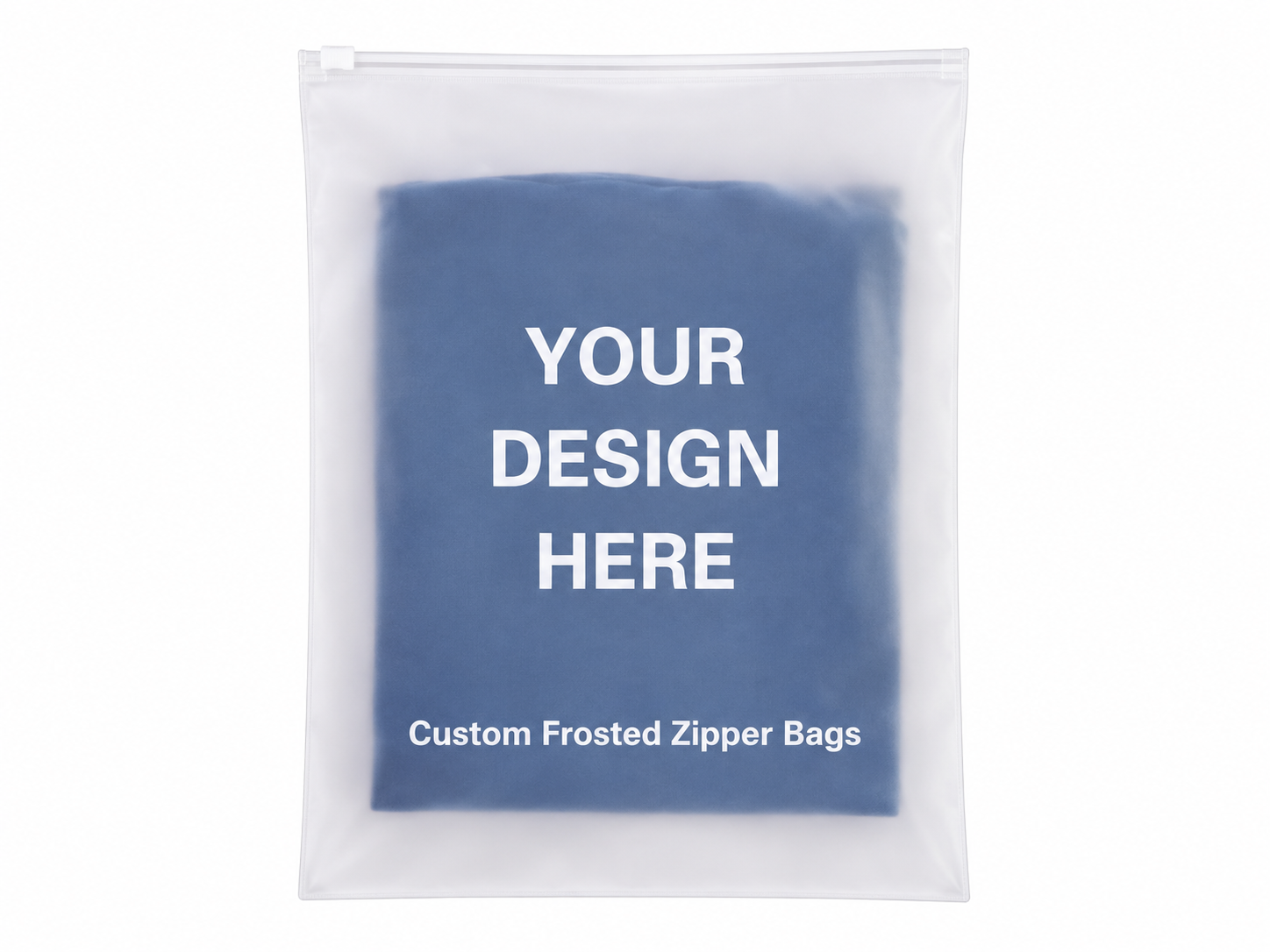
Zip Bag Options
Reusable zip-style bags can be considered where repeated opening, storage or presentation adds value. The bag must still fit the folded garment without excessive compression or unused volume. Zipper structure, material, print, ventilation, warnings and supplier MOQ can affect cost and timing. Any sustainability or recyclability claim requires material evidence rather than relying on the fact that the bag can be reused.
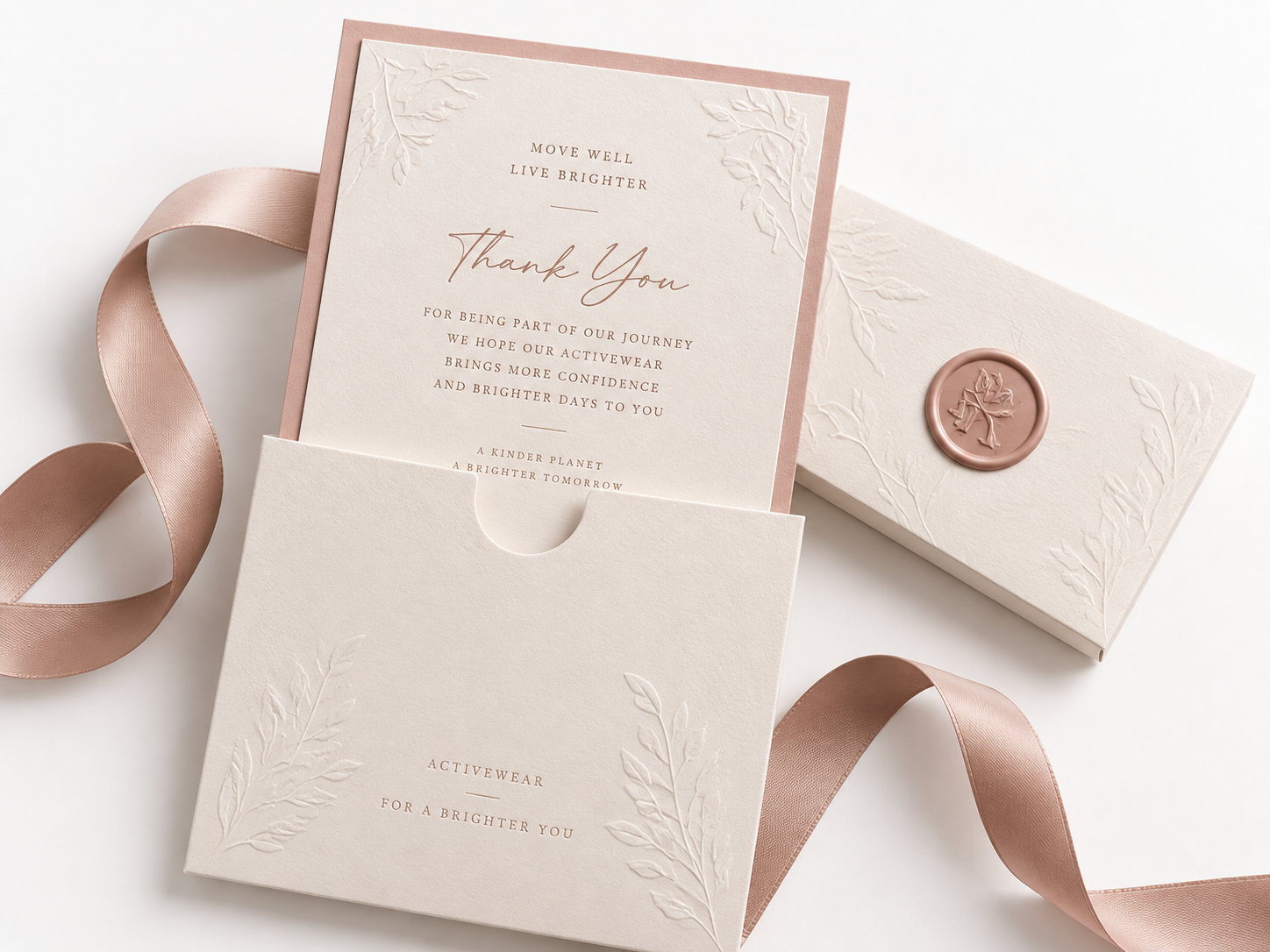
Paper Cards and Bands
Paper cards, belly-band style wraps or paper sleeves can support brand communication, product grouping and retail presentation. Their dimensions must match the folded product and any required barcode or text areas. Paper choice, printing, coating, lamination and certification status are supplier-dependent. FSC, recycled-content, recyclable or plastic-free claims are only appropriate after the relevant material and scope are verified.
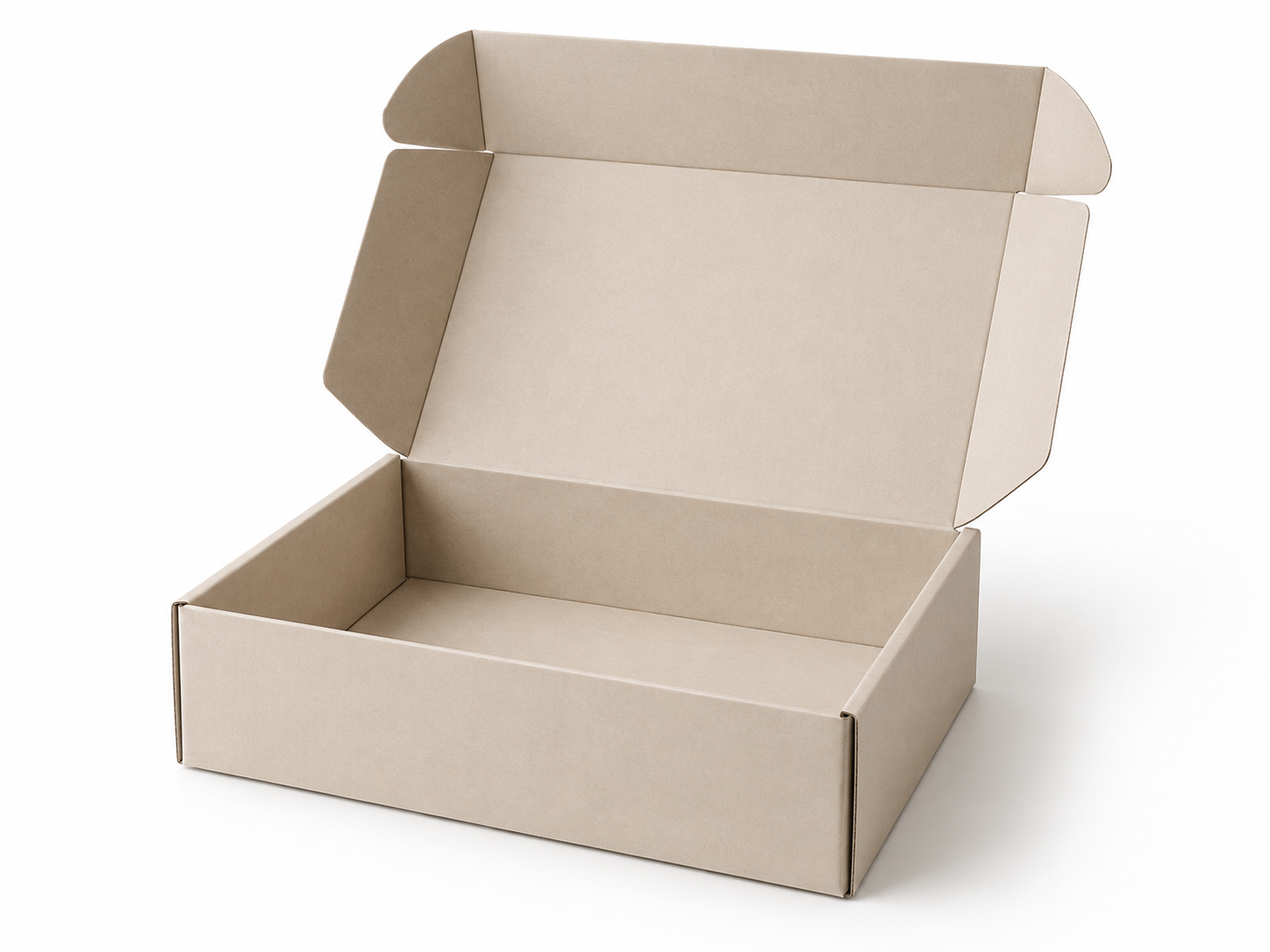
Folding Cartons
Folding cartons can be evaluated for retail presentation, giftable products, underwear, swimwear or other garments that benefit from a defined box structure. Dieline, board, print, finish, opening style and internal clearance should be checked with the actual product. The carton can affect units per shipping carton, total packaging cost and production timing, so approval should occur before bulk material procurement.

Gift-Box Options
Rigid or gift-box formats may be arranged for suitable premium programs when product value and presentation justify added packaging cost and volume. Structure, board, insert, print, finishing and supplier MOQ vary significantly. Leadshow can coordinate approved directions with packaging sources, but gift boxes are not assumed to be made in-house or available at every garment MOQ. Physical sampling is recommended before bulk approval.
Export Cartons
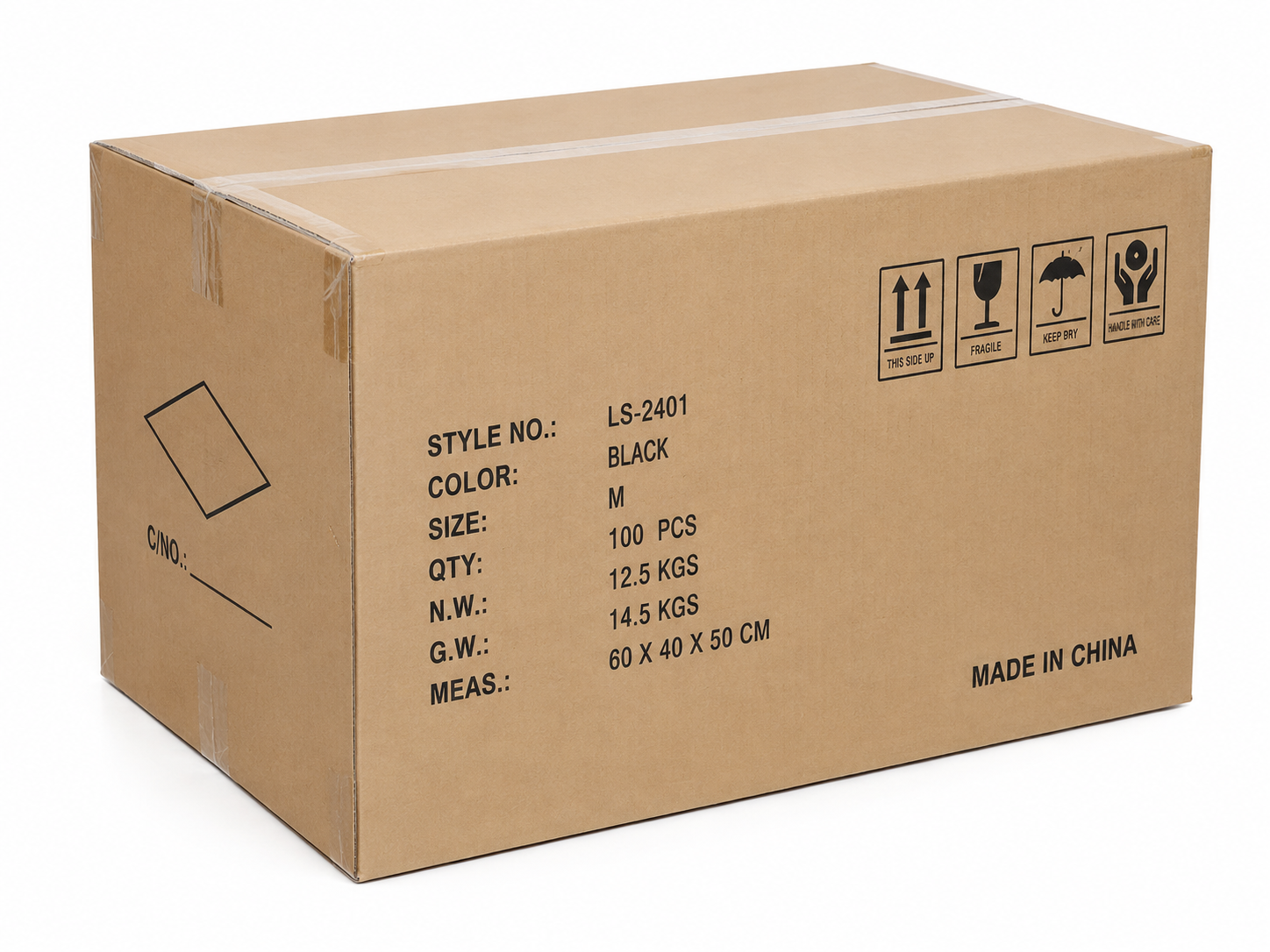
Export cartons and carton markings connect individual packs with shipment preparation. Carton dimensions, units per carton, single or mixed SKU rules, carton numbering, gross weight, net weight and marking fields should follow the approved packing instruction. Leadshow can prepare and verify carton information according to the order; freight performance, customs clearance and destination acceptance are separate responsibilities confirmed through the applicable trade arrangement.
Match Packaging Size to the Garment
Packaging dimensions should come from the approved garment, folding method and channel requirements. Product type, thickness, trims and presentation can change the pack even when two garments share the same labeled size.
Use Folded Product Dimensions, Not Guesswork
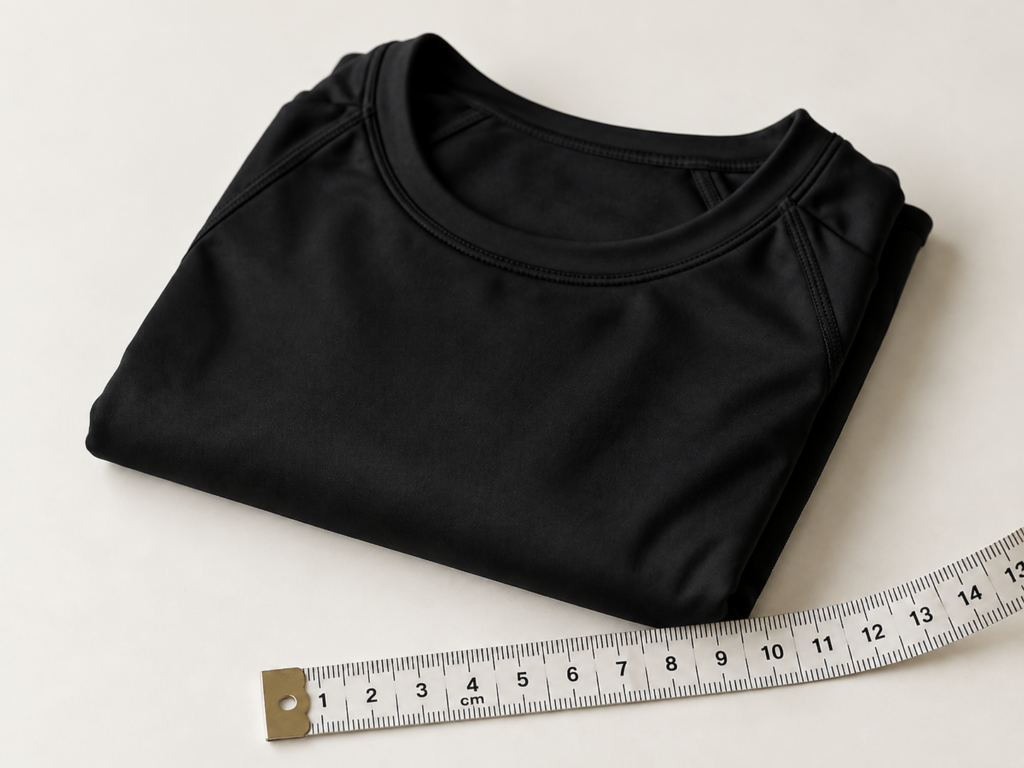
Packaging size is best established after the garment construction and folding method are known. A sports bra, pair of leggings, T-shirt, hoodie and tracksuit occupy very different volumes after folding. Padded cups, bulky rib, hoods, zippers, drawcords, layered panels and inserts can increase thickness even when the garment appears compact when laid flat.
A useful review considers folded length, folded width, compressed thickness, opening direction, closure space, label area and the amount of free space needed to avoid damaging the presentation. The aim is neither the smallest possible pack nor an oversized bag that wastes volume. The pack should protect the garment, allow consistent folding and provide enough room for the chosen label or barcode position.
Final dimensions are therefore confirmed from the approved garment or a representative sample. If a product revision changes the folded profile, the packaging should be rechecked before bulk purchase. No universal bag or box size is presented as suitable for every apparel style.
Connect Pack Size With Carton Efficiency
Individual packaging affects the next layer of the supply chain. A thicker retail box may improve presentation while reducing the number of units per export carton. A large polybag may be easy to pack but create unused carton volume. A compact fold may improve carton efficiency but should not create permanent creasing, crush molded cups or distort branded presentation areas.
For multi-SKU programs, pack dimensions also influence how styles and sizes are grouped. Brands can provide preferred carton limits, unit-per-carton rules, warehouse requirements or reference packs. Leadshow can compare those requirements with the garment and packaging sample before final packing instructions are frozen.
Carton dimensions, gross weight, net weight and actual unit count are order data rather than fixed website specifications. They are established when the product, packaging and packing ratio are known. Using order-specific data prevents a general packaging claim from becoming an inaccurate shipment promise.
Build a Complete Private Label Packaging System
A branded garment reaches market through more than one logo. Product labels, hangtags, SKU data, individual packaging, retail presentation and carton information should follow one approved brand and product record.
Brand Files Become Production Instructions
Private label packaging starts with controlled brand files. Useful inputs include vector logos, brand colors, typography, label artwork, care information, product names, SKU lists, barcode data, packaging artwork and carton-mark templates. Each file should have a clear version and, where needed, a market or channel assignment.
Leadshow can coordinate main labels, size labels, care labels, heat-transfer labels where suitable, hangtags, stickers, paper cards, polybags, retail boxes and carton markings according to approved inputs. The packaging specification should also identify which elements are common across a collection and which change by style, color, size or market. Shared elements reduce unnecessary variation, while controlled exceptions protect accurate product identification.
Brand artwork, legal text, translations and barcode data remain subject to approval by the responsible brand, importer or market authority. Manufacturing review can identify execution conflicts and version mismatches, but it does not replace legal advice or brand ownership approval.
Keep Brand Identity Consistent Across Every Layer
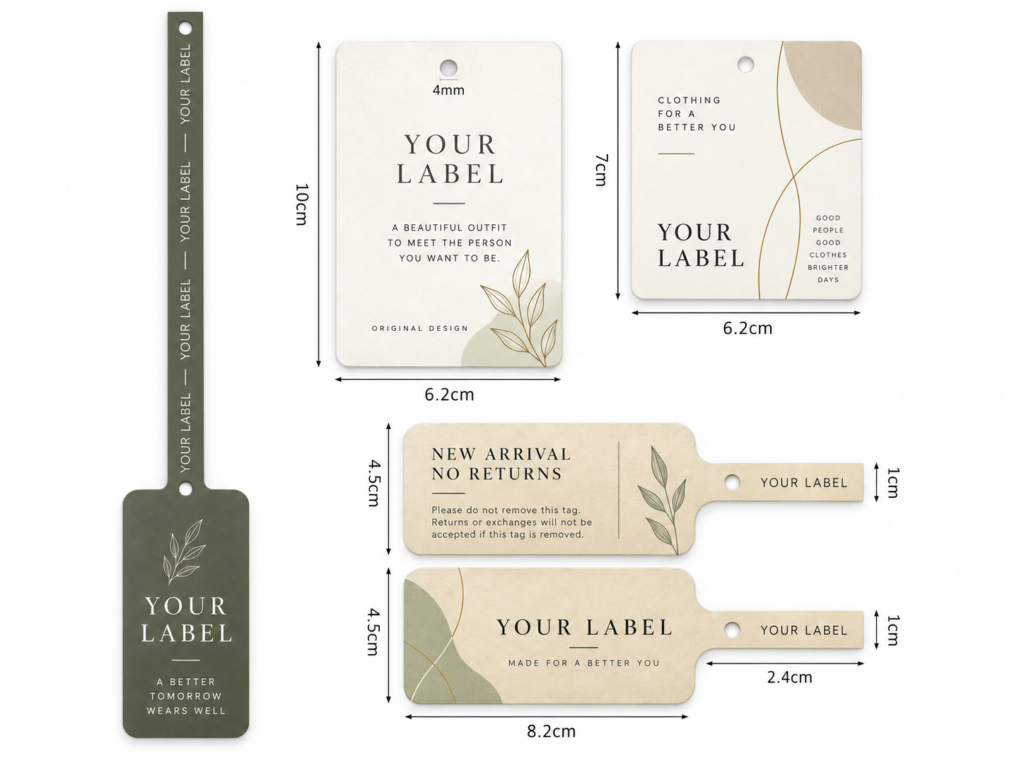
Packaging consistency is easier to manage when every element is connected to the same product record. A hangtag color should not follow one artwork revision while the paper card follows another. A size label should not change without updating the SKU map. A retail box should not retain an old product name after the garment specification changes. A carton mark should identify the same style and destination used in the packing list.
For a multi-product collection, packaging can be organized into shared brand elements and variable product elements. Shared items might include logo treatment, typography or common card structure. Variable items may include style name, color, size, barcode, market language or carton quantity. The exact structure depends on the brand’s existing standards.
Approved packaging samples and final artwork files become reference points for bulk packing. Before repeat orders, packaging data should be reconfirmed when product, market, legal text or branding has changed. This keeps reorder continuity without assuming old files remain valid forever.
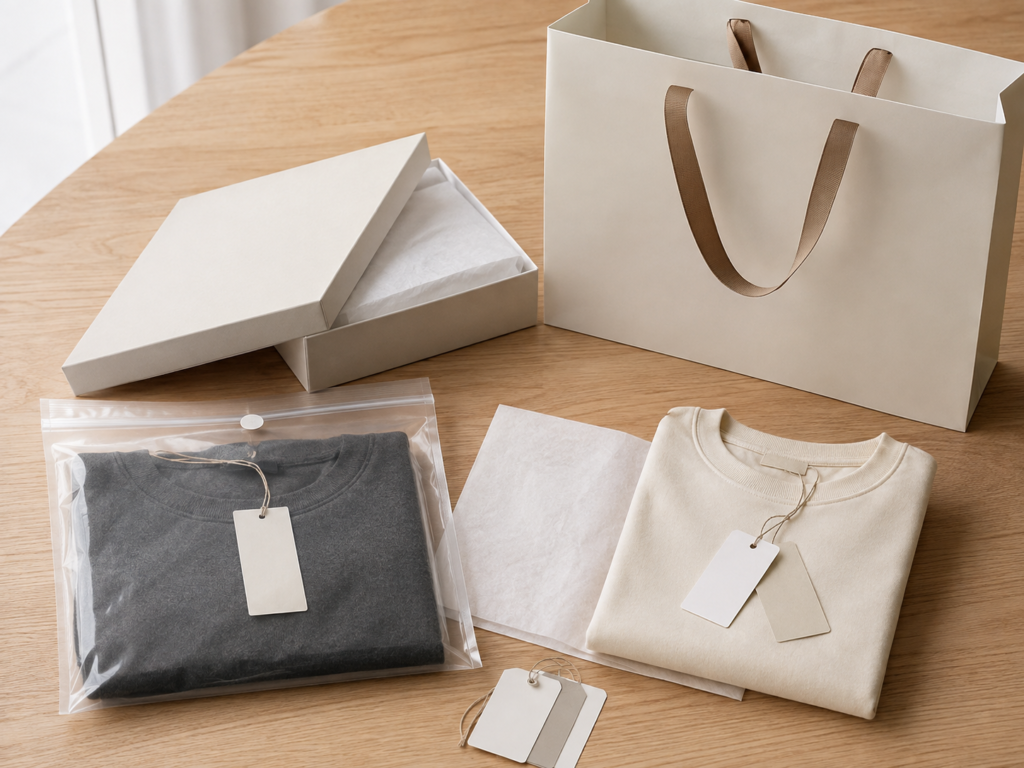
Labels, Hangtags, Barcodes and SKU Identification
Clear product identification reduces mix-ups across production, packing and distribution. Label and packaging data should connect the garment style, color, size, market and approved brand information before bulk packing begins.
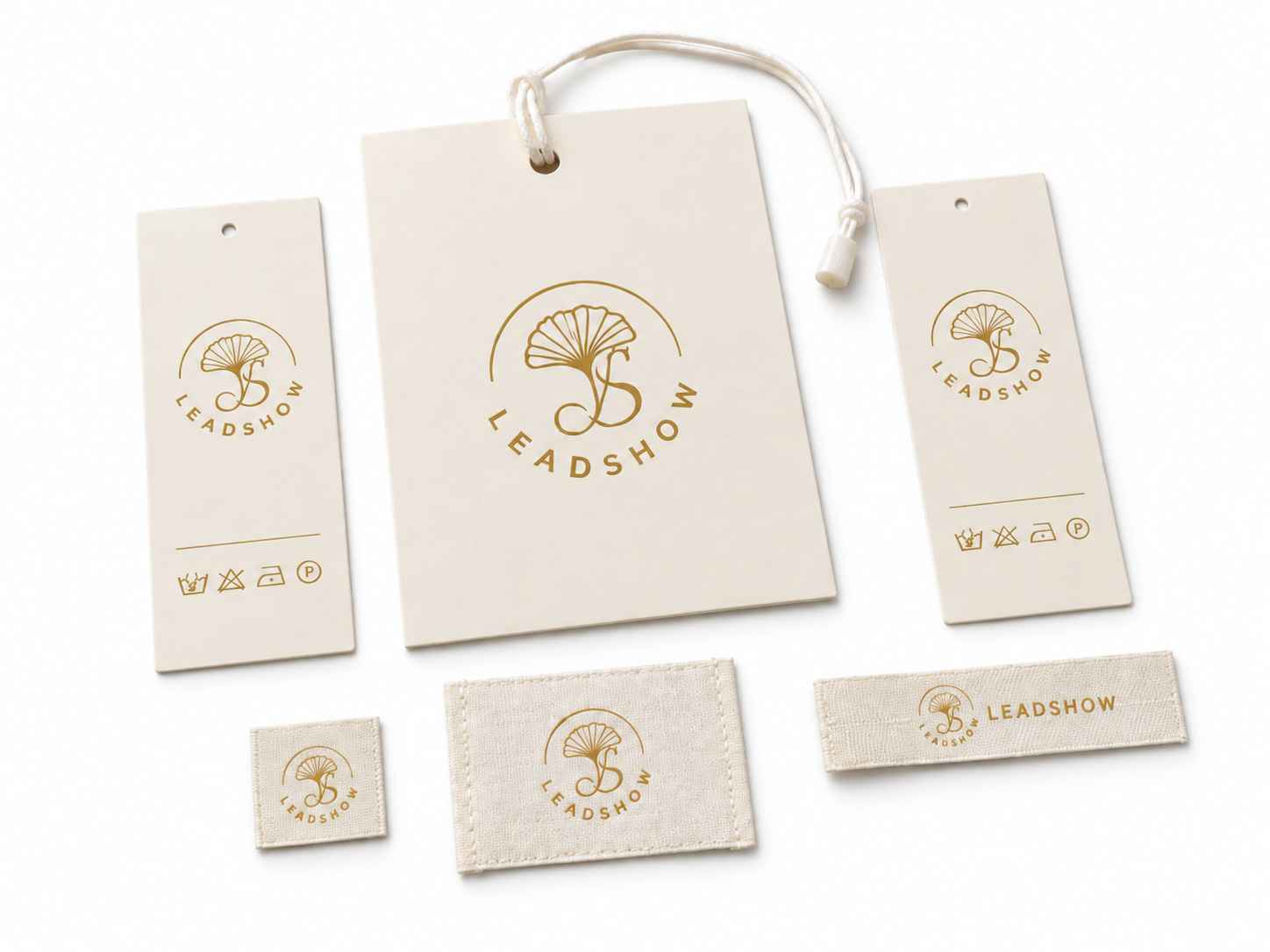
Main Label
The main label carries core brand identification and must match the approved brand artwork, dimensions and application method. Placement also needs to suit the garment construction and wearing comfort. Leadshow can coordinate main-label development and application according to project files.
• Woven labels can be arranged when suitable.
• Heat-transfer branding may be evaluated for compatible fabrics.
• Artwork, size, placement and attachment are approved by project.
• Brand ownership and permitted logo use remain the brand’s responsibility.
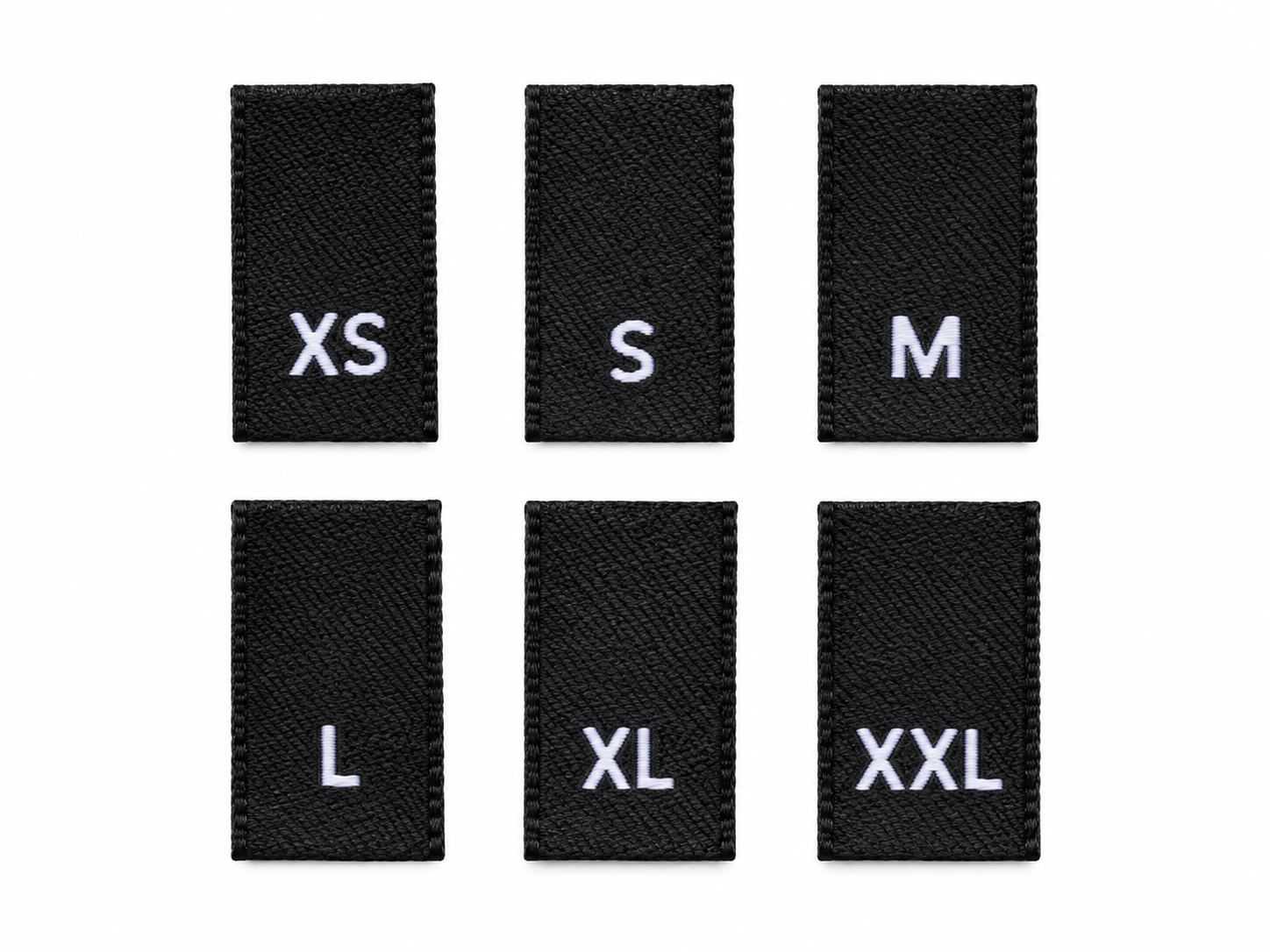
Size Label
Size identification must remain clear and consistent with the garment’s approved size system. A size label may be separate or integrated into another label format depending on design and production requirements.
• Size names must match the approved size chart.
• Market-specific size conversions require approved data.
• Label position should not create confusion with care or style information.
• Bulk packing checks should verify the label against the actual garment size and SKU.
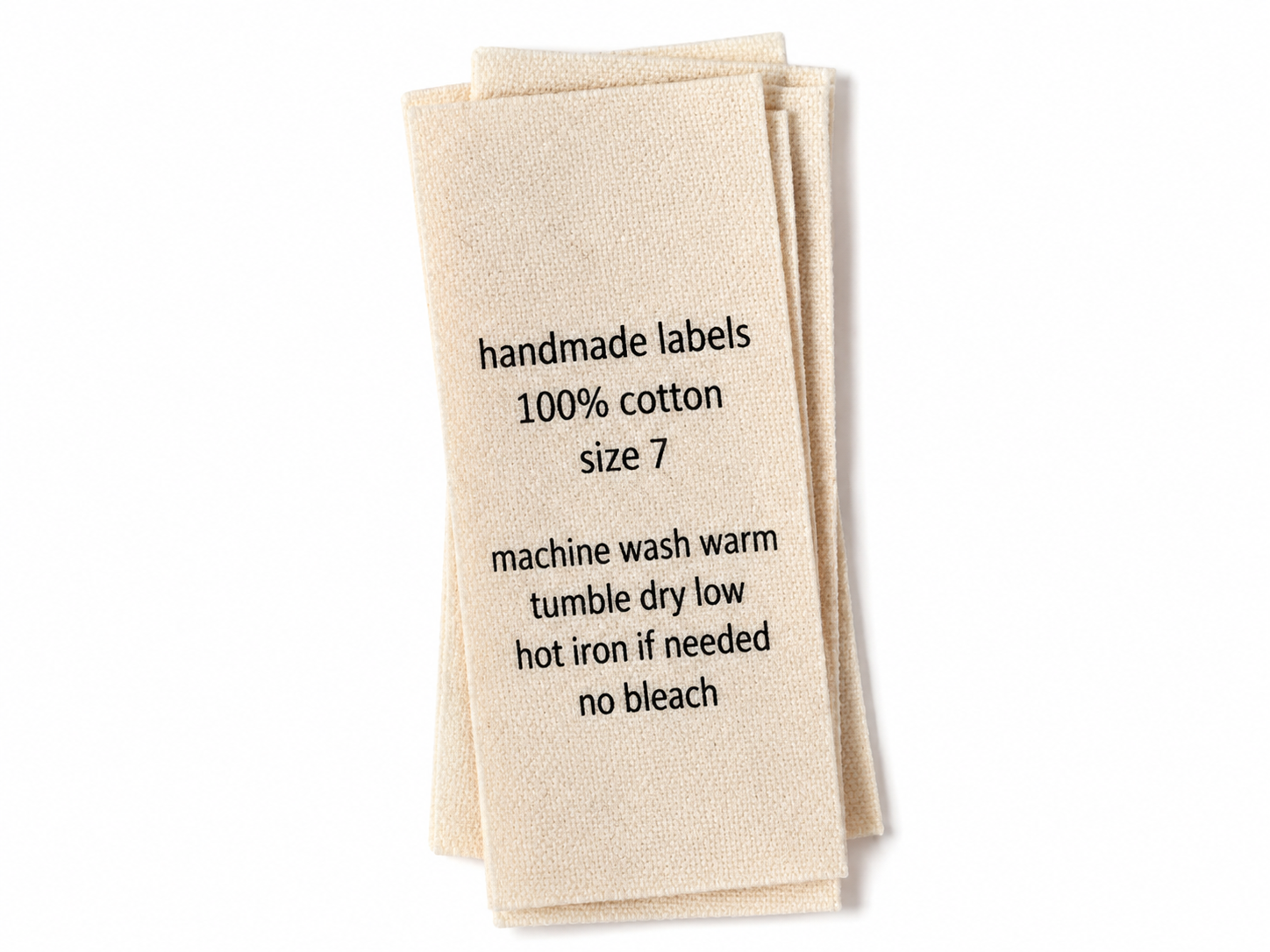
Care Label
Care labels can include fiber content, care instructions, origin information and other approved product details. Content should come from brand-approved or importer-approved data rather than assumptions.
• Composition must reflect the approved product information.
• Care symbols and language versions are market-specific.
• Country-of-origin application follows approved project requirements.
• Leadshow can coordinate printing and application, but does not independently guarantee legal labeling for every market.
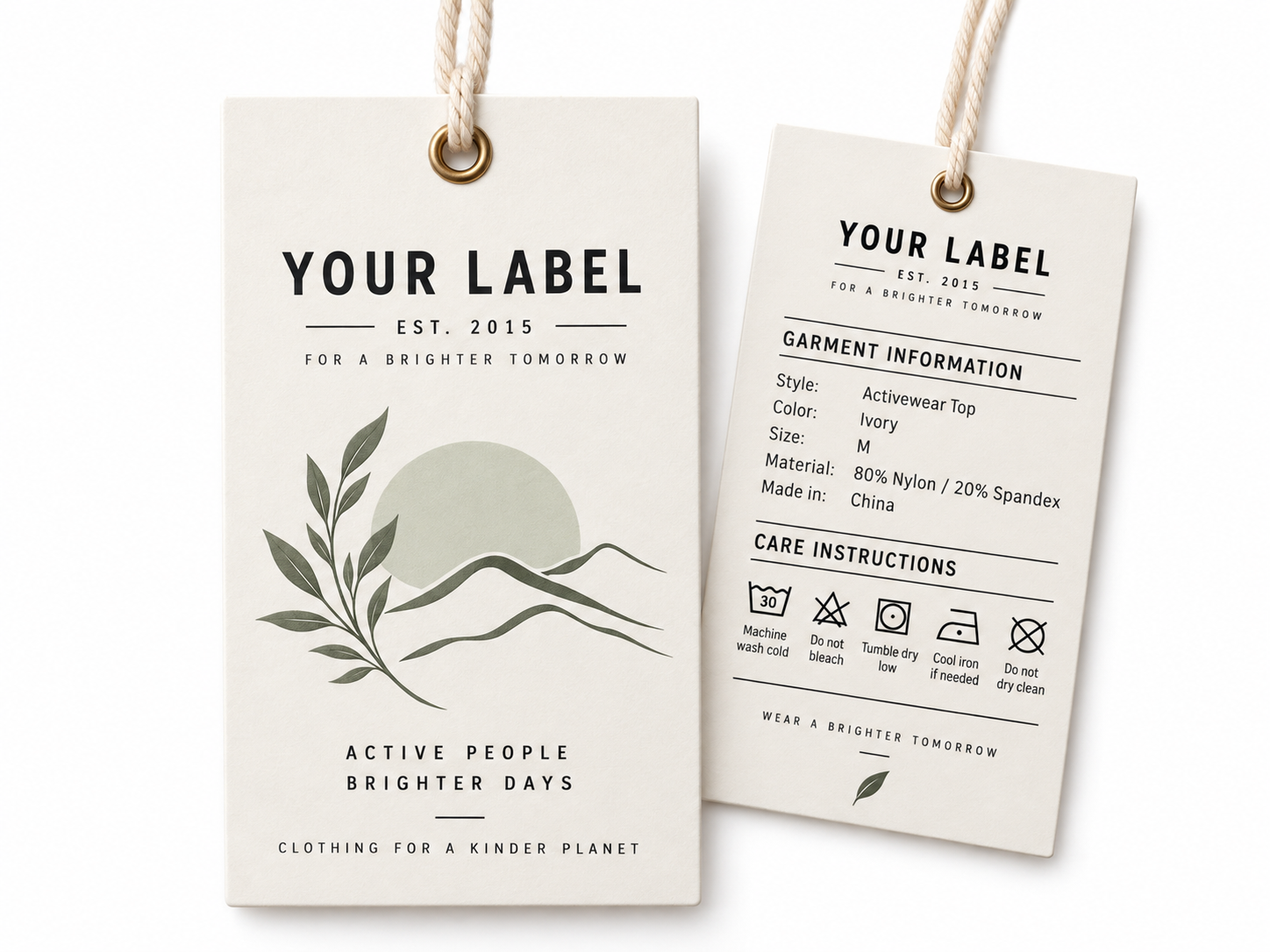
Hangtag
Hangtags can carry branding, product information, pricing fields, marketing content or retail identifiers. Format, attachment point and content should support the garment and sales channel.
• Paper stock, printing and finishing are reviewed by project.
• Hangtag placement should avoid garment damage or presentation problems.
• Price or retailer-specific information should follow approved files.
• Bulk checks should confirm the correct hangtag is attached to the correct style and SKU.
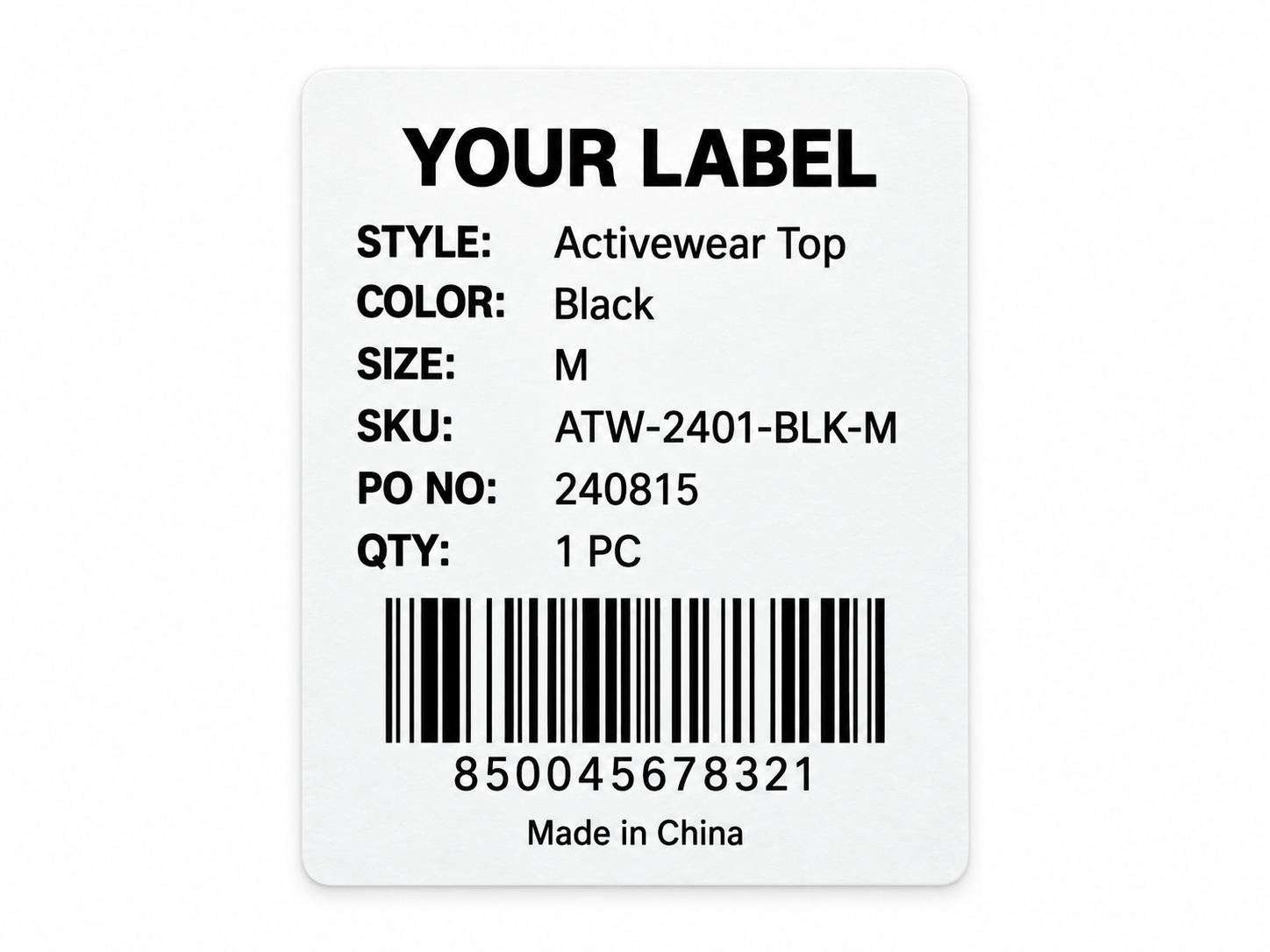
Barcode / SKU
Barcode and SKU identification help connect a physical garment with inventory and sales records. Leadshow can apply and verify brand-provided barcode data within the approved packaging plan.
• Style, color and size should map to the correct SKU.
• Barcode files are supplied or approved by the brand.
• Leadshow does not claim to register UPC, EAN or FNSKU codes.
• Scanning requirements and acceptance criteria are confirmed according to the project.
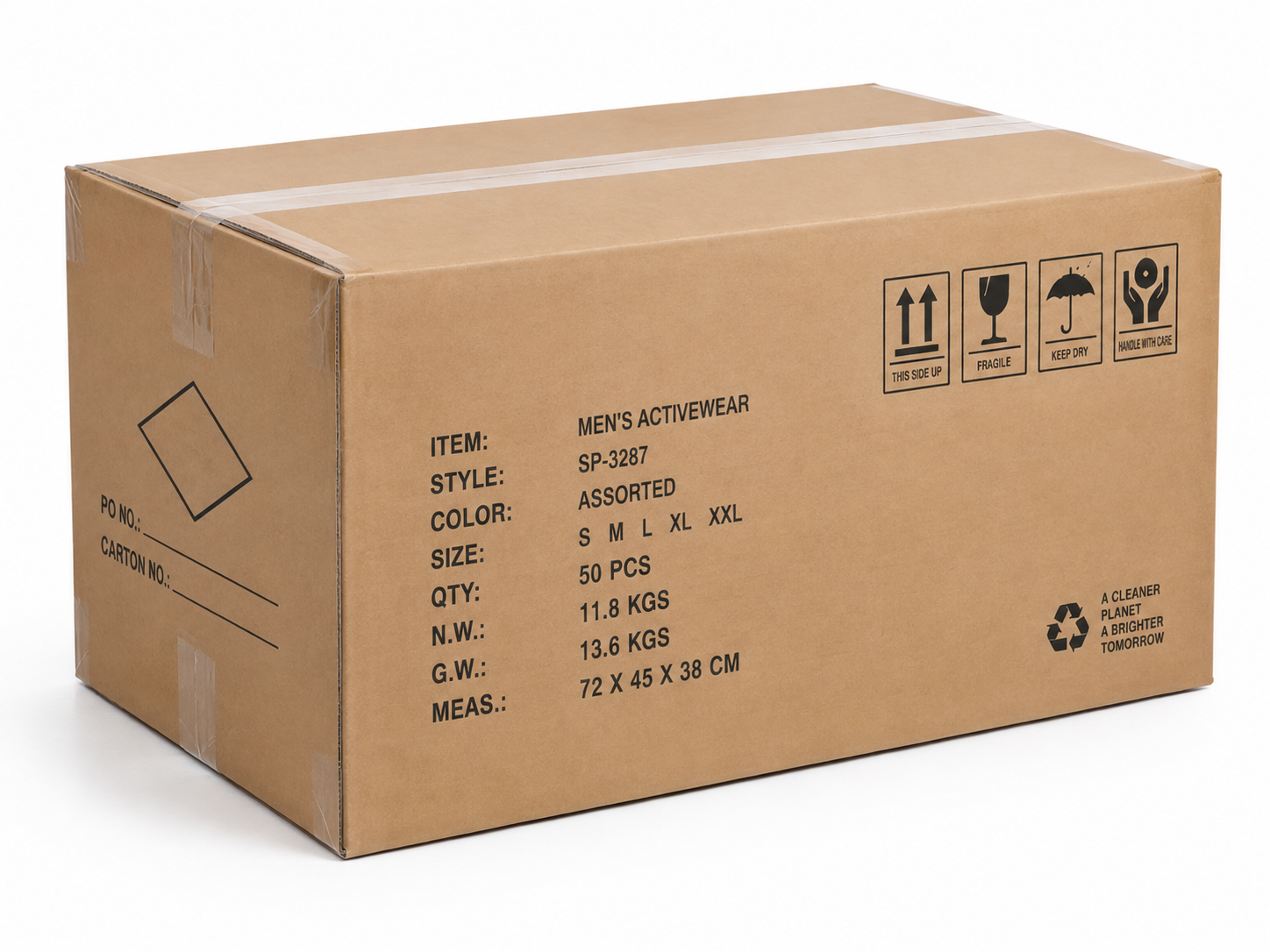
Carton Identification
Outer-carton information should match the actual packed product and the approved packing list. Carton marks may include style, color, size, quantity, carton number, destination fields and weight or dimension data as required.
• Single-SKU and mixed-SKU rules should be clearly separated.
• Market or warehouse instructions are followed from approved files.
• Carton marks are checked before shipment preparation.
• Customs clearance and platform acceptance remain outside a general manufacturing guarantee.
Review Packaging Artwork Before Bulk Production
Packaging errors are cheaper to correct in artwork than after thousands of printed pieces arrive. File review should connect graphics, text, SKU data, dimensions and the actual packaging structure before bulk procurement.
Check Artwork Against the Real Structure
Artwork should be reviewed against the packaging dieline, dimensions and production method rather than as a flat image alone. Important checks include logo size, typography, brand colors, safe areas, print boundaries, folds, cut lines and any location where text or graphics could be hidden after packing.
Product information also needs to match the garment record. Style name, color, size, fiber information, care text, barcode, SKU and market version should be checked for obvious inconsistencies before the file is released. If one file is updated, linked label, packaging or carton files may also require a revision. Keeping version numbers and approval dates visible helps prevent old artwork from returning during bulk production or repeat orders.
Leadshow can coordinate execution review and raise clarification points. Final approval of brand claims, legal text, translations, barcode ownership and market compliance remains with the responsible brand, importer or appointed specialist.
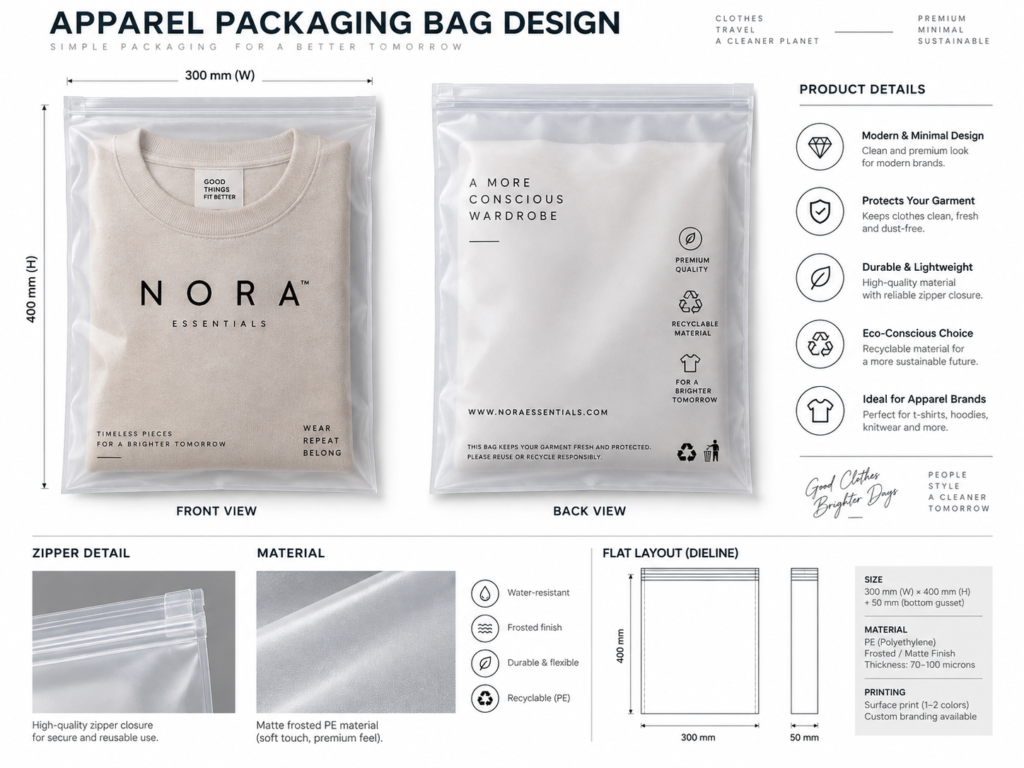
Freeze the Approved Version Before Procurement
Bulk packaging materials can carry independent supplier minimums and longer preparation time than the garment itself. Ordering from an unapproved file creates a risk of reprinting, delayed packing and unnecessary cost. A clean approval process therefore matters before packaging material procurement begins.
A useful release package includes the final artwork, correct dieline or dimensions, material and finish direction, quantity, SKU mapping, market assignment and any required carton instructions. For complex programs, a change log can record what was revised and why. The approved packaging sample should then be linked to the final file version used for production.
If a garment revision changes size, folding, label position or product information after packaging approval, the pack should be reviewed again. Approval is a production control point, not a permanent authorization that survives every product change.
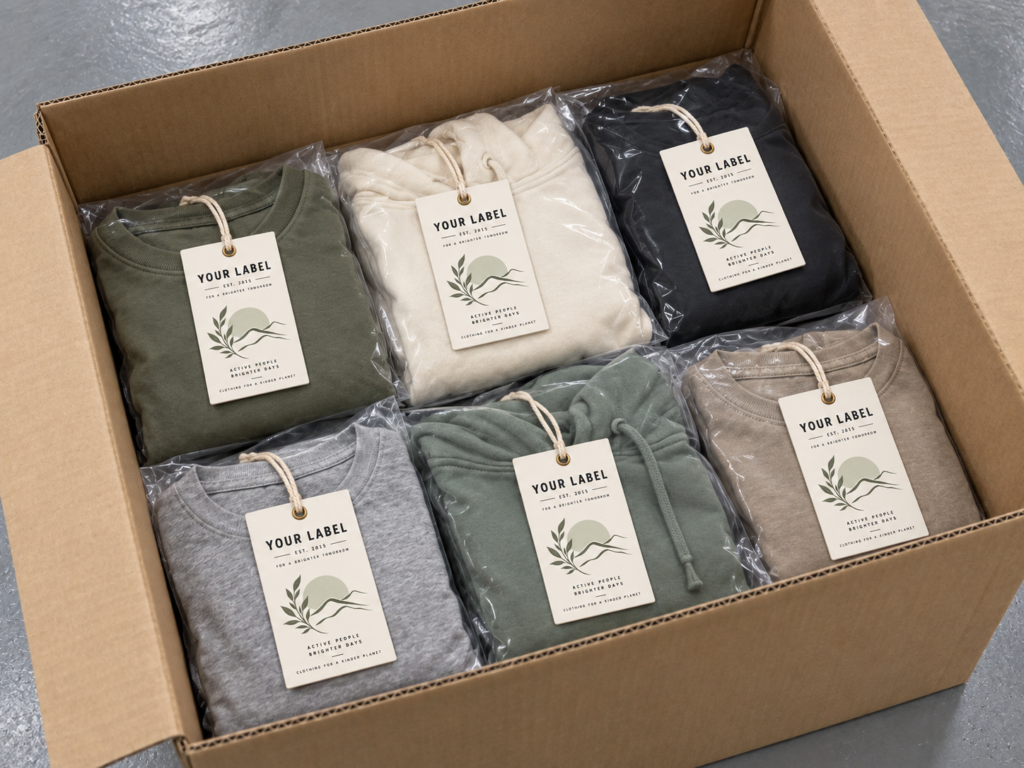
Approve Packaging With the Actual Garment
A packaging file can look correct while the physical pack fails. Sample approval should test the garment inside the pack, along with labels, barcode position, inserts, folding and carton fit.
Validate the Pack Around the Product
Packaging approval should use an actual garment or a representative product whenever possible. The review begins with the approved folding method and finished garment dimensions. The product is placed inside the bag, sleeve or box to check clearance, closure, presentation, thickness and any risk of distortion.
Label and hangtag position should remain visible and secure after folding. Barcode or SKU labels should be readable in the intended warehouse or retail orientation. Inserts, instruction cards, tissue or accessory pieces should fit without creating pressure points or missing components. For sets, the sample should confirm that every required piece can be packed together and identified correctly.
A physical sample also reveals issues that artwork review cannot: a box that is technically large enough but difficult to close, a bag that wrinkles the garment, a barcode hidden by the fold, or a hangtag that damages the presentation surface. Those findings can be corrected before bulk packaging is ordered.
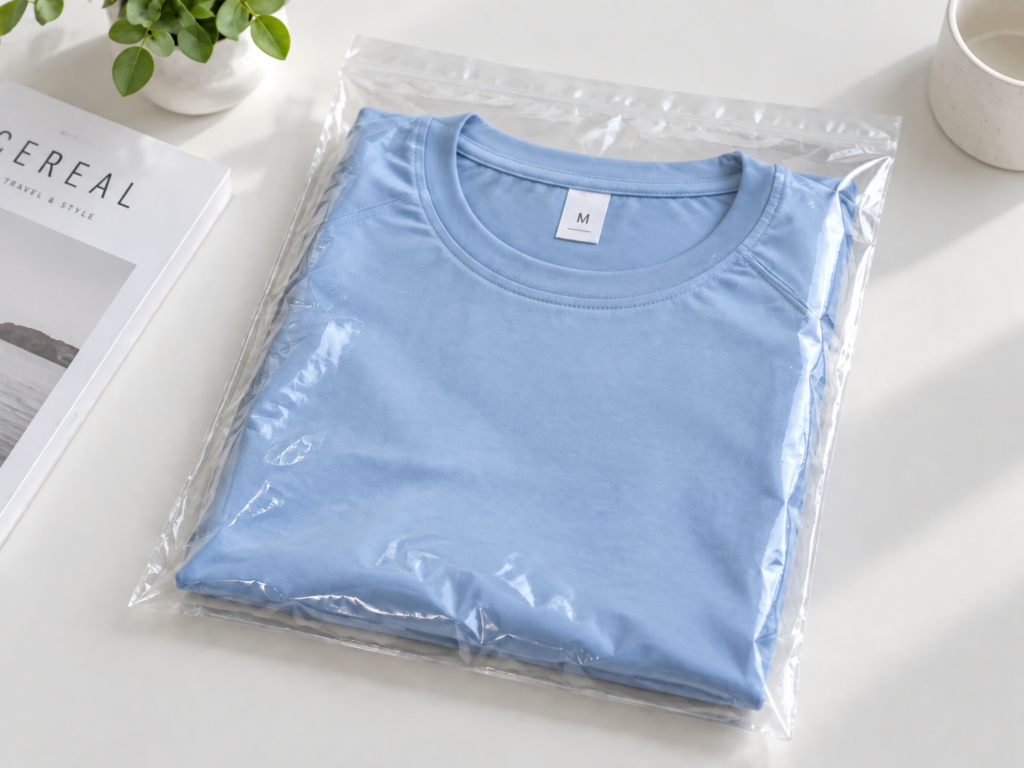
Use the Approved Sample as a Bulk Reference
Once the packaging sample is accepted, the approved physical sample and final files become reference points for bulk packing. Production teams can compare folding, label position, packaging appearance and included materials against the approved standard before large quantities are packed.
Multi-SKU projects do not always require a full physical sample for every single variant. Representative, high-risk or structurally different versions can be selected according to project needs. A different box size, market language, insert set or label system may justify separate approval even when the garment family is similar.
Sampling time cannot be stated as one fixed number because packaging structure, supplier material, print process, artwork revision and garment readiness all affect the schedule. Timing is confirmed after the final requirement set is reviewed. If the garment or packaging changes after approval, the affected sample should be reassessed before bulk packing continues.
Control Multi-SKU Packaging Without Version Confusion
A structured SKU matrix connects product, label, barcode, packaging and carton data. It gives production and packing teams one place to verify which version belongs to each style, color, size and market.
Control Field
Brand / Project Input
Production Use
Approval Point
Style / Product
Style code or product name
Links garment files with packaging records
Before sample release
Colorway
Approved color name or code
Separates SKU and market variants
Before bulk label printing
Size
Approved size range
Matches size label and SKU
Before bulk packing
SKU
Brand-assigned SKU
Primary identification for packing
Before barcode application
Barcode
Brand-provided / approved barcode
Applied to approved SKU location
Before packing sample approval
Label Version
Main, care and size label file version
Prevents old label files from returning
Before bulk label order
Packaging Version
Bag, box, paper card or insert version
Links pack structure and artwork
Before packaging material procurement
Market / Channel
Retail, DTC, wholesale or destination version
Controls language and channel-specific files
Before packing instruction freeze
Carton Rule
Units per carton / mixed or single SKU rule
Guides carton packing and marks
Before shipment preparation
Move From Approval to Bulk Packing
Bulk packing should follow a frozen product and packaging record. Material procurement, folding, label application, individual packing, SKU sorting and carton preparation are coordinated around approved references.
Release Materials Only After Key Approvals
Packaging material procurement should begin after the critical artwork, dimensions, structure and quantity are clear enough for supplier confirmation. Custom bags, boxes, cards, labels and special finishes may each have their own minimum quantities and preparation schedules. Those supplier conditions can be higher or longer than the garment minimum, so packaging needs to be reviewed early rather than left until the end of sewing.
Before bulk packing, production references should identify the approved garment sample or specification, folding method, label positions, hangtag attachment, barcode location, individual packaging version and carton rule. Material received for packing can then be compared against the approved direction for obvious size, print, content or version discrepancies.
Leadshow coordinates packaging within the broader apparel production plan. Packaging cost, material availability and timing remain project-specific and can change when artwork, quantity, market or garment specifications change.
Pack, Sort and Cartonize by Approved SKU Rules
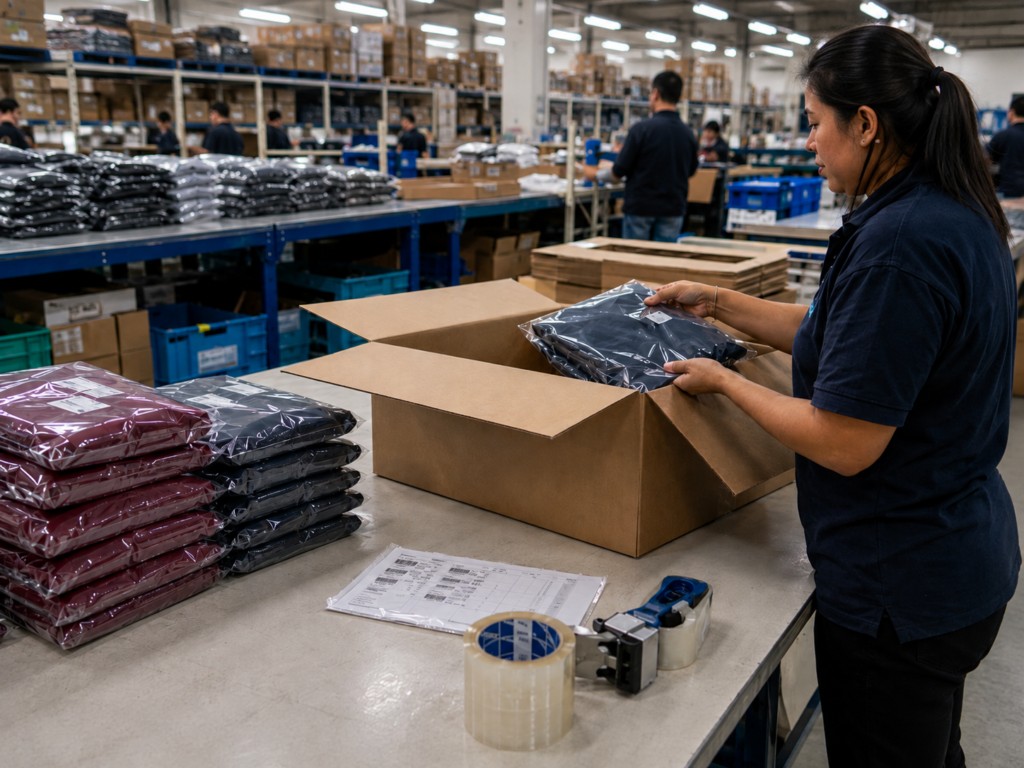
The packing sequence begins after finished garments are ready for the applicable final checks. Garments are folded according to the approved method, fitted with the correct labels and hangtags, and placed into the approved individual package. SKU and barcode identification should remain consistent with the physical style, color and size.
Finished units can then be separated according to single-SKU, mixed-SKU, set, market or destination requirements. Carton quantity, carton number and mark fields should follow the approved packing instruction and packing-list logic. Where packaging appearance matters for retail or direct-to-consumer programs, random pack opening can be used as part of the agreed inspection approach.
Bulk packing is not a promise of zero mistakes. Accuracy comes from clear files, controlled versions, trained handling, relevant inspection points and a defined process for correcting exceptions before shipment preparation.

Packaging Quality Checks Before Shipment
Packaging quality is more than visual appearance. Checks should connect approved artwork, garment identity, pack fit, barcode data, included components and carton information to the actual packed product.
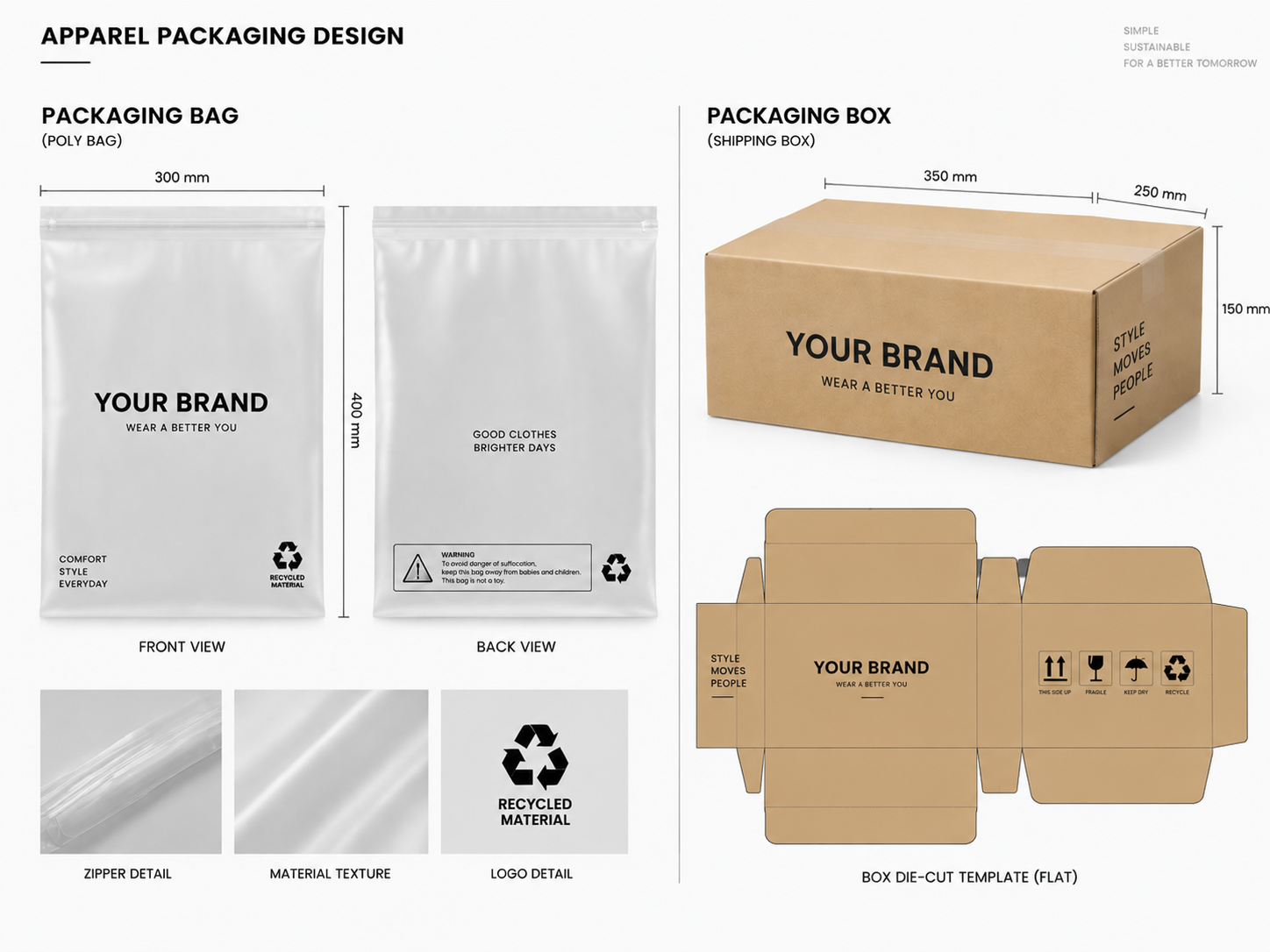
Artwork Version
Confirm that the packaging, labels and inserts use the released artwork version. Compare style names, size information, approved text, logo placement and market assignment against the current project files. Version mismatches can create rework even when print quality looks acceptable. The inspection scope and sampling method are agreed according to the project rather than presented as a universal 100% inspection promise.
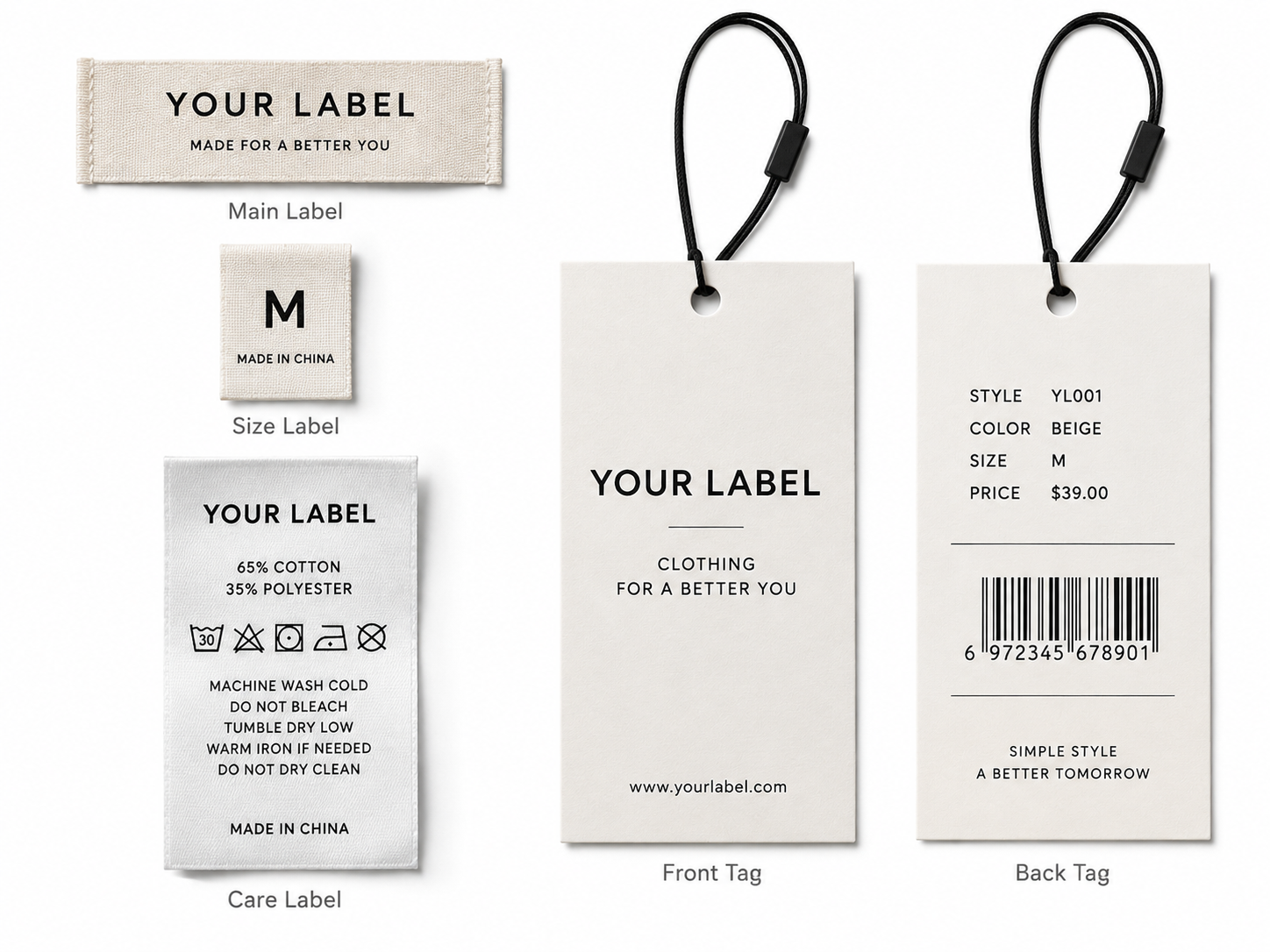
Label and Hangtag
Check main labels, care labels, size labels and hangtags against the garment style and approved placement. The goal is to catch wrong-size labels, outdated artwork, missing tags or incorrect attachment before cartons are closed. Heat-transfer labels and other applications should also be reviewed for suitable positioning and visible defects according to the approved sample and process requirements.
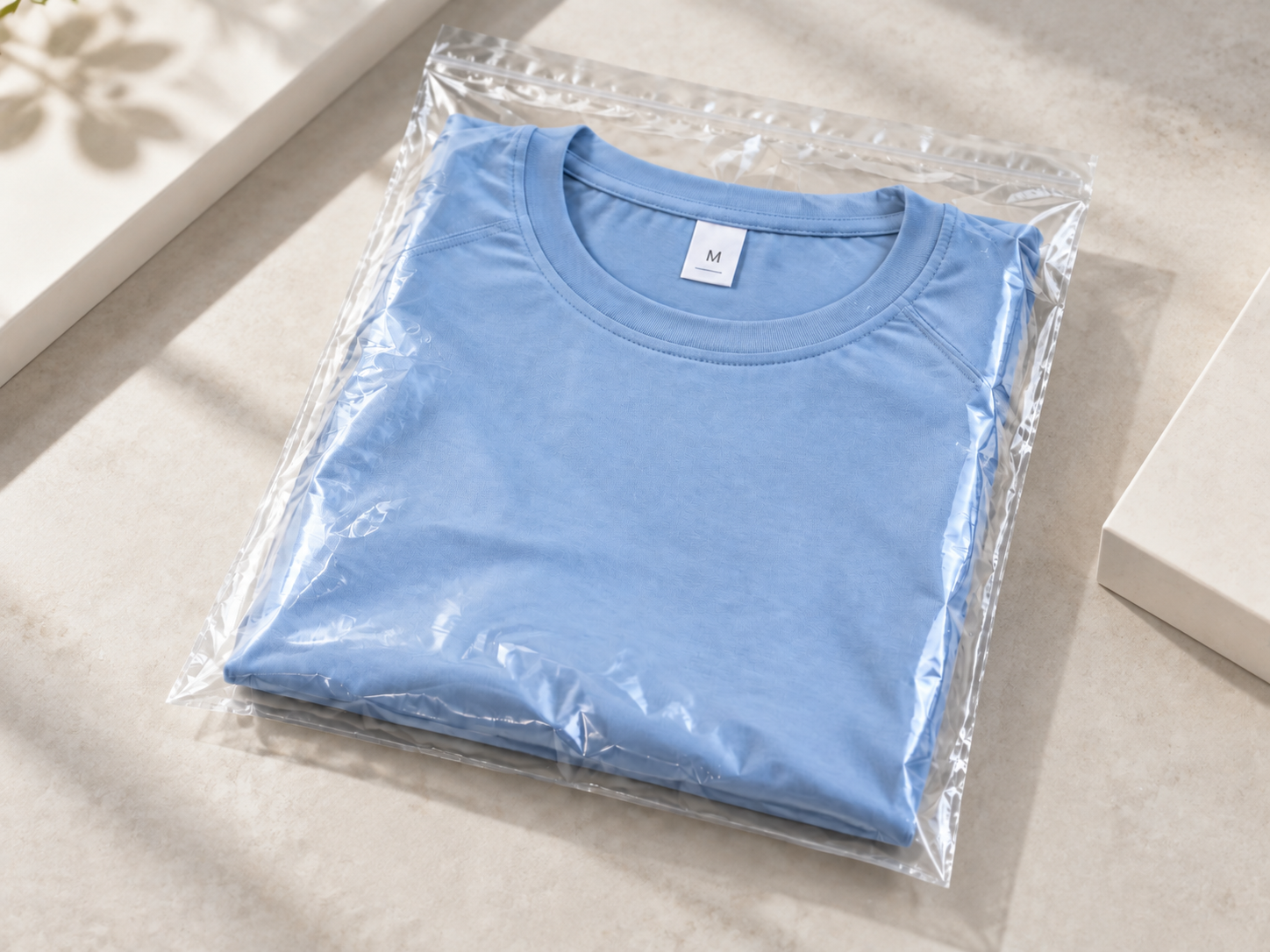
Garment-to-Pack Fit
Open representative packs and confirm the garment is folded correctly, fits without excessive compression and presents as approved. Box closure, bag clearance, insert position and product orientation can all be checked. If the garment has changed in thickness, trims or dimensions since packaging approval, the pack may need reassessment before bulk packing continues.
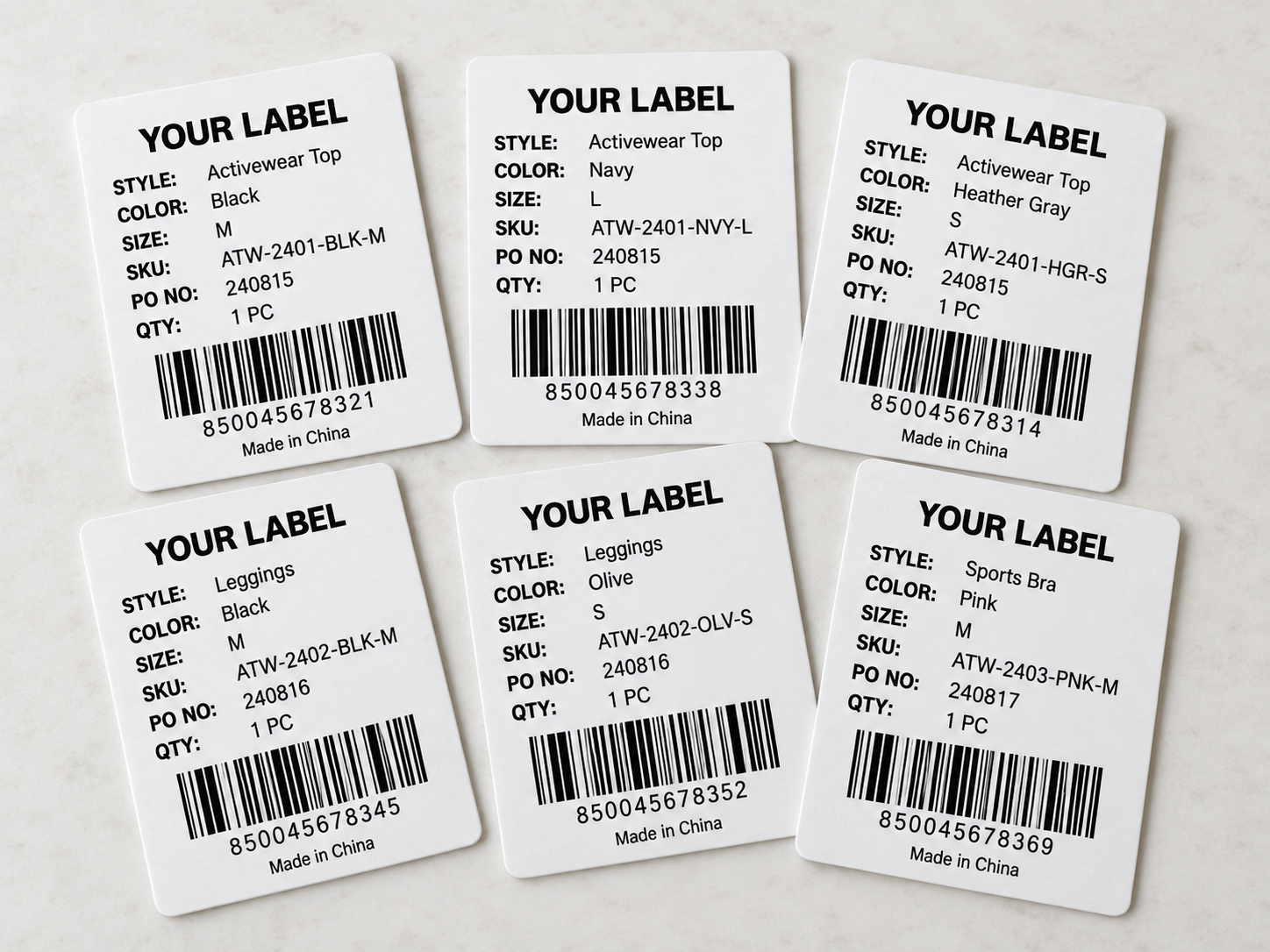
Barcode and SKU
Verify that the barcode or SKU label corresponds to the physical style, color and size. The brand supplies or approves barcode data; production applies it in the agreed location. Scanning or readability requirements are defined by project. Leadshow does not claim to create registered barcode numbers, guarantee universal warehouse acceptance or provide zero-error barcode performance for every order.
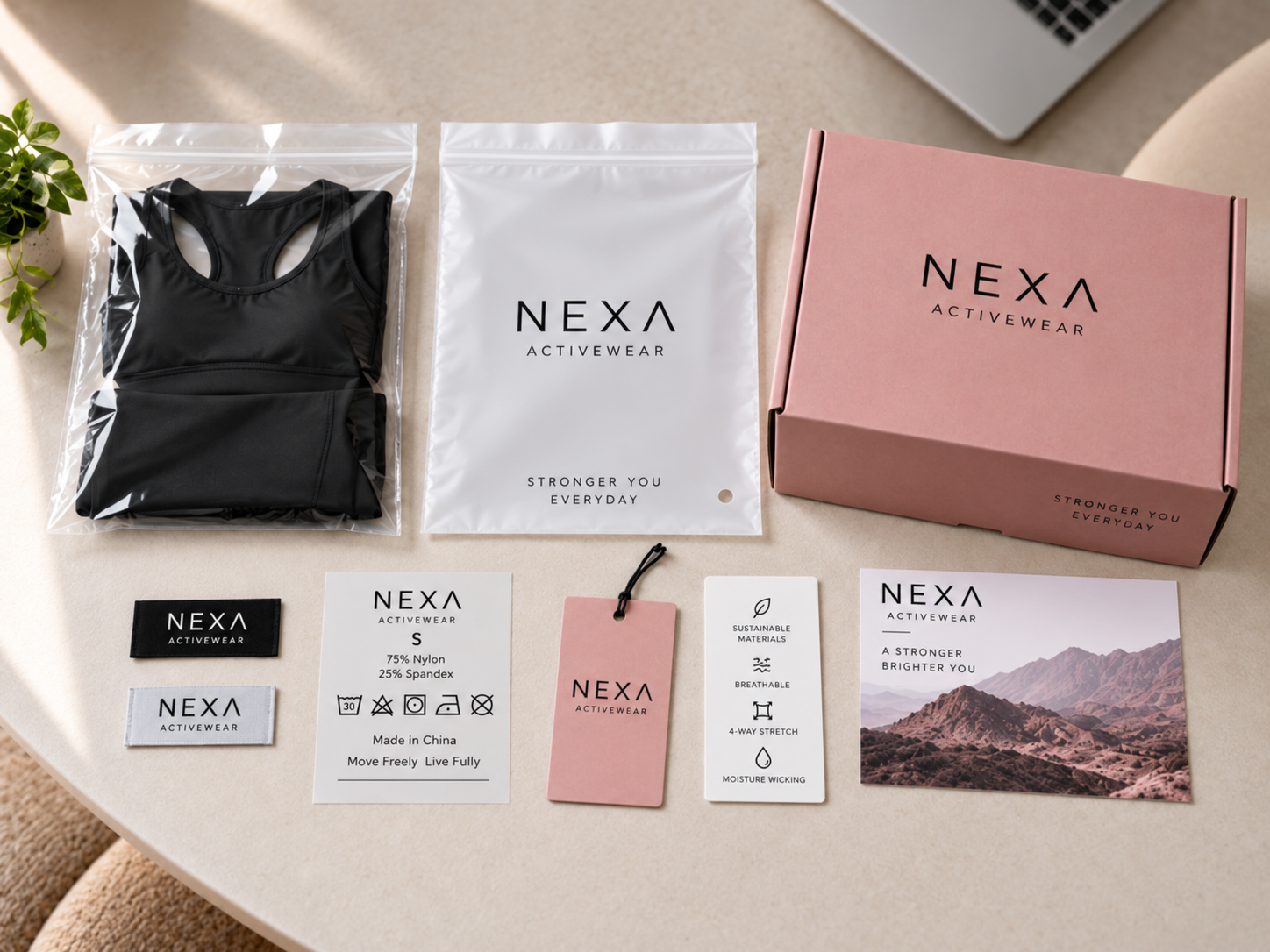
Pack Contents
Confirm required cards, accessories, spare parts, sets or promotional inserts are present where specified. A complete-looking bag can still be wrong if one component is missing. Set products require particular attention because multiple pieces may share one package. The packing instruction should clearly define included items, quantities and any market-specific differences before bulk execution.

Carton and Documents
Check carton quantity, carton number, style or SKU identification, carton marks and packing-list alignment before shipment preparation. Weight and dimension data should reflect the actual packed order. Manufacturing-side verification can reduce avoidable mismatch, while freight booking, customs clearance, destination rules and platform acceptance remain subject to the agreed logistics and trade responsibilities.
Retail and Export Carton Data to Confirm
Retail and export packing becomes easier to manage when product, individual pack, SKU and carton data are confirmed together. The fields below are common control points rather than fixed values for every order.
Packing Level
Data to Confirm
Why It Matters
Responsibility / Approval
Garment
Style, color, size, SKU
Identifies the physical product
Approved product and SKU file
Individual Pack
Packaging type, size, label position
Protects and identifies each unit
Approved packaging sample
Barcode
Brand-provided code and location
Connects unit to inventory or retail record
Brand-approved barcode data
Carton Quantity
Units per carton
Controls packing ratio and count
Confirmed after product and pack review
Carton Type
Dimensions and material requirement
Affects protection and freight volume
Confirmed by order
Carton Number
Sequence / total carton count
Supports receiving and reconciliation
Shipment preparation
Carton Mark
Style, SKU, destination or required fields
Supports warehouse and import identification
Approved carton-mark template
Weight
Gross and net weight
Supports shipment documents
Measured from packed order
Packing List
Carton and SKU breakdown
Links shipment documents with physical cartons
Final packing record
Forwarder Data
Nominated forwarder / pickup requirement
Coordinates handover
Confirmed under trade arrangement
Packaging Materials For Apparel Brands
Every garment requires the right packaging material. We offer multiple options from lightweight protection to premium presentation packaging.
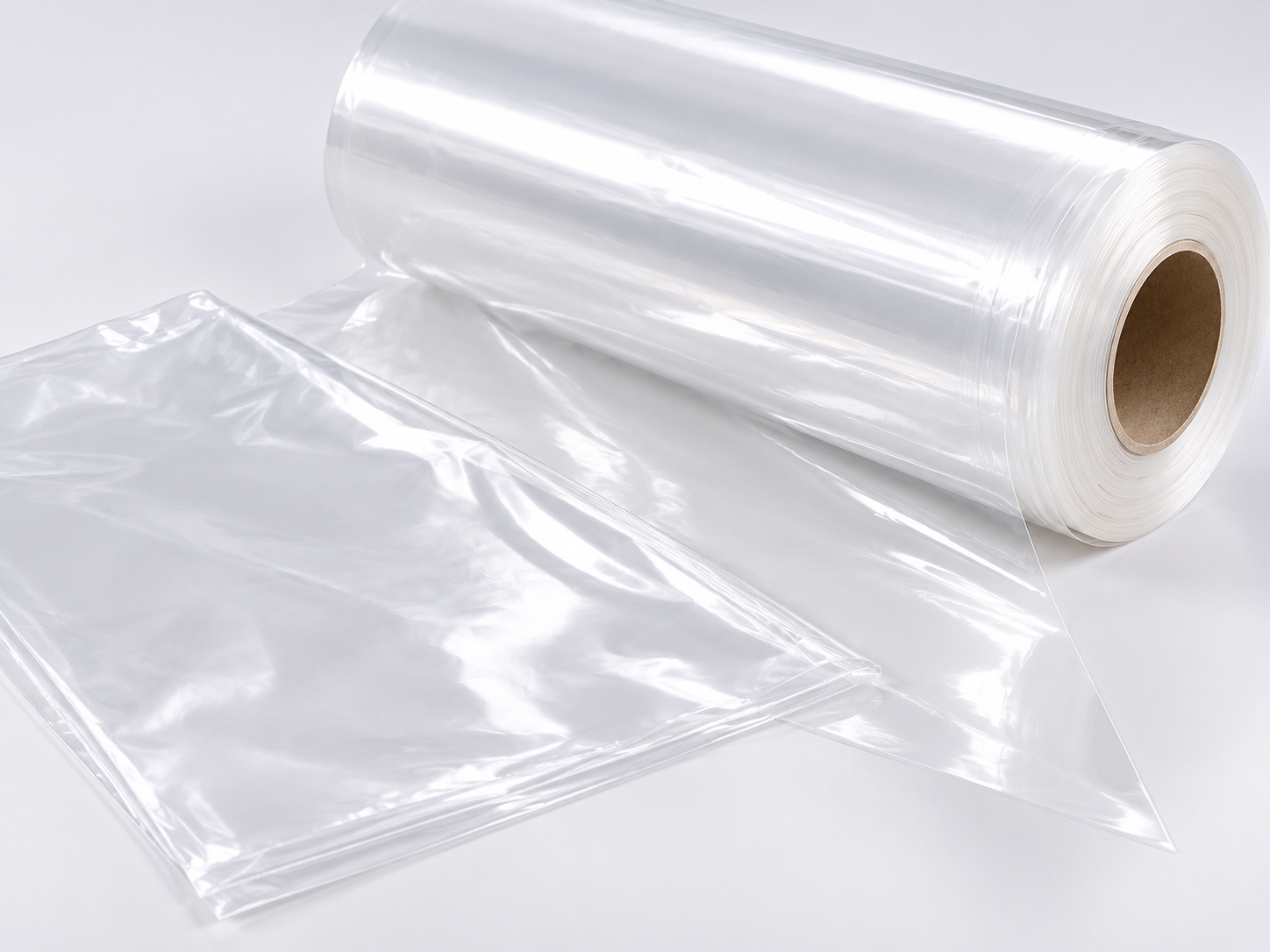
PE (Polyethylene)
Lightweight and durable plastic material commonly used for garment bags and individual apparel protection.
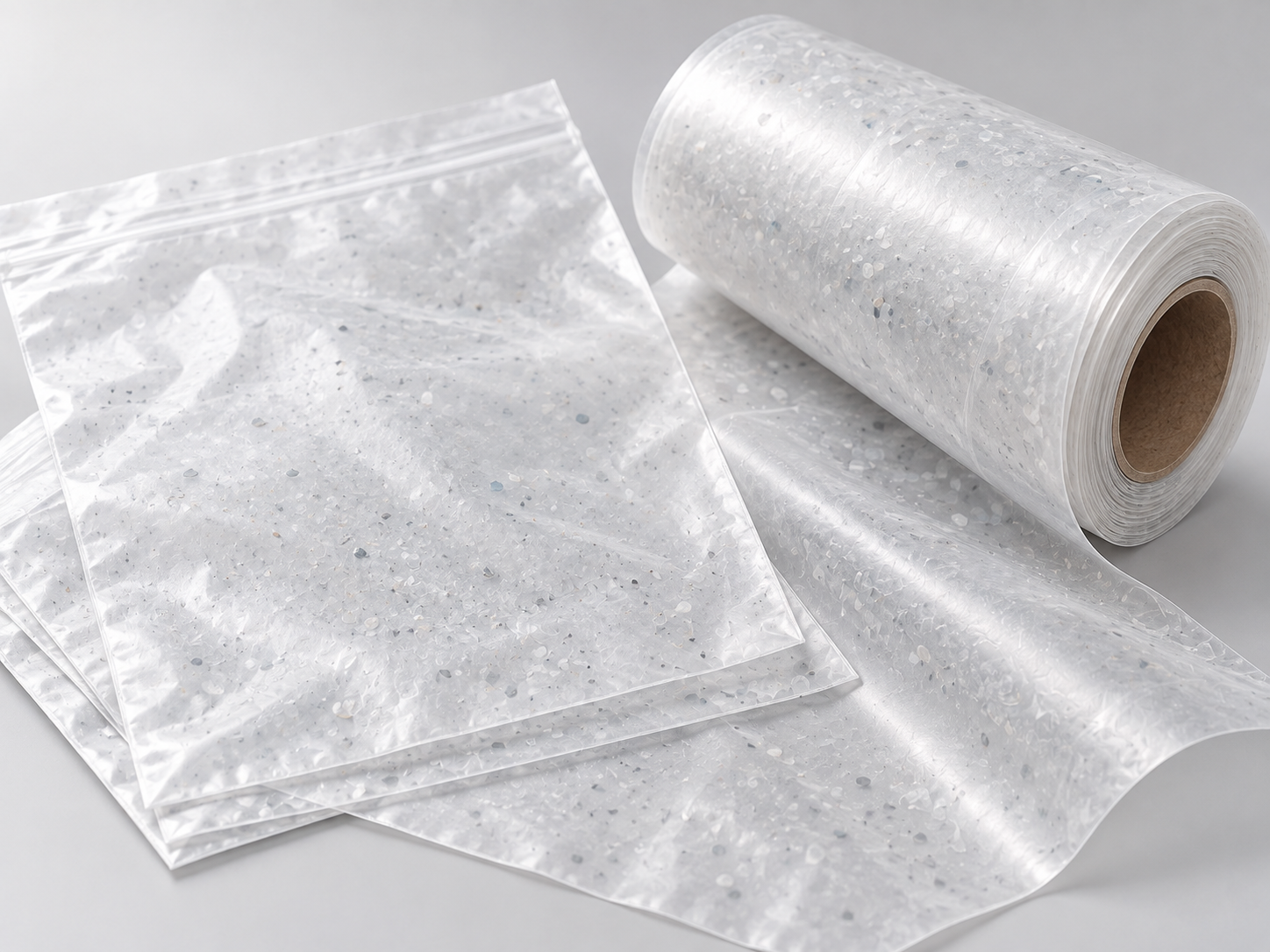
Recycled PE (PCR Plastic)
A more sustainable packaging option made with recycled materials for brands focusing on responsible packaging solutions.

Kraft Paper
Natural paper material with a textured appearance, widely used for eco-friendly bags, tags and packaging details.

Coated Paper
Smooth surface paper suitable for high-quality printing, brand graphics and customized packaging designs.

White Cardboard / SBS Paper
Clean and stable paperboard material used for premium tags, cards and retail packaging.

Grey Board
Strong rigid board material commonly used for luxury boxes and structured packaging.
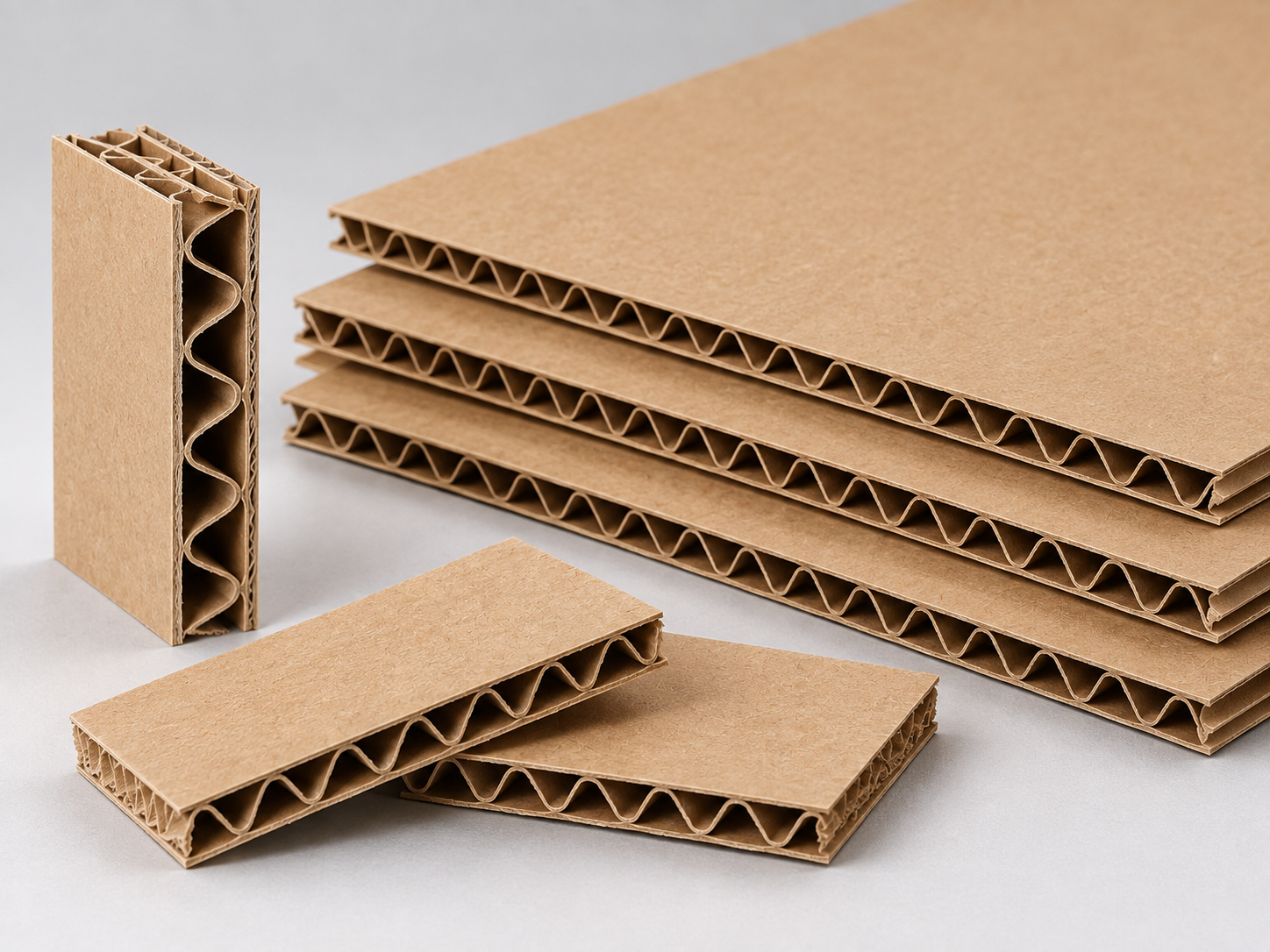
Corrugated Paper
Reliable shipping material designed for carton boxes, export packing and transportation protection.
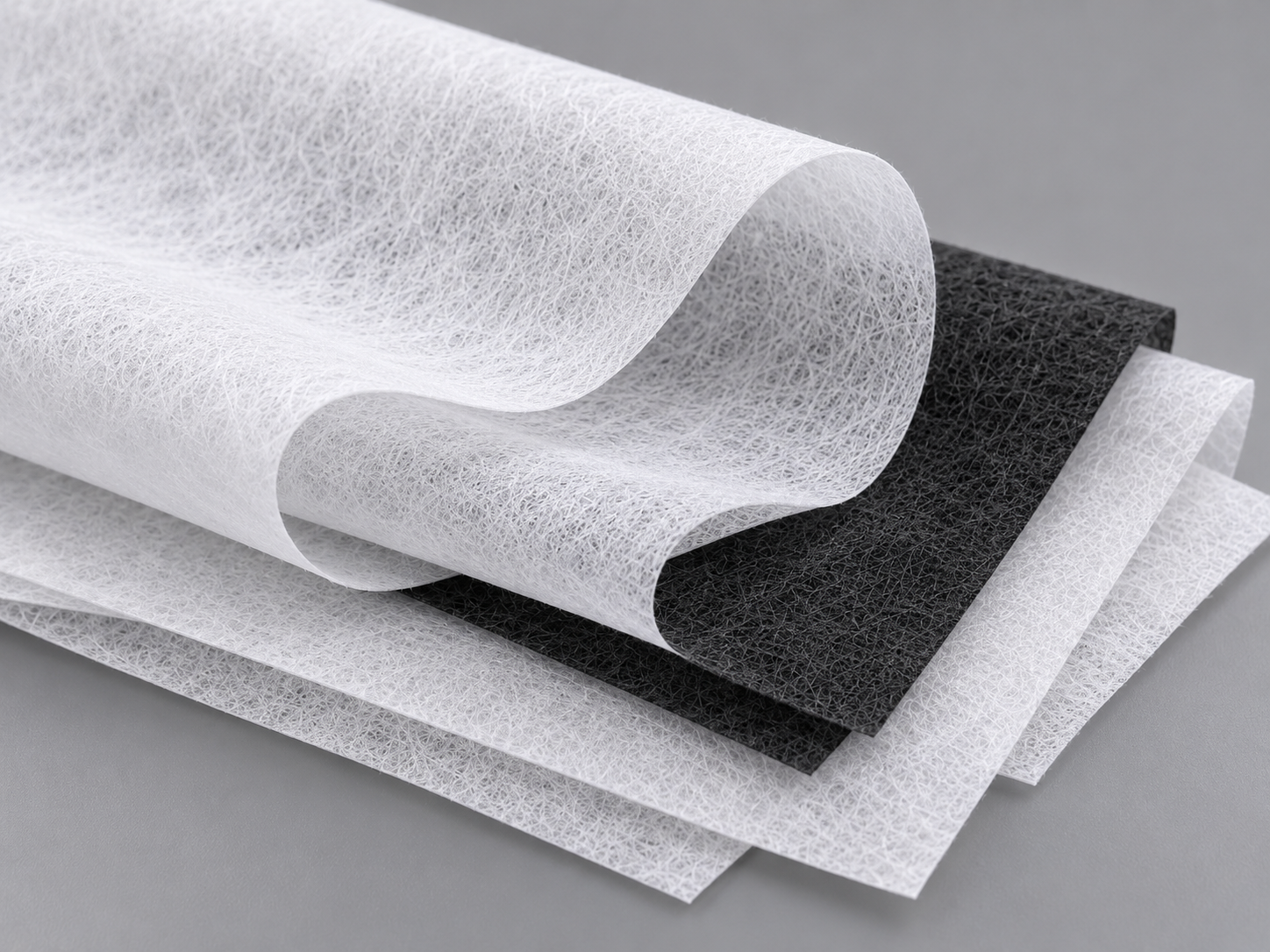
Non-woven Fabric
Lightweight reusable fabric material used for garment covers, storage bags and protective packaging.
Use Sustainability Claims Only With Evidence
Recycled, FSC, recyclable, biodegradable, compostable and plastic-free claims should follow the actual packaging material, supplier documentation and certification scope. A material name alone is not enough evidence for a public claim.
Material Evidence
Environmental positioning begins with the actual material specification. A paper pack is not automatically plastic-free, and a reusable bag is not automatically sustainable. Films, coatings, laminations, adhesives and mixed materials can change end-of-life behavior.
• Confirm the exact material and construction.
• Request supplier documentation where a claim is important.
• Avoid changing conventional polyester or paper into a “recycled” claim without proof.
• Keep environmental wording aligned with the material supplied for the approved order.
Certification Scope
Certification language should identify what is certified: the material, supplier, site, product or chain-of-custody scope. Leadshow can evaluate certified packaging options when relevant documentation is available, but does not present all packaging as FSC-certified, recycled or compostable.
• Verify certificate holder and validity.
• Check whether the packaging material falls inside the certificate scope.
• Reconfirm supplier and batch when required.
• Use certification wording only after supporting evidence has been reviewed.
Market Approval
Environmental claims may also be affected by market rules, retailer policies and brand legal standards. Manufacturing coordination can help collect material evidence and align packaging with approved files, but final claim wording remains subject to the responsible brand or importer.
• Provide target market and sales channel.
• Share required packaging standards.
• Confirm claim wording before print release.
• Retain approved evidence with the packaging version used for production.
What Drives Packaging MOQ, Cost and Timing
Packaging is a separate cost and supply-chain input within an apparel order. Quantity, material, print, finish, versions and supplier minimums can change packaging economics even when the garment specification stays the same.
Factor
Effect on MOQ / Cost / Timing
Leadshow Position
Garment Order Quantity
Sets the base volume but does not automatically set packaging supplier MOQ
Standard garment MOQ starts from 100 pieces per color per design; final project quantity remains conditional
Packaging Type
Polybag, paper card, folding carton and gift-box structures use different suppliers and processes
Packaging format is evaluated by project
Material
Film, paperboard, coating, lamination or certified inputs can carry separate supplier minimums
Material and documentation confirmed before final commitment
Artwork / Printing
Color count, print coverage and special finishing can affect setup and preparation
Final artwork approval required before bulk procurement
SKU / Version Count
More market, color, size or language versions can increase setup and management complexity
Version structure reviewed with the SKU matrix
Packaging Sample
Physical approval may be needed before bulk material release
Sample timing depends on structure, material, artwork and revision requirements
Certified / Environmental Claim
Documentation and eligible material sources may affect supplier choice and MOQ
Claims used only with supporting evidence
Production Schedule
Packaging readiness must align with finished garment packing
Final timing confirmed after material and production scheduling review
Late Changes
Artwork or garment revisions can trigger rework, resampling or material replacement
Change impact is reassessed before release
Manufacturing Scale Behind Packaging Execution
Packaging coordination is stronger when it is connected to real apparel development, production, quality and logistics functions. Leadshow’s confirmed manufacturing scale supports garment projects from sampling through bulk packing and shipment preparation.
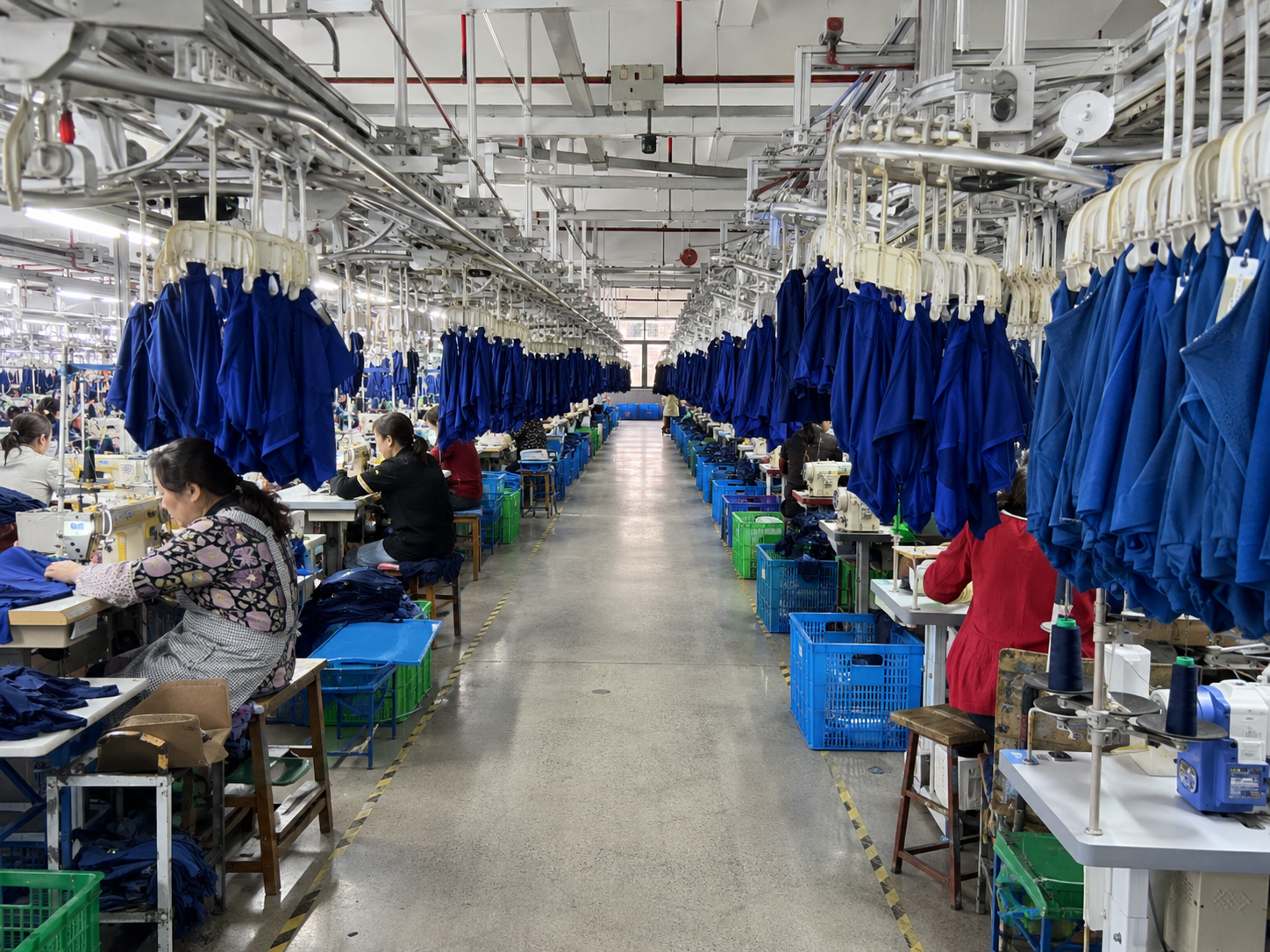
15 Years Experience
Leadshow has 15 years of apparel industry experience. The value is not the number alone; packaging decisions need familiarity with garment construction, labels, folded product behavior, bulk execution and repeat-order continuity.
• Experience is described as industry and apparel development/manufacturing experience.
• It is not used to infer an unconfirmed founding year.
• Packaging remains tied to the garment specification and sales-channel requirement.
• Project limits and supplier conditions are stated instead of using broad “all-in-one” promises.
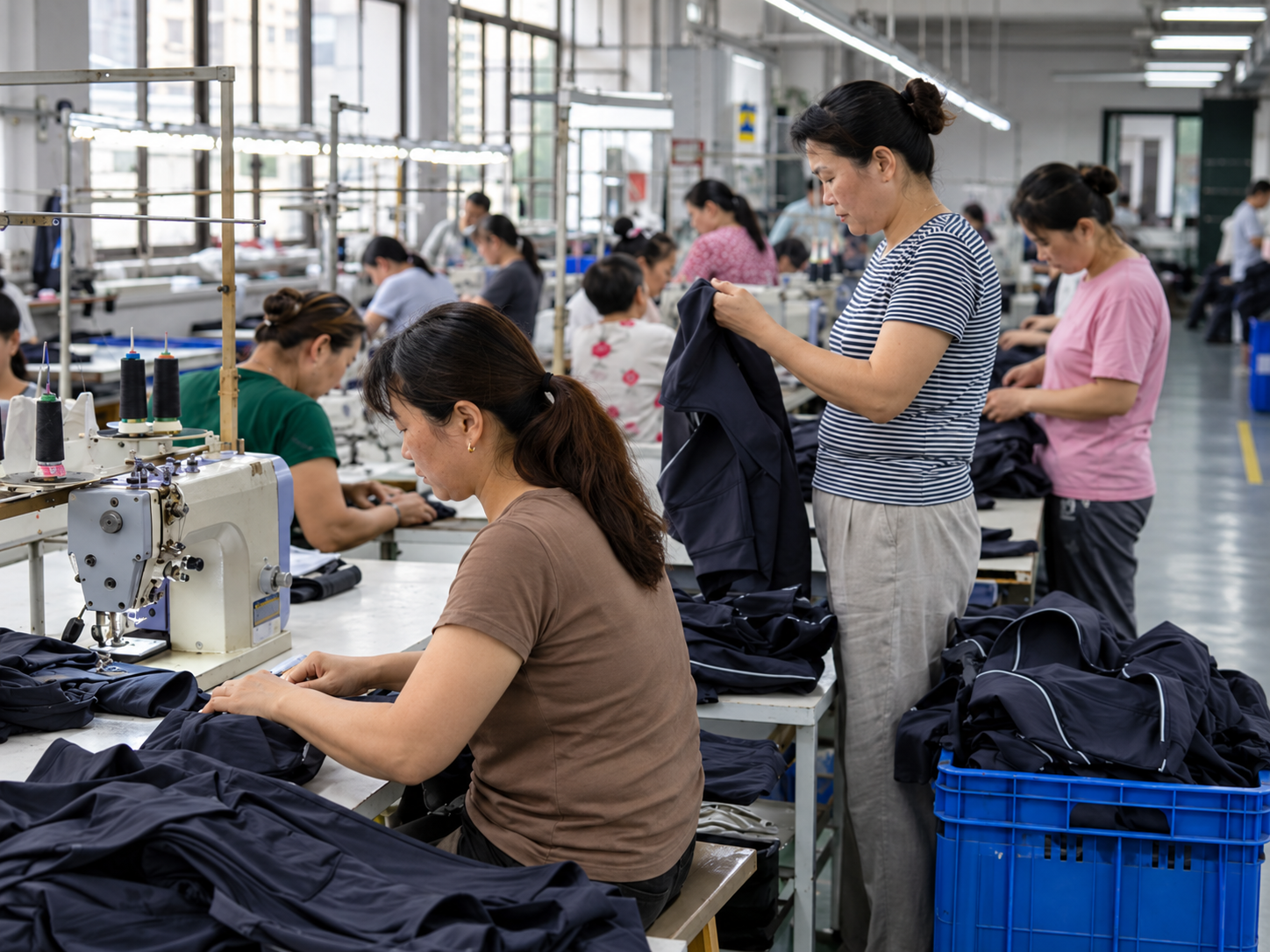
3 Manufacturing Bases
Leadshow operates three modern manufacturing bases as part of its combined apparel manufacturing system. Packaging coordination can therefore be connected with sampling, sewing, finishing, quality review and packing rather than managed as a separate branding activity.
• The three-base figure is a company-wide fact.
• Individual base addresses, size and dedicated packaging lines are not published as confirmed facts.
• The Shenzhen office address is not presented as the address of all manufacturing bases.
• Production allocation remains subject to project planning.
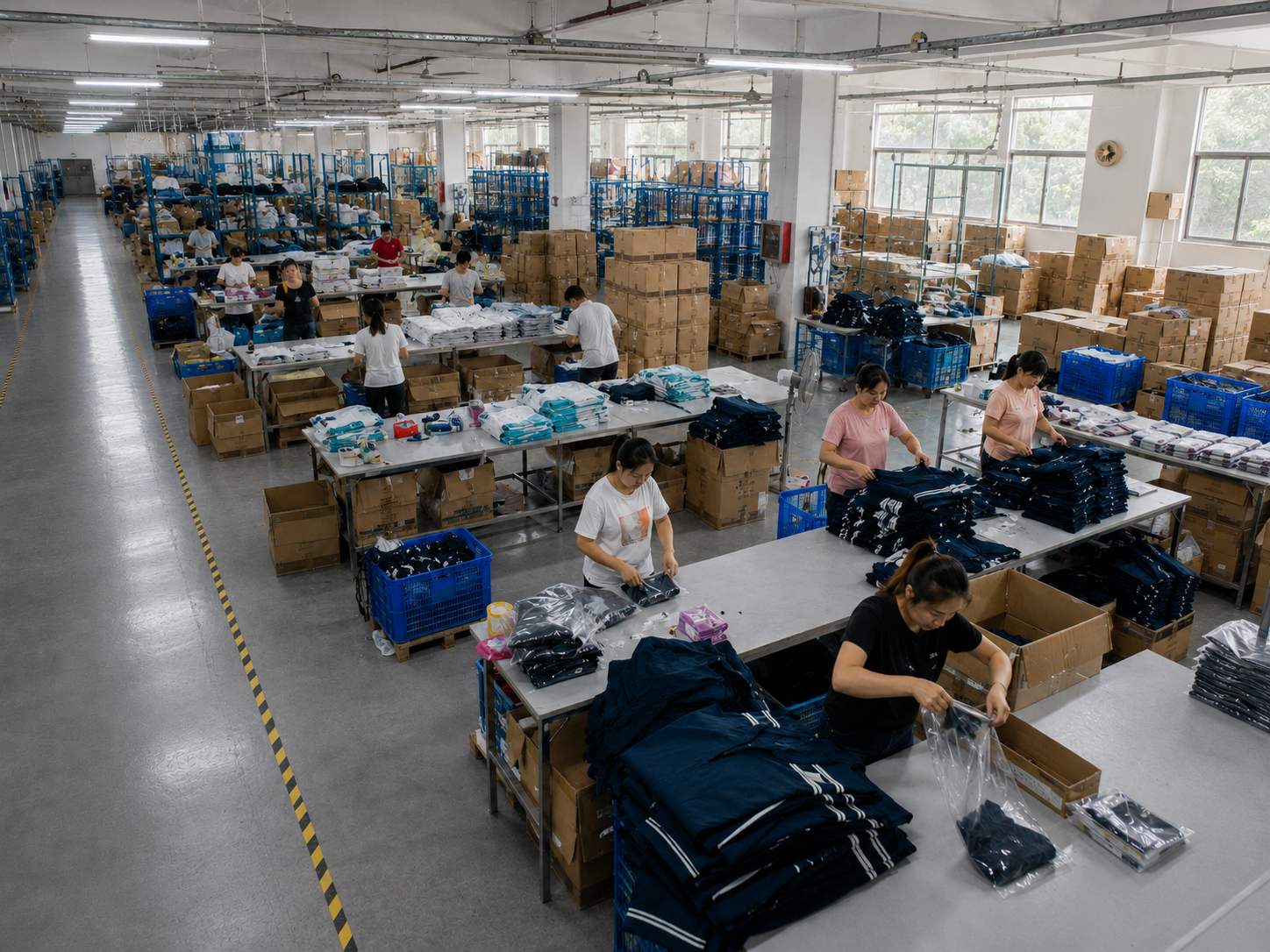
20,000+ m² Combined
More than 20,000 square meters of combined factory area supports production, sampling, finishing, warehousing and related manufacturing functions across the overall system. For branded packing, the useful point is the connection between garment completion, sorting, packing and shipment preparation.
• The figure is a combined area, not one factory’s size.
• No single packaging workshop area is claimed.
• Space does not imply every packaging material is produced internally.
• Packaging resources and suppliers are coordinated according to the project.

1,500+ Team
Leadshow has a team of more than 1,500 employees covering business communication, development, manufacturing, quality, warehousing, logistics, administration and finance. Packaging work can draw on several functions rather than relying on a sales contact alone.
• Team size is an overall company figure.
• Roles are not all described as designers, sewing operators or packaging specialists.
• Project communication coordinates relevant internal functions.
• Packaging specifications, quality points and shipment details are confirmed through the appropriate project process.

300+ Equipment
Leadshow has more than 300 confirmed production, specialized-process and finishing machines across its manufacturing system. The equipment supports garment development and scalable production, while packaging execution is coordinated with finishing and shipment preparation.
• The equipment count does not mean 300 production lines.
• It does not prove an in-house box, printing or packaging-material factory.
• Packaging components may involve external suppliers.
• The manufacturing base remains focused on turning approved apparel specifications into repeatable finished garments.
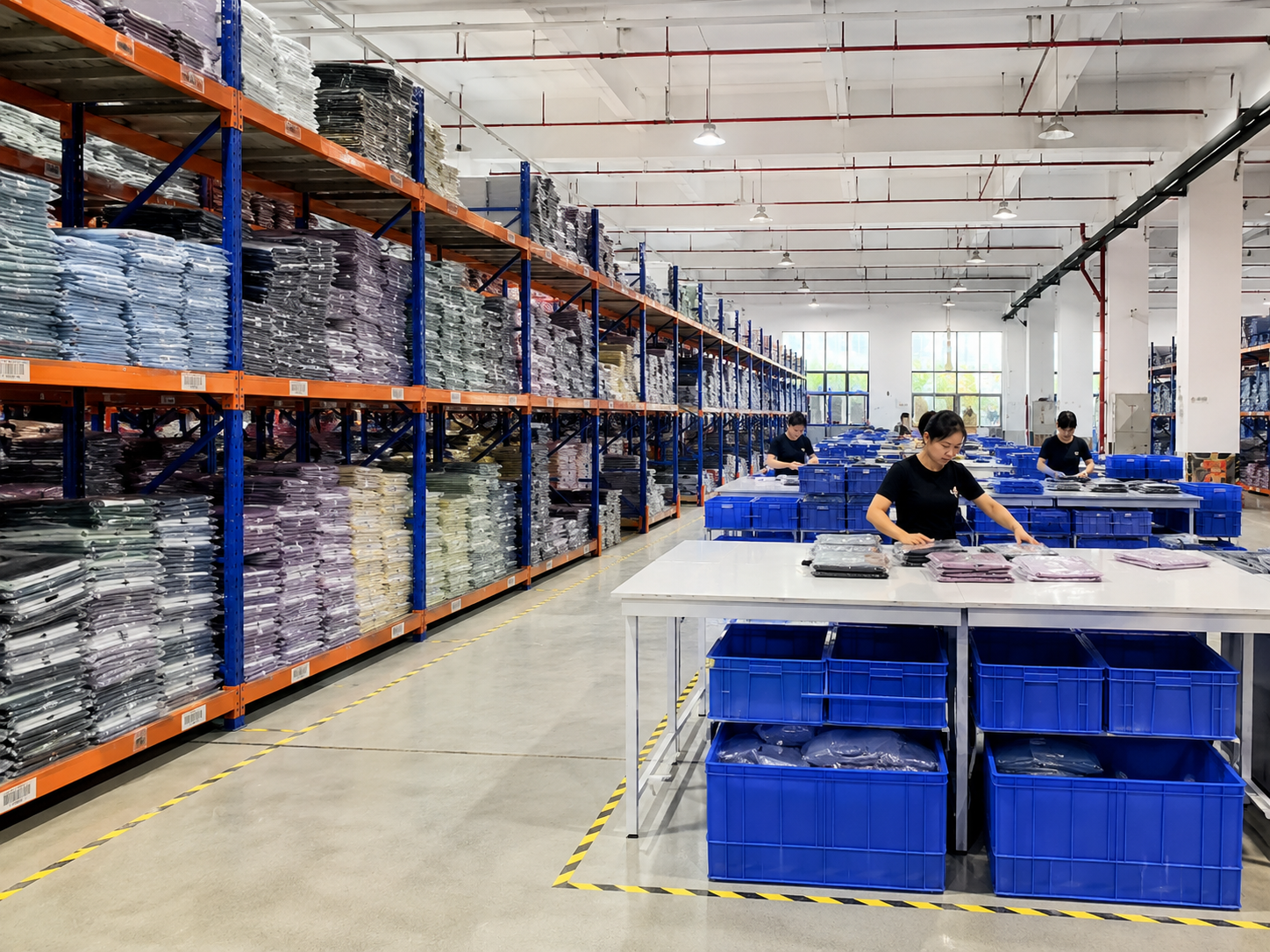
Up to 120,000 / Month
The three manufacturing bases provide combined monthly capacity of up to approximately 120,000 finished garments, subject to product construction, materials, processes, order mix, quality requirements and current scheduling. Packaging planning must align with the actual garment production schedule.
• The figure is not a single-product capacity.
• It is not guaranteed availability for every order.
• Packaging supplier lead time can differ from garment production timing.
• Final delivery planning follows the accepted project schedule and material readiness.
See the Packing Process and Prepare Your Files
Real packing evidence and complete project files make supplier evaluation easier. Four visual checkpoints show how a brand requirement moves from finished garment to labeled unit, packed SKU and export carton.
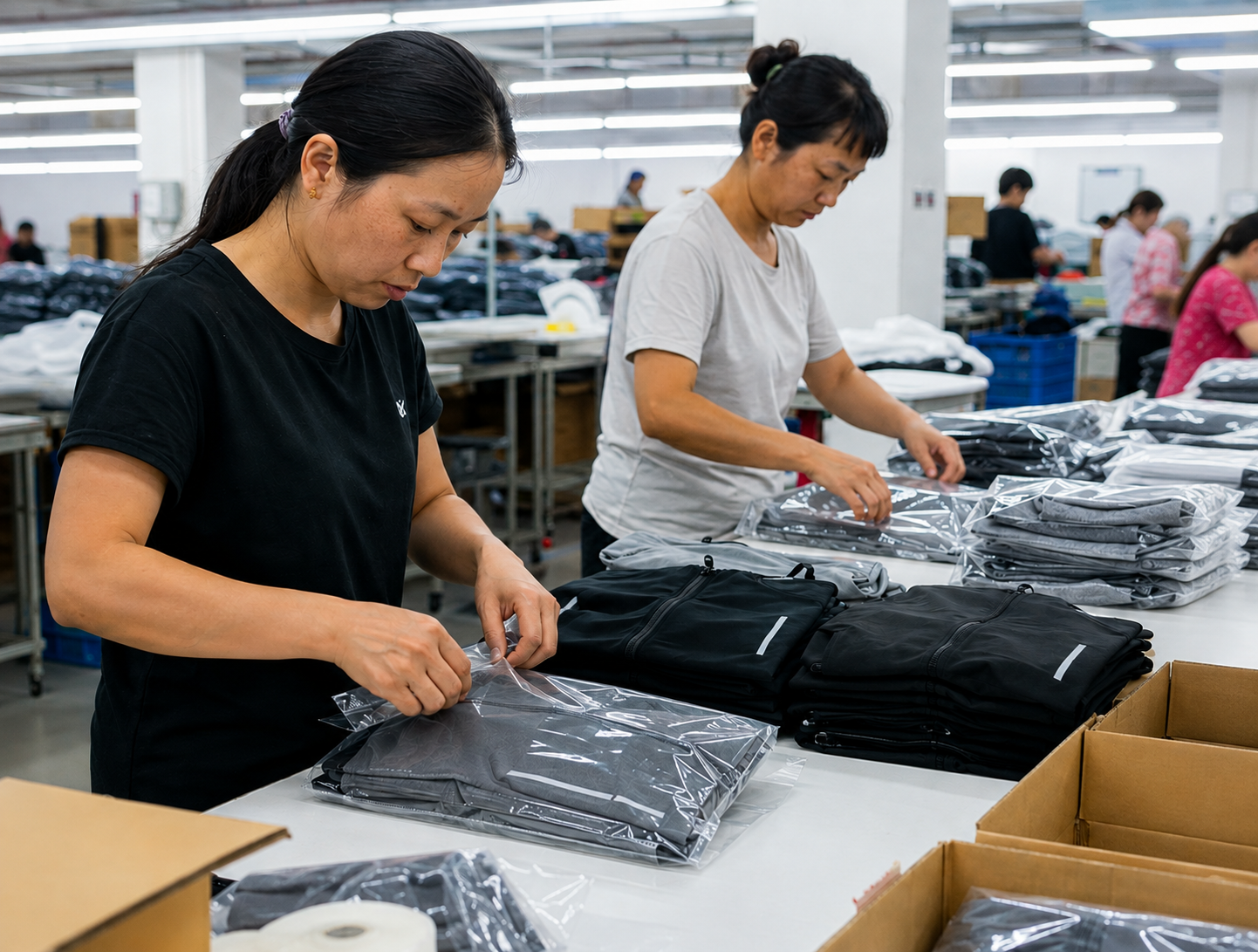
Folding and Presentation
Use real images or video of finished garments being prepared for packing. Show the approved folding method, garment orientation and visual condition before the product enters the individual pack. Useful project files include the garment reference, folding instruction and any presentation requirement. Avoid staged imagery that hides the relationship between the garment and the final package.

Label and Barcode Application
Show close-up evidence of main labels, care labels, size labels, hangtags and SKU or barcode placement on representative products. A useful file set includes brand artwork, label dimensions, placement instructions, SKU matrix and brand-approved barcode data. Sensitive brand names or artwork should be masked unless written permission allows public display.
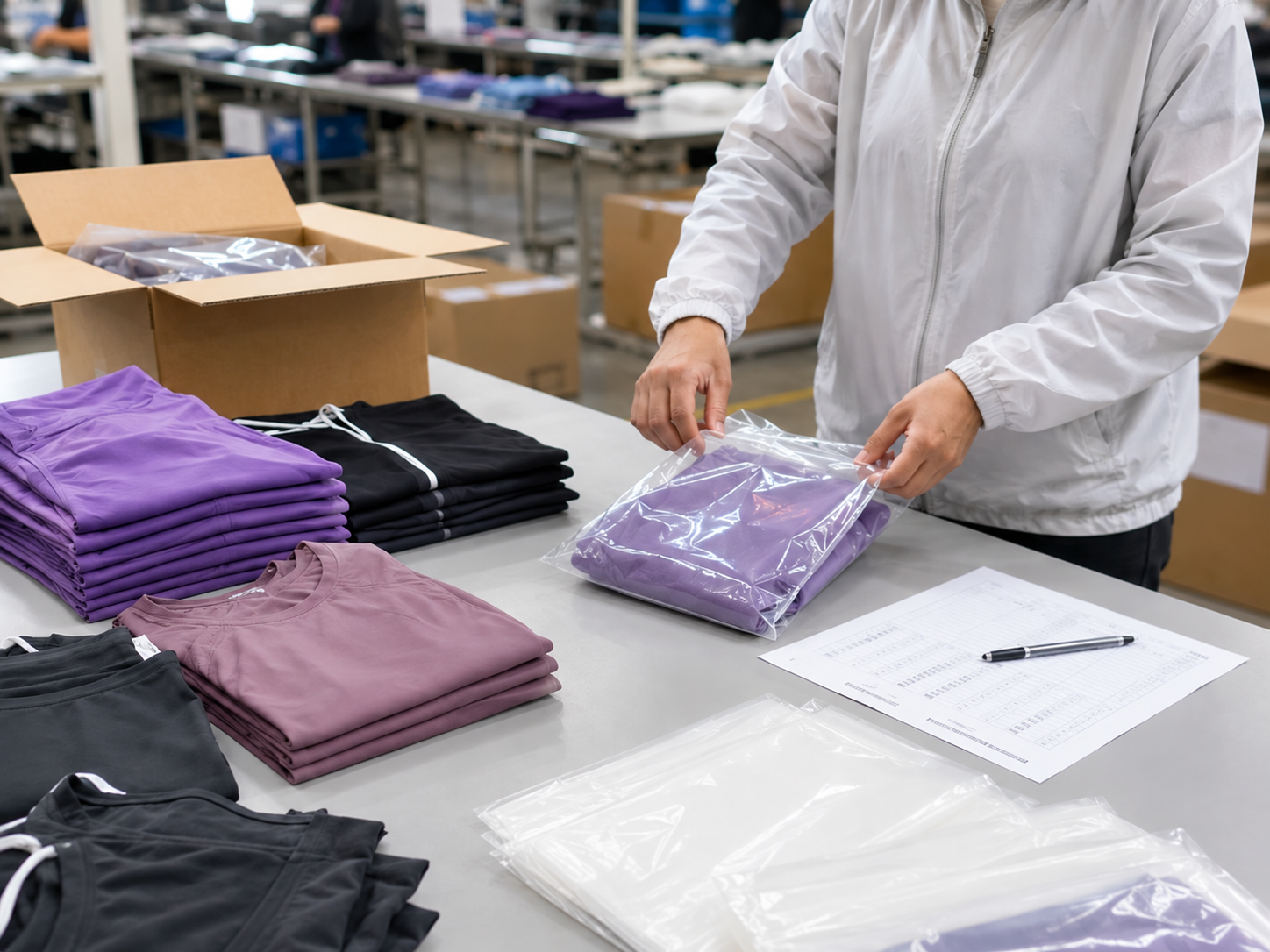
Individual Packing
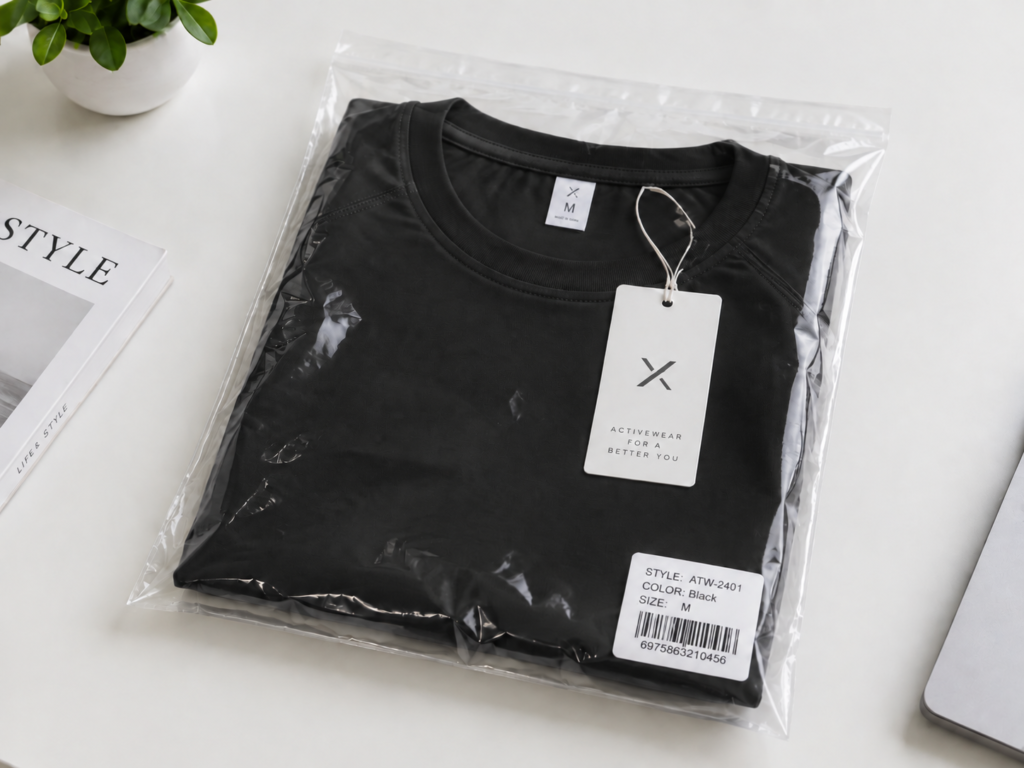
Show the actual garment inside the approved polybag, paper-based pack or retail box. Images should make pack fit, product orientation, inserts and label position easy to inspect. Helpful inputs include packaging artwork, desired format, target channel, packaging sample reference and any market-specific version. Packaging claims should remain tied to documented material evidence.

Carton and QC
Show carton packing, carton marks, quantity checks and relevant outgoing verification without revealing confidential addresses, order numbers or brand data. Useful inputs include units per carton, mixed or single-SKU rules, carton-mark template, destination grouping and nominated-forwarder instructions. Freight time, customs clearance and platform acceptance are not presented as manufacturing guarantees.
Custom Apparel Packaging Frequently Asked Questions
Answers below cover the packaging questions apparel brands usually need resolved before artwork approval, sampling, bulk packing and shipment preparation.
Can Leadshow make every packaging material in-house?
No. Leadshow coordinates packaging within apparel projects and can arrange sampling, sourcing, application and verification of approved labels and packaging. The company does not claim an in-house factory for every polybag, box, printed card or woven label. Supplier capability, material, MOQ, cost and timing are reviewed according to each project.
Which apparel packaging formats can be reviewed?
Projects may include individual garment packaging, custom polybag options, paper-based packaging, paper cards, folding cartons, retail-ready packaging, e-commerce packaging, gift-box options by arrangement and export-carton markings. Final availability depends on garment type, brand artwork, sales channel, supplier capability, MOQ and material requirements.
Can packaging be sampled with the garment?
Yes, packaging samples can be reviewed with an actual or representative garment when the project requires physical approval. The check can cover folded fit, closure, label and barcode position, inserts, product presentation and carton efficiency. Sampling time is confirmed after structure, material, artwork and revision requirements are known.
Who provides barcode data?
Barcode data should be supplied or approved by the brand or responsible party. Leadshow can apply and verify barcode and SKU information according to approved files, but does not claim to register UPC, EAN or FNSKU numbers. Scanning requirements and acceptance criteria are confirmed according to the specific retail, warehouse or project rules.
Can multiple SKU packaging versions be managed?
Yes, Leadshow can coordinate multiple styles, colors, sizes, SKUs, markets, barcodes and packaging versions according to project files. A SKU matrix is recommended to connect the garment, label, barcode, pack and carton rule. The service is not described as unlimited SKU management or a guarantee of zero packing errors.
Is packaging MOQ the same as garment MOQ?
Not necessarily. Standard garment MOQ starts from 100 pieces per color per design, subject to material, trims, customization and production conditions. Custom packaging materials can have independent supplier minimums that may exceed the garment quantity. Final packaging MOQ is confirmed after artwork, material, structure and supplier requirements are reviewed.
Can sustainable packaging options be considered?
Environmental options can be evaluated when suitable materials and supplier documentation are available. Recycled, FSC, recyclable, biodegradable, compostable or plastic-free claims are not applied automatically. Certification scope, material evidence, market requirements and claim wording should be verified before artwork is released or public environmental statements are used.
Can retail-ready packaging be supported?
Retail-ready packaging can be coordinated by project. Requirements may include folding, individual packs, hangtags, size identification, barcode or SKU labels, retail boxes, carton marks and packing lists. Retailer-specific rules should be provided or approved. Leadshow does not guarantee acceptance by every retailer, warehouse or platform under one universal packaging specification.
How are packaging changes controlled?
Artwork, dimensions, material, label content, SKU mapping and market versions should carry clear revision control. A change after approval can affect packaging material, sample fit, supplier MOQ, cost or timing. Final files are approved before bulk procurement, and repeat orders should reconfirm packaging information when products, markets or brand content have changed.
What should we send for a packaging review?
Useful inputs include garment type, Tech Pack or reference sample, order quantity, color and size range, SKU list, brand guidelines, label artwork, packaging artwork, barcode data, sales channel, target market, preferred packaging format, carton rules and expected timing. Incomplete projects can begin with the most current product and brand information available.
Send Your Apparel Packaging Requirements
Share the garment and packaging information already available, whether the project is at concept, sample, quotation or bulk-production stage. A useful review starts with the apparel category, expected quantity, color and size range, sales channel, target market and current packaging direction. Brand files may include logo artwork, label files, hangtags, care information, SKU lists, brand-approved barcode data, packaging artwork, reference packs and carton-mark templates.
Leadshow can review how the packaging requirement connects with garment construction, folding, labels, SKU identification, packaging sample approval, bulk packing and export-carton preparation. Standard garment MOQ starts from 100 pieces per color per design, while packaging supplier MOQ, material, cost and timing are confirmed separately according to the selected pack and artwork. Environmental claims, certified materials and market-specific labeling require supporting evidence or approved information.
Upload the latest files rather than waiting for every detail to be perfect. Missing items can be identified during project review before packaging material procurement or bulk packing is released.