
Custom Apparel Hang Tags
Coordinate brand artwork, SKU data, tag approval, garment application, and packing within one apparel production workflow.
- Hang tag development coordinated for sportswear, swimwear, streetwear, and modest sportswear programs.
- Artwork, logo, size, SKU, barcode, market version, and attachment requirements reviewed before bulk use.
- Approved hang tag versions aligned with labels, individual packing, carton markings, and garment order data.
- Projects are evaluated with the apparel order; materials, print processes, MOQ, cost, and timing are confirmed after review.
Hang Tags Integrated With Apparel Manufacturing
A hang tag becomes useful only when the approved artwork, product data, SKU, garment, and packing instructions stay aligned. Leadshow coordinates hang tag work as part of sportswear, swimwear, streetwear, and modest sportswear manufacturing programs.
From Brand File to Garment
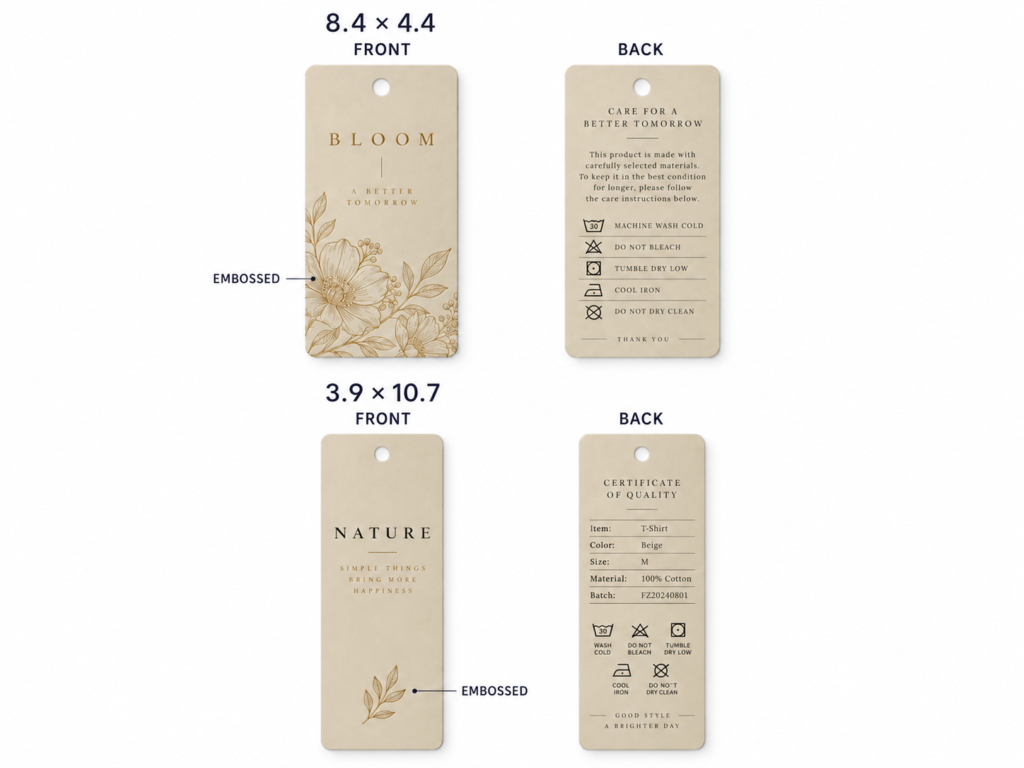
Leadshow is an apparel development and manufacturing partner rather than a dedicated paper-printing factory. Hang tag support is organized around the finished garment. Brand files can include the approved logo, product name, size information, style number, SKU, barcode data, market language, retail information, and attachment instructions.
After the project team receives the files, requirements are checked against the garment order so the tag can be matched with the correct style, color, size, and packing version. Sampling and sourcing can then be coordinated with the relevant supplier, followed by sample review and approval. Once a version is approved, the same reference should remain linked to the garment order through production, packing, and shipment preparation. This approach reduces the common gap between “a tag was printed correctly” and “the correct tag was attached to the correct garment.” It is especially useful for collections with many colors, sizes, retail variants, or destination-market versions.
Clear Scope, Better Control
Hang tag materials, print methods, surface effects, supplier MOQ, price, and production timing vary by artwork and sourcing conditions, so final specifications are confirmed by project. Leadshow can coordinate sampling, sourcing, application, verification, and version control according to approved information.
Claims such as in-house printing, unlimited customization, every material being certified, RFID capability, or fixed hang tag lead times should not be assumed without supporting project evidence. Clear scope is valuable for brand and procurement teams because it separates garment-manufacturing responsibility from specialist print-supplier capability while keeping both connected inside one apparel order. The result is a more controlled handoff from brand file to sample, from sample to approved version, and from approved version to bulk packing. For a mature apparel program, that coordination often matters more than simply having a long list of decorative print options.
Hang Tag Support for Different Apparel Programs
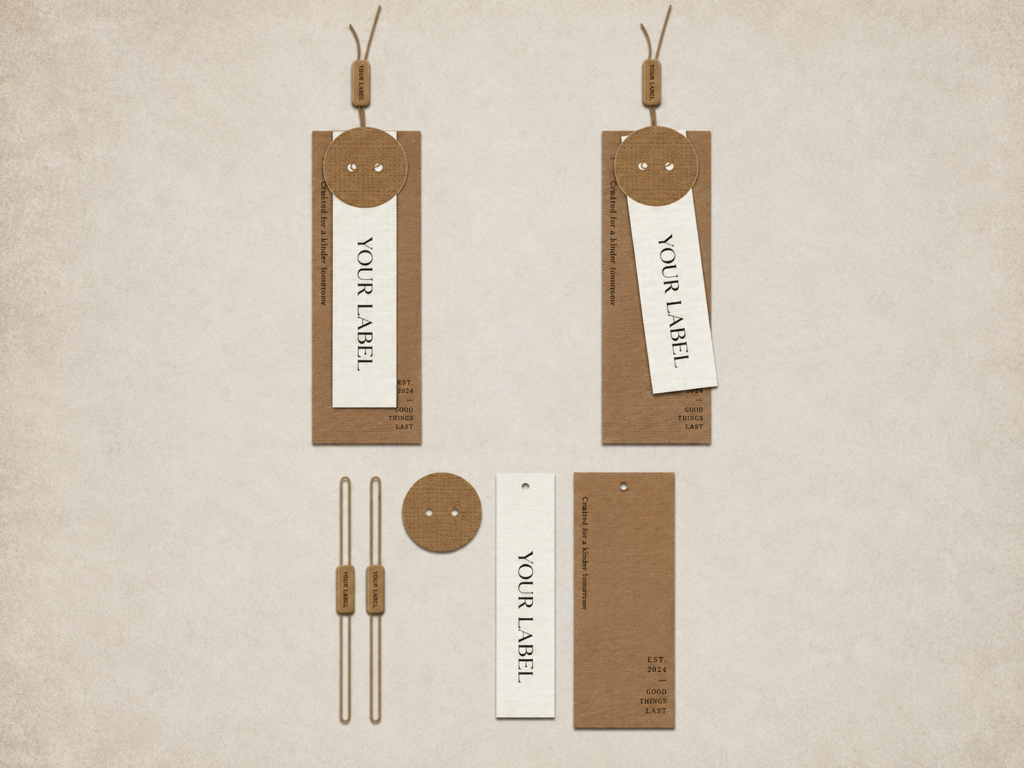
Different apparel programs use hang tags for different reasons. Some focus on brand presentation, while others depend on SKU, barcode, market, or packing accuracy. The six groups below represent common project situations supported by Leadshow’s apparel manufacturing model.
Established Brands
Mature brands often arrive with approved brand manuals, artwork rules, product naming, color standards, and packaging instructions. The key need is not creative reinvention; it is faithful execution. Hang tag versions should stay aligned with the approved garment, label set, SKU matrix, and market requirements. Version control becomes especially important during seasonal updates and repeat orders.
Activewear Brands
Sports bras, yoga leggings, running shorts, tank tops, sports T-shirts, and related activewear often include many color and size combinations. Hang tags may carry style, size, product, barcode, or brand information. A controlled link between garment SKU and tag version helps reduce wrong-size, wrong-color, or wrong-market attachment during bulk packing.
Private Label Programs
Private label projects usually involve more than a single logo. Main labels, size labels, care labels, hang tags, stickers, individual bags, paper cards, and carton markings may need to share a consistent brand system. Leadshow can coordinate approved brand files across these components and align them with garment production and packing instructions.
Retail Programs
Retail orders may use hang tags for price, style, size, barcode, product information, or in-store presentation. Accuracy becomes critical when one collection has many SKUs. The garment, hang tag, individual packing label, carton information, and packing list should follow the same approved SKU structure before the order is released for packing.
Import Programs
Importers and distribution teams often manage multiple garments, sizes, colors, markets, and packaging versions in one order. Hang tags need to fit into the broader identification system rather than operate separately. Clear artwork versions, market codes, SKU references, and carton instructions help reduce sorting problems and rework before export preparation.
Growing Brands
Growing brands may have a strong logo and product concept but less developed packaging documentation. A workable starting set can include vector artwork, hang tag dimensions, required text, garment type, quantity, SKU plan, and target market. Missing items can then be clarified before sampling instead of being discovered during bulk packing.
Information Needed for a Hang Tag Review
Accurate review starts with the files and order data that define the final garment. Complete information is helpful, but a project can also begin with a reference design, product plan, and estimated quantity when some packaging details are still being developed.
Requirement
What to Provide
Why It Matters
Brand artwork
AI, EPS, SVG, editable vector PDF, or other approved high-quality artwork
Keeps logo, typography, and layout consistent with the approved brand system.
Tag dimensions
Finished width × height, shape, fold or die-line requirements where applicable
Defines the physical format and helps evaluate sourcing and print feasibility.
Front / back content
Final wording, product name, brand message, website, care note, or other approved text
Prevents late text changes and makes version control easier.
Brand colors
Approved Pantone or other color reference where available
Helps the supplier evaluate print color and sample approval requirements.
Garment product
Product type and style number
Links the hang tag to the correct sportswear, swimwear, streetwear, or modest sportswear item.
SKU list
Style, color, size, version, and quantity breakdown
Creates a controlled relationship between tag versions and bulk packing.
Barcode data
Final barcode image or approved data supplied by the brand / importer
Avoids generating or assuming commercial barcode information.
Market / language
Destination market and approved language version
Supports separation of regional artwork and product information.
Attachment requirement
String, fastener, position, direction, or other approved method
Ensures the sampled tag is evaluated in the intended garment context.
Order quantity
Total garment quantity plus SKU breakdown
Allows hang tag sourcing quantity to be reviewed against the apparel order.
Packing requirement
How hang tags relate to labels, bags, stickers, cartons, or retail packaging
Keeps brand and identification information consistent through packing.
Target schedule
Required sample milestone and garment delivery target
Sample and bulk timing are confirmed after artwork, material, supplier, and apparel schedule review.
Define the Hang Tag Before Sampling
A useful hang tag specification covers more than artwork. Physical size, material direction, print requirements, finishing, attachment, and variable information affect sourcing, sample approval, cost, and how the tag performs within a finished garment and packing program.
Size and Shape
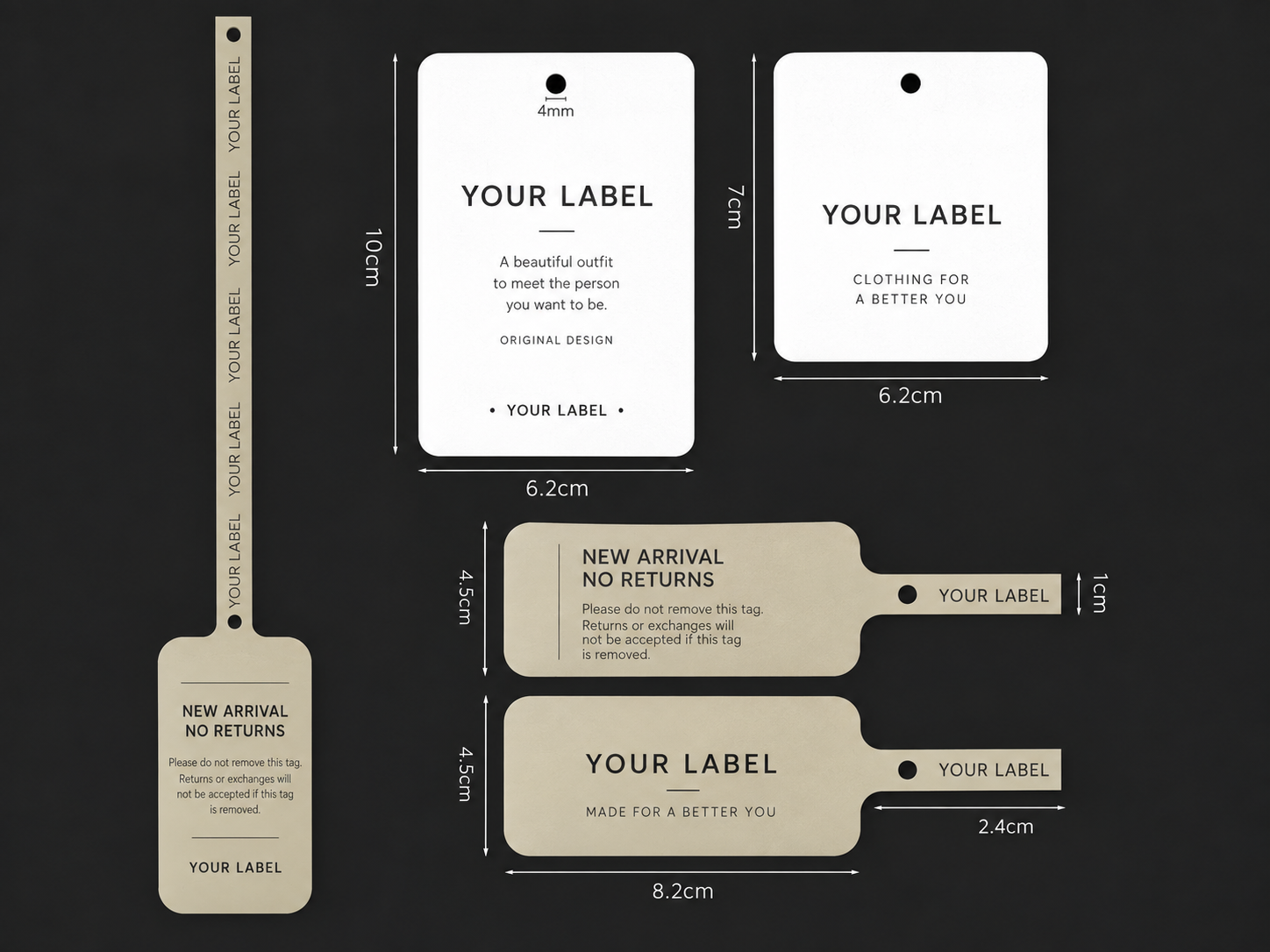
Finished dimensions should be defined in millimeters or inches, together with orientation and shape. A rectangular card, folded tag, shaped piece, or custom die line can require different tooling or supplier preparation. The correct size should also allow required text and barcode information to remain readable without making the tag oversized for the garment.
• Provide finished width × height.
• Mark front and back orientation.
• Supply a die line when a special shape is already approved.

Material Direction
Paper, board, synthetic stock, textured stock, recycled-content materials, or other substrates may be considered, but availability and environmental claims require supplier evidence. Material choice affects print appearance, stiffness, edge quality, feel, weight, and price. A premium-looking stock is not automatically appropriate for every product or sales channel.
• Share preferred material or reference sample.
• State required feel or visual effect.
• Confirm any certification claim before public use.
Printing Requirements
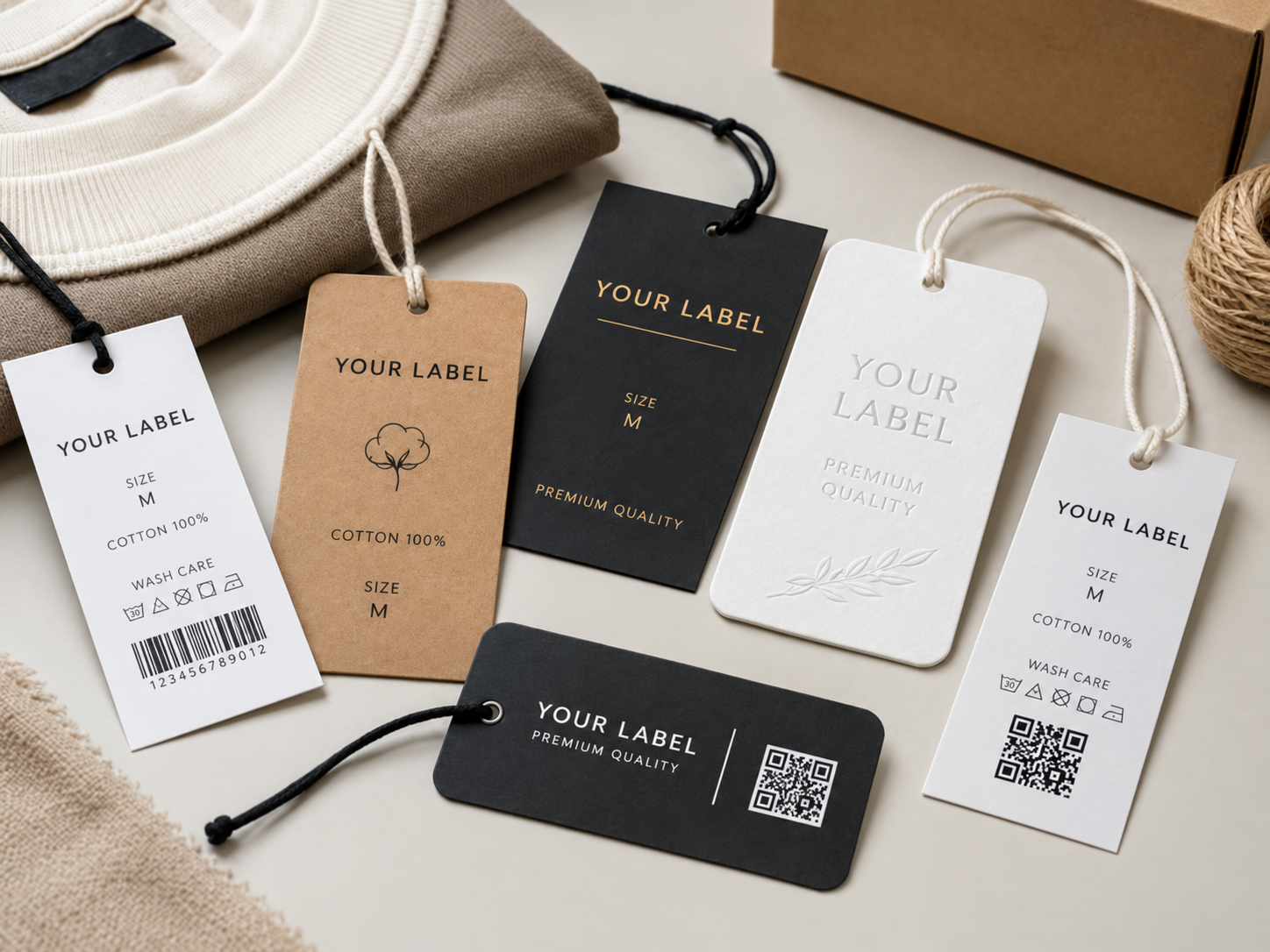
Artwork should identify the intended logo, text, colors, print sides, and any variable fields. Print technology and color approach are selected with the sourcing supplier according to file, quantity, stock, and finish. A digital proof can help with layout, but physical color and material appearance may still require a sample.
• Supply editable artwork.
• Provide approved color references.
• Separate static design from variable SKU or barcode information.
Surface Finishing
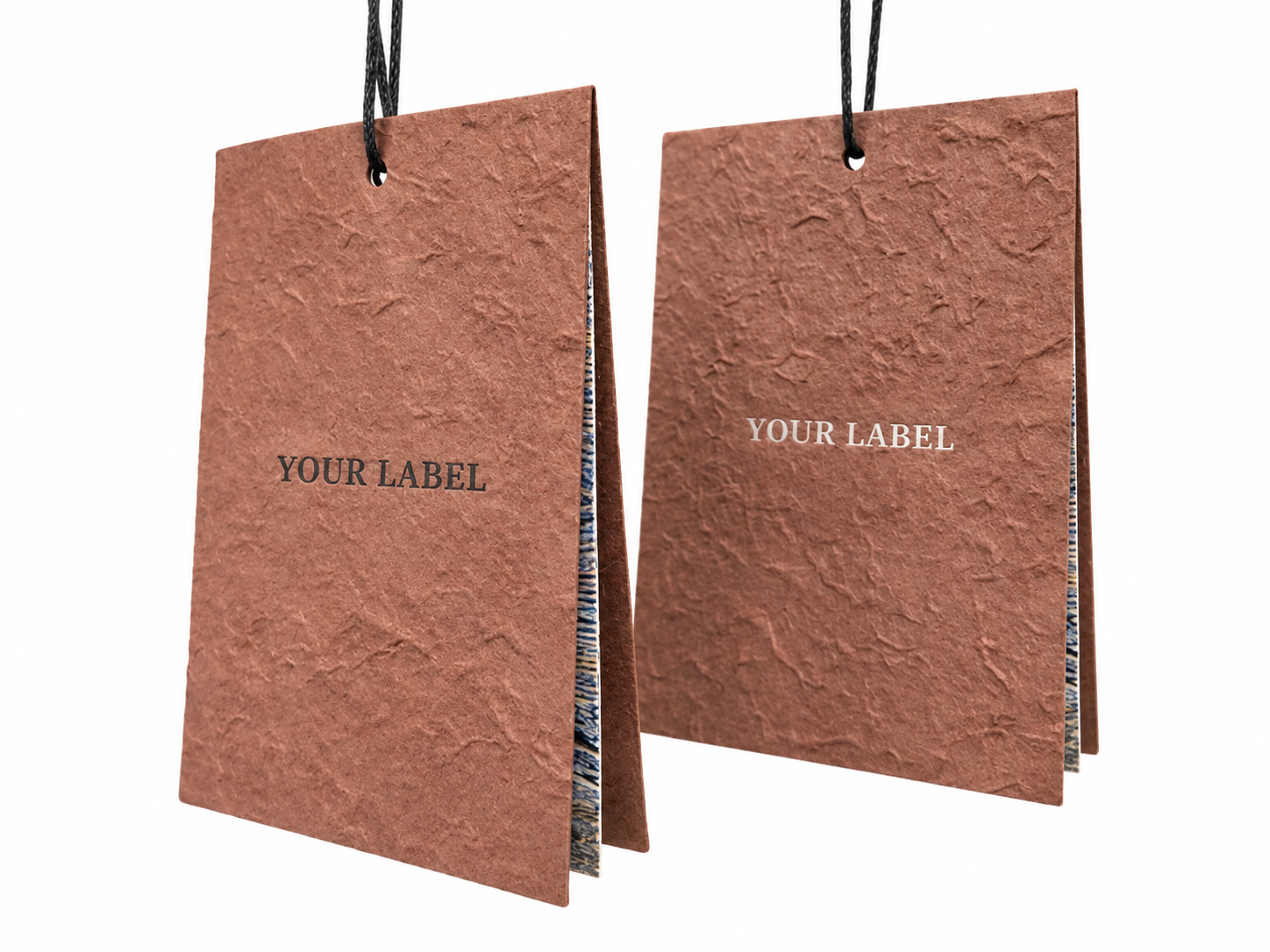
Foil, embossing, debossing, lamination, spot effects, edge treatments, or other decorative finishes may be requested for review, but availability is not assumed. Each finish can change tooling, sample needs, minimum quantity, cost, and production time. The finish should support the brand position rather than being added simply to make a tag look more complex.
• Identify the exact effect wanted.
• Provide a visual reference where possible.
• Confirm feasibility through sampling.
Hole and Attachment
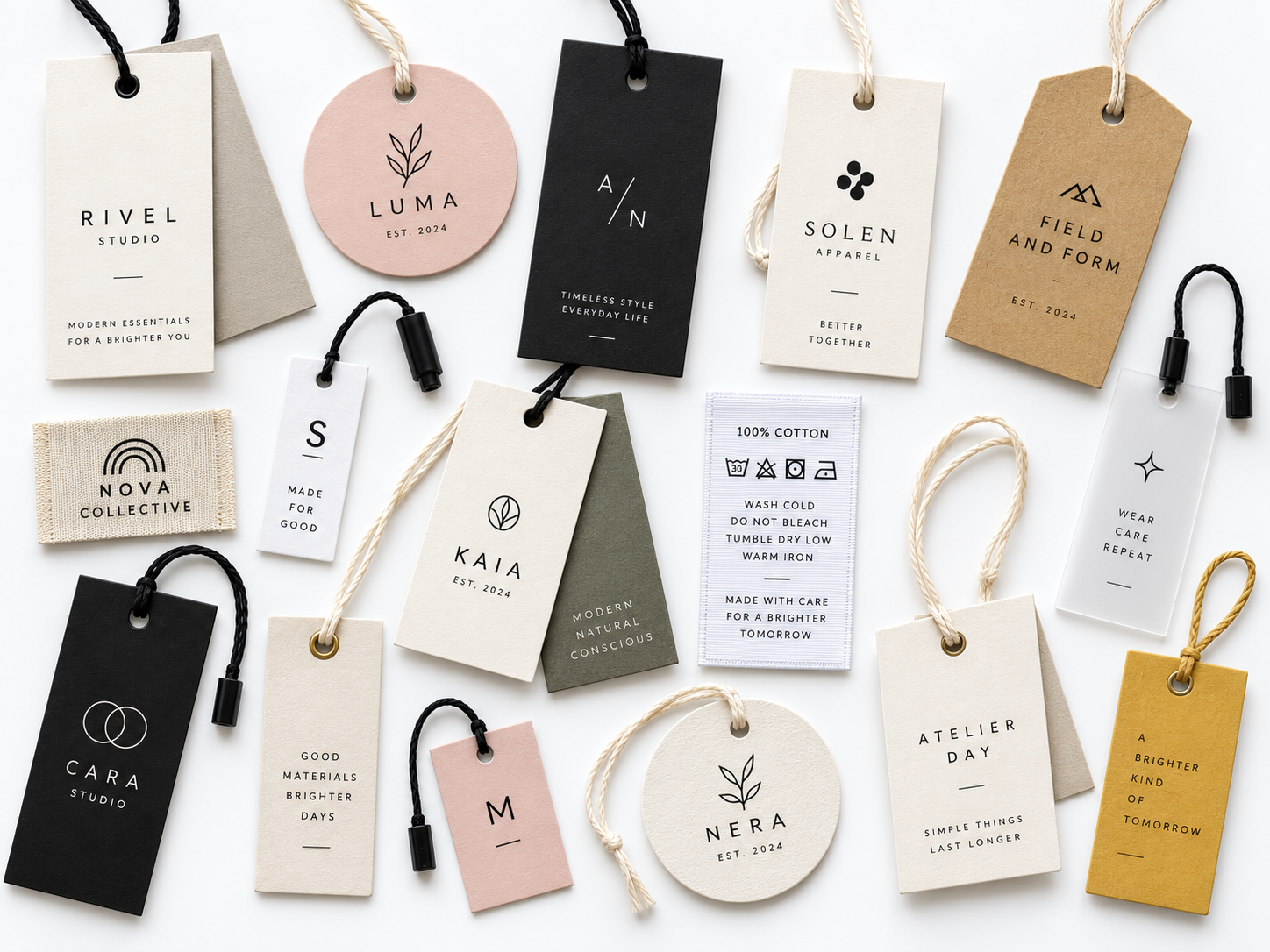
Hole position, eyelet, string, elastic, fastener, safety pin, or another attachment method affects how a tag sits on the garment and how efficiently it can be applied in packing. The attachment also needs to avoid damaging delicate fabric or interfering with the product presentation.
• Mark attachment position.
• State cord or fastener preference.
• Check the final method on the actual garment before bulk use.
Variable Information
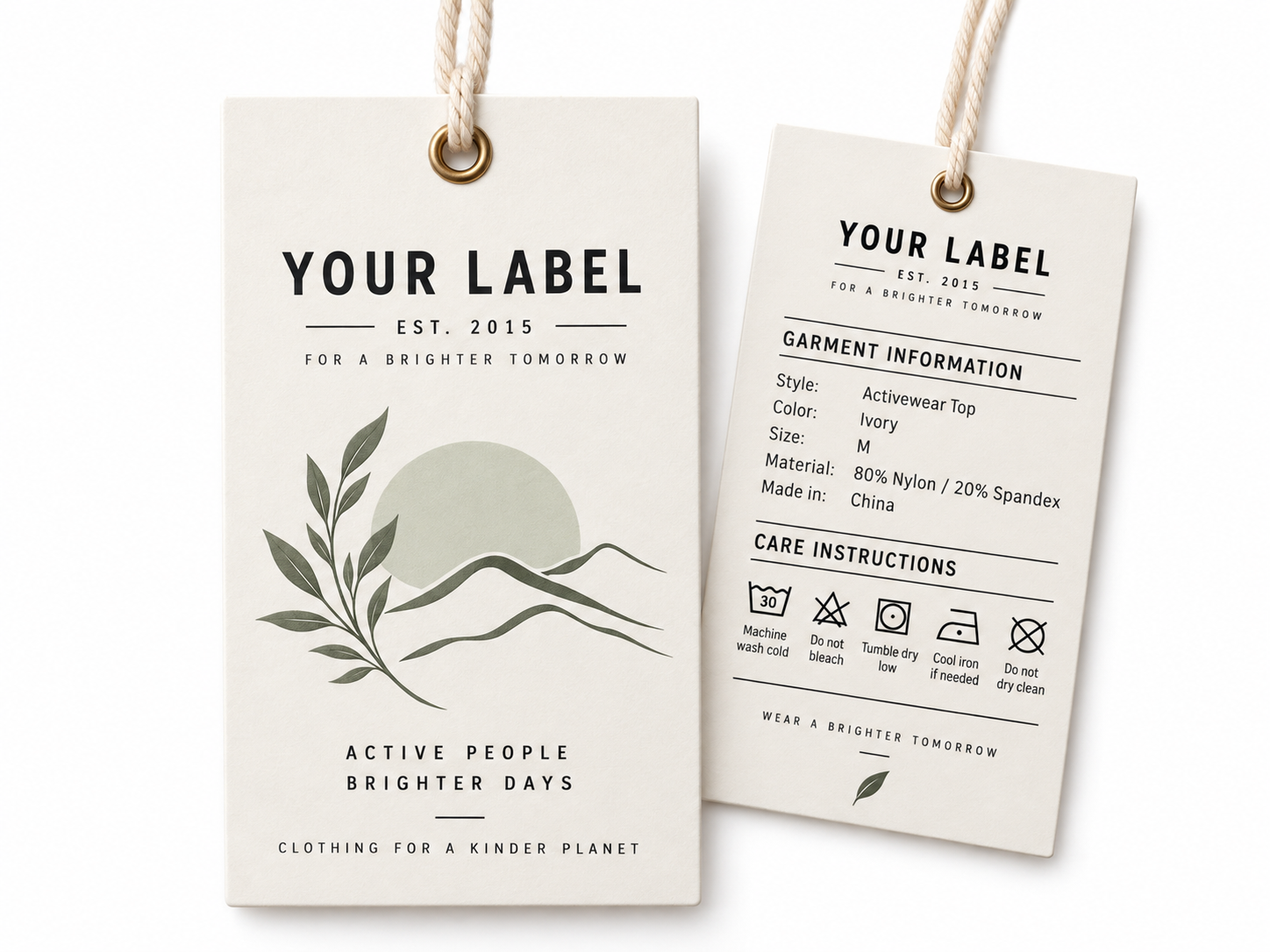
Size, style number, SKU, retail price, barcode, QR code, language, or market-specific information can create many versions from one brand design. Variable information should be supplied in a controlled file and linked to the garment SKU matrix. Leadshow does not invent or register commercial codes; approved data is supplied by the responsible brand or importer.
• Separate fixed and variable fields.
• Freeze approved data before bulk printing.
• Match tag version to garment and packing version.
Review Artwork Before Hang Tag Production
Artwork review is the point where many low-cost mistakes can still be prevented. The goal is to confirm that dimensions, brand elements, product text, SKU data, and production files agree before a tag sample is ordered or approved.
File Readiness and Brand Details
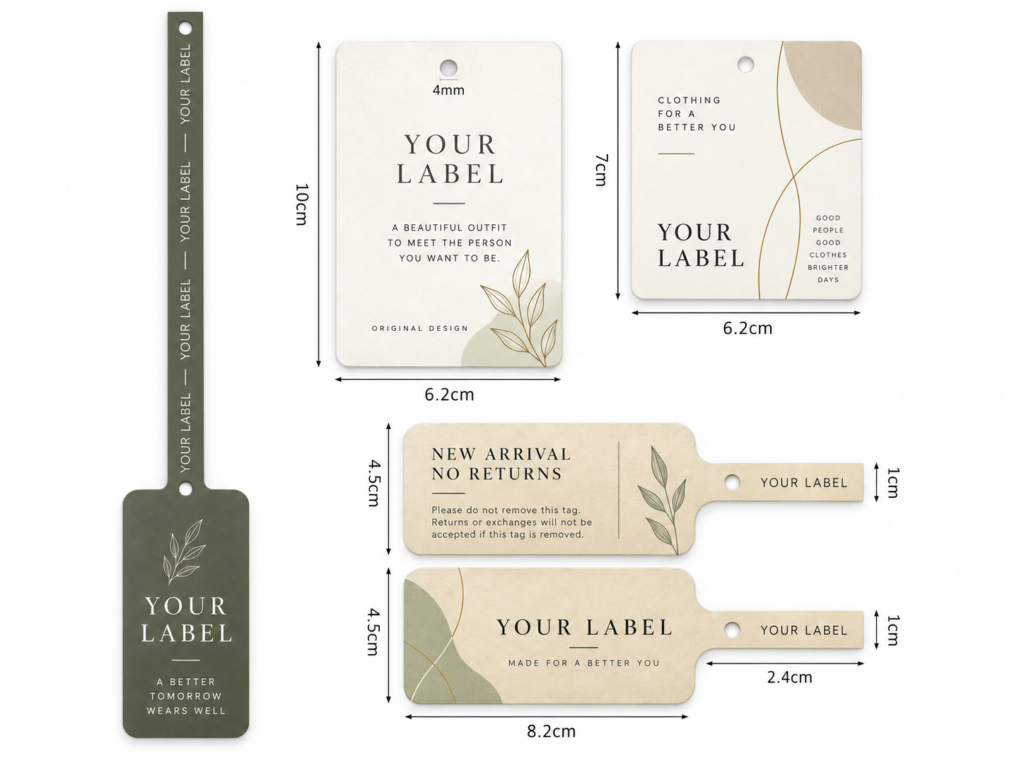
A production-ready review begins with the approved brand file. Vector artwork is preferred because logos, text, lines, and shapes can be scaled without losing quality. The review should confirm the finished size, front and back orientation, logo proportions, font use, color references, safe margins, punch or attachment area, and any cut or fold lines.
Text also deserves a separate check. Product names, style numbers, fiber or care information, websites, social handles, claims, and marketing copy should match the brand-approved source. If one design supports several markets, the artwork version needs a clear naming convention rather than informal file names such as final-final-v3. When the tag contains a barcode or QR code, the artwork team should keep the code area clear and provide the final data or image from the responsible brand, retailer, or importer. Leadshow can review the relationship between the file and the apparel order, but legal labeling content and commercial code ownership remain with the responsible party.
Version Control Before Approval
Once questions are identified, they should be resolved before bulk production rather than buried in email threads. A useful issue list might record the artwork file name, version number, date, affected SKU group, requested change, approval status, and final reference.
The approved file should then be linked to the hang tag sample and the garment order. If text, logo, size, color, or barcode information changes after approval, the version needs to be reopened and reviewed again. For large collections, this discipline prevents one corrected SKU from being mixed with an older file that looks nearly identical. It also gives packing and quality teams a clearer reference when comparing physical tags against the order. The objective is not paperwork for its own sake; it is to make sure the tag seen on the finished garment can be traced back to a controlled, approved source file.
Keep Hang Tags, Barcodes and SKUs Aligned
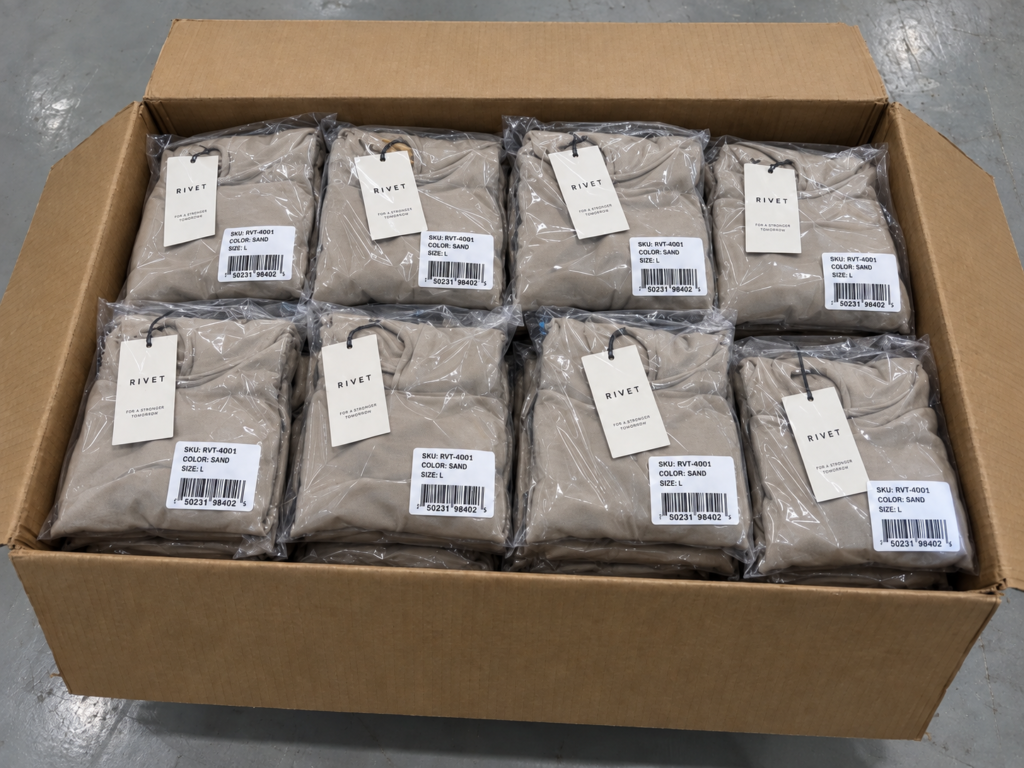
Multi-SKU orders become difficult when hang tag artwork, barcode files, garment sizes, and packing labels are maintained separately. A single matrix makes it easier to check each version before packing and to keep repeat-order information organized.
Style
Color
Size
SKU
Barcode Source
Hang Tag Version
Packing Version
Sports Bra A
Black
S
SB-A-BLK-S
Brand-approved file
HT-A-BLK-S
PK-A-BLK-S
Sports Bra A
Black
M
SB-A-BLK-M
Brand-approved file
HT-A-BLK-M
PK-A-BLK-M
Sports Bra A
Navy
S
SB-A-BLK-S
Brand-approved file
HT-A-BLK-S
PK-A-BLK-S
Yoga Legging B
Black
m
YL-B-BLK-M
Brand-approved file
HT-B-BLK-m
PK-B-BLK-M
Yoga Legging B
Black
L
YL-B-BLK-L
Brand-approved file
HT-B-BLK-L
PK-B-BLK-L
Example structure only. Real commercial SKUs and barcodes should come from the brand, retailer, importer, or other authorized source. Bulk checks should compare garment style, color, size, hang tag version, packaging information, and carton instructions against the approved order matrix.
Control Hang Tag Versions Across Sales Markets
One garment can require different hang tag text, barcode data, language, price, or packaging references for different sales regions. Clear version separation helps prevent market artwork from being mixed during production, packing, or repeat orders.
Market Version A
Use a dedicated version code for every approved regional artwork. The file name, language, required product information, SKU group, and barcode source should be tied to the garment matrix before sampling.
• Brand supplies or approves final wording and legal information.
• Leadshow coordinates the approved version with the garment order.
• Packing references should use the same market code.
• Changes after approval require a new controlled version.
Market Version B
Regional differences can be small enough to look identical at a glance while still creating a serious packing problem. A changed price field, language line, barcode, importer reference, or claim can create a separate version even when the design remains the same.
• Keep regional text in separate approved files.
• Mark the affected styles and SKUs.
• Check the physical sample for readability and layout.
• Separate bulk tags and packed goods by market instruction.
Market Version C
Hang tag content should not be treated as the complete legal labeling system for every market. Some information may belong on permanent garment labels, while other information can appear on hang tags, packaging, or inserts. Leadshow can coordinate approved content and market versions but should not independently determine global legal wording.
• Final translation comes from the responsible party.
• Regulatory claims require supporting evidence.
• Repeat orders should reconfirm current artwork before production.
Connect Hang Tags With the Brand Label System
A strong private label program keeps brand identity and product information consistent across the garment, hang tag, labels, packaging, and carton. Leadshow can coordinate approved files across several components rather than treating each item as a separate artwork task.
Hang Tags
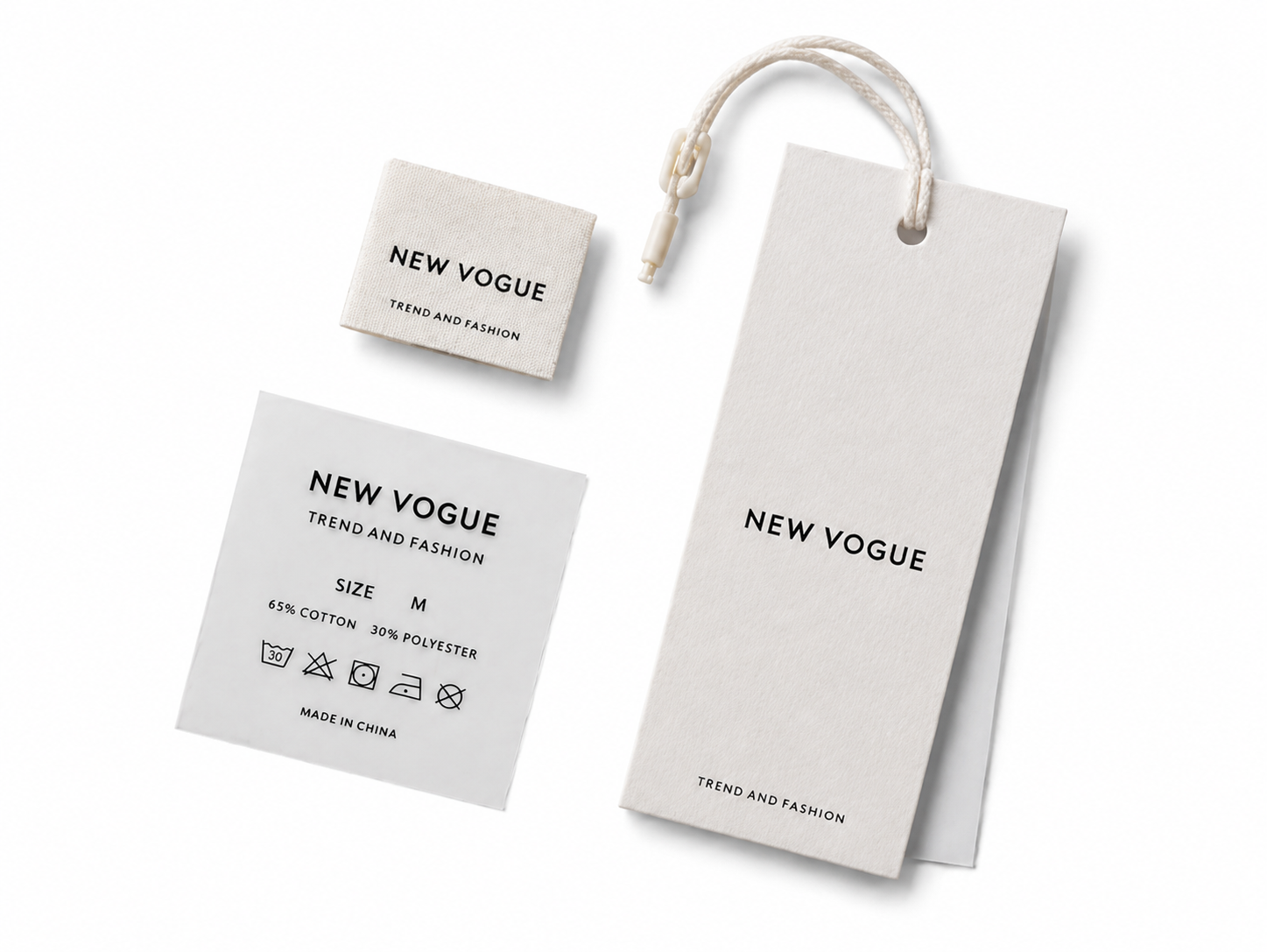
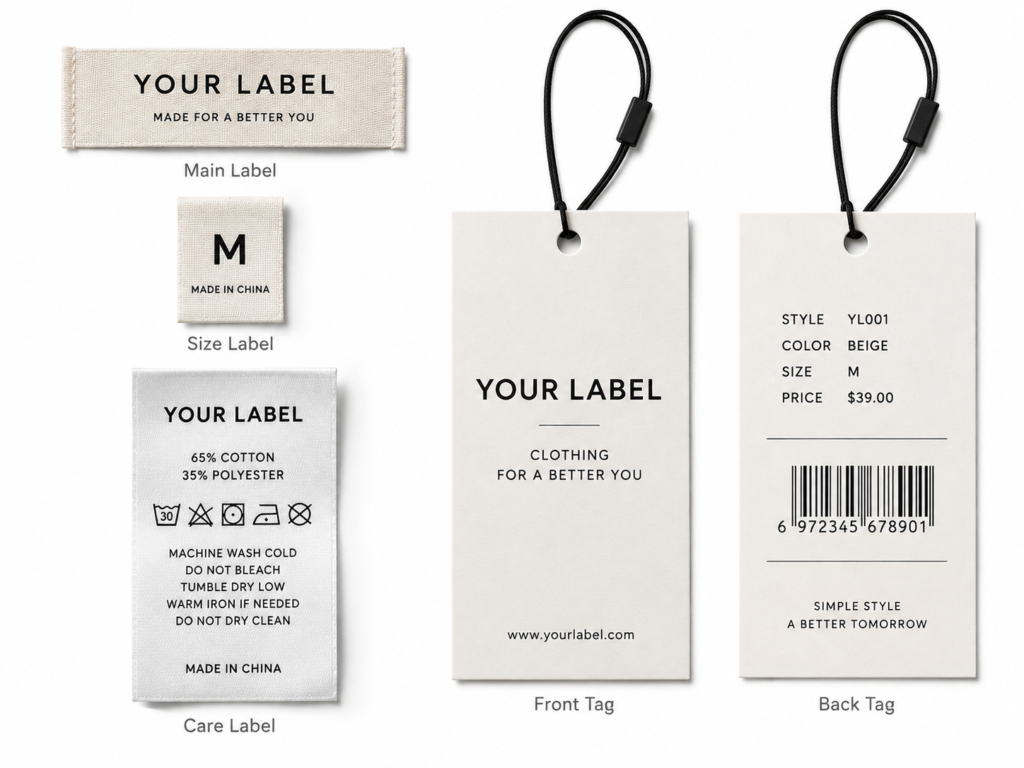
Used for brand presentation, product information, style identification, barcode data, price information, QR references, or retail communication according to the approved program. Tag material, finish, attachment, MOQ, price, and timing are reviewed by project.
Main Labels
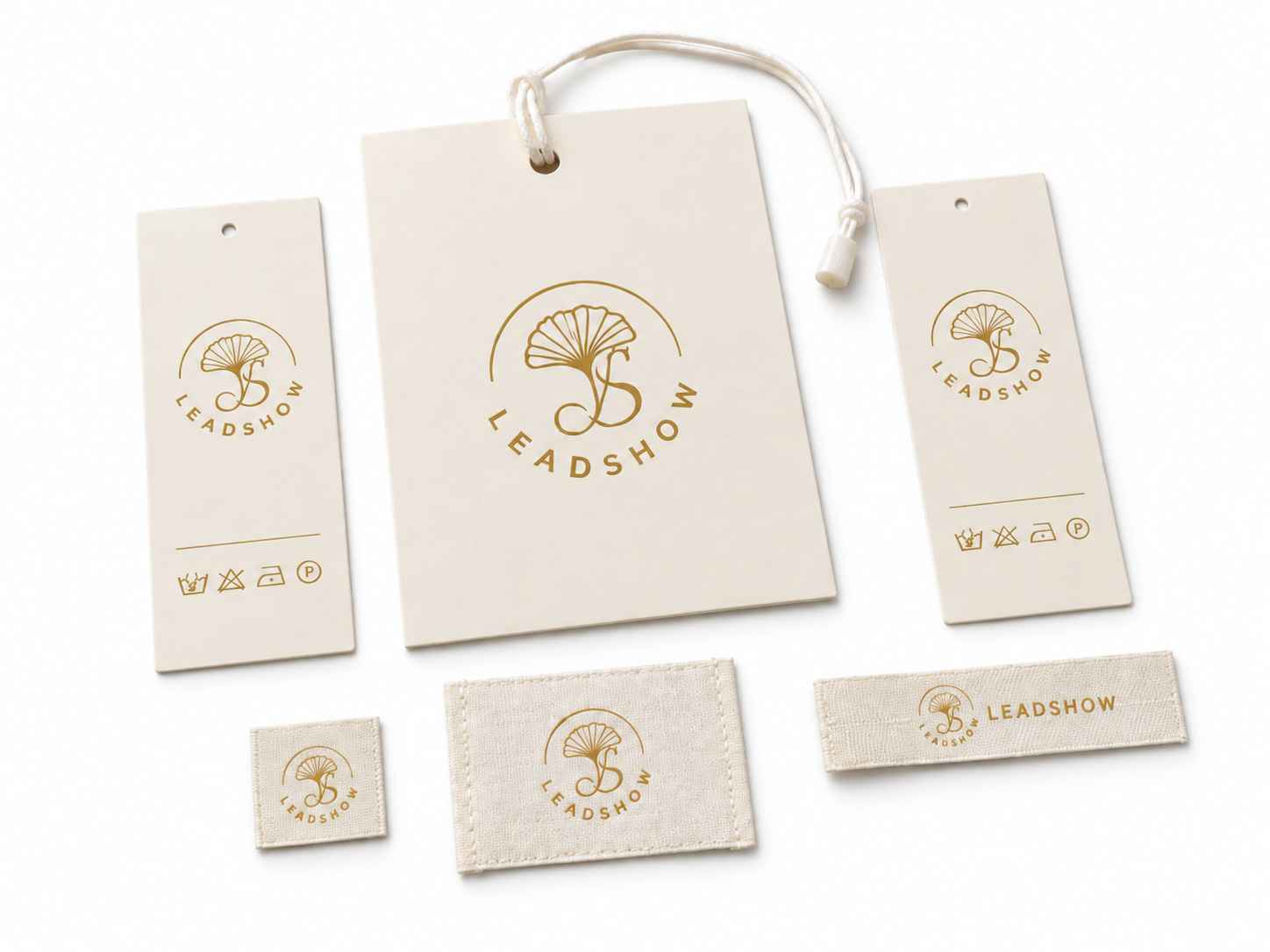
Main or brand labels identify the brand on the garment. Woven labels may be arranged according to project needs. The approved logo, dimensions, colors, placement, and sew-in method should stay consistent with the apparel specification and brand manual.
Size Labels
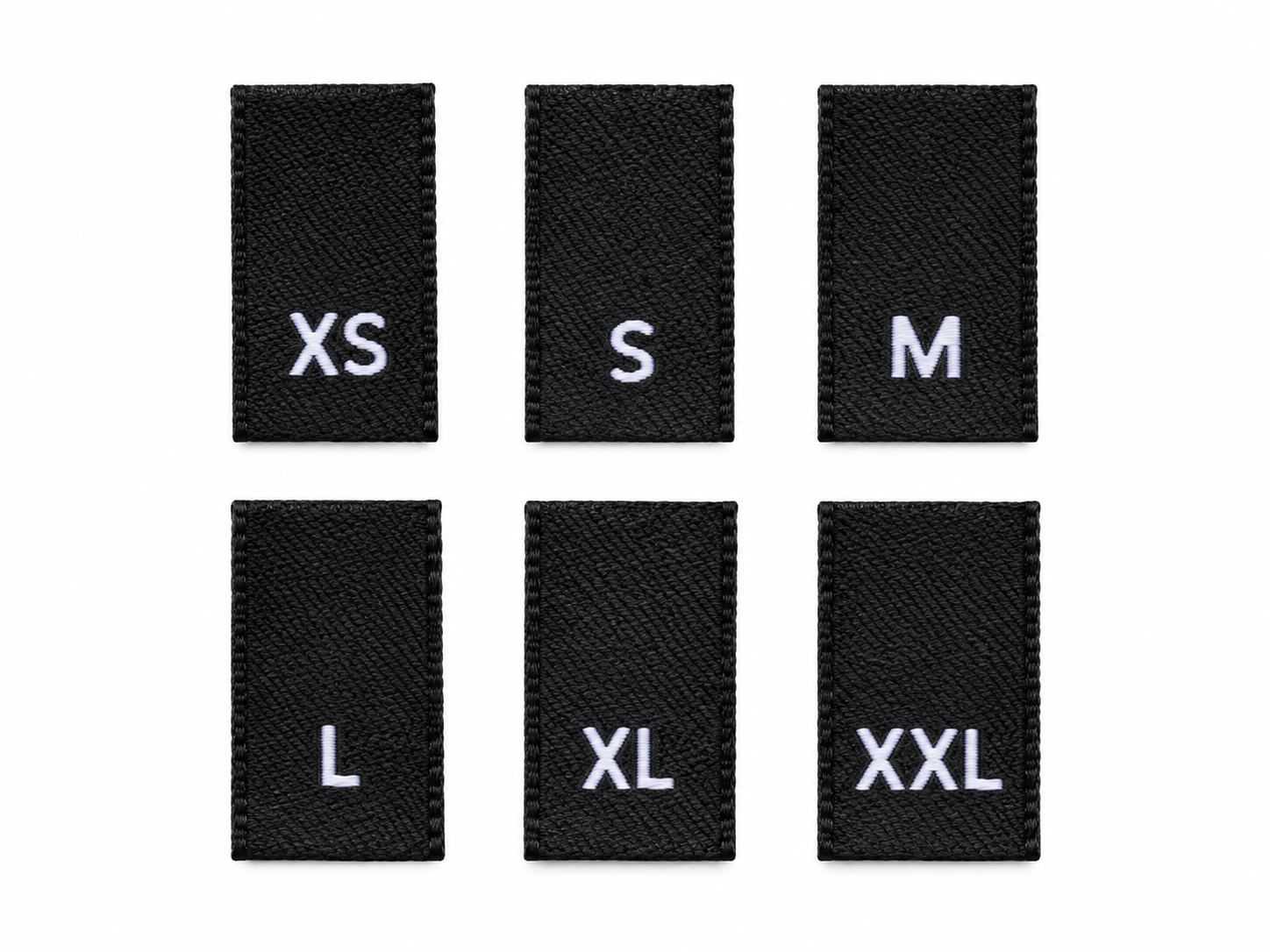
Size labels need to match the garment size and SKU. A correct hang tag with the wrong garment size label still creates a serious retail or warehouse error, so both references should be checked together during bulk packing.
Care Labels
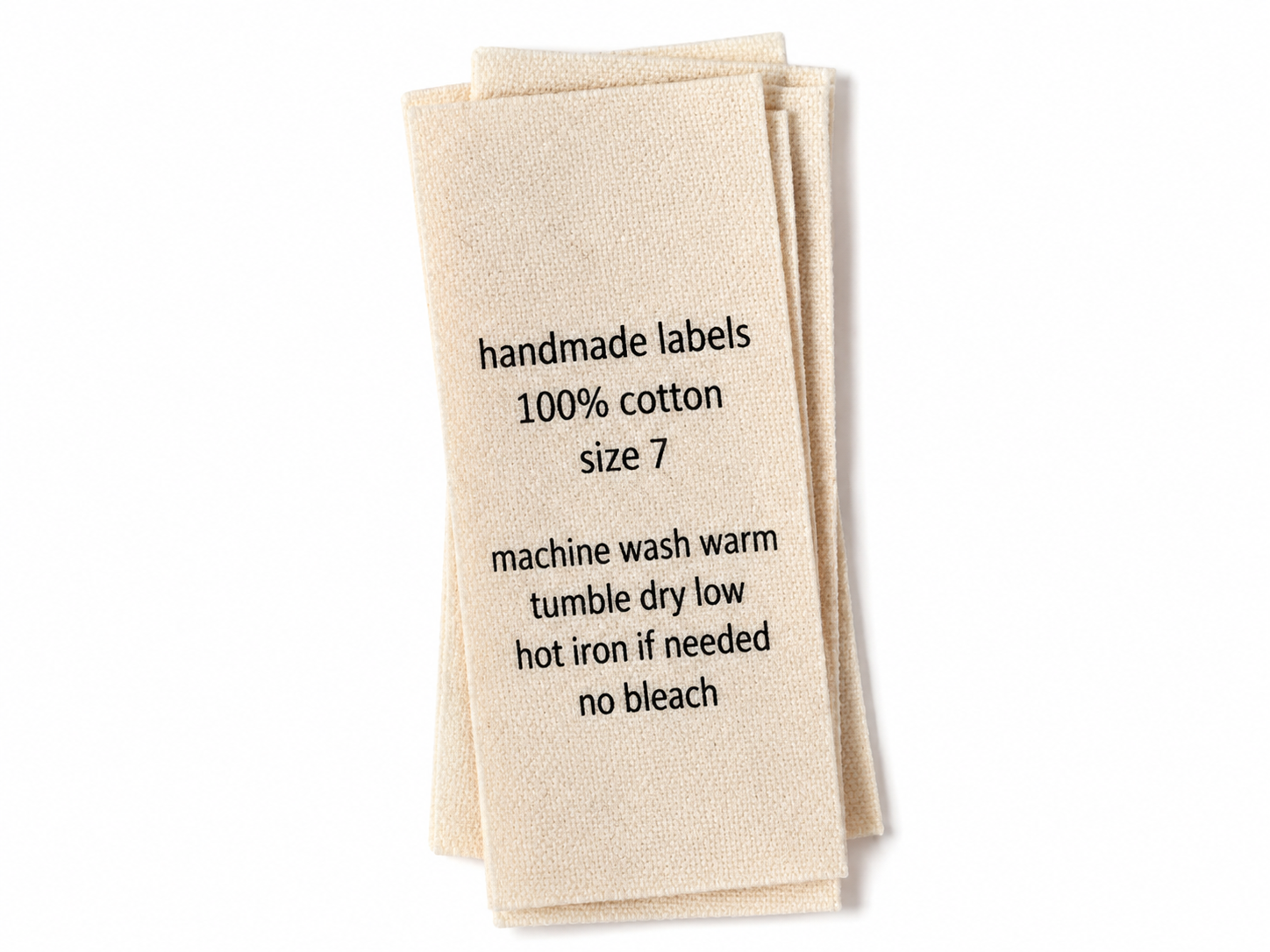
Care, fiber, origin, and related product information should be based on the final garment materials and approved market requirements. Leadshow can apply approved care-label content but does not independently guarantee legal labeling for every destination market.
Heat-Transfer Labels
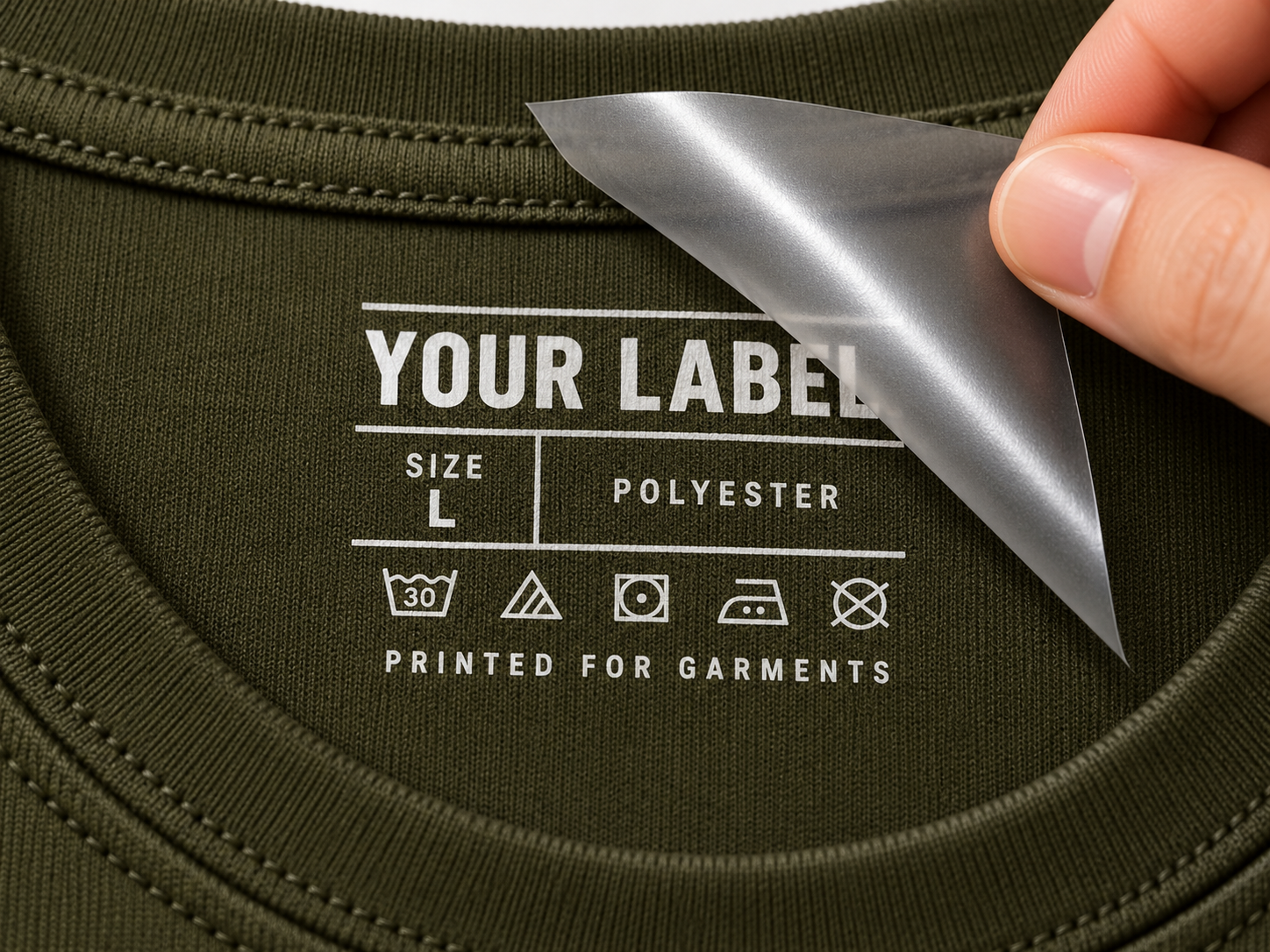
Leadshow has confirmed heat-transfer labeling equipment for suitable products. Heat-transfer main labels, care labels, or size labels can be evaluated according to fabric compatibility, artwork, position, and wash requirements. Suitability is confirmed by project.
Cards and Stickers
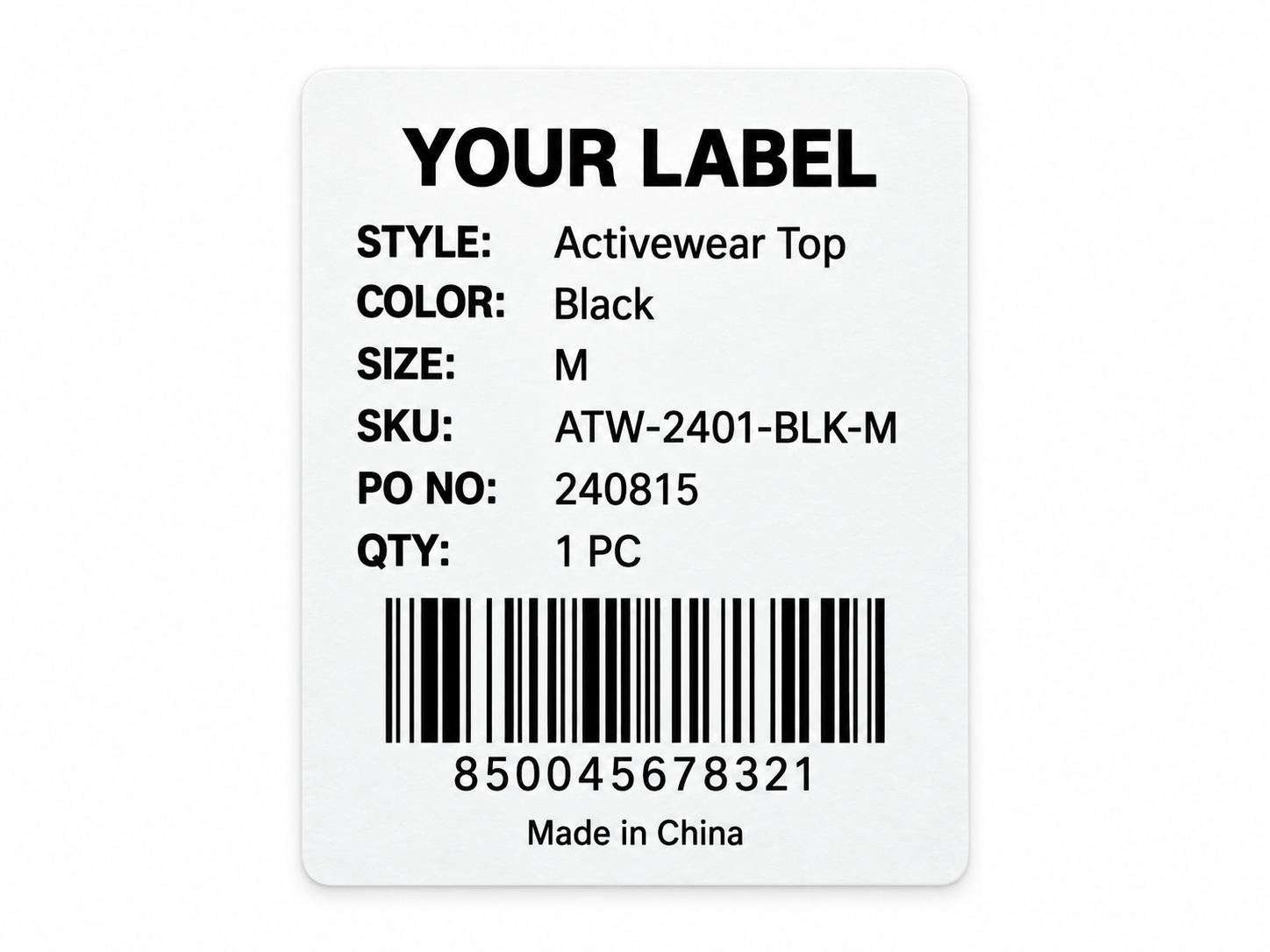
Paper cards, stickers, size stickers, carton markings, and related branded packaging components can be coordinated when required. Their purpose, artwork version, application position, and SKU relationship should be defined before packing so visual branding and order identification remain aligned.
Hang Tags for Core Leadshow Apparel Programs
Leadshow focuses on four confirmed apparel directions. Hang tag execution can be coordinated within these programs so brand files, SKU data, labels, and packing requirements stay connected to the products being sampled and manufactured.

Sportswear
Sportswear programs can include sports bras, sports T-shirts, yoga leggings, tennis skirts, jumpsuits, running shorts, tank tops, and tracksuits. Hang tag planning should reflect the actual garment, size range, color matrix, SKU structure, intended retail channel, and packaging method rather than using one generic tag file for every item.

Swimwear
Swimwear projects can use hang tags as part of a broader brand and product-information system. Material claims, care wording, performance statements, and market language should be based on approved product facts. Tag attachment should also be evaluated on the actual garment so delicate or stretch fabric is not damaged during application.

Streetwear
Hoodies, sweatshirts, sports T-shirts, tracksuits, and selected jumpsuits can form part of Leadshow’s streetwear direction. Hang tags may emphasize brand identity, collection story, style, size, price, or barcode information, while version control keeps colorways and market editions aligned with the correct finished garments.
Modest Sportswear
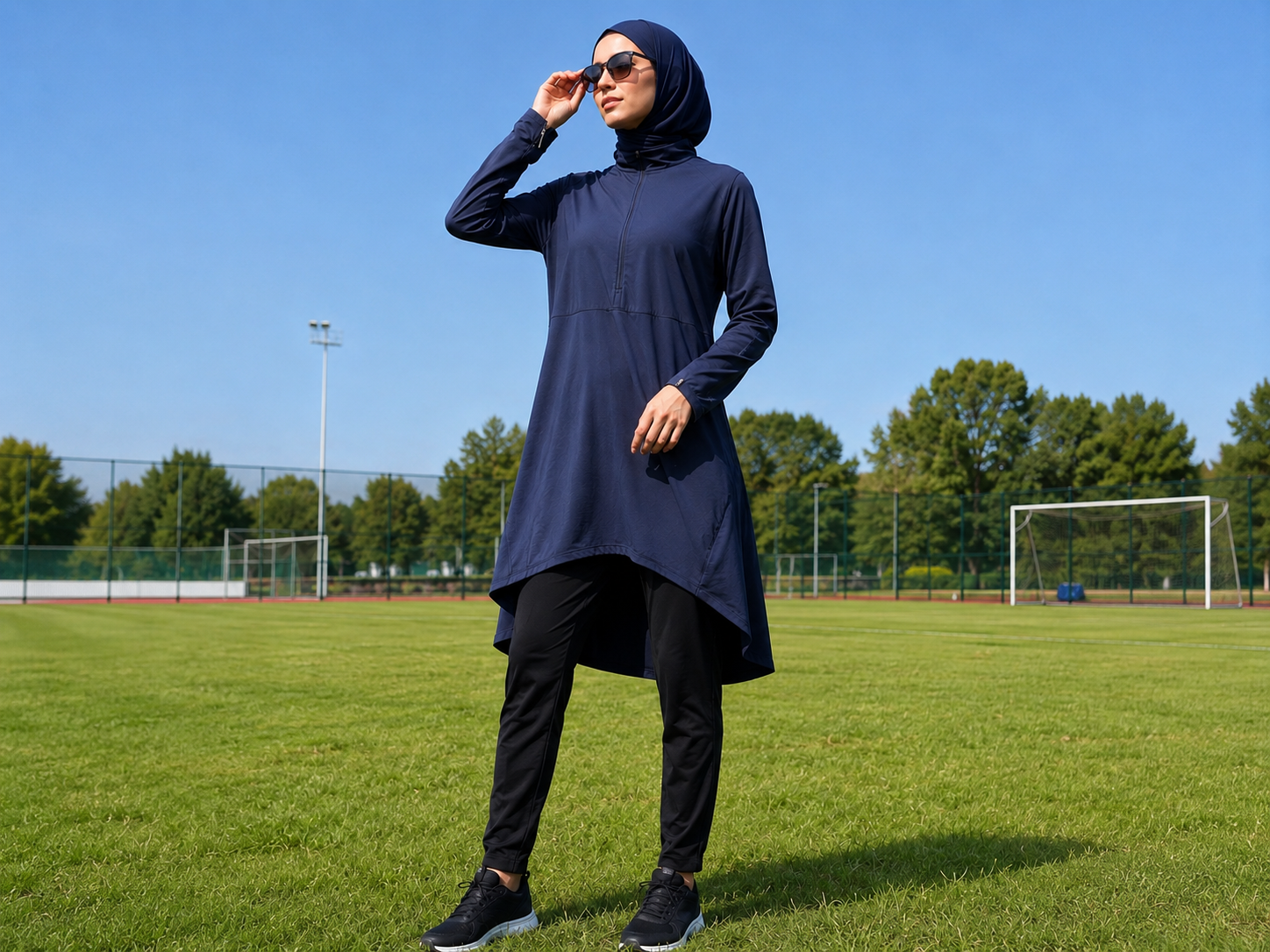
Modest sportswear may involve longer silhouettes, greater coverage, multiple layers, or coordinated sets. Hang tags should be planned around the actual product and packing configuration. For multi-piece items or market-specific versions, the SKU and label system should make each garment or set easy to identify without relying on appearance alone.
Move From Artwork to an Approved Hang Tag
Sampling converts a digital hang tag idea into a physical reference for bulk use. The process should confirm design, material direction, dimensions, print appearance, attachment, product data, and how the tag works with the intended garment.
Sample Review Before Bulk
After artwork and sourcing requirements are clear, Leadshow can coordinate a hang tag sample with the relevant supplier. Sample timing is not fixed because it depends on file readiness, material availability, special finishing, tooling, supplier workload, and delivery of the sample for review.
The physical sample should be checked against the approved file for finished dimensions, orientation, logo proportions, text, color direction, print registration, cut or fold, hole position, attachment parts, and variable information. If the tag includes a barcode, the final approved barcode source should be used rather than a placeholder carried over from a mockup. If the tag will hang from a sports bra, legging, swimsuit, hoodie, or another garment, the sample can also be reviewed on the actual product to confirm scale, attachment position, visual balance, and whether the fastening method could affect the fabric. Comments should be consolidated into one controlled revision rather than being issued as scattered messages.
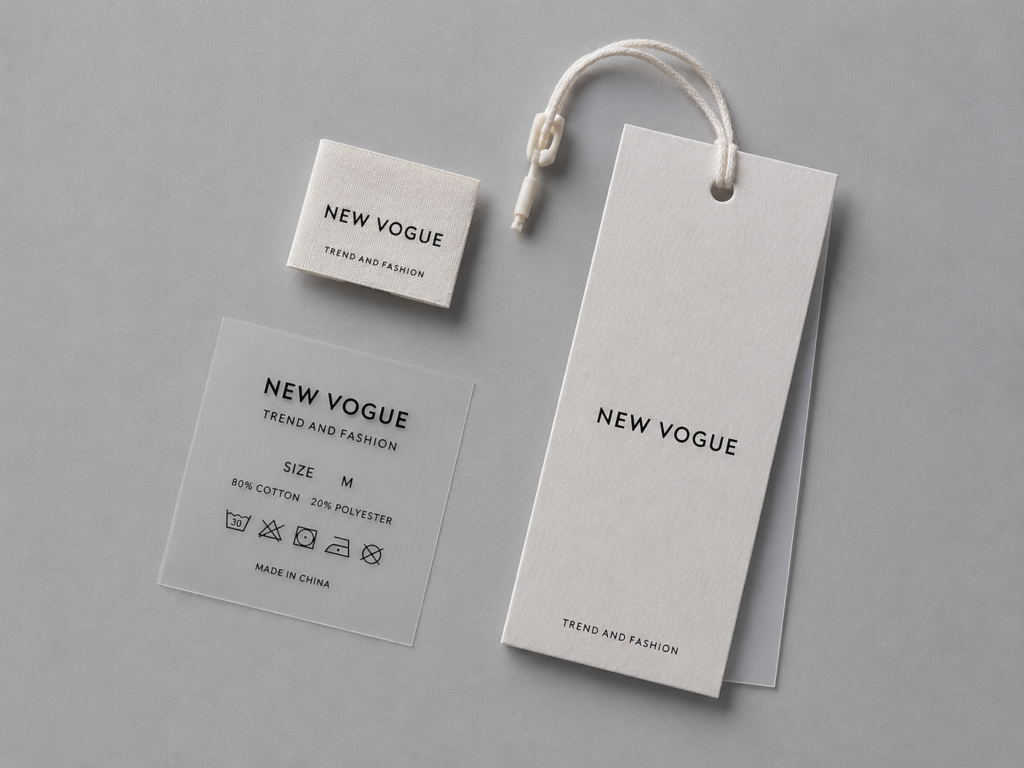
Freeze the Approved Reference
Bulk production should start from a clearly approved reference. A useful approval record includes the artwork version, sample date, material or stock reference, finished size, print or finish notes, attachment requirement, affected SKU group, and approval status.
When a physical sample is approved, photographs can support internal communication, but they should not replace the approved specification when color, thickness, or finish matters. Any change after approval should be treated as a revision because even a small text edit can affect several SKUs or markets. Final hang tag timing is then coordinated with garment production and packing so tags arrive before the relevant goods reach the application stage. Leadshow’s role is to keep the approved hang tag connected with the garment order and packing plan; supplier print lead time, freight, and special-process timing are confirmed after the exact tag specification is known.
Apply Approved Hang Tags During Bulk Packing
Bulk execution starts after the hang tag version has been approved and linked to the garment order. The main task is no longer design; it is accurate application, separation, packing, and verification across the correct products and SKUs.
Connect the Tag to the Garment
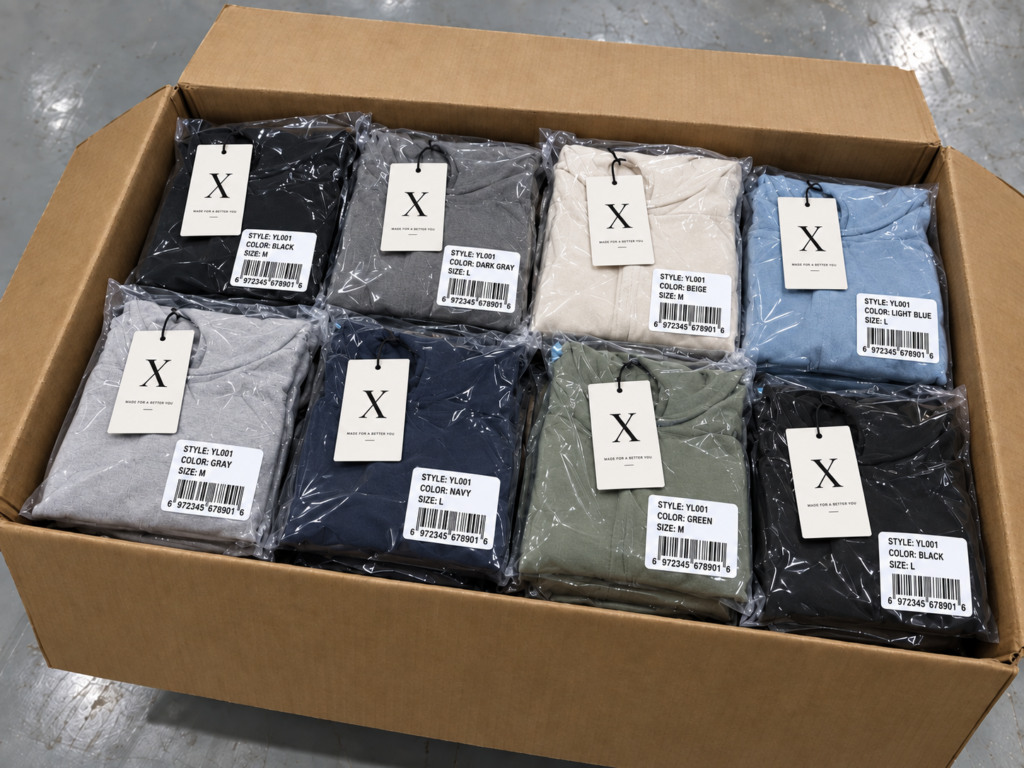
Before packing begins, the approved hang tag version should be associated with the final garment style, color, size range, SKU, barcode source, market version, and attachment instruction. Packing teams should not select tags by visual similarity alone. For example, two black sports bras in adjacent sizes may use nearly identical cards but different SKU and barcode data.
A structured packing reference helps prevent mixing. The approved attachment position also matters. Some garments can accept a standard fastener through an existing label or seam allowance, while delicate stretch or swim materials may need a different method to avoid visible damage. Application instructions should specify position, direction, and any special handling. After tagging, the item can move into the individual packing process together with size labels, stickers, bags, inserts, or other approved components. The objective is one matched unit: correct garment, correct internal labels, correct hang tag, correct barcode, and correct packaging version.
Prepare for Carton Packing
The same order logic should continue from individual garments into cartons. SKU quantities, size ratios, color ratios, market separation, bag labels, carton markings, and packing lists need to match the approved order. Hang tags are only one part of the identification chain, but a mismatch at this stage can create problems in receiving, retail preparation, distribution, or repeat ordering.
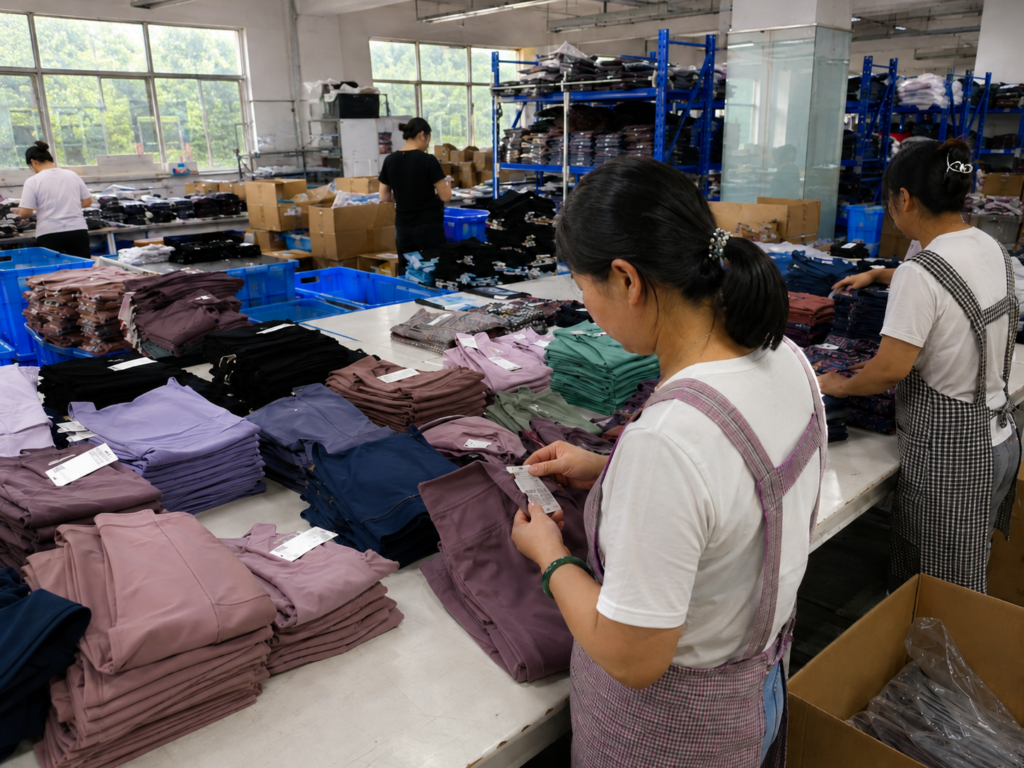
Leadshow’s warehousing and logistics function can support sorting, labeling, packaging, carton preparation, and shipment coordination according to project requirements. No claim should be made that every barcode is scanned, every packaging format is automated, or every retail platform requirement is covered. Instead, the packing method is reviewed against the approved project instructions, and the final schedule is aligned with garment completion, tag availability, inspection needs, packing capacity, and planned shipment preparation.
Reduce Hang Tag Errors Before Shipment
Hang tag problems are usually version or matching problems rather than design problems. A controlled workflow links each risk to a specific check before packing and shipment preparation, helping reduce reprinting, retagging, sorting, and retail identification issues.
Wrong Artwork Version
An old logo file, retired price line, previous market text, or outdated product copy can look almost identical to the current version. The safest control is a single approved artwork reference with a clear version code and date.
• Remove obsolete files from the active packing set.
• Link approved artwork to affected SKUs.
• Reopen approval after any text, color, barcode, or layout change.
• Keep the final sample tied to the approved version.
Wrong SKU Match
The correct tag can still be wrong for the garment when size, color, style, or version is mismatched. Multi-SKU orders need a clear matrix rather than visual guesswork.
• Map style, color, size, SKU, tag version, and packing version.
• Use the same matrix during production, inspection, and packing.
• Keep similar-looking SKUs separated.
• Check garment label, hang tag, and outer packaging together.
Wrong Barcode Data
Barcode errors can affect warehouse receiving, retail checkout, inventory, or replenishment. Leadshow should use barcode data supplied and approved by the responsible brand, retailer, or importer rather than creating unverified codes.
• Freeze final barcode files before bulk printing.
• Keep barcode text aligned with the SKU.
• Check size and position for readability.
• Use the agreed checking method when barcode verification is required.
Wrong Market Version
Different markets may use different language, price, product copy, barcode, importer information, or packaging references. Mixing regional versions can create rework or compliance questions.
• Assign a clear market or language code.
• Separate artwork files by region.
• Mark cartons and packing documents according to the approved program.
• Reconfirm market artwork before a repeat order if requirements have changed.
Wrong Attachment
A tag can be printed correctly but still be applied in the wrong place, wrong direction, or with an unsuitable fastener. Attachment should be treated as part of the approved garment presentation.
• Mark the attachment point on the product reference.
• Confirm string or fastener type.
• Evaluate delicate fabrics before bulk use.
• Check visible orientation after the garment is folded or hung for presentation.
Missing or Mixed Tags
Missing tags, duplicated tags, mixed versions, or damaged tags often appear during the final packing stage when many components converge. Prevention depends on order discipline rather than a single inspection claim.
• Issue the correct tag quantity to the packing group.
• Separate versions by SKU and market.
• Inspect visible tag presence and version during packing checks.
• Keep excess, rejected, and obsolete tags controlled to reduce accidental reuse.
Eight Areas Worth Reviewing Before Supplier Approval
A serious apparel manufacturer should be evaluated beyond factory size or quoted unit price. Product development, approved standards, material control, manufacturing scale, quality checkpoints and order execution all influence whether a supplier fits a long-term sourcing program.
Factor
Typical Impact on Review
How Leadshow Handles It
Material / stock
Special or certified stocks may have supplier minimums and longer sourcing requirements.
Supplier availability and evidence are reviewed before confirmation.
Finished size
Larger or unusual sizes can change material use, imposition, packing, and supplier price.
Dimensions are confirmed from artwork or an approved reference.
Shape / die line
Custom shapes may require tooling or dedicated setup.
Feasibility and any tooling impact are checked during sampling.
Print colors
Color count, spot references, full-color artwork, and matching expectations affect print method and approval.
Approved color references are passed into the sample review.
Finishing
Foil, embossing, lamination, spot effects, eyelets, and other requested treatments can add setup and supplier lead time.
Availability is confirmed before quotation rather than assumed.
Attachment
String, elastic, pin, fastener, or other parts can have separate supplier MOQ.
Attachment is reviewed as part of the final tag specification.
Variable versions
More SKU, market, language, price, or barcode versions increase data and setup complexity.
Versions are managed against the garment SKU matrix.
Order quantity
Total quantity and quantity per version affect supplier economics.
Hang tag quantity is reviewed against the actual apparel order.
Sample revision
Artwork or material changes after sampling can restart approval and sourcing.
Revisions are recorded before bulk production.
Production schedule
Tags need to arrive before the relevant garment packing stage.
Hang tag timing is aligned with garment completion and packing readiness.
Apparel MOQ
Leadshow’s standard apparel MOQ generally starts from 100 pieces per color per design, subject to garment materials, trims, construction, and customization.
This apparel MOQ must not be presented as the hang tag supplier MOQ.
Manage Hang Tags Across Multi-SKU Collections
Large apparel collections can turn one hang tag design into dozens or hundreds of versions. Style, color, size, barcode, language, and market fields need a controlled structure so bulk packing remains accurate as the program grows.
Build a Version Matrix
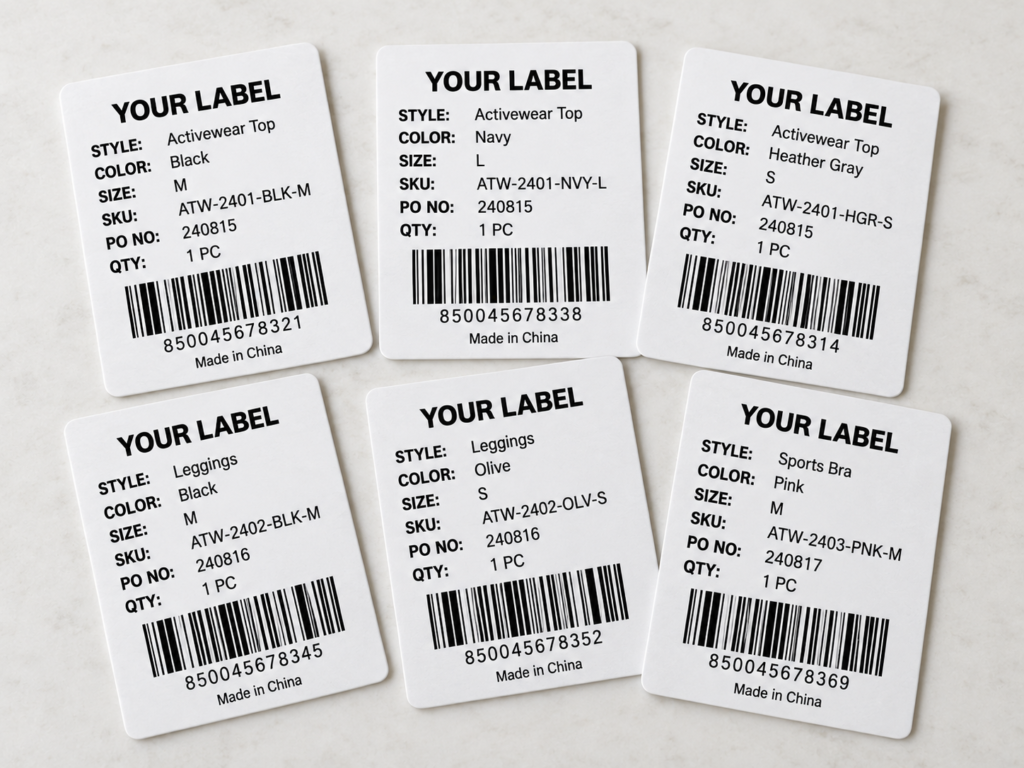
A multi-SKU hang tag program should begin with a matrix rather than a folder of unrelated artwork files. The matrix can list style number, product name, color, size, SKU, barcode source, market, language, hang tag artwork version, quantity, and packing version. Static design elements such as logo, typography, and brand colors can remain common, while variable fields are mapped to the relevant SKU.
This helps a brand see where one physical tag can serve several SKUs and where a separate version is required. It also allows the apparel team to plan how tags should be packed and issued to the correct garment groups. Version count has a direct commercial impact because small quantities spread across many variants can affect print supplier MOQ, setup, packing, and cost. For large programs, simplifying unnecessary tag variations can reduce complexity without weakening the brand system. The right level of variation is based on product information, retail need, market requirement, and channel workflow.
Carry the Matrix Into Repeat Orders
The same matrix becomes valuable after the first shipment. Repeat orders often fail when an old tag file is reused without checking whether barcode data, price, market wording, logo standards, or packaging instructions have changed. Before reordering, the active hang tag and packaging versions should be reconfirmed against the new garment order.
New colors, sizes, or markets can be added as controlled variants instead of creating a completely separate file system. Leadshow can support long-term reorder coordination by keeping the apparel order, approved references, label requirements, packing instructions, and current versions connected. The approach is especially relevant to established brands, retailers, importers, and growing labels managing several seasonal products at once. It does not require a complex software claim; disciplined version naming, approved data, and one shared SKU reference already remove a large amount of avoidable confusion.
Evidence From the Hang Tag Execution Process
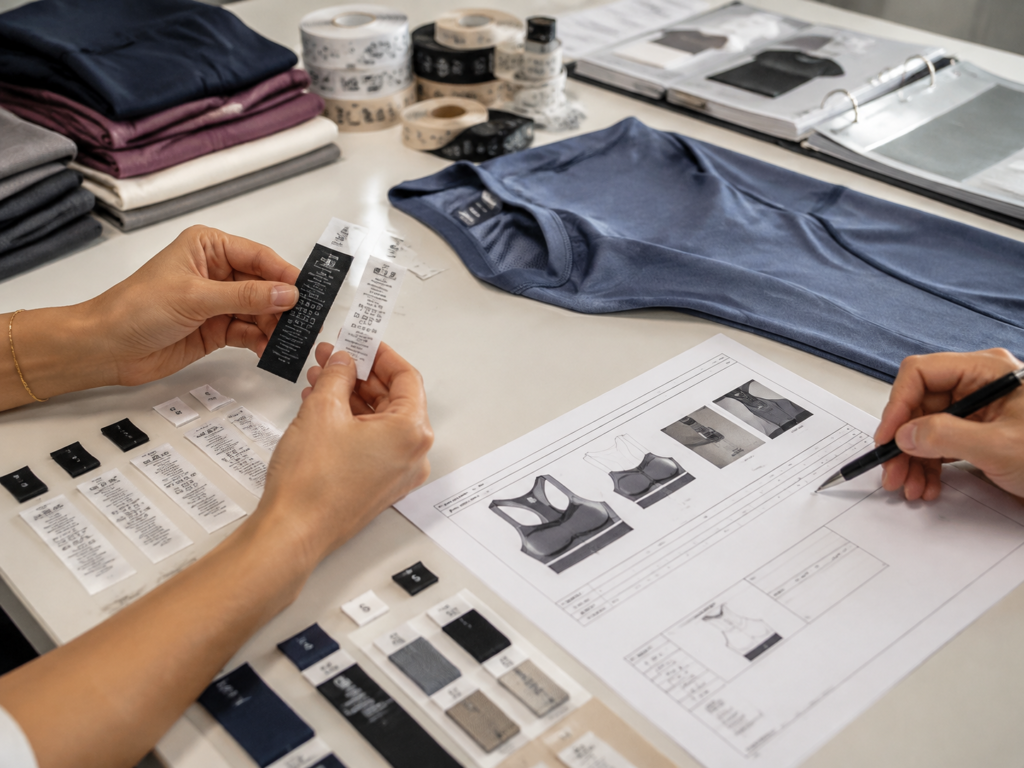
Brand teams should be able to see how hang tag information moves from file review into a physical garment and packing workflow. The strongest evidence is real, authorized, and directly related to the stage being described.
Artwork Review
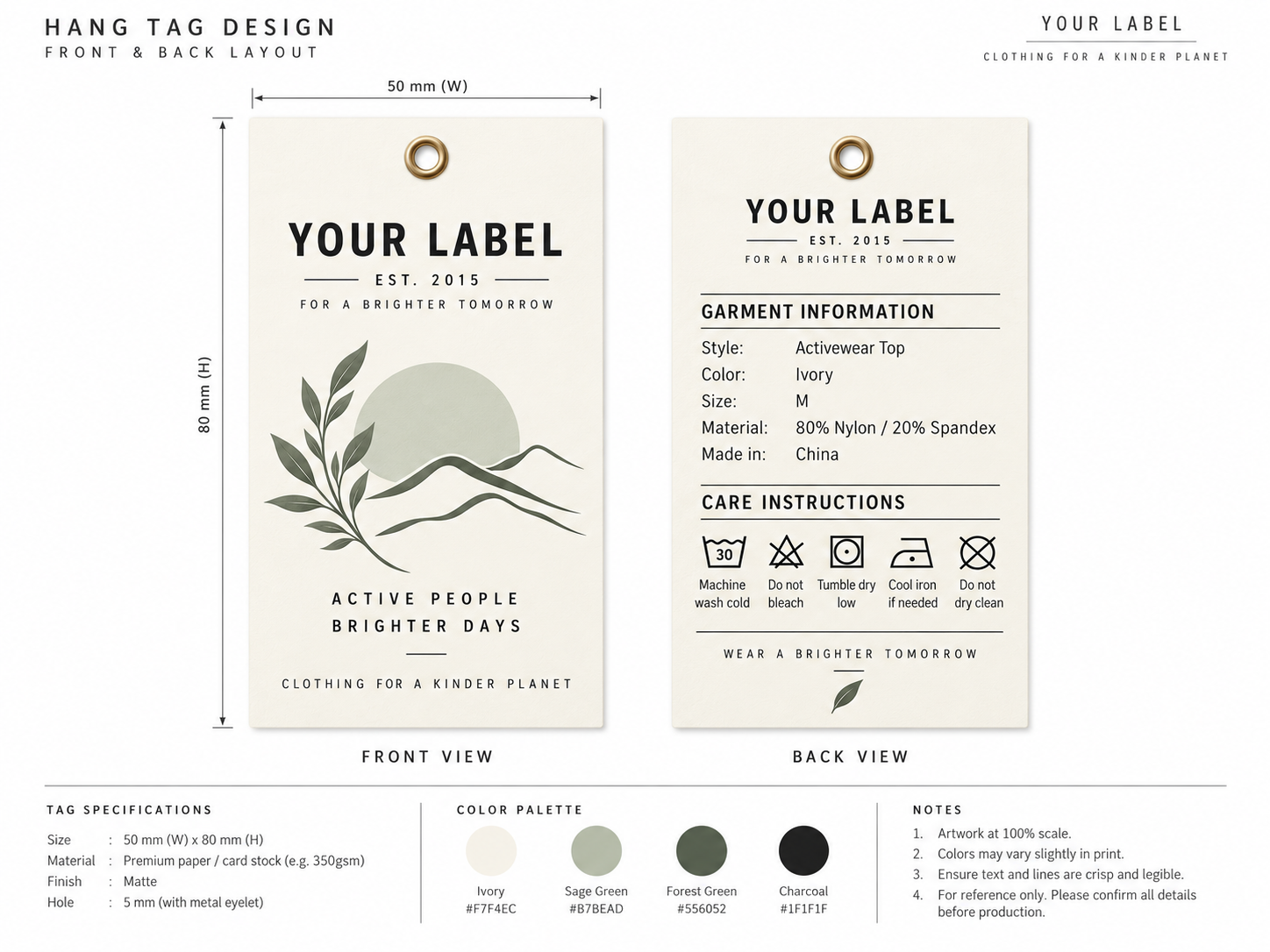
Show a de-identified hang tag file with dimensions, version name, barcode area, punch position, and review comments. Sensitive brand names, commercial barcodes, pricing, or unreleased product information should be removed unless disclosure has been authorized. The image proves file-control work rather than simply showing a finished tag.
Approved Sample
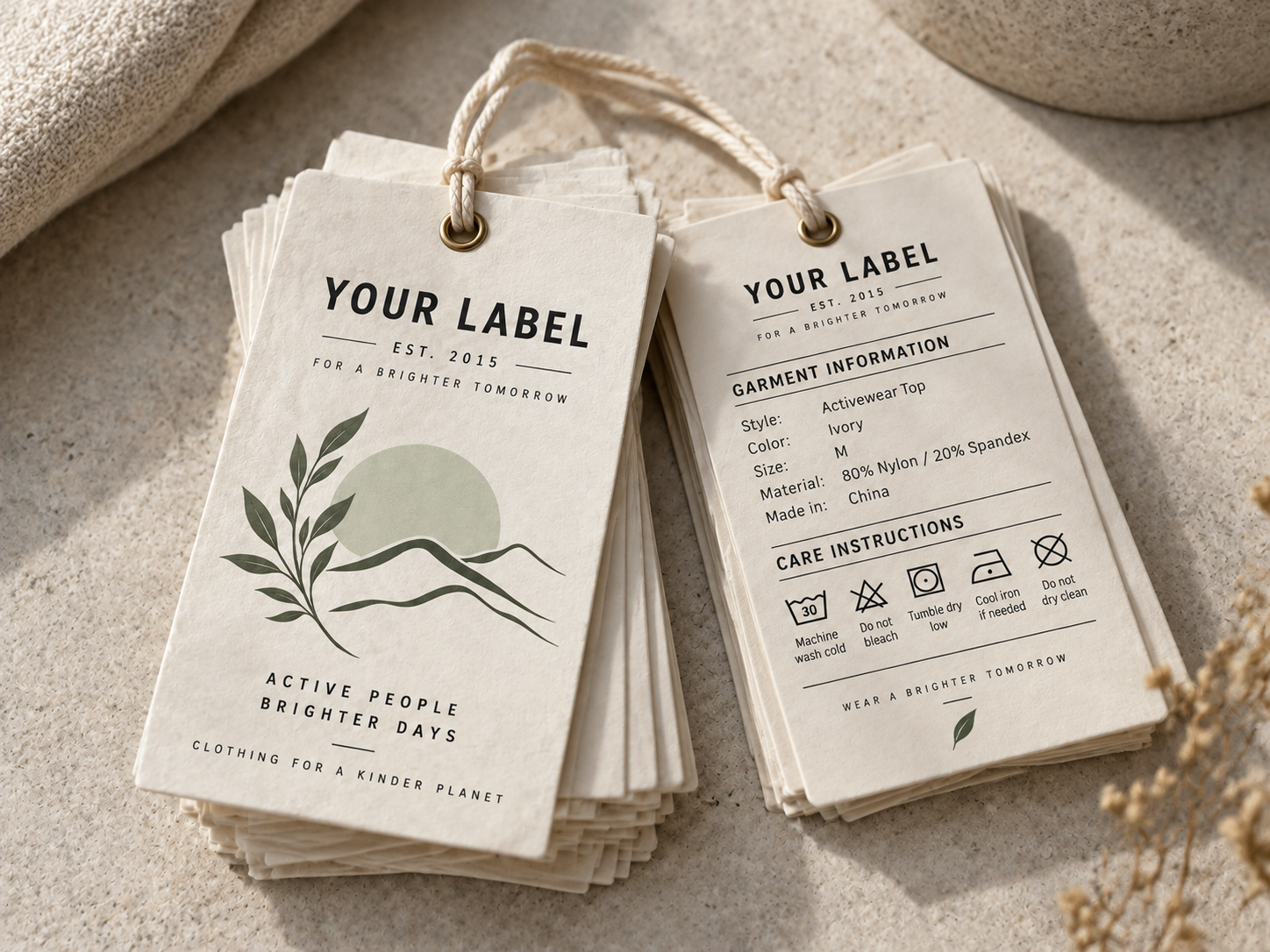
Show a real physical hang tag sample beside the approved specification or a neutral product reference. Useful details include stock, size, print appearance, hole position, string or fastener, and front/back layout. A sample image should be described as a sample unless it is confirmed to represent bulk production.
Garment Application
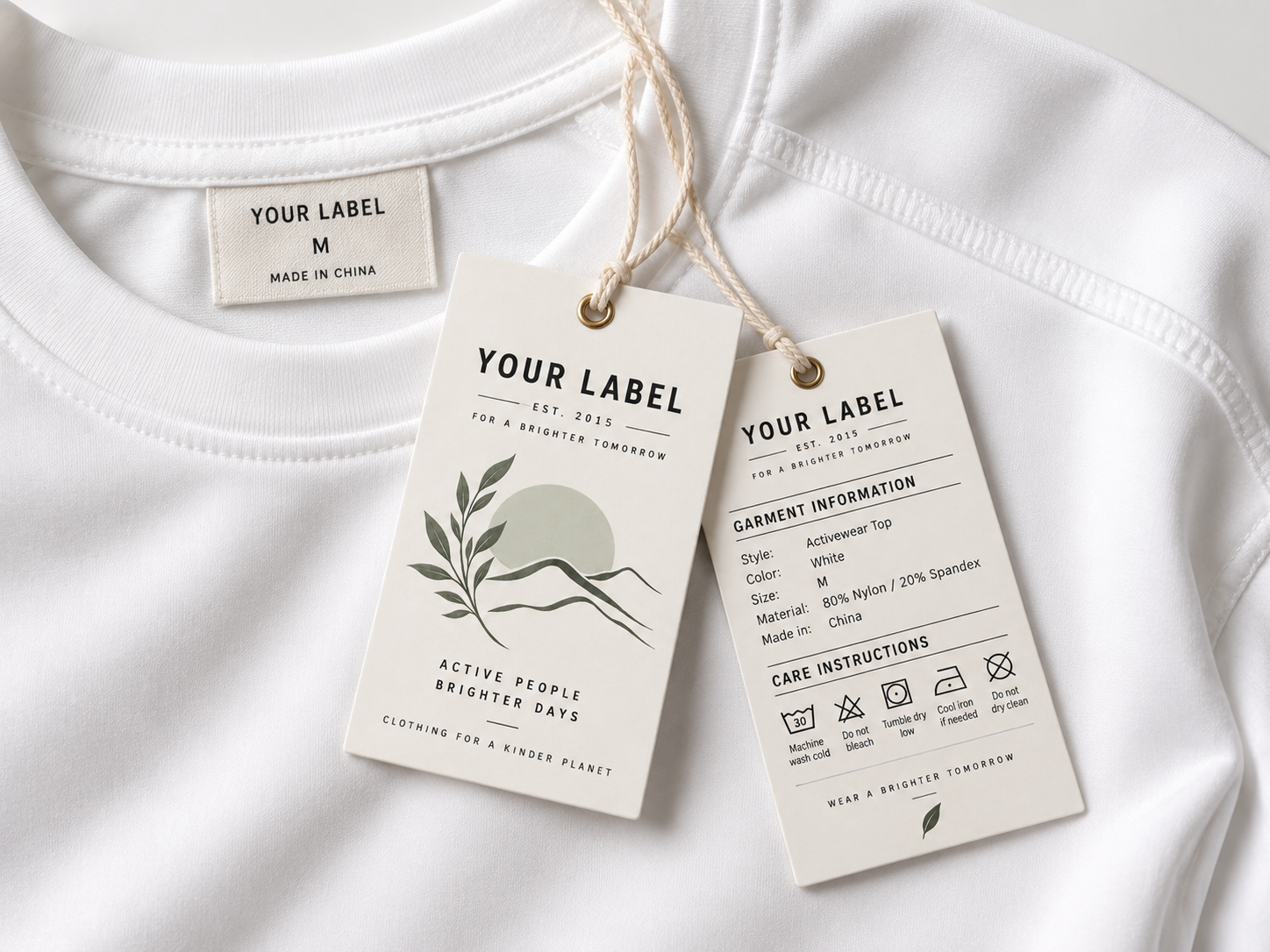
Show how a hang tag is attached to an actual Leadshow product such as sportswear, swimwear, streetwear, or modest sportswear. The image should make attachment position and scale clear. It also demonstrates why tag development needs to be connected with the garment rather than handled only as an isolated print item.
Packing Verification
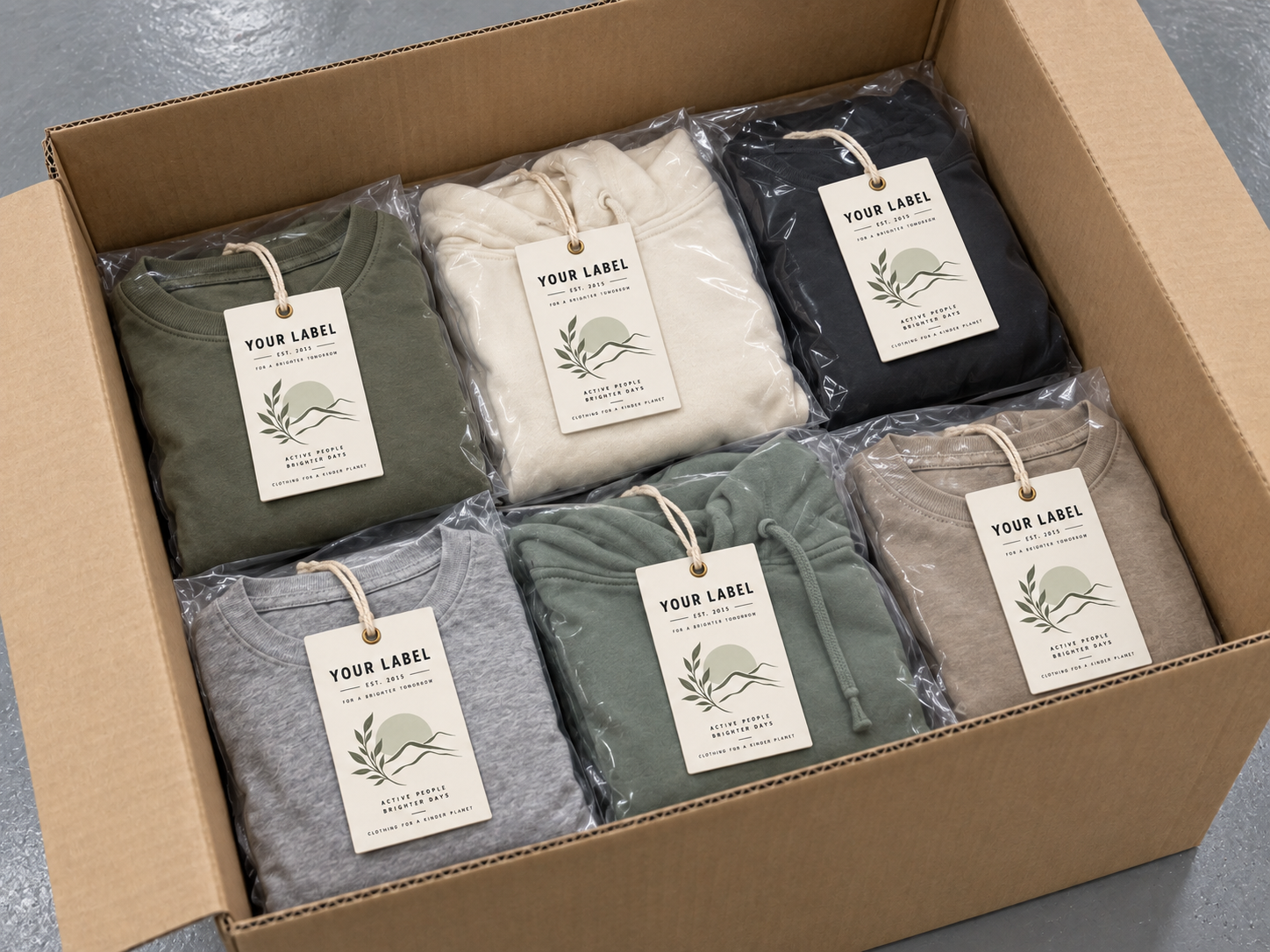
Show the garment, hang tag, size or SKU reference, individual packing, and carton-preparation step in one controlled workflow. Use de-identified data where needed. The value is the relationship among components: correct product, correct version, correct packaging, and correct order information—not an unsupported claim of zero packing errors.
Manufacturing Capacity Behind the Apparel Program
Hang tag coordination is supported by Leadshow’s broader apparel manufacturing organization. The numbers below describe the overall manufacturing system, not a dedicated hang tag printing plant or a guaranteed capacity for one specific garment, tag, or order.
15 Years Experience
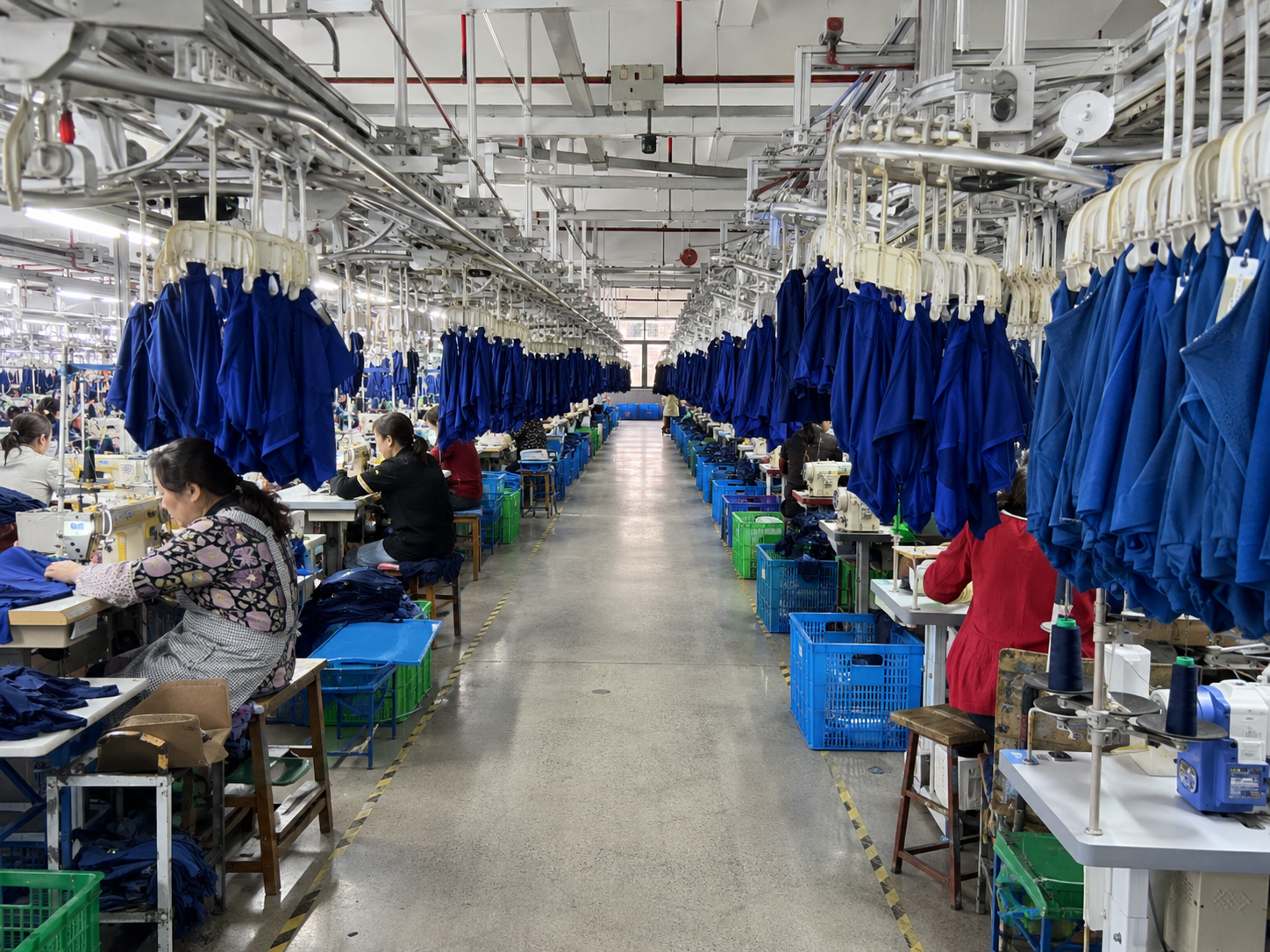
Leadshow has 15 years of apparel industry experience. The figure refers to relevant apparel development and manufacturing experience and should not be used to infer a specific founding year. Experience supports communication across product development, sampling, manufacturing, quality, branding, packing, and repeat-order coordination.
3 Manufacturing Bases
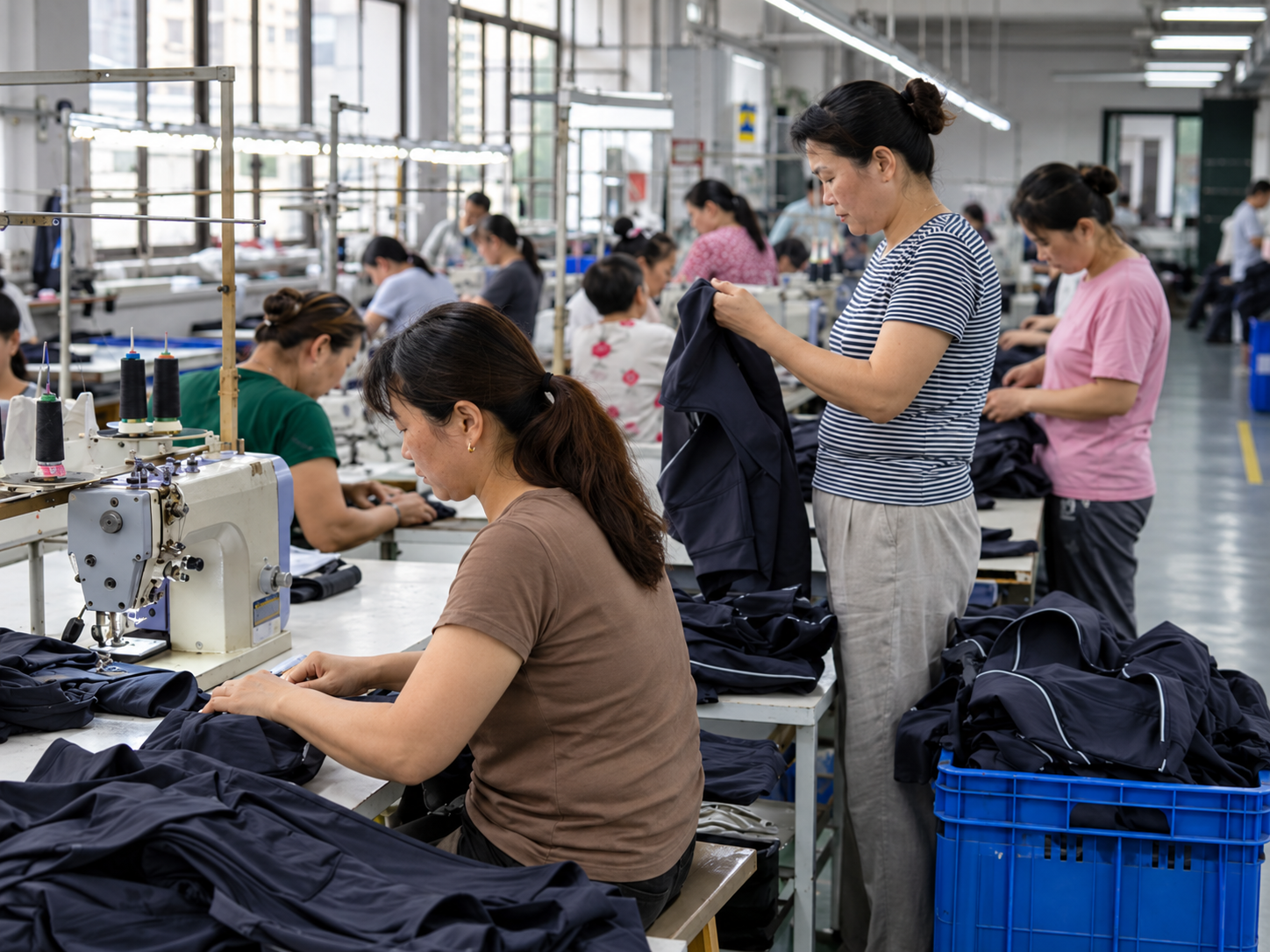
Leadshow operates three modern manufacturing bases supporting apparel projects from sampling to bulk production. The three-base figure describes the overall manufacturing system. Individual base addresses, area, product allocation, and equipment distribution have not been fully confirmed for public use and should not be invented.
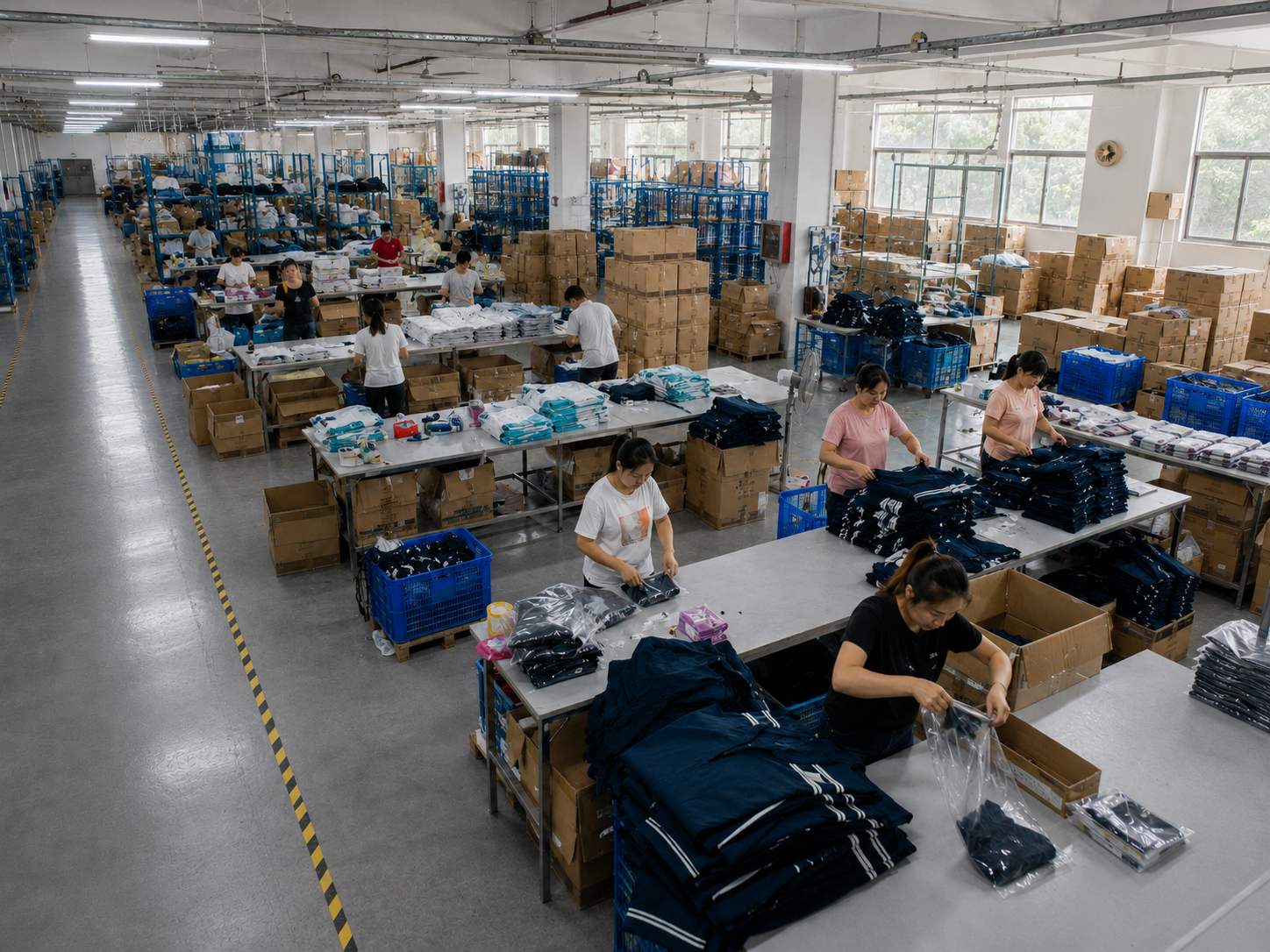
20,000+ m² Facilities
Combined factory space exceeds 20,000 square meters across the manufacturing system. The figure supports sampling, production, finishing, warehousing, and related functions in aggregate. It should not be presented as the area of one single factory or automatically divided equally among three bases.
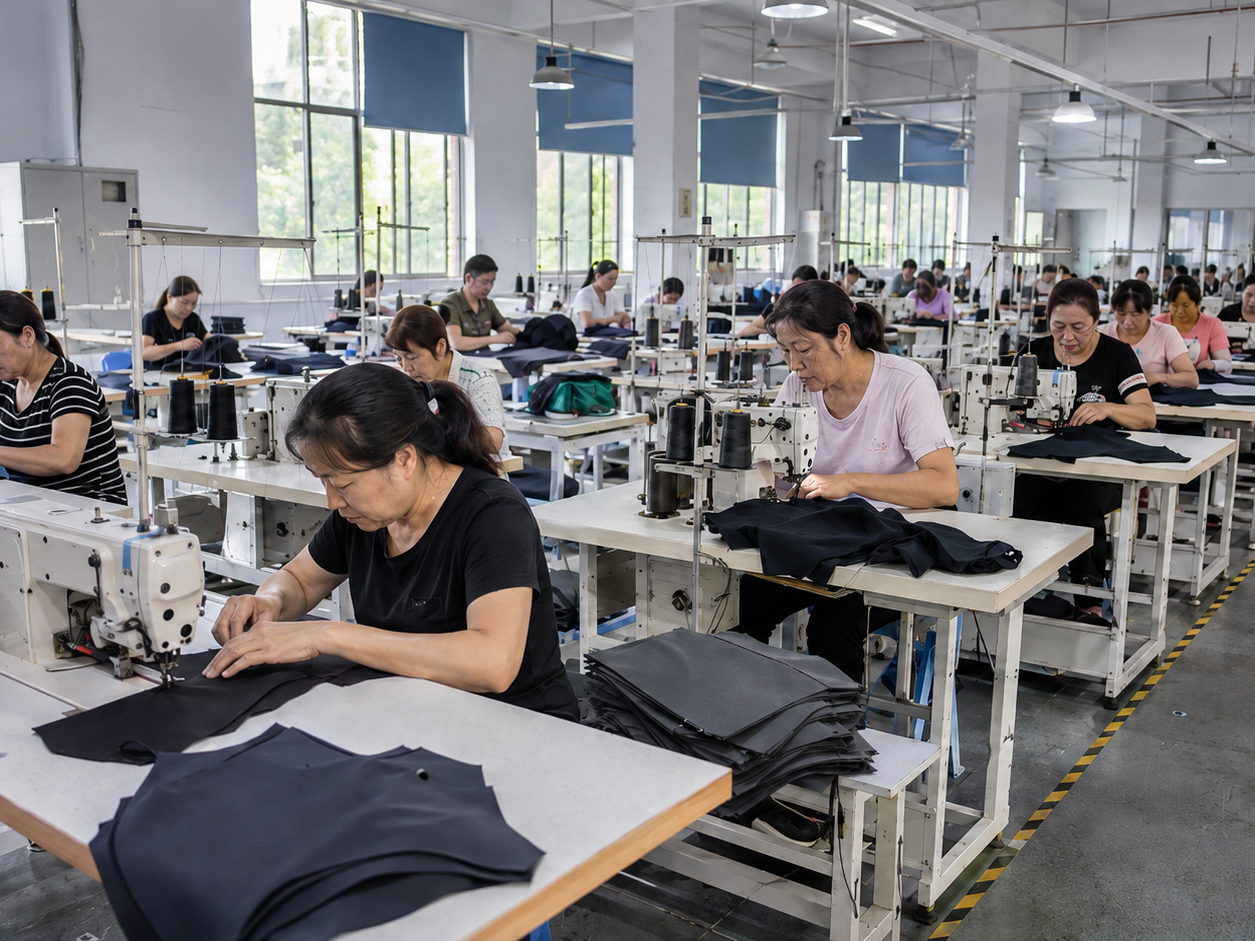
1,500+ Team
Leadshow has a team of more than 1,500 employees across business communication, development, manufacturing, quality, warehousing, logistics, administration, and finance. The total should not be described as 1,500 designers, engineers, or sewing workers. Different functions support different stages of an apparel program.

300+ Machines
More than 300 confirmed production, specialized-process, and finishing machines support fabric preparation, cutting, sewing, flatlock, bonding, seam sealing, laser perforation, heat transfer, ironing, needle detection, folding, and related operations. Equipment existence does not automatically prove every garment performance claim.
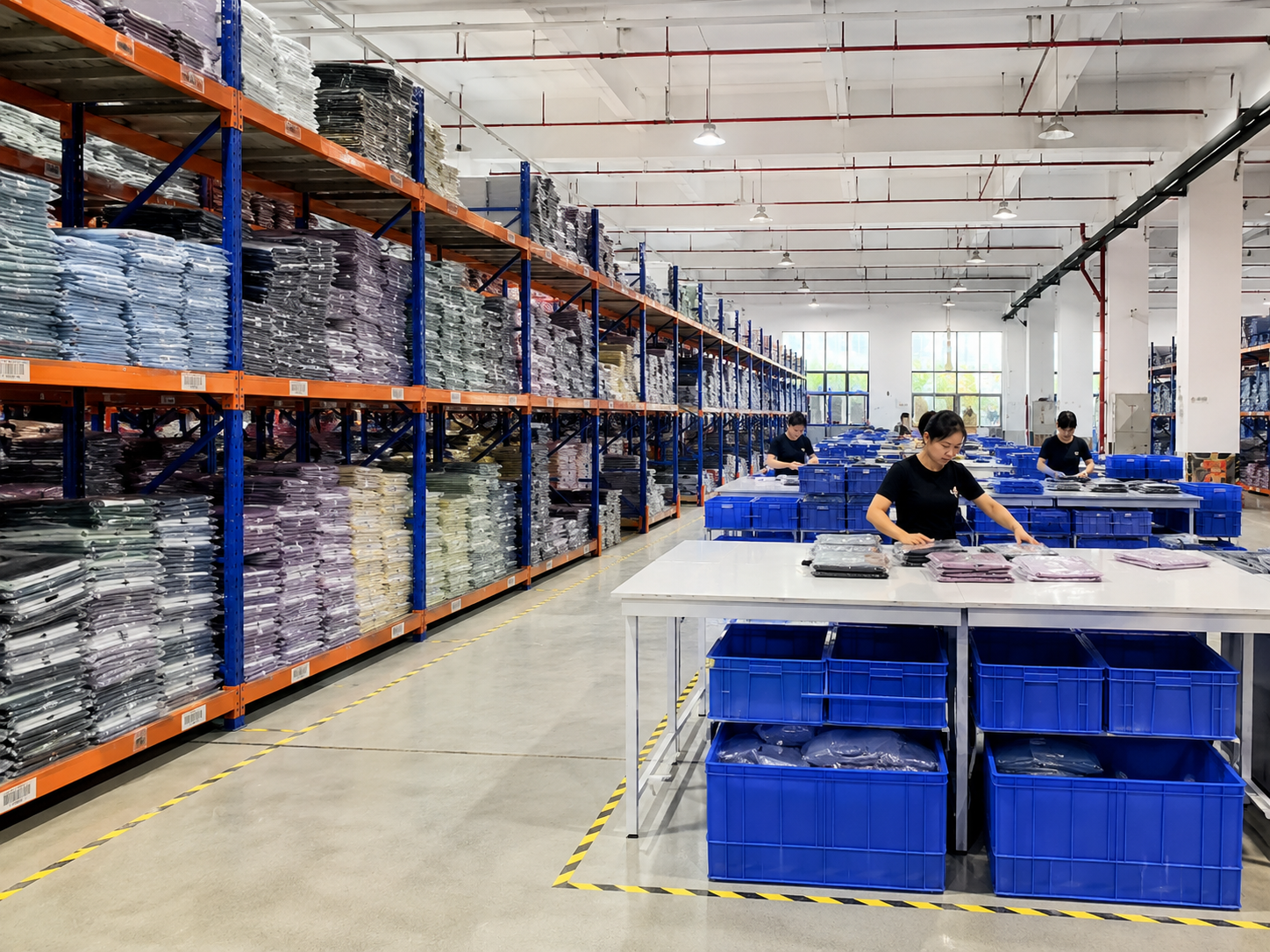
Up to 120,000 Monthly
The three manufacturing bases provide combined monthly capacity of up to approximately 120,000 finished garments, subject to product construction, materials, processes, order mix, quality requirements, and current scheduling. The figure describes overall apparel capacity and must not be presented as hang tag printing capacity or guaranteed output for one style.
Custom Apparel Hang Tags Frequently Asked Questions
Answers below cover common project questions before artwork review, sampling, and bulk packing. Final material, print process, supplier MOQ, cost, timing, market wording, and special features are confirmed after the relevant files and apparel order are reviewed.
Can Leadshow develop hang tags from our artwork?
Yes. Leadshow can coordinate hang tag sampling, sourcing, application, verification, and version control from approved brand files as part of an apparel project. Vector artwork, dimensions, required text, product information, SKU data, market version, and quantity help the team review the request accurately.
Can hang tags include logos and product information?
Yes, when the brand has approved the content and has the right to use the artwork. Hang tags can be coordinated around brand logos, product names, style references, size information, barcode data, QR references, price fields, or other approved content, subject to the selected supplier and project review.
Can you manage different hang tags for different SKUs?
Yes. Multi-SKU coordination can link style, color, size, SKU, barcode source, hang tag version, packaging version, and quantity in one matrix. The purpose is to reduce confusion when several nearly identical tag versions need to be applied to different garments during bulk packing.
Can barcodes be added to apparel hang tags?
Barcode printing can be coordinated when final barcode data or approved barcode artwork is supplied by the responsible brand, retailer, importer, or other authorized party. Leadshow should not invent, register, or guarantee ownership of commercial barcode numbers. The barcode version must remain linked to the correct garment SKU.
Can we use different hang tags for different markets?
Yes. Separate market or language versions can be coordinated when final approved wording, artwork, barcode data, and market instructions are supplied. Leadshow can manage the execution of approved versions but does not independently determine legal labeling requirements for every country or market.
Can hang tags match our woven and care labels?
Yes. Leadshow can coordinate approved hang tags together with main labels, size labels, care labels, heat-transfer labels, stickers, paper cards, individual packaging, and carton markings. A shared brand and SKU reference helps keep visual identity and product information aligned across the apparel program.
What files should we send for review?
Send available vector artwork, logo files, finished dimensions, front/back text, color references, garment style information, quantity, SKU list, final barcode data, market or language versions, attachment requirements, and packing instructions. A reference image can start the discussion when some files are still being prepared.
What is the MOQ for custom hang tags?
Hang tag MOQ is not fixed by Leadshow’s standard apparel MOQ. It depends on the print supplier, material, stock, dimensions, finishing, attachment, quantity per version, and tooling. Leadshow’s standard apparel MOQ generally starts from 100 pieces per color per design, subject to garment project conditions.
How long do hang tag samples and bulk production take?
Timing is confirmed after the artwork, material, finishing, tooling, supplier availability, revision needs, and apparel packing schedule are reviewed. Leadshow does not use one fixed hang tag sample or bulk lead time for every project. Approved tags should be available before the relevant garments reach bulk packing.
Can Leadshow handle a hang-tag-only order?
Leadshow’s core role is apparel development and manufacturing. Hang tag support is primarily designed to coordinate tags with sportswear, swimwear, streetwear, modest sportswear, labels, packaging, and bulk garment execution. A stand-alone hang-tag-only request can be reviewed for project fit before any commitment is made.
Send Your Hang Tag and Apparel Requirements
A useful project review starts with the garment and the hang tag files that define it. Send the product category, reference images or Tech Pack, expected order quantity, color and size range, hang tag artwork, finished dimensions, required text, brand color references, SKU list, final barcode data, market or language versions, attachment requirement, and packaging instructions. Leadshow can review how the approved hang tag should connect with labels, garment production, individual packing, carton information, and repeat-order version control. Material, print process, special finishing, supplier MOQ, cost, sample timing, and bulk timing are confirmed after the relevant specifications and sourcing conditions are reviewed. If some files are incomplete, send the available artwork, garment reference, estimated quantity, and target market so the missing information can be identified before sampling. Files containing confidential brand or product information should be shared through the agreed business channel.