
Tracksuit Manufacturer in China
Custom tracksuit development for apparel brands, bringing coordinated tops and pants from your initial design through sampling and bulk manufacturing.
- Develop your next collection with Shenzhen Leadshow Sports Technology Co., Ltd. We support OEM, ODM and private label tracksuit projects for sportswear and everyday athletic collections.
- Bring your tech pack, reference sample or design brief. Explore fabric, fit, construction and branding together, with attention to how the top and pants work as one outfit.
- Share your quantities, size breakdown and target delivery date. Our team can assess development requirements and discuss a quotation based on the complete set, including your labeling and packing needs.
Manufacturing Resources Behind Your Tracksuit Collection Development and Bulk Orders
Leadshow combines apparel development and manufacturing resources across three production bases. Review our company background alongside your proposed styles, quantities and delivery window, so discussions about production capacity stay connected to the requirements of your own tracksuit collection and schedule.
Choose Tracksuit Shapes for Your Next Sportswear or Lifestyle Collection
Start with the outfit your range needs. Leadshow can evaluate the following top and pant combinations against your design references, intended use and material preferences. Each direction leaves room to develop your own proportions, construction details and distinctive brand identity.
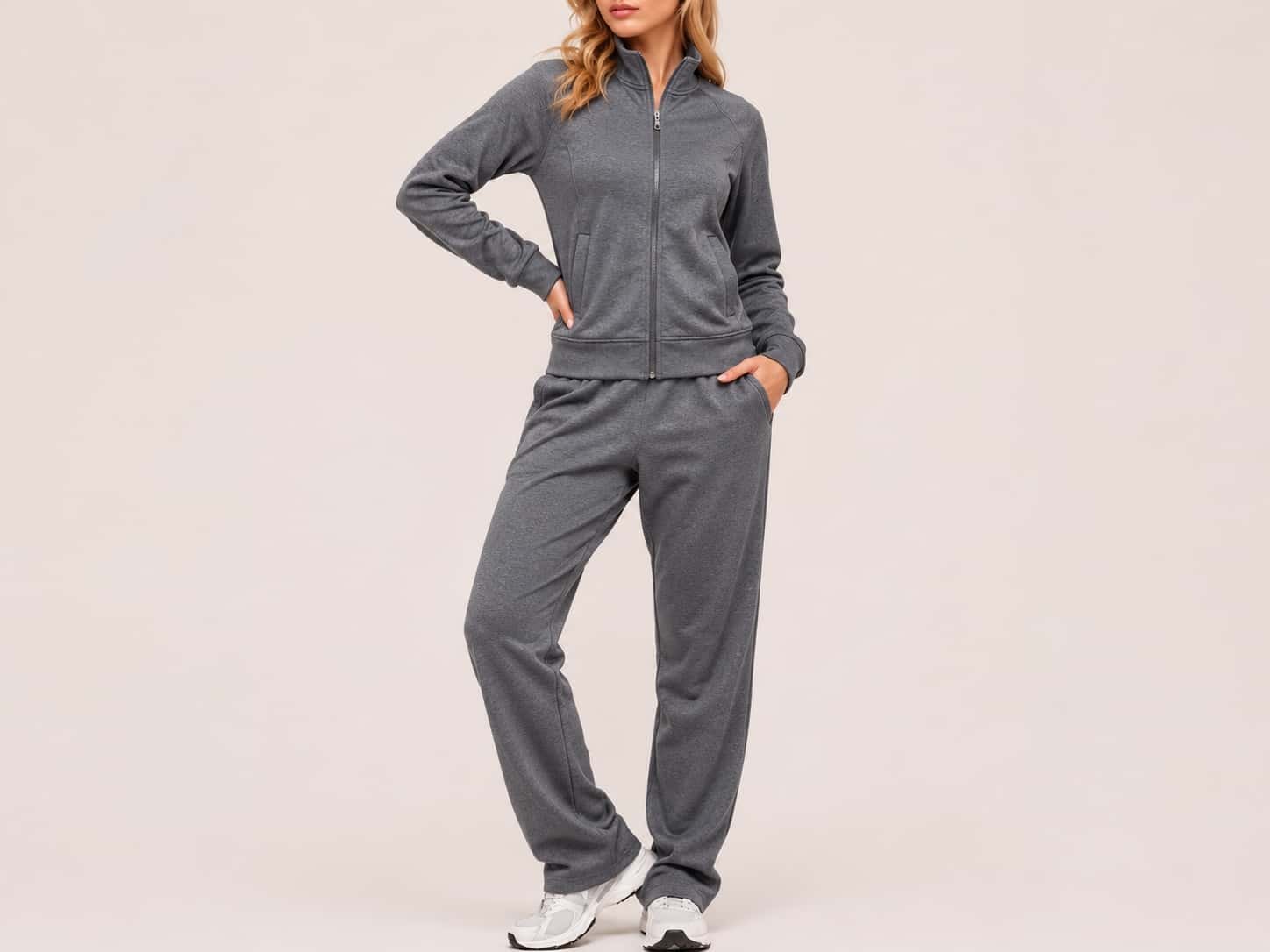
Stand Collar Zip Sets
A stand collar jacket and coordinating pants create a clean starting point for warmups, travel and everyday sportswear. The collar height, zipper length and jacket hem influence how the outfit looks open or closed. Pair the upper silhouette with straight, tapered or cuffed pants according to your collection brief. Share front and back references so panel lines, pocket positions and the transition between jacket and waistband can be assessed before sampling. Final construction follows your approved design and selected materials.
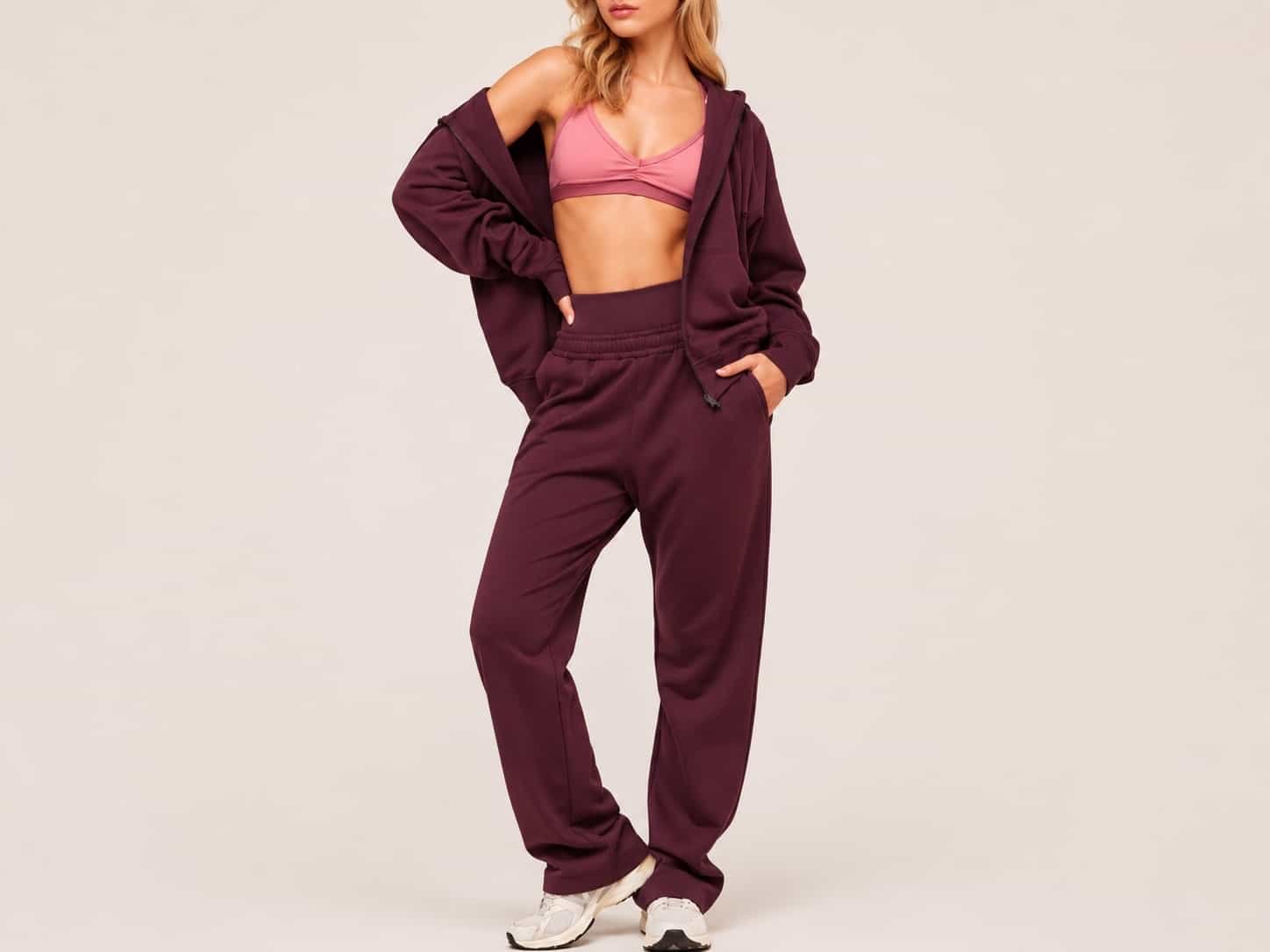
Hooded Zip Sets
A full zip hooded top offers a different neckline and layering option while keeping the two garments visually connected. Hood volume, shoulder shape and body length deserve attention alongside the pant silhouette. A bulky hood can change how the upper garment hangs, especially with heavier materials. Bring your preferred fit reference and any lining requirements so the hood, zipper and pockets can be evaluated together. Matching rib and trim choices help carry a consistent finish across the complete outfit.

Hooded Pullover Sets
Develop a hooded pullover and matching pants around the proportions your label is known for. A relaxed shoulder, shorter body or fuller sleeve changes the balance of the set, even before fabric weight is considered. Pocket shape and hem finish offer further ways to define the look. Send an existing garment or annotated reference to show which details matter most. Sample review can then focus on the relationship between upper body volume, waistband position and the shape of the leg.
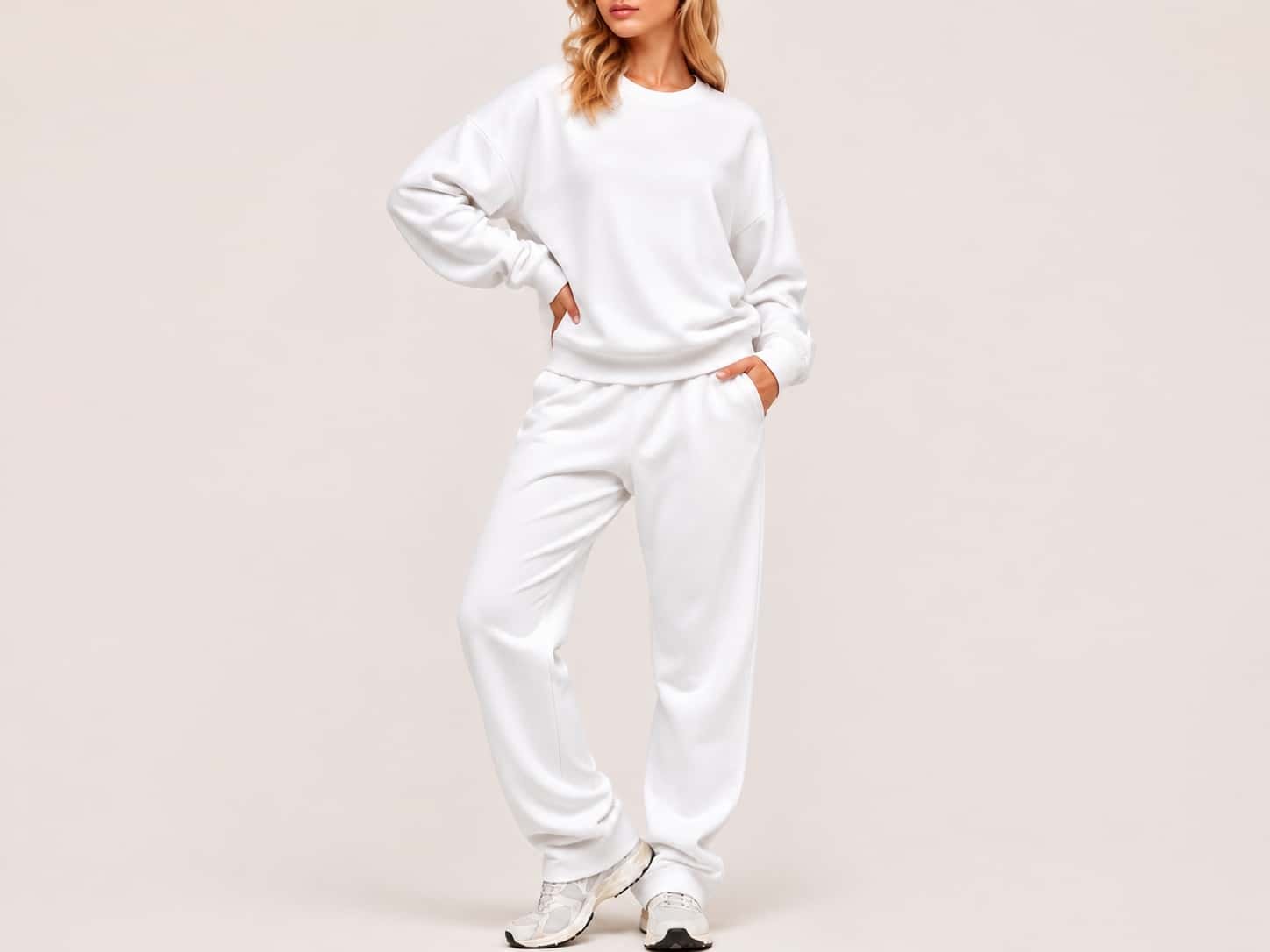
Crewneck Pullover Sets
A crewneck top and coordinating pants suit collections where a simple neckline leaves more room for fabric texture, panel construction or branding. Rib width, shoulder placement and body length influence the finished appearance. Choose the pant shape around the intended outfit rather than selecting both garments separately. Your reference can identify preferred sleeve volume, pocket treatment and leg opening. Leadshow can assess the combination for development, with material choice and construction confirmed through the agreed sample and specifications before production.
Coordinate Tops and Pants as One Complete Tracksuit Design
A tracksuit can meet individual garment specifications and still look uneven as an outfit. We help review the relationship between both pieces, from color and hand feel to proportions and branding, while leaving room for deliberate differences in your design.
Bring Color, Proportion and Finishing Together Across Both Garments
The top and pants do not always need identical fabric or the same labeled size. A lighter jacket, a more structured pant or separate size pairing may be part of the collection. Define the intended relationship early so development follows your design choices and avoids accidental differences between two otherwise acceptable garments during sample review.
- Color and surface:Compare the main fabrics, contrasting panels, zipper tape and rib beside one another. Materials with different structures can reflect light differently, even when ordered against the same color reference. Agree on the appearance of the complete combination, including any intentional contrast, before selecting materials for production.
- Shape and balance:Review jacket or pullover length against the pant rise and waistband position. Sleeve volume, leg shape and hem width contribute to the overall silhouette. A fit reference should show the full outfit, because approving each piece in isolation can miss an awkward transition at the waist.
- Finishing and wash behavior:Check the relationship between cuffs, hem rib, drawcords and logo positions. Consider how washing may change the length or appearance of either garment. The approved set should identify the intended appearance after the agreed care process, with separate requirements where the top and pants use different materials.
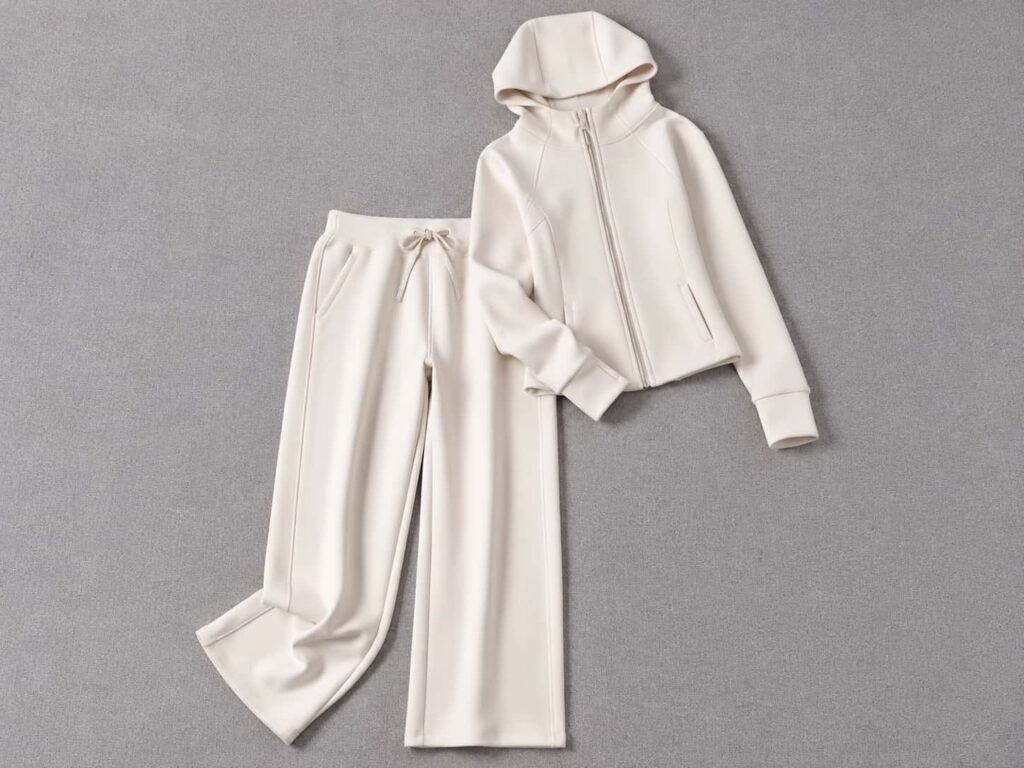
Confirm Order Quantities and Costs for Your Complete Tracksuit
Share quantities by design, color and size, and specify whether you are ordering sets or separate garments. Leadshow’s general starting MOQ is 100 pieces per color per design, subject to project review. Tracksuit set minimums require a separate quantity agreement.
Start Tracksuit Development with Technical Files or Design References
Your project can begin with detailed specifications or an earlier design direction. Tell us which decisions are already settled and where support is needed. We can assess the development work before proposing the next steps for your tops and pants.
Develop from Your Tech Pack
An established tech pack provides a strong starting point for OEM development. Send the latest revision for both garments, including measurements, material specifications, construction details and artwork. We can review the files against the intended manufacturing requirements and identify information needing clarification. A reference sample is useful when written specifications leave room for different interpretations of hand feel, fit or finishing.
- Identify the approved file revision and style numbers for the top and pants.
- Include your measurement methods, grading requirements and material references.
- Mark any unresolved details, requested improvements or features requiring special attention.
- Share the expected quantities and destination so the review reflects the complete order.
Develop from Your References
A reference garment, sketch or collection concept can begin an ODM discussion. Describe the elements you want to carry forward and the features you want to change. We can help assess material choices, proportions and construction before the design becomes a sample brief. Clear priorities keep early development focused, especially when images show an appealing silhouette without explaining the fabric or internal structure.
- Provide front, back and detail references with permission to use supplied designs.
- Explain the intended wearer, fit, season and target retail positioning.
- Identify essential features and areas open to development suggestions.
- Agree on development deliverables, approval responsibilities and design rights before proceeding.
Choose Fabrics Around Comfort Appearance and Your Collection Requirements
Fabric selection begins with how the outfit should feel, move and hold its shape. Leadshow coordinates material options around your design, budget and quantities, using samples and specifications to confirm the choice before it becomes part of the production requirements.
Develop Your Brand Fit Across Tops Pants and Sizes
Use your own size chart and fit references to define the collection. We review the top and pants separately before assessing the full outfit, with attention to measurement methods, grading and the way each size should sit on the body.
Define Garment Measurements Before Approving the Full Size Range
Start with the base size your team uses for fit approval and identify the intended silhouette. Regular, slim and relaxed descriptions need supporting measurements because the same label can mean different proportions across brands. A proposed XS–XXL run, for example, contains six labeled sizes; the actual range and measurements are agreed for your project rather than taken from a universal chart.
- Upper garment:Define chest, shoulder, body length, sleeve length and cuff opening. Identify the starting and finishing points for every measurement, including whether rib is included. Distinguish flat widths from circumferences: a 50 cm flat chest measurement represents approximately 100 cm around the garment, not a 50 cm body circumference.
- Pants:Specify waist in the required relaxed or stretched condition, together with hip, rise, inseam and leg opening. Record units consistently in centimeters or inches. Elastic tension and measuring position matter, particularly when comparing a reference sample with a revised garment or checking dimensions after washing.
- Grading and pairing:Supply increments between sizes and tolerances for relevant measurement points. Discuss which sizes need physical review before release. If tops and pants will be paired in different sizes, include the permitted combinations in the order breakdown so fit decisions and packing instructions remain aligned throughout development and production planning.

Refine the Construction Details Across Your Tops and Pants
Small construction choices influence comfort, appearance and wear. Select the details around your garment shape and material, then review them on the sample. Close attention to openings, elastic components and pockets helps define a tracksuit beyond its overall silhouette alone.

Zippers and Openings
Choose zipper length and opening style around how the jacket will be worn. Collar shape, hem finish and surrounding fabric influence the result, particularly when the garment is zipped fully. Review tape color, puller appearance, attachment and movement on the sample. Pocket zippers need their own length and placement decisions. If a specified component is essential to your design, share the supplier or product reference early so sourcing, suitability and availability can be assessed before final material approval is completed.

Rib and Hem Finishes
Cuffs, jacket hems and pant openings help control the silhouette. The rib width and attachment ratio influence whether an edge sits close to the body or hangs more loosely. Match the desired recovery to the main fabric and intended fit, then assess the sample both worn and laid flat. A color reference alone is insufficient when rib texture differs from the garment surface. Confirm the combined appearance, joining method and required wash behavior before the finish is approved for production.

Waistbands and Drawcords
The waistband affects how the pants feel during movement and how they sit beneath the top. Define elastic width, waistband height and the intended adjustment method. Drawcord length, exits and end finishes should suit the design and intended wearer. A sample allows your team to assess pressure, comfort and appearance together. Record the relaxed and stretched measurement conditions clearly, and identify any waistband construction you want to preserve from an existing garment before developing the new pant pattern and sample.

Pockets and Reinforcement
Pocket placement changes both appearance and everyday use. Specify the opening direction, bag depth and any closure, then consider how the pocket behaves when the garment is worn. The selected fabric may need a different bag material or local reinforcement. Bring detail photographs when a particular shape or finish matters. Review access, symmetry and stitching on the sample, including areas placed under load, so the approved construction reflects the intended use of the garment as well as the collection’s visual direction.
Place Your Branding with Attention to Fabric and Finish
Branding needs the same care as garment construction. We can review artwork, placement and the requested decoration method against your selected materials, then discuss sample confirmation. The goal is a consistent appearance across the top and pants without compromising wearability.
Artwork and Placement
Send usable artwork with the intended colors, width and height for each location. Placement needs fixed reference points, such as the center front, shoulder seam or pocket edge, so instructions remain clear across sizes. A chest mark and pant mark may need different dimensions to look balanced as an outfit. Identify whether placement stays fixed or changes with grading. Reviewing the artwork on both garments helps resolve proportion and positioning before decoration is approved for the production version of your design.
Decoration and Material
Heat transfer and heat pressing equipment are part of Leadshow’s confirmed manufacturing resources. The suitability of a particular application still depends on the fabric, artwork and desired effect. For embroidery, screen printing, silicone or other requested finishes, discuss feasibility and the execution arrangement during project review. Material stretch, surface texture and heat sensitivity can influence the choice. A decoration sample is useful when appearance or handle is important, before the method is included in the final garment specification and quotation.
Appearance After Care
An approved logo needs to work with the garment’s intended care instructions. Discuss relevant checks for lifting, cracking, color change, puckering or distortion, depending on the selected process and material. Agree on the washing conditions and acceptance requirements before requesting a performance result. The placement sample establishes appearance, while any durability evaluation needs its own defined method. Reviewing both helps avoid selecting a finish solely for its initial appearance when the collection has specific wear and care expectations to meet.
Use Sample Reviews to Approve Fit Materials and Finishing
Sampling gives your team a garment to assess before bulk production decisions are finalized. Leadshow supports sample development and revisions around the agreed brief, with each review focused on the details requiring approval rather than a fixed number of rounds.
Connect Sample Feedback to the Specifications Approved for Production
A useful sample review ends with clear decisions. Identify which parts of the top and pants are approved, which need revision and which still depend on material availability. Comments such as “make it more relaxed” are easier to act on when paired with measurements, marked photographs or a reference garment showing the intended change in shape.
- Review the complete outfit:Assess the top and pants together for fit, proportion and finish. Check the material combination, trim appearance and logo positioning against the brief. If a sample uses a temporary component, record the difference and agree how the final component will be confirmed before production begins.
- Make revisions traceable:Tie comments to a dated sample and the relevant technical file revision. Separate a measurement correction from a design change so the next version addresses the right issue. Consolidated feedback from your design, technical and sourcing teams helps avoid conflicting requests during subsequent sample development work.
- Confirm the production reference:Agree which sample, size chart, material references and artwork files govern the order. A physical sample cannot replace every written instruction, especially for sizes or colors absent from the sample set. Record outstanding approvals and decide whether a revised sample, size review or production material confirmation is required before release.
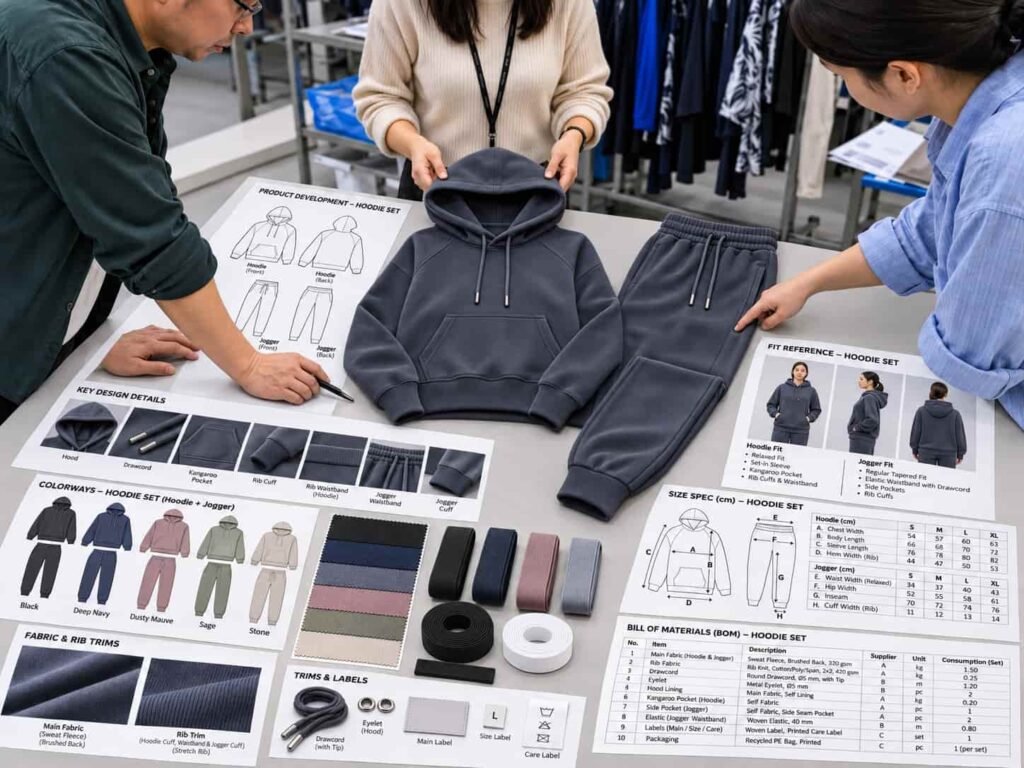
Confirm Materials and Specifications Before Your Bulk Production Starts
Sample approval is one part of preparing an order. Materials, technical instructions and production checks also need agreement. Discuss the release conditions for your tracksuit program so the move into manufacturing follows a shared understanding of what has been approved.
Materials Prepared for Production
Confirm the main fabric, rib, zippers, elastic and other components against the approved requirements. Material availability and expected arrival dates affect when an order can move forward. Any replacement needs review for appearance, function and its effect on the rest of the outfit. Share nominated material sources and essential component references early. The production plan should reflect the actual supply position, including any approvals still needed, rather than assume every item is available when the sample receives approval from your team.
Production Version Confirmed
Identify the technical file revision, approved sample and artwork references for both garments. The production instructions need the final measurements, construction details and quantity breakdown, together with labels and packing requirements. A late design change may affect more than the visible feature, including material usage or sewing operations. Discuss changes before release so the implications can be reviewed. Clear version references help keep an earlier sample or superseded drawing from being treated as the current instruction for your bulk order.
First Pieces and Trials
Some projects benefit from a first piece review or a pilot run before full production proceeds. The appropriate approach depends on the construction, materials, decoration and order requirements. Agree on the purpose and scope beforehand, including which details need checking and how any changes will be approved. A trial may reveal issues in sewing behavior, set pairing or packing instructions which were less visible during sample development. Its findings should inform the next production decision rather than become an automatic approval of unrelated details.
Follow the Manufacturing Work Behind Your Finished Tracksuit Order
Your design determines the manufacturing route. Leadshow’s confirmed cutting, sewing and finishing resources support garment production, with operations selected around the fabric and construction. Discuss the relevant processes for your tracksuit rather than relying on a general equipment list alone.

Cutting and Preparation
Leadshow’s equipment inventory includes three computerized cutting machines and five fabric spreading machines across its manufacturing resources. Their relevance to an order depends on the selected materials and cutting requirements. Tops and pants need identifiable patterns, sizes and quantities before cutting begins. Directional fabrics, panel combinations and matching components require attention during preparation. Discuss any design feature which depends on alignment or a particular material direction so its requirements can be considered alongside cutting efficiency and the planned garment construction.
Sewing and Assembly
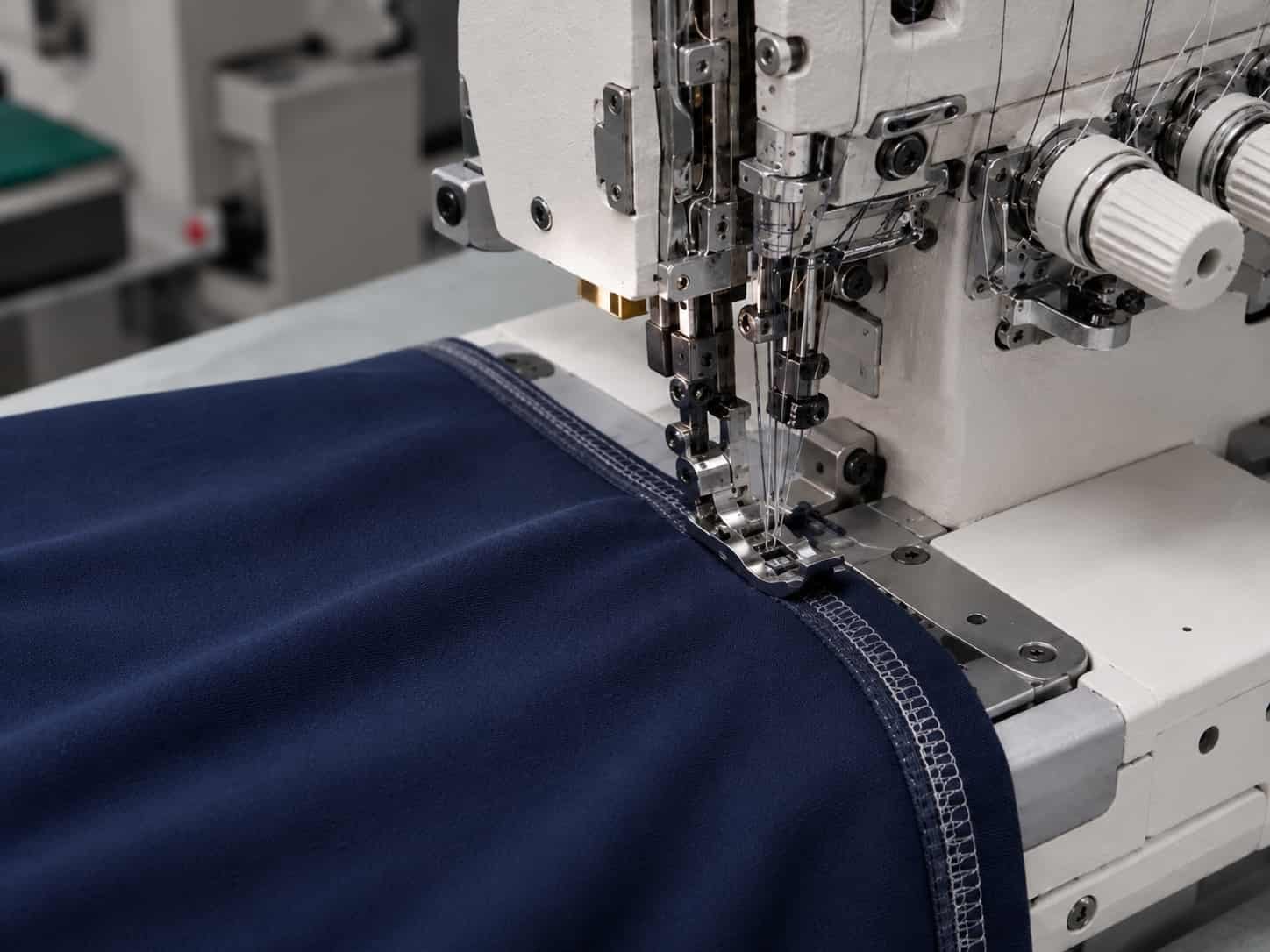
Confirmed sewing resources include lockstitch, overlock, double needle and bartack equipment, alongside other apparel machinery. The appropriate seam depends on material behavior, garment structure and the intended finish. A jacket opening, elastic waistband and pocket reinforcement serve different purposes and may require different operations. Share close detail references when a visible stitch or internal finish is important to the collection. Manufacturing review can then connect the requested appearance with suitable construction, rather than select a seam solely from the equipment available.
Finishing and Preparation
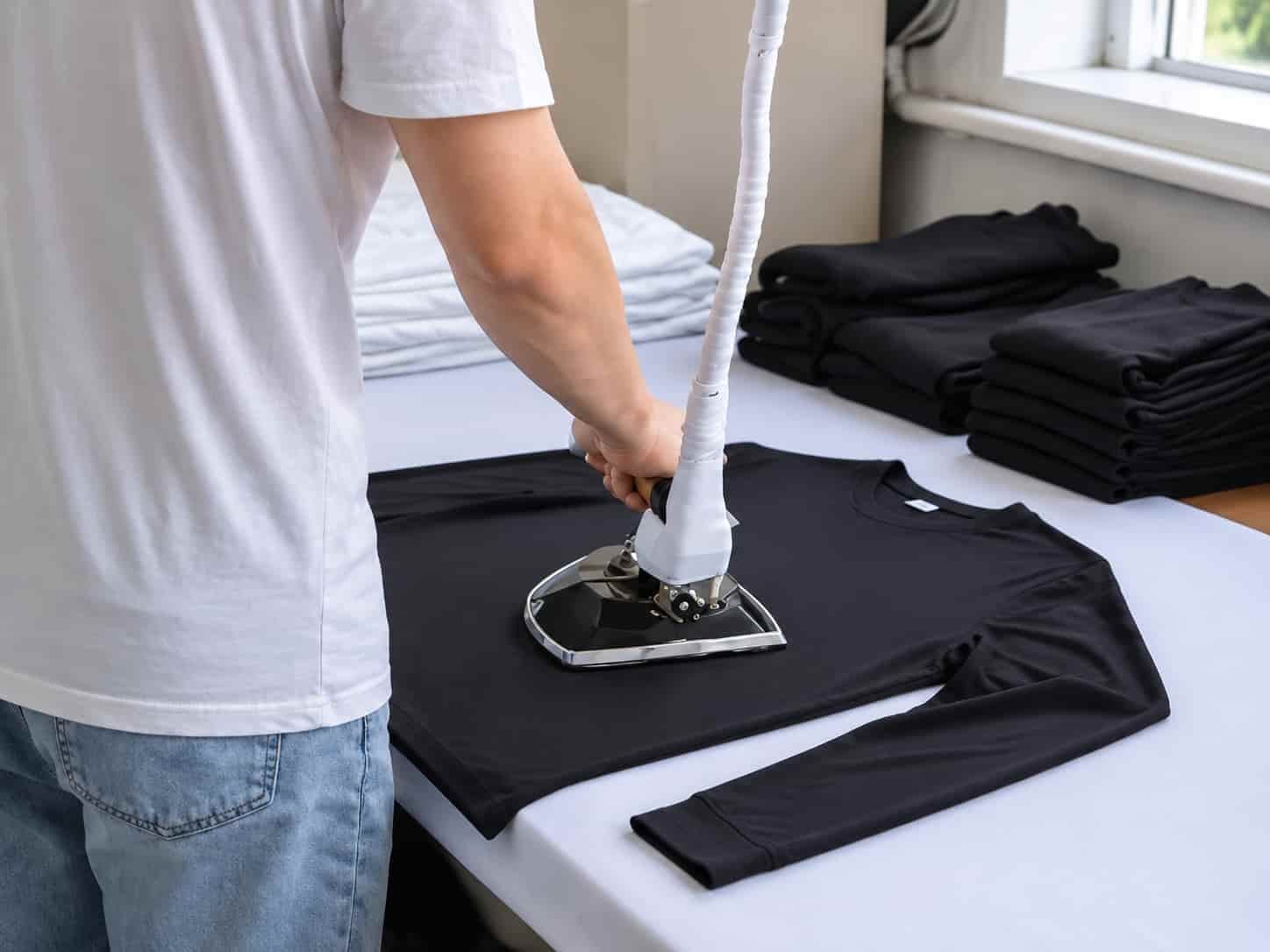
Finishing brings the garment closer to its approved presentation through suitable pressing, trimming and preparation for inspection and packing. Heat and pressure need to suit the selected material and any decoration. Tops and pants also need to remain identifiable as they move toward set assembly. Discuss special folding, protective packing or handling requirements early enough to include them in the order instructions. The final presentation should follow the agreed product and packing references, including any differences between garments sold separately and complete sets.
Agree Quality Checks Around Your Tracksuit Materials and Construction
Quality requirements should reflect how the outfit will be worn and cared for. Share your inspection criteria and any required test methods during development. Routine garment checks and specialist testing can then be discussed with clear scope, responsibility and acceptance requirements.
Plan Sampling and Delivery Around Your Collection Launch Date
Tell us when samples are needed and when goods must reach their destination. Sampling and bulk lead times are quoted after reviewing the design, material availability, approval stages and production schedule. Dispatch and arrival dates need separate confirmation when freight is involved.
Prepare Labels and Packing Around How Your Tracksuits Sell
Complete sets and separately sold garments need different packing instructions. Define the sales format before labels and barcodes are prepared, then connect each top and pant combination to the order breakdown. Clear instructions help avoid mismatches during final set assembly.
Prepare Repeat Orders with Clear References and Reviewed Changes
An earlier approval gives a repeat order a useful starting point. Materials, quantities and schedules still need review before the next run. Share the previous style references and any changes so replenishment discussions focus on what must remain consistent across production.
Keep Approved Product Details Clear When Preparing Your Reorder
A reorder may retain the same silhouette while introducing a new color, different size ratio or updated label. Identify the approved version you want to repeat and separate unchanged details from new requests. Leadshow can assess the next order against those references, with material availability and proposed substitutions discussed before the production requirements are settled.
- Preserve the intended product:Supply the relevant technical revision, approved sample reference and key material details. Flag features which must carry forward, such as jacket length, pant shape or logo position. If the previous order revealed a fit or quality concern, include the evidence and requested correction in the new brief.
- Review supply and batch differences:Confirm whether the original fabric and trims remain available for the new quantity. A different material batch may need fresh color or hand feel review. When a replacement is proposed, assess its effect on the complete set and agree any sample or test confirmation needed before acceptance.
- Approve commercial and product changes:Reconfirm quantities, packing and required dates along with the quotation. Previous pricing or production timing may not apply to a changed order. Identify revisions clearly so a new color, component or construction detail does not silently become part of every future order for the same style.

Discuss Supplier Review Requirements Before Sharing Your Production Brief
Your sourcing team may need company information, manufacturing details or project documents before moving ahead. Send the review requirements early so we can confirm the relevant scope, available materials and any arrangements needed before confidential product information is exchanged with us.
Company and Manufacturing Review
Share the information your team needs to assess a potential manufacturing relationship, including company identity and the proposed production location. Headquarters information and the facility assigned to an order serve different purposes. Any site visit or factory review should be discussed around the relevant location, scope and schedule. If a specific audit or certification is a condition of approval, identify it at the outset so availability and applicability can be checked before it is treated as part of the supply arrangement.
Project and Quality Documents
Your internal supplier review may require product specifications, an inspection plan, sample records or other supporting documents. Send the requested list and explain which items are essential for the proposed order. We can discuss the information available and the documents needing project specific agreement. A general factory description cannot establish compliance with every brand standard. Connecting the request to your product, destination and quality requirements helps determine what needs confirmation before sampling or production commitments are made for the collection.
Design and Confidentiality
Discuss confidentiality requirements before sending sensitive artwork, patterns or unreleased collection details. The arrangement may need to cover permitted use, access, sample handling and ownership of development files. Leadshow can discuss project specific terms, including an NDA where required, without assuming identical conditions apply to every order. Confirm your rights to supplied references and identify any exclusivity request separately. Agreed terms should reflect the actual development work and responsibilities before protected material is used for sampling, quotation or production planning.
Tracksuit Manufacturing Frequently Asked Questions
Find quick answers to common questions about starting a tracksuit order. Share your design and quantities when a requirement depends on the garment, material or intended sales format for your collection.
Is the tracksuit minimum calculated in pieces or sets?
The order unit needs explicit agreement. Leadshow’s general MOQ is stated per piece, color and design; a tracksuit quotation must also identify the top and pant quantities. Confirm the set minimum with our team after sharing the construction, materials and quantity breakdown.
Can development begin with pictures or a reference sample?
Yes. Send front, back and detail references, then explain the fit, materials and features you want to develop. A physical garment can clarify proportions and hand feel. We can discuss the specifications and sample work needed to turn the reference into your own approved design.
Can the top and pants use different fabrics?
Different materials can be evaluated when the design calls for them. The review should consider color, weight, stretch, hand feel and wash behavior together. Approval needs to cover the complete outfit so a deliberate material difference still produces the intended appearance and wearing experience.
Can sets contain different top and pant sizes?
Mixed size pairing can be discussed for the proposed order. Provide the exact combinations and quantities rather than a single size total. The arrangement needs to be reflected in SKU references, labels and packing instructions, with feasibility and any additional handling requirements confirmed before ordering.
Can you work with our existing size chart?
Yes. Share the chart, measurement methods, grading rules and a fit reference where available. Identify the base size and intended silhouette. We can review the measurements for both garments and discuss the sample or size checks required before your range is approved for production.
Can we nominate fabrics, zippers or other components?
Nominated materials can be reviewed for suitability, availability and sourcing arrangements. Provide the supplier reference, specification and any essential approval requirements. Material minimums, timing and compatibility with the garment need confirmation before the component is included in the final quotation and production instructions.
How are sample and bulk production lead times confirmed?
Timing follows a review of development scope, material availability, revisions and the production schedule. Share the sample deadline and required delivery date at the start. The quotation or project schedule should state the agreed duration, its starting conditions and whether the date refers to dispatch or arrival.
What information is needed for a tracksuit quotation?
Send the design or tech pack, material requirements, quantity by style and color, size breakdown, decoration details and packing needs. Include the destination and required dates. State whether pricing should cover a complete set or separate garments, and identify any details still open for discussion.
Can you follow our barcode and packing instructions?
Send your required SKU mapping, barcode files, labels, bag arrangement and carton assortment. We can review the requirements against the order. For complete sets, identify the permitted top and pant combinations and whether the barcode belongs to the set, each component or both.
What needs confirmation before placing a repeat order?
Identify the approved style version and list any changes to materials, colors, quantities, sizes or packaging. Original material availability and new batch appearance need review. Pricing and timing are reconfirmed for the new order, with any proposed substitution agreed before production proceeds.
Tell Us About Your Next Tracksuit Collection
Send your tech pack, reference images or sample details to start a conversation with Leadshow. Include the top and pant styles, preferred fabrics, expected quantities by color and your size breakdown. Tell us whether the garments will be sold as complete sets or separate pieces, and share any logo, labeling or packing requirements already agreed by your team. A target budget and required delivery date help us understand the commercial priorities alongside the design.
Your brief gives us a starting point for reviewing development needs, material options and the information required for a quotation. If some details are still open, describe the decisions you need help with and attach the references you have. Let us know if samples are required for fit review, photography or a sales meeting, since each purpose may need a different level of completion. For confidential designs, discuss the required arrangements before uploading sensitive files. We can then work through the next steps for sampling and production planning around your collection.