
Activewear Manufacturer in China
OEM, ODM and private label activewear development backed by three manufacturing bases, structured quality control and export delivery support.
- Develop sports bras, leggings, tennis skirts, running shorts, tank tops, tracksuits, hoodies and coordinated activewear collections.
- Move from technical requirements, fabric selection, pattern and fit adjustment to samples, bulk production, labels and packaging.
- Plan standard orders from 100 pieces per color per design, subject to fabric, trims, construction and customization.
- Work with a 1,500+ team across more than 20,000 square meters of combined facilities.
- Reach production capacity of up to approximately 120,000 finished garments per month, depending on product mix and scheduling.
One Manufacturing Partner From Development Through Repeat Production
Shenzhen Leadshow Sports Technology Co., Ltd. connects product development with manufacturing execution. Brand teams can manage specifications, samples, production, quality control and packaging through one coordinated workflow, with responsibilities and approval points defined around the requirements of each activewear program.
Product Development
Turn an idea, reference garment or technical pack into a production-ready activewear specification. Leadshow reviews silhouette, fabric behavior, construction, measurements, branding placement and trim requirements before sampling. Pattern and fit adjustments are recorded through sample feedback, helping the approved version carry clearer instructions into production. Development support is available for sportswear, swimwear, streetwear and modest sportswear, with decisions made around the intended use, price position, target fit and launch plan.
Manufacturing Control
Coordinate cutting, sewing, flatlock construction, bonding, heat transfer, pressing, needle detection and packing according to the approved product route. Equipment selection depends on garment design and material compatibility rather than being applied as a generic feature. Production planning considers order quantity, color count, size breakdown, fabric availability and construction difficulty. Quality checkpoints are placed around incoming requirements, in-process workmanship and finished-garment review so issues can be addressed before shipment preparation.
Brand-Ready Delivery
Complete each program with the approved labels, hangtags, packaging specifications and carton information. Multi-SKU orders can be organized by style, color and size using the confirmed packing list. Export delivery support is available for shipments to Europe, North America, South America and Oceania. Freight method, destination requirements, shipment documents and delivery dates are reviewed per order, keeping the handover aligned with the brand’s warehouse, launch calendar or appointed logistics partner.
Built Around Real Activewear Sourcing and Development Teams
Different organizations enter production with different levels of readiness. Leadshow adapts the starting point to the available files, approval structure, assortment size and internal sourcing process, then defines which design, material, fit, cost and schedule decisions must be completed before manufacturing.
Established Sports Brands
Support seasonal collections, line extensions and repeat programs where consistency matters across colors, sizes and delivery windows. Leadshow can work from established technical packs, approved blocks, material standards and packaging manuals. Review points focus on keeping construction, measurements, branding and packing instructions aligned with the approved reference while allowing controlled development for new silhouettes or fabrics. Dated files and change records keep new decisions visible.
Growing Activewear Labels
Build a focused first range without beginning at large-volume commitments. Leadshow reviews starting quantities by design and color against fabric, trims, construction, logo method and packaging. Product development support can cover fabric options, pattern refinement, sample review and private label details, giving a growing label a defined route from concept to production. Assortment planning can prioritize core silhouettes and stronger launch colors while keeping material minimums visible.
Retail Product Teams
Develop activewear for planned retail drops, capsule collections or category expansion. Teams can submit target specifications, reference samples, testing requests, price objectives and delivery destinations for review. Leadshow then maps the manufacturing route, highlights decisions requiring approval and organizes the program by style, color, size and packing requirement before bulk production is scheduled. Each milestone can be aligned with the internal approval calendar.
Design and Development Teams
Translate creative direction into manufacturable construction without losing the intended silhouette. Discussions can cover fabric weight, stretch, recovery, opacity, hand feel, seam type, support level, pocket design, lining and branding placement. Each selection is reviewed in relation to the garment rather than treated as a universal activewear formula, supporting more informed sample decisions. Visual intent remains connected to measurable specifications and approved physical references.
Procurement and Sourcing Teams
Evaluate capacity, MOQ, manufacturing scope, quality controls and export support through clear project information. Leadshow can present its manufacturing network, team structure, relevant equipment and project-specific evidence for review. Final allocation and timing remain dependent on product mix, material readiness, order quantity and current production scheduling. Written commercial assumptions help sourcing teams compare proposals on equivalent requirements before commitment.
Private Label Programs
Create a branded range using approved garments, custom-developed styles or a combination of both. Leadshow supports labels, hangtags, packaging and production execution after requirements are confirmed. Programs can begin with a defined core assortment and expand through controlled reorders, while fabric availability, color continuity and updated specifications are checked before every new production run. Brand artwork and SKU mapping remain linked to the approved packing instructions.
Manufacturing Scale With Development and Quality Support
Scale is most useful when paired with product knowledge and controlled execution. Leadshow combines established industry experience, a large production team and specialized machinery for varied activewear programs, while confirming actual capacity against materials, construction requirements, quantities and the current production schedule.
15 Years’ Experience
Leadshow brings 15 years of apparel industry experience across product development, manufacturing and export coordination. The team works with sportswear, swimwear, streetwear and modest sportswear, connecting commercial design goals with material behavior and construction requirements. Experience helps identify production risks earlier, but every new style is still reviewed on its own specifications, samples and approval criteria. No garment is released from category knowledge alone.
Three Manufacturing Bases
Production is supported by three modern manufacturing bases. Allocation is planned according to garment category, construction route, equipment needs, order quantity and schedule. A project is not assigned solely by volume; technical compatibility and line readiness also matter. Exact production-base information for an order can be discussed during project review and production planning, together with the relevant facility evidence and proposed manufacturing route.
20,000+ Square Meters
Combined manufacturing facilities cover more than 20,000 square meters. The footprint supports material handling, cutting, sewing, specialized operations, pressing, inspection and packing activities across the manufacturing network. Facility scale provides room for mixed program requirements, while actual order timing continues to depend on fabric readiness, color count, size breakdown, construction complexity and available production slots. Each order still needs a dated allocation plan.
1,500+ Team Members
More than 1,500 people support Leadshow’s operations across development, production, quality, warehousing, logistics and business coordination. Different functions contribute at different project stages, from reviewing requirements and preparing samples to monitoring workmanship and organizing finished-garment packing. The team structure supports communication between product decisions and factory execution throughout an activewear program. Named contacts coordinate open questions, approvals and order updates.
300+ Production Machines
Leadshow’s confirmed equipment base includes more than 300 machines, with tools for automatic cutting, fabric spreading, flatlock sewing, heat bonding, seam sealing, heat transfer, pressing, needle detection and packing. Machine use is selected by construction and material requirements. Specialized equipment supports execution but does not replace fit approval, process testing or finished-garment inspection. Relevant operations are confirmed during manufacturability review.
Up To 120,000 Monthly
Monthly capacity can reach approximately 120,000 finished garments under suitable production conditions. Available output changes with style complexity, order mix, color and size structure, material readiness, finishing requirements and line scheduling. Leadshow confirms capacity against the actual project before committing to a production window, allowing launch plans to be built around the approved order rather than a generic capacity figure. Forecasts help assess future allocation but do not reserve capacity automatically.
How to Evaluate an Activewear Manufacturer in China
A strong shortlist should go beyond a product gallery. Compare technical understanding, development control, production evidence, quality responsibility, capacity fit and the ability to organize a repeatable branded program.
Evaluation Area
What to Verify
Leadshow Response
Evidence to Request
Product category fit
Experience with the silhouettes, materials and construction used in the planned range
Sportswear, swimwear, streetwear and modest sportswear are core product lines
Relevant product samples, construction close-ups and comparable production images
Development support
Ability to review technical packs, references, measurements, fabrics, trims and branding before sampling
Technical requirement review, pattern and fit adjustment, sample development and product development support
Marked specification review, sample comments and approved reference process
MOQ structure
Quantity by design and color, plus any material or trim minimums
A conditional starting MOQ is disclosed after reviewing the program
Written MOQ breakdown by style, color, fabric, trim, logo and packaging
Capacity fit
Realistic output for the planned product mix and launch date
Capacity is checked against construction, materials and current scheduling
Project-specific capacity confirmation and a dated production plan
Manufacturing depth
Equipment and processes relevant to activewear construction
300+ machines, including cutting, flatlock, bonding, seam sealing, heat transfer, pressing, needle detection and packing equipment
Current factory photographs, process videos and equipment used for the selected styles
Fit control
Method for managing base size, measurements, grading and approval comments
Pattern and fit adjustment is available through the sample-development workflow
Measurement chart, approved sample, fit comments and revision record
Quality responsibility
Defined checks before, during and after production
Quality control is supported by a dedicated quality function and production checkpoints
Inspection criteria, issue-handling route and finished-garment review records
Branding and packing
Ability to follow label, hangtag, polybag and carton instructions
Custom labels, custom packaging and multi-SKU packing support are available
Approved artwork, placement sheet, packaging specification and packing list
Export handover
Support for documents, shipment preparation and destination coordination
Export delivery support covers Europe, North America, South America and Oceania
Agreed shipping terms, carton data, document list and dispatch plan
Repeat-order control
Method for confirming materials, specifications and changes before reorders
Long-term reorder support is available, with requirements rechecked for each run
Latest approved files, change log, material status and reorder schedule
Activewear Categories Developed for Coordinated Branded Collections
Build a single hero product or a coordinated range across training, yoga, running, tennis and lifestyle use. Material, fit and construction decisions are reviewed for each garment, allowing a shared brand language without forcing different silhouettes into the same technical formula.
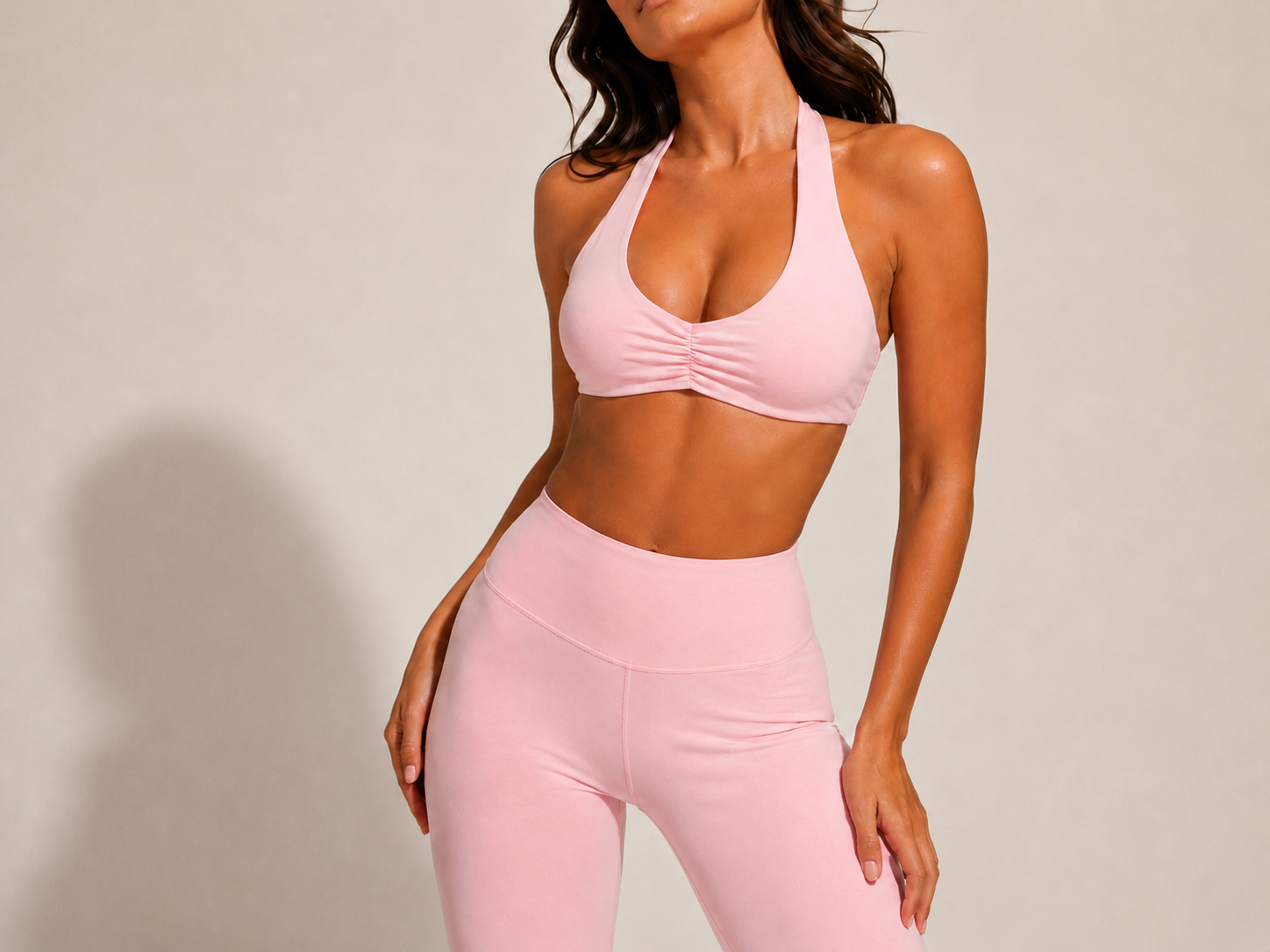
Sports Bras
Develop light-, medium- or higher-support concepts according to the intended activity, fabric, lining, elastic structure and pattern. Options can include removable-cup pockets, fixed inner structures, mesh panels, adjustable details and varied back designs when technically suitable. Support language should be confirmed through the selected construction and any required testing rather than assumed from appearance. Sampling focuses on fit, coverage, underband behavior, strap position, seam comfort and branding placement across the intended size range.
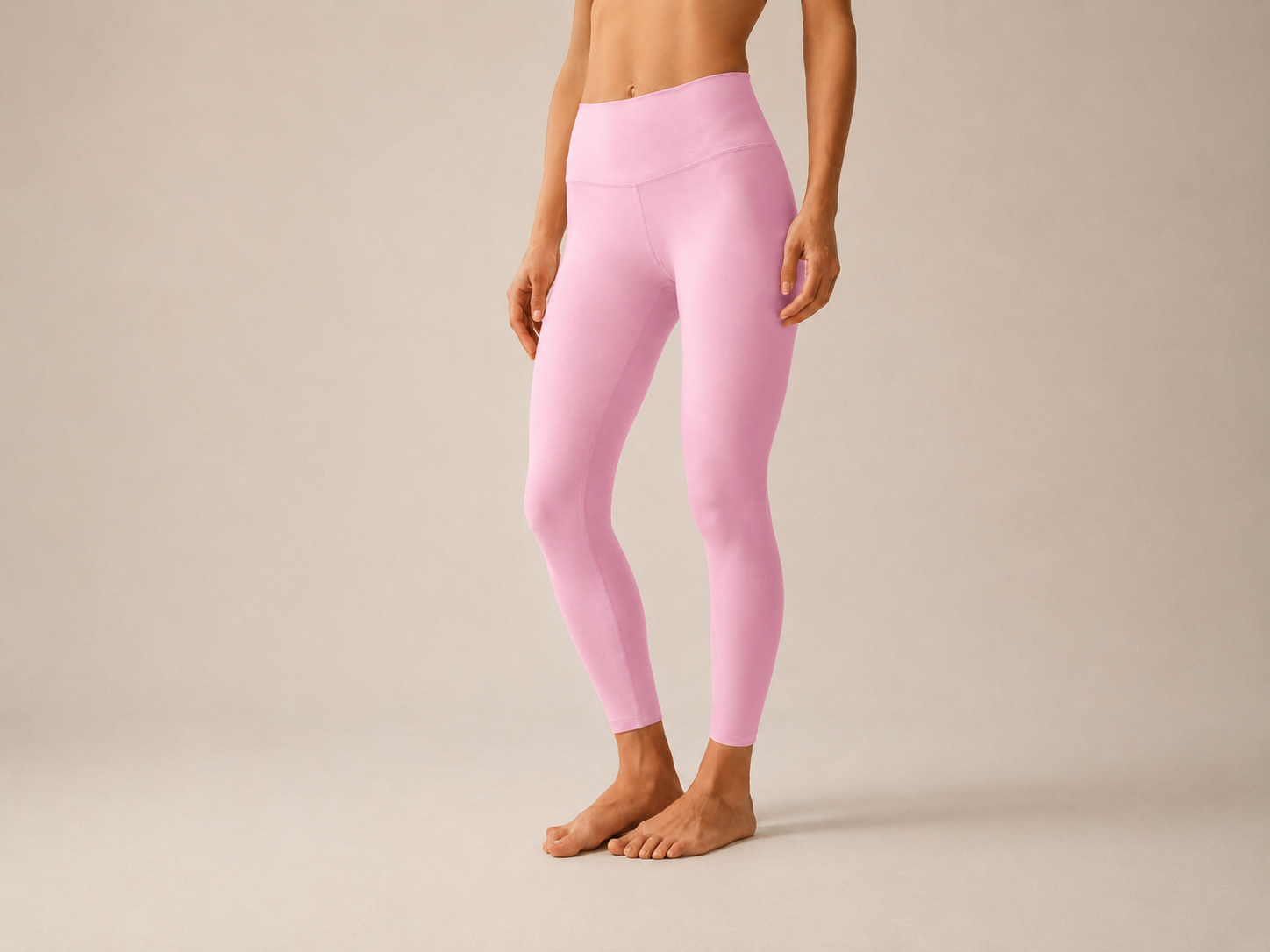
Yoga Leggings
Create leggings around the required rise, waistband construction, inseam, compression feel, pocket placement and contour details. Fabric selection considers stretch direction, recovery, weight, opacity, surface appearance and hand feel. Terms such as squat-proof are not applied as blanket claims; performance must be assessed against the chosen fabric, color and test method. Fit review checks waist stability, seat shape, leg balance, seam position and movement across the approved size range.
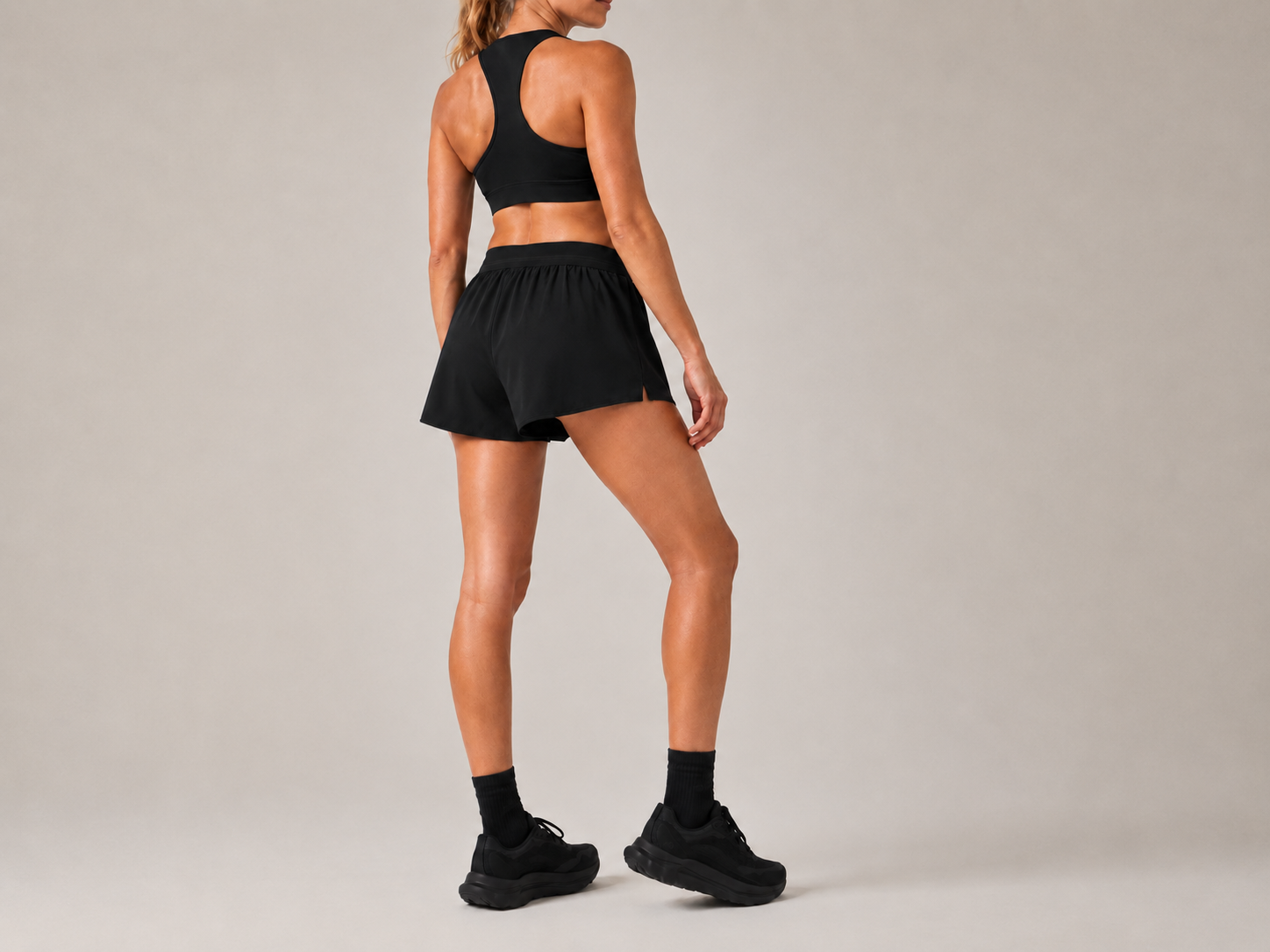
Running Shorts
Develop fitted, loose or layered running shorts with project-specific inseams, waist systems, liners, pockets and reflective or heat-transfer details. Construction is planned around mobility, weight, chafing risk and the behavior of shell and lining materials. Where moisture management or fast-drying performance is required, fabric data and testing criteria should be supplied or agreed during development. Samples are reviewed for waistband hold, stride movement, liner comfort, hem behavior and pocket security.
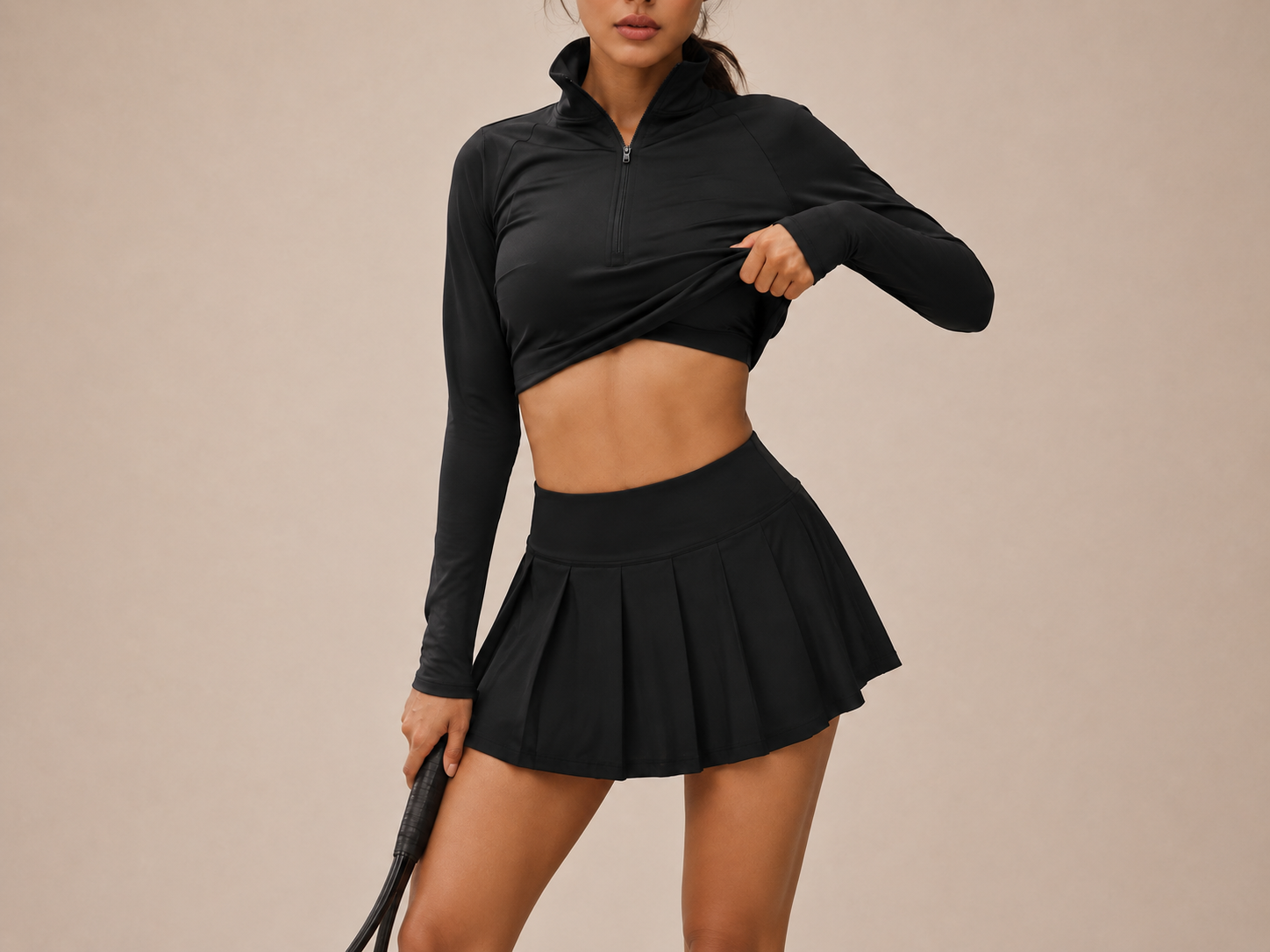
Tennis Skirts
Combine an outer skirt with integrated shorts, pockets and a stable waistband for tennis, golf or court-inspired collections. Development can address skirt length, pleat or panel design, short-leg length, ball-pocket orientation and branding details. Fabric combinations are checked for weight, recovery and visual consistency. Fit review covers waist position, skirt balance, inner-short movement, hem behavior and opacity across relevant fabric colors before measurements and construction are released for production.
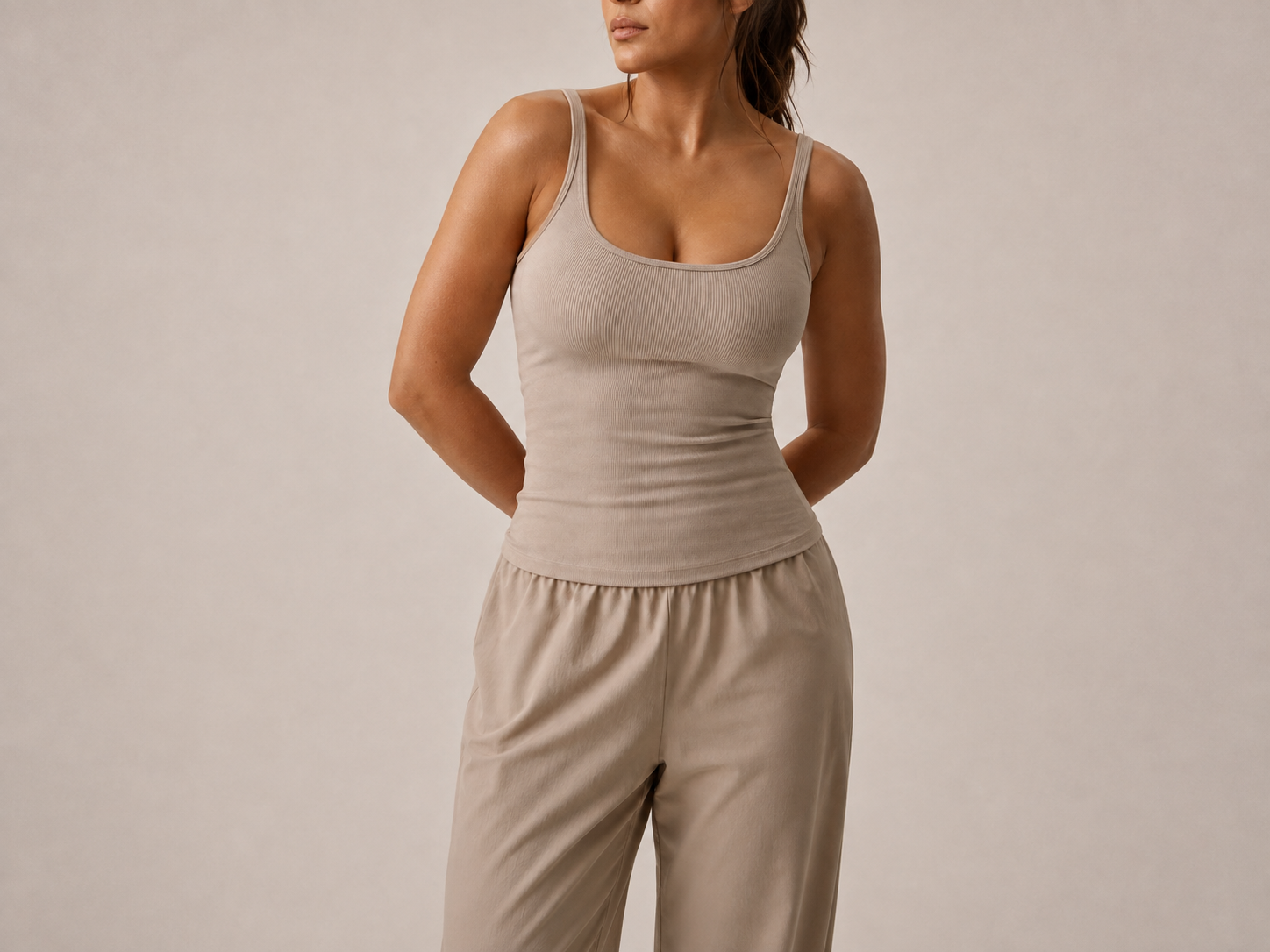
Tank Tops
Produce fitted or relaxed training tanks using stretch jersey, lightweight knits, mesh combinations or other approved materials. Neckline shape, armhole coverage, body length, internal support, binding and hem finish are developed around the use scenario. Laser perforation, bonding or heat-transfer decoration may be evaluated where material and design permit. Sample approval confirms neckline stability, armhole shape, body balance, seam comfort, hem appearance, movement, finished length and final logo placement.
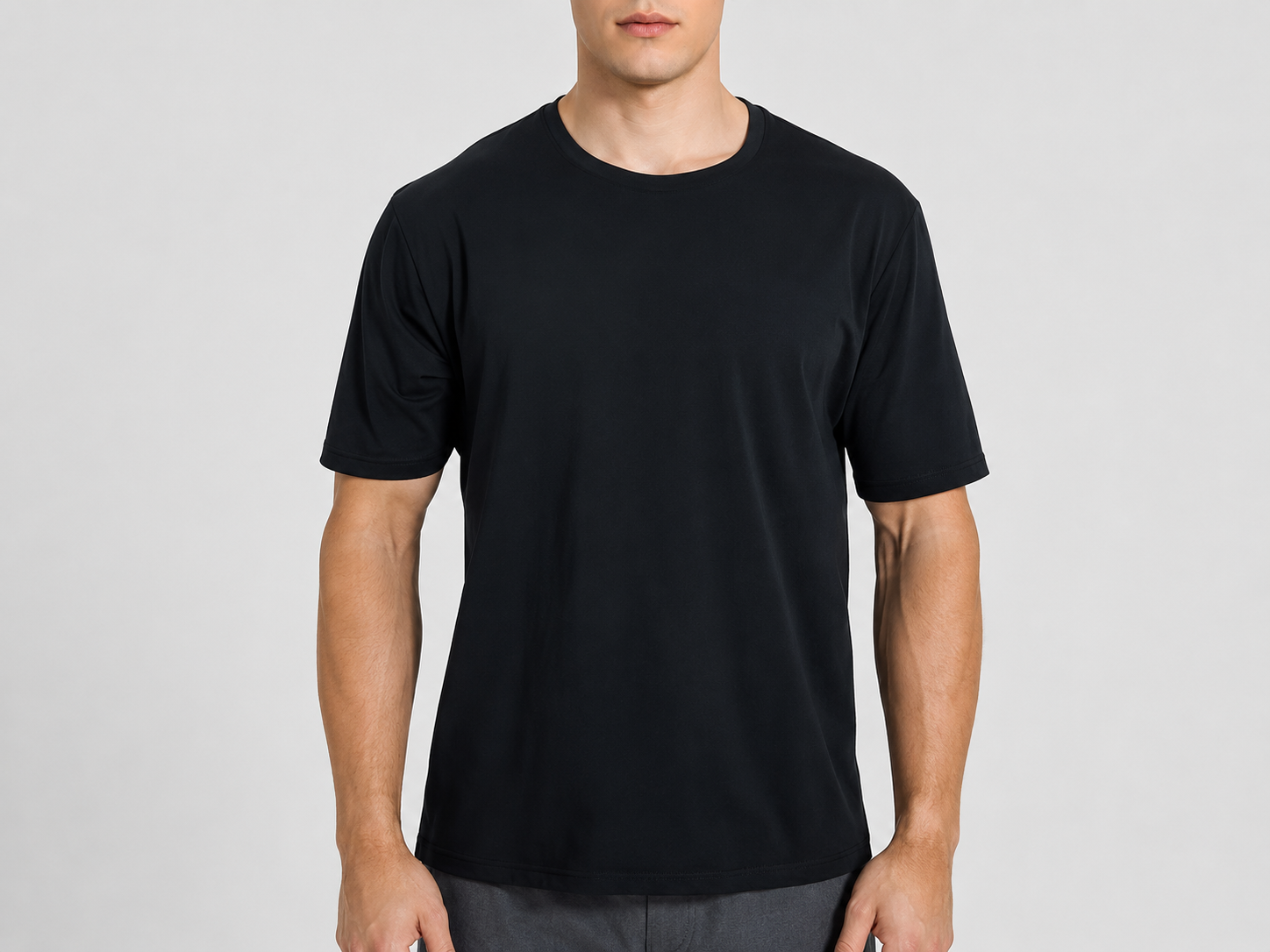
Sports T-Shirts
Develop performance-inspired or lifestyle sports T-shirts with fitted, regular or oversized proportions. Material review covers weight, stretch, drape, breathability requirements and decoration compatibility. Construction may include conventional seams, selected flatlock applications, mesh panels or bonded details depending on the design. Measurements, collar recovery, shoulder balance, sleeve shape, body length, hem appearance and print or transfer placement are checked during sampling before final bulk sewing and finishing instructions are finalized.
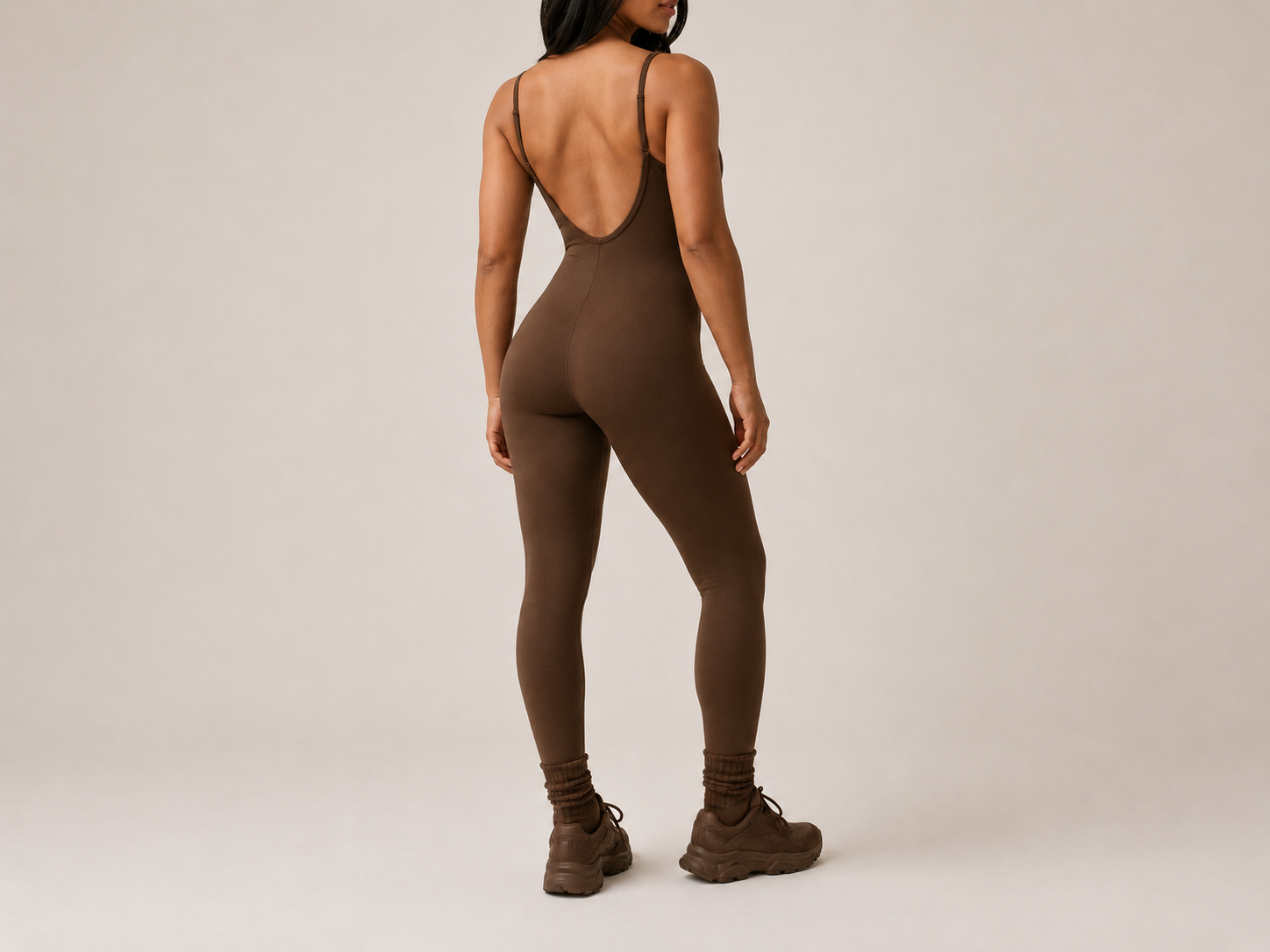
Tracksuits
Create coordinated jackets and pants for warm-up, travel, teamwear or athleisure programs. Development can include zip fronts, stand collars, hoods, rib or self-fabric finishes, elastic waists, cuffs, pockets and panel construction. Fabric selection depends on season, desired structure, stretch and surface finish. Matching components are reviewed together for color consistency, proportion, trim compatibility, branding placement, movement, layering needs, garment balance and a coherent fit across the complete set.
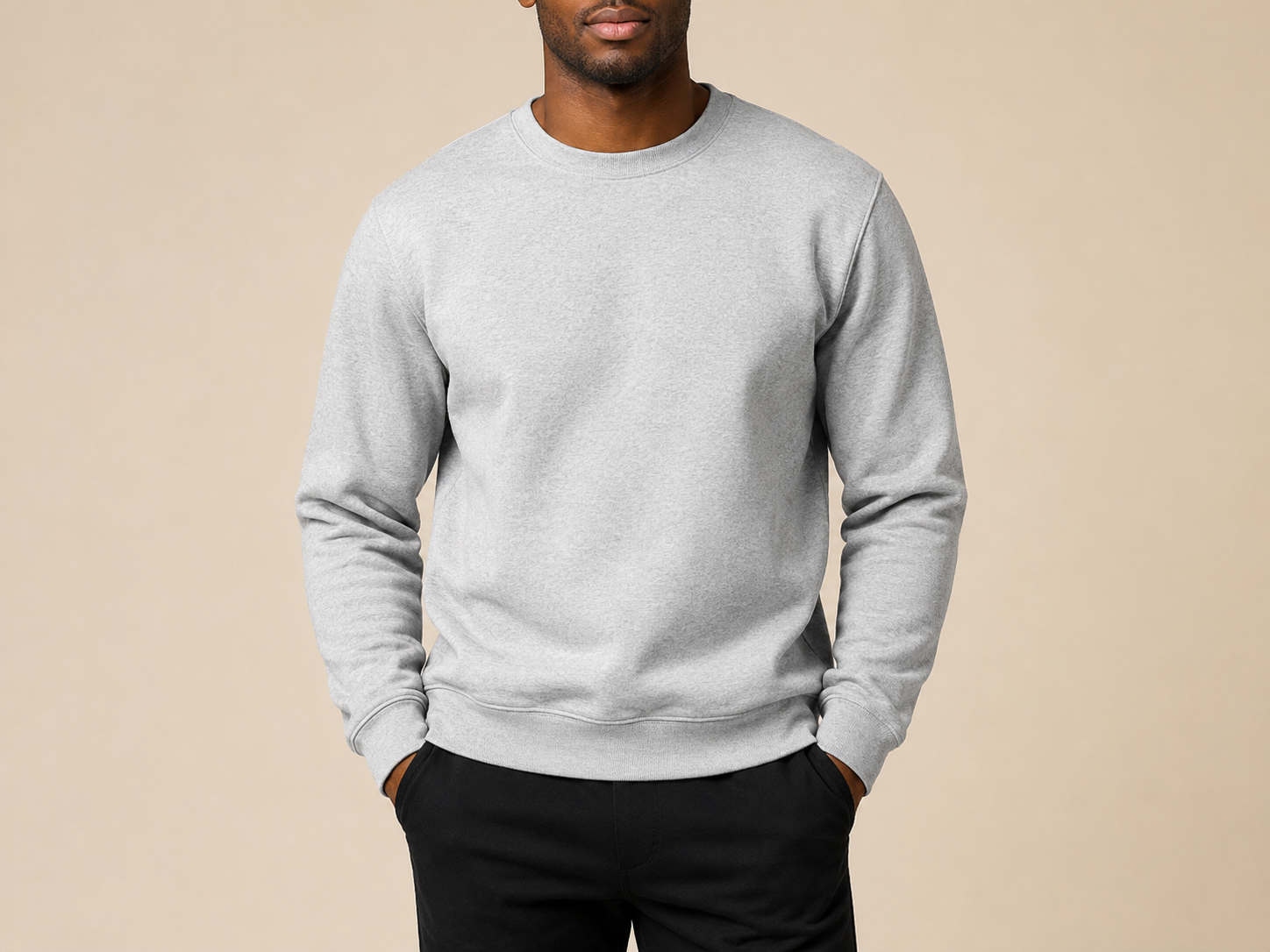
Hoodies and Sweatshirts
Build fleece, French terry or other knit tops for active lifestyle and streetwear collections. Options can cover pullover or zip styles, varied hood construction, rib finishes, pocket types, panel lines, embroidery and print applications. Fabric weight, shrinkage behavior and surface quality require review before production. Samples are assessed for shoulder and body balance, hood shape, neckline comfort, rib recovery, pocket symmetry, hem finish, sleeve and body length, and decoration appearance.
Choose the Right Starting Point for Your Program
A clear starting point shortens unnecessary back-and-forth. Leadshow can enter at concept, sample or production-ready stage, provided the team can identify the remaining decisions before quotation and scheduling. The chosen route sets the first files, approvals and development responsibilities.
Development-Led Projects
Start with sketches, reference garments, mood boards or an incomplete specification. Leadshow helps organize the material, construction, measurement and branding questions needed for a first sample. Development is suitable when the silhouette, fit block or fabric has not yet been approved. The process remains collaborative: the brand supplies design intent and target requirements, while Leadshow reviews manufacturing options and records approved decisions.
- Provide target use, product category and intended fit.
- Share reference images or garments and identify original design elements.
- State target fabric qualities, color direction and branding needs.
- Confirm required sizes, launch window and destination region.
- Allow for sample review and revision before bulk approval.
Production-Ready Projects
Move faster into quotation and sample verification when technical packs, measurement charts, artwork, material references and packing instructions are already organized. Leadshow checks file consistency and flags missing or conflicting requirements before production planning. A production-ready status does not remove the need for material confirmation or an approved sample; it means fewer open design decisions remain and the manufacturing route can be assessed more directly.
- Submit the latest technical pack with version date.
- Identify approved base size and complete size breakdown.
- Include color standards, logo files and placement measurements.
- Define label, hangtag, polybag and carton requirements.
- State order quantities and required shipment destination.
Select an OEM, ODM or Private Label Route
The service route depends on how much product information is already approved. Scope is defined before sampling so responsibilities, files, decisions and quotation assumptions remain clear to both teams from the first development action through bulk release and final packing.
OEM Manufacturing
Use OEM manufacturing when the brand controls the design and supplies detailed production requirements. Leadshow reviews the technical pack, measurement chart, bill of materials, artwork, labels and packaging before quoting. Questions are consolidated for approval, and the agreed sample becomes the main workmanship and fit reference for bulk execution.
- Designed for established specifications and approved design ownership.
- Supports fabric and trim sourcing against stated requirements.
- Includes sample development, bulk manufacturing and quality control.
- Keeps revisions linked to dated technical documents.
- Production timing is confirmed after material and capacity review.
ODM Development
Use ODM support when a concept needs further product development before production. Leadshow can assist with fabric options, construction suggestions, pattern work, fit adjustment and sample development within the approved brief. Brand approval remains necessary at each decision point, especially for materials, measurements, color, branding and packaging.
- Begin with a product brief, sketch, mood board or reference sample.
- Define intended activity, fit, price position and launch timing.
- Review manufacturability before committing to complex details.
- Refine samples through clear, consolidated fit comments.
- Release bulk production only after the required approvals.
Private Label
Use private label support to create a branded assortment with custom identity elements and an agreed level of product modification. Labels, hangtags, logo applications and packaging can be developed from supplied artwork and specifications. Product choices may draw from existing capability or new development, depending on the requested silhouette and differentiation.
- Confirm brand files, label wording and placement dimensions.
- Select garments, materials, colors and size range.
- Match decoration methods to fabric and artwork requirements.
- Approve packaging components before bulk ordering.
- Organize cartons and packing lists by style, color and size.
Send the Right Details for a Useful Quotation
Quotation quality depends on the information available. A complete brief allows Leadshow to evaluate materials, construction, quantities, branding, packing and schedule assumptions with fewer unresolved variables.
Information
Preferred Format
What to Include
Why It Matters
Product design
Technical pack, sketch or clear reference images
Front and back views, design lines, pockets, lining and special features
Defines the style and construction route
Measurements
Measurement chart or approved garment measurements
Base size, points of measure, tolerances if available and size range
Supports pattern assessment, fitting and grading discussions
Fabric
Composition, weight, stretch direction, swatch or performance brief
Hand feel, recovery, opacity, surface, color and any test requirements
Affects fit, cost, construction and production method
Trims
Bill of materials, reference samples or descriptions
Elastic, zippers, cords, cups, mesh, thread and accessory colors
Reveals sourcing needs and trim minimums
Branding
Vector artwork and placement sheet
Logo dimensions, location, color and preferred application method
Allows decoration compatibility and cost review
Quantity
Spreadsheet by style, color and size
Units per color, planned size split and total quantity
Determines MOQ fit, material usage and capacity needs
Packaging
Packaging manual or written instructions
Main label, care label, hangtag, polybag, barcode and carton requirements
Supports an accurate finished-garment quotation
Sample plan
Written approval route
Required sample types, decision makers and number of anticipated review rounds
Helps organize development milestones without assuming a fixed cycle
Delivery plan
Destination, target dispatch date and preferred freight mode
Warehouse region, nominated forwarder if applicable and launch deadline
Allows a project-specific production and export handover plan
Compliance needs
Test protocol or market requirement
Test item, standard, responsible party and required report timing
Prevents unsupported performance or certification assumptions
Quotation Note: The starting MOQ and price are confirmed after reviewing fabric, trim, construction, customization, logo, packaging, testing and schedule. Exact sample and delivery dates are confirmed after requirement and material review.
Turn Product Specifications Into a Controlled Manufacturing Plan
Before sampling begins, Leadshow reviews what the garment must achieve, how it should be constructed and which open decisions could affect fit, quality, cost or timing. The review creates a shared, dated basis for sample work and later production decisions.
Technical Pack Review Finds Gaps Before Sampling Starts
A technical pack is useful only when its pages agree with one another. Leadshow reviews the latest file version across sketches, construction notes, measurement charts, bill of materials, color information, artwork, labels and packaging instructions. The aim is to identify conflicts before they become sample errors or production rework.
Common checks include whether the sketch matches the seam callouts, whether the measurement table names a clear base size, whether fabric stretch direction supports the proposed pattern, and whether logo dimensions and placements are measurable. Pocket openings, lining coverage, elastic widths, zipper lengths, thread colors and finish details also need unambiguous instructions. When a reference garment is supplied, the brand should state which features are references and which require original development.

Questions are consolidated into an approval list. Resolved decisions are incorporated into the active specification, and revised files should carry a new date or version number. A controlled file trail reduces the risk of production teams working from outdated comments. Leadshow does not assume missing requirements; uncertain points remain open until approved by the authorized product contact.
Manufacturability Review Connects Design, Fabric and Construction
An attractive design can behave differently once stretch, recovery, seam bulk and production handling are introduced. Leadshow reviews each style in relation to the selected material and intended use. A bonded edge, laser perforation, flatlock seam or seam-sealed detail is considered only where equipment, construction and material compatibility support it. Specialized machinery is not applied to every garment and does not create a performance claim by itself.
The review considers seam placement, stress points, layer thickness, waistband structure, pocket loading, lining, elastic tension, cup construction, hem finish and decoration method. Fabric weight and recovery may change how a pattern sits on the body; light colors may require separate opacity review; large heat transfers may influence stretch or hand feel. For complex styles, selected operations or decoration details may need a test piece before the full sample is approved.
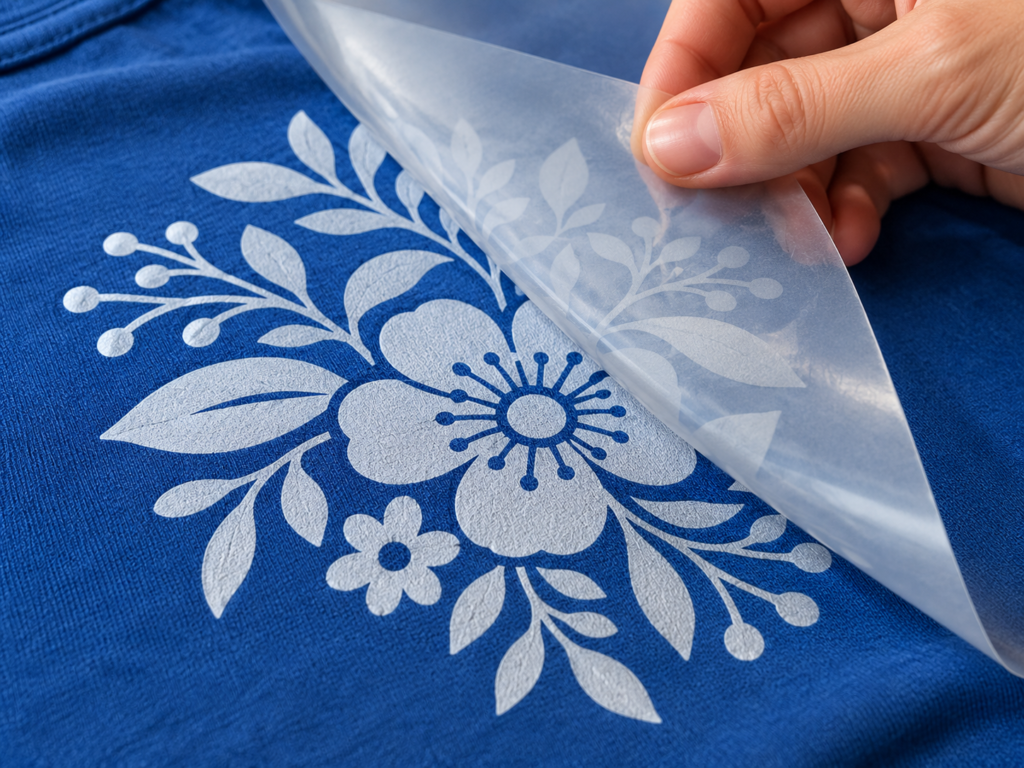
When a risk is identified, Leadshow can discuss an alternative construction, material adjustment or controlled sample test. The brand then decides whether to preserve the original feature, revise it or remove it. The goal is not to simplify every design, but to make the chosen design repeatable under the agreed production conditions.
Approved Samples Become the Main Production Reference
The development sample brings the file review and manufacturing decisions into a physical garment. Leadshow evaluates workmanship and measurements against the current specification, while the brand reviews fit, appearance, hand feel and design intent. Comments should be consolidated into one marked document per round, with photos and measurement references where useful.
Changes involving fit, fabric, construction, trim or branding can affect more than one section of the garment. A waistband adjustment may change rise and pocket position; a new fabric can change stretch, recovery and seam appearance; a larger logo may require a different decoration test. Revised samples are scheduled according to the scope of changes and material availability rather than a universal number of days.
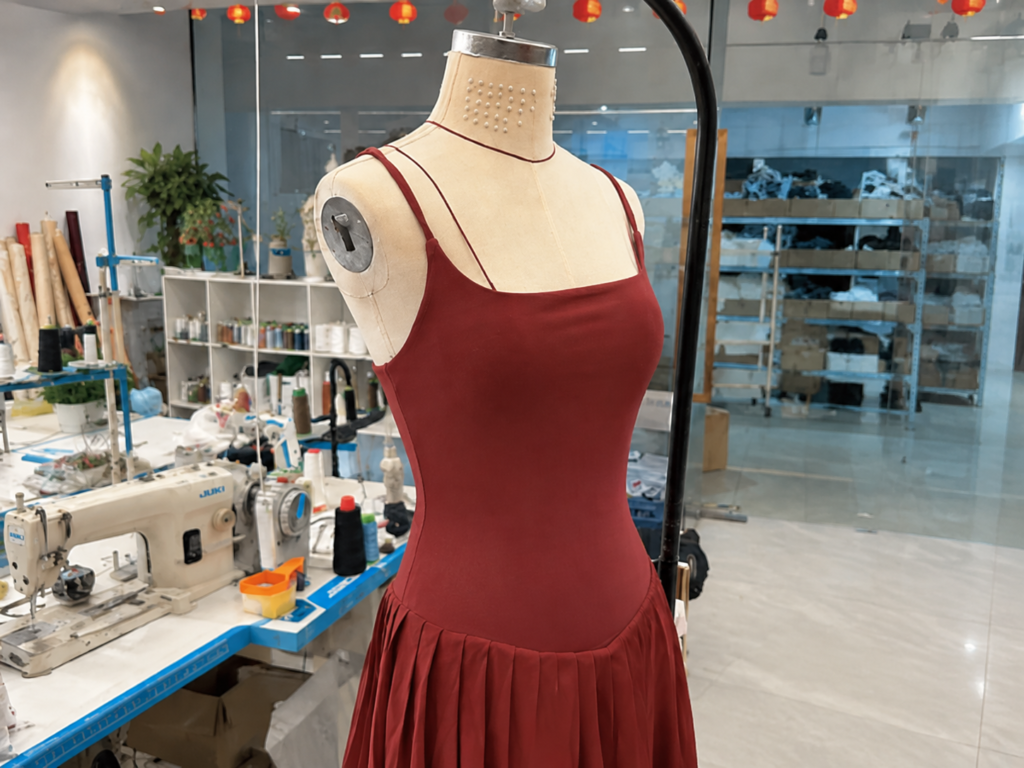
Bulk production is released after the required sample, color, material, artwork and packaging approvals are in place. The approved garment, dated files and confirmed component references form the production standard. If a change is requested after approval, cost, timing and existing material commitments must be reviewed before the production instruction is updated. Production teams then receive the same current reference set.
Select Fabric by Garment, Activity and Brand Positioning
Fabric choice influences fit, comfort, appearance, construction and price. Leadshow reviews measurable requirements and physical references instead of applying one material description across an entire activewear range. Color, finishing, decoration and intended use are considered alongside composition and weight.
Stretch and Recovery
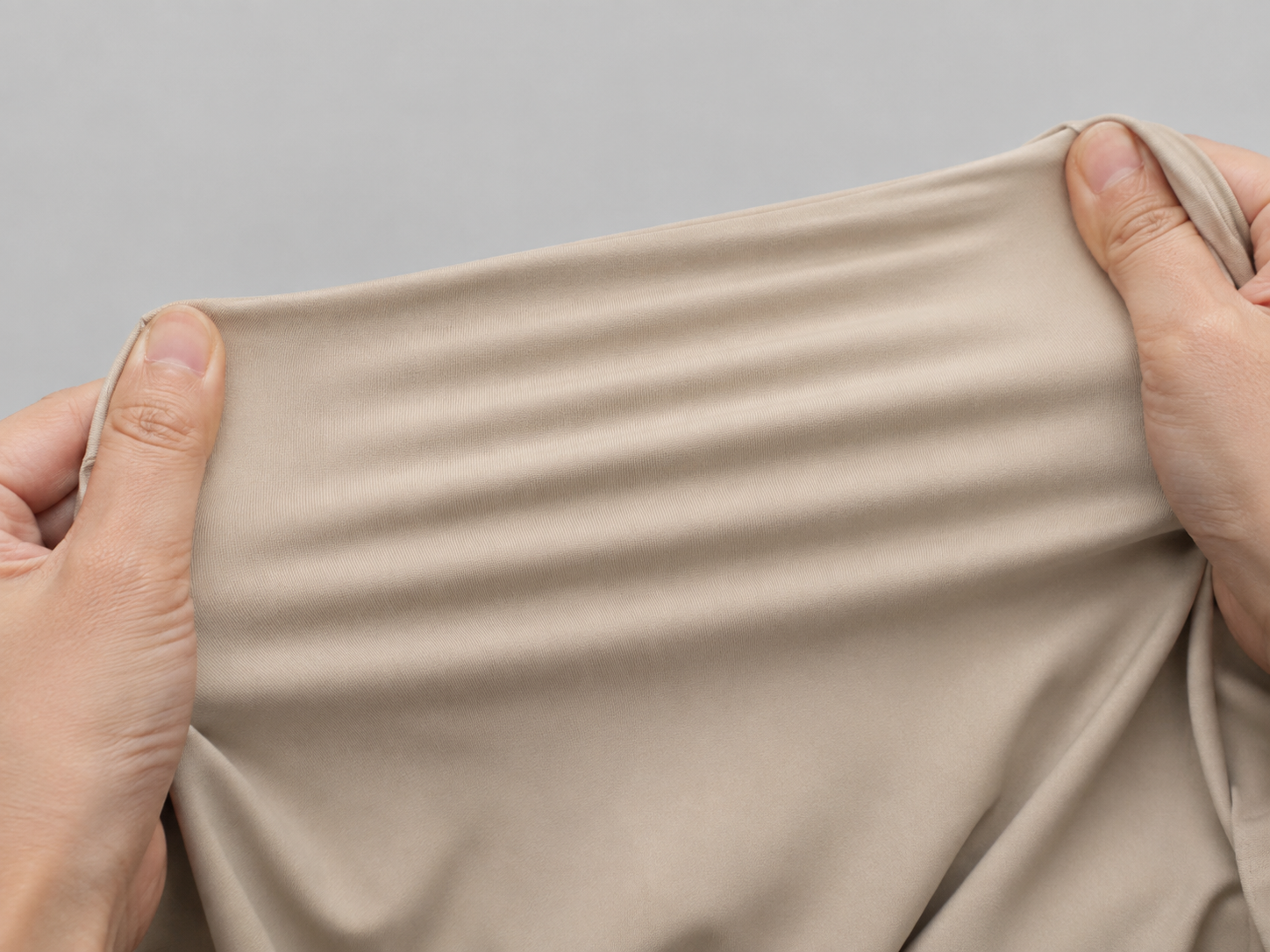
Stretch percentage alone does not explain how a garment will fit. Direction, force and recovery affect waistband hold, support, mobility and shape retention. Leadshow considers the pattern and seam route together with the fabric. A sample made in a substitute quality may not predict the final result, so production approval should use the confirmed material whenever possible.
- Define two-way or four-way stretch requirements.
- Identify the intended compression or ease level.
- Review recovery after extension and repeated wear simulation where required.
- Match elastic and lining behavior to the main fabric.
- Recheck measurements when material quality changes.
Weight and Coverage
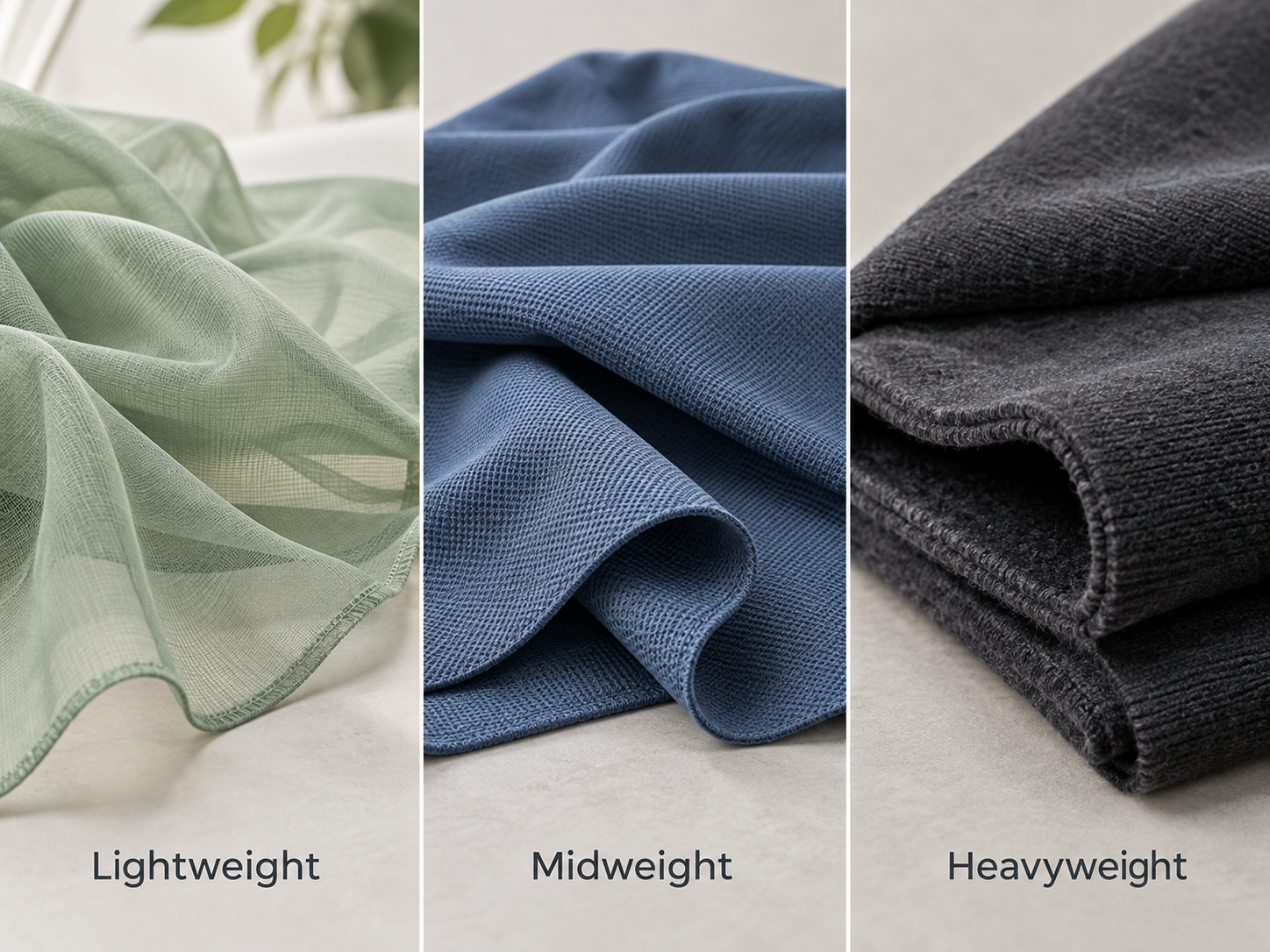
Fabric weight affects drape, warmth, opacity, drying behavior and perceived quality, but equal GSM values can still produce different results. Knit structure, yarn, finish and color also matter. Light and pale shades often need separate coverage review. For leggings, shorts and bras, Leadshow can assess material and garment construction together before any opacity or coverage language is approved.
- Supply a target GSM or an approved swatch.
- Review light and dark colors separately when needed.
- Check single- and double-layer zones on the garment.
- Confirm lining requirements for sensitive areas.
- Use an agreed test method for specific performance claims.
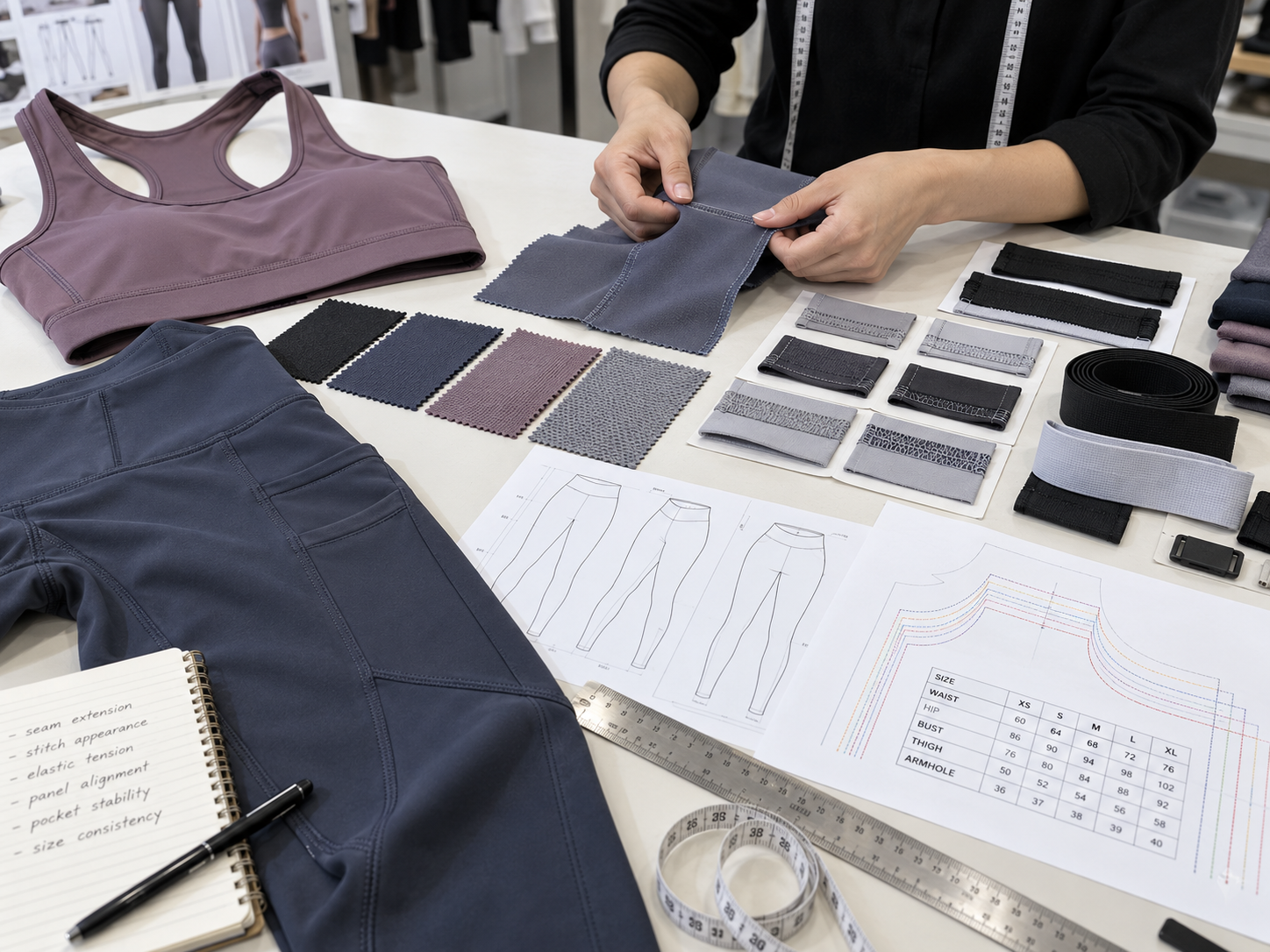
Hand Feel and Surface
Brushed, smooth, cool-touch, cotton-like or structured descriptions should be supported by a physical swatch or clear benchmark. Finishing can influence pilling, shade, stretch and sewing performance. Leadshow helps compare fabric options against the intended retail position and garment design, while final approval remains linked to the submitted swatch, color and available production lot.
- Describe the preferred touch and surface appearance.
- Provide a benchmark garment or swatch when possible.
- Check compatibility with print, transfer or embroidery.
- Review pilling or abrasion requirements if relevant.
- Approve the final color and material reference before bulk.
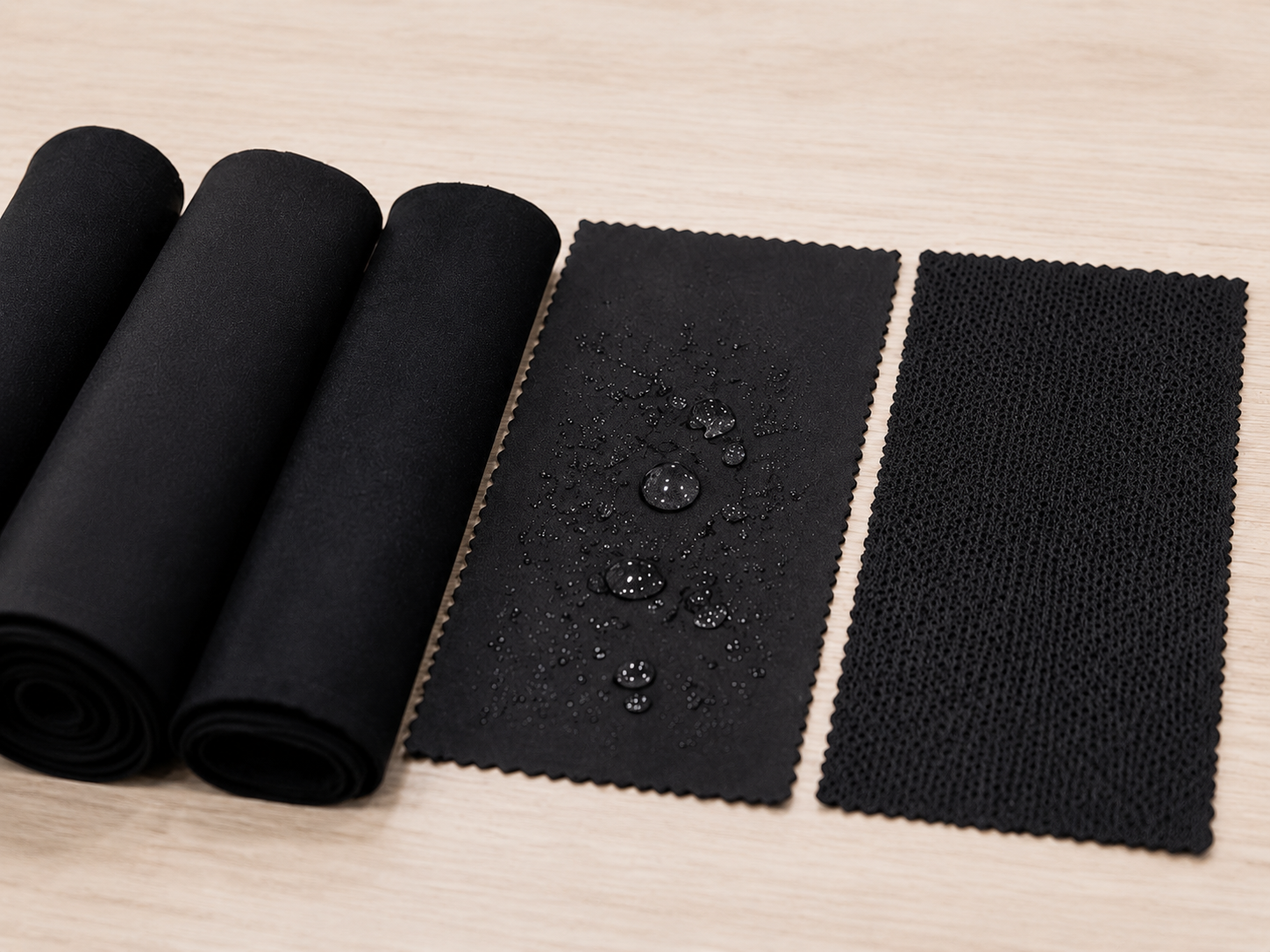
Moisture and Drying
Moisture-management and quick-dry claims depend on fiber, knit structure, finish and testing method. They should not be inferred simply because a fabric is used for sportswear. If the collection requires measurable performance, provide the target standard or agree on the test item and responsible laboratory before production. Leadshow can align fabric sourcing and garment development with the approved requirement.
- State the use scenario and expected performance.
- Identify the requested test standard and threshold.
- Confirm whether testing applies to fabric or finished garment.
- Approve color and finish before the test stage.
- Keep the report linked to the tested material and lot.
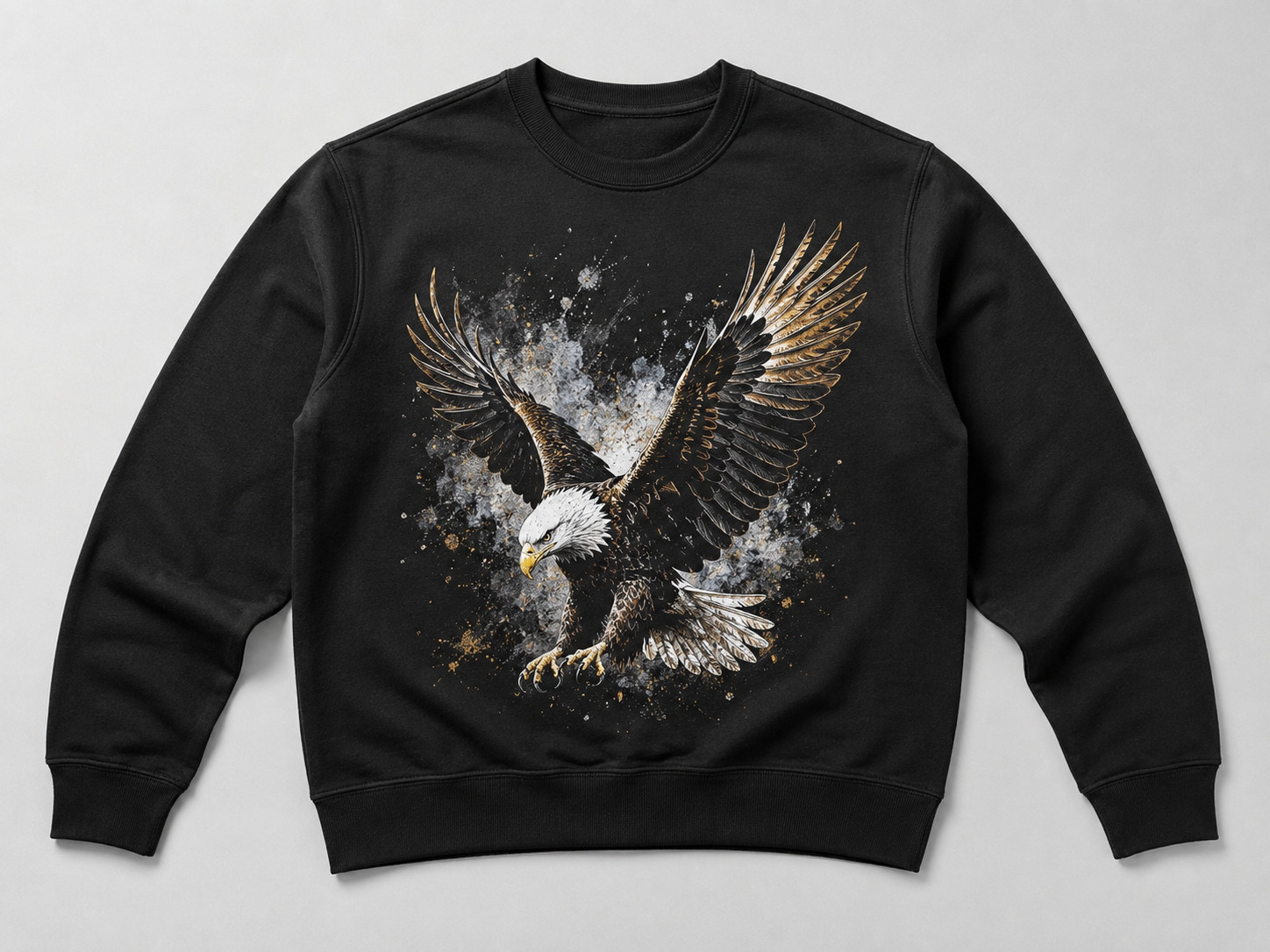
Print and Decoration
Logo methods must work with the fabric’s stretch, surface, heat sensitivity and wash expectations. Screen print, heat transfer, embroidery and other applications create different hand feel and production constraints. Leadshow reviews artwork size, color, placement and method before bulk. A strike-off or application sample may be needed for large, detailed or stretch-sensitive graphics before the complete decoration quantity is released.
- Submit vector artwork and color references.
- Mark exact width, height and placement measurements.
- Review stretch and heat compatibility.
- Approve appearance on the selected color.
- Define any required wash or durability test.
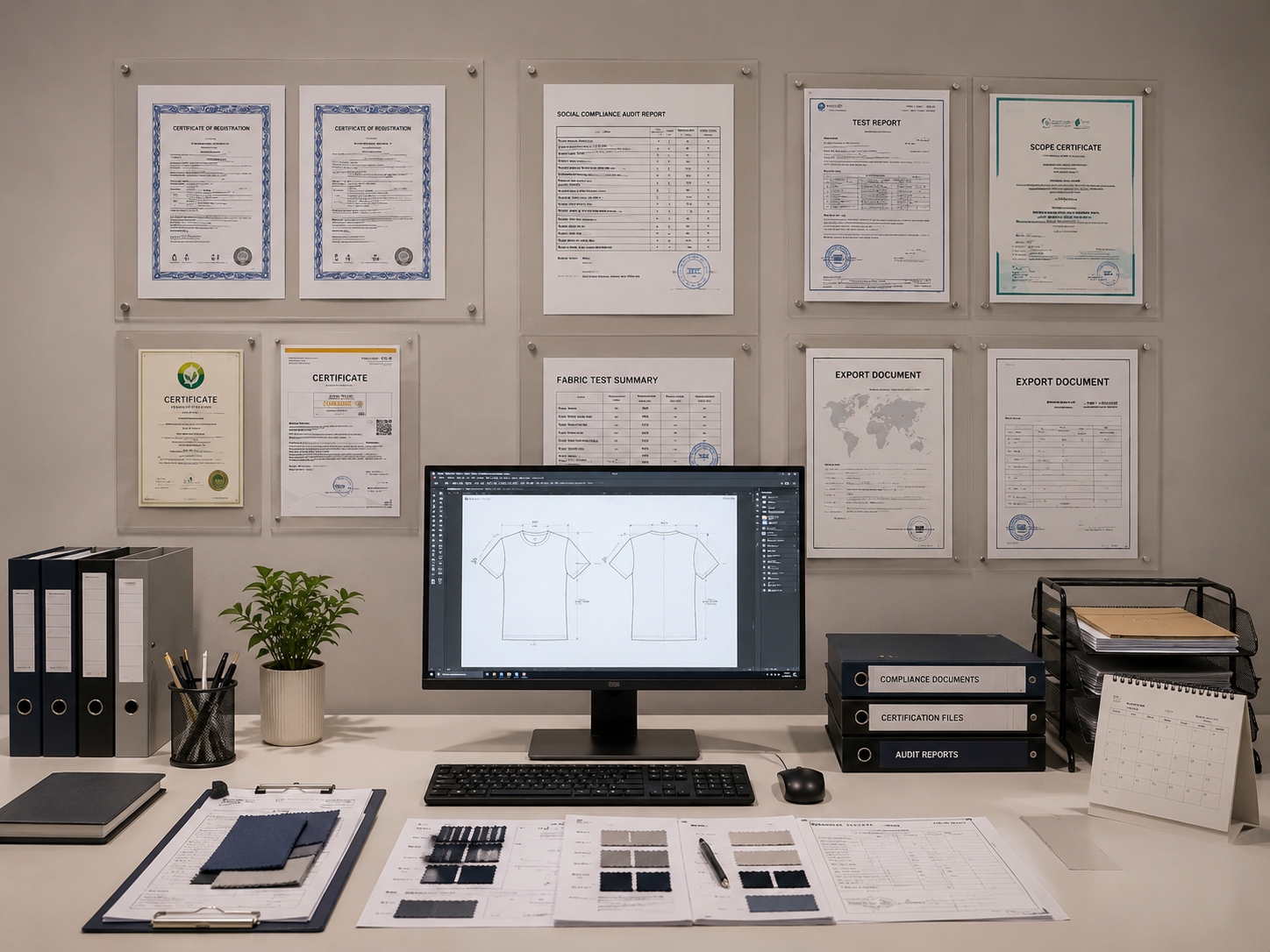
Responsible Material Requests
Recycled, organic or other responsible-material claims require traceable documents tied to the relevant supplier, material, transaction or production scope. A supplier certificate does not automatically certify Leadshow or every finished garment. Share the claim, destination requirement and evidence expected before sourcing begins so material availability, minimums, price and document scope can be reviewed accurately.
- Name the exact claim and required evidence.
- Confirm whether certification must cover fabric, transaction or facility.
- Review issuer, holder, scope and validity.
- Keep documentation linked to the selected material.
- Avoid broad sustainability language unsupported by records.
Build Fit Consistency From Base Size to Full Range
Reliable sizing begins with a defined fit target, measurable points and an approved base sample. Leadshow connects pattern adjustments, fit comments and grading decisions through controlled product-development records, keeping size labels, garment measurements, fabric behavior and approval versions aligned before bulk production.
Define the Base Size Before Expanding the Range
Every size range needs an anchor. The brand should identify the base size, intended body profile, wearing ease and reference block before grading begins. Alpha sizes such as XS-XXL or numeric systems can both be supported, but the label names alone do not define actual garment measurements. Two brands using “M” may follow different body standards, fit preferences and grade rules.
Leadshow reviews the measurement chart against the sketch, fabric and construction. Points of measure should be named clearly and accompanied by diagrams when interpretation could vary. High point shoulder, waist position, front and back rise, inseam, leg opening, underband, strap length and armhole depth all need a repeatable measurement method. The pattern and sewn sample are then checked against the current specification.
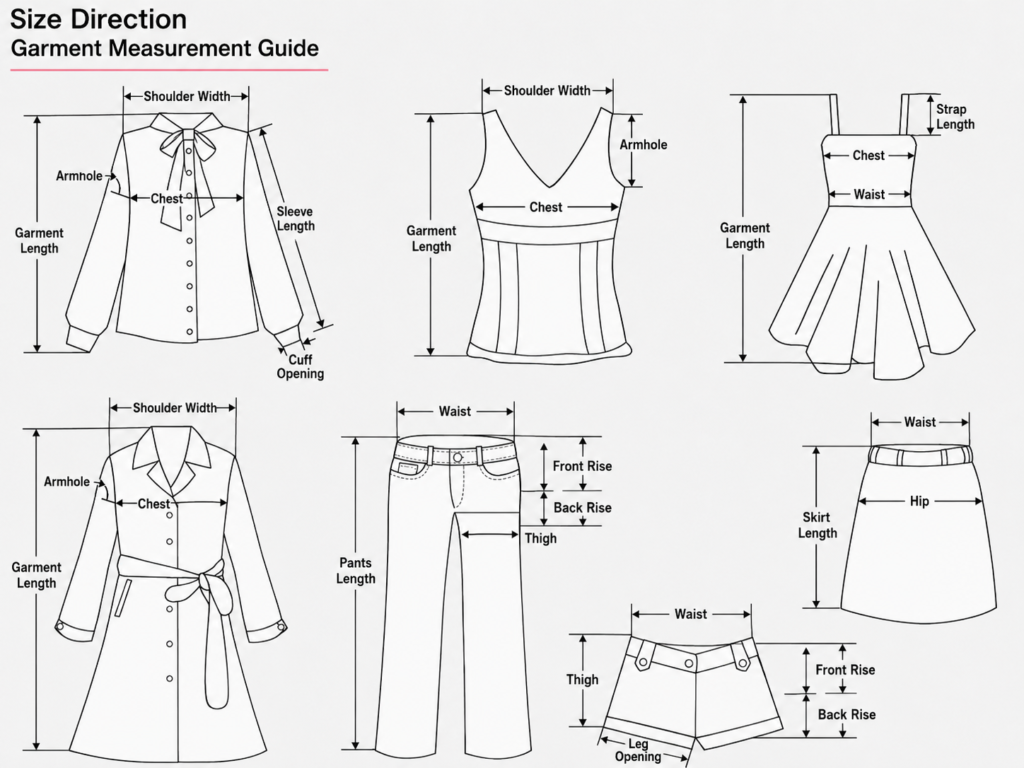
For close-fitting activewear, fabric stretch and recovery affect the relationship between garment and body measurements. The approved fit cannot be separated from the approved material. If fabric quality changes, critical measurements and wear behavior may require another review. Final size labels, base measurements and intended range are recorded before bulk production. The same reference system then supports sample comments and measurement checks.
Use One Consolidated Comment Set for Each Round
Fit development moves more efficiently when design, product and technical comments are combined into one approved file. Each comment should identify the sample version, size, measurement point or garment area, requested change and final owner. Photos can clarify drag lines, seam position, coverage or balance, but measurable changes should also be written numerically where possible.
Leadshow reviews how one adjustment may affect surrounding measurements and construction. Shortening a body length can move a pocket or panel line; changing a waistband height can affect rise; altering cup position can change neckline coverage and strap balance. The revised pattern and sample should reflect the full set of approved changes rather than disconnected instructions from multiple email threads.
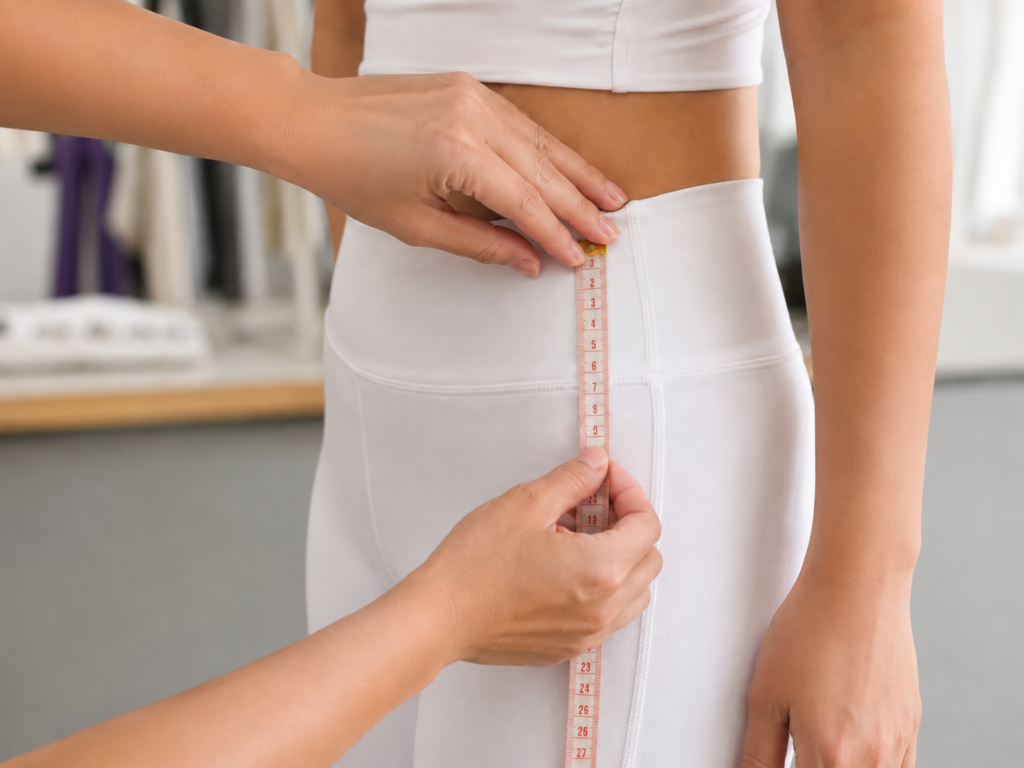
The number of sample rounds depends on the starting files, fit complexity, material changes and speed of decision-making. Leadshow confirms the schedule for each round after reviewing the requested changes and component availability. A dated sample log helps both teams distinguish superseded versions from the current approval reference. Named decision owners help prevent contradictory instructions from reopening completed fit points or approved construction details.
Confirm Grade Rules and Critical Measurements Before Bulk
Once the base size is approved, grading determines how measurements change across the full range. Grade increments should reflect the intended body standard and garment behavior; they are not always identical at every measurement point. A sports bra, legging and oversized sweatshirt require different decisions around circumference, length, support and ease.
Leadshow can apply or review grade rules supplied for the program. The final specification should show each production size, the measurement values and any agreed tolerance method. Critical points are identified according to fit and construction risk. Size-set or related verification requirements are planned based on the style, range and approval process rather than assumed for every order.
During production, measurements are checked against the approved specification using the agreed method. Material behavior, handling and finishing can influence results, so any tolerance must be defined and interpreted in context. If a brand changes the size range or grade rules after material cutting or production has started, cost and schedule effects require review before instructions can be updated. Released instructions should always carry the current version date and approval owner.
Specialized Processes Applied Where the Product Requires Them
Leadshow selects machinery and process routes according to the approved design, material and test requirements. Each technique carries its own compatibility limits and quality checkpoints. Sample evidence and test criteria are added when a specialized detail affects performance, durability or appearance.
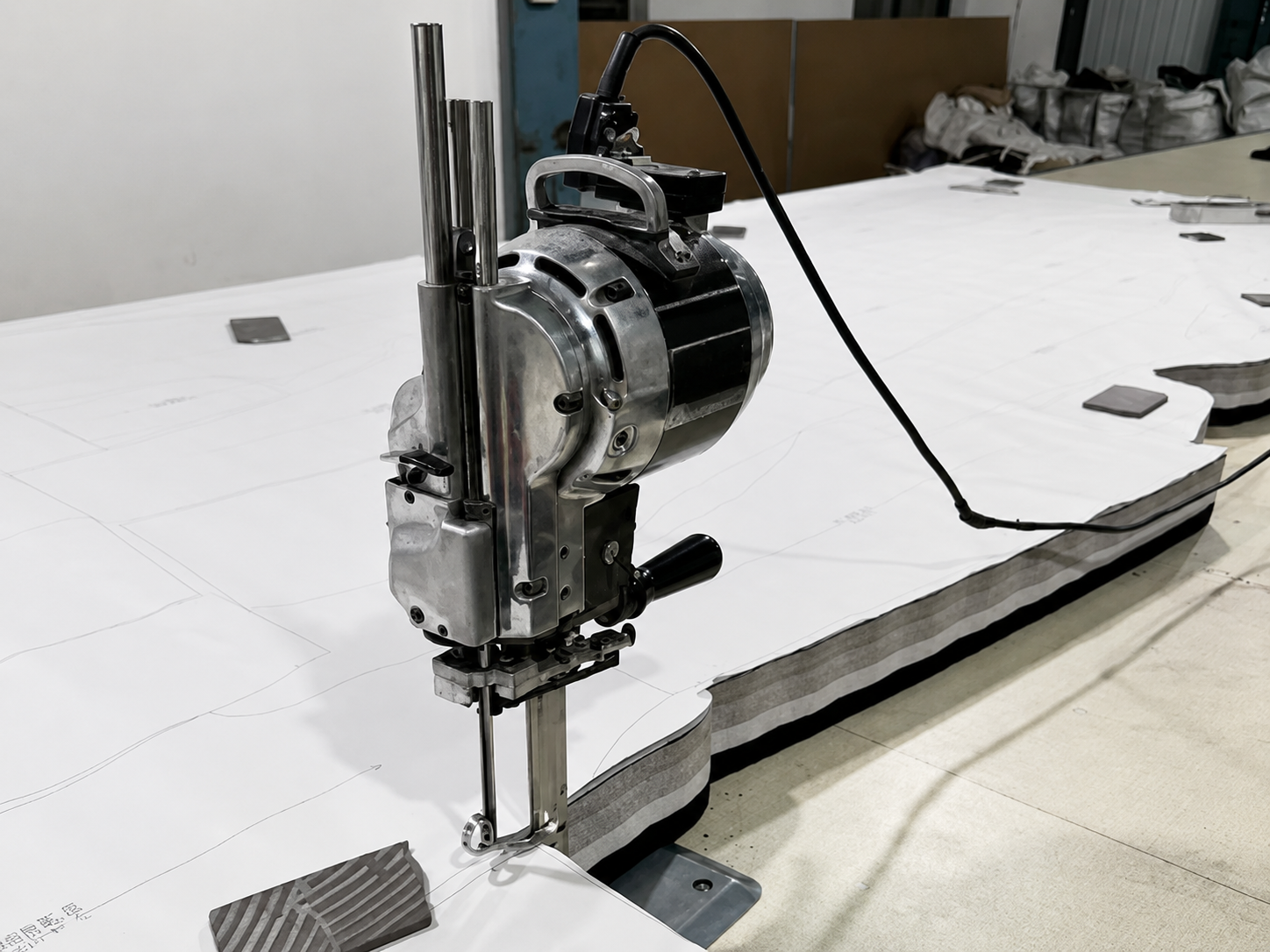
Automatic Cutting
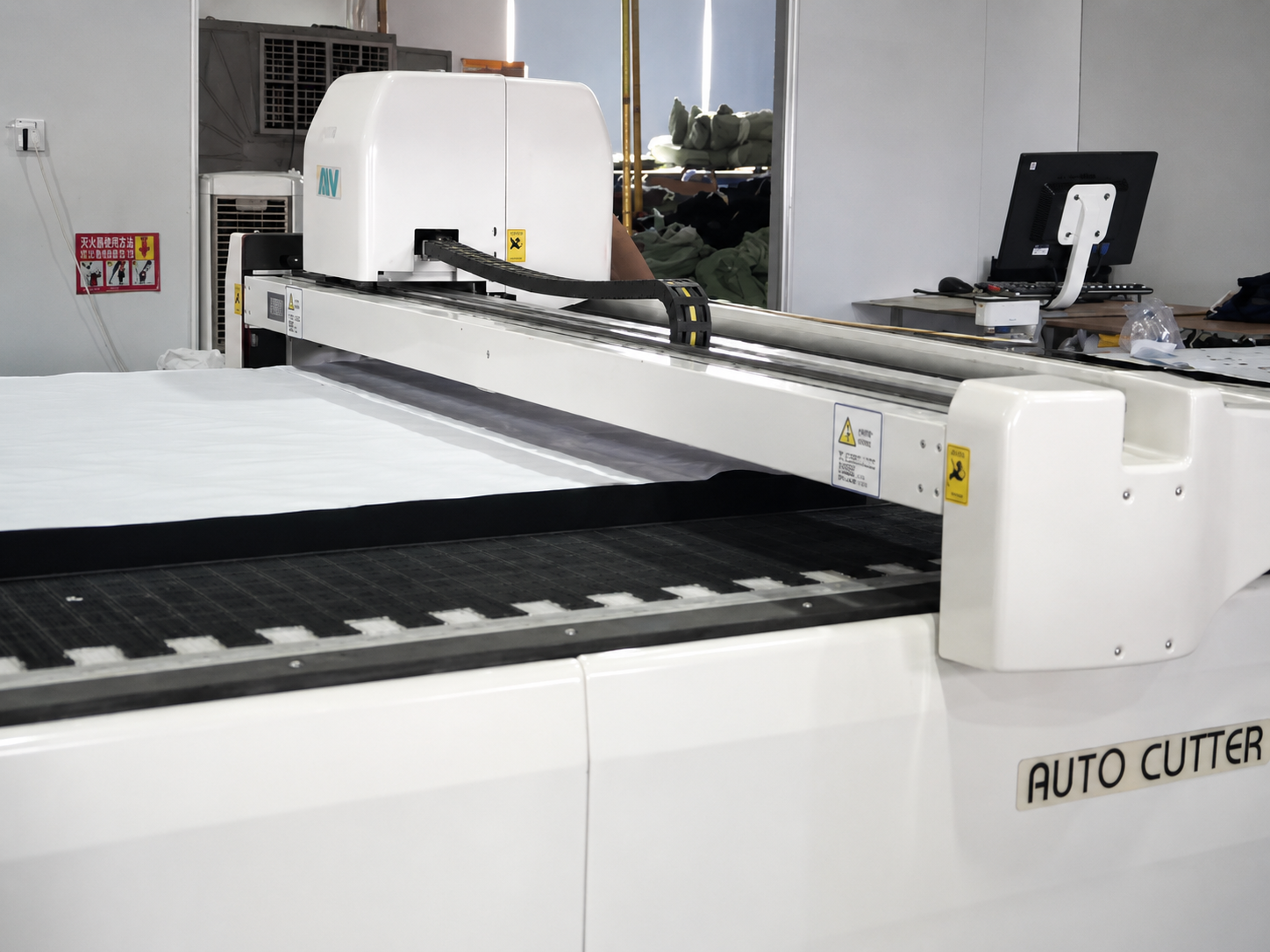
Three automatic computer cutters and five automatic fabric spreaders support planned cutting operations, alongside eight vertical cutters and six round-knife cutters. The selected method depends on fabric, lay, marker, quantity and component shape. Cutting preparation includes reviewing direction, layer handling and pattern version. Accurate machinery supports repeatability, while material relaxation, spreading control and bundle identification remain important parts of the cutting process.
- Confirm the latest approved pattern.
- Match cutting method to material behavior.
- Identify bundles by style, color and size.
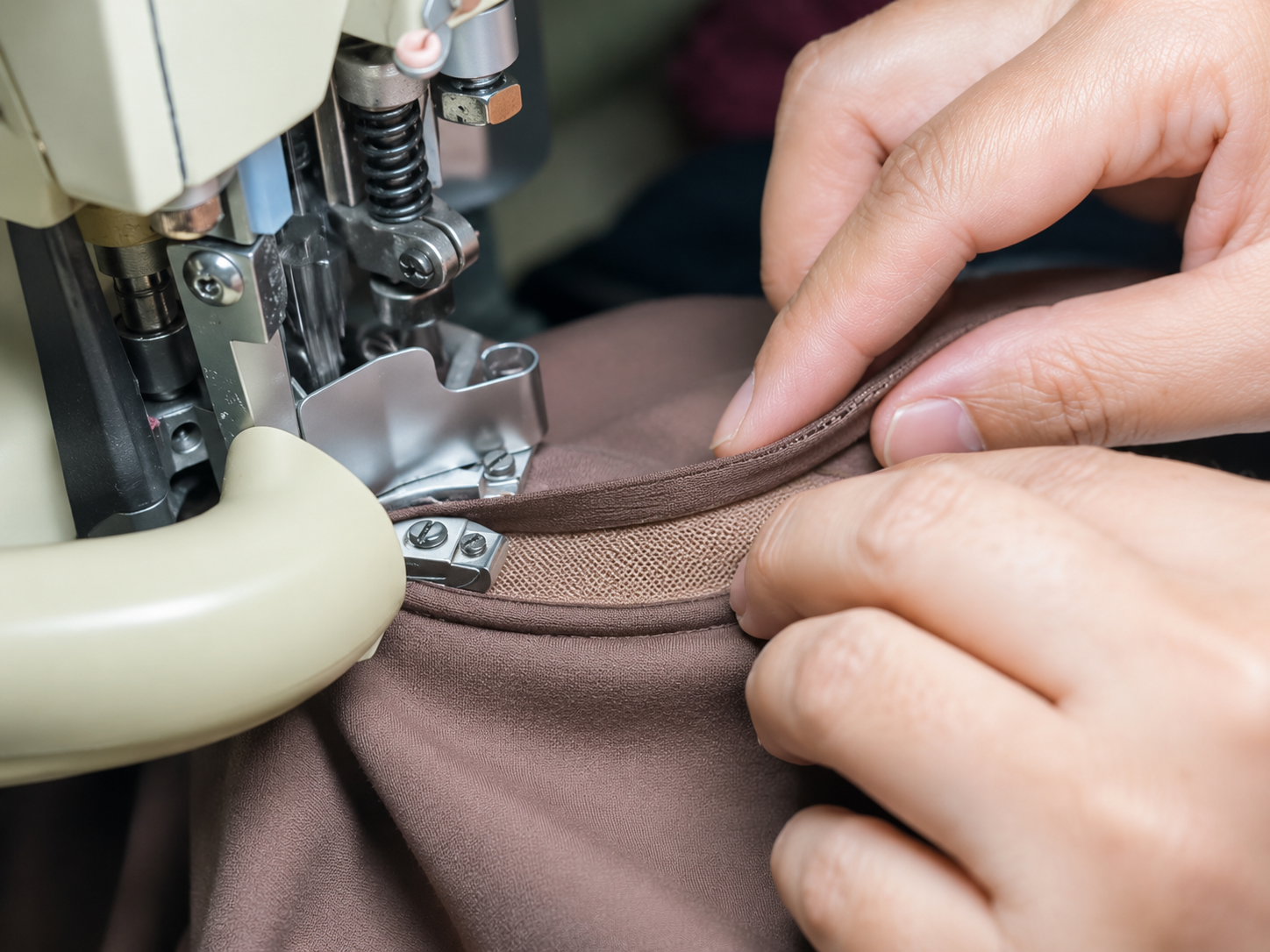
Flatlock Construction
Leadshow has 35 four-needle six-thread flatlock machines for selected activewear seams. Flatlock can help manage seam profile and appearance where the design and material support it. The equipment should not be described as seamless knitting; a flatlock garment still uses sewn seams. Stitch formation, thread choice, tension, stretch and seam placement are reviewed on the actual fabric before the operation is approved.
- Use only on technically suitable seams.
- Check stretch, recovery and thread tension.
- Approve seam appearance on the selected color.
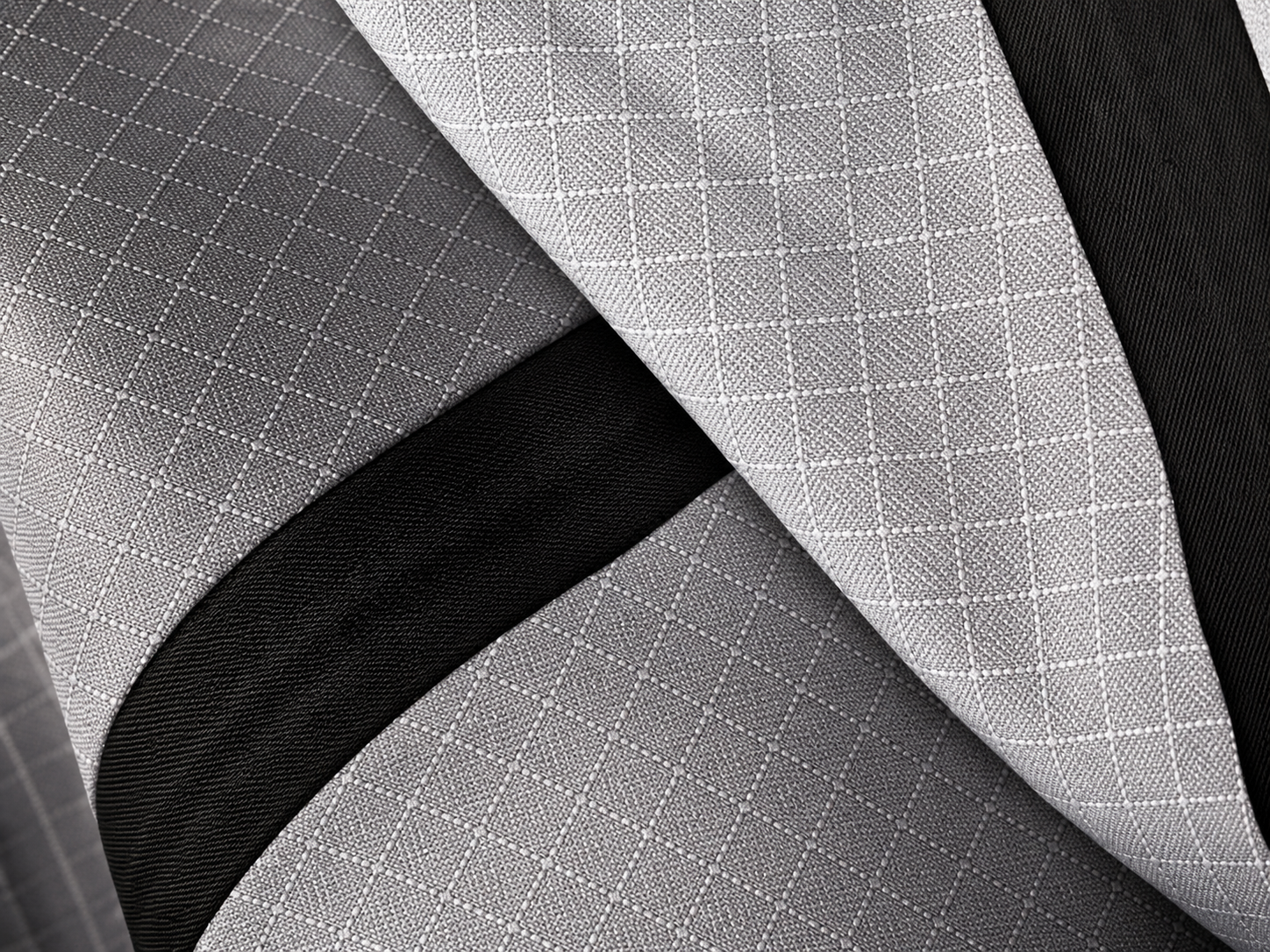
Heat Bonding
Eight heat-bonding or heat-press bonding machines support compatible bonded details. Bonding may be considered for edges, panels, pockets or reinforcement according to the design. Adhesive, temperature, pressure, time and fabric finish influence the result. A bonded component is not automatically permanent under every wash or use condition; appearance and durability requirements should be defined and tested where needed.
- Review adhesive and fabric compatibility.
- Test heat sensitivity and surface change.
- Define any required wash or durability standard.
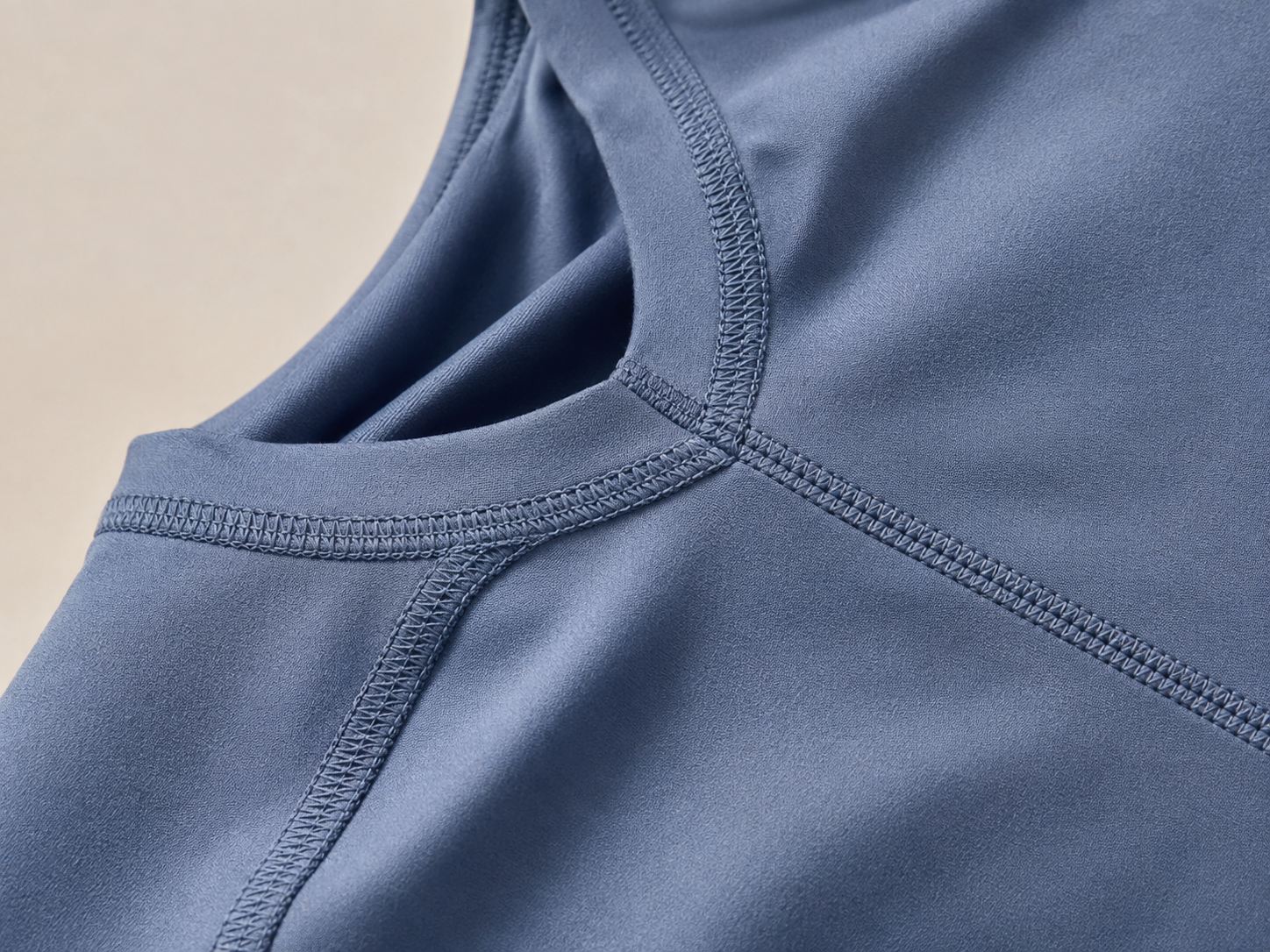
Seam Sealing
Four hot-air seam-sealing machines can support selected taped-seam applications. Seam sealing is evaluated according to fabric coating, tape, seam construction and end-use requirements. The presence of taped seams does not by itself make a full garment waterproof. If water resistance or waterproof performance is required, the responsible standard, construction scope and finished-product test must be agreed before claims are made.
- Identify which seams require sealing.
- Match tape to fabric and coating.
- Confirm garment-level test requirements separately.
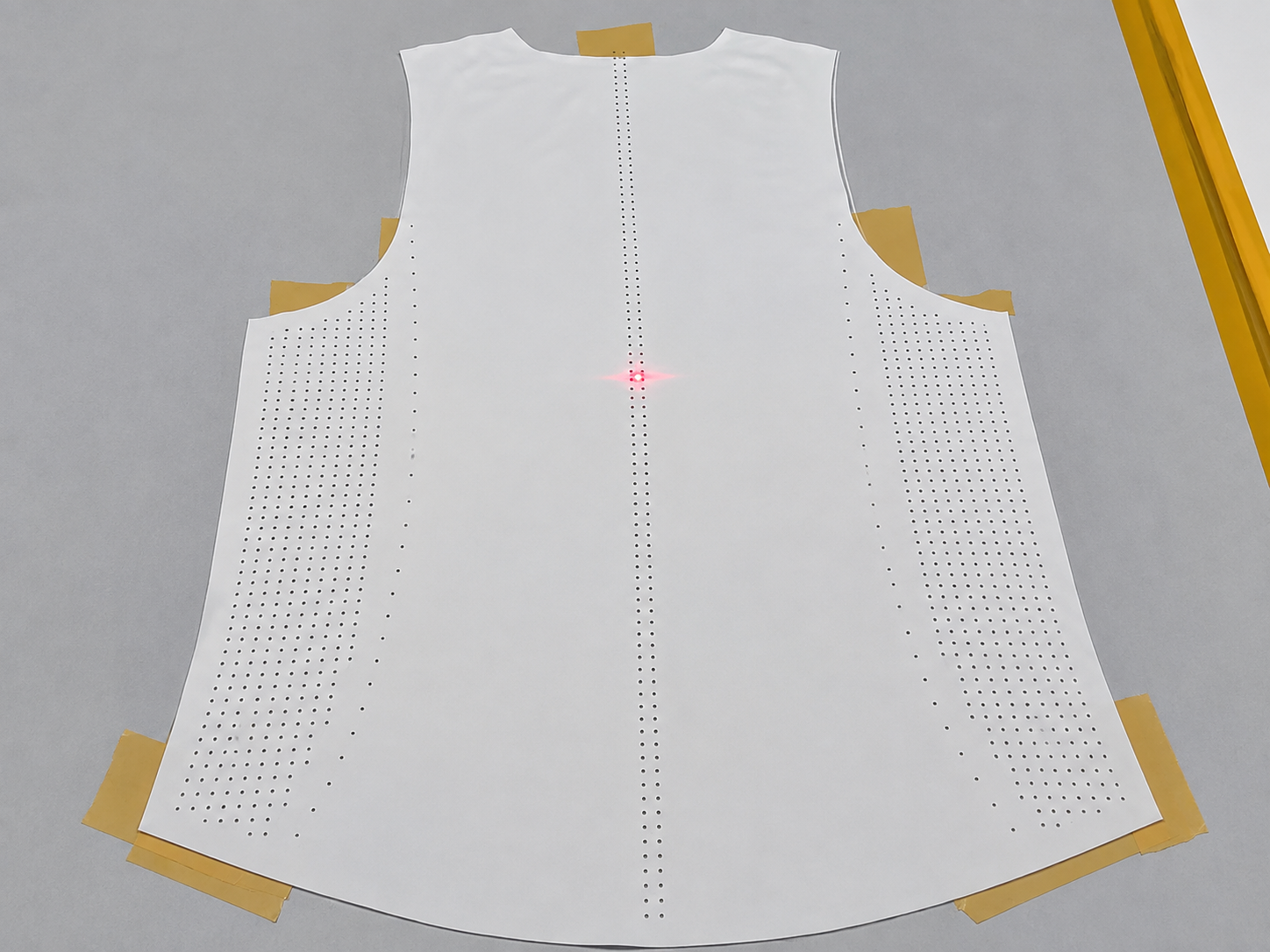
Laser Perforation
Three laser perforation machines support suitable ventilation patterns and decorative details. Hole size, spacing, artwork, placement and material response require review before bulk. Laser energy can affect edges, stretch and surface appearance, so a test piece may be necessary. Perforation can support airflow design, but no breathability value should be stated without an applicable test and defined material or garment scope.
- Submit vector artwork and scale.
- Test the selected fabric and color.
- Check placement around stretch and stress zones.
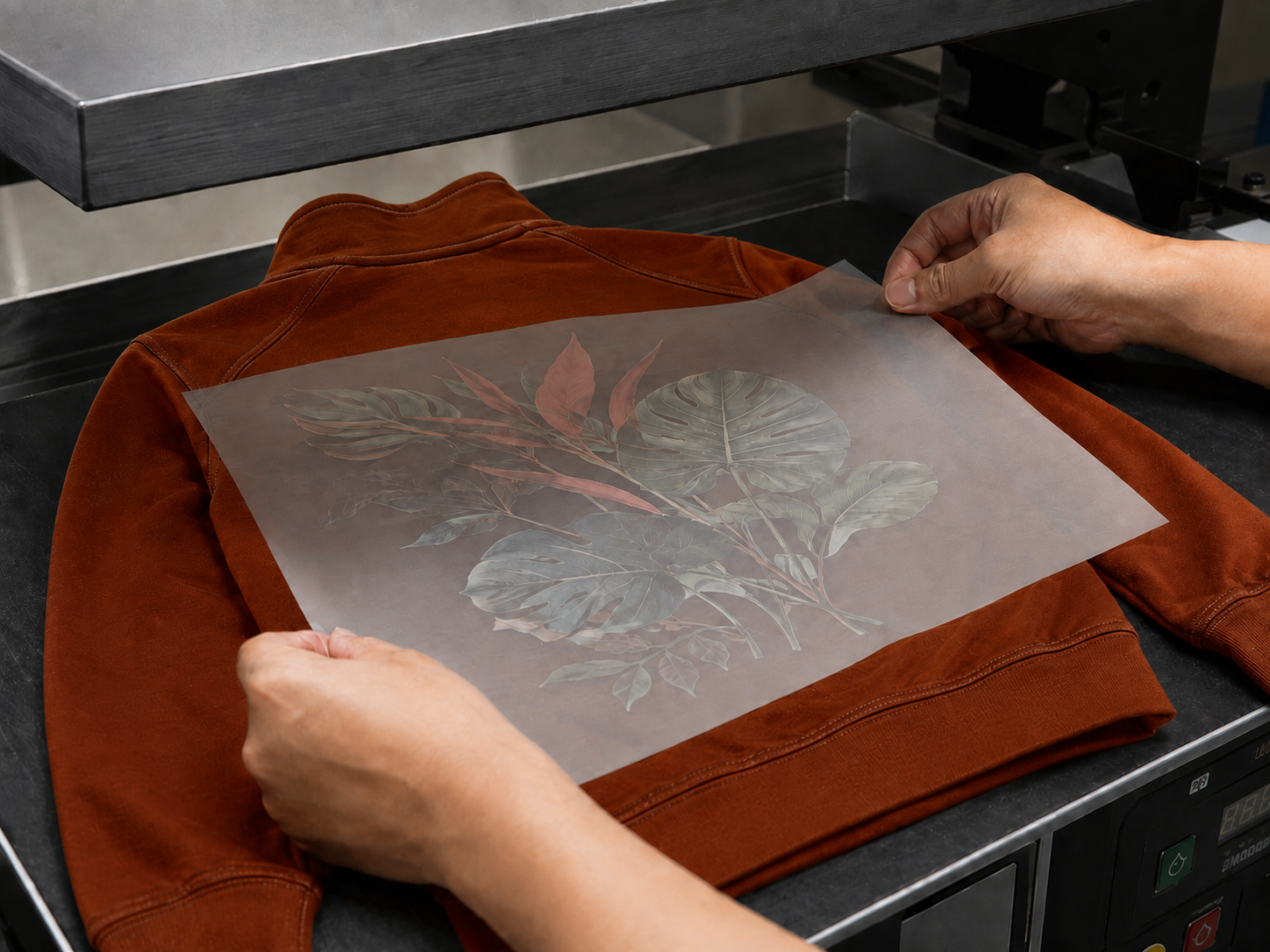
Heat Transfer
Six dual-station heat-transfer label machines and four multi-station heat-press printing machines support labels, logos and selected graphic applications. Artwork, transfer type, temperature, pressure and dwell time must suit the fabric. Large or stretch-sensitive graphics may require an application test. Final appearance is approved on the intended color and material, with durability criteria defined when a wash or stretch test is required.
- Provide vector artwork and color values.
- Confirm dimensions and placement.
- Review stretch, hand feel and heat response.
Plan Milestones Around Approvals, Materials and Production Readiness
Sample and delivery timing cannot be separated from design complexity, fabric availability and approval speed. Leadshow provides a project-specific schedule after reviewing the complete brief and required milestones.
Evaluation Area
What to Verify
Why It Matters
Why It Matters
Requirement review
Latest technical pack, reference, quantities, size range and target date
Open-question list and review status
File completeness, number of styles and technical complexity
Material and trim review
Fabric brief, colors, trims, testing needs and branding method
Availability status, sourcing actions and approval needs
Stock status, dyeing, custom development, supplier minimums and test scope
Development sample
Confirmed construction direction and available components
A dated sample estimate stated in working days for the reviewed style
Pattern work, material arrival, complexity and sample-room schedule
Fit and revision
One consolidated comment file per round
Revised sample date after change scope is assessed
Number of changes, new components, pattern revision and approval response time
Pre-production approval
Approved sample, fabric, color, artwork, labels and packaging
Bulk readiness confirmation
Outstanding tests, component approvals and final quantity changes
Bulk manufacturing
Confirmed order, materials and approved production standard
Project-specific production window and planned completion date
Order mix, color and size breakdown, construction route and line scheduling
Final inspection and packing
Approved quality criteria and packing instructions
Inspection and packing completion plan
Rework findings, multi-SKU sorting, barcode and carton requirements
Export handover
Destination, freight mode, shipping terms and document requirements
Planned dispatch date, ETD or pickup details as applicable
Carrier booking, documentation, customs, route and external logistics conditions
Scheduling Note: Leadshow does not apply one fixed sample or delivery time to every activewear program. All quoted dates should identify the starting condition, required approvals and whether they refer to factory completion, dispatch, ETD or destination arrival. Brand-side approval delays and requirement changes may move later milestones.
Start at a Workable MOQ and Scale Deliberately
Order planning should balance market testing with material and production realities. Leadshow reviews quantity by design, color and size before confirming minimums, price and manufacturing allocation.
Order Factor
Standard Starting Point or Review Rule
Commercial Effect
Planning Advice
Quantity
Standard MOQ generally starts from 100 pieces per color per design
Lower quantities may carry higher component or handling costs
Concentrate the first launch around stronger colors and silhouettes
Size range
Defined by the brand’s approved size chart and order breakdown
More sizes distribute the same quantity across smaller production groups
Supply unit quantities for every size, not percentages alone
Color count
Each color is reviewed against the quantity and material route
Custom dyeing or color-specific trims may introduce separate minimums
Use shared fabrics or trims across coordinated styles where suitable
Construction
Reviewed by garment complexity and specialized operations
More operations can affect sampling, labor and line planning
Finalize important details before quotation comparison
Branding
Logo method, size, colors and placement require confirmation
Labels, transfers, embroidery or packaging may have supplier minimums
Submit final artwork early and ask for component-specific minimums
Trial production
Small-batch trial production may be reviewed for suitable programs
Useful for controlled market entry but still subject to project minimums
Define what must be learned before planning the next run
Volume growth
Capacity is reviewed against the actual assortment and current production plan
Larger programs require product-mix and schedule confirmation
Share a rolling forecast and reserve production only after agreement
Reorders
Material, color, specifications and quantities are rechecked for every run
Availability or supplier lots may change between orders
Maintain dated approved files and flag every revision
Quality Checks Linked to the Approved Production Standard
Leadshow’s quality function works with production teams across incoming requirements, in-process workmanship and finished-garment preparation. Inspection criteria are defined from approved files, samples and project-specific requirements, allowing checks to follow the actual garment instead of a generic activewear checklist.
Approved Reference Control
Quality review begins with the correct standard. The approved sample, dated technical pack, measurement chart, material and trim references, artwork and packaging instructions should agree before bulk release. A change log helps prevent superseded comments from reaching the production line. If requirements change after approval, affected materials, cost, workmanship and schedule are assessed before a revised instruction is issued.
Material and Trim Checks
Incoming materials and components are reviewed against the agreed project references and available documentation. Checks may cover fabric identity, color, usable width, appearance, trims, labels and decoration components according to the order. Any required laboratory testing, tolerance or acceptance plan must be specified for the project. Supplier records are kept within their actual scope and are not presented as universal finished-garment certification.
Cutting and Bundling
Cutting control connects the approved pattern with the correct fabric, color and size. Spreading direction, material handling, marker use and component identification are reviewed according to the selected cutting route. Bundles should remain traceable through production to reduce mixing between styles, colors and sizes. Pattern or quantity changes after cutting require immediate review because material and schedule may already be committed.
In-Process Workmanship
Production teams monitor garment assembly at relevant stages rather than waiting only for finished pieces. Review points can include seam formation, stitch appearance, tension, panel alignment, elastic application, pocket position, trim use and decoration placement. Specialized operations receive process-specific checks. Findings are communicated to the responsible production function so corrections can be made before the same issue continues through a larger quantity.
Measurements and Appearance
Finished or in-process garments are measured according to the approved point-of-measure method and size specification. Appearance review can cover symmetry, seam shape, puckering, color consistency, stains, thread trimming, branding and overall presentation. Exact sampling plan, tolerances and acceptance criteria should be agreed for the order; Leadshow does not publish one fixed AQL or universal defect percentage for every product.
Final Packing Review
Before shipment preparation, finished garments are organized against approved packaging and packing-list requirements. Six automatic needle detectors and four automatic folding and packing systems support applicable operations, but equipment use does not replace the wider quality process or represent a complete product-safety certification. Labels, barcodes, polybags, quantities, size ratios and carton marks are checked according to the confirmed order instructions.
Prepare Finished Activewear for an Organized Warehouse Handover
Labels and packaging are treated as production specifications, not last-minute additions. Early confirmation helps organize component sourcing, SKU identification, packing lists and export handover. Artwork versions, market wording and warehouse instructions need approval alongside the garments they identify.
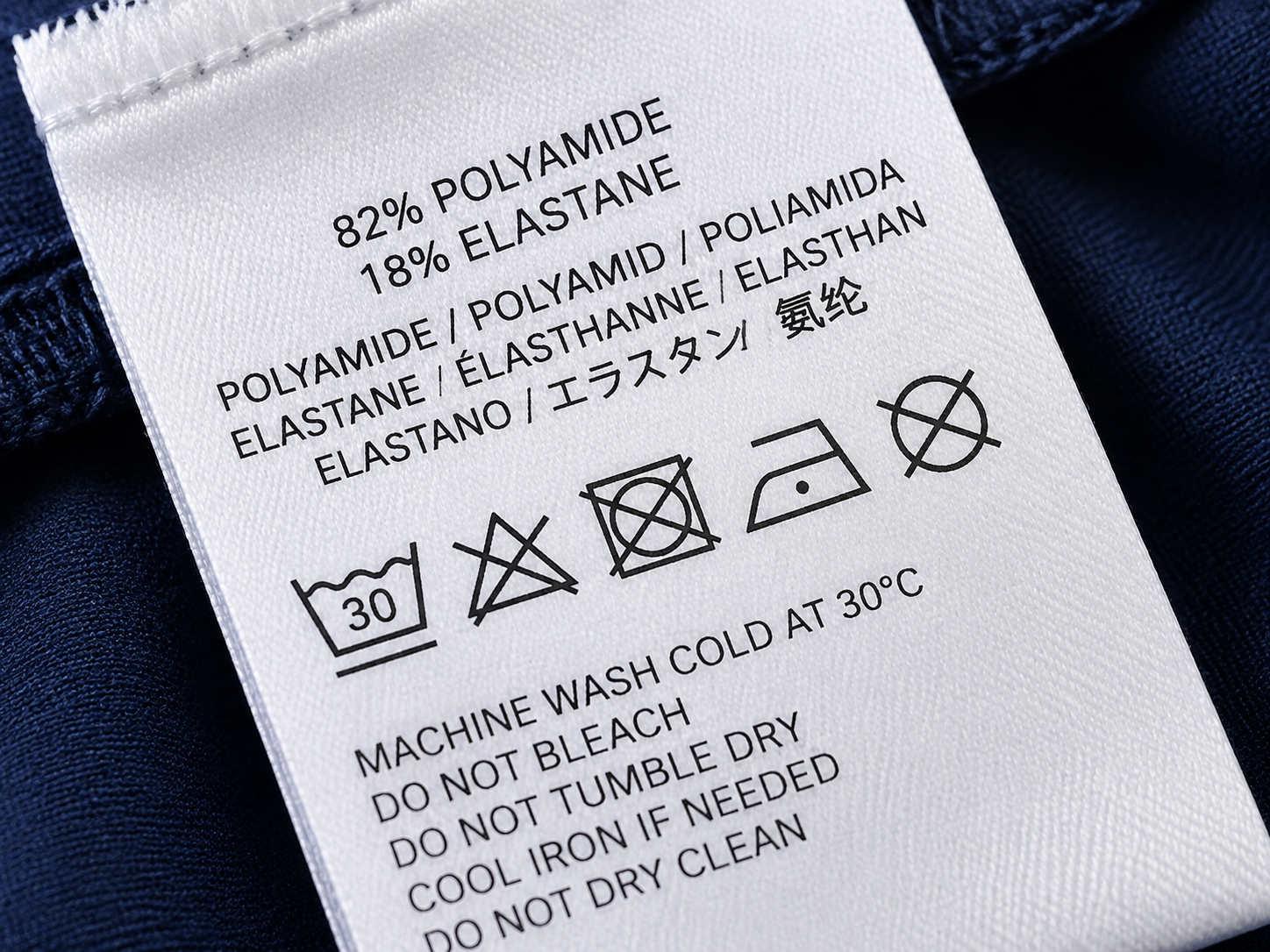
Main and Care Labels
Leadshow supports custom main labels and care labels using approved artwork and wording. The brand remains responsible for supplying accurate fiber, care, origin, size and market-specific information for review and production. Label material, dimensions, fold, position and sewing method should be confirmed before bulk. Every language and size version needs a clear SKU mapping to prevent packing or identification errors.
- Submit editable artwork and exact label text.
- Mark placement and orientation on the garment.
- Map each label version to its styles and sizes.
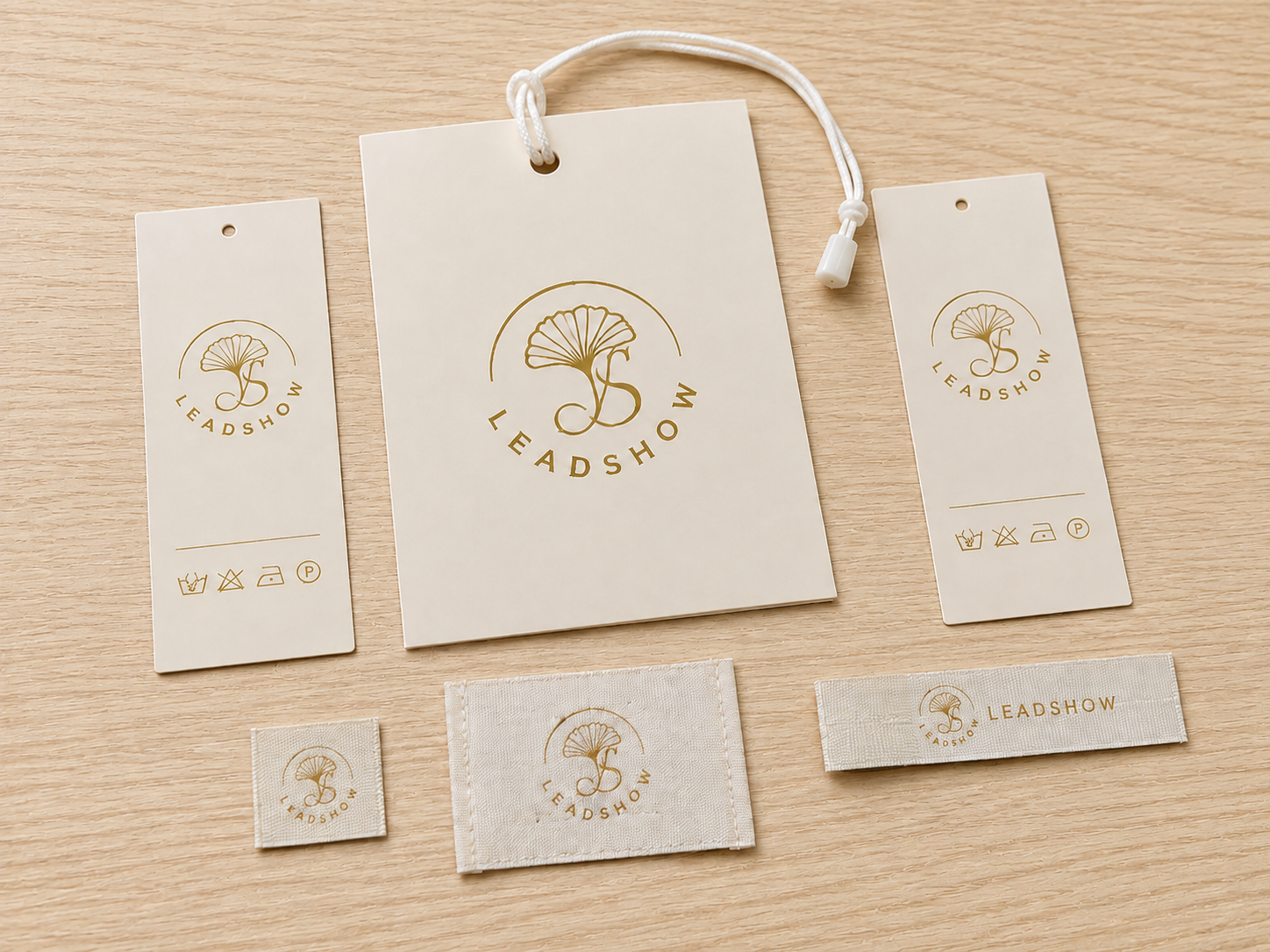
Hangtags and Attachments
Hangtags, strings, pins and other attachments can be organized around the approved branding and retail presentation. Artwork version, paper or material requirement, finish, dimensions, barcode area and attachment position must be stated. Component supplier minimums may apply independently of garment MOQ. A sample or digital proof should be approved before the complete quantity is ordered or attached to finished garments.
- Confirm front and back artwork.
- Define material, finish, dimensions and attachment.
- Match barcode or SKU data to the packing file.
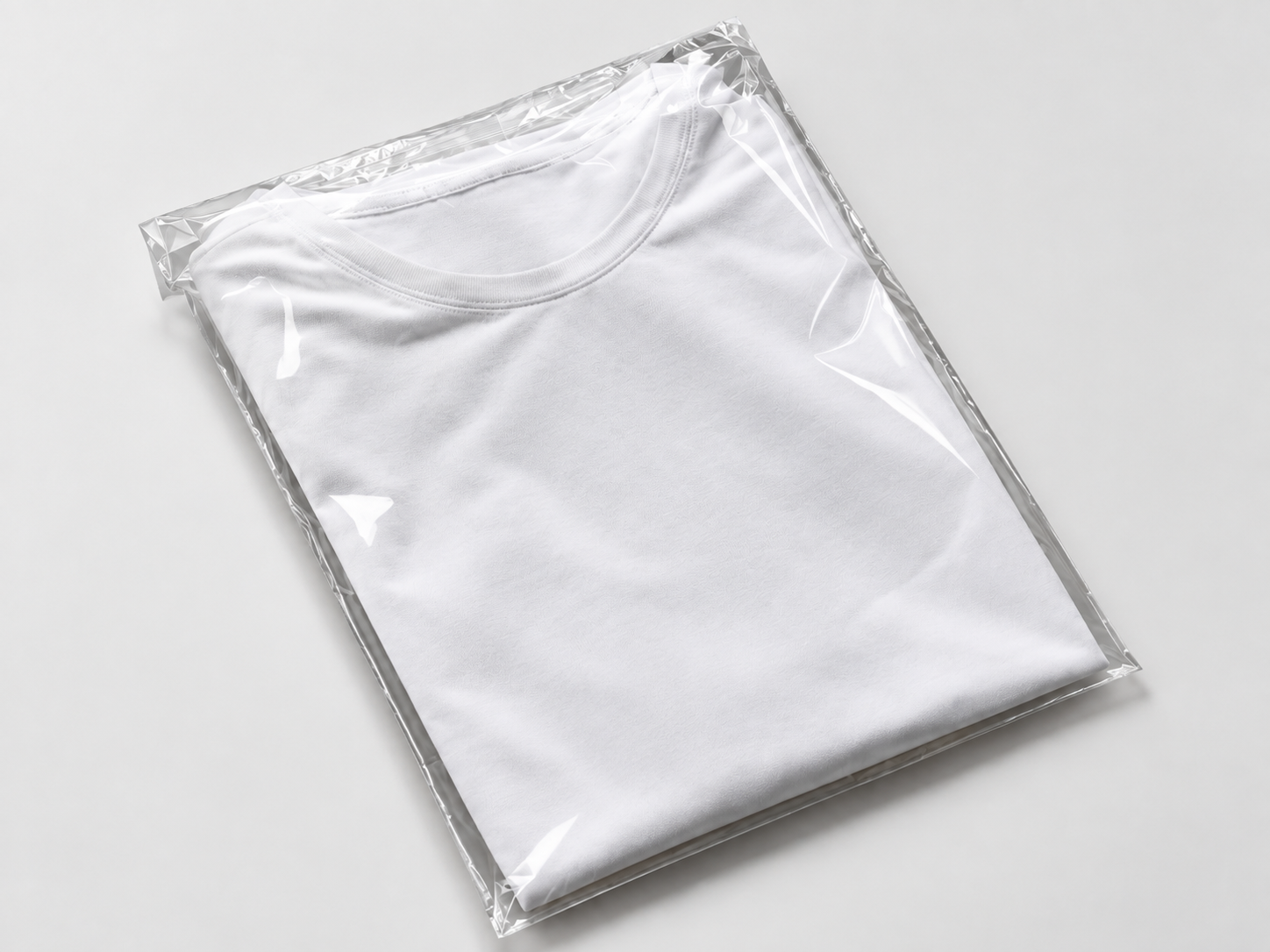
Polybag Specifications
Individual packaging can follow an approved polybag size, material, warning text, ventilation requirement, seal method and label position. Requirements differ by destination and warehouse operation, so Leadshow follows supplied specifications rather than assuming one universal bag. Packaging claims or material statements need supporting documents tied to the selected component. Bag dimensions are checked against the folded garment to avoid excessive compression or wasted space.
- Supply required bag wording and artwork.
- Identify sticker, barcode and seal positions.
- Confirm any material or documentation requirement.
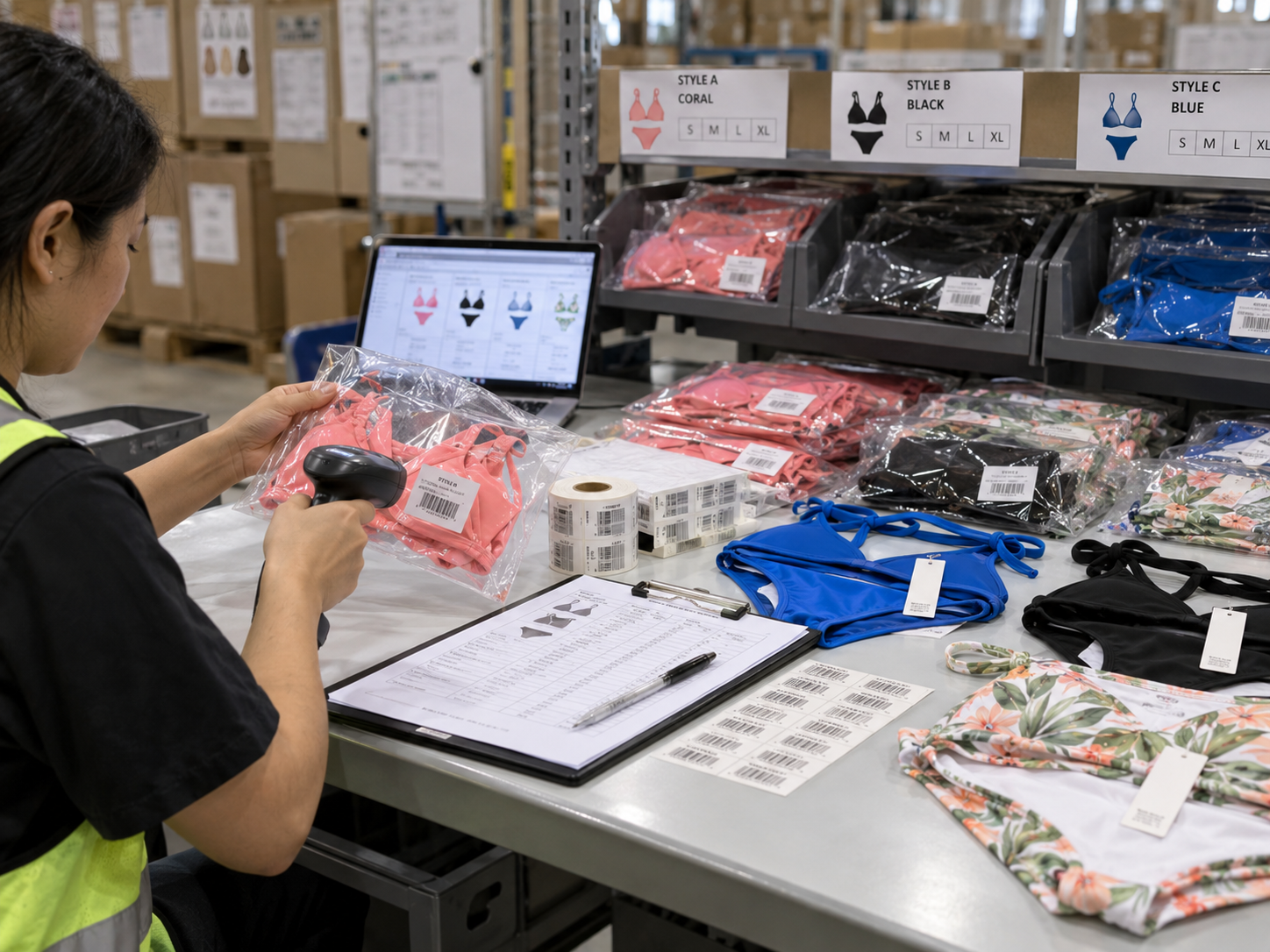
Multi-SKU Sorting
Orders with multiple styles, colors and sizes require a final, version-controlled breakdown. Leadshow can organize packing by SKU, size ratio, solid color, mixed assortment or other approved method. The packing list should show units per inner pack and carton where applicable. Late changes to size ratios or barcode data may affect labels, packing work and carton planning, so revisions need formal confirmation.
- Use one final SKU master file.
- List style, color, size, barcode and quantity.
- Define solid-pack or assortment-pack rules.
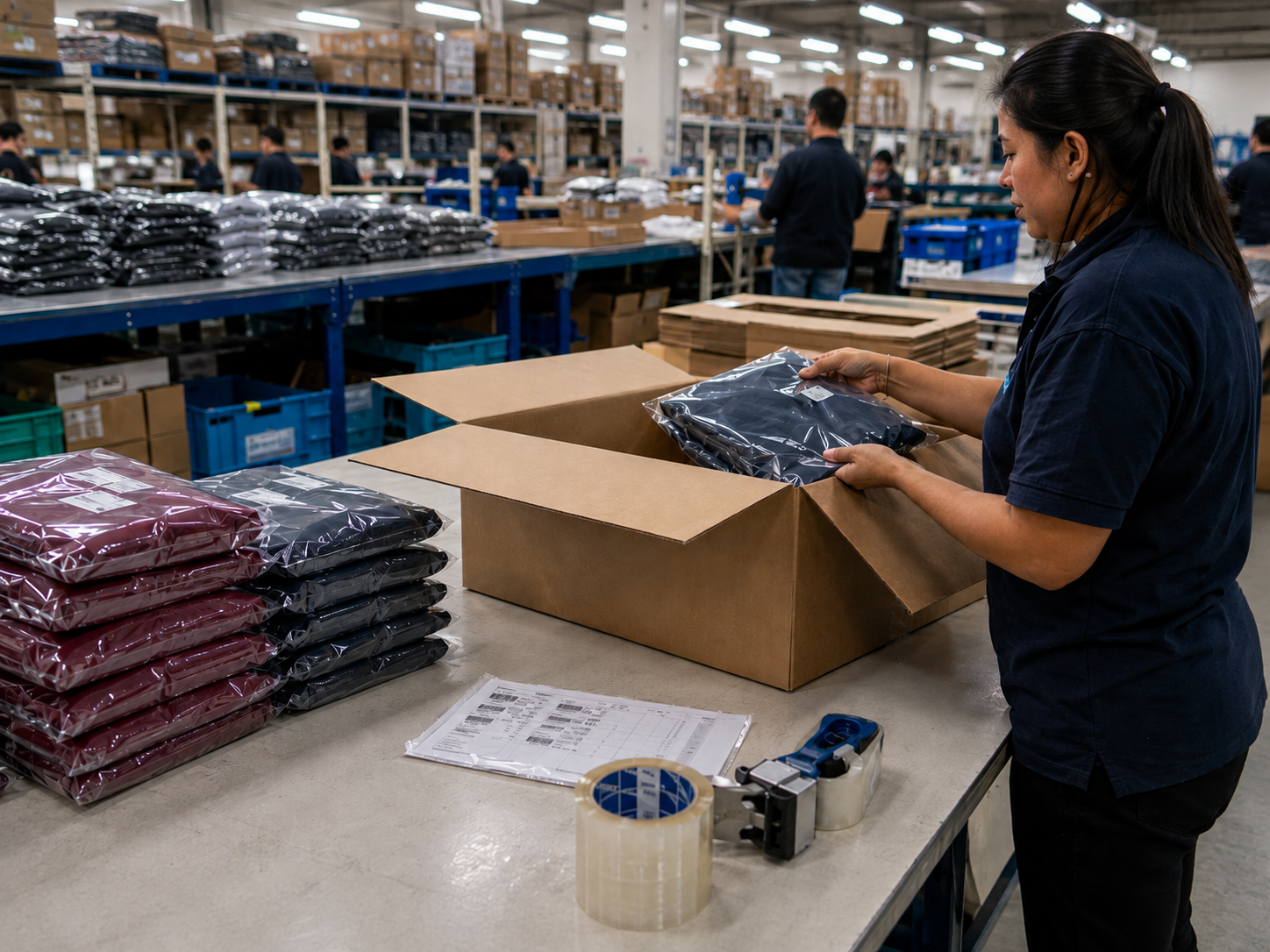
Carton Planning
Carton dimensions, quantity, maximum weight, assortment and marks are prepared according to the agreed packing method and logistics requirements. Actual carton count becomes clear after finished-garment packing data is available. Leadshow can coordinate carton markings and packing information for export handover, while any retailer-specific routing, labeling or pallet instructions should be submitted early enough for review.
- Provide carton-mark templates and destination codes.
- State weight, dimension or assortment limits.
- Confirm pallet or warehouse labeling needs separately.
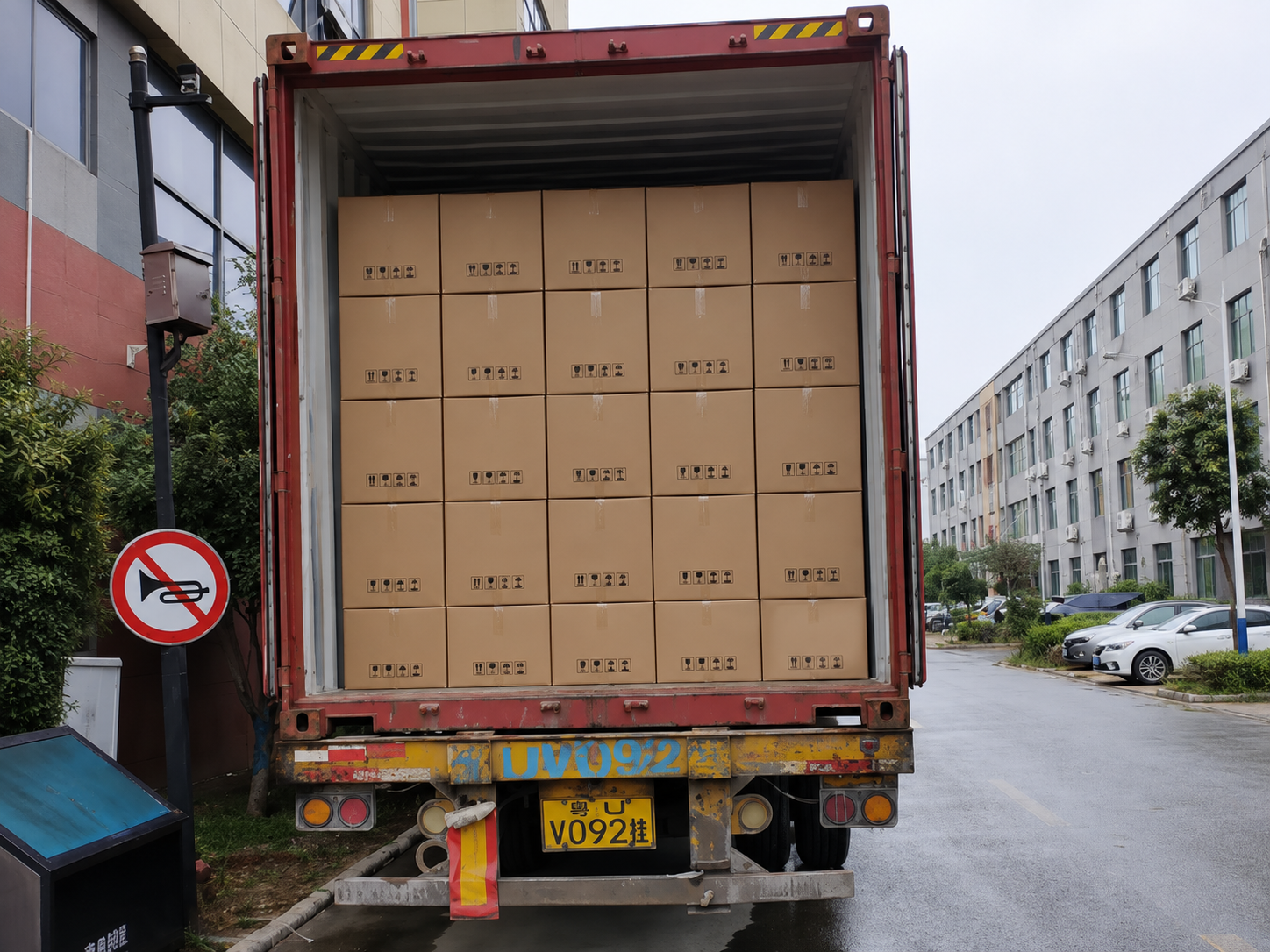
Export Handover
Leadshow supports export delivery preparation for Europe, North America, South America and Oceania. The agreed route may involve the brand’s nominated forwarder or another project-specific arrangement. Shipping terms, pickup address, documents, carton data and contact responsibilities are confirmed before dispatch. Factory completion, carrier pickup, ETD and destination arrival are separate dates and should be identified clearly in schedule communication.
- Confirm destination and freight mode.
- Identify the responsible forwarder and shipping terms.
- Agree on required documents and dispatch contacts.
See the People, Equipment and Processes Behind Production
Manufacturer evaluation should be supported by current, relevant evidence. Leadshow can present real facility, sample, production, quality and packing materials connected to the activewear program under discussion, with captions identifying the activity, scope and production stage shown.
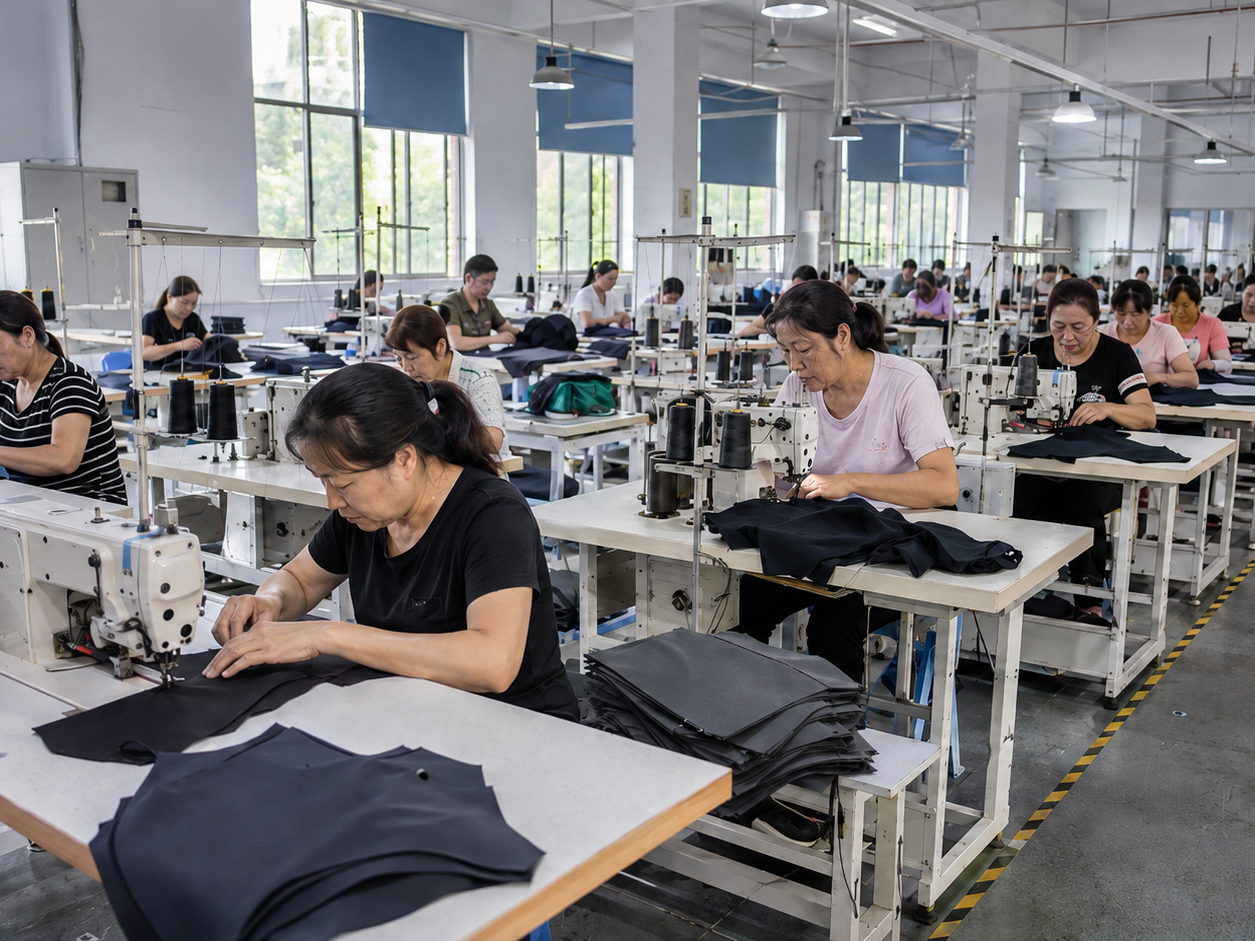
Manufacturing Network
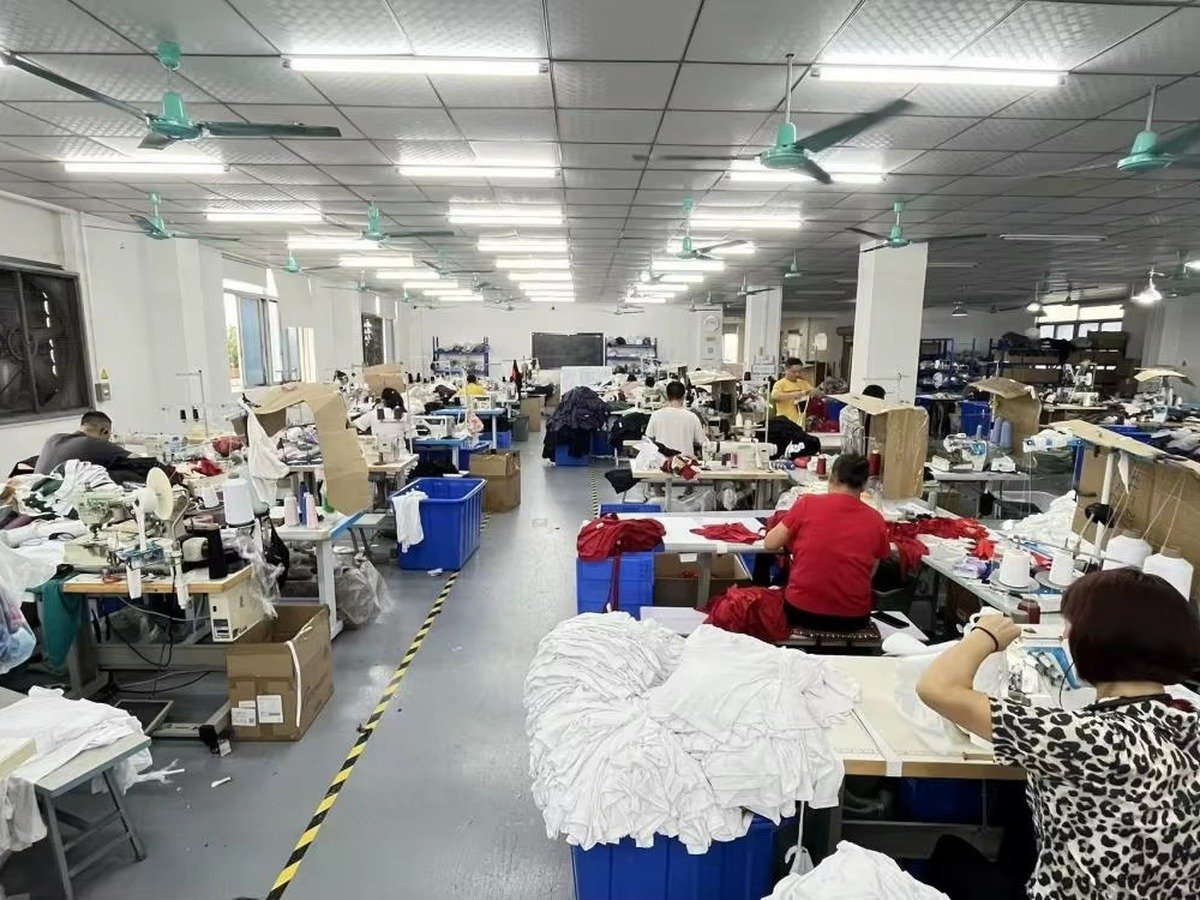
Leadshow operates three modern manufacturing bases with more than 20,000 square meters of combined facilities. Factory allocation depends on product category, construction needs, quantity and line schedule. The Shenzhen address published for Leadshow is the office and headquarters address, not a blanket factory address. Project discussions can identify the relevant production arrangement without inaccurately locating every facility in Shenzhen.
- Show current exterior and production-area images.
- Identify whether an image represents office or manufacturing space.
- Match site evidence to the proposed production route.
Development Team
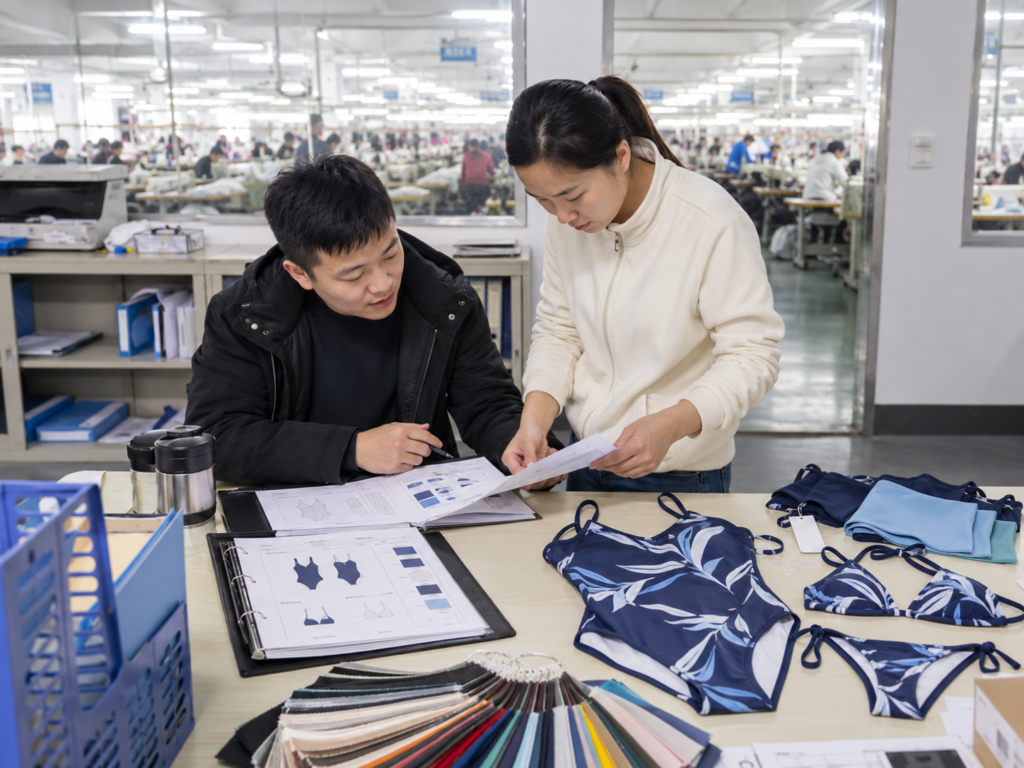
Product development evidence can include requirement review, pattern preparation, sample cutting, sewing, fitting, measurement and comment records. Images should demonstrate how a style moves from specification to an approved physical reference. Confidential files, unreleased designs and brand identifiers require permission or redaction. A staged meeting photograph alone is less useful than process evidence tied to an actual garment-development activity.
- Show sample work and measurement activity.
- Use current, permission-cleared materials.
- Connect the visual to a defined development step.
Cutting Operations
Leadshow’s confirmed cutting equipment includes three automatic computer cutters, five automatic fabric spreaders, eight vertical cutters and six round-knife cutters. Visual evidence can show spreading, marker preparation, cutting and bundle identification for suitable orders. Equipment counts describe manufacturing resources, while the selected method depends on fabric, order scale and component design. Images should show safe, orderly operation without implying one route applies to every style.
- Capture fabric spreading and cutting clearly.
- Show pattern or bundle identification where appropriate.
- Use captions naming the actual process.
Specialized Construction
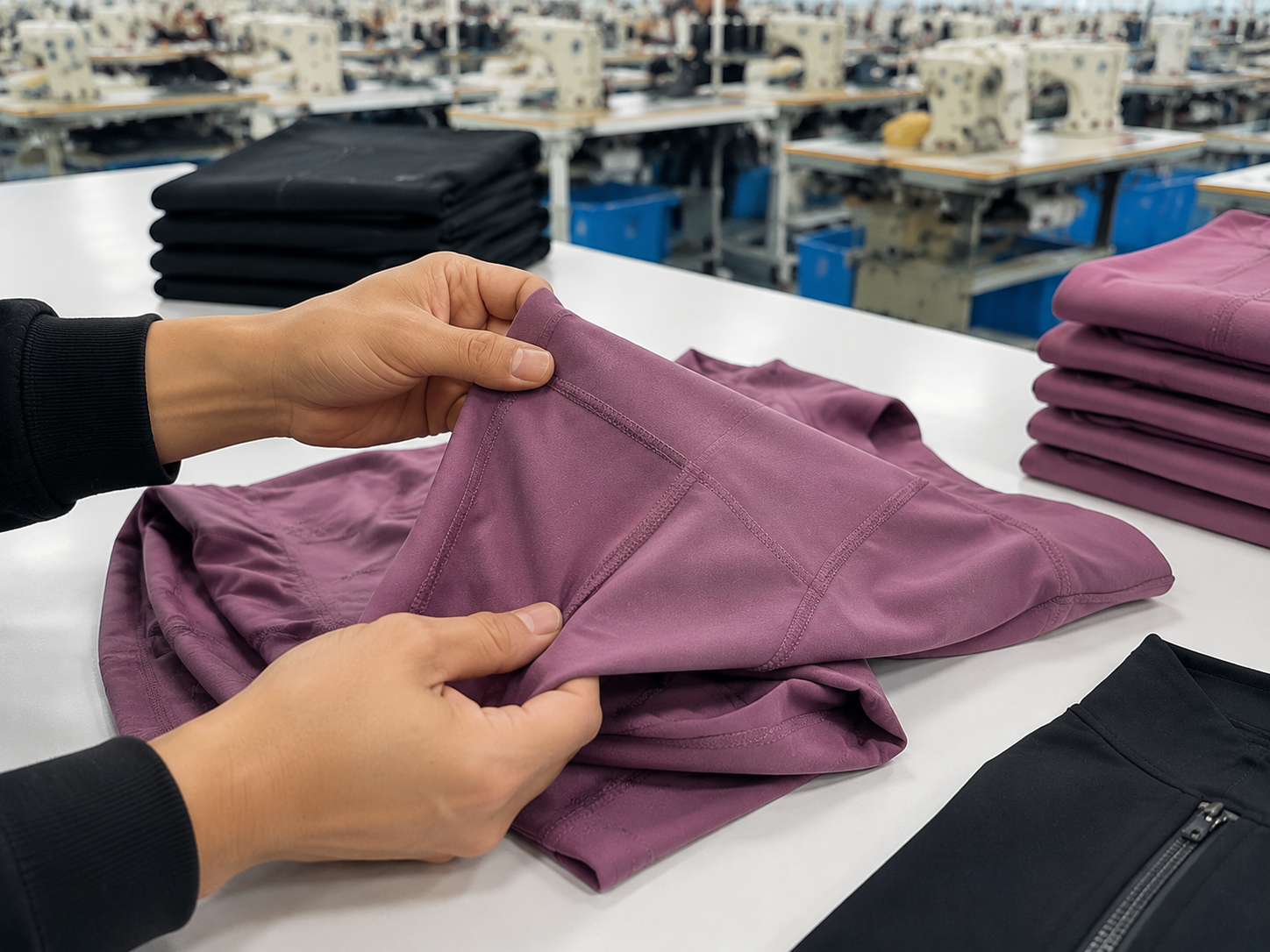
Process evidence can cover four-needle six-thread flatlock, heat bonding, seam sealing, laser perforation and heat-transfer applications when they are relevant to the product. Close-up images should show the operation and finished detail on a compatible material. Captions need accurate language: flatlock is not seamless knitting, seam sealing alone does not prove a waterproof garment, and bonding performance depends on the selected adhesive, material and test conditions.
- Show both machine operation and resulting detail.
- Link each process to a suitable garment.
- Avoid unsupported performance captions.
Quality Inspection
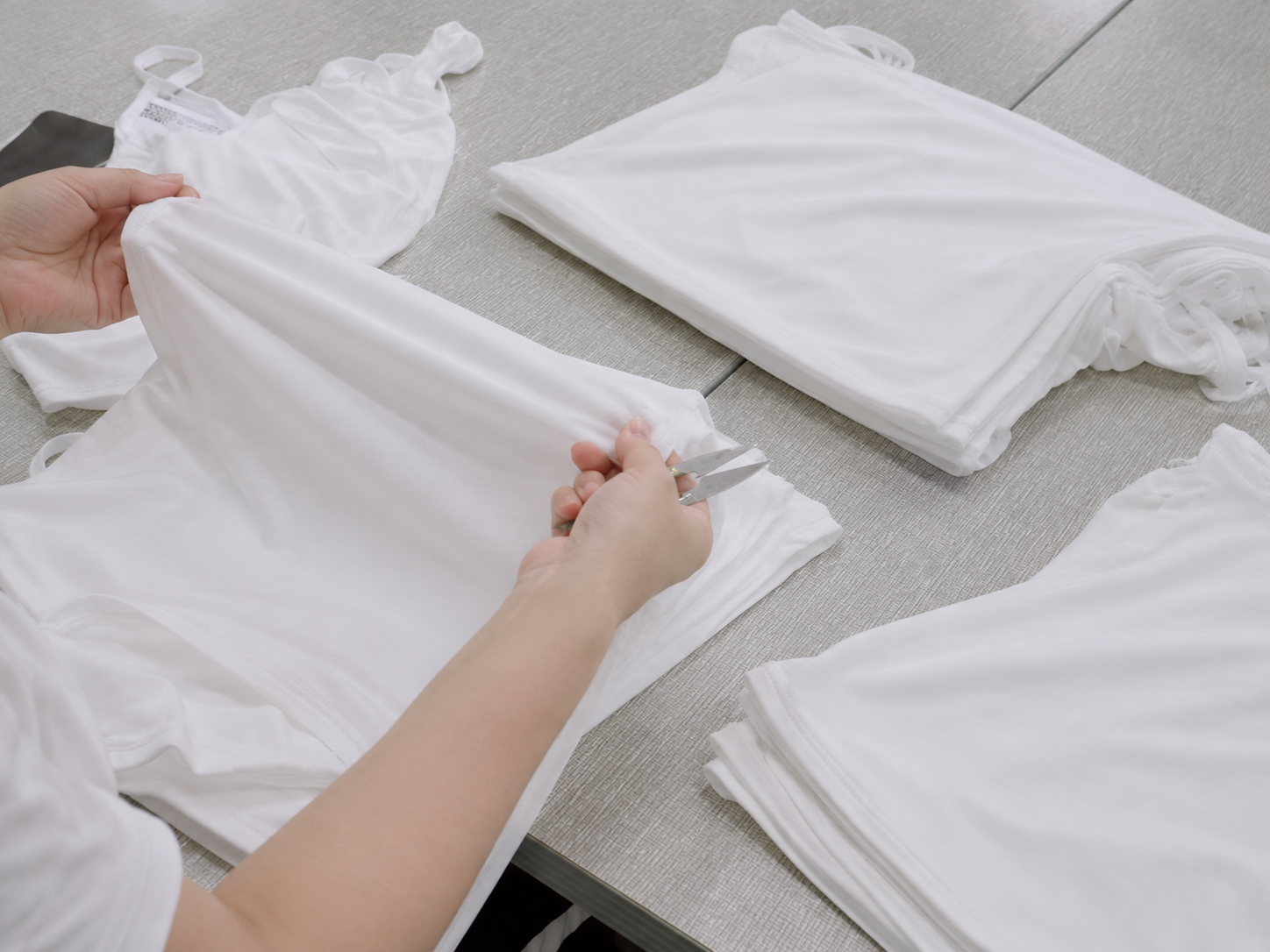
Quality evidence can include in-process seam review, garment measurement, appearance inspection, needle detection and packing checks. Leadshow has six automatic needle detectors, but needle detection represents one defined control rather than a complete safety certification. Images should identify what is being checked and which approved requirement applies. Generic inspection poses without a measurable task provide less confidence than clearly documented review points.
- Show measurement tools and points of measure.
- Capture workmanship review at relevant stages.
- Keep any acceptance result tied to the inspected order.
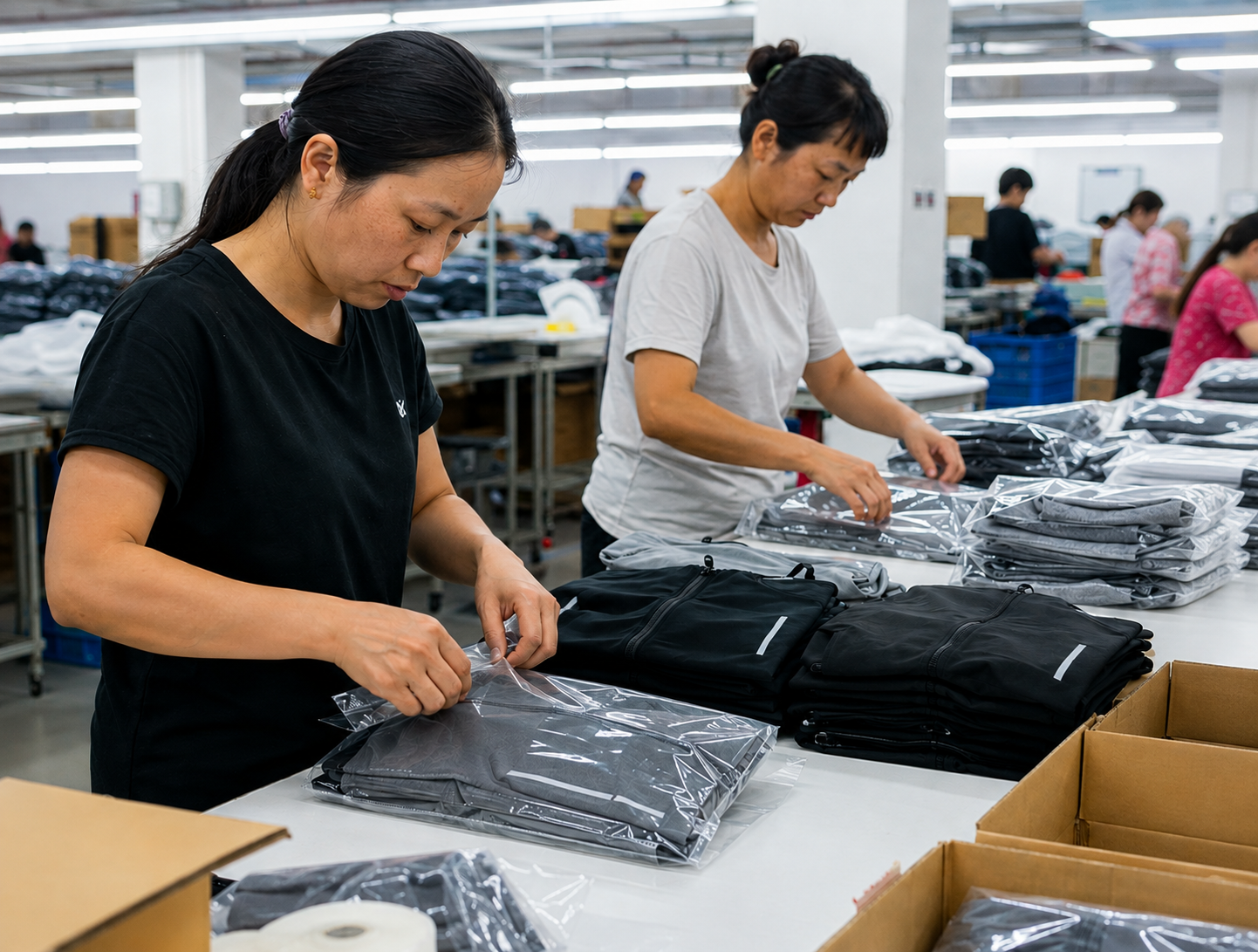
Packing and Dispatch
Packing evidence should show folding, label and barcode checks, polybagging, SKU sorting, carton marking and shipment preparation. Four automatic folding and packing systems support applicable programs, alongside manual work needed for varied garment and packaging formats. Carton and loading images must be current and permission-cleared. Shipping captions should distinguish finished packing from pickup, departure and arrival rather than presenting one image as proof of the full delivery route.
- Show size and SKU identification.
- Capture carton marks only with permission.
- State the specific handover stage accurately.
Activewear Manufacturer Frequently Asked Questions
Find direct answers on MOQ, development, fabrics, sizing, production, quality, branding and export planning before sending an activewear project brief for review, quotation and a project-specific schedule.
What Activewear Products Does Leadshow Manufacture?
Leadshow develops and manufactures sports bras, sports T-shirts, yoga leggings, tennis skirts, jumpsuits, running shorts, tank tops, tracksuits, hoodies and sweatshirts. Core categories also include swimwear, streetwear and modest sportswear. Product scope is confirmed against the requested fabric, construction, function, quantity and schedule.
What Is The Standard MOQ?
Standard MOQ generally starts from 100 pieces per color per design. Fabric, custom color, trims, construction, logo application, packaging, testing and production schedule may change the final minimum. Arbitrary designs or colors cannot automatically be mixed to reach the MOQ. Send quantities by style, color and size for an accurate review.
Does Leadshow Provide OEM And ODM Services?
Yes. OEM support is available for brands with defined technical specifications, while ODM support helps develop concepts through material review, pattern work, fit adjustment and sampling. Private label services can include custom labels, hangtags, logo applications and packaging. Final scope is confirmed before quotation and sample work begins.
How Long Does Activewear Sampling Take?
Sample timing is quoted for the reviewed style rather than published as one fixed number. The estimate depends on file completeness, pattern work, fabric and trim availability, construction difficulty, decoration tests and current sample-room scheduling. Revisions receive a new date after consolidated comments and any new material requirements are assessed.
How Is Bulk Production Time Confirmed?
Leadshow confirms a project-specific production window after requirements, quantities, materials, approvals and available capacity are reviewed. The schedule should identify its starting conditions and whether the date refers to factory completion, dispatch or another milestone. Changes, approval delays, new testing or late components may affect later dates.
Can You Develop A Custom Size Range?
Yes. Supply the intended body standard, base size, measurement chart, grade rules and fit direction. Leadshow can support pattern and fit adjustment through sample review. Alpha labels such as XS-XXL do not define measurements by themselves, so every production size needs approved numerical specifications and a clear point-of-measure method.
Can Leadshow Source Performance Or Recycled Fabrics?
Leadshow can review fabric sourcing against composition, weight, stretch, hand feel, color and stated performance or documentation needs. Availability, supplier minimums and evidence scope vary. Quick-dry, recycled, UV, opacity or other claims must remain tied to the selected material, relevant test or valid supporting document.
What Quality Controls Are Used?
Quality activities can cover approved-reference control, material and trim review, cutting and bundling, in-process workmanship, measurements, appearance, needle detection and packing checks. Exact inspection plan, tolerances and acceptance criteria are agreed per order. Leadshow does not claim one universal AQL, defect rate or quality guarantee for every garment.
Can Leadshow Add Labels And Custom Packaging?
Yes. Custom main labels, care labels, hangtags, logo applications, polybags, barcode labels and carton requirements can be handled according to approved specifications. Component minimums may apply separately from garment MOQ. Supply editable artwork, wording, dimensions, placement, SKU mapping and destination-specific requirements early in the program.
Which Regions Does Leadshow Export To?
Leadshow supports export delivery to Europe, North America, South America and Oceania. Shipment arrangements are confirmed for each order, including destination, freight mode, shipping terms, forwarder responsibility, documents and carton data. Carrier pickup, ETD and destination arrival remain separate milestones and can be affected by external logistics conditions.
Send Your Activewear Project for Manufacturing Review
Share the latest information for the styles you want to develop or produce. Useful files include a technical pack, sketches, reference images, measurement chart, bill of materials, fabric requirements, logo artwork and packaging instructions. Please also state the quantity for each design and color, required size range, destination region and target dispatch date.
Leadshow will review product scope, manufacturability, material and trim requirements, MOQ, sample needs, production capacity and export handover. Final commercial conditions depend on fabric, construction, customization, testing, packaging and quantity by design and color. Sample and production dates are quoted after the brief and material status have been assessed.
If the project is still at concept stage, send the intended activity, silhouette, fit direction, target fabric qualities and reference products. If files are production-ready, include the latest version date and identify the approved base size. Clear information allows the team to return focused questions and build a more useful quotation.
Business hours: Monday to Saturday, 9:00-18:00 GMT+8. Email: cody@leadshowfashion.com. Tel: +86 755 2327 2829. WhatsApp/WeChat/Mobile: +86 137 5118 0452.