
Apparel Manufacturer
OEM and ODM apparel development and manufacturing for brands seeking reliable sampling, private labeling, scalable production and consistent product execution.
Shenzhen Leadshow Sports Technology Co., Ltd. supports apparel programs from technical review through approved samples and bulk manufacturing. Our core manufacturing scope covers sportswear, swimwear, streetwear and modest sportswear, with project support for pattern and fit adjustment, materials, trims, branding, quality inspection, packaging and export delivery.
- Product development and manufacturing review
- OEM, ODM and private label production
- Sampling, fit adjustment and bulk preparation
- Multi-SKU, labeling and packaging support
- MOQ starts from 500 pcs for many custom cable projects
Manufacturing Support for Different Apparel Sourcing Models
Apparel programs differ by brand maturity, product documentation, order volume and internal approval processes. Leadshow adjusts development, sampling and manufacturing support according to the level of product readiness, technical detail and production scale required.
Established Apparel Brands
Established brands usually arrive with defined product architecture, sizing systems, approved fabrics, internal quality standards and detailed launch schedules. Manufacturing work therefore centers on execution accuracy rather than basic concept development. Leadshow supports technical review, sampling, approved-version control, bulk production planning and quality checks around confirmed specifications.
- Review Tech Packs, measurements and construction requirements before sampling.
- Transfer approved sample standards into production instructions and inspection checkpoints.
- Coordinate multiple styles, colors, sizes, labels and packaging requirements within one apparel program.
- Review capacity and scheduling according to product complexity, materials and current production plans.
Growing Apparel Brands
Growing brands often need more products without losing fit, quality or brand consistency. New categories, new colors and larger order volumes can increase complexity quickly. Leadshow supports structured product expansion through development review, sample validation, order planning and scalable manufacturing.
- Develop additional styles from confirmed design direction or existing product references.
- Review materials, construction and production feasibility before committing to bulk quantities.
- Support trial quantities where material and process conditions allow.
- Organize approved specifications, measurements and branded components for later production.
- Evaluate production capacity when successful styles move from smaller runs into larger programs.
Private Label Companies
Private label programs require more than sewing a standard garment. Brand identity must remain consistent across main labels, care labels, hangtags, packaging, colors, product specifications and SKU information. Leadshow integrates branding requirements into the manufacturing process after product specifications are confirmed.
- Support custom labels, hangtags and packaging according to approved artwork and project requirements.
- Match branding components with product styles, colors, sizes and packaging versions.
- Review branding processes during sampling before bulk production.
- Separate product development approval from final packaging approval to reduce version confusion.
- Coordinate branded production with manufacturing, quality and outbound preparation.
Importers and Distributors
Importers and distributors often manage broad assortments, repeated orders and multiple destinations. Product consistency, SKU control, packing accuracy and shipment coordination can become as important as unit price. Leadshow supports order preparation from approved product specifications through packing and export handover.
- Organize style, color, size and SKU information for production and packing.
- Review carton allocation, labels and product quantities before shipment.
- Coordinate commercial invoice, packing list and applicable export information according to the order.
- Support forwarder handover and shipment preparation.
- Confirm shipping responsibilities, method and timing according to project-specific trade and delivery arrangements.
Retail and Buying Teams
Retail and buying teams commonly work with collection calendars, internal product approval, packaging standards and strict SKU structures. A manufacturer must translate commercial product plans into production-ready specifications without losing control of individual styles.
- Review assortment information by style, color, size and quantity.
- Support sample approval before production scheduling.
- Coordinate branded labels, packaging versions and carton requirements.
- Align production checkpoints with approved product and quality specifications.
- Maintain clear documentation when one collection includes multiple garments and packaging formats.
- Confirm production and delivery timing after materials, quantities and scheduling have been reviewed.
Commercial Project Buyers
Commercial apparel projects can involve seasonal collections, launch programs, promotional ranges or structured institutional purchasing. Requirements often combine product specifications, quantity targets, branding, packaging and a fixed market date.
- Evaluate whether proposed materials, construction and customization are suitable for the required quantity.
- Identify technical items needing clarification before sampling or quotation.
- Confirm how colors, sizes and SKU quantities affect manufacturing planning.
- Review packaging and shipment preparation according to the final distribution model.
- Separate manufacturing completion dates from international transit or arrival dates.
- Build the production plan around approved specifications rather than assumptions.
Eight Areas Worth Reviewing Before Supplier Approval
A serious apparel manufacturer should be evaluated beyond factory size or quoted unit price. Product development, approved standards, material control, manufacturing scale, quality checkpoints and order execution all influence whether a supplier fits a long-term sourcing program.
Evaluation Area
What to Verify
Why It Matters
Product Specialization
Relevant apparel categories, construction experience and manufacturing fit
Product familiarity lowers avoidable development and production risk
Technical Development
Tech Pack review, pattern, fit, construction and manufacturability support
Problems found before bulk production are generally easier to correct
Materials & Trims
Fabric specifications, trims, availability and customization conditions
Materials affect fit, appearance, cost, MOQ and lead time
Sampling
Clear sample purpose, revision process and approval standard
An approved sample creates a measurable production reference
Manufacturing Scale
Capacity, equipment, workforce and current scheduling
Available capacity must match actual program timing and complexity
Quality Control
Material, process, finished garment and packaging checks
Quality requires checkpoints throughout production, not only final inspection
Multi-SKU Execution
Sizes, colors, labels, barcodes, packaging and carton contro
Complex assortments increase the risk of mix-ups without structured records
Delivery & Reorders
Production schedule, export support and version records
Long-term sourcing depends on reliable execution beyond the first order
Four Core Apparel Categories Supported by Leadshow Manufacturing
Leadshow concentrates manufacturing resources on defined apparel categories rather than claiming universal garment coverage. Product development, materials, construction, fit and production methods are reviewed according to the requirements of each confirmed category.
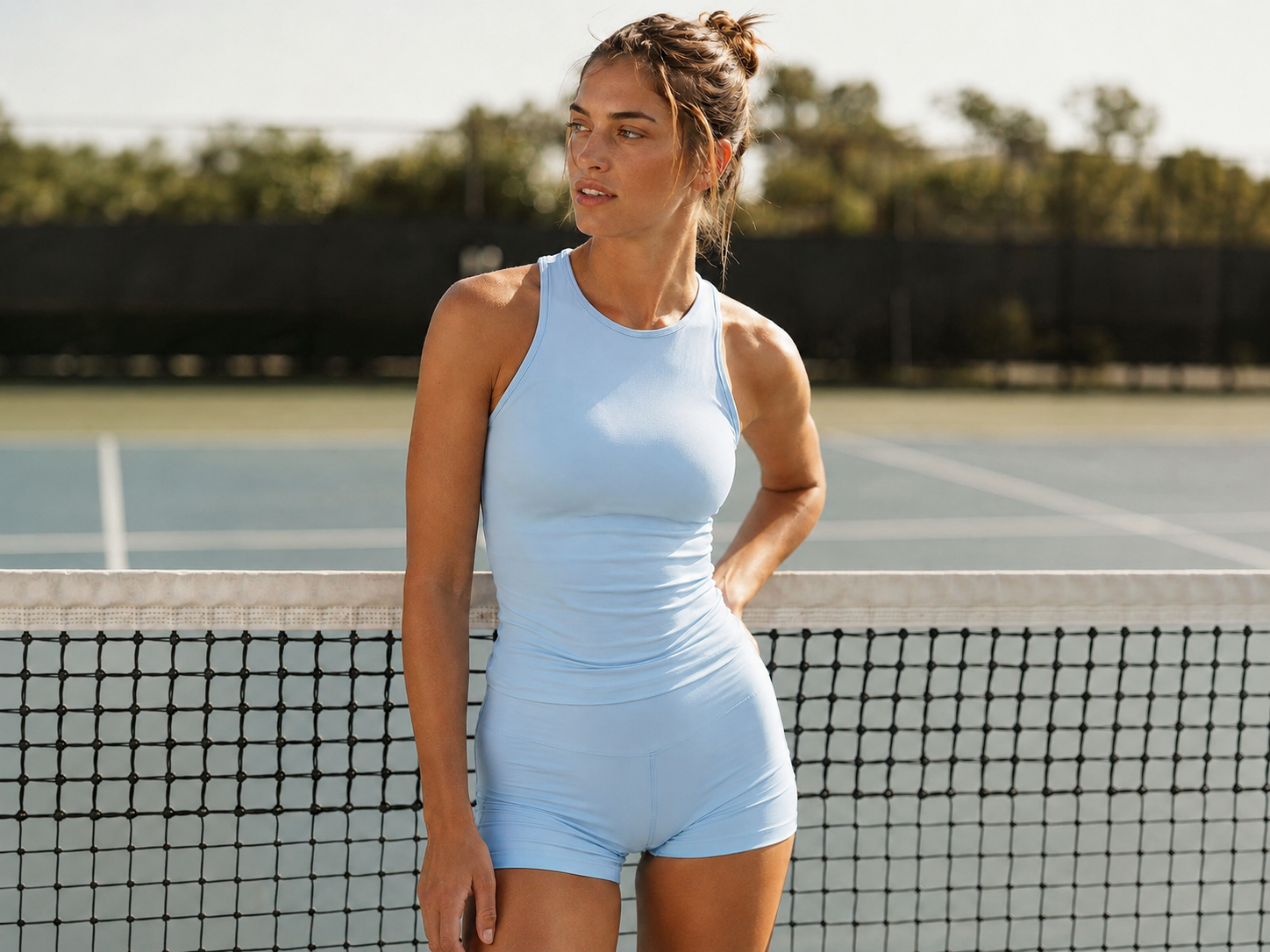
Sportswear
Sportswear development requires close coordination between material behavior, fit, movement, seam construction and production repeatability. Leadshow’s confirmed sportswear scope includes sports bras, sports T-shirts, yoga leggings, tennis skirts, jumpsuits, running shorts and tank tops, alongside related approved programs.
- Review stretch, recovery, weight, handfeel and construction requirements during material selection.
- Evaluate pattern and fit in relation to the intended activity and garment structure.
- Validate seams, elastic components, trims and branding during sampling.
- Transfer approved measurements, materials and workmanship details into bulk production requirements.
- Apply project-specific quality checks across production and finished garments.

Swimwear
Swimwear projects require careful coordination between stretch materials, fit, lining, edge construction, support components and branding. Leadshow reviews swimwear development according to the submitted design, sample, Tech Pack and material requirements rather than relying on one standard construction method.
- Evaluate the relationship between fabric stretch, lining and fit.
- Review garment structure before confirming manufacturing feasibility.
- Use sampling to verify measurements, appearance and workmanship.
- Confirm trims, branding and packaging before bulk execution.
- Assess final MOQ and production scheduling according to materials, construction, colors and customization.

StreetwearStreetwear
Streetwear programs often combine silhouette, fabric weight, finishing, artwork, branding and seasonal collection planning. Leadshow’s confirmed product scope includes hoodies and sweatshirts, with additional streetwear projects evaluated according to technical requirements and manufacturing fit.
- Review garment shape, dimensions and construction before sampling.
- Coordinate fabrics, rib, trims and artwork with the intended finished appearance.
- Evaluate printing, embroidery or other applicable branding methods according to product specifications.
- Confirm sample revisions before establishing bulk standards.
- Organize color, size, SKU and packaging requirements for collection-level production.
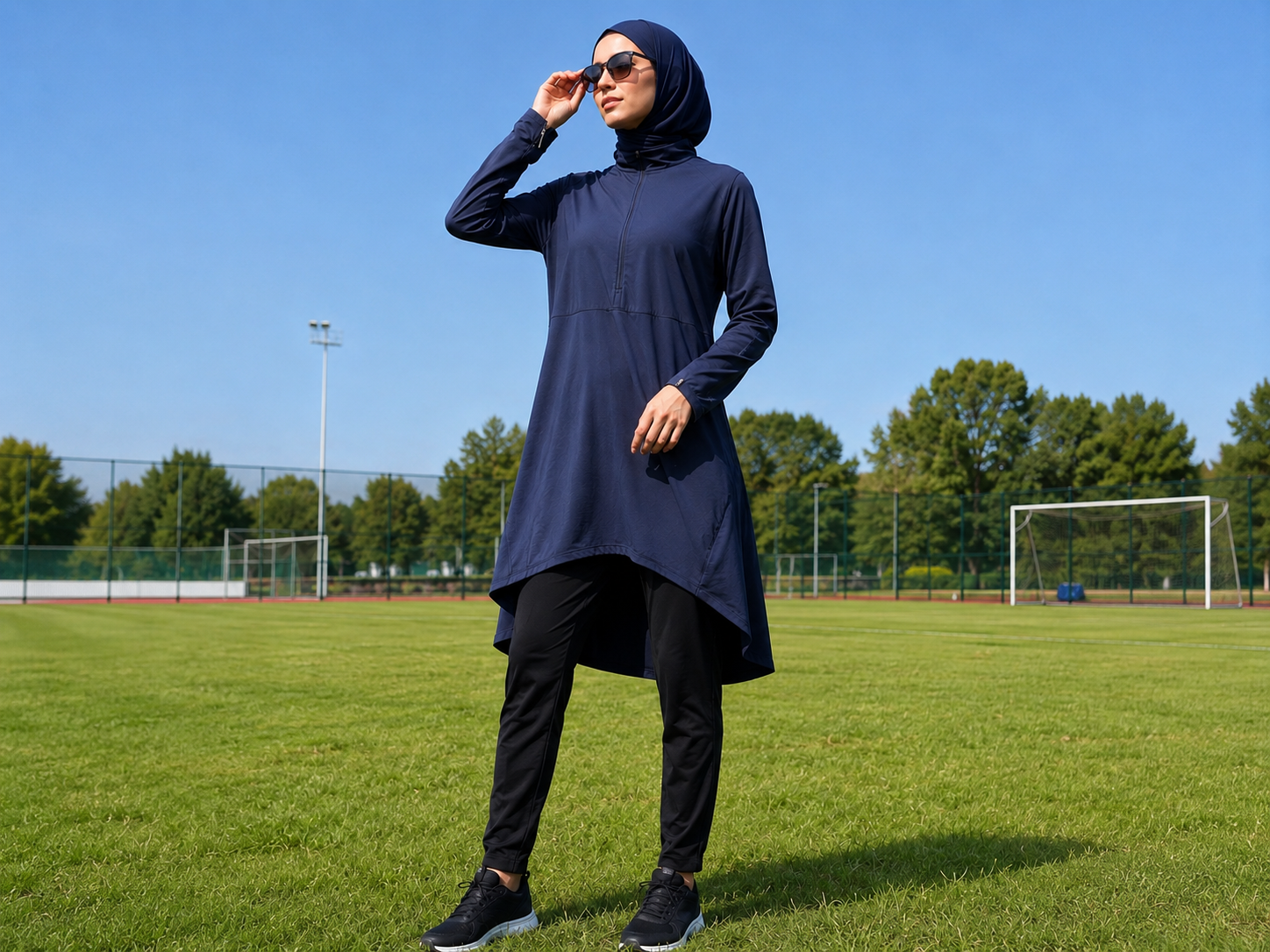
Modest Sportswear
Modest sportswear requires more than adding length or coverage to a standard active garment. Proportion, movement, fabric weight, opacity, layering and fit must work together while remaining manufacturable at scale.
- Review coverage, garment length and silhouette against the intended activity.
- Evaluate fabric behavior and layering requirements during development.
- Adjust pattern and fit according to confirmed measurements and product direction.
- Validate seams, trims and movement through sampling.
- Build bulk production around approved construction, sizing, materials and packaging requirements.
Manufacturing Routes Based on Your Product Readiness
The most efficient manufacturing route depends on how complete the product information already is. Leadshow separates technical OEM execution, manufacturing-focused ODM development and private label production so responsibilities and approvals remain clear.
OEM Apparel Manufacturing
OEM programs work best when product specifications are already relatively mature. Brands may provide a Tech Pack, measurement chart, patterns, reference images or physical samples. Leadshow reviews construction, materials, trims, processes, quantities and branding requirements before sampling and production planning.
- Technical and manufacturing feasibility review.
- Pattern or fit adjustment where the approved specification requires refinement.
- Sample development and revision before bulk approval.
- Bulk manufacturing according to the latest confirmed product records.
- Quality checks, labels, packaging and export delivery support based on the final order requirements.
ODM Product Development
ODM work is manufacturing-focused product development rather than unrestricted creative brand consultancy. Projects can begin with a concept, sketch, reference image, basic specification or physical sample. Leadshow helps translate available information into a product direction suitable for sampling and manufacturing.
- Review structure, fit, materials and manufacturing feasibility.
- Develop or adjust patterns according to the product direction.
- Produce samples to validate appearance, measurements and construction.
- Identify issues that may affect production before bulk approval.
- Move approved products into private label manufacturing, quality control, packaging and delivery planning.
Private Label Production
Private label manufacturing connects approved garments with the required brand identity. Main labels, care labels, hangtags, packaging and applicable branding elements must be aligned with product and SKU records before bulk execution.
- Confirm artwork, label content and placement requirements before production.
- Review branding methods on the actual product material during sampling where required.
- Separate garment approval from packaging and label approval.
- Organize brand components by style, color and size where applicable.
- Coordinate finished garments, packaging versions and outbound preparation for the confirmed order.
Turn Product Direction into Clear Manufacturing Requirements
Product development becomes valuable when design intent can be converted into measurable specifications, approved samples and repeatable production instructions. Leadshow’s R&D and engineering resources focus on product structure, pattern, fit, materials, sampling and manufacturing feasibility.
From Product Brief to Technical Development Direction
A project may begin with a complete Tech Pack or only part of the required information. Leadshow first reviews what is available and identifies which product decisions still need clarification before sampling. Inputs can include reference images, sketches, measurement charts, physical samples, material preferences, branding requirements, target quantity and intended market.
The development review focuses on items capable of changing the finished garment or production method:
- Product construction, panels, seams and key dimensions.
- Intended fit, ease and proportion.
- Main fabric, lining and applicable trims.
- Elastic, zippers, hardware or support components where relevant.
- Logo method, label placement and packaging direction.
- Manufacturing processes required for the intended design.
- Areas where the design may create production difficulty or unnecessary variability.
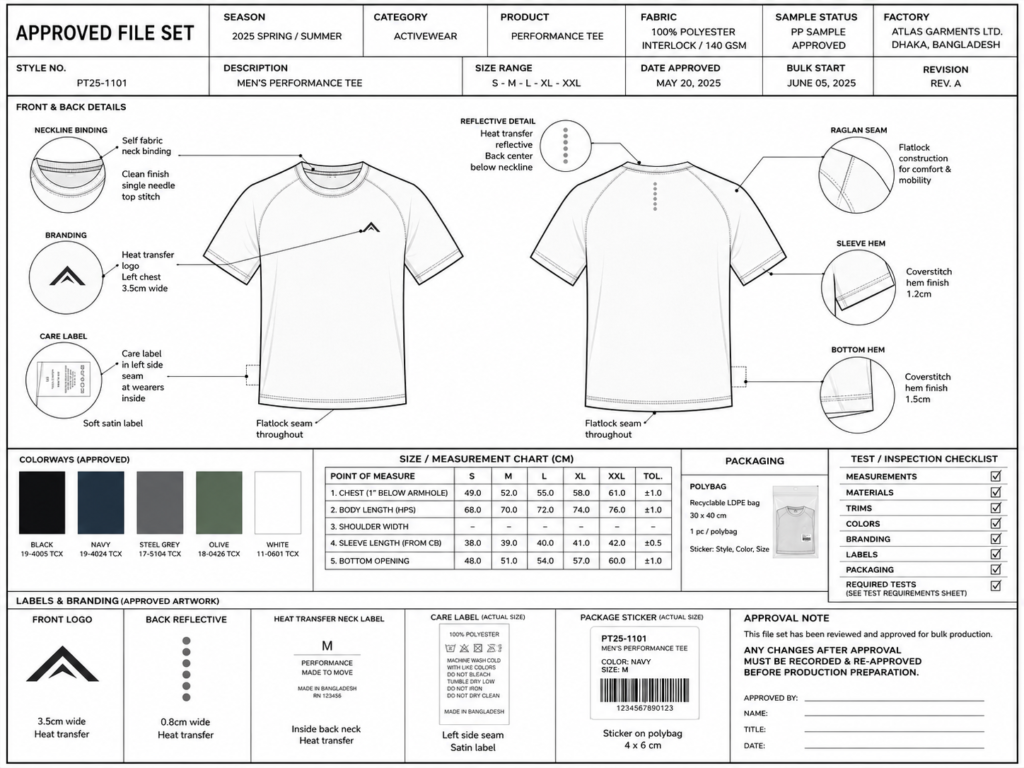
Incomplete information does not automatically prevent an initial review. Missing specifications are identified so the next development step has a clear purpose. The objective is not to create unnecessary documents; the objective is to prevent unresolved assumptions from reaching bulk production.
Pattern, Fit, Materials and Construction Are Reviewed Together
Pattern, fit and material behavior cannot be treated as separate decisions. A measurement chart may be technically correct while the garment still fits differently because of stretch, weight, recovery, lining, seam construction or intended ease.
Leadshow’s approximately 28-person R&D and engineering team supports product structure assessment, pattern adjustment, sample development, process review and manufacturing feasibility. The group is not represented as 28 fashion designers; responsibilities span development and engineering functions.
Development work can include:
- Reviewing whether measurements align with the intended silhouette.
- Evaluating stretch or structural materials against the pattern direction.
- Identifying areas needing reinforcement, elastic control or construction adjustment.
- Checking whether a selected process is suitable for the fabric and garment structure.
- Preparing samples to verify appearance, measurements and workmanship.
- Recording approved changes before the next sample or production stage.
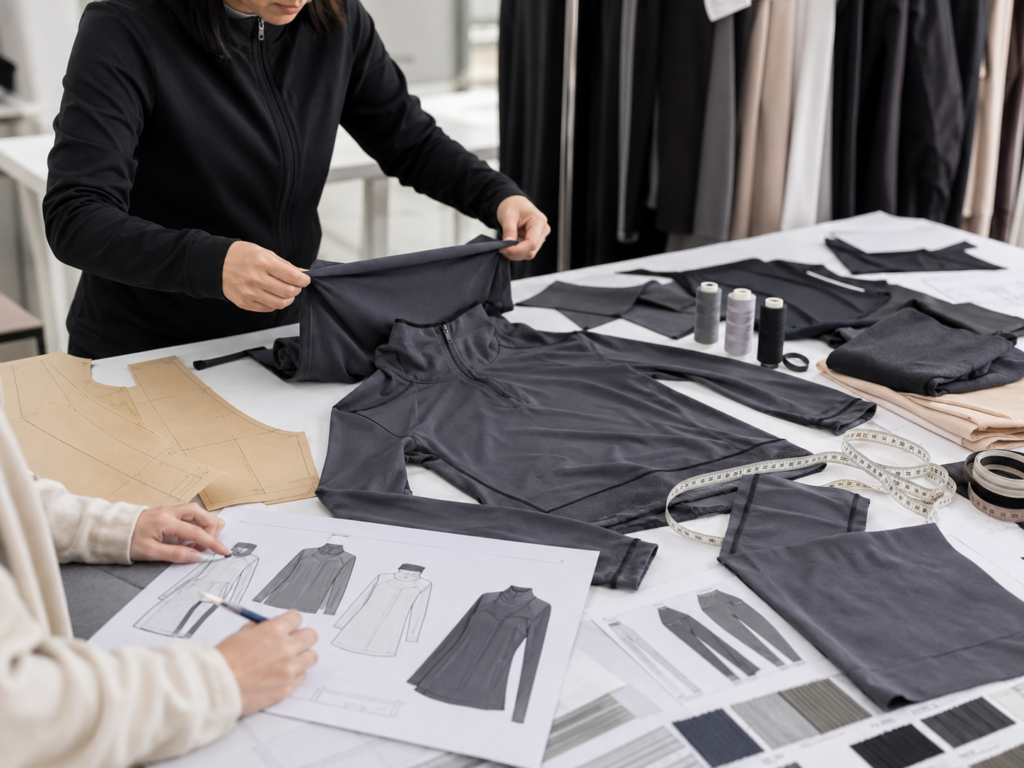
The goal is a garment capable of moving from sample development into repeatable manufacturing with fewer unresolved variables.
Approved Development Becomes the Basis for Production
A successful sample is not the end of development. Before production can begin, the final approved product information must be consolidated so manufacturing and quality teams work from the same version.
Relevant production records may include:
- Latest Tech Pack or confirmed technical specifications.
- Approved pattern and measurement information.
- Approved fabric, trims and colors.
- Approved sample or agreed workmanship reference.
- Logo, label and packaging requirements.
- SKU and quantity breakdown.
- Defined quality requirements and inspection points.
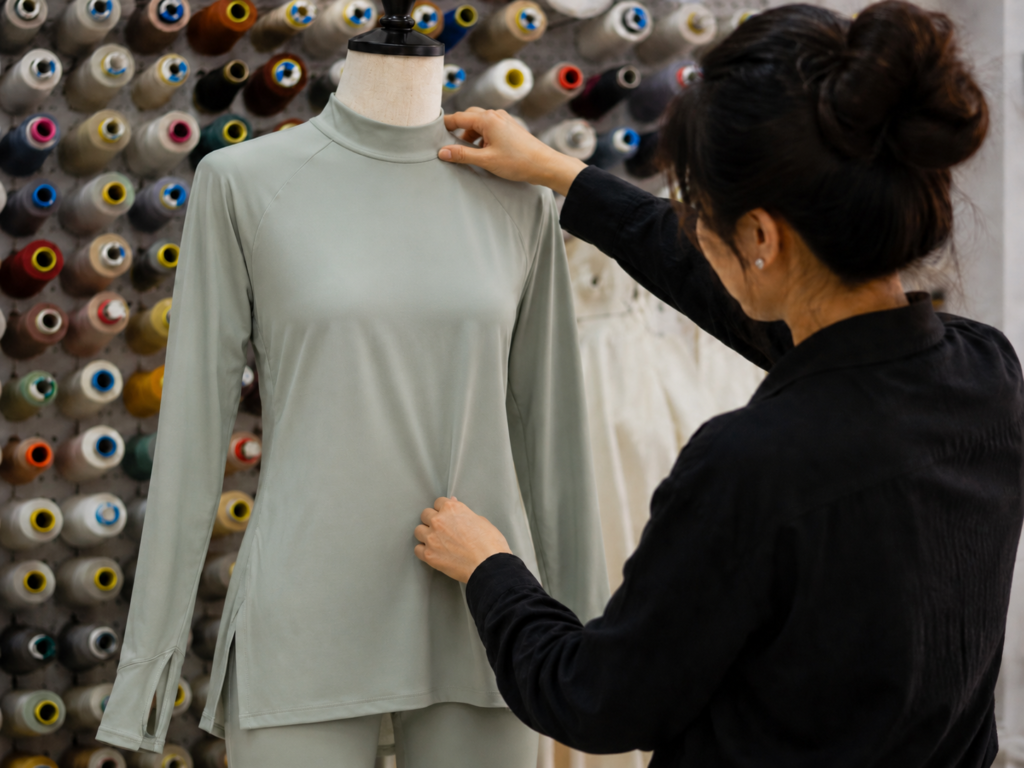
For complex structures, new materials or new processes, pilot or pre-production verification may be evaluated according to the project. Bulk capacity is not automatically reserved when a sample is approved; production scheduling remains subject to order confirmation, material readiness and current manufacturing plans.
Customization Starts with Product Specifications, Not Option Lists
Material, fit, construction and branding decisions influence one another. Leadshow reviews customization according to product use, technical requirements, quantity and manufacturing feasibility rather than offering an unlimited menu disconnected from the garment.
Fabric Selection
Fabric direction is evaluated against garment structure, intended fit, handfeel and production requirements. Relevant specifications may include fiber content, knit or woven construction, weight, stretch, recovery, surface appearance and color.
- Stock and custom material directions are evaluated according to availability and supplier conditions.
- Material choice is reviewed before final MOQ and lead time are confirmed.
- Stretch garments require attention to both fabric behavior and pattern measurements.
- Material substitution should be approved before production when the original specification changes.
Trims and Components
Trims can change product appearance, durability, construction and MOQ. Elastic, zippers, cords, hardware, padding and other components should therefore be treated as part of the product specification rather than late-stage additions.
- Review trim dimensions, material, finish and placement.
- Confirm whether a trim is stock, customized or subject to supplier minimums.
- Evaluate compatibility between trims and garment construction.
- Validate important components during sampling.
- Record the approved trim version before bulk production.
- Reconfirm supply conditions for repeat orders when materials or suppliers have changed.
Fit and Size Development
Fit is created through the relationship between body dimensions, garment measurements, pattern shape, material behavior and intended wearing ease. A wider size range cannot be produced reliably by changing only one measurement.
- Review base measurements and intended silhouette.
- Confirm key points of measure and tolerances where applicable.
- Evaluate fabric stretch or rigidity against pattern dimensions.
- Use samples and fitting feedback to identify required adjustments.
- Update approved patterns and measurement records after revisions.
- Confirm grading and extended size requirements according to the specific project scope.
Color Development
Color affects material availability, supplier minimums, sampling and production timing. Stock colors may offer different sourcing conditions from custom-dyed materials.
- Confirm target color references before final material ordering.
- Evaluate custom color feasibility according to material and supplier conditions.
- Separate color approval from assumptions based only on digital screens.
- Review material batch considerations for bulk production.
- Record approved color information for production and reorders.
- Reassess MOQ or timing if color requirements change after development.
Branding and Logo Application
Branding should be developed on the actual product structure and material where possible. Printing, embroidery and other applicable methods can behave differently depending on fabric stretch, surface and garment construction.
- Review artwork dimensions, placement and color requirements.
- Select processes according to material and expected appearance.
- Validate difficult logo applications through samples or process trials.
- Record approved artwork and position before bulk production.
- Check branding during finished garment inspection.
- Avoid performance or durability claims unless supported by the specific product and validation method.
Labels and Packaging
Labels and packaging are manufacturing specifications, not separate marketing accessories. Main labels, care labels, hangtags, retail packaging and outer carton information must match the final product and destination requirements.
- Confirm artwork and product information before printing branded materials.
- Link size labels and SKU information to the correct garment variation.
- Review packaging requirements before bulk packing begins.
- Control packaging versions when different markets require different information.
- Verify carton allocation and quantities before outbound handover.
- Recheck label or packaging changes before repeat production.
Develop, Review and Approve Before Bulk Production Starts
Sampling creates a measurable reference for fit, materials, construction, branding and workmanship. Leadshow uses the development cycle to clarify unresolved specifications and prepare approved products for production rather than treating sampling as a simple prototype service.
Every Sample Should Have a Defined Purpose
The first sample does not need to answer every possible product question. It should confirm the most important decisions for the current development stage.
Before sample work begins, relevant information may include:
- Product drawing, Tech Pack, reference image or physical sample.
- Measurement chart and target fit.
- Main fabric and trim direction.
- Construction details and workmanship expectations.
- Logo, label or branding information.
- Target quantity and product use.
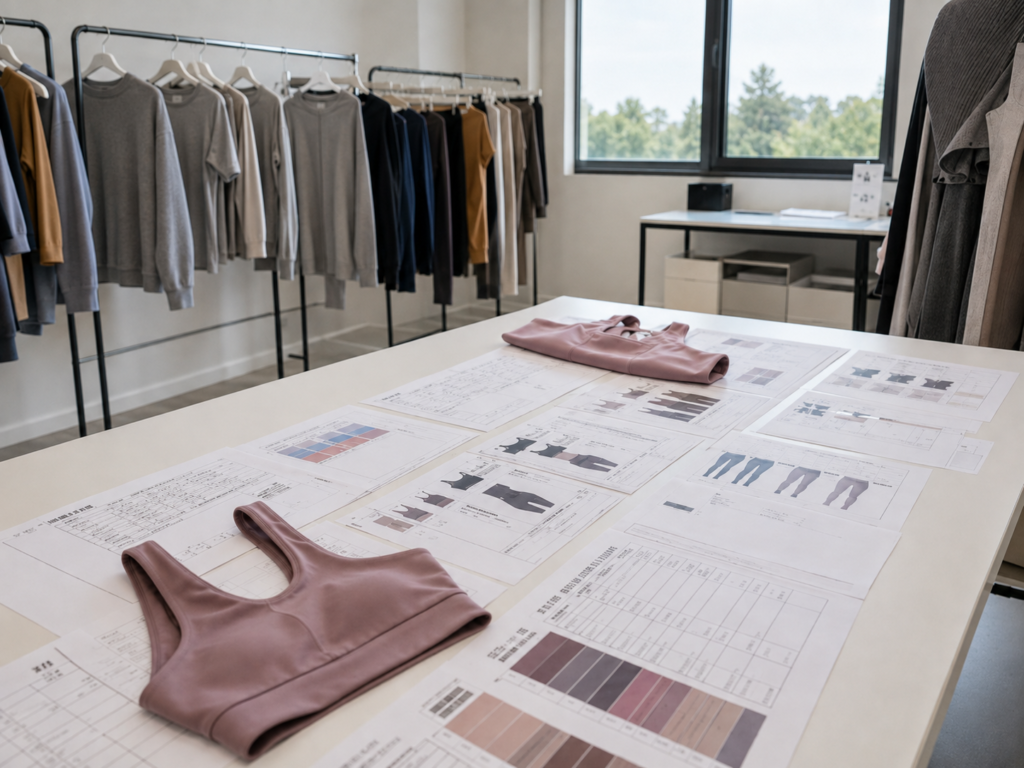
The development team reviews missing, conflicting or unclear information before the sample is treated as an approval reference. A first sample may be used to verify silhouette, construction, dimensions and overall feasibility. Later revisions may focus on fit, materials, workmanship or branding.
The process remains project-specific because a basic T-shirt and a multi-panel stretch garment require different levels of development. Sampling is most effective when feedback is consolidated into one clear revision list rather than several conflicting instructions from different stakeholders.
Sample Review Converts Feedback into Controlled Revisions
After a sample is completed, the next step is not simply “make another one.” Feedback needs to identify what should change, why it should change and which production record must be updated.
Review can cover:
- Garment measurements against the approved chart.
- Fit, proportion and silhouette.
- Fabric behavior and trim performance.
- Seam appearance and construction details.
- Logo size, placement and process result.
- Label positions and packaging direction where relevant.
- Potential problems for bulk manufacturing.
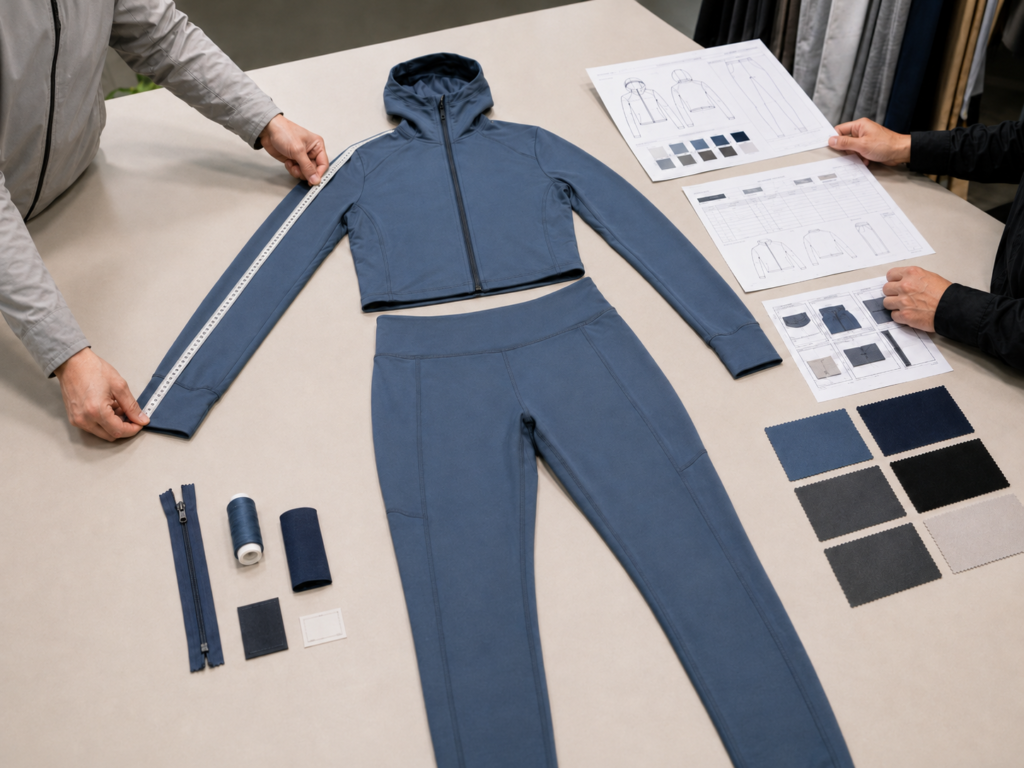
Pattern, measurement, material and workmanship changes should remain synchronized. A pattern revision without an updated measurement record can create confusion later; a material change may also require a new fit assessment.
Once revisions are approved, the next sample is produced against the updated specification. The aim is controlled development, not an unlimited series of undocumented changes.
Sample Timing Depends on Product Readiness and Materials
Leadshow does not apply one fixed sample lead time to every garment. **Sample lead time is confirmed according to product complexity, material readiness, customization and revision requirements.
Timing may be affected by:
- Whether approved material is already available.
- Whether colors or trims need custom development.
- Product construction and process complexity.
- Number of sample types required.
- Fit or measurement revisions after review.
- Branding development or special process validation.
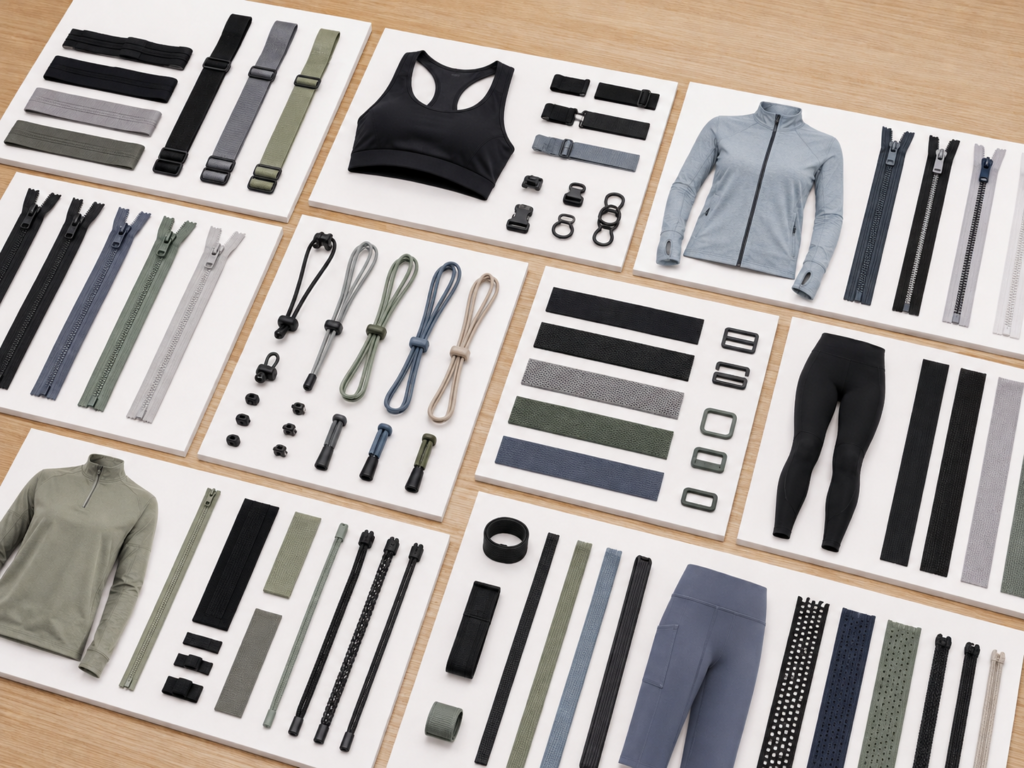
An approved sample also does not automatically reserve bulk capacity. Production timing is evaluated after order requirements, materials, quantity, SKU structure and current manufacturing scheduling are confirmed.
Manufacturing Resources Behind Leadshow Apparel Programs
Leadshow combines product development, production, quality and logistics resources across an established manufacturing system. Scale data is used as evidence of execution capability, while available capacity remains dependent on the specific product, materials, processes and production schedule.
15 Years of Industry Experience
Leadshow has 15 years of apparel industry experience. The experience figure refers to apparel development and manufacturing activity and is not used to infer an unverified founding year. Long-term industry exposure supports stronger understanding of product development, sampling, materials, production execution and order coordination across changing apparel requirements.
3 Manufacturing Bases
Leadshow operates three modern manufacturing bases as part of its overall production system. Individual factory addresses, product allocation and capacity are not represented as identical across all sites. Production placement is evaluated according to garment type, processes, order requirements and available scheduling rather than assigned through a generic statement.
20,000+ m² Combined Factory Area
The combined manufacturing area exceeds 20,000 square meters across the Leadshow production system. The figure represents total manufacturing infrastructure rather than one facility. Physical scale supports development, production, quality, finishing, packing and related manufacturing activity required for apparel programs with different product and volume requirements.
1,500+ Team
Leadshow has a team of more than 1,500 people across business coordination, R&D and engineering, production, quality, warehousing, logistics and supporting functions. Department numbers can change over time, so the total team figure is used as the primary public reference rather than presenting every department count as permanent staffing.
300+ Production and Finishing Machines
Leadshow is equipped with more than 300 production, specialized-process and finishing machines across its manufacturing system. The number does not represent 300 production lines or 300 automated machines. Equipment supports cutting, sewing, specialized processes, finishing and selected packaging functions across applicable apparel programs.
Up to Approximately 120,000 Garments Monthly
Combined monthly capacity can reach up to approximately 120,000 finished garments under suitable product, material, process, order-mix and scheduling conditions. The figure is not a fixed output for every style or factory. Available capacity is assessed against actual construction, SKU complexity, quality requirements and current production commitments.
Processes Are Selected Around the Garment Construction
Specialized equipment only creates value when the process matches the fabric, structure and intended product result. Leadshow evaluates applicable techniques during development and sampling before establishing production requirements.
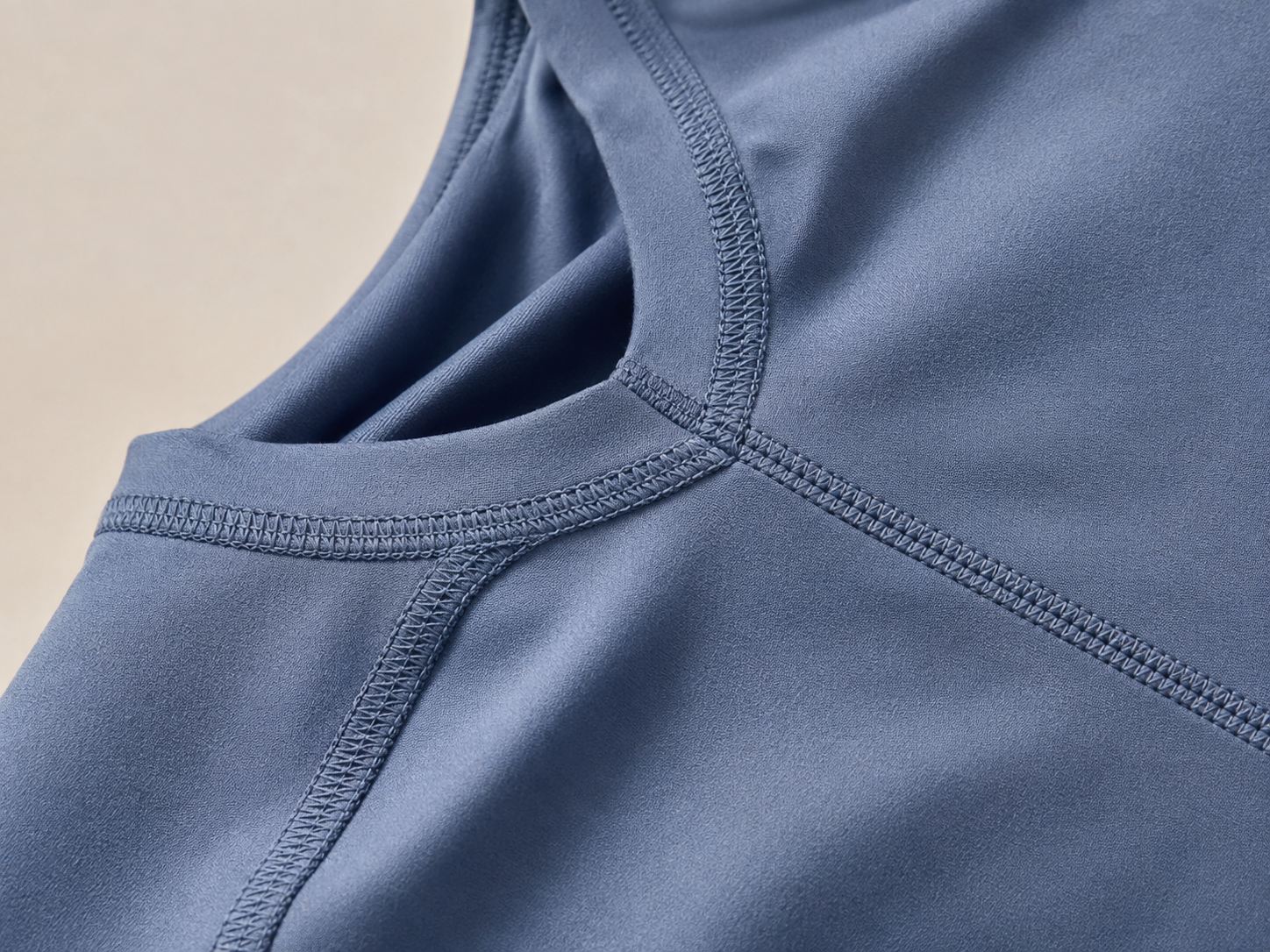
High-Stretch Seam Construction
Stretch apparel requires seam structures capable of moving with the garment while maintaining an acceptable appearance and construction result. Seam choice should be evaluated against fabric stretch, garment location and intended use.
- Review the amount and direction of fabric stretch.
- Identify seams exposed to repeated movement or tension.
- Evaluate suitable stitch structures during sample development.
- Check seam appearance, measurements and garment shape after construction.
- Confirm the approved process before bulk production.
Avoid universal stretch or durability claims without product-specific validation.
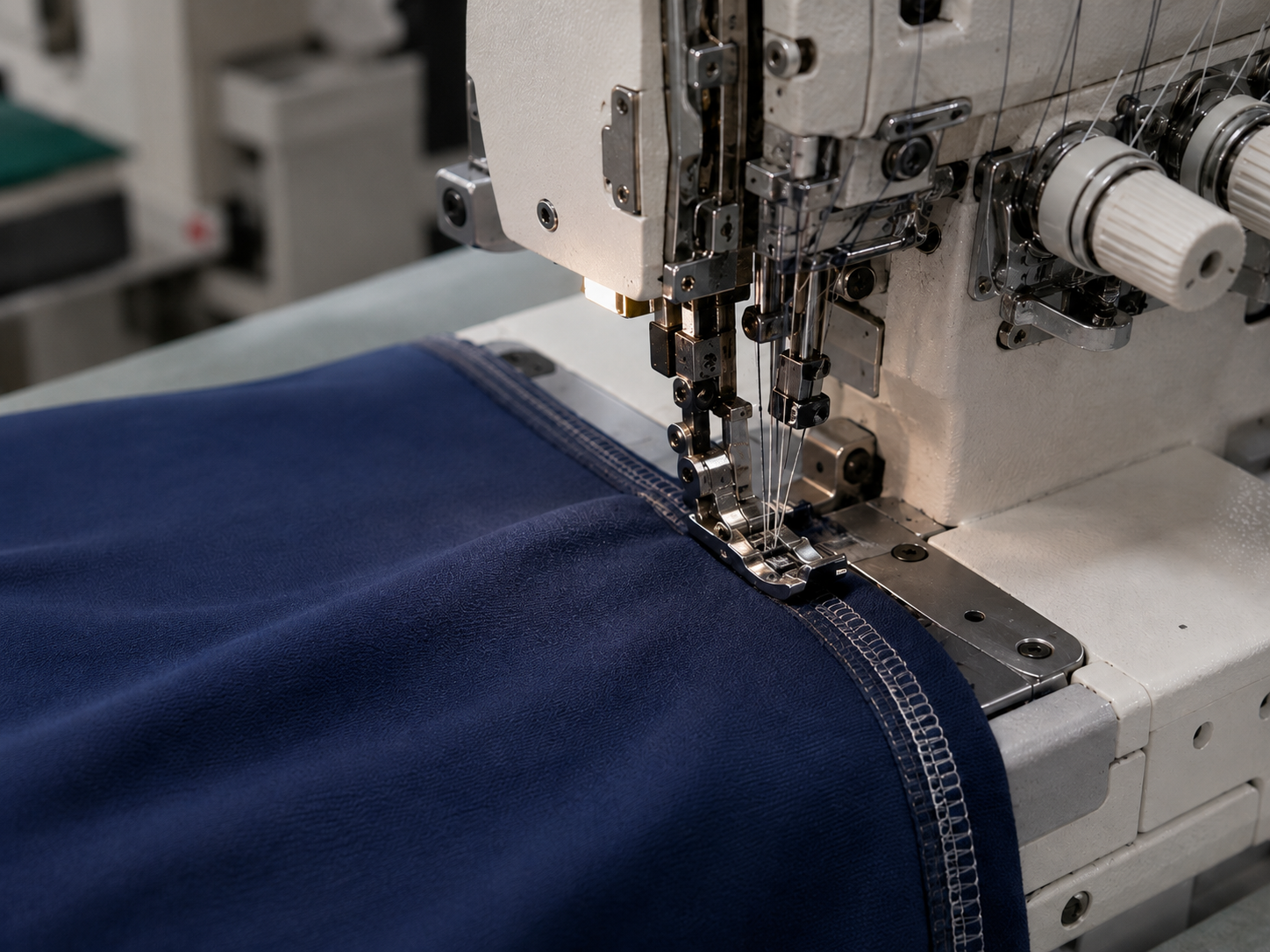
Four-Needle Six-Thread Flatlock
Four-Needle Six-Thread Flatlock can support selected high-stretch garment seam structures and create a flatter seam profile in applicable designs. It should not be described as true seamless knitting.
- Evaluate use according to garment design and seam position.
- Confirm thread, fabric and construction compatibility.
- Review seam appearance during sampling.
- Record approved workmanship for bulk production.
- Check critical areas during process inspection.
- Final seam strength and wearing performance remain product-specific rather than assumed from the machine type alone.
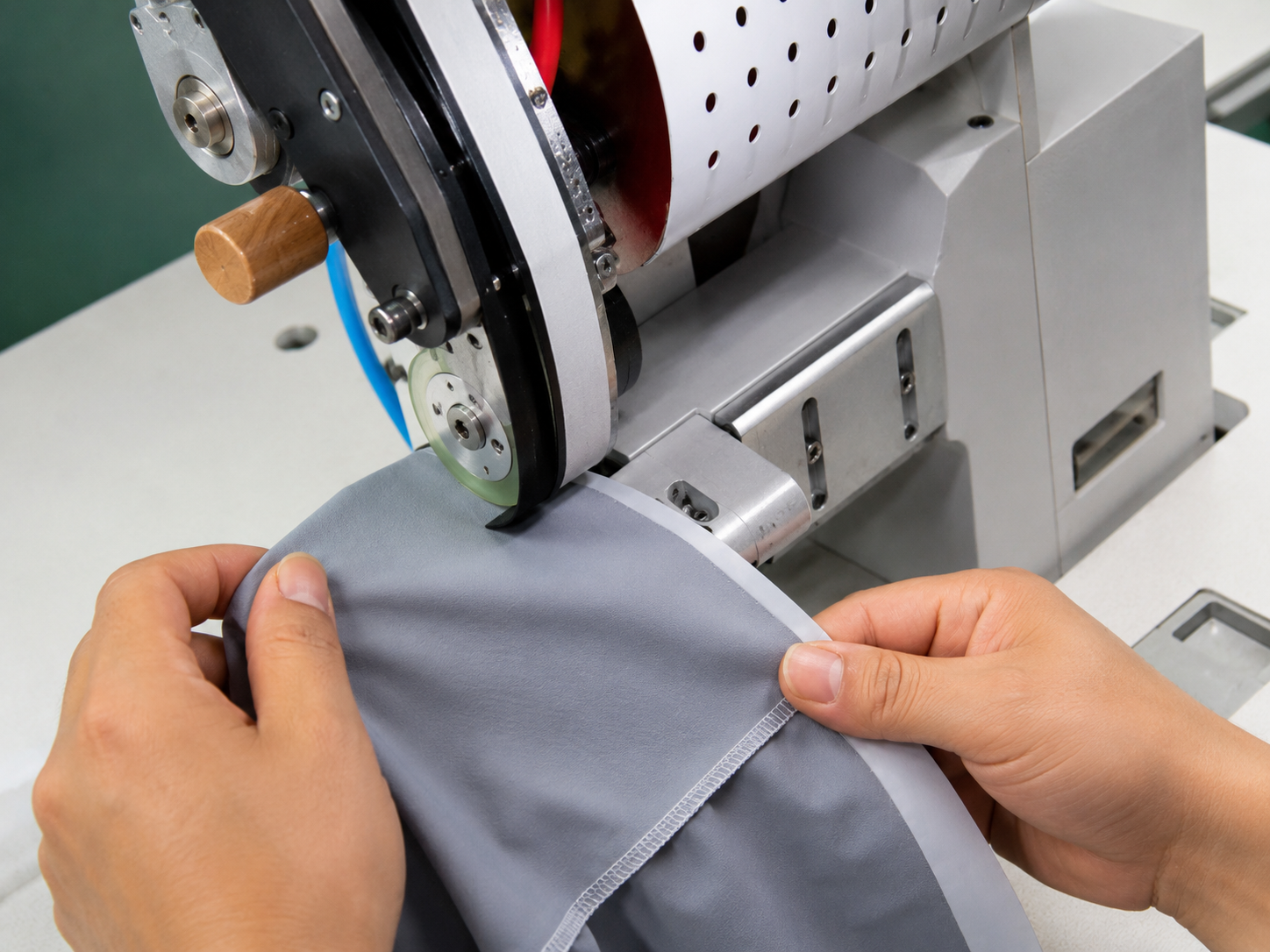
Heat Bonding
Heat bonding may be used for selected garment structures or finishing details where fabric, adhesive system and product construction are suitable. Bonded components need to be validated on the proposed materials before bulk use.
- Review material compatibility and construction purpose.
- Produce process trials or samples where required.
- Confirm temperature and processing conditions according to the material system.
- Inspect appearance and adhesion during development.
- Define bulk checkpoints after approval.
- Avoid describing heat bonding as a universal seamless solution or permanent performance guarantee.
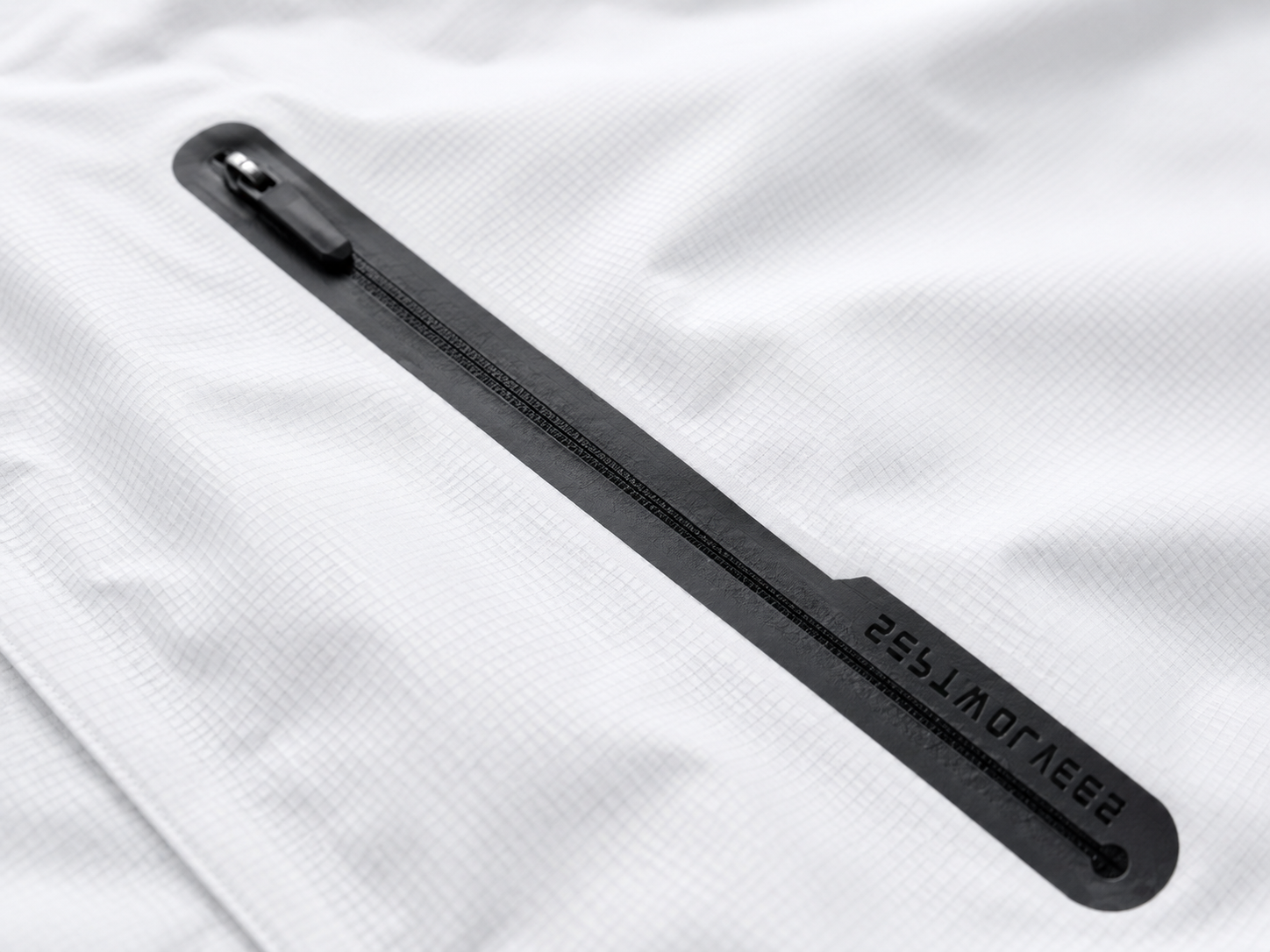
Seam Taping
Seam taping can support selected construction and finishing requirements. A taped seam does not automatically mean the finished garment is waterproof, since overall performance depends on fabric, tape, seam design and validation conditions.
- Identify specific seams requiring tape.
- Review compatibility with the garment material.
- Validate appearance and construction during sample development.
- Confirm tape width, placement and workmanship standards.
- Inspect critical taped areas during production.
- Use performance claims only when supported by the finished product and required testing.
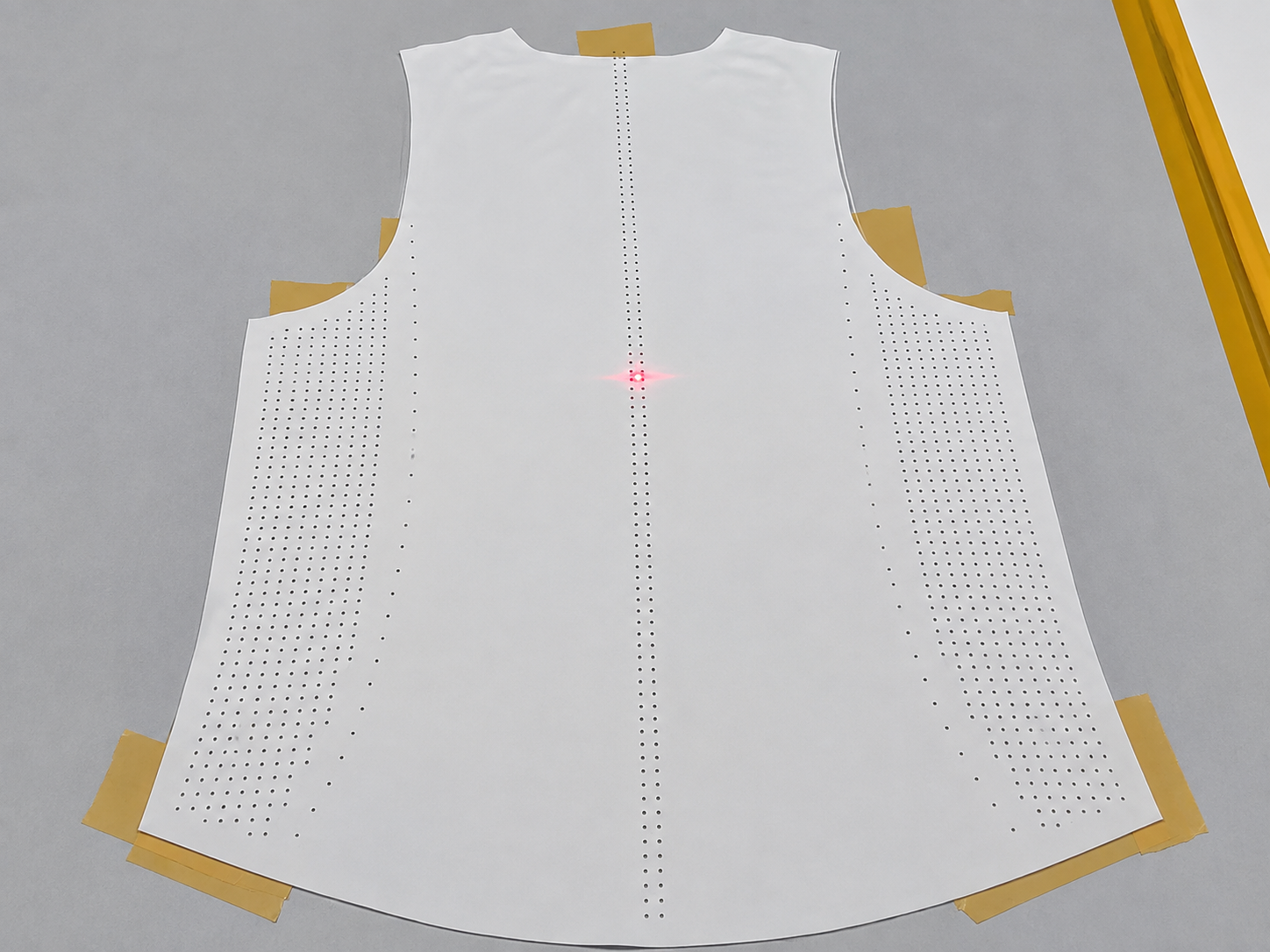
Laser Perforation
Laser perforation can be considered for selected design or ventilation structures when material and garment construction are suitable. The process should be evaluated around hole pattern, edge condition, fabric response and visual requirements.
- Review perforation size, spacing and location.
- Test material response during sample development.
- Confirm pattern and artwork before production.
- Inspect edge quality and placement.
- Control approved versions across bulk production.
Do not claim a specific ventilation improvement unless supported by product testing.
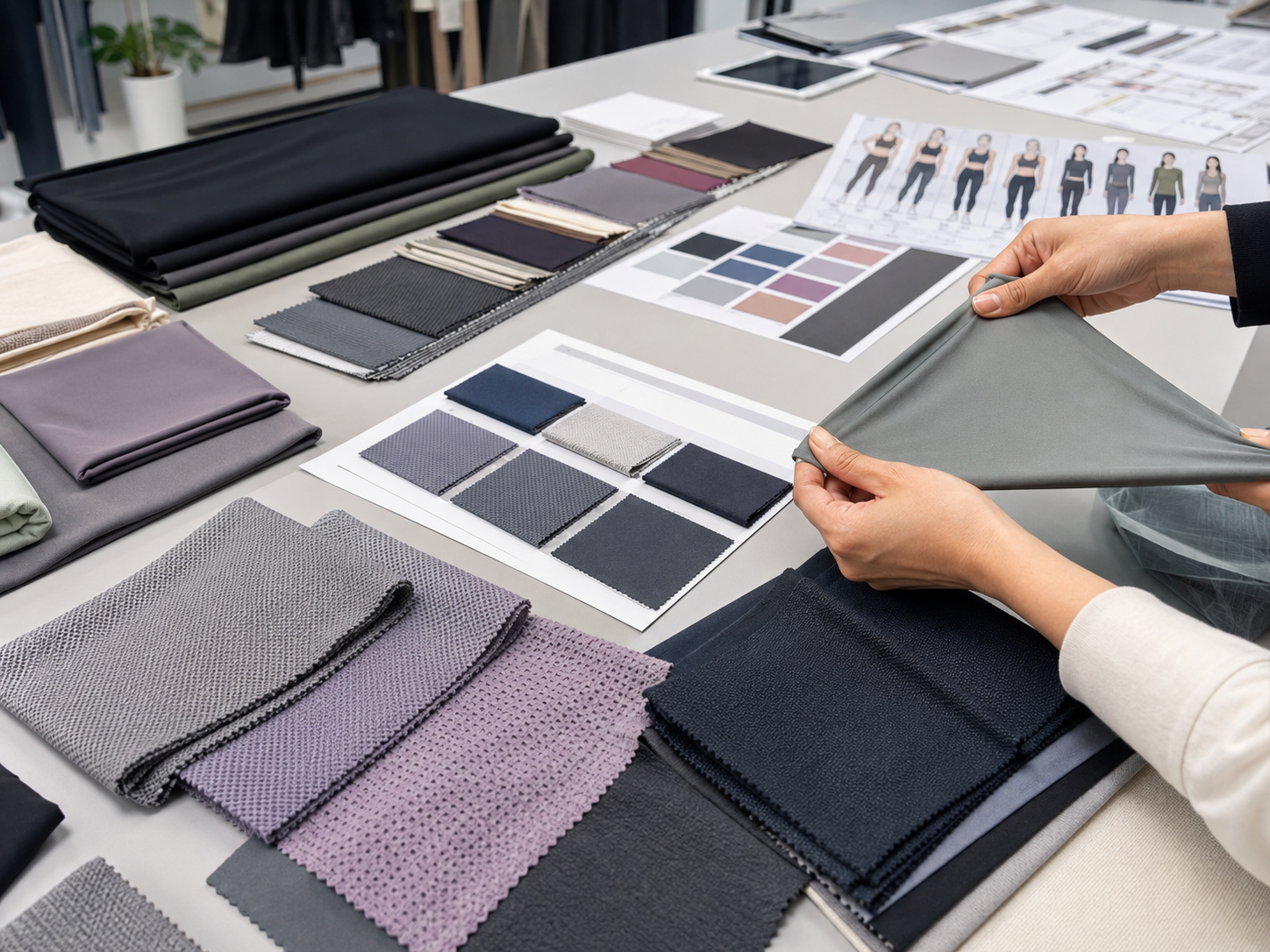
Finishing and Final Process Control
Finishing brings the approved garment into its final presentation and packing condition. Pressing, thread cleaning, folding and other finishing processes cannot correct unresolved pattern, sewing or material problems.
- Check appearance before packing.
- Review critical measurements where required.
- Confirm labels and product identification.
- Apply needle-detection checks to applicable garments using available equipment.
- Prepare folding and packing according to approved requirements.
- Keep safety, testing and certification claims separate from routine finishing operations.
Bulk Consistency Begins Before the Production Line Starts
Large production cannot be controlled by final inspection alone. Leadshow uses approved samples, current technical records, material confirmation and production checkpoints to reduce avoidable differences between development and bulk manufacturing.
Freeze the Approved Production Standard
Bulk preparation starts by establishing which information is current and approved. Several sample versions may have been produced during development, so production cannot rely on memory, email history or an outdated specification.
The production standard can include:
- Approved garment sample.
- Latest Tech Pack or technical specification.
- Approved pattern and measurement chart.
- Confirmed fabric, trims and color references.
- Logo and branding artwork.
- Label and packaging requirements.
- SKU and quantity breakdown.
- Quality requirements and defined tolerances.
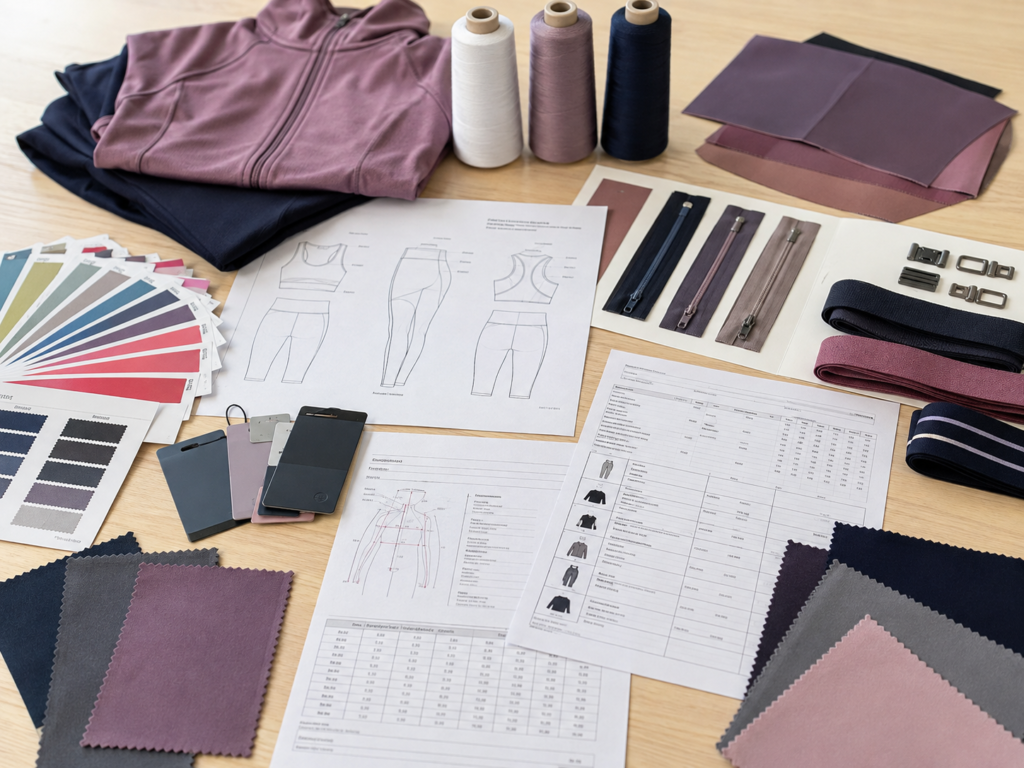
Any difference between the physical sample and written documentation should be resolved before manufacturing starts. If material or construction changes occur after approval, the effect on fit, appearance, cost, MOQ and production timing should be reviewed.
The result is a controlled production reference. Manufacturing teams, quality teams and packaging teams can then work from the same approved version rather than interpreting separate instructions independently.
Confirm Materials and Production Preparation
Bulk consistency can be affected before sewing begins. Material batches, trims, color references and cutting preparation therefore need to be checked against approved information.
Preparation can include:
- Verifying incoming material names, colors, quantities and specifications.
- Reviewing material batches where relevant.
- Confirming approved trims and branded components.
- Checking production markers and cutting requirements.
- Reviewing critical construction points before sewing begins.
- Preparing first-piece or initial production comparison against the approved sample.
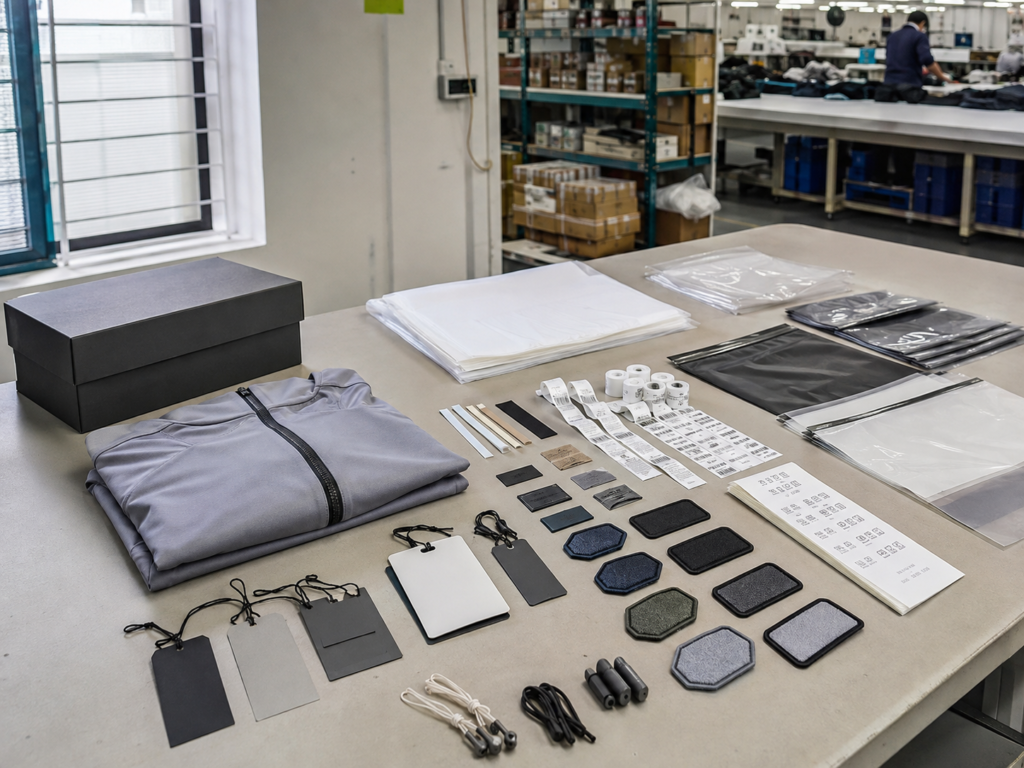
Some products may require greater attention to shrinkage, stretch, recovery, panel alignment or material compatibility. The required controls depend on the garment rather than one fixed procedure used for every style.
Early identification of material or preparation problems can prevent a larger quantity of garments from being produced before an issue becomes visible.
Inspect Critical Workmanship During Production
Once production begins, inspection shifts from “Is the design correct?” to “Is production following the approved standard?”
Process control can review:
- Critical seam construction and workmanship.
- Garment measurements at selected production stages.
- Elastic, trims, zippers or support components.
- Logo position and applicable branding processes.
- Panel matching and alignment where relevant.
- Issues discovered during initial or in-process inspection.
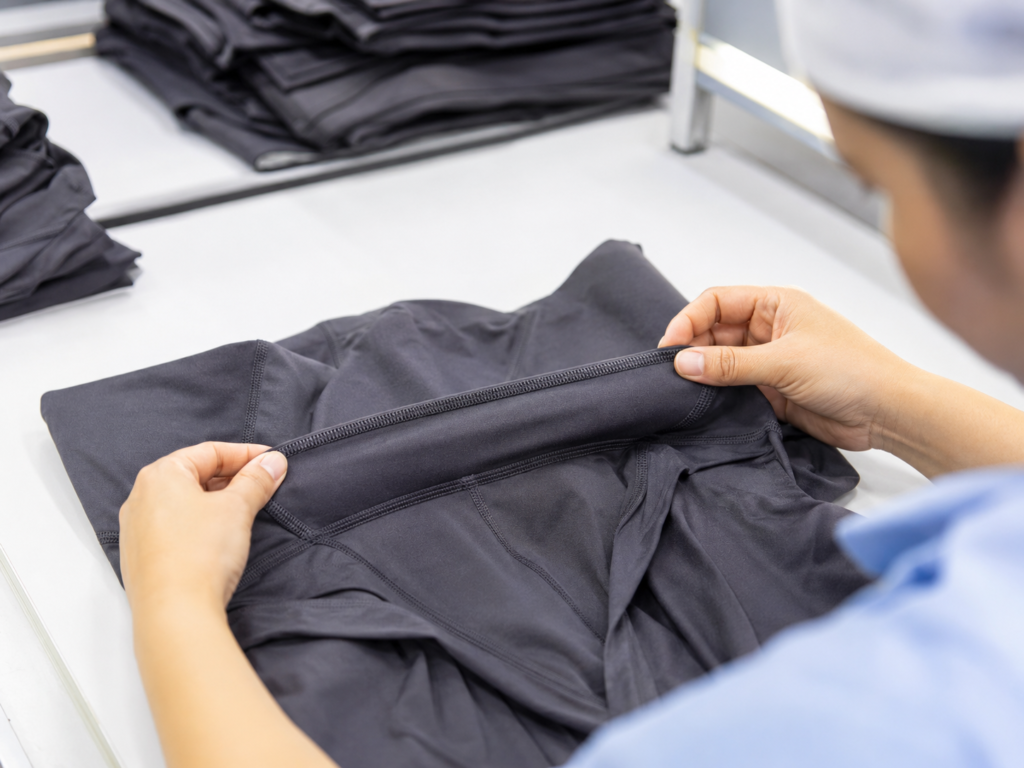
When deviations are found, affected products can be separated for review, correction and reinspection according to the project requirements. Process checks are especially important for complex garments where a final inspection may identify a defect only after most of the work has already been completed.
The objective is controlled execution within agreed specifications and tolerances, not an unrealistic promise that every garment will be mathematically identical.
Verify Finished Garments and Packing
Finished garment review confirms whether production output and packing are ready for the next order stage.
Inspection may cover:
- Appearance and workmanship.
- Selected garment measurements.
- Labels, logos and trims.
- Style, color, size and quantity information.
- Packaging version and SKU identification.
- Carton contents and packing requirements.
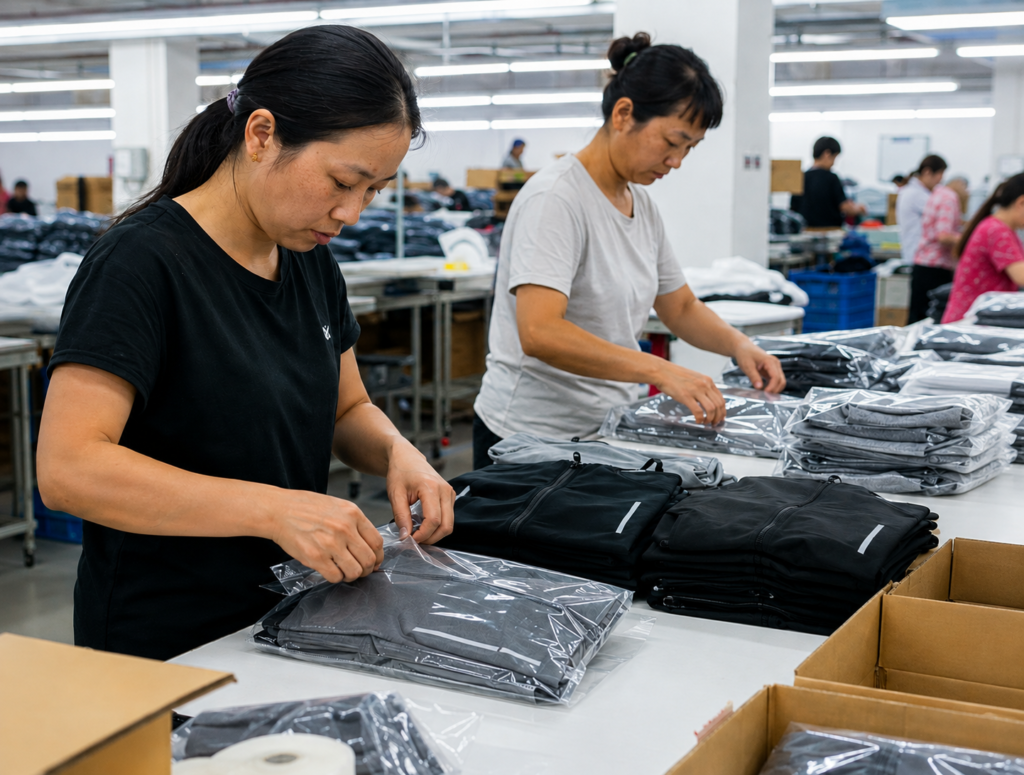
Applicable garments may also pass through automatic needle-detection equipment before packing or shipment. Leadshow has six automatic needle-detection machines for applicable final safety checks; the process is not represented as a complete product safety certification.
Packing checks close the loop between product approval and outbound preparation. Final records also create a reference for repeat orders and future product updates.
Quality Checks Follow the Approved Product Requirements
Leadshow’s quality team supports checks across materials, production, finished garments and packing. Inspection scope varies by garment, specifications and project requirements rather than relying on one universal checklist for every order.
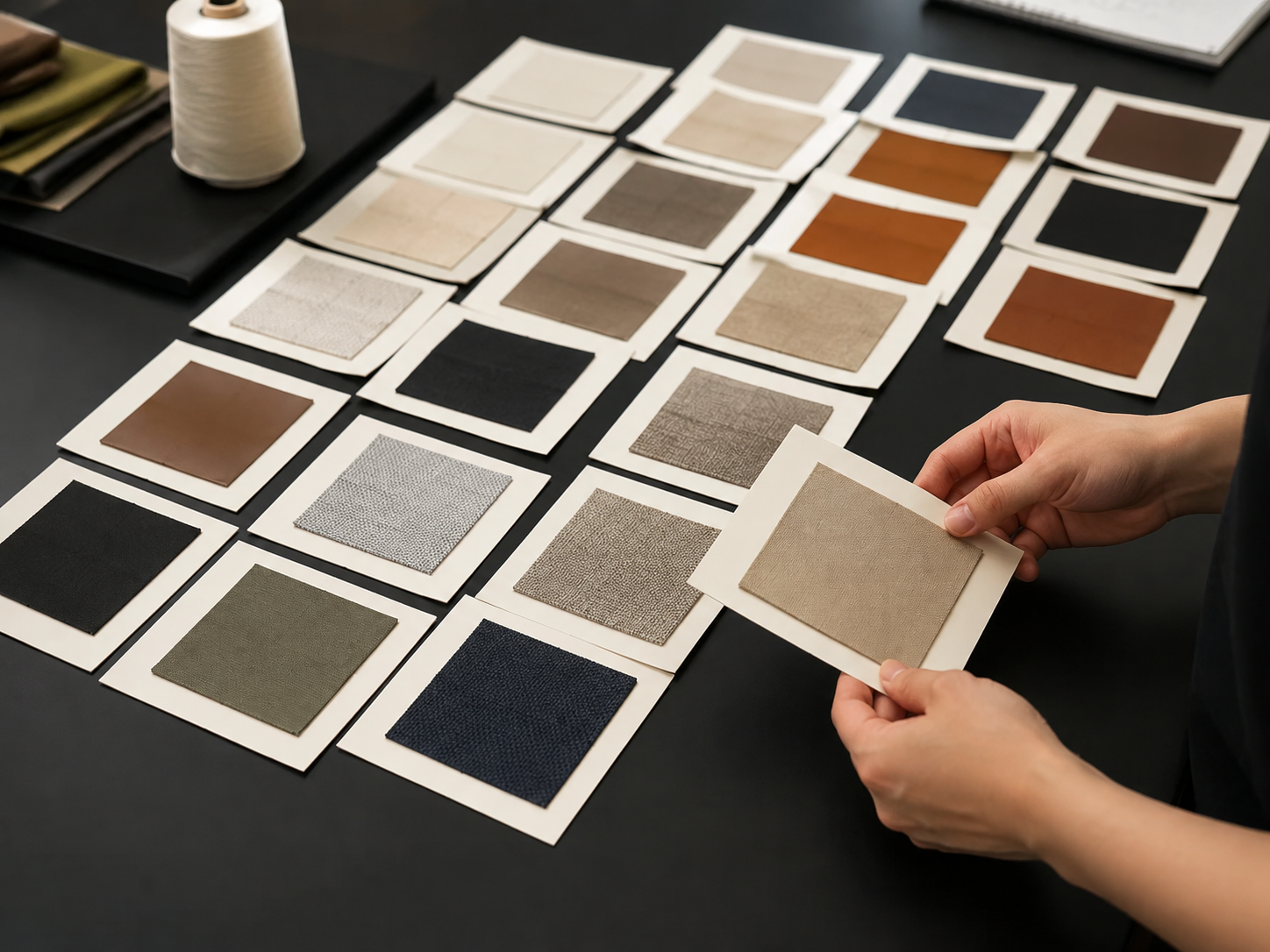
Material Review
Quality control starts before cutting and sewing. Incoming fabric and trims can be reviewed against the approved material information and order requirements.
- Confirm material identity, color and applicable specifications.
- Review trims against approved versions.
- Identify visible damage or discrepancies before production use.
- Separate questionable material for further review where required.
- Keep material changes aligned with development records.
Coordinate additional testing requirements separately when formal laboratory or market-specific validation is needed.
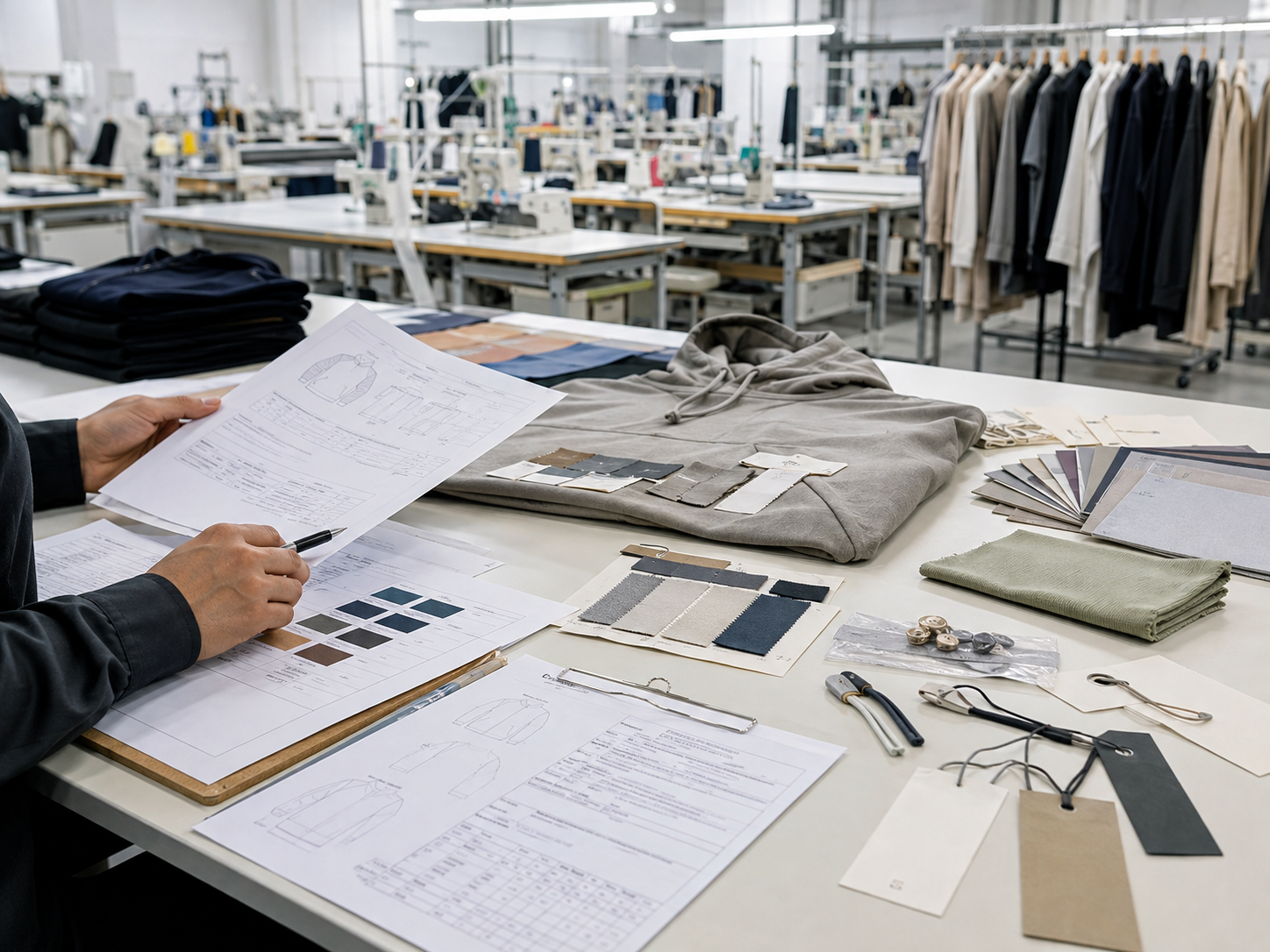
Pre-Production Check
Production should begin from the latest approved product information. Pre-production review helps ensure development decisions have been transferred into manufacturing requirements.
- Confirm approved sample and technical records.
- Check pattern, measurements and relevant construction notes.
- Verify fabric, trims and colors.
- Review logo, labels and packaging requirements.
- Confirm critical workmanship areas requiring additional attention.
- Identify unresolved conflicts before large quantities enter production.
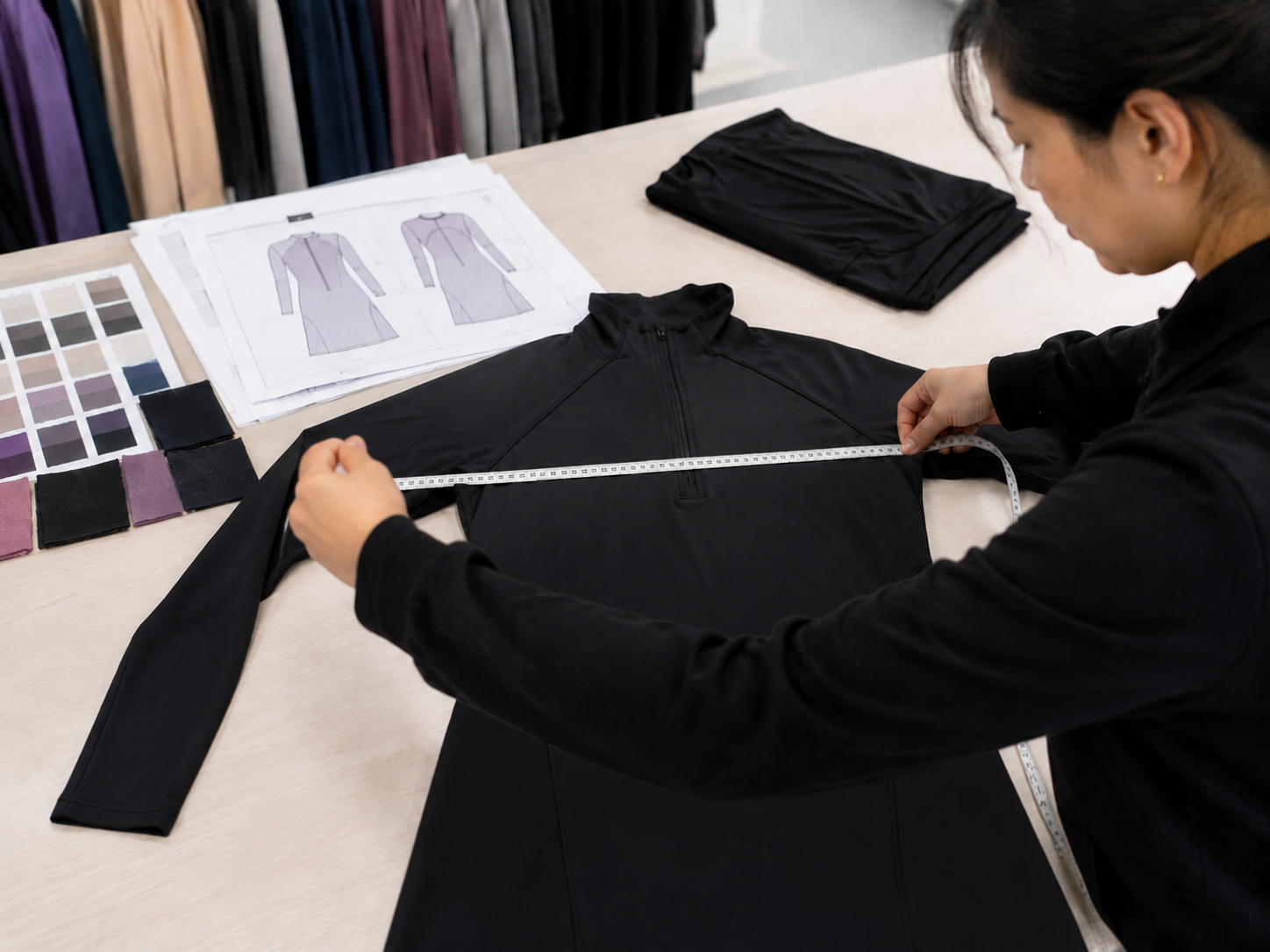
Initial Production Check
Early production creates an opportunity to compare manufacturing output with the approved reference before the entire order is completed.
- Review initial garments or first-piece output.
- Compare construction against the approved sample.
- Check selected dimensions and garment shape.
- Review logo or trim placement.
- Confirm workmanship on critical seams.
- Record significant deviations and correction requirements before production continues.
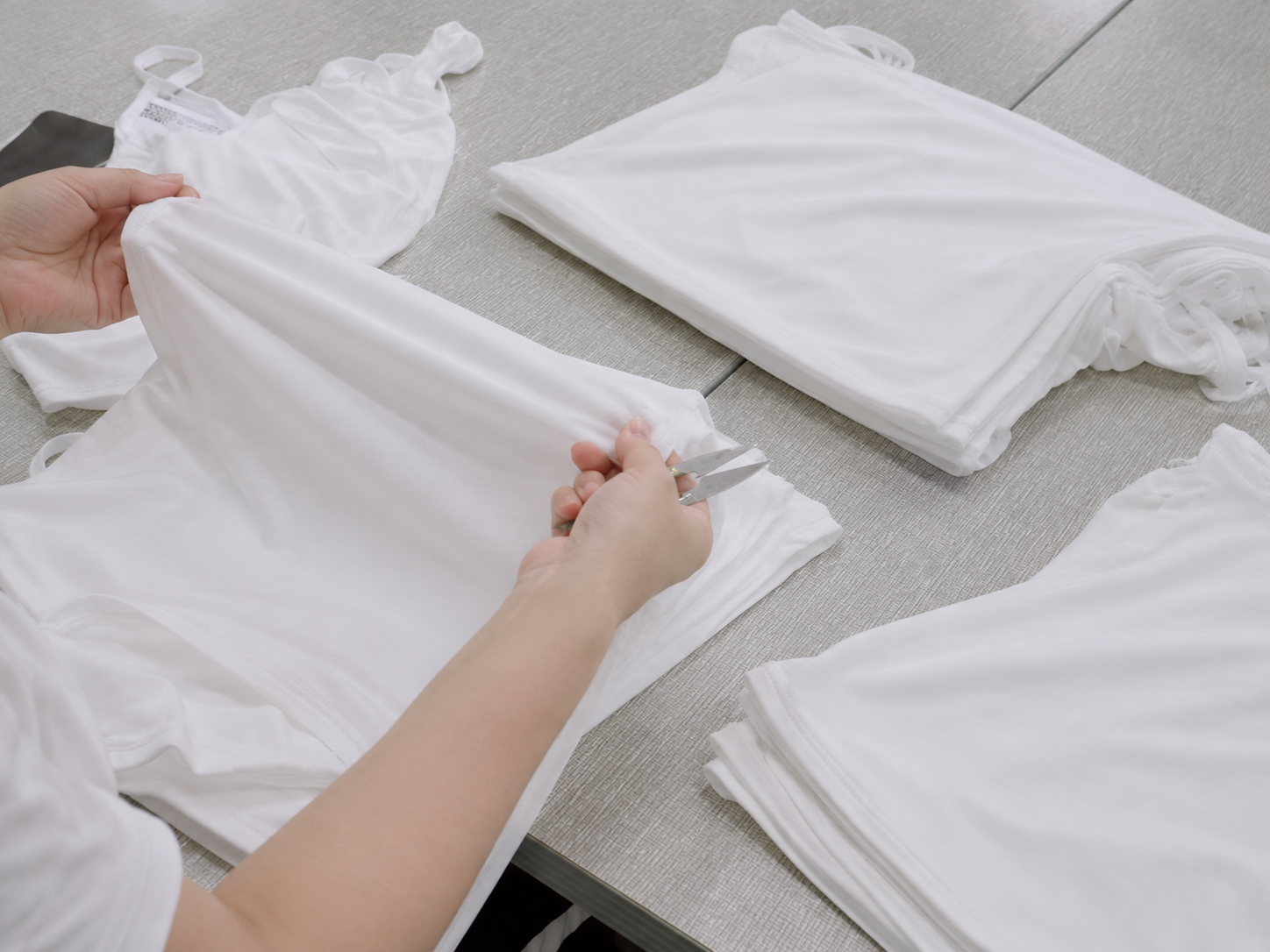
In-Process Inspection
In-process checks focus on workmanship and manufacturing consistency while production is still underway. Inspection points depend on garment complexity and quality requirements.
- Review selected measurements or construction details.
- Inspect seams, trims and key functional areas.
- Monitor repeated workmanship issues.
- Separate abnormal products for corrective action.
- Reinspect corrected items where required.
- Communicate technical issues with production and engineering teams when adjustments are needed.
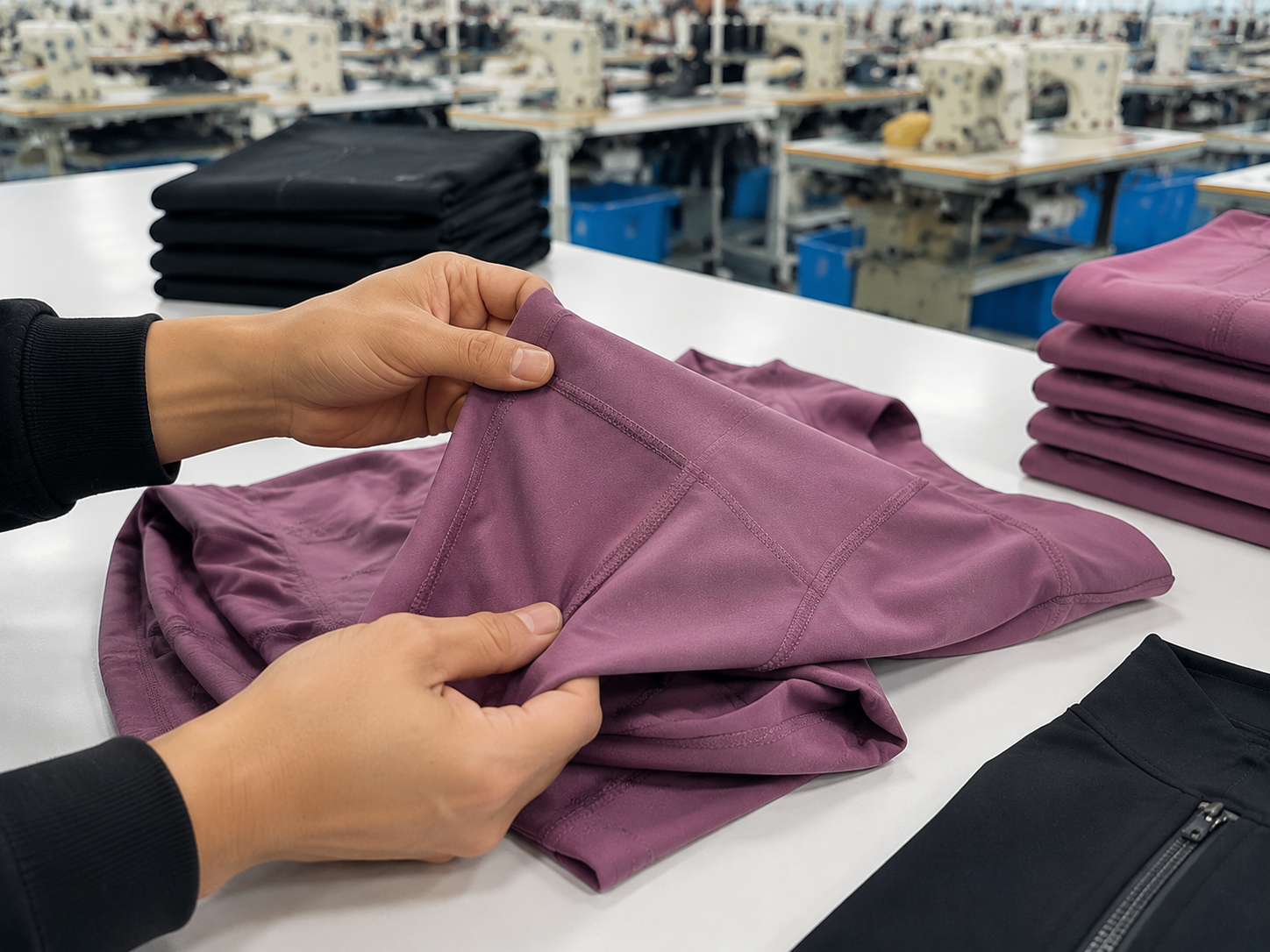
Finished Garment Inspection
Finished garments can be checked against approved appearance, construction and measurement requirements before packing.
- Review overall workmanship and visible defects.
- Check selected dimensions according to the inspection scope.
- Confirm logos, labels and trims.
- Verify style, color and size information.
- Review presentation and finishing condition.
Record nonconforming products for correction, reinspection or separate disposition according to the order standard.
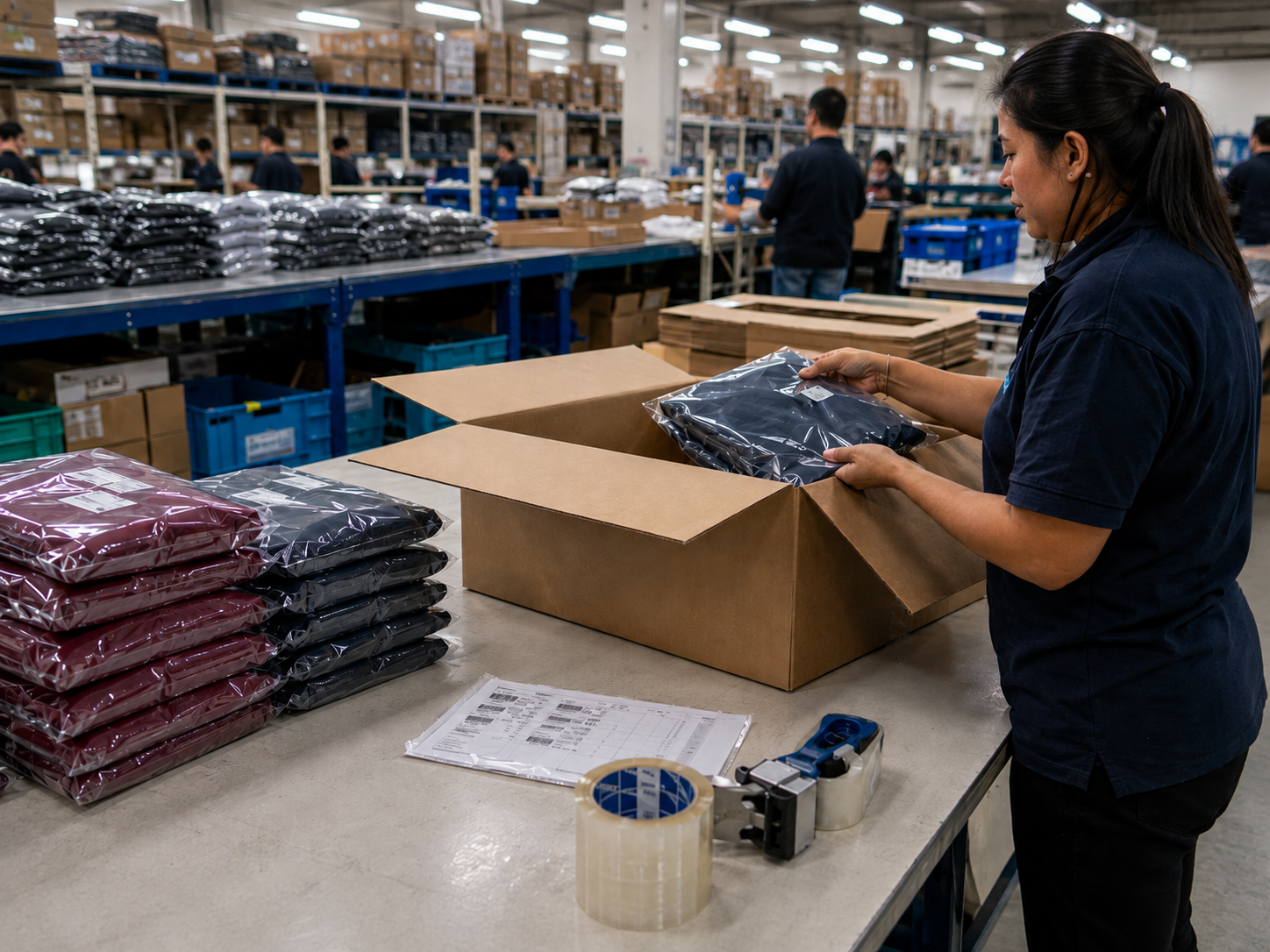
Packaging and Final Safety Checks
Packing quality matters because an accurately manufactured garment can still create problems when the wrong size, label, SKU or packaging version is used.
- Confirm garment identity before packing.
- Check labels and required packaging components.
- Review size, color and SKU allocation.
- Verify carton packing requirements.
- Use automatic folding systems for suitable standardized products where applicable.
- Apply needle-detection checks to applicable garments before packing or shipment.
Keep Styles, Sizes and Packaging Versions Clearly Separated
Collection-level manufacturing can involve many styles, colors, sizes and packaging requirements. Leadshow uses project-based identification and outbound preparation to reduce mix-ups between garment variants and branded materials.
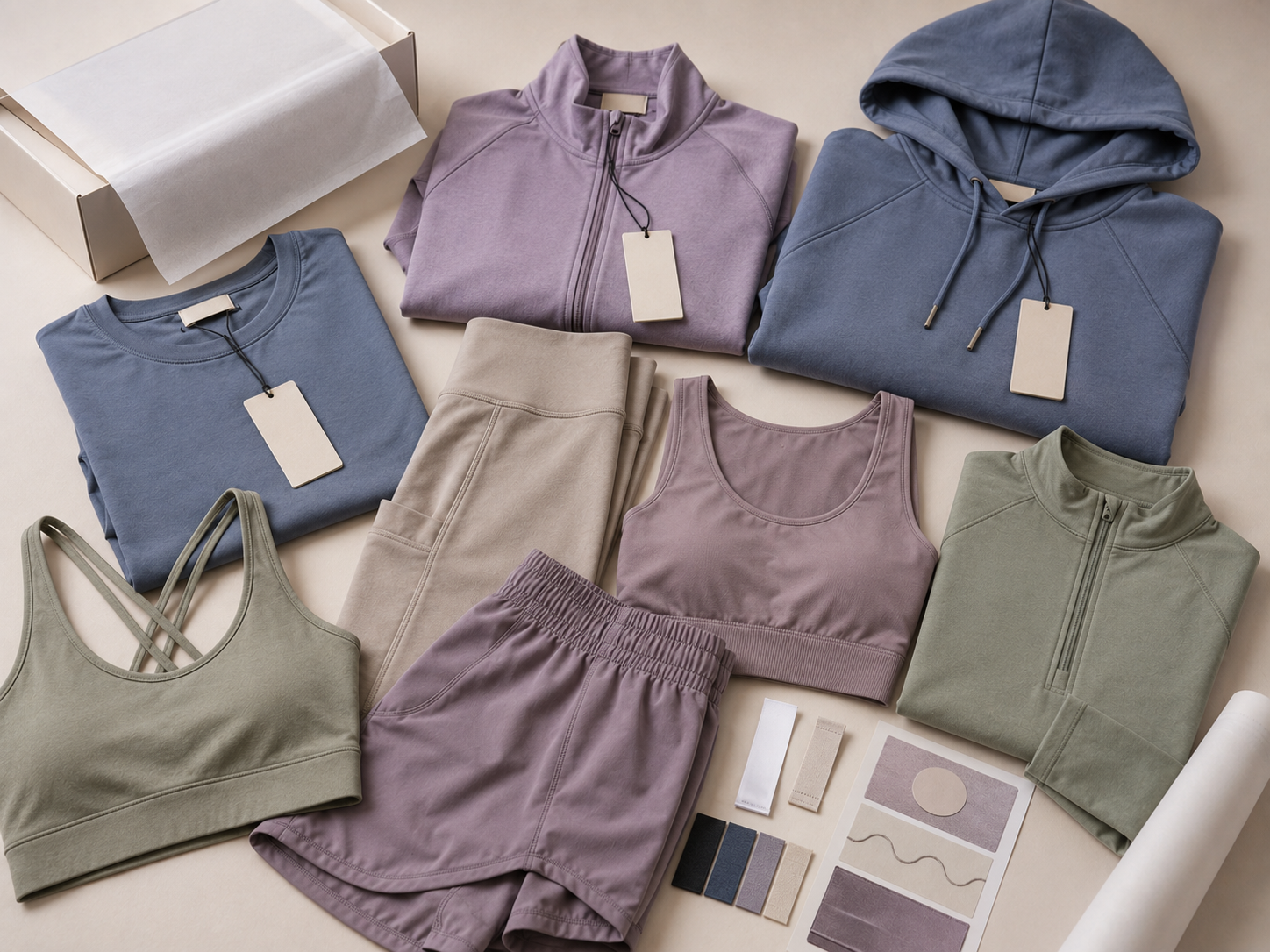
Style and Color Identification
Every style and color should remain traceable through production and packing records. Similar-looking garments can still require different materials, logos or packaging versions.
- Maintain style and color references in production information.
- Separate approved versions where specifications differ.
- Review color-specific trims and branding where relevant.
- Link quantities to the correct product variation.
- Recheck changes before production or packing.
- Use updated records for repeat orders rather than relying on previous assumptions.
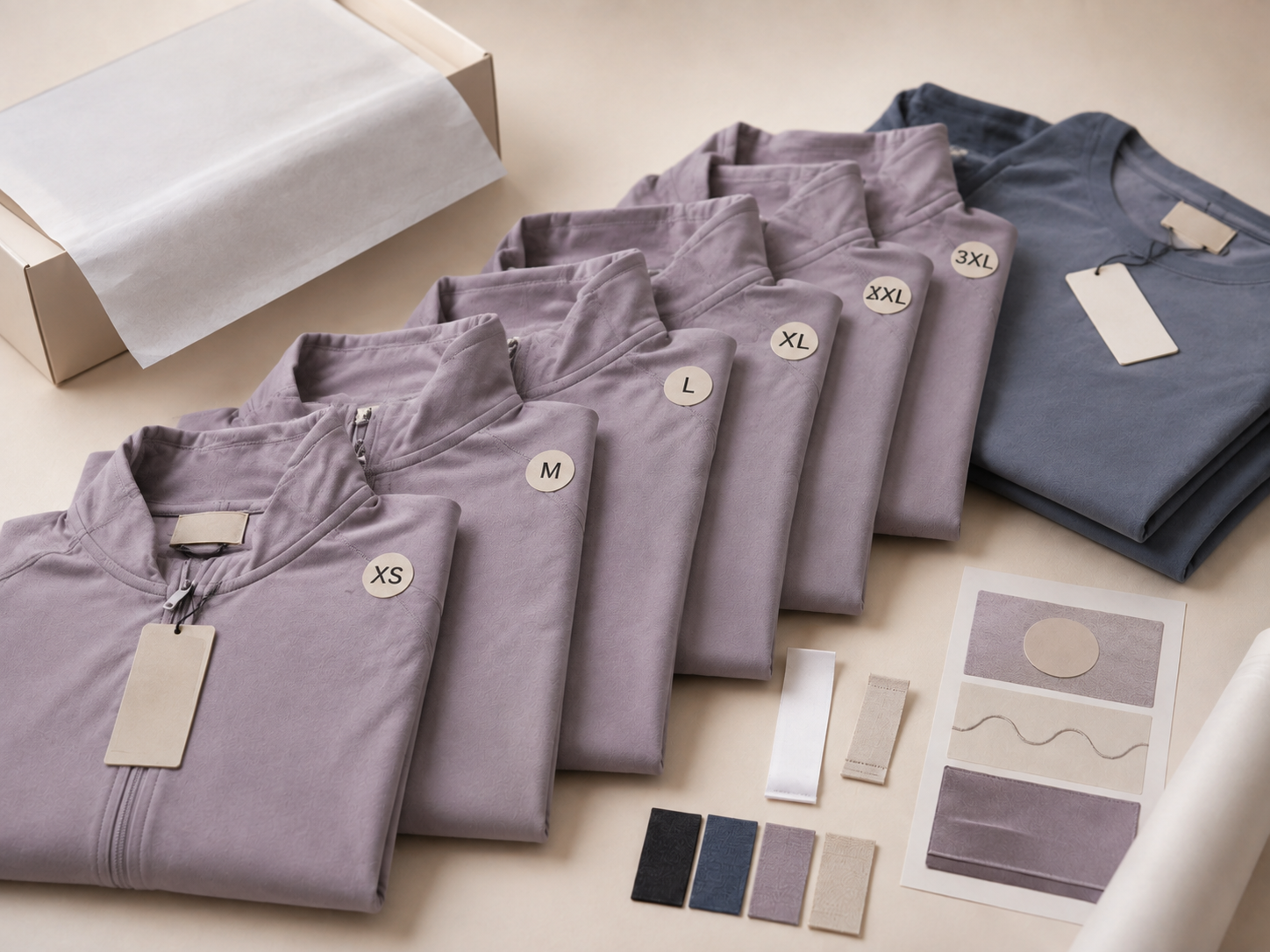
Size Breakdown Management
Size ratios influence cutting, production quantities, packaging and carton planning. A total order quantity alone is not enough for multi-size apparel production.
- Confirm size range before production.
- Record quantities by size.
- Match size labels to the correct garments.
- Review any special size or grading requirements before bulk.
- Confirm assorted or solid-size packing instructions where applicable.
- Reconcile final size quantities during packing and outbound preparation.
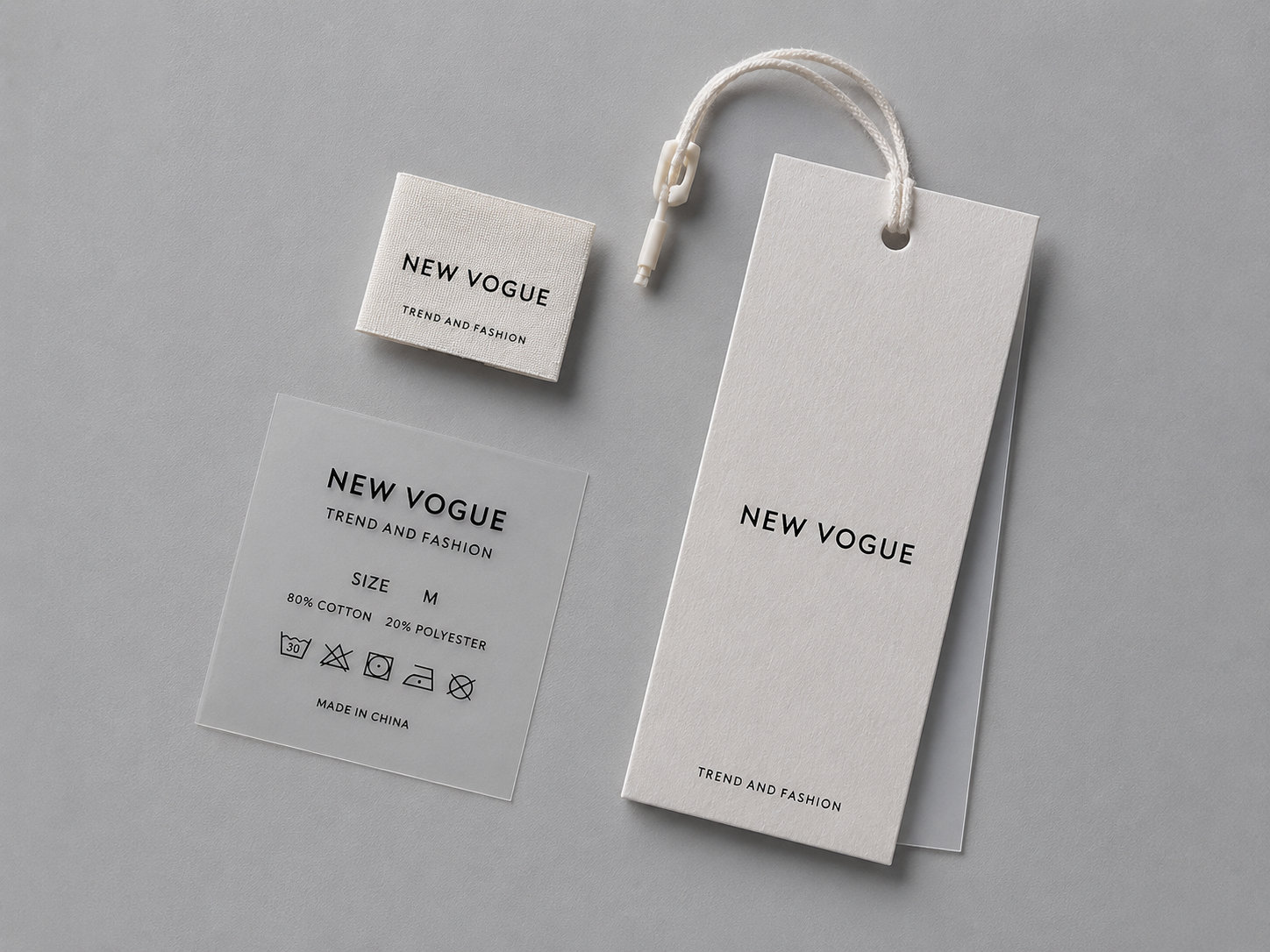
Branded Label Control
Main labels, care labels, size labels and hangtags must match the garment and market requirements.
- Review approved artwork before bulk printing.
- Link label versions with product styles and sizes.
- Separate market-specific versions where required.
- Check placement during garment inspection.
- Verify label content during packing preparation.
- Reconfirm revised artwork before repeat orders when brand information changes.
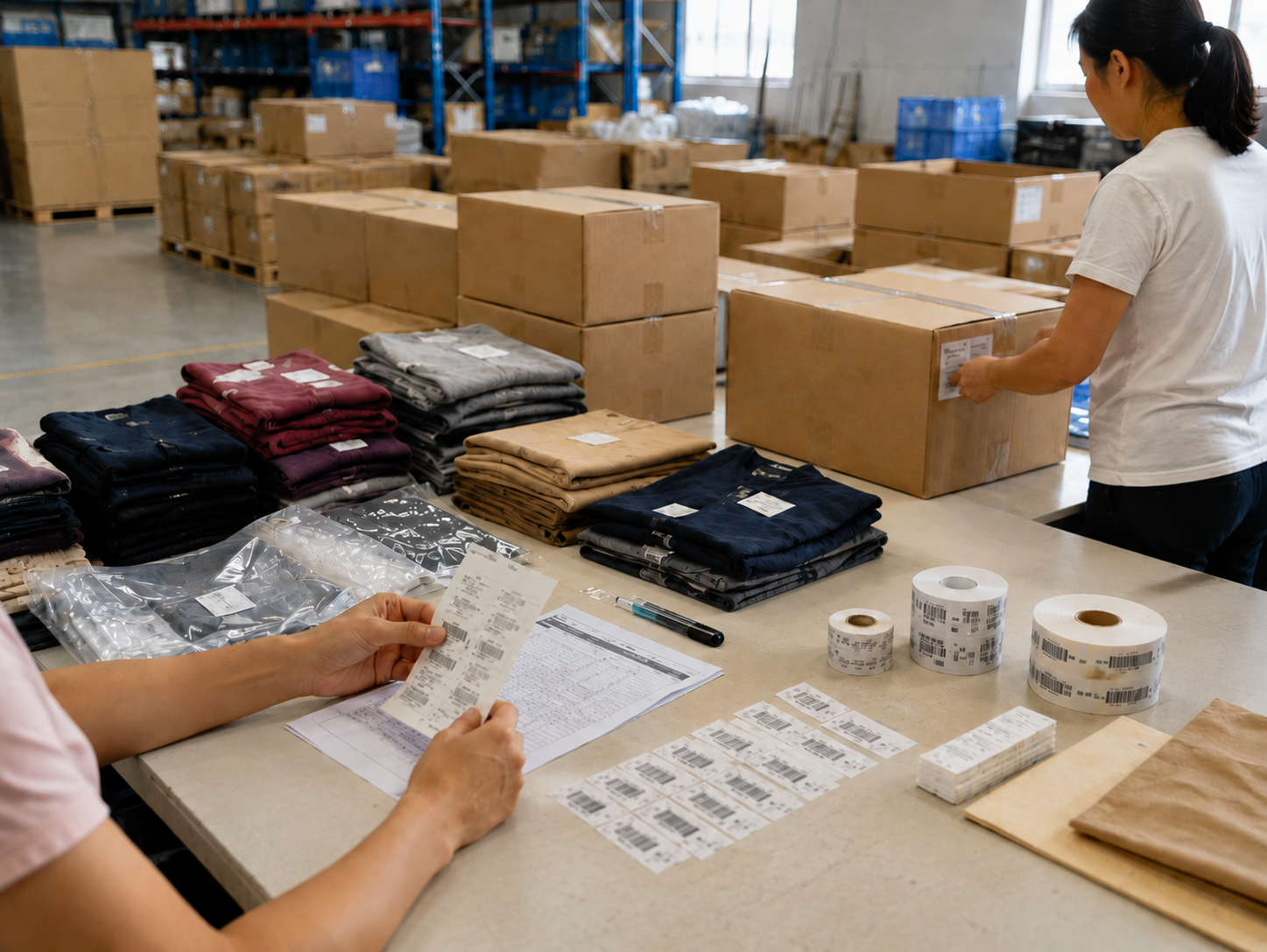
SKU and Barcode Preparation
SKU and barcode information supports downstream inventory and retail processes. Leadshow can coordinate label printing and SKU-related packing preparation according to the information supplied for the project.
- Connect product variation with the correct SKU.
- Review barcode or label data before printing.
- Apply SKU labels according to approved packing instructions.
- Keep different product and packaging versions segregated.
- Check label placement and readability during packing.
- Avoid representing SKU management as a fully automated global inventory system.
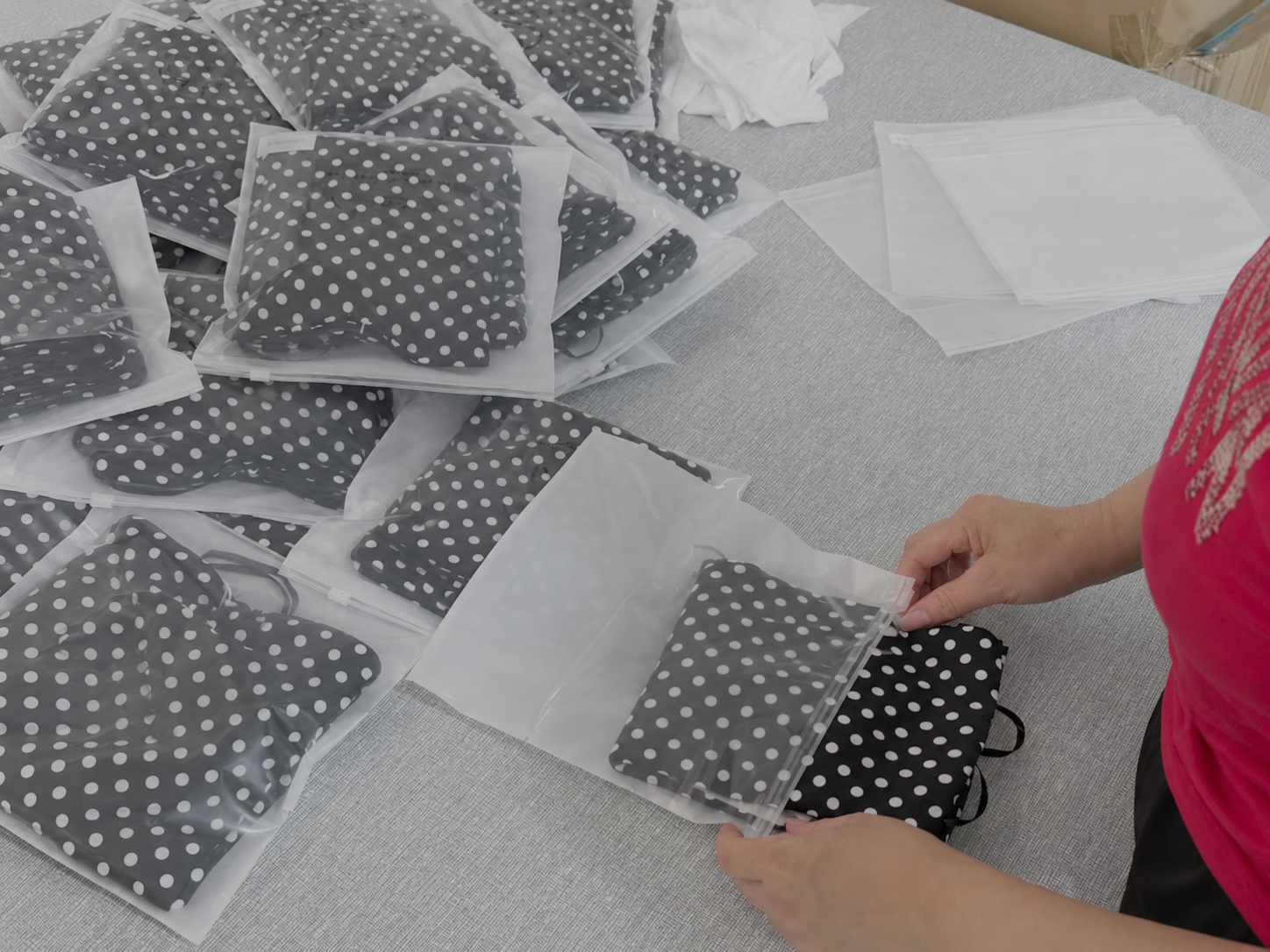
Folding and Individual Packaging
Leadshow has four automatic folding and packaging systems supporting selected standardized garments. Not every product is suitable for automated folding, especially complex structures or bulky garments.
- Confirm folding and bagging requirements before packing.
- Match garment size and color with the correct package label.
- Use automated systems where the product structure is suitable.
- Handle special structures according to the approved packing method.
- Maintain packaging consistency across repeated units.
- Review finished presentation before carton packing.
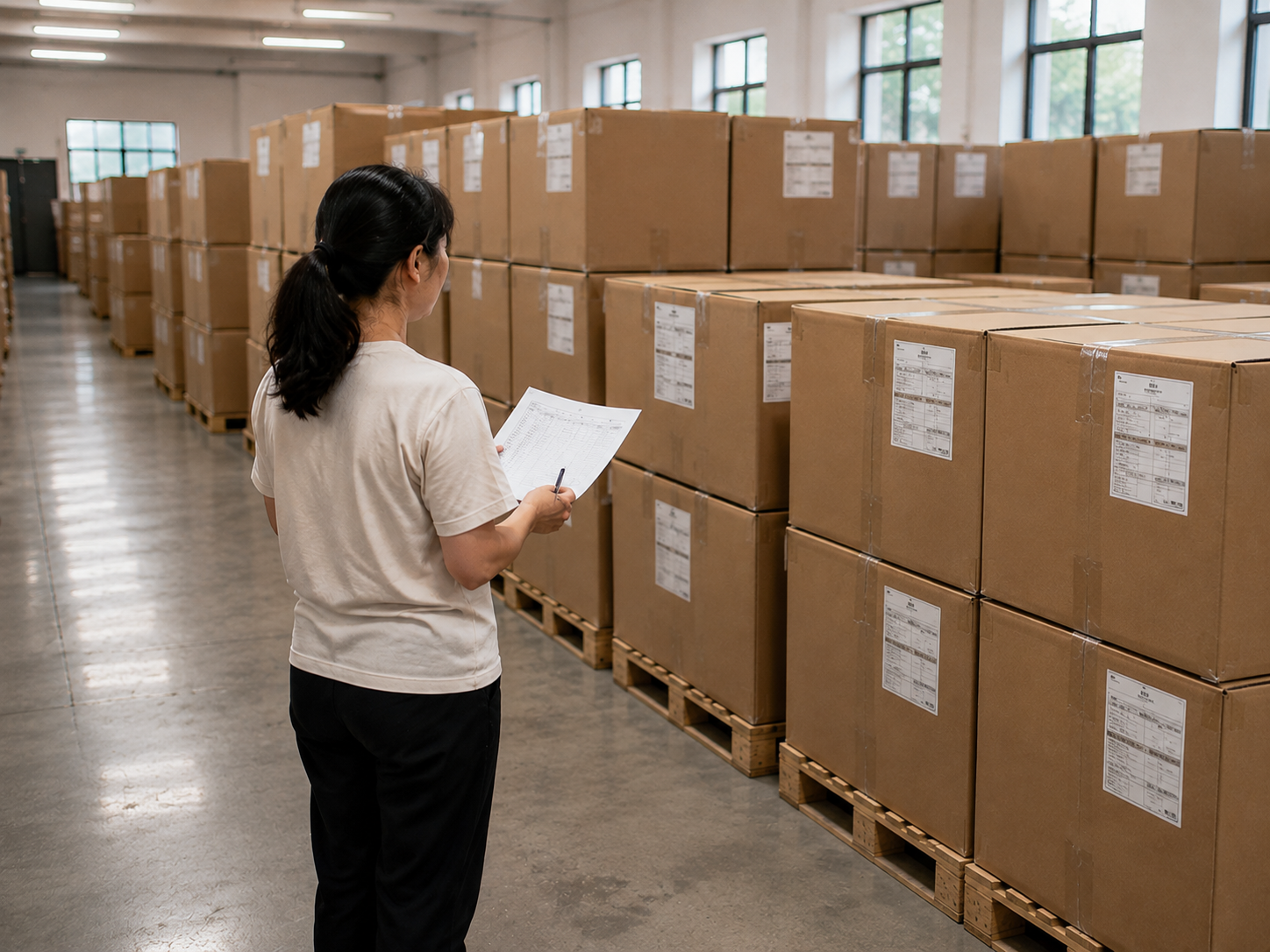
Carton and Outbound Preparation
Final packing connects manufacturing with logistics. Cartons must reflect the approved quantity, assortment and shipment instructions.
- Confirm carton quantities and product allocation.
- Apply required carton markings according to project information.
- Review packed SKU and size distribution.
- Prepare shipment data for forwarder or export coordination.
- Separate split-shipment or multi-destination requirements where applicable.
- Confirm handover timing and responsibilities according to the agreed delivery arrangement.
Keep Product History Clear Before Every Reorder
Repeat production is most reliable when previous approvals are treated as controlled records rather than informal memory. Leadshow reviews product versions, materials and order changes before a previous style returns to manufacturing.
Approved Product Records
A completed order can create the reference set for later manufacturing. Relevant records may include the approved sample, pattern, measurement information, fabric and trim references, branding artwork and packaging requirements.
- Identify the latest approved technical version.
- Retain clear reference to materials and colors used.
- Record relevant product and packing requirements.
- Keep major development revisions separate from older versions.
- Use approved information as the starting point for future review.
- Protect confidential product and brand information according to project requirements.
Reorder Review
A repeat order should not automatically assume every previous condition remains unchanged. Materials, supplier availability, quantities, colors and packaging requirements may have changed.
- Confirm whether the product specification remains identical.
- Review material and trim availability.
- Check updated quantities and size ratios.
- Reconfirm branding and packaging artwork.
- Review previous production or quality issues where relevant.
Reassess capacity and scheduling for the new order.
Updated Production Release
Once changes are confirmed, the newest approved information becomes the production reference for the reorder.
- Replace outdated documents with the current version.
- Confirm revised colors, trims or packaging.
- Update quantity and SKU records.
- Review manufacturing changes with relevant departments.
- Set quality checkpoints according to the confirmed order.
- Release production only after commercial and technical requirements are aligned.
Commercial Terms Are Confirmed from Real Product Requirements
Apparel pricing and production timing depend on specifications rather than product names alone. Materials, trims, construction, branding, quantity, packaging and schedule all affect the final manufacturing plan and commercial quotation.
Item
Leadshow Position
Standard MOQ
Starts from 100 pieces per color per design
Final MOQ
Confirmed according to fabric, trims, construction, branding, packaging and supplier minimums
Sample Lead Time
Confirmed according to product complexity, material readiness, customization and revision requirements
Bulk Production Schedule
Confirmed after product, materials, quantities, SKU structure and current production scheduling are reviewed
Pricing
Adjust connector, length, sleeve, label, molded part or packaging if needed
Manufacturing Capacity
Evaluated against the actual product and available production schedule
Shipping / Delivery Time
Confirmed separately from production timing according to shipping method, destination, handover point and agreed responsibilities
Manufacturing Support Extends Through Export Handover
Leadshow’s confirmed export markets include Europe, North America, South America and Oceania. Shipment arrangements, documentation and responsibilities are reviewed according to the actual order rather than promoted as one universal logistics solution.
International Market Experience
International apparel orders often require different product, label, packaging and shipment information depending on destination and sales channel.
- Review destination market during project preparation.
- Coordinate applicable product and packaging data.
- Confirm market-specific labeling information supplied for the order.
- Separate manufacturing requirements from legal or regulatory advice.
- Coordinate testing or supporting documents where required and available.
- Verify commercial and delivery details before shipment preparation.
Forwarder and Shipment Coordination
Orders may be handed to a nominated forwarder, coordinated freight provider, courier, air freight agent, sea freight agent or other agreed transport provider.
- Prepare pickup and shipment information according to the confirmed arrangement.
- Coordinate carton count, weight and packing data.
- Confirm pickup or handover timing.
- Support split shipment planning where required.
- Keep manufacturing completion separate from transit and arrival dates.
- Define responsibilities according to the agreed trade term and named place.
Export Documentation Support
Leadshow can prepare or coordinate commercial invoices, packing lists, product descriptions, quantities, weights, country-of-origin information and other applicable export data according to the order.
- Confirm product and quantity information before document preparation.
- Coordinate packaging and shipment records.
- Support forwarder handover and export information review.
- Work with the agreed parties on required documentation.
- Avoid promising universal customs clearance or duty outcomes.
- Confirm destination-specific responsibilities with the relevant import and logistics parties.
Real Manufacturing Evidence from Development to Packing
A manufacturer should be evaluated through products, processes and operating evidence rather than generic factory claims. Use real Leadshow photography for every card below so procurement teams can connect stated capabilities with visible manufacturing activity.
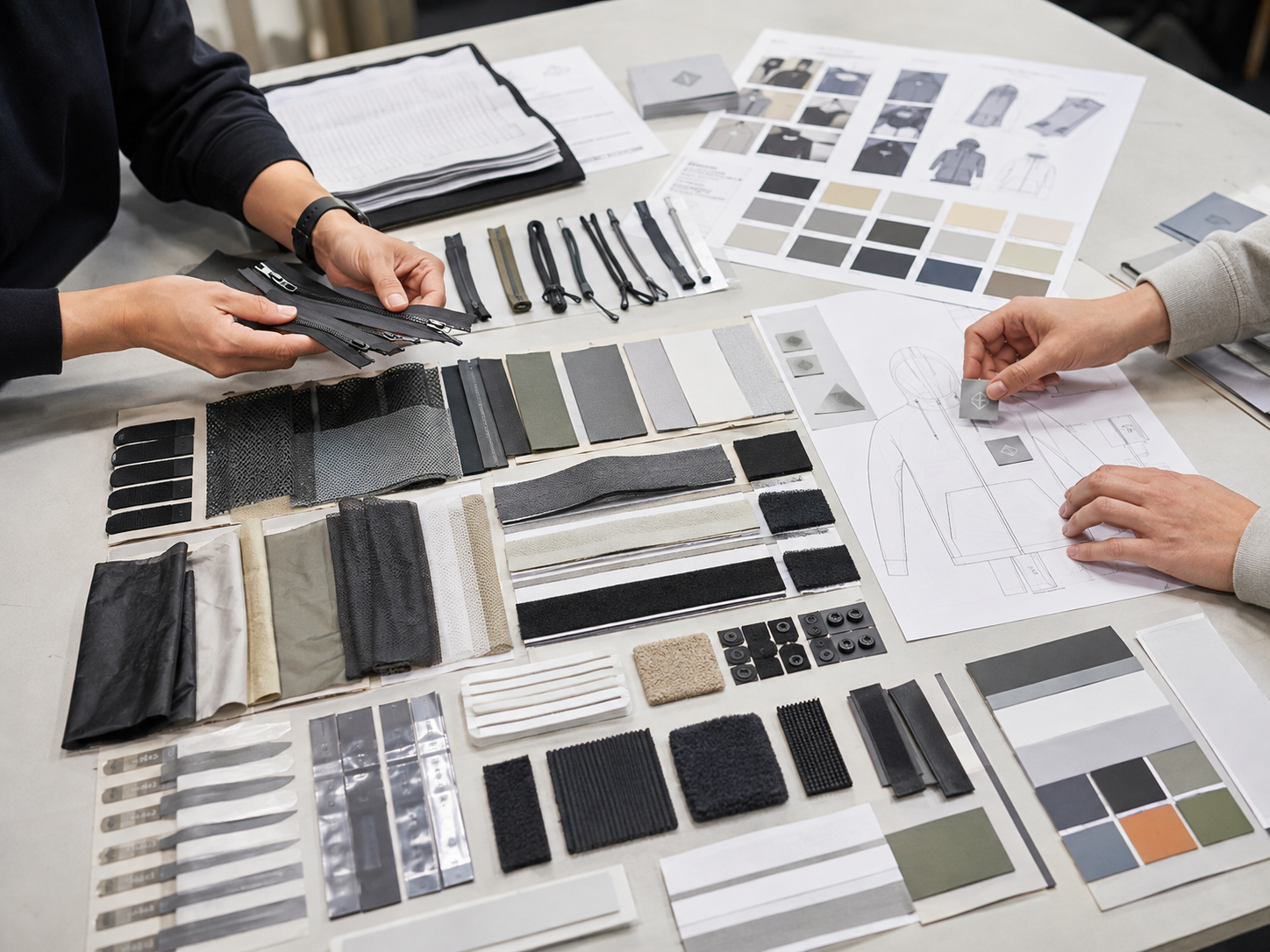
Product Review
Show an authentic product-development desk with garment drawings, sample pieces, fabrics and approved product information. The image should demonstrate how product requirements are reviewed before manufacturing decisions are made. Supporting copy should explain that construction, measurements, materials, trims and unclear requirements are assessed before sampling or bulk planning begins.
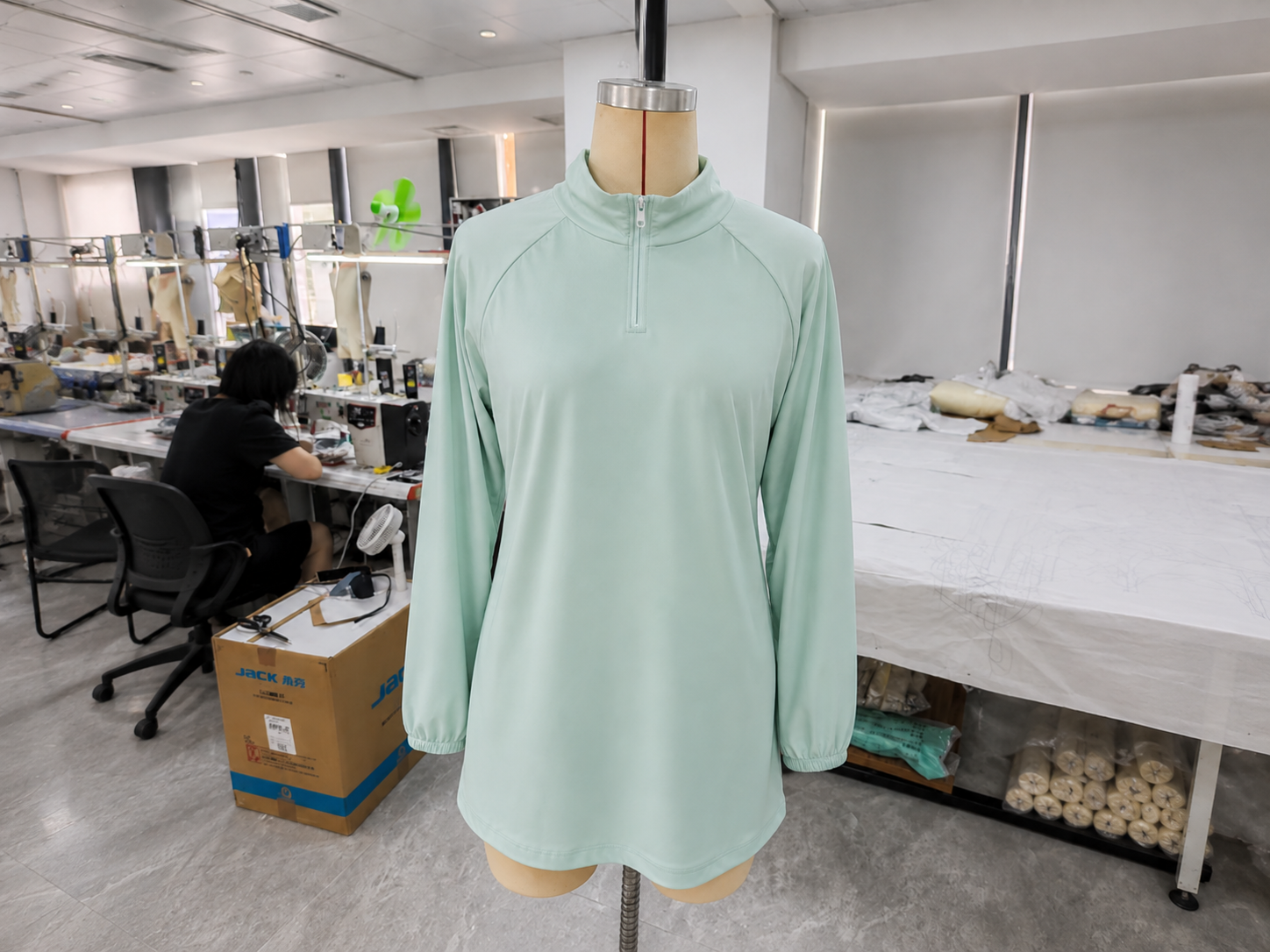
Sampling Workshop
Show the independent sample-development environment with real sample sewing activity, pattern work or garment measurement. Sampling evidence should make clear that development is a controlled stage used to verify fit, construction and manufacturability. Avoid presenting a generic fashion studio disconnected from production.
Material Confirmation
Show fabrics, trims, color references and garment components being reviewed for an actual development program. The visual should support material-selection and incoming-verification claims. Avoid unreadable decorative swatches with no relationship to the product being developed.
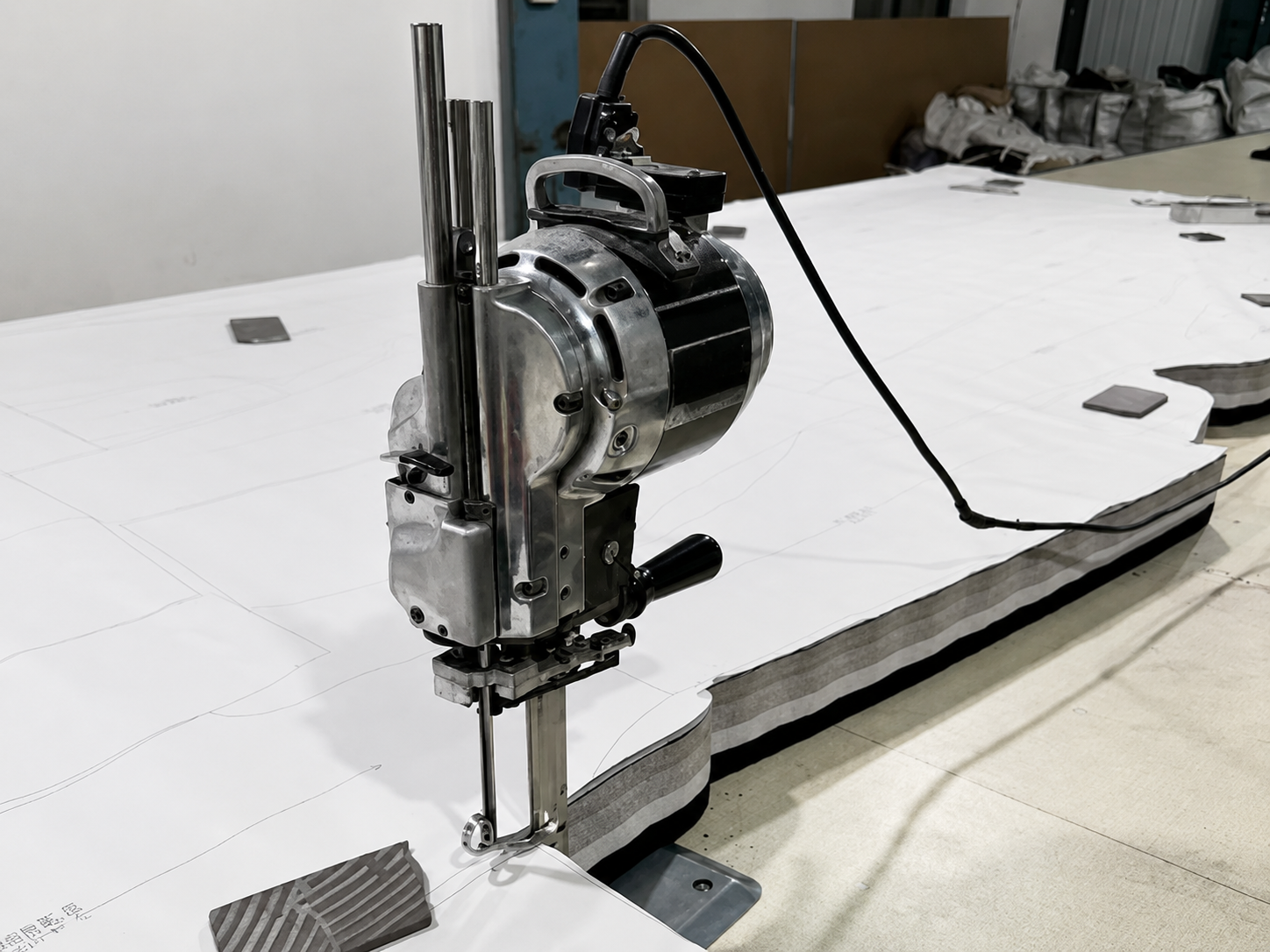
Cutting
Show fabric spreading, pattern or cutting preparation within a real production environment. Cutting imagery should demonstrate manufacturing scale and process control rather than only machinery. Supporting copy can explain that material, marker and product information are confirmed before approved components move into sewing.
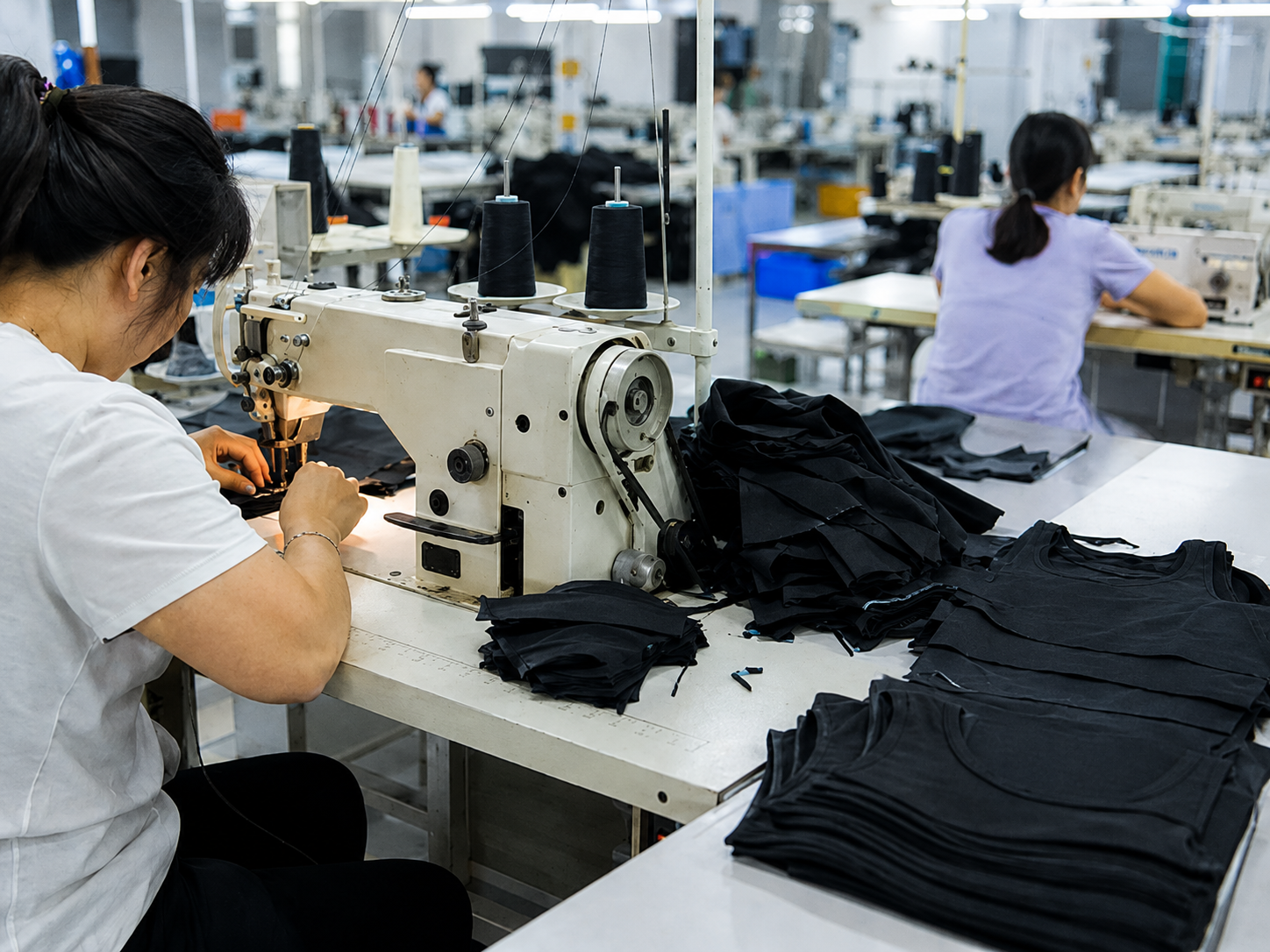
Sewing
Show active production with applicable garment types and visible industrial sewing equipment. The objective is to demonstrate repeatable manufacturing of approved products. Images should focus on real construction work rather than staged employees looking at the camera.
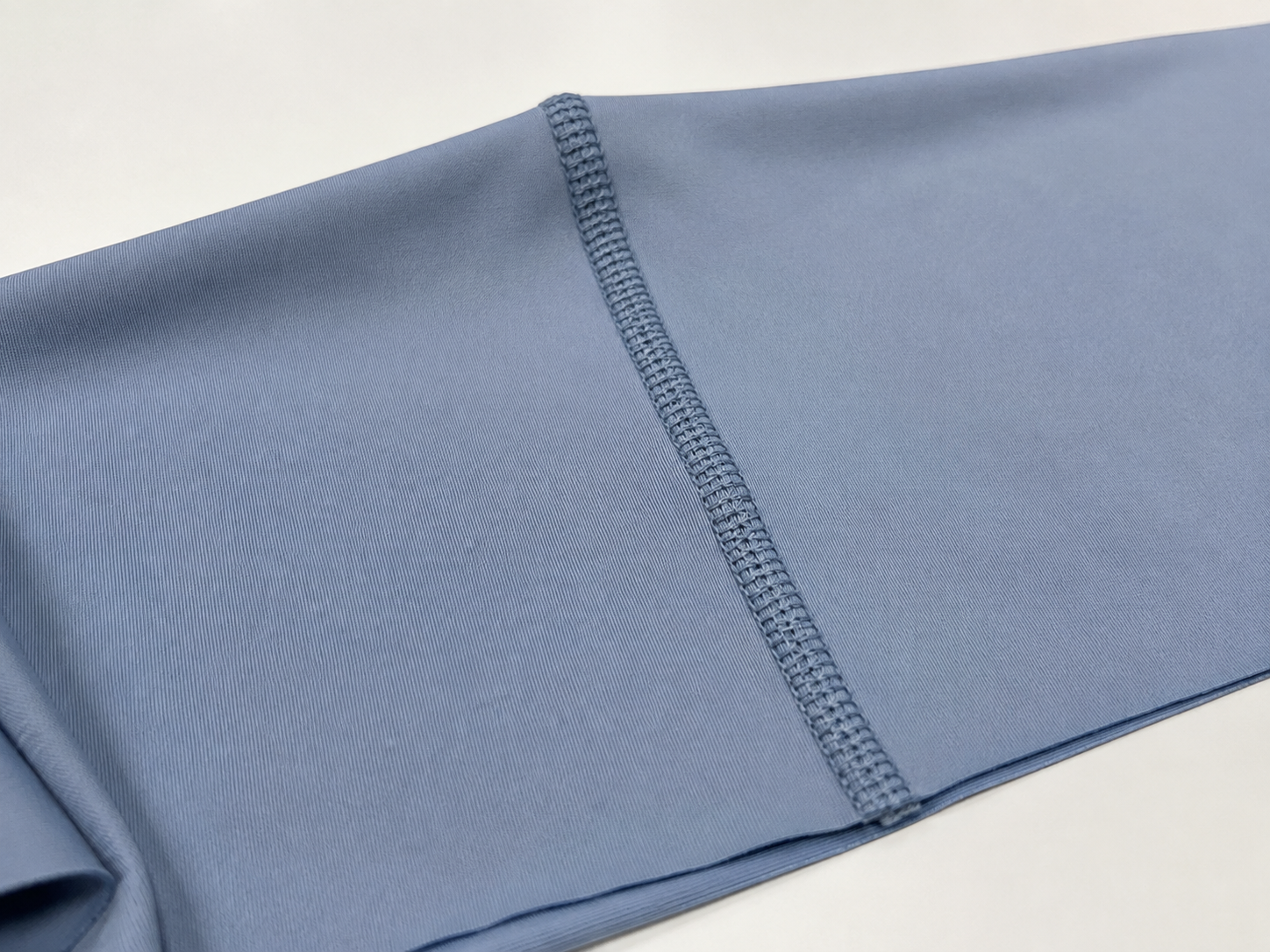
Specialized Processes
Show confirmed specialized equipment or real process details such as flatlock, heat bonding, seam taping or laser perforation where actually applicable. Each image should correspond to a process Leadshow can support and should never imply an unverified performance certification.
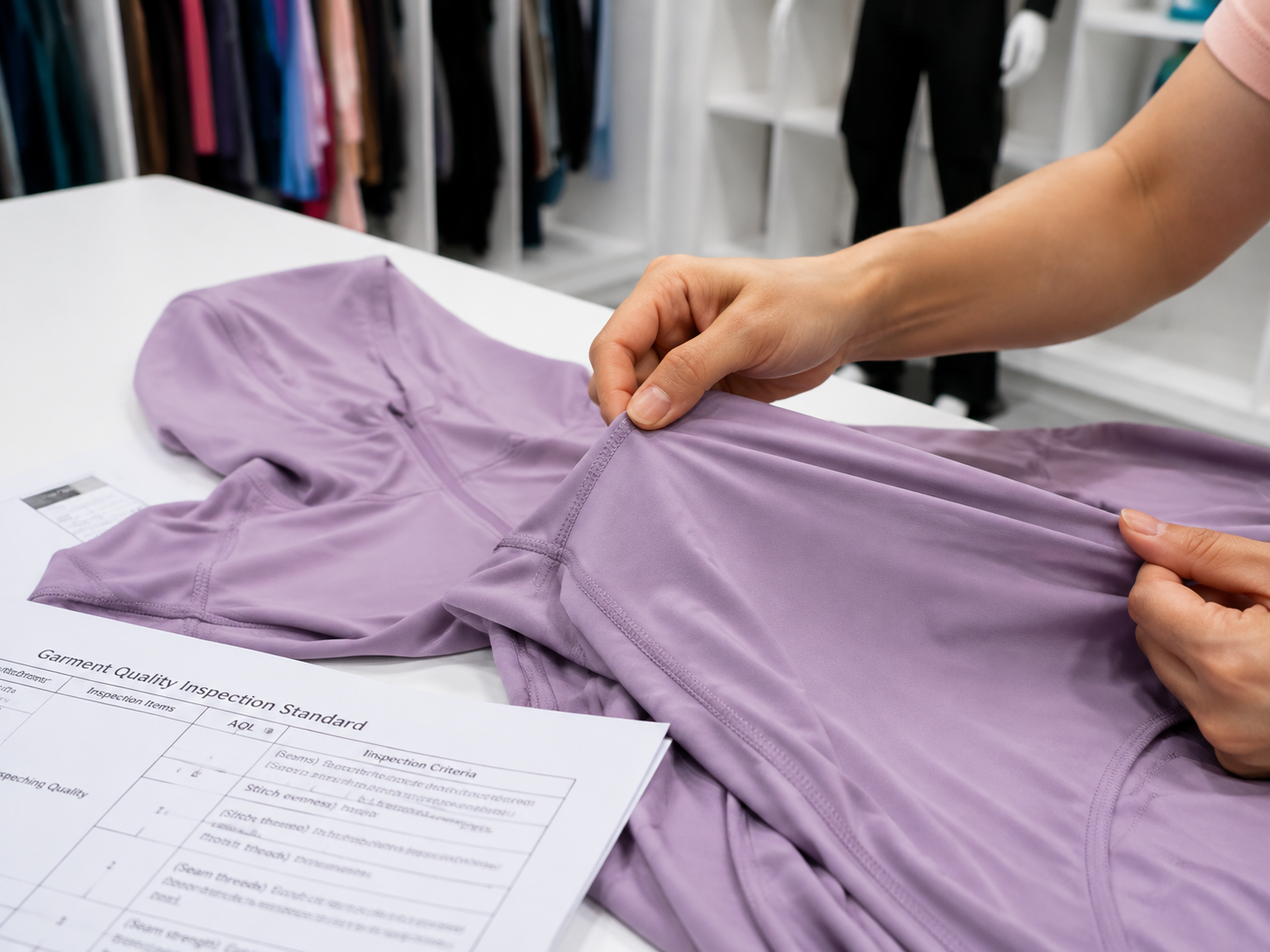
Quality Inspection
Show real garment measurement, workmanship inspection, label review or packaging inspection. Quality imagery should demonstrate specific inspection activity rather than a generic “QC” sign. Measurement tools, garments and inspection actions should be visually clear.
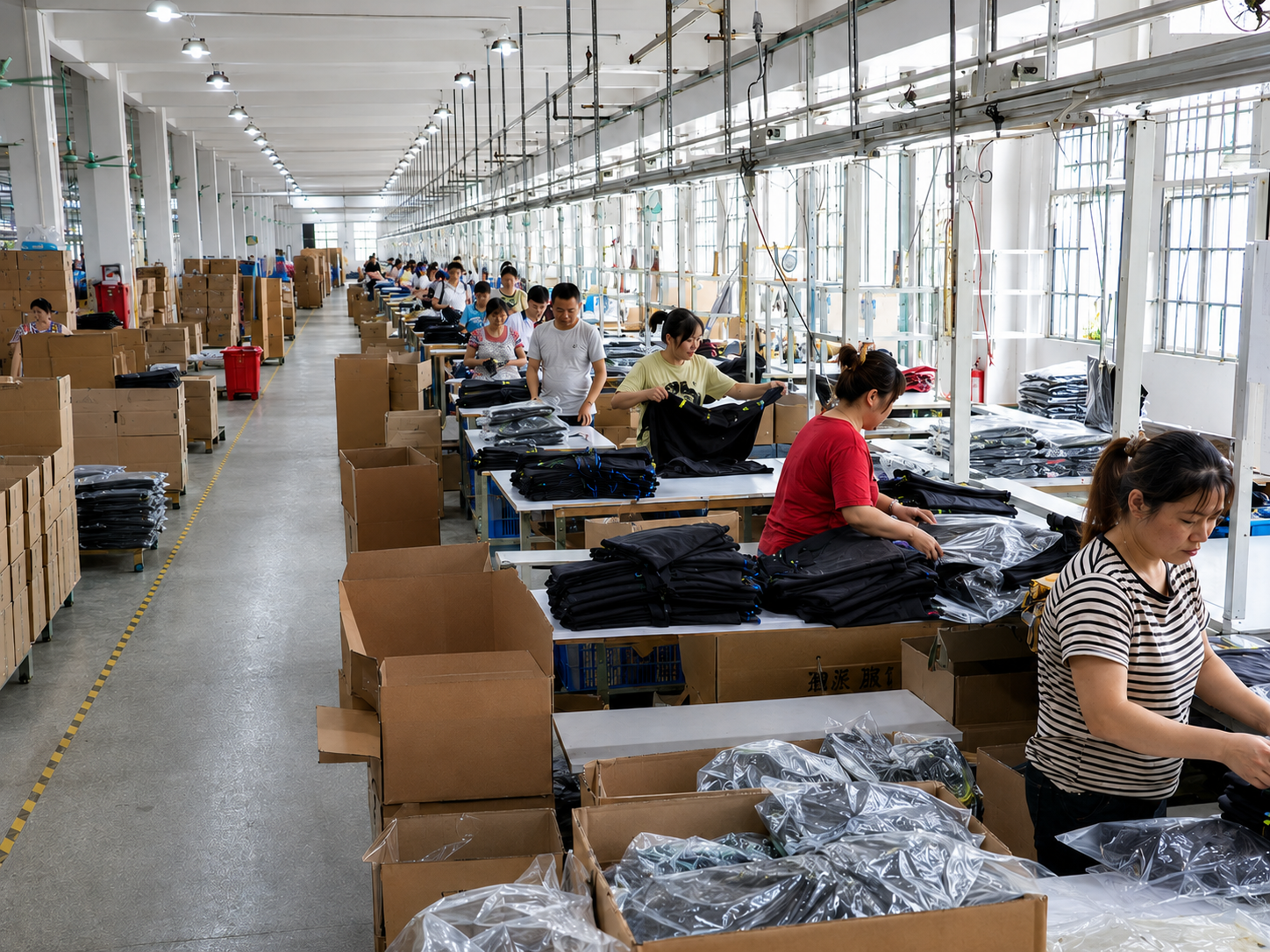
Packing and Dispatch
Show finished garments being folded, labeled, bagged, carton-packed or prepared for handover. The image should connect multi-SKU and packaging claims with actual outbound preparation. Avoid implying a global distribution center or automated warehouse capability not supported by confirmed facts.
Move from Broad Sourcing to the Right Manufacturing Program
Apparel Manufacturer is the starting point. Product category, materials, fit and manufacturing method determine which development route becomes most relevant. The following solution areas should link to deeper Leadshow manufacturing content as those dedicated sections become available.
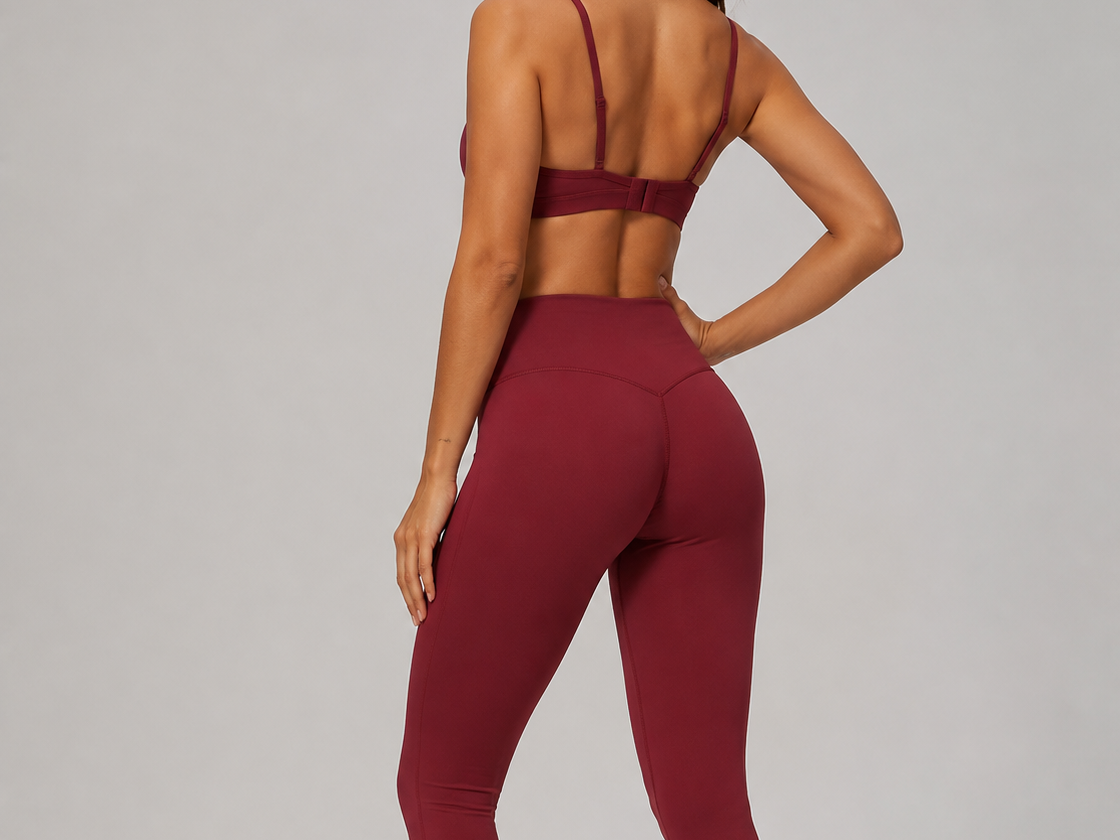
Sportswear Manufacturer
Explore development and manufacturing for sports bras, sports T-shirts, yoga leggings, tennis skirts, jumpsuits, running shorts, tank tops and related confirmed sportswear programs. Focus areas include stretch materials, fit, seam construction, sampling, branding and bulk execution for active apparel.

Swimwear Manufacturer
Review swimwear development around stretch materials, lining, fit, construction, trims and production approval. Manufacturing feasibility, actual MOQ and timing are evaluated from the specific design, material system and order requirements rather than one standard swimwear specification.
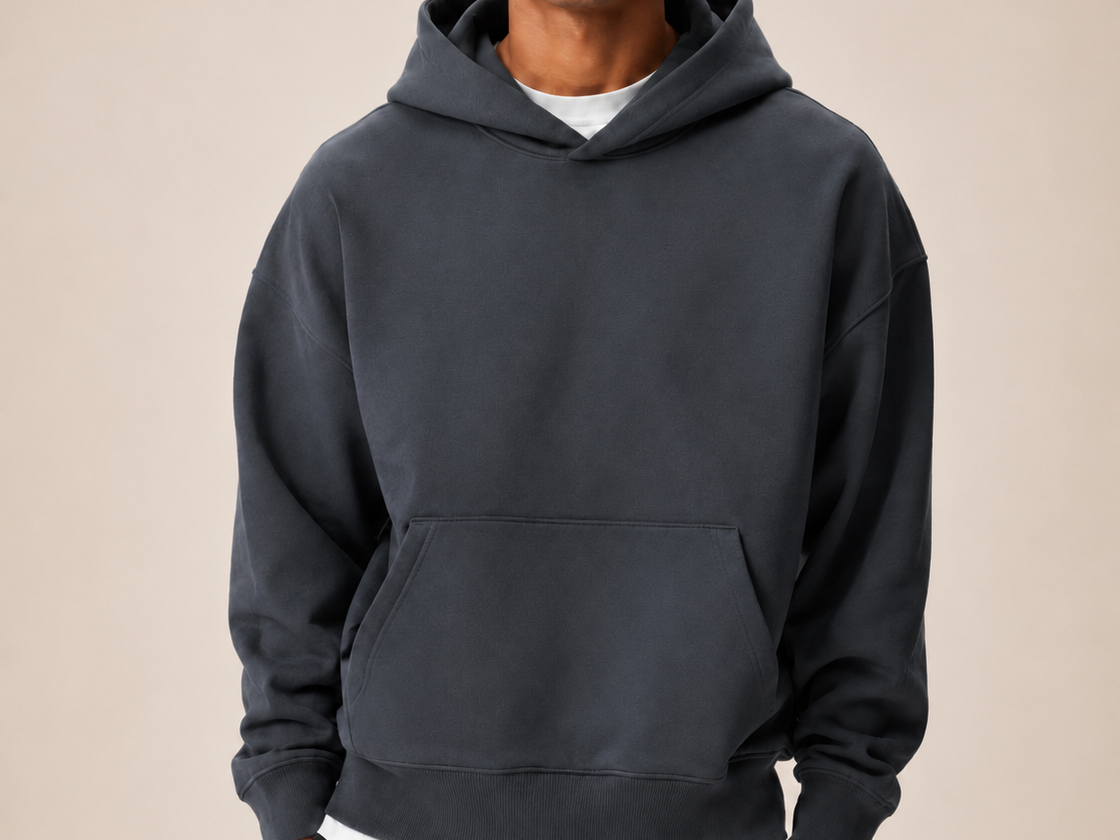
Streetwear Manufacturer
Explore hoodie, sweatshirt and related confirmed streetwear manufacturing programs. Development can address silhouette, fabric weight, rib, artwork, branding, trims, sizing, sample approval and collection-level SKU execution according to the product specification.
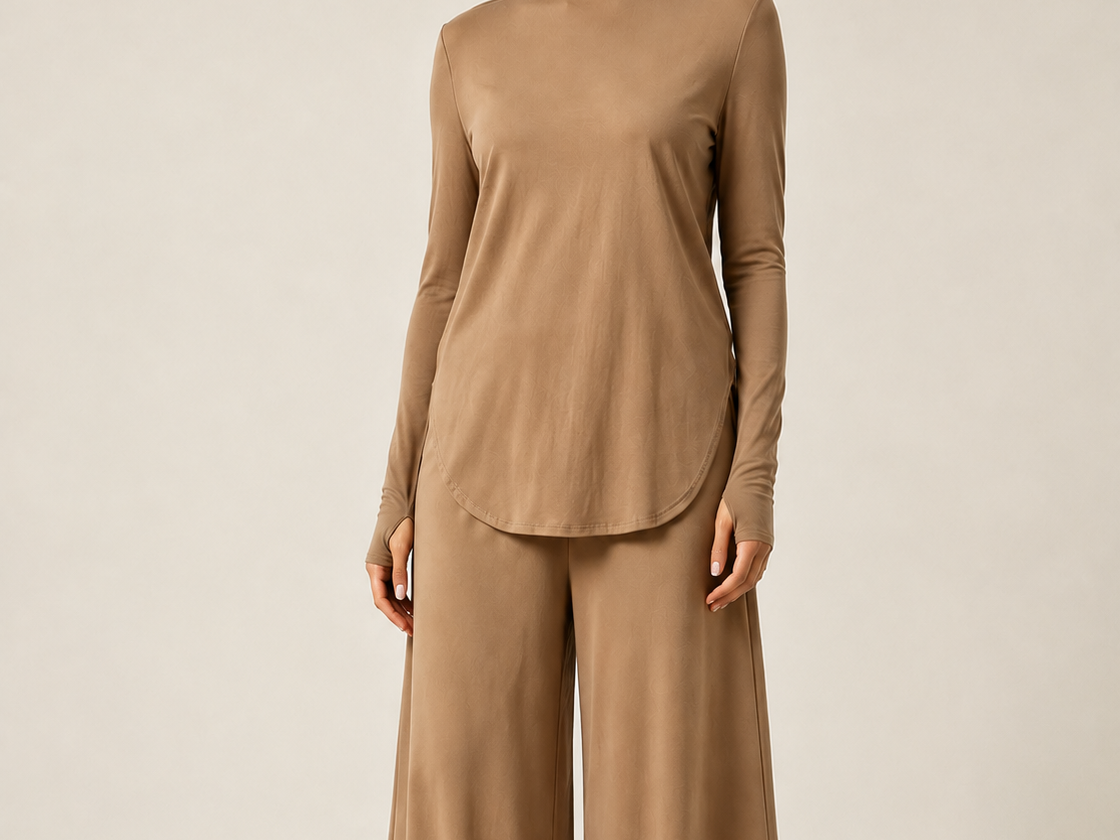
Modest Sportswear Manufacturer
Review high-coverage sportswear development around garment length, movement, layering, opacity, fabric behavior and fit. Product structure is evaluated through pattern, materials and sampling before approved designs move into bulk production.
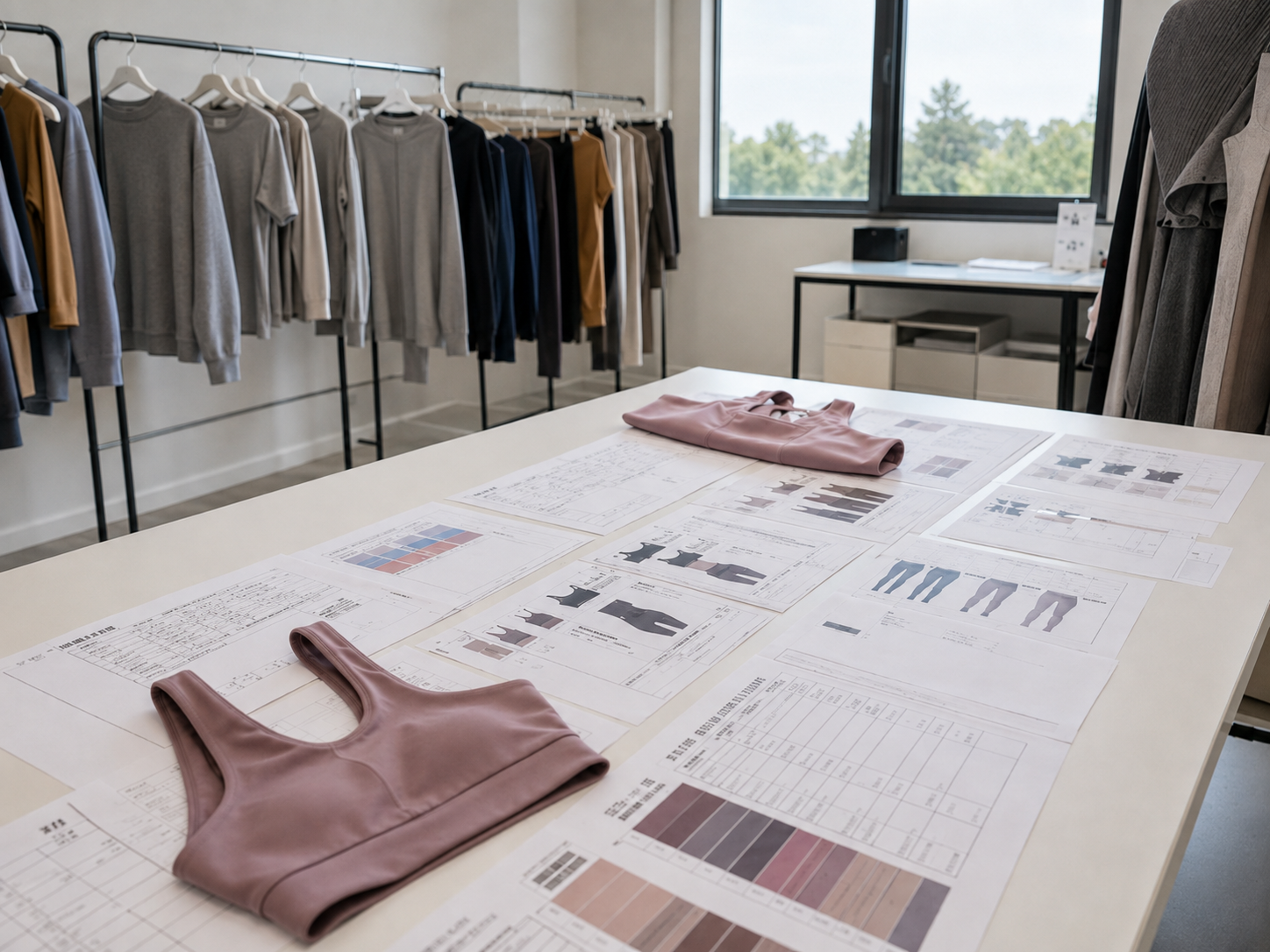
OEM Apparel Manufacturing
Use the OEM route when a Tech Pack, measurement chart, sample or established product specification already exists. Leadshow focuses on technical review, sample confirmation, production preparation, quality, branding, packaging and bulk execution.
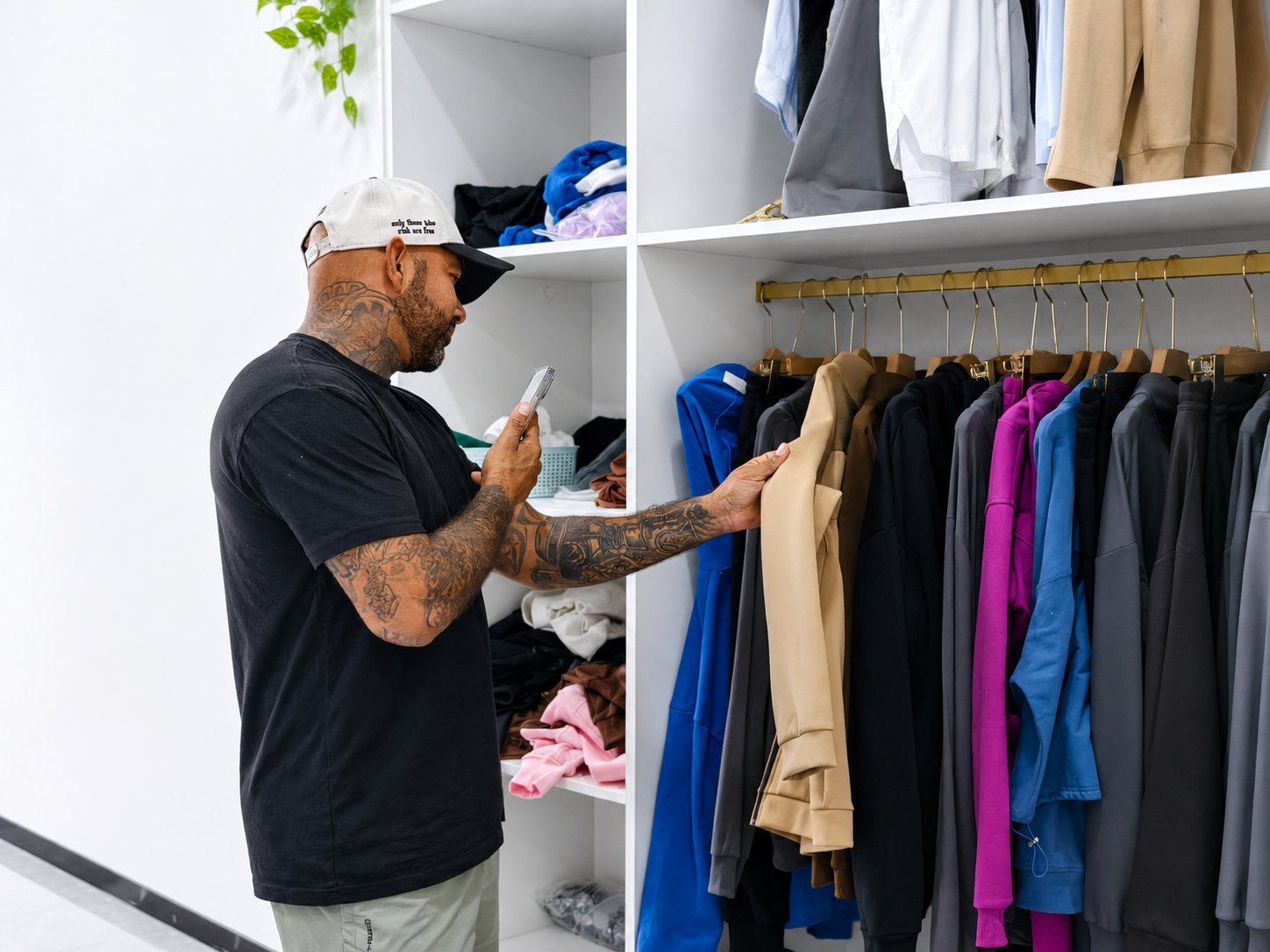
ODM Apparel Manufacturing
Use the ODM route when a product concept still requires manufacturing-focused development. Leadshow can support structure, pattern, fit, materials, process assessment and sample development before an approved product advances into private label production.
Apparel Manufacturer Frequently Asked Questions
These answers cover common sourcing questions around product scope, OEM and ODM development, MOQ, sampling, production consistency, packaging and manufacturing timing before an apparel project enters formal review.
What types of apparel does Leadshow manufacture?
Leadshow’s confirmed core categories are sportswear, swimwear, streetwear and modest sportswear. Confirmed products include sports bras, sports T-shirts, yoga leggings, tennis skirts, jumpsuits, running shorts, tank tops, tracksuits, hoodies and sweatshirts. Other apparel categories should be reviewed before manufacturing capability is confirmed.
Does Leadshow provide OEM and ODM apparel manufacturing?
Yes. OEM programs can begin from established Tech Packs, measurements, samples or product specifications. ODM programs can begin from concepts, sketches, reference images or incomplete product information and focus on manufacturing-oriented development including structure, pattern, fit, materials, sampling and production feasibility.
What information should I send for an apparel RFQ?
Send available product drawings, Tech Pack or reference images, expected materials, size range, colors, branding requirements, quantity by style and color, packaging requirements, quality expectations, target market and preferred production or delivery date. Incomplete information can still be reviewed, although more detail generally improves quotation accuracy.
What is Leadshow's apparel manufacturing MOQ?
Leadshow’s standard MOQ starts from **100 pieces per color per design**. Final MOQ depends on product construction, fabric availability, custom colors, trims, branding, labels, packaging, certification requirements and supplier minimums. Different designs should not be assumed to combine freely to reach the minimum.
Can Leadshow manufacture from a Tech Pack?
Yes. A Tech Pack can be reviewed together with measurement charts, patterns, materials, trims, artwork and other product information. Leadshow evaluates construction and manufacturing feasibility before sample development, revision and bulk production planning.
Can products be developed from images or physical samples?
Reference images and physical samples can support development by clarifying construction, fit, materials and workmanship. Development remains subject to technical review and intellectual-property considerations. Leadshow does not offer unauthorized one-to-one copying of protected branded products.
How long does apparel sample development take?
There is no universal sample lead time. Timing is confirmed according to product complexity, material readiness, customization and revision requirements. Custom colors, special trims, complex construction and additional sample rounds can extend development compared with a basic product using ready materials.
How is sample-to-bulk consistency controlled?
Bulk production is based on approved samples and current specifications. Controls can include material verification, first-piece comparison, production checks, measurement review, workmanship inspection, logo and trim checks, finished garment inspection and packaging verification. Reasonable production tolerances and material variation should be defined before bulk manufacturing.
Can Leadshow handle custom labels, packaging and multiple SKUs?
Yes. Leadshow can support custom labels, hangtags, packaging, size and color separation, SKU information and carton preparation according to approved project requirements. Packaging and branded materials should be confirmed before production packing begins.
How is bulk production timing confirmed?
Production timing is reviewed after product specifications, materials, quantity, colors, sizes, SKU structure, quality requirements and current production scheduling are known. Manufacturing completion and international transit time are treated separately so production dates are not confused with final arrival dates.
Send Your Product Brief to Leadshow
Share the information available for your product project. A useful brief may include the product category, reference images, Tech Pack, original sample, material or trim direction, colors, size requirements, logo files, labels, packaging, estimated quantity, target market, testing needs and requested delivery window.
Leadshow will review the product scope, construction, material requirements, sample route, MOQ conditions and manufacturing considerations based on the information supplied. A concept or image can begin the discussion, while a complete technical file supports a more precise review.
The final quotation, sample plan and delivery discussion depend on product construction, materials, trims, customization, quantity, approvals, current scheduling and project requirements. Upload the files available at this stage, and note any unresolved questions in the message field.